The Computational and Educational Viability of Deploying
Intelligent Tutoring Systems
by
Robert A. Kildare, B.A., B.Comp., Dip.Ed.
A dissertation submitted to the
School of Computing
in partial fulfilment of the requirements for the degree of
Bachelor of Computing with Honours
University of Tasmania
TABLE OF CONTENTS
1. LITERATURE REVIEW ... 4
i. Introduction ... 4
a. Evolution of the ITS ... 5
ii. Educational Underpinnings ... 12
a. Piaget and Vygotsky... 13
b. General Learning Strategies... 16
iii. Structure of typical ITS... 17
a. Pedagogic module... 18
b. Knowledge domain module ... 23
c. Student model ... 24
d. Designer interface... 27
e. Student interface ... 31
iv. Delivery of Software... 32
a. Traditional Web-Based, 3-Tier Architecture... 33
b. Agent distributed ... 34
c. Stand-Alone Applications ... 35
v. Review implications... 36
2. PERFORMANCE: SURVEY & STUDIES ... 37
i. Questionnaire design and administration ... 37
ii. design of questions ... 38
a. Indicator of Performance... 38
b. Variables ... 41
c. Additional Considerations... 42
iii. Observations ... 43
a. Resultant clusters... 44
b. Conclusions about survey questions and methodology ... 46
iv. Additional Performance Components ... 46
3. PROPOSED ARCHITECTURE... 49
i. Context of Architecture ... 49
Centralised Institutions... 49
ii. Description: Components and Processes ... 51
a. Web Service Yellow Pages ... 51
b. Broker Agent ... 51
c. User Agent ... 52
d. Web Start and JADE ... 52
iii. Example Tutor... 53
a. Role ... 53
d. Knowledge Domain... 55
e. Pedagogy... 56
f. Student Model ... 57
4. DISTRIBUTION IMPLEMENTATION OUTCOMES... 58
a. The Agent Context... 58
b. The Student Model ... 59
c. Student_Agent ... 60
d. Broker_Agent ... 60
e. User Access to Tutor ... 61
f. Summation... 62
5. CONCLUSION AND FURTHER RESEARCH ... 64
6. REFERENCES... I 7. APPENDICES... 8
i. Appendix A... 8
a. ITS Author Comments: ... 8
ii. Appendix B... 10
a. Performance Survey Results: ... 10
iii. Appendix C ... 13
a. Student_Agent State Change Diagram ... 13
b. Broker_Agent State Change Diagram ... 13
iv. Appendix D... 14
a. Downloading the Algorithm Tutor Using Web Start ... 14
v. Appendix E... 15
a. Response.html: the result returned by the Broker_Agent... 15
vi. Appendix F ... 17
a. Example DTD for Algorithm Tutor... 17
Overview of Thesis
This paper first presents a review of the literature that has been published on adaptive educational software. After briefly describing the evolution of these programs, the review covers the main educational and computational features of current systems.
The next section of the thesis discusses the survey conducted in order to ascertain information about the performance of Intelligent Tutoring Systems. The results of this survey are used to inform the following section.
After the survey, the paper outlines a proposed architecture for the decentralised distribution of adaptive educational software and discusses the issues surrounding the architecture. The results from implementing this architecture follow in the next section.
Conclusions and possible further research are presented last to complete the work. Key results and have been appended as well as a glossary of acronyms.
Literature Review
Introduction
While the value of human interaction to the education process is unquestionable, there are instances where people either choose not to be involved in face to face human contact or are denied access to it. People with disabilities – mental, physical and social - often either cannot attend classes or would prefer not to be involved in human interaction, but are still motivated to learn. Personal experience has shown that a portion of teenagers find the structures of some school environments offensive (for a variety of reasons) and are quickly distracted from learning. People in
wheelchairs might find it too much effort to cope with the travel. Educational
evaluation. Modern Intelligent Tutoring Systems are quite capable of providing this sort of service.
Evolution of the ITS
The ITS emerged from expert system developments in Artificial Intelligence. Diagnostic software was able to make decisions and justify the reasoning behind those decisions. The process was based on the ability of the software to classify data according to production rules. At the same time there were a number of educational tools being developed, like spelling games and arithmetic testers. The combination of production rule Artificial Intelligence with educational applications led to
educational software that adapted its student interface and content to the individual student. The adaptation was dependent upon which rules were satisfied.
Intelligent Tutoring Systems
Intelligent Tutoring Systems are the result of the specialization of AI-based
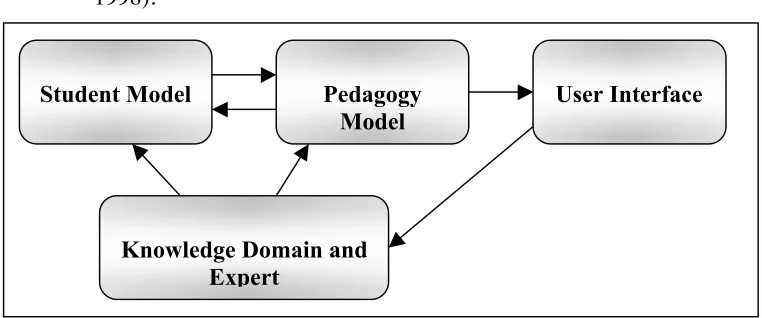
educational software into individual interactive components. Components include the knowledge domain covered by the tutor, a model of the student and a set of “rules” for deciding upon the pedagogy presented to the student. (Pedagogy would include the content and sequence of the material plus the type and content of the feedback given to the student.) The components can be constructed in a variety of ways, including rule sets, concept-relationship graphs and Object Oriented frames.
[image:5.595.126.507.580.739.2]“Intelligent Tutoring Systems (ITSs) are computer-based instructional systems that have separate data bases, or knowledge bases, for instructional content (specifying what to teach), and for teaching strategies (specifying how to teach), and attempt to use inferences about a student’s mastery of topics to dynamically adapt instruction.”(Murray, 1998).
Figure 1. A generalized architecture of an Intelligent Tutoring System, showing typical Knowledge Domain and
Expert
Student Model Pedagogy
Model
An extra layer of Artificial Intelligence such as a neural network, fuzzy or Bayesian logic, or a genetic algorithm is often added to parts of an ITS to establish weighting for decisions – to prioritize them. These mechanisms are typically used to reduce the problem space and to more efficiently utilize the ITS components. (Murray 1999). Murray notes the following benefits of an ITS compared to standard commercial tools for computer assisted instruction:
• Content is distinct from strategies
• Instructional content is modularized for re-use
• Generic teaching strategies can be used with different content
• Abstract knowledge structures can be used as the basis of presentation rather
than making decisions at the content level
• Tutor behaviour can be easily modified – a single change to the definition of
a strategy can apply to the whole curriculum
• Module reusability allows usage for several purposes – e.g. a topic can be
used for information, examples, summary and assessment
• Student learning preferences and needs are more flexibly met
• Definition and modification of instructional content is easier for the Instructor
(Murray, 1998).
Adaptive Hypermedia
Adaptive Hypermedia have emerged in a similar manner to ITSs, but from
multimedia and Web-based roots. Initially Artificial Intelligence was an add on to hyperlinked media, rather than central to the operation of the software. The
intelligence commonly determined which hyperlinks to show and in what sequence to present the content, usually based on some intelligent model of the user.
(Brusilovsky 2000). When used for educational purposes, any distinction between ITSs and Adaptive Hypermedia starts to blur.
Authoring Tools
Authoring Tools have been created which enable instructors to create ITSs through an interface built on generalized concepts of teaching strategy and domain
packages available commercially. Efforts by Murray and Woolf reported in 1992 showed that it took 100 person hours to develop one hour of instruction, compared with 100-300 hours for non-intelligent CAI. Eon and REDEEM, two authoring tools, are currently being used in a number of research areas and have been evaluated extensively. REDEEM takes 90 minutes of training to operate. By using content that has already been prepared for CAI, one hour of instruction can be produced in about three hours. There is a trade-off between the ease of use of the authoring tool and the resulting tutor’s sensitivity (the depth of knowledge that can be expressed and its adaptability to student needs). (Ainsworth et al. 1999, Murray 1999). Three authoring tools REDEEM, EON and the PACT tools are described more fully below in the discussion on ITS components. Any ITS that has a designer interface is to some degree an authoring tool.
The blend of Intelligent Tutoring Systems and Adaptive Hypermedia has evolved into Adaptive Web Based Education Systems. (Brusilovsky 2003). It is now possible to redefine the once discrete intelligent tutor. The components of a tutor can belong to more than one system. If a particular component is network-based, then other systems can share it. Further, network-based ad-hoc systems can form and dissolve dynamically.
Such dynamics have occurred in the area of e-commerce already – with vendors and customers using agent technologies to generate the most favourable allegiances at the time. Examples of systems include AuctionBot, MAGNET, eNAs, Casba and MARI. Significant research into these areas is being carried out in Europe, the US, Australia and Japan. (Kowalczyk et al. 2002),
Intelligent Agents
Intelligent Agents when applied to education can implement a distributed
explores the idea of individual components of an ITS free to collaborate and locate themselves, seemingly endless possibilities spring to mind. More than one “tutor” might be able to share the data of one student’s agent, for example, reversing the usual construct of one tutor for a group of students. Further, the tutor designed for a particular course at one university might become part of a different course altogether – at a different university.
There are a number of shifts in perspective being theorized as a result of the fluid nature of the Internet. One is the notion of student centred learning rather than the traditional instructor centred approach. The student rather than the instructor is seen as choosing the subject matter, the content and the media through which learning takes place. The student may opt for an instructor as part of the learning experience. In the traditional perspective the learning, subject matter, materials and media are controlled by the instructor once the student has enrolled. (Graves 2001), Research into the implementation of this shift in viewpoint has begun. As one instance, the computing department of Open University, UK called for PhD students in the area of student-centred e-learning design in October 2002. (Minocha and Rapanotti 2002),
Standards
Sharing implies standards. Standards for describing e-learning materials are emerging. The IEEE has created a draft standard for Learning Object
Metadata(LOM), (IEEE 2002). These have been implemented by IMSGlobal in an attempt to describe and classify learning objects and thus make them universally accessible. (IMSGlobal 2003),
If the description of the tutor’s knowledge domain is archived, then many independent tutors could be created by different institutions using the same
knowledge representation. These tutors would be intelligent exercises or ‘pedagogic agents’. Institutions would be able to share these agents when teaching a particular topic (from the current instructor centred perspective). From the student’s
perspective, there could be a choice of pedagogic agents (and thus a choice of strategies) to explain a given concept. The student’s knowledge could be broadened if the student’s agent could retrieve “tutors” that service similar domains, or locate a related domain that the student may not be aware even exists.
One way to view the ITS with respect to the semantic web concept is to draw an analogy between a text book and the Dewey or Library of Congress Classification Scheme. The instructor might select the textbook or the independent student might select the textbook that best suits his or her learning style and level, or the librarian – as an agent of either party - might provide a list of recommendations.
Agent recommendations would include where to find the tutor on the shelves (URI), an indication of the body of knowledge referenced by the tutor (another locator or perhaps an entire knowledge representation) and other LOM standard data such as author and title, running platform and size.
There is great potential for enhancement of the educational experience through the rebuilding of ITS components in the new technological framework.
Intelligent agents are currently being developed in Brazil for use in the distance education context. A communications agent is used to manage interaction between agents, a group of pedagogic agents are in charge of learning activities and strategies and a student agent is responsible for user modeling and agents’ coordination. (Silviera and Vicari 2002),
This thesis will outline a practical agent architecture for deploying intelligent tutoring. It must be extensible and be flexible enough to expand with the changes preempted above. To do this requires the decentralisation of some of the structures commonly kept on a server. Some types of student models need to be generated and stored on the student’s machine, in particular the models that describe the
educational level, subject matter and topics that locate the student.
Much research has gone into just how agents communicate with each other. Standards are emerging for agents, the language they use to communicate, their behaviours and the language used to describe the knowledge that they share.
The JADE project (Bellifemine and Trucco 2003), uses distributed environments based on Java RMI. The intelligent tutor basic components can be integrated with intelligent agents that communicate through ACL (Agent Communication
Language), an emerging standard (FIPA 2003).
Accompanying the shift towards a dynamic and fluid Internet, relevant standards have been evolving, including the FIPA (Foundation for Intelligent Physical Agents) standards for intelligent agents and agent communication and the Object
Management Groups standards for object exchange(OMG) (OMG 2003).
“Because it is likely that agent technology and object technology specifications will eventually overlap (e.g., both need namespaces, have lifecycle services, use persistence, address mobility, etc.) then it is desirable that the two families of specifications not conflict needlessly.
The JADE project is well documented and implements these standards using Java technology.
XML web services developments are also intricately tied into the new Internet distributed programming technologies – being a system of exchanging objects in XML-defined text. XML-defined text underlies the standards set for agent communication. The similarity between the two perspectives on distributed networking suggests some convergence in the future.
Two web services standards groups are emerging here. The open source group is aligned with OMG which have developed CORBA (Common Object Request Broker Architecture) object exchange and WSDL (Web Services Definition Language) for implementations of web services and object exchange. OMG enters web services from the software design/modeling perspective. The Microsoft-IBM group, among other business focused groups, is trying to make faster progress and is implementing standards set by the Organization for the Advancement of Structured Information Standards (OASIS). These standards are very business specific and are being delivered faster than the OMG standards. In particular OASIS has just delivered the specifications for security - Service Provisioning Markup Language (SPML). (Taft 2002, McCarthy 2003).
OMG wish to introduce Enterprise Collaboration Architecture (ECA).The following quote from InfoWorld hints at the cause of some of the underlying divisions, with the focus on mapping rather than evolutionary products as the source of standards:
“By defining and storing business collaborations as models, companies are provided immunity to the ongoing evolutions of underlying middleware, data formats, and other
infrastructure, said Jon Siegel, vice president of technology transfer at OMG, based in Needham, Mass.” (April 2002).
Current research
Current research on ITS is focusing on the development and evaluation of
educational strategies implemented by intelligent tutors (some research is listed in the pedagogic module description below). Research is also being conducted on standardized ways of modeling users and knowledge, of intelligent document retrieval and refining existing computer – based training delivery systems like WebCT. (Tang and McCalla 2003, Mazza and Dimitrova 2003, Kosba et al. 2003).
The complexity and usefulness of ITS is resulting in worldwide collaboration between researchers. Papers frequently have three and four authors, from different institutions. For example, there is collaboration between Laboratoire d'Informatique, de Robotique et de Microélectronique de Montpellier (LIRMM) in France and the Rumanian Academy Research Centre for Machine Learning, Computational Linguistics and Conceptual Modelling in Bucharest. They have collaborated to develop a tutor EU INCO that teaches the (English) language of finance as a foreign language. (The tutor features an agent that searches the Web looking for metaphors to use in teaching linguistic concepts) (Trausan-Matu et al. 2002).
An editor of a definitive conference dealing with ITS research comments in the introduction on the selection process for research papers:
“Toy systems were criticized, real scale, well evaluated experiences were encouraged. Real size research on ITS favors real size research groups. As a result many papers are signed by multiple authors. Geographically isolated
scientists tend more and more to collaborate remotely via Web…..” (Cerri et al. 2002).
Many teaching strategies have been trialed in the history of ITS development. These strategies, their success and the educational theory upon which these strategies are based are outlined next.
Educational Underpinnings
equivalent of 40 months (almost 4 years) of on-the-job experience. In another example, students using Anderson’s LISP tutor (1990) completed programming exercises in 30% less time than those receiving traditional classroom instruction and scored 43% higher on the final exam. (Murray 1998). Now “we can reliably build intelligent tutors that are about half as effective as human tutors.” (Corbett et al. 2000). It is clear that one tutor per two students is more than most institutions can afford and that intelligent tutors will only become more common. As research continues, the effectiveness of ITSs will also improve.
ITSs generally use an underlying learning theory to underpin the teaching strategies (pedagogy) employed in the tutoring process. Mostly, detailed educational paradigms are omitted in favour of recognized, general, learning strategies. These are used to justify the specific strategies employed by specific tutors. The strategies are very much dependent on the purpose of the tutor – teaching the language of the
marketplace to under-graduates, primary geometry, teaching future pilots to fly or students with disabilities that cannot sequence material for themselves. The major streams of thought are introduced next, followed by general strategies, with specific strategies handled as part of the discussion on the pedagogic model below.
Piaget and Vygotsky
Not surprisingly, most of the theories referenced by the authors of ITSs are based on the constructivist models of cognition developed by Piaget and Vygotsky. Learners build their understanding and concepts rather through engagement than as empty vessels into which knowledge is poured. To over-simplify, Piaget developed his theories of innate learning processes based on the way humans learn to manipulate the natural world around them. Vygotsky was inclined to see the process as one that involved the society around a person – that there were significant cultural
determinants in the process. His views are used to understand the ability to learn technologies and apply them in different ways, to underpin the importance of words and verbalising, and to provide educational “scaffolding” when the learner was exploring his/her “Zone of Proximal Development”.
actual developmental level refers to all the functions and activities that a child can perform on his own, independently without the help of anyone else. On the other hand, the zone of proximal development includes all the functions and activities that a child or a learner can perform only with the assistance of someone else. The person in this scaffolding process, providing non-intrusive intervention, could be an adult (parent, teacher, caretaker, language instructor) or another peer who has already mastered that particular function.” (Schütz 2002).
Beyond this zone is the realm of cognitive overload – where more information and decision-making is present than the learner can cope with. Authors of ITSs have been mindful of this situation and usually adapt the user interface to the user’s level of performance. (Aleven 2002, Brusilovsky 1997).
Cognitive/constructivist
Cognitive tutors have grown from work by Anderson, Corbett and others at Carnegie Mellon University. (Anderson et al. 1995). The basis of their tutors is the ability of the tutor to solve the same problems that the student is asked to solve. The student’s ability is traced as a subset of the knowledge domain in the tutor. The tutors rely on the ACT-R theory of skill knowledge. Here knowledge is assumed to be either declarative or procedural – either items (‘chunks’) of knowledge, or skills. Both are developed as a result of practice. Goals are set (problems to be solved) and student solutions compared to the solution paths predicted by an expert. The expert may predict commonly made mistakes as well. The steps on the path are represented by production rules. The mental processes modeled as productions (skills) are
“matching”, “selection” and “execution”.
The Carnegie-Mellon team has been using the tutors to further study the psychology of cognition. Some findings include:
• US algebra students prefer mathematics problems in words rather than
algebraic expressions and this is not reflected in Russia, where algebra starts in grade 2
• Many students lack the metacognitive skills to seek help when they need it
Continuous evaluation is the key to improving the quality of intelligent tutors. The findings have ramifications for human tutors as well.
Active Learning / dialogue
Active Learning is a concept that has been used for centuries in the practice of teaching. There have been a number of attempts to formalise a definition of the processes involved in the many successful teaching strategies encompassed by the concept.
Modell and Michael (1993) are quoted as defining “an active learning environment as one in which students individually are encouraged to engage in the process of building their own mental models from the information they are acquiring. In addition, as part of the active learning process, the student should constantly test the validity of the model being constructed.” (TRC 1999).
This is similar to the constructivist model above and to theories of metacognition often used to teach “real world” problem solving to adult learners. In the latter instance, metacognition is really developing the model of one’s own learning, and continually testing that model. (McLoughlin and Hollingworth 2001).
Active learning occurs through active involvement with instructional material either through collaborative or self dialogue. The major “Active” experiences are observing
and doing. (Shang et al. 2001). When a student studies textbooks or worked out examples they learn with greater understanding if they explain the material to themselves. However, not all students self explain or do so thoroughly. (Renkl et al. 1998). Much of the challenge with ITS pedagogic strategies is to create strategies that compel or coax students to be engaged in some form of self explanation – drawing analogies or understanding metaphors, inferring, concluding, rehearsing, summarizing – in some type of medium - written, graphical, auditory or spoken.
Emotional State
Research at the Federal University of Rio Grande in Brazil models the mental states of students. Concepts such as effort, confidence and independence are used as guides to the teaching/learning strategies employed. (Vicari 2002).
General Learning Strategies
Drill, Exercises and Practice
The aim of most tutors is to provide practice through repetition. This is an age-old approach to learning with the aim of helping memorize skills and knowledge.
Learning by analogy or metaphor
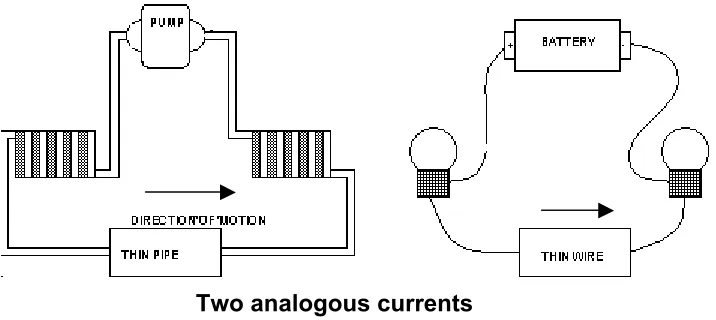
Analogy is treated by Meyer as “similitude between elements from semantically separate knowledge domains.” (Meyer 2002). She quotes Sticht and Ortony as educational theorists who see analogy as an important learning tool. She argues that the reason that this type of learning has not been widely used in ITS to date is because of the complexity of modeling knowledge domains. Modeling analogous domains as well as the domain to be taught is economically prohibitive and potentially computationally expensive.
An application was created to teach network routing using analogies such as post office delivery of mail, road networks and rail networks. A concept map was drawn and analogous tags (using words from the analogous knowledge domain) were added to the diagram. The analogy tags were well received by the students, who wanted to be able to create their own analogies.(Meyer 2002).
Case-based learning – learning by example
The principle used in learning by example is that the study of cases and worked examples gives the student the opportunity to understand the underlying concepts Underlying concepts when applied to the domain of mathematics include the use of operators that apply to a class of problems, the transformations that occur when these operators are used and the sequence in which the operators should be used. (Chi et al. 1989, Anderson et al. 2002).
student’s attention on the crucial parts of the problem and allow the student to search for knowledge of sub goals as well as giving the opportunity for self evaluation. The risk of learning underlying concepts, as well as the simpler operations demonstrated by the examples, is that the operator technique may not be learnt as thoroughly. The operator techniques may be obscured by cognitive overload from the additional (underlying) concepts. (Mathan and Koedinger 2002).
Open Student Model Learning
In this strategy, the student is informed of the way the instructor is viewing the student’s knowledge, skills and progress. The intention here is to engage the student in thinking about their own learning and at the same time to ensure that the model of the student (perhaps an affective description not just assessment) is as accurate as possible. (Zapata-Rivera and Greer 2002). There are also political implications to gaining the student’s tacit consent. Judgment is not made about a person behind their back. The educational underpinning is again this notion of active learning and
dialogue with self. “Students who engage on the meta-cognitive level achieve significantly better results than those who do not.” (Hartley and Mitrovic 2002).
Structure of typical ITS
The architecture of Intelligent Tutoring Systems is varied and complex when dealt with at the modular level. Unique modules are often created to deliver very task specific content. The delivery of the Dijkstra-Gries formal programming
methodology ITS for example, is described in four layers identified by the service provided, the upper levels drawing on services from the lower levels. The lowest level has components User Modelling, Advice (syntax semantics, principles and strategies) and Expresso (an arithmetic and predicate logic toolbox). User Modelling
comprises two sub modules – (the methodology and concept models in one, and the student’s history and knowledge model in the other). At the highest level one sub-module of the Tutor is the assistant. It draws on Advice and User Modelling as well as the Calculator (The Calculator is two levels below and draws on services from
Research into refinements that introduce efficiencies can modify or add new modules. Additional functionality is added to most tutors as they mature. The best approach to describing the general architecture of an ITS is to describe the basic modelling that most ITS are required to perform. Most ITS model the student, the teaching technique and the structure of the knowledge to be taught.
There also needs to be an interface for the learner and, if able to be authored, an interface for the instructor.
Pedagogic module
The pedagogic model is the component of an ITS concerned with determining which strategies to employ given a specific state of the student model. It is usually a set of production rules or some alternate if/else structure that evaluates a state. A typical rule might
be:-if__state/implication X :-then__action/implication Y.
Just what sort of content (representation of a concept) should be loaded, what level of feedback, when to provide feedback and what level of difficulty to use, are all
decisions that might be taken by the pedagogic model. Different specific strategies are used depending upon the purpose of the ITS and the appropriate general
educational research used. Generally the strategy rules are hard coded into the system by an expert in teaching the subject matter.
Rules can be built by neural networks and other machine learning techniques, if case-based data is available. The “neurule” is an interesting example and can aid in developing teaching heuristics. Neurules are a hybrid form of knowledge
representation. Rules are supplemented by a “significance factor” or bias. The significance factors are developed using neural networks and associated with the existing symbolic rules. This bias is used to prioritize the firing order of the rules.
Specific Strategies
concept mapping
Concept maps are intended to give the student an overview of the territory they are exploring, to save them perhaps erroneously inferring where they are in the
knowledge domain. An interesting twist to this technique is StyLE_OLM which uses an interactive concept map of the student model (the perceived map of the student’s ability) as seen by the ITS and the instructor. StyLE-OLM allows the student to modify the map of learning that the ITS has formed, requiring that the student be involved in valuable meta-cognitive processes. (Dimitrova et al. 2002).
providing research materials and selected, sequenced data
EU INCO, mentioned earlier, is typical of most tutors in that it adapts the material presented to the student, to suit what needs to be learnt. By finding uses of financial terms on the web, the tutor is able to give the student a list of websites where a targeted word is used in context. (Trausan-Matu et al. 2002).
exercises
The standard teaching strategy of offering drill exercises in problem solving is one that takes a considerable amount of effort on the part of the instructor. Preparing on-line materials is often very time-consuming. Martin has added an automated problem generator to the SQL tutor. The new component takes advantage of the Constraint Based Modeling of the student (see below) that is used in all tutors from the University of Canterbury. The list of violated constraints (concepts not understood by the student) is used as the basis for generating new problems. Martin found that the use of the generated problem set improved students’ learning speed by a factor of two. This is attributed to two possible causes (or a combination, either more practice as a result of more exercises being available or better selection of the exercises generated appropriately for each student. (Martin and Mitrovic 2002).
giving immediate/ belated feedback
Experiments with KERMIT, the database design tutor, show conclusively that automated feedback during the tutoring process improves the performance of
results suggested that there was no difference with respect to when feedback was given, only whether it was given. (Corbett and Anderson 2001).
There is debate about when an ITS should provide feedback on student performance. Studies have shown immediate feedback (immediately a student makes a mistake) and belated feedback at the end of the exercise (Mitrovic 1998) result in similar short term performance in post tests. Indications are that long-term, deep understanding is best developed by leaving feedback until the student has had a chance to test their own actions. (Mathan and Koedinger 2002).
Mathan and Koedinger cite Schmidt’s guidance hypothesis as an attempt to explain what is happening. Feedback is seen to precisely direct the student’s actions after each feedback presentation. There is a short-term gain when performing on tasks that precisely fit the actions that have just been learnt. However feedback can mask the cues inherent in the natural task environment by training the students to be dependent on feedback. “Generative” skills, the ability to choose operators and apply these to specific task contexts, are handled well.
Instant feedback may prevent many skills such as error detection and metacognition from occurring. These “evaluative” skills may go unpracticed. (Mathan and
Koedinger 2002).
simulation / external representation
Probably the best example of the effective use of simulation is in the training of pilots on a flight simulator. The advantage of having an intelligent, distributed simulation is that there is the opportunity for feedback and practice anywhere and at any time. (Minko et al. 2002).
Clearly simulations are very useful for teaching familiarity with specialized
equipment and the procedures needed to operate them. They can however, be used to teach quite abstract skills, such as the problem solving needed in military tactics. Here troops and military equipment are potentially the basis for developing new procedures, not just existing ones. (Joab et al. 2002).
understanding of both domains. The problem of cognitive overload is one they are testing. Below is a snapshot of one simulation.
Figure 2. Educational strategy using simulation. (Brna and Duncan 1996).
The border between a simulation and an external representation (graphical, animated or whatever) is obscure and (in the context of this paper) irrelevant. Both terms are used freely in the literature. How would one categorize SimForest? SimForest is an ecological simulation which allows students to inspect and manipulate the underlying mathematical equations that influence ecological balance. (Murray et al. 2001).
worked examples /cases
Mathan and Koedinger experimented with an active walk-through of worked
examples, where instead of the solution being passively presented (and students then being tested on their learning), the examples are presented with the student required to answer questions, with assistance, as the solutions are shown. As expected, those students who had the walk-through did better than those without. (Mathan and Koedinger 2002).
multimedia / preferred medium presentation
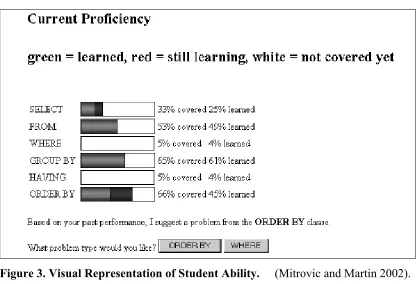
It is now well established that ‘a picture is worth a thousand words’ and that clear graphical representations are often easier to understand than verbal ones. This is a common teaching strategy and exploited at length in most refined ITS. A current example is e-KERMIT, where the system’s understanding of the student’s ability is displayed as a series of labeled sliders that represent each assessed criterion. Each slider shows the level of achievement as a proportion of the total possible.
Figure 3. Visual Representation of Student Ability. (Mitrovic and Martin 2002).
natural language dialogue
A number of ITSs are used for the teaching of spoken languages and use natural language parsing units (NLUs) in their architecture (as the knowledge domain). A notable current use of an NLU is in the work of Aleven, et al. Their extension of Anderson’s geometry tutor requires the students to verbalize geometry theorems as a form of self explanation. It asks the students to construct, from a restricted
vocabulary, explanations in their own words. The new architecture shows it is
capable of this task and the results are encouraging, with room for further experiment and improvement. (Aleven et al. 2002).
Knowledge domain module
The knowledge domain is used for defining the content to be presented by the pedagogic model. It is also used for comparing with the student model to discover what the student does/doesn’t know. Often an Expert module is used to extract correct results from the knowledge domain.
The main concept involved in modeling any knowledge is the notion of ‘ontology’. Trausan-Matu quotes Gruber in defining an ontology, in the context of Artificial Intelligence as being “a description (like a formal specification of a program) of the concepts and relationships that can exist for an agent or a community of agents”. (Trausan-Matu et al. 2002). An ontology is the set of concepts and relations that are considered fundamental to an area of knowledge and it is typically represented as either a semantic network (as is the case with Trausan-Matu et al’s ontology-based meta crawler) or as a hierarchic structure of possible pathways (as is the case with Mitrovic et al’s SQL tutor (Mitrovic 1998) and the Computer Intrusion Detection Tutor (Woo et al. 2002).)
Nodes in the above structures are typically topics, concepts, skills, facts,
misconceptions and sometimes exercises. The links between the nodes are usually labeled relationships. Frames are often used to represent nodes because of the ease with which they can be programmed in an object-oriented programming language. If a hierarchical vision of the knowledge is created, it frequently is used to represent levels of granularity like:
Course has Units has Lessons has Topics has Subjects has Exercises.
it could be argued that, because XML itself is based on a hierarchy of elements, there is in fact a hierarchical meta structure to the knowledge representation.
Functional languages like Prolog and LISP are also used to map knowledge, but these are usually in the form of rules that link variables. The model tracing tutors from Carnegie-Mellon move through lists of rules such as those shown in the section on designer interfaces (Figure 6) below.
Student model
The Student model contains a description of the state of the student with regard to his/her educationally significant attributes. Attributes can be as specific as short term knowledge and misunderstandings relative to a given topic, or can be more general descriptions of skills (strengths and weaknesses) as well as including an estimation of the general level of mastery of a given knowledge domain. Significantly,
educational attributes can include quite personal, affective qualities such as the degree of motivation, dependence and confidence. (Suraweera 2001).
Constraint Based Modeling (CBM)
Constraint Based Modeling appears in a number of Intelligent tutors that have been created recently, including one for teaching context free grammar (Reyes and Galvey 2000), and three from the Department of Computer Science at the University of Canterbury in Christchurch, New Zealand (including the example of the SQL tutor, below). These models draw from concepts formulated by Stellan Ohlsson over a number of years, first published in 1992. (Ohlsson 1992).
Mitrovic argues against the use of the Cognitive approach:
“If the goal is to model student's knowledge completely and precisely, student modelling is bound to be intractable…. ….however, a student model can be useful even if it is not complete and accurate ….
CBM tests the final solution to see if it is in the knowledge domain rather than testing each cognitive step on the way to that solution and thus only generates final rather than immediate feedback. Recent results by Mathan and Koedinger (as already mentioned) suggest this may be an advantage rather than a problem.
The SQL tutor uses CBM to model the student’s level of knowledge and compare this to the knowledge base. It models the knowledge domain in the form:
“If <relevance condition> is true for the student’s solution, THEN <satisfaction condition> must also be true.”
If the student’s response to a given problem is considered relevant to the problem then the student’s solution is evaluated. Success leads to no further action, if the student fails then feedback is given based on the error.
The SQL tutor builds a correct solution for the problem that the student has attempted, but has answered incorrectly. It picks up the student’s approach, rather than the preferred solution, by matching solution patterns with the student’s answer. Feedback is derived from the outcome of the comparison.
The level of difficulty of the next problem chosen is determined by the number of violations of particular constraints. An added layer of machine learning is used to select a target problem that best teaches the constraint(s) deemed suitable (Martin 2001).
There are very few assumptions made about the students’ style of learning, the motivation that they bring to the exercise, their degree of independence, etc. The only real assumption is that the solution proposed by the student is ‘irrelevant’ to the given subsection of the knowledge domain. It is judged that the student’s irrelevant attempt cannot be correct.
Overlay
Overlay modelling of students is based on comparison of student performance with an expert’s mastery of a knowledge domain. The domain is expressed in generic terms such as rules and concepts and the student’s mastery of these aspects of the domain is calculated. (Suraweera 2001).
Cognitive
The student modelling technique developed over the past two decades at Carnegie Mellon University for algebra, geometry and programming tutors is based on the cognitive learning theory previously mentioned. The approach, termed “model tracing” is top-down in nature. The knowledge modelling uses production rules to link “chunks” of knowledge to goal oriented (problem solving) decisions. All possible paths as well as errors (“buggy rules”) are mapped to the knowledge base. The student’s performance is traced as he/she descends the decision tree to a
solution. Feedback is provided at the point of error and a long term record of student ability is also kept for providing further tasks.
The problem space is large and creating each production rule is laborious, but the tutors have been shown to be educationally successful. (Anderson, 1995) (Suraweera, 2001 pp.12-14).
Stereotyping
The “Fixed” stereotype approach to student modelling captures the student’s
responses and then assigns the student a stereotype based on the responses. Students may be moved from one stereotype to another. For example the student may move between performance levels, but the descriptions of the levels remain fixed.
The student in the StyLE-OLM scientific terminology tutor of Dimitrova, et al, 1998 starts with an initial stereotype that is then modified by student responses. Overlay modelling is used to draw new conclusions about the student based on natural language dialogue. (Dimitrova and Dicheva 1998, Suraweera 2001).
Belief Network
belief network. For a given skill, whether the student is novice, intermediate, advanced or expert is determined by listing the likelihood of the student answering certain categories of questions correctly. To reduce the size of the calculation for purposes of efficiency, the number of probabilities is based on categories of questions rather than on individual questions.
The probability for a given skill level is calculated as the total of the probabilities for the prior (prerequisite) skill levels plus the probability that some of the errors were slips plus the likelihood that some are lucky guesses.
Shang states that the advantages of this modelling approach are:
• Questions can be added dropped or moved between categories with minimal
overhead
• The model allows for slips and guesses
• The time complexity is linear
• Only a small number of parameters are involved.
(Shang et al. 2001).
Designer interface
The designer interface is the point of contact for those that design the knowledge base, the teaching strategies and store the presentation material needed for each lesson. If authoring tools have not been created to assist in this process then the material will have to be programmed in, probably by the creators of the tutor. A designer interface really implies that the tutor will be updated or used for a different purpose. Creating an authoring tool means coming to terms with the general concepts that make up the underlying components. Three noteworthy examples of authoring tools are Eon, PACT tools and REDEEM. Eon is noteworthy for its broad use, REDEEM because it fits neatly into the current mainstream teaching technology and the PACT tools because of their rule-based authoring.
Eon
the graphical symbols are available for use in an editor window. A hierarchical structure can be created by (or under the supervision of) the domain expert.
The “Interaction Editor” has an extendable palette of widgets for constructing the learner interface. The widgets have properties that allow for the wide use of graphics and storage for Contents objects.
A “topic/content” browser links the student interface components with their respective places in the knowledge hierarchy.
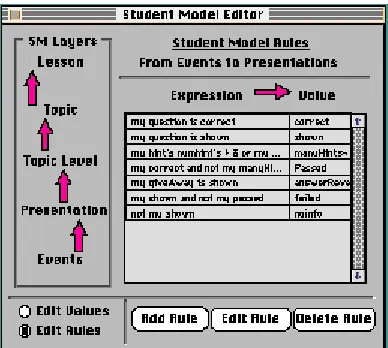
[image:28.595.128.322.339.513.2]The student model has its own editor for establishing the values of certain student actions. These values are the basis for making pedagogic decisions. Rules about these actions can be written or altered in this window.
Figure 4. The Eon Student Model Editor. (Murray 1998).
The teaching model is created using the “flowline editor”. Icons like “Decision”, “Animate”, “Erase/remove”, “Sound” and “Message Box” are available for
constructing an event-based activity diagram. The diagram models all possible events for each atomic node of the knowledge being taught.
Tutors created with Eon include the Keigo “honorifics” tutor, the Statics tutor, the Chemistry workbench and the Refrigerator tutor. (Murray 1998).
REDEEM
taught are available and created from an off-the-shelf commercial coursework product such as “ToolBook”. The authoring tools of REDEEM allow the teachers to describe the courses, construct the teaching strategies and determine which materials will be used for which categories of students (The student model is based on the Stereotypes technique.)
After the course, sections within the course and relationships have been described (the knowledge-domain), each section and “page” of the course material is described according to a set of criteria. Each criterion has a slider for setting a value (e.g. degree of difficulty). The ratings and relations are used for creating routes through the domain.
Figure 5. REDEEM’s Teaching Strategies Design Interface (Ainsworth et al. 1999).
An interface is available for setting default teaching strategies and defining new strategies. The default rules have been created by interviewing teachers. The teaching knowledge is ‘black box’ with the teachers able to overlay their own strategies. Easy exercises will be given early in the topic and harder ones later unless specifically overridden.
PACT
The PACT Center Cognitive Tutor Authoring Tools for creating rule-based, model-tracing tutors require substantially more effort. A sound knowledge of functional programming techniques is necessary to encode the rules, but the resulting tutor can have as much knowledge as the user desires, with any level of granularity.
Below is an example of a rule that an author might need to create. The “buggy” rule defines a common addition error that a student might make - forgetting to carry:
(defrule buggy-add-addends
(addition
(problem ?problem))
(problem
(name ?problem)
(subgoals $? ?subgoals $?))
?current-goal <- (process-column-goal
(name ?subgoals)
(carry ?carry)
(first-addend ?num1&:(neq ?num1 nil))
(second-addend ?num2&:(neq ?num2 nil))
(column ?column)
(sum nil)) =>
(bind ?sum (- ?num1 ?num2))
(modify ?current-goal
(sum ?sum))
(printout t "Add addends." crlf) )
Figure 6: The CLIPS-like functional language used to create rules in JESS, the Java rule engine. (Choksey 2003).
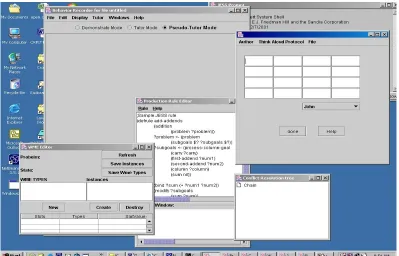
Figure 7: The desktop after loading the netBeans version of the PACT authoring tools.
Student interface
Much research has gone into HCI and nowhere are the concepts more important than in the process of learning. Issues such as ease of use, cognitive overload, use of screen real estate, consistent appearance, useful and “intuitive” tools, and optimized help must be considered in almost every GUI design. Specific designs extend learning theories for specific applications. Ego, for example, allows the student to backtrack if they make an error. They can discover the answer themselves instead of being told. (Ng et al. 1995). Collaborative learning can be carried out with chat interfaces, problem solving can be enhanced with statistical graphing tools and procedures learnt through the manipulation of virtual reality simulations. Reading tutors can listen. (Features of these systems have been mentioned above.)
Most interfaces include a place for feedback to be viewed by the student,
Virtual Assistant
Virtual assistants are frequently used to deliver feedback to the learner in a way that makes the interface friendlier by creating a more human-like interaction.
In the cockpit-like interface for simulating engineering exercises in mechatronics, a virtual assistant is employed as a tireless go-between, providing feedback as well as communication between students, tutors and lecturers. (Geoffroy et al. 2002). Don Pancho or Dona Rita are both agents that represent basic emotions such as happiness, sadness, anger, surprise and disgust. Changes in emotion accompany the primary school students’ interaction with the Tutor GUIs. The agents were found to have a positive effect in guiding the students to particular concepts without forcing them. It was hypothesized that the role could have been successfully expanded so that the assistants also offer “interesting paths and external learning resources.” (Zapata-Rivera and Greer 2002).
In SIMPA the work-station trainer the professor and his companion parallel the instructor and the student and are linked to the student’s performance. They hold a dialogue as a result of questions asked by the companion. The companion asks those questions that the student should have asked, but didn’t. This draws issues to the attention of the student or raises issues that the student is hesitant to mention. (Duquesnoy et al. 2002).
Delivery of Software
The context in which an intelligent tutoring system is to be used will have a bearing on the architecture chosen to deliver the service. While the following considerations for determining an appropriate architecture are listed separately, they will obviously be interrelated. As most ITS are initially research tools, delivery will be strongly influenced by the context and constraints of the experiments for which the tutors are designed. Delivery mechanisms may also vary according to:
• Type of subject matter and software architecture
• Type of student
• Type of hardware/network facility
If a high-speed link with sufficient processing power to meet demand is available (and high demand flows are given priority) the distinction between a stand-alone application and a distributed one becomes transparent. The advantage of running an entire stand-alone application on a local machine disappears.
There are significant advantages to using a distributed architecture from the point of view of the service provider. Centralization of key components allows for the reuse of data, eliminates the requirement of having to update multiple copies when adding modules, and allows for the sharing of computing resources and data.
An interesting factor is that the quality of functioning of a tutor may be improved by collecting a large, varied set of sample cases from multiple sources. If it has a case-based machine learning module included in its operation, an ITS will better refine its capabilities by collecting cases in a central repository.
ASIMIL, a flight simulator collects error cases that have already been processed and reuses them if the same error arises again, saving on processing and latency of reply. (Aka and Frasson 2002).
The distributed models used in Intelligent Tutors build on either traditional Web-Based technology or new technologies that allow applications to interact in a more autonomous manner. Agents can behave independently and collaboratively. They can also be mobile on a network. The agent can be seen as situated in its own context, interacting with other agents as part of a community to solve a given problem. Intelligence is often viewed as “emergent” – the result of problem solving by a community of agents which is greater than the sum of its parts. (Luger and Stubblefield 1997).
Traditional Web-Based, 3-Tier Architecture
The number of students that can be taught at one time is only limited by network capacity and computational power.
The traditional delivery architecture for the World Wide Web has been to run an HTTP server with a database. Upon request, the server runs a script that accesses the database for appropriate data and returns a dynamically generated web page to the client that made the request. The server starts multiple processes (on different ports) to handle concurrent requests. Java applets, Flash files, etc can be embedded in a web page to act as an interface. Applets and JavaScript can be used to run some of the programming needed for the tutor to operate on the client machine. Technologies used for the server-side scripting that makes these ITS adaptive include ASP, PHP, JSP, CGI and Servlets.
Agent distributed
Once the notion of modules and intelligence is blended with the distributed system it is not a great leap to consider ITS components as agents themselves.
Many of the intelligent tutors claim to be using “Agents” when in fact they may be cousins of agents – parts of a concurrent/distributed system. The distinction drawn by Wooldridge is that agents are autonomous and make their decisions at run time whereas the synchronization and co-ordination structures in a regular distributed system are hardwired. Secondly, Agents encounter each other as “self-interested entities” rather than being assumed to have a common interest in making the overall system function correctly. (Wooldridge 2002)
RPC (the original Remote Procedure Call for distributed systems) has been adapted to deal with Object Oriented concepts of message passing to invoke and receive services from a remote server. This model is not all that different from a normal HTTP web server model, with the exception that it uses object and message
exchange protocols rather than a text-based exchange. DCOM, .NET, CORBA and RMI are technologies that can be used as middleware brokers for “agent” exchange. (Oberg 2001). While HTTP can be avoided, these technologies rely on the TCP/UDP transport layer of the IP suite of protocols to shift their datagrams around the
Internet. It is possible to integrate an HTTP-based component to such a system.
As mentioned previously, FIPA has provided widely accepted standards for agents and JADE implements these standards in Java using RMI middleware.
Stand-Alone Applications
The main value in using a stand-alone application is when the processing and network services cannot support a distributed system. Any intelligent system
involved in parsing a semantic or hierarchical network of nodes is going to require a deal of processing ability if it is to remain viable when expanded fully. If multimedia and communications play a major role in the learner’s interface, then having a dial-up 56kbps connection will be a likely bottleneck. In these circumstances a stand-alone application may be a better option.
Users of the reading tutor LISTEN spend 20% of their time waiting for the tutor to process the input and respond with the required feedback. (Mostow et al. 2002). A situation like this where auditory data has to be parsed and evaluated over a 56kbps modem would be completely unworkable. (The evaluation of ITS performance below deals with response latency in more detail.)
The major drawback, of course is that a stand-alone application cannot be readily modified. In this situation, Java’s Web Start technology might be useful. If the program is not outrageously large – an uncongested modem connection will
used Web Start to download working Java programs for students to manipulate locally. The entire environment needed to run the program is established and sandbox security is created on the local machine. The disadvantage of the system is its inability to permit socket creation and thus networking from the downloaded program. (Newmarch 2002).
Review implications
While there has been a deal of research on how to model students, knowledge and teaching with a view to making effective intelligent tutors, there has been little mention of just how these tutors perform in terms of processing time and bandwidth. The latency between user input and tutor response will be a major factor in
determining the educational value of a given tutor.
Performance: Survey and Studies
ITSs are mostly research tools that have not been subject to public testing in the same way as a commercial product. In order to assess the viability of deploying an ITS an evaluation of the computational performance of these programs is necessary. An initial survey of existing Intelligent Tutoring Systems was completed, focusing on likely performance issues.
Questionnaire design and administration
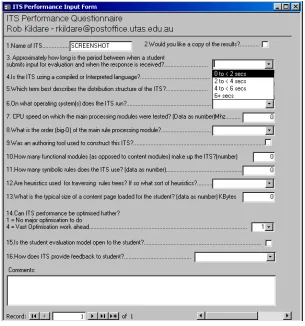
[image:37.595.126.431.425.751.2]Questions contained clarification internally when considered necessary. In the case of potentially open ended questions, a choice of likely answers was given and an “other” option. An opportunity to qualify answers was deemed appropriate, given the diverse nature of the systems, and space was provided on the form.
The questionnaire could be regarded as a pilot survey to determine whether further research was warranted and if so, to provide an opportunity to identify pitfalls and refine questions.
design of questions
It was assumed that there would be significant detectable performance differences between different types of ITS. Variables that were likely to affect performance were identified and questions about these were included in the questionnaire. It was hoped that answers to these questions might produce clusters to help identify the different “types” of ITS and their attributes. In addition to these variables, three educational features were seen to be important in the deployment of a tutor. These features were the type of feedback given to the student, the distribution method of the ITS and whether an authoring tool should be used. If there was any association between these factors and performance, it should be detected by the questions.
Indicator of Performance
“Response latency” was chosen as the most suitable indicator of performance because it represented the critical (and frequent) interaction between the user and program as well as requiring the involvement of the key modules in the system. Response latency was defined in the questionnaire as:
“..the period between when a student submits input for evaluation and when the response is received… ”
Response Latency is a measurable aspect of performance, but evaluating the
experience. A corollary of the active learning/constructivist theory of learning, (that active involvement leads to construction of meaning) is that inactivity results in diminished involvement and therefore diminished learning. A student engages in active learning when using an ITS by engaging in the exercises presented by the tutor, focusing on the content, engaging in self dialogue (including metacognition) and engaging in dialogue with the tutor. If delays in responding to the student are great enough to be distracting, then self dialogue as well as task activity will most likely diminish.
A user’s response will depend on many psychological aspects including his/her expectation of the system. Regular indications of a task being completed, such as a progress animation, can temper users’ expectations of instant service. (Klein et al. 2002).
There have been no studies that attempt to untangle the complex relationships between variables such as frustration, expectation and attentiveness with respect to learning and response latency. Ass. Prof. Dr Nancy Alvarado, whose interests lie in this area, pointed out that if time is of no concern to the user then slow programs are not a problem. She also suggested frustration may be sufficiently but not necessarily connected to aggression. Aggression and anger may or may not be connected to cognition. The question “What is satisfactory performance?” remains open. (Personal communications, 4-16th September, 2003).
There are a few metrics in the literature suggesting what appropriate times might be.
“Feedback should be commensurate with action –Echoing input < 0.1 secs
–Page turning < 0.5 secs –String search < 4 secs
–Provide time affordances where delays are inevitable •Where delays are inevitable and unpredictable, users need reassurance that an operation will complete
•User sensitivity to delay depends on context
•User interface should provide time affordances such that delays become part of the accountable behaviour of the system”
The current Human Computer Interface wisdom according to work by King (quoting Schneiderman and Shackel) suggests that there are three levels of satisfactory web-based performance, depending upon the task being performed and the user’s
expectation that this is indeed what is being performed. The first is instantaneous, for tasks such as typing or engaging in dialogue where speed of communication is basically as fast as the user can act. The next is the 1 second level, where a change or move is expected. The slowest is about 10 seconds where the user expects the
software to do serious searching or processing of some kind. (King 2003).
Most tutoring that requires in-progress immediate feedback emulates a human tutor and might be described as thoughtful dialogue. Ideally this would occur in less than a second. Evaluating an entire exercise is not so frequent, being only at the end. The user will accept a delay in the order of the slowest level without any major impact.
A response latency of up to two seconds was considered by Casual Lecturer in HCI, Kevin. Manderson, from personal observations to be a satisfactory web-based delay with delays beyond that likely to impair the educational value of an activity as the user would be increasingly disengaged from the content. Anything beyond seven seconds he considered to be completely unworkable (personal communication, 25th May, 2003).
It is likely that regular use of Internet modem connections (that travel at the speed of a 56kbps) may set up in the user a degree of tolerance for slower screen changes. Again no concrete evidence could be found for this hypothesis. For the purposes of an initial study it was considered that one second or less would be ideal and that slightly more would still be satisfactory. Further, the responses to the survey were likely to be estimates and thus unlikely to have the degree of accuracy to
discriminate between ideal and satisfactory. Participants were therefore given the following choices:
Variables
A number of variables were identified as likely to have an impact on the response latency of any given ITS. These were:
• the number of decisions that the system had to make to provide feedback
• whether heuristics were used to reduce the problem space
• the time complexity of the processing algorithms used (the ‘Big O’)
• the number of processing modules involved in the system
• the speed of the hardware on which the ITS was evaluated as indicated by
processor speed
• whether the system is written in a compiled or interpreted language
• The size of new pages – especially for networked applications.
The decisions made by the system can be expressed in many ways such as rules, graphs, and frames. Decisions may be based on rules generated by the system as is the case with Bayesian probabilities or fuzzy sets. The multitude of different methods for getting the ITS to adapt to user behaviour and learning are embodied in the way the decisions are made. The number of these decisions might be important to understanding performance during evaluation. Participants were asked to estimate the total number of rules used by their system.
It is standard practice for systems with large sets of decisions to ensure that they process a minimum number of total choices in the problem space. A number of heuristic approaches are used to this end. Four were listed – “Expert/Experiential”, “Neural”, “Bayesian” and “Hybrid”. The participants were given the option of “other” and the opportunity to elaborate.
asked to rank the maturity of their system on a scale from 1-4 based on the degree of optimisation left to do.
ITSs vary considerably in their structure. Most systems developed recently are modular in nature, with different functions ascribed to different modules. These modules exchange messages. The number of modules might be a predictor of performance. Participants were asked the enter a number “functional modules” in their system.
Processor speed was chosen as the indicator of speed of the hardware. It was assumed that the bus speeds, memory types and quantity, etc were those of a
properly functioning high quality machine built to integrate the processor of its day.
Compiled programs run faster than those applications that require an interpreter. Participants were given a choice of these two options.
If a 56kbps modem is considered as likely networking hardware, then the size of download and upload of information becomes a performance issue. Survey participants were asked to estimate the size in kilobytes of a typical content page.
Additional Considerations
Three additional features were considered to be central to any decision to deploy an ITS. The first was the nature of the adaptiveness of the system to the user. The educational value of an ITS, as opposed to any other form of computer based instruction, is the way it personalizes its interaction with the student. Student modeling and feedback were considered.
Evidence provided in the review of educational literature pertaining to ITSs,
likelihood of a correlation between performance and the presence of an open student model. Participants were asked if their system included an open student model.
The way in which feedback was delivered to the student was also considered worthy of scrutiny. Studies on the merits of immediate and final feedback mentioned earlier indicate that long-term benefits might be greater for final feedback. (Mathan and Koedinger 2002, Mitrovic 1998) It would be unfortunate if the choice of feedback methods had an effect on the performance of the systems and limited deployment options. Participants were asked to identify the type of feedback used by their tutor and given a choice of “Immediate”, “Final”, “Immediate and Final”, “On Request”, and “Inherent”.
The second feature considered important when deploying an ITS is the choice of distribution methods. If a form of distribution significantly limited performance it would have deployment implications. There are many potential ways to distribute tutors in particular many hybrid forms of networked architecture. Problems of categorizing distribution such as “Is a tutor that is delivered via Web Start stand-alone or distributed?” were left to the discretion of the participants. They were given four options and asked to choose the one that best described their system –
“Standalone”, “Traditional 3-Tier Web”, “Distributed Agents”, “XML Web Service”. These broad classifications represented both mature and developing distribution technologies. Again, the option to qualify choices was available.
Finally, authoring tools were considered worth exploring as there are distinct advantages in having a system designed for two types of users rather than have the teacher start anew each time an ITS is deemed to be useful. Although seemingly unrelated to performance, it was considered worth ensuring that no association existed. Participants were asked if they had used an authoring tool to create their ITS.