Practise-Centred Research
Professor Elena P. Antonacopoulou Senior Fellow, Advanced Institute of Management Research
GNOSIS University of Liverpool Management School
What are practice-based studies?
The emergent body of work now referred to as practice-based studies (see Gherardi, 2006 for overview) is the latest attempt in social sciences in general (Schatzki et al., 2001) and in management and organization studies more specifically to find ways of expressing the complexity of organizing by focusing on the micro-dynamics of action. The practice concept, provides a new lens for engaging with the fluidity of organizing (Antonacopoulou, 2006a). It embraces ambiguity, uncertainty and discontinuity as the realm of the unknown and the foundation of emerging/becoming/organizing (Clegg et al., 2005). Practice-based studies focus predominantly on the situated nature of action as this is enacted by actors and manifested in language, the physical environment and the interactions between actors. This is consistent with the view of the dynamic nature of routines articulated by Feldman and Pentland (2003).
Both practice-based studies and re-conceptualisations of routines draw heavily from actor-network theory (Law, 1999) and concentrate on the ‘power of association’ (Latour, 1986), to account for the importance of connections between actants in the process of creating and recreating both agency and structure. Yet, we have not identified ways of capturing not only multiple associations, but the forces that underpin the interconnections that drive these associations. This is consistent with wider calls in social sciences in general (see Emirbayer, 1997), for a relational analysis of action as not the product of inter-actions, but action as emanating from trans-action where the relations and the entities creating these actions are not isolated but are seen to co-evolve in ongoing negotiation as constitutive of each other and of the possibilities their interrelationships can productively create.
Practise-centred research
however, our understanding of what governs the nature of connectivity between human and non-human artefacts is limited. This perspective would also seek to extend systemic theories (Beer, 1972; Luhmann, 1995) as the focus would need to shift from the connections themselves to the conditions that underpin these connections. If we are to understand the dynamic nature of social phenomena we need to make interconnections as the focus of our attention and the conditions that underpin the interrelationships between different forces or actants as the core of our inquiry.
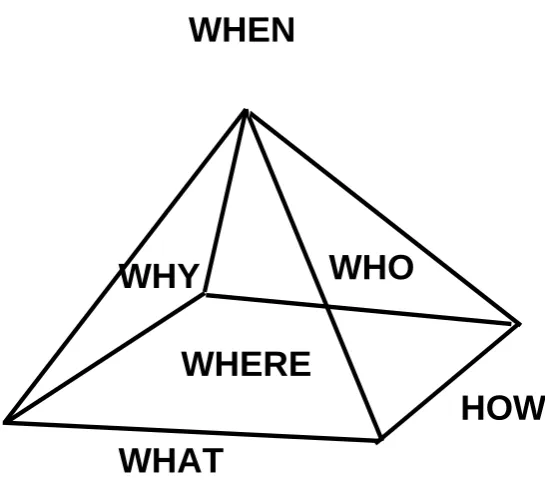
Understanding relationships and connections calls for a focus on what relationships are and who the key actors are. It also calls for an examination of how these relationships are formed, why they are formed, where they are formed and when they are formed. Figure 1 represents diagrammatically the integration of these questions in forming the compass of relational, process and practice research. All these questions reveal a number of potential tensions. These tensions in turn can provide valuable clues about the conditions that underpin the connections that underpin dynamic phenomena.
Insert Fig. 1 about Here
In management research tensions have been a topic of significant debate (Huxham & Beech, 2003; Johnson, 1996; Quinn, 1988). Consistent with Strauss’ (1967) original notion of negotiating order,
tensions typically represent inconsistencies between often conflicting interests and priorities. This view has been central to the perspective that has informed much critical theory (Alvesson and Willmott, 1992) where hegemony and dependency conditions have tended to colour tensions as routed in the struggle for power and control.
More broadly however, tensions have also sought to capture inconsistencies between ‘espoused theory’ and ‘theory in use’ (Argyris and Schön 1978), ‘rhetoric’ and ‘reality’ (Legge, 1995), ‘exploration’ and ‘exploitation’ (March, 1991). Tensions generally describe internal conflict in balancing competing priorities and generally paradoxes that cannot be resolved (see Antonacopoulou, 2001).
In general, tensions tend to be presented as problematic mostly because a dialectic logic governs the way tensions are represented. Yet, if one adopts a ‘trialectic logic’ contradictions and conflict give way to multiple possibilities as different sources of attraction are explored (Horn, 1983). Adopting this logic tension can also be seen as reflecting flexibility and elasticity to bend in different directions like an elastic band would do.
also reflect. Tensions lead to ex-tensions through ongoing transformations. Therefore, elasticity can take different forms both in linear and non-linear interactions between tensions and their resulting
deformation.
Applying Practise-centred Research to Rethink Practice
Practice-centred research has been applied as a new approach developed in studying the dynamic nature of practices within organizations. The focus is not only on actions, activities, modes of knowing or indeed the language and symbols (Turner, 1994) reflective of practice as a structure underpinning the wider social context (Lave and Wenger, 1990). Instead, the focus is on how all these dimensions of practice create tensions at a number of levels – intra-practice, inter-practice, inter-temporally thus, reflecting the dynamics of practice (Antonacopoulou, 2006).
Within a practice tensions would reveal the range of internal contradictions between intentions and actions and highlight the difficulties of balancing competing priorities in the internal and external goods that constitute a practice (see McIntyre, 1985). Therefore, tensions on the one hand, may reflect instances when a practice seeks to address many equally viable intentions at the same time, however, potentially resulting in confusion and inertia. This would be the case when the internal goods of a practice may be driving one set of intentions and the external goods may be driving another set of intentions. On the other hand, tensions may create ex-tensions when a practice seeks to expand the remit of activities it entails to embrace new actions that can lead to better performance, efficiency and effectiveness. This would be the case when external goods may provide the boundaries and infrastructure for action but internal goods may provide the energy to pursue new ends in the search for excellence.
Through this lens of tensions, practice can be conceptualised as a flow of connections between multiple dimensions that define the workings of a social group in relation to wider contextual forces that shape interpretations and reconstructions of reality. This new ontological stance on practice also calls for a consistent epistemological position. This would call for studying practice in practise (i.e. the ongoing reconfiguration of practice – (Antonacopoulou, 2004; 2006)).
Practice therefore, exists because it is in practice,1 not simply performed, but formed, performed and
continuously transformed through the deformations created by the ongoing tensions and ex-tensions. Practise reveals the process of a practice as this unfolds in time and space. This phenomenon of elasticity
and plasticity of practices is embedded in practising attempts, which reveal different aspects that configure and reconfigure a practice. Practise and practising therefore, focus on the dynamic and emergent nature of practice by drawing attention to repetition, rehearsal and learning as central to practising attempts
(Antonacopoulou, 2004; 2006).
Examples of practising are to be found when we focus on the way different aspects of practice
interconnect within a practice as they are rehearsed by practitioners in action and interaction. Practising also takes place when a practice interacts with other practices in a nested process that interlocks practices in a viable system of organizing. It is in different forms of practising where we can begin to locate one of the most powerful consequences of practice; namely the emerging promise they hold to make a difference to organizational functioning. Table 1 presents the application of a practise-centred approach in revealing different aspects of practice.
Insert Table 1 about here
Practise-centered research invites us to rethink our roles as researcher practitioners but also the tools we employ and the purpose which our research seeks to serve. This calls for methodological tools that can afford to engage with the fluid and relational nature of phenomena in practise. Some of the existing methodological tools we employ like interviews, questionnaires, attitudinal surveys etc. remain helpful yet, they predominantly can account for snapshots of a process. Clearly some processes lend themselves more than others to ethnographic and longitudinal approaches. Increasingly the use of autobiographical diaries (Antonacopoulou et al. 2006) and videos (Binders et al. 2006) provide new innovative approaches for capturing the unfolding nature of phenomena. The reliability of findings in autobiographical accounts through diaries remains a big challenge.
However, acknowledging the power of capturing accounts and reflections in the practitioners’ language may help overcome issues of translation, which might address the problems of accurate interpretations of finer meanings, particularly in the context of complex social interactions. Moreover, practitioners’
accounts of their practice could enable us to enhance the relevance and impact of management research on management practice by engaging practitioners in the integration of knowledge which can usefully enrich the boundaries of re-search as a practice.
References
Alvesson, M. and Willmott, H. (1992) Critical management studies (eds). London: Sage.
Antonacopoulou, E.P. (2004) ‘On the virtues of practising scholarship: A tribute to Chris Argyris a timeless learner’, Management Learning, 35(4): 381-395.
Antonacopoulou, E.P (2006) On the practise of practice: In-tensions and ex-tensions in the ongoing reconfiguration of practices’, in D. Barry and H. Hansen (eds) Handbook of new and emerging approaches to management and organization. London: Sage.
Antonacopoulou, E.P., Baron, S. and Patterson, A. (2006) How Dynamic Practices Emerge: Text Messaging as a Promising Social Practice – under review.
Argyris, C. and Schön, D. (1978) Organizational learning: A theory-in-action perspective. Reading, MA: Addison-Wesley.
Beer, S. (1972) Brain of the firm. London: Penguin.
Binders, T. Björgvinsson, E. and Hillgren P.A. (2006) ‘Configuring places for learning – Participatory development of learning practices at work’, in E.P. Antonacopoulou, P. Jarvis, V. Andersen, B. Elkjaer, and S. Hoeyrup (eds) Learning, working and living: Mapping the terrain of working life learning. London: Palgrave. pp. 139-153.
Clegg, S.R., Kornberger, M., and Rhodes, C. (2005) Learning/becoming/organizing. Organization, 12(2): 147-167.
Crowston, K. (1997) ‘A coordination theory approach to organizational process design’, Organization Science, 8: 157-175
Emirbayer, M. (1997) ‘Manifesto for a relational sociology’, American Journal of Sociology, 103(2): 281-317. Feldman, M.S. and Pentland, B.T. (2003) ‘Reconceptualizing organizational routines as a source of flexibility and change’, Administrative Science Quarterly, 48(March): 94-118.
Gherardi, S. (2006) Organizational knowledge: The texture of organizing. London: Blackwells.
Granovetter, M. (1973) The strength of weak ties. American Journal of Sociology 78(6): 1360-1380. Horn, R. (1983) Trialectics: Towards a practical logic of unity. Lexington, May: Information Sources. Huxham, C. and Beech, N. (2003) ‘Contrary prescriptions: Recognizing good practice tensions in Management’, Organization Studies, 24(1): 69-93.
Huxham, C. and Vangen, S. (2005) Managing to collaborate: The theory and practice of collaborative advantage. London: Routledge.
Johnson, G., Melin, L. and Whittington, R. (2003) ‘Micro-strategy and strategising’, Journal of Management Studies, 40(1): 3-20.
Latour, B. (1986) ‘The powers of association’, in J. Law (ed.) Power, action and belief. London: Routledge and Kegan Paul. pp. 261-277
Law, J. (1999) ‘After ANT: complexity, naming and topology’, in J. Law and J. Hassard (eds.) Actor network theory and after. Oxford: Blackwell Publishers. pp.1-14.
Lave, J. and Wenger, E.C. (1990) Situated learning: Legitimate peripheral participation. Cambridge: Cambridge University Press.
Legge, K. (1995) Human resource management, Rhetorics and realities. London: MacMillan. Luhmann, N. (1995) Social systems. Stanford, CA: Stanford University Press.
March, J. (1991) ‘Exploration and exploitation in organizational learning’, Organization Science, 2(1): 71-87. McIntyre, A. (1985). After virtue: A study in moral theory. London: Duckworth.
Orlikowski, W. (2000) ‘Using technology and constituting structures: A practice lens for studying technology in organizations’, Organization Science, 12(4): 404-428.
Patterson. A. (2005) ‘Processes, relationships, setting, products, and consumers: the case for qualitative diary research’, Qualitative Market Research, 8(2): 142-56.
Quinn, R. (1988). Beyond rational management: Mastering the paradoxes and competing demands of high performance. San Francisco: Jossey-Bass.
Table 1
The 12Ps of Reconfiguring Practice WHO Practitioners and their Phronesis
WHAT Procedures, rules, routines, resources, actions HOW Principles, values and assumptions
WHY Purpose, intentions (competing priorities, internal conflict, telos) WHERE Place, context, cultural and social conditions
WHEN Past, Present, Pace, time boundaries, history and future projections, rhythm WHAT Patterns of connecting different aspects of a practice as this is performed
HOW Practise and practising attempts reveal the internal and external goods at play during different performances of practice creating new images of practice
FIGURE 1
The Compass of Relational Research