REVIEW
“Remarkable solutions to impossible
problems”: lessons for malaria
from the eradication of smallpox
Justin M. Cohen
*Abstract
Background: Malaria elimination and eventual eradication will require internationally coordinated approaches; sustained engagement from politicians, communities, and funders; efficient organizational structures; innovation and new tools; and well-managed programmes. As governments and the global malaria community seek to achieve these goals, their efforts should be informed by the substantial past experiences of other disease elimination and eradication programmes, including that of the only successful eradication programme of a human pathogen to date: smallpox.
Methods: A review of smallpox literature was conducted to evaluate how the smallpox programme addressed seven challenges that will likely confront malaria eradication efforts, including fostering international support for the eradication undertaking, coordinating programmes and facilitating research across the world’s endemic countries, securing sufficient funding, building domestic support for malaria programmes nationally, ensuring strong commu-nity support, identifying the most effective programmatic strategies, and managing national elimination programmes efficiently.
Results: Review of 118 publications describing how smallpox programmes overcame these challenges suggests eradication may succeed as a collection of individual country programmes each deriving local solutions to local problems, yet with an important role for the World Health Organization and other international entities to facilitate and coordinate these efforts and encourage new innovations. Publications describing the smallpox experience sug-gest the importance of avoiding burdensome bureaucracy while employing flexible, problem-solving staff with both technical and operational backgrounds to overcome numerous unforeseen challenges. Smallpox’s hybrid strategy of leveraging basic health services while maintaining certain separate functions to ensure visibility, clear targets, and strong management, aligns with current malaria approaches. Smallpox eradication succeeded by employing data-driven strategies that targeted resources to the places where they were most needed rather than attempting to achieve mass coverage everywhere, a potentially useful lesson for malaria programmes seeking universal coverage with available tools. Finally, lessons from smallpox programmes suggest strong engagement with the private sector and affected communities can help increase the sustainability and reach of today’s malaria programmes.
Conclusions: It remains unclear whether malaria eradication is feasible, but neither was it clear whether smallpox eradication was feasible until it was achieved. To increase chances of success, malaria programmes should seek to strengthen programme management, measurement, and operations, while building flexible means of sharing experi-ences, tools, and financing internationally.
Keywords: Malaria, Eradication, Elimination, Smallpox, History
© The Author(s) 2019. This article is distributed under the terms of the Creative Commons Attribution 4.0 International License (http://creat iveco mmons .org/licen ses/by/4.0/), which permits unrestricted use, distribution, and reproduction in any medium, provided you give appropriate credit to the original author(s) and the source, provide a link to the Creative Commons license, and indicate if changes were made. The Creative Commons Public Domain Dedication waiver (http://creativecommons.org/ publicdomain/zero/1.0/) applies to the data made available in this article, unless otherwise stated.
Open Access
*Correspondence: [email protected]
Background
The World Health Organization (WHO) has called for
the eradication of malaria since 1955 [1], when the Global
Malaria Eradication Programme urged countries to seek to interrupt transmission through an effort involving campaigns of indoor spraying of insecticide on a “total
coverage basis” [2]. Although the 1969 World Health
Assembly “re-examined” that goal [3], it was never
offi-cially abandoned. Today, the WHO’s Global Technical
Strategy [4] calls for gradual progress towards eventual
global eradication, defined as the “permanent reduction to zero of the worldwide incidence of infection caused by human malaria parasites as a result of deliberate
activi-ties” [5]. To reach this goal, the WHO targets having at
least ten new countries achieve malaria elimination— defined as the “interruption of local transmission (reduc-tion to zero incidence of indigenous cases) of a specified malaria parasite in a defined geographical area as a result
of deliberate activities” [5]—by 2020, ten more by 2025,
and another 15 by 2030. Achieving these targets with the imperfect, impermanent tools available to malaria elimi-nation programmes will require interelimi-nationally coor-dinated approaches, high degrees of engagement from politicians and communities, efficient organizational structures, and well-managed programmes. As govern-ments and the global malaria community seek to over-come the associated challenges, their efforts should be informed by the substantial past experiences of other dis-ease elimination and eradication programmes.
Smallpox is the only infectious disease of humans to have been eradicated globally. The Intensified Small-pox Eradication Programme of 1966–1977 was a global effort to conduct mass vaccination in combination with
surveillance to detect cases and control outbreaks [6].
Dr. Donald A. Henderson, the director of the WHO-led campaign, recounted that smallpox eradication “proved to be infinitely more difficult than I or anyone else had
imagined it would be” [7], and believed that the success
against smallpox could not be replicated against malaria
with the currently available tools [8].
Given that malaria eradication remains the stated global goal, however, it is worth examining the smallpox eradication experience to understand what lessons can be learned about how to approach such an ambitious undertaking. Drawing lessons for malaria from the small-pox programme is inherently challenging due to the dif-ferent disease dynamics and interventions (i.e., a highly protective, long-lasting vaccine for smallpox versus imperfect anti-vector and parasite tools for malaria that must be repeatedly re-distributed). Yet it is plausible to expect there are also political, operational, financial, and administrative commonalities to any global undertaking of this nature. The need to coordinate stakeholders across
endemic countries, to finance a long-term enterprise, and to ensure countries act in concert to minimize importa-tion from neighbors means the malaria community will be “forced to navigate complex administrative and soci-etal terrains, where knowledge gleaned from scientific
and medical journals can only be partially useful” [9], but
where past experiences managing similar programmes may prove valuable.
Methods
To investigate potential lessons for malaria in the small-pox literature, PubMed was searched on 7 Feb 2017 for “smallpox” and “eradication” in the title or abstract of publications. Seven hundred results were returned. Abstracts were evaluated to assess whether the publi-cation would provide information about how smallpox programmes overcame seven challenges that malaria eradication will likely face, selected in collaboration with members of the WHO’s Strategic Advisory Group on Malaria Eradication. These challenges included the inter-national issues of (1) how support for the undertaking was fostered internationally, (2) how the campaign was internationally coordinated, and (3) how it was financed. At a national level, issues included (4) how support was fostered nationally and (5) at community level, (6) what programmatic strategies were found to be most success-ful, and (7) how national elimination programmes were most effectively structured and managed. Additional ref-erences cited in the PubMed results that seemed relevant, including several books, were also included in review.
Abstracts of all results were examined for relevance to one of these seven areas of interest. The full texts of all relevant publications were read by the author, who noted and collated any information provided on how smallpox programmes addressed these diverse challenges. The potential ramifications or lessons for malaria eradication were evaluated by the author based on his experience providing operational, technical, and financial support to numerous malaria elimination programmes over the past decade in his role as the director of a malaria programme at a non-governmental organization.
Results
Of 700 results returned by the PubMed search, 118 pub-lications were selected for full-text review. These docu-ments, which ranged in publication year from 1959 to 2015, included contemporary accounts of the cam-paign from specific countries, assessments of global programme process, and reflections on the eradication accomplishment by its participants in both journal article and book form, along with several reviews of the small-pox experience. A number of themes emerge from the
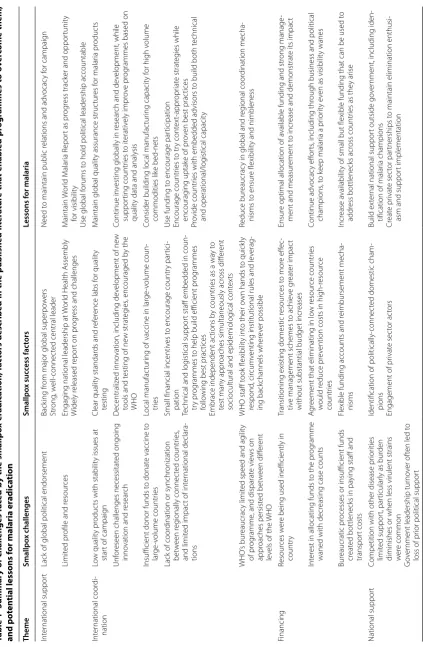
Table 1 Summar y of challenges fac ed b y the smallp ox er adic ation, fac tors describ ed in the published lit er atur e tha t enabled pr ogr ammes t o ov er come them, and p ot en
tial lessons f
or malaria er adic ation Theme Smallpo x challenges Smallpo x suc cess fac tors Lessons f or malaria Int er national suppor t
Lack of global political endorsement
Back
ing fr
om major global super
po w ers Str ong , w ell-connec
ted central leader
Need t
o maintain public r
elations and adv
ocac y f or campaig n Limit ed pr
ofile and r
esour
ces
Engag
ing national leadership at
W
or
ld Health A
ssembly
W
idely r
eleased r
epor
t on pr
og
ress and challenges
M aintain W or ld M alar ia R epor
t as pr
og
ress track
er and oppor
tunit
y
for visibilit
y
Use global f
orums t
o hold political leadership accountable
Int er national coor di -nation Lo w qualit y pr oduc
ts with stabilit
y issues at
star
t of campaig
n
Clear qualit
y standar
ds and r
ef
er
ence labs f
or qualit
y
testing
M
aintain global qualit
y assurance struc
tur es f or malar ia pr oduc ts Unf or
eseen challenges necessitat
ed ongoing
inno
vation and r
esear
ch
D
ecentraliz
ed inno
vation, including de
velopment of ne
w
tools and t
esting of ne
w strat
eg
ies
, encouraged b
y the
WHO
Continue in
vesting globally in r
esear
ch and de
velopment, while suppor ting countr ies t o it erativ ely impr ov e pr og
rammes based on
qualit
y data and analysis
Insufficient donor funds t
o donat
e vaccine t
o lar ge -v olume countr ies Local manufac tur
ing of vaccine in lar
ge -v olume coun -tr ies
Consider building local manufac
tur
ing capacit
y f
or high v
olume
commodities lik
e bed-nets
Lack of coor
dination or synchr
onization bet w een r eg ionally connec ted countr ies , and limit ed impac
t of int
er
national declara
-tions
Small financial incentiv
es t
o encourage countr
y par
tici
-pation
Technical and log
istical suppor
t staff embedded in coun
-tr
y pr
og
rammes t
o help build efficient pr
og
rammes
follo
wing best prac
tices
Embrace independent ac
tions b
y countr
ies as a wa
y t
o
test man
y appr
oaches simultaneously acr
oss diff
er
ent
sociocultural and epidemiolog
ical cont
ex
ts
Use funding t
o encourage par
ticipation Encourage countr ies t o tr y cont ex t-appr opr iat e strat eg ies while encourag ing uptak
e of pr
ov
en best prac
tices
Pr
ovide countr
ies with embedded advisors t
o build both t
echnical and operational/log istical capacit y WHO ’s bur eaucrac y limit
ed speed and ag
ilit
y
of pr
og
ramme
, and disparat
e vie ws on appr oaches persist ed bet w een diff er ent le
vels of the
WHO
WHO staff t
ook flexibilit
y int
o their o
wn hands t
o quick
ly
respond
, cir
cum
venting institutional rules and le
verag -ing back channels wher ev er possible Reduce bur eaucrac
y in global and r
eg ional coor dination mecha -nisms t o ensur e flexibilit
y and nimbleness
Financing
Resour
ces w
er
e being used inefficiently in
countr
y
Transitioning existing domestic r
esour ces t o mor e eff ec -tiv
e management schemes t
o achie
ve g
reat
er impac
t
without substantial budget incr
eases
Ensur
e optimal allocation of a
vailable funding and str
ong manage
-ment and measur
ement t
o incr
ease and demonstrat
e its impac
t
Int
er
est in allocating funds t
o the pr
og
ramme
waned with decr
easing case counts
A
gr
eement that eliminating in lo
w r esour ce countr ies w ould r educe pr ev
ention costs in high-r
esour ce countr ies Continue adv ocac y eff or ts
, including thr
ough business and political
champions
, t
o k
eep malar
ia a pr
ior
ity e
ven as visibilit
y wanes
Bur
eaucratic pr
ocesses or insufficient funds
cr
eat
ed bottlenecks in pa
ying staff and
transpor
t costs
Flexible funding accounts and r
eimbursement mecha -nisms Incr ease a vailabilit
y of small but flexible funding that can be used t
o
addr
ess bottlenecks acr
oss countr
ies as the
y ar
ise
National suppor
t
Competition with other disease pr
ior ities limit ed suppor t, par ticular
ly as bur
den
diminishes or when less virulent strains wer
e common
G
ov
er
nment leadership tur
no
ver of
ten led t
o
loss of pr
ior political suppor
t
Identification of
politically-connec
ted domestic cham
-pions
Engagement of pr
ivat e sec tor ac tors Build ex ter
nal national suppor
t outside go
ver
nment, including iden
-tification of malar
ia champions Cr eat e pr ivat e sec tor par tnerships t
o maintain elimination enthusi
-asm and suppor
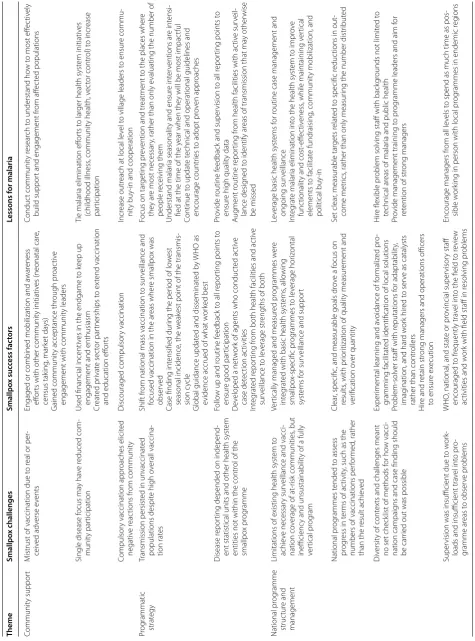
[image:3.595.62.486.82.730.2]Table 1 (c on tinued) Theme Smallpo x challenges Smallpo x suc cess fac tors Lessons f or malaria Communit y suppor t M
istrust of vaccination due t
o r
eal or per
-ceiv
ed adv
erse e
vents
Engaged or combined mobilization and a
war
eness
eff
or
ts with other communit
y initiativ
es (neonatal car
e, census tak ing , mar ket da ys) G ained communit
y acceptance thr
ough pr
oac
tiv
e
engagement with communit
y leaders Conduc t communit y r esear ch t
o understand ho
w t
o most eff
ec
tiv
ely
build suppor
t and engagement fr
om aff
ec
ted populations
Single disease f
ocus ma y ha ve r educed com -munit y par ticipation
Used financial incentiv
es in the endgame t
o k
eep up
engagement and enthusiasm
Cr eat ed pr ivat e sec tor par tnerships t o ex tend vaccination
and education eff
or
ts
Tie malar
ia elimination eff
or
ts t
o lar
ger health syst
em initiativ
es
(childhood illness
, communit
y health, v
ec tor contr ol) t o incr ease par ticipation Compulsor
y vaccination appr
oaches elicit ed negativ e r eac tions fr om communit y Discouraged compulsor y vaccination Incr ease outr
each at local le
vel t
o village leaders t
o ensur
e commu
-nit
y buy-in and cooperation
Pr og rammatic strat egy Transmission persist
ed in un
vaccinat
ed
populations despit
e high o
verall vaccina -tion rat es Shif t fr
om national mass vaccination t
o sur
veillance and
focused vaccination in the ar
eas wher
e smallpo
x was
obser
ved
Case finding int
ensified dur
ing the per
iod of lo
w
est
seasonal incidence
, the w
eak
est point of the transmis
-sion c
ycle
Global guidance updat
ed and disseminat
ed b
y
WHO as
evidence accrued of what w
or
ked best
Focus on tar
geting pr
ev
ention and tr
eatment t
o the places wher
e
the
y ar
e most necessar
y, rather than only e
valuating the number of
people r
eceiving them
Understand malar
ia seasonalit
y and ensur
e int er ventions ar e int ensi
-fied at the time of the y
ear when the
y will be most impac
tful
Continue t
o updat
e t
echnical and operational guidelines and
encourage countr
ies t
o adopt pr
ov
en appr
oaches
Disease r
epor
ting depended on independ
-ent statistical units and other health syst
em
entities not within the contr
ol of the
smallpo
x pr
og
ramme
Follo
w up and r
outine f
eedback t
o all r
epor
ting points t
o
ensur
e good par
ticipation
D
ev
eloped a net
w
or
k of agents who conduc
ted ac tiv e case det ec tion ac tivities Int eg rat ed r epor ting fr
om both health facilities and ac
tiv e sur veillance t o le verage str
engths of both
Pr
ovide r
outine f
eedback and super
vision t
o all r
epor
ting points t
o
ensur
e high qualit
y data A ug ment r outine r epor ting fr
om health facilities with ac
tiv e sur veil -lance desig ned t
o identify ar
eas of transmission that ma
y other wise be missed National pr og ramme struc tur e and management
Limitations of existing health syst
em t
o
achie
ve necessar
y sur
veillance and vacci
-nation co
verage of at
-r
isk communities
, but
inefficienc
y and unsustainabilit
y of a fully
ver
tical pr
og
ram
Ver
tically managed and measur
ed pr og rammes w er e int eg rat
ed with basic health syst
ems , allo wing smallpo x-specific pr og rammes t o le verage hor iz ontal syst ems f or sur
veillance and suppor
t
Le
verage basic health syst
ems f
or r
outine case management and
ongoing sur veillance Int eg rat e malar
ia elimination int
o the health syst
em t o impr ov e func tionalit
y and cost
-eff
ec
tiv
eness
, while maintaining v
er tical elements t o facilitat e fundraising , communit
y mobilization, and
political buy-in National pr og rammes t ended t o assess pr og
ress in t
er
ms of ac
tivit
y, such as the
numbers of vaccinations per
for
med
, rather
than the r
esult achie
ved
Clear
, specific
, and measurable goals dr
ov
e a f
ocus on
results
, with pr
ior
itization of qualit
y measur ement and ver ification o ver quantit y Set clear
, measurable tar
gets r
elat
ed t
o specific r
educ
tions in out
-come metr
ics
, rather than only measur
ing the number distr
ibut
ed
Div
ersit
y of cont
ex
ts and challenges meant
no set check
list of methods f
or ho
w vacci
-nation campaig
ns and case finding should
be car
ried out was possible
Exper
imental lear
ning and a
voidance of f
or
maliz
ed pr
o-gramming facilitat
ed identification of local solutions
Pr
oblem-solv
er staff with r
eputations f
or adaptabilit
y,
imag
ination, and har
d w
or
k hir
ed t
o ser
ve as catalysts
rather than contr
ollers
H
ire and r
etain str
ong managers and operations officers
to ensur
e ex
ecution
H
ire flexible pr
oblem solving staff with back
gr
ounds not limit
ed t
o
technical ar
eas of malar
ia and public health
Pr
ovide management training t
o pr
og
ramme leaders and aim f
or
ret
ention of str
ong managers
Super
vision was insufficient due t
o w
or
k-loads and insufficient tra
vel int o pr o-gramme ar eas t o obser ve pr oblems WHO , national
, and stat
e or pr
ovincial super visor y staff encouraged t o fr equently tra vel int
o the field t
o r
evie
w
ac
tivities and w
or
k with field staff in r
esolving pr
oblems
Encourage managers fr
om all le
vels t
o spend as much time as pos
-sible w
or
king in person with local pr
og
rammes in endemic r
eg
[image:4.595.67.543.87.729.2]International support for the eradication programme
Henderson declared, “For a global programme against a disease to be undertaken, universal political
commit-ment is necessary” [10]. In the case of malaria, support
for fighting the disease seems strong, with malaria con-trol activities frequently cited as one of the “best buys in
global health” [11–13]. However, the pursuit of malaria
eradication is more controversial, and whether it repre-sents a feasible or even a worthwhile goal has been
fre-quently debated [14–21].
Support for the smallpox eradication programme was similarly far from universal. The failures of prior eradication or regional elimination efforts including hookworm, malaria, yellow fever, and yaws increased skepticism, as did a perception that vertical eradication campaigns detracted from provision of basic health
ser-vices [7]. Although the WHO was tasked with
coordinat-ing the effort from Geneva, its diverse departments and regional offices were not uniformly behind the effort, in part because “their officials competed with each other for finite financial resources and administrative
influ-ence” [22]. The Director-General of WHO reportedly
had so little faith in the programme that he explained to Henderson—a secondee from the United States’ Centers for Disease Control and Prevention—that “he wanted an American as the director so that when the programme failed, as he was sure it would, the Americans, not the
WHO, would be seen as responsible” [23].
The smallpox programme survived at the WHO in part because of strong backing from both the United States
and the Soviet Union [23], the major powers of the era.
Henderson himself was seen as a trustworthy leader by both rival countries despite ongoing Cold War hostili-ties because of his strong track record as an “honest and a good scientist” whose “only objective [was] to
eradi-cate smallpox” [23]. Still, maintaining smallpox’s profile
within the WHO and encouraging countries to contrib-ute funding and resources was an ongoing challenge. Henderson used the annual meeting of the WHO assem-bly as an important opportunity to keep eradication on
the minds of health ministers [8] and tried to maintain
smallpox’s public profile by widely releasing surveillance reports with summaries of progress and problems. Hen-derson later suggested that a mistake he made was not adding dedicated staff to his team focused on public
rela-tions and donor advocacy [10]. Malaria today appears to
have a more visible profile internationally than smallpox did, in part due to similar communications efforts, such as the annual World Malaria Report which provides
opportunities for visibility and public engagement [24].
International coordination of the eradication programme
International coordination was considered important
to avoid “ping-pong smallpox” [25] in which infections
would be continually reintroduced from country to coun-try. A 1960 Inter-Regional Smallpox Conference organ-ized by the WHO reported that since “the eradication of smallpox cannot be considered on the basis of individual territories,” the Conference “therefore urges the health administrations of all countries in endemic regions to
synchronize their eradication campaigns” [26]. While this
declaration was sufficient to spur action in some
coun-tries [27], others, including Brazil—the country with the
largest burden in the Americas—and many African
coun-tries [28], declined to initiate vaccination programmes,
compromising the possibility of regional success [29].
Provision of dedicated smallpox funding in 1967 proved critical to allow the WHO to incentivize countries to
scale up their national programmes [10], even when
com-mitted funding was small [29]. The provision of donor
funding for malaria—increasing from about $170
mil-lion in 2000 to $2.5 bilmil-lion in 2016 [30]—has likely been
similarly important to convince countries to prioritize malaria programming.
Despite the international push from the WHO, the smallpox eradication effort would always remain a collec-tion of individual nacollec-tional programmes, each attempting to solve their own problems through their own systems
and in their own ways [28], rather than a top-down,
cen-trally managed global undertaking. Dr. William Foege, an American epidemiologist who helped design the surveil-lance-driven vaccination strategy that likely enabled
suc-cess in countries including Nigeria and India [31], called
it “20 programmes trying different things to more quickly
discover truth” [32].
“The campaign to eradicate smallpox worldwide is often described in simplistic terms… The picture pre-sented is of a unitary programme of action, where the many cogs in the wheel apparently worked in almost per-fect harmony, causing orders from the top of an admin-istrative pyramid to be unquestioningly implemented in localities across the globe… the organized drive to expunge smallpox was a much more complicated and
disjointed entity” [33].
Current malaria guidance embraces an aligned belief that “adapting and tailoring interventions” to the local
context will be important for elimination success [34].
While encouraging local solutions, the WHO and other international entities including the United States’ Centers
for Disease Control and Prevention [35] added
Sharing best practices across countries
WHO’s guidance to countries changed substantially over the course of the programme as understanding of best practices evolved. Its initial recommendation for every country to vaccinate at least 80% of the
popu-lation increased to a goal of 100% vaccination [28],
before being replaced with a dramatically different rec-ommendation to invest heavily in surveillance and to focus vaccination on the places where transmission was observed. Many countries resisted this latter change despite evidence that that surveillance-driven
target-ing was more efficient [31], and the WHO’s leadership
in pushing for adoption of proven approaches was thus
critical [36]. Today, regular revisions of malaria
guid-ance (e.g., [34, 37, 38]) demonstrate that such
dissemi-nation of best practices remains an important WHO role.
Ensuring the quality of tools
Smallpox programmes relied upon having a stable,
reli-able, effective vaccine [39]. Yet when the newly
estab-lished eradication headquarters in WHO estabestab-lished a system for testing batches of vaccine produced in more than 40 different countries, it found < 10% of samples
were acceptable [40] due to potency and heat stability
issues [41]. The WHO engaged vaccine experts to write
simple manuals of production that explained best avail-able production methods, and the WHO consultants worked with laboratories to improve their production
processes [42]. Local production of vaccine was set up
at government-owned facilities or associated institutes in the largest population countries including Brazil, India, and Indonesia, since donations would otherwise
have been insufficient [42]. Two high quality
laborato-ries from the Netherlands and Canada were selected to
serve as vaccine reference centres [39], and they
per-formed batch testing to evaluate improvements. As a result of these efforts, the fraction of batches meeting quality standards rose to 31% in 1967, 76% in 1972, and
96% in 1976 [36]. The WHO today provides an
analo-gous quality control and assurance function for cer-tain malaria commodities, prequalifying malaria drugs (https ://extra net.who.int/prequ al/), evaluating the
accuracy of diagnostics [43], and inspecting
manufac-turing sites for vector control tools, though the com-plex landscape for malaria commodities makes it more difficult to assess the overall quality of the tools being used in endemic countries. The smallpox experience suggests that investment in the production of bed nets in high-volume countries could be considered as a pos-sible means of reducing reliance on imported,
donor-funded products [44].
Provision of technical and operational support
The WHO’s smallpox eradication unit provided national programmes with both field epidemiologists for technical advice and administrators to help manage logistics. Over the 12 years of the programme, 687 different individuals from 73 countries participated in the WHO-sponsored
programme [45]. The expansion of WHO’s role from
solely providing technical advice to actively enabling operations was a learning experience for the
Geneva-based programme [46]. This evolution allowed Geneva
to strengthen global logistics, moving supplies from one country to another as needed, or flexibly providing
nec-essary funds to overcome bottlenecks [10]. It was noted
that the WHO was most effective when its staff, includ-ing senior leadership, spent their time workinclud-ing in country
with programmes [47]. Henderson stated his opinion that
the most effective WHO staff “were those who took an active role in field operations. Those who assumed a pas-sive role of detached technical adviser were encouraged
to leave the programme” [10]. Similar sorts of temporary
field advisors have been deployed under the “Stop
Trans-mission of Polio” programme [48] and can prove useful
for building capacity in malaria programmes if deployed
thoughtfully [49]. The United States President’s Malaria
Initiative today provides technical advisors to malaria endemic countries in this mode, as do several non-gov-ernmental organizations.
Encouraging research and innovation
In Henderson’s view, “The importance of problem-oriented research that was conducted throughout the course of the smallpox eradication programme
can-not be too emphatically stated” [10]. Development
of a heat-resistant vaccine may have been the single
most impact factor in global success [7], while ongoing
operational research enabled resolution of unforeseen challenges that inevitably occurred over the course of
the long, complex undertaking of eradication [21]. The
WHO encouraged such studies through its convening
power [14], though innovation was typically
decen-tralized. “An important lesson was that parallel activi-ties and research, with many groups seeking better approaches, could speed up the process of
improve-ment,” Foege wrote [50]. The jet injector, for example,
a new tool for increasing the speed and efficiency of
vaccine delivery [51], was first developed in the United
States at the National Communicable Disease Center
during the 1960s [52]. The development of a low-tech,
simpler solution—the bifurcated needle—by a private company, Wyeth Laboratories (which waived patent costs for any manufacturer supplying them exclusively
to the WHO [53]), proved both simpler [29] and
innovation in the smallpox programme concludes that what was important was to “insure that the problem has been defined clearly and that intervening variables and technological factors do not becloud that definition”, while building organizations that scientifically evalu-ate evidence and seek to improve themselves according
to measurement of what does and does not work [39].
This perspective suggests the importance of contin-ued investment both in malaria’s $540 to $600 million
research and development pipeline [55] as well as in
efforts to help countries collect, analyse, and apply data for ongoing organizational improvements within their own programmes.
In playing these roles, there was agreement that the WHO’s success was strongly linked to the ability to be
as flexible and non-bureaucratic as possible [21].
Some-times, as when flying to countries with outbreaks with-out receiving travel approvals, this meant breaking WHO
rules [41], something Henderson deemed necessary
given “a sclerotic… administration that often thwarted or actively impeded what appeared to be logical initiatives”
[7]. In one example, an emergency request for vaccine
supply from Uganda took 5 months to be transmitted to headquarters by the regional WHO office, during which time the Geneva office had already learned about the
outbreak via informal backchannels and addressed it [8].
Internal WHO disagreements also led to challenges, with Henderson noting, “Officials located within different lev-els and departments of the regional offices continued to hold disparate views right till global smallpox eradication
was formally certified” [33]. He complained that, “The
regional offices of WHO… were more a hindrance than a help,” leading him to adopt a “policy of quietly
short-circuiting the regional office, when necessary” [8].
The challenge for a complex bureaucracy like WHO to nimbly respond to dynamic circumstances have been echoed in recent years by criticism surrounding its response to the 2013–2016 Ebola outbreak in West
Africa [56, 57]. The success of the WHO’s smallpox team
may provide a model for how a Geneva-based team can flexibly facilitate malaria operations across endemic countries. However, the fact that Henderson and col-leagues viewed their success as something they achieved despite WHO’s structures and procedures—for exam-ple, by creating a new unit within a regional office that reported directly to Henderson rather than through the
normal channels [33]—rather than because of them,
sug-gests that consideration will need to be given to how to ensure a central malaria coordination team is encouraged and enabled to be agile and flexible, as is required by the rapidly evolving nature of a global eradication enterprise, while still respecting and sometimes deferring to local solutions and expertise.
Financing the programme
Achieving malaria eradication will require each of the world’s endemic countries to invest in eliminating trans-mission. Financial analyses typically suggest that sub-stantial short term budget increases will be required to end endemic transmission, after which long term sav-ings can be realized due to the lower costs of preventing
its re-establishment [58, 59]. Surprisingly, in the case of
smallpox, Henderson argues no such surge in funding was required, with existing domestic budgets sufficient to cover programmatic needs:
“The burden of expenditure has been borne by the endemic countries themselves… But, with few excep-tions, the expenditure by the countries has been little more than what they were already spending to con-trol smallpox. In other words, WHO and its mem-ber countries, with only a very modest additional input in resources, have transformed a never ending control programme to a successful eradication pro-gramme.” [29]
The idea that smallpox could be eliminated from coun-tries with essentially the same budget previously used to control it is remarkable, and suggests that how funds were spent proved far more critical than the total amount of those funds. As Henderson describes:
“For all of us it has been a revelation in so many countries to find at the periphery such an array of unproductive health staff and facilities. It has been a revelation to discover how effectively they may be mobilized with a comparatively small input involv-ing leadership in the field and definition of a series of activities with defined objectives and a modest element of management. Other health programmes, especially those involving immunization, but others as well, could, I believe, be similarly transformed.” [29]
The importance of using available funding better was raised both nationally and internationally. The WHO internal dynamics and disagreements between regional offices complicated the efficient expenditure of avail-able funding. In the Americas, for example, in the early 1960s, the Pan American Health Organization (PAHO) chose to distribute available funding for mass vaccination across the entire region, even though Brazil was the only
remaining endemic country [6]. As a result, Brazil’s
fund-ing was insufficient and elimination programmes were
prolonged unnecessarily [14]. The WHO’s South-East
Brazil. Less than half actually was, with the
remain-der divided across 10 other countries [8]. When 5 years
later Brazil was finally free of smallpox, PAHO refused to donate its funds back to SEARO in turn to assist India
[8].
Henderson’s comparison of the relatively similar costs for control versus eradication refer only to domestic contributions, and do not include the 407 million doses of vaccine that were donated over the course of the pro-gramme, primarily by the Soviet Union and the United
States [29], at an average estimated value of $17 per 1000
[6] (approximately $7 million in total). Between 1967 and
1979, $67 million in cash and kind (including the donated vaccine) was donated to the WHO’s special account for smallpox eradication while $33.6 million was spent from
WHO’s regular budget [6]. This total of approximately
$7.7 million per year would translate to approximately $30–$50 million in today’s dollars—far less than the $2 billion per year currently contributed by international
donors to malaria programmes [60].
The argument made to donors to secure these funds was that “all should be willing to contribute to carry the attack to the remaining endemic regions until there is no
more smallpox” [51]. The United States, for example, was
said to be domestically spending $140 million annually in 1968 to prevent re-establishment of smallpox transmis-sion domestically, and thus its modest investment of $15 million to eliminate in West and Central Africa meant that it could help 20 countries become smallpox free for the price of 39 days of preventing its reintroduction back
home [35]. A similar argument was used to successfully
convince the Swedish government to make a critical con-tribution to the programme in India, since “every country is in danger until the last case of smallpox has been
elimi-nated” [22].
The availability of even small amounts of funding that could be used flexibly, with minimal bureaucracy, was seen as critical to bypassing bottlenecks. “It was essential to have an allocation of funds that could be used for any
necessary purpose and in any country” [10], yet nearly all
available funds for smallpox eradication were earmarked for specific uses. As a result, staff were often not paid on time, insufficient fuel allowances meant vehicles were not available when needed, and funding for car repairs was
lacking in multiple countries [10]. In Zaire, for example,
operations would frequently grind to a halt after the gov-ernment failed to release the necessary funds; the pro-gramme solved the issue by setting up an auxiliary bank account in which they deposited back-up funds whenever possible to cover expenditure during these gap periods
[8]. In Bihar, India, “staff were fearful of paying too much
[for vehicle maintenance] and being held accountable
for extra charges” [46], so vehicles were often neglected
instead. New accounts were set up to give team leads advances for these minor but essential charges so that they could avoid weeks of paperwork to receive necessary funds, instead providing receipts at subsequent meetings on a biweekly or monthly basis. This approach dramati-cally improved the flexibility of the elimination efforts and Henderson deemed it “one of the most important
initiatives of the programme” [8].
Malaria programmes today frequently experience simi-lar delays due to challenges with financial expenditure. Many countries have failed to spend grants from the Global Fund to Fight AIDS, Tuberculosis, and Malaria on schedule due to a wide variety of issues, including lack of human resources, delays in procurement, weak data
sys-tems, and other challenges [61]. The smallpox experience
suggests that the proactive creation of a flexible fund that could be used to address bottlenecks across countries as they arise could be a valuable tool for malaria as eradi-cation proceeds, though the challenges of ensuring those funds are well spent would be substantial, and safeguards would be needed to ensure funds are spent for their intended function. This history also emphasizes the criti-cal importance of having strong measurement and man-agement of programmes to ensure available funds are allocated and used as effectively as possible.
Domestic support for the programme
Political will has been cited as one of the most important
factors in the success of smallpox eradication [14] and a
necessity for eliminating malaria [34]. Not all countries
viewed smallpox elimination as an urgent priority given
many other public health issues [28], just as malaria
elim-ination is often a low priority today for countries facing
more visible threats [62]. Competing disease priorities,
including ongoing malaria eradication efforts [29], led
governments such as that of Ethiopia to have “absolutely
no interest in the eradication of smallpox” [63].
Non-gov-ernmental actors such as the United Nations Children’s Fund (UNICEF) also had prior commitments to malaria eradication that took precedence over contributions
to smallpox [8]. Today, the need to devote substantial
resources to ongoing efforts to eradicate other diseases, including guinea worm and polio, may present similar challenges for malaria.
Countries where the less virulent variola minor pre-dominated over the far more deadly variola major, mostly in Africa, tended to downplay the importance of embarking on an elimination programme, given that this strain of the disease was “little more serious than
chicken pox” [8]. Henderson cited this reticence as one
of the two primary factors compromising the young programme (the other being the absence of funding)
malaria eradication should aim to include all species of the disease or only (or initially) the more virulent Plas-modium falciparum given its outsized contribution to mortality as well as its development of resistance to artemisinin-based drugs in the Greater Mekong
subre-gion [64, 65]. Accounts of smallpox eradication do not
clarify whether an effort to only eradicate variola major could have succeeded (and thus whether a P. falcipa-rum—only attempted might be feasible), though the similarity of symptoms between the two would have complicated case finding directed only at the major variant.
Political backing also suffered with changes in gov-ernment and thus the loss of advocates: “Within 4 years after the West African programme began, there were 23 changes of governments in the 18 participating coun-tries,” causing “changing leadership and staff in the
nation’s smallpox programme” [47]. In India, it was noted
that the Prime Minister’s enthusiasm for smallpox typi-cally increased when outbreaks were observed—and thus when the electorate was most concerned about the
dis-ease—and declined with smallpox incidence [22].
Pres-sure from powerful allies outside the government was thus seen as critical to ensure the programme remained sufficiently well supported even when smallpox was not in the headlines. An agreement to begin a vaccina-tion programme in Ethiopia only occurred due to the intercession of a senior Austrian physician with a close
relationship with the Emperor [63], while in India, the
intervention of J.R.D. Tata, the well-connected head of a large corporation, played a critical role in convincing the Prime Minister to continue supporting the smallpox
programme at a pivotal moment [22]. In Bhutan, where
the WHO initially lacked visibility into smallpox efforts due to the secrecy of its government, an acquaintance of Henderson’s with access to the royal family was
eventu-ally able to build communications with Geneva [66].
A lesson for malaria is thus the importance of getting well-connected leaders from business and high-profile institutions to act as advocates. The opinion of politicians can change based on what seems important for the next election, but smallpox programme examples show how they can be convinced by counsel from those they trust or respect. Malaria appears to already be doing a better job of identifying high-profile advocates; organizations with the explicit goal of maintaining malaria’s global or regional visibility, such as Malaria No More or the Afri-can Leaders Malaria Alliance, identify champions who can contribute funding and political backing to national
efforts [67], while the End Malaria Council (http://endma
laria counc il.org/) seeks to bring business leaders together with public sector leaders to keep malaria a global priority.
Community support for the programme
Community participation with the smallpox programme
was considered generally strong [8], although the
litera-ture contains numerous accounts of specific anecdotes of resistance to vaccination particularly following real
or perceived adverse reactions to the vaccine [28]. Some
commentators note that the narrow focus on smallpox was sometimes counterproductive given the range of health issues afflicting communities. In Bangladesh, for example, vaccination occurred in the midst of a cholera epidemic, yet the vaccinators could provide no assis-tance with the more visible and urgent problem,
result-ing in community frustration [68]. As the programme
proceeded, additional components were therefore added onto the responsibilities of surveillance agents to keep them engaged and motivated despite the infrequency with which smallpox was observed, including surveys investigating access to clean water, vitamin A, family
planning, and rates of childhood mortality [68].
Simi-larly, malaria-only health workers may prove less success-ful than those that have been trained to treat a variety of
common illnesses [69].
Gaining the support of community leaders was com-monly cited as a crucial step towards community accept-ance. In Nigeria, Foege believed that people participated less because they were convinced by vaccinators to do so
and more because they trusted their leaders [31]. In one
extraordinary case, vaccinators were reported to have awed a village chief into supporting the programme by releasing a trained bird to swoop overhead and drop pro-vaccine leaflets while vaccinators were meeting with him
[29]. Despite such anecdotes, Tarantola and Foster note
that little research was conducted into how the
commu-nity could best be engaged [68], though attempts to do so
included deployment of midwives and other village
work-ers to engage and educate the community [39, 70] as well
as provision of monetary awards for report of a smallpox
case in the final stages of the programme [71]. In India,
for example, a 100 rupee reward was offered for anyone
reporting a previously unknown outbreak [29]. The
evi-dence base for what drives patient participation with the health system has increased in subsequent decades, iden-tifying factors related to cost, proximity, and confidence
[72], but the relative ability of different interventions to
influence those factors likely still requires additional research. Best practices for proactive engagement of community leaders and ongoing communication and col-laboration with at-risk populations should be encouraged to make communities active participants in malaria
elim-ination programmes [73].
converse with villagers at all” [74]. Compulsory vaccina-tion was believed to be justified by the need to achieve sufficient coverage for the greater good, but it raises trou-bling ethical questions. Greenough quotes Stanley Music, an epidemiologist who worked in the Bangladesh pro-gramme, on the tactics sometimes employed:
“In the hit-and-run excitement of such a campaign, women and children were often pulled out from under beds, from behind doors, from within latrines, etc.… Attempts were made to secure the cooperation and ‘blessing’ of village headmen, thereby putting social pressure on the villagers to stand their ground and accept vaccination. Still, however, some form of minor chaos was the rule, as headmen’s authority did not extend into individual’s homes… People were chased and, when caught, vaccinated… We went from door to door and vaccinated. When they ran, we chased. When they locked their doors, we broke down their doors and vaccinated them.” [74]
While these aggressive approaches did in some cases attain the narrow goal of achieving high vaccination cov-erage, they seem unwise for a programme such as malaria in which long-term participation and repeated delivery cycles is needed. Ethically, they were controversial even at the time, and “the organized and sustained use of com-pulsion was, generally speaking, instituted with great care and only after broad administrative and political
consensus had been achieved” [22].
Engagement with the private sector was reported to be generally minimal outside a few efforts to integrate private health care providers into the vaccination
pro-gramme [68]. India proved one of the main exceptions,
with the Tata Group playing a critical role in vaccinat-ing the population of Bihar State, where its steel plant was located. They provided “medical and paramedical personnel, transportation, managerial support and com-munication facilities to implement the programme activi-ties. The assistance in kind provided by the Company and their local knowledge of the area were so valuable that south Bihar became smallpox-free in a record period of
6 months” [75]. Malaria’s recent history includes several
examples of similar partnerships [76]. Given the
impor-tance of private providers and drug shops for provision
of malaria treatment [77], malaria eradication will
neces-sitate much greater engagement with the private sector than occurred during smallpox eradication.
Programmatic strategy
Smallpox eradication was predicated on the idea of mass vaccination of the population. The WHO’s Expert Com-mittee initially called for countries to achieve at least
80% vaccination of the population [29]. This approach
successfully led to elimination in some countries, but elsewhere it failed, likely because the vaccinated and unvaccinated fractions of the population were not
homogenously mixed [36]. In Central Java, for example, a
1969 survey found greater than 95% vaccination rates had been achieved across the population of 23 million people, yet that same year over 1700 cases were recorded, nearly all amongst the 5% of the population who had been
missed [78]. The WHO Expert Committee responded
by telling countries they should strive for 100%
vaccina-tion rates, a target scorned as impossible [29]. Attempts
to conduct greater numbers of vaccinations were under-taken, but “accessible groups, like schoolchildren, were vaccinated repeatedly so that high ‘scores’ were achieved, but there always remained a large pool of unvaccinated
persons” [47]. This language is mirrored in a recent
inves-tigation of bed net coverage across Africa by Bhatt et al., which concluded:
“We found substantial over-allocation of nets to households already owning a sufficient quantity… What is certain is that over-allocation becomes a major barrier to achieving universal coverage when levels of [insecticide-treated bed net] provision are high because most new incoming nets are simply leading to surpluses in many households, while else-where there remains a shortfall. This may have a disproportionately high public health impact if those surplus nets are concentrated in households at low-est risk.” [79]
The critical change in smallpox programmes was a shift away from mass vaccination towards an approach called
“surveillance-containment” [35] in which programmes
sought out smallpox cases and then concentrated vacci-nation efforts in their proximity and towards those who may have come into contact with the cases. In short, the new strategy meant focusing vaccination on the places where it was most likely to matter, rather than laboring to achieve implausibly perfect coverage everywhere. In Bangladesh, for example, the programme successfully ended transmission after abandoning efforts to achieve 80% vaccination nationally and focusing efforts instead only on the northern districts where cases were reported
[41].
The 1964, the WHO Expert Committee report did
not even mention surveillance [8], but the new focus on
finding cases, tracking down all of their contacts, and concentrating vaccination operations in the most nec-essary places was considered by many to be one of the
keys to eradication’s ultimate success [14, 80].
weekly reporting, sought out cases in the community, including by collaborating with teachers or visiting
mar-kets [78], and distributed surveillance reports so that the
health staff saw how their reports were being used [81].
“Undoubtedly, the greatest stimulus to reporting was the prompt visit of the surveillance team for outbreak inves-tigations and control whenever cases were reported,” Henderson wrote. “This simple, obvious and direct indi-cation that the routine weekly reports were actually seen and were a cause for public health action did more, I am sure, than the multitude of government directives
which were issued” [81]. Case finding was intensified
during the period of lowest seasonal incidence, since that low transmission season represented the weakest point in the smallpox cycle and the best opportunity to break transmission, despite the operational challenge of
finding cases at that time of year [82]. Active case
find-ing was integrated with routine reportfind-ing from public health facilities rather than conducted entirely in parallel
[81]. Challenges to setting up good surveillance systems
included the fact that in many countries, disease report-ing fell under the purview of independent statistical units and were not thus within the control of the smallpox
pro-gramme [10] (the same is true for malaria today in many
countries).
The operational strategy of directing vaccine only to known transmission areas may not be directly trans-latable to malaria’s tools. First, the approach may have worked in part because the reproductive rate for the
virus was relatively low [35], estimated at approximately
3.5 to 6 [83], while estimates for malaria are variable but
potentially far higher [84]. Second, case finding was far
easier because the symptoms of the disease were so
dis-tinctive and recognizable even to schoolchildren [81],
and smallpox—unlike malaria [85]—very rarely caused
asymptomatic infections [6]. As a result, mathematical
modeling of an analogous reactive case detection strat-egy for malaria suggested that such approaches may increase the probability of elimination in certain con-texts, but would be “a highly resource intense, long-term intervention that is inappropriate in many settings where
resources are limited” [86].
Nevertheless, the critical shift in smallpox programmes from judging success based on the volume of vaccina-tions to whether vaccination was achieved in the most necessary places still suggests a good model for malaria programmes, despite the extensive presence of asymp-tomatic carriage. Malaria programmes that seek only to distribute commodities such as nets or drugs in high volumes in an attempt to achieve “universal” coverage may be missing more inaccessible populations which
may also be the highest risk for malaria [79, 87]. Shifting
towards a risk-focused approach in which prevention and
treatment are targeted to those who most need them has great potential for improving the efficiency and effective-ness of our efforts.
National programme structure and management
Discussion of the wisdom of eradication programmes often revolves around the relative merits of “vertical,” single disease programmes versus “horizontal” health
systems efforts [14], which were increasingly coming
into favour at the WHO around the time of smallpox eradication. Henderson advocated for having a specific vaccination programme distinct from, yet linked to, routine health services, worrying that fully integrated programmes would lack clear objectives, evaluation systems, and management structures. “The ‘horizontal programmes’ I have seen best describe the sleeping
pos-tures of the workers” [80], he wrote. In contrast he
con-sidered a “targeted and time-limited special programme with funds specially allocated for it, both in the WHO budget and in most national budgets, and with full-time
technical staff responsible for its supervision” [10] to be
superior since it would more easily attract resources and community support and likely be more efficient and bet-ter managed given the singular focus. Such programmes were also viewed as attractive because they could be con-ducted even while basic health services remained weak
[51]. The vertical versus horizontal health programme
debate has persisted since smallpox [88] and will not be
resolved here, yet a few clear lessons for malaria emerge from smallpox’s successes.
First, smallpox programmes were well integrated with basic health systems, enabling routine case manage-ment and surveillance, with active case finding used as a supplement rather than a replacement. This integrated design improved upon the design of the Global Malaria Eradication Programme preceding it in the 1950s and 1960s, which largely circumvented basic health systems. The malaria eradication programme measured malaria
primarily via population prevalence surveys [89] and
other active means [90] and conducted insecticide spray
campaigns as vertical efforts. Malaria staff were also bet-ter paid than other workers and reported to heads of state rather than ministries of health, creating
unsustain-able systems [7]. In contrast, smallpox programmes were
still part of the health system, leveraging the same basic health services and staff to identify and report the
dis-ease [10, 33]. This integration meant that smallpox teams
improve the cost-effectiveness of surveillance given that it requires minimal expenditure beyond keeping health facilities stocked with diagnostic tests, training staff in their use, and linking them to effective reporting systems. Such investment in core case management systems is a primary component of WHO’s Global Technical Strategy
for malaria [4].
Second, multiple authors highlight the importance to smallpox programmes of creative, problem-solving staff
[32] who could figure out how to overcome any obstacle
that arose, tailoring solutions to the unique challenges
and contexts faced by each country [10]. Henderson
described:
“The essence of what has made the programme what it is is, very simply, an imaginative and dedicated field staff, both national and international, who, given scope and encouragement to work out prob-lems according to local circumstances and support in their efforts to do so, have responded with some remarkable solutions to impossible problems.” [29] These resourceful workers, described by former United States Surgeon General Julius Richmond as “simply too
young to know it couldn’t be done” [50], were supported
by a similarly flexible international team at WHO, who were described as:
“Essentially problem-solvers, they viewed themselves as catalysts rather than as controllers. They under-stood from the onset that experimental learning offered the only possibility for success. They avoided formalized programming, opting instead for innova-tion, flexibility, communication and experiment, by means of a number of deliberate policies and mech-anisms. They recruited people with practical field experience in epidemiology (as opposed to previous work with smallpox per se). They sought people with reputations for adaptability, imagination, and hard work. They preferred younger people, assuming they would be more receptive to new approaches and ideas.” [91] quoted in [39]
Henderson contrasted the flexibility with which small-pox programmes worked with the unsuccessful prior malaria eradication effort, which he said “was conceived and executed as a military operation to be conducted in
an identical manner whatever the battlefield” [92],
pre-venting it from adapting to local contexts, structures, and systems.
Third, smallpox programmes placed great emphasis on careful measurement and verification. “Logic sug-gests that all disease control programmes should provide continuous measurements of disease incidence, and that these measurements should dictate changes in strategy
and tactics,” wrote Henderson. “In fact, few programmes do so. Responsible authorities tend to ignore such infor-mation or dismiss efforts to obtain the data and, instead, assess progress in terms of activity, such as the num-bers of vaccinations performed or patients treated”
[10]. Arguably, today’s malaria programmes continue to
focus more on activities conducted rather than impact, in part because key performance indicators reported as proof of performance on grants such as those from the Global Fund to Fight AIDS, Tuberculosis, and Malaria
tend to focus on the number of nets delivered [93],
rather than whether they are delivered to those most at risk or achieve desired reductions in malaria. The small-pox experience suggests that successful elimination may require shifting focus from simply tallying how many commodities have been distributed towards assessment of whether those tools are being used as effectively as possible.
In West and Central Africa, smallpox programmes used three different types of evaluation approaches: first, evaluators would follow-up to assess whether what vac-cinators claimed to have done had truly been accom-plished; second, tally sheet comparisons were made to compare vaccination records against any available cen-sus data, as a quick if somewhat inaccurate estimation of whether numbers were approximately what should be expected; third, spot checks for vaccine scars were con-ducted at markets and other convenient gathering places
to provide an independent confirmation of coverage [94].
Henderson stressed that in measurement, quality was more important than quantity: “a few indicators of over-all performance, closely followed, were more useful than a broad spectrum of indicators measuring many aspects
of programme execution” [10].
How to build appropriate teams and processes to con-duct this measurement and verification was determined on a country by country basis. In Bolivia, one inspector was appointed for every eight to 12 vaccinators, ensur-ing everyone’s work was reviewed at least biweekly
[95]. In India, a Central Appraisal Team oversaw
evalu-ation processes, including frequent travel to trouble
spots to assess what was going wrong [8]. Ensuring
accurate reporting was sometimes compromised when workers avoided reporting true cases because they thought they would be punished for allowing
transmis-sion in their region [70], underscoring the importance
of clear and frequent communication between central and local levels, with regular meetings to discuss
prob-lems and progress [10]. Widespread distribution of
to participate, and generally helping to foster a shared sense of purpose across the diverse network of
individ-uals participating in the campaign [8].
Fourth, the smallpox programme emphasized the importance of strong management in all aspects of the programme. Henderson suggests that, “Successful execu-tion of the programme consists of perhaps 10%
techni-cal skill and 90% organization and leadership” [29]. He
stressed the importance of leaders actually spending sub-stantial time out in the villages where the work is being done, leading by example and helping motivate workers: “effective leadership to solve the problems faced by field workers cannot be supplied by an army of physicians and senior supervisors who never leave their desks. Regretta-bly, these types are all too plentiful throughout the world”
[29]. These opinions were substantiated by an evaluation
of unsuccessful programmes in India, Pakistan, Argen-tina, Iran, and Ghana, which found that:
“First and most important, failure appeared to be associated with inadequate supervision and assess-ment. Programmes that failed normally showed the following shortcomings: (a) supervisory person-nel did not check at the family level to assure that broad overage by vaccination of the population was being achieved; (b) supervisors were too burdened by other responsibilities to give more than nominal supervision; (c) inadequate provisions for travel and expenses; and (d) disinclination of supervisors to undergo the inconvenience of field work.” [22]
William Foege described how “the real problems” of “developing routines, documenting the implementation of those routines, hiring the right people, supervising, motivating, and evaluating” required “managers, admin-istrators, and logistics experts—people who knew how to solve problems and how to get things done. The pro-gramme would not fail for lack of scientists, but it could fail—even with the best strategy—if we didn’t attract
the very best managers” [32]. Strong management was
required to keep up staff enthusiasm for searching for
smallpox when there was nothing left to find [22]; in one
case, near the very end of the programme in Ethiopia, a surveillance agent walked for 15 days to check on two
reported cases which turned out to be chickenpox [29].
Programmes accordingly sought to hire non-medi-cal, logistics-oriented staff with experience in admin-istration in addition to those with a more conventional
public health background [82]. Once brought into the
programme, strong managers had to be retained: in Bra-zil, for example, five different directors were appointed in
the 5 years between 1967 and 1971 [14] with
unsurpris-ingly weak results. Henderson suggested that providing programme leaders with management training would
have been a wise idea, though it was not done at the time
[10].
Discussion
The successful eradication of smallpox holds many les-sons for malaria eradication efforts, despite the consid-erable differences between the programmes. Smallpox succeeded as a collection of individual country pro-grammes each deriving local solutions to local problems, yet with an important role for WHO and other inter-national entities to facilitate and enable these efforts by ensuring the best possible tools were available, maintain-ing the disease’s profile globally, fundraismaintain-ing, and arm-twisting in reluctant countries to ensure coordinated action. The documented experience of smallpox pro-grammes suggests that such coordinating efforts must be nimble and flexible to stay relevant to rapidly changing country situations, and burdensome bureaucracy must be avoided if international agencies such as WHO are to add value rather than increasing the challenge of disease elimination.
Smallpox programme leaders stress the importance of empowering countries to solve problems locally. Where a strategy or tool has been proven to work well, efficient mechanisms for sharing those experiences are essen-tial. Yet each country will need to adapt those effective approaches given their diversity of populations, systems, strengths, and weaknesses. Global leadership for malaria eradication must ensure countries are able to access the most effective tools available and understand the best principles for how to use them, but the smallpox experi-ence suggests there is no script to be followed in elimina-tion, no simple set of check-boxes that if ticked will result in success. Countries did benefit from the provision of international technical advice and logistical support, helping build staff capacity. The particular importance of administrative support to national programmes sug-gests distinct cadres of staff can add substantial value to malaria elimination programmes: advisors from pub-lic health backgrounds can help with technical aspects, but logistical experts are needed to help plan and exe-cute efficient operations. The smallpox experience also emphasizes the critical importance of hiring programme leaders and managers who are enthusiastic about spend-ing time with communities and local programmes, and who are creative thinkers who can derive context-appro-priate solutions to the challenging problems that will inevitably arise.