This is a repository copy of Examining the Paths from Export Strategic Orientations to Export Performance: The Mediating Role of Export Resource Transformation Capability. White Rose Research Online URL for this paper:
http://eprints.whiterose.ac.uk/104080/ Version: Accepted Version
Article:
Boso, N orcid.org/0000-0001-7043-4793, Annan, J, Adeleye, I et al. (2 more authors) (2018) Examining the Paths from Export Strategic Orientations to Export Performance: The Mediating Role of Export Resource Transformation Capability. Thunderbird
International Business Review, 60 (2). pp. 207-230. ISSN 1096-4762 https://doi.org/10.1002/tie.21878
© 2016 Wiley Periodicals, Inc. This is the peer reviewed version of the following article: Boso, N., Annan, J., Adeleye, I., Iheanachor, N. and Narteh, B. (2016), Examining the Paths from Export Strategic Orientations to Export Performance: The Mediating Role of Export Resource Transformation Capability. Thunderbird International Business Review., which has been published in final form at https://doi.org/10.1002/tie.21878. This article may be used for non-commercial purposes in accordance with Wiley Terms and
Conditions for Self-Archiving. Uploaded in accordance with the publisher's self-archiving policy.
[email protected] https://eprints.whiterose.ac.uk/ Reuse
Items deposited in White Rose Research Online are protected by copyright, with all rights reserved unless indicated otherwise. They may be downloaded and/or printed for private study, or other acts as permitted by national copyright laws. The publisher or other rights holders may allow further reproduction and re-use of the full text version. This is indicated by the licence information on the White Rose Research Online record for the item.
Takedown
If you consider content in White Rose Research Online to be in breach of UK law, please notify us by
1
Examining the paths from export strategic orientations to export performance: the mediating role of export resource transformation capability
Nathaniel Boso
Leeds University Business School University of Leeds
LS2 7JT, United Kingdom Email: [email protected]
Tel: +441133432636
Jonathan Annan
Kwame Nkrumah University of Science and Technology KNUST School of Business
Kumasi, Ghana
Email: [email protected] Tel.: +233202508605
Ifedapo Adeleye
Lagos Business School, Pan-Atlantic University, Km 22 Lekki Epe Expressway,
Ajah, Lagos, Nigeria. Email: [email protected]
Tel.: +2348058097448
Nkemdilim Iheanachor
Lagos Business School, Pan-Atlantic University, Km 22 Lekki Epe Expressway,
Ajah, Lagos, Nigeria. Email: [email protected]
Tel: +2348034285275
Bedman Narteh
University of Ghana Business School University of Ghana
Legon, Ghana
Email: [email protected]
1
Abstract
Export strategic orientation research suggests that export entrepreneurial orientation (EO) and
market orientation (MO) directly affect export performance. Based on the dynamic capability
theory, this study hypothesizes that export resource transformation capability is an intervening
factor that helps explain how EO and MO, individually and jointly, impact export
performance. Using archival and survey data from small- and medium-sized exporters in the
United Kingdom and Nigeria, the study finds that export resource transformation capability
partially mediates the individual effects of EO and MO on export performance in both
samples. Results further show that export resource transformation capability does not mediate
the joint effect of EO and MO on export performance. The findings help provide a more
complete understanding of how export strategic orientations might be related to export
performance.
Keywords: export strategic orientations; export entrepreneurial orientation; export market
orientation; export resource transformation capability; export performance; cross-national
2
Introduction
International business research suggests that variation in a firm’s export performance is a
function of changes in its export entrepreneurial and export market orientations (Cadogan et
al., 2009; Kuivalainen et al., 2007). On the one hand, export entrepreneurial orientation (EO)
is often conceptualized to be reflective of a firm’s general proclivity to discover/identify and
exploit new export market opportunities (Boso et al., 2012), and, as such, it has been central
to the international entrepreneurship thinking (Coviello et al., 2011; Covin & Miller, 2014).
Extant research shows that variation in a firm’s entrepreneurial orientation causes changes in
its export market performance (e.g. Kuivalainen et al., 2007; Guo et al., 2014; Zhang et al.,
2012). On the other hand, export market orientation (MO) is viewed as a central tenet of the
export marketing thought as it entails implementation of the marketing concept in export
markets (Cadogan et al., 2009). It is noted to be reflective of a firm’s general orientation
towards export market customers, competitors and other exogenous factors, and, as such, it is
revealed in the tendency of the firm to generate, disseminate and response to export market
intelligence (Cadogan et al., 2001). The market intelligence that is developed is, therefore,
seen as a resource that earns the firm superior export performance (Morgan et al., 2003; Julian
et al., 2014).
While the view that export strategic orientations have direct causal effects on export
market success is instinctively appealing, and has served as a baseline model in many
empirical studies, scholarly works have long questioned the theoretical adequacy of this view
(e.g. Lisboa et al., 2011; Noble et al., 2002; Wang, 2008). For example, Wang (2008) argues
that a firm’s general proclivity towards learning is a missing link connecting EO to firm
performance, and Noble et al. (2002) have argued that organizational learning and
innovativeness mediate the causal path between MO and firm performance. Within the
3
market capabilities serve as channels through which EO affects export performance. In this
study, we follow this later line of reasoning to propose a theoretical framework to argue that
variations in a firm’s EO and MO result in changes in its export performance through its
ability to reconfigure its export-related asset base (Jantunen et al., 2005; Lado et al., 1992).
The launch of the personal digital assistant (or PDA) handheld device is a useful
example to showcase our theoretical model. In 1997, Palm Incorporate, at that time a
subsidiary of U.S. Robotics, launched the PalmPilot Personal and PalmPilot Professional
handheld devices, after recognizing that there was a market opportunity for an ultra-small
personal computer that enabled users, just by the touch of a button, to synchronize e-mails,
contacts, schedules, and personal information on a handheld device with information on their
personal computers. Before taking the risk to commit resources to produce the devices, the
company gathered intelligence to learn about how potential users would use them. Market
intelligence showed that the core tasks for which potential users would use a handheld device
were primarily synchronizing e-mails and scheduling appointments with contacts. Palm Inc
then reconfigured its existing hardware and software systems to add e-mail and network
capabilities to its Pilot-connected organizer, an earlier technology. Customers of earlier
versions of the device could then upgrade to the new software features of the PalmPilot
through a user-installable upgrade software (Grieve, 1997). By the end of 1997, the PalmPilot
had generated a global market share of 51% in the personal organizer market (Chaston, 2009).
Thus, this PalmPilot case provides a useful example of how entrepreneurial proclivity is
combined with strong market intelligence processes to build a technology-based resource
reconfiguration competence to create superior market value.
The dynamic capability theory helps explain the logic underlying our theoretical
model (e.g. Hodgkinson and Healey, 2014; Teece, 2007). The theory states that “dynamic
4
strategic decision making, and alliancing” (Eisenhardt and Martin, 2000, p.1105), which are
characteristic of the traditional notion of organizational processes with predictable outcomes
(Teece, 2007). A key tenet of the dynamic capability theory is that resource stock drives
capability development (Ketchen et al., 2007), which in turn drives performance (Chang et al.,
2014). In drawing insights from the dynamic capability standpoint, therefore, we identify the
notion of export resource transformation capability (RTC), referred to as a firm’s ability to
redefine, reconfigure and redeploy salient resources (e.g. export personnel, export finance,
export experience and know-how) to exploit export market opportunities (c.f. Johnson et al.,
2003; Sanchez, 1995). Thus, we make two contributions to the exporting literature. First, prior
research has discussed export strategic orientations as direct causal determinants of export
performance (Sousa et al., 2008). We extend this existing theorization by suggesting that RTC
is a vehicle through which EO and MO influence export performance. Second, while extant
export strategic orientation research tends to focus on empirical examination of export
strategic orientations in a single country study, often in Western advanced economies (e.g.
Cadogan et al., 2009; Kuivalainen et al., 2007), this study draws on notable studies (e.g.
Zhang et al., 2012; Guo et al., 2014) to bring on board a developing-economy market
perspective to provide a more complete understanding of how EO and MO are related to
export performance (Fang and Zou, 2009). Accordingly, this study enhances external validity
and generalization of export strategic orientation research by testing the proposed theoretical
framework on cross-national datasets from the United Kingdom and Nigeria.
Theoretical development and hypotheses
Resources, Capabilities and Firm Performance: Insights from Dynamic Capability Theory
Predicting export performance outcome is a major research agenda in international business
5
firms (e.g. Murray et al., 2011) and the growth of many nations (Styles and Ambler, 1994). In
their efforts to determine levels of export performance, international business scholars have
drawn on multiple theoretical lenses and contexts (see Sousa et al., 2008; Morgan et al.,
2004). One such theoretical perspective is dynamic capability theory (e.g. Morgan et al.,
2004). Anchored in the resource-based theory (Barney, 2001), Teece et al. (1997, p.516)
define a dynamic capability as a “firm’s ability to integrate, build, and reconfigure internal
and external competences to address rapidly changing environments”. An important tenet of
this theory is that a firm’s success is a function of its “ability” to proactively create
accumulation of unique, valuable and imperfectly imitable resources and competences (Lado
et al., 1992). Within the dynamic capability framework, the firm is viewed as a nexus of
resources and capabilities that are not freely bought and sold in the spot market (Conner,
1991; Rumelt, 1987; Wernerfelt, 1984), and for that matter a firm’s competitive advantage is
sustained only if its stock of valuable, rare, imitable and non-substitutable resources are
mobilized to create unique and difficult to copy capabilities (Hart, 1995). To this end, the
dynamic capability theory emphasizes firm capability as a channel through which resources
influence performance (Barreto, 2010; Lu et al., 2010).
Given its theoretical origin from the resource-based theory (Barreto, 2010), it can be
argued that the conceptual domain of a dynamic capability is the idea of how a firm can
define, integrate, build, reconfigure and redeploy its resources and competences to effect
change in its marketplace fortunes (Teece, 2007; Eisenhardt and Martin, 2000; Hodgkinson
and Healey, β014). Thus, while resources (or assets) are “organizational attributes that an
organization can acquire, develop, nurture, and leverage for both internal (organizational) and
external (marketplace) purposes)” (Srivastava et al., β001, p. 779), capabilities are a firm’s
ability to leverage value from its resources (Teece, 2007). Day (2011) sums this up by arguing
6
resources that provide firms with the ability to sense organizational changes, respond to the
changes and select a configuration of resources that deliver economic profit. Day’s (β014, p.
28) commentary concludes, therefore, that dynamic capabilities are a “repeatable and deeply
embedded set of skills and knowledge exercised through processes”.
In borrowing from this dynamic capability principle, the international business
literature has examined how multinational enterprises draw on their capabilities (e.g.
marketing skills, market knowledge and product innovation) to convert their resource stock
(e.g. channel relationships, culture and experiences) to earn superior international
performance (Cui et al., 2005; Lu et al., 2010; Fang and Zou 2009). For example, in a study of
international joint ventures (IJVs) in China, Fang and Zou (2009, p. 742) find that marketing
dynamic capabilities are “influenced by IJV resource magnitude, resource complementarity,
organizational culture, and organizational structure” to affect performance. Similarly, Lu et al.
(2010) investigate a large sample of Chinese entrepreneurial firms and find that, while
institutional capital and managerial ties are important in the firms’ internationalization efforts,
their international performance impacts are channelled through their adaptive capability.
In line with the dynamic capability theory and extant international business literature,
therefore, we identify EO and MO export opportunity discovery and informational resources,
and firms’ ability to transform export resource as a specialized capability. We further argue
that variations in these resources and transformative capability can cause changes in export
performance. On the one hand, EO captures activities that firms perform to discover export
market opportunities (Balabanis & Katsikea, 2003). As such, it is reflected in a firm’s
innovative, risk-taking, proactive, competitively aggressive and autonomous proclivities
(Lumpkin & Dess, 1996; Kuivalainen et al., 2007), providing the firm with export market
opportunity recognition and exploitation resource. On the other hand, MO explains how a
7
the firm’s propensity to generate, disseminate and respond to export market information
(Cadogan et al., 2009; Srivastava et al., 2001), providing the firm with an informational
resource.
While it is intuitively appealing to expect the two export strategic orientations to
directly impact export performance, empirical findings suggest that the causal path from the
two orientations to export performance is not always direct (e.g. Noble et al., 2002; Wang,
2008). As Table 1 shows, while strategic orientation literature has drawn attention to, and
demonstrated with empirical evidence that, the two distinct but related strategic orientation
constructs are not always directly related to performance, very little exporting research has
examined the channels through which EO and MO are connected to export performance.
Earlier works examining intervening forces linking export strategic orientations to export
performance produced divergent findings, and in many cases EO and MO are rarely examined
simultaneously. For the studies that have examined the orientations from an exporting
context, evidence suggests that export strategic orientation does not always drive export
performance. For example, the work of Zou et al. (2003) shows that cost and branding
strategies fully mediate the effect of marketing competences on the financial performance of
exporting ventures. Additionally, Lisboa et al.’s (β011) work demonstrates that exploitative
and explorative product and market capabilities serve as channels through which international
EO affects export performance. Thus, while researchers are beginning to study how to bridge
the gap between the EO and MO research, there is still a dearth of knowledge on the channels
through which EO and MO, individual and jointly, impact export performance.
Thus, while studies have proposed contingency approaches (e.g. Cadogan et al., 2009;
Murray et al., 2011; Boso et al., 2012), this study follows scholarly works that have proposed
an intervention approach to examine how EO and MO impact export performance. To this
8
is a transformative capability that can affect a firm’s bottom-line – its export market. The
literature on strategic transformation makes reference to resource transformation as a firm’s
ability to redefine, reconfigure, and redeploy its chain of resources to meet overall
organizational goals and environmental jolts (Johnson et al., 2003; Sanchez, 1995).
Foundational works on resource orchestration provide a further theoretical basis for expecting
EO and MO to drive performance through a firm’s ability to ‘orchestrate’ its resources to
realize its strategic objectives (Sirmon et al., 2011). Within the context of strategic
orientation, Chirico et al. (2011, p. 311) examine EO as an organizational philosophy that
“provides the mobilizing vision to use firm resources. By directing the use of resources, EO
not only provides an objective, but also helps identify the resources necessary to support the
objective”. Thus, RTC provides a firm with an ability to reconceptualize and realign its
resources to meet broader organizational goals (Sanchez, 1995).
In our field interviews with senior management in several exporting SMEs, it was
revealed that export resource management is an important capability for the exporters. One
senior manager in charge of international business development remarked that, “a few years
back one of our colleagues attended a technology conference in California and had a
discussion with a potential client for us to supply Russia. We needed to grab that opportunity
quickly and make this client happy. We were successful in doing that because we have a
flexible approach to moving our resources around”. This remark clearly shows that a firm is
more likely to be successful in its export operations if it focuses on directing its
entrepreneurial and market-based efforts to building smart use of its resources. This comment
can also be linked to ground-breaking works in firm resource management that suggest that
effective firm resource management includes processes of “structuring the firm’s resource
portfolio, bundling the resources to build capabilities, and leveraging those capabilities with
9
2007, p. 273). This brings to mind a major topic in the organizational structure literature that
suggests that firms require capability to leverage and deploy resources held at different
functional units (e.g. R&D, marketing, human resources and financial and accounting) to
ensure their optimal use (Johnson et al., 2003). It is argued that the ability to redefine,
reconfigure and redeploy critical resources offers firms the capacity to “generate firm-specific
real options for the configuration and reconfiguration of appreciably superior value
propositions” (Johnson et al., β00γ, p. 77), and this can be a major source of superior
performance (Sanchez, 1995; Cui et al., 2005). In sum, we expect that RTC helps firms to
channel market opportunities that they have discovered and intelligence gathering for superior
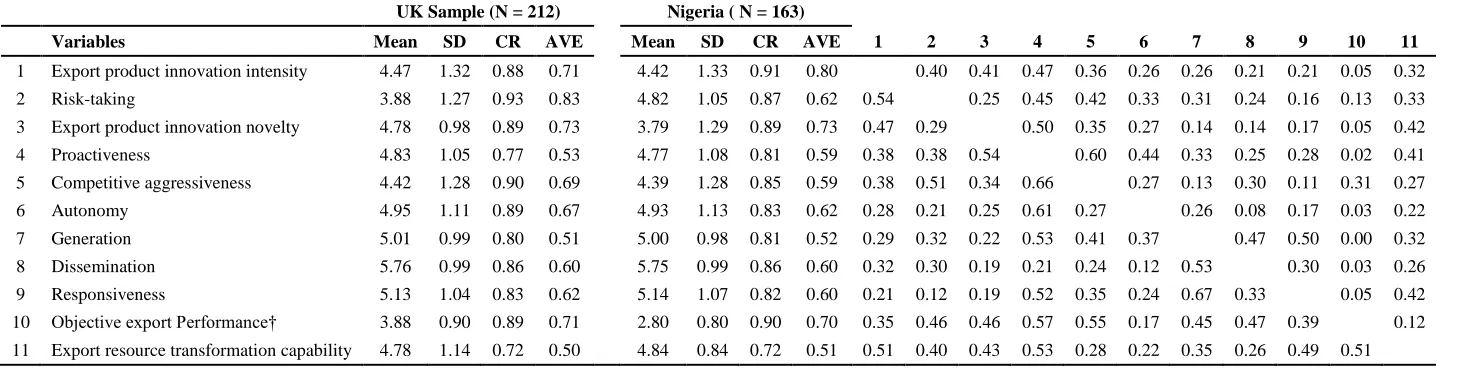
performance.
--- Table 1 about here ---
Export Entrepreneurial Orientation, Export Resource Transformation Capability and Export
Performance
International entrepreneurship literature suggests that EO is related to export performance
(e.g. Coviello et al., 2011; Covin & Miller, 2014), and evidence supports the notion of a
directional relationship between EO and export performance based on three core arguments
(e.g. Zahra & Garvis, 2000; Balabanis & Katsikea, 2003; Boso et al., 2012). First, it is argued
that entrepreneurial-oriented exporters have a strong proclivity to innovate in export
operations, enabling such firms to focus attention and efforts on using novel and creative
processes and technologies to develop and market products that delight customers. As a
result, innovative exporting firms benefit from pioneering and first-mover advantages, which
then enable these firms to dominate their export market to earn above-average sales (Shane &
Venkatraman, 2000). Second, entrepreneurial-oriented exporters are proactive businesses that
10
to offer new products/services to the market ahead of their competitors (Zahra and Garvis,
2000). Third, entrepreneurial-oriented firms are competitively aggressive and more willing to
commit a significant amount of resources to export operations with unknown outcomes. As
such, such firms enjoy the advantage of reshaping their industry value chain by forcing
competitors to behave differently.
While such direct effect assertions are appealing, we contend that EO is an
organizational resource that offers only a potential economic value, providing a firm with a
vision for achieving its strategic goals (Chirico et al., 2011. From a dynamic capability
perspective, we argue that EO causes changes in export performance by first driving a firm’s
ability to reorganize its resource base to exploit entrepreneurial opportunities. For example,
Day's (1994, p. 41) theory on capabilities of market-driven organizations argues that a
superior market-sensing know-how helps “inform and guide both spanning and inside-out
capabilities”. Furthermore, Barnett et al. (1994, p. 12) suggest that recognition of a new
market opportunity (or threat) “can cause current practices in the organization to be
considered inadequate. Hence, a firm that faces competition is more likely to refine current
routines”. Several other studies argue that EO plays a role in building resource
reconfiguration capability (Jantunen et al., 2005; Baker and Nelson, 2005; Fisher, 2012). It is
argued that entrepreneurial-oriented firms seize opportunity through their deliberate actions.
In order to exploit opportunities, Jantunen et al. (2005, p. 227) argue that an
entrepreneurial-oriented firm needs to build “new processes, business models, complementary assets and
methods [… including] capabilities [to] transform its asset base and reconfigure its processes
and structures in order to achieve new valuable resource combinations”. In re-engineering
new uses and configurations of resources, an entrepreneurial-oriented firm boosts the
productivity of its resources and efficient matching of its asset base to environment
11
With the arguments above, it can be expected that, by being active in reconfiguring
how resources are used and by being proficient in orchestrating new uses of resources
(Sirmon et al., 2011), an EO firm should be more successful in seizing market opportunities.
This argument is reflective of the notion of entrepreneurial resource orchestration (Sirmon et
al., 2007), which suggests the need to reduce resource inefficiencies in exploration of
entrepreneurial opportunity. Greater EO requires an escalation in a firm’s resource use as
more resources need to be committed to high-risk projects and novel innovations. While
efforts to launch novel innovations require substantial resource commitment, a greater
resource configuration capability enables the firm to leverage its resources in novel ways to
seize an opportunity (Fisher, 2012). Thus, by being active in finding new resource
combinations and with advanced capability in reconfiguring resources, processes and
structures, an EO firm should be more capable of taking advantage of new export market
opportunities, and this should be reflected in increases in its export performance.
Accordingly, we argue that:
H1: Export resource transformation capability mediates the relationship between export EO
and export performance.
Export Market Orientation, Export Resource Transformation Capability and Export
Performance
Empirical studies on the export MO – export performance continue to provide evidence to
support the claim that exporting firms that are market-oriented generate superior performance
in export markets (e.g. Cadogan et al., 2009; Racela et al., 2007). Several arguments are
advanced to back a positive relationship between MO and export performance. First, export
market-oriented firms prioritize export customer intelligence acquisition, sharing and usage,
and, for that reason, such firms are able to learn about their export market customers’
12
firms are market-facing organizations, they are able to develop and deliver products or
solutions that customers need the most, relative to the competition (Cadogan et al., 2001).
Second, market-oriented firms are also customer-connected, channel-linked and informed
about competitors (Murray et al., 2011), providing such firms with the advantage to acquire
and absorb knowledge from key market players such as customers, distributors, competitors,
and suppliers, which enables them to design and deploy products and solutions that are
superior to those of their competitors. Third, given their closeness to export customers,
connection to channels, and deep knowledge about competitors’ offerings and other
exogenous export market environment forces, export market-oriented firms tend to engage in
line and brand extensions that better satisfy specific niche market demands (Murray et al.,
2011). Accordingly, it is argued that export market-oriented firms generate superior
performance than their less market-oriented counterparts.
We argue that variations in export market-oriented activities will first lead to
conversion of intelligence resources into products or solutions for customers through a
process of resource reorganization (Srivastava et al., 2001). Importantly, collected market
intelligence resources must be defined, transformed and leveraged. From an organizational
capability perspective, we argue that exporting firms can better exploit the benefits of export
market intelligence by developing greater capability in redefining, reconfiguring and
deploying their internal resources held in different functional units (Johnson et al., 2003). This
is necessary because contemporary export market intelligence is not so obvious (Cadogan et
al., 2009); hence, export success is likely to be determined by a firm’s ability to redefine,
reconfigure and redeploy its stock of export market-relevant resources to be able to convert
export information into profitable market offerings (Menon et al., 1997).
For example, greater capability in reorganizing resources ensures that frontline export
13
committed to a particular export customer segment to an alternative segment to effectively
exploit a market opportunity. In addition, greater competence in coordinating how firm
resources are used can help boost cohesion, compromise and confidence among functional
units, which can then help channel export market intelligence to export market effectiveness.
When inter-functional exchange of critical resources is well-coordinated, employees are more
willing to support one another emotionally and logistically in helping to implement the
generated export market intelligence. Miller and Friesen (1983) argue that firms that base
their resource usage decisions on solid market intelligence do earn superior performance.
Consequently, this study delineates the mediating role of RTC in the export market
orientation – export performance relationship. Taken together, we argue that:
H2: Export resource transformation capability mediates the relationship between export MO
and export performance.
Combined Effect of Export Entrepreneurial and Market Orientations
A major contention in the resource-based theory is that the locus of sustainable firm
performance lies in a firm’s propensity and ability to pursue productive opportunities by
seeking complementarity among individual resources. In drawing insight from research on
resource interdependencies (Kor and Leblebici, 2005) and resource complementarities (Teece,
2007) as sources of performance, Wiklund and Shepherd (2011) argue that EO encapsulates
how a firm organizes itself to be able to seize an opportunity. However, how this
entrepreneurial process impacts a firm’s bottom line is a function of how it is combined with
the firm’s market-based assets (Baker and Sinkula, 2009). To this end, this study contends
that the manner in which a firm is organized to seize a market opportunity, when combined
with its MO, could cause the firm to develop new resource combinations to improve its
14
matters but rather the synergistic combination or bundle of resources created by the firm” that
drives performance (Kraaijenbrink et al., 2010, p. 356). Thus, we propose a combined effect
of EO and MO on RTC and export performance.
Specifically, we argue that, while EO may help a firm to discover a market
opportunity, the incentive for that firm to develop proficiency in reconfiguring its resource
base to seize the opportunity is boosted when the firm also has strong knowledge of the
market. This is because MO provides the firm with strong awareness and real-time
connectivity to customer problems, a clearer understanding of competitive offerings, and
knowledge of environmental dynamics, constituting a major source of market opportunity. In
addition, while EO may force a firm to develop new methods and processes to discover new
technologies and products, Wiklund and Shepherd (2003) argue that the locus of new
technology or product success lies in the users’ ability to articulate new product needs (see
also Atuahene-Gima et al., 2005). A firm high in EO might lack prior knowledge of customer
needs and problems and the ways to better address them, but MO fills this void in a firm’s
knowledge base by providing the market intelligence and knowledge required to initiate
appropriate configuration of resources to design solutions to customer problems. To this end,
Wiklund and Shepherd (2003) conclude that firms lacking understanding of and familiarity
with customer problems and the ways to serve customers may find it hard to design and
implement market solutions, unless the firms are simultaneously market oriented.
Thus, in extending our arguments in H1 and H2, we argue here that resource
management competence is an outcome of EO and MO as it speaks to how resources are defined, configured and deployed in line with the firm’s values, goals, and strategic priorities (Zheng et al., 2010). We contend that EO and MO, which are general organizational beliefs or philosophies about how market opportunities are exploited and market needs are satisfied, do
15
performance by first shaping a firm’s new resource combinations and organization of
processes and structures. Accordingly, we propose that,
H3: Export resource transformation capability mediates the combined effect of export EO
and MO on export performance.
Research Method
Research Settings and Data Collection
The study began with interviews with 11 export managers aiming to develop new insights into
exporters’ resource management competences. The interviews helped us learn about the
managers’ language and subsequently guided the development of survey instruments for the
studya. Additionally, several interviews were held with experts on export entrepreneurship
and marketing. A total of 22 such interviews were held. In all cases, we were interested in
uncovering key strategic orientations and resource management capabilities that were relevant
to the performance of exporting firms. Subsequently, in view of the importance of context for
research rigour and practical relevance (Whetten, 2009), we tested our hypotheses among
exporting firms in the United Kingdom (UK) and Nigeria, enabling us enhance the external
validity and empirical generalizability of our proposed theory.
The United Kingdom Study
Two waves of survey were undertaken in the UK. In the first wave, a random sample of 830
exporting small- and medium-sized enterprises (SMEs) across multiple industries was
generated from 2,180 eligible firms listed in the Bureau van Dijk and British export directory
databases. Accordingly, we focused on firms that employed between five and 250 employees,
and which were earning export sales at the time of the study. A questionnaire pack was then
a Note that the purpose of our study was not to undertake grounded theory development; rather, we were
16
sent to the sampled firms, addressed to the export manager or the chief executive officer. This
group of managers is deemed to be knowledgeable about the firms’ strategic activities and
had been targeted in similar studies in the past (e.g. Balabanis & Katsikea, 2003; Julian et al.,
2014; Leonidou et al., 2004). After two reminders, 245 responses were received, a 29.50%
response rate. This was after we discounted non-deliveries, companies no longer exporting,
and incomplete responses. This sample size and response rate compares well to a host of other
comparable studies (e.g. Balabanis & Katsikea, 2003).
One year later, a second wave of the survey was administered to the finance managers
of the 245 exporting firms that participated in the first study. This was to help obtain
information on the firms’ export performance indicators from a second source to procedurally
eliminate common method and single informant biases (Guide & Ketokivi, 2015). Two key
other reasons informed our choice of time lag. First, we followed Wiklund and Shepherd’s
(2011) advice for a time lag between the predictor and outcome variables because this helped
reduce social desirability and reverse causality. Second, it takes some time before an
investment in organizational resources and capabilities impacts performance (Lu et al., 2010).
For that matter, it was necessary to allow a time lag in order to track how the studied export
resources and capabilities impact export performance. A total of 212 firms provided complete
responses on the export performance questionnaire, representing an 86.53% response rate.
Subsequently, we base our analyses on the 212 matched responses.
The firms in our UK sample operated in the manufacturing (87%) and services (13%)
industries (Wang, 2008). Specific industries were electronic and electrical equipment and
components, textiles and garments, telecommunication, and related industries. The firms
employed between 16 and 170 full-time employees, with a mean of 88 full-time employees.
Average age of the firms was 52 years and annual revenue was US$72.05 million. The mean
17
exported their products and services to the European Union (or EU) market, 88% exported to
Eastern Europe, 84.90% to North America and 59.60% served Mainland China. Other Asian
countries (other than Mainland China) were served by 72.20%, while 67.80% exported to
South and Central America. The Middle East, Australia/New Zealand, and Africa were served
by 74%, 81.10% and 79.30% of the firms respectively.
The Nigeria Study
The Nigeria study involved a multi-industry survey of exporting SMEs. Several reasons
justify the choice of Nigeria for the second study. First, Nigeria is the largest economy in
Sub-Saharan Africa with an estimated 173.60 million consumers, a projected nominal gross
domestic product (GDP) of US$574 billion and purchasing power parity GDP of US$1.109
trillion in 2015, and was expected to grow by .1% in 2015 (International Monetary Fund,
2015). The rapid growth of key non-oil sectors in this African economy has generated
significant interest in the exporting firms operating in the country (Ibeh et al., 2012; Mmieh et
al., 2012; Okpara, 2012).
We identified 1,000 exporting firms from the database of Small and Medium
Enterprises Development Agency of Nigeria for the replication study, but, in order to balance
our survey costs and the sample size needed to obtain statistical power, we randomly selected
450 firms for the study. This was after we had screened the firms to ensure that they
employed between five and 250 full-time employees and were earning export sales. Further,
in view of the infrastructural challenges in Nigeria, we also ensured that it was logistically
possible to reach the firms to administer the survey by post, given the unreliable postal system
in the country. Accordingly, we followed the existing literature (e.g. Acquaah, 2012) to adopt
18
surveys to the key informants (export managers or chief executive officers) to complete at
their leisure and later collected them on an agreed date.
To ensure reliable responses, the four interviewers were trained extensively to ensure
that they did not introduce any biases by prompting informants during the interviews. They
were also trained to understand the objectives of the study, the importance of a number of
administrative elements such as assuring informants of the confidentiality of their answers
and filling in the questionnaire completely, and how to answer any requests for clarification.
Since the interviewers clarified questions or answers on the spot, the reliability of the data
was enhanced. To boost our ability to make cause and effect claims, and rule out common
method bias, one year later, we telephoned the firms that participated in the first study to
obtain export performance data. In the first study, we explicitly asked the firms to provide
their contact telephone numbers to enable us undertake a follow-up study. With these contact
details, we contacted the finance managers (or a senior manager other than the export
managers or chief executive officers) for their firms’ export performance data. Ultimately,
163 firms provided matched data, representing a 36.2% response rate.
The firms in the Nigeria sample operated in the manufacturing (66%) and services
(34%) industries (Wang, 2008). Specific industries were agro-processing, cement
manufacturing, oil refining, construction materials, beverages and tobacco, textiles, apparel
and footwear, pharmaceutical products, ceramic products, plastic and rubber products,
banking and telecommunication services. The firms employed an average of 125 full-time
employees. Average age of the firms was 16 years and annual revenue was US$2.3 million.
The average percentage of export sales was 42% of total annual turnover. The firms exported
mainly to other African markets (79%), EU market (12%) and other markets (9%).
ANOVA tests show no differences between early and late respondents in both samples
19
method bias (i.e. Harman one-factor and marker variable tests) suggest no major common
method bias concerns.
Measures
Details of items used to measure our constructs and their factor loadings are available in the
Appendix.
Dependent Variable: In line with previous studies, we used both objective and perceptual
measures of export performance (Racela et al., 2007; Cadogan et al., 2009). To assess export
performance objectively, one year later we asked the finance managers of the firms to provide
us with annual export sales, annual return on export sales and annual export profit data. We
validated these objective measures with perceptual measures provided by the senior
managers, capturing the managers’ satisfaction with their firms’ export performance in terms
of export sales volume, export market share, export sales growth, and export profitability,
measured on a seven-point rating scale ( = 0.91). The correlation between the objective and
perceptual performance measures was high in both samples (UK: r = 0.82, p< .01; Nigeria: r =
0.76, p< .01).
Independent Variables: To assess export market orientation, we used the export market
orientation scale from Cadogan et al. (2001). The items assessed the three behavioural
dimensions of the export market orientation construct: export intelligence generation,
dissemination and responsiveness. These three factors captured the extent to which the firms
targeted their export markets with the marketing concept (Cadogan et al., 2001). We
20
This study based the measure of export entrepreneurial orientation on the work of
Boso et al. (β01β) as their measures reliably tap all aspects of Lumpkin and Dess’ five
entrepreneurial orientation dimensions from the angle of export operations. Overall, six
factors were generated: export product innovativeness (with two components: product
innovation intensity and product innovation radicality), export risk-taking, export
proactiveness, export competitive aggressiveness, and export autonomy. In this instance, 20
seven-point rating scale items were employed (1 = not at all; 7 = to an extreme extent).
Mediating Variable: Given that the exporting literature lacks measures that capture the export
resource transformation (RTC) construct, we relied on the strategic management literature for
insights to operationalize this construct. Specifically, we drew insights from Buckley and
Casson (1998), Johnson et al. (2003) and Sanchez (1995) to define the RTC construct as a
firm’s ability to redefine, reconfigure and redeploy export market resources to exploit export
market opportunities. Consequently, we developed new observed measures that reflect
elements of resource redefinition, reconfiguration and redeployment. In all, seven reflective
items were developed and measured on a rating scale that ranged from 1 (not at all) to 7 (to an
extreme extent). In developing this reflective scale, we were guided by an established scale
development procedure that places major emphasis on the intercorrelations among the scale
items, and common variance, unidimensionality and internal consistency of the scale itself.
Covariates: We included four covariates (or control variables) in our conceptual model as
these variables can affect export performance. These were firm size, measured by number of
employees (logarithm transformed); international experience, measured by number of years
21
export sales to total annual sales (logarithm transformed); and industry types, categorized into
manufacturing = 0 and services = 1.
Analyses
Measurement Assessment
We followed a two-step procedure to analyse the data in this study: measurement model
assessment with the aid of confirmatory factor analysis (CFA), and subsequent structural
equation modelling (SEM) assessment (Anderson & Gerbing, 1988). We relied on the
LISREL 8.7 statistical package and maximum likelihood estimation method in both analyses.
We addressed model fit by using absolute 2 and associated degrees of freedom index (D.F.).
Given the sensitivity of 2/D.F. to sample size, we further assessed the fit of our implied
models by employing other fit heuristics such as comparative fit index (CFI), non-normed fit
index (NNFI) and incremental fit index (IFI). Finally, we reported on root means square error
of approximation (RMSEA) and standardized root means square residual (SRMR) for both
models.
CFA tests were subsequently performed for all measures as a way of assessing
measure validity (Anderson & Gerbing, 1988) as this allows for simultaneous specification,
estimation and evaluation of hypothesized relations between constructs and their associated
observed indicators. As can be seen in the Appendix, the measurement model achieved
adequate fit in both samples: UK sample: 2/D.F. = 861.41/609; RMSEA = 0.04; NNFI =
0.93; SRMR = 0.05; CFI = 0.94; Nigeria sample: 2/D.F. = 969.79/609; RMSEA = 0.04;
NNFI = 0.94; SRMR = 0.06; CFI = 0.95. Additionally, path coefficients in both samples were
significant at the 0.01 level, suggesting evidence of unidimensionality and convergent
validity. We observed that modification indexes and results show no evidence of cross
22
minimum threshold value of 0.60, as can be seen in Table 1. To assess discriminant validity,
we compared the average variance extracted (AVE) of each first-order construct with the
shared variance (i.e. square of all correlations) of this first-order construct and that of other
first-order constructs (see Table 1). The AVEs were larger than the shared variances,
indicating satisfactory discriminant validity (Bagozzi & Yi, 1988).
--- Table 2 about here ---
Having demonstrated the reliability and validity of all measures across both samples, a
multi-group CFA of all items was undertaken to establish item invariance (Steenkamp &
Baumgartner, 1998). Findings from the two-group invariance analysis revealed that the
measures are invariant across the two samples given the acceptable fit for configural, factor,
metric and error invariance tests. The error invariance test (the highest in order of the four
invariance tests) returned an acceptable fit to the data ( β/D.F. = 10ββ.11/503; RMSEA =
0.05; SRMR = 0.04; NNFI = 0.95; and CFI = 0.96). Note that invariance tests for the
individual constructs across the two samples returned excellent fit statistics. For example, the
results of the error invariance test for export performance revealed an excellent fitb: β/D.F. =
5.75/3; RMSEA = 0.05; SRMR = 0.05; NNFI = 0.99; and CFI = 0.99.
Subsequently, we created summated scales from the items in both samples. To create
composite measures of the three first-order factors of export market orientation, we first
averaged across the export intelligence-generation items, to create a single item score.
Likewise, we created a single item score for export intelligence dissemination and
responsiveness by averaging their respective scale items. The three scores were then averaged
to generate an export market orientation composite score. The export entrepreneurial
orientation CFA model comprised six first-order factors. We first averaged across the items
23
that measured each first-order factor to generate single item scores for intensity of product
innovation, radicality of product innovation, risk-taking, proactiveness, competitive
aggressiveness and autonomy. These new scores were subsequently averaged to create an
export entrepreneurial orientation score. Given that export resource transformation capability
comprised first-order reflective items, we created a single score by averaging across its seven
indicators. Similarly, the three objective indicators to measure the export performance
construct were averaged to create a single score, after their logarithm transformation was
undertaken. While several statistical techniques can be used to calculate interaction terms
between export EO and MO variables, Marsh et al. (2007, p. 578) suggest that efforts should
be directed at achieving greater “parsimony […] and robustness in relation to violation of
assumptions (e.g., normality)”. In view of this, we used the traditional multiplication
approach (Ping, 1995) to compute the interaction term for export EO and MO.
To this end, having mean-centred the EO and MO variables, they were then multiplied
to obtain a product term. We then estimated a structural model and set the error variance of
the latent variables at [(1-p) x 2], where p is the composite reliability and is the sample
standard deviation of each construct. This enabled us generate estimates for the item loadings
and error variances of the linear terms in the structural model. We then used Ping’s (1995)
equations to calculate the item loadings and error variances of the interaction term. For the
single indicant constructs (i.e. industry, size, experience and export intensity) we assumed a
composite reliability value of 0.70 when computing their error variances (Ping, 1995).
Structural Model Estimation
Given the high degree of item invariance observed across the two samples, we followed
Morgan et al. (2003) to then estimate and compare two competing multi-group structural
24
constructs and the hypothesized structural paths between the constructs were constrained to be
invariant across the two samples. The results obtained for this model were acceptable. A
second two-group structural model was estimated in which the measures of the constructs
were held equal across both samples, but the parameters for the structural paths between the
constructs were allowed to vary freely across both samples. We found a large and significant
increase in chi-square and deterioration in fit heuristics, indicating that the earlier model that
assumed equality of measures and structural paths has a better fit to our data. However, we
found that control paths were different (e.g. firm size and export intensity); hence, in
following Anderson and Gerbing's (1988) advice, we analyzed the UK and the Nigeria
samples separately. To examine our conceptual model, we used the structural equation
modelling (SEM) approach outlined by MacKinnon et al. (2002) and James et al. (2006). The
SEM approach is a preferred method because it “provides[s] researchers with a
comprehensive means for assessing and modifying theoretical models” (Anderson and
Gerbing, 1988, p. 411). Additionally, the method enabled us control for measurement error
and to provide information on the level of fit of the models tested (James et al., 2006).
This requires estimation of the full mediational model as a baseline model. In testing
full mediational models, James et al. (2006) suggest that there is no need to include paths
from the independent variables (here EO, MO and EOxMO) to the dependent variable (here
export performance). Other scholars have corroborated this view (e.g. MacKinnon et al.,
2002), and this approach has recently been followed to test mediation models in the
international business literature (e.g. Lu et al., 2010). Table 2 shows that the baseline model
provides an acceptable fit in both samples: UK: 2/D.F. = 198.18/93, p = 0.000, RMSEA =
0.07, SRMR = 0.06, NNFI = 0.87; and Nigeria: 2/D.F. = 164.60/93, p = 0.00, RMSEA =
25
We then followed the procedures used by Lu et al. (2010) to estimate a series of
competing nested models against our baseline model. With respect to Model 1, the path
corresponding to H1 was constrained to zero: EO RTC was restricted in the baseline model.
A significant increase in chi-square (and associated degrees of freedom) was taken to mean
that the constrained path was useful in providing support for the baseline model. In Model 2,
the MO RTC path (i.e. H2) was set to zero and chi-square change was noted. In Model 3,
the constrained EOxMO RTC path was set to zero, and a non-significant increase in
chi-square was observed in both samples. This suggests that the EOxMO interaction term is not
an important driver of RTC in either the UK or the Nigeria sample. Taken together, the
baseline model was found to be superior to Model 1 and Model 2, but statistically different
from Model 3.
Additionally, the baseline model was compared with a partial mediation model in
Model 4. In this case, two extra paths were added to the baseline model: direct paths from EO,
MO and EOxMO to export performance. We found that the partial mediation model produced
a superior fit in both samples: UK: 2/D.F. = 161.76/90; RMSEA = 0.06; SRMR = 0.05;
NNFI = 0.92; and Nigeria: 2/D.F. = 127.91/90, RMSEA = 0.05, SRMR = 0.05, NNFI = 0.92.
On the basis of these results, we concluded that the partial mediation model was superior to
the baseline model and it was therefore relied upon (rather than the baseline model) in
additional model comparisons.
We then computed an additional three models to rule out alternative explanations
relating to the partial mediation model. First, it could be argued that resources are not
different from capabilities because transformation capability is another type of firm-specific
resource that, like EO and MO, might be directly related to export performance. To remove
this possibility, Model 5 was tested, in which case EO, MO, EOxMO and RTC were modelled
26
187.25/90; Nigeria: 2/D.F. = 165.99/90) were inferior to the partial mediation model, Model
4 (UK: ∆ 2/∆DF = 25.50/0; Nigeria: ∆ 2/∆DF = 38.08/0).
We also ruled out the suggestion that RTC plays only a trivial role in predicting export
performance. Accordingly, a non-mediation model was estimated in Model 6 by constraining
the path linking RTC to export performance to zero. Results of the chi-square difference test
were worse (UK = 2/DF = 179.48/91; Nigeria: = 2/DF = 131.85/91. This indicates that RTC
is not a trivial variable in our model. A third suggestion may be that RTC predicts export EO
and MO to export performance. To rule out this possibility, we tested an additional rival
model, Model 7, in which RTC is modelled as an antecedent variable impacting on EO and
MO, and with EO and MO directly linked to export performance. Less acceptable model fits
were received in both samples (UK: = 2/DF = 189.66/94; Nigeria: = 2/DF = 217.86/94),
suggesting that the partial mediation model estimated in Model 4 is the best-fitting model in
both samples. A fourth argument may be that RTC is a moderator of the effect of EO and MO
on export performance. To rule out this argument, we tested a competing moderating effect
model where EOxRTC + MOxRTC export performance was estimated in both samples.
The results showed inferior model fits relative to the partial mediation model, Model 4: (UK:
= 2/DF = 195.56/98; Nigeria: = 2/DF = 213.32/98). Given these results, we rely on the
partial mediation model, Model 4, to interpret our hypotheses.
--- Table 3 and Table 4 about here ---
Results
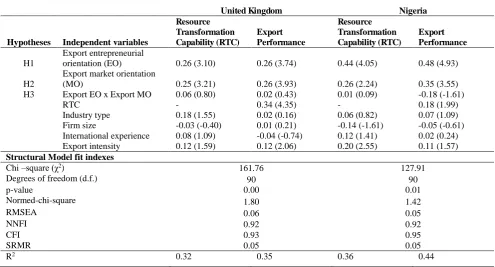
Table 4 presents the results of the standardized parameter estimates of the final structural
model (i.e. the partial mediation model, Model 4). Overall, the partial mediation model
achieves an R2 of 35% for export performance and 32% for RTC in the UK sample, and in the
27
respectively. Hypothesis 1 argues that RTC mediates the relationship between EO and export
performance. The results show that the EO RTC relationship is significant in both samples
(UK: = 0.26; t = 3.10; p< 0.01; Nigeria: = 0.44; t = 4.05; p < 0.01), and RTC export
performance (UK: = 0.γ4; t = 4.γ5; p< 0.01; Nigeria: = 0.18; t = 1.99; p < 0.05) is
significant in both samples. This provides support for hypothesis 1. Hypothesis 2 argues that
RTC mediates the relationship between MO and export performance. The results show that
MO RTC (UK: = 0.25; t = 3.21; p < 0.01; Nigeria: = 0.26; t = 2.24; p < 0.05) is
significant in both samples, and, given that RTC export performance is also significant, we
argue that H2 is supported in both samples. In support of the partial mediation results, EO
export performance (UK: = 0.26; t = 3.74; p < 0.01; Nigeria: = 0.48; t = 4.93; p < 0.05)
and MO export performance (UK: = 0.26; t = 3.93; p < 0.01; Nigeria: = 0.35; t = 3.55; p
< 0.05) relationships are also found to be significant in both samples. The study further argues
in H3 that EO and MO interact to jointly impact export performance through RTC. The
results show that the EOxMO interaction term is not significantly related to RTC (UK: =
0.06; t = 0.80; p > 0.05; Nigeria: = 0.01; t = 0.09; p > 0.05) and export performance (UK:
= 0.02; t = 0.43; p > 0.05; Nigeria: = -0.18; t = -1.61; p > 0.05); hence, H3 is rejected in both
samples.
Additional analyses using the perceptual export performance measures showed
that the results are qualitatively unchangedc. Specifically, we found that the EO RTC (UK:
= 0.γ5; t = γ.46; p<0.01; Nigeria: = 0.40; t = γ.58; p = 0.01), MO RTC (UK: = 0.γ0; t
= β.97; p = 0.01; Nigeria: = 0.γ0; t = β.7β; p = 0.01), and RTC export performance (UK:
= 0.19; t = β.45; p< 0.01; Nigeria: = 0.19; t = 1.97; p = 0.05) relationships are significant
in both samples. Further, we found that the joint effects of EO and MO on RTC and export
c Results of the additional analyses are available from the corresponding author and can be made available upon
28
performance are not significant in both samples; thus, EO and MO alignment plays a limited
role in enhancing RTC and export performance.
We further partitioned the total effects into direct and indirect effectsd for both EO
and MO by employing the SPSS PROCESS function and bootstrapping method with
bias-corrected 95% confidence interval (Preacher and Hayes, 2004). We found that the 95%
confidence interval of the indirect effect obtained with 5,000 bootstrap resampling did not
contain the value of zero in all cases. These results are further confirmed in the Preacher and
Kelley (2011) Kappa-squared test for indirect effects. For the UK sample, the results showed
that the bootstrap indirect effect of EO ( = 0.047; CI = 0.017 to 0.108) and MO ( = 0.050;
CI = 0.014 to 0.112) did not contain a value of zero. With these indirect effect values, one can
infer that RTC does partially mediate the two orientations to performance in a fairly uniform
manner. In the case of the Nigeria sample, the indirect effects of EO ( = 0.164; CI = 0.071 to
0.282) and MO ( = 0.10β; CI = 0.094 to 0.γ06) are both significantly different from zero.
However, in the Nigeria sample it seems that EO dominates the effect, suggesting that
Nigerian firms are able to improve their performance when they place greater emphasis on
EO and RTC and less emphasis on MO.
Discussion
Theoretical Contribution
Despite years of scholarly discussion of the determinants of export performance, theoretical
and empirical evidence regarding the influence of export EO and MO on export performance
has received limited research attention in the international business literature, especially with
respect to firms’ internal resource transformation capabilities that connect the two orientations
to export performance. In drawing insights from the dynamic capability literature, this study
identifies and argues that RTC, a key export resource configuration process, mediates the
29
effect of EO and MO on export performance. The results of our analysis of cross-national
archival and survey data reveal that RTC plays a partial mediating role in linking EO and MO
to export performance in UK and Nigeria exporting firms. With these findings, this study
extends extant exporting research in several ways.
First, using dynamic capability theory as a background, this study provides answers to
existing deficiencies in the exporting literature by capturing the mediating roles of RTC in
linking EO and MO to export performance (Lu et al., 2010). We argue that, rather than focus
on the export market opportunities explored through EO and export market intelligence
generated by MO as direct drivers of export performance, these firm-specific resources can be
leveraged and orchestrated together with other firm-specific assets to build transformative
capabilities to boost export performance. Although the two export strategic orientations are
related directly to export performance, this study provides evidence to explain that RTC
provides a channel through which the two orientations explain variation in export
performance. This piece of evidence is consistent with a largely untested proposition in the
dynamic capability literature that resource stock does not per se explain variation in
performance (Day, 2011), but through resource orchestration processes firms are able to
generate superior performance from their resource base (Jantunen et al., 2005; Lu et al., 2010;
Lado et al., 1992). In line with this dynamic capability theory, we find that a firm’s ability to
redefine, reconfigure and redeploy its export-related resources enables it to convert its export
market intelligence and export market opportunities into superior export performance. The
implication of this finding is that examination of the association between firm resources and
export performance should take account of the internal resource configuration processes as an
important intervening strategy.
Second, we provide new insights on the direct and indirect effects of EO and MO on
30
dynamic capability and the resource management literatures (Morgan et al., 2004; Sirmon et
al., 2011). To date, research has focused largely on the value of a firm’s domestic
entrepreneurial and market orientations, yet McDougall et al. (2000) suggest that international
business activities involve qualitatively separate activities from domestic operations. An
interesting finding from this research is that, while in the UK data EO and MO have an equal
impact on RTC, in the Nigeria sample EO seems to have a greater impact on RTC than MO,
further highlighting the need to study the strategic orientations from an international business
perspective. We suggest that the difference in the two samples may be due to a difference in
the stage of market development and this variation may have implications for whether EO or
MO is more or less an important driver of export business success. In the UK, the market is
mature and well developed; reliable customer information is readily available and accessible
to exporters. Therefore, it is critical that MO is just as important as EO. However, in Nigeria,
which is still developing and forming, EO can pay greater dividends than MO because the
need to be market and customer oriented may not be as high as being entrepreneurially
oriented (e.g. being innovative and aggressive). In addition, the difference in the findings may
be a function of different levels of customer expectations. Specifically, customer expectations
might not be as strong and developed in Nigeria as in the UK; hence, the lesser importance of
MO in the Nigerian market. Thus, our efforts to study the interconnections between both
export strategic orientations (individually and in combination), export resource management
capabilities and export performance across two countries at different stages of market
development are an extension of the existing literature.
Third, in order to examine the relationships involving EO and MO and export
performance, we developed and used measures that tap export-specific
entrepreneurial-oriented, market-oriented behaviours and resource transformation capability and performance.
31
measures of EO and MO, measures capturing export-specific resource transformation
capability are currently under-developed (Jantunen et al., 2005). In this respect, this study
further contributes to the literature in that it provides researchers and managers with new
export-specific measures that could be used to assess firms’ resource management know-how
in export markets. Our export resource transformation capability measures were validated in
two major culturally distinct economies: the United Kingdom (an industrialized European
economy) and Nigeria (a major emerging market economy in Sub-Saharan Africa).
Managerial Implications
Taken together, this study’s findings raise three important managerial issues: does an
entrepreneurial proclivity and a propensity to be market oriented in export market operations,
either individually or jointly, require export resource transformation capability to improve
export performance; does an ability to reconfigure a firm’s asset base benefit from export
entrepreneurial proclivity and export market-oriented inclination; and does it substantially
impact export performance? Some researchers suggest that export entrepreneurial orientation
(EO) and market orientation (MO) drive performance individually. Other scholars have
contended that EO alone is not sufficient for a firm to be able to discover solutions to market
problems, and MO alone is not enough because overreliance on MO may result in the firm
ignoring or underestimating emerging market opportunities (Matsuno et al., 2002; Wiklund
and Shepherd, 2003). A major contention therefore is that, when a firm takes risks to
proactively innovate to discover solutions to export market problems, the discovered solution
is more likely to be successful when the firm also has superior understanding of the needs and
problems of export customers, actions of competitors, and exogenous macro-environment
32
this advice: the exporters in our samples that are both entrepreneurial and market oriented
generate superior export performance.
Beyond these direct export performance benefits from EO and MO, the results suggest
the importance of building advance resource mobilization capability to channel the two export
strategic orientations to export performance. The results indicate that being active and
proficient in reconfiguring a firm’s export-related assets base helps boost its export
performance. In addition, the results suggest that firms can improve the export performance
effect of their existing resources via the processes of configuring new ways of using export
resources or assets. A more interesting finding is that, for the UK firms studied, the indirect
effects of EO and MO on export performance seem to be uniform, implying that RTC does
mediate the two orientations to perform in a fairly balanced manner. In the case of the Nigeria
sample, however, the indirect effect of EO is substantially larger than the indirect effect of
MO, suggesting that EO dominates the total effect, and implying that Nigerian firms are able
to improve their performance when they place a greater emphasis on EO and RTC and less
emphasis on MO. Thus, while EO and MO are equally important for driving performance
through RTC in UK firms, EO seems to be a dominant force in Nigerian firms. Taken
together, our findings highlight the role of resource transformation capabilities as the channel
through which EO and MO activities are connected to export performance, helping extend
existing advice to managers to link aspects of their orientations to performance through
organizational knowledge-based assets (Wang, 2008; Rhee et al., 2010).
Thus, an overarching managerial implication from our results is that a firm’s strategic
entrepreneurial and market orientations towards export markets and its dynamic capabilities,
in this case advanced proficiency in reconfiguring its asset base, are important determinants of
export performance. We suggest that, although a firm’s internal culture-based strategic
33
can be complex and time-consuming to build, they can be beneficial to the firm in seizing
export opportunity. In view of the fact that these behavioural characteristics are specific to the
firm, and are therefore difficult for other firms to imitate, they become a major source of a
firm’s competitive advantage. On a final note, this study has developed and validated items
that specifically measure export context-specific export resource transformation capability.
These items can be used by managers to train exporting functional leaders on how to develop
competence in reconfiguring a firm’s asset base.
Limitations and Directions for Further Research
As is the case in many empirical studies, the results of this study must be interpreted within
the context of its boundaries and limitations. This study develops a model that captures the
mediating role of export resource transformation capability within the framework of EO/MO
export performance relationship. Thus, our immediate target audience is researchers and
practitioners interested in export entrepreneurship and marketing themes. Clearly, several
socio-cultural, geographical, political, regulatory, infrastructural and other
macro-environmental factors may play a role in influencing the perception of managers about the
value of the two orientations in export operations. Future research examining the impacts of
the two orientations together with the export resource transformation capability construct
should consider controlling for the influence of these environmental forces.
There is also a possibility that the associations of EO and MO with export
performance may be mediated by other organizational capabilities such as export market
innovation capability (Baker and Sinkula, 2009). This is because the two orientations tend to
generate positive innovation outcomes. Additionally, in drawing on the organizational
learning literature, it can be argued that the effects of the two orientations on export