International Journal of Innovative Technology and Exploring Engineering (IJITEE) ISSN: 2278-3075, Volume-8 Issue-7, May, 2019
Abstract: Concrete has been employed in building and it is uncovered to the action of acidic environment for as lengthy as concrete has been used when concrete is to be employed underneath situation in which it will be uncovered to the effect of acids. “Considerations ought to be taken of these effects and appropriate precautions taken. However normally these precautions are not drastic and do no longer contain the decision and use of substances or production of concrete. The outcomes of acid on concrete can also be examined by way of thinking about the characteristics of acid that can impact concrete, the elements of specific concrete contain that might also be affected by way of these factors. The consequences of interaction of acids with concrete and sooner or later the precautions that need to be taken to avoid the undesirable overall performance of the concrete due to its interaction with acids.Concrete is uncovered to sea water is wetted with the aid of a answer of salts basically sodium chloride and magnesium sulphate. Magnesium Sulphate may attack most if no longer all of the elements of hardened Portland cement pastes especially the aluminate constituents. Chloride may reason corrosion of steel and alkaline may take part in alkali aggregate reaction.These concrete exposed with distinct cement (i.e., it need to not be affected by acid) and with non-reactive aggregates embedded with metal included through concrete of low permeability and desirable development practices have to be implemented.”
This paper investigates the effect of acidic curing environment on the strength(Compressive strength, Flexural strength, “Split Tensile strength) and durability of M40 grade concrete at different ages cured in water containing various percentages of Hydro chloric acid(HCL) and Sulphuric acid(H2SO4).”
Index Terms: Acid attack on concrete,Hydro Chloric acid, Sulphuric acid, Compressive Strength, Split Tensile Strength, Flexural Strength, Durability and Weight loss.
I. INTRODUCTION
Concrete is is a composite material consist of coarse mixture and excellent combination bonded in to be shared together by means of fluid cement that hardens completed in time. Maximum concretes utilization are lime-based concretes, forexample “Portland cement concrete or concretes composed with the aid of different cement fondue. However, asphalt concrete that is widespread usage for road surfaces is additionally a type of concrete, the place the cement fabric is bitumen, and polymer concretes are usage the place the cementing material is a polymer.(Emmanuel K. Attiogbeet,al)Explainedthe response of 4 one of a kind concrete mixesto sulfuric acid attack was two two
Revised Manuscript Received on May 07, 2019.
Shaik Naseeruddin, Department of Civil Engineering, Godavari Institute of Engineering and Technology (Autonomous),Rajahmundry, A.P, India.
Dumpa Venkateswarlu, Department of Civil Engineering, Godavari Institute of Engineering and Technology (Autonomous),Rajahmundry, A.P, India.
Alamanda Sai Kumar, Department of Civil Engineering, Godavari Institute of Engineering and Technology (Autonomous),Rajahmundry, A.P, India.
evaluatedin an accelerated laboratory test program. Small test specimens reduce from general concrete cylinders and a 1 percent sulfuric acid answer with a pH were used in the take a look at program. Changes in weight and thickness of the test specimens” have been used as physical indicators, while increase in sulfur content of the test specimens was used as a chemical indicator of the degree of deterioration.
(Seyed M. Joorabchian)Investigated the results of aggressive sulfuric acid assault on the concrete combinations organized with metakaolin (MK) and limestone filler (LF) at quite a number substitute levels. “In addition, fast chloride permeability (RCPT), water sorptivity, water porosity and rapid freezing and thawing checks have been additionally carried out on the concrete samples. Three sulfuric acid solutions with concentrations of 3%, 5% and 7% have been used for inspecting the resistance of concrete specimens for a total publicity period of eight weeks”
II. ACIDATTACKONCONCRETE
Concrete is susceptible to acid attack because of its alkaline nature. “The components of the cement paste break down during contact with acids as a process of disintegration. Most pronounced is the dissolution of calcium hydroxide which occurs according to the following reaction”:
2 HX + Ca(OH)2 -> CaX2 + 2 H2O
(X is the negative ion of the acid)
The “decomposition of the concrete depends on the porosity of the cement paste and the attention of the acid, the solubility of the acid calcium salts (CaX2) and on the fluid transport via the concrete conduits. Insoluble calcium salts may percolate in the voids and can slow down the attack. Acids such as nitric acid, hydrochloric acid and acetic acid are very aggressive as their calcium salts are easily soluble and eliminated from the assault front. Other acids such as phosphoric acid two are less harmful as their calcium salt due to their low solubility, inhibit the attack by using blockading the pathways within the concrete such as interconnected cracks, voids and porosity. Sulphuric acid interaction with concrete surface leads to serious adverse to concrete as it combines an acid assault and a sulfate attack”.
Fig: Acid Attack on Concrete Cube
Acid Attack on Concrete
III. MIXDESIGN
1. Mild Concrete surfaces protected towards weather or aggressive conditions, without those situated in coastal area. 2. Moderate “Concrete surfaces sheltered from extreme rain or freezing at the same time as moist Concrete visible to condensation landmine Concrete constantly underwater Concrete in contactor buried passed through aggressive soil or ground water Concrete surfaces sheltered from saturated salt airing coastal area”
3. Severe Concrete surfaces seen to severe rain, alternate wetting and drying or occasional freezing while moist or extreme condensation. Concretelately immersed in seawater Concl1'tc seen to informal environment
[image:2.595.306.553.46.596.2]Now for the check we use to cast some cubes of M40 and then we use to test them.
Table 1 : Material required for M40 grade concrete per cubic meter quantity of concrete
Material Water Cement Fine aggregate
Coarse aggregate
Kgs/cum 197.2 493 604 1164
Ratio 0.40 1 1.23 2..36
IV. EXPERIMENTALPROCEDURES
CONCRETE TEST PROCEDURES:
Now we are considering two acids H2SO4 “Sulfuric acid and
HCL Hydrochloric acid with different concentrations and mixing separately into water and treating cubes in the tubs which contain acid mixed water. After treating for 7, 28 and” 60 days we use to takes cubes out for the interval of times and tests under lab.
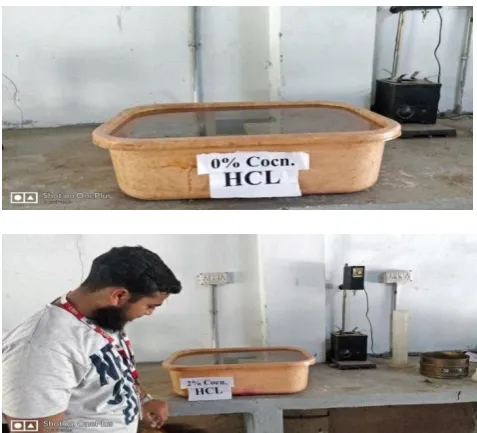
[image:2.595.46.285.461.677.2]Figure2: Cubes of HCL O% Concentration and 2% Concentration.
Figure 3: Cubes of HCL 5% Concentration. and 8% Concentration.
Figure 4: Cubes of H2SO4O%Concentration and 2%
[image:2.595.300.559.612.832.2]International Journal of Innovative Technology and Exploring Engineering (IJITEE) ISSN: 2278-3075, Volume-8 Issue-7, May, 2019
Figure 5:Cubes of H2SO4 5%Concentration and
8%Cocncentration
V. RESULTSANDDISCUSSIONS
[image:3.595.48.559.48.351.2]A. Compressive Strenght of Cubes
Table 2: Effect of H2SO4 on compressive strength at 7, 28 and
60 days
Sl. No
Grade of concrete M40
Cured in different %
of H2SO4
solution
7 days strength
(MPa)
28 days strength (MPa)
60 days strength(MPa)
1 M40 Water 31.5 46.5 46.5 2 M40 2% H2SO4 30.04 45.2 45.4
3 M40 5% H2SO4 29.2 43.6 44.2
4 M40 8% H2SO4 26.6 42.0 43.10
Figure 5 : Effectof H2SO4 on compressive strength at 7, 28
and 60 days
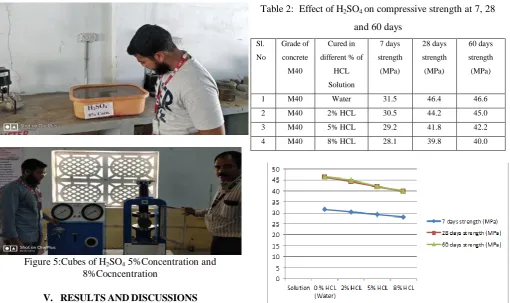
Table 2: Effect of H2SO4 on compressive strength at 7, 28
and 60 days
Sl. No
Grade of concrete M40
Cured in different % of
HCL Solution
7 days strength
(MPa)
28 days strength (MPa)
60 days strength (MPa) 1 M40 Water 31.5 46.4 46.6 2 M40 2% HCL 30.5 44.2 45.0 3 M40 5% HCL 29.2 41.8 42.2 4 M40 8% HCL 28.1 39.8 40.0
Figure 6 : Effect of HCLon compressive strength at 7, 28 and 60 days
B. Split Tensile Strengh
Table 4 :Effect of H2SO4 on split tensile strength of concrete
at 7, 28 and 60 days
Sl. No
Grade of concrete M40
Cured in different %
of H2SO4
Solution
7 days strength
(MPa)
28 days strength (MPa)
60 days strength (MPa) 1 M40 Water 3.1 4.12 4.13 2 M40 2% H2SO4 3.08 4.02 4.03
3 M40 5% H2SO4 2.96 3.96 3.98
[image:3.595.42.559.395.781.2]Figure 7 : Effect of H2SO4 on split tensile strength of concrete
at 7, 28 and 60 days
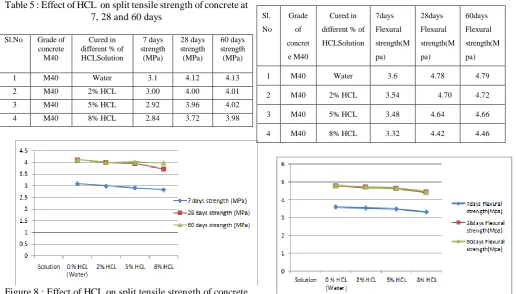
Table 5 : Effect of HCL on split tensile strength of concrete at 7, 28 and 60 days
Sl.No Grade of concrete M40
Cured in different % of HCLSolution
7 days strength
(MPa)
28 days strength (MPa)
[image:4.595.42.559.93.387.2]60 days strength (MPa) 1 M40 Water 3.1 4.12 4.13 2 M40 2% HCL 3.00 4.00 4.01 3 M40 5% HCL 2.92 3.96 4.02 4 M40 8% HCL 2.84 3.72 3.98
Figure 8 : Effect of HCL on split tensile strength of concrete at 7,28 and 60 days
[image:4.595.43.307.470.755.2]C. Flexural Strength
Table 6 :Effect of H2SO4 on flexural strength of concrete at 7,
28 and 60 days
Sl. No
Grade of concrete M40
Cured in differen
t % of H2SO4
solution 7days Flexura l strength (Mpa)
28days Flexura l strength (Mpa)
60days Flexural strength(Mpa )
1 M40 Water 3.6 4.78 4.79 2 M40 2%
H2SO4
3.52 4.71 4.74 3 M40 5%
H2SO4
3.48 4.66 4.68 4 M40 8%
H2SO4
3.36 4.52 4.56
Table 7: Effect of HCL on flexural strength of concrete at 7,28 and 60 days
Sl. No
Grade of concret
e M40
Cured in different % of HCLSolution
7days Flexural strength(M pa)
28days Flexural strength(M pa)
60days Flexural strength(M pa) 1 M40 Water 3.6 4.78 4.79 2 M40 2% HCL 3.54 4.70 4.72 3 M40 5% HCL 3.48 4.64 4.66 4 M40 8% HCL 3.32 4.42 4.46
Figure 10: Effect of HCL on flexural strength of concrete at 7,28 and 60 days
Durability of concrete
Durability of “concrete is simply defined as the resistanceto wear and tear due to climate change and due the temperature change throughout its serviceability period”.
This thesis clearly explained how the environment conditions effectsthe durability of concrete.
With application of some advanced epoxy resins one can overcome the fatigue conditions and achieve the desired durability.
Durability testing is a performance testing technique used to determine the characteristic of a system under various load condition over time.
VI. CONCLUSION
The following conclusions are drawn
International Journal of Innovative Technology and Exploring Engineering (IJITEE) ISSN: 2278-3075, Volume-8 Issue-7, May, 2019
2. The strength of concrete decreased with increase in duration of curing age and percentage concentration of acid in the curing water.
3. A near linear relationship between loss of weight and strength is observed as the percentage of acid increased in the curing water.
4. The “structures that exposed to severe acidic environment should be given a special attention while designing the structure especially while selecting the concrete compositions and a higher safety factor should be adopted . If possible special cements shouldbe allowedreducing the deterioration effect due to the harsh acidic environment”
5. To make structure durable acid resistant Novolac Epoxy floor resins be provided which protects the structure against hundreds of different chemicals and acids and gives the highest level of protection.
REFERENCES
1. B. Madhusudhana Reddy, H. SudarsanaRao and M.P. George "EFFECT OF SULPHURIC ACID (H2SO4) ON BLENDED CEMENT (FLY ASH BASED) AND IT’S CONCRET" 2012 Vol. 2 (2) April-June, international journel of applied engineering and technology
2. H. SudarsanaRao , V. Venkateswara Reddy and S.G. Vaishal " EFFECTS OF ACIDITY PRESENT IN WATER ON STRENGTH AND SETTING PROPERTIES OF CONCRETE" 29th Conference on OUR WORLD IN CONCRETE & STRUCTURES: 25 - 26 August 2004, Singapore Article, international journal of impact engineering(IJIE 3. Seyed M. Joorabchian "DURABILITY OF CONCRETE EXPOSED TO
SULFURIC ACID ATTACK” Theses and dissertations 1-1-2010,international journal of civil engineering and technology(IJCIET)
4. Bryant Mather "EFFECTS OF SEA WATER ON CONCRETE" MISCELLANEOUS PAPER NO. 6-690 December 1964,journal of construction division
5. Taku, KumatorJosiphiah,Amartey, D Yusuf ,Kassar, T "EFFECT OF ACIDIC CURING ENVIRONMENT ON THE STRENGTH AND DURABILITY OF CONCRETE " Vol.7, No.12, 2015,American journal of civil engineering.
6. M.S. Shetty CONCRETE TECHNOLOGY Theory and Practice, international journal of research of engineering and technology(IJRET) 7. IS 456: 2000 Indian standard, plain and reinforced concrete code of
practice, fourth revision
AUTHORS PROFILE
Shaik Naseeruddin, received B.Tech from Godavari Institute of Engineering and Technology, Rajahmundry. Presently pursing M.Tech at Godavari Institute of Engineering and Technology (Autonomous), Rajahmundry.
Dr.D. Venkateswarlu, received B.Tech in Civil Engineering in the year 1991, M.Tech from IIT-KGP in Marine Structures and Ph.D from JNTUK.