InTrans Project Reports Institute for Transportation
9-2013
Pilot Construction Project for Granular Shoulder
Stabilization
Fangyu Guo
Iowa State University, [email protected] Miguel Andres Guerra
Charles T. Jahren
Iowa State University, [email protected] David J. White
Iowa State University, [email protected]
Follow this and additional works at:http://lib.dr.iastate.edu/intrans_reports
Part of theCivil Engineering Commons
This Report is brought to you for free and open access by the Institute for Transportation at Iowa State University Digital Repository. It has been accepted for inclusion in InTrans Project Reports by an authorized administrator of Iowa State University Digital Repository. For more information, Recommended Citation
Guo, Fangyu; Guerra, Miguel Andres; Jahren, Charles T.; and White, David J., "Pilot Construction Project for Granular Shoulder Stabilization" (2013).InTrans Project Reports. 96.
Pilot Construction Project for Granular Shoulder Stabilization
Abstract
Granular shoulders need to be maintained on a regular basis because edge ruts and potholes develop, posing a safety hazard to motorists. The successful mitigation of edge-rut issues for granular shoulders would increase safety and reduce the number of procedures currently required to maintain granular shoulders in Iowa. In addition, better performance of granular shoulders reduces the urgency to pave granular shoulders. Delaying or permanently avoiding paving shoulders where possible allows more flexibility in making investments in the road network. To stabilize shoulders and reduce the number of maintenance cycles necessary per season, one possible stabilizing agent—acidulated soybean oil soapstock—was investigated in this research. A pilot testing project was conducted for selected problematic shoulders in northern and northeastern Iowa. Soapstock was applied on granular shoulders and monitored during application and pre- and post-application. Application techniques were documented and the percentage of application success was calculated for each treated shoulder section. As a result of this research, it was concluded that soybean oil soapstock can be an effective stabilizer for granular shoulders under certain conditions. The researchers also developed draft specifications that could possibly be used to engage a contractor to perform the work using a maintenance-type construction contract. The documented application techniques from this project could be used as guidance for those who want to apply soapstock for stabilizing granular shoulders but might not be familiar with this technique.
Keywords
Granular materials, Highway maintenance, Road shoulders, Ruts (Pavements), Soil stabilization, Soybeans, aggregate stabilization, edge-rut mitigation, gravel shoulders, shoulder maintenance, soybean soapstock, stabilization equipment, stabilizing agents, TR-634
Disciplines
Civil Engineering
Comments
Pilot Construction Project
for Granular Shoulder
Stabilization
Final Report
September 2013
About the Institute for Transportation
The mission of the Institute for Transportation (InTrans) at Iowa State University is to develop and implement innovative methods, materials, and technologies for improving transportation efficiency, safety, reliability, and sustainability while improving the learning environment of students, faculty, and staff in transportation-related fields.
Disclaimer Notice
The contents of this report reflect the views of the authors, who are responsible for the facts and the accuracy of the information presented herein. The opinions, findings and conclusions expressed in this publication are those of the authors and not necessarily those of the sponsors.
The sponsors assume no liability for the contents or use of the information contained in this document. This report does not constitute a standard, specification, or regulation.
The sponsors do not endorse products or manufacturers. Trademarks or manufacturers’ names appear in this report only because they are considered essential to the objective of the document.
Non-Discrimination Statement
Iowa State University does not discriminate on the basis of race, color, age, religion, national origin, sexual orientation, gender identity, genetic information, sex, marital status, disability, or status as a U.S. veteran. Inquiries can be directed to the Director of Equal Opportunity and Compliance, 3280 Beardshear Hall, (515) 294-7612.
Iowa Department of Transportation Statements
Federal and state laws prohibit employment and/or public accommodation discrimination on the basis of age, color, creed, disability, gender identity, national origin, pregnancy, race, religion, sex, sexual orientation or veteran’s status. If you believe you have been discriminated against, please contact the Iowa Civil Rights Commission at 800-457-4416 or the Iowa Department of Transportation affirmative action officer. If you need accommodations because of a disability to access the Iowa Department of Transportation’s services, contact the agency’s affirmative action officer at 800-262-0003.
Technical Report Documentation Page
1. Report No. 2. Government Accession No. 3. Recipient’s Catalog No.
IHRB Project TR-634
4. Title and Subtitle
Pilot Construction Project for Granular Shoulder Stabilization
5. Report Date
September 2013
6. Performing Organization Code
7. Author(s) 8. Performing Organization Report No.
Fangyu Guo, Miguel Andres Guerra, Charles T Jahren, David J. White InTrans Project 11-405
9. Performing Organization Name and Address 10. Work Unit No. (TRAIS)
Institute for Transportation Iowa State University
2711 South Loop Drive, Suite 4700 Ames, IA 50010-8664
11. Contract or Grant No. TR 531, Phase II
12. Sponsoring Organization Name and Address 13. Type of Report and Period Covered
Iowa Highway Research Board Iowa Department of Transportation 800 Lincoln Way
Ames, IA 50010
Final Report
14. Sponsoring Agency Code
IHRB Project TR-634
15. Supplementary Notes
Visit www.intrans.iastate.edu for color pdfs of this and other research reports.
16. Abstract
Granular shoulders need to be maintained on a regular basis because edge ruts and potholes develop, posing a safety hazard to motorists. The successful mitigation of edge-rut issues for granular shoulders would increase safety and reduce the number of procedures currently required to maintain granular shoulders in Iowa. In addition, better performance of granular shoulders reduces the urgency to pave granular shoulders. Delaying or permanently avoiding paving shoulders where possible allows more flexibility in making investments in the road network.
To stabilize shoulders and reduce the number of maintenance cycles necessary per season, one possible stabilizing agent—acidulated soybean oil soapstock—was investigated in this research. A pilot testing project was conducted for selected problematic shoulders in northern and northeastern Iowa. Soapstock was applied on granular shoulders and monitored during application and pre- and post-application. Application techniques were documented and the percentage of application success was calculated for each treated shoulder section.
As a result of this research, it was concluded that soybean oil soapstock can be an effective stabilizer for granular shoulders under certain conditions. The researchers also developed draft specifications that could possibly be used to engage a contractor to perform the work using a maintenance-type construction contract. The documented application techniques from this project could be used as guidance for those who want to apply soapstock for stabilizing granular shoulders but might not be familiar with this technique.
17. Key Words 18. Distribution Statement
aggregate stabilization—edge-rut mitigation—gravel shoulders—shoulder maintenance—soybean soapstock—stabilization equipment—stabilizing agents
No restrictions.
19. Security Classification (of this report)
20. Security Classification (of this page)
21. No. of Pages 22. Price
Unclassified. Unclassified. 143 NA
P
ILOT
C
ONSTRUCTION
P
ROJECT FOR
G
RANULAR
S
HOULDER
S
TABILIZATION
Final Report September 2013
PrincipalInvestigator
Charles T. Jahren Professor
Institute for Transportation, Iowa State University
Co-Principal Investigator
David J. White Associate Professor
Institute for Transportation, Iowa State University
Research Assistants
Fangyu Guo Richard Harris Miguel Andres Guerra
Authors
Fangyu Guo, Miguel Andres Guerra, Charles T. Jahren
Sponsored by
the Iowa Highway Research Board (IHRB Project TR-634)
Preparation of this report was financed in part
through funds provided by the Iowa Department of Transportation through its Research Management Agreement with the
Institute for Transportation, (InTrans Project 11-405)
A report from
Institute for Transportation Iowa State University
2711 South Loop Drive, Suite 4700 Ames, IA 50010-8664
TABLE OF CONTENTS
ACKNOWLEDGMENTS ... xi
EXECUTIVE SUMMARY ... xiii
Problem Statement ... xiii
Background ... xiii
Objective ... xiv
Research Description ... xiv
Key Findings ...xv
Implementation Readiness and Benefits ... xvi
CHAPTER 1. INTRODUCTION ...1
Background ...1
Objective ...1
Work Location Map ...2
Research Tasks...2
CHAPTER 2. LITERATURE REVIEW ...4
Shoulder Edge Rutting and Edge Drop-Off ...4
Shoulder Stabilization ...5
Soybean Oil Soapstock ...6
CHAPTER 3. PLAN SOAPSTOCK PILOT CONSTRUCTION ...9
Location Selection ...9
Pre-Construction Field Tests and Measurements ...10
Equipment Selection ...12
Update of Google Map and New Diagrams ...14
CHAPTER 4. EXECUTE SOAPSTOCK PILOT CONSTRUCTION...15
Area I: Algona and Garner ...16
Area II: Waverly and Allison ...19
Area III: West Union and Elkader ...22
Application Rate and Overall Productivity ...24
CHAPTER 5. MONITOR SOAPSTOCK AFTER PILOT CONSTRUCTION ...26
Data Analysis ...27
Research Limitations ...29
CHAPTER 6. DATA SYNTHESIS ...30
Key to Specific Locations Listed in Tables ...30
Area I ...30
Area II ...36
Area III ...41
Summary Results for All Locations ...46
CHAPTER 8. CONCLUSIONS AND RECOMMENDATIONS ...52
Conclusions ...52
Recommendations ...53
REFERENCES ...55
APPENDIX A. FIELD MEASUREMENT AND FIELD RESULTS ...59
Area I Section 1.01 MP 161.6-161.9 ...59
Area I Section 1.02 MP 210.8-211.4 ...62
Area I Section 1.03 MP 209-209.4 ...65
Area I Section 1.04 MP 195.5-196 ...67
Area I Section 1.05 MP 194.8-195.5 ...71
Area II Section 2.01 MP 226.2-226.6 ...73
Area II Section 2.02 MP 174.6-177 ...76
Area II Section 2.03 MP 220 ...82
Area II Section 2.04 MP 215-216 ...84
Area II Section 2.05 MP 205.1-305.7 ...87
Area III Section 3.01 MP 264.5-265 ...90
Area III Section 3.02 MP 269.8-271 ...93
Area III Section 3.03-3.04 MP 75-75.7 ...98
Area III Section 3.05-3.07 MP 69.3-74 ...100
Area III Section 3.08-3.10 70 ft South of Intersection W-51 and 215thStreet to 4,460 ft South of Intersection W-51 and 215th Street ...104
APPENDIX B. DRAFT SPECIFICATION FOR SOYBEAN SOAPSTOCK APPLICATION ON GRANULAR SHOULDERS ...107
120XXX.01 DESCRIPTION. ...107
120XXX.02 MATERIALS. ...107
120XXX.03 CONSTRUCTION. ...108
120XXX.04 METHOD OF MEASUREMENT. ...110
120XXX.05 BASIS OF PAYMENT. ...110
APPENDIX C. COMMENTARY ON SPECIFICATION FOR SOYBEAN SOAPSTOCK APPLICATION ON GRANULAR SHOULDERS ...113
Section 1. DESCRIPTION...113
Section 2. MATERIALS ...113
Section 3. CONSTRUCTION ...117
Section 4. METHOD OF MEASUREMENT ...125
LIST OF FIGURES
Figure 1. Edge rutting on granular shoulder (Jahren et al. 2011) ... xiii
Figure 2. Stabilization of granular shoulders with soybean oil soapstock ... xvi
Figure 3. General testing areas in Iowa ... 2
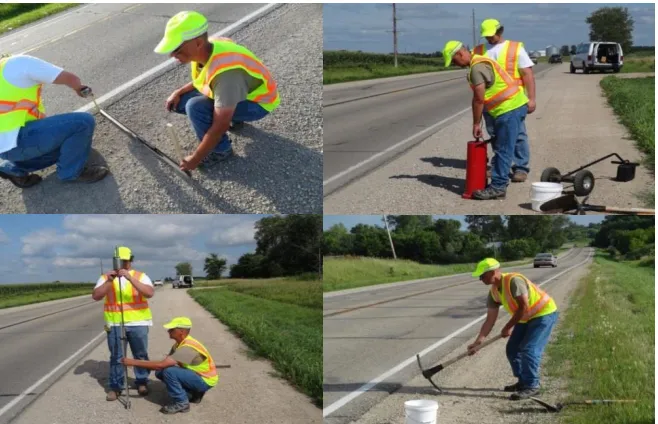
Figure 4. Profile test (top left), Clegg hammer test (top right), DCP test (bottom left), and aggregate samples (bottom right)... 11
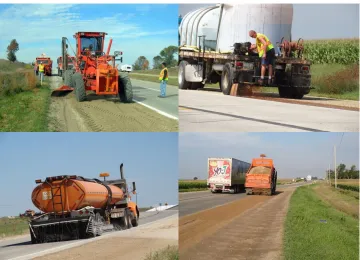
Figure 5. Road grader (top left), soapstock truck (top right), water truck (bottom left), and sand truck (bottom right) ... 13
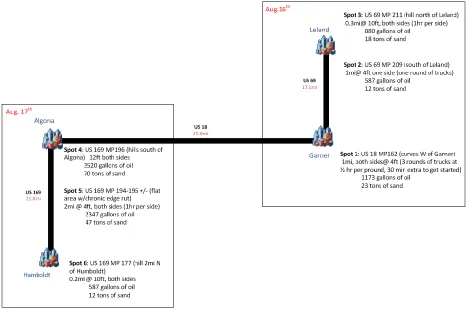
Figure 6. Sample spraying route for Algona and Garner, Iowa ... 14
Figure 7. Basic work train setup for soapstock application ... 15
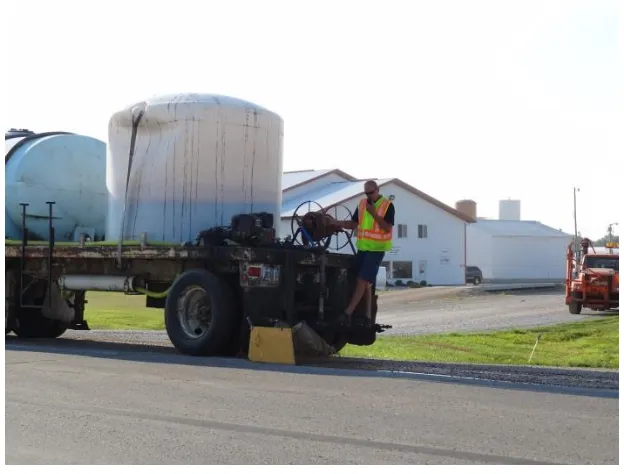
Figure 8. Soapstock application process ... 17
Figure 9. Soapstock applied on the shoulder of US 69 up the hill near Leland, Iowa ... 17
Figure 10. Sand applied on the shoulder of US 18 near Garner, Iowa ... 18
Figure 11. Soapstock and sand applied to recycled asphalt paving materials ... 19
Figure 12. Spraying in the rain on IA 3 near Allison, Iowa... 20
Figure 13. Soapstock and sand applied on the shoulder of US 63 near Denver, Iowa ... 21
Figure 14. Surface rolled after sand application for the shoulder of US 63 near Denver, Iowa ... 21
Figure 15. 12 ft wide soapstock applied on the shoulder of IA 13 near east of Elkader, Iowa .... 23
Figure 16. Sand applied on the shoulder of IA 13 near east of Elkader, Iowa ... 23
Figure 17. Recirculating soapstock to provide more consistent density (Harris 2011) ... 24
Figure 18. Grader bladed over the shoulder applied with sand ... 24
Figure 19. Level for measuring the road profile ... 27
Figure 20. Southbound shoulder of US 169 south of Algona, Iowa ... 31
Figure 21. Eastbound shoulder of US 18 near Garner, Iowa ... 32
Figure 22. Edge rut developed south of Algona, Iowa ... 32
Figure 23. Results compared for treated and untreated shoulder edge ... 33
Figure 24. Eastbound shoulder of IA 3 east of Waverly, Iowa ... 37
Figure 25. Southbound outside shoulder of US 63 near Denver, Iowa ... 37
Figure 26. Soapstock missing east of Allison, Iowa ... 38
Figure 27. Northbound inside shoulder of US 63 near Denver, Iowa ... 38
Figure 28. Shoulder of US 18 eastbound east of West Union, Iowa ... 42
Figure 29. Shoulder of US 18 on eastbound west of Clermont, Iowa ... 42
Figure 30. Gradation No. 11 for Class A aggregate ... 114
Figure 31. Label prototype (Guerra 2012) ... 117
Figure 32. Motor grader used during field tests ... 118
Figure 33. Paved road protection from soapstock splashing ... 118
Figure 34. Weather conditions during field tests ... 120
Figure 35. Workflow diagram ... 120
Figure 36. Water truck moistening the shoulder ... 121
Figure 37. Application of soybean soapstock over the granular shoulder ... 121
Figure 38. Shoulder after soybean soapstock application ... 122
Figure 39. Truck spreading sand over the treated granular shoulder ... 122
Figure 40. Use of traffic signs during construction ... 123
LIST OF TABLES
Table 1. Selected work locations by garage supervisors from Iowa DOT District 2 ...10
Table 2. General schedule for pilot testing project ...15
Table 3. Spraying work location description for Area I: Algona and Garner...16
Table 4. Spraying work location description for Area II: Waverly and Allison...19
Table 5. Spraying work location description for Area III: West Union and Elkader ...22
Table 6. New problematic spots identified in Area I ...30
Table 7. Percentage of successful application for Area I...31
Table 8. CBR values of shoulder materials in Area I ...33
Table 9. Average cross slopes of shoulder sections in Area I ...34
Table 10. Grades of road profiles in Area I ...34
Table 11. Gradation results for shoulder materials in Area I ...35
Table 12. Traffic levels for Area I test sections ...35
Table 13. New problematic spots in Area II ...36
Table 14. Percentage of successful application for Area II ...36
Table 15. CBR values of shoulder materials in Area II ...39
Table 16. Average cross slopes of shoulder sections in Area II ...39
Table 17. Road profile grades in Area II ...40
Table 18. Gradation results for shoulder materials in Area II ...40
Table 19. Traffic levels for Area II test sections ...41
Table 20. Area III application sections, which could not be measured ...41
Table 21. CBR values of shoulder materials in Area III...43
Table 22. Average cross slopes of shoulder sections in Area III ...43
Table 23. Slopes of hills in Area III ...44
Table 24. Gradation results for shoulder materials in Area III ...44
Table 25. Traffic levels for Area III test sections ...45
Table 26. Summary results for all tested sections (1.01-3.10)...46
Table 27. Data set for rut mitigation model ...48
Table 28. Clegg hammer data for Section 1.01 ...61
Table 29. Clegg hammer data for Section 1.02 ...64
Table 30. Clegg hammer data for Section 1.03 ...66
Table 31. Clegg hammer data for Section 1.04 ...70
Table 32. Clegg hammer data for Section 1.05 ...72
Table 33. Clegg hammer data for Section 2.01 ...75
Table 34. Clegg hammer data for Section 2.02 ...81
Table 35. Clegg hammer data for Section 2.03 ...83
Table 36. Clegg hammer data for section 2.04 ...86
Table 37. Clegg hammer data for section 2.05 ...89
Table 38. Clegg hammer data for section 3.01 ...92
Table 39. Clegg hammer data for section 3.02 ...97
Table 40. Clegg hammer data for section 3.03-3.04 ...99
Table 41. Clegg hammer data for section 3.05-3.07 ...103
Table 44. Coarse aggregate quality - Class A crushed stone. (GS Iowa DOT 2012) ...114 Table 45. List of ingredients of soybean soapstock used during 2011 tests
ACKNOWLEDGMENTS
EXECUTIVE SUMMARY
Problem Statement
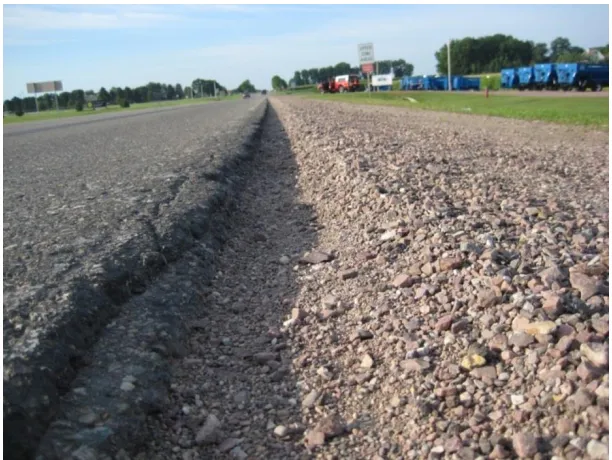
[image:17.612.153.459.207.437.2]Edge rutting on granular shoulders, as shown in Figure 1, is a serious traffic safety issue because it can cause vehicles to run off the road, which can lead to loss of control and even loss of life (Jahren et al. 2011). Edge rutting is caused by three factors: wind and air currents, vehicle off-tracking, and drainage.
Figure 1. Edge rutting on granular shoulder (Jahren et al. 2011)
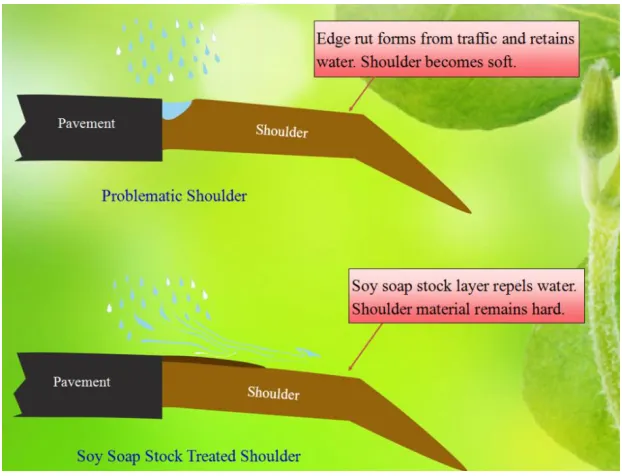
Over time, wind and air currents from large vehicles blow fine material away from the shoulder, exposing large particles on the shoulder surface, which are removed more easily by vehicle off-tracking. Off-tracking refers to the situation where rear tires run a different path from front tires during vehicle turning movements. Pavement drainage accumulates along the pavement edge and makes shoulder materials unstable.
Background
A shoulder edge-rut mitigation research project identified applications of acidulated soapstock, which is a soybean oil by-product, as a possible strategy to mitigate the development of edge ruts on roadways with granular shoulders (Jahren et al. 2011).
Evidence indicates that this strategy has the potential to reduce the number of required
and last up to five years on moderate-speed medium-traffic roads (such as US 18 near Garner, Iowa with 6,000 AADT and a speed limit of 45 mph).
Objective
The objective of the proposed research project was to assist the Iowa DOT in mitigating edge ruts on granular shoulders cost-effectively by pilot testing the use of soybean oil soapstock in a full-scale maintenance setting.
Pilot testing the material on roads with various AADT levels and shoulder conditions would provide an opportunity to better define situations where soybean oil soapstock and similar materials would be useful. The following questions would be answered:
What level of AADT can the treatment tolerate?
What amount of vehicle off-tracking can the treatment tolerate?
How must the shoulder material be prepared prior to application given that developing a sufficiently solid surface for the base of the application was found to be a challenging task in areas that were rutted just prior to construction?
Can the treatment be maintained to extend its life?
How can the treatment be repaired efficiently when points of incipient failure develop?
How can the Iowa Department of Transportation (DOT) purchase the material?
What specifications are required so that the material be applied as part of a construction or maintenance contract?
What other alternative strategies should be explored?
Research Description
Granular shoulders need to be maintained on a regular basis because edge ruts and potholes develop, posing a safety hazard to motorists. To stabilize shoulders and reduce the number of maintenance cycles necessary per season, one possible stabilizing agent—acidulated soybean oil soapstock—was investigated in this research.
A pilot testing project was conducted for selected problematic shoulders in northern and northeastern Iowa. Soapstock was applied on granular shoulders and monitored during application and pre- and post-application. Application techniques were documented and the percentage of application success was calculated for each treated shoulder section.
Key Findings
Conclusions
By the end of the study, researchers were able to determine whether and under what conditions this soapstock could be effective in mitigating edge rutting and potholes for granular shoulders. Most shoulders had good performance. Of the 20 test sections, 14 had 100 percent good
performance, meaning no edge ruts or potholes were identified and the soapstock stayed firmly in place on the treated shoulders.
Two locations had the worst performance with 0 percent successful application. Although no edge ruts were observed for these two sections, most of the soapstock applied on the shoulder surface was not in place when post-construction observations were made. At these locations, the soapstock was applied during rain showers and the wet conditions during application are the likely cause of poor performance.
At two other locations, new edge ruts developed in a few places, but the application was mostly successful with 98.3 and 95.7 percent successful application. Edge rutting at one location was not severe, only 1/2 in. deep, and, at the other, one 3/4 in. deep pothole was observed nearby.
Two other locations had a few places where the soapstock did not survive intact before post-construction observations were made. One location has heavier than recommended traffic volumes for soapstock use and shoulders that had unusually unstable surface aggregate.
The major causes for observed failed application were poor aggregate gradation and stability, severe vehicle off-tracking, high-volume traffic, presence of a relatively sharp curve, runoff from the road profile uphill of the failure location, and occurrence of rain during soapstock
application. In addition, there was insufficient aggregate to maintain the design shoulder cross slope and fill to the interface between the pavement edge and the shoulder in a few study locations.
In fact, application results could be affected by many factors not only limited to what is listed above. Possible influence factors include cross-slope of the shoulder, stiffness of shoulder materials, gradation distribution of aggregates, preparation of shoulders (particularly compaction), weather during application, moisture content of shoulder materials, soapstock thickness and viscosity, soapstock application rate, compaction after application, and thickness of covering sand.
Recommendations
During the soapstock application, rain should be avoided because too much moisture can prevent soapstock from staying firmly on the shoulder. Too much or too little moisture compromises the effectiveness of the application. If the shoulder is too dry, water should be applied to add more moisture. If the shoulder is too wet, soapstock application should be delayed until it is dry enough.
Soapstock should be distributed evenly on the shoulder, which might require the operator to recirculate the soapstock in the tank to obtain its uniform viscosity.
After the shoulder is treated, consider using compaction provided by a pneumatic roller to enhance the ability of the soapstock to bind with the aggregate materials.
If potholes or edge ruts develop after soapstock application, consider filling them using a pothole patcher.
More advanced research could be performed in the future to further determine the effects of the various possible influence factors on unpaved shoulder soapstock application.
Developing an expedient method to stabilize and stiffen the underlying aggregate in areas of pre-existing edge ruts, pot holes, and water erosion gullies should be considered because, if successful, such a method would likely increase the success of soapstock application.
Implementation Readiness and Benefits
As a result of this research, it was concluded that soybean oil soapstock can be an effective stabilizer for granular shoulders under certain conditions.
The results of this study are intended to allow maintenance personnel to improve the
[image:20.612.152.463.451.689.2]The successful mitigation of edge-rut issues for granular shoulders would increase safety and reduce the number of procedures currently required to maintain granular shoulders in Iowa. In addition, better performance of granular shoulders reduces the urgency to pave granular shoulders. Delaying or permanently avoiding paving shoulders where possible allows more flexibility in making investments in the road network.
CHAPTER 1. INTRODUCTION
Background
Among several approaches to shoulder stabilization and maintenance improvement, using a proprietary formulation of soybean oil soapstock appears to be a promising stabilization technique.
The question about how to specify or purchase soapstock and products like it are especially important, because it is a proprietary material that cannot be purchased routinely in large quantities by the Iowa Department of Transportation (DOT) and local jurisdictions.
During a previous phase of this project, researchers used similar materials, which clogged the spray nozzles of an Iowa DOT distributor truck (White et al. 2007). It may be extremely challenging to develop an open specification for this product, therefore making it necessary to develop a public interest finding that will allow the Iowa DOT to purchase soapstock as a proprietary product.
Using this material is attractive because it is nontoxic, can be applied at ambient temperatures with distributor trucks, and fits the equipment and labor skill set that is available with the Iowa DOT and many local jurisdictions. If the strategy of applying soapstock is adopted, past
experience indicates that maintaining the integrity of the membrane can be challenging and that, when the membrane is breached, repairs must be made promptly to avoid failure. The proposal stated that construction and maintenance of such shoulders could also be tested as part of the project.
This project had two aspects:
Pilot test the use of soapstock on a larger scale to assess its efficacy more definitively
Develop specifications or assisting with crafting a public interest finding for soapstock and similar materials
Objective
The objective of the research project was to assist the Iowa DOT in cost effectively mitigating edge ruts on granular shoulders by pilot testing the use of DUSTLOCK in a full-scale
Work Location Map
Based on recommendations by Iowa DOT garage supervisors for possible shoulder paving projects, test locations were selected on road sections that suffered from severe edge rut
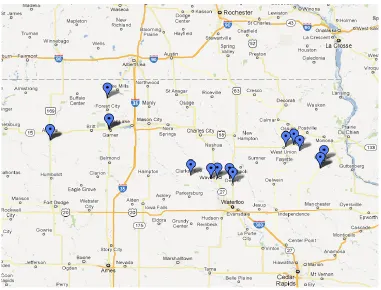
problems. In northern Iowa, a group of locations were selected near Algona, Garner, and Leland, with another group near Allison, Shell Rock, Waverly, and Denver. In northeastern Iowa, a group of test locations were selected near West Union, Elkader, and Elgin (Figure 3).
[image:24.612.116.497.187.477.2]
Figure 3. General testing areas in Iowa
Generally, the traffic volumes were within 6,000 vehicles per day (vpd) as recommended by Jahren et al. 2011 for those locations, except for Denver, Iowa, where the traffic volume varied from 6,500 to 8,000 vpd.
Research Tasks
Task 1:Plan DUSTLOCK Full-Scale Pilot Test Construction. Researchers should collaborate with the TAC and designated Iowa DOT personnel to plan construction for full-scale pilot testing of DUSTLOCK shoulder stabilization for edge-rut mitigation. Researchers should conduct the pre-construction tests and measurements.
Task 2:Execute DUSTLOCK Pilot Construction. The construction should be executed in accordance with the plan developed in Task 1, to the extent reasonably possible. Researchers need to observe construction procedures and provide technical support.
Task 3:Monitor DUSTLOCK Pilot Construction. Researchers should make post-construction observations one week to one month after construction, before freeze up in Fall 2011, after thaw in Spring 2012, and at times that the Iowa DOT notices critical changes in performance.
Task 4:Develop a Purchasing Strategy for DUSTLOCK and Similar Materials. Researchers should propose a list of performance indicators and present them to the TAC and other experts that the Iowa DOT and the researchers might nominate. Objective measurements should be developed to characterize the level of performance for each indicator. If an acceptable set of measurements are found, researchers will develop a draft specification or materials acceptance policy and assist the TAC and/or the Iowa DOT in presenting it to relevant decision makers.
Task 5:Develop a Plan to Test Alternative Strategies. The research team should review the results of previous studies (White et al. 2007 and Jahren et al. 2011) and, in consultation with the TAC and vendor representatives, develop a plan to place test sections for granular shoulder stabilization. The test plan will include both laboratory and field components. The laboratory phase will allow researchers to test a broad range of strategies with relatively low effort.
Task 6:Execute Test Plan for Alternative Strategies. Researchers should execute the
laboratory portion of the test plan and purchase samples of stabilizers as necessary. At the end of the laboratory phase, researchers will analyze the results and recommend strategies for field testing. The actual selection of strategies for field testing will be accomplished in consultation with the TAC. Researchers will conduct preconstruction observations, measurements, and tests.
Task 7:Post-Construction Observations for Alternative Strategies. Researchers will perform post-construction observations for the field tests.
Task 8: Data Synthesis. The research team will review the documentation of the construction operations and the results of the post-construction observations, and rate the success of the various strategies.
CHAPTER 2. LITERATURE REVIEW
Shoulder Edge Rutting and Edge Drop-Off
Pavement/shoulder edge drop-off is a critical safety concern for highways and roads that have granular shoulders. “The pavement/shoulder drop-off is created by a difference in elevation between two surfaces of the roadway” (Glennon 2005). When a driver leaves the roadway and encounters the shoulder edge drop-off, the resulting outcome depends on “the driver’s steering and braking response, steer angle, vehicle size, vehicle speed, severity of the vehicle’s departure and return angles, and the magnitude and geometry of the drop-off.”
The possible undesirable outcomes include crossing to an adjacent lane, encroaching on the far side of the roadway, or skidding on shoulders or roadways, which would cause potential collision or rollover (Hallmark et al. 2006). If the pavement/shoulder edge drops off two inches or more, the vehicle could easily lose control (Glennon 2005).
In a study done by Berthelot and Carpentier (2003), vehicle off-tracking was the major cause of gravel loss adjacent to the pavement edge, and loss of gravel could lead to the edge drop-off. Vehicle off-tracking occurs more frequently for roads with high traffic speeds and high traffic volumes. During the study, it was observed that heavy trucks caused a large amount of aggregate particles to break down during the dry season. In addition, heavy trucks always leave clear wheel paths on the surface of the roadway or shoulders, and gravel on the surface could easily be removed or broken down by several truck passes.
When wheel paths are developed, the water infiltration rate on the tracked portion would be decreased and the surface runoff would be increased, which results in greater water erosion. If edge rutting has already existed in shoulders, the pooled water would soften the surface and increase the tendency to rut (Berthelot and Carpentier 2003).
Wagner and Kim (2004) found shoulder edge drop-offs occur more frequently on the inside of horizontal curves. Thus, granular shoulders need to be maintained periodically to prevent edge ruts and their attend to their safety issues (NYSDOT 1990).
Dust emission is another factor facilitating shoulder edge rutting and shoulder degradation. Loss of fine materials causes a reduction of particle cohesion on unpaved surfaces, thus increasing loss of gravel and the required frequency of maintenance (Jones et al. 2001). Fine materials are blown away easily by traffic abrasion in the form of dust during the dry season (Hanley-Wood Inc. 1995). Dust emission is not only a traffic safety concern but also a concern for human health and air quality (Brookman and Drehmel 1981).
Another process, the addition of asphalt overlays, can increase shoulder edge drop-off.
Shoulder Stabilization
Soil stabilization can be achieved by either mechanical stabilization or by using a stabilizing agent.
So-called mechanical stabilization refers to a process where new aggregate is added to increase the internal friction angle of the granular shoulder material. For granular shoulders, mechanical stabilization could be used to densely grade the aggregate surface, which helps prevent excessive moisture infiltrating the subbase (Hanley-Wood Inc. 1995).
The proper use of stabilizers could contribute to provide a granular shoulder with good performance and a long life cycle (Mekkawy et al. 2010). In terms of using stabilizers, it is important to select the right stabilizer for different conditions and types of soil (Hanley-Wood Inc. 1995). With the proper use of stabilizers on unpaved shoulders, the loss of fine materials could be reduced greatly, a tighter bond could be formed between aggregates, and blading maintenance frequency could be reduced (Skorseth 2000). Generally. stabilizing agents provide light surfacing, dust control, and stabilization. One example of each agent follows.
Light Surfacing (Otta Seal)
According to Johnson (2003), “An Otta seal is an asphalt surface treatment constructed by placing a graded cover aggregate on top of a thick application of a relatively soft bituminous binding agent.” This treatment method works well on low traffic volume roads. Otta sealing helps prevent excessive moisture infiltration into the base material. However, an Otta seal does not improve the structural capacity; it requires that the road base/subbase be strong enough to support the expected traffic loads. Usually, a double coat is recommended to achieve the best performance (Johnson 2003).
In 1963, Otta seal developed by Norway was sprayed in the field for the first time and has been used in Nordic countries and developing countries since then. The service life of Otta seal is expected to range between 8 and 15 years (NPRA 1999).
Dust Control (Polymers)
Polymer emulsions have been used widely for dust control. Soil-Sement and Soiltac are
examples of these products, which have a milky-white appearance. According to a study done by Bushman et al. (2004) on the stabilization of unpaved roads, Soil-Sement polymer (PH varying from 4 to 9.5) could penetrate into the soil and create a tight bond between particles, thus producing a solid and durable road surface that could support high-volume traffic and survive extreme weather.
costs around $5 per gallon, neither of which includes the shipping and application costs (White et al. 2007). In addition, maintenance needs to be done every two or three years with a new coat placed on the top surface (NAVFAC 1998).
Stabilization (Calcium Chloride and Magnesium Chloride)
Calcium chloride and magnesium chloride are two common stabilizers for granular roads.
Calcium chloride is made from underground natural brine deposits, which could reserve moisture in unpaved surfaces and prevent dust and small particles from blowing away. It also protects granular material from frost heave in winter. Calcium chloride works well on granular surfaces with well-graded aggregates and percentage of fines from 12 to 18% (Kirchner and Gall 1991).
Magnesium chloride is a salt, which could be used as a chemical stabilizer for granular surfaces. Magnesium chloride works similar to calcium chloride in terms of stabilizing granular surfaces, but it does not work well when the temperature is higher than 71°F and the relative humidity is lower than 31% (Kirchner and Gall 1991).
In the research test sections documented by Jahren et al. (2011), calcium chloride and magnesium chloride did not mitigate edge ruts noticeably.
Soybean Oil Soapstock
Soybean oil soapstock is a biodegradable that shares many of the characteristics of light
petroleum-based oil (Skorseth 2000). The DUSTLOCK manufacturer claims that it can be used effectively under various conditions (e.g., unpaved roads, driveways, airports, mining sites, parking lots, and construction sites) (EDC 2011a).
The most common use of soapstock is for dust control. Product literature claims that the soapstock penetrates well into the road surface and forms a tight bond with soil, establishing a biodegradable surface (EDC 2011a). Other claimed benefits of using soapstock include that it is environmentally-friendly, non-flammable, and relatively safe to use, and it is purported to be suitable for a wide range of soil types (Gauteng 2005). However, soapstock leaves an aldehyde odor after it is applied. Because this odor can be undesirable, producers were reportedly trying to mitigate the odor without reducing its effectiveness (Lohnes and Coree 2002).
The first reported use of soapstock as a shoulder stabilizer that was found under this research effort was sponsored by Minnesota DOT (MnDOT). According to Han and Marti (1996), soapstock worked well on the surface with an AADT volume less than 100 and was preferentially applied in normal or dry weather. The fine particles on the surface were preferentially controlled within a range of 5 to 20%.
Because the penetration rate decreases with decreasing temperature, warmer temperatures are preferable when soapstock is being applied. Usually, it takes 4 to 6 hours for the soapstock to penetrate a road surface, but it could also take as long as a day to a week depending on variations in aggregate gradations and weather conditions.
The equipment for spraying soapstock can be a typical distributor of the type that is used for asphalt products or other dust control products such as calcium chloride or magnesium chloride solutions. Before application, the road surface should be lightly graded. For the initial
application, the recommended spraying rate is 1.13 liters/m2 (0.25 gal/yd2) and heavy traffic
should be avoided. Based on the observation, the surrounding grass will turn brown but will recover after about two weeks of the initial spray.
According to the tips for storage of soapstock provided by MnDOT, stainless steel or iron tanks should be used, the length of storage should not exceed a year, and heat tape should be used to warm the material during winter storage.
Important properties of soapstock are that it repels water and does not evaporate easily. It has medium to high viscosity, which prevents it from being washed out. Considering the
performance of soapstock, it worked well on granular shoulders, embankments, and low-volume roads, but presented some problems on curves, which are subjected to many turning movements.
Due to the limited production of soapstock, its market price increased, from $1.07 per gallon in 1991 to $1.12 to $1.50 per gallon in 1995. In August 2011, the Iowa DOT purchased soapstock for $3.00 per gallon.
The Iowa DOT District 2 conducted its first soapstock trial on granular shoulders on a section of US 18 near Garner, Iowa in July 2000 (unpublished process improvement team notes provided by Mark Black, Iowa DOT District 2 Maintenance). The shoulders were stabilized, but the work was neither published nor repeated. An obstacle to its continued use was that this product was proprietary and therefore difficult for the Iowa DOT to purchase (Jahren et.al. 2011).
Unfortunately, the soapstock clogged the spray nozzles during the operation and the maintenance crew spent considerable effort unplugging nozzles. Later, the researchers identified the vendor for the product used in 2000 and purchased the product from it. Researchers further investigated newly-purchased soapstock with desirable results (White et al. 2007).
The previous field investigations and study reported by Jahren et al. (2011) indicated likely benefits for using soapstock to stabilize granular shoulders under the right conditions. Based on the documented benefits and local availability of soapstock, this research was focused
specifically on the application of soapstock on granular shoulders in selected locations around Iowa.
CHAPTER 3. PLAN SOAPSTOCK PILOT CONSTRUCTION
Location Selection
Before the test sections could be constructed, locations needed to be selected for application. Originally, the Iowa DOT was planning to pave shoulders identified with edge-rutting problems around Iowa, but garage supervisors reported many more locations than the budget could address. So, many problematic shoulders could not be paved due to lack of budget.
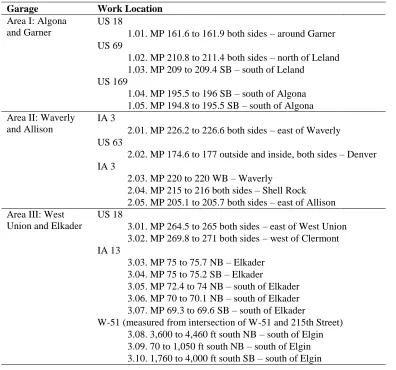
From the shoulders being left unpaved, the researchers selected locations with a moderate traffic volume (less than 6,000 vpd) as suggested by Jahren et al. (2011). In northern Iowa, a group of locations were selected near Algona, Garner, and Leland, with another group near Allison, Shell Rock, Waverly, and Denver. In northeastern Iowa, a group of locations were selected near West Union, Elkader, and Elgin. For most locations, the traffic volume varied from 1,000 to 6,000 vpd. The one exception was near Denver, Iowa, which is a four-lane divided highway with both inside and outside shoulders and AADT of 6,500 per lane northbound (NB) and 8,000 per lane southbound (SB). Each location is described in Table 1.
Table 1. Selected work locations by garage supervisors from Iowa DOT District 2
Garage Work Location
Area I: Algona and Garner
US 18
1.01. MP 161.6 to 161.9 both sides – around Garner US 69
1.02. MP 210.8 to 211.4 both sides – north of Leland 1.03. MP 209 to 209.4 SB – south of Leland
US 169
1.04. MP 195.5 to 196 SB – south of Algona 1.05. MP 194.8 to 195.5 SB – south of Algona Area II: Waverly
and Allison
IA 3
2.01. MP 226.2 to 226.6 both sides – east of Waverly US 63
2.02. MP 174.6 to 177 outside and inside, both sides – Denver IA 3
2.03. MP 220 to 220 WB – Waverly
2.04. MP 215 to 216 both sides – Shell Rock 2.05. MP 205.1 to 205.7 both sides – east of Allison Area III: West
Union and Elkader
US 18
3.01. MP 264.5 to 265 both sides – east of West Union 3.02. MP 269.8 to 271 both sides – west of Clermont IA 13
3.03. MP 75 to 75.7 NB – Elkader 3.04. MP 75 to 75.2 SB – Elkader
3.05. MP 72.4 to 74 NB – south of Elkader 3.06. MP 70 to 70.1 NB – south of Elkader 3.07. MP 69.3 to 69.6 SB – south of Elkader
W-51 (measured from intersection of W-51 and 215th Street) 3.08. 3,600 to 4,460 ft south NB – south of Elgin 3.09. 70 to 1,050 ft south NB – south of Elgin 3.10. 1,760 to 4,000 ft south SB – south of Elgin
Mapping of Work Locations
For selected work locations, general information such as the route and milepost (MP) number was included in the document received from Iowa DOT personnel. With this general
information, the latitude and longitude for all work locations were determined using the Iowa linear referencing system (LRS), which could be accessed from the Iowa DOT website. As a geospatial system, the Iowa LRS database includes global positioning system (GPS) locations for all US, interstate, and Iowa state routes with designated mileposts (Iowa DOT 2011). Then, the latitude and longitude for work locations were input manually into the handheld GPS unit by researchers as waypoints, and also used to generate electronic maps using Google Map.
Pre-Construction Field Tests and Measurements
researchers marked with wood lath. In addition, the handheld GPS unit was used to locate the endpoints electronically. After the initial locations were determined with the help of the garage supervisor, researchers then returned to each location and conducted field tests and
measurements. Digital photos were taken to document the condition of each site.
Dynamic Cone Penetrometer (DCP) Tests
[image:33.612.143.472.249.461.2]Dynamic cone penetrometer (DCP) tests were conducted to assess the stiffness and stability of the shoulder material. The test procedure was performed according to the “Standard Test Method for Use of the Dynamic Cone Penetrometer in Shallow Pavement Applications” (ASTM D 6951/D 6951M - 09). Figure 4 (bottom left) shows researchers doing a standard DCP test.
Figure 4. Profile test (top left), Clegg hammer test (top right), DCP test (bottom left), and aggregate samples (bottom right)
With collected DCP data, California bearing ratio (CBR) plots could be developed for each location. CBR value of shoulder subgrade could be estimated from the average penetration rate. For post construction observations, DCP tests were replaced with Clegg hammer tests to reduce field time requirements.
Clegg Hammer Tests
midpoint. Although results from DCP tests might be more accurate, the accuracy level of the Clegg hammer tests were considered to be sufficient for the purposes of this investigation. Therefore, the Clegg hammer was used more often because of its convenience and shorter time cycle. At the same location where DCP and Clegg hammer tests were conducted, elevation profiles were measured and aggregate samples were taken.
Elevation Profile Measurements
Elevation profile measurements were conducted to document the slope of the shoulder surface and the depth of the edge rut. An angle iron was placed above the shoulder surface with one end set on the pavement edge and another end attached to a G-shaped clamp. To make sure the angle iron was level, a torpedo level was set at the midpoint of the angle iron and the G-shaped clamp was adjusted accordingly.
After the initial leveling process was completed, the vertical distance from the shoulder surface to the bottom edge of angle iron was measured by placing a ruler perpendicular to the angle edge, as shown in Figure 4 (top left). For each location, measurements were taken at a horizontal distance of 2 in. (5 cm), 6 in. (15 cm), 12 in. (30 cm), 18 in. (46 cm), 24 in. (61 cm), 36 in. (91 cm), and 48 in. (122 cm) from the pavement edge. If the shoulder was quite wide, additional measurements were taken at 60 in. (152 cm) and 72 in. (183 cm) where applicable.
In addition, the following procedure was followed to validate the accuracy of this type of measurement. A 3.75 in. tall metal shelf was set on the flat ground. One end of the angle iron was placed on top of the shelf, and the other end was adjusted to make sure the angle iron was level, assisted with a torpedo level. At 72 in. away from the object horizontally, the elevation of the bottom surface of the angel iron was read from a ruler. After this process was repeated 10 times, it was found that the error of this measurement was within 1/4 in. in elevation difference over a 6 ft horizontal distance.
Gradation Tests
For each location, an aggregate sample was collected by excavating the granular shoulder material, as shown in Figure 4 (bottom right). An additional sample was taken in places where fresh aggregate had been recently spread on the shoulder. The samples were used for conducting further gradation tests following the “Standard Test Method for Sieve Analysis of Fine and Coarse Aggregates” (ASTM C 136-01 (2001)). In addition, Atterberg limits tests were conducted following ASTM D 4318-10 to measure the plasticity and liquid limit of aggregate samples.
Equipment Selection
After the preconstruction observations and tests, researchers began to plan for soapstock application. Some questions had been raised, such as which equipment can be used for
were discussed with Iowa DOT personnel and garage supervisors, and the final decisions were made by garage supervisors based on available resources and their previous experience with maintenance operations.
[image:35.612.127.487.160.420.2]The water truck and sand trucks were owned by the Iowa DOT (bottom of Figure 5).
Figure 5. Road grader (top left), soapstock truck (top right), water truck (bottom left), and sand truck (bottom right)
In previous projects, a “spinner,” which was usually used to spread deicing salt on the road in winter, was used on the sand truck to spread sand on the shoulder. Using the spinner, for more than one pass was needed to obtain required coverage, which caused the sand application process to become the controlling process that slowed progress for the entire operation.
For this research project, it was found that the spinner could be replaced with a chip spreader attached to the back of a dump truck; this unit was originally used for spreading chips for chip-seal maintenance. With a chip spreader, one pass would be enough to obtain the required
coverage. Maintenance personnel modified the chip spreader by placing a wood plate across the opening of the dump gate to adjust the open width. The wood plate could be removed easily.
Update of Google Map and New Diagrams
[image:36.612.72.538.232.542.2]The map was updated with the start- and endpoint for each work location marked on a GPS unit during the first trip. By drawing a line that was snapped to the road between the two endpoints on the map, the length of work was calculated automatically. The amount of soapstock and sand needed were estimated with the calculated length of work and expected spraying width and application rate. Then, researchers made a diagram (Figure 6) to show the general route, the length of work, and the amount of soapstock and sand needed for each location, which was intended to help garage supervisor and equipment operators make more effective decisions using this information.
CHAPTER 4. EXECUTE SOAPSTOCK PILOT CONSTRUCTION
Construction activities were conducted at the three test areas selected during the planning stage from August 16 through September 2, 2011. The dates for each area are listed in Table 2.
Table 2. General schedule for pilot testing project
Phases Date Work Locations
Pre-Construction Measurements
08/02/11 Humboldt*, Algona, Britt*, and Leland 08/03/11-08/04/11 Waverly, Shell Rock, Allison, and Denver
08/10/11-08/11/11 Elgin, Wadena, S. of Elkader, and E. of West Union Pilot Construction
Activities
08/16/11-08/17/11 Algona, Garner, and Leland
08/18/11-08/19/11 Waverly, Shell Rock, Allison, and Denver 08/30/11-08/31/11** Waverly and Denver
09/01/11-09/02/11 Elgin, Wadena, S. of Elkader and E. of West Union Post-Construction
Observations
10/13/11-06/21/12 Algona, Garner, and Leland
10/29/11-06/21/12 Waverly, Shell Rock, Allison, and Denver
10/28/11-06/21/12 Elgin, Wadena, S. of Elkader and E. of West Union
*Not sprayed during construction **Second time spraying soapstock
Two of the locations visited during the initial pre-construction measurements did not have any process any soapstock applied (the soapstock supply ran out while applying to higher priority locations), while some of the shoulders near Waverly and Denver had a second coat applied.
For the soapstock application process, the work train included a water truck, soapstock distributing truck, and sand truck, which would be operating in the order with the time lags indicated right to left in Figure 7.
The detailed construction activities are explained in the following sections for each of the three geographic areas.
Area I: Algona and Garner
This area includes five test sections serviced by the Algona and Garner Garages under the supervision of Scott Loge. A description of spraying locations, actual work length, and spraying width is shown in Table 3.
Table 3. Spraying work location description for Area I: Algona and Garner
Sec.
No. Location Route
Start MP
End
MP Shoulder
Actual length (ft) Sprayed width (ft) Sprayed area (yd2)
1.01 Garner US 18 161.6 161.9 Both 3,024 4 448 1.02 North of Leland US 69 210.8 211.4 NB 2,112 10 782.22
SB 2,112 6.5 508.44 1.03 South of Leland US 69 209 209.4 SB 1,584 4 234.67 1.04 South of Algona US 169 195.5 196 SB
outside
5,786 8.5-12 varies
/ 1.05 South of Algona US 169 194.8 195.5 Both 5,238 4 776
On August 16 and August 17, 2011, the weather was cool and dry on the construction sites. The general construction activities for each location were performed in following steps.
1. The shoulder was first properly bladed a few days ahead of construction. For most shoulders, no new aggregate was added, except for the northbound (NB) shoulder near north Leland. This was done to correct water erosion ruts near the grassline. The surface was lightly compacted to increase the stability of the surface.
2. On the day of construction, traffic control was set up. A traffic sign was attached to a pick-up truck with an amber flashing light and it moved slowly behind the operating equipment.
3. The water truck went ahead to spray water on the shoulder. (Sufficient moisture is required for a successful application of the soapstock. Insufficient moisture could block the soapstock from penetrating into the shoulder.) Maintenance personnel used their experience to select the appropriate amount of water to spray and observed the drying process to decide when the soapstock could be applied. A trial and error approach was adopted to find the right amount of water and timing.
Figure 8. Soapstock application process
Usually, the width of sprayed soapstock was 4 ft, which required two nozzles working simultaneously. North of Leland, soapstock was applied at full width going up to the hill, because gullies caused by water erosion tended to developed near the grass line (they had been filled in with new compacted aggregate before soapstock application commenced). The result of this application is shown in Figure 9.
[image:39.612.153.461.425.656.2]5. After the soapstock was applied for 15 minutes to 20 minutes, two sand trucks with the modified chip spreader started to spread a thin layer of sand over the treated surface. The thickness of sand was about 1/2 in., and the width of sand was adjusted based on the width of soapstock applied on the shoulder. A second/ back-up sand truck was waiting. When the sand in one truck ran out, the back-up truck would run forward and the empty one would go back for more sand. The result of this application is shown in Figure 10.
Figure 10. Sand applied on the shoulder of US 18 near Garner, Iowa
Section 1.05 south of Algona required a considerable amount of soapstock because of its length and width (full width because the road is on a hill and the shoulders are subjected to considerable water erosion). Part of the work was accomplished on the first day of construction, and the remainder was accomplished on the second day.
During the soapstock application operation on August 17, 2011, the soapstock was found to have not-properly penetrated into the shoulder due to an overly-dry surface, so the spraying work was stopped and the water truck had to complete one more pass to increase the moisture content of the shoulder to the desired level. Around 11a.m. on that day, one of the sand trucks had a
mechanical problem, which caused a delay. This made the whole operation slower than expected.
In addition, the operator of the soapstock truck tried two methods to obtain a heavier coverage at Section 1.05. One way was to run a second pass on the southbound (SB) shoulder. The other way was to drive slowly on the NB shoulder. Both methods worked well in terms of achieving
heavier coverage.
Figure 11. Soapstock and sand applied to recycled asphalt paving materials
Area II: Waverly and Allison
This area includes five test sections within the area served by the Waverly and Allison Garages and under the supervision of Russell Frisch. A description of application locations, actual work length, and spraying width are shown in Table 4.
Table 4. Spraying work location description for Area II: Waverly and Allison
Sec.
No. Location Route
Start MP
End
MP Shoulder
Actual length
(ft)
Sprayed width
(ft)
Sprayed area (yd2)
2.01 East of Waverly IA 3 226.2 226.6 Both 3,122 4 462.52 IA 3 226.4 226.6 Both 1,561* 4 231.26 2.02 Denver US 63 174.6 177 SB outside 7,755 4 1,148.89
SB inside 9,063 4 1,342.67 NB outside 7,461 4 1,105.33 NB inside 9,305 4 1,378.52 176.5 177 SB outside 1,584* 4 234.67
176 176.5 NB outside 3,168* 4 469.33 2.03 West of Waverly IA 3 220 220 WB 1,491 4 220.89 2.04 Shell Rock IA 3 215 216 Both 11,170 4 1,654.81 2.05 East of Allison US 63 205.1 205.7 Both 8,280 4 1,226.67 *Second time spraying soapstock
On August 18, 2011, rain occurred during the time that the application process was executed around Allison and Shell Rock. Figure 12 shows the result of the soapstock application on the westbound (WB) shoulder of IA 3 nearby and east of Allison during the rain.
Figure 12. Spraying in the rain on IA 3 near Allison, Iowa
The rain became heavy in the afternoon, so work was suspended until the next day. Apparently, the rain did have some negative effect on the treatment, because many of the locations where soapstock was applied during the rain performed poorly compared to other work locations in post observations.
On August 30 and August 31, 2011, the second coat was applied on the shoulders at Section 2.01 east of Waverly and Section 2.02 near Denver. The weather on August 30 was cloudy with very light rain, and the weather on August 31 was cool and cloudy. On the morning of August 30, the soapstock was applied in the normal manner, except that watering was not necessary because of the light rain.
Figure 13. Soapstock and sand applied on the shoulder of US 63 near Denver, Iowa
In the same location, Section 2.02, one action observed by researchers might be meaningful for a successful application. This was near the Janesville exit on US 63 near Denver, and the treated surface was rolled after the sand application. The result of this is shown in Figure 14.
[image:43.612.163.450.384.602.2]Area III: West Union and Elkader
This area includes 10 test sections within the areas of responsibility for the West Union and Elkader Maintenance Garages under the supervision of Roger Burns. A description of spraying locations, actual work length, and spraying width is shown in Table 5.
Table 5. Spraying work location description for Area III: West Union and Elkader
Sec.
No. Location Route
Start MP
End
MP Shoulder
Actual length
(ft)
Sprayed width
(ft)
Sprayed area (yd2)
3.01 East of West Union US 18 264.5 265 Both 3,048 4 451.56 3.02 West of Clermont US 18 269.8 271 Both 8,900 4 1,318.52 3.03 Elkader IA 13 75 75.7 NB 3,090 12 1,373.33 3.04 Elkader IA 13 75 75.2 SB 1,330 12 591.11 3.05 South of Elkader IA 13 72.4 74 NB 4,890 4 724.44 3.06 South of Elkader IA 13 70 70.1 NB 740 10 274.07 3.07 South of Elkader IA 13 69.3 69.6 NB 1,315 10 487.04 3.08 South of Elgin W 51 3,600 ft* 4,460 ft* NB 860 2 63.70 3.09 South of Elgin W 51 70 ft* 1,050 ft* NB 980 2 72.59 3.10 South of Elgin W 51 1,760 ft* 4,000 ft* SB 2,240 2 165.93
*Distances south of W-51 and 215 Street intersection
On September 1, 2011, the weather was sunny and dry in Elkader. On September 2, 2011, the weather was cool and cloudy with intermittent rain in some places. The general construction activities were performed following the same procedures described for Area I. For Section 3.03-3.04 near Elkader, soapstock was applied at a 12 ft width because of the gullies were developing near the grass line, as shown in Figure 15. The resulting condition of one of the sections just after sand was spread is shown in Figure 16.
Figure 15. 12 ft wide soapstock applied on the shoulder of IA 13 east of Elkader, Iowa
Figure 16. Sand applied on the shoulder of IA 13 east of Elkader, Iowa
[image:45.612.165.449.316.529.2]Figure 17. Recirculating soapstock to provide more consistent density (Harris 2011)
While applying soapstock onto Fayette County Road (CR) W-51, the county maintenance crew developed an alternate method for placing sand over the soapstock. A county truck placed sand on the white line by using an edge rut chute. Then, the motor grader bladed sand over the surface on which the soapstock was applied (Figure 18).
Figure 18. Grader bladed over the shoulder applied with sand
This procedure worked well for places where the shoulder surface was lower than the pavement, but not for places where the shoulder surface was higher than the pavement. The newly-applied soapstock on higher shoulder surfaces was scraped off the shoulder by the motor grader blade.
Application Rate and Overall Productivity
The water truck ran at a speed of 3 to 5 mph (5 to 8 km/hr), which could spray 1/4 gal water over 1 yd2 of shoulder. The soapstock spray rig moved at a speed of 2 to 3 mph (3 to 5 km/hr) when spraying soapstock on the moist shoulder with an average application rate of 1/4 gal water over 1
Based on observations, the maximum productivity for the “work train” (water truck, soapstock spray rig, and sand truck) was two lane-miles per hr. After considering the allowance for start and stop times, refilling tanks and sand trucks, and other miscellaneous time, the maximum daily productivity could be 8 to 10 lane-miles (13 to 16 lane-km).
During the whole construction period, there was one time that the daily productivity was up to 12 lane-miles, which was the highest observed during the application process. This was because personnel were already quite familiar with all application techniques and there were no interruptions that occurred during the operation.
CHAPTER 5. MONITOR SOAPSTOCK AFTER PILOT CONSTRUCTION
After soapstock was applied on all test sections, post-construction observations and measurements were made to evaluate results. Trips for the full set of measurements and observations were scheduled in late October 2011and June 2012. Between these official trips, researchers sometimes drove to the field to visually monitor the shoulder performance and obtain updated photos.
Guidance of Google Map and GPS Hand Unit
Before starting each trip, researchers printed the Google maps showing the location of the soapstock application work. The maps served to provide general guidance, while exact locations were determined with the aid of a GPS hand unit. All waypoints were recorded by a GPS hand unit during the preconstruction measurements phase, so the researchers could find the beginning and end of each test location by searching for corresponding waypoints.
Update of Photos
During each trip, photos were taken to document the performance of treated shoulders. If there were any new edge-rutting problems or places where soapstock was removed, researchers made a closer examination and tried to find what caused those problems. In addition, photos were taken when tests or measurements were taken at a certain place.
Tests and Measurements
The post-construction tests and measurements were similar to the preconstruction tests and measurements. Clegg hammer tests and elevation profiles were taken for each shoulder section. Instead of taking both DCP tests and Clegg hammer tests, only Clegg hammer tests were taken to improve time and cost efficiency. Data from Clegg hammer tests were judged to be sufficient for the purposes of this investigation and gave researchers an immediate indication of the stiffness of shoulder materials.
For places where the road had a noticeable slope, the slope of road profile was also taken by using the differential leveling method (Caltrans 2006). The equipment researchers used for this measurement was AT-22A automatic levels (Topcon Corporation) shown in Figure 19, which was usually set some distance from the top of the slope.
Figure 19. Level for measuring the road profile
Data Analysis
Percentage of Successful Application Length
During the summer of 2012, researchers visited all test locations to check shoulder conditions to ascertain whether the soapstock application had survived the winter. Researchers measured the length of treated sections with newly-developed edge ruts using a measuring wheel. The error of this measurement was ±0.6%, which was obtained after averaging the results from 13
measurements for the same 100 ft distance in a flat parking lot.
The percentage of successful application could be obtained by dividing the length of shoulders with good performance by the total length of the test section. The results were considered to be an indication of whether soapstock was effective in mitigating edge-rutting problems and stabilizing shoulders. The results are shown in the next chapter titled Data Synthesis.
CBR
Clegg hammer data were collected from several locations along each shoulder section before and after soapstock application. Readings directly from the Clegg hammer represent Clegg impact values (CIVs), which could be then converted to CBR values to measure the stiffness of shoulder materials. For this investigation, the equation applied to make the conversion was as follows (CLEGG 1986):
This equation proved to be appropriate for general case. Then, individual CBR values were averaged to get the average CBR for a whole shoulder section.
Shoulder Cross Slope
Elevation profiles were taken from several locations along each shoulder section before and after soapstock application. Collected data were graphed using SigmaPlot 12 (by Systat Software Inc.) to show the approximate cross slope of each shoulder. In addition, the slope was calculated by dividing the elevation difference of 6 in. and 48 in. away from the pavement edge by their horizontal distance (42 in.). The average cross slopes of shoulders were obtained to allow a rough comparison between different shoulder sections.
Slope of Road Profile
For every observed location where the road profile had a noticeable slope, the slope was measured by applying the differential leveling method (Caltrans 2006), which calculated the ratio of the elevation difference between two spots and their horizontal distance. The horizontal distance between two selected spots on the hill was at least 100 ft, obtained by using a measuring wheel.
Gradation Distribution
The classification of shoulder materials were done by following the Unified Soil Classification System (USCS) and American Association of State Highway and Transportation Officials (AASHTO) standard.
For granular shoulders in Iowa, either type A or type B gravel is used. Type A refers to a crushed stone or a gravel-limestone mixture. Type B refers to a uniform mixture of coarse and fine aggregates produced from crushing limestone, dolomite, or quartzite (Iowa DOT Standard Specifications 2005). For both type A and B gravels, the maximum size is 3/4 in. By comparing to the Iowa DOT Class A/B Aggregate Specification, the percentage above upper fine limit at #4 sieves was calculated for each material sample. The detailed gradation graphs for all shoulder material samples were generated using GEOSYSTEM version 2.1 (by GEOSYSTEM Software) and are included in Appendix A.
Traffic Level