http://eprints.whiterose.ac.uk/87547/ Version: Accepted Version
Article:
Leonidou, LC, Christodoulides, P, Kyrgidou, LP et al. (1 more author) (2015) Internal Drivers and Performance Consequences of Small Firm Green Business Strategy: The Moderating Role of External Forces. Journal of Business Ethics. ISSN 0167-4544 https://doi.org/10.1007/s10551-015-2670-9
[email protected] https://eprints.whiterose.ac.uk/
Reuse
Unless indicated otherwise, fulltext items are protected by copyright with all rights reserved. The copyright exception in section 29 of the Copyright, Designs and Patents Act 1988 allows the making of a single copy solely for the purpose of non-commercial research or private study within the limits of fair dealing. The publisher or other rights-holder may allow further reproduction and re-use of this version - refer to the White Rose Research Online record for this item. Where records identify the publisher as the copyright holder, users can verify any specific terms of use on the publisher’s website.
Takedown
If you consider content in White Rose Research Online to be in breach of UK law, please notify us by
Internal drivers and performance consequences of small firm green business
strategy: moderating role of external forces
Leonidas C. Leonidou Professor of Marketing
University of Cyprus Paul Christodoulides
Senior Lecturer in Applied Mathematics Cyprus University of Technology
Lida P. Kyrgidou
Research Fellow in Strategic Management & Entrepreneurship International Hellenic University
Dayananda Palihawadana Professor of Marketing Leeds University Business School
Journal of Business Ethics February 10, 2015
Abstract
Growing detrimental effects on the bio-physical environment have been responsible for a large number of small firms to adopt a more strategic stance toward exploiting green-related opportunities. This article aims to shed light on how internal company factors help to formulate a green business strategy among small manufacturing firms, and how this, in turn, influences their competitive advantage and performance. Based on data received from 153 small Cypriot manufacturers, we propose and test a conceptual model anchored on the Resource-based View of the firm. The findings underscore the critical role of both organizational resources and capabilities in pursuing a green business strategy. The adoption of this strategy was more evident in the case of firms operating in more harmful, as opposed to less harmful, industries. The implementation of a green business strategy was found to generate a positional competitive advantage, with this association becoming stronger under conditions of high regulatory intensity, high market dynamism, high public concern, and high competitive intensity. It was also revealed that this competitive advantage is conducive to gaining heightened market and financial performance. Our study makes a fivefold contribution: it injects a theoretical perspective into a relatively atheoretic field, underlines the role of organizational resources/capabilities as drivers of eco-friendly initiatives, highlights the
often neglected strategic aspects of small firms’ ecological business activities, stresses the contingent role of external forces in moderating the positive impact of small firm green business strategy on competitive advantage, and focuses on the performance implications of the small
firm’s engagement in environmental operations. Keywords
Environmental strategy; Business performance; Resources; Capabilities; Resource-based view; SMEs.
Acknowledgements
1
Internal drivers and performance consequences of small firm green business
strategy: moderating role of external forces
Introduction
Ecological concerns are increasingly appearing high in the agendas of governments, advocacy groups, business firms, and other stakeholders in many parts of the world (Gadenne et al., 2009). This is because, despite the wealth, prosperity, and development brought by decades of industrial development, the planet is continuously experiencing severe environmental problems (e.g., air/water pollution, global warming, soil erosion) that put life into serious danger (Leonidou and Leonidou, 2011). Many firms have seen these concerns about the environment as influencing their operations, and, in fact, a growing number of them have already embodied green elements in their business activities (Banerjee, 2001; Aragón-Correa and Sharma, 2003). However, although some firms try to exploit these eco-based opportunities in a proactive manner, the bulk of them treat environmental issues in a rather reluctant way (Simpson et al., 2004).
2
can encourage and support environmental initiatives (Brio and Junquera, 2003; Masurel, 2007). As opposed to the vast amount of environmental research conducted among large organizations, research on smaller firms is lagging behind. This is due ot the fact that, compared to their larger counterparts, smaller firms: have a weaker environmental impact and, therefore, their actions in relation to the natural environment are less conspicuous to various stakeholder groups; possess less financial, manpower, technical, and allied means to embark on and implement environmental management activities; cannot easily have access to financial markets, legal advice, and scale economies to achieve environmental progress; are less sensitive about their brand reputation and corporate image, as well as having less aggressive objectives with regard to environmental issues; and usually adopt a more short-term perspective in their business, which is inappropriate for environmental initiatives, due to the relatively long payback time of the investments required (Tilley, 1999; Lee and Klassen, 2008; Martin-Tapia et al., 2008).1
Notwithstanding these limitations, the adoption of a more strategic perspective toward ecological matters by small firms is of paramount importance on various grounds: First, significant cost savings as a result of better waste management, energy conservation, recycling of materials, packaging redesign, and other eco-friendly activities. Second, the reduction of risks associated with possible environmental violations that can generate high financial penalties. Third, the development of a good reputation among investors, regulators, financial institutions, insurance companies, and other stakeholder groups, which are vital in supporting and/or
facilitating the firm’s business operations. Third, the attraction of new customers who are
3
Finally, the potential to achieve a positional advantage in a highly competitive environment, which, if properly exploited, can yield favorable financial results (Avram and Kühne, 2008; Gadenne et al., 2009; Lee, 2009).
Small firms are confronted with various challenges in formulating and implementing their green business strategies, namely: (a) their entrepreneurial orientation and innovativeness, which can facilitate the introduction of new ideas, methods, and products that are vital in supporting environmental initiatives; (b) their flexibility (resulting from the small scale of operations), which can lead to quick decisions and rapid actions in response to environmental protection; (c) their adaptability, which can help to quickly respond to the dynamic nature of sustainability issues; (d) their inter-departmental interactivity, which can strengthen cross-functional coordination in effectively handling environmental problems; and (e) their locality, which is conducive to cultivating relationships with the local community and other stakeholders necessary to accommodating their specific environmental demands (Aragón-Correa et al., 2008; Hillary, 2000; Isaak, 2002; Schapper, 2002).
4
addition, as opposed to the large volume of research on the performance implications of ecological actions of large firms, insights into this association with regard to small business units are limited (Menguc and Ozanne, 2005; Martin-Tapia et al., 2008). Finally, the moderating role of external forces, such as regulatory systems, market characteristics, and competitive conditions, in the small firm’s environmental behavior was rarely examined (Aykol and Leonidou, 2014).
The aim of this article is to fill these gaps in the literature by developing and testing a conceptual model of the drivers and outcomes of the green business strategy of small firms, anchored on the Resource-based View (RBV) theory.2 By green business strategy, we mean the
incorporation of environmental elements in the firm’s key strategic functional areas, namely
manufacturing, marketing, finance, procurement, human resources, and research and development, aiming at protecting the natural environment (Banerjee, 2001). More specifically, we want to provide answers to the following research questions: (a) What is the role of both organizational resources and capabilities in shaping a green business strategy in small firms? (b) How does this strategy impact on the achievement of a competitive advantage by these firms? (c) How can external factors, namely the regulatory framework, market dynamism, public concern, and competitive intensity, moderate the relationship between strategy and competitive advantage? (d) What is the effect of competitive advantage accrued from eco-based business operations on the market and financial aspects of the firm’s performance?
5
company weaknesses (Barney, 1991). This theoretical paradigm has the potential to be applied within the context of environmental issues, since green business strategies require the use of heterogeneous resources and idiosyncratic capabilities to achieve a competitive advantage (which is derived from the adoption of eco-friendly practices) and enhance company performance (Sharma et al., 2007). It is also suitable for the study of the eco-friendly behavior of small companies, because, although characterized by limited resources, they have the structural flexibility, adaptive capacity, and entrepreneurial ability to swiftly exploit green-related opportunities (Aragón-Correa et al., 2008; López-Camero et al., 2008; Parry, 2012).
Following this introductory section, the remainder of the article is organized as follows: First, we review the pertinent literature on antecedents and outcomes of eco-friendly business strategies. We then present the conceptual model of the study and formulate research hypotheses. In the next section, the research methodology used is elaborated. Subsequently, we explain the analytical procedures employed and discuss the study findings. The following section draws conclusions from the study and provides managerial and public policy implications. The final section highlights the limitations of the study and suggests directions for future research.
Background research
Six major areas of research are connected to the strategic approach of firms to ecological issues, namely organizational resources, organizational capabilities, business strategy, competitive advantage, business performance, and external influences, which are explained in the following.
6
of firm resources, especially physical, technical, and reputational, in achieving high environmental performance, although they provided no empirical testing of this association. In their study among US firms, Judge and Douglas (1998) found that the more resources are committed to environmental issues, the greater the tendency to integrate green elements in the
firm’s strategic planning process. In similar vein, Aragón-Correa and Sharma (2003) stressed the
availability of adequate resources in designing a proactive corporate environmental strategy, while they also argue that the effectiveness of these resources will be contingent on factors pertaining to uncertainty, complexity, and munificence. More recently, in their study among Greek hotels, Leonidou et al. (2013) found that the possession of sufficient physical and financial resources is vital in designing and implementing effective green marketing strategies, although no significant impact was observed with regard to experiential resources. Within the context of small firms, green literature has often neglected the critical link between resources and environmental business practices. However, the existence of resource constraints (especially financial, human, and technical) were often regarded as seriously obstructing the adoption of environmental initiatives (Weerawardena and Mort, 2006; Masurel, 2007; Lee, 2009; Revell et al., 2010). In fact, there are indications that many SMEs are not environmentally proactive because of limitations in financial resources, insufficient knowledge of green issues, and limited access to external consultants (Hillary, 2000: Martin-Tapia et al., 2008).
7
Sharma and Vredenburg’s (1998) exploratory study among Canadian firms also identified three capabilities that were associated with proactive environmental strategies, namely stakeholder integration, ongoing learning, and continuous innovation. Marcus and Geffen (1998) found that
the firm’s internal capabilities (e.g., organizational learning and searching for outside talent,
technology, and ideas) can help to acquire external capabilities, which in turn are conducive to improving environmental performance. Christmann (2000) stressed the capability of process innovation and implementation as a prerequisite for pollution prevention technologies to yield a low cost advantage to the firm. Sharma et al’s (2004) study in the North American and European ski industry revealed that organizational capabilities of shareholder integration, organizational learning, cross-functional integration, continuous innovation, shared vision, and strategic proactivity are positively associated with the development of proactive green strategies. The effect of three of these capabilities (i.e., shared vision, stakeholder management, and strategic proactivity) was also empirically found to be connected with proactive environmental strategies in small firms, justified by the fact that these firms are characterized by shorter lines of communication, closer intra-firm interactions, managerial vision, flexibility in managing external relationships, and entrepreneurial orientation (Aragón-Correa et al., 2008). Other capabilities specifically found in SMEs that can positively influence their environmental behavior are relationship building with local communities (Niehm et al., 2008), flexibility in decision-making (Uhlaner et al. 2012), and innovative ability (Nidumolu et al., 2009).
8
which was found to be influenced by public concern, regulatory forces, and top management commitment. With regard to functional strategies, the production focus has been on green/clean technologies and pollution/waste reduction (King and Lenox, 2001; 2002; Klassen and Whybark, 1999; Ottman et al., 2006), the marketing focus on the drivers and outcomes of eco-friendly oriented marketing strategies (Menon and Menon, 1997; Langerak et al., 1998; Banerjee et al., 2003; Baker and Sinkula, 2005; Leonidou et al., 2013), the finance focus on the link between corporate social/environmental performance and financial performance (Curcio and Wolf, 1996; Orlitzky, 2001; Orlitzky et al., 2003; Van de Velde and Corten, 2005), the human resources focus on the supportive role of supervisory behavior to encourage innovative environmental actions by employees (Ramus 2001), and the research and development focus on the identification and deployment of technologies to produce goods that can minimize negative ecological impact (Shrivastava, 1995). Although the formulation and implementation of green strategies is an issue of major concern irrespective of firm size, only Aragón-Correa et al.’s (2008) study dealt with small-sized firms, investigating the antecedents and financial outcomes of proactive environmental strategies. The emphasis of other studies focusing on SMEs was on the various environmental management systems employed, such as energy conservation (Cordano et al., 2010), carbon emission reduction (Revell et al., 2010), and recycling activities (Cordano et al., 2010; Revell et al., 2010).
The achievement of a competitive advantage stemming from eco-friendly actions has been the focus of attention of a significant body of research (see, for example, Azzone and Bartelè, 1994; Russo and Fouts, 1997; Knudsen and Madsen, 2001; Aragón-Correa and Sharma, 2003; Leonidou et al., 2013). Although some scholars (e.g., Banerjee et al., 2003) take a more
9
others (e.g., Shrivastava, 1995) distinguish between low-cost advantages (i.e., reducing costs because of economies of scale, making savings in costs/expenses, having preferential treatment by suppliers, etc) and differentiation advantages (i.e., providing innovative elements, incorporating unique features, improving product quality, etc.). According to Orsato (2006), for a firm to generate a differentiation from eco-friendly activities, it needs: (a) to convince buyers to be willing to pay for the extra costs associated with ecological differentiation; (b) to provide consumers with reliable information about the product’s environmental performance; and (c) to make it difficult for competitors to imitate the unique eco-friendly differences of the product. On the other hand, a low-cost advantage is more suitable in the case of saturated markets, tightened environmental regulations, and very demanding customers. Notably, research on environmental issues has systematically neglected to examine the possibility of small firms acquiring a competitive advantage as a result of pursuing eco-friendly actions. Although some studies (e.g., Revell and Blackburn, 2007; Revell et al., 2010; Worthington and Patton, 2005) report that many small firms are willing to embark on environmentally friendly initiatives, they also stress the scepticism of many managers as to whether these initiatives will really help to win customers and/or reduce costs.
A large number of environmentally-related studies (e.g., Menon and Menon, 1997; Yang et al., 2011) consider business performance as an indispensable outcome of the firm’s eco -friendly activities. Menon et al. (1999) distinguish between two types of performance outcomes from environmental activities: market performance (e.g., brand image, customer loyalty, corporate citizenship) and financial performance (e.g., market share, return on investment, earnings per share). The results of the majority of the studies point to a positive impact of the
10
(1996) found a strong association between environmental issues, integration capability and financial performance (as expressed in terms of return on investment, earnings growth, sales growth, and market share change). Russo and Fouts (1997) also reported that high levels of corporate environmental performance favorably affect the company’s return on assets, with the returns from environmental performance being higher among firms in high-growth industries. Langerak et al.’s (1998) study revealed that firms adopting green marketing strategies voluntarily are better able to exploit green market opportunities and improve their business performance. Menguc and Ozanne (2005) found that the adoption of a natural environmental orientation has a positive effect on both market performance (i.e., market share) and financial performance (i.e., sales growth and profits before tax). Finally, Aragón-Correa et al.’s (2008) study showed that SMEs which adopt proactive strategies have a significantly positive financial performance (measured in terms of return on investment and earnings growth), as opposed to those that are characterized by reactive behavior. In their study among small Spanish exporting firms, Martin-Tapia et al (2008) also found that a proactive environmental strategy is positively related to export performance.
Finally, the role played by external factors in the firm’s environmental behavior has been the object of several studies. Most of the emphasis here was on the regulatory forces, and in
particular on the firm’s reaction or pro-action toward environmental legislation (Kassinis and
11
willingness to buy green products (Guber, 2003; Langerak et al., 1998; Menon and Menon, 1997). Pressures exerted on the firm’s environmental behavior by competitors was the focus of a few other studies (e.g., Cadogan et al., 2003; Mir and Feitelson, 2007), with their findings converging on the fact that competition does indeed enhance environmental management practices in many firms. Market dynamism, that is, changes in the various forces comprising the market, was found to positively influence the firm’s environmental behavior and the creation of competitive advantage (Mir and Feitelson, 2007). With regard to small firms, several studies (e.g., Talbot et al., 2007; Williamson et al., 2006) stressed the role of both primary and secondary stakeholder groups as agents that exert pressure on their environmental initiatives and strategies through various monitoring mechanisms and the provision of advice and assistance.
Model and hypotheses
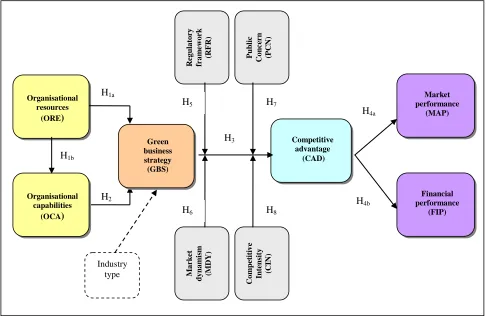
Figure 1 presents the conceptual model of the study, which, as already mentioned, is
theoretically anchored on the Resource-based View of the firm. Specifically, our model depicts organizational resources and organizational capabilities as key drivers for crafting a green business strategy. The possession of adequate resources is also important in enhancing the small
firm’s organizational capabilities. The materialization of the firm’s environmental strategy
12
[image:14.612.76.562.189.505.2]ten hypothesized paths in the model (six main and four moderating), which are elaborated in the following.
Figure 1. The conceptual model
\\\\\\\
Main hypotheses
Organizational resources are asset stocks controlled by the firm that provide the foundation for pursuing its business activities and justify its mere existence (Barney, 1991; Peteraf, 1993). These can be divided broadly into tangible (e.g., financial reserves, production equipment, plant facilities) and intangible (e.g., personnel quality, brand reputation, experiential knowledge) (Grant, 1991) resources. However, to be of any use in creating unique firm advantages, these resources must be valuable, rare, inimitable, and non-substitutable (Barney, 1991; Bharadwaj et
H2
13
al., 1993).3 Although resources are vital to support any process that is taking place within the organization, they are particularly important in the case of green business activities due to their specialized, complex, and fast-changing nature (Sharma et al., 2007). For example, the possession of appropriate organizational resources is crucial in identifying promising areas where the firm can channel its green efforts, building the technological basis for sustainable programs, and bearing the relatively high costs involved in pursuing environmental initiatives (Lee, 2009). Because of size considerations, small firms are generally viewed as possessing limited financial, human, technical and other resources that prevent them from undertaking environmental initiatives and implementing proactive green strategies (Bianchi and Noci, 1998). However, those small firms that are in a position to allocate adequate resources to eco-friendly business strategies can gain an advantageous position against their competitors (Lee 2009). Indeed, several studies (e.g., Bianchi and Noci, 1998; Hillary, 2000; Martin-Tapia et al., 2008) revealed that there are cases among smaller firms, where limited resources are leveraged in such as way as to enable them to successfully embark on programs that reduce environmental impact. Thus, the following hypothesis can be set:
H1a: The deployment of organizational resources committed to environmental protection will
lead to the adoption of a green business strategy by the small firm.
Whereas resources provide the raw input for supporting the firm’s business activities,
organizational capabilities are the processes by which this input is deployed, combined, and transformed into market value offerings (Day, 1994). These are responsible for developing,
updating, and adjusting the stocks of the firm’s resources, as well as acting as coordinating
14
(such as organizational learning, market orientation, and relationship building) act as the ‘glue’ that holds together heterogeneous and multiple resources that span different levels and functions within the organization (Krasnikov and Jayachandran, 2008). Indeed, the right amount, quality, and nature of resources possessed by the firm are vital for nurturing its capabilities, with many studies (e.g., Morgan et al., 2004; Yalcinkaya et al., 2007; Kaleka, 2011) clearly demonstrating this positive link between them. Such a link is even more evident in the case of environmental issues, whereby financial, experiential, and allied resources are of paramount importance for enhancing the firm’s capabilities of adopting an eco-friendly approach (Sharma et al., 2004). With regard to small firms, a major driving force behind this transformation of resources into capabilities is the entrepreneur per se (also called ‘eco-preneur’), who sees environmentally responsible business practices as an opportunity to exploit market niches, resolve internal problems, and radically transform the industry in which the company belongs (Masurel, 2007). We may hypothesize therefore that:
H1b: The availability of organizational resources committed to environmental protection will help
15
2004). Although small firms are generally characterized by limited capabilities compared to their larger counterparts, there are hints in the literature (e.g., Aragón-Correa et al., 2008; Lee, 2009) that they are also in a position to establish processes that are instrumental in executing green business strategies. Such capabilities include, for example, setting-up and managing trust-based collaborative relationships with internal and external stakeholders, initiating strategic changes concerning entrepreneurial, engineering and other activities in a proactive way, and closely interacting with employees in the firm to share feelings, views, and ideas (Aragón-Correa et al., 2008; López-Gamero et al., 2008). Hence, we can posit that:
H2: The deployment of organizational capabilities committed to environmental protection will
lead to the adoption of a green business strategy by the small firm.
16
market segment (Shrivastava, 1995; Menon and Menon, 1997; Miles and Kovin, 2000). The entrepreneurial, flexible, and adaptable nature of small firms provides an extra reason for turning an eco-friendly strategy into a product differentiation and/or cost reduction advantage (Lee, 2009). This is stressed in Simpson et al.’s (2004) study, which revealed that, on the whole, SME managers are of the opinion that the adoption of co-friendly practices leads to both differentiated products and cost savings. Based on the above, we would expect that:
H3: The adoption of a green business strategy by the small firm will lead to the achievement o f
a competitive advantage.
Gaining a competitive advantage is expected ultimately to have a positive effect on the
firm’s business performance. This is because while a competitive advantage is the value
17
market segments (such as green consumers) (Dechant and Altman, 1994; Gadenne et al., 2009). This positive link between competitive advantage and performance has been repeatedly validated in the green literature (e.g., Carmona-Moreno et al., 2004; Orsato, 2006; Aragón-Correa et al., 2008). With regard to small firms, indications in the literature suggest that the implementation of successful green business strategies can help to improve organizational growth, make cost savings, empower brand and company reputation, and reinforce stakeholder relations (Bianchi and Noci, 1998). All the above lead to the following hypothesis:
H4: The achievement of a competitive advantage by the small firm, which is derived from its
engagement in green business activities, will lead to higher levels of: (a) market performance and (b) financial performance.
Moderation hypotheses
18
(Noci and Verganti, 1999; Simpson et al., 2004).4 Thus, the following hypothesis can be set: H5: Under conditions of high regulatory intensity, the positive effect of green business strategy
on competitive advantage will be stronger, and vice versa.
The second moderating factor concerns market dynamism, which reflects the rate of change in consumer preferences, demand levels, competitive practices, and other forces comprising the market within which the firm operates (Achrol and Stern, 1988). As the business environment becomes increasingly volatile and uncertain, the need for sound strategies to either react to or manage market forces becomes more imperative (Dilts and Prough, 1989). In a highly dynamic market, the firm has to accommodate consumer needs quickly, respond swiftly to competitors’ movements, and adjust promptly to new technologies (Jaworski and Kohli, 1996). This is particularly true in the case of green markets, which are characterized by increasingly favorable attitudes toward eco-friendly firms, consumer shifts toward purchasing and using ecological products, and the rising power of ecological movements (Menon and Menon, 1997). Hence, adopting an eco-friendly business strategy will help the small firm to be among the first to conceive and respond rapidly to market changes (through, for example, continuous innovation, new production technologies, and resource conservation), thus enhancing its competitive position (Simpson et al., 2004). Based on the above, we may posit that:
H6: Under conditions of high market dynamism, the positive effect of green business strategy on
competitive advantage will be stronger, and vice versa.
The third moderator is public concern about green issues, which is a form of ‘informal
regulation’ manifested through various stakeholders, such as government officials, environmental
19
market, the wider the scope and the stronger the intensity of public concern. Under conditions of high public concern, the small firm will seek to gain advantage from the adoption of an environmental business strategy by demonstrating socially responsible behavior to various stakeholder groups. This will help the small firm to improve its image in the market and gain customers who are environmentally sensitive, as well as satisfying existing customers (Revell et al., 2010). Public concern will also increase the possibility of negative financial sanctions (e.g., buyer boycotts) if inappropriate environmental measures are taken by the small firm (Guber, 2003). The following hypothesis can be made:
H7: Under conditions of high public concern, the positive effect of green business strategy on
competitive advantage will be stronger, and vice versa.
The final factor is competitive intensity, which refers to the degree to which a small firm faces competition in a specific product-market (Jaworski and Kohli, 1993). In markets characterized by high competitive intensity, buyers are confronted with many options to satisfy their needs, and, therefore, an ecological offering is a very viable option for the small firm (Langerak et al., 1998; Menon et al., 1999). Highly competitive markets are also characterized by customers switching from one company to another, and one way to strengthen loyalty to the firm is by embarking on green business strategies that will help to reduce costs and enhance product differentiation. In addition, by positioning ecological issues at the forefront of its business agenda, the small firm can stay ahead of its competitors and make gains from the competitive advantage possessed (Avram and Kühne, 2008; Bianchi and Noci, 1998; Simpson et al., 2004). We therefore propose the following hypothesis:
H8: Under conditions of high competitive intensity, the positive effect of green business strategy
20
Research methodology
Cyprus provides a fertile ground for studying the environmental behavior of small firms,5 because: (a) the overwhelming majority of manufacturing firms employ few people and have limited sales, reflecting the small size of the domestic economy; (b) its industrial structure is very diversified, comprising a variety of manufacturing sectors with a different impact on the environment; (c) the fact that it has recently joined the European Union has forced it to introduce and implement a series of laws to protect the environment, such as those pertaining to CO2
emissions reduction, recycling, and waste treatment; (d) it has a strong ecological movement, as well as various other important pressure groups who care about the protection of the natural environment; (e) it is characterized by well-educated and demanding buyers, who are increasingly concerned about environmental matters; and (f) the limited territorial size of the country allows for a more efficient and in-depth investigation of the green activities of indigenous firms (Hadjimanolis and Dickson, 2000; Leonidou et al., 2010).
21
economic crisis striking the area has caused a serious setback to its economy. Being a member of the European Union, Cyprus has ratified a number of laws for protecting the environment, such as those relating to waste disposal and climate change, integrated pollution prevention, water and land pollution monitoring, air pollution control, environmental noise prevention, radiation protection, and nature and land use protection.
Firms were identified from the Manufacturers Directory issued by the Cyprus Chamber of Commerce and Industry, which contains more than 2,000 entries from a variety of industrial sectors (CCCI, 2011). Due to the relatively small population of the manufacturers in the country, all were approached by telephone to explore their intention to participate in the study, identify key informants, and ensure that the firms listed in the directory were still in operation. Telephone contacts also assisted in screening firms in order to exclude: (a) ‘micro’ units (employing less than ten persons and their annual sales turnover and balance sheet total not exceeding €2 million), since they rarely engage in environmentally friendly activities; (b) firms having more than 50 employees, an annual turnover exceeding €10 million, and an annual balance sheet total in excess of €50 million; (c) subsidiaries of international firms operating in the country, which often adopt green policies prescribed by their headquarters; and (d) firms established during the last three years, as some time needs to elapse before resources/capabilities can be embodied in green business initiatives and yield results. Although time-consuming, 513 manufacturers fulfilling the eligibility criteria set and willing to take part in the study were contacted by telephone.
22
‘organizational resources’ comprised five items taken from Buysse and Verbeke (2003), while
‘organizational capabilities’ was a six-item scale extracted from Sharma et al. (2007). The ‘green
business strategy’ and the ‘competitive advantage’ scales were identified from Banerjee et al.’s
(2003) work, consisting of seven and six items respectively. Due to the multidimensional nature of performance, seven-item scales adapted from Leonidou et al. (2013) were each employed for
‘market performance’ and ‘financial performance’. With regard to moderating factors,
‘regulatory intensity’ comprised six items taken from Banerjee et al. (2003), ‘market dynamism’
was based on a three-item scale adopted from Baker and Sinkula (2005), ‘environmental public
concern’ included nine items taken from Banerjee et al. (2003), while ‘competitive intensity’ was
a four-item scale developed by Sarin and Mahajan (2001).
The survey instrument comprised sets of closed questions referring to the operationalized constructs. Each of the items contained in the scales used were measured on a seven-point Likert scale, ranging from strongly disagree (1) to strongly agree (7). There were also questions referring to the demographics of the firm, such as year of establishment, number of employees, and industry group. In addition, the questionnaire incorporated a section measuring (on a seven-point scale) the level of familiarity, knowledge, and confidence of the key informant who provided the answers to the questions. The questionnaire was initially prepared in English and then translated into Greek (the official language of the country), while a back-translation procedure ensured linguistic consistency. Before launching the survey, we pre-tested the questionnaire with nine managers of small firms and a few adjustments were made to improve flow and ease of completion.
Each of the firms that expressed willingness to participate in the study was sent the
23
or to receive it electronically. In all cases, the questionnaire was accompanied by a cover letter that provided clarifications about the purpose, usefulness, and confidentiality of the study. In view of the fact that small firms tend to delay or avoid responding to surveys (Rutherfoord et al., 2000), reminder letters, telephone contacts, and, in some cases, personal visits, were employed to boost participation. The outcome of these efforts was to receive 161 questionnaires (i.e., a response rate of 31.4%) over a three-month period, of which only 153 were fully completed. A non-response test, using the procedures recommended by Armstrong and Overton (1977), in which the answers of early respondents are compared with those who responded late, revealed no statistically significant differences.
In the majority of cases, key informants were the general manager and/or the owner, while other individuals providing information were the marketing/sales manager, production manager, or accounts officer. All participants in the survey showed that they were familiar with the subject, knowledgeable, and confident about answering the questionnaire. On average, participant firms employed 68 individuals, had operated for 31 years, and had a sales turnover of
€ 3.8 million. They belonged to different industrial sectors, ranging from those most harmful to
the environment (e.g., chemicals, metal works, wooden products) to the least damaging (e.g., foodstuffs, beverages, clothing).
Findings and discussion
24
25
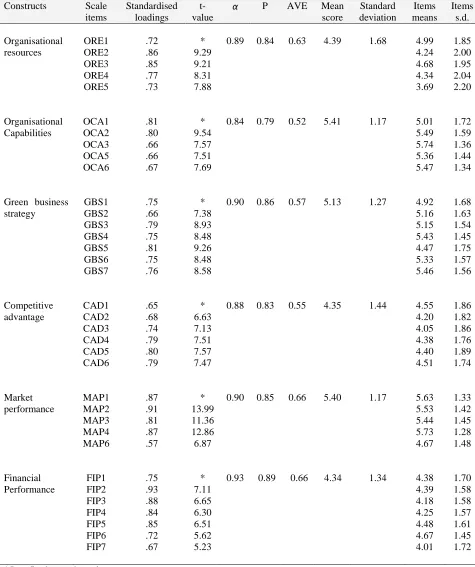
Table 1. Measurement model - Summary of construct measurement
Constructs Scale
items
Standardised loadings
t-value
P AVE Mean
score Standard deviation Items means Items s.d. Organisational resources ORE1 ORE2 ORE3 ORE4 ORE5 .72 .86 .85 .77 .73 * 9.29 9.21 8.31 7.88
0.89 0.84 0.63 4.39 1.68 4.99
4.24 4.68 4.34 3.69 1.85 2.00 1.95 2.04 2.20 Organisational Capabilities OCA1 OCA2 OCA3 OCA5 OCA6 .81 .80 .66 .66 .67 * 9.54 7.57 7.51 7.69
0.84 0.79 0.52 5.41 1.17 5.01
5.49 5.74 5.36 5.47 1.72 1.59 1.36 1.44 1.34
Green business strategy GBS1 GBS2 GBS3 GBS4 GBS5 GBS6 GBS7 .75 .66 .79 .75 .81 .75 .76 * 7.38 8.93 8.48 9.26 8.48 8.58
0.90 0.86 0.57 5.13 1.27 4.92
5.16 5.15 5.43 4.47 5.33 5.46 1.68 1.63 1.54 1.45 1.75 1.57 1.56 Competitive advantage CAD1 CAD2 CAD3 CAD4 CAD5 CAD6 .65 .68 .74 .79 .80 .79 * 6.63 7.13 7.51 7.57 7.47
0.88 0.83 0.55 4.35 1.44 4.55
4.20 4.05 4.38 4.40 4.51 1.86 1.82 1.86 1.76 1.89 1.74 Market performance MAP1 MAP2 MAP3 MAP4 MAP6 .87 .91 .81 .87 .57 * 13.99 11.36 12.86 6.87
0.90 0.85 0.66 5.40 1.17 5.63
5.53 5.44 5.73 4.67 1.33 1.42 1.45 1.28 1.48 Financial Performance FIP1 FIP2 FIP3 FIP4 FIP5 FIP6 FIP7 .75 .93 .88 .84 .85 .72 .67 * 7.11 6.65 6.30 6.51 5.62 5.23
0.93 0.89 0.66 4.34 1.34 4.38
4.39 4.18 4.25 4.48 4.67 4.01 1.70 1.58 1.58 1.57 1.61 1.45 1.72
* Item fixed to set the scale Fit statistics:
Chi-square ( 2 ) = 957.45, p = .000; df = 545; Ratio Chi-square to d.f. ( 2/df ) = 1.76;
26
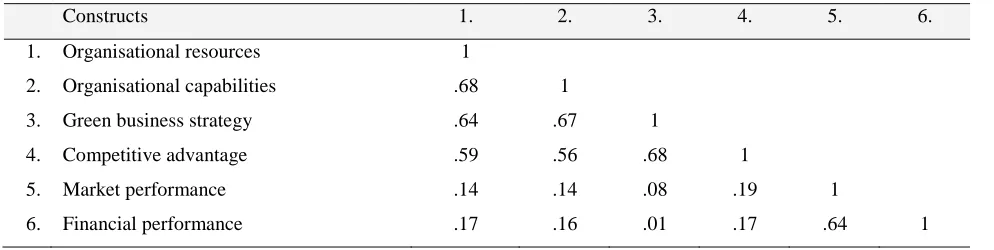
[image:28.612.63.560.373.498.2]Convergent validity was met, since the t-value for each item was always significant, all standard errors of the estimated coefficients were very low, and the average variance extracted for each construct was above the threshold level of .50 (Hair et al., 2011). There was also evidence for discriminant validity, because the confidence interval around the correlation estimate for each pair of constructs examined never included 1.00 (Anderson and Gerbing, 1988), while the squared correlation for each pair of constructs never exceeded their average variance extracted (Fornell and Larcker, 1981) (see Table 2). All factors had composite reliability values greater than .7, which denotes a reliable measurement of our constructs as components of the structural model (Bagozzi and Yi, 1988).
Table 2. Correlation matrix
Constructs 1. 2. 3. 4. 5. 6.
1. Organisational resources 1
2. Organisational capabilities .68 1
3. Green business strategy .64 .67 1
4. Competitive advantage .59 .56 .68 1
5. Market performance .14 .14 .08 .19 1
6. Financial performance .17 .16 .01 .17 .64 1
Note: Correlations greater than |± 0.21| are significant at the .01 level. Correlations greater than |± 0.16| are significant at the .05 level.
Common method bias was tested using three different approaches. The first was based on
Harman’s single-factor test, whereby all constructs were inserted in a principal component
27
analysis model, in which all indicators included in the initial measurement validation were restricted to load on a single factor. The fit indices of this new model indicated a poor fit (i.e.,
2
(560) = 3953.12, p < .001; 2/df = 7.06; NFI= .59; NNFI= .60; CFI= .63; RMSEA= .20), which
also implies the inexistence of common method bias (Podsakoff et al., 2003). The third test was based on the partial correlation technique, in which ‘firm location’, a construct unrelated to the others contained in the model, was chosen as a marker variable. This new construct did not have a significant correlation with any other of the model constructs. In addition, there was no change in the significance of the correlation coefficients after we made the partial correlation adjustments, while the strength and significance of the estimated beta coefficients remained the same when we included the marker variable in the regression model (Lindell and Whitney, 2001).
Main hypotheses results
To test the structural model, we also employed the elliptical re-weighted least-square method. Although the chi-square for this model was found to be statistically significant ( 2 (554) = 1024.20,
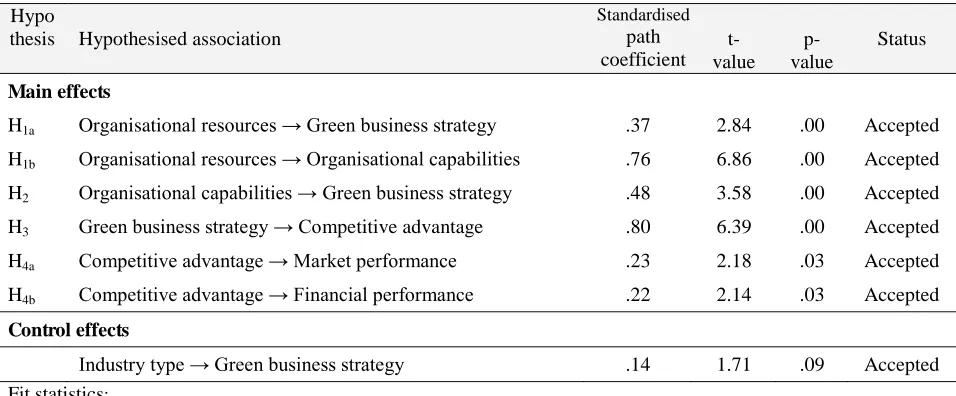
28 Table 3. Results of the structural model
Hypo
thesis Hypothesised association
Standardised
path coefficient
t- value
p- value
Status
Main effects
H1a Organisational resources Green business strategy .37 2.84 .00 Accepted
H1b Organisational resources Organisational capabilities .76 6.86 .00 Accepted
H2 Organisational capabilities Green business strategy .48 3.58 .00 Accepted
H3 Green business strategy Competitive advantage .80 6.39 .00 Accepted
H4a Competitive advantage Market performance .23 2.18 .03 Accepted
H4b Competitive advantage Financial performance .22 2.14 .03 Accepted
Control effects
Industry type Green business strategy .14 1.71 .09 Accepted
Fit statistics:
Chi-square ( 2 ) = 1024.20, p = .00; df = 554; Ratio Chi-square to d.f. ( 2/df ) = 1.85;
Normed Fit Index (NFI) = .90; Non-Normed Fit Index (NNFI) = .94; Comparative Fit Index (CFI) = .95; Root Mean Squared Error of Approximation (RMSEA) = .075; 90% Confidence Interval of RMSEA = (.07, .08).
Our results confirmed hypothesis H1a, which links organizational resources and green
29
The positive effect of organizational resources on organizational capabilities (i.e., hypothesis H1b) was also validated ( = .76, t = 6.86, p = .00). This finding gives credibility to
earlier research in the wider business literature (e.g., Kaleka, 2011), which showed that the availability of the right tangible (e.g., financial) and intangible (e.g., informational) resources are
essential for supporting the firm’s capabilities (Day, 1994). This finding is in harmony with the
underlying premise of the Resource-based View paradigm, which suggests that to achieve a competitive advantage the firm has to convert the right resources into capabilities (Teece et al., 1997). Such a conversion is even more critical in the case of smaller firms due to the limited (and sometimes idiosyncratic) resources possessed, as well the difficulties encountered in acquiring and developing capabilities (Azzone and Noci, 1998). The flexible and adaptable nature of small firms is probably a factor that facilitates this transformation of resources into capabilities.
In line with the findings of earlier research (e.g., Aragón-Correa and Sharma, 2003; Aragón-Correa et al., 2008; Sharma et al., 2004), the hypothesized positive effect of organizational capabilities on green business strategy (H2) was verified ( = .40, t = 3.58, p =
30
positively influence the adoption of environmental practices by smaller firms.
Hypothesis H3, which links green business strategy with competitive advantage,
6
was also accepted ( = .80, t = 6.39, p = .00). In accord with previous research (e.g., Porter and van der Linde, 1995; Menon and Menon, 1997; Carmona-Moreno et al., 2004), our study points to the significant cost savings, product/service differentiation, and other positional advantages that the implementation of eco-friendly strategies can provide to the firm (Klassen and Whybark, 1999; Christmann, 2000; Orsato, 2006). It also stresses the fact that small firms are in a position to achieve competitive advantages (particularly when targeting the eco-sensitive segment of the market), provided that appropriate financial, personnel, technological, and other resources are committed to environmental practices (Aragón-Correa et al., 2008). Thus, despite a scarcity of resources, investing in environmental initiatives is critical for small firms, because this will pay off in the long run in terms of cost savings and product differentiation (Simpson et al., 2004). To this end, a major driving force is the owner/manager, who is the key decision-maker behind the small firm’s strategic deployment of resources and capabilities.
Finally, our results validated hypotheses H4a and H4b, indicating that a competitive
31
and Covin, 2000; Banerjee et al., 2003; Carmona-Moreno et al., 2004; Orsato, 2006). Most importantly, as opposed to the repeatedly cited concern of small firms that environmental initiatives are costly (and sometimes financially damaging) (Revell et al., 2010), our study underscores the fact that they can yield serious gains if properly implemented.
Moderation analysis
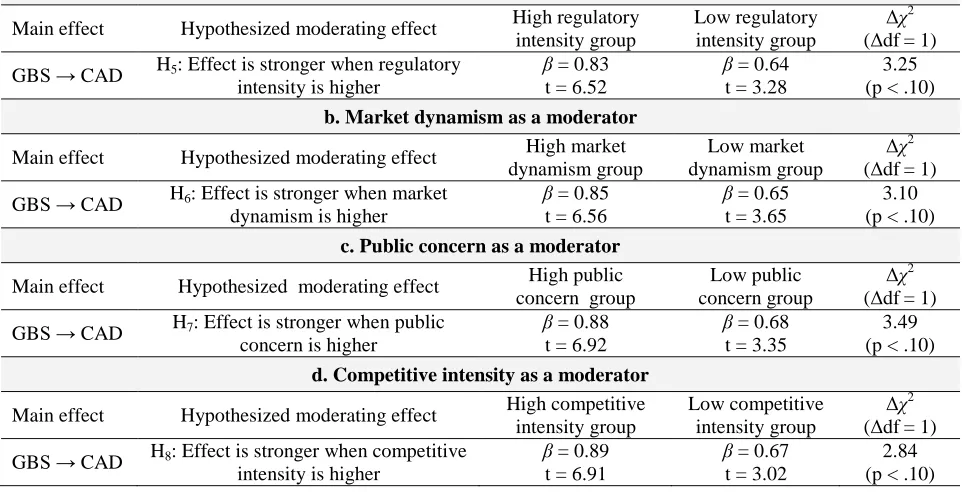
[image:33.612.65.546.445.691.2]To test the four moderating hypotheses, we employed multi-group analysis based on the median split approach (see Table 4). Specifically, for each moderator, we divided the sample into two groups, namely high and low, using the median as cut-off point. We then ran two separate models: in the first model all parameter estimates were free to vary between the two groups, while in the second model an equality constraint was set on the hypothesized moderated link between the two groups.
Table 4. Results of moderating effects
a. Regulatory framework as a moderator
Main effect Hypothesized moderating effect High regulatory
intensity group
Low regulatory intensity group
2 ( df = 1)
GBS CAD H5: Effect is stronger when regulatory
intensity is higher
= 0.83 t = 6.52
= 0.64 t = 3.28
3.25 (p < .10)
b. Market dynamism as a moderator
Main effect Hypothesized moderating effect High market
dynamism group
Low market dynamism group
2 ( df = 1)
GBS CAD H6: Effect is stronger when market
dynamism is higher
= 0.85 t = 6.56
= 0.65 t = 3.65
3.10 (p < .10)
c. Public concern as a moderator
Main effect Hypothesized moderating effect High public
concern group
Low public concern group
2 ( df = 1)
GBS CAD H7: Effect is stronger when public
concern is higher
= 0.88 t = 6.92
= 0.68 t = 3.35
3.49 (p < .10)
d. Competitive intensity as a moderator
Main effect Hypothesized moderating effect High competitive
intensity group
Low competitive intensity group
2 ( df = 1)
GBS CAD H8: Effect is stronger when competitive
intensity is higher
= 0.89 t = 6.91
= 0.67 t = 3.02
32
With regard to H5, the results suggest that the regulatory framework within which the firm
operates has a significantly positive effect on the green business strategy competitive advantage path ( 2(1) = 3.25, p < .10). Specifically, although under a mild regulatory framework the firm’s green business strategy positively and significantly influences competitive
advantage ( = .64, t = 3.25, p = .00), the association between the two constructs becomes significantly stronger under strict regulatory conditions ( = .83, t = 6.52, p = .00). This finding supports prior research findings that environmental regulations play an important role in both cultivating green orientation/thinking among employees (Banerjee et al., 2003) and ensuring that
the firm’s environmental strategy is implemented within legal boundaries (Menon and Menon,
1997). It also confirms the view that such regulations require smaller firms to implement formal environmental programs and processes, leading to improved environmental performance (Williamson et al., 2006). Although environmental regulations are usually associated with a compliance approach to ecological issues, our findings indicate that they may also have strategic connotations for small firms.
In the case of H6, our analysis confirmed that market dynamism has a significant
moderating impact on the association between green business strategy and competitive advantage
( 2
(1) = 3.10, p < .10). While under conditions of low market dynamism the firm’s green
33
firms to enact a series of radical changes and initiatives that can reinforce their environmentally friendly position, from which significant advantages can be derived (Simpson et al., 2004).
Significant results were also found with regard to H7, which examines the moderating role
of public concern on the green business strategy competitive advantage link ( 2(1) = 3.49, p <
.10). Specifically, although the impact of green business strategy on competitive advantage was significant under conditions of either high public concern ( = .88, t = 6.92, p = .00) or low public concern ( = .88, t = 6.92, p = .00), the effect was stronger in the former rather than the latter case. This finding reflects the increasing public concern for the environment has grown rapidly during past decades, with a parallel increase in the sales of green products (Rahbar and Wahid, 2011). It also shows that improved environmental firm activities can create a favorable reputation, which will normally generate sales from buyers who are sensitive to environmental issues (e.g., Russo and Fouts, 1997). This is particularly important for small firms, which usually have close contacts with the local community and other stakeholders in the geographic area in which they operate (Revell et al., 2010).
The final moderator, competitive intensity (i.e., H8), also exhibited significant effects on
the association between green business strategy and competitive advantage ( 2(1) = 2.84, p <
.10). Under conditions of high competitive intensity the effects of green business strategy on competitive advantage were much stronger ( = .89, t = 6.91, p = .00), as opposed to low competitive intensity conditions ( = .67, t = 3.02, p = .00). This result is congruent with Kumar
et al.’s (2011) findings that when competition is low, customers are “locked-in” an organization’s
34
most valuable customers, while at the same time creating entry barriers in respect of their rivals. Indeed, there are indications in the pertinent literature (e.g., Bianchi and Noci, 1998; Simpson et al., 2004) that the engagement of small firms in eco-friendly business activities can help them to stay ahead of competition.
Control effects
We examined ‘industry type’ as a factor with a potential control effect on a small firm’s green
business strategy. This was triggered by the long-standing debate focusing on whether a uniform environmental policy would work for all industries or whether each industry would require different treatment (Fiorino, 1996). For this purpose, we divided the firms in our sample into
three groups in terms of their industry’s degree of harming the environment, namely low,
moderate, and high environmental impact. The results indicate that the more harmful the effect of an industry on the environment, the stronger the adoption of a green business strategy by the small firm ( = .14, t= 1.71, p= .09). This finding is in harmony with studies conducted among larger firms, where industry type was shown to play an important role in the firm’s environmental behavior (Banerjee et al., 2003). Thus, irrespective of the scale of the firm’s operations (whether large or small), the type of industry in which the company is involved is a factor determining the adoption of a green business strategy.
Conclusions and implications
35
the implementation of such strategies will help to achieve significant positional competitive advantages (e.g., differentiated product offering, lower costs, good reputation) that will, in turn, help to heighten business performance (whether market or financial). Small business managers should appreciate the importance of adopting green business strategies to gain an advantage over their competitors, because this will help to enhance both their market and financial performance. This supports the arguments made by earlier studies (e.g., Cohen and Winn, 2007; Dean and McMullen, 2007; Patzelt and Shepherd, 2011) that entrepreneurs can accrue many benefits from recognizing and exploiting environmentally-related opportunities.
However, as in the case of their larger counterparts, small firms do not operate in a vacuum, but are surrounded by various external forces that influence their green strategic behavior. Our study has amply demonstrated that regulatory intensity, market dynamism, public concern, and competitive intensity are all conducive to positively moderating the effect of a small
firm’s green business strategy on competitive advantage. Specifically, the imposition of more
environmentally-related regulations, technological, competitive, and allied market changes, increasing worries about the environment by the general public, customers, and other stakeholders, and fiercer competition will help small firms to better enjoy a competitive advantage that stems from the adoption of a green business strategy. The study has also shown that the need for adopting a green business strategy by small firms is amplified in the case of firms belonging to industries that are more harmful to the environment (e.g., chemicals).
36
undertaking and sustaining of eco-friendly initiatives by small firms; third, it highlights the
strategic aspects of small firms’ green business activities, which have received marginal attention
in other studies in the field focusing on small firms; fourth, it underlines the contingent role of external forces in moderating the positive impact of a small firm’s green business strategy on competitive advantage; finally, it focuses on the performance implications of the small firm’s strategic behavior with regard to environmental issues, which has only been tangentially examined in the past.
Implications
37
initiatives.7 Special attention has also to be given to designing, integrating, and implementing strategies to cover ecological issues in different functional areas, such as research and development, procurement, production, and marketing. It should also be realized that the imposition of increasing regulations relating to environmental protection, the dynamic changes taking place in the market, the growing public concern for ecological issues, and the intensifying competition, make the adoption of green business strategies critical, in order to differentiate their activities from rival firms and improve business performance. However, to successfully implement green business strategies, it is essential for small firms to embark on environmental training programs, acquire environmental learning techniques, establish links with trade associations, and formulate a special task force team to effectively monitor environmentally-related initiatives (Halila, 2007).
38
(López-Gamero et al., 2008). There is also a need to recognize those small firms (through, for example, green awards/certification) that have achieved high environmental performance in their business, as well as to set best practice green standards in different industrial sectors. In addition, small firms should be encouraged to report their green achievements externally, since this environmental reporting will improve their credibility among customers, suppliers, distributors, and other stakeholder groups (Parry, 2012).
Limitations and future research
Although Cyprus provides fertile ground for the study of the ecological behavior of small firms, to verify the external validity of our findings, it is essential to replicate our study among small firms located in countries with different economic, socio-cultural, and regulatory settings. Moreover, the heterogeneous nature of the small business firms sector, makes it necessary to identify differences in the environmental behavior of these firms in terms of business experience, organization size, and entrepreneurial activity (Hillary, 2003). Furthermore, since some time has to elapse before resources/capabilities can be incorporated in a green business strategy and achieve competitive advantage and superior performance, it is also important to embark on longitudinal monitoring of changes in the environmental behavior of small firms. A more qualitative analysis in the form of case studies would also help to understand in greater depth the interconnections of the constructs used in this study.
39
constructs of our model. The inclusion in our conceptual framework of other important strategic management constructs, such as the creation of shared value by serving social needs through eco-friendly market offerings (Porter and Kramer, 2011), would also increase its insightfulness. In addition, future research would significantly benefit by considering other theoretical paradigms (e.g., stakeholder theory, political economy theory, industrial organization theory) to study environmental phenomena within the context of small business, although some adjustments may be required to take their unique features into consideration.
Since small firms are characterized by limited resources (e.g., financial) and capabilities (e.g., technological), future research should examine how these can also be obtained externally. Hence, it would be illuminating to investigate the various private and public organizations which provide environmental assistance and explore methods of transferring this assistance to small firms (Lee and Klassen, 2008). It would also be interesting to study the requirements in both resources and capabilities of different types of strategic postures adopted by small firms, by capitalizing on Miles and Snow’s (1978) quadruple typology. Specifically, one may expect
‘prospectors’ to take a more proactive approach and see environmentalism as an opportunity to
introduce new products and exploit new markets, ‘defenders’ to seek a specialized approach to a specific green market niche in order to achieve cost leadership, ‘analyzers’ to combine product/market development in environmental business with the need to achieve technical efficiency to maintain low costs, and ‘reactors’ to respond passively to environmental imperatives because of a lack of systematic strategy, structure, or design.
40
the examination of various other internal factors, such as managerial sensitivity to green issues, leadership style, and owner demographic characteristics, would lead to a better understanding of the mechanism of linking organizational resources/capabilities with green strategy formulation. It would also be interesting to focus on the ethical standards adopted in small organizations and how these affect their ecological behavior (López-Camero et al., 2008; Parry, 2012). As Tilley (2000) put it, adopting a common environmental code might provide firms with a benchmark for acceptable environmental standards, which, in turn, would significantly reinforce more focused and well-targeted environmental efforts.
Notes
1. Notably, the collective impact of small firms on the environment is so substantial that in many countries this outweighs the combined environmental effect of large firms, thus warranting close investigation (McKeiver and Gadenne, 2005; Gadenne et al., 2009).
2. By capitalizing on this theory, Hart (1995) introduced the Natural Resource Based View (NRBV) of the firm, which states that a firm can obtain a competitive advantage by building on three key interconnected strategies, namely: (a) pollution prevention, that is, seeking to reduce emissions and waste through the adoption of improvement methods focusing on well-defined environmental objectives; (b) product stewardship, that is, introducing processes that will minimize the environmental impact of a product during and/or after its use; and (c) sustainable development, that is, developing new low-impact technologies, considering the social impact of a
firm’s operations, and cultivating engagement with stakeholders.
Although this theory, as in the case of Resource-based View, also states that a firm can build a competitive advantage through the development of the right resources and capabilities, it places particular emphasis on the above three strategies (also called strategic capabilities) that are important in accommodating the changing natural environment. However, Hart (1995) states that some of the components of his theory (e.g., sustainable development strategy) are difficult to test because companies have not yet adopted them, while others seem to be more applicable in larger business units. For this reason, we have opted to use the original Resource-based View theory, which emphasizes the role of organizational resources and capabilities in achieving a competitive advantage and superior performance through the mediating role of business strategy (Barney 1991) and have adjusted its various components to incorporate environmental elements (some of which were obtained from Hart’s (1995) theory).
41
4. Environmental regulations provide a driving force for necessitating more pro-environmental behavior among small firms. This is because such regulations: (a) raise awareness levels regarding green issues (which are relatively low among owners/managers of small firms) and enhance ethical green standards; (b) help to improve policies and procedures within the organization aiming to protect the natural environment; and (c) indicate what is really required to comply with a minimum set of technical standards, which is beneficial when collaborating with other partners in the supply chain (Simpson et al., 2004; Tilley, 1999; Williamson et al., 2006). 5. With regard to the definition of a small firm, and since Cyprus is part of the European Union (EU), we have adopted the EU’s definition, which states that a firm is classified as small when it has fewer than 50 employees, its annual turnover does not exceed €10 million, and its annual
balance sheet total is beyond €10 million (European Commission, 2003).
6. To obtain richer insights with regard to the effect of competitive advantage on business performance, we have replaced the competitive advantage construct in our model with cost-base advantage (comprising CAD1 and CAD2) and differentiation-based advantage (comprising CAD5 and CAD6) and re-rerun the SEM analysis. The results indicate that a green business strategy has a significant positive impact on both cost-based advantage ( = .87, t = 5.97, p = .00) and differentiation-based advantage ( = .88, t = 6.56, p = .00). In turn, cost-based advantage has a positive effect on both market performance ( = .43, t = 2.56, p = .01) and financial performance ( = .32, t = 2.03, p = .04). Significant positive results were also obtained with regard to the effect of differentiation-based advantage on both market performance ( = .42, t = 2.48, p = .01) and financial performance ( = .31, t = 2.00, p = .04).
7. Although many small firms may design appropriate green business strategies, they often encounter various practical barriers that may endanger their effective implementation. Such barriers may include, inter alia, a risk-averse business owner/manager, poor standards of eco-literacy, limited access to relevant information, inadequate understanding of pertinent legislation, and unavailability of time to deal with environmental issues (Dilts and Prough, 1989; Tilley, 1999; Williamson and Lynch-Wood, 2001). To cope with these constraints, small firms need to maintain closer strategic collaboration and invest in network-building with various stakeholders (Avram and Kühne, 2008).
References
Achrol, R. S. and Stern, L. W.: 1988, ‘Environmental Determinants of Decision-making Uncertainty in Marketing Channels’, Journal of Marketing Research 25(1), 36-50.
Alvarez, S. and Busuenitz L.W.: 2001, ‘The Entrepreneurship of Resource-based Theory’, Journal of Management 27, 755-775.
Amit, R. and Schoemaker P. J. H.: 1993 ‘Strategic Assets and Organizational Rent’, Strategic Management Journal 14(1), 33-46.
Ammenberg, J. and Hjelm, O.: 2003, ‘Tracing Business and Environmental Effects of Environmental Management Systems – A Study of Networking Small and Medium-sized Enterprises Using a Joint Environmental System’, Business Strategy and the Environment 12, 163-174.
Anderson, J. C. and Gerbing, D. W.: 1988, ‘Structural Modelling in Practice: A Review and Recommended Two-step Approach’, Psychological Bulletin 103, 411-23.
Aragón-Correa, J. A. and Sharma, S.: 2003, ‘A Contingent Resource-based View of Proactive Corporate Environmental Strategy’, Academy of Management Journal 28(1), 71-88.