University of Southern Queensland
Faculty of Engineering & Surveying
Numerical Simulation of Water Waves in Reservoirs
Affecting Evaporation
A dissertation submitted by
Edward Stephen Greig
in fulfilment of the requirements of
ENG4111 / ENG4112 Research Project
towards the degree of
Bachelor of Engineering (Civil)
Abstract
Predicted increases in evaporation rates from open water reservoirs will likely present
sustainability challenges for reservoir dependent communities and industries in the next
50 years. Chemical monolayers have had highly variable success in reducing
evapora-tion rates due breakup and transport by wind-wave acevapora-tion. The effect of wind-wave
stretching action on monolayers has not been quantified in the literature. The project
aim was to develop a preliminary Computational Fluid Dynamics (CFD) model to
determine the average instantaneous shear stresses under wind-wave loadings
corre-sponding to observed monolayer performance limits. Wind speeds of 0.89 m/s and 7.33
m/s are considered representative of the lower and upper limits of degraded monolayer
performance. ANSYS Fluent was used to develop a preliminary model, comprising a
horizontal tank 15 m long by 0.85 m high with water occupying the bottom half. A
constant uniform velocity wind profile was applied to the air inlet for up to five
incre-ments of the residence time of three wind speeds, 0.89 m/s, 4.11 m/s and 7.33 m/s. The
volume of fluid method was used to capture the movement of the air/water interface.
Velocity gradients were extracted from the flow fields and following a one-way analysis
of variance test, the average instantaneous shear stresses were determined to be of 0
Pa, 0.00046 Pa and 0.00058 Pa for the increasing wind speeds. These results agree with
the expectation that the instantaneous shear stress would increase with increasing wind
speed. Significant limitations for the preliminary model include insufficient run time
and a lack of average instantaneous shear stress validation. Although this study was
limited in scope, there is significant potential for model development which will assist
in understanding how monolayers are affected by wind waves, and estimating and
im-proving the operational performance of monolayers in reducing evaporation rates from
University of Southern Queensland
Faculty of Engineering and Surveying
ENG4111/2 Research Project
Limitations of Use
The Council of the University of Southern Queensland, its Faculty of Engineering and
Surveying, and the staff of the University of Southern Queensland, do not accept any
responsibility for the truth, accuracy or completeness of material contained within or
associated with this dissertation.
Persons using all or any part of this material do so at their own risk, and not at the
risk of the Council of the University of Southern Queensland, its Faculty of Engineering
and Surveying or the staff of the University of Southern Queensland.
This dissertation reports an educational exercise and has no purpose or validity beyond
this exercise. The sole purpose of the course pair entitled “Research Project” is to
contribute to the overall education within the student’s chosen degree program. This
document, the associated hardware, software, drawings, and other material set out in
the associated appendices should not be used for any other purpose: if they are so used,
it is entirely at the risk of the user.
Prof F Bullen
Dean
Certification of Dissertation
I certify that the ideas, designs and experimental work, results, analyses and conclusions
set out in this dissertation are entirely my own effort, except where otherwise indicated
and acknowledged.
I further certify that the work is original and has not been previously submitted for
assessment in any other course or institution, except where specifically stated.
Edward Stephen Greig
0050014851
Signature
Acknowledgments
I would like to thank Dr Andrew Wandel for his supervision, patience and guidance
whilst undertaking this research project. Discussions with him were always
compre-hensive and enjoyable. His knowledge and experience in computational fluid dynamics,
statistical analysis and all matters research related was invaluable.
I would also like to thank management and my colleagues at Tumut Shire Council for
their encouragement and support.
Finally, I would like to thank my family and friends for their support, tolerance and
encouragement, without which the completion of this dissertation would not have been
possible.
This dissertation has been prepared using the USQ LaTeX template.
Edward Stephen Greig
University of Southern Queensland
Contents
Abstract i
Acknowledgments iv
List of Figures x
List of Tables xiii
Nomenclature xv
Chapter 1 Introduction 1
1.1 Background . . . 1
1.2 Project Objectives and Scope . . . 3
1.3 Methodology Summary . . . 4
1.4 Project Contributions . . . 4
1.5 Consequential Effects . . . 5
1.6 Dissertation Outline . . . 5
CONTENTS vi
1.6.2 Chapter 2. Background and Literature Review . . . 6
1.6.3 Chapter 3. Methodology: Numerical Simulations . . . 6
1.6.4 Chapter 4. Results and Discussion . . . 6
1.6.5 Chapter 5. Conclusions and Recommendations . . . 6
1.7 Summary . . . 7
Chapter 2 Background and Literature Review 8 Chapter 3 Methodology: Numerical Simulations 22 3.1 Flow Field Data . . . 23
3.2 Instrument: Software ANSYS Fluent . . . 25
3.3 Flow Field Data Analysis . . . 30
3.4 Model Validation . . . 33
3.5 Importance and Limitations . . . 34
3.6 Summary . . . 34
Chapter 4 Results and Discussion 35 4.1 General Statements of Results . . . 35
4.1.1 CFD Phase and Horizontal Velocity Plots . . . 35
4.1.2 Instantaneous Shear Stress Time plots . . . 38
4.1.3 Relative Frequency Distribution . . . 39
4.1.5 One-Way ANOVA Test Summary . . . 42
4.1.6 Kruskal-Wallis Test Summary . . . 43
4.1.7 Aggregated Non-significant Shear Stress vs Wind Speed . . . 44
4.2 Comparison of Results with Previous Studies . . . 45
4.3 Expected and Unexpected Results . . . 46
4.4 Remaining Work, Limitations and Further Work . . . 47
4.4.1 Remaining Work . . . 48
4.4.2 Limitations of Current Study . . . 49
4.4.3 Suggestions for further work . . . 51
4.5 Summary . . . 55
Chapter 5 Conclusions and Recommendations 56 5.1 Outcomes of the Current Research . . . 56
5.2 Recommendations for Future Studies . . . 57
References 59 Appendix A Project Specification 62 Appendix B Flow Field Phase and Horizontal Velocity Gradient Con-tour Plots 65 B.0.1 Introduction . . . 66
CONTENTS viii
B.0.3 4.11 m/s Phase Plots . . . 69
B.0.4 0.89 m/s Phase Plots . . . 72
B.0.5 7.33 m/s Horizontal Velocity Gradient Plots . . . 74
B.0.6 4.11 m/s Horizontal Velocity Gradient Plots . . . 77
B.0.7 0.89 m/s Horizontal Velocity Gradient Plots . . . 80
Appendix C Sample Shear Stress Profiles 82 C.0.8 Introduction . . . 83
Appendix D Sample Shear Stress Distributions 85 D.0.9 Introduction . . . 86
Appendix E One-way ANOVA, Kruskal-Wallis Test and Multiple Com-parison Test Results 88 E.0.10 Introduction . . . 89
E.0.11 One-Way ANOVA . . . 89
E.0.12 Mean Multiple Comparison Test . . . 90
E.0.13 Kruskal-Wallis Test . . . 92
E.0.14 Median Multiple Comparison Test . . . 93
Appendix F Matlab Sample Scripts 95 F.0.15 Introduction . . . 96
F.0.17 Contour Horizontal Velocity Gradient Plots . . . 99
F.0.18 Shear Stress Distribution Plots . . . 102
F.0.19 Sample Shear Stress Profile Plots . . . 106
F.0.20 Sample Mean, Median and Standard Deviation . . . 109
F.0.21 One-Way ANOVA and Multiple Comparison Test . . . 113
F.0.22 Kruskal-Wallis Test and Multiple Comparison Test . . . 115
List of Figures
2.1 Amphiphilic nature of monolayers modified from Barnes (2008) . . . 11
2.2 Wave Characteristics (Dean & Dalrymple 1991) . . . 16
2.3 Volume of Fluid Method (Bakhtyar, Razmi, Barry, Yeganeh-Bakhtiary & Zou 2010) . . . 20
3.1 Computational Domain and Sampling Region . . . 24
3.2 Named Boundary Conditions . . . 27
3.3 Specific sampling points, node-averaged vs cell-centred . . . 32
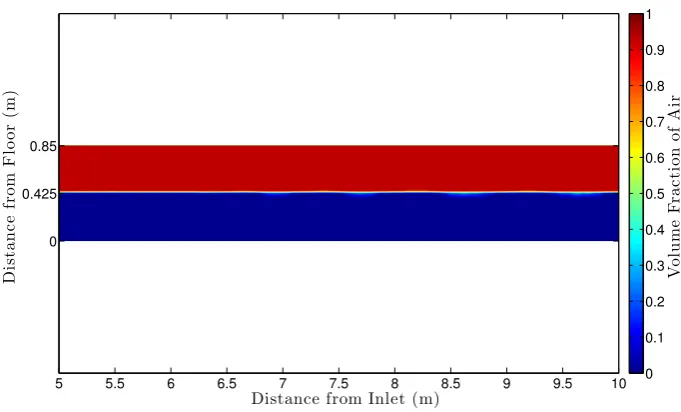
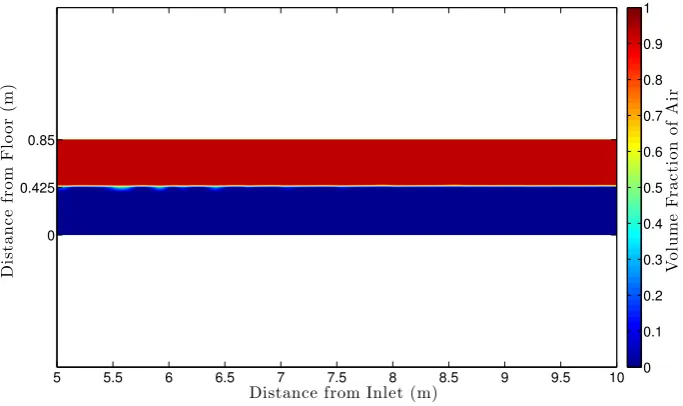
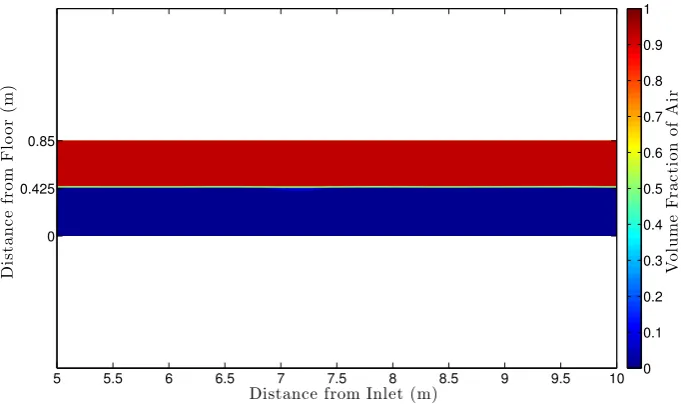
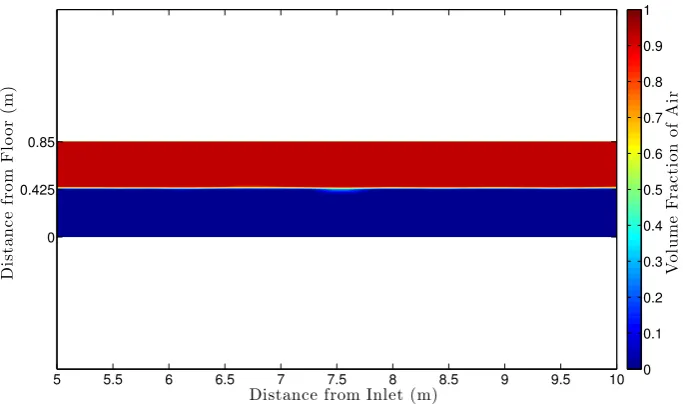
4.1 Wind Speed 7.33 m/s, Phase Plot, 10.6 s . . . 36
4.2 Wind Speed 4.11 m/s, Phase Plot, 18.8 s . . . 36
4.3 Wind Speed 0.89 m/s, Phase Plot, 51.0 s . . . 37
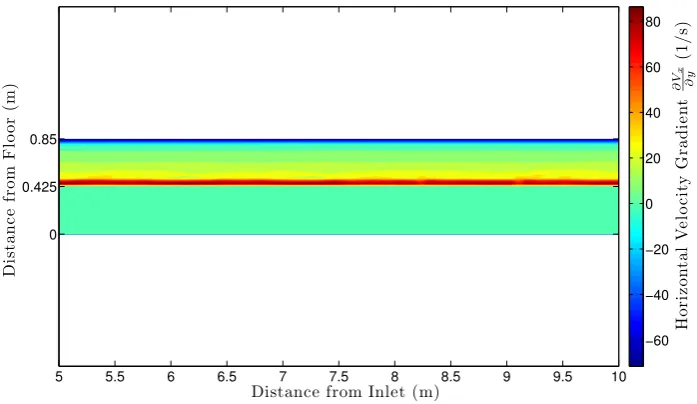
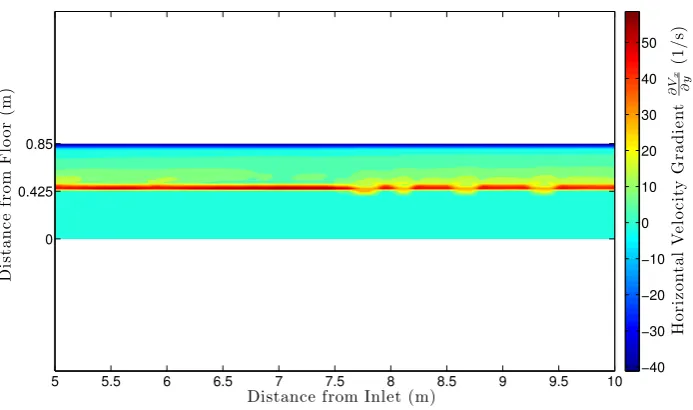
4.4 Wind Speed 7.33 m/s, Horizontal Velocity Gradient Plot, 10.6 s . . . 38
4.5 Shear stress time profiles, wind speed 7.33 m/s . . . 39
4.6 Shear stress time distributions, wind speed 7.33 m/s . . . 40
4.8 Shear Stress Sample Median vs Normalised Sampling Time . . . 41
4.9 Shear Stress Sample Standard Deviation vs Normalised Sampling Time 42 4.10 Aggregated Non-significant Shear Stress (Pa) vs Wind Speed (m/s) . . . 45
B.1 Wind Speed 7.33 m/s, Phase Plot, 2.05 s . . . 66
B.2 Wind Speed 7.33 m/s, Phase Plot, 4.10 s . . . 67
B.3 Wind Speed 7.33 m/s, Phase Plot, 6.15 s . . . 67
B.4 Wind Speed 7.33 m/s, Phase Plot, 8.20 s . . . 68
B.5 Wind Speed 7.33 m/s, Phase Plot, 10.6 s . . . 68
B.6 Wind Speed 4.11 m/s, Phase Plot, 3.65 s . . . 69
B.7 Wind Speed 4.11 m/s, Phase Plot, 7.31 s . . . 69
B.8 Wind Speed 4.11 m/s, Phase Plot, 11.0 s . . . 70
B.9 Wind Speed 4.11 m/s, Phase Plot, 14.6 s . . . 70
B.10 Wind Speed 4.11 m/s, Phase Plot, 18.8 s . . . 71
B.11 Wind Speed 0.89 m/s, Phase Plot, 17.0 s . . . 72
B.12 Wind Speed 0.89 m/s, Phase Plot, 34.0 s . . . 72
B.13 Wind Speed 0.89 m/s, Phase Plot, 51.0 s . . . 73
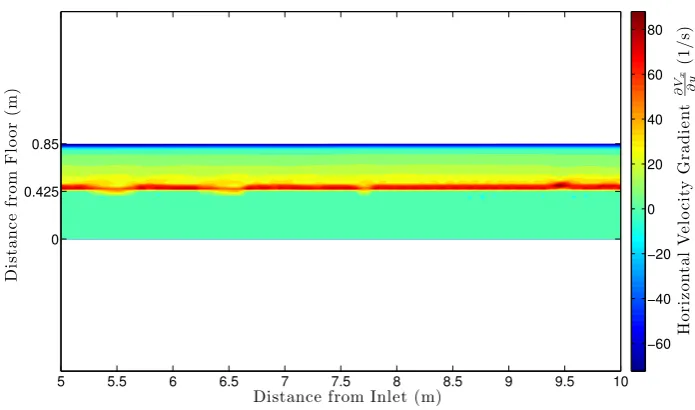
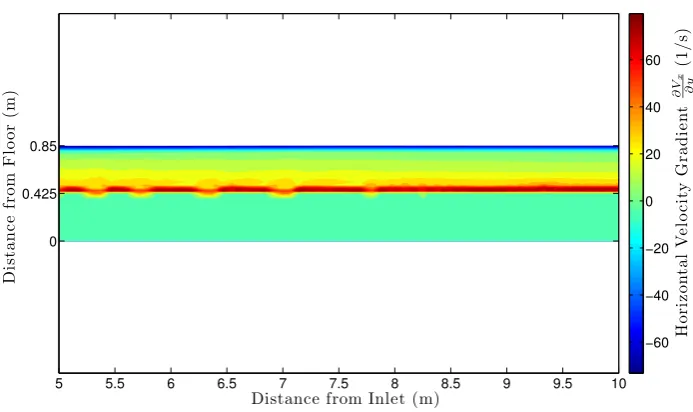
B.14 Wind Speed 7.33 m/s, Horizontal Velocity Gradient Plot, 2.05 s . . . 74
B.15 Wind Speed 7.33 m/s, Horizontal Velocity Gradient Plot, 4.10 s . . . 74
B.16 Wind Speed 7.33 m/s, Horizontal Velocity Gradient Plot, 6.15 s . . . 75
LIST OF FIGURES xii
B.18 Wind Speed 7.33 m/s, Horizontal Velocity Gradient Plot, 10.6 s . . . 76
B.19 Wind Speed 4.11 m/s, Horizontal Velocity Gradient Plot, 3.65 s . . . 77
B.20 Wind Speed 4.11 m/s, Horizontal Velocity Gradient Plot, 7.31 s . . . 77
B.21 Wind Speed 4.11 m/s, Horizontal Velocity Gradient Plot, 11.0 s . . . 78
B.22 Wind Speed 4.11 m/s, Horizontal Velocity Gradient Plot, 14.6 s . . . 78
B.23 Wind Speed 4.11 m/s, Horizontal Velocity Gradient Plot, 18.8 s . . . 79
B.24 Wind Speed 0.89 m/s, Horizontal Velocity Gradient Plot, 17.0 s . . . 80
B.25 Wind Speed 0.89 m/s, Horizontal Velocity Gradient Plot, 34.0 s . . . 80
B.26 Wind Speed 0.89 m/s, Horizontal Velocity Gradient Plot, 51.0 s . . . 81
C.1 Shear stress time profilea, wind speed 7.33 m/s . . . 83
C.2 Shear stress time profilea, wind speed 4.11 m/s . . . 84
C.3 Shear stress time profilea, wind speed 0.89 m/s . . . 84
D.1 Shear stress distributions, wind speed 0.89 m/s . . . 86
D.2 Shear stress time distributions, wind speed 4.11 m/s . . . 86
D.3 Shear stress time distributions, wind speed 4.11 m/s . . . 87
D.4 Shear stress time distributions, wind speed 7.33 m/s . . . 87
List of Tables
3.1 Flow variables collected . . . 23
3.2 Summary of wind speed sampling times . . . 25
3.3 Flow variables collected . . . 27
4.1 One-Way ANOVA Test Summary . . . 43
4.2 Mean Multiple Comparison Test Summary . . . 43
4.3 Kruskal-Wallis Test Summary . . . 44
4.4 Median Multiple Comparison Test Summary . . . 44
E.1 One-Way ANOVA, wind speed 0.89 m/s . . . 89
E.2 One-Way ANOVA, wind speed 4.11 m/s . . . 89
E.3 One-Way ANOVA, wind speed 7.33 m/s . . . 90
E.4 Mean Multiple Comparison Test, wind speed 0.89 m/s . . . 90
E.5 Mean Multiple Comparison Test, wind speed 4.11 m/s . . . 91
E.6 Mean Multiple Comparison Test, wind speed 7.33 m/s . . . 91
LIST OF TABLES xiv
E.8 Kruskal-Wallis Test, wind speed 4.11 m/s . . . 92
E.9 Kruskal-Wallis Test, wind speed 7.33 m/s . . . 92
E.10 Median Multiple Comparison Test, wind speed 0.89 m/s . . . 93
E.11 Median Multiple Comparison Test, wind speed 4.11 m/s . . . 93
Nomenclature
a linear wave amplitude, highest point is a crest, lowest point is a trough (m)
C= ωk = LT wave speed, also known as wave celerity m.s−1 η surface deviation from the mean still water level (m)
fx, fy body forces (N)
F volume fraction of a fluid phase
g gravitational acceleration m.s−2
h depth of water body (m)
H wave height, the distance between a wave crest and trough (m)
kw wave number m−1
k turbulent kinetic energy m2.s−2
L wave length, the distance between two identical points on successive waves (m)
Ltank length of tank (m)
. λ second viscosity (Pa.s)
ν kinematic viscosity m2.s−1
ω angular wave frequency s−1
p pressure (Pa)
Nomenclature xvi
ρ fluid density kg.m−3
t time (s)
T wave period, time between two successive crests arriving at a point (s)
u, v velocity vector components m.s−1
u0, v0 fluctuating velocity vector components m.s−1 u, v mean velocity vector components m.s−1 V two dimensional velocity vector ui+vj m.s−1
µ dynamic viscosity (Pa.s)
µT turbulent viscosity (Pa.s)
x direction of wave propagation
z= 0 still (mean) water level (x-axis)
Introduction
Predicted increases in evaporation rates from open water reservoirs in Australia will
present significant sustainability challenges in the coming years for communities and
industries which depend upon these storages. Chemical monolayers are a mitigation
technique with highly variable success in reducing evaporation rates. This variability
is primarily due to breakup and transport of the monolayer by wind-waves.
Compu-tational Fluid Dynamics (CFD) is used to investigate the average instantaneous shear
stress at the water surface resulting from wind-waves in open reservoirs corresponding
to observed monolayer performance limits. This study will complement existing
litera-ture and will assist in understanding ad improving monolayer operational performance
on open water reservoirs.
Chapter 1 provides an overview of this dissertation. The topics addressed include
back-ground, project objectives and scope, a methodology summary, project contributions
and a dissertation outline.
1.1
Background
Climate Change predictions in Australia estimate a worst case scenario increase in
average temperatures of 5◦C and a reduction in rainfall frequency of 50% by 2070
1.1 Background 2
storage in open reservoirs, this may present sustainability challenges. There is a need
to minimise evaporation rates and to conserve the water already captured in reservoirs.
Numerous evaporation mitigation techniques have been investigated over the previous
decade, and earlier. These mitigation techniques included the use of wind breaks,
destratification techniques, fixed covers and chemical monolayers (Helfer et al. 2011,
McJannet et al. 2008). For all but the smallest of reservoirs, chemical monolayers are
the only approach considered to be economically feasible. This seems reasonable as the
cost of fixed structures would likely be very high and the effects of edge trees in reducing
wind action would be minimal for large reservoirs. Although evaporation reductions
in the short term may not be appreciable, over an extended term, it is suggested that
significant savings may be achieved (Palada, Schouten & Lemckert 2012).
Chemical monolayers are one molecule thick films which spread spontaneously on a
water surface and form a barrier to the passage of eater molecules from a water storage
into the atmosphere (Barnes 2008). Of the many problems with monolayers in practice,
the most significant are breakup and transport by wind and decomposition by
microor-ganisms. Breakup and transport by wind accounts for the highly variable performance
results in the literature. Waves do not necessarily break up a monolayer on their own;
however, the combination of wind and waves is believed to do this (Palada et al. 2012).
Wind and decomposition factors are extensively mentioned in the literature.
Palada et al. (2012) indicated a lack of wind-wave modelling and experimental
stud-ies in the literature concerning impacts on monolayer performance. Understanding
monolayer performance under wind-wave conditions will enable improved application
of monolayers in real-world conditions. Experimental studies by Schouten, Palada,
Lemckert, Sunartio & Solomon (2011) and Palada et al. (2012) and numerical
sim-ulations by Huang et al. (2011) using a spectral model all suggest that monolayer
performance may occur at wind speeds lower than those generally observed in field.
This seems reasonable for the Schouten et al. (2011) and Palada et al. (2012) studies
as the fetch is limited. Evidently there is a mismatch between field observations and
current laboratory trials. The spectral model used by Huang et al. (2011) suffers from
a lack of individual wave resolution. The impact of wind-waves is indicative and is
of the highest one-third of wave heights in a wave record, or four times the standard
deviation of the water surface about the mean still water level (Young 1999).
To complement these studies, CFD is proposed for modelling the average instantaneous
shear stress under wave action to quantify the breakup of monolayers. Velocity
gradi-ents can be extracted from the flow domain and used to determine the instantaneous
shear stress. Wind-waves are highly site specific and correlating shear stress to
mono-layer performance would require substantial investigation over a range of wind speeds
and surface geometries. A preliminary model is presented in this dissertation.
1.2
Project Objectives and Scope
The aim of this work was to develop a CFD model to evaluate the average instantaneous
shear stress produced under a range of wind speeds. The specific objectives of this
research project were to:
1. Research wind-wave theory and the numerical modelling of wind-waves.
2. Research evaporation of water from reservoir bodies.
3. Research the effectiveness of monolayers in reducing evaporation under the action
of wind-waves.
4. Develop a 2D / 3D Computational Fluid Dynamics (CFD) model for simulating
wave generation by wind, incorporating two phases (air/water) in a representative
reservoir.
5. Apply the developed CFD model to investigate water surface stretching in
re-sponse to wave action under defined wind loading scenarios. Validate the model
with numerical data from USQ, if available.
6. Critically analyse and discuss the surface stretching response and the implications
of wind-waves on monolayer efficiency in reducing evaporation.
7. Investigate the scale-up applicability of the wind-wave results from model output
1.3 Methodology Summary 4
8. Recommendations for further studies.
The CFD model is preliminary and it is a foundation upon which subsequent and more
complex models may be built. Time permitting, the effects of reservoir bank slope on
wind-wave heights was to be examined; this did not occur.
1.3
Methodology Summary
A review of literature was undertaken to determine the status of the numerical
mod-elling of wind-waves affecting monolayer performance in reducing evaporation. This
literature review confirmed the absence of numerical modelling of wind-waves in the
context of monolayers, with the exception of the Huang et al. (2011) paper. This
re-view provides a foundation on which to develop this project. ANSYS Fluent was used
to develop a simple multiphase model of air over water. The model was based on an
experimental wave tank used in the Schouten et al. (2011) and Palada et al. (2012)
papers. Simulations were run for the constant velocity wind speeds 7.33 m/s, 4.11 m/s
and 0.89 m/s, the limits being the observed monolayer performance range (Brink 2011).
Sampling of velocity gradients and volume fractions was conducted. This flow field data
was filtered using Microsoft Excel to identify shear stress near the water surface. The
water surface values were not used due to limitations on the accuracy of velocity
gra-dients at the interface. Matlab was used for the statistical analysis of the filtered data
and plotting purposes. Statistical tests included the One-way Analysis of Variance test
and the Kruskal-Wallis test on sample instantaneous shear stress. The effect of bank
slope on wind-wave height was not addressed in this study.
1.4
Project Contributions
The contribution of this project to the literature is the development of a simple CFD
model to examine the average instantaneous shear stress distribution of the water
sur-face for a specific water basin under three wind loading scenarios. The shear stress
included as these do not cause shear deformation of a fluid. As monolayers are a
sur-face film, this shearing stress can be used to infer the disruption of a monolayer film.
Knowledge of monolayer disruption under wind-waves will assist in improving
appli-cation of monolayers in storage reservoirs. This model is preliminary and it provides
a foundation for further development. The reporting of average instantaneous shear
stress against the limit wind speeds and recommendations for further studies indicates
that the project objectives have been satisfied.
1.5
Consequential Effects
The consequential effects of this project may be briefly considered as: ethical, safety and
sustainability issues. Ethically, this research project has been conducted in accordance
with Engineers Australia principles identified in the Code of Ethics. There is no harm
or loss to any individual person, group, or business. This research involves numerical
simulations on a computer, consequently there are no safety implications beyond that of
the author’s general health in the conducting this project. The sustainability of water
supply and agricultural industries is why this research is being undertaken and societal
benefits are mostly positive. The only negative would like be a loss of recreational use
of water reservoirs, as this would disrupt monolayers (McJannet et al. 2008).
1.6
Dissertation Outline
An overview of the chapters in this thesis is provided below.
1.6.1 Chapter 1. Introduction
Chapter 1 provides an overview of the use of monolayers for evaporation reduction in
water reservoirs. Previous studies are introduced. The project aims and a summary
methodology are provided. Project contributions are identified. A description of the
1.6 Dissertation Outline 6
1.6.2 Chapter 2. Background and Literature Review
Chapter 2 presents a review of relevant literature and selected background material
covering the topics of evaporation, monolayers, wind-waves and computational fluid
dynamics. The literature on numerical simulations of wind-waves affecting
monolay-ers is limited to a few published articles. CFD modelling of wind-waves quantifying
instantaneous shear stress at the water surface is not present in the literature.
1.6.3 Chapter 3. Methodology: Numerical Simulations
Chapter 3 presents the methodology used to investigate shear stress at the water
sur-face. A preliminary wind-wave model is developed to determine the instantaneous shear
stress at the water surface under three wind loading scenarios. Flow field velocity
gradi-ents and volume fractions were extracted. The distribution of shear stress is examined
for steady-state conditions and statistics of mean, median and standard deviation are
reported. ANSYS Fluent was used to develop a CFD model. Matlab 2010a was used
for data analysis.
1.6.4 Chapter 4. Results and Discussion
Chapter 4 presents the results of the numerical simulations. Five samples were collected
for each of the 7.33 m/s and 4.11 m/s wind speeds. Three samples were collected for
the 0.89 m/s wind speed. The distribution of samples was examined. Data Analysis
tests include One-way Analysis of Variance (ANOVA) and the Kruskal-Wallis tests.
1.6.5 Chapter 5. Conclusions and Recommendations
Chapter 5 highlights the main findings of the research, identifying the contributions of
the project to the literature. A number of recommendations for further development of
the preliminary model and for additional research on the broader subject of monolayer
1.7
Summary
Chapter 1 has provided an introduction and overview of this dissertation. The project
context, objectives and a summary methodology have been presented. An outline of
Chapter 2
Background and Literature
Review
Chapter 2 presents a review of relevant literature and background material for this
dissertation. The review appraises the current state of knowledge concerning
numer-ical simulation of monolayers under wind-wave action, specifnumer-ically shear stress at the
air/water interface, and highlights specific theoretical concepts. Surface stretching of
the water is believed to break up the monolayer coverage under wind-wave action. This
stretching, or instantaneous shear stress, is yet to be quantified in the literature.
Know-ing the shear stress correspondKnow-ing to operational limits of monolayers, over a range of
geometries , would permit estimates of monolayer performance for reservoirs.
The review of literature required accessing knowledge on a broad range of topics,
includ-ing: evaporation, monolayers, wind-wave interactions, and computational fluid
dynam-ics. A broad scope was necessary due to the complexity of the system being examined.
Many questions had to be answered, including: What are monolayers? What factors
influence their success in reducing evaporation? How do wind waves develop? How
are wind waves described, both quantitatively and qualitatively? Have any wind wave
studies concerning monolayers been completed? If so, what were the major findings?
What numerical models, if any, have been applied? Understanding aspects of each of
follow-ing chapter presents only a snapshot of the literature reviewed over the course of this
dissertation.
The literature review found that the factors influencing the success of a monolayer in
reducing evaporation are numerous, and consequently the performance of monolayers
are highly variable. Wind-waves are a major factor limiting monolayer success. Recent
experimental studies suggest that monolayers may not be successful under field
wind-wave conditions, in all but calm conditions. The review also found that only one
computational study concerning monolayers under wind wave action is reported in the
literature.
Chapter 2 is arrange thematically and covers the following topics in sequence:
evap-oration, monolayers, wind-wave studies, wind-wave theory, and computational fluid
dynamics.
Evaporation loss from dams is a significant issue in Australia, where losses up to 40% of
storage volume may be experienced (Helfer et al. 2011). CSIRO (2007) predict a
reduc-tion in rainfall intensity by up to 50% by 2070, depending upon locareduc-tion. Temperature
is predicted to increase up to 5◦C by 2070. For regional communities, agricultural
and other water intensive industries, where water supply is from open reservoirs, a
reduction in the stored water may present significant sustainability challenges. Many
regional communities have had tight water restrictions in the previous decade, and this
situation will likely remain. Consequently, reducing evaporation rates in storage dams
is an important research focus.
Research centres with an interest in minimising evaporative losses in water storages
include the National Centre for Engineering Agriculture (NCEA) based at the
Univer-sity of Southern Queensland (USQ) and the now defunct Cooperative Research Centre
for Irrigation Futures (CRC). Research is also being undertaken at Griffith University
(GU).
A number of evaporation mitigation techniques to reduce evaporative loss have been
investigated in the last decade, with highly variable success being reported. Techniques
10
Of these methods, fixed covers have been most successful, with reductions up to 91%
reported when used (Helfer et al. 2011). Fixed covers provide a physical barrier which
obstructs the movement of water molecules from the water body into the atmosphere.
This easily explains why this method would be the most successful in reducing
evap-oration. Some success has been reported with wind breaks, whilst negligible results
have been found with destratification technologies (Helfer et al. 2011). Destratification
techniques focus on keeping the surface temperature cool through convection within
water bodies. A limitation of fixed covers is that they are expensive to purchase and
maintain for relatively large storages (Craig 2005). For large reservoirs, the use of
chem-ical monolayers offers a cost effective alternative. Recent research efforts concerning
reservoirs with a focus on monolayers include: the development of new monolayer
prod-ucts, the application systems, detection of monolayers on water body and wind-wave
experimentation and modelling of monolayers (Schouten et al. 2011, Brink 2011, Coop
et al. 2011, Huang et al. 2011, Palada et al. 2012).
Monolayers are artificially synthesised chemical films, one molecule thick, which
spon-taneously spread on contact with a water surface forming a effective surface barrier
(Barnes 2008). Natural monolayers may also exist at the surface of a water body;
however, the evaporation reduction potential of such monolayers is usually considered
negligible, as they lack the surface pressure to reduce evaporation loss (Hancock,
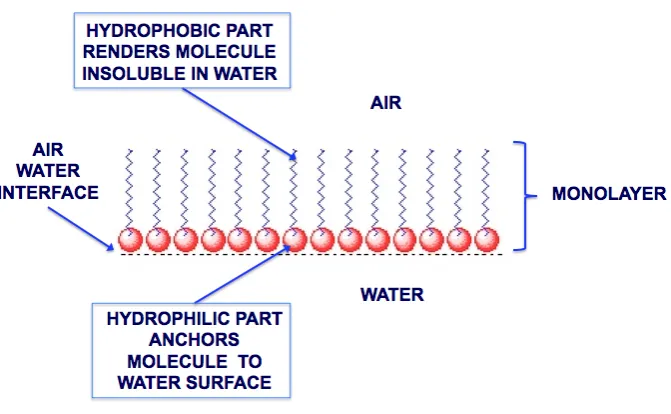
Pitt-away & Symes 2011). Artificial monolayers are amphiphilic, having both a
hydropho-bic (water repellent) and hydrophilic (water attracting) component, which forces the
monolayer to spread over the water surface. Figure 2.1 shows the amphiphilic nature of
monolayers. Under favourable conditions, such monolayers have the potential to reduce
evaporation rates up to 40% (McJannet et al. 2008). Traditional monolayers comprise
stearyl alcohol (octadecanol) and cetyl alcohol (hexadecanol) products. In the last
decade, the types of monolayers has been expanded to include prototype monolayers as
investigated by Schouten et al. (2011). Such prototype monolayers are an attempt to
overcome some of the performance issues with the octadecanol and hexadecanol type
Figure 2.1: Amphiphilic nature of monolayers modified from Barnes (2008)
Wide variability in the performance of monolayer performance has been reported in
field trials (Barnes 2008). A technical report by Hancock et al. (2011) indicates that
the inconsistency in the observations is a consequence of the large number of
inter-related environmental factors. This is understandable, natural systems can be highly
complex. Factors affecting the performance of monolayers include: temperature of
water, temperature of air, displacement by wind, wave field, relative humidity of air,
ground seepage, presence of a natural monolayers, incident solar radiation, biological
decomposition, surrounding terrain and the morphology of the dam. It is easily
no-ticed that many of these factors are stochastic, varying temporally. Consequently, a
deterministic solution for monolayer performance would not be easily determined. The
complexity interrelated factors would suggest that predicting monolayer performance
would be difficult. Of the number of factors influencing monolayer performance, wind
and biological decomposition are generally considered to be the most detrimental and
prevalent in the literature. Predictions of monolayer performance under winds are
mostly qualitative (Palada et al. 2012). Under conditions with little to no wind,<0.3 m/s the performance of monolayers is generally good, with 45% savings being achieved
12
spontaneously, it would make sense that the monolayer could be disturbed easily by
wind-waves.
Significant detrimental effects on monolayer performance are the result of bacterial
de-composition and break up due to wind-waves. These two factors are noticeably
promi-nent in the literature. Bacterial decomposition restricts the life of an applied monolayer
to approximately three days. For sustained evaporation resistance, a monolayer must
consequently be reapplied every few days. Application rates and locations are
impor-tant component of effective monolayer performance. Brink (2011) provides details on
the development of a universal framework for monolayer application, which provides
assistance in optimising monolayer application. Barnes (2008) states that almost all
problems with monolayer performance stem from poor resistance under wind action.
The action of wind both transports monolayer products across the water surface, and
generating waves, which are believed to act to stretch and break the up the monolayer
coverage (Schouten et al. 2011, Palada et al. 2012). As stated by Palada et al. (2012),
a quantitative assessment of wind and wave impact on monolayer performance is yet
to be substantiated in the literature. This is easily observed when reviewing the
lit-erature. The maximum wind speed for monolayers is reported as an average of 26.4
km/h (7.33 m/s) (Brink 2011).A t higher wind speeds, monolayers are considered
inef-fective. Wind induced drift of monolayers commences at approximately 3.2 km/h (0.89
m/s). Together these two limits comprise a generalised range over which monolayers
have been observed to produce a reduction in evaporation, with decreasing evaporation
resistance as wind speed increases. An understanding of wind-wave impact is necessary
for monolayer performance prediction in a reservoir.
Quantitative experimental and computational studies of wind wave affects on
mono-layer performance are noticeably lacking in the literature. Palada et al. (2012) and
Schouten et al. (2011) corroborate this observation. Observations are numerous and
are summarised by McJannet et al. (2008) and Barnes (2008). The lack of
experimen-tal studies is understandable, as wind-wave experimenexperimen-tal data is generally difficult and
costly to obtain. This data acquisition difficulty is limited by sensor technology and the
broad variability in atmospheric, water and wave fields (Sullivan & McWilliams 2010).
times required for the grid resolutions likely to be required. Quantitative experimental
studies have been undertaken by Schouten et al. (2011) and Palada et al. (2012), and a
numerical studies has been completed by Huang et al. (2011). A Computational Fluid
Dynamics (CFD) study was undertaken by Craig et a (2006); however, wind-waves
were not explicitly investigated here.
Quantitative experimental investigations of wind-wave effects on monolayer
perfor-mance have been undertaken by Schouten et al. (2011) and Palada et al. (2012). These
studies are briefly described before the limitations are presented. Both studies used
a wave tank with a wind blower and a wave paddle. The Schouten et al. (2011)
pa-per evaluated the pa-performance of six prototype monolayers against octadecanol, whilst
the Palada et al. (2012) paper only considered the octadecanol monolayer. Sinusoidal
waves with a 6 second period and 2 centimetre height were used along with wind speeds
between 0 and 5 m/s. The angle of incidence of the wind blower was varied for the
Schouten et al. (2011) paper. Whilst these studies were of a very limited scope, both
found that the octadeconal had poor evaporation resistance performance at wind speeds
greater than 1.3 m/s. The prototype monolayers generally had a higher level of
evap-oration resistance. Both papers suggested that wind waves break up and stretch out
a monolayer. Neither study included an examination of water surface shear stress in
response to wind speed.
The scope of the Schouten et al. (2011) and Palada et al. (2012) papers was limited
to several combinations of wind speeds and wave frequency. The wave amplitude was
varied in the Schouten et al. (2011) paper through the varying the angle of incidence of
the wind, which distorts the wave field. This is an attempt to produce wave field more
representative of field conditions where an irregular confused surface evolved under a
wind field. Wind waves may be considered an aggregation of many linear sinusoidal
waves, aggregating in an irregular wave field. Many combinations on wind speed and
wave amplitude would be necessary to evaluate the performance of monolayers, as
stated by Palada et al. (2012). This would be correct. A possible alternative to varying
the incidence angle, not considered in these studies, would be to vary the motion of the
wave paddle. The wave paddle could vary the wave period and amplitude through use
14
sampling would come from the distribution from a wave height time series for a specific
reservoir of interest or a reservoir with similar environmental conditions and comparable
size. In either case, the wind and waves need to be consistent with conditions that would
be observed at a dam. Another limitation is the size of the experimental equipment.
Actual dams allow waves to evolve over greater distances than can be replicated in an
experimental tank. The tank is therefore fetch limited. Larger waves of lower frequency
would seemingly have a less detrimental impact than high frequency waves. Overall,
it appears to be difficult to replicate field observations of wind-waves in a laboratory.
To complement such experimental studies, numerical simulations offer another means
of evaluating wind-wave fields.
Limitations of the Schouten et al. (2011) study included the small number of wind-wave
combinations tested and the short fetch. The Palada et al. (2012) study also has these
limitations. Huang et al. (2011) attempted to address these limitations though the
use of a numerical simulation using the spectral wave model on a full sized reservoir,
Logan’s Dam. Spectral models have been used for ocean wave forecasting by the
Bureau of Meteorology in Australia for almost 20 years (BOM 2010). The spectral
model uses a mean wind speed to evolve and transport the significant wave height
(Hs). The significant wave height is the average of the highest one-third of waves
in an observed wave field or four times the standard deviation of the surface elevation
(Young 1999). Spectral models require significantly less computational time than phase
resolving models, such as CFD, because they do not resolve individual waves. While
phase resolving models are very sensitive to initial conditions, phase averaged models
are not as individual waves are not resolved. Extensive effort has gone into refining the
spectral model over the last 20 years and the theory is well developed (Janssen 2008).
The Huang et al. (2011) study concluded that the spectral model could be used for
indicative assessment of wave field development. Whilst the significant wave height
was generally well modelled, the wave period was poor. A CFD study was undertaken
by Craig, Mossad & Hancock (2006) to develop a model for predicting evaporation
performance, however, wind waves were not investigated. No account of the water
surface stretching was considered in this study. The development of an appropriate
CFD model incorporating wind waves requires an understanding of how wind waves
measure of the distortion of the wave surface; however, as shear stress includes velocity
gradients it is arguably a better representation of surface distortion for estimating
monolayer performance.
The study of wind waves has been extensive since the Second World War, when
fore-casting sea conditions for landing operations was desired (Janssen 2008). Wind waves is
a challenging areas of study and progress has been hindered primarily due to difficulties
with capturing experimental data under field conditions (Sullivan & McWilliams 2010).
This is understandable considering the apparently complex feedback interactions
be-tween wind and waves. This limitation makes validation of wind wave models generally
difficult. Despite this limitation, significant advances in wind wave theory has
oc-curred, providing insight into how wind waves evolve and decay and facilitating the
development of wind wave models, particularly the spectral model.
Field studies of the evolution of wind-waves provides insight into how an
experimen-tal and numerical simulation model should behave. Although wind wave evolution is
complicated, the generally accepted process is described by Phillips (1957) and Miles
(1957) theories, as cited in Young (1999), as follows: as wind blows over a calm water
surface, pressure fluctuations over the surface give rise to small wavelets. As the wind
speed increases, these wavelets receive additional energy from the wind and grow
expo-nentially in height. As a wave field develops, there is shift from high frequency waves
to lower frequency waves and from a narrow spectrum to a broad spectrum of wave
heights and wavelength. Wave growth is limited by the fetch over which wind blows and
the duration of wind blowing. The shift in frequency is due to nonlinear interactions
between the waves (Janssen 2008, Mitsuyasu 2002). For enclosed basins, waves cannot
propagate away from the generating area and so are reflected either partially or fully
depending upon the basins edge geometry. The interactions would therefore be more
complicated than in a wave field where the waves may travel out of the generating area
under a wind. The extent to which reflected waves interact with a generating wave field
would depend upon the size and aspect of the water surface. From this description, it
is evident that wind waves in a water basin are a complicated phenomena. Statistical
methods have been extensively used in the literature to quantify the wind wave field,
16
H
Figure 2.2: Wave Characteristics (Dean & Dalrymple 1991)
The evolution of a wave field is a complicated process. The observed chaotic water
surface has been quantified using statistical methods. The variance of the surface
elevation about the still water level, is equated to the energy of wave field (Young 1999).
Through modelling the progress of energy using the spectral model, the wave field
properties of significant wave height are determined under a given wind field. The
spectral model assumes that waves are linear and comprises a number of finite sinusoidal
waves of variable period and wavelength. Water waves are modelled reasonably well by
linear theory (Young 1999). A simple linear wave is seen in Figure 2.2.
Equation 2.1 describes such a linear wave.
η=asin(kx−ωt) = H 2sin
2π Lx−
2π T t
(2.1)
Under linear theory, the wavelength is related to wave height through a dispersion
relationship as shown in Equation 2.2 (Young 1999):
ω2 = gktanh (kh) (2.2)
For linear wave theory to apply, the waves must be considered deep. The wavelength
relative to the water body depth must be less than 20 (Young 1999). For shallower
dams, waves are affected by the presence of the dam floor and linear theory must be
modified. Non-linear wave models account for slight raising of the wave crest and
which are computationally intensive, are not required on ocean scales for forecasting
purposes, only the general wave field conditions are approximated. Overall, the
lim-itations on experimental data acquisition and the general wave field produced by a
spectral model must be supplemented with phase resolved models, capturing the wave
field for a better understanding of monolayer behaviour under wind-waves. CFD is a
focus of wind-wave research to achieve this.
Computational fluid dynamics (CFD) involves the use of numerical algorithms to solve
the governing equations of fluid mechanics and any transport equations for additional
phenomena, for example, volume of fluid fraction. CFD studies of water waves are
reported in the literature, including Bakhtyar et al. (2010), Wang et al. (2009),Lal &
Elangovan (2008) and Lin et al. (2008) The governing equations include the
conserva-tion of mass, the conservaconserva-tion of momentum and the conservaconserva-tion of energy. Equaconserva-tions
2.3 to 2.5 are the two-dimensional governing equations for the conservation of mass and
momentum in an x-y plane (Anderson Jr 1995).
∂ρ
∂t +∇ ·(ρV) = 0 (2.3)
∂(ρu)
∂t +∇ ·(ρuV) =− ∂p ∂x+
∂τxx
∂x + ∂τyx
∂y +ρfx (2.4)
∂(ρv)
∂t +∇ ·(ρvV) =− ∂p ∂y +
∂τxy
∂x + ∂τyy
∂y ρ+fy (2.5)
The shear stresses are assumed to be equated to the velocity gradients as seen in
equations 2.6 to 2.8:
τxx =λ(∇ ·V) + 2µ
∂u
∂x (2.6)
τyy =λ(∇ ·V) + 2µ
∂u
18
τxy =τyx=µ
∂v ∂x +
∂u ∂y
(2.8)
Solution to CFD problems involves the propagation of flow field variables in temporal
and spatial domains (Tu et al. 2008). This propagation stems from an initial state.
Boundary conditions result in a deterministic solution approximating a real flow field.
For an identical model setup, boundary conditions and initial condition, CFD will
gen-erate the same solution. For turbulent flows, characterized by random fluctuations
in flow field variables, solution of the governing equations is limited by the
resolu-tion of the mesh. Very fine scales are required to capture turbulent behaviour in the
flow. Capturing such fine scales is limited by the computational power . As
com-putational capabilities presently cannot resolves all scales for turbulence, the use of
a Reynolds-averaged Navier-Stokes Equations (RANS), with an appropriate turbulent
closure model is necessary (Tu et al. 2008). Large Eddy Simulation (LES) is an another
alternative.
Present computational capabilities do not permit the governing equations of fluid
me-chanics to be solved over the full spectrum of turbulence scales for fully turbulent flows
and high Reynolds Numbers, as stated by Tu et al. (2008). Such limitations mean that
either the RANS equations are used with an appropriate turbulence closure model or
an LES model are used. RANS models have one turbulence length scale, whereas LES
models have some threshold below which the turbulence scales are not resolved. As
LES models are computationally intensive than RANS, they are not considered further
here. The RANS equations are derived from the momentum equation through use of
a mean and fluctuating velocity components. Turbulent closure models are required
to solve the additional stress terms produced by this approach. Different turbulence
models are available and each is suited to particular cases. For this study only the
two-equation k−ε closure model is used. This model was shown by Bakhtyar et al. (2010) to give reasonable results over the computational domain in their investigation
of waves breaking on a shore. Specifically, only where waves were not breaking was the
model reasonable. Using the RANS equations with k−εmodel, the turbulent shear stress are related to the velocity gradient linearly seen in Equation 2.8. The
a Newtonian fluid. This is what flow field parameter this study seeks to determine at
the water surface. Equations 2.9 to 2.11 are the two-dimensional incompressible RANS
equations discretized in an x-y plane (Tu et al. 2008). Incompressible flows have a
constant density. Body forces have been neglected in these equations.
∂u ∂x+
∂v
∂y = 0 (2.9)
∂u ∂t+
∂(uu)
∂x + ∂(vu)
∂y =−
1 ρ ∂p ∂x+2 ∂ ∂x ν∂u ∂x + ∂ ∂y ν∂u ∂y + ∂ ∂y ν∂v ∂x − "
∂ u0u0
∂x +
∂ u0v0 ∂y
#
(2.10)
∂v ∂t+
∂(uv)
∂x + ∂(vv)
∂y =−
1 ρ ∂p ∂y+2 ∂ ∂y ν∂v ∂y + ∂ ∂x ν∂v ∂x + ∂ ∂x ν∂u ∂y − "
∂ u0v0
∂x +
∂ v0v0 ∂y
#
(2.11)
The additional Reynolds stress terms are approximated as shown in equations 2.12 to
2.14. A closure model is required to use these equations.
−ρu0u0 = 2µ
T
∂u ∂x−
2
3ρk (2.12)
−ρv0v0= 2µ
T
∂v ∂y−
2
3ρk (2.13)
−ρu0v0 =µ
T ∂v ∂x + ∂u ∂y (2.14)
Shear stress is proportional to the velocity gradients in a Newtonian fluid. Knowing
the velocity gradients, the instantaneous shear stress can be determined. Shear stress
is highest in the boundary layers of a fluid, either where fluid is in contact with a wall
or at the interface with another fluid of significantly different viscosity. As shear stress
measurements at the water interface would be difficult to obtain experimentally, CFD is
20
interface for an appropriately discretized grid and the instantaneous shear stress at
the interface is determined. Locating the interface requires either interface-tracking or
interface-capturing methods.
Determining the instantaneous shear stress at the water surface requires knowing the
location of the water surface. Methods available to locate the water surface are either
interface-tracking or interface-capturing. Interface-tracking methods require
deforma-tion of the mesh to follow the interface. Interface-capturing methods move the interface
through a fixed computation domain, with the interface being located in cells that are
partially filled with water and air fractions. Interface-tracking methods are more
accu-rate; however, additional computational power is required and complex geometries are
limited when compared with interface-capturing methods. Interface-capturing method
have less accuracy with location of surface (Gerlach et al. 2006). Two common interface
tracking methods are Volume of Fluid (VOF) and level-set approaches. Gerlach et al.
(2006) and ANSYS (2011) compares these methods. For this study, the common VOF
approach will be used. The VOF method is limited in accuracy near the air water
in-terface because the spatial gradients of volume fraction are not continuous across cells.
This would suggest that only cells with either water or air fractions should be used
when examining velocity gradients to determine the shear stress.
The Volume of Fluid method requires transport of a scalar quantity F, the volume fraction of a cell through the computational domain. Figure 2.3 shows the volume
fraction of water in computational cells. et al.[10]measured the wave bottom boundary layer velocity in
the surf zone using particle image velocimetry and observed that a notable number of intermittent turbulent eddies penetrated into the wave bottom boundary layer. In the surf and swash zones, Sou et al.[11] investigated the velocity and turbulence fields under plunging breaking waves. Shin and Cox[12]provided a compre-hensive, accurate data set of horizontal and vertical velocities and investigated the structure of undertow, free surface, turbu-lence intensity and energy.
In order to analyze water free surface flow, it is of course impor-tant to determine the position of free surface as it varies tempo-rally. In such flows, in addition to the velocity, pressure and turbulence fields, the location of the free surface is one of the major unknowns[13]. There are two viewpoints for tracking the water free surface, namely: Lagrangian and Eulerian. In the former, water particle movement near the free surface is determined based on the local flow velocity. In the latter, the temporal variation of the free surface at a given location is computed. The Eulerian perspec-tive is more compatible with the NS equations, and is the basis of volume-of-fluid (VOF) technique [13], which will be used subsequently.
In the VOF technique[14], the volume fraction,F, of the compu-tational cell occupied by the fluid determines the free surface. The free surface is defined for cells in whichFis between zero and unity and there is at least one adjacent cell with a volume fraction of zero. The derivatives ofFcan be used to define the fluid location in any cell. From the derivatives ofF, the direction in which the variation ofFis faster is defined and hence the vector normal to the free surface. In addition, from the surface tension, the curva-ture of the free surface is defined.Fig. 1shows how VOF technique approximates the free surface.
Bradford [15] proposed a numerical solution of the NS equations in conjunction with the VOF method and investigated the applicability of different turbulence closure models for model-ing breakmodel-ing waves in the nearshore zone. Zhang and Liu[16] simulated dam break-generated bores, propagating, runup and rundown over a sloping beach. Christensen and Deigaard[17] and Christensen[18]used the NS equations in conjunction with large eddy simulation (LES) to simulate the plunging and spilling
breaking waves. A two-dimensional multi-scale turbulence model using the VOF method for modeling breaking waves was proposed by Zhao et al.[19]. These models considered single-phase water flow, not combined air and water flow.
Bakhtyar et al. [20] presented a two-dimensional numerical model for simulation of wave breaking, turbulence, undertow cur-rent and wave characteristics in the surf and swash zones. Their model is based on the Reynolds-averaged Navier–Stokes (RANS) equations, VOF and ak–eturbulence model. The model was used to investigate overturning, uprush and backwash of waves on the beach slope. Bakhtyar et al.[21–23]developed a two-phase flow model to analyze numerically sheet flow, sediment transport un-der the influence of wave breaking, and wave runup in the surf and swash zones. Their results explored different wave, beach and sediment conditions, but did not consider the effects of air entrainment during wave motion.
Entrapped air bubbles may have significant impacts on surf and swash zone hydrodynamics processes such as wave breaking, run-up/down and momentum exchange. Air–water two-phase flow is not well understood, and so there is a need for further investiga-tion into the details of this type of flow. Most previous numerical investigations focused on the water motion and neglected the ef-fect of the water–air mixing process. Air–water two-phase flow modeling has been reported in the context of coastal engineering. Hieu and Tanimoto [24] developed a two-phase flow model for simulation of wave transformations in shallow water and over a Nomenclature
d local still water depth (L)
Ei experimental values
Em experimental mean value
F fluid volume (L3L!3)
g magnitude of gravitational acceleration (L T!2)
H wave height (L)
k turbulent kinetic energy (L2T!2)
L wavelength (L)
N number of observations
P pressure (ML!1T!2)
Pi predicted values
Pm predicted mean value
R2 coefficient of determination
t time (T)
T wave period (T)
ui velocity component (L T!1)
u* shear or frictional velocity (L T!1)
x,z horizontal and vertical coordinates, respectively (L) Xs surf zone width (L)
Greek
h bed slope
qa air density (ML!3)
qw fluid density (ML!3)
l molecular viscosity (ML!1T!1)
rij strain rate tensor (L!1T!1)
! sm
ij average stress tensor (ML!2T!2)
ma kinematic viscosity of air (ML!1T!1)
mw kinematic viscosity of water (ML!1T!1)
mt eddy viscosity (L2T!1)
e turbulence dissipation rate (L2T!3)
j von Kármán constant
x specific dissipation rate (L2T!3)
f surf similarity parameter
Ck,Cx effective diffusivity ofkandx, respectively (ML!1T!1)
Dt time step (T)
rk,re,C1e,C2e,Cl empirical constants
Subscripts
b breaking point value
0.1 0.4 0.6
1
0.7 1 1
1 1
Fig. 1.Free surface approximation using the VOF method. Left panel shows the
actual interface between the air and water phases, while the right panel represents the volume fractions associated with the interface using the VOF technique.
R. Bakhtyar et al. / Advances in Water Resources 33 (2010) 1560–1574 1561
Figure 2.3: Volume of Fluid Method (Bakhtyar et al. 2010)
The governing equations of mass and momentum are solved with a conservation
computed from Equations 2.16 and 2.17 (Gerlach et al. 2006).
∂F
∂t +∇ ·(VF) = 0 (2.15)
ρ(F) =ρwF+ρa(1−F) (2.16)
µ(F) =µwF+µa(1−F) (2.17)
Commercial and Open-Source software is available for CFD simulations, including the
Volume of Fluid approach to interface-capturing.
Commercial and open-source software is available for CFD studies. Of the software
available, only ANSYS Fluent and OpenFOAM were considered for this study. Access
to both software was available. ANSYS had a graphical user interface (GUI),
exten-sive supporting documentation and noticeable prominence in the literature reviewed.
OpenFOAM lacks a user interface and extensive documentation. A GUI and extensive
supporting documentation were the primary reasons for choosing ANSYS Fluent to
undertake CFD studies.
In chapter 2, a literature review has been undertaken, addressing the numerical
sim-ulation of monolayers under the action of wind waves. Specifically, the topic of shear
stress or surface stretching at the air water interface was reviewed. Surface stretching
of the water is believed to break up the monolayer coverage under wind wave action.
Limited experimental and numerical studies were found. These studies highlighted
that wind-wave action was a significant detriment to the performance of monolayers in
reducing evaporation rates. A single numerical simulation using a spectral model was
found to offer indicative wind-wave sizing for a water storage dam. No CFD studies
with a specific focus on wind waves water shear stresses and monolayers were found.
Using the Volume of Fluid approach, this dissertation will complement the literature in
providing additional insight into how surface stretching under generally accepted wind
Chapter 3
Methodology: Numerical
Simulations
Chapter 3 presents the methodology for undertaking a numerical simulation of a simple
reservoir to determine the average instantaneous shear stress at the water surface under
generally observed monolayer performance wind limits. Shear stress has not previously
been quantified in the literature regarding monolayer performance. It is suspected that
monolayers break up under the action of waves and wind. The evaporation resistance
of monolayers is reduced under such action. Knowledge of the average shear stress at
the observed operational limits of monolayers, for a range of surface geometries, will
permit estimation of monolayer performance in reservoirs provided the water surface
shear stresses under wind loading are known. The simple model in this project is one
of many possible geometries.
CFD is the method of choice for this study, as experimental measurement of velocity
gradients across large dams would be difficult and cost prohibitive. The purpose of
CFD is to provide insight into areas where experimentation is not easily undertaken
or the work is cost prohibitive. The distribution of water surface instantaneous shear
stresses under wind loading is one such scenario. The validation of such numerical
models is subsequently difficult. For a particular reservoir, should the shear stress of
inferred at other reservoirs. The results are specific for the geometry modelled and
subject to a number of limitations and assumptions.
Chapter 3 reviews what flow field data was collected, how the data was collected using
the software ANSYS Fluent, how the flow field data was analysed to produce
aver-age instantaneous shear stress, and provides comments on validation of the numerical
model.
3.1
Flow Field Data
This section describes what flow field data was collected and where it was collected.
Flow field data was collected at each node within the two-dimensional structured
com-putational domain with a square mesh. Table 3.1 lists the flow field data extracted
from the ANSYS Fluent model.
Table 3.1: Flow variables collected
Node Coordinates (m) Velocity (m/s) Velocity Gradients (1/s) Volume Fraction
X-coordinate Velocity magnitude Strain rate magnitude Phase 1 (air)
Y-coordinate Vx ∂Vx/∂x Phase 2 (water)
Vy ∂Vy/∂x
∂Vx/∂y
∂Vy/∂y
The variables listed in Table 3.1 were collected for the following reasons: Node
coordi-nates identify the corners of the control volume cells in the computational domain. All
flow field variables extracted from nodes are the average of the surrounding cell-centre
values. Flow velocity was extracted at each node, this was not used in analysis, but
rather was to provide a general check of velocity profiles in the domain. The strain rate
magnitude includes contributions from the normal strain rates, ∂Vy/∂y and ∂Vx/∂x.
3.1 Flow Field Data 24
determining shear stress. The shear stress or stretching rate of a fluid is proportional to
the velocity gradients,∂Vy/∂xand ∂Vy/∂x, for a Newtonian fluid. The extraction of
these velocity gradients is necessary to determine rate of shear strain and subsequently
the instantaneous shear stress. The volume fractions allow identification of the
inter-face within the computational domain. Cells with a volume fraction other than 1 or 0
contain an interface.
Data was collected at sample nodes within the computational domain. Figure 3.1 shows
the sampling region relative to the computational domain.
Figure 3.1: Computational Domain and Sampling Region
The sampling region from 5 to 10 m, was chosen to be 5 m away from the inlet and the
outlet of the tank to minimise the effects of the inlet and outlet boundary conditions on
the sampling region. Inspection of the phase and horizontal velocity gradient profiles,
seen in Appendix B, shows that this sampling region is acceptable and free from the
influence of the inlet and outlet boundary conditions. Waves are propagating in the
sampling region alone. Furthermore, the immediate effect of the presence end walls on
flow velocity is removed.
Flow field data was collected for three wind speeds Uinlet: 0.89 m/s, 4.11 m/s and
7.33 m/s, at intervals slightly larger than the residence times for each wind speed.
These lower and upper wind speed correspond with the observed limits for monolayer
performance (Brink 2011). Residence time is defined as the time for an air parcel to
travel from the inlet of the tank to the outlet of the tank. Residence time was calculated
divided by flow rate.
tres=Ltank/Uinlet (3.1)
The residence time intervals and sample times are summarised in Table 3.2.
Table 3.2: Summary of wind speed sampling times
Wind Speed (m/s) No. Samples Residence Time (s) Sample Times (s)
7.33 4 2.05 2.05, 4.10, 6.15, 8.20, 10.6
4.11 5 3.65 3.65, 7.31, 11.0, 14.6, 18.8
0.89 2 16.9 17.0, 34.0, 51.0
Residence time intervals for sampling were used to ensure that the data samples were
independent of each other. Specifically, one sample was collected per parcel of air
travelling from the inlet to the outlet over the duration of each consecutive residence
time. Strictly, the fluid flow samples for the water will not be independent of each other.
Waves generated over one sampling period will influence the next sampling period due
to reflection of waves from the rear tank wall and because waves are propagating slower
than air. The number of samples extracted is limited by the computational run time.
For the slower wind speeds, the residence time is substantially greater than at higher
wind speeds. The instrument for collecting the flow field data is ANSYS Fluent and it
is described in Section 3.2.
3.2
Instrument: Software ANSYS Fluent
This section describes the use of the Computational Fluid Dynamics Software ANSYS
Fluent workbench to extract the flow field data as specified in Section 3.1 of this
Chapter. Pre-processing, solving and post-processing stages are presented.
Flow field data was collected using the CFD software ANSYS Fluent Workbench. This
3.2 Instrument: Software ANSYS Fluent 26
University of Southern Queensland (USQ). ANSYS Fluent was selected in preference to
OpenFOAM due to the availability of GUI, extensive documentation and prominence
of this software in the literature. Having completed this dissertation using ANSYS
Fluent, it is now easier to understand how OpenFOAM could be used without a GUI.
Pre-processing involves defining the computational domain, subdividing the domain
into appropriate control volumes, assigning fluid properties and specifying boundary
conditions.
As seen in Figure 3.1, the two-dimensional computational domain is a 15 m long x 0.85
m high rectangle, divided into two zones of air and water, both 0.425 m high. Air is
located above the water. The domain was based on the experimental tank used in a
studies by Schouten et al. (2011) and Palada et al. (2012) with simplified boundary
conditions for the inlet and the outlet.
The simple geometry of the computational domain permits a structured square mesh
is used in preference to a unstructured mesh. This simplifies referencing of nodes and
makes post-processing of data simpler. The air and water zones were subdivided into a
relatively coarse 0.025 m square mesh. As this study is only a preliminary investigation,
a grid independence study was not undertaken. Further refinement to the mesh size
would have increased the computational run time, which was a constraint for this study.
A grid independence study is necessary though to ensure that the flow field variables
are not unduly influenced by the mesh resolution; a coarse grid is not likely to yield
sufficient accuracy. Furthermore, mesh refinement near the interface and boundaries
was not undertaken. The mesh should be refined to properly capture the velocity
gradients in the vicinity of all interfaces.
The fluid properties used in this study were the default values for air and water
avail-able in Fluent. Water default values of density and dynamic viscosity were: 998.2
kg.m−3 and 0.001003kg.m−1s−1. Air default values of density and dynamic viscosity were: 1.225kg.m−3 and 1.7894E-5kg.m−1s−1. The volume of fluid method relies on fluids being immiscible and there is no change to the relative humidity of the air and
it is unsaturated here. In a real reservoir, density and viscosity would vary as the
monolayer was not included in the model. Being one molecule thick, the grid resolution
is not fine enough to permit inclusion. Modelling may be possible should a microscopic
level be examined.
Boundary conditions are necessary to solve the governing equations of fluid dynamics
for a specified computational domain. These conditions define how a real fluid behaves
at all boundaries of the domain. Boundaries conditions are specified at the inlet and
outlet regions, all walls and the interfaces between water and air. Figure 3.2 shows the
boundary conditions used in this study.
Figure 3.2: Named Boundary Conditions
Table 3.3 presents summarises the boundary conditions used in this study.
Table 3.3: Flow variables collected
Boundary Name (m) Condition Specified
Walls Wall. No slip.
Inlet Velocity inlet. Constant uniform.
Outlet Pressure outlet.
Interface Interface.
Interior Interior.
No interaction was specified at the air/water interface; hence, no surface tension.
Fur-thermore, a mesh interface was created between the air and water. The inlet velocity
profile generated waves where the inlet contacted the water surface. Waves are also
3.2 Instrument: Software ANSYS Fluent 28
The solving stage involves specifying the flow models, initial conditions, spatial and
temporal solvers, convergence criteria, time step and iteration parameters and the
running of computations.
The Volume of Fluid and standard k−εmodels were specified. The Volume of Fluid model has two phases: air and water. The implicit body force option was specified. The
standard k−ε turbulence closure model was specified with default model constants. It was chosen as it has less equations to solve that other more complex turbulence
models and therefore less computational runtime. The key considerations here were
reduced runtime and adequacy of the model. The Reynolds stress turbulence closure
model is considered to be better for modeling swirls and rapid strain rate changes
(ANSYS 2011); however, as significant swirls are not expected in the flow, the k−ε <