Version: Accepted Version
Article:
Kang, J., Aletta, F. orcid.org/0000-0003-0351-3189, Gjestland, T.T. et al. (10 more authors) (2016) Ten questions on the soundscapes of the built environment. Building and
Environment. ISSN 0360-1323
https://doi.org/10.1016/j.buildenv.2016.08.011
Article available under the terms of the CC-BY-NC-ND licence (https://creativecommons.org/licenses/by-nc-nd/4.0/)
[email protected] https://eprints.whiterose.ac.uk/ Reuse
Unless indicated otherwise, fulltext items are protected by copyright with all rights reserved. The copyright exception in section 29 of the Copyright, Designs and Patents Act 1988 allows the making of a single copy solely for the purpose of non-commercial research or private study within the limits of fair dealing. The publisher or other rights-holder may allow further reproduction and re-use of this version - refer to the White Rose Research Online record for this item. Where records identify the publisher as the copyright holder, users can verify any specific terms of use on the publisher’s website.
Takedown
If you consider content in White Rose Research Online to be in breach of UK law, please notify us by
Building and Environment, Volume XXX, 2016, Pages XX XX
Ten questions on the soundscapes of the built
environment
Jian Kang a*, Francesco Alettaa, Truls T. Gjestlandb, Lex A. Brownc, Dick Botteldoorend,
Brigitte Schulte-Fortkampe, Peter Lercherf, Irene van Kampg, Klaus Genuith, André Fiebigh,
José Luis Bento Coelhoi, Luigi Maffeij, Lisa Laviak
a
School of Architecture, University of Sheffield, Sheffield, United Kingdom
b
Department of Acoustics, SINTEF, Trondheim, Norway
c
School of Environment, Griffith University, Brisbane, Australia
d
Acoustics Research Group, Ghent University, Ghent, Belgium
e
Department of Engineering Acoustics, Technische Universität, Berlin, Germany
f
Division of Social Medicine, Medizinische Universität, Innsbruck, Austria
g
Centre for Sustainability, Environment and Health, National Institute for Public Health and the Environment, Bilthoven, The Netherlands
h
HEAD acoustics GmbH, Herzogenrath, Germany
i
Center for Signal Analysis and Processing, Technical University of Lisbon, Lisbon, Portugal
j
Department of Architecture and Industrial Design, Second University of Naples, Aversa, Italy
k
Noise Abatement Society, Brighton & Hove, United Kingdom
* Corresponding author
Abstract: Soundscape research represents a paradigm shift from noise control policies towards a new multidisciplinary approach as it involves not only physical measurements but also the cooperation of humanity and social sciences to account for the diversity of soundscapes across countries and cultures, with more focus on how people actually experience the acoustic environments; and it considers environmental sounds as a
‘resource’ rather than a ‘waste’. The ten questions presented in this paper range from the
very basic definitions underlying the emerging soundscape ‘science’, to more applied topics
about how to use soundscape as a design approach for the planning and management of the built environments. Although significant research activity has been conducted so far, there is still a need to systematically provide the underpinning science and practical guidance in soundscaping. Thus, the last question aims to identify the most crucial gaps in soundscape research and set the agenda for future advancements in the field.
Keywords: soundscape; acoustic environment; environmental noise; urban sound planning; quality of life
2016 Building and Environment
Building and Environment, Volume XXX, 2016, Pages XX XX
Introduction
The concept of ‘soundscape’ is originally rooted in the music and acoustic ecology
research areas. It quickly expanded to other disciplines, such as acoustics, architecture, environmental health, psychology, sociology and urban studies, claiming for further attention and a holistic approach to the way we conceive the sound around us and its perception (Schafer, 1977; Truax, 1978). To some extent all the above mentioned disciplines have something in common. They deal with how humans experience the environments and try to establish relationships between the physical world and the human response to it (e.g., Cassidy, 1997; Sörqvist, 2016). Sound is globally acknowledged to be a main component of such experience and ever since soundscape started to emerge as a science, researchers started
questioning how cities and the built environment overall should ‘sound like’ (e.g.,
Southworth, 1969).
However, over the years, sound was mainly considered in its epidemiological
aspects of ‘noise’ and most of international environmental policies focused on noise
control (e.g., World Health Organization, 1999; World Health Organization, 2011; European Parliament and Council, 2002). Reducing sound levels, though, did not necessarily lead to improved quality of life in urban and rural areas (e.g., Yang & Kang, 2005; Andringa, et al., 2013; van Kempen, Devilee, Swart, & van Kamp, 2014; Asdrubali, 2014; Alves, Estévez-Mauriz, Aletta, Echevarria-Sanchez, & Puyana Romero, 2015) and this is why the soundscape multidisciplinary approach to the management of the acoustic environments became more and more relevant, for its focus on how people actually perceive and experience the acoustic environments. Soundscape research represents this paradigm shift as it involves not only physical measures but also the cooperation of human and social sciences to account for the diversity of soundscapes across countries and cultures, and it considers
environmental sounds as a ‘resource’ rather than a ‘waste’ (COST TUD Action
Building and Environment, Volume XXX, 2016, Pages XX XX
is conceived, how it relates to human perception and how it should be consequently measured and managed (see Table 1).
Table 1 - Differences between the Environmental Noise and Soundscape management of the acoustic environments. Adapted from Brown (2012)
Environmental Noise management framework Soundscape management framework
Sound managed as a waste Sound perceived as a resource
Focus on sounds of discomfort Focus on sounds of preference
Human response related to sound levels* Human response often not only related to sound levels*
Measures by integration across all sound sources Requires differentiation between sound sources
Manages by reducing sound levels* Manages masking** unwanted with wanted sounds as well as reducing unwanted sounds
* sound level refers to an equivalent sound pressure level, LAeq over 10 minutes or more
** masking includes perceptual masking as well as energetic masking
Building and Environment, Volume XXX, 2016, Pages XX XX
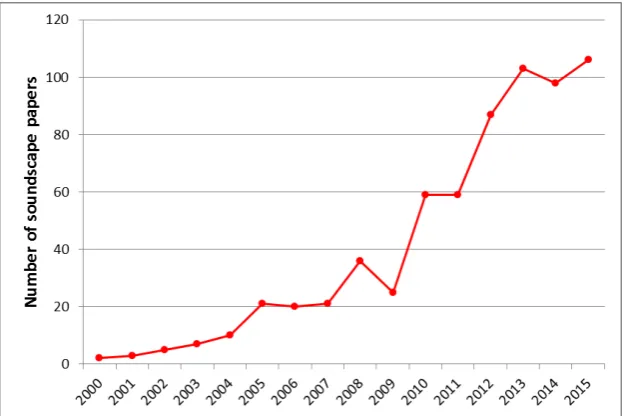
Figure 1 - Number of papers retrieved in the Scopus® database using ‘soundscape’ as criterion
(TITLE-ABS-KEY) in ‘Health Sciences’ and ‘Social Sciences & Humanities’ sections
Possibly, this was also in response to the requirements of the Environmental Noise Directive (European Parliament and Council, 2002) about the need to identify and
preserve ‘quiet areas’. Indeed, the European Environment Agency in its “Good practice guide” acknowledges ‘soundscaping’ as one of the strategies to identify and
manage quiet areas (European Environment Agency, 2014), thus a lot of research efforts focused on this one particular soundscape: quietness and tranquillity (e.g., Pheasant, Watts, & Horoshenkov, 2009; García, Aspuru, Herranz, & Bustamante, 2013; Brambilla, Gallo, Asdrubali, & D'Alessandro, 2013; Brambilla & Gallo, 2016).
The importance of soundscape research has been recognised by governmental organisations and national funding bodies in Europe, and a number of national research projects relating to this field carried out in Europe, such as the Noisefutures network and the associated Positive Soundscape projects funded by the UK EPSRC (Engineering and Physical Science Research Council), the Soundscape support to
health project funded by the Swedish Foundation for Strategic Environmental Research, the Eye-Hear Project - Qualitative sound maps for visualization of the
urban soundscapes, funded by the Portuguese Science and Technology Foundation,
Building and Environment, Volume XXX, 2016, Pages XX XX
Research Program on Innovation in Transport). In other parts of the world including Australia, Canada, USA, Japan, China, Hong Kong and Korea, considerable attention has also been paid to soundscape research.
Nonetheless, there is still a need to systematically provide the underpinning science and practical guidance in soundscaping. Overall, soundscape research and practice has a huge impact potential in terms of promoting public health and quality of life and conveying cultural uniqueness and diversity to our world. Moreover, the main issue in soundscape is not the focus on quiet areas but on areas where noise is used as a resource.
The ten questions presented in this paper, based on a series of workshops of the COST Action (COST TUD Action TD-0804, 2013), range from the very basic definitions underlying the emerging soundscape science, to more applied topics about how to use soundscape as a design approach for the planning and management of the built environments. Questions 1 to 4 address the issue of defining the soundscape framework and its relationships with socio-cultural contexts
and quality of life. Questions 5 and6 deal with ‘methods’ for data collection and
soundscape characterisation, while Question 7 explores how such data could be implemented into planning and design tools. Question 8 offers an historical angle on
how soundscapes can be considered part of our ‘immaterial cultural heritage’.
Eventually, Question 9 provides some insights on current best practices and test sites in soundscape studies and applications, while Question 10 aims to identify the most crucial gaps in soundscape research and set the agenda for future advancements in the field.
1. What is the definition of soundscape?
The concept of soundscape has been applied across widely diverse disciplines since the term, used by Southworth in an urban context in 1969 (Southworth, 1969), was popularized by Canadian composer, Schafer in 1977 (Schafer, 1977). Recently soundscape has been defined by the International Organization for Standardization
Building and Environment, Volume XXX, 2016, Pages XX XX
by a person or people, in context” (International Organization for Standardization,
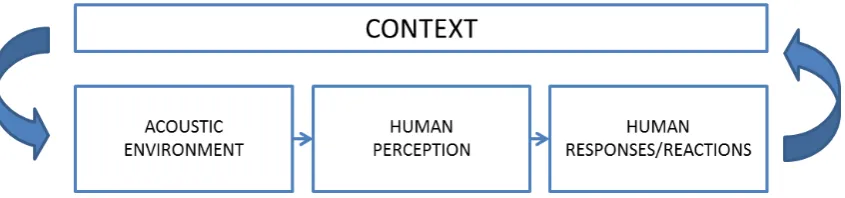
2014); ‘soundscape’ is different from ‘acoustic environment’ as the former refers to a
perceptual construct, and the latter to a physical phenomenon, while both are affected by the context, as schematised in Figure 2. Within the framework of this paper, we will refer to soundscape as defined in the ISO standard. Context is meant as the physical place where the acoustic environment exists, and according to the
ISO definition, it “includes the interrelationships between person and activity and
place, in space and time […] and may influence soundscape through (1) the auditory
sensation, (2) the interpretation of auditory sensation, and (3) the responses to the
[image:7.595.89.512.343.442.2]acoustic environment.”
Figure 2 - Elements in the perceptual construct of soundscape. Adapted from (International Organization for Standardization, 2014)
While the ISO definition provides an important, and rigorous, distinction, it is recognized that some, particularly planners, designers, lay persons, and even those primarily interested in management of the acoustic environment through
environmental noise control, will find it convenient to use “soundscape” as a
synonym for the physical acoustic environment. As long as such equivocal usage of the term soundscape does not introduce confusion in communication, we can be relaxed about the ambiguity.
The soundscape, as a perceptual construct, can also apply to the acoustic
environment in memory, to the “assumed acoustic environment” of a historic place or
Building and Environment, Volume XXX, 2016, Pages XX XX
encompassed, for example: the recording of the sounds of nature; the creation of compositions based on, or of, natural sounds; studies of the sounds heard in villages and rural environments; documentation of disappearing sounds; analysis of the way acoustic environments have been described in history and in literature; analysis and description of all types of acoustic environments; and the creation of artistic sound installations.
The term soundscape may be considered in relation to the term landscape. The European Landscape Convention Agreements (Council of Europe, 2000) defined landscape as an area, as perceived by people, whose character is the result of the action and interaction of natural and/or human factors. Substituting place for area because of the high spatial variability of the acoustic environment over any of the types of outdoor areas in which we are likely to be interested, the analogous definition of soundscape is: soundscape is the acoustic environment of a place, as perceived by people, whose character is the result of the action and interaction of natural and/or human factors. The interpretations that can be placed on the term soundscape can be as diverse as the different interpretations people already have of its namesake landscape—for example, the latter can include: landscape as geographical form; landscape as a system of physical components; landscape as both determinant and reflection of culture (painting, literature and music); landscape as a place for recreational activity; and landscape in the design activity of landscape-planning or architecture. A similar diversity applies to interpretations/applications of the soundscape term.
2. How can acoustic environments become soundscapes?
Building and Environment, Volume XXX, 2016, Pages XX XX
that are salient, attract attention and become auditory objects as the listener starts paying attention to them (Botteldooren, et al., 2015). Not only the composition of the acoustic environment determines what sounds are noticed but also the attentiveness, current activities, and expectations of the listener and its prior knowledge of the sounds that could be heard. As attention is largely multisensory and multisensory stimuli can partly be bound into a single percept even prior to attention, the visual context and visibility of the source play a significant role.
These noticed sounds are associated to a broader set of mental objects or representations, they are recognised, and become meaningful. The meaning that is given depends on prior experience of the individual or on public discourse concerning these sounds. The common experience and discourse within a society are strongly culturally loaded. As such, the meaning given to noticed sounds is both individually and culturally determined. The sounds extracted from the acoustic environment could be labelled sound marks. A few sound marks are often sufficient
to identify one’s own living environment and to give the soundscape an identity
(Oldoni, De Coensel, Bockstael, Boes, De Baets, & Botteldooren, 2015). Yet the noticed sounds are nothing more than the chords in the soundscape composition.
Building and Environment, Volume XXX, 2016, Pages XX XX
Implementing a desired soundscape matching the designer’s vision by modifying the
acoustic environment thus faces important challenges. Knowing the users and their cultural heritage is a key factor in deciding what sounds give the desired meaning. Exploiting saliency of each sound in its context, attention can then be focussed on these sounds. Finally expectation and surprise, repetition and novelty have to be explored to create a pleasurable experience. This is probably the main challenge of them all.
3. How are soundscapes related to socio-cultural backgrounds and
context?
The first and main message is that the soundscape approach is holistic, meaning that we are looking at the assessment of the acoustic environment based on the contribution from different disciplines. Moreover, soundscape is a construct of human perception, which is influenced by the socio-cultural background, as well as by the acoustic environment in context (International Organization for Standardization, 2014). Among others, the meanings of sound, the composition of diverse sound
sources, the listener’s attitude and expectations towards the acoustic environment is
most important with regard to the soundscape concept. Previous experiences of individuals with the acoustic environment are significant to completely comprehend the different perceptions and assessments of the environment. For instance, previous research shows that people who grew up in a small town will have a different understanding of sounds than people who grew up in a metropolitan area (Schulte-Fortkamp, 1994; Nitsch, 1997; Farina, 2014). Moreover the lifestyle and understanding of rules is also an important contribution with regard to socio-cultural background. Considering the socio-cultural background is important to understand the assessment of any acoustic environment.
Building and Environment, Volume XXX, 2016, Pages XX XX
to extremely natural on the other. Lercher and Schulte-Fortkamp (2003) pointed out that contributors of soundscapes include geography, climate, wind, water, people, buildings, and animals. In other words, soundscape assessments should consider other sensory systems, including visual aesthetics (visual cues), geographic, social, psychological and cultural aspects. With this in mind it becomes clear that soundscapes do more than just describing the sound level or audibility of ambient
and intrusive sounds. Indeed, response to sound depends on the listener’s mental,
social and geographical relation with the sound source and the context.
Given the strong influence from socio-cultural backgrounds and context as discussed
above, when perception is “measured”, “we are referring to a heterogeneous field of
research” (Hollstein, 2010) and among them are different forms of observation, interviewing techniques with low level of standardization (such as open-ended, unstructured interviews, partially or semi-structured interviews, guided or narrative interviews), and the collection of documents or archival records (e.g., from libraries or public repositories) is also commonly used. In spite of their differences, those
approaches all share a common ground, as advocates of the ‘interpretive paradigm’
agree on certain ideas about the nature of social reality (Hollstein, 2010). Social
reality is always a ‘meaningful’ reality, and by representing meaning, refers to a
context of action in which actors organize actions (Hollstein, 2010).
4. How are soundscapes influencing health and quality of life?
Building and Environment, Volume XXX, 2016, Pages XX XX
Epidemiologic evidence on the intrinsic positive value of areas with high acoustic quality such as green areas/wilderness/water is limited. For restoration by way of mediation, several studies (e.g., de Kluizenaar, Janssen, Vos, Salomons, Zhou, & van den Berg, 2013) showed that access to quiet in or near the home reduce annoyance at home and also has a beneficial effect on sleep quality and blood pressure. Temporary respite from exposure to unwanted environmental noise at home can mitigate the negative effects on health and wellbeing. Different features of the immediate physical environment play together: e.g., access to green space in the immediate vicinity of dwellings moderates the effect of the availability of a quiet side of the dwelling and annoyance. Also, a need for quiet space in the wider area is felt more by people who live under noisy conditions (e.g., high traffic noise equivalent levels) and by people who are noise sensitive (Booi & van den Berg, 2012). We still need to advance our understanding of the process by which these different mechanisms may operate.
Laboratory studies and controlled field experiments (e.g., (Hartig & Staats, 2003; Hartig, Evans, Jammer, Davis, & Gärling, 2003; Hartig, Mitchell, de Vries, & Frumkin, 2014) have shown repeatedly positive effects on mood, perceived quality of life and wellbeing, when subjects were exposed to predominantly natural sounds in parks, forests, urban areas, work environments or dynamic, virtual environments including both nature and sounds.
The majority of these findings may, however, have been confounded by other qualities of the experienced environment. In the rare studies, where experimental control was provided, parasympathetic activation was observed in the group subjected to sounds of nature but not in the virtual nature group without sound. These findings indicate physiological stress recovery and restoration effects by natural sounds through balancing the autonomous nervous system (Annerstedt, et al., 2013). The sustainability and repeatability of the observed effects is less clear.
Building and Environment, Volume XXX, 2016, Pages XX XX
Botteldooren, 2016). In addition, however, positive valued soundscapes were associated with higher vitality, less need for quiet and greater satisfaction with access to quiet areas (Lercher, van Kamp, von Lindern, & Botteldooren, 2015). Likewise, these studies cannot distinguish the effect sizes attributable to the sound quality from other features of the neighbourhood.
Few studies investigated systematically restorative effects. The observed findings indicate some evidence of positive effects on general health indicators when sound environments provide sufficient restorative qualities (von Lindern, Hartig, & Lercher, 2016). Even if some further knowledge on the relationship between soundscape and quality of life is still needed, future research should go towards the full integration of the wider environmental, social, psychological and ecological context to guide soundscape design in planning processes at various decision levels. The soundscape approach offers further options to improve health and quality of life under unfavourable acoustic environments at medium and smaller geographical scales (Andringa, et al., 2013).
5. How can we ‘measure’ soundscapes?
Building and Environment, Volume XXX, 2016, Pages XX XX
link between physical stimuli with their caused hearing sensations (Fastl & Zwicker, 2007). Psychoacoustic parameters, like loudness, roughness, sharpness, fluctuation strength, enable to describe the character of an acoustic environment in detail and allow relating the physical phenomenon (acoustic environment) to the perceptual construct of the acoustic environment (soundscape). Detailed information about psychoacoustic parameters including definitions, meaning and applications, can be found in Fastl and Zwicker (2007). Moreover, since the classical psychoacoustic parameters cover only basic auditory sensations, further hearing-related parameters have to be introduced to detect and characterise temporal and spectral patterns adequately. A hearing-related parameter that has shown its significance in several surveys (Fiebig, Guidati, & Goehrke, 2009) is the relative approach parameter, which is related to perceivable patterns in acoustic signals. This parameter allows for quantifying the amount of temporal and spectral patterns and largely ignores absolute values (Genuit & Bray, 2006).
While physical metrics with close connections with the human hearing are essential to characterise the acoustic environment in a perceptually relevant way, in
soundscape studies it is necessary to ‘measure’ perception, thus gathering individual
Building and Environment, Volume XXX, 2016, Pages XX XX
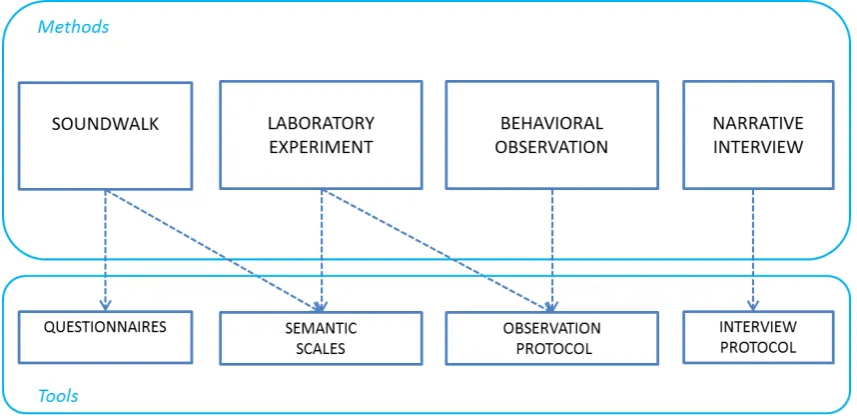
Figure 3 - Typical methods and corresponding tools to collect soundscape data. Adapted from (Aletta, Kang, & Axelsson, 2016)
Building and Environment, Volume XXX, 2016, Pages XX XX
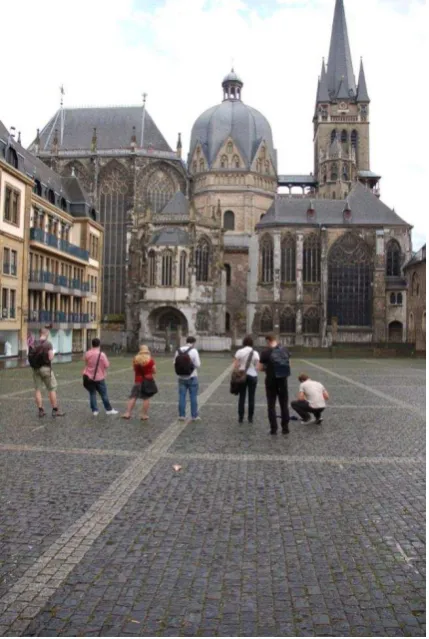
Figure 4 - Example of a soundwalk. Participants visited an urban square, listened at least three minutes to the acoustical environment and filled out an evaluation sheet (Fiebig, 2015). The
soundwalks were performed within the framework of the COST network on soundscapes
The need to measure soundscape raises the question of how to define its ‘quality’
from a perceptual point of view. It is necessary to identify and to agree on relevant soundscape descriptors and attributes to be included in questionnaires, semantic scales, and observation and interview protocols (i.e., the tools reported in Figure 3), in order to gather individual responses against those criteria.
Some studies proposed to assess soundscape quality using general descriptors for
‘soundscape quality,’ addressing the overall perception of the acoustic environment,
i.e., measuring whether a soundscape is ‘good’ or ‘bad’ (Aletta, Kang, & Axelsson, 2016). However, ‘good’ is contextual; thus, such general descriptors are not always
Building and Environment, Volume XXX, 2016, Pages XX XX
example, tranquillity has been considered, which is constructed through sensory information received by the auditory and visual modalities. A tranquil environment is one that is considered to be quiet, a peaceful place to be, i.e. a place to get away from everyday life (Pheasant, Watts, & Horoshenkov, 2009). Axelsson et al. (2010) developed a model to perform a perceptual characterisation of a soundscape. They observed two orthogonal components, pleasantness and eventfulness in the context
of soundscapes. Andringa and van den Bosch (2013) used the dimensions ‘pleasure’
(valence) and ‘activation’ (arousal) to characterise soundscapes. These dimensions
putting emphasis on emotion are linked to the appraisal of soundscapes and should be considered when collecting perceptual data.
Although several methods in the context of measuring soundscapes are widely used and established, it must be noted that research on measuring soundscape is still ongoing and this will be discussed further in Question 10.
6. How can we ‘represent’ soundscapes?
Soundscape data should be ‘visible’ and communicable. This is needed both for
characterising soundscapes that ‘already exist’ and for pre-visualising soundscapes
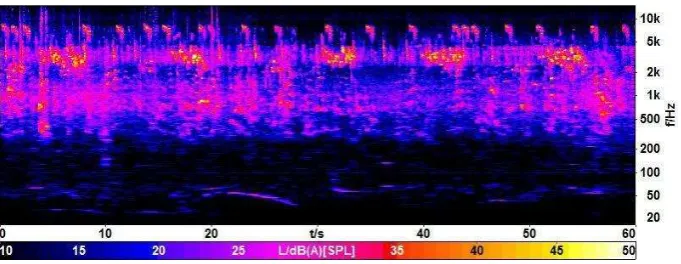
that ‘might exist’ in the future. Over the years, researchers often used spectrograms
(i.e., time vs frequency) to represent the acoustic environments (often recorded from soundwalks) in soundscape studies (e.g., Genuit & Fiebig, 2006; Semidor, 2006; Aletta, Axelsson, & Kang, 2014). While spectrograms do not represent
‘soundscapes’ on their own, they might be viable tools to inform soundscape
Building and Environment, Volume XXX, 2016, Pages XX XX
Lnight maps to be computed. Although, these only consider noise sources, and the corresponding exposures for people, but they only contain very partial and indirect
information on people’s perception of the acoustic environments and completely lack
[image:18.595.128.469.279.411.2]temporal resolution. In soundscape studies the full range of perceptible sounds in a given context at a given time is usually considered. Therefore, soundscape researchers are aiming to broaden the mapping process to other sources, both positive and negative (e.g., Hao, Kang, & Krijnders, 2015; Aletta & Kang, 2015).
Figure 5 - A spectrogram from where 'birdsong' is clearly noticeable as a sound source standing out from the background noise
In order to represent existing soundscapes, two-dimensional maps could be developed as additional layers of landscape information. For instance, attempts have
been made to map directly some soundscape dimensions (e.g. ‘calmness’, like in
Building and Environment, Volume XXX, 2016, Pages XX XX
Figure 6 - Example of ‘Calmness’ map in Brighton & Hove, UK. Adapted from (Aletta, Margaritis, Filipan, Puyana Romero, Axelsson, & Kang, 2015)
On the other hand, under a planning and design perspective, researchers have been exploring the possibility of using computer-based models, like Artificial Neural Networks (ANNs), to predict the soundscape quality evaluation of potential users in urban open spaces at the design stage (Yu & Kang, 2009). Such an approach requires large amount of data for the models to be likely to generalise and further research in this direction would be desirable.
The sounds’ meaning within the context was also shown to be an important element
in soundscape, for sounds that people notice. Therefore, an important step in mapping soundscape is mapping the sounds that users of the space are likely to
notice. A sound’s capability to attract attention depends on its characteristics, such
as changes in time and frequency, often referred to as its saliency (De Coensel, Botteldooren, De Muer, Berglund, Nilsson, & Lercher, 2009). A sound’s capability to
receive attention and to get noticed also depends on the activity of the person. For mapping models inspired by human auditory processing, the latter can only be included in a general, person-independent way. Grouping of sounds into increasingly complex auditory objects (cars becoming traffic, bird chirps becoming a dawn chorus) is an example of such a common factor that can be included in a model (Oldoni, et al., 2013).
7. How can we ‘plan’ and ‘design’ soundscapes for the built environment?
Building and Environment, Volume XXX, 2016, Pages XX XX
in the same way as visual or lightening aspects usually are. Even when noise is not a serious issue (if noise sources are not relevant), the sonic experience of the people using the place should be as enjoyable as possible, as it certainly will contribute to the overall appreciation of the site and of its quality. As discussed above, soundscape usually results from a complex structure of sounds, in their specific context. Sound components, of natural or of anthropogenic origin, will be heard and understood (except where masked), even completely or rationally identified, according to their topologies and meaning. The degree of appreciation will result from the experience of the user, from the interaction with information from all senses, and from confrontation with his/her expectations in view of the uses of the place. All these aspects will guide the soundscape planning and design.
The soundscape designer must then understand not only which sound sources
correlate well with the users’ expectations but also know the areas where the sounds
of interest should be audible. These sounds of preference have to be well identified, together with those that are unwanted. The basic key for the designer here is to put the human listener/perceiver at the centre of the listening process and consider sound perception as a measurement. Care must be taken to put the listener and his sonic interests at the forefront of the design process with his preferences and expectations according to location, human activities, and local culture.
A number of paths and criteria should be followed, each using different techniques, which fall under three main broad steps (Brown & Muhar, 2004; Bento Coelho, 2015): to define the acoustic character of the place; to plan; and to design and optimize.
Building and Environment, Volume XXX, 2016, Pages XX XX
Planning the soundscape implies planning the physical features of the environment to achieve a specific acoustic objective (Brown & Muhar, 2004) and to support the desired perceptual outcome. The planning step will thus carefully identify: the areas
of listening and the users’ itineraries; the sound components, both existing and new,
their sources and topologies; the sonic interests; and context. The dominant sounds, either wanted or unwanted, as well as time and geographical variations must be found and integrated in the plan. The sound component topologies can be defined by evaluating their limits of audibility in the whole area of interest, by perceptual measurement and mapping (Aletta & Kang, 2015). Overall, the soundscape planning stage requires the capability to anticipate to some extent what the above mentioned perceptual outcome will be. For this purpose, soundscape predictive models will be needed, which is one of the future challenges also discussed in Question 10.
By discussing possible options for soundscape management and design with stakeholders (such as residents, citizen groups, or transport authorities), planning technicians (architects, engineers, urban planners, consultants involved), and decision makers (local authorities, for example) light might be shed on the best applicable solutions and on the users expectations. Noise control measures and strategies are used to reduce or eliminate unwanted sounds where possible. Masking techniques may be adopted by making use of the psychoacoustic phenomena, by enhancing or introducing sounds of preference that will mask unwanted sound components or will divert the attention of the listener to other more pleasant sounds. When new sounds are introduced they must correlate with the place and with the human activities and expectations so as to assure overall coherence and context.
8. How are soundscapes shaping our history?
Building and Environment, Volume XXX, 2016, Pages XX XX
our ability to recognize the intrinsic value of elements that surround us is unconsciously guided by the presence of sound.
The tolling of the bells in a square, the reverberant atmosphere inside a church, the quietness sense in a cloister, the voices of the shopkeepers in a crowded historical market, the rattle of an old tram, but also the stadium chant and the yells on a recreation ground, are all examples of sound marks or iconic sounds and, as such, they are an intrinsic part of a specific context. They can stimulate our sphere of emotions and they can influence our global sensation in experiencing that specific context (Burgess & Wathey, 2000).
When for the population the feature of hearing in a scenario, now, as in the past, is important, and in some cases predominant then the soundscape of that scenario should be considered an intangible cultural element, linked to the social and cultural heritage of the community and part of our history. As a consequence, it should be preserved and valorised, just like the other artefacts (Brambilla & Maffei, 2010; Huang & Kang, 2015; Zhang, Zhang, Liu, & Kang, 2016).
In the larger scale such as the urban scale, the soundscape of a city across space, time and society, is the result of several stratified factors: human activities, transport technologies, culture, geographic position, town planning, human habits and way of life. Although processes of globalization and new technologies can change the urban soundscape making its recognition harder, this intangible element does not always lose its intrinsic characteristics as recognized and felt by the population and it becomes one of the signs of the identity of a city (Maffei, Iannace, & Lembo, 2004; Brambilla, De Gregorio, Maffei, Yuksel Can, & Ozcevik, 2007; Gómez Escobar, et al., 2012; Brambilla, Maffei, Di Gabriele, & Gallo, 2013).
In details in the same city we can recognize areas in which, although the people’s
Building and Environment, Volume XXX, 2016, Pages XX XX
2014). Besides all, the soundscape of these areas takes over and accompanies our daily life as residents and impresses us as tourists during our visits. On the other side the variety of stimuli favours the concept of mixophilia and encourages the possibility of living peacefully and happily with difference (Maffei, Brambilla, & Di Gabriele, 2015).
9. What examples of soundscape practices do we have so far?
While there are still relatively few soundscape improvement projects, some examples are available to represent a range of practical soundscape applications.
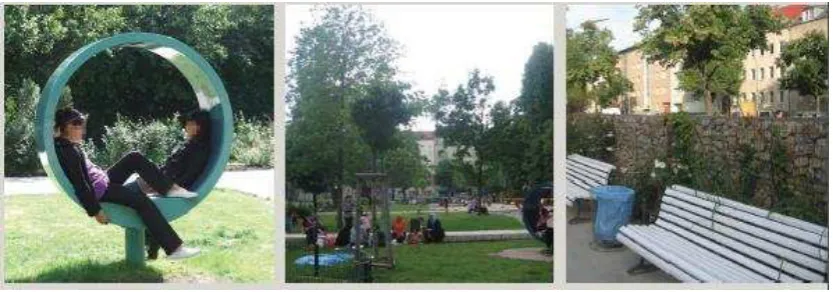
The project Nauener Platz: Remodelling for Young and Old (Schulte-Fortkamp, 2010) represents a successful implementation of the soundscape approach to the management and design of the urban sound environment. Data were triangulated through measurements on sound propagation, traffic censuses, binaural recordings, and qualitative evaluations such as soundwalks and open interviews introducing the
local experts’ perspective. The soundscape intervention included installing a gabion
wall along one of the main roads to protect against noise around the playground and
a number of ‘audio islands’ integrating sounds that people would listen to when using
the place (see Figure 7). The resulting solutions reduced residents’ exposure to low
frequency noise in Nauener Platz and provided novel approaches to enable the most wanted sounds in the area to be heard so that the desire of the residents to escape road traffic noise through hearing natural sounds was realised creating a relevant and usable green space and city park for the area. The improvement of the
residents’ soundscape experience was measured using soundwalk and narrative
Building and Environment, Volume XXX, 2016, Pages XX XX
Figure 7 - Example of the soundscape intervention in Nauener Platz, Berlin (Germany), using a gabion wall (right) to protect park goers from noise around the playground area; audio islands (left
and centre) were also installed to provide areas of restoration
A citywide approach using soundscape principles has been conducted in Brighton & Hove in the United Kingdom (Easteal, Bannister, Kang, Aletta, Lavia, & Witchel, 2014). The City Council and The Noise Abatement Society worked together on a series of demonstration projects (Lavia, Dixon, Witchel, & Goldsmith, 2015), including: West Street Story (Lavia, Easteal, Close, Witchel, & Axelsson, 2012),
West Street Tunnel (Witchel, Lavia, Westling, Healy, Needham, & Chockalingam, 2013; Lavia, Witchel, Kang, & Aletta, 2016) and Valley Gardens (Aletta & Kang, 2015). The West Street Story project was the first night noise soundscape intervention pilot: a three-dimensional curated ambient audio installation in a clubbing district. The project resulted in better crowd behaviour and reduced need for police presence in the area, which was proved through observational and body language analysis, and video footage. The West Street Tunnel project was a follow-on experiment in a pedestrian subway which had been closed due to anti-social behaviour and noise. Curated added sounds were proven to help minimise public disorder and increase feelings of safety amongst those passing through the tunnel. In the Valley Gardens project, soundscape analyses were conducted to implement the management of the acoustic environment in a broader urban regeneration scheme. The interventions helped residents to feel safer, suffer less from noise pollution, and increased a sense of social cohesion through citywide collaboration.
Building and Environment, Volume XXX, 2016, Pages XX XX
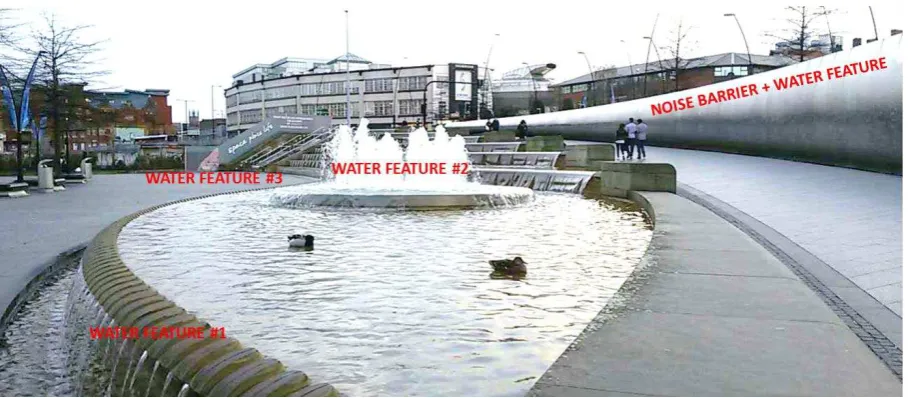
(Kang, 2012). Particularly, at the central train station, a complex system of fountains and noise barriers, as shown in Figure 8, implements a masking strategy for the traffic noise coming from the nearby major road. Different water features provide spectral variety and different frequency ranges resulting in an effective masking of the traffic noise. The interventions demonstrate the importance of utilising diversity when designing soundscapes and created spaces with a cultural meaning (the water of the fountains and the metal of the barrier stand for the river and the steel industry,
which are key symbols of Sheffield’s history) to enhance residents’ and visitors’
[image:25.595.73.528.320.519.2]enjoyment of the areas and reduced noise annoyance.
Figure 8 - Example of soundscape intervention in Sheffield (UK), using water features for masking and noise barriers for sound level reduction
A soundscape intervention was developed in St. Knuts Torg on a central square in the city of Malmö in southern Sweden (Cerwén, 2016). The intervention was organised as a quasi-experiment on an urban square, where noise barriers covered with ivy where installed and forest sounds were added through loudspeakers to form
an ‘arbour’ with an improved soundscape. One finding of the study in Malmö was
Building and Environment, Volume XXX, 2016, Pages XX XX
There have also been soundscape studies and interventions outside the urban realm, which focus more on acoustic ecology and soundscape preservation in rural and natural areas (e.g., Pheasant, Horoshenkov, Watts, & Barret, 2008; Pilcher, Newman, & Manning, 2009; Siebein & Skelton, 2009; Pijanowski & Farina, 2011). The National Park Service (NPS) in the USA has developed a comprehensive soundscape policy to be applied in its sites for the protection and management of the
parks’ acoustic environments (Miller, 2008). The policy acknowledges the
importance of preservation of the acoustic environment for both enhancing the
visitors’ experience and protecting animal communication and encompasses a broad
range of strategies, including: measuring reference acoustic conditions, limiting human-made sounds, setting acoustic management goals and objectives and how to address them by management. These projects benefit all species that interact with them, and aid the protection and conservation of soundscapes of special interest for conservation, restoration, and protection.
10. Conclusions: what are the challenges of soundscape research for the
next years?
The previous questions provided an overall picture of the current state of soundscape research and pointed out that there are still several gaps in this field that need to be addressed by researchers and practitioners.
In 2008 the International Organization for Standardization (ISO/TC 43/SC 1) established a new expert working group on soundscape (WG54) working on
“Perceptual assessment of soundscape quality”. The work of the WG 54 led to the
Part 1 of the standard discussed in Question 1 (International Organization for Standardization, 2014), which provides basic definitions and framework for soundscape research. However, Question 5 pointed out that research on methods for collecting soundscape data and ways to process them is still in progress (Brown, Kang, & Gjestland, 2011). The WG 54 is currently working on the Part 2 of the
standard, titled “Acoustics — Soundscape — Part 2: Data collection”. This will
Building and Environment, Volume XXX, 2016, Pages XX XX
perceptual data collection, both on site (e.g. soundwalks) and off site (e.g. laboratory experiments). Thus, more studies about the optimisation of soundscape data collection in an ecologically valid way that does not disturb the usual context of perceiving the acoustic environment are desirable, as there are relatively few studies dealing with these methodological aspects of soundscape research (Payne, Davies, & Adams, 2009; Axelsson, Nilsson, & Berglund, 2009; van Kempen, Devilee, Swart, & van Kamp, 2014).
It is still not clear what kind of analysis is best to use for soundscape data. Over the years, researchers have sought correlations between physical and perceptual data (e.g., Lercher & Schulte-Fortkamp, 2003; Brambilla, Gallo, & Zambon, 2013; Rychtáriková & Vermeir, 2013). However, such correlations are not necessarily useful per se. In order to use soundscape data to inform planning and design, it is also essential to involve all related stakeholders but also to solve the soundscape
‘predictability’ issue. Thus, more effort should be directed to developing predictive
models for the perception of the acoustic environment starting from physical features of the environment, according to a descriptor-indicator(s) framework (Aletta, Kang, & Axelsson, 2016). On the one hand, this might provide actual operative ‘tools’, closing
the gap between soundscape research, policy-making, and design practice; on the other hand, predictive models can also provide further insights into the origins of the perceptual constructs. As mentioned in the introduction, numerous studies have
investigated the ‘calmness’ dimension of soundscape and several models have been
proposed to predict this construct using physical indicators (e.g., Watts, Miah, & Pheasant, 2013; Brambilla & Gallo, 2016). However, other dimensions of soundscape might be more relevant in different contexts, like urban streets or commercial districts (Yu, Kang, & Ma, 2016). Therefore, there is a need to agree on what kind of descriptors (i.e., perceptual dimensions) are more suitable for what kind of contexts, and for this purpose further semantic scales should be developed and standardised.
Question 7 addressed the ‘soundscape design’ topic, which is possibly the most
relevant for the built environment practitioners. While one could argue that
perception itself cannot be ‘designed’, it is true that the built environment can be
Building and Environment, Volume XXX, 2016, Pages XX XX
corresponding soundscape) of a place has been characterised as discussed in
Question 5, the design process can start. According to the different ‘acoustic
objectives’ (Brown & Muhar, 2004) several design strategies might be proposed. For
instance: using water features to mask unwanted sounds (as discussed in the introduction); exploiting the saliency (as discussed in Question 2) of wanted sounds (e.g., birdsong in urban parks) to provide attentional masking; exploiting non-acoustical (e.g., visual) factors to modulate perception of both wanted and unwanted sounds; controlling the characteristics of unwanted sounds to make them less noticeable. In cases where poor acoustic design is pre-existing added sounds or music may be the most pragmatic soundscape design intervention (Eastel, Bannister, Kang, Aletta, Lavia, & Witchel, 2014), but active systems (e.g., loudspeakers) should not be the default solution in urban public spaces or act as a substitute for good design. For this reason, there is a need to investigate more systematic design strategies for soundscape which can be sustainable and integrated in long term planning for the future of urban areas.
Overall, soundscape research needs more scientific evidence of its potential to promote healthy urban environments through cognitive restoration. This will help to disseminate the outcomes from soundscape research and eventually to integrate this scientific field in the broader framework of policy-making and urban planning.
Acknowledgements
The authors are grateful to all those involved in the COST TUD Action TD-0804 Soundscape of European Cities and Landscapes.
References
Adams, M., Bruce, N., Cain, R., Jennings, P., Cusack, P., Hume, K., et al. (2008). Soundwalking as methodology for understanding soundscapes. Proceedings of the Institute of Acoustics Spring Conference . Reading.
Building and Environment, Volume XXX, 2016, Pages XX XX
Aletta, F., & Kang, J. (2015). Soundscape approach integrating noise mapping techniques: a case study in Brighton, UK. Noise Mapping, 2(1), 1-12.
Aletta, F., Axelsson, Ö., & Kang, J. (2014). Towards acoustic indicators for soundscape design. Proceedings of the Forum Acusticum 2014 Conference. Krakow.
Aletta, F., Kang, J., & Axelsson, Ö. (2016). Soundscape descriptors and a conceptual framework for developing predictive soundscape models. Landscape and Urban Planning, 149, 65-74.
Aletta, F., Margaritis, E., Filipan, K., Puyana Romero, V., Axelsson, Ö., & Kang, J. (2015). Characterization of the soundscape in Valley Gardens, Brighton, by a soundwalk prior to an urban design intervention. Proceedings of the Euronoise 2015 Conference. Maastricht.
Alves, S., Estévez-Mauriz, L., Aletta, F., Echevarria-Sanchez, G. M., & Puyana Romero, V. (2015). Towards the integration of urban sound planning in urban development processes: the study of four test sites within the SONORUS project. Noise Mapping, 2(1), 57-85.
Andringa, T. C., & van den Bosch, K. A. (2013). Core affect and soundscape assessment: fore- and background soundscape design for quality of life. Proceedings of the Internoise 2013 Conference. Innsbruck.
Andringa, T. C., Weber, M., Payne, S. R., Krijnders, J. D., Dixon, M. N., v.d. Linden, R., et al. (2013). Positioning soundscape research and management. Journal of the Acoustical Society of America, 134(4), 2739-2747.
Annerstedt, M., Jönsson, P., Wallergård, M., Johansson, G., Karlson, B., Grahn, P., et al. (2013). Inducing physiological stress recovery with sounds of nature in a virtual reality forest - results from a pilot study. Physiology & Behavior, 118, 240-250.
Asdrubali, F. (2014). New frontiers in environmental noise research. Noise Mapping, 1, 1-2.
Axelsson, Ö., Nilsson, M. E., & Berglund, B. (2009). A Swedish instrument for measuring soundscape quality. Proceedings of the Euronoise 2009 Conference. Edinburgh.
Building and Environment, Volume XXX, 2016, Pages XX XX
Bento Coelho, J. L. (2015). Approaches to urban soundscape management, planning, and design. In J. Kang, & B. Schulte-Fortkamp (Eds.), Soundscape and the Built Environment. Boca Raton: CRC Press.
Booi, H., & van den Berg, F. (2012). Quiet Areas and the Need for Quietness in Amsterdam. International Journal of Environmnetal Research and Public Health, 9(4), 1030-1050.
Botteldooren, D., Andringa, T., Aspuru, I., Brown, A. L., Dubois, D., Guastavino, C., et al. (2015). From Sonic Environment to Soundscape. In J. Kang, & B. Schulte-Fortkamp (Eds.), Soundscape and the Built Environment. Boca Raton: CRC Press.
Brambilla, G., & Gallo, V. (2016). QUIETE: a scheme for a new index of the environmental quality of green areas. Noise Mapping, 3(1), 49-58.
Brambilla, G., & Maffei, L. (2010). Perspective of the soundscape approach as a tool for urban design. Noise Control Engineering Journal, 58(5), 532-539.
Brambilla, G., De Gregorio, L., Maffei, L., Yuksel Can, Z., & Ozcevik, A. (2007). Comparison of the Soundscape in the historical centres of Istanbul and Naples. Proceedings of the Internoise 2007 Conference. Instanbul.
Brambilla, G., Gallo, V., & Zambon, G. (2013). The Soundscape Quality in Some Urban Parks in Milan, Italy. International Journal of Environmental Research and Public Health, 10, 2348-2369.
Brambilla, G., Gallo, V., Asdrubali, F., & D'Alessandro, F. (2013). The perceived quality of soundscape in three urban parks in Rome. Journal of the Acoustical Society of America, 134(1), 832-839.
Brambilla, G., Maffei, L., Di Gabriele, M., & Gallo, V. (2013). Merging physical parameters and laboratory subjective ratings for the soundscape assessment of urban squares. Journal of the Acoustical Society of America, 134(1), 782-790.
Brown, A. L., & Muhar, A. (2004). An approach to the acoustic design of outdoor space. Journal of Environmental Planning and Management, 47(6), 827-842.
Brown, A. L., Kang, J., & Gjestland, T. (2011). Towards standardization in soundscape preference assessment. Applied Acoustics, 72, 387-392.
Building and Environment, Volume XXX, 2016, Pages XX XX
Burgess, C., & Wathey, A. (2000). Mapping the soundscape: church music in English towns, 1450–1550. Early Music History, 19(1), 1-46.
Cassidy, T. (1997). Environmental Psychology. London, UK: Psychology Press.
Cerwén, G. (2016). Urban soundscapes: a quasi-experiment in landscape architecture. Landscape Research, DOI: 10.1080/01426397.2015.1117062.
COST TUD Action TD-0804. (2013, March 22). Publications. (J. Kang, K. Chourmouziadou, K. Sakantamis, B. Wang, & Y. Hao, Eds.) Retrieved April 15, 2016, from COST TUD Action TD-0804 Soundscape of European Cities
and Landscapes:
http://soundscape- cost.org/index.php?option=com_content&view=article&id=62:final-e-book-published&catid=32:publications&Itemid=9
Council of Europe. (2000). European landscape convention. Florence: European Treaty Series.
Davies, W. J. (2013). Editorial to the Special issue: Applied soundscapes. Applied Acoustics, 74, 223.
De Coensel, B., Botteldooren, D., De Muer, T., Berglund, B., Nilsson, M. E., & Lercher, P. (2009). A model for the perception of environmental sound based on notice-events. Journal of the Acoustical Society of America, 126(2), 656-665.
de Kluizenaar, Y., Janssen, S. A., Vos, H., Salomons, E. M., Zhou, H., & van den Berg, F. (2013). Road Traffic Noise and Annoyance: A Quantification of the Effect of Quiet Side Exposure at Dwellings. International Journal of Environmnetal Research and Public Health, 10(6), 2258-2270.
Dzhambov, A. M., & Dimitrova, D. D. (2014). Urban green spaces' effectiveness as a psychological buffer for the negative health impact of noise pollution: A systematic review. Noise & Health, 16(70), 157-165.
Easteal, M., Bannister, S., Kang, J., Aletta, F., Lavia, L., & Witchel, H. (2014). Urban Sound Planning in Brighton and Hove. Proceedings of the Forum Acusticum 2014 Conference. Krakow.
Eastel, M., Bannister, S., Kang, J., Aletta, F., Lavia, L., & Witchel, H. (2014). Urban Sound Planning in Brighton and Hove . Proceedings of the Forum Acusticum 2014 Conference. Krakow.
Building and Environment, Volume XXX, 2016, Pages XX XX
European Parliament and Council. (2002). Directive 2002/49/EC relating to the
assessment and management of environmental noise. Brussels: Publications
Office of the European Union.
Farina, A. (2014). Soundscape Ecology: Principles, Patterns, Methods and Applications. Dordrecht: Springer.
Fastl, H., & Zwicker, E. (2007). Psychoacoustics - Facts and Models (3rd ed.). Berlin, Germany: Springer Verlag.
Fernandez Álvarez, D., Pascale, A., Masullo, M., Maffei, L., & Puyana Romero, V. (2014). The value of the cloisters in Naples' historical city centre as quiet and restorative places. Proceedings of the Tecniacustica 2014 Conference. Murcia.
Fiebig, A. (2015). Acoustic environments and their perception measured by the soundwalk method. Proceedings of the Intrenoise 2015 Conference. San Francisco.
Fiebig, A., Guidati, S., & Goehrke, A. (2009). Psychoacoustic evaluation of traffic noise. Proceedings of the NAG-DAGA 2009 Conference. Rotterdam.
García, I., Aspuru, I., Herranz, K., & Bustamante, M. T. (2013). Application of the methodology to assess quiet urban areas in Bilbao: case pilot of QUADMAP. Proceedings of the Internoise 2013 Conference. Innsbruck.
Genuit, K., & Bray, W. (2006). Dynamic acoustic measurement techniques considering human perception. Proceedings of the ASME International Mechanical Engineering Congress and Exhibition. Chicago.
Genuit, K., & Fiebig, A. (2006). Psychoacoustics and its Benefits for the Soundscape Approach. Acta Acustica United with Acustica, 92(1-1), 1-7.
Gómez Escobar, V., Barrigón Morillas, J. M., Rey Gozalo, G., Vaquero, J. M., Méndez Sierra, J. A., Vílchez-Gómez, R., et al. (2012). Acoustical environment of the medieval centre of Cáceres (Spain). Applied Acoustics, 73(6-7), 673-685.
Hao, Y., Kang, J., & Krijnders, J. D. (2015). Integrated effects of urban morphology on birdsong loudness and visibility of green areas. Landscape and Urban Planning, 137, 149-162.
Building and Environment, Volume XXX, 2016, Pages XX XX
Hartig, T., Evans, G. W., Jammer, L. D., Davis, D. S., & Gärling, T. (2003). Tracking restoration in natural and urban field settings. Journal of Environmnetal Psychology, 23(2), 109-123.
Hartig, T., Mitchell, R., de Vries, S., & Frumkin, H. (2014). Nature and Health. Annual Review of Public Health, 35, 207-228.
Hollstein, B. (2010). Qualitative approaches to social reality: the search for meaning. In J. Scott, & P. J. Carrington (Eds.), The SAGE Handbook of Social Network Analysis. London/New Dehli: SAGE.
Huang, L., & Kang, J. (2015). The sound environment and soundscape preservation in historic city centres—the case study of Lhasa. Environment and Planning B: Planning and Design, 42, 652-674.
Huron, D. (2006). Sweet anticipation: Music and the psychology of expectation. Cambridge, MA: MIT Press.
International Organization for Standardization. (2014). ISO 12913-1:2014 Acoustics — Soundscape — Part 1: Definition and conceptual framework. Geneva: ISO.
Jeon, J. Y., Hong, J. Y., & Lee, P. J. (2013). Soundwalk approach to identify urban soundscapes individually. Journal of the Acoustical Society of America, 134(1), 803-812.
Kang, J. (2012). On the diversity of urban waterscape. Proceedings of the Acoustics 2012 Conference. Nantes.
Kull, R. C. (2006). Natural and urban soundscapes: the need for a multi-disciplinary approach. Acta Acustica united with Acustica, 92(6), 898-902.
Lavia, L., Dixon, M., Witchel, H. J., & Goldsmith, M. (2015). Applied soundscape practices. In J. Kang, & B. Schulte-Fortkamp (Eds.), Soundscape and the Built
Environment. Boca Raton: CRC Press.
Lavia, L., Easteal, M., Close, D., Witchel, H. J., & Axelsson, Ö. (2012). Sounding Brighton: practical approaches towards better Soundscapes. Proceedings of the Internoise 2012 Conference. New York.
Lavia, L., Witchel, H. J., Kang, J., & Aletta, F. (2016). A preliminary soundscape management model for added sound in public spaces to discourage anti-social and support pro-anti-social effects on public behaviour. Proceedings of the
DAGA 2016 Conference. Aachen.
Building and Environment, Volume XXX, 2016, Pages XX XX
Lercher, P., & Schulte-Fortkamp, B. (2003). Soundscape and community noise annoyance in the context of environmental impact assessments. Proceedings of the Internoise 2003 Conference, (pp. 2815-2824). Seogwipo.
Lercher, P., van Kamp, I., von Lindern, E., & Botteldooren, D. (2015). Perceived soundscapes and health-related quality of life, context, restoration, and personal characteristics. In J. Kang, & B. Schulte-Fortkamp (Eds.), Soundscape and the Built Environment. Boca Raton: CRC Press.
Liu, J., Kang, J., & Behm, H. (2014). Birdsong As an Element of the Urban Sound Environment: A Case Study Concerning the Area of Warnemünde in Germany. Acta Acustica united with Acustica, 100, 458-466.
Liu, J., Kang, J., Luo, T., Behm, H., & Coppack, T. (2013). Spatiotemporal variability of soundscapes in a multiple functional urban area. Landscape and urban Planning, 115, 1-9.
Maffei, L., Brambilla, G., & Di Gabriele, M. (2015). Soundscape as part of the cultural and natural heritage. In J. Kang, & B. Schulte-Fortkamp (Eds.), Soundscape and the Built Environment. Boca Raton: CRC Press.
Maffei, L., Iannace, G., & Lembo, P. (2004). Noise levels prediction in cities with an ancient urban structure. Proceedings of the Internoise 2004 Conference. Prague.
Miller, N. P. (2008). US National Parks and management of park soundscapes: A review. Applied Acoustics, 69, 77-92.
Nitsch, W. (1997). Quer zu den Disziplinen: Beiträge aus der Sozial-, Umwelt- und Wissenschaftsforschung. (W. Nitsch, B. Schulte-Fortkamp, U. Loeber-Pautsc, D. Sterzel, W. Neddermann-Klatte, & F. Riess, Eds.) Hannover: Offizin- Verlag Hannover.
Oldoni, D., De Coensel, B., Bockstael, A., Boes, M., De Baets, B., & Botteldooren, D. (2015). The acoustic summary as a tool for representing urban sound environments. Landscape and Urban Planning, 144, 34-48.
Oldoni, D., De Coensel, B., Boes, M., Rademaker, M., De Baets, B., Van Renterghem, T., et al. (2013). A computational model of auditory attention for use in soundscape research. Journal of the Acoustical Society of America, 134(1), 852-861.
Building and Environment, Volume XXX, 2016, Pages XX XX
Pearce, M. T., & Wiggins, G. A. (2012). Auditory Expectation: The Information Dynamics of Music Perception and Cognition. Topics in Cognitive Science, 4, 625-652.
Pheasant, R. J., Horoshenkov, K., Watts, G., & Barret, B. T. (2008). The acoustic and visual factors influencing the construction of tranquil space in urban and rural environments tranquil spaces-quiet places? Journal ofthe Acoustical Society of America, 123(3), 1446-1457.
Pheasant, R., Watts, G., & Horoshenkov, K. (2009). Validation of a Tranquillity Rating Prediction Tool. Acta Acustica united with Acustica, 95, 1024-1031.
Pijanowski, B. C., & Farina, A. (2011). Introduction to the special issue on soundscape ecology. Landscape Ecology, 26(9), 1209-1211.
Pilcher, E. J., Newman, P., & Manning, R. E. (2009). Understanding and managing experiential aspects of soundscapes at Muir Woods National Monument.
Environmental Management, 43, 425-435.
Rychtáriková, M., & Vermeir, G. (2013). Soundscape categorization on the basis of objective acoustical parameters. Applied Acoustics, 240-247.
Schafer, R. M. (1977). The tuning of the world. New York, NY: Knopf.
Schulte-Fortkamp, B. (1994). Geräusche beurteilen im Labor. Düsseldorf: VDI-Verlag.
Schulte-Fortkamp, B. (2010). The daily rhythm of the soundscape “Nauener Platz” in
Berlin. Journal of the Acoustical Society of America, 127, 1774.
Schulte-Fortkamp, B., & Dubois, D. (2006). Preface to the special issue: Recent Advances in Soundscape Research. Acta Acustica United with Acustica, 92, I-VIII.
Schulte-Fortkamp, B., & Kang, J. (2013). Introduction to the special issue on soundscapes. Journal of the Acoustical Society of America, 134(1), 765-766.
Semidor, C. (2006). Listening to a city with the soundwalk method. Acta Acustica united with Acustica, 92(6), 959-964.
Siebein, G. W., & Skelton, R. (2009). Soundscape documentation of parks and natural areas. Journal of the Acoustical Society of America, 126, 2308.
Sörqvist, P. (2016). Grand Challenges in Environmental Psychology. Frontiers in Psychology, 7, doi: 10.3389/fpsyg.2016.00583.
Building and Environment, Volume XXX, 2016, Pages XX XX
The Whoqol Group. (1998). The World Health Organization quality of life assessment (WHOQOL): Development and general psychometric properties. Social Science & Medicine, 45(12), 1569-1585.
Truax, B. (1978). Handbook for Acoustic Ecology. Vancouver, Canada: ARC Publications.
van Kamp, I., Klæboe, R., Brown, A. L., & Lercher, P. (2015). Soundscapes, human restoration and quality of life. In J. Kang, & B. Schulte-Fortkamp (Eds.), Soundscape and the Built Environment. Boca Raton: CRC Press.
van Kempen, E., Devilee, J., Swart, W., & van Kamp, I. (2014). Characterizing urban areas with good sound quality: Development of a research protocol. Noise & Health, 16(73), 380-387.
Van Renterghem, T., & Botteldooren, D. (2016). View on outdoor vegetation reduces noise annoyance for dwellers near busy roads. Landscape and Urban Planning, 148, 203-215.
von Lindern, E., Hartig, T., & Lercher, P. (2016). Traffic-related exposures, constrained restoration, and health in the residential context. Health & Place, 39, 92-100.
Watts, G., Miah, A., & Pheasant, R. (2013). Tranquillity and soundscapes in urban green spaces - predicted and actual assessments from a questionnaire survey. Environment and Planning B: Planning and Design, 40, 170-181.
Witchel, H., Lavia, L., Westling, C. E., Healy, A., Needham, R., & Chockalingam, N. (2013). Using body language indicators for assessing the effects of soundscape quality on individuals. Proceedings of the AIA-DAGA 2013 Conference. Merano.
World Health Organization. (1999). Guidelines for Community Noise. Geneve: World Health Organization.
World Health Organization. (2011). Burden of disease from environmental noise. Copenhagen: WHO Regional Office for Europe.
Yang, W., & Kang, J. (2005). Acoustic comfort evaluation in urban open public spaces. Applied Acoustics, 66, 211–229.
Yu, B., Kang, J., & Ma, H. (2016). Development of Indicators for the Soundscape in Urban Shopping Streets. Acta Acustica united with Acustica, 102, 462-473.
Building and Environment, Volume XXX, 2016, Pages XX XX
Zhang, D., Zhang, M., Liu, D., & Kang, J. (2016). Soundscape evaluation in Han Chinese Buddhist temples. Applied Acoustics, 111, 188-197.