AEROBIC EXERCISE AND SLEEP
by
lain Montgomery B. Psych . (W.A.), M.A. (Tas. ) in the Department of Psychology
Submitted in fulfilment of the requirements of the degree of Doctor of Philosophy
University of Tasmania .
December, 1986 -414.
sleep duration. Restorative theories hypothesize that exercise creates a need for restoration, with a concommitant increase in SWS and' sleep duration; while the energy conservation hypothesis holds that sleep, and SWS in particular, is a state of energy conservation, such that, any increase in energy expenditure caused by exercise should result in an increase in these components of sleep. Exercise may be acute (a particular exercise session), or chronic (physical fitness due to habitual exercise). Accordingly the effects of exercise on sleep may be consequence of a particular exercise session, or physical fitness.
The present literature does not show clear support for a facilitative effect of exercise on SWS or sleep duration. There is evidence however, that the effect of exercise may depend on the fitness and age of the subjects and the intensity and duration of the exercise. This thesis reports three experiments designed to assess the hypothesised facilitative effect of exercise on SWS and sleep duration in young and older fit subjects under varying conditions of intensity and duration of exercise.
compared across 4 conditions: a no exercise condition, a one hour walk, a one hour run, and a 6 hour walk. In the second, the sleep of four groups of subjects, 10 younger fit and 10 younger unfit subjects (average age 22 years), and 12 older fit and 9 older unfit subjects (average age 41 years) was compared under no exercise conditions, and the sleep of the fit subjects was compared under a no exercise and a severe (11 hour training run) exercise condition. Finally, in the third experiment, the sleep of 8 marathon runners (average age 40.75 years) was studied following a no exercise condition, a 11 hour training run and a competitive marathon.
The results indicated that exercise did not increase SWS or sleep duration in any condition in any experiment. Instead, the second and third experiments indicated that intense exercise disrupts sleep. In the second experiment aerobic fitness in both age groups was associated with increased SWS, decreased sleep onset latency, and a tendency to increased sleep duration. This latter result replicates and extends previous findings of the effects of fitness on sleep.
There are three people to whom special acknowledgement is due following the completion of this work, John Trinder, Susan Paxton and Joan Montgomery. I am indebted to John for his skilful, tactful and supportive supervision. To Susan who originally invited me to participate in research in this area, and has provided much encouragement and practical support over the years, thanks. And, thanks to Joan who gave support to the project, criticized the draft manuscripts and tolerated the many evenings and nights I spent away
from
home.While the responsibility for planning and running the experiments is mine, sleep research frequently involves considerable teamwork. I thank John Trinder, Susan Paxton, Geoff Fraser, and Jill Newman for their assistance in running subjects, and scoring and analysing data. I also thank Jan Beidleman, Tony Harris and Ian Colrain for running subjects, and Max Meaney and Gus Koerbin for their assistance with the cortisol data.
The advice and assistance of John Davidson with the statistics is much appreciated.
I am grateful to Robin Hood who helped with the recruitment of the runners, and to Kerry Volker who helped recruit unfit subjects.
I appreciate the work of Sue Ross and Jenny Dunbabin who helped in the preparation of the manuscript and of Ian Colrain and Heather Williams for help in the preparation of the figures.
ABSTRACT • • • • • • • • • • • • • • • • • • • • • • • • • • •
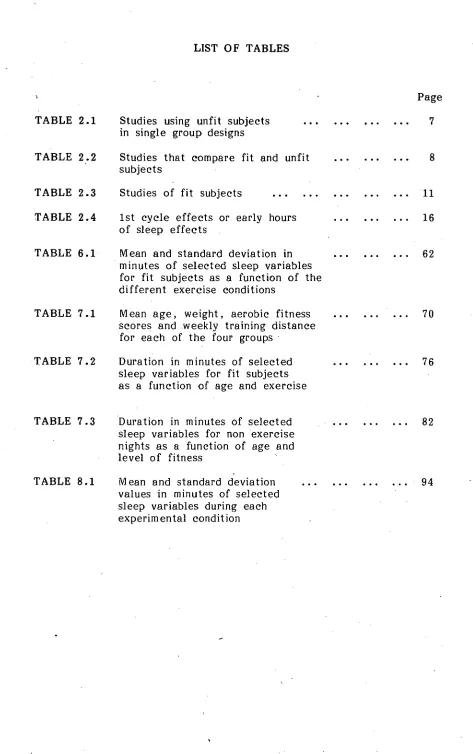
ACKNOWLEDGEMENTS • • • • • • • • • • • • • • • • • • • • • • • • TABLE OF CONTENTS • • • • • • • • • • • • • • • • • • • • • • • • LIST OF TABLES • • • • • • • • • • • • • • • • • • • • • • • • ' • • •
LIST OF FIGURES ... • • • • • • • • • • • • • • • • • • • • • • • •
Page iv vi xi CHAPTER 1 CHAPTER 2
INTRODUCTION ... • • • • • • • •
THE EFFECT OF EXERCISE AND PHYSICAL FITNESS ON SLEEP
• • • • • • • • • • • • • • • • • • • 1 4 The Exercise Effect ... • • • • • • • • • • • • 4 Fitness • • • • • • • • • • • • • • • • • • 5
Age ... • • • • • • • • • • • • • • • • • • • • • 10
Sex • • • • • • • • • • • • • • • • • • • • • 10 Intensity and Duration of Exercise • • • • • • 12 Time of Exercise • • • • • • • • • • • • • • • 14 1st Cycle Effects • • • • • • • • • • • • • • • 14 The Fitness Effect • • • • • • • . • ... • • • 17 Conclusion • • • • • • . • • • . • • • • • • • • • • 18 CHAPTER 3 THEORIES OF SLEEP: RESTORATION AND
ENERGY CONSERVATION • • • • • • • • • • • • 19 Restorative Theories • • • • • • • • • • • . • • • 19 Bodily Restorative Theories • • • • • • • • • • • • 20 Central Nervous System (CNS) . • • • • • • • • • • • 27 Restorative Theories
Feinberg's Central Restorative Theory • • • 27 Home's Restorative View • • • • • • • • • • • • 28
Energy Conservation ... • • • • • • • • • • • • • • • 32
Gross Physiological Responses • • • • • • • • •
of Exercise
Energy Metabolism • • • • • • • • • • • • • • • • • •
• • • 38
38
Recovery . . . • • • • • • • • • • • • • • • • • • • • • 42 Training Effects • • • • • • • • • • • • • • • • • • 43 Hormonal Adaptations to Exercise • • • • • • • • • ' 45 Age Effects • • • • • • • • • • • • • • • • • • • • • 47 Coriclusions • • • • • • • • • • • • • • • • • • • • • 48
CHAPTER 5 AGE AND SLEEP • • • • • • • • • • • • • • 50
CHAPTER 6 EXPERIMENT 1 ••• ••• ••• ••• • • • 55 THE EFFECTS OF INTENSITY AND DURATION OF
EXERCISE ON THE SLEEP OF FIT MALE SUBJECTS Method• • • • • • • • • • • • • • • • • • • • • • • • 56
Subjects • • • • • • • • • • • • . . . • • • • • • 56
Design • • • • • • • • • • • • • • • • • • • • • 57 Procedures • • • • • • • • • • • • • • • • • • 58 Results • • • • • • • • • • • • • • • • • • • • • . . . 60
Discussion • • • • • • • • • • • • • • • • • • • • • 64
CHAPTER 7 EXPERIMENT 2 • • • • • • • • • • • • . . • ... 66 THE EFFECTS OF EXERCISE AND AEROBIC
FITNESS ON THE SLEEP OF YOUNG AND OLDER ADULTS
Method • • • • • • • • • • • • • • • • • • • • . 68 Subjects • • • • • • • • • • • • • • • • • • • • • 68
Design • • • • • • • • • • • • • • • • • • • • • 69
Subjects and Design • • • • • • • • • • • • • • • 89 Assessment Procedures • • • • • • • • • • • • 90 Results• • • • • • • • • • • • • • • • • • • • • • • • 92
Discussion • • • • • • • • • • • • • • • • • . • • • 97
CHAPTER 9 DISCUSSION AND CONCLUSIONS . • • • • • • ... 101 The Exercise Effect ... • • • • • • • • • • • • ... 105
The Fitness Effect • • • • • • • • • • • • • • • ... 105
Theoretical and Methodological • .• • • • • 106
Implications
REFERENCES ... • • • • • • • • • • • • • • • • • • • • . ... 111
APPENDIX 1 QUESTIONNAIRES
Evening Questionnaire • • • • • • • • • • • • • • • 127 Morning Questionnaire • • • • . • • • • ... 128
APPENDIX 2 PUBLICATIONS ... • • • • • • • • • • • • • • • ... 129
APPENDIX 3 TABLES
Table 1 • • • • • • • • • • • • •• • • • ... 143
•• • • • • • • • 7
•• • • • • •• • 8
•• • •• • ... 11
• • • • • • 16
• • • • • • ... 62
• • • • • • ... 70
•• • • • . ... 76
•• • •• • 82
[image:10.551.41.514.58.812.2]•• • • • • •• • 94 TABLE 2.1 Studies using unfit subjects • • •
in single group designs
TABLE 2.2 Studies that compare fit and unfit subjects
TABLE 2.3 Studies of fit subjects • • • • • • TABLE 2.4 1st cycle effects or early hours
of sleep effects
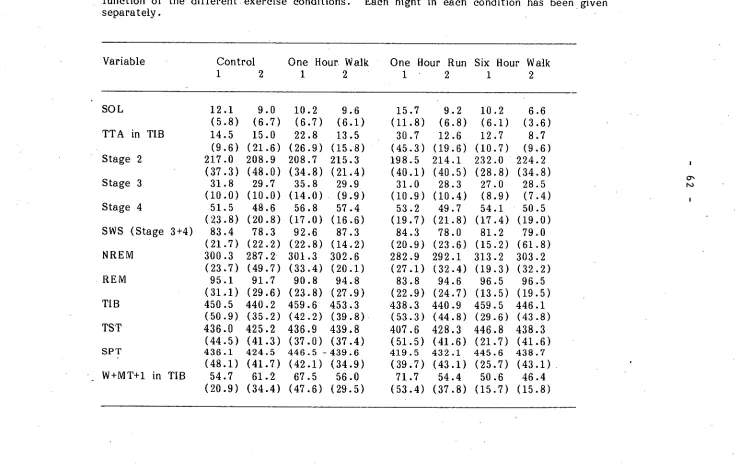
TABLE 6.1 Mean and standard deviation in minutes of selected sleep variables for fit subjects as a function of the different exercise conditions
TABLE 7.1 Mean age, weight, aerobic fitness scores and weekly training distance
for each of the four groups TABLE 7.2 Duration in minutes of selected
sleep variables for fit subjects as a function of age and exercise
TABLE 7.3 Duration in minutes of selected sleep variables for non exercise nights as a function of age and level of fitness
TABLE 8.1 Mean and standard deviation • • • values in minutes of selected
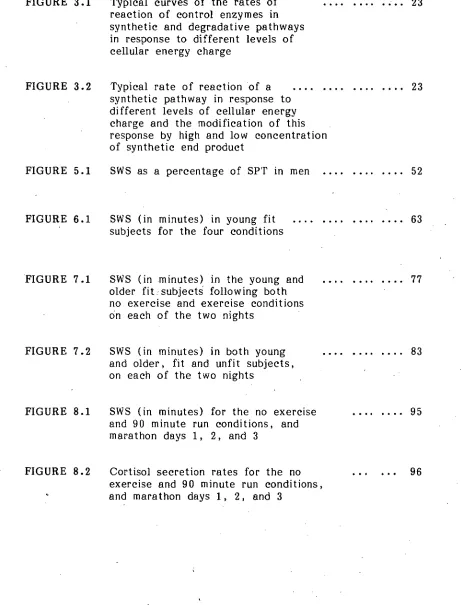
LIST OF FIGURES
FIGURE 6.1 SWS (in minutes) in young fit .... subjects for the four conditions
FIGURE 7.1 SWS (in minutes) in the young and • older fit subjects following both
no exercise and exercise conditions on each of the two nights
FIGURE 7.2 SWS (in minutes) in both young • and older, fit and unfit subjects, on each of the two nights
FIGURE 8.1 SWS (in minutes) for the no exercise and 90 minute run conditions, and marathon days 1, 2, and 3
FIGURE 8.2 Cortisol secretion rates for the no exercise and 90 minute run conditions, and marathon days 1, 2, and 3
• • • • • • . .... .... Page 23 23
•• • • • •• •• •• 52
.... 63
•.• • • .. .... 77
•• • • • .• •• •• 83
• • •. •• •• 95
• • • •• • 96 FIGURE 3.1 Typical curves of the rates of
reaction of control enzymes in synthetic and degradative pathways in response to different levels of cellular energy charge
FIGURE 3.2 Typical rate of reaction of a .... • synthetic pathway in response to
different levels of cellular energy charge and the modification of this response by high and low concentration of synthetic end product
Sleep is a mystery and a wonder to most of us, even, or especially, to sleep researchers, and as we understand more about sleep the experience of sleep will remain mysterious for many. As a scientific problem sleep will provide us with different puzzles. It represents the culmination of many processes and as a consequence there are many theories about sleep, and about the functions of sleep. Such theories range in level from the fine grained biochemical and neuroanatomical to those concerned with the psychological effects and the physiological characteristics of sleep. In this latter case sleep characteristics such as amount of sleep are often thought to be related to the organisms' adjustment to its environment. This thesis is a study in the latter area. It concerns the relationship between aerobic exercise and sleep, and addresses the immediate effect of an exercise session on sleep, and the effect of fitness on sleep.
between exercise and sleep. Experimental studies of the effects of exercise on sleep are reviewed in chapter 2. The empirical complexities of the relationships between exercise and sleep are explored, and the empirical rationale for the experiments reported in subsequent chapters are introduced.
In considering the effects of exercise on sleep there is a need to take into account a variety of complex processes. These include the physiological effects of exercise and how these may effect sleep, and the effects of age on sleep. Our understanding of these processes and their relevance in the context of the thesis is described in chapters 4 and 5: Chapter 4 discusses relevant exercise physiology including the effects of exercise, the effects of training, and the effects of exercise and training with age. Chapter 5 is concerned with the changes in sleep that occur with age. This is particularly relevant because of the age range of the subjects used in the experiments reported in chapters 6, 7 and 8.
system but not
for restorative
processes of bodily functioning. One approach to the study of both restorative and energy conservation theories has been to study any changes in sleep following exercise. The ideas that sleep allows bodily restorative processes to take place, and that sleep might also fulfil energy conservation roles are central to the development of this thesis, and it is work based on these notions that is reported here. The theoretical views of restoration and energy conservation and their relevance to sleep and exercise are discussed in chapter 3. The issues concerned with the demonstration of an exerciseCHAPTER 2
THE EFFECT OF EXERCISE AND PHYSICAL FITNESS ON SLEEP
Restorative theories of sleep and the notion that exercise has a facilitative effect on sleep especially on slow wave sleep (SWS) have an intertwined history such that the search to define a facilitative effect on sleep has been an important element in the search for support for bodily restorative theories of sleep. Originally at least, bodily restorative theory predicted that exercise increases the amount of SWS and perhaps the total amount of sleep. Baekeland and Lasky (1966) showed such a SWS effect in fit subjects, and suggested the differentiation between the effects of an exercise session (an exercise effect) and the effects of fitness (a training or regular exercise effect) on sleep. In the first section of the chapter it is proposed to consider the empirical support for a facilitative effect of exercise on SWS and sleep duration, while in the second section the effects of physical fitness will be evaluated.
The Exercise Effect
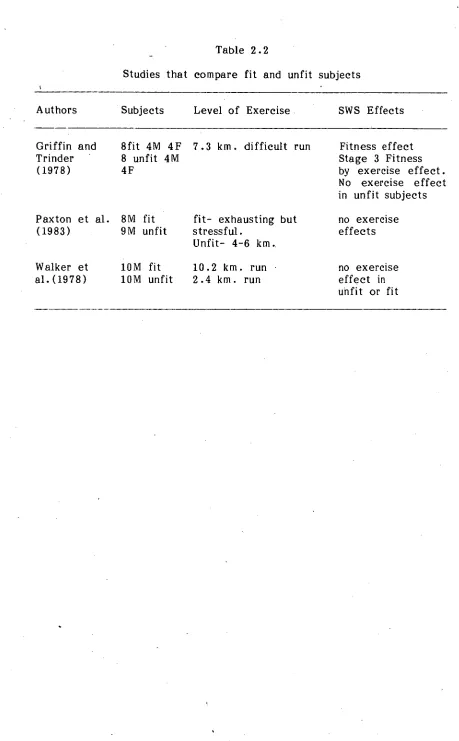
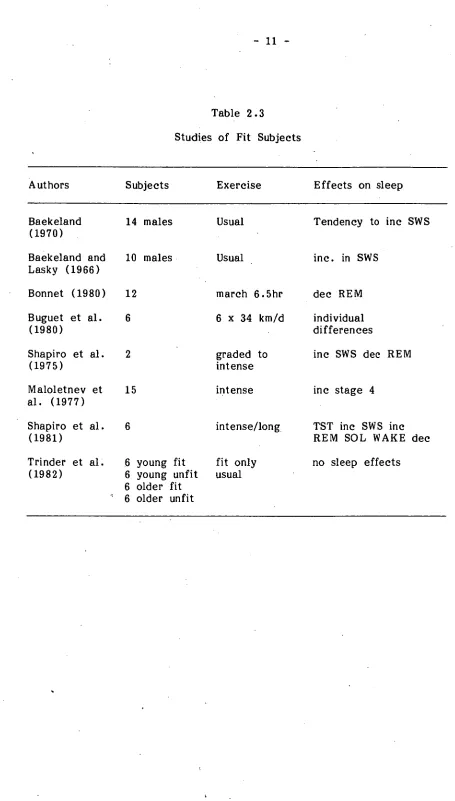
Of the experiments that have considered the effects of exercise on sleep relatively few have managed to show an effect of exercise on SWS or the amount of sleep. Of the experiments reported in Tables 2.1, 2.2 and 2.3, only about 25% of the studies have found clear cut effects, although some others have shown ambiguous, or small effects. It is possible that these findings may be a consequence of the exercise effect being dependent on other factors such as:
fitness, age, sex,
and exercise variables such as:
the intensity and duration of exercise, and time of day of exercise.
Fitness
Of the variables mentioned above one that captured initial interest as an explanation for conflicting findings was the fitness of the subjects. Griffin and Trinder (1978) confirmed the speculation of Baekeland and Lasky (1966) demonstrating that fit subjects after an afternoon's exercise session had an increase in stage 3 sleep (although not a significant increase in total SWS) and a decrease in the latency to SWS, while unfit subjects did not show such an effect.
and 2.2) which used unfit subjects, four demonstrated such effects: one (Bunnell, Bevier & Horvath, 1983) demonstrated an increase in SWS, Browman (1980) showed an increase in 1st cycle SWS and a decrease in sleep onset latency (SOL), Horne and Porter (1975) showed an increase in stage 3 of sleep in the 1st cycle and one showed an increase in total sleep time (TST) (Zir, Smith & Parker, 1971). The remaining . eight studies showed either no exercise effects or detrimental effects.
In sum, unfit subjects do not normally show an exercise effect. Where unfit subjects evinced facilitatory effects of exercise on sleep this might be a function of variables such as the type of exercise used, or sex of the subjects. The effect of these variables will be considered later.
- 7 -
Table 2.1
Studies using Unfit Subjects in Single Group Designs
Authors Subjects Level of Exercise Sleep Effects
Adamson 12M et al.(1974) 5 fit
7 unfit* 19-31 yrs Browman and 9M
Tepas (1976) 19 yrs Browman 4M 3F (1980) 19-22 yrs
more than usual
light dynamic
20 km. on bicycle erg. Static at 40% V02 max 2 X 40 min sessions
no effect
SOL inc. REM Lat inc. SOL dec
1 st cycle SWS inc
SWS inc. Bunnell, 4M 5F
(1983)' dynamic to volitional exhaustion
min Desjardins 6M
et al.(1974)
Hauri (1968) 15M Horne and 8M Porter (1975)
high intensity and low intensity exercise 6 hrs strenuous 45% V02 max for 85 on bicycle erg.
REM % dec both conditions
no effects stage 3 inc in 1st cycle
Paxton et 14M 1OF light to medium hard no sleep effects al.(1982) 4 groups varied across groups
(Expt.1) Zir et al.
(1971) 10M light exercise in 5 medium exercise in 5 inc in mean TST
* subjects treated as a single group.
Table 2.2
Studies that compare fit and unfit subjects
Authors Subjects Level of Exercise SWS Effects
Griffin and 8fit 4M 4F 7.3 km. difficult run Fitness effect
Trinder 8 unfit 4M Stage 3 Fitness
(1978) 4F by exercise effect.
No exercise effect in unfit subjects Paxton et al. 8M fit fit- exhausting but no exercise
(1983) 9M unfit stressful. effects Unfit- 4-6 km.
Walker et 10M fit 10.2 km. run • no exercise al.(1978) 10M unfit 2.4 km. run effect in
by increased sleep onset latency (SOL) (Browman and Tepas, 1976), decreased rapid eye movement (REM) (Desjardins, Healey and Broughton, 1974; Shapiro et al., 1975; Bonnet, 1980; Shapiro et al., 1981), delayed REM latency (Browman and Tepas, 1976) and increased wake time (Shapiro et al, 1981). Such disturbances in sleep may be due to physiological arousal, blisters, muscle and joint soreness and discomfort induced by metabolic changes and insufficiencies including dehydration following considerable physical effort. Conditions producing disturbed sleep may also mask potential increases in SWS and sleep duration. If so this would account for the greater success rate with fit subjects as they Would be less likely to be stressed by exercise.
The data of Buguet, Rousse11, Angus, Sabiston and Radomski, (1980) whose results related sleep architecture to adrenocortical steroid secretion are consistent with this interpretation. They showed that an increase in the secretion of these hormones would decrease stage 3 of sleep and that fit and healthy male subjects could be differentially affected by prolonged sub-maximal exercise. In four of the Buguet et al. (1980) subjects there was a stage 3 increase as an effect of exercise with no change in steroid secretion and in the other two subjects an increase in steroid secretion with no increase in stage 3 of sleep. In the latter two subjects the increase in steroid secretion may indicate an increase in arousal or a stress effect of the exercise.
fit subjects about half the reported studies, managed to show such a SWS
effect. The reason for the conflicting results may lie in the stress
effects of the exercise, or it may be due to the confounding of exercise
with some other variable or variables.
Age
In all of the studies thus far reported only one (Trinder et al.,
1982) used older subjects. This study failed to show an exercise effect
and one possible explanation for this conflicting result is that older
subjects may have their sleep disrupted by exercise. Trinder et al.
(1982) compared the sleep of fit and unfit subjects from two age groups,
one younger (mean age 22.0), and one older (mean age 31.8), following
conditions of exercise and non exercise. Their data suggests that while
the fit subjects spent more time in bed and had a longer sleep period
time, the older fit subjects spent more of this extra time either awake,
or in relatively disturbed sleep. The findings imply a limitation on the
age at which exercise. may effect sleep, and in view of the implications
including theoretical, experimental and medical, replication of the study
seems most desirable.
Sex
In the total sleep and exercise literature there are only four studies
which have used female subjects (Browman, 1980; Griffin and Trinder
1978; Trinder et al., 1982; Bunnell et al., 1983). Two of these studies
report that women show greater facilitative effects of exercise on sleep
Authors Subjects Exercise Effects on sleep Baekeland (1970) Baekeland and Lasky (1966) Bonnet (1980) Buguet et al.
(1980)
Shapiro et al. (1975)
Maloletnev et al. (1977) Shapiro et al.
(1981)
Trinder et al. (1982)
6
2 graded to
intense
15 intense
6 intense/long
6 young fit fit only 6 young unfit usual 6 older fit
' 6 older unfit
Tendency to inc SWS
inc. in SWS
dec REM
inc SWS dec REM
inc stage 4
TST inc SWS inc REM SQL WAKE dec no sleep
effects
14 males Usual
10 males Usual
12 march 6.5hr
[image:24.549.42.497.0.801.2]Trinder has recently reanalysed the data from Griffin and Trinder (1978) (Trinder, personal communication) and this indicates that women show increased SWS following exercise compared to men. However in Trinder et al. (1982) there was only one woman in each group of 6 subjects, and separate data was not reported for these subjects.
As noted by Bunnell et al. (1983) the results of studies on female subjects need to be pursued, since the findings from three out of four experiments suggest that female subjects may be more susceptible to facilitative effects of exercise on sleep. Further, in future experiments using both men and women subjects the data should be analysed separately for men and women in order to avoid possible confounding.
Intensity and Duration of Exercise
The total amount of exercise used in a particular experiment can be viewed as a product of the duration of the exercise and the intensity or rate of energy expenditure. These two factors have not been varied independently, though, on the basis of across study comparisons, Horne
(1981) has suggested that the rate of energy expenditure might be the more critical factor in producing a facilitative effect of exercise on SWS.
(Shapiro et al. , 1975; Maloletnev et al., 1977; Shapiro et al. , 1981). No facilitative effects were reported by Desjardins et al. (1974), but the study is more difficult to evaluate since duration and intensity of the exercise are not well described. The most direct and substantial evidence supporting the proposal derives from Shapiro et al. (1981). This study used a sample of six young distance runners, with a mean age of 21.7 years, who completed a 92 km marathon. The results show a marked increase in SWS and an increase in TST following the run.
Three studies have considered exercise of low intensity and long duration (Desjardins et al. , 1974; Bonnet, 1980; Buguet, et al., 1980). There were no overall facilitative exercise effects on SWS or sleep duration in the studies, although Bonnet reported a 1st cycle SWS ' increase and there was significant REM reduction following exercise
suggesting some sleep disturbance.
Time of Exercise
The time of day of the exercise is also potentially important in establishing an increase in SWS and sleep duration following exercise, since too great a lapse as in morning exercise may mean recovery takes place before sleep, and high arousal resulting from evening exercise may disrupt sleep. Two studies have used evening exercise only (Hauri, 1968; Desjardins et al., 1974) and each of these failed to show an exercise facilitation effect on sleep. Only two studies have varied time of day of the exercise (Baekeland and Lasky, 1966; Horne and Porter, 1975). Horne and Porter used subjects of average fitness under conditions of morning exercise and afternoon exercise. They managed to show no overall effect of time of day of exercise on sleep although they did establish an increase in stage 3 of sleep following afternoon exercise in the first half of the night. Only Baekeland and Lasky (1966) varied time of day in fit subjects, and in their study SWS was greater after afternoon exercise than evening exercise.
As far as can be assessed most other studies have used afternoon exercise. In the light of the potential confounding of an exercise effect by the time at which the exercise takes place it appears sensible to use only afternoon exercise unless studying time of exercise.
First Cycle Effects
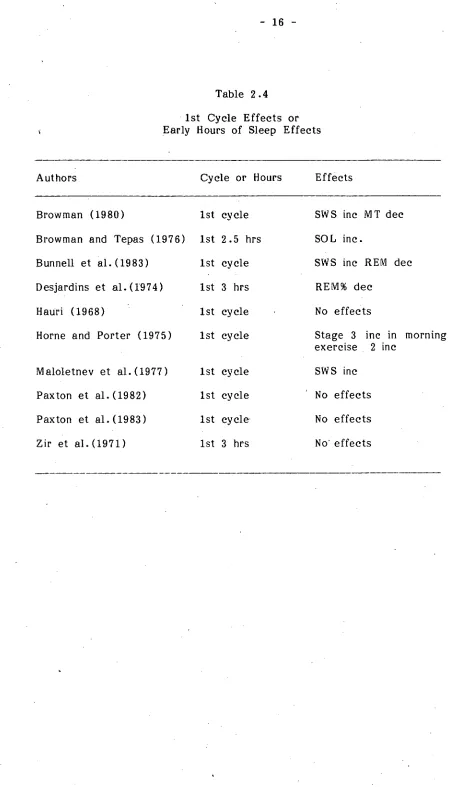
part of the night. This has lead to analyses of the 1st sleep cycle, or the 1st third or half of the night. The studies which have done such analyses are shown in Table 2.4
All of the four studies which have shown a facilitative effect of exercise on SWS early in the night used young subjects. Thus there was an increase in SWS (Browman , 1980; Bunnell et al., 1983; Maloletnev et al., 1977) and stage 3 of sleep (Horne and Porter, 1975). In two of the studies female subjects were used as part of the sample (Browman , 1980; Bunnell et al., 1983) . Further, two of the studies used intense exercise (Bunnell et al., 1983; Maloletnev et al. ,1977) .
In the remaining six studies, one indicated disruptive effects of exercise on REM sleep (Desjardin et al., 1974) , and one showed SOL increases (Browman and Tepas, 1976) . The other four studies showed no effects of exercise on early sleep. The possibility of a facilitative effect of exercise on early sleep is thus inconclusive but again is possibly masked by other factors such as the intensity of exercise and sex of the subjects.
Table 2.4 1st Cycle Effects or Early Hours of Sleep Effects
Authors Cycle or Hours Effects
Browman (1980) 1st cycle Browman and Tepas (1976) 1st 2.5 hrs Bunnell et al. (1983) 1st cycle Desjardins et al. (1974) 1st 3 hrs Hauri (1968) 1st cycle Horne and Porter (1975) 1st cycle
Maloletnev et al. (1977) 1st cycle Paxton et al. (1982) 1st cycle Paxton et al. (1983) 1st cycle Zir et al. (1971) 1st 3 hrs
SWS inc MT dec SOL inc.
SWS inc REM dec REM% dec
No effects
Stage 3 inc in morning exercise 2 inc
The Fitness Effect
As noted previously Baekeland and Lasky (1966) suggested a differentiation between the effects of exercise and the effects of fitness on sleep. This section considers effects of fitness on sleep.
There have been only a few experiments which consider the possibility that physical fitness may result in higher levels of SWS or longer sleep duration by directly comparing the 'sleep of fit and unfit subjects. Some of these studies have found more SWS in young aerobically fit athletes (Griffin and Trinder, 1978; Trinder et al., 1982; Trinder, Paxton, Montgomery and Fraser, 1985) when compared to sedentary controls although two have not (Walker et al., 1978; Paxton, Trinder, Shapiro, Adam, Oswald and Graf, 1984b).
It is possible that the failure of Walker et al. (1978) and Paxton et al. (1984b) to show higher levels of SWS in fit subjects relates to type of training, diet or other factors. Recent work indicates that fitness is only one of a number of possible related factors in SWS differences. Thus body composition (Paxton, Tinder, Montgomery, Oswald, Adam and Shapiro, 1984a; Paxton, Trinder, Shapiro, Adam, Oswald and Graf, 1984b), type of training (Trinder et al., 1985) and diet and life style factors (Paxton, Trinder and Montgomery, 1983) may effect SWS.
found that SWS and 1ST are greater in physically fit subjects. Thus it appears that physical fitness may be related to both SWS and TST but the exact nature of the relationship is not clear.
It is noteworthy that Trinder et al. (1982) failed to show the fitness effect on either SWS or TST in older subjects (mean age 31.8 years). As all other experiments considering the phenomena used young subjects this suggests that the fitness effect might be restricted to the younger age group.
In general terms it appears that physical fitness is related to SWS and to sleep duration. One possible factor influencing these finding is that of age and thus replication of Trinder et al. (1982) seems desirable.
Conclusion
CHAPTER 3
THEORIES OF SLEEP:
RESTORATION AND ENERGY CONSERVATION
The exercise studies reported in the previous chapter have been conducted because of their relevance to theories of sleep. In particular exercise has been seen as a way of evaluating two general theoretical positions: that sleep might serve the roles of restoration and/or energy conservation. The notions that sleep is restorative and that it may serve an energy conservation role are of course not mutually exclusive, indeed Baekeland and Lasky (1966) hypothesize that SWS sleep is related both to energy expenditure and to physiological restoration. Both these theoretical propositions are discussed in this chapter.
Restorative Theories
The idea that sleep is restorative appears embedded in our culture and many books and theses on sleep use an apt quote showing at least the general view among many great writers that sleep is restorative. It is only recently that such theories of sleep have been scientifically assessed, and that they have been developed to the level of sophistication that allows comparison between the theories in the laboratory.
Bodily Restorative Theories
The main proponents of this view are Hartmann (1973) and Adam and Oswald (Adam, 1980; Adam and Oswald, 1977, 1983; Oswald, 1969; Oswald, 1974; Oswald, 1980 ), although it is Adam and Oswald who have contributed most to this view in recent years.
Hartmann (1973) posits that there are two sleep requirements, one for SWS and one for REM sleep, and that each of these two types of sleep performs a different but perhaps related function. He suggests that there is a relatively unchanging need for SWS and that at least one function served by the processes occuring within this sleep form is that of anabolism especially macromolecular synthesis. In part it is proposed that the need for restoration is increased after exercise, injury and physical tiredness and consequently SWS increases. On the other hand, Hartmann (1973) hypothesizes that during REM sleep synthetic products from SWS are used in repair and restoration of synaptic connections and also in the formation of new connections in the catecholaminergic neuronal systems required for focussed attention and learning. Accordingly REM has a CNS restorative role. In general terms the notion of dual functions of sleep proposed by Hartmann is similar to that proposed by Oswald initially in 1969.
they have postulated processes by which such restoration might take place. In general it has been argued that SWS has the chief function of general bodily restitution and that REM sleep is chiefly for brain restitution (Oswald, 1969,1976). Such restitution or repair depends upon protein synthesis. Adam (1980) and Adam and Oswald (1977) postulate that the lowered external energy demands on the organism during sleep allow the build up of energy within cells and that high cell energy levels stimulate protein synthesis. Adam and Oswald (1977) argue that the rest/activity cycles in simple organisms and sleep/wake cycles in higher animals each reflect cycles in available cell energy. During wake there is a high demand for energy because of the more active behaviour. This energy demand is met by degradation of available energy sources and relatively little in the way of restoration can take place. However during sleep there is less active behaviour, a lowered energy demand on cell processes and accordingly high energy levels available to stimulate restoration and protein synthesis (Adam and Oswald,1977).
There are three factors which determine the rate of protein synthesis,
i) the availability of substrate materials through food and body stores, ii) the availability of energy for the synthetic processes, and
iii) the concentration of synthetic end products (Adam, 1980).
Of these three factors it is probably the availability of energy which is most important in their hypothesizing.
metabolic products of the release of energy from ATP. In somewhat crude terms a cell's chemical activities can be divided into those that use energy and thus deplete ATP and those that produce ATP and thus store energy. The energy charge (EC) of a cell can be measured by the relative amounts of each of ATP, ADP and AMP in the cell. The balance of the energy charge within a cell has been defined by Atkinson
(1968) as EC = (ATP + ADP/2) / ATP + ADP + AMP.
The EC varies up to unity but has an operative physiological range
of
between 0.70 and 0.95 (Atkinson, 1970). The operation of cell enzymes under conditionsof
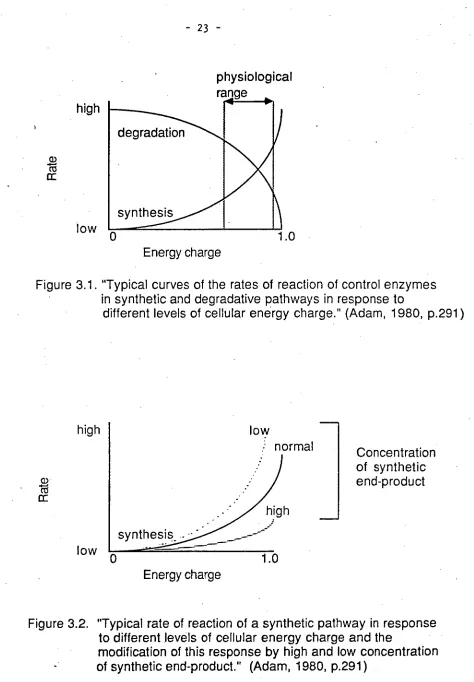
low EC values favour the production of ATP from nutritive materials and thus degradation of proteins, and when work decreases, degradation decreases and EC and ATP increase. During this later phase protein synthesis is stimulated since protein synthesis requires a high level of EC. Adam and Oswald (1983) argue that it is not that synthesis requires a lot of energy but rather that it requiresa
high level of EC. Thus as EC varies so does the operation of control enzymes in synthetic and degradative pathways as described in the following two diagrams (Figures 3.1 & 3.2; Adam, 1980).Energy charge
range
[image:37.554.44.518.24.706.2]Energy charge
Figure 3.1. "Typical curves of the rates of reaction of control enzymes
in synthetic and degradative pathways in response to
different levels of cellular energy charge." (Adam, 1980, p.291)
Concentration
of synthetic
end-product
Figure 3.2. "Typical rate of reaction of a synthetic pathway in response
to different levels of cellular energy charge and the
modification of this response by high and low concentration
of synthetic end-product." (Adam, 1980, p.291)
high
While the basis of these notions is derived from the behaviour of cells it is argued (Adam,1980) that the same principles apply in complex organisms. Accordingly, during SWS metabolic rate is at its lowest level and thus EC will be high creating the situation where there will be rapid rates of protein synthesis, anabolic repair and mitosis.
In discussion of the bodily restorative theories there is the explicit notion that restoration (and degradation) via protein synthesis takes place all the time, but that the relative proportions of degradation to restoration change such that sleep is the time of most restoration and compensates for the intensity of waking activity and that slow wave sleep is of more restorative value than stages 1 and 2 (Adam and Oswald, 1977; Adam, 1980; Oswald, 1980). Then clearly more time asleep will lead to greater restoration as will a shorter time of less responsive (or more intense) sleep. Adam (1980) postulates that during SWS there are enhanced changes in the rate of synthesis. It follows from this that an increase in SWS, or an increase in the intensity of sleep, but not necessarily in the total length of sleep will be related to greater restoration. Thus both the total sleep time and SWS need to be taken into account in restorative processes.
Adam and Oswald's restorative model predicts that any process which creates extreme depletion of energy charge would be followed by a corresponding period of considerable lowering of metabolic rate with a concommitant increase in cell energy charge, in anabolic processes and in SWSand . sleep duration.
(1980) and Oswald (1980). A summary of the major points of this evidence follows.
i) Situations of altered metabolic demands such as exercise and some abnormal physiological conditions show an increase in TST and or SW S.
a) After strenuous exercise plasma growth hormone (OH) (Adamson, Hunter, Ogunremi, Oswald & Percy-Robb, 1974) and SWS (see Chapter 2 for review) have both been found to increase.
b) During periods of fasting there is an increase in SWS and in the secretion of plasma human growth hormone (Parker et al, 1972) which is associated with anabolic repair. There is also an increase in SWS in anorexic patients undergoing refeeding and who therefore are in an anabolic state (Lacey, Crisp, Kalucy, Hartman and Chen, 1975).
c) Hypothyroid patients have markedly reduced SWS compared with normal controls (Kales, Heuser, Jacobson, Kales, Hanley, Zweizig, and Paulson, 1967) while hyperthyroid patients show excesses of SWS (Dunleavy, Oswald, Brown, and Strong, 1974). Thyroid hormone increases degradation (Adam and Oswald, 1977) and when hyper- and hypo- thyroid patients undergo corrective therapy SWS essentially returns to normal (Dunleavy, et al., 1974; Kales, et al., 1967).
and Rossman, 1969) and over 70% of daily GH release occurs during the first two hours of sleep. In general, anabolic hormones (eg growth hormone, prolactin, luteinizing hormone and testosterone) are secreted in higher quantities during sleep suggesting that growth and restoration occur primarily during sleep (catabolic hormones such as the catecholamines and corticosteroids are secreted at the highest levels during active wake times).
iii) The process of cell mitosis for growth and tissue regeneration depends upon protein synthesis and the presence of higher cellular concentrations of ATP. This process occurs at a greater rate in some animal and human tissues during the normal sleep period.
Central Nervous System (CNS) Restorative Theories
Feinberg's Central Nervous System Restorative Theory
Feinberg (1974) theorizes that sleep is a process that reverses the effects of waking activity in the central nervous system. His model is based on the following descriptive characteristics of human sleep which Feinberg views as indicative of the function of sleep.
i) Sleep is a cyclical phenomena such that SWS (including stage 2) invariably precedes REM sleep and that the two sleep forms occur in several discrete episodes instead of occuring separately and all at once.
ii) With increasing age the length of SWS becomes shorter, there is less stage 4 sleep, and the 1st REM sleep occurs earlier as SWS duration diminishes (Feinberg, 1974).
iii) The nightly decline in SWS sleep periods for children and young adults appears exponential, and the amount of SWS appears (within limits) dependent on the duration of preceding wakefulness, such that naps taken in the morning show little or no stage 4 sleep, while naps taken in the afternoon show stage 4. In addition, afternoon naps reduce the amount of stage 4 during the following night.
iv) Stage REM can be prolonged without decreasing REM the following night (Verdone, 1968; Karacan et al., 1970), and that REM seems to be able to be suppressed without obvious detriment to human subjects, thus he concludes that while 'REM appears dispensible, SWS seems essential' (Feinberg, 1974,p299).
He hypothesizes two neuronal states in developing his model : State 1 (Si) a state present at the end of sleep and State 2 (S2) a state of depletion or degradation caused by waking. The first SWS period makes a substantial conversion from S2 to Si but this process is not complete or optimal. REM however produces a substrate or cofactor substance which permits further SWS to occur and increase the level of Si. This process is repeated until optimal levels of Si are achieved and is indicated by relatively flat EEG (stage 2), a lessened duration of SWS period and perhaps other factors such as the abrupt increase in eye movements after 7 1/2 - 10 hours sleep (Aserinsky, 1969).
The Feinberg (1974) model was speculative since it was based on descriptive characteristics of sleep and offers no information about the mechanisms involved or the particular physiological processes which were being restored. However it does offer an account of the cyclical nature of sleep and sleep cycle changes through life.
Hornets Restorative View
In a series of papers (Horne, 1977, 1979, 1980, 1981, 1983) Horne argues that sleep performs a brain restorative function and that it does not have a role in bodily restoration. In particular, his conclusion that sleep does not perform a bodily restorative role is based on an analysis of a number of research areas. This analysis includes the processes involved in sleep deprivation, sleep and growth hormone release, protein turnover during sleep and the concept of energy charge, and sleep and exercise. The following points are critical to his argument.
restitution (Horne, 1978,1981). Further he notes that the effects on sleep of experimental procedures such as exercise and sleep deprivation are primarily those assessed by the sleep EEG and by implication are brain function changes.
ii) The findings from sleep deprivation studies rather than indicating bodily deficits indicate a number of psychological deficits Or
symptoms such as behavioural irritability, suspiciousness, speech slurring, visual misperceptions of a usually minor kind which reflect CNS activities (Horne, 1978; Johnson, 1969).
iii) He believes growth hormone release
in
sleep is uncertain support fora tissue restoration hypothesis of sleep (Horne, 1983) He notes that growth hormone has a number of poorly understood functions including fat mobilization, the sparing of amino acids from gluconeogenisis as well as the promotion of protein synthesis. Further the purpose of growth hormone release in sleep is not known and may differ in function between children (who are still growing) and adults.
iv) In recent studies on human subjects (Garlick, Clugston, Swick and Waterloo, 1980; Clugston and Garlick, 1982) protein synthesis was found to be stimulated by food intake. In contrast during fasting as in sleep, protein synthesis was exceeded by protein breakdown, again suggesting that sleep is not a time of bodily restoration. v) Horne (1983) argues that low metabolic rate in association with high
vi) Finally he argues that changes in sleep following exercise appear to occur only in fit subjects and that this poses a problem for the bodily restitution hypothesis since unfit subjects after exercise ought to require more restitution.
Horne (1983) concludes that the weight of evidence indicates that sleep is not a state of heightened restoration for body tissues with the possible exception of the brain. He proposes (Horne,1983) a two process view of sleep in which at sleep onset there are two sleep processes working in parallel, one of obligatory and restorative sleep oriented• towards brain restitution, and a more facultative sleep drive perhaps permitting energy conservation, safety, and occupying the hours of darkness in which activity is difficult. The former would occupy only a few hours of sleep in the early hours of the night during which SWS usually occurs, and the latter would fulfill the process of maintaining sleep length for the time imposed by season, availability of food and safety (Horne, 1983).
In support of his views Horne (1977) has argued that with the evolution of the cerebrum and increasing body size the function of mammalian sleep may have shifted toward cortical restitution and concludes that if human sleep is oriented towards brain restitution then SWS could be associated with this restitution.
Further it is also very difficult to selectively deprive subjects of SWS - it tends to be maintained under partial sleep deprivation, it has priority in make up after total sleep loss and it is the sleep state which correlates best with length of prior wakefulness. On the other hand sleep can be both extended and reduced (Horne, 1983), suggesting a facultative component to sleep which enables man to adjust to seasonal changes and other environmental effects (Horne, 1983, 1985).
Although he is not specific about the nature of brain restorative processes, Horne (1979) suggests that both SWS and REM have equally important roles to play in cortical restoration and he notes that SWS in man appears to reflect an isolation and shutdown of cerebral function suggesting a recovery phase (Horne, 1983), although it may also be the effect on the brain of a deep torpor like sleep conserving energy (Horne, 1985).
following exercise; - one because the exercise increases the need for general bodily synthetic activity following the catabolism associated with the exercise and the other because the exercise increases brain temperature and stimulates metabolic activity. However it should be noted that Home's view limits the conditions under which the effect will be observed to those which provide an adequate thermal load.
In summary Horne has suggested i) that both SWS and REM are important in cortical restitution but that SWS has an obligatory function; ii) that sleep might serve an energy conservation function. It should be noted that he has also indicated that sleep might serve to meet other demands such as safety.
Present versions of both the bodily restorative theory of Adam and Oswald and the brain restorative theory of Horne predict that SWS will increase following intense exercise and the bodily restorative theory also predicts an increase in 1ST under such conditions. In the next section it is proposed to discuss the energy conservation view of sleep which also makes predictions about the effects of exercise on sleep.
Energy Conservation
demand for energy. The hypothesis that sleep contributes to energy conservation is widely recognized (Snyder, 1966; Berger, 1975; Berger, 1:984; Walker and Berger, 1980; Zepelin and Rechtschaffen, 1974; Horne, 1977; Shapiro,1982). However the elaboration of this hypothesis has been largely due to the work of Berger (Berger, 1975; Berger, 1984; Walker
and Berger, 1980). 0
It seems likely that the complete physiological and behavioural manifestations of sleep are unique to homeotherms (birds and mammals) and perhaps evolved in parallel with homeothermy and the consequent need for energy conservation (Berger, 1975). Berger (1975) argues that sleep represents one of a continuum of processes from inactivity to estivation and torpor through to hibernation. Thus sleep could be a variation of the other dormancy processes such as hibernation, daily torpor and estivation which are thought to have evolved as energy conservation processes (Berger, 1975).
Evidence for the energy conservation view comes from phylogenetic comparisons of sleep data, and ontogenetic sleep data. Berger(1975) notes that:
ii) an ontogenetic analysis shows both that SWS develops in parallel with the capacity of the newborn to maintain a relatively constant bodily temperature and that SWS is uniquely associated with homeothermy (Walker and Berger, 1980).
iii) general activity levels, heart rate (Kleitman, 19630, body temperature and oxygen consumption (Kreider, Buskirk and Bass,1958) decrease during the course of the night in humans. In addition depth of sleep (excluding REM sleep) is inversely related to the rate of oxygen consumption (Brebbia and Altschuler, 1965). Zepelin and Rechtschaffen (1974) found a high positive correlation of 0.65 between total sleep time and metabolic rate with the implication that in animals with high metabolic rate there is a greater need for energy conservation. Accordingly such animals must have a high food intake or reduce metabolism by having inactive periods such as sleep, torpor or hibernation.
iv) sleep is highest in infancy (Williams, Karacan and Hursch, 1974) at the time of maximum growth so that it seems that sleep offers a method of energy conservation without retardation of growth (Berger,1975).
v) SWS increases in adults following starvation (Karacan, Rosenbloom, Londono, Salis, Thornby and Williams,1973; McFaydyen, Oswald and Lewis, 1973) and thus would seem to serve an energy conservation function (Berger, 1975).
Thus it is argued that SWS in particular has evolved as a period of reduced metabolism to partially offset increased energy metabolism while retaining a high enough body temperature to be able to respond to critical stimulation (Walker and Berger, 1980).
The development of this theoretical position has continued along several lines. In particular the work of Berger and Walker and their colleagues has elaborated the view that sleep is functionally related to torpor and hibernation, and hence to energy conservation (e.g. Walker and Berger, 1980). This has involved the analysis of the phylogenetic correlations between sleep and decreased metabolism and the correlation between sleep and metabolic rate within species (Berger and Walker,1980). Of particular interest are the correlations derived from available data on humans in which it is concluded that individuals with high metabolic rates sleep more than those with low rates (Walker and Berger, 1980). This is despite the prolonged periods of relaxed wakefulness enjoyed by man (Horne, 1977) and the small oxygen consumption savings (5 - 10 % drop in metabolic rate) in the sleep of man (Brebbia and Altschuler, 1965; Webb and Hiestand, 1975).
activity levels; that individual differences in sleep within a species are a function of long term energy balance and thus in part on long term activity levels; and that within species differences in sleep are a function of short term changes in activity levels. Eastman and Retchschaffen (1979) explored the latter two hypotheses. The report was an attempt to elucidate the effects of thyroxine on sleep in the rat and failed to find changes in total sleep time and activity as a result of the administration of thyroxine. They argued that while there may be interspecies differences in sleep as a function of energy demands, sleep does not appear responsive to either long term or short term variations of energy expenditure within individuals. In contrast Montgomery et al. (1982) reported an increase in sleep duration in subjects who were habitually exercising but not following short term variations in exercise patterns. These data are consistent with the view that sleep variables are Slow to respond to changes in metabolic factors (Dunleavy et al., 1974).
Summary
CHAPTER 4
PHYSIOLOGY AND EXERCISE
Exercise has complex effects on a range of bodily systems involving biochemical, physiological and anatomical processes. There are changes in the use of energy sources, in the blood and muscle chemistry, in the mechanics of heart and lung function, and in the mechanics of musculoskeletal movement. There are differences in these changes according to the type of exercise (aerobic, anaerobic or power training) and there are also long term effects which take place as a function of regular exercise and fitness. As considered in chapters 2 and 3 both exercise and fitness effects may be related to sleep, and it has been hypothesised that SWS is related to both physiological restoration and energy expenditure (Baekeland and Lasky ,1966).
Gross Physiological Responses of Exercise
Exercise begins with changes in heart function and circulation which are initiated in brain centres, probably the cerebral cortex and diencephalon (Astrand and Rodahl, 1977). Heart rate and contractility is increased, metabolic rate is increased, hormones are mobilized and body temperature is elevated. There is also a sympathetic activity increase and a corresponding parasympathetic decrease which results in skeletal muscle receiving an increased share in cardiac output, while at the same time blood flow to the kidneys, skin, and splanchnic areas is reduced, veins become constricted, the pumping action of the working muscle and action of the respiratory movements facilitates the return of blood to the heart in order to make an increased cardiac output possible (Astrand and Rodah1,1977). Blood flow in the working muscle is facilitated by local metabolic changes, and as heat is produced the blood vessels of the skin become dilated to aid in temperature balance within the body (Astrand and Rodahl, 1977). With the beginnings of exercise, pulse rate elevates very rapidly; if exercise is light or moderate a plateau is seen in thirty to sixty seconds and stays relatively constant until exercise finishes (deVries, 1980). If the work load is heavy the heart rate increases until exhaustion sets in. When exercise is complete heart rate decreases rapidly for the first two or three minutes and then decreases more slowly.
Energy Metabolism
high energy Phosphates and in so doing are split down to ADP and P (a phosphate radical). These processes are reversible and provide a cycle of events within the cell for its operations. Catabolism processes involve breaking down nutrients from their original form into simple end products and releasing energy. Anabolic processes, on the other hand, involve the restorative and synthesizing processes such as building structural storage materials and functional materials from simple materials, and consume energy. During exercise catabolic processes outweigh anabolic processes. This is thought by restorative sleep theorists to be reversed during relaxation and sleep states, such that during sleep much more anabolism takes place (Adam, 1980; Adam and Oswald, 1977; Oswald, 1980).
The rate of energy usage of an organism is called its metabolic rate and is influenced by many factors such as body temperature, environmental temperature, digestion, exercise, and psychological factors such as excitement (Thomas, 1975). During exercise well trained athletes can increase their metabolic rate up to 20 times the basal level (Thomas,1975). Knowing this response to exercise provides an important means of evaluating the effects of the exercise on the body. Measures of 02 consumption provide an estimate
of
metabolic rate and the maximal capacity of an individual to consume oxygen (V02 max) (Astrand and Rodahl, 1977). In addition such measures provide information about the energy cost of exercise and the potential performance ofan
endurance athlete.1. Anaerobic (without oxygen) energy yield occurs when the blood sugars glycogen and glucose are broken down in the absence of oxygen to pyruvic acid and lactic acid with the concomitant release of energy. This is a relatively inefficient process that occurs at times of high energy usage, as in intense exercise such that exhaustion sets in in 1 - 2 minutes or less and results in lactic acid as an end product. When lactic acid concentration becomes too high the muscle cell will cease to function until the lactic acid diffuses into tissues, fluids, and blood, and/or is converted to CO2 and water (deVries, 1980).
Recovery
Very little is known about the recovery processes following exercise expecially endurance running. Only recently Bruce (1984) noted that the recovery processes after marathons had received little attention. After strenuous work there is an energy cost over and above the energy cost of the exercise (deVries, 1980), and metabolic rate remains elevated for several hours, even up to 72 hours (Simonson, 1971, p448). However there are other difficulties in endurance exercise such as muscle soreness, tendon injuries and feelings of fatigue (Bruce, 1984). Tissue difficulties such as delayed muscle soreness are poorly understood and take up to 7 days for recovery (Armstrong,1984). Further there are complex urinary and blood changes which reflect biochemical processes which may take from some hours to up to 3 days to return to normal; Maron and Horvath (1978) indicate these may be related to salt and water retention and negative nitrogen balance similar to that following other stresses such as trauma and surgery. Thus Erickson (1983) points out that up to 5 litres of sweat can be lost during a marathon, placing severe demands on the thermoregulatory and cardiovascular systems. In replacement the athlete should be encouraged to drink (mostly water) in excess of thirst.
Training Effects
The training effects of exercise can be considered at different levels or systems including gross physiological changes, cellular changes and temperature regulation.
The physiological changes brought about by training have been summarized by deVries (1980) as follows:
1. Lowered resting heart rate.
2. Lower heart rate for any submaximal work load. 3 Greater maximal cardiac output.
4. Greater maximal stroke volume.
5. Lower ventilation equivalent that is less ventilation required per unit of oxygen utilized.
6. Greater maximal oxygen consumption.
7. Lower utilization of anaerobic energy sources for a given work load. 8. Capacity for greater oxygen debt.
9. Less displacement of physiological function by any given level of work load and faster recovery to baseline values after completion of exercise.
In addition to the adaptations that take place in various systems of the body as a function of training there are also changes that take place at a cellular level. Indeed these are the basic changes that result in systems and organ adaptations. There are essentially two types of muscle fibres, fast twitch (FT), which can work intensely and quickly, but can't sustain efficient activity, and slow twitch (ST), which work more slowly and can maintain work for a long period of time. With training there is an increase in muscle protein synthesis, with endurance training in particular causing an increase in the myoglobin and mitochondrial content of muscle cells (de Vries, 1980). This results in an increase in oxygen consumption and allows ST fibres to have increased capacity to use a variety of energy substrates (Lamb, 1984). The changes permit increased oxidation of pyruvate, fat and carbohydrate (Berger, 1982). There is also an increase in the capacity for some FT muscle fibres to engage in oxidative .metabolism (de Vries, 1980). In all the changes serve to improve aerobic performance. As skeletal muscle adapts to endurance exercise, it has greater glycogen stores, slower depletion of glycogen, lower lactate levels, and greater oxidation of free fatty acids. It follows that in endurance trained individuals, carbohydrate sparing takes place, and more fat is used for energy than in unfit individuals (Berger, 1982).
also been found that aerobic training can increase anaerobic capacity in humans (Gollnick , Armstrong, Saltin, Saubert, Sembrovich & Shepherd, 1973).
An important factor in exercise, particularly endurance events, is temperature control. Temperature regulation is located in the hypothalamus, and the process is described as acting very like a themostat in a house, such that, overheating in the hypothalamus (preoptic area) stimulates heat loss through vasodilation of the, skin and stimulation of the sweat glands (Brooks and Fahey, 1984). Extended exercise can cause an increase to over 40°C in core body temperature
(Brooks and Fahey, 1984). Endurance training improves the tolerance to high temperatures and decreases the temperature regulatory stress, enabling more efficient dissipation of heat and a decrease in the demands of the peripheral circulation (Appenzeller and Atkinson, 1983b).
In sum, training creates a more efficient and stronger organism, which uses energy more effectively, can tolerate the consequent increased body temperatures, and can dissipate the excess heat more effectively.
Hormonal Adaptations to Exercise
the catecholamines (the so called stress hormones (Schade, 1983), have all been studied for their effect on metabolism following exercise (Schade, 1983). This group of hormones is particularly important in the maintenance of blood sugars, and play an antagonistic role or counterregulatory role to that of insulin (Schade, 1983). They are also important in providing other fuels for muscle contraction, serving to spare muscle glycogen, and increase exercise tolerance,and, in a delicate balance inhibit the use of glucose by peripheral tissues, and provide adequate glucose for the central nervous system (Schade, 1983). It is inappropriate to consider these processes more than superficially, but some other brief comments on cortisol are important in the context of this thesis.
many other hormones respond to acute exercise (Lamb, 1984), since exercise constitutes a stress which affects a multitude of physiological systems.
Age effects
Ageing is a complex set of processes in which structures change, and cells and tissue function in many organ systems is reduced (Brooks and Fahey, 1984). With the current boom in endurance athletics, the development of veterans events, and the use of exercise as a preventive measure for post coronary patients, the effects of exercise and training on older athletes is of increasing interest. Relatively little has been done in the area, although added interest must have been created by the performance of Lopez in winning the 1984 Olympic Marathon at age 37.
rate, and, for example, they maintain heart rate and stroke volume at a level consistent with much younger individuals (Wright, Zauner and Cade, 1982) and show shifts in lipoprotein-cholesterol ratios which reflect reduced risk from coronary heart disease (Lobstein, Ismael and El-Naygar,1982). Further, Heath, Hagbery, Ehsani and Holloczy (1981) concluded that veteran athletes seem likely to have a decline of about 5% in V02 max per decade compared to about 9% in sedentary men. Other decrements that occur with ageing such as in pulmonary function, in the skeletal system, in joint stiffness, and in flexibility, can also be slowed by regular training (Brooks and Fahey, 1984).
Conclusions
Exercise is not a unitary phenomena, and, depending on the nature and type of exercise, it can have a wide range of physiological and biochemical effects. Exercise involves an increase in metabolic and gross physiological activity with an increase in energy output. However, response to exercise is different for unfit and fit subjects since there are differences in fuel usage, temperature regulation and tissue breakdown during exercise, and differences in recovery from exercise, and in pain and soreness following exercise. In addition exercise results in reduction of the physical decline of ageing.
CHAPTER 5
AGE AND SLEEP
The experiments reported in this thesis used subjects with a relatively wide age span, from the late teens to the mid fifties. It is therefore important to consider age changes in sleep, particularly across the age ranges of the studies.
The general trends of life span changes in sleep structure and function are known though there are some periods which have been less intensively studied. For example, in the age range from 30 to 50 years there is limited normative data available. In contrast, the sleep of the early years, particularly infancy, but also through adolescence has received the bulk of the research attention. The sleep of the old has also received considerable attention. Nevertheless, there have been only a few studies comparing sleep across age groups (eg Roffwarg et al., 1966; Feinberg, Koresko & Heller, 1967; Feinberg, 1974; Williams et al.,
1974; Blois et al., 1983).
from their report how many males and females were in each group. An excellent summary of the literature pertaining to life span sleep changes is provided by Spiegel (1981).
While sleep stage changes occur as a function of age, the general cyclical structure remains the same (Feinberg, 1974). Thus there are changes in REM sleep, in SWS (stages 3 and 4),in TST, and in sleep disturbance measures. Each
of
these will be discussed.In neonates REM sleep consists of 50 - 80 % (about 8 hours) of TST (Roffwarg et al., 1966), but this percentage reduces to about 30% by the end of the first year. Thereafter there is a slight decline in REM until REM reaches approximately 18% (about 1 hour or less) of TST in the elderly (Roffwarg et al, 1966), although this slight decline in REM in adulthood (20 - 60 years) did not occur in the Blois et al (1983) study.
SWS as a percentage of sleep period time (SPT) progresses gradually within a range
of
16-23% from infancy to the 16-19 year period, although with the decline in sleep duration during this period there is a steady decrease in the amount of time in SWS. However, SWS duration begins to decrease more sharply' once a subject reaches his 20's, and SWS constitutes on average less than 9% of SPT of a male subject in his 40's25
S
INS
as
a
p
er
ce
ntag
e
of S
PT
20
15
1
0
5
3 - 5 6 -9 10-12 13-15 16-19 20-29 30-39 40-49 50-59 60-69 70-79
Age in years
Measures of sleep duration, time in bed (TIB), SPT, and TST show similar changes in that they are highest in childhood and lowest in adulthood. Thus TST decreases between the fourth and twentieth year from about 10 hours to 71 hours sleep a night with a slight but gradual diminution of sleep thereafter (Williams et al., 1974).
Sleep disturbances increase with age. Williams et al., (1974) report that sleep efficiency (total sleep time divided by time in *bed (TST/TIB)) increases during adulthood as does number of awakenings during the night and number of stage shifts during sleep.
With the increased sleep disturbance with age, it is hardly surprising that it has been suggested that sleep is more easily disturbed by external stimuli. Zepelin (1983) has studied auditory awakening thresholds in young and middle aged adults and reports that the thresholds decline for older subjects. This decline may indicate natural changes in the sleep process, or be a related but secondary process, but, in either case it suggests that sleep diminishes in intensity and becomes more vulnerable to interruption in older subjects (Zepelin, 1983). While Zepelin has found evidence for this phenomenon with auditory awakening thresholds it has yet to be demonstrated that the sleep of older subjects is more likely to be disturbed by other factors, for example, aches and pains, and that this disturbance is a function of changes in sleep or some other related process.
the description of normal sleep for particular ages. Thus the available data indicates the trends between and within sleep stages and cycles across ages. Until there are widely accepted, rigidly structured, and highly reliable measurement and scoring procedures (probably computer conducted), there will need to be internal comparisons in age span studies.
Despite the methodological difficulties, the general effects