This paper is based on the oral presentation at the German-Thai Symposium on Nanoscience and Nanotechnology 2011—Green Nanotechnology of the
Article
H
2
Sensor Based on Au/TiO
2
Nanoparticles
Synthesized by Flame Spray Pyrolysis
Weerasak Chomkitichai
1, Nittaya Tamaekong
2, Chaikarn Liewhiran
3,
Anurat Wisitsoraat
4, Saengrawee Sriwichai
1, and Sukon Phanichphant
5,*
1 Department of Chemistry, Faculty of Science, Chiang Mai University, 239 Huay Kaew Road, Muang
District, Chiang Mai 50200, Thailand
2 Program in materials science, Faculty of Science, Maejo University, Chiang Mai 50290, Thailand 3 Department of Physics and Materials Science, Faculty of Science, Chiang Mai University, Chiang Mai
50200, Thailand
4 Nanoelectronics and MEMS Laboratory, National Electronics and Computer Technology Center,
Klong Luang, Pathumthani 12120, Thailand
5 Materials Science Research Center, Faculty of Science, Chiang Mai University, 239 Huay Kaew Road,
Muang District, Chiang Mai 50200, Thailand E-mail: [email protected]*
Abstract. TiO2 is used extensively as a gas sensing material due to its change in electrical
conductivity under analyst gas exposure. Gold (Au) is a good catalyst that promotes chemical reactions by reducing the activation energy between sensing film and particular gas. Unloaded TiO2 and TiO2 nanoparticles loaded with 0.25–0.75 at% Au were
successfully produced in a single step by Flame spray pyrolysis (FSP) technique. The structure and morphology of as-prepared products have been characterized by X-ray diffraction (XRD), transmission electron microscopy (TEM), scanning electron microscopy (SEM). TiO2 and Au-loaded TiO2 nanoparticle films were prepared by
spin-coating technique. The gas sensing of H2 was studied at the operating temperatures
ranging from 300-350°C in dry air. It was found that the TiO2 loaded with Au sensing film
showed higher response of H2, with faster response time (within second) than pure TiO2
sensing film. The response increased and the response time decreased with increasing of
H2 concentration.
Keywords: H2 , Gas sensor, Au/TiO2 nanoparticles, flame-made.
ENGINEERING JOURNAL Volume 16 Issue 3 Received 18 November 2011
Accepted 19 February 2012 Published 1 July 2012
1.
Introduction
Noble metals supported on oxides are used in many applications in the paintings, cosmetics, pharmaceuticals, ceramics, electronics, photocatalysts, and sensors. Flame spray synthesis is investigated as a method for one-step synthesis and deposition of porous catalysts onto surfaces and into microreactors [1]. FSP is described in more detail by Mäedler et al. (2002) [2]. FSP was successfully used for the preparation of pure TiO2, Zn/TiO2 [3], Fe/TiO2 [4], Au/TiO2 [5–6], Nb and Cu/TiO2 [7], Pt/TiO2 [8], WO3/TiO2 [9].
Titanium dioxide is one of the most promising candidates for gas sensor [10–12] due to its cheapness, stability and environmental safety. Titanium dioxide (TiO2) is an n-type semiconductor material [13] (anatase, Ebg = 3.2 eV ; rutile, Ebg = 3.0 eV) such that its absorption edge occurs below 400 nm [14]. The sensing properties are based on reactions between semiconductor oxides and gases in the atmosphere. These reactions produce changes in electrical properties of semiconductors, analyte detection is signaled by a change in the electrical conductivity of the sensor film [15–18].
Sensitivity of TiO2 sensors can be improved by addition of dopants such as Ta, Pt, V2O5, Li, La, Co,
Cu, Nb, Cu, Cr, Ag, Au [19–28],The most important effect of dopant addition in TiO2 is increasing the
conductivity, slowing down anatase with rutile transformation and reducing grain growth. We emphasize on the gold nanoparticles because gold nanoparticles has earned its reputation as an excellent catalyst in gas sensing performances [28–30].
Hydrogen is expected to replace conventional energy sources and promising potential fuel for buses, cars, and other vehicles. Safety is an important issue when hydrogen is used as fuel in futuristic automobiles, therefore there is need for hydrogen sensor to monitor the fuel leak. An explosive mixture can form if hydrogen leaks into the air from a valve or tank.
2.
Experimental
The unloaded TiO2 and Au-loaded TiO2 samples were prepared through a flame spray pyrolysis route using
titanium isopropoxide and Gold (III) chloride starting materials [31] as starting materials. This solution was added drop wise into a dilute ethanol solution under stirring material. The dopant concentrations in at% fraction of Au were set as 0.25%, 0.5% and 0.75%, respectively. In a typical run, the precursor is fed into a FSP reactor by a syringe pump with a rate of 5 ml/min while 5 l/min O2 was being dispersed (5/5
flame).The gas flow rates of methane and O2 supporting flamelet were 1.19, and 2.46 l/min respectively.
The pressure drop at the capillary tip was kept constant at 1.5 bars by adjusting the orifice gap area at the nozzle [32].
The phase and crystallinity were analyzed by X-ray diffraction (XRD) and high resolution transmission electron microscopy (HR-TEM). The specific surface area (SSABET) of the nanoparticles was measured by
nitrogen adsorption (BET analysis). The existence of Au was confirmed by Energy dispersive X-ray spectroscopy (EDS).
Au
Al2O3
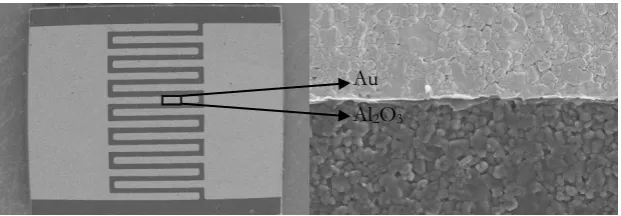
Fig. 1. SEM images were observed with different magnification of Al2O3 substrate interdigitated with Au
electrodes.
Al2O3 substrates interdigitated with Au electrodes were used as a sensor substrates presented in Fig. 1.
[image:2.595.160.471.556.664.2]90%) which acted as a vehicle binder and a solvent, respectively. The resulting paste was spin-coated on Al2O3 substrates (Semiconductor Wafer, Inc, 96%) with interdigitated Au electrodes. The electrode pattern
was made by DC sputtering of 50 nm-thick Cr and 200 nm-thick Au layers and lift-off process. The sensing films were subsequently annealed at 400oC for 2h with heating rate of 2 oC/min for binder removal. The
particle size was found to be slightly changed after annealing at 400oC [33].
The sensor characteristics of sensing films were characterized towards the high concentration of H2 gas.
The flow through technique was used to test the gas-sensing properties of sensing films. A constant flux of synthetic air of 2 L/min as gas carrier was flown to mix with the desired concentration of pollutants dispersed in synthetic air. All measurements were conducted in a temperature-stabilized sealed chamber at 20oC in dry air. The gas flow rates were precisely manipulated using a computer controlled multi-channel
mass flow controller. The external NiCr heater was heated by a regulated DC power supply to different operating temperatures. The operating temperature was varied from 250–350oC but the sensing test in this
work was performed at 300oC and 350oC. The resistances of various sensors were continuously monitored
with a computer-controlled system by voltage-amperometric technique with 10 V DC bias and current measurement through a picoammeter. The sensor was exposed to a gas sample for ~5 minutes for each gas concentration testing and then the air flux was restored for 15 min. The H2 concentration was varied from
200 to 1% in volume percentage of concentration [34].
[image:3.595.137.405.417.626.2]3.
Results and Discussion
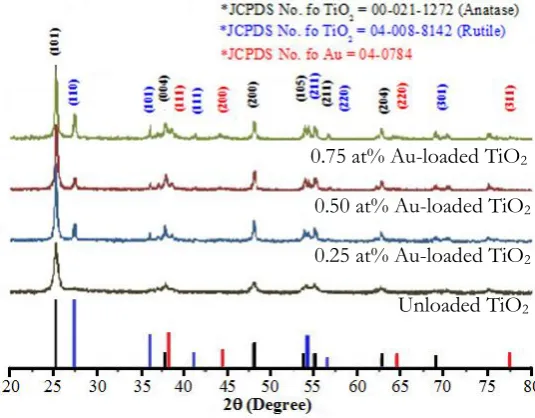
Figure 2 shows the X-ray diffraction patterns of flame-spray-made pure TiO2 and 0.25–0.75 at% Au/TiO2
nanopowders. All samples were highly crystalline, and all peaks can be confirmed to be the anatase ((101), (004), (200), (105), (211) and (204)) and Rutile ((110), (101), (111), (211) and (301)) phase of TiO2, which
matched well with the JCPDS file No. 00-021-1272 and JCPDS file No.04-008-8142 respectively. Au peaks ((111), (200), (311) and (220)) were found in these patterns (JCPDS file No. 04-0784) [35]. It can be assumed that the amount of Au concentration was very low, which affected the appearance of the Au peaks.
0.75 at% Au-loaded TiO2
0.50 at% Au-loaded TiO2
0.25 at% Au-loaded TiO2
Unloaded TiO2
Fig. 2. XRD patterns of the investigated unloaded TiO2 and Au-loaded TiO2 samples.
An average BET equivalent particle diameter (dBET) was calculated using the average density of
unloaded TiO2 and Au-loaded TiO2 as shown in Table 1. The accurate particle size and morphology of
Table 1.The specific surface area (SSABET) and dBET of unloaded TiO2 and Au-loaded TiO2 nanoparticles.
Samples Specific surface area,
SSA (m2/g)
dBET(nm)
UnloadedTiO2 154.2 10.1
0.25 at% Au-loaded TiO2 81.0 19.1
0.50 at% Au-loaded TiO2 81.4 18.7
0.75 at% Au-loaded TiO2 87.9 16.9
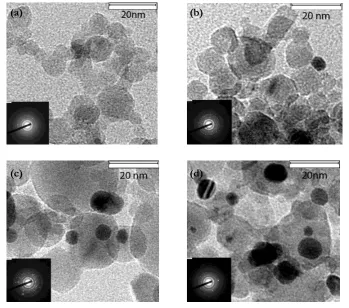
HR-TEM images of unloaded TiO2 and 0.25, 0.50, 0.75 at% Au-loaded TiO2 nanoparticles are shown
in Fig. 3. It can be seen that Au nanoparticles seen as darker spots are deposited on larger TiO2
nanoparticles. The crystallite sizes of spherical particles were found to be in the range of 10–20 nm. The existence of Au nanoparticles was shown as EDSs spectra in the insets.
(a) (b)
(c) (d)
Fig. 3. HR-TEM bright-fields image of highly crystalline flame-made of (a) unloaded TiO2, (b) 0.25at%
Au-loaded TiO2, (c) 0.50 at% Au-loaded TiO2 and (d) 0.75 at% Au-loaded TiO2 nanoparticles.
Insets show the EDS spectra of all samples.
The surface morphology image and EDS spectrum of elements for 0.75 at% Au-loaded TiO2
[image:4.595.130.480.249.557.2]Fig. 4. SEM image of the flame-made (5/5) 0.75 at% Au-loaded TiO2 nanoparticles and EDS spectrum
[image:5.595.84.497.79.187.2]for the region indicated in the cropped region.
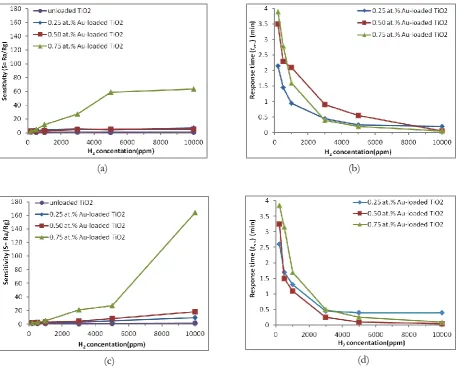
Fig. 5. Sensing performance of sensitivity and corresponding response times of unloaded TiO2 sensors
and loaded with 0.25, 0.50, 0.75 at% sensors as a function of H2 concentration in dry air at (a-b)
300°C and (c-d) 350°C. The sensitivity increased and the response times decreased with increasing H2 concentration.
In this study, the gas sensing properties of unloaded TiO2 and Au-loaded TiO2 sensing films are
characterized in terms of response, response time and recovery time as a function of operating temperature, gas concentration and Au loading. The gas-sensing response, S, is defined as:
S = Ra/Rg (for reducing gas)
(b) (a)
[image:5.595.70.530.231.597.2]where Ra is the resistance in dry air, and Rg is the resistance under a reducing gas. The response time, Tres is
defined as the time required to reach 90% of the steady response signal. The recovery times, Trec denotes
the time needed to recover 90% of the original baseline resistance.
The sensitivity and response time of the thin films of unloaded TiO2 and Au-loaded TiO2 nanoparticles
as a function of H2 concentration between 0.02 and 1 vol.% of concentration at 300 and 350°C are shown
in Fig. 5. The sensitivity increased considerably by Au-loaded TiO2 nanoparticles with 0.75 at% Au from
63.8 at 300°C to 164 at 350°C [show in Figures 5(a,c)]. Therefore, doping the TiO2 nanoparticles with 0.75
at% Au sensor at 350°C had better sensitivity than 300°C. In Fig. 5 it can be seen that the sensitivity increased considerably by Au-loaded TiO2 nanoparticles with 0.75 at% Au. The sensitivity of 164 and
response time of 0.1 min were obtained at 1 vol.% of H2 concentration for the Au-loaded TiO2
nanoparticles with 0.75 at% Au. Thus, in this study 0.75 at% Au/TiO2 showed good sensitivity for H2 gas
as compared to the other literatures. In the present study the sensitivity, however decreased considerably by unloaded TiO2 and Au-loaded TiO2 nanoparticles with 0.25 and 0.50 at% Au. The gas-sensing sensitivity, S
is defined as the ratio Ra/Rg, where Rais the resistance in dry air, and Rgis the resistance in test gas. The
response time, Tres is defined as the time required until 90% of the response signal is reached. The recovery
times, Trec denotes the time needed until 90% of the original baseline signal is recovered.
4.
Conclusions
Highly crystalline unloaded TiO2 and 0.25–0.75 at% Au-loaded TiO2 nanoparticles were prepared by Flame
spray pyrolysis. The XRD characterizations showed that unloaded TiO2, Au-loaded TiO2 nanoparticles and
their corresponding sensing films were highly crystalline with an anatase phase of unloaded TiO2 and
anatase with rutile phase of Au-loaded TiO2. HR-TEM images showed the nanoparticles having clear
spherical morphology. The crystallite sizes of spherical unloaded TiO2 and 0.25–0.75 at% Au-loaded TiO2
were found to be ranging from 10 to 20 nm. For Au-loaded TiO2 powder, small spherical Au nanoparticles
were found to disperse over the surface of TiO2 matrix and the presence of Au element was confirmed by
EDS analysis. From BET measurement, SSABET increased and dBET decreased with increasing Au
concentration from 0 to 0.75 at%. TiO2 nanoparticles loaded with 0.50 at% Au shows good H2 sensitivity
at operating temperature of 300–350°C. The H2 sensing behaviors were found to improve with Au content
of 0.75 at% but deteriorated at lower Au concentration. The sensitivity for 1vol.% of H2 concentration was
164 for 0.75 at% Au-loaded TiO2 and at 350°C. The response and recovery times were generally well within
0.1 min in the regime of high sensitivity. Thus, TiO2 nanoparticles loaded with 0.75 at% Au shows good H2
sensitivity at operating temperature of 350°C. This present study showed FSP method can control the morphology, sizes, and Au-loaded TiO2 of nanopowders using the appropriate precursor and flame
conditions. The effect of Au Au-loaded TiO2 improved H2 sensing behavior in terms of sensitivity, shorter
response and recovery times.
Acknowledgements
The authors gratefully acknowledge the financial support from the Office of the Higher Education Commission, under the program Strategic Scholarships for Frontier Research Network, Thailand. The National Research University Project under Thailand’s Office of the Higher Education Commission; the Graduate School, Department of Chemistry, Faculty of Science, Chiang Mai University, Thailand; Uttaradit Rajabhat University, Thailand and National Electronics and Computer Technology Center, Pathumthani, Thailand are gratefully acknowledged.
References
[1] S. Thybo, S. Jensen, J. Johansen, T. Johannessen, O. Hansen, and U. J. Quaade, “Flame spray deposition of porous catalysts on surfaces and in Microsystems,” J. Catal., vol. 223, pp. 271–277, 2004. [2] L. Mäedler, H. K. Kammler, R. Mueller, and S. E. Pratsinis, “Controlled synthesis of nanostructured
particles by flame spray pyrolysis,” J. Aerosol. Sci., vol. 33, pp. 369–389, 2002.
[3] Y. Zhao, C. Li, X. Liu, F. Gu, H. L. Du, and L. Shi, “Zn-doped TiO2 nanoparticles with high
[4] Z.-M. Wang, G. Yang, P. Biswas, W. Bresser, and P. Boolchand, “Processing of iron-doped titania powders in flame aerosol reactors,” Powder Technol., vol. 114, pp. 197–204.
[5] G. L. Chiarello, L. Forni, and E. Selli, “Photocatalytic hydrogen production by liquid- and gas-phase reforming of CH3OH over flame-made TiO2 and Au/TiO2,” Catal. Today., vol. 144, pp. 69–74, 2009.
[6] A. Teleki, N. Bjelobrk, and S. E. Pratsinis, “Flame-made Nb- and Cu-doped TiO2 sensors for CO and
ethanol,” Sens. Actuators B, vol. 130, pp. 449–457, 2008.
[7] G. L. Chiarello, E. Selli, and L. Forni, “Photocatalytic hydrogen production over flame spray pyrolysis-synthesisedTiO2 and Au/TiO2,” Appl. Catal B: Environ., vol. 84, no. 332–339, 2008.
[8] W. Y. Teoh, L. Mädlera, D. Beydoun, S. E. Pratsinisa, and R. Amal, “Direct (one-step) synthesis of TiO2 and Pt/TiO2 nanoparticles for photocatalytic mineralisation of sucrose,” Chem. Eng. Sci., vol. 60,
pp. 5852–5861, 2005.
[9] K. K. Akurati, A. Vital, J.-P. Dellemann, K. Michalowa, T. Graule, D. Ferri, and A. Baiker, “Flame-made WO3/TiO2 nanoparticles: relation between surface acidity, structure and photocatalytic activity,”
Appl. Catal B: Environ., vol. 79, pp. 53–62, 2008.
[10] Z. M. Seeley, A. Bandyopadhyay, and S. Bose, “Titanium dioxide thin films for high temperature gas sensors,” Thin Solid Films, vol. 519, pp. 434–438, 2010.
[11] C. Garzella, E. Comini, E. Tempesti, C. Frigeri, and G. Sberveglieri, “TiO2 thin films by a novel sol–
gel processing for gas sensor applications,” Sens. Actuators B, vol. 68, pp. 189–196, 2000.
[12] N. O. Savage, S. A. Akbar, and P. K. Dutta, “Titanium dioxide based high temperature carbon monoxide selective sensor,” Sens. Actuators B, vol.72, pp. 239–248, 2001.
[13] G. Campet, J. Verniolle, J. P. Doumerc, and J. Claverie, “Photoelectronic processes in transition-element doped n-type TiO2 electrodes,” Mater. Res Bull., vol. 15, pp. 1135–1141, 1980.
[14] N. Serpone, “Is the band gap of pristine TiO2 narrowed by anion- and cation-doping of titanium
dioxide in second-generation photocatalysts?,” J. Phys. Chem. B, vol. 110, pp. 24287– 24293, 2006. [15] I. A. Al-Homoudi, J. S. Thakur, R. Naik, G. W. Auner, and G. Newaz, “Anatase TiO2 films based CO
gas sensor: film thickness, substrate and temperature effects,” Appl. Surf. Sci., vol. 253, pp. 8607–8614, 2007.
[16] K. D. Benkstein and S. Semancik, “Mesoporous nanoparticle TiO2 thin films for conductometric gas
sensing on microhotplate platforms,” Sens. Actuators B, vol. 113, pp. 445–453, 2006.
[17] L. L. W. Chow, M. M. F. Yuen, P. C. H. Chan, and A. T. Cheung, “Reactive sputtered TiO2 thin film
humidity sensor with negative substrate bias,” Sens. Actuators B, vol. 76, pp. 310–315, 2001.
[18] D. S. Dhawale, R. R. Salunkhe, V. J. Fulari, M. C. Rath, S. N. Sawant, and C. D. Lokhande, “Liquefied petroleum gas (LPG) sensing performance of electron beam irradiated chemically deposited TiO2 thin
films,” Sens. Actuators B, vol. 141, pp. 58–64, 2009.
[19] E. Comini, M. Ferroni, V. Guidi, A. Vomiero, P.G. Merli, V. Morandi, M. Sacerdoti, G. Della Mea, and G. Sberveglieri, “Effects of Ta/Nb-doping on titania-based thin films for gas-sensing,” Sens. Actuators B, vol. 108, pp. 21–28, 2005.
[20] L. Francioso, D. S. Presicce, P. Siciliano, and A. Ficarella, “Combustion conditions discrimination properties of Pt-doped TiO2 thin film oxygen sensor,” Sens. Actuators B, vol. 123, pp. 516–521, 2007.
[21] X. Liang, T. Zhong, B. Quan, B. Wang, and H. Guan, “Solid-state potentiometric SO2 sensor
combining NASICON with V2O5-doped TiO2 electrode,” Sens. Actuators B, vol. 134, pp. 25–30, 2008.
[22] M. L. Zhang, Z. H. Yuan, and C. Zheng, “Fast response of undoped and Li-doped titania thick-films at low temperature,” Sens. Actuators B, vol. 131, pp. 680–686, 2008.
[23] A. M. Ruiz, A. Cornet, and J. R. Morante, “Performances of La–TiO2 nanoparticles as gas sensing
material,” Sens. Actuators B, vol. 111–112, pp. 7–12, 2005.
[24] A. M. Ruiz, A. Cornet, K Shimanoe, J. R. Morante, and N. Yamazoe, “Transition metals (Co, Cu) as additives on hydrothermally treated TiO2 for gas sensing,” Sens. Actuators B, vol. 109, pp. 7–12, 2005.
[25] A. Teleki, N. Bjelobrk, and S. E. Pratsinis, “Flame-made Nb- and Cu-doped TiO2 sensors for CO and
ethanol,” Sens. Actuators B, vol. 130, pp. 449–457, 2008.
[26] Z. Wen, L. Tian-mo, and L. De-jun, “Formaldehyde gas sensing property and mechanism of TiO2-Ag
nanocomposite,” Physica B, vol. 405, pp. 4235–4239, 2010.
[27] A. M. Ruiz, G. Sakai, A. Cornet, K. Shimanoe, J. R. Morantea, and N. Yamazoe, “Cr-doped TiO2 gas
sensor for exhaust NO2 monitoring,” Sens. Actuators B, vol. 93, pp. 509–518, 2003.
[28] D. Buso, M. Post, C. Cantalini, P. Mulvaney, and A. Martucci, “Gold nanoparticle-doped TiO2
[29] L. Fan, N. Ichikuni, S. Shimazu, and T. Uematsu, “Preparation of Au/TiO2 catalysts by suspension
spray reaction method and their catalytic property for CO oxidation,” Appl. Catal. A-Gen, vol. 246, pp. 87-95, 2003.
[30] T. V. Choudhary and D. W. Goodman, “Oxidation catalysis by supported gold nano-clusters,” Top. Catal, vol. 21, pp. 25–34, 2002.
[31] L. Mädler, W. J. Stark, and S. E. Pratsinis, “Simultaneous deposition of Au nanoparticles during flame synthesis of TiO2 and SiO2,” J. Mater. Res., vol. 18, no. 115-120, 2003.
[32] N. Tamaekong, C. Liewhiran, A. Wisitsoraat, and S. Phanichphant, “Ultra-rapid CO gas detection by a gas sensor based on flame-spray-made Pt/ZnO nanoparticles,” Key Eng. Mater., vol. 421–422, pp. 332– 335, 2010.
[33] T. Samerjai, N. Tamaekong, C. Liewhiran, A. Wisitsoraat, A. Tuantranont, and S. Phanichphant, “Selectivity towards H2 gas by flame-made Pt-loaded WO3 sensing films,” Sens. ActuatorsB, vol. 157,
pp. 290– 297, 2011.
[34] N. Tamaekong, C. Liewhiran, A. Wisitsoraat, and S. Phanichphant, “sensing characteristics of flame-spray-made Pt/ZnO thick films as H2 gas sensor,” Sensors, vol. 9, pp. 6652–6669, 2009.
[35] C. S. Chou, R. Y. Yang, C. K. Yeh, and Y. J. Lin, “Preparation of TiO2/Nano-metal composite