8-16-2018
Off to On: Best Practices for Online Team-Based
Learning™
Michele Clark
University of Nevada, Las Vegas
Laura Merrick
Iowa State University, [email protected]
Jennifer Styron
Eastern Virginia Medical School
Annetta Dolowitz
University of Alabama, Birmingham
Cassandra Dorius
Iowa State University, [email protected]
See next page for additional authors
Follow this and additional works at:https://lib.dr.iastate.edu/celt_pubs
Part of theEducational Assessment, Evaluation, and Research Commons,Higher Education Commons, and theOnline and Distance Education Commons
This Report is brought to you for free and open access by the Center for Excellence in Learning and Teaching at Iowa State University Digital Repository. It has been accepted for inclusion in Center for Excellence in Learning and Teaching Publications by an authorized administrator of Iowa State University Digital Repository. For more information, please [email protected].
Recommended Citation
Clark, Michele; Merrick, Laura; Styron, Jennifer; Dolowitz, Annetta; Dorius, Cassandra; Madeka, Kajal; Bender, Holly; Johnson, Janet; Chapman, John; Gillette, Meghan; Dorneich, Michael; O'Dwyer, Brian; Grogan, James; Brown, Tom; Leonard, Bruce; Rongerude, Jane; and Winter, Liz, "Off to On: Best Practices for Online Team-Based Learning™" (2018).Center for Excellence in Learning and Teaching Publications. 1.
Tom Brown, Bruce Leonard, Jane Rongerude, and Liz Winter
This work is licensed under a Creative Commons License Attribution 4.0 International License. To view a copy of this license, visit http://creativecommons.org/licenses/by/4.0/
Off to On: Best Practices for
Online Team-Based Learning™
A white paper prepared as a “pre-reading” document
for an Innovations Track workshop at the Team-Based Learning™ Collaborative (TBLC) conference, San Diego, CA, March 2018
Updated version 3: 16 August 2018; Original version: 15 January 2018
“Off to On” White Paper Coauthors
Michele Clark PhD, RN, LMFT (University of Nevada Las Vegas; Associate Professor in the School of Nursing) Laura Merrick PhD (Iowa State University; Lecturer in the Department of Agronomy in the College of
Agriculture and Life Sciences)
Jennifer Styron PhD (Eastern Virginia Medical School; Assistant Professor, Director of Teaching and Assessment in the Sentara Center for Simulation and Immersive Learning)
Annetta Dolowitz MPH, MSW (University of Alabama at Birmingham; Adjunct Professor in Collate School of Business and the School of Public Health)
Cassandra Dorius PhD(Iowa State University; Assistant Professor in Human Development and Family Studies in the College of Human Sciences)
Kajal Madeka PhD, M.Ed. (Iowa State University; Program Coordinator in the Center for Excellence in Learning and Teaching)
Holly Bender DVM, PhD, Diplomate ACVP, Clinical Pathology(Iowa State University; Associate Director of the Center for Excellence in Learning and Teaching and Professor in the Department of Veterinary Pathology in the College of Veterinary Medicine)
Janet Johnson MS, RDN, LD (Iowa State University; Senior Clinician in the Department of Food Science and Human Nutrition in the College of Human Sciences)
John Chapman PhD, MBA (Southern Virginia University; Assistant Professor of Marketing)
Meghan Gillette PhD (Iowa State University; Lecturer in the Department of Human Development and Family Studies in the College of Human Sciences)
Michael Dorneich PhD (Iowa State University; Associate Professor in Department of Industrial and Manufacturing Systems Engineering in the College of Engineering)
Brian O’Dwyer MBA(CognaLearn™*, Duke-NUS, Embry-Riddle Aeronautical University Asia; Commercial Co-founder of CognaLearn™, Adjunct Professor at Embry-Riddle Aeronautical University Asia; Entrepreneur in Residence in the Center for Technology and Development at Duke-NUS Medical School Singapore)
James Grogan PhD (Oakland University; Professor in the Department of Biomedical Sciences at the William Beaumont School of Medicine)
Tom Brown EdD, MBA (Simon Fraser University; Academic Director in the Beedie School of Business) Bruce Leonard PhD, APRN, FNP-BC, NP-C (University of Texas Medical Branch; Professor in the School of
Nursing)
Jane Rongerude PhD, MCP (Iowa State University; Assistant Professor of Community and Regional Planning in the College of Design)
INTRODUCTION
In the fall of 2014, 20.4 million American students were enrolled in higher education. Of these, 28% or 5.8 million students were taking at least some of their courses at a distance and half of those or nearly 3 million students were taking all of them at a distance (Allen, Seaman, Poulin, & Straut, 2016). According to the 2017 New Media Consortium Horizon Report, “online, mobile, and blended learning are foregone conclusions” (Adams Becker et al. 2017, p. 2) reflecting the growing numbers of students seeking more flexible schedules and learning environments. In addition, employers are demanding that higher education teach real-world skills to improve student employability and workplace development (Stavredes, 2011).
To meet these unique and evolving challenges, a number of educators are using the tenets of face-to-face Team-Based Learning™ (TBL) to improve their online courses (Clark, Corte, Currey, Leonard, & Twigg, 2017; Clark & Leonard, 2016; Dolowitz, Gunnells, Harry, Twigg, & Wech 2017). One compelling reason for this shift is because TBL uses theoretically based and
empirically grounded strategies to ensure effective small group learning (Michaelsen, Knight, & Fink, 2004). In TBL, similar to the community of inquiry (Garrison & Akyol, 2015; Garrison, Anderson, & Archer, 1999) each participant has the individual responsibility for learning while receiving collaborative support and direction from their team. When the four so-called TBL essentials (Michaelsen & Sweet, 2008) are implemented in a course, collaboration and student engagement improves learning, while increasing students’ collaborative teamwork and
problem-solving skills, while producing improved learning outcomes (Clark, Nguyen, Bray, & Levine, 2008).
The four TBL essentials are:
1. Groups must be properly formed and managed
2. Team assignments must promote both learning and team development 3. Students must receive frequent and timely feedback
4. Students must be accountable for the quality of their individual and group work
Early adopters started to implement online TBL strategies to improve the quality of online education and student learning, increase problem-solving skills, enhance social presence, as well as provide immediate student feedback. For purposes of this white paper, the Quality Matters™ (QM) Rubric for Higher Education 5th edition1 was used as a guide to ensure best
practices for developing online courses (Quality Matters, 2017). Quality Matters™ is a non-profit, quality assurance organization with the primary purpose of helping instructors use best practices in online education (Quality Matters, 2018a). Though there are a number of
1 Note that for comparison purposes throughout this paper, we specifically used the 22 February 2017
updated version of the 2014 QM Rubric for Higher Education 5th edition (Quality Matters, 2017); link to
the Non-annotated version of those specific QM Standards here or view the URL in full in the reference section of this paper. Subsequent to the writing of this paper, Quality Matters™ publicly released on 2 July 2018 the revised and updated 2018 QM Rubric for Higher Education 6th edition (Quality Matters,
evaluation rubrics for online courses (for a wide array of examples, see Baldwin, 2018), Quality Matters™ provides a national set of standards via a set of well-researched rubrics that are continuously evaluated by that organization for best online practices through peer review and continuous improvement (Baldwin, 2018; Quality Matters, 2018a). Over 1,000 studies have been reviewed for development of the QM standards, providing a solid base in research. Therefore, this paper will include these QM standards to guide the reader to prepare students and instructors to adapt TBL practices for use online.
To assist instructors in maintaining the integrity of team-based learning in an online
environment, this paper will address four critical components: orientation, readiness assurance process, application exercises and peer evaluation. With each component in Figure 1, we have identified Quality Matters™ standards that coincide with these key components (Appendix 2). Note that an enlarged version of Figure 1 is also provided as Appendix 1.
FIGURE 1.EXAMPLE OF A MODULAR PROCESS SEQUENCE RECOMMENDED FOR ADHERENCE TO BEST PRACTICES IN CONDUCTING TBL WITHIN ONLINE COURSES
ARTICULATING A SET OF BEST PRACTICES FOR ONLINE TBL
Four general areas that are integral to the implementation of any TBL class—Orientation, Readiness Assurance Process, Application Exercises, and Peer Evaluation—are covered in this paper specifically with regard to recommendations for their handling in online learning
contexts. Interactions between participants in online courses—instructors as well as students— involve a spatial dimension that is “remote” (i.e., online) as opposed to “co-located” (i.e., face-to-face) and a time dimension that can span synchronous to asynchronous modes of
engagement (Johansen, Charles, Mittman, & Saffo, 1988). Implementing TBL in an online course can therefore offer unique challenges that differ from its implementation in face-to-face
issues. The following summaries highlight the focus of each main section of the paper. Each of the main sections provides a table that associates standards from the Quality Matters™ Rubric for Higher Education 5th edition (Quality Matters, 2017) with a set of principles for best practice
of that key component stage of online TBL.
Orientation
Student orientation to the TBL learning environment and course content is often overlooked or undervalued, yet essential for success. An important component to this orientation is to link learning outcomes and objectives to course activities and assignments supported by the TBL teaching strategy. The Orientation section of this paper will review three principles for
introducing the components of course and to explain how learning is supported by online TBL.
Readiness Assurance Process
In the transition from a face-to-face TBL course, maintaining the integrity of the readiness assurance process is not necessarily straightforward. The second section of the paper reviews strategies that address unique issues needed to reimagine the process in an online context. The challenges posed for implementing the Readiness Assurance Process (RAP) online are many but attention to four key principles can assist in maintaining aspects that are essential to success.
Application Exercises
Online TBL application exercises serve the same role as their counterparts in face-to-face applications: they are designed to apply the course concepts into practice. A set of three application exercise-related best practice principles, addressed in the third section of this paper, are intended to support the highest-level objectives and aims of TBL courses
(Michaelsen et al., 2004). Two unique challenges are maintaining strong team collaboration and developing methods of simultaneous reporting in order to maintain the integrity of the
application exercises in an online environment.
Peer Evaluation
ORIENTATION
Introduction to Orientation
In the fall of 2014, one in seven American students in higher education were taking all of their courses online (Allen et al., 2016). Similar enrollments are occurring globally. However, the dropout rates in online courses are between 15–20% higher than traditional face-to-face classes (Ali & Leeds, 2009; Bawa, 2016). These online student retention challenges require educators to consider how to best prepare students for success. Once such essential activity is robust orientation to the course (Jones, 2013). Some of these activities are necessary practices for online learning contexts in general, and some are specific to TBL. Table 1 provides a list of three key “best practice” principles for implementing the Orientation phase of an online TBL course; for each of these principles, their correspondence to a set of QM standards for online higher education is noted (Quality Matters, 2017).
Principle Online TBL Best Practices QM Standards for Higher Education2
O
RIENTATIONP
RINCIPLESO-P 1: Provide student-specific information about the
course 1.1–1.6; 2.4; 3.5; 5.4; 6.4
O-P 2: Formulate teams and practice readiness assurance
and application processes 1.1; 1.2; 1.4; 2.4; 3.5; 4.2; 5.4; 6.4
O-P 3: Develop social presence with instructor and individual
student introductions 1.3; 1.5–1.9; 2.4; 3.5; 5.2–5.4; 6.4; 7.1
TABLE 1. BEST PRACTICES FOR THE ORIENTATION PHASE OF IMPLEMENTING ONLINE TBL IN CONJUNCTION WITH
QUALITY MATTERS™ STANDARDS FOR HIGHER EDUCATION 5TH EDITION
Principles of Best Practices for Orientation in Online TBL
ORIENTATION PRINCIPLE 1: Providing student-specific information about the course
Two subcategories must be included when addressing an overview of course requirements and curriculum-related content during the Orientation phase of an online TBL course (Figure 2). These subcategories correspond to the first two grey boxes in Figure 2 below.
2 For our comparison purposes throughout this paper, note that we used the 22 February 2017 updated
version of the 2014 QM Rubric for Higher Education 5th edition (Quality Matters, 2017). A copy of this
FIGURE 2.ORIENTATION PRINCIPLE 1 FOCUSES ON STUDENT-SPECIFIC INFORMATION ABOUT THE COURSE REQUIREMENTS AND CONTENT AND PROVIDES AN INTRODUCTION TO THE TBLMETHOD
Basic Course Requirements and Curricular Content
The first subcategory relates to the requirements and content of the course. Inclusion of these provides a course overview that would be standard in both face-to-face and online settings. Students need to be provided the following:
1. Understanding of the core course content
2. Overview of the course objectives and learning objectives for each course module 3. Brief description of the learning activities associated with completing the course
successfully
Technological Necessities
The second subcategory relates to the mechanics of communications among the instructor and students and technical requirements—and unlike the first category, these concerns are unique to interaction in an online environment. Five frequent questions that students have when they begin an online course must be addressed at the outset of online learning (Mastel-Smith, Post, & Lake, 2015). These important questions are:
1. What is the time and effort it takes to successfully complete an online course? 2. What are the technical skills required to function successfully in an online course? 3. How can I obtain access to software and hardware required for participation in an
online course?
In an online TBL learning environment, it is also imperative to be mindful of providing technology resources to address a range of different learning styles and also to meet
accessibility standards (Burgstahler, 2017; CAST, 2018; Dell, C. A., Dell, T. F., & Blackwell, 2015; Rose and Meyer, 2006).
Brief Introduction to the TBL Method
The third subcategory (the third gray box depicted in Figure 2) pertains to an introduction of the specific teaching strategy, TBL, which includes attention placed on explaining the tenets of the four Essentials of TBL (Michaelsen et al., 2004; Michaelsen & Sweet, 2008). Because learners may come from a vast array of education backgrounds, they may or may not have the foundational knowledge needed to comprehend the TBL strategy. When learners understand the “why” behind the design of a TBL course and how it connects with learning, they are more likely to engage in the process. When introducing TBL, the instructor needs to include a
discussion on the importance of teamwork, collaboration, communication, and critical thinking, all of which are imperative skills needed in today’s workforce (Betta, 2017; Rousseau, Aubé, & Savoie, 2006). A discussion regarding the TBL class structure (Michaelsen & Sweet, 2008) on how the TBL strategy will allow them to build, refine, and evaluate these skills when working together with different individuals will increase student buy-in to this novel teaching strategy (Clark, Nguyen, Bray & Levine, 2008; Gallegos & Peeters, 2011). Following the framework of Universal Design for Learning to accommodate diversity in learning styles among students in the course, each of these three subcategories should be included in an introductory course module, ideally through written narrative, video, and audio presentations (CAST, 2018; Dell, C. A., Dell, T. F., & Blackwell, 2015; Rose and Meyer, 2006).
ORIENTATION PRINCIPLE 2: Formulate teams and practice readiness assurance and application exercise process
Team formation is a key component of TBL and must be managed by the instructor rather than via self-selection by students (Michaelsen et al., 2004). Instructors need to devise a way to formulate teams either prior to the start of the semester or immediately upon the opening of the course. As soon as teams have been formed, team assignments need to be communicated to students to allow them to begin the team building process through student interaction online (Figure 3). Finally, the RAP and application activities must be briefly introduced as integral parts of the orientation module so that students can gain initial exposure to readiness assurance and application processes in order to understand how to complete these
FIGURE 3.ORIENTATION PRINCIPLE 2 EMPHASES THE FORMATION OF PERMANENT TEAMS BY THE INSTRUCTOR AND PRACTICE OF BOTH THE READINESS ASSURANCE PROCESS AND EXPOSURE TO AN INITIAL APPLICATION EXERCISE
Two examples of activities for team formation or application exercise practice are as follows. One would require that each team develop a team contract highlighting expectations and responsibilities of each team member. Another example would be to create an iRAT (individual RAT) and tRAT (team RAT) using the information covered in the syllabus or introductory videos presented within the orientation module. These activities can be optional or required for a grade depending on instructor preference. However, the ability for students to gain initial practice using the course technologies is an important element of the orientation module. Hands-on engagement during these orientation exercises will surface and underscore
ORIENTATION PRINCIPLE 3: Develop social presence with instructor and individual student introductions
The final imperative for the orientation module is class introductions by all class participants so that students have an opportunity to develop interpersonal relationships with other students and the instructor (Figure 4). Class introduction of both students and instructor is an effective way to accomplish this goal. Without a sense of social presence of other learners, knowledge construction and collaborative learning does not occur (Stavredes, 2011, p. 131). Therefore, instructors need to develop strategies to encourage learners to establish a presence in a course.
FIGURE 4.ORIENTATION PRINCIPLE 3 STRESSES THE CRITICAL SOCIAL ENGAGEMENT NECESSARY IN AN ONLINE LEARNING ENVIRONMENT AND INCLUDES BOTH INTRODUCTION OF THE INSTRUCTOR AND PEER-TO-PEER INTERFACE VIA INTRODUCTIONS OF INDIVIDUAL STUDENTS
READINESS ASSURANCE
Introduction to Readiness Assurance
The TBL Readiness Assurance Process (RAP) introduces students to course content and holds them accountable for pre-class preparation. RAPs are considered “the backbone of team-based learning” because they promote team development through interactive, peer-driven feedback regarding important class concepts (Michaelsen et al., 2004, pp. 41-45). The purpose of the RAP is to prepare students to apply material, develop team skills, encourage students to listen to their teammates and work together, and to help students gain skills on how to learn
independently (Farland et al., 2013). The Readiness Assurance Process comprises a series of learning activities that unfold in a set sequence, building from research on the psychology of learning and social interactions in teams. These are: pre-class individual study, individual
readiness assurance tests (iRAT), team readiness assurance tests (tRAT), appeals, and instructor feedback (Michealsen et al., 2004).
The Appreciative Inquiry approach (Cooperrider, Whitney, & Stavros, 2008) was used to identify and preserve the essential elements of the RAP process when translating a face-to-face TBL classroom to an online environment. Appreciative Inquiry (AI) is a strength-based methodology used by groups to solve complex problems and envision the future by focusing on how current strengths, positive attributes, and capabilities can be maintained or enlarged. Using AI,
experienced TBL instructors were asked to identify the elements of the RAP they valued most for promoting learning in traditional classroom settings. The AI process identified eight topics as particularly valuable components of RAPs that should be incorporated when developing an online course. These topics are shown in Appendix 3.
Essential elements of the RAP process were also gleaned from feedback given during a
breakout session at the 16th annual Team-Based Learning™ Collaborative meeting in Orlando, Florida where participants brainstormed the core requirements of tools needed to teach online using TBL (Coyne & Takemoto, 2017).
Using information from the AI and the conference processes, five broad challenges were
identified and deemed as key elements to be addressed when developing an online course. The challenges were classified as Fast Paced Learning Environment, Belongingness/Team Cohesion, Communication & Collaboration, Preparation & Accountability, and Problem Solving & Soft Skills. Strategies were generated to address each of these five challenges. This set of challenges and strategies is described in Appendix 4.
Principles of Best Practices for Readiness Assurance in Online TBL
Four key principles for implementing the RAP process phase of an online TBL course were developed from the challenges and strategies described above. These principles are
Principle Online TBL Best Practices QM Standards for Higher Education3
R
EADINESSA
SSURANCEP
RINCIPLESRA-P 1 Invest time early for team building and
communication activities 1.3; 1.5; 1.7; 1.9; 5.2; 5.4
RA-P 2 Maintain flexibility and accountability in
implementation of exercise design
1.1; 3.1; 3.3–3.5; 5.2–5.4
RA-P 3 Enhance collaboration and interaction design while
maintaining course organization and efficient navigation
6.1; 6.2; 8.1; 8.4; 8.5
RA-P 4 Use technology and infrastructure to support the RAT
design, team interaction, feedback and academic integrity
3.4; 3.5; 6.3; 8.3; 8.5
TABLE 2.BEST PRACTICES FOR THE READINESS ASSURANCE PHASE OF IMPLEMENTING ONLINE TBL IN CONJUNCTION WITH QUALITY MATTERS™ STANDARDS FOR HIGHER EDUCATION 5TH EDITION
Readiness Assurance Principle 1: Invest time early in focused team building and communication activities
The feeling of belongingness and team cohesion that students feel with their teammates was a key RAP success factor identified in the AI process. A high level of trust with collective
accountability tends to build steadily within teams in a face-to-face environment. Students commonly experience an absence of social bonds in asynchronous online environments and find it challenging to build identity, trust and community. Anxiety, nervousness and feelings of isolation may result when grades depend on the performance of teammates.
Fostering a sense of social presence and student-to-student interaction is the most important prerequisite to establishing true communities of inquiry and supports its corollary, cognitive presence (Garrison et al., 1999). Social presence has been defined as the ability of participants in an online community to project their full personalities (social and emotional) into the online environment and present themselves as “real people” via the medium of communication. These factors mark a qualitative difference between a collaborative community of inquiry and a simple process of downloading information (Garrison et al., 1999).
Technology mediated online environments support the creation of social presence, but the process is not automatic. Activities need to be designed purposefully to encourage students to establish their ‘voice’ and develop skills for communicating in the online space (Stein,
Wanstreet, & Calvin, 2009). The RAP is the first real test of team communication and decision making, thus it is worthwhile to invest time early in the course (pre-RAT) for team-building
3 For our comparison purposes throughout this paper, note that we used the 22 February 2017 updated
version of the 2014 QM Rubric for Higher Education 5th edition (Quality Matters, 2017). A copy of this
activities and setting groundwork and expectations for active team communication, collaboration and interaction using the course technology.
Early ice-breaker activities with guided questions that help students with emotional expression (e.g., of fears, expectations, goals) and self-disclosure (sharing of personal information,
experiences, interests, strengths, weaknesses) help teams discover common interests, concerns and goals and establish trust and support. Expectations for active textual communication (e.g., responding to team member posts, rejoinders, expressing appreciation, agreement,
encouragement) should also be established early to promote mutual awareness and recognition that build and sustain online relationships (Garrison et al., 1999).
Miscommunication is more likely in an online environment and norms for online
communication should be articulated and re-evaluated often, especially in the context of the tRATs. Palsolé and Awalt (2008) recommend developing team contracts and formal support documents that establish strategies for working and supporting one another in an
asynchronous learning environment. Team cohesiveness can further be improved by perhaps incorporating ‘extra credit’ for rewarding greater participation of all teammates.
Readiness Assurance Principle 2: Maintain flexibility and accountability in implementation of Readiness Assurance exercise design
A consistent theme that emerged in the Appreciative Inquiry process for a successful RAP was the fast-paced, competitive, game-like excitement of the tRAT and the gratification of receiving immediate feedback. While this is possible to re-create in a synchronous online environment, it is challenging to replicate in an asynchronous online learning context. The allure of online learning is its flexible, self-paced nature, which allows non-traditional students, students from geographically remote and dispersed areas and students with physical constraints to participate in the learning process.
Thus, when considering how to move the Readiness Assurance Process to an online
environment, the issue of time becomes paramount and necessitates choosing asynchronous modalities (such as online discussion boards or chats) and extended timelines for
implementation of iRATs, tRATs and appeals over the ‘fast-pace’. As aptly stated by Palsolé & Awalt (2008), time expands in online discussions and one has to allow for additional time to coordinate team member responses, facilitate peer teaching and team decision-making. RATs in face-to-face courses are often timed and may include five to fifteen questions, with a set time for each question (Farland et al., 2013) and most elements of the RAP process are typically conducted on the same class day. This may not be feasible in an online, asynchronous TBL classroom. The amount of time an instructor can allow for conducing RATs varies, depending upon the length of the semester and goals of the course. A review of some of the practices adopted in successful conduct of RATs online show that instructors may allow students
responsibility to team leaders (assigned on a rotating basis) to moderate team discussion and submit team answers.
Even in an online environment, using the tools available in the Learning Management System (LMS), iRATs can be timed and tRATs can be constructed to allow for immediate feedback and partial credit to maximize the key elements of the pedagogy (Farland et al., 2013).
While online students typically receive more time and space flexibility to complete their RATs, the post-RAT instructor feedback (mini-lecture or discussion) still requires a quick turnaround to address difficulties while they are still relatively fresh in their students’ minds.
Readiness Assurance Principle 3: Enhance collaboration and interaction design while maintaining course organization and efficient navigation
Peer-learning through team collaboration and interaction is essential to success in TBL settings. However, allowing extra time to achieve desired team engagement does not guarantee that team engagement will occur. Teams, as well as individual members may show varied levels of participation in the iRAT, tRAT and appeals processes. It is also extra challenging to balance proactive or aggressive students vs. reticent ones. Thus, some strategies need to be adopted to enhance collaboration. About 40 hours of teamwork is needed for group members to go through Tuckman’s stages of collaboration: forming, storming, norming, and performing (Farland et al., 2013).
During both individual and team assessments, there should be a focus on active learning opportunities that enable students to explore content, convey knowledge to their teammates, compare performance with other students, and solve problems (Boling, Hough, Krinsky, Saleem, & Stevens, 2012; Swan, 2003) for the general application of these principles in an online environment. Active learning can be reinforced through online opportunities for
discussion (Gomez, Wu, & Passerini, 2010), which helps to engage students in thinking critically and creatively, explore their feelings about a subject, express their ideas in writing, and give and receive feedback, all components of an active learning instructional strategy (Eison, 2010). Peer instruction may include multiple modes of communication, including formal and informal processes, as well as a number of unique content delivery methods such as discussion boards and chat rooms that allow students to explain their rationale for an answer on the tRAT and facilitate more student-student interaction. Providing class level discussion forum to share tRAT summaries and rewarding top earning teams with extra points can help encourage healthy competitiveness that is so apparent and valued in face-to-face TBL.
Care should be taken so that discussions are carried out in a safe, encrypted environment as the content discussed may be sensitive in nature. As a general rule, it is advisable to discourage conversations outside of the course technologies that lack instructor oversight. Requirements and expectations can also be set for teams to post to a discussion board every week and provide thoughtful feedback to every team member (Palsolé & Awalt, 2008).
To provide for greater accountability and involvement, team leaders and team reporters can be assigned on a rotating basis to moderate and summarize discussions. Frequent peer evaluations may need to be conducted (more than those in a face-to-face environment) to keep team members on track, as well as evaluations of the leader’s role in generating timely and quality involvement.
The Appeals process is another way to encourage deeper engagement and learning.
Encouraging and granting frequent RAT appeals is a strategy that may help students collaborate more actively for the extra points, and at the same time, learn valuable communication skills in the discipline.
Furthermore, the instructor should work to engage in a dialogue with students throughout the learning process and serve the role of an active guide and coach (Lane, 2008). During the instructor feedback phase, teachers can work to close the psychological distance between themselves and their students by posting voice comments on student work to provide critical feedback, recording and posting videos weekly that cover the topics of the mini-lecture, and engaging in student discussions during the appeal process (see Boling et al., 2012 and Swan, 2003 for a general discussion of such online practices).
While valuable for team building and learning, there are also dangers in providing frequent opportunities for students to interact with each other and the instructor at many levels. The multiplicity of discussion boards can become overwhelming and confusing for students. Literature regarding online instruction stresses simplicity and consistency of course design to help students focus their attention on content instead of navigating the online environment (Crawford-Ferre & Wiest, 2012; Swan, 2003). In TBL classes, clarity can be implemented by creating a course shell that is easy to use, engaging, and maximizes the options of the LMS without overwhelming the student.
Readiness Assurance Principle 4: Use technology and infrastructure to support the RAT design, team interaction, feedback and academic integrity
Lastly, to support team interaction, implementation of the RAT design, feedback and academic integrity, the affordances of available technology and infrastructure should be used to their fullest potential.
In a technology-mediated online learning environment, it becomes possible to provide
resources for individual study using varied and rich media that can appeal to different learning styles and also meet accessibility standards (Burgstahler, 2017; CAST, 2018; Dell, C. A., Dell, T. F., & Blackwell, 2015; Rose and Meyer, 2006). Videos, podcasts, recorded lectures, online library resources, and screen captures are some of the ways that technology can be leveraged to customize content for pre-readings.
al., 2013). When moving to an online environment, technological resources and infrastructural tools should reinforce high levels of involvement among all students to create a sense of community that will help to develop a team to reach its full potential (Boling et al., 2012; Swan, 2003). This group presence can be achieved by providing clear and dedicated spaces for team and class level discussions and postings to keep course organization simple and uncluttered.
LMS features may be used to facilitate online TBL. Automated survey tools in the LMS can be used to create diverse teams and iRATs can be conducted using the LMS quiz features. Instant feedback for tRATs can also be given with built-in LMS testing tools.Although not complete solutions, dishonest practices can be discouraged by making the iRATs timed, and by shuffling questions and answer choices. Proctoring tools can also be used to lock down browsers and disable taking of screenshots of questions. Instructors may wish to rethink the value of RAT questions that favor memorization in an online environment where it is difficult to enforce “closed book” tests.
Moreover, many external tools can be integrated into the LMS with a little help from
institutional technology services to avoid multiple software sign-ups and provide a seamless learning experience for the students and instructor alike.
APPLICATION EXERCISES
Introduction to Application Exercises
The application phase of TBL provides an opportunity for students to apply and consolidate what they have learned following the Readiness Assurance Process by engaging in more complex team collaboration to solve relevant problems. Courses that adhere to the TBL method, whether face-to-face or online, need to adhere to the tenets of the so-called 4 S framework—Significant Problems, Same Problem, Specific Choice, Simultaneous Report—and follow a planned sequence moving from individual work to group work to whole class
discussion (Michaelsen and Sweet, 2008).
FIGURE 5.SCHEMATIC TIMELINE OF HOW IN A GIVEN COURSE MODULE IN ONLINE TBL, THE APPLICATION PHASE FOLLOWS THE READINESS ASSURANCE PHASE
The central problem of this paper is to consider how the essential requirements for collaboration are maintained in hybrid and asynchronous online TBL application sessions amongst remote participants. Robust collaborative experiences for students in hybrid and asynchronous TBL applications are of particular importance in maintaining student engagement (Johnson & Lee, 2008). This section focuses on application exercises carried out in an online environment, reviews critical functional requirements relevant to successful online
collaboration, and considers a design framework for how essential TBL elements are best maintained in synchronous and asynchronous settings of online TBL. TBL instructors often report greater difficulties in maintaining fluid exchanges and discourse between individuals and teams when TBL application exercises are implemented online. To best promote effective online learning and team collaboration, instructors must first identify the functional properties essential to effective individual and team dynamics and how those properties can be designed to meet best practices for implementation in online settings.
The online application exercise design framework is illustrated in Figure 6. There are four key aspects to designing online TBL application exercises: 1) description of the context of the class, 2) the design of the application itself (the 4 S’s), 3) the design of the collaboration and
FIGURE 6.THE FOUR KEY ASPECTS OF THE ONLINE APPLICATION EXERCISE DESIGN FRAMEWORK
Principles of Best Practices for Applications in Online TBL
The Application phase presents the best opportunity for instructors to engage learners but requires special attention to collaborative engagement of teams in asynchronous settings. Three principles are identified in Table 3 which emphasize the importance of the context for the application session (see Figure 6), the relation of application design to technology, and the value of technology applications to help instructors to monitor and support student learning. These principles are associated to the Quality Matters™ standards for best practice in online instruction, as for the other sections of the pre-reading material.
Principle Online TBL Best Practices QM Standards for Higher Education4
A
PPLICATIONSP
RINCIPLESA-P 1 Consider the method of delivery(asynchronous or
synchronous) and location (co-located or distributed) in the design of application exercises
5.2; 5.3; 8.4
A-P 2 Employ technology to support the chosen application
design that promotes collaboration and provides feedback and evaluation of individuals and teams
1.5; 6.1–6.4; 8.1; 8.3
A-P 3 Use analytics to support and measure collaboration,
appropriate to stated application design incentives 2.1; 2.4; 3.1; 3.2; 3.3; 5.4
TABLE 3.BEST PRACTICES FOR THE APPLICATIONS PHASE OF IMPLEMENTING ONLINE TBL IN CONJUNCTION WITH
QUALITY MATTERS™ STANDARDS FOR HIGHER EDUCATION 5TH EDITION
4 For our comparison purposes throughout this paper, note that we used the 22 February 2017 updated
version of the 2014 QM Rubric for Higher Education 5th edition (Quality Matters, 2017). A copy of this
Applications Principle 1: Consider the method of delivery (asynchronous or synchronous) and location (co-located or distributed) in the design of application exercises
The application design depends critically on key parameters of class context and design to support collaborative exchanges.
Class Context
The context for a TBL session can be classified in the Time/Space matrix used in Computer-Supported Collaborative Work (CSCW) (Johansen et al., 1988). A course can be classified along two dimensions. The Time dimension describes when students interact, and can range from completely synchronous to completely asynchronous, with hybrid levels in between. The Space dimension describes the physical location of the students, ranging from co-located to remote, with mixed levels in between. Table 4 describes the possible combinations of these two dimensions for a TBL class.
Co-located Remote
Synchronous Traditional in-class
TBL experience Simultaneous presence in a virtual collaboration space
Asynchronous Online TBL that does not require students to interact simultaneously
TABLE 4.TIME/SPACE MATRIX DESCRIBING THE CLASS CONTEXT FOR A TBL CLASS
The focus of this paper is in the rightmost column of Table 4, where students are remote from each other and interact in a combination of synchronous and asynchronous formats, referred to here as “online TBL”. It is expected that some of the techniques developed for the remote-asynchronous quadrant may apply to some aspects of the remote-synchronous quadrant, in combination with known face-to-face techniques.
Application Exercise Design
In face-to-face TBL settings, instructors and students universally recognize successful application exercises when there is a positive and heightened “energy in the room” - where students become engaged with each other and excited to report and debate their decisions. The foundation for successful TBL application exercises are the “four S’s,” each representing an essential feature designed into the learning process (Sweet & Michaelsen, 2012). The first three S’s (Same problem, Significant problem, Specific choice) apply equally to each of the four quadrants of the Time/Space Matrix of Table 4. While all features require attention to
particular interest as it is most difficult to implement in asynchronous settings. As online TBL applications enable greater freedom to the timing of student participation, a greater challenge to the simultaneous report will exist. For asynchronous online TBL applications, design
workarounds are required which may stretch the limit of what is meant by ‘simultaneous reporting’.
In a traditional setting or in a synchronous online modality, the simultaneous report discussion occurs immediately following task completion by individual teams. However, in an
asynchronous setting this may happen at different times for each team, as they evaluate other teams’ reports. This application design places more responsibility on teams to document a rationale supporting specific choice. Simultaneous reporting can be analyzed in terms of the matrix in Table 4. In order to stimulate high-energy inter-team discussions, teams should not have prior knowledge of the other team’s decisions when asked to report simultaneously. In asynchronous online TBL, submission of team reports and the time at which an instructor publishes those reports are two separate stages. To emulate a simultaneous report in
asynchronous online settings, it is possible to set a deadline for all teams to report, and follow this with a “publish” event, when all team answers are exposed simultaneously. In this process, teams commit to their answer, and should be ready to defend it to the class. The third stage of the Application phase begins simultaneously, when all teams are granted access to other teams’ specific choices, and other assigned tasks of the report.
Collaboration and Interaction Design
FIGURE 7.ILLUSTRATION OF ONLINE TBLAPPLICATION PHASE, WHICH PROVIDES ONE POSSIBLE APPLICATION DESIGN ILLUSTRATED TO SUPPORT ONLINE TEAM COLLABORATION
Delivery of team-specific choices occurs asynchronously, following the decision of the team to close the discussion period and report to the instructor and class. The team and/or individual feedback support student reflection on the application task in an asynchronous class discussion format. Teams may, for instance, be required to present written justifications explaining their specific choices for consideration of other teams. The time after the specific choices are reported may also be designed to integrate elements of individual and/or team engagement, instructor feedback, or review of threaded discussions. Afterwards, the instructor may facilitate an asynchronous threaded discussion with all teams to discuss, debate, and build upon the individual team reports. Throughout the application phase, the instructor has tools to monitor and contribute to the discussion at any stage, and target any subset of students (individual, team, or whole class).
Many application designs are possible, depending on class context and other requirements. For instance, if there are dedicated times when remote students are able to meet synchronously, an inclusive class discussion may be conducted in real-time.
Application Principle 2: Employ technology to support the chosen application design that promotes collaboration and provides feedback and evaluation of individuals and teams
Important considerations for instructors are related to the core functional requirement for collaborative exchange online, and student familiarity with existing tools.
Technology designed to support online TBL is currently available in robust, all-in-one systems (InteDashboard™ and OpenTBL™). These technologies are specifically designed to support all key areas of online TBL including iRAT, tRAT, Applications and Peer Evaluation and they are typically only used by TBL educators. These technologies support the simultaneous reporting aspect of application exercises and automate the collection of peer evaluation input, analysis of results and the dissemination of results to students. Dedicated case learning technologies are also available which are specifically designed for case-based collaborative learning (ShareCase™ and ThinkSpace™). LMSs provide functionality for online courses, in general, and many
institutions have these systems in place (e.g., Blackboard™, Canvas™, Moodle™ and Sakai™). These provide broad support for exchange within teams but may not support some TBL-specific processes. Dedicated peer evaluation technology is also available which automates the
collection of peer evaluation input, analysis of results, and dissemination of results to students (CATME™, iPeer™, SparkPlus™ and Teammates™).
Application Principle 3: Use analytics to support and measure collaboration, appropriate to stated application design incentives
Technology that captures key metrics of team activity can assist individuals, teams, and instructors to support collaborative application tasks, and session evaluations.Together with the session design is a need to plan the student incentive structure to promote collaboration among team members and teams. In Figure 7, what assessment is possible depends upon how team participation is captured, and what emphasis is placed on the required task in grading rubrics. Possible times for incentives in Figure 7 could be assigned as instructor feedback of individual student contributions, instructor feedback on synchronous activities of a team that are audio- or video-captured, team specific choices as written reasoning, individual or team evaluations of other teams’ specific choices, and peer evaluation of individual and team participation.
Following Figure 7, instructors should consider class context when undertaking integration of learning analytics into online TBL application session designs. Online TBL instructors should be transparent in communication with students as to what data is collected and how it is used. A key resource for instructors should be IT department personnel with familiarity of LMS
capabilities and integrated data capture that might be readily accessed. A cost and benefit assessment will be helpful to review available resources for data capture and consider the value of potential outcomes of automated data capture, and dashboarding of student performance metrics.
instructors will depend on the availability of a simple and accessible presentation of compiled data for review of individuals and team collaborative work.
Google™-based tools are available and have been implemented using an application design that promotes student collaboration. Slack™ and Zoom™ and other collaborative tools are used
frequently by students, which prevents the need for preparatory student training. In contrast, familiarity with an instructor’s home school LMS cannot be assumed for students enrolling at distant sites, and additional training may be required.
PEER EVALUATION
Introduction to Online Peer Evaluation
Peer evaluations are a fundamental component of TBL. This section will present the subtle differences of online implementation of peer evaluations and the need for more frequent implementation than in a face-to-face setting.
The three critical requirements of peer evaluations are: they should be part of the grade calculation process for each student; each student must participate in the grading process; and each student must evaluate the relative contributions of other team members (Michaelsen et al., 2004). These requirements apply to online TBL courses; they will be implemented
somewhat differently depending on whether the course is taught synchronously or
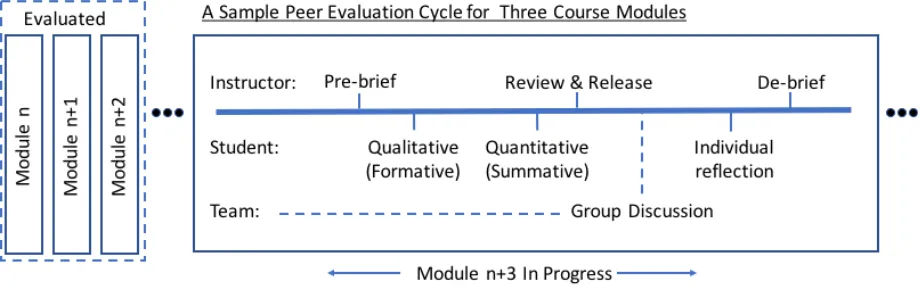
[image:24.612.72.532.535.679.2]asynchronously. Instructors leading a synchronous online course can adopt a cycle for collecting and disseminating peer evaluation results similar to what they would use in a face-to-face classroom. Instructors teaching asynchronously must space out the same steps over sufficient time to accommodate students working different shifts, or accessing the course from different time zones.
Figure 8 below assumes modules of 1-week duration and represents a full-cycle peer evaluation process for an asynchronous online course.
Students working asynchronously need sufficient time to attend to each step of the process. The instructor needs time to review and release scores. The group will need time to discuss the results; and the individual will need time to reflect. A minimum of 24 hours, but more typically 48 hours might be required for each step in the sequence. For example, as shown in Figure 8, the evaluation for the first three modules would largely take place during Module 4 and might overlap into the preceding and subsequent modules. Instructors wanting to complete a peer evaluation every module would need to compress the cycle to prevent overlap. Different audiences may require particular accommodations; students from healthcare or policing may work 3x12 hour shifts in a row and be unavailable for that period. In such cases it might be necessary to leave the data collection phase open for as long as four or five days.
Principles of Best Practices for Peer Evaluation in Online TBL
The four principles of “best practices” for online peer evaluation are captured in Table 5 below, where they are also linked to the relevant Quality Matters™ standards for higher education. The four principles are discussed in more detail in the sections that follow.
Principle Online TBL Best Practices QM Standards for Higher Education5
P
EERE
VALUATIONP
RINCIPLESPE-P 1 Provide robust rationale for peer-evaluation to
ensure student buy-in 1.2; 2.2; 2.3; 4.1; 4.2; 5.3; 5.4 PE-P 2 Ensure process transparency so that students
understand the effect on their grade of evaluating and being evaluated by others
3.1–3.3
PE-P 3 Provide multiple formative and summative evaluation cycles to promote learning, with
structured opportunity for team debrief and individual reflection
3.4; 3.5; 5.1; 5.2; 5.4
PE-P 4 Deploy technology that supports collection, analysis,
and dissemination of quantitative and qualitative data 6.1–6.5
TABLE 5.BEST PRACTICES FOR THE PEER EVALUATION PHASE OF IMPLEMENTING ONLINE TBL IN CONJUNCTION WITH
QUALITY MATTERS™ STANDARDS FOR HIGHER EDUCATION 5TH EDITION
Peer Evaluation Principle 1: Provide robust rationalefor peer-evaluation to ensure student buy-in
5 For our comparison purposes throughout this paper, note that we used the 22 February 2017 updated
version of the 2014 QM Rubric for Higher Education 5th edition (Quality Matters, 2017). A copy of this
Best practice requires that the rationale for the peer evaluation be articulated in the course syllabus, covered during the course orientation, and reinforced in the Pre-brief that begins the first evaluation cycle. This requirement may be relaxed somewhat for students who are already familiar with TBL. Since the first evaluation will typically not take place before students have completed several modules of instruction, some will have forgotten the details. In an online course, all information should be written down and reinforced, because the instructor will not be present to answer questions in real time or guide the class as they might be during a face-to-face TBL course. Thus during the Pre-brief, instructors will remind students the rationale for peer evaluation and peer evaluations grading.
The benefits of peer evaluation done well are several: transparency can help build trust among peers, leading to enhanced student learning; the experience of evaluating each other helps students identify which teamwork behaviors contribute to the success of the team’s overall learning outcomes; and the giving and receiving of thoughtful, actionable feedback helps students develop skills that will be invaluable throughout their careers (Rousseau et al., 2006; Sarker, Valacich, & Sarker, 2003).
Peer evaluation is designed to motivate students to take responsibility for the individual preparation necessary to make teamwork both efficient and effective. For students focused on issues of fairness, the notional “threat” of peer evaluation discourages students from relying on the work of their teammates (Fehr & Gächter, 2002), thereby increasing collaboration and encouraging students to take responsibility for both their own learning and the success of their team.
The briefing process should make clear to students that they are being asked to provide their input as partners in the learning process, because they have insight into the workings of their team that are largely invisible to the instructor. While students are providing quantitative input that will affect assessment, the instructor is ultimately responsible for grades, reviewing them before release to control for evidence of collusion, reasonableness, consistency between
quantitative and qualitative data, and exercising their professional judgment to reject egregious departures from fairness. Finally, while it does take some time and effort for the student to complete a thoughtful, useful peer evaluation, this is best framed as an investment in their professional development that will pay career-long dividends.
Peer Evaluation Principle 2: Ensure process transparencyso that students understand the effect on their grade of evaluating and being evaluated by others
Ideally the instructor has access to good technology for managing the peer evaluation process, and the students are well-briefed and eager to participate. Even so, a lack of transparency can leave students anxious about how their own grade is calculated and how the grade they assign a teammate flows through to that student’s final grade for the assignment or course. If
students do not understand the overall impact of choosing one item on a Likert scale versus another, they may evaluate their teammates less or more harshly than they intend.
While the process must be transparent and the effect of marking understood, the data
of mature students, the instructor may choose to release all quantitative and qualitative data, it can be helpful to provide a degree of anonymity so that students can contribute their
evaluations without feeling the need to self-censor. Thus students will know in advance by what algorithm the grade they receive will be calculated and that any comments submitted will be compiled and distributed to teammates without attribution.
When instructors provide a clear rationale for peer evaluation, most students will approach the task diligently, if not always enthusiastically. Still there is a danger that a small number do not complete the evaluation, or collude to protect certain members and preserve team solidarity. Because the data is transparent to the instructor, they can monitor and take appropriate remedial action during the Review and Release stage in Figure 8.
Attaching a modest reward for completion helps to ensure full compliance. The syllabus should indicate on what basis this grade for completion is to be awarded: is the grade independent of the quality of the submission, or must the comments meet a minimum threshold, for example that the comments are actionable and specific to each student under evaluation.
When students collude to give everyone on their team the same quantitative score, the effect is to penalize the stronger members of the team, although they may rationalize this is a cost they are willing to pay to avoid a difficult conversation with their teammates. However, there are other stakeholders to consider and inflating the grades within the team would also penalize other students in the class by affecting their relative ranking. When students know in advance that the data will reveal collusion and that the instructor will review submissions against that eventuality, the problem typically goes away. For example, some instructors ward against this problem by requiring students to justify their quantitative scores in order to further discourage collusion.
Peer Evaluation Principle 3: Provide multiple formative and summative evaluation cycles to promote learning with structured opportunity for team debrief and individual reflection
Peer evaluation plays an essential role as a formative learning activity (Cestone, Levine, & Lane, 2008), shaping how students engage in the course and their collective work together. Periodic evaluations provide students with the opportunity to adjust their behaviors, allowing the team to become more effective over time. In an online team learning environment, frequent
feedback is essential not only from the instructor but from the students themselves. Through this process, students build trust and a sense of belonging within their team (Sweet & Pelton-Sweet, 2008). For students learning in an online environment, a sense of belonging is of particular importance for retention (O'Keeffe, 2013).
Peer evaluation builds accountability among peers. Frequent peer evaluations help students identify who among their peers are contributing appropriately to their learning and who is not. This also allows the instructor to understand the dynamics occurring among the team
The potential of peer evaluation to contribute positively to individual educational and social outcomes within a class depends on the fairness of the evaluations. Effective peer evaluation in any learning environment requires that students receive instruction about how to provide fair, actionable, and constructive feedback to their colleagues (Michaelsen & Schultheiss, 1989). Clarity about what is required to give good feedback also supports Peer Evaluation Principle 2 above.
Bias is often present in higher education learning environments (Boysen & Vogel, 2009), raising concerns about the effect of bias on peer evaluation scores (Ayradoust, 2016; Dancer &
Kamvounias, 2005; Magin & Helmore, 2001). More work is needed to develop best practices that maximize the probability of fair peer evaluations for all students.
Peer Evaluation Principle 4: Deploy technology that supports the collection, analysis, and dissemination of quantitative and qualitative data
When following the method of Backward Design course planning (Wiggins & McTighe, 2005), a tool for online TBL peer evaluation should be included. An online learning format has the advantage of providing students and instructors with electronic tools to provide team feedback in a timely manner following each learning exercise or module. This compares well with written or electronic template peer evaluation forms requiring significant instructor time to read through and score individually.
Many peer evaluation tools use Likert scales to determine variation in behaviors or
performance. Some require written student statements on each team-member’s role, such as who provided the most leadership, or what the students learned in the teamwork process. The drawback to these instruments is frequently their length, and complexity. Using Likert scales can be easily integrated into an electronic format, but if the instrument is lengthy students may give equal value to each of the items in the scale and this may not provide an overview of how each student contributed to the team’s work. A particular concern of those teaching students for whom English is a Second or Additional language (ESL/EAL) is that the nuance between categories on longer scales may be lost.
Since students are generally geographically dispersed, their social context is different from in a classroom setting. Given the characteristics of the social environment in an online TBL course, frequent feedback to the instructor about each team’s peer performance is essential for
maintaining an optimal online learning environment. Students may be more critical in a written evaluation than they would be in a person-to-person evaluation. In asynchronous
Conclusion
This paper has explored the principles and strategies involved in meeting the unique and evolving challenges of teaching in an online environment. A number of educators are shifting the face-to-face tenets of Team-Based Learning™ to address these distinctive needs for team engagement in online environments. The early adopters of these changes have turned to Quality Matters™ to ensure high quality best practices in their online courses. Student orientation, readiness assurance, application exercises, and peer evaluation are all essential elements for a successful “Off-to-On” for online TBL. Each of these elements must be well thought out and addressed in each course. One of the major considerations as adaptations are made is the time/space matrix. All exercises from the RATs to the application assignments will require additional time to completion that is not needed in a face-to-face setting. A thorough understanding of how to make technology enhance the online experience is not only possible but also crucial. This is an evolving paradigm, much like the technology that makes online team engagement possible, and therefore one that requires creativity and flexibility.
REFERENCES
Adams Becker, S., Cummins, M., Davis, A., Freeman, A., Hall Giesinger, C., & Ananthanarayanan, V. (2017). NMC Horizon Report: 2017 Higher Education Edition. Austin, TX: The New Media Consortium. Retrieved from http://cdn.nmc.org/media/2017-nmc-horizon-report-he-EN.pdf
Allen, I. E., Seaman, J., Poulin, R., & Straut, T. T. (2016). Online report card-tracking online education in the United States. Babson Survey Research Group and Quahog Research Group. Retrieved from http://onlinelearningsurvey.com/reports/onlinereportcard.pdf
Ali, R., & Leeds, E. M. (2009). The impact of face-to-face orientation on online retention: A pilot study. Online Journal of Distance Learning Administration, 12(4).
Aryadoust, V. (2016). Gender and academic major bias in peer assessment of oral presentations. Language Assessment Quarterly, 13(1), 1–24.
http://doi.org/10.1080/15434303.2015.1133626
Baldwin, S., Ching, Y., & Hsu, Y. (2018). Online course design in higher education: A review of national and statewide evaluation instruments. TechTrends, 62(1), 46–57.
http://doi.org/10.1007/s11528-017-0215-z
Bawa, P. (2016, January-March). Retention in online courses: Exploring issues and solutions—A literature review. Sage Open 6(1), 1–11. http://doi.org/10.1177/2158244015621777 Betta, M. (2017). Self and others in team-based learning: Acquiring teamwork skills for
business. Journal of Education for Business, 91(2), 69–74.
http://doi.org/10.1080/08832323.2015.1122562
experiences. The Internet and Higher Education,15(2), 118–26.
http://doi.org/10.1016/j.iheduc.2011.11.006
Boysen, G. A., & Vogel, D. L. (2009). Bias in the classroom: Types, frequencies, and responses.
Teaching of Psychology, 36(1), 12–17. https://doi.org/10.1080/00986280802529038 Burgstahler, S. (2017). ADA compliance for online course design. EDUCAUSE Review. Retrieved
from https://er.educause.edu/articles/2017/1/ada-compliance-for-online-course-design
CAST (2018). Universal design for learning guidelines, version 2.2. Retrieved from
http://udlguidelines.cast.org
Cestone, C. M., Levine, R. E. & Lane, D. R. (2008). Peer assessment and evaluation in team-based learning. New Directions for Teaching and Learning, 116, 69–78.
http://doi.org/10.1002/tl.334
Clark, M., Corte, C., Currey, J., Leonard, B., & Twigg, N. (2017). Online TBL: Problems, solutions, and future directions. Presentation conducted at the meeting of the Team-Based Learning™ Collaborative in Orlando, FL.
Clark, M., & Leonard, B. (2016). Team-based learning in an online environment. Retrieved from
https://sites.google.com/site/tbladvantageschallenges/welcome-video
Clark, M. C., Nguyen, H. T., Bray, C. & Levine, R. E. (2008). Team-based learning in an undergraduate nursing course. Journal of Nursing Education, 47(3), 111–117.
http://dx.doi.org/10.3928/01484834-20080301-02
Cooperrider, D., Whitney, D. & Stavros, J. (2008). Appreciative inquiry handbook: For leaders of change. (2nd ed.) Oakland, CA: Berrett-Koehler Publishers.
Coyne, L., & Takemoto, J.K. (2017, March). Using technology to enhance TBL. Workshop conducted at the meeting of the Team-Based Learning™ Collaborative in Orlando, FL. Crawford-Ferre, H. G. & Wiest, L.R. (2012). Effective online instruction in higher education.
Quarterly Review of Distance Education,13(1), 11–14. Retrieved from
http://www.siue.edu/~lmillio/IT598/Resources/04_assessment/Effective%20Online%20 Instruction.pdf
Dancer, D., & Kamvounias, P. (2005). Student involvement in assessment: A project designed to assess class participation fairly and reliably. Assessment & Evaluation in Higher
Education, 30(4), 445–454.
Dell, C. A., Dell, T. F., & Blackwell, T. L. (2015). Applying universal design for learning in online courses: Pedagogical and practical considerations. The Journal of Educators
Online, 13(2), 166-192. Retrieved from https://files.eric.ed.gov/fulltext/EJ1068401.pdf Dolowitz, A., Gunnells, K., Harry, S., Twigg, N., & Wech, B. (2017). Meeting the demand: A
workshop for converting your face-to-face TBL course to online TBL. Workshop
Eison, J. (2010). Using active learning instructional strategies to create excitement and enhance learning. Jurnal Pendidikantentang Strategi Pembelajaran Aktif (Active Learning)
Books, 2(1), 1-10.
Farland, M. Z., Sicat, B. L., Franks, A. S., Pater, K.S., Medina, M. S., & Persky, A. M. (2013). Best practices for implementing team-based learning in pharmacy education. American Journal of Pharmacy Education, 77(8), 1–10. http://doi.org/10.5688/ajpe778177 Fehr, E., & Gächter, S. (2002). Altruistic punishment in humans. Nature, 415(6868), 137–140.
http://doi.org/10.1038/415137a
Gallegos, P. J., & Peeters, J. M. (2011). A measure of teamwork perceptions for team-based learning. Currents in Pharmacy Teaching and Learning, 3(11), 30-35.
http://doi.org/10.1016/j.cptl.2010.10.004
Garrison, D.R., & Akyol, Z. (2015). Toward the development of a metacognition construct for communities of inquiry. The Internet and Higher Education 24, 66–71.
http://doi.org/10.1016/j.iheduc.2014.10.001
Garrison, D. R., Anderson, T. & Archer, W. (1999). Critical inquiry in a text-based environment: computer conferencing in higher education. The Internet and Higher Education, 2(2-3), 87–105. http://doi.org/10.1016/S1096-7516(00)00016-6
Gomez, E A., Wu, D., & Passerini, K. (2010). Computer-supported team-based learning: The impact of motivation, enjoyment and team contributions on learning outcomes.
Computers & Education,55(1): 378–90. http://doi.org/10.1016/j.compedu.2010.02.003 Johansen, R., Charles, J., Mittman, R., & Saffo, P. (1988). Groupware: Computer support for
business teams. New York, NY: Free Press.
Johnson, T. E., Ercan, T., & Yukselturk, E. (2011). Team shared mental model as a contributing factor to team performance and students' course satisfaction in blended courses.
Computers in Human Behavior, 27, 2330–2338.
http://doi.org/10.1016/j.chb.2011.07.012
Johnson, T. E., & Lee, Y. (2008). The relationship between shared mental models and task performance in an online team-based learning environment. Performance Improvement Quarterly, 21(3), 97–112. http://doi.org/10.1002/piq.20033
Jones, K. R. 2013. Developing and implementing a mandatory online student orientation.
Journal of Asynchronous Learning Networks. 17(1), 43–45.
http://dx.doi.org/10.24059/olj.v17i1.312
Lane, D. R. (2008). Teaching skills for facilitating team-based learning. New Directions for Teaching and Learning, 2008(116), 55–68. http://doi.org/10.1002/tl.333
Magin, D., & Helmore, P. (2001). Peer and teacher assessments of oral presentation skills: how reliable are they? Studies in Higher Education 26(3), 287–298.