BEHAVIOUR:
THE ROLE OF THE EYSENCKIAN DIMENSIONS
AND RESPONSIBILITY.
MARIAN B. SCARRABELOTTI
A thesis submitted in partial fulfilment of the requirements for the degree of Master of Clinical Psychology, Department of Psychology
of The Australian National University.
Acknowledgements.
Abstract.
In the 1950s and 1960s studies of Obsessive-Compulsive Disorder predominantly focused on the relation between personality dimensions and dysthymic disorders in general. Using criterion measures biased in favour of compulsions, OCD studies typically implicated introversion and neuroticism. More recently research has concentrated on descriptive features of obsessions identified in "normal" and "clinical" populations. These studies have claimed that normals and clinicals differ in degree, not in kind, in their experience of obsessions: the two groups have similarities in the form and content of obsessions but differences in the degree of controllability and discomfort experienced. Similarly studies of compulsions have found washing and checking factors in both groups with group differences in the severity of discomfort experienced. The present study reinvestigates the contribution of individual difference measures of personality to obsessions and compulsions through a normal and a small clinical sample. However this investigation uses the recently developed Padua Inventory (Sanavio, 1988) because it is the only self- report measure of both obsessions and compulsions which is also suitable for normal and clinical samples. In addition the Padua Inventory incorporates the major findings of recent decades as it measures degree of disturbance caused by obsessions and compulsions. Further the present study investigates not only the three Eysenckian dimensions but also "responsibility" which Salkovskis (1985, 1989a, 1989b) regarded as a key cognitive appraisal variable in obsessions and compulsions. Accordingly this study provides a basis for the future identification of additional traits which further improve the power of the predictive equation for obsessive-compulsive behaviour. Such refinements of the most likely personality features associated with OCD form an essential basis for the development of effective treatm ent interventions.
A pilot study investigated the small clinical sample of 20. The same pattern of correlations persisted in this sample. Thus some support was also gained for the assumption in most current research in the area that obsessive-compulsive behaviour can legitimately be studied using normal samples which are readily available and numerous.
Page
D eclaration .. .. .. .. .. .. .. .. i
Acknowledgem ents .. .. .. .. .. .. .. .. ii
A bstract .. .. .. .. .. .. .. .. iii-iv
Table of C ontents .. .. .. .. .. .. .. .. v
List of Tables .. .. .. .. .. .. .. .. vi
Introduction .. 1-28
H istorical Perspective on OCD .. .. .. .. .. .. 1-2
Incidence of O CD .. .. .. .. .. .. .. 2-3
Characteristics of Obsessions and C om pulsions.. .. .. .. 3-7 D erived from Recent Factor Studies of N ormal
and Clinical Populations
Predisposing and Covarying Factors in .. .. .. .. .. 7-15 Obsessions and Compulsions
T heoretical Explanations of O CD .. .. .. .. .. 15-26
R ationale for the Present Study .. .. .. .. .. .. 26-28
H ypotheses .. .. .. .. .. .. .. .. 28
M ethod ... 29-43
D evelopm ent of the Responsibility Scale .. .. .. .. 32-38
Results .. .. .. .. .. .. .. 44-57
D iscussion .. .. .. .. .. .. .. 58-71
References .. .. .. .. .. .. .. .. 72-80
Table 1:
L is t o f T a b le s.
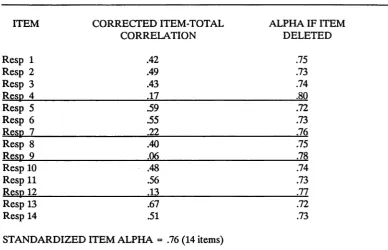
Page Cronbach’s Alpha for the Responsibility Scale with .. .. 34 each Item Deleted.
Table 2: Communalities, Eigenvalues and Variance Accounted for .. 36 by the Rotated (Varimax) Factors.
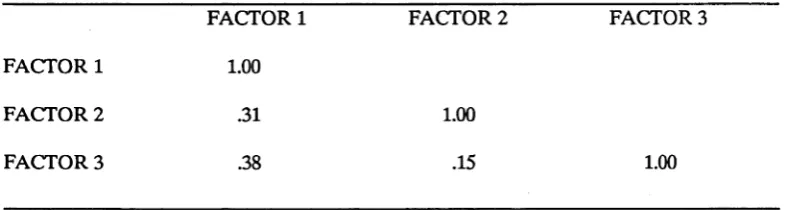
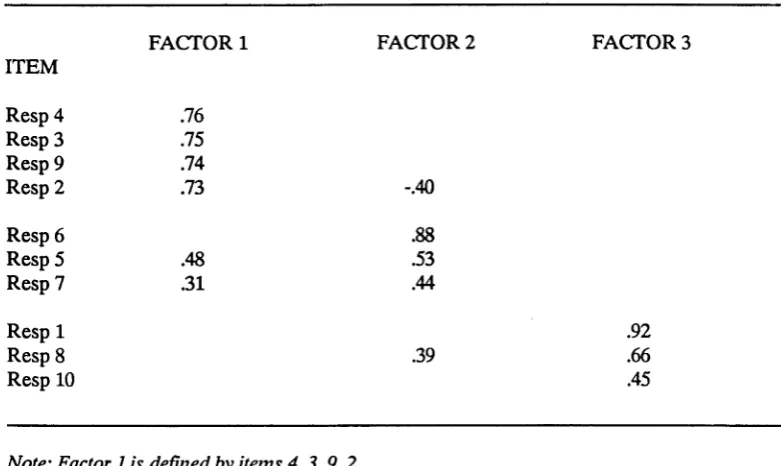
Table 3: Factor Correlation Matrix for the Responsibility Scale. .. 36 Table 4: Pattern Matrix for the Items after Oblique Rotation .. .. 37 Table 5: Mean Severity of Self-Reported Disturbance due to .. .. 45
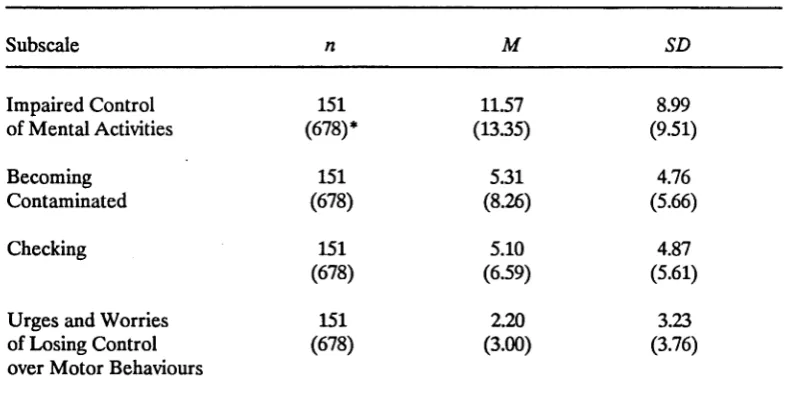
Obsessive Thoughts and Compulsive Behaviours.
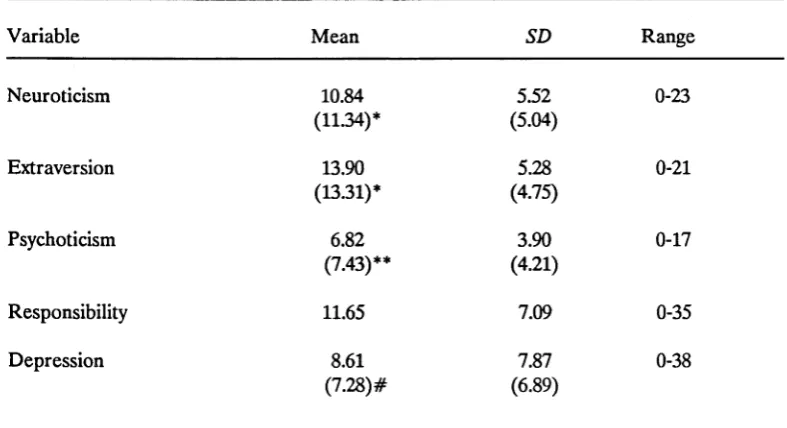
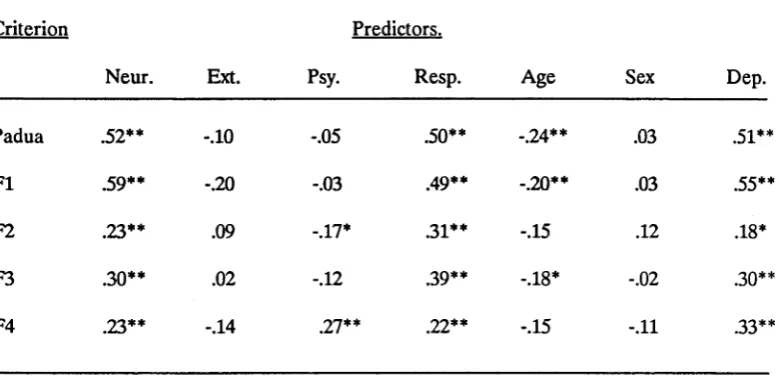
Table 6: Mean Subscale Scores on the Padua Inventory. .. .. 46 Table 7: Means and Standard Deviations of Predictor Variables. .. 47 Table 8: Correlation Matrix of the Criterion and Predictor .. .. 48
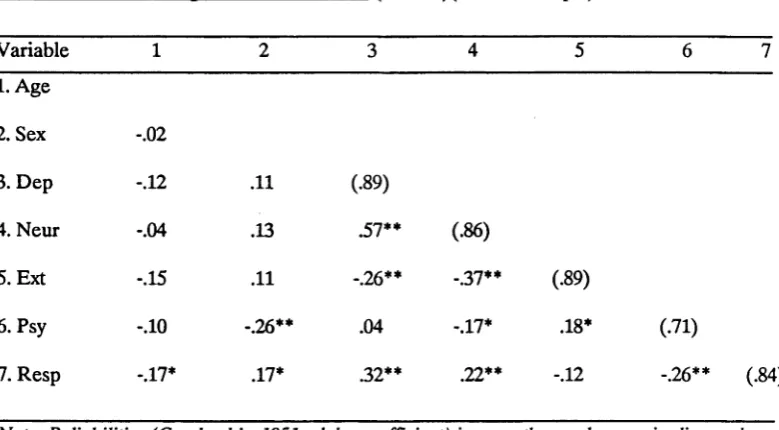
Variables.
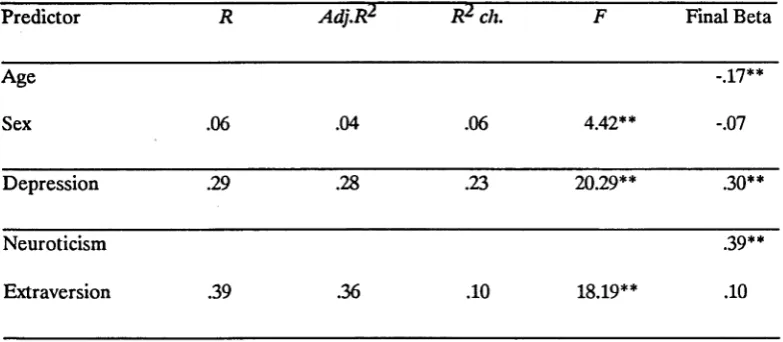
Table 9: Intercorrelations among Predictor Variables. .. .. 50 Table 10: Hierarchical Multiple Regression of "Degree of .. .. 51
Disturbance due to Obsessions and Compulsions" on Age, Sex, Depression; Neuroticism and Extraversion. (Hypothesis 2).
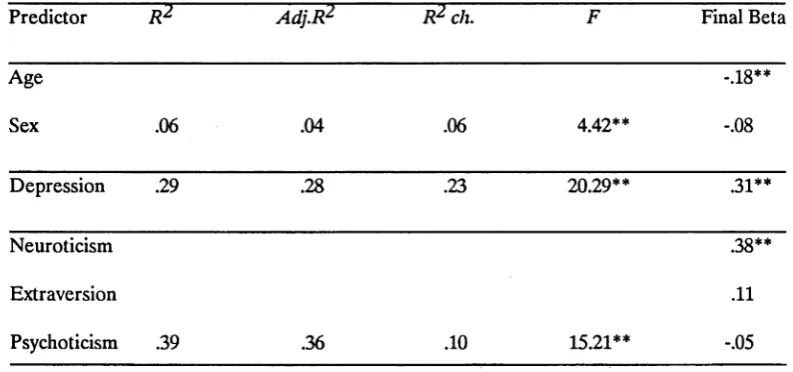
Table 11: Hierarchical Multiple Regression of "Degree of .. .. 52 Disturbance due to Obsessions and Compulsions"
on Age, Sex, Depression; Neuroticism, Extraversion, and Psychoticism. (Hypothesis 3).
Table 12: Hierarchical Multiple Regression of "Degree of .. .. 54 Disturbance due to Obsessions and Compulsions"
on Age, Sex, Depression; Neuroticism, Extraversion, Psychoticism, and Responsibility. (Hypothesis 4).
Table 13: Means and Standard Deviations of Predictor Variables. .. 55
Table 14: Correlation Matrix of the Criterion and Predictor .. .. 56 Variables.
At some time most people experience intrusive, uninvited, and repetitive thoughts and perform unnecessary, repetitive behaviours. Typical examples might include uninvited sexual thoughts or senseless repeated checks to ensure an appliance is switched off. However for a small two percent of persons such thoughts become obsessive; that is, particularly frequent and uncontrollable (Parkinson & Rachman, 1981) and are accompanied by compulsive behaviours compelling time-consuming rituals which the sufferer "wants not to want" (Rapoport, 1990, p.198). Why is it that this small group has such a different experience to most? The main aim of the present research is to address this question by exploring particular individual differences, namely personality differences, and their relation to the severity of obsessive thoughts and compulsive behaviours.
Since 1978, when first proposed by Rachman and de Silva, the assumption of a "normal" analogue to "clinical" obsessions and compulsions has guided most of the psychological research in this area. Despite this, surprisingly little of the recent research has focused on the ability of normal personality theories of individual difference to explain or predict individual differences in the experience of obsessive thoughts and compulsive behaviours. An identification of the dimensional mix more likely to predispose individuals to this crippling psychological disorder would be of considerable clinical and theoretical importance, particularly in the refinement of recent cognitive behavioural treatm ent methods.
HISTORICAL PERSPECTIVE ON OCD.
Obsessive Compulsive Disorder is not in any sense a new problem. In fact a syndrome identical to what we now call OCD has been recognized for nearly 300 years (H unter & McAlpine, 1963). However both comprehensive theoretical explanations and successful treatm ents are comparatively recent.
Early descriptions focused on different aspects of this syndrome. English explanations stressed religious thought content and a relationship to melancholy (Johnson, 1759; Maudsley, 1895; Taylor, 1660). French phenomenologists emphasized the importance of anxiety, doubt (the inability to trust a perception) and loss of will (Esquirol, 1837; Janet, 1902).
considered the basic pathology was the emergence of irrational thoughts and used the term "abortive insanity" to distinguish these thoughts, which were recognized as senseless, from more psychotic thoughts or true insanity. Current notions of Obsessive Compulsive Disorder include all these aspects and continue to be more descriptive than theoretical (Insel, 1990).
Recently the central descriptive features of OCD were clearly delineated by Crino (1990):
Obsessive Compulsive Disorder (OCD) is characterized by persistent recurrent distressing thoughts, images, or ideas that invade conscious awareness against the individual’s will. These are often of violence, contamination, harm to self or others, blasphemy, or sexual outrage. In the majority of cases they are accompanied by ego dystonic ritualistic behaviour that the individual feels compelled to perform (p.234).
Thus the thoughts are experienced as repetitive, distressing, not consciously evoked, and of circumscribed content; they are frequently accompanied by behaviour that is unnecessary but compelling.
Other recent OCD descriptions, including that of the Diagnostic and Statistical Manual-111 Revised Version (1987), specify additional reactions to the obsessive thoughts and rituals. These reactions include an appraisal, at least initially, that the thought or behaviour is senseless; as well as initial attempts to resist, suppress, or otherwise neutralize the unwanted thought or behaviour. However such descriptive additions form part of a number of different theories that attempt to explain how OCD develops and persists. Some of these theoretical accounts of OCD will be analysed later.
INCIDENCE OF OCD.
Early estimates of the incidence of Obsessive Compulsive Disorder in the general population were as low as 0.05%. More recent estimates however suggest a figure of 2%, but this is still comparatively low. Flament et al. (1988) estimated the point prevalence of OCD in the general adult American population to be between 1% and 2%, or between one and two million persons. Similarly Karno, Golding, Sorenson, and Burnam (1988) found that 1.3% of Americans experienced clinically significant symptoms in the month prior to interview. They also found that OCD was twice as common as schizophrenia or panic disorder in the general population.
(Rachman & Hodgson, 1980), sleep disorders (Borkovek, 1979), schizophrenia, and anorexia nervosa (Salkovskis & Kirk, 1989). Also OCD occurs with several types of neurological disorders: Sydenham’s chorea, epilepsy, postencephalitic Parkinson’s disease, motor tics, and toxic lesions of the basal ganglia (Rapoport, 1989). Further, obsessive-compulsives are usually embarrassed and secretive about their problem; under reporting is a common feature (Beech & Vaughan, 1978).
Thus the prevalence of OCD may greatly exceed 2% of the population, given its frequent co-existence with other conditions and the likelihood of under reporting.
CHARACTERISTICS OF OBSESSIONS AND COMPULSIONS, DERIVED FROM
RECENT FACTOR STUDIES OF NORMAL AND CLINICAL POPULATIONS.
There has been an immense resurgence of interest in isolating the identifying descriptive features of OCD. This is not surprising given the now commonly accepted view that obsessions and compulsions are universal; they can be studied in normal as well as in clinical populations. Thus subjects are now more accessible as well as more numerous. In fact over the past thirty years descriptive factor studies, rather than prospective predictive studies, have dominated the psychological literature. This recent return to an early phase in the theoretical development of obsessions and compulsions has prompted the development of new measures and new attempts at theory construction by, for example, Rachman and Hodgson (1980), Salkovskis (1985), and Insel (1990). However the emphasis has been predominantly at the descriptive and measurement level rather than at the level of theory.
Normal and Clinical Obsessions.
in content, form, and in expressed relation to mood. Content analysis identified that "clinical obsessions are not as readily discernible ... even to experienced clinicians ... as might be expected" (p.239), that thoughts are more common than impulses, and depression and anxiety are often associated with thoughts and impulses. However the two groups differed in that "abnormal, clinical obsessions lasted longer, were more discomforting, more frequent, and more intense. They had lower acceptability, were more alien, provoked more urges to neutralize and were more likely to be of known onset. They were more often and more strongly resisted, and harder to dismiss.... They were similar in form and content, but not in frequency, subjectively felt intensity, nor in their consequences" (p.244). Hence quantitative not qualitative differences were identified. However it is of note that these conclusions were based on a sample of 124 normals and only eight obsessives.
Normal Obsessions.
In another study Parkinson and Rachman (1981) had 60 non-psychiatric volunteers rate their intrusive cognitions along twelve dimensions using ten-point rating scales. (The rationale for choosing these particular characteristics was not given, nor was the questionnaire titled). Performing a factor analysis on these data, they extracted five factors which described the structure of unwanted intrusive thoughts. The first dimension was General Unpleasantness which had high loadings on discomfort, tormenting qualities, stressfulness, unpleasantness, anxiety, and resistance. The second factor was Controllability, the third Number of Intrusions, the fourth Frequency, and the fifth Unacceptability. Moreover they found their normals reported "lower levels of distress, unpleasantness, and acceptability than those of psychiatric clients complaining of obsessions" (p.107). Like Rachman and de Silva (1978) they found similar form and content for all obsessions: "The content of the most commonly reported intrusive thoughts was the subject of death, with the second most common theme to do with harm coming to people, especially one’s family and friends" (p.103).
and easy dismissal (control). Thus most had obsessions, but their occurrence was infrequent and they were easily dismissed.
In 1985, Clark and de Silva developed the Distressing Thoughts Questionnaire (DTQ) to investigate the structure of anxious and depressive thoughts in a sample of 303 college students. Six anxious and six depressive thought statements were rated on scales assessing such cognitive characteristics as frequency, sadness, worry, dismissal, and disapproval. Controllability and emotional intensity (which the authors defined as degree of self-reported sadness and worry) were the most salient features defining both types of cognitions. In 1988 Legg England and Dickerson reported that in 115 students uncontrollability was related to the arousing properties of thoughts and to attentional involvement with them, but was weakly related to the unpleasantness of their content. One possible prediction from this research is that content is important to the extent that it contributes to the arousing properties of the thought (or the experience of them).
Thus since Rachman and De Silva’s (1978) study there has been considerable interest in examining the structure of obsessional thoughts in normal and clinical samples using the statistical procedure of factor analysis. In these studies normal populations reported obsessions which were similar in form and content to those of clinical populations. However the clinical populations were less able to control and more distressed by these obsessions than the normals, and their experience of the obsessions was quantitatively different. In the majority of these studies, self-reported controllability and distress seem to be the central descriptive features that discriminate between normal and clinical obsessions.
Normal and Clinical Compulsive Behaviours.
Studies on the CAC and MOCI have identified that contamination (Washing) and Checking factors were the only factors interpretable. Moreover they were common to the compulsive behaviours of normal and clinical populations, with the two groups reporting differences in severity of compulsions (Cottraux, Bouvard, Defayolle & Messy, 1988). Nonetheless, though the MOCL and the CAC are the two measures most frequently reported in the OCD literature, they do not measure the obsessive components of obsessive-compulsive behaviour (Sternberger & Burns, 1990). This poses a serious limitation on their usefulness.
In contrast to these two measures, the principal components analysis of the Padua Inventory (Sanavio, 1988) revealed two obsessive as well as two compulsive factors. According to Sternberger and Burns (1990) "The Padua Inventory appears to hold promise as an instrument which will allow an expanded study of obsessions and compulsions in clinical and nonclinical samples, particularly since it is the only self-report measure which includes obsessional dimensions as distinct from compulsive dimensions" (p.341).
Measures of Obsessions and Compulsions.
Few recent studies have reported the development of new measures of both obsessions and compulsions for normal and clinical populations. Two such scales are the clinician-rated Yale-Brown Obsessive Compulsive Scale (Goodman et al., 1989) and the self-report Padua Inventory (Sanavio, 1988). The Yale-Brown Obsessive Compulsive Scale (Goodman et al., 1989) is the most recently developed clinician-rated scale for measurement of obsessive-compulsive behaviour. It was designed specifically to provide a measure of the severity of symptoms of OCD (as defined by D SM -lll-R , 1987) that was not influenced by the type, number, or content of the symptoms. This ten-item scale measures five symptoms: time spent in, interference from, distress caused by, resistance to, and control over obsessions and compulsions. Each item is rated from 0 (no symptoms) to 4 (extreme symptoms). The content validity is established by its strong reflection of DSM-111(R) diagnostic criteria.
made on the basis of self-report questionnaire data prompting the authors to acknowledge their results needed to be treated with caution.
The Padua Inventory is a factorially derived self-report measure which requires the subject to read a list of 60 thoughts and behaviours and rate the degree of disturbance or difficulty these cause the individual. Accordingly the Padua Inventory incorporates the central findings of recent studies on normal and clinical OCD samples that distress and controllability are key discriminators between these populations.
The only reported replication of the Padua Inventory factors for a normal sample has been by Sternberger and Burns (1990). They administered the 60 PI items to 678 American college students and derived a factor structure of obsessions and compulsions which was very similar to the one extracted by Sanavio (1988) for his Italian sample. It comprised two obsessive as well as two compulsive factors respectively:
(i) Impaired Control over Mental Activities;
(ii) Urges and Worries of Losing Control over Motor Behaviours; (iii) Contamination Behaviours; and
(iv) Checking Behaviours.
Hence, as in the studies of obsessions and the studies of compulsions, the above factor studies found similar form and content for normal and clinical obsessions and compulsive behaviours, with degree of disturbance or distress evoked as the essential discriminator between the two groups. Accordingly these studies suggest the possibility that OCD is not a discrete disease that one either has or does not have. Rather obsessive thoughts and behaviours seem to be common, but the experience of them varies for different individuals. Just why this is the case is the major question addressed in this study. In order to explore it one tool employed has been the P.I. It was chosen to be the dependent variable measure because it has sound psychometric properties, the ability to measure obsessive and compulsive behaviours in normal and clinical populations, and because few replication studies have been reported in Australia.
PREDISPOSING AND COVARYING FACTORS IN OBSESSIONS AND
COMPULSIONS.
predispositional status. Nonetheless they provide an important basis on which to develop causative theoretical explanations.
Demographic and Sociocultural Variables.
Demographic and sociocultural variables which have sometimes been considered important in relation to obsessive-compulsive behaviour include: sex, age, 'social class, intelligence, and culture.
Sex
Sex has typically been regarded as insignificant in the incidence and experience of OCD. In fact, the majority of epidemiological studies report no sex differences in the incidence of OCD. The exception to this is the higher incidence of washing and cleaning rituals in women (Marks, 1987). This even frequency distribution amongst the sexes is atypical for the D S M -lll(R ) defined anxiety disorders. Apart from social phobia and obsessive-compulsive disorder, most of the anxiety disorders are more frequent in women than in men (Cameron & Hill, 1989). However Sanavio (1988) has recently found that females are more likely to report increased severity of obsessive- compulsive behaviour when measured by the Padua Inventory.
Age
Like sex, age has typically been regarded as insignificant in OCD incidence and severity. OCD usually starts in adolescence and young adult life, as do most anxiety disorders and minor depression (Marks, 1987). However studies rarely differentiate between adult age groups in reporting severity of obsessive-compulsive behaviour. A recent exception to this was Sanavio’s (1988) study of 967 normal Italians. He found a higher incidence of obsessional behaviour in his 16-20 year old and 46-70 age groups for males and females than for the middle 21-45 age group. This suggests younger and older normal Italian adults experience more severe obsessions and compulsions than the middle-aged adult group.
Social Class, Intelligence, and Culture.
Many studies of OCD suggest it is not confined to one social class or intellectual group. Nonetheless several do suggest the majority of OCD sufferers are of above-average social class and intelligence (Black, 1974; Rachman & Hodgson, 1980). Further OCD is not confined to Western countries, but occurs widely in China, India, and Egypt as well (Marks, 1987).
Accordingly there are, in fact, mixed findings with respect to the importance of age, sex, social class, intelligence, and culture in OCD incidence and severity. This is in part a reflection of the differing criterion measures used across studies. Nonetheless the variables sex, age, social class, intelligence, and culture are typically regarded as insignificant.
Personality Variables.
Personality variables considered important in obsessive-compulsive behaviour include Obsessive Compulsive Personality and depression. The personality variables of interest in the present research are discussed on pages 15-26.
Obsessive Compulsive Personality Disorder and OCD.
The relationship between Obsessive Compulsive Personality Disorder (a personality disorder) and Obsessive Compulsive Disorder (an anxiety disorder) has been addressed by several studies. The obsessional personality, constitutional disposition, or tem peram ent is typically identified by the following personality traits: "orderliness, cleanliness, fastidiousness, meticulousness, parsimony, pedantry, persistence, endurance, and unemotionality" (Marks, 1987, p.438). In addition the obsessional personality has a distinct cognitive style showing "intellectual rigidity and focussing on details, being deliberate in thought and action, and highly moralistic about self and others" (Emmelkamp, 1982, p.188; Pollack, 1979).
Subsequently Black (1974) in his literature review on the relationship between OCD and obsessional personality traits found on average that 71% of OCD patients had marked or moderate premorbid obsessive traits. However a substantial minority of those with OCD did not have an obsessive personality premorbidly (16% to 36% in five series reviewed by Black, 1974).
Finally Pollack’s (1987) more recent review of the literature concluded that OCD appears to be more frequently associated with premorbid obsessive compulsive personality patterns than with other personality patterns. However Kringlen’s (1965) study and those reviewed by Black (1974) and Pollack (1987) were retrospective and did not include adequate controls.
Rapoport (1990) claims that only 20% of the hundreds of OCD clients she has seen since 1974 fit the description of the obsessional personality. H er clinical experience is that "Many [OCDs] with perfectionist strivings or rituals are in fact highly selective in what to be perfect about, or where to clean up" (p.92). Unlike those with obsessive personality disorder, the OCDs display obsessional behaviour that is not generalized. Such reports throw doubt on the previous findings from retrospective studies and suggest that an obsessional personality is not necessarily important in the experience of OCD. In contrast to these studies, the present research investigates the role of H. J. Eysenck, M. W. Eysenck, and Barretts’ (1985) normal personality dimensions in obsessive-compulsive behaviour.
Depression and Obsessions and Compulsions.
As already noted, early English explanations of OCD stressed religious thought content and a relationship to melancholy (Johnson, 1759; Maudsley, 1895; Taylor, 1660). Since then numerous studies of both normal and clinical populations have reported a relationship, though not a necessary one, between depression and obsessive- compulsive behaviour. Typically depression has been found to either accompany or exacerbate obsessions and compulsions. But as with many studies of OCD and obsessional personality traits most of this evidence comes from retrospective clinical analyses. This precludes firm conclusions about the functional relationship between the two phenomena (Sutherland, Newman & Rachman, 1982).
Studies o f Depression and Clinical OCD.
In one such retrospective study of 398 depressed clients Gittleson (1966) found 124 or 31.2% had obsessional thoughts either preceding or concurrent with the depression. Vaughan (1976) reported similar findings.
Videbech (1975) found that for depressed clients who also had obsessions the percentage of those with one or more obsessions rose from 23% to 66% during a depressive episode. From this study it appears for depressed clients episodes of depression increase obsessions. Curiously Gittleson (1966) found the opposite trend for a small subsample (13) in his study: obsessions decreased, and sometimes ceased with the onset of depression. From these studies of depressed patients it appears there is not a consistent pattern of relationships between depression and OCD.
By contrast Weiner, Reich, Robins, Fishman, and van Doren (1976) investigated a sample of obsessional clients. They found that the frequency of the transition from obsessions to depression was three times more common than for its converse. Also the incidence of depressive symptoms increased during periods of heightened obsessional activity. In fact Rasmussen and Tsuang (1986) reported that amongst 44 DSM-111 (1980) diagnosed OCDs most had concomitant or lifetime histories of a major depressive disorder or another anxiety disorder. Thus these studies suggest that for OCD patients, depression is a frequent concomitant.
Taking these studies together, the firmest prediction that can be made is that obsessive-compulsive clients will be prone to develop depression and, less frequently, depressive clients will be prone to develop obsessions and compulsions (Rachman, 1978).
Psychobiological Studies o f Depression and Clinical OCD.
These results could be interpreted as evidence for at least some psychobiological overlap between OCD and depression. There are also differences. However, given that the etiological significance of each of these "markers" remains highly speculative, such conclusions can only be tentative. O ther approaches such as the following comparison of responses to the same biological treatments are more conclusive.
Outcomes fo r Depression and OCD using Common Biological Treatments.
Clomipramine, a tricyclic antidepressant, has been found to be effective in treating OCD. However it was in the course of treating clients with a depressive illness that its additional effect on obsessional symptoms was first noted (Cordoba & Lopez- Ibor, cited in Ananth, 1985). Subsequently several studies have shown that, even in nondepressed clients, Clomipramine significantly reduces OCD symptoms (DeVeaugh* Geiss, Landau & Katz, 1989; Jenike, 1990). To date Clomipramine has the most consistent and significant specific effect on OCD behaviour.
However Clomipramine is ineffective for at least one third of OCD clients (Rapoport, 1990). Furtherm ore clinical signs of OCD severity are not a sufficient basis for the prediction of effectiveness. Nonetheless it appears there may be a similar deficiency of the neurotransm itter serotonin in both depressives and some OCDs. One possible explanation of how clomipramine may redress this deficiency in OCD is that it blocks serotonin reuptake in the brain (Crino, 1990).
Thus there is evidence that OCD and depression have some common biological markers and an apparent similar deficiency of the neurotransmitter serotonin. This suggests for some clients there may be a common biological component to OCD and depression.
Studies o f Depression and Normal Obsessions and Compulsions.
increased with age for the normal Italian sample tested. They used the Maudsley Obsessional-Compulsive Questionnaire (MOCQ) (Hodgson & Rachman, 1977) and the Depression Questionnaire (Sanavio et al., 1986).
In 1986, Dent and Salkovskis reported a correlation of 0.49 between depression and obsessions and compulsions in their sample of medical, university, and non-students. Depression was measured by the Beck Depression Inventory (Beck, Ward, Mendelson, Mock & Erbaugh, 1961) and obsessions and compulsions by the MOCQ (Hodgson & Rachman, 1977). Similar findings were reported for normal populations by several researchers including Rachman and De Silva (1978), Teasdale (1983), and Edwards and Dickerson (1987).
Taken together these studies of clinical and normal obsessions and compulsions suggest obsessive-compulsive behaviour can exist without depression, but that there is a close relationship between them. Of even greater interest the clinical studies of drug treatments point to the possibility of a common underlying biological imbalance in both depression and some OCDs. Thus it appears depression plays a most important though as yet unclear role in obsessive-compulsive behaviour and accordingly should be included in any such investigation.
Genetic versus Environmental Factors.
OCD is more prevalent among the relatives of OCD sufferers than among the general population. This suggests a possible genetic cause (Rapoport, 1989). Also several instances of monozygotic twins who were concordant for obsessionality have been reported in the literature (Parker, 1964).
Such examples are consistent with the presence of an underlying biological predisposition that is genetically transferable.
Rapoport (1990) claims OCD is a genetic disease connected with neurological illnesses, often of the basal ganglia. The basis of substantiation is her own clinical experience and the findings from three independent laboratory studies that the caudate nucleus (one portion of the basal ganglia), and portions of the frontal lobes, behave differently in clients with OCD. Therefore, given increased familial incidence and the findings from monozygotic twin and neuropathology studies, it seems that evidence for a biological and possibly genetic basis of OCD cannot be disregarded.
Biological and Cognitive-behavioural Factors; Treatment Outcome Studies of OCD.
OCD treatment studies of the past twenty years also suggest the importance of depression (biological) in many cases and of learned (excluding modelling) behaviour in most. Prior to the 1960s, however, the prognosis for obsessive compulsive disorder was poor. Recommended treatments were psychotherapy, long term hospitalization, and psychosurgery. Then over the past two decades two effective treatm ent methods were developed: behaviour therapy and pharmacotherapy with clomipramine. In 1966 Meyer first successfully treated OCD using the behaviour therapy techniques of exposure and response prevention. Since then a large number of controlled and uncontrolled studies have been conducted (Crino, 1990). These indicate that 75% of patients with obsessive compulsive rituals show significant gains using these behavioural techniques (reviewed by Foa, Steketee & Ozarow; 1985).
Salkovskis’ (1985, 1989a, 1989b) cognitive-behavioural model of OCD proposes that these methods are effective because they disrupt the conditioned pairing of obsessional thoughts with anxiety. This is effected by extinguishing the anxiety-reducing ritualistic (thought or behaviour) response.
However few studies have adequately compared the effectiveness of behaviour therapy and (or) clomipramine. Nor have they established whether, for instance, the more serious the disorder the more essential is pharmacological treatment. What evidence there is is equivocal as some moderate and more severe cases of OCD are resistant to clomipramine treatment (Jenike, Armentano & Baer, 1987).
Nonetheless current findings suggest exposure and response prevention are usually successful, provided any pre or co-existing depression is treated first. However it has also been found that biological treatment with clomipramine is particularly successful in treating obsessions, as well as obsessions and depression. In contrast behaviour therapy is specifically effective in extinguishing compulsive behaviours. Thus, in the range of individual experiences of obsessions and compulsions, both biological and learning factors appear to play a role.
Summary of Predisposing and Co-varving Factors.
In summary, there is some evidence that genetic and biological factors and (or) the existence of depression may predispose individuals to the experience of obsessions and compulsions. Obsessive Compulsive Personality Disorder is only sometimes important, and typically, age, sex, social class, intelligence, and culture are not
implicated.
THEORETICAL EXPLANATIONS OF OCD
Cognitive Theories.
Cognitive theories have emphasized the high attentional involvement of uncontrollable obsessional thoughts whether they are pleasant or unpleasant (Legg England & Dickerson, 1988). Not surprisingly then it has been found that those with obsessions tend to be deficient in a variety of cognitive processing abilities such as decision making, allocating attention, classifying information, and judging probabilities (Fransella, 1974; Gordon, 1985; Mothersill & Neufeld, 1985; Persons & Foa, 1984). Furthermore, Legg England (1986) found that those with OCD will have impaired ability to perform problem-solving tasks because their attention will be focused on obsessions from which they have difficulty in disattending.
Such findings suggest an important descriptive refinement to what obsessional thoughts are and what responses they elicit. However cognitive theories in isolation cannot account for why it is that in some individuals excessive attention is directed to obsessional thoughts.
Learning Theories.
Classical conditioning learning theories describe the maintenance of OCD in terms of paired associations between the obsessions and anxiety or fear after a triggering traumatic event. Eysenck and Rachman (1965) proposed that all dysthymic disorders were due to classical conditioning of fear responses. However according to Emmelkamp (1982) there is little evidence to support this interpretation as identifiable triggering events occur in OCD as frequently as not. Also some obsessions appear resistant to extinction by behaviour therapy techniques based on learning theory alone.
Cortical Arousal Theories.
The cortical arousal theories of individual difference as outlined by H. J. Eysenck (1957, 1967, 1981, 1987) and Gray (1970, 1981) appear to best account for individual variation in the experience of obsessions and compulsions. These theories predict that the particular individual combination of three biologically based personality dimensions will, in interaction with the environment, enable predictions about how the individual acquires and extinguishes behaviour. However in their explanation of OCD, H. J. Eysenck and M. W. Eysenck (1985) have focused on the role of the extraversion and neuroticism dimensions and given little attention to the potential role of psychoticism. On the basis of Salkovskis’ (1985, 1989a, 1989b) findings the present study also explores the additional contribution to OCD of the psychoticism dimension through one of its traits, responsibility.
Thus H. J. Eysenck and M. W. Eysenck (1985) argue that those in a state of high cortical arousal (as measured by a high introversion score) who have strong reactions to stimuli (as measured by a high neuroticism score), will be more likely to condition to obsessions and compulsions and to be resistant to their extinction (or slow to habituate). That is, they will tend to give intrusive thoughts excessive attention and feel compelled to continue to do so. Hence, unlike the majority of individuals, they will be distressed by their obsessions and compulsions. Perhaps this is partly because they experience them as uncontrollable.
What is the Cortical Arousal Explanation of Individual Differences?
An arousal theory of the biological basis of individual differences was in fact first proposed by the Austrian Psychiatrist Otto Gross (1902). He put forward an arousal view of the causal factors in extraverted and introverted behaviours, personality concepts traceable to the four temperaments theory of the ancient Greek Physician, Galen.
Subsequently he developed a psychobiological arousal model to provide a causative explanation of the three dimensions (Eysenck, 1957, 1967, 1981, 1987). Eysenck (1957) initially described the psychobiology of extraversion and introversion in terms of the constructs "excitation" and "inhibition" (as they were employed by Pavlov (1927) and Hull (1943)). These constructs were conceived as hypothetical neural processes upon which the acquisition and extinction of behaviour depended. Eysenck proposed introverts were characterized by higher levels of cortical excitability and lower levels of cortical inhibition than extraverts. predicting introverts would display enhanced sensitivity and efficiency in the process of sensory stimulation and in conditioning.
Based on this theory he developed the Eysenck Personality Inventory or EPI (1959), a self report questionnaire measure of personality. Eysenck employed the method of factor analysis to order individual test items into traits, and the association of traits into types.
In 1967, drawing on developments in physiological psychology, he extended his 1957 causal explanation to a two level arousal system. In this proposal, cortical arousal (high for introverts and low for extroverts) was responsible for introversion-extraversion differences. However differences in the dimension neuroticism- stability were due to limbic arousal or activation which was high for neurotics, low for stables (Eysenck, 1987, p.l).
According to Eysenck these levels of cortical arousal were "produced by differential thresholds and reactions to the reticular activating system and its reciprocal relations with the cortex" (Eysenck, 1987, p.l). Limbic activation was related to the activities of the sympathetic (which produces physical manifestations of emotions, e.g., sweating) and the parasympathetic system (which returns these physical manifestations back to normal) (Eysenck, 1987). The physiological structure alleged to underlie the neuroticism dimension is the visceral brain or limbic system which comprises the amygdala, hippocampus, septum, cingulum, and hypothalamus. These physiological structures relating to neuroticism are mainly concerned with emotion.
A particularly important aspect of Eysenck’s theory was his prediction that, because the three dimensions were continuous, any personality whether normal or abnormal could be diagramatically represented in three dimensional space.
Such predictions prompted a burst of research activity in the 1950s and 1960s, in which relationships between personality dimensions and broad "psychiatric" classifications were explored. However since that time there has been little interest in the literature in exploring Eysenck’s biologically based personality dimensions and their relation to individual variation in, for instance, the experience of obsessions and compulsions. This was largely because of the work of writers such as Mischel (1969), Shweder (1975), and D ’Andrade (1965) who tried to substitute trait psychology with "situationalism". During the 1970s their work was regarded as affording a serious challenge to the viability of conceptualizations of relatively stable personality dimensions.
Since then there has been a revival of interest in factor models of stable personality dimensions. Some researchers, for example, John (1989), McCrae (1989), and Zuckerman, Kuhlman, and Camac (1988) have proposed a five factor model. Yet recent extensive research has demonstrated that Eysenck’s three dimensions are the central underlying descriptive factors in all personalities, as measured by a variety of questionnaires (Digman, 1990; Eysenck & Eysenck 1985; McKenzie 1988).
This dimensional feature of Eysenck’s scale lends itself well to the testing of recent conceptualizations of obsessions and compulsions. Such conceptualizations propose that the major difference in the experience of obsessions and compulsions by clinicals and normals is quantitative: one of degree of disturbance or discomfort evoked. What then is the empirical evidence for a cortical arousal theory of Eysenck’s three personality dimensions?
Empirical Evidence Supporting a Cortical Arousal Theory of Introversion-Extraversion.
classical conditioning, operant conditioning, sensory thresholds, pain tolerance, vigilance, sensory deprivation, time estimation, perceptual defense, critical flicker fusion, visual constancies, sleep-wakefulness patterns, verbal learning, figural after effects, visual masking, rest pauses in tapping, speech patterns, expressive behaviour, and reminiscence (p.237).
Of particular relevance to the questions being explored in this research is the finding that introverts generally condition better than extraverts and also habituate (get used) to stimuli more slowly. Eysenck and Eysenck (1985) claimed it was likely that part of the slowness to habituate shown by introverts reflected their high level of arousal. However he added "We know roughly what is happening, but not why it is happening" (p.223).
By contrast few researchers have shown research interest in psychobiological evidence linking neuroticism, arousal, and performance. Gray (1981) has been one of the exceptions and his work in this area which pertains to OCD in particular is discussed below.
Finally the psychoticism dimension is less well developed than introversion and neuroticism at both the descriptive and the causal theoretical level. According to Eysenck "the evidence does not suggest that arousal can explain the major facts known about P" (Eysenck & Eysenck, 1976, p.ix). Rather "genetic factors are responsible for 81 percent of all the reliably measured differences in P between subjects" (p.x). However psychoticism provides a point of integration for Salkovskis’ (1985, 1989a, 1989b) recent cognitive-behavioural research.
Thus for introversion the evidence is consistent with a biological arousal explanation. However, what evidence is there that a cortical arousal theory is relevant to the understanding of OCD?
Cortical Arousal Theory and OCD.
the thoughts that was crucial. This led to learned associations between obsessions and anxiety which were resistant to extinction in OCD.
In fact as early as 1957 Eysenck predicted that neurotic introverts were the people most likely to suffer from dysthymia, a term which includes not only obsessive- compulsive behaviour, but anxiety states, phobias, and neurotic depression. He was thereby ambitiously proposing a link between genetically determined individual differences in arousal and psychological abnormality.
Subsequently Eysenck and Rachman (1965) attempted an explanation; they regarded all dysthymic neuroses as disorders of over-socialization. They hypothesized that in the introverted neurotic the establishment of the conscience (treated by Eysenck (1964) as a cluster of classically conditioned fear reactions) had proceeded so effectively that the individual concerned was disabled in adulthood by a variety of manifestations of his (or her) conditioned fears (in the form of obsessions and compulsions, phobias, anxiety states, reactive depression, or other dysthymic symptoms).
Gray (1970), arguing on the basis of cortical arousal theory, agreed with Eysenck (1957) that dysthymics would tend to be introverted neurotics. However he disagreed with Eysenck’s explanation. Eysenck proposed that the dysthymic behaviour of introverts was due to their better general conditionability, in this instance to fears. Gray (1970, 1973) considered rather that this behaviour was due to the greater susceptibility of introverts to specifically negative reinforcement. In support of Gray’s theory Nagpal and Gupta (1979) found that neurotic introverts showed the greatest amount of conditioning with negative reinforcement, whereas it was the neurotic extraverts (high impulsives) who conditioned best with positive reinforcement. As stated above, one prediction arising from this arousal-learning theory, is that the compulsive behaviour in OCD would be more readily conditioned in the introvert than the extravert. This could be because the reinforcement provided by the associated anxiety reduction is a negative not a positive reinforcer.
highly aroused cortical and limbic systems (as described by Eysenck (1967, 1981, 1985). Given also that Gray (1981) is referring to OCD in highly introverted neurotics his explanation of OCD appears generally consistent with Eysenck’s arousal theory. Further they both agree that those with obsessive-compulsive disorder will be more susceptible to reinforcement. They differ only on the type of reinforcement that is important.
However Gray’s (1981) description was derived largely from observations of the behaviour of animals with either hippocampal or septal lesions, or both. It is as yet unconfirmed in humans. Clearly then a cortical arousal theory of OCD requires further research and development. The prime interest in this research - an exploration of measures of individual difference as they relate to obsessions and compulsions - can only provide an indirect test of the cortical arousal theory and OCD.
Nonetheless, as already mentioned, there have been a number of studies of Eysenck’s (1967) personality dimensions and broad psychiatric groups including OCD. Griffiths (1975) reported high introversion, high neuroticism, and low psychoticism (below the standardization groups) for neurotic depressives compared with male and female clients diagnosed as personality disorders, paranoid schizophrenics, non-paranoid schizophrenics, and psychotic depressives. In a personal communication to Eysenck and Eysenck (1976, pp. 177-178) Rachman reported low psychoticism for obsessionals and for neurotics generally, in 116 male and 188 females diagnosed as neurotic. All the groups (anxiety states, depressives, phobics, sex disorders, obsessionals) averaged mean scores between 2.3 and 2.6 (females) and between 3.1 and 4.2 (males) on the psychoticism dimension.
Also Eysenck and Eysenck (1976) found that heightened emotional instability (neuroticism) was most pronounced amongst neurotics, endogenous depressives, and personality disorders. Kelly (1980) reported that compared to normal controls his obsessional clients had high mean scores on the Taylor Scale of Manifest Anxiety, and the neuroticism and introversion scales of the Maudsley Personality Inventory (Hodgson & Rachman, 1977).
Taken together, these studies suggest high introversion and neuroticism and perhaps low psychoticism will be associated with dysthymic disorders in general and in a smaller number of studies, OCD in particular.
Psychoticism.
It is no accident that psychoticism is infrequently mentioned in the extensive research cited. Compared with introversion and neuroticism very little descriptive or theoretical work has been done on this personality dimension until very recently. What has been done then, and what status does H. J. Eysenck & S. B. G. Eysencks’ (1976) psychoticism dimension have in the arousal theory?
In 1970 Eysenck wrote "A factor P has been found relatively independent of neuroticism and extraversion both with adults and with children" (p.458). The extreme positive end of the psychoticism dimension represents a personality that is "solitary, troublesome, cruel, lacking in feeling, lacking in empathy, hostile to others, sensation seeking, and liking odd and unusual things". Furthermore he stated that the psychoticism scale correlates with ratings of such traits as "immature, irresponsible, anti-authoritarian, difficult to handle, and independent" (Eysenck & Eysenck, 1976, p.202).
In 1985, however, H. J. Eysenck and M. W. Eysenck described the following as the traits of P: aggressive, cold, egocentric, impersonal, impulsive, antisocial, unempathic, creative, and tough-minded. The most notable development from his 1976 position was the treatm ent of impulsivity as a psychoticism trait, and the treatment of sensation-seeking as a trait of extraversion (Eysenck & Eysenck, 1978). On the basis of their study of 271 students, Zuckerman et al. (1988) agree with the shift of impulsivity from E to P. However, they claim the locus of sensation-seeking is also in the P factor rather than E.
Cortical Arousal Theory and Psychoticism.
As already noted Eysenck claims there is no current evidence that arousal theory can explain the main facts known about psychoticism. This is clearly a flaw in the cortical arousal theory. However in the absence of a better one to date, the broad Eysenckian personality dimensions (including psychoticism) and Eysenck’s explanatory arousal causal theory will be employed. In fact the recently reported studies of Salkovskis (1985, 1989a, 1989b) and colleagues, prompt the testing of an important refinement to earlier predictions linking OCD and psychoticism.
Cognitive-behavioural Theory.
Salkovskis’ (1985) cognitive-behavioural account of OCD attributes a central role to the post-obsession cognitive appraisal that "if something is not done" to counteract the obsession, the person will be responsible for the obsession happening. This will result in harm to self or others. Salkovskis claims that those individuals with a heightened sense of responsibility will be more likely to appraise thoughts in such a way that they become obsessional. Such an account is consistent with the basic assumptions commonly adopted by the range of cognitive theorists such as Beck (1976), Rachman (1983), and Teasdale (1983). Briefly, these are (i) that emotions result from the appraisal of events (including thoughts); (ii) that pre-existing cognitive structures and processes (e.g., beliefs, attitudes) influence appraisal; (iii) that appraisal and emotional responses tend to have a reciprocal relationship. Thus Salkovskis (1989a) claims it is the particular type of thought appraisal, that of excessive responsibility, that distinguishes the obsessive- compulsive from those with anxiety or depression. Anxiety and depression he considers are associated simply with thought appraisals of harm and danger without any additional attribution of responsibility concerning them.
However, according to Eysenck, "irresponsibility/responsibility" is one of the traits which make up the psychoticism dimension. Given Salkovskis (1989a) claims about the importance of responsibility, perhaps Eysenck’s dimensions can better predict OCD when the psychoticism trait "responsibility" is also measured. There is clinical, theoretical, and experimental evidence which provides a strong basis for testing such an hypothesis in the present study.
Clinical Evidence.
Rachman and Hodgson (1980) stated "Our clinical impression is that [clients] whose main complaint consists of intrusive, unacceptable thoughts are correct, upright, moral citizens, who aspire to high standards of personal conduct .... The thresholds for personal acceptability (of the nonclinical sample) were significantly lower and wider than those of the [clients]" (p.16). Thus they described identifiable and consistent individual differences in something akin to the trait responsibility in the normal and the clinical experience of obsessions and compulsions. Similarly Rachman (1971) hypothesized "In addition to introversion which is related to general sensitivity, [clients] may be particularly sensitive to distasteful or shameful thoughts because they have been subjected to critical or strict moral [or] religious training" (pp.232-233).
Theoretical Support.
On the basis of extensive clinical experience with OCD, Insel (1990) proposed a model which predicted that those who had a "predilection to guilt due to a heightened sense of responsibility" were more likely to develop OCD (p.7). Gray (1970) noted that "obsessive compulsives are more susceptible to fear" (p.255). Thus one would expect them, unlike normals, to take their obsessions more seriously (and responsibly), and consequently develop the avoidance behaviour which results in failure to habituate to the obsession.
Experimental Evidence.
To date there is only one study (Salkovskis & Dent, 1989) which directly tests Salkovskis’ cognitive-behavioural account in which responsible appraisals of thoughts are the key factor. Salkovskis (1989b) reported on the study which included 243 non-clinical subjects. Those who reported they "did something", either cognitively or behaviourally in response to their thoughts, scored significantly higher on the Maudsley Obsessive-Compulsive Inventory (Hodgson & Rachman, 1977). Those who neutralized (or did something in response to their thought) also had "significantly higher scores on belief ratings of attitudes concerning responsibility for harm" (p.207). Thus for a nonclinical sample a correlation between obsessions and compulsions and "responsibility for harm" was established.
Treatm ent studies provide additional, though necessarily indirect, support for this cognitive-behavioural hypothesis. Emmelkamp and colleagues have reported two controlled studies demonstrating that a cognitive intervention was as effective as exposure with response prevention (Emmelkamp, 1988; Emmelkamp, Visser & Hoekstra, 1988). Salkovskis (1989a) claims the emphasis appears to have been on modifying the way patients interpreted their obsessional thoughts (personal communication, Hoekstra to Salkovskis).
Thus something akin to the trait responsibility has been noted in the literature at least since Rachman’s (1971) reported clinical findings. However it has been the more recent research by Salkovskis and colleagues that has given the trait such prom inent theoretical importance in OCD (Salkovskis & Dent, 1986, 1989; Salkovskis & Warwick, 1988; Salkovskis & Westbrook, 1987, 1989).
Taken together, these studies suggest individual differences in appraised responsibility may account for some of the differences in self-reported distress attributed to obsessive and compulsive behaviour.
RATIONALE FOR THE PRESENT STUDY.
that obsessions and compulsions can therefore legitimately be studied using the larger and more accessible normal samples. Both assumptions are based on findings from the past two decades of research that normals and clinicals only differ quantitatively in their experience of obsessions and compulsions. Typically the main difference was in the amount of disturbance or distress caused by the obsessions and compulsions. In the present study the Padua Inventory (Sanavio, 1988), a recently developed scale, was the criterion measure. This was because it encapsulates the findings from recent factor studies in its dimensional measure of disturbance attributed to obsessions and compulsions. It is also the only existing measure of obsessive-compulsive in normal and clinical samples.
In addition to this factorial descriptive research, recent treatment outcome studies have claimed success with cognitive behavioural and pharmacological (biological) approaches. Added to this are decades of research reporting a relationship between depression and obsessive-compulsive behaviour and between OCD and high introversion and neuroticism. The impetus for this research is to explore the ability of Eysenck’s personality dimensions (with their underlying cortical arousal theory) to incorporate this range of findings. His replicable, dimensional, and biologically based measures of individual difference seem particularly apt for the present study of obsessions and compulsions.
However it is proposed that his model is enhanced in its predictive power when a measure of "exaggerated beliefs about responsibility for behaviour" is added. H. J. Eysenck and M. W. Eysenck (1985) support such an approach. They propose that studies of particular behaviours can isolate those traits that enhance prediction over and above what is afforded by E, N, and P. Responsibility is the central variable in Salkovskis’ (1985, 1989a, 1989b) cognitive-behavioural account of obsessions and compulsions. Accordingly a scale was developed based entirely on Salkovskis’ (1985, 1989a, 1989b) conceptualizations of this variable. It is proposed that this variable could be a reflection of an underlying personality trait of psychoticism: responsibility/irresponsibility.
Consideration of the research findings recorded in the literature suggest, therefore, the following hypotheses:
HYPOTHESES.
(1) Total scores on the Padua Inventory will be positively correlated with neuroticism, responsibility, depression, and the female sex, but negatively correlated with extraversion, psychoticism, and age.
(2) Differences in neuroticism and extraversion have added explanatory power in the prediction of obsessive-compulsive behaviour beyond that afforded by differences in age, sex, and depression.
(3) Differences in psychoticism have added explanatory power in the prediction of obsessive-compulsive behaviour, over that of neuroticism and extraversion, and beyond that afforded by differences in age, sex, and depression.
(4) Differences in responsibility have added explanatory power in the prediction of obsessive-compulsive behaviour over that of neuroticism, extraversion and psychoticism, and beyond that afforded by differences in age, sex, and depression.
METHOD
SUBJECTS.
The Normal Sample.
Questionnaires were distributed to 250 first year Psychology students from the Australian National University. Students received course credit for returning the questionnaire within two weeks of distribution. The 155 returned yielded a return rate of 62%. Of the 151 retained for analysis, 65% (98) were female and 35% (53) were male. Subjects’ ages ranged from 17 to 47 years with a mean age of 20.55 years (SD = 5.37).
The Clinical Sample.
In addition, as a pilot study, the questionnaire was distributed to 20 subjects diagnosed as Obsessive Compulsive according to the Diagnostic and Statistical Manual 111 Revised (1987). These subjects were attending the St. Vincent’s Anxiety Disorders Clinic in Darlinghurst, Sydney. As a routine part of clinical assessment and research procedures, all newly referred clients to the clinic are required to complete several questionnaires. Accordingly the administration of the questionnaire for this study would have extended not introduced this process thereby causing minimal disruption. Of the 20 subjects, 55% (11) were female and 45% (9) were male. Their ages ranged from 19 to 44 years with a mean age of 29.55 years (SD = 7.29). Voluntary participation and confidentiality was assured to all subjects whether normal or clinical.
DESIGN AND PROCEDURE.
The same questionnaire was administered to the normal and the pilot clinical samples (see Appendix A, pp.1-12). The data for the normal sample was collected over a two week period. By contrast data collection for the clinical sample extended over seven months as those diagnosed as OCD tended to present at the clinic at the rate of approximately one or two per fortnight.
MEASURES.
sex (measured as a dichotomous variable). The six individual difference variables were "severity of obsessions and compulsions" (the criterion measure), and depression, neuroticism, extraversion, psychoticism, and responsibility (the predictors).
The Criterion.
Severity of Obsessions and Compulsions.
The Padua Inventory or PI (Sanavio, 1988) is a recently developed 60-item self-report scale which measures severity of obsessions and compulsions (see Appendix A, pp.5-7). The items describe obsessional thoughts, e.g., "I invent doubts and problems about most of the things I do," and compulsive behaviours, e.g., "I find it difficult to touch garbage or dirty things." Subjects are instructed to rate each item on a 5-point scale (0 = not at all, l = a little, 2 = quite a lot, 3 = a lot, 4 = very much). This measures the degree of disturbance caused by the thoughts and behaviours.
The total score is the sum of the ratings on the 60 items and the score range is 0-240. The PI is considered to measure the extent to which the obsessions and compulsions interfere with routine daily functioning (Sternberger & Burns, 1990), with a high score representing greater interference from obsessions and compulsions. As already discussed the PI was the measure of choice because it is the only self-report measure of normal and clinical samples which includes obsessional as well as compulsive dimensions.
Sanavio (1988) labelled the first PI obsessive factor "Impaired Control Over Mental Activities". This factor was composed of items measuring an inability to stop unpleasant thoughts or ruminations (e.g., "Unpleasant thoughts come into my mind against my will and I cannot get rid of them"). The second obsessive factor, "Urges and Worries of Losing Control over Motor Behaviour," involved fears that impulsive thoughts of a violent or sexual nature would be manifest in action (e.g., "I sometimes feel the need to break or damage things for no reason"). The two compulsive factors, "Becoming Contaminated" and "Checking Behaviours," were the two traditional Washing and Checking dimensions which prior research identified in the CAC and the MOCL (Sternberger & Burns, 1990).
Australia, Crino and colleagues have been using the Padua Inventory since 1988 to measure obsessions and compulsions in their OCD clinical populations. They also have unpublished data on the psychometric properties of the Padua for a normal Australian sample of 79 from Maroubra, Sydney (R. D. Crino, personal communication, April 25, 1991).
Internal Consistency.
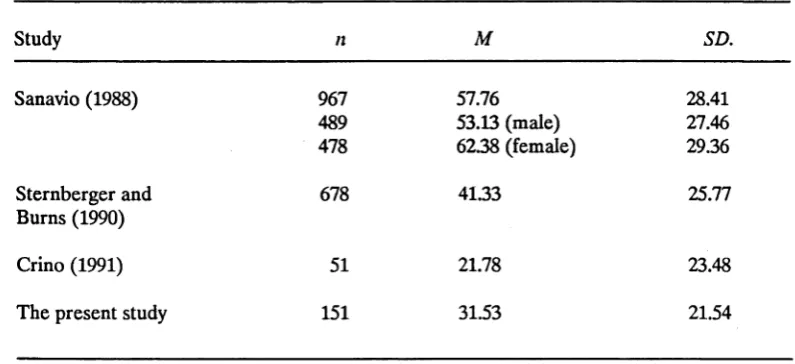
For Sanavio’s (1988) Italian sample the internal consistency of the Padua Inventory (coefficient Alpha) was 0.90 in male and 0.94 in female subjects (p.171). Test- retest correlations were 0.78 for males and 0.83 for the females who filled out the inventory twice at a 30 day interval. For the normal sample in the present study Cronbach’s (1951) Alpha was 0.94 which was the same result reported by Sternberger and Burns (1990) for their American sample of 678 college students (M= 18.85, SD= 1.52). Hence the Padua Inventory can claim established internal consistency for normal samples in Italy, America, and Australia.
Validity.
The Padua Inventory also possesses demonstrated construct validity. For Sanavio’s (1988) Italian sample, the PI correlation with the Maudsley Obsessional- Compulsive Questionnaire (Hodgson & Rachman, 1977) was .70; with the Leyton Obsessional-Compulsive Inventory (Cooper, 1970) it was .71 with symptom and .66 with trait scales; and with the Self-Rating Obsessional Scale (Sandler & Hazari, 1960) the PI correlation was .61. It also has "divergent validity with respect to other neurotic disorders" (Sanavio, 1988, p.169).
Also Sternberger and Burns (1990) reported that the PI demonstrated convergent and divergent validity with the Symptom Checklist-90 Revised (SCL-R) (Derogatis, 1983) and the Maudsley Obsessive Compulsive Inventory (MOCI) (Hodgson & Rachman, 1977). They found the PI total score correlated significantly with the SCL-R obsessional scale. Moreover this correlation was significantly different from the Pi’s correlation with any other SCL-R subscale. In addition the corresponding subscales of the PI and MOCI correlated with one another, and these correlations were significantly different from the correlations between noncorresponding subscales.