by
Mark Peter Krstic
B.Agr.Sc. (Hons.), TasSubmitted in fulfilment of the requirements for the degree of Doctor of Philosophy
UNIVERSITY OF TASMANIA HOBART
I declare that this thesis contains no material which has been accepted for the award of any other degree or diploma in
any other tertiary institution and, to the best of my knowledge
and belief, contains no copy or paraphrase of material
previously published or written by any other person except
where due reference is made in the text of the thesis.
Mark P. Krstic
5 / 2 / 1997
Authority of Access
This thesis may be made available for loan and limited
copying in accordance with the Copyright Act 1968
Mark P. Krstic
AACC American Association of Cereal Chemists ABA Abscisic acid
AOAC Association of Official Analytical Chemists ARF Adventitious root formation
BSA Bovine serum albumin CG Callus growth
DHZR Dihydrozeatin riboside DW Dry weight
GA n Gibberellic acid A n
GC Gas chromatography
GC-MS Combined gas chromatography - mass spectrometry IAA Indole-3-acetic acid
IBA Indole-3-butyric acid IRGA Infra red gas analysis LM Light microscopy
LSD Least significant difference LWP Leaf water potential
MPa Mega pascal
PFD Photon flux density PGR Plant growth regulator ppm Parts per million
RIA Radioimmunoassay
SRG Scale of Root Growth TIBA 2,3,5-Triiodobenzoic acid TG Top Growth
Summary
Pinus radiata is an important plantation forest species in Tasmania and other
regions of the world. The growth of P. radiata from vegetative propagules has been
demonstrated to have many advantages over the conventional seedling method of propagation. The major problems associated with the vegetative propagation of P. radiata by cuttings are the seasonal variation in the percentage of cuttings forming
roots and the loss of rooting ability with increased stock plant age. This study investigated the anatomical and physiological factors affecting adventitious root formation in P. radiata..
Initial investigations using controlled environment conditions indicated that anatomical and/or physiological factors rather than the propagation environment were mainly responsible for the seasonal variation in the percentage of P. radiata cuttings forming roots. Most of the mortality observed in cuttings occurred prior to callus formation, highlighting the time of adventitious root development which needed to be investigated further.
In controlled environmental conditions (20°C, 95% RH, 14 hour
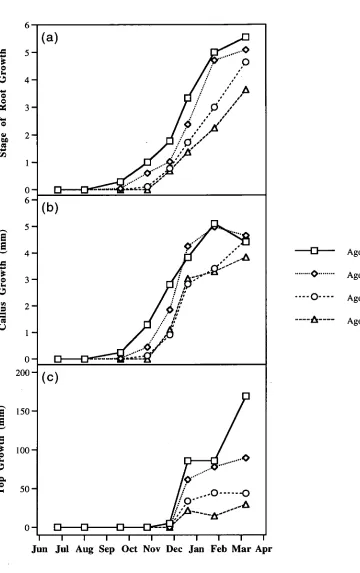
photoperiod), callus initiation was observed approximately 4 weeks after excision and root initiation was observed at approximately 11 weeks after excision. The
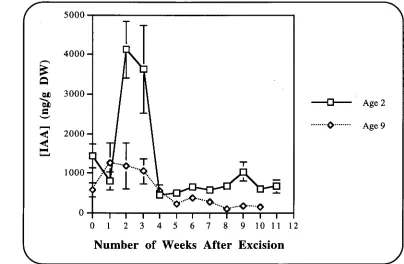
examination of endogenous plant growth regulator concentrations indicated that the change in the concentration of auxin during the callus formation period may be an important indicator of rooting success in P. radiata cuttings. In those cuttings which
exhibited a high rooting percentage, a transient increase in auxin concentration was observed in the basal region of the cuttings 2 and 3 weeks after excision. This was not observed in cuttings which exhibited a low rooting percentage.
The maintenance of adequate water relations in the cuttings during ARF was demonstrated to influence the rooting percentage. In those cuttings which survived and rooted, the leaf water potential was maintained above a value of -2.50MPa. However, in those cuttings which failed to survive the leaf water potential was below -2.50MPa in the week prior to cutting necrosis.
I wish to sincerely thank my supervisors, Professor R.J. Clark, Professor and
Head of the Department of Agricultural Science at the University of Tasmania, and
Dr P.H. Brown, Lecturer in Horticultural Science at the University of Tasmania, for
their encouragement and guidance throughout this project.
I would also like to thank Australian Newsprint Mills (ANM) for providing
financial and 'in kind' assistance throughout the duration of the project. A special
thanks to Sandra Hetherington (ANM) in her tireless assistance and encouragement.
Thanks also to Amcor Plantations Pty Ltd for their financial and technical
contribution to my project.
The financial contribution provided by an Australian Postgraduate Research
Award (APRA) is gratefully acknowledged.
A special thanks to the technical staff of the Department of Agricultural
Science, Mrs S. Jones, Mr W. Peterson, Mr D. Bradford, Mrs L. Dow and Mrs L.
Maddock. The assistance of Dr Noel Davies of the Central Science Laboratory,
University of Tasmania, during the analysis of carbohydrates by GC-MS is gratefully
acknowledged.
I would like to thank Professor R.C. Menary and Dr N.J. Roberts for their
expertise in microtome and radioirnmunoassay work, respectively. I would like to
also thank my fellow postgraduate students for their help and support during this
project. I am also deeply indebted to Mr Steve Wilson for his assistance in the
understanding of plant water relations. A special thanks to my office-mates and
friends Amabel and David Fulton for their support and assistance throughout the
project.
Last, but not least I would like to sincerely thank my parents (Sandra and
Peter), my girlfriend (Alexandra), family and friends for encouraging me to achieve
Table of Contents
Summary iii
Acknowledgments
I. General Introduction 1
II. Literature Review 4
1. Introduction 4
1.1 Introduction of Plant Species being Investigated 4 1.1.a Botanical description of Pinus radiata D. Don 4
1.1.b Origin and History 4
1.1.c Importance in Forestry 5
1.1.d Seedling Propagation 5
1.2 Importance of Vegetative Propagation in P. radiata 6
1.2.a Genetic Advantages 6
1.2.b Morphological Differences 7
1.2.c Managerial and Economic Advantages 8
1.3 The Vegetative Propagation of P. radiata 8
2. Stock plant effects 10
2.1 Genetic Effects 10
2.2 Environmental Effects 11
2.2.a Temperature 11
2.2.b Light 11
2.2.b.1 Irradiance 12
2.2.b.2 Photoperiod 12
2.2.b.3 Light Quality 13
2.2.c Water Relations 13
2.2.c.2 Water Logging 2.2.d Mineral Nutrition
2.3 Stock Plant Age 14
2.3.a Effect of Stock Plant Age 14
2.3.b Physiological Age 15
2.4 Season of Collection 16
3. Post Cutting Excision Effects 17
3.1 Environmental Effects 17
3.1.a Temperature 17
3.1.b Water Relations 18
3.1.c Light 19
3.1.c.1 Irradiance 19
3.1.c.2 Photoperiod 20
3.1.c.3 Light Quality 21
3.1.d Rooting Media 22
3.1.e Carbon Dioxide 23
3.1.f Mineral Nutrition 24
3.2 Cutting Size and Setting Depth 24
4. Morphological and Anatomical Events Associated with Adventitious
Root Formation 26
4.1 Adventitious Root Formation 26
4.2 Anatomical Stages of Adventitious Root Formation 26
4.2.a Root Initiation 27
4.2.b Root Growth 28
14 14
5. Physiological Changes Associated with Adventitious Root Formation 29
5.1 Water Relations 29
5.2 Photosynthesis and Respiration 30
6. Biochemical Changes Associated with Adventitious Root Formation 31
6.1 Plant Growth Regulators 31
6.1.a Auxin 31
6.1.a.1 Exogenous Applications 32
6.1.a.2 Endogenous Levels 32
6.1.b Ethylene 34
6.1.b.1 Exogenous Applications 34
6.1.b.2 Endogenous Levels 34
6.1.c Cytokinins 35
6.1.c.1 Exogenous Applications 35
6.1.c.2 Endogenous Levels 35
6.1.d Gibberellins 36
6.1.d.1 Exogenous Applications 36
6.1.d.2 Endogenous Levels 36
6.1.e Abscisic acid 37
6.1.e.1 Exogenous Applications 37
6.1.e.2 Endogenous Levels 37
6.1.f Recently Discovered Plant Growth Regulators 38 6.1.g Interactions Between Plant Growth Regulators 38
6.2 Carbohydrates 39
6.2.a Stock Plant Carbohydrate Status and ARF 39
6.2.b Carbohydrate Metabolism During ARF 40
6.2.c Exogenous Applications of Carbohydrates 40
6.3 Enzyme Activities 41
6.3.a Oxidases 41
6.3.b Hydrolytic Enzymes 42
7. Summary and rationale for experimental work 43
III. General materials and methods 45
1. Cutting Collection 45
2. Propagation Conditions 45
2.1 Field Trials 45
2.2 Phytotron Trials 45
3. Observation Methods 46
3.1 Rooting Percentage 46
3.2 Stage of Root Growth 46
3.3 Callus and Top Growth 49
4. Consumable Materials 49
4.1 Solvents and Reagents 49
4.1.a Solvents 49
4.1.b Reagents 49
5. Apparatus 49
6. Tissue Sampling 50
6.1 Tissue Collection 50
6.2 Tissue Freeze-Drying and Storage 50
6.3 Tissue Grinding 50
7. Radioimmunoassay Technique 51
7.1 Extraction and Purification of Plant Growth Regulators 51
7.2 Radioimmunoassay 52
7.3 Validation of Immunoassays 53
IV. Results 55
1. Effect of Parent Age and Season of Collection on the Rooting and
Growth of Cuttings 55
1.1 Introduction 55
1.2 Materials and Methods 57
1.2.a Stock Plant Age and Timing of Collection Experiment 57
1.2.a.1 Experimental Design 57
1.2.a.2 Cutting Material and Propagation Conditions 57
1.2.a.3 Measurements 57
1.2.b Length and Diameter Experiment 59
1.2.b.1 Experimental Design 59
1.3 Results 59
1.3.a Stock Plant Age and Timing of Collection Experiment 59 1.3.a.1 Effect on Rooting and Growth of Cuttings 59 1.3.a.2 Changes in Endogenous Plant Growth
Regulators 63
1.3.b Controlled Environment Studies 67
1.3.b.1 Effect on Rooting and Growth of Cuttings 67 1.3.c Effect of Cutting Length and Diameter 69 1.3.c.1 Effect on Rooting Percentage 69 1.3.c.2 Effect on Cutting Growth 69
1.4 Discussion 73
2. The Identification of Physiological and/or Anatomical Factors likely to
Influence Rooting 76
2.1 Introduction 76
2.2 Materials and Methods 76
2.3 Results 77
3. Anatomical Changes Occurring in Pinus radiata Cuttings During
Adventitious Root Formation 80
3.1 Introduction 80
3.2 Materials and Methods 80
3.2.a Experimental Design 80
3.2.b Fixation Procedure 81
3.2.c Dehydration, Infiltration and Embedding Procedure 81 3.2.d Sectioning, Rehydration and Safranin-Fast Green Staining
Procedure 82
3.2.e Microscopy and Photography 82
1.3 Results 83
1.4 Discussion 93
4. Plant Growth Regulator Metabolism 95
4.1 Introduction 95
4.2 Materials and Methods 96
4.2.a Experimental Design 96
4.3 Results 97
4.3.a Effect of Cutting Collection at Different
Times in the Season 97
4.3.a.1 Auxin 97
4.3.a.2 Abscisic acid 99
4.3.a.3 Zeatin Riboside 102
4.3.a.4 Dihydrozeatin Riboside 104
4.3.b Effect of Stock Plant Age 106
4.3.b.1 Auxin 107
4.3.b.2 Abscisic acid 108
4.3.b.3 Zeatin Riboside 109
4.3.b.4 Dihydrozeatin Riboside 110
4.4 Discussion 111
5. Carbohydrate Metabolism 114
5.1 Introduction 114
5.2 Materials and methods 115
5.2.a Experimental Design 115
5.2.b Soluble Carbohydrate Assay 115
5.2.d Starch Assay 118
5.3 Results 119
5.3.a Effect of Cutting Collection at Different Times in the
Year 119
5.3.b Effect of Parent Stock Plant Age 128
5.4 Discussion 134
6. Water Relations 136
6.1 Introduction 136
6.2 Materials and Methods 137
6.2.a Experimental Design 137
6.2.b Measurement of Cutting Water Potential 137
6.3 Results 138
6.3.a Stock Plant Water Potential 138
6.3.b Changes in Water Potential During Transport 139 6.3.c Changes in the Water Potential of Cuttings Collected
at Different Times in the Year 140
6.3.d Effect of Parent Stock Plant Age 142
6.4 Discussion 144
7. Photosynthesis and Water Relations in Cuttings during Callus
Development 146
7.1 Introduction 146
7.2 Materials and Methods 147
7.2.a Infra Red Gas Analyser 147
7.2.b Measurement of Photon Flux Density and Light
Saturation Curves 147
7.2.c Measurement of Leaf Area 148
7.2.d Calculation of Net Assimilation Rates 149
7.2.e Porometer Measurements 150
7.2.f Water Potential Measurements 150
7.3 Results 150
8.2 Materials and Methods 158
8.2.a Experimental Design 158
8.3 Results 158
8.4 Discussion 163
9. Manipulation of Rooting 165
9.1 Introduction 165
9.2 Materials and Methods 166
9.2.a Triiodobenzoic acid (TIBA) Experiment 166 9.2.b Application of Exogenous Auxin (Concentration x Timing
Experiment 167
9.2.c Interaction of Auxin, Sucrose and Timing of Application 168 9.2.d Glucose and Fructose Application Experiments 169
9.3 Results 169
9.3.a Effect of Triiodobenzoic Acid (TIBA) 169 9.3.a.1 Effect on Percentage Rooting 169 9.3.a.2 The Effect of TIBA on IAA Concentration 172
9.3.b Auxin Applications 174
9.3.b.1 Concentration and Timing Experiment 174 9.3.b.2 Auxin-Sucrose and Timing Experiment 174 9.3.c Comparison of Cutting Water Potential 178 9.3.d Glucose and Fructose Applications 179
9.4 Discussion 180
V. General Discussion 182
VI. Bibliography 192
I.
General Introduction
The high demand for quality pulp and timber products in modern society has resulted in an increased reliance and production of forestry related products.
Traditionally, the pulp and timber was obtained from native forest stands. However, an increased environmental awareness about the need to preserve areas of native forest, where endemic flora may be rare, has resulted in the introduction of government legislation in many countries to protect these areas from forestry
activities. In comparison to native forest stands, a higher yield of pulp and timber is generally achieved under a plantation forestry system. In plantation forestry, many different tree species have been used as a source of pulp and timber, including Pinus radiata. Plantation forestry aims to maximise the economic return from an area of land by optimising yield, quality, management and sustainability parameters.
Most of the pulp and timber used in modern society is obtained from plantation forests. Plantation forests are often managed intensively and therefore growers often research new ways of maximising the economic yield. One such way of increasing the economic yield of P. radiata plantations is to use vegetative propagules as transplants. Vegetative propagation in forestry has been used for many years, not only as a propagation tool, but also as a means for increasing the rate of genetic improvement in breeding programs. It has been known since the late 1920's that P. radiata can been propagated relatively easily from cuttings. However, the
commercial production of rooted cuttings on a large scale, as a source of transplants in plantation forestry, was not adopted until the early 1980's. At this time research in Australia and New Zealand proved conclusively that there were significant
advantages in using cuttings as transplants, compared with seedlings. It was
demonstrated that the use of rooted cuttings as transplants, compared with the use of seedlings, could result in increased yields of high quality end product (Klomp and Menzies, 1988; Menzies and West, 1982; West, 1988). Similar research also demonstrated that the management of cutting plantations was significantly easier than conventional seedling plantations (Menzies et al., 1985).
total production occurs in Japan, where valuable sugi (Cryptomeria japonica
D.Don) cultivars have been vegetatively propagated for at least five centuries
(Ritchie, 1991). Another 10 million or more cuttings of P. radiata are being grown annually in Australia and New Zealand (Ritchie, 1991). In 1992 eleven nurseries, located in south-eastern Australia, produced over 3.3 million cuttings (Duryea and Boomsma, 1992). The current (1996) number of P. radiata cuttings placed in the soil (referred to as 'set here after) in Australia is estimated at over 9.0 million (N. McGeary, pers. comm., 1996). In Tasmania, the current production of P. radiata
cuttings is estimated at 300, 000 (S. Hetherington, pers. comm., 1996). However, Australian Newsprint Mills (ANM) aims to produce over 2.5 million cuttings annually, in Tasmania by the year 1999 (S. Hetherington, pers. comm., 1996).
In Tasmania, the propagation of P. radiata cuttings was first trialed in 1993
by the local forestry company, ANM. ANM acted on the advice of a Victorian forest company Amcor Plantations Pty. Ltd.. Initially, only 100, 000 cuttings were set. The methods and technology employed to propagate cuttings in the nursery were essentially identical to those employed in other forestry nurseries located throughout both Australia and New Zealand.
The factors affecting the propagation of P. radiata by cuttings have been
researched intensively in Australia and New Zealand during the past 50 - 60 years. Seasonal and maturational problems are considered some of the most important factors influencing the successful propagation of P. radiata cuttings under normal
field nursery conditions (Fielding, 1954; Fielding, 1969; Jacobs, 1939; Thulin and Faulds, 1968). In large scale commercial cuttings operations these factors are
managed to maximise the propagation success. However, there is currently a lack of scientific knowledge about how these factors influence the success of propagation. It
is desirable to have an understanding of the physiological, biochemical and
morphological changes associated with adventitious root formation (ARF) to aid in the management of large scale cuttings nurseries.
The aims of the present study were to:
1. Describe in detail the morphological and anatomical changes associated with ARF in P. radiata cuttings propagated under Tasmanian field conditions. 2. Examine the influence of cutting environment on the rooting success in P.
3. Examine the changes in endogenous plant growth regulator concentrations in
P.radiata at the time of cutting excision and during ARF.
4. Examine changes in endogenous carbohydrate concentrations during ARE 5. Examine changes in water relations during ARF.
6. Examine the photosynthetic capacity of P. radiata cuttings during ARF. 7. Investigate the effect of cultural practices on ARF in P. radiata cuttings with
Literature Review
II.! Introduction
1.1 Introduction of Plant Species being Investigated
1.1.a Botanical Description of Pinus radiata D. Don
Pinus radiata D.Don (Monterey pine) is an evergreen tree which belongs to
the family Pinaceae, the largest family of Gymnosperms. The family contains 9 genera and approximately 200 species, most being natives of the northern
hemisphere (Curtis and Morris, 1975; Mabberley, 1989). Trees are monoecious, usually 12-35 metres high when mature, with fissured, hard and scaly bark. The branches are arranged into regular whorls, with three needle-like leaves (7-14cm long; 1-2mm wide; triangular in transverse section) arising from dwarf shoots. Numerous male cones occur at the base of each year's growth, replacing the dwarf shoots. The female cones occur singly or in whorls replacing long branches and take approximately 2-3 years to ripen. The ripe female cones (8-14cm long) are usually asymmetrical, ovoid-conical in shape when closed, and almost spherical and light brown in colour when open (Curtis and Morris, 1975). The seed is approximately 6mm long with broad oblong wings approximately 3 times as wide as they are long (Curtis and Morris, 1975; Dallimore and Jackson, 1966).
1.1.b Origin and History.
P. radiata is an introduced species in Tasmania, Australia, having been
planted for shelter belts and as a source of softwood. The trees grow rapidly and provide timber of medium quality which may be used for plywood, weatherboards, flooring, packing cases and pulp-wood source (Curtis and Morris, 1975).
P. radiata is a native of Monterey County, California, where its distribution is
1.1.c Importance in Forestry.
The principle advantages of P. radiata over other forestry species is its rapid growth when young and its ability to withstand considerable exposure to strong sea
winds (Dallimore and Jackson, 1966). It grows best in light, moist, but well-drained
loamy or sandy soil (Curtis and Morris, 1975; Dallimore and Jackson, 1966).
However, it can grow well even on dry, infertile, sandy soils (Dallimore and Jackson,
1966; Neilsen, 1990). It is susceptible to a small number of introduced insects (e.g.
Sirex) and diseases (e.g. Dothistroma and Spring yellow needle cast) and has a low susceptibility to browsing damage (Neilsen, 1990). It produces light wood (400-
450kg per m3) which is soft, brittle, with conspicuous resin ducts, fine medullary rays, and often very wide annual rings (19-31mm apart) (Dallimore and Jackson,
1966). The heartwood is light brown or brownish-purple and sapwood is white or
pale yellow in colour, comparable to Pinus pinaster in quality (Dallimore and Jackson, 1966). Although the timber is inferior in quality to that of several other species, there are many purposes for which it can be utilised, notably indoor work in
building construction and box-making (Curtis and Morris, 1975; Dallimore and
Jackson, 1966)
P. radiata is of little commercial value in its native country, but is an important timber tree species in several countries to which it has been introduced,
notably, South Africa, Australia, and New Zealand, where it has produced stands of
425 m3 per hectare at 25 years of age (Dallimore and Jackson, 1966).
1.1.d Seedling Propagation
In modern plantation forestry the use of nursery grown and conditioned
transplants is considered normal practice for most forest species. Nursery grown
transplants of P. radiata have traditionally been propagated from seed. The seed is collected from open or control-pollinated mature female cones which have been
harvested from existing plantations or specialised seed orchards. The P. radiata seed is usually subjected to a stratification and/or a fungicide treatment prior to
mechanical sowing into a nursery bed of fine tilth at a defined sowing rate in spring.
In nurseries located in north-eastern Victoria, Australia, seedling emergence can be
expected to occur between 10 to 16 days ( at >70% germination) after sowing if
adequate soil moisture is maintained (Minko and Craig, 1976). The spring sown
plantable size (approximately 30cm in height). The physiological and environmental
factors effecting coniferous seedling growth has previously been reviewed by
Lavender (1984). While growing in the nursery the seedlings are usually
'conditioned' for transplanting by utilising various mechanical treatments
(undercutting, wrenching, topping and lateral root pruning). The mechanical
treatments used to condition seedlings aim to produce 'hardy' seedlings, with a
compact fibrous root system and an ideal root:shoot ratio able to best survive the
stress of transplanting.
1.2 Importance of Vegetative Propagation in P. radiata
The propagation of P. radiata from seed is a well understood and established technique for the commercial production of this species for use in plantation forestry.
With the relative abundant production of improved seed from breeding programs, it
appears pertinent to ask, why grow P. radiata from cuttings? Research during the past 50 - 60 years has demonstrated that the use of P. radiata cuttings as transplants has four main advantages over conventional seedling transplants; (1) genetic, (2)
morphological, (3) managerial and (4) economic (Shelbourne, 1986).
1.2.a Genetic Advantages
It was generally considered that one of the main advantages of using cuttings
as transplants, as opposed to seedlings, would be the propagation of genetically
superior clones. However, because of the loss of rooting ability associated with plant
ageing, the propagation of mature P. radiata trees by cuttings is difficult. The rejuvenation of mature clones to allow them to be vegetatively propagated is not yet
possible, but may be an option in the future.
In control-pollinated (CP) orchards where crosses are made artificially between
small numbers of the very best progeny-tested parents, the number of individual
plants produced from the CP seed may be increased using vegetative multiplication
(Shelbourne, 1986). In CP clones, the traits of commercial interest are usually field
tested prior to their use in establishing clonal plantations. Therefore, vegetative
multiplication allows higher parental selection pressures to be used at the breeding
stage, and speeds the realisation of genetic gain achieved with time (Chaperon,
1.2.b Morphological Differences
A number of studies have compared the growth rate of P. radiata seedlings and cuttings in the field (Brown, 1974; Field, 1934; Fielding, 1969; Shelbourne and
Thulin, 1974; Sweet and Wells, 1974). Most report similar growth rates (measured
as height growth/unit time) in both seedlings and cuttings set from juvenile (ie less
than 8 years old) stock plants (Brown, 1974; Field, 1934; Fielding, 1969). However,
slower growth rates (height and diameter) were observed in cuttings collected from
older stock plants (ie greater than 15 years old) (Brown, 1974; Fielding, 1969; Sweet
and Wells, 1974). Sweet and Wells (1974) stated that the loss in growth rate
associated with ortet (stock plant) age would result in increased times from planting
to canopy closure, when compared with trees of seedling origin. In conclusion, it
appears that cuttings collected from juvenile stock plants have similar growth rates
as seedlings, however, if cuttings are collected from mature stock plants then a loss
in growth rate can be expected.
It has been observed that P. radiata raised as cuttings, even from unselected trees, produce straighter trees with fewer defects, such as butt sweep, crooked or
forked stems than trees of seedling origin (Menzies et al., 1985; Menzies and IClomp, 1988; Thulin and Faulds, 1968). More specifically, cuttings collected from older
stock plants tend to produce straighter trees than those collected from juvenile stock
plants (Shelbourne and Thulin, 1974). Cuttings also tend to have branches that are
thinner and more perpendicular to the stem in comparison to trees of seedling
origin (Fielding, 1969; Pawsey, 1971; Tufuor, 1973). This thin branching habit
results in smaller knots and a higher recovery of stress graded sawn timber and
veneer (Spencer, 1987). Also, trees grown from cuttings generally have less stem
taper and thinner bark than those grown from seedlings (Eldridge and Spencer, 1988;
Fielding, 1970; Pawsey, 1971; Sweet and Wells, 1974). These factors are all a
reflection of a more advanced maturation state.
In the early stages of growth cuttings are reportedly less susceptible to
Dothistroma pini, a plant pathogen, than seedlings (Burdon and Bannister, 1985; Carson, 1988) . However, as the plantation ages both seedlings and cuttings have
been found to be equally susceptible (Carson, 1988) Cuttings are also less prone to
toppling than seedlings because of their reduced 'sail' area and more rigid root system
(Mason and Trewin, 1987). A higher percentage survival has been reported for
cutting transplants (95%) in the field compared with seedling transplants (83%)
In P. radiata, the wood properties of cuttings collected from mature stock plants differ significantly to those observed in seedling or juvenile cutting origin
trees (Cown, 1988; Nicholls, et al., 1974). In cuttings collected from mature trees the propagules had longer tracheids (especially near the pith), larger spiral grain
angles and a lower wood density, compared with seedling origin trees of equivalent
age (Cown, 1988). However, Cown (1988) also demonstrated that cuttings collected
from juvenile parents (up to 7 years old) have similar wood properties to those trees
grown from seedlings.
1.2.c Managerial and Economic Advantages
The cost of producing cuttings as transplanting stock from open-pollinated
(OP) seed is approximately 2 - 5 times the cost of producing seedlings (Menzies et al., 1985; Menzies et al., 1988) . However, the high costs associated with the production of genetically superior CP seed has meant that cuttings collected from
nursery stool beds are cheaper to produce than control pollinated seedlings (Menzies
etal., 1992).
Cuttings are usually planted at a wider spacing than seedlings, because of
their better growth form, increased resistance to toppling and better field survival
(Mason and Trewin, 1987; Menzies et al., 1985). Although the cost of producing cuttings is higher than that for seedlings, the establishment costs are reduced because
of the reduced planting density and transplanting labour costs. The cost of
establishing seedling or cutting plantations ($/Ha) then becomes similar (Cameron,
1993). Compared with seedling plantations, cutting plantations require less labour to
thin and prune because of their lower planting density and thin branch habit
(Cameron, 1993). The straighter stem, reduced taper, thinner bark, smaller knots and
better wood properties of cutting trees translate into a higher percentage of superior
quality harvestable end product.
1.3 The Vegetative Propagation of P. radiata
P. radiata may be vegetatively propagated in a number of ways, (1) by stem
cuttings (Cameron, 1968; Fielding, 1954; Fielding, 1969; Jacobs, 1939); (2) by
equipment and technology. There is a negative correlation between the cost of producing a plant and multiplication rate. Stem cuttings are the cheapest to produce while tissue culture plants are the most expensive to produce. However, the
multiplication rate is the highest in tissue culture compared with the propagation by stem cuttings. The vegetative propagation of P. radiata on a commercial scale is
achieved using stem cuttings. The lower costs of production per plant and the ability to utilise existing farm machinery and equipment make this the most common
method of propagation. The propagation of P. radiata by stem cuttings will be the
method discussed here after.
The propagation of stem cuttings firstly requires the collection of suitable cutting material. Cuttings may be collected from existing field plantations or from specialised nursery grown and hedged stock plants. The major problems associated with the propagation of P. radiata by cuttings are the seasonal variation in the
percentage of cuttings forming roots and the loss of rooting ability associated with plant ageing (Fielding, 1954; Fielding, 1969; Jacobs, 1939). Therefore, the age of cutting material and the timing of cutting collection are very important in
determining the success of the commercial operation (discussed later in Section 11.2.3 and Section 11.2.4 of this thesis). Stem cuttings, usually between 7-12cm in length and 3 - 8mm in diameter, are collected from the parent plant and placed approximately 5cm deep into the nursery soil. The cuttings are usually misted periodically (5 minutes/hour) to reduce the rate of transpiration and maintain cell turgor during adventitious root formation (ARF). During ARF various herbicide and fungicide treatments are applied to control weeds and plant pathogens respectively.
11.2 Stock Plant Effects
2.1 Genetic Effects
Adventitious root formation in cuttings is thought to be under strong genetic control (Haissig, 1986; Haissig and Riemenschnieder, 1988). A proportion of the variation in the rooting ability of stem cuttings may be attributed to the biochemical and physiological processes which occur in the cutting during development and are ultimately affected by genetic differences within and between species (Leakey et al.,
1992).
Fielding (1954) demonstrated that cuttings taken from P. radiata trees, particularly over ten years of age, exhibit large differences in the ease with which they can be propagated from cuttings. At the New Zealand Forest Research Institute, both family and clonal differences were observed in a trial which was established to investigate the effect of different genotypes on the rooting of P. radiata cuttings (M. Menzies, pers. comm., 1996). In this trial, cuttings were collected from stock plants which were physiologically 1.5-3 years old. The trial examined 10 families, with five clones per family and at three different times in the season (June, mid-July and August). The variation in rooting between families and clones was the greatest in August and the smallest in mid-July. This indicated that genetic differences in the rooting percentage of P. radiata occurred in juvenile material at different times in the season. In Pinus banksiana ARF varies markedly between cuttings from half-sib families within good and poor-rooting groups (Haissig, 1986). Also, the rooting response to applied auxin has been demonstrated to differ between families (Haissig,
2.2 Environmental Effects
Traditionally, little emphasis was placed on the stock plant environment. It wasn't until the effects of etiolation were known that attention was focussed on the effect of stock plant environment on rooting of cuttings. Now many environmental effects are known to influence the rooting of cuttings in many plant species.
2.2.a Temperature
There has been no research in Pinus spp. which has investigated the effect of
stock plant temperature on the subsequent rooting of cuttings. This is surprising considering that seasonality differences occur in the rooting of P. radiata cuttings
(discussed later in Section 11.2.4) (Fielding, 1954; Fielding, 1969; Jacobs, 1939). The effect of stock plant temperature on the rooting of cuttings has been reviewed by Andersen (1986) and Moe and Andersen (1988). Both stress that temperature effects other environmental parameters and also the rate of growth and development in the stock plant. For example, leaf temperature could be 12-15°C higher than the
surrounding air temperature under irradiance as compared with darkness (Andersen, 1986). Given the problems in experimental technique, research by Heide (1964) in
Begonia spp. demonstrated that there was little difference in the rooting success of cuttings taken from stock plants grown at different temperatures. Fischer (1981) cited by (Andersen, 1986) observed no difference in root number or days required for root emergence in pea cuttings, where stock plants were grown at 15, 20 or 25°C.
Although little research has been conducted, a tentative conclusion is that stock plant growing temperature plays a minor role in the subsequent rooting of cuttings.
2.2.b Light
Perhaps the first evidence that incident light received by the stock plant was involved in the rooting of cuttings came from etiolation experiments (Reid, 1923 cited by Maynard and Bassuk, 1988). Etiolation is the phenomenon exhibited by green plants when grown in darkness (Abercrombie et al., 1980). Etiolation was found to accelerate the rooting of cuttings. Banding, or the localised exclusion of light from the region of ARF has similar effects to etiolation (Maynard and Bassuk,
2.2.b.1 Irradiance
In P. radiata the influence of stock plant irradiance on the subsequent rooting
of cuttings has not been investigated. However, the influence of stock plant irradiance on the rooting of cuttings has been reviewed in other plant species
(Andersen, 1986; Harmann and Kester, 1983; Moe and Andersen, 1988). The level of irradiance experienced by the stock plant may inhibit or delay rooting, promote rooting, or have no effect (Moe and Andersen, 1988). A high level of irradiance (40Wm-2) experienced during the growth of the stock plant has been demonstrated to significantly reduce the rooting of Pinus sylvestris cuttings, compared with stock
plants grown at a low level of irradiance (8Wm-2) (Hansen et al., 1978). Stromquist
and Eliasson (1979) reported similar findings with Picea abies (Norway spruce).
The carbohydrate content of Pinus sylvestris cuttings grown under a high level of
irradiance was greater than those cuttings grown under the low level of irradiance (Hansen et al., 1978). Hansen et al. (1978) stated that it was possible that the higher
carbohydrate content observed in cuttings collected from stock plants grown at high levels of irradiance is supraoptimal to ARF.
In other plant species, eg Chrysanthemum morifolium and Begonia spp.,
increasing the level of irradiance to the stock plant has resulted in increased rooting of cuttings (Moe and Andersen, 1988). Similarly, there are examples where the level of irradiance experienced by the stock plant has no influence on the subsequent rooting success of the cuttings, eg Ligustrum x vicary (Knox and Hamilton, 1982
cited by Moe and Andersen, 1988).
2.2.b.2 Photoperiod
In P. radiata the influence of stock plant photoperiod on the subsequent
where SD may stimulate rooting, eg Chrysanthemum (Andersen, 1986). In conclusion, when considering the seasonal nature of rooting (Section 11.2.4) a
photoperiodic link does appear possible. However, the physiological basis and
mechanism of action are poorly understood.
2.2.b.3 Light Quality
There is a lack of published information on the effect of light quality during
stock plant growth of P. radiata on ARF of cuttings. Moe and Andersen (1988), in their review of the effects of light quality on stock plants and the subsequent rooting
of cuttings, indicated that the exposure of stock plants to far-red (FR) light may, as
opposed to red (R) light may stimulate rooting. However, in Phaseolus mungo the rooting of cuttings taken from seedlings grown under FR light was completely
inhibited (Gupta et al., 1977). In P. radiata the rooting is enhanced when cuttings are taken from the lower rather than the upper region of the stock plant (Fielding,
1969). This may be attributed to the increased level of FR light found lower in the
canopy due to the filtering of R light by the overlying leaves. However, the effects
of lowered light intensity and differences in ontogenetic ageing may be responsible
for this enhanced rooting lower in the canopy.
2.2.c Water Relations
The effect of stock plant water relations and the subsequent rooting of cuttings
can be divided into two main groups; (1) water stress and (2) water logging.
2.2.c.1 Water Stress
The growth of water-stressed P. radiata trees may be significantly reduced compared With plants grown under low water-stress conditions (Green and Mitchell,
1992). However, the effect of stock plant water relations on the subsequent rooting
success remains unknown in Pinus spp.. In pea cuttings Rajagopal and Andersen (1980a) demonstrated that there was a reduction in root numbers associated with
increasing stock plant water stress, especially in stock plants grown under low levels
of irradiance (16 Wm-2). Although, they did find that the rooting may be stimulated
by a small amounts of water stress in stock plants grown under high levels of
irradiance (38 Wm-2). The reduction in root numbers associated with increasing
stock plant water stress has been weakly correlated to the increased ABA content of
2.2.c.2 Water Logging
Some intact plant species can often develop adventitious roots in response to waterlogging. The effect of water logging on ARF in P. radiata has not been
investigated. However, the influence of stock plant water logging on ARF has been investigated in many other plant species (Andersen, 1986; Moe and Andersen, 1988). The ecological significance of ARF in waterlogged conditions may be that it assists in the survival of the plant when the normal roots are suffering oxygen deficiency (Jackson and Drew, 1984 cited by (Visser et al., 1995). Kawase (1965) has
suggested that ethylene production in the waterlogged root was responsible for the induction of adventitious roots.
2.2.d Mineral Nutrition
The mineral nutrition of P. radiata stock plants and the relationship with the
subsequent rooting of cuttings has not been investigated. The effect of stock plant mineral nutrition and the subsequent rooting of the cuttings has previously been reviewed (Andersen, 1986; Moe and Andersen, 1988). In general, it appears that stock plants which are fertilised suboptimumally produce cuttings which root the best (Andersen, 1986; Moe and Andersen, 1988). Cuttings from nursery grown stock plants of Hypericum, Rosa and Rhododendron which had been grown in stone
wool (Grodan) with a lower concentration of the nutrient solution (0.05%) rooted better than those from strongly fertilised stock plants (0.2%) (Knoblauch, 1976 cited by Andersen, 1986). In summary, the available evidence suggests that lowering the mineral nutrition of the stock plants encourages rooting of the cuttings.
2.3 Stock Plant Age
2.3.a Effect of Stock Plant Age
The age of the parent plant has, for a long time, been known to influence the subsequent rooting of cuttings. Fielding (1954), Fielding (1969), Jacobs (1939), Mirov (1944) and Thulin and Faulds (1968) have demonstrated that the ease with which cuttings of P. radiata can be rooted declines with the age of the parent stock
rooting percentage in cuttings taken from 9 year-old stock plants (100%) and only a
small reduction in cuttings taken from 20 year-old stock plants (70%). Although
there are some inconsistencies in these reports, the general effect of increased parent
stock plant age is to lower the rooting success of cuttings. Fielding (1969)
speculated that the differences observed in the rooting success of cuttings collected
from the same aged parent plants could have been due to different parent genotypes,
physiological age (Section II.2.3.b) and environmental growth conditions.
2.3.b Physiological Age
In many woody plant genera there is a clear morphological distinction between
the juvenile stage and a later mature stage in the growth of the stock plant. In P.
radiata, there are differences between juvenile and mature foliage. The juvenile foliage contains a higher proportion of primary needles to secondary fascicle leaves
(M. Menzies pers. comm., 1994). The rooting of the cuttings from juvenile and
mature stock plants is known to differ greatly (Section H.2.3.a). However, differences in the stage of maturity can exist on the same tree. For example in P.
radiata cuttings taken from a position high in the crown are known to root poorly in comparison with cuttings taken lower in the crown (Fielding, 1969). The differences in the rooting of these cuttings has also been related to the ageing phenomena. The
cuttings collected higher in the crown are physiologically older than those taken near
the base, therefore the differences in rooting may be attributed to the difference in
physiological age. Different trees may age more rapidly than others, which may be why differences in rooting success exist between trees of the same chronological age.
Libby et al. (1971) developed a maturation model for the rooting of cuttings based on the distance between the position of the cutting on the stock plant and the ground
base of the stock plant. The further away from the base of the stock plant that the
cutting was collected, the less likely that those cuttings would strike, because the
cuttings were physiologically older (Libby etal., 1971).
Fielding (1969) reported that hedged P radiata stock plants of seedling origin remained physiologically juvenile in that cuttings taken from them rooted more
readily than those taken from unhedged stock plants of the same chronological age.
Hedging appears to arrest physiological ageing in P. radiata by allowing juvenile foliage to continue growing near the base of the stock plant. However, the
physiological age of the hedged stock plant can not be maintained in a juvenile state
2.4 Season of Collection
The time in year when cuttings are collected from the stock plant has been demonstrated to influence the rooting success of P. radiata stem cuttings (Fielding,
1954; Fielding, 1969; Jacobs, 1939; Menzies et al., 1988). Cuttings which are
collected during the winter months when the apex is in the dormant period of growth appear to root better than those taken during spring or summer when the stock plant is growing rapidly. Fielding (1954), in Canberra, demonstrated that stem cuttings taken between April and July (late-autumn, mid-winter) rooted well (99-82%), while those taken in November rooted poorly (10%). Contrary to this evidence, Menzies et al. (1988) demonstrated that fascicle cuttings taken from juvenile stock plants and
set under mist rooted well all year round. This may mean that the environmental conditions experienced during propagation are more important than the physiological condition of the cuttings at the time of collection. In fact, Fielding (1954) suggested that the dry-hot condition experienced during the summer months is one of the major factors responsible for the reduction in rooting success. However, where cuttings are collected and set in field nurseries there does exist a consistent seasonal variation in the rooting ability of cuttings. Whether it is due to the physiological status of the stock plant or the environmental conditions experienced during propagation remains unknown.
It is often recommended that cuttings be taken from fully turgid stock plant, ie. early in the morning or in cloudy weather (Hartmann and Kester, 1983). The timing of cutting collection (diurnal variation) has not been investigated in P. radiata or
11.3 Post Cutting Excision Effects
3.1 Environmental Effects
3.1.a Temperature
P. radiata cuttings set under field conditions are inherently predisposed to
ambient temperature fluctuations. It is extremely difficult, if not impossible, to separate the effect of temperature on ARF from a number of other environmental influences occurring concurrently in the field (Moe and Andersen, 1988). The investigation of temperature effects has been confined to few controlled environment studies, where increasing the mean temperature of propagation resulted in faster rates of ARF, or conversely less time to root (Cameron and Rook, 1974). Cameron and Rook (1974) reported unpublished results where P. radiata cuttings propagated in a
day/night temperature regime of 250/15°C had produced roots at 10 weeks, compared with 16 weeks at 200/10°C and 22 weeks at 150/5°C. This result would not appear surprising as the rate of many plant metabolic processes is controlled by temperature. Cameron and Rook (1974) reported that at 200/10°C more than 70% of cuttings formed roots, compared with 57% at 25°/15°C and only 36% at 150/5°C. However, Cameron and Rook (1974) stated that the interpretation of the effects of temperature on the percentage rooting in P. radiata was complicated due to fungal infection at
higher temperatures.
The use of bottom heat mist beds is not only wide-spread in the propagation of P. radiata but also for most other plant species (Eldridge and Owen, 1986;
Hartmann and Kester, 1983; Janick, 1986; Mirov, 1944). In P. radiata, bottom heat
to maintain the temperature of the rooting media in the zone of root initiation at approximately 220-25°C and glasshouse air temperatures between 18°C and 25°C are frequently used (Mirov, 1944; Eldridge and Owen, 1986). In most plant species, the use of bottom heat to maintain the temperature of the rooting medium at
species basal temperature is considered to play an important role in the rate and success of ARF in cuttings (Mencuccini et al., 1988). Fisher (1981) cited by
(Andersen, 1986) demonstrated that pea cuttings took longer to root to a
predetermined stage at lower temperatures, however, if the cuttings were allowed to continue growth, root number was tripled at 15°C compared with 25°C.
Temperature has been demonstrated to influence the rate of ARF in cuttings of
P. radiata and other plant species. More specifically the temperature in the zone of
root initiation and growth probably has the most influence on the rate of root development. However, it is difficult to separate the effect of temperature from a number of other environmental influences which can occur at the same time. The effect of temperature on the final rooting percentage still remains unknown, although differences were observed in P. radiata cuttings, the cause may not have been
temperature related (Cameron and Rook, 1974). The measurement of percentage rooting in temperature experiments at a particular date may only reveal different rates of root development and not true percentage rooting.
3.1.b Water Relations
When a cutting is severed from the stock plant a severe stress situation is created. The natural route for water supply, ie the roots, have been removed, yet transpiration through the leaves continues (Hartmann and Kester, 1983). The loss of water from the leaves may reduce the water content of the cuttings to such a low level as to cause the cutting to die before ARF can occur (Hartmann and Kester,
1983). At the time of setting P. radiata cuttings are often in a condition of intense
water stress (-2.5 to -3.0MPa) and if water loss continues, the stress will become extreme, ultimately fatal (Cameron and Rook, 1974). Cuttings lose water at a rate which is mainly dependent on the water vapour pressure difference between the leaf and the surrounding air surrounding (Andersen, 1986). This difference further depends to a considerable extent on the incoming and absorbed radiation which creates a temperature gradient (Andersen, 1986). To reduce the rate of transpiration in the leaves of the cutting to a minimum, the water vapour pressure of the air
Cameron and Rook (1974) proposed that there are four possible pathways for water uptake in P. radiata cuttings; (1) through the cutting base; (2) by diffusion
into the foliage immersed in the soil; (3) through the cuticle part of the stem in contact with the soil; (4) by entry through the foliage exposed to the air and wetted by rain, dew or misting. In experiments using tritiated water it was observed that most of the water entry into the cutting occurs through the base of the cut stem and through the foliage in contact with the moist soil (Cameron and Rook, 1974). Cameron and Rook (1974) considered this to be an important reason for leaving the foliage intact during propagation.
3.1.c Light
In all types of plant growth and development light is of major importance as the source of energy in photosynthesis. In the rooting of cuttings, the products of photosynthesis are important in the formation and development of a new adventitious root system. The effects of light on the rooting of cuttings can be due to light
intensity (irradiance), photoperiod (day length) and light quality (Hartmann and Kester, 1983).
3.1.c.1 Irradiance
The influence of irradiancel or light intensity on ARF in P. radiata cuttings
during propagation has not been investigated. However, the influence of irradiance during the rooting period has been reviewed in other plant species (Andersen, 1986; Hartmann and Kester, 1983; Loach, 1988). Loach (1988) reported that much of the research describing the relationship between the rooting of cuttings and irradiance experienced during propagation failed to consider the importance of stock plant irradiance (Section 11.2.2.b). The level of irradiance (8 or 40Wm-2) experienced
during the propagation of Pinus sylvestris (Scots pine) seedlings had no significant
effect on either the number of roots/cutting or the percentage of cuttings with roots (Hansen et al., 1978; Stromquist and Hansen, 1980). Similar results were observed
in Picea abies (Norway spruce) cuttings, where differences in irradiances (8 or
40Wm-2) experienced during propagation had little effect on the subsequent rooting
percentage (Bollmark and Eliasson, 1990; Stromquist and Eliasson, 1979). However, Haissig (1990) demonstrated that low levels of irradiance
cuttings resulted in significantly lower rooting and reduced numbers of roots/cutting when compared with cuttings propagated under high levels of irradiance (maximum 900gmol.m-2.s-1). High levels of irradiance during propagation have been
demonstrated to promote rooting in other plant species (e.g. Pisum sativum and Phaseolus aureus ) (Eliasson, 1980; Jarvis and Ali, 1984). This may suggest that
ARF is limited by the availability of current photosynthate (Andersen, 1986; Davis, 1988; Davis and Potter, 1981). This hypothesis gained support from experiments with photosynthesis inhibitors such as diuron (DCMU, a photosystem II inhibitor), where the rooting of cotyledon Sinapsis alba and Raphanus sativus cuttings was
reduced using DCMU (Lovell et al., 1972).
High levels of irradiance during propagation have been demonstrated to inhibit ARF in some plant species, e.g. Weigella, Hibiscus and Viburnum (Loach,
1979). Loach (1979) reported that cuttings propagated under high levels of irradiance usually have a lower water content than those under low levels of irradiance. The level of irradiance may also influence the temperature during propagation. This can complicate the interpretation of experiments designed to investigate the effect of irradiance on rooting. Etiolation of tissue at the site of adventitious root initiation has been demonstrated to stimulate the rooting of many plant species (Andersen, 1986; Eliasson, 1980; Hartmann and Kester, 1983).
No research has investigated the effect of irradiance on ARF in P. radiata
cuttings. However, the level of irradiance experienced during the propagation of cuttings has been demonstrated to influence ARF in many plant species. The importance of stock plant irradiance on rooting percentage has previously been discussed (Section 11.2.2.b) and should be taken into consideration when investigating the effects of irradiance during propagation.
1 - Irradiance is considered the relative amount light in the form of
photosynthetically active radiation (PAR; 400-700nm wavelength) per unit area (Hartmann and Kester, 1983).
3.1.c.2 Photoperiod
Because of the strong correlation between the season of cutting collection and the rooting success under field conditions, photoperiod was thought to have a
response (Cameron and Rook, 1974). Under conditions of natural daylight, Cameron and Rook (1974) observed that cuttings did not form roots until 'long day' conditions are achieved in November-December. In a preliminary experiment, which
investigated 4 different day lengths (8, 12, 16 and 24 hours) Cameron and Rook (1974) reported that photoperiod did not appear to influence the rate of callus growth or root formation of P. radiata cuttings, and that no significant differences were
observed in rooting percentage. They concluded that photoperiod was not an important factor in the rooting of P. radiata cuttings.
The effect of photoperiod during propagation on ARF in other plant species has previously been reviewed (Hartmann and Kester, 1983; Andersen, 1986). Andersen (1986) concluded that long days during propagation appeared to promote the rooting of cuttings in general, however, the effect was not spectacular. This conclusion is in agreement with (Smith and Wareing, 1972), who demonstrated that
Populus x robusta (poplar) cuttings propagated under long day conditions rooted
more successfully and produced more roots/cutting, however, the effects of
photoperiod were only significant on a few sample dates. The promotion of rooting under long days conditions may have resulted from the increased production of photosynthates.
3.1.c.3 Light Quality
No research has investigated the effect of light quality' on ARF in P. radiata
cuttings during propagation. The effects of light quality on ARF in other plant species has previously been reviewed (Hartmann and Kester, 1983; Andersen, 1986). It appears that red light can inhibit ARF in some plant species more than blue light, it is unknown whether this effect is mediated through some phytochrome response (Hartmann and Kester, 1983; Andersen, 1986). Andersen (1986) stated that in view of the extremely complicated experimental procedures necessary to elucidate this problem it is not surprising that insufficient evidence has been presented to indicate whether phytochrome is involved.
3.1.d Rooting Media
The large scale commercial production of P. radiata cuttings is usually
conducted in field nursery sites. Cuttings are usually set in raised nursery beds of soil, and misted on a regular basis to prevent desiccation. The soil which supports the cutting during adventitious root formation (ARF) should be open textured, deep, and free draining (Fielding, 1969). Both Fielding (1969) and Jacobs (1939)
described experiments where low rooting percentages were observed when cuttings were set in soil which was classed as a poor draining clay loam. In general, the soil media which supports the cutting throughout ARF should satisfy certain physical, chemical and biological criteria (Peate, 1989). The physical characteristics of the soil are usually considered to be of most importance during the early stages of ARF, before a root system has been formed. The soil media should have good aeration, high water holding capacity and good drainage characteristics for the developing root system which absorbs oxygen and releases carbon dioxide (Peate 1989). P. radiata
cuttings have been raised successfully on soils with a pH range of 5.1-7.0 (Jacobs, 1939; Whiteman pers. comm., 1993).
Where P. radiata cuttings are propagated in a containerised form such as pots,
trays or root trainer cells, etc, the type of rooting media used to fill these containers varies greatly. In examining the literature on rooting media used to propagate conifer cuttings, the standard rooting medium for many years was medium-course sand (Hitchcock 1928 cited by (Girouard, 1974). Experiments performed during the late 1930's demonstrated that a mixture of sand and peat moss of sphagnum origin in a ratio of 2:1 (v:v) was vastly superior to sand alone (Grace 1940, 1941, 1942 cited by (Girouard, 1974). Jacobs (1939) demonstrated that the type of rooting media used to propagate containerised P. radiata cuttings had a large influence on the
subsequent rooting percentage. Jacobs (1939) recommended using soil mixed with rotted P. radiata sawdust (1:1 by volume) because it was cheap and easy to obtain in
large quantities. Since Jacobs, many other researchers have used various
combinations of rooting media, including peat, pumice, granulated bark, granite grit and other industrially manufactured materials such as perlite and vermiculite
(Eldridge and Owen, 1986; Faulds and Dibley, 1989; Haissig, 1982c; Libby et al.,
combinations of successful rooting media meet the appropriate physical
characteristics, ie an optimal volume of gas-filled porespace(15-20%), an oxygen diffusion rate adequate for the needs of respiration and a reasonable water retention capacity (Andersen, 1986). Most modern rooting media contains a significant proportion of artificial media (perlite, vermiculite, etc), although often more expensive, they are able to provide the rooting media with better physical characteristics for ARF (Andersen, 1986).
The chemical requirements of rooting media are that they be low in salts, chemically stable during use, have a pH in the range of 4 - 6.5 and have some cation exchange capacity (Peate 1989). The rooting media should be free of biologically active substances and organisms such as weed seed, spores, insects, larvae, and any pathogenic materials (Peate 1989). However, beneficial effects of incorporating inoculum of mycorrhizal fungi in the rooting medium have been reported in other woody species (Massicotte et. al., 1994). These areas, although poorly understood,
are attracting more research attention.
3.1.e Carbon Dioxide
The response of intact higher plants to elevated levels of atmospheric carbon dioxide has been reviewed by (Wullschleger et al., 1994). For intact plants it is well
known that CO2 enrichment usually results in increased photosynthesis and growth, reduced stomatal conductance and increased water use efficiency (Grant et al.,
1992). The effects of carbon dioxide enrichment during the propagation of P. radiata has not been investigated. However, the effects of carbon dioxide
enrichment techniques have been used successfully in the propagation of other plant species by cuttings. ARF on both Chamelaucium and Correa cuttings maintained
at high humidity in an enclosed fog tunnel was significantly enhanced when ambient carbon dioxide was increased from 350 to 8001.tbar (Grant et al., 1992). Cuttings
propagated under high levels of CO2 displayed improved water relations, due to decreased rates of transpiration, compared with cuttings propagated under ambient levels of CO2 (Grant et al., 1992). The stimulation of rooting observed in both Chamelaucium and Correa cuttings under CO2 enrichment could also be derived
3.1.f Mineral Nutrition
The effects of mineral nutrition on ARF in P. radiata cuttings has not been
investigated. Nitrogen deficiency symptoms have been observed in the new top growth cuttings produce during ARF (Menzies et al., 1986). The current
recommendation is to spray nitrogen deficient cuttings with a 2% urea solution applied at 400-500 L/Ha on a regular basis until symptoms disappear (Menzies et al.,
1986). However, it is not known if the nitrogen deficiency affects the rooting capacity of the cuttings.
Mineral nutrition of cuttings is considered to be of minor significance when compared with other factors such as parent stock plant age or season of cutting collection. The effects of mineral nutrition on ARF in cuttings from other plant species has been reviewed previously (Andersen, 1986; Blazich, 1988). The general consensus is that nutrients are essential to ARF in cuttings and the demands may differ during root initiation and root growth. However, the importance of various nutrients during ARF is poorly understood. Blazich (1988) speculated that N, P, K, Ca, Mn, Zn and B are important during both root initiation and root growth.
3.2 Cutting Size and Setting Depth
Commercial P. radiata cuttings nurseries generally require the collection of
standard sized cutting material from parent plants. The typical size of cuttings set in commercial nurseries may range from 50-150mm in length and 2-8mm in diameter (Duryea and Boomsma, 1992; Fielding, 1954; Fielding, 1969; Libby and Conkle, 1966; Menzies, 1992; Menzies et al., 1985; Menzies et al., 1992). However, most
nurseries set cuttings which have a shoot length of about 100mm long and a minimum diameter of at least 4mm (Duryea and Boomsma, 1992).
The effect of cutting dimensions on the rooting percentage and subsequent growth of P. radiata was investigated by Fielding (1954, 1969). Fielding (1954)
concluded that there was no significant difference in the rooting percentage of shoots between 75-200mm in length. However, Fielding (1954) demonstrated that the smaller shoots (50mm in length) did display a reduced rooting capacity. Fielding (1969) concluded that shoot thickness, per se, had little effect on the rooting
Picea abies (L.) Karst. (Norway spruce) and Picea sitchensis (Bong.) Carr. (Sitka
spruce), where longer cuttings displayed a higher rooting percentage and a better quality root system (Mason et al., 1992).
The depth at which P. radiata cuttings are set in the rooting media has been
demonstrated to influence the rooting success (Jacobs, 1939; Fielding, 1954, 1969). The rooting percentage of cuttings was demonstrated to decline if the cuttings were set deeper than half their length into the rooting media (Fielding, 1954, 1969). The deeper set cuttings, although rooting poorly, grew better in the nursery (Fielding,
11.4 Morphological and Anatomical Events
Associated with Adventitious Root
Formation
4.1 Adventitious Root Formation
Roots that originate in locations other than from the embryo or as branches of the primary root system are termed adventitious (Abercrombie et al., 1980).
Adventitious roots may form spontaneously on intact plants, especially at the nodes of prostrate stems, and on rhizomes or stolons, or they may develop as a response to damage when part of the plant has been severed from the existing root system (Lovell and White, 1986). The ease with which adventitious root formation (ARF) occurs in plants varies tremendously between species, between cultivars, with age and with the nature of the plant organ or part being propagated (Lovell and White,
1986). In plants which require severance before ARF will occur, woody plants are generally considered more difficult to root than herbaceous plants (Lovell and White,
1986). The woody plants can be further divided, according to their ease of rooting, into two main groups; (1) easy to root plants with preformed quiescent root
primordia in annual shoots, eg Salix, Ribes and Populus and (2) difficult to root
plants without preformed root primordia in the stems, eg Pinus and Abies (Montain etal., 1983; Blakesley etal., 1991a). Pinus radiata, like most conifers, does not
contain preformed adventitious root primordia and is considered difficult to propagate (Satoo, 1955; Hartmann and Kester, 1983). However, investigations during the past 60 - 65 years has indicated that P. radiata cuttings taken from parent trees less than five years old are easy to root (Field, 1934; Jacobs, 1939; Sherry,
1942; Mirov, 1944; Fielding, 1954; Libby and Conkle, 1966; Thulin and Faulds, 1968; Fielding, 1969).
4.2 Anatomical Stages of Adventitious Root Formation
(Cameron and Thomson, 1969; Lovell and White, 1986). Also, there appears to be a lack of uniformity in the terminology used by many authors when discussing the processes of root initiation and root growth (Lovell and White, 1986).
4.2.a Root Initiation
Cameron and Thomson (1969) reported that root initiation in P. radiata
appears to occur within the callus tissue which develops after a cutting has been removed from the parent plant. Callus tissue develops as an amorphous mass of rather large-celled, loosely arranged parenchyma cells which appear to originate from the cambium region (Cameron and Thomson, 1969). However, in Pinus banksiana (Jack pine) cuttings callus tissue appears to originate from cortical cells
near the cut surface, grow and develop downward and around the exposed xylem (Montain et al., 1983).
Root initiation in P. radiata stem cuttings is preceded by the appearance and
directional development of strands of callus xylem (tracheid nests), located centripetally to callus meristems (Cameron and Thomson, 1969). Root initials appear to form in, or near, active callus meristems and give rise to root primordia that develop rapidly (Cameron and Thomson, 1969). Smith and Thorpe (1975b) found with 20-day-old P. radiata hypocotyl cuttings that primordial adventitious
root initials developed from a single cell at the margin of a differentiating resin canal or in cortical tissue external to these resin canals. The first signs of initiation
involved the expansion of this single cell and the concurrent swelling of its nucleus (Smith and Thorpe, 1975b). A similar result was observed in P. banksiana
hypocotyl cuttings, where primordial root initials appeared to initiate adjacent to, or outside one of the four axial secondary xylem resin canals (Montain et al., 1983).
Montain etal. (1983) also noted that the root primordia were located in the
transitional area between the lower portion of the intact hypocotyl and at the top portion of the callus parenchyma. The primordial initials that are activated may or may not become the future root primordium (Lovell and White, 1986). The
induction and activation of a meristematic locus and the first cellular division at a specific location within the callus tissue represents the root initiation phase of ARF.
In Pinus taeda (Loblolly pine) an overabundance of callus may be produced