A study of pre-treatments in the drying of regrowth
Eucalyptus obliqua
L' Herit
by
lr. Trisna Priadi, MEngSc.
Submitted in fulfillment of the requirement for the degree of Master of Engineering Science
In the Faculty of Science and Engineering UNIVERSITY OF TASMANIA
Australia
I hereby declare that, except as stated herein, this thesis contains no material which has been accepted for the award of any other degree or diploma in any university and that, to the best of my knowledge or belief, this thesis contains no copy or paraphrase of material previously published or written by any other person, except where due reference is made in the text of the thesis.
This thesis may be available for loan and limited copying in accordance with the Copyright Act 1968.
Launceston, 3 December 2001
Abstract
This study investigated the potential of pre-treatment techniques to produce high quality back-sawn boards from regrowth messmate stringybark (Eucalyptus obliqua L'Herit), which is very prone to collapse and checking. Saturated urea solution, one percent sodium hydroxide, four percent acetic acid, water, urea formaldehyde resin (UF), and polyvinyl acetate glue (PVA) were used.
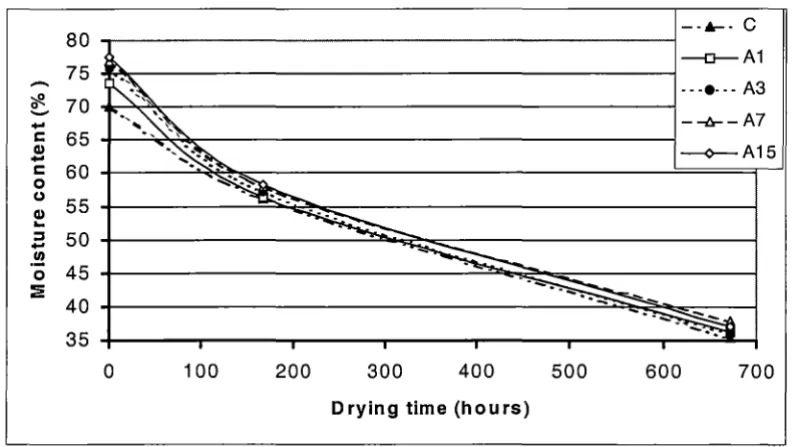
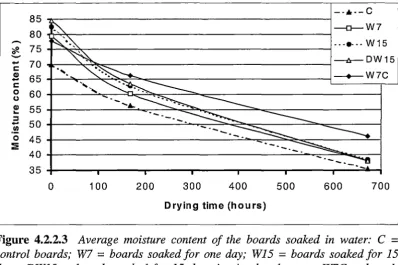
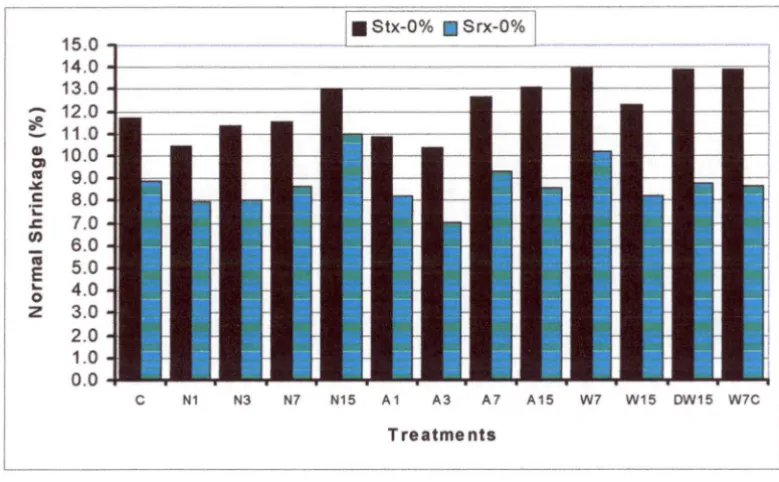
In Chapter 4, the experiment of chemical soaking pre-treatments showed that soaking in sodium hydroxide solution for up to 15 days caused almost double increase of boards' drying rate. However, this technique and soaking in acetic acid solution caused more collapse and checks.
In Chapter 5 and 6, the surface coating experiment confirmed that coating with UF resin did not significantly improve the drying properties of the boards. In contrast, PVA coating prevented surface checking and considerably reduced edge checking and collapse. The check value of these P boards was only a quarter the check value of control boards.
In Chapter 6, the pre-treatments trial proved that significant reductions of shrinkage and collapse were achieved mainly by urea soaking for eight weeks (SSW boards). Both tangential and radial shrinkages of SSW boards were less than half the shrinkages of control boards. The collapse free boards of SSW were almost double amount of that in control boards. However, this pretreatment caused more surface checks.
One-day urea soaking followed by eight weeks close stacking (C treatment) reduced checking. The check free boards of C, W, and P were 3S%, 25%, and SS%, while that of the control, SSW, and S2W boards were the same, 19%.
The author expresses his gratitude to all people who have given their support on this research. His special gratitude and appreciation are presented to the following people:
+
Associate Professor Peter Doe, supervisor, for his excellent guidance and support;+
Dr. Trevor Innes, timber researcher, for his wonderful advice and support;+
Michael Lee, timber researcher, and Adam Lloyd Redman, fellow postgraduate timber researcher, for their valuable assistance and discussion;Abstract
Acknow ledgments
Chapter 1. Introduction
Chapter 2. Basic properties of wood 2.1 Wood anatomy
2.1.1 Hardwood and softwood
2.1.2 The macroscopic features of hardwood 2.1.3 The microstructure of hardwood 2.1.4 Reaction wood
2.2 Wood chemistry 2.2.1 Cellulose 2.2.2 Hemicellulose 2.2.3 Lignin
2.2.4 Extractives 2.3 Wood physics 2.3.l Density
2.3.2 Moisture content 2.3.3 Shrinkage 2.3.4 Permeability
2.4 Messmate stringybark
Contents
iv vi
1
6 6 6 6 8 11
12 12 13
Chapter 3. Wood drying 25 3.1 Some common problems in wood drying 26
3.1.1 Drying stresses 26
3.1.2 Collapse 28
3.1.3 Checking 36
3.1.4 End split 40
3.1.5 Warping 41
3.1.6 Staining 42
3.2 Variable factors in drying control 42
3.3 Drying process in wood 45
3.4 Drying technique 46
3.4.1 Air-drying 47
3.4.2 Kiln drying 48
3.4.3 Drying schedule 49
3.4.4 Equalising 50
3.4.5 Conditioning and high humidity treatment 51
3.4.6 Kiln types 53
3.5 Some modifications in drying techniques 54
3.5.1 Stack cover 54
3.5.2 Pre-drying 54
3.5.3 Low temperature pre-drying 54
3.5.4 High temperature drying 55
3.5.5 Freeze-drying 57
3.5.6 Intermittent or cyclic drying 57
3.5.7 Radio-frequency/vacuum drying 58
3.6 Modifying wood drying properties 58
3.6.2 Pre-steaming 59
3.6.3 Preheating I pre-boiling 62
3.6.4 Pre-freezing 63
3.6.5 Chemical treatments 64
Chapter4. Pre-treatments with sodium hydroxide and acetic acid 67
4.1 Methodology 68
4.1.1 Sample preparation 68
4.1.2 Board treatments 69
4.1.3 Drying trial 69
4.1.4 Data analysis 72
4.2 Results and discussion 72
4.2.1 Physical properties of woods 72
4.2.2 Moisture content and drying rate of boards 75 4.2.3 Normal shrinkage and collapse of boards 78
4.2.4 The shrinkage of boards 82
4.2.5 Collapse and checks in boards 84
4.3 Conclusion 86
Chapter 5. Surface coating with polyvinyl acetate and urea formaldehyde
resm 88
5.1 Methodology 89
5.1.1 Sample preparation 89
5.1.2 Preliminary investigation on check formation 89
5.1.3 Surface coating 90
5.1.4 Drying trial 91
5.1.5 Data analysis 92
5.2 Result and discussion 92
messmate stringybark 92
5.2.2 Board and coating properties 94
5.2.3 The moisture contents and drying rates of boards 95 5 .2.4 The shrinkage property of boards 96
5.2.5 Collapse in boards 98
5.2.6 The checks of boards 99
5.3 Conclusion 100
Chapter 6. PVA surface coating and soaking in water and urea solution 102
6.1 Methodology 103
6.1.1 Board preparation 103
6.1.2 Wood treatments 104
6.1.3 Testing sample preparation 106
6.1.4 Drying trial 107
6.2 Results and discussion 109
6.2.1 Physical properties of boards 109
6.2.2 Drying rate of boards 110
6.2.3 Normal shrinkage and collapse of woods 112
6.2.4 The shrinkage of boards 115
6.2.5 Collapse in boards 118
6.2.6 Checking on boards 119
6.2.7 Moisture profile and recoverable strain in boards 121
6.3 Conclusion
6.4 Further work and suggestion
References 129
Appendix A. Nomenclature
Appendix B. The assessment methods of some wood physical properties
Appendix C. The determination methods of moisture profile and recoverable strain profile
Appendix D. Experimental timber kiln description
Appendix E. Assessment data and analysis of boards treated with sodium hydroxide, acetic acid and water
Appendix F. Assessment data and analysis of boards surface-coated with polyvinyl acetate (PV A) and urea formaldehyde (UF)
Chapter 1
Introduction
Wood, as a forest product, has high economic value that can be used for very broad purposes, such as building construction, bridges, boats, furniture, crafts, sports facilities, education facilities, kitchen utensils, toys and paper.
National and international demands for timber products, particularly for furniture and housing or construction, are quite high. This has encouraged timber industries to develop more efficient processes and competitive products in the market. In addition, public perceptions on land use and resource management, and global economic changes have pushed timber industries to reduce waste, increase output, and maximise the value and usability of the raw material.
Wood is preferred for furniture and for building or engineering material because it is quite strong, aesthetically pleasing, economical, requires low processing energy and is renewable. However, wood has some weaknesses that challenge technologists to overcome them appropriately. Rowell (1983) stated some of the weaknesses of wood: dimensional instability with moisture changes, l?iodegradability, flammability, and degradability by UV light, acid and bases.
The polymers in wood cell walls have a lot of hydroxyl groups that bind water molecules with hydrogen bonds. When the wood dries, the water molecules are released and move to the timber's surfaces and evaporate to the air. As a consequence, the wood shrinks. Conversely, if a piece of dry wood is put in a place of high relative humidity, its cell walls will attract water molecules from the air, which causes the wood to swell.
features of wood. Therefore, the attacked wood degrades technically and economically.
Because of the decrease in mature forests in Tasmania and Victoria, sawmill industries in both states face a technical and marketing challenge to fulfil the demand for high quality products from younger regrowth forests and plantations. Waugh and Rozsa (1991) noted that in Tasmania, regrowth forest is the forest that is less than 100 years of age. In Victoria, regrowth timber comes from regenerated forests after wild fires occurred during the years between the two world wars.
Timber from regrowth forests is usually cut from smaller diameter and younger trees, unlike timber from mature forests. As a consequence, natural defects, such as knots, growth stresses, brittle heart and end splitting, are more prominent in regrowth timber production. In addition, the regrowth timbers usually have a lower basic density, lower extractives content and higher green moisture content than mature timbers (Waugh and Rozsa, 1991). With these properties, they tend to be faster drying, but suffer more collapse and surface and internal checks, compared to mature timbers.
The application of a conventional kiln drying method on regrowth eucalypts timbers results in unacceptably severe surface and internal checking. Therefore, the drying of regrowth ash-type eucalypt timber is usually by air-drying, followed by a combination of steam reconditioning and final kiln drying (Waugh and Rozsa, 1991).
Saw-millers generally use two sawing strategies: back-sawing that produces boards with the face parallel to the growth rings and quarter sawing that produces boards with the face tangential to the growth rings (Figure 1.1).
BACK SAWN BOARD
GROWTH RING
QUARTER SAWN BOARD
Figure 1.1 Back sawn board and quarter sawn board taken from a log.
[image:15.566.139.468.81.319.2]LONGITUDINAL DIRECTION
Figure 1.2 A back sawn board and the three principal directions and surfaces with respect to fibre orientation and annual rings.
to $ 2000.00 /ton, while low value products, such as wood chips were only worth $ 80.00 /ton.
A common drying technique for 25 mm quarter sawn timber of both mature and regrowth eucalypts in Tasmania is six month air drying to 20% moisture content, followed by 4 to 6 hours reconditioning and 4 to 5 days kiln drying. So, the total drying time is 26 weeks. If using a pre-dryer with low temperature kiln, the total kiln time can be reduced to 16 weeks.
The drying time of 25 mm, 38 mm and 50 mm boards for decorative purpose from green to marketable material takes 5 to 12 months, 12 to 15 month and 18 to 24 month respectively (Schaffner, 1981).
The current drying process still produces a quite high proportion of timber degradation. Langrish et al. (1997) reported that up to 50% of the processed timber could not be used for high value-added products because of drying defects. Such timber can only be used for wood chips or firewood.
There is a considerable economic incentive for improved timber drying in terms of product quality, reduced total drying time and lower wastage levels. Chadwick and Langrish (1996) said that the quality of dry wood includes the appearance, strength, durability, machining and finishing properties of wood.
The main requirement of wood for high value end use, such as furniture manufacture, is to be free of drying defects. Drying stresses are inherent phenomena in wood drying and become major problems in the drying industry (Kowalski and Rybicki, 1996). This forces the technologist to find an appropriate method to minimise the negative effects of the drying stresses.
The current study was done to investigate whether checks and collapse could be prevented or reduced by pre-treatment processes. The term 'pre-treatment' refers to any chemical, physical or mechanical treatment applied to timbers before the commencement of air-drying or kiln drying.
acetic acid and urea solutions were used in the experiment of chemical soaking pre-treatments. Urea formaldehyde (UF) and polyvinyl acetate (PV A) were used in the surface coating trials. Water soaking was also done for comparison with other pre-treatments.
2.1 Wood anatomy
2.1.1 Hardwood and softwood
Chapter 2
Basic properties of wood
The terms of 'hardwood' and 'softwood' originally came from the timber trade to indicate the hardness of timber. But, anatomically that classification bases on the presence or absence of vessels. Hardwoods have vessels, while softwood do not have vessel. Generally, hardwoods are from the broad-leaved trees that produce true flowers, whereas softwoods are from conifers that produce cones. According to the flora classification, the hardwoods and softwoods are members of
Angiospermae and Gymnospermae respectively.
Compared to softwood, hardwood has a more complex microstructure with more cell types arranged in a greater variety of patterns (Butterfield, 1993).
2.1.2 The macroscopic features of hardwood
2.1.2.1 Heartwood and sapwood
Most wood species have darker and harder wood at the centre of the stem, named heartwood, while the outer part of the stem is called sapwood (see Figure 2.1.2.1.1). Wood cells in heartwood are dead and physiologically inactive. Generally, heartwood is formed after several years of stem growth, spreading outwards and upwards in the stem.
PITH
VESSEL
RAYS
Figure 2.1.2.1.1 The macroscopic feature of wood (Wilcox et al., 1991).
2.1.2.2 Growth rings
The environment influences tree growth. In temperate regions, the seasons have a pronounced effect on the development of wood cells. In the growing season (spring
and summer), the vascular cambium usually makes more conductive cells and wood cells with less density than in other seasons and is called early wood. The wood
cells produced in autumn and winter are termed late wood. This makes a common feature on the cross section of a tree stem, namely a cylindrical ring pattern called
growth rings or annual rings.
In temperate regions, one growth ring is usually produced in one year, but in tropical regions, more growth rings may be produced in one year. However, in
2.1.3 The microstructure of hardwood
Based on the function, wood cells can be classified into three different groups:
supporting cells, conducting cells and storage cells. Supporting cells and conducting cells are dead cells that contain cavities filled with water or air. Fibres
and vessels represent supporting cells and conducting cells in hardwood
respectively. The storage cells are parenchyma cells that have thin walls. They
transport and store nutrients as long as they are in sapwood (Sjostrom, 1993).
2.1.3.1
Fibre cells
Most hardwood has a high proportion of fibres. The greater proportion of fibres, the denser the wood. Fibres are imperforate, axially elongated cells with small lumens. The cells also taper into pointed tips. The length of fibres is between 0.25
mm and 1.5 mm (generally less than 1 mm), which are relatively shorter than
tracheids that are the structural elements in softwood (Butterfield, 1993).
PIT CHAMBER
Secondary wall Primary wall Middle lamella
{
TORUS
PIT MEMBRANE
MARGO
A
B
c
In wood cell walls there are pits, which are classified into three. Fibres and vessels
have typical bordered pit pairs. Between fibres or vessels and ray parenchyma,
there are half-bordered pits. Simple pits (without any border) connect parenchyma cells with one another (see Figure 2.1.3.1.1) (Sjostrom, 1993).
Figure 2.1.3.1.2 Simplified structure of a fibre: ML
=
middle lamella; P=
primary wall; SI, S2 and S3=
the outer, middle and inner of the secondary wall;W
=
warty layer (Cote, 1967 in Sjostrom, 1993).A mature fibre cell is composed of two structures. The primary wall is the first
formed structure that is developed during the cell growth and differentiates it from
the cambium. This cell encloses the protoplasm growth. The other structure is the
secondary wall that grows after the formation of the wall surface (see Figure
2.1.3.1.2).
The rnicrofibril orientation in the primary wall is different between the inner and
The secondary wall is much thicker than the primary wall. There are three layers in the secondary wall: Sl, S2 and S3 layers respectively from the outside to the inside of the cell. Every layer is composed of some lamellae, which consist of a number of microfibrils. The microfibril orientation of successive lamellae is different in the first (Sl) and third (S3) layers, whereas in the second (S2) layer, all lamellae generally have similar microfibril orientation (Sarkanen and Ludwig, 1971).
Walker (1993a) said that in the S2 layer, microfibrils are orientated nearly parallel to the fibre axis. This is the most influencing factor in the anisotropic character of wood. For example, the mechanical properties in the fibre direction are stronger than in the transverse direction. To a less significant degree, the anisotropic properties of wood are influenced by the geometry of fibre cells (long, thin and hollow) as well.
2.1.3.2 Vessel cells
According to Butterfield (1993), vessels as conductive elements in hardwood consist of many vessel elements joined end to end. Between vessel elements, there are pores aggregated into a perforation plate. Most openings in the perforation are formed due to hydrolyses of non-cellulosic components and the loss of the remaining cellulosic web at the beginning of transpiration.
In deciduous trees, the vessels are usually arranged predominantly in the early wood and termed as ring porous. But, in evergreen species, they are mostly distributed throughout the growth ring and are called diffuse porous. Within both arrangements, the vessels may have a solitary pattern or multiple patterns.
2.1.3.3 Ray cells
Other distinct cells in wood are ray cells. These cells lay on radial direction in wood, from the pith to the end of sapwood tissue. According to Butterfield (1993), hardwoods usually have larger and more types of rays than softwood. The ray cells in hardwood are about 15% or up to 50% of wood volume in some species. Most hardwoods have multiseriate rays, while softwoods have uniseriate and sometimes biseriate rays.
2.1.3.4 Other microstructures
Parenchyma cells are storage units in wood. Parenchyma cells oriented in the longitudinal direction are called axial parenchyma. They have thin walls. So a high proportion of parenchyma may reduce the weight and hardness of wood. In addition, axial parenchyma may contain starch grains, crystals, and other extractives. In hardwoods, longitudinal parenchyma is unique and can be used for wood identification (Haygreen and Bowyer, 1989).
lllic (1987) also noted that some wood species have vertical canals that are usually filled with gum. In eucalyptus, they are called kino veins. The canals do not have a ~ell wall, except an epithelium of parenchyma cells. The feature of vertical canals can be used for wood identification as well.
2.1.4 Reaction wood
Walker (1993b) said that the presence of reaction wood could be identified by the elliptical form of logs because of its increased growth. Tension wood has a silvery sheen (in temperate hardwood) or darker streaks (in tropical hardwood). Tension wood has more lignified fibres than normal wood. There is a gelatinous (G) layer in each cell that replaces the S3 layer or both S2 and S3 layers. The G layer is unlignified and is usually separated from other cell layers. The vessel in tension wood is smaller than in normal wood. Beside high longitudinal shrinkage, the main problem of tension wood is collapse and warp.
2.2
Wood chemistry
The components of wood fibre are mainly classified into three groups: the framework components that consist of cellulose; the matrix components that include hemicellulose, other polysaccharides and their derivatives; and the encrusting components called lignin (Sarkanen and Ludwig, 1971).
Cellulose provides good tensile strength to the wood, while lignin gives high compressive strength and prevents buckling in microfibrils. Cellulose and lignin are linked with hemicellulose, which allows the effective transverse of shear stresses.
Compared to softwood, hardwood generally has a lower proportion of lignin, but a higher proportion of cellulose, hemicellulose and extractives (Walker, 1993a).
2.2.1 Cellulose
Cellulose is a polymer derived from glucose: ~-D-glucopyranose. Glucose is a monosacaride that has the hexose sugar chemical composition, C6H1206. There are
Van der Waals forces are 200 to 800 kJ mor1, 10 to 40 kJ mor1 and 1 to 10 kJ mor1
respectively (Walker, 1993a).
Most of the cellulose framework is crystalline. The aggregation of cellulose forms an elementary fibril that is the basic structure of a microfibril. Every microfibril also has some paracrystalline phases surrounding the elementary fibrils (Sarkanen and Ludwig, 1971). In addition, Walker (1993a) reported that the cross section of a microfibril is 10 nm, while an elementary fibril is 3.5 nm x 3.5 nm, which contains 40 cellulose chains.
2.2.2 Hemicellulose
Hemicellulose is a polysaccharide comprising pentose sugars (L-arabinose and D-xylose) and hexose sugars (D-glucose, D-mannose and D-galactose). So, hemicellulose is mixed polymer, while cellulose is pure polymer. Hemicellulose has a low molecular weight with short side-chains, whereas cellulose is a very high degree polymer without branching. Therefore, the solubility and susceptibility of hemicellulose to hydrolysis is greater than cellulose (Walker, 1993a).
2.2.3 Lignin
Lignin can be defined as the encrusting material of the plant that is developed mainly of phenyl-propane building stones and constitutes most of the methoxyl content of the wood (Brauns, 1952). Lignin is also an aromatic substance produced by dehydrogenation of three p-hydroxynamyl alcohols. Lignin has a different structure from carbohydrates, but has some similar functions with silisilic acid, tannins, other phenols and polymeric condensation products in terms of heart wood formation (Freudenberg and Neish, 1968).
middle lamella and S2 layers of vessels are rich in guaiacyl (more than 80% ), while the S2 layers of fibres are rich in syringyl (88% ).
According to Sarkanen and Ludwig (1971), in the middle lamella the lignification level is greatest at the cell comers and greater in the radial than in the tangential walls. Based on UV spectroscopy of mature wood cells (Walker, 1993a), the middle lamella and primary layers have the highest proportion of lignin followed by hemicellulose and cellulose. In the S 1 layers, the lignin content is still higher than hemicellulose and cellulose, but the proportion of hemicellulose and cellulose increases. In the S2 and S3 layers, the cellulose proportion is very much higher than the others. However the proportion of cellulose in S3 is lower than in S2. Even though the concentration of lignin decreases through to the S2 layer, about three-quarters of the total lignin is in the secondary wall, while in the middle lamella and cell comers it is only a quarter. This is because of the thicker layer of S2 in the cell wall.
The formation of lignin starts from the comers then spreads to the whole middle lamella. The lignification of a cell wall begins during S 1 formation and continues until just before S3 formation (Walker, 1993a). Brauns (1952) stated that lignification causes the cell function to change. The cells die and serve as reinforcement to the wood and as a water piping system. The lignification results in cementing and anchoring the cellulose fibres together, and stiffening and protecting them from chemical and physical attacks. Sarkanen and Ludwig (1971) also said that the optical, staining and mechanical properties of cell walls are changed by lignification. In addition, it can increase the stability and compressive strength of the cell wall.
2.2.4 Extractives
Technically, the term "extractives" refers to the numerous compounds, which can be extracted from wood with polar and non-polar solvents. An example of an extractive that can dissolve in water is carbohydrate, while those in dichloromethane are resin acids, fatty acid triglycerides, other esters and neutral compounds (sterols) (Uprichard, 1993). Dilute alkaline (such as sodium hydroxide) can extract gums and resins. Some organic solvents, such as ether and benzene and alcohol-benzene can also remove fats, wax and resins from wood (Brauns, 1952).
Furthermore, Uprichard (1993) said that the extractives vary from low molecular weight volatile monoterpenes to higher molecular weight substances such as triterpenes and sterols, and from hydrocarbons to complex polyphenolic structures.
The amount of extractives in wood is about 1 % to 20%, depending on the species and the position in the tree. Generally, the extractive content decreases with the tree height and is more abundant in heartwood than in sapwood.
There are some effects of extractives on wood utilisation, for example, polyphenol compounds lead to high durability in wood from bio-deterioration. The presence of phenols and tannins can cause staining and corrosion in woodworking. A high extractives content may cause problems in papermaking.
Walker (1993a) stated that wood also contains inorganic elements, for example, calcium, magnesium and potassium. The amount of inorganic ash content is usually 0.1 % to 0.3% of oven-dry wood weight. But, in tropical regions, this content may be more than 0.5% because of the silica content, which causes problems in wood machining.
2.3 Wood physics
2.3.1 Density
per cubic centimeter. In the units of grams per cubic centimeter, the density is numerically identical with specific gravity, the ratio of the particular density to the density of water (1.00 g/cm3). The specific gravity of wood is defined as the ratio
of the oven-dry weight of a wood sample to the weight of a volume of water equal to the volume of the sample, at a specified moisture content. Therefore the specific gravity is dimensionless. The specific gravity of cell walls is the same for all kinds of wood cells, for earlywood and latewood, in sapwood and heartwood and among various tree species. The value is always near 1.5 (Wilcox et al., 1991).
There is density variation within annual rings, within trees, between trees and between trees from different sites. The density variation within annual rings is caused by the formation of earlywood and latewood (Walker, 1993e).
2.3.2 Moisture content
Wood starts to dry immediately after a tree is cut. The water released initially from wood is called free water. Free water is located in the lumen. Further drying releases bound water that is located in cell walls (Kollman and Cote, 1984). Besides free water and bound water, there is also water vapor in wood (Haygreen and Bowyer, 1989). Mills (1991) said that the bound water is released after the free water because the bound water has an ionic bond with wood. Therefore, more energy is needed to release bound water than free water.
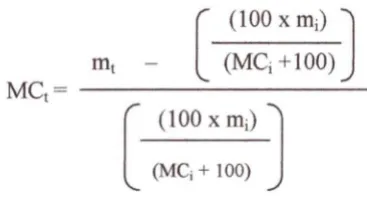
The amount of water in wood is usually expressed as moisture content, which is defined as the weight of water in a sample divided by its oven dried weight expressed as a percentage.
Kollman and Cote (1984) said that green wood moisture content varies in different species, trees, parts of tree and places. But the variation in different seasons is not significant. According to Mills (1991), in some species of hardwoods, the moisture content can be more than 100% and in other species is below 100%.
assumed as 30%. At moisture contents below FSP, there are changes in the physical and mechanical properties of wood.
Timber continuously releases water until there is a balance between its moisture content and the atmospheric moisture (humidity). This level moisture content is called the equilibrium moisture content (EMC). Actually there is no exact level of EMC of timber, because the atmosphere always changes and the capability of timber to adjust with the environment is slightly different depending on species, thickness of boards and surface coatings. Changes in relative humidity or temperature can change the EMC of the wood.
For practical use, however, the long run average EMC should be determined for particular areas. Then this EMC is the target used for drying timber to minimise dimensional changes of the timber. In Australia, timber is usually dried to the range of 10% to 15% moisture content to correspond to the average EMC in Australia, except if there is agreement between the supplier and the purchaser, or for other specific purposes.
When a board dries, the moisture content in surface layers drops quickly because of evaporation, while inside the board it decreases more slowly. As a consequence, the moisture distribution varies from the highest moisture content at the center of board to the lowest moisture content at the surfaces. This uneven moisture distribution is called moisture gradient. A very steep moisture gradient, mainly in a thick board, indicates a severe drying condition. So, maintaining a small moisture gradient is very important to prevent high drying stress that can cause drying failure (Mills, 1991). The moisture gradient proportionally influences the drying rate of wood until the wood reaches the EMC (Kollman and Cote, 1984).
2.3.3 Shrinkage
Wood shrinkage or swelling is usually expressed as a percentage of the dimension before change. The dimensional change of wood is proportional to the change of moisture content (loss or gain moisture) below FSP (Mills, 1991).
The amount of shrinkage also depends on the wood's basic density. High-density woods have more cell walls, so they usually shrink or swell more than low-density woods. Since the surface of boards will reach FSP sooner than the inner part, the total volume will reduce although the average moisture content is still above FSP.
The presence of extractives in cell walls might reduce wood shrinkage and hygroscopicity at high humidity (Walker, 1993c). Chafe (1987) also found that volumetric shrinkage has a negative correlation with lignin and extractive content and a positive correlation with polysaccharide content.
Shrinkage and the internal stresses mostly relate to drying defects in wood. Wood shrinkage is different in different directions, parts of the stem and between normal wood and wood containing natural defects (Kollman and Cote, 1984).
Wood shrinks differently in three principal directions. In the tangential direction, shrinkage is usually 1.5 to 2.5 times that in the radial direction, especially when wood dries from green to oven dry condition. The shrinkage in the longitudinal direction is very small, and is often ignored.
The main cause of this anisotropic shrinkage is the microfibril orientation in the thickest layer, S2 of the cell wall, which is at 10° to 30° angle with the longitudinal axis. The shrinkage is restrained in the direction parallel to the microfibril axis and forced in an orthogonal direction to the microfibrils. However, reaction and juvenile wood have significant longitudinal shrinkage, which may exceed the tangential shrinkage. This is because the microfibril angle may be more than 40° (Barber and Meylan, 1964 in Walker, 1993).
Bulking cell walls with chemicals, such as salts, can slightly reduce wood shrinkage. However it causes a damp surface and corrodes fittings. Polyethylene glycol (PEG) is the most successful bulking agent in wood. It can be applied to green timber (Rowell and Konkol, 1987 in Walker, 1993).
Bulking cell walls can be done with thermosetting resins as well, such as phenol formaldehyde that is polymerised with heat and a catalyst. With a 35% resin content, 70% to 75% swelling can be resisted. Moreover, it improves resistance to decay and acid.
Reducing wood permeability can be achieved also by impregnating cell lumens with vinyl monomers polymerised with ionising radiation, such as gamma rays. This technique greatly improves hardness, wear resistance, resistance to chemical staining and stability. However, it requires high cost technology and is associated with some safety concerns (Meyer, 1984 in Walker, 1993).
_Wood stabilisation, using cross-linking technique, is used more for preventing swelling than shrinkage. Principally, the neighboring polysaccharide chains are cross-linked with methylene bridges (-CH2-). This technique can reduce 50% to
70% of wood swelling, while the weight increase is only 4%. Moreover, the wood becomes resistant to fungi attack, but its mechanical properties are reduced.
High dimensional stabilisation (about 75% to 80% reduction in swelling) can be achieved by acetylation that increases the weight by about 15% to 20%. The cell walls are bulked with acetyl groups that replace hydroxyls. As a result, the wood becomes less hygroscopic. This technique improves resistance to fungi, termites and marine organisms. In addition, the mechanical properties are not reduced (Walker, 1993c).
2.3.4 Permeability
occurs when water vapor transfers through the air in the lumens of cells. The bound water diffusion occurs within the cell walls of wood (Siau, 1984).
Moisture movement in wood depends on fluid, driving force (e.g. pressure, moisture gradient) and wood structure. The measure of the ease of fluid flow is named permeability. Permeability is different from porosity. Porosity is the proportion of free space in a material. Therefore, some timbers have the same porosity, but their permeability may be different.
Permeability in the longitudinal direction of sapwood is very high due to vessels. Their diameter is between 20 µm and 300 µm. However, the presence of tylosis may resist the flow in vessels.
The transverse flow through ray tissue and pits (diffusion) on the radial surface of fibres is very small compared to the flow in the longitudinal direction. In softwood, this transverse flow is slightly higher than that in hardwood (Langrish and Walker, 1993).
Spolek and Plumb (1981) studied free liquid capillary transport in the drying of softwood. They found the dependence of capillary pressure on saturation value: the less saturation, the higher the capillary pressure. The magnitude of capillary pressure was controlled by the menisci, which are formed between the liquid and gas in the tracheid lumen.
liquid volume M - FSP
s
= = (2.3.4.1)void lumen Mmax-FSP
where:
S = saturation value;
M
=
moisture content of sample (% ); andMmax
=
maximum mositure content of sample (% ).coefficient and driving force, such as concentration gradient or chemical potential (Langrish and Walker, 1993).
Siau (1984) defines diffusion as a molecular mass flow controlled by a concentration gradient. Therefore, diffusion can occur without a static pressure difference. In addition, Schaffner (1981) explained the theory of Fick's law under a steady-state condition. According to this theory, the rate of water-vapor transport through a unit area of a wood section is proportional to the concentration gradient measured as normal to the section.
where:
ac
F=-D.--ax
F =rate of transfer per unit area (kg/hr.m2);
D = water-vapor diffusion coefficient of wood (m2/hr); C = concentration of diffusing substance (kg!m\ and X = the length in flow direction (m).
(2.3.42)
Langrish and Walker (1993) said that the diffusion coefficient is sensitive to rp.oisture content, which is greater in high moisture content. Diffusion within cell walls also depends on temperature. It might increase 37-fold when the temperature increases from 25°C to 100°C. Based on this theory, a high drying temperature was developed. Moreover, diffusion is very important in drying timbers that are impermeable or at too low moisture content for hydrodynamic flow of water in permeable timbers.
Transverse diffusion is determined by the diffusion coefficient of cell walls, because it is much less than that of the water vapor in lumen, mainly at low moisture content. The presence of pits and their condition does not significantly influence transverse diffusion, except at very small moisture content and with very thick cell walls.
Furuyama and Kanagawa (1994) concluded that the vapor pressure gradient was more reasonable than the moisture gradient as the driving force of the moisture diffusion in wood. The moisture diffusion coefficient derived from the vapour pressure gradient decreased with decreasing moisture content.
2.4 Messmate stringybark
In the market, messmate stringybark (Eucalyptus obliqua L'Herit) is also called
Australian oak or Tasmanian oak, which includes two other species, Eucalyptus delegatensis and Eucalyptus regnans. The geographic distribution of messmate
stringybark in Australia extends from northern New South Wales, to southern Tasmania. This species is one of the more fire-resistant eucalypts and regenerates quickly after fire (Turnbull and Pryor, 1978). Messmate stringybark trees can reach 60 m to 90 m in height, with clear and straight boles. Their diameter is up to 2 m, but mostly 1.0 m to 1.2 m.
The colour of this timber is pale with a pinkish to a light brown tint. Its sapwood width is 25 mm to 38 mm. It is paler and indistinct from the heartwood. The grain is usually straight, but can sometimes be interlocked or wavy. The texture is coarse. Its density ranges from 670 to 990 kg/m3 (in average about 780 kg/m3)
(Farmer, 1972).
Illic (1997) made a key determination of three species from the ash group (E.
regnans, E. delegatensis and E. obliqua). There are some differences in basic
density, growth rings, pore grouping, ray width, proportion of multiseriate rays, and the height of multiseriate rays. Roughly, E. delegatensis has distinct growth rings,
while the other two do not. E. obliqua has a basic density of more than 605 kg/m3,
The main difference of E. obliqua is in the ray cells, which are more bulbous with a higher proportion of multiseriate cells than the other two species. The height of multiseriate rays is 1 to 9, mostly 5 cells in E. obliqua, while in the other two it is 1 to 5, mostly 1 to 2 (to 4) cells. The width of individual ray cells is 10 µm to 30 µm, usually 15 µm to 20 µm in E. obliqua, and 5 µm to 16 µm, mostly 8 µm to 12 µm in the others. Pockets or veins containing kino are more common in E. obliqua than in E. regnans and E. delegatensis.
Some species have some similarities with each of these eucalypts. E. nitens and E.
fastigata are similar to E. regnans. E nitens and E. delegatensis have similarities too, but have less distinct growth rings. E. viminalis, E. baxteri, E. muellerana and
E. eugenioides are similar to E. obliqua.
Farmer (1972) said that in green condition, the bending strength, modulus elasticity and compression parallel to grain of Eucalyptus obliqua L'Herit are 71 N/mm2,
11,700 N/mm2 and 34.8 N/mm2 respectively. However, at 12% moisture content, they are 119 N/mm2, 14,500 N/mm2and 64.7 N/mm2respectively.
Messmate stringybark timber dries quickly but it is very prone to collapse and internal checking. Some surface checks and distortion tend to occur in early drying. Therefore, preliminary air-drying is recommended and reconditioning is needed to relieve collapse. This wood shrinks from green to 12% moisture content (after reconditioning) about 6.5% - 10.0% tangentially and 4.0% - 5.0% radially.
Generally, the working properties of messmate stringybark are good. But in terms of durability, it is prone to powder-post beetle attack and is difficult to treat with preservative, especially the sapwood.
Messmate stringybark can be used for many purposes, such as pulp, joinery, furniture, flooring, paneling, and general construction (Turnbull and Pryor, 1978).
have a higher risk in terms of collapse, shrinkage, growth stress, wrap, and check. The wood near the pith area is prone to check (Campbell and Hartley, 1978).
According to Walker (1993b), in mature hardwood the different properties between core wood and outer wood and between butt and top logs can be neglected. But, in young hardwood, the growth stress gradient is quite high. In addition, knot volume is usually more frequent in young trees. Large knots reduce wood strength and lead to low grade timber. Close spacing can reduce branches and knot size, reduce the core wood zone and lessen stem taper, but long rotation is needed to produce large log diameters.
Chapter 3
Wood drying
Wood is a porous material that contains air and water, as well as wood substances. The moisture content of freshly cut wood varies largely from over 200% to as low as 40%. If allowed to dry, this moisture content will reduce towards a moisture content in equilibrium with the surrounding air, about 6% to 20 % (Walker, 1993d). Because the EMC is below FSP, wood shrinkage is inevitable. This shrinkage should be controlled during drying to minimise timber degradation.
Timber drying is also called timber seasoning and can be defined as drying timber to a moisture content suited to the condition and purpose of use. The drying aims to ensure the dimensional stability of timber before it is used in a structure or manufactured item (Mills, 1991). According to Kollman and Cote (1984), the objective of timber drying is to prevent and minimise drying defects in as short as possible prying time. Timber drying is very important for the economical utilization of wood. The advantages of timber drying are as follows:
1. increases wood resistance to fungal and some types of insect attack; 2. reduces wood warping, twisting, checking, splitting and honey combing; 3. reduces wood weight to reduce the cost of handling and transportation; 4. improves mechanical strength, stiffness, hardness and nail holding power; 5. improves painting quality; and
6. improves glueability and working properties.
In addition, Mills (1991) said that wood drying improves the heat and electrical insulating properties and preservative treatment of wood. Nevertheless, drying cannot improve the shock resisting ability.
3.1 Some common problems in wood drying
3.1.1 Drying stresses
In wood drying, stress can be defined as internal forces exerted by either of two adjacent parts of a wood upon the other across an imagined plane (McMillen, 1955). The deformation of a wood due to stress is named strain.
Usually the rate of moisture evaporation is faster than the rate of moisture movement in the wood. Therefore, the moisture content of surface layers becomes lower than that in the core. This moisture content difference is called moisture gradient.
Low permeability wood usually has a steep moisture gradient, particularly in high temperature or very low humidity drying. High moisture gradient leads to high drying stresses: tension stress in the surface layer and compression stress in the inner zone. If the tension stress exceeds the wood strength, surface checks will occur (Mills, 1991).
Walker (1993d) explained the phenomena of stress reversal that leads to case hardening. It usually occurs in the final stage of wood drying. When the tensile stress on the surface exceeds the elastic limit but is less than the failure strength of the wood, the fibres on the surface are stretched, because their shrinkage is restrained by the inner zone of the timber. So their shrinkage is less than is expected. As the drying continues, the interior fibres begin to dry below FSP and shrink. However, the outer fibres that are set in a stretched condition restrain the shrinkage. At this stage the drying stresses begin to reverse. The interior fibres experience tension stress, while the exterior fibres are in compression. Under these conditions, case hardening occurs.
one surface of the case-hardened board. These are not desirable. The boards should be free of such stresses and have stable dimensions after kiln drying.
In many kiln practices, conditioning and equalising processes are applied in the final stage of drying to relive these drying stresses.
Drying stresses result in strain development in dried wood. So, in many research activities, strain behaviour is used for stress analysis in dried wood. Wu and Milota, (1994) described four components of inelastic strain that occur in wood during drying: instantaneous strain, creep strain, shrinkage strain and mechano-sorptive strain. The instantaneous strain is generated immediately after the development of stress. This strain varies with moisture content and stress at a given temperature. Creep strain is a time-dependent deformation under constant stress and moisture content. Wood creep is generally faster at higher temperature and moisture content. Shrinkage strain is the dimensional change caused by moisture loss without restraint. Mechano-sorptive strain is the deformation resulting from the interaction of stress and moisture change. It is different from creep. Mechano-sorptive strain does not directly depend on time, while creep depends on the duration of loading.
Wu and Milota (1994) demonstrated the significance of creep and mechano-sorptive strain in relieving the stresses during the drying of 50 mm by 190 mm Douglas fir (Pseudotsuga menziesii) heartwood lumber. In addition Martensson and Svensson, (1997) said that without mechano-sorptive behaviour, wood couldn't be dried properly.
The presence of transverse stress can be determined by the prong test. The test is done on a sample crosscut from a board. The sample, then, is cut into several even thickness strips (depending on the thickness of the board). The cutting begins from one end up to
±
15 mm from the other end of the sample, parallel to the original board surfaces.The prong patterns immediately after cutting and after one-day air-drying are compared. In the early drying stage, the surface strips usually turn out immediately after cutting, indicating the presence of tensile stress in the surf ace of the board. In the later drying stage, the surface strips turn in immediately after cutting. This shows the presence of compression stress in the board surfaces. Straight or nearly straight prongs and deflection-free strips after cutting represent good stress relief (Mills, 1991).
Longitudinal stress is caused by longitudinal tension set in the surface of lumber or longitudinal shrinkage differentials due to reaction (tension) wood. The presence of this stress can be identify by longitudinal handsaw cuts approximately every 1/8-1/.1 inch to about one-half the length of the sample board (Boone et al., 1988).
3.1.2 Collapse
Collapse is defined as abnormal and often irregular shrinkage occurring above FSP (Mills, 1991). It is indicated by rippled or 'wash-boarded' effects on the wood surface (Innes, 1997a).
Collapse has become an economic problem in the domestic and overseas timber market, because it causes appreciable waste and influences acceptance in timber markets. This problem is most known in the ash group of eucalypts (Greenhill, 1938). According to Walker (1993d), there are some other timbers which are also prone to collapse, such as oak (Quercus spp), black walnut (Juglans nigra), western red cedar (Thuja plicata) and redwood (Sequoia sempervirens).
has less compressive strength that allows internal crushing including high stress (Kollman and Cote, 1984).
However, some species might collapse at ambient temperatures. Innes (1997a) showed that Tasmanian Eucalyptus regnans timber collapses at 28°C. Lee and Redman (1998) found that the collapse threshold temperature for E. obliqua was
very low, 7°C and was independent of the sawing orientation of the boards.
The effects of collapse on the cells are flattening, buckling and closing. These defects lead to a reduced cross section dimension, corrugated wood surfaces and deformations (Campbell and Hartley, 1978). Collapse is also highly correlated with internal checking (Illic and Chafe, 1986). Moreover, Kollman and Cote (1984), Oliver (1991) and Innes (1996) explained that severe collapse could cause high differential shrinkage that can induce surface and internal checks (honey combing)
in boards. /
Collapse is different from normal shrinkage in which the fibres remain nearly cylindrical, although volume and wall thickness are reduced (Mills, 1991). Collapse occurs when the free water inside cell cavities of green wood moves. On the other hand, normal shrinkage is caused by the release of moisture from the cell wall. Therefore, wood mainly collapses when its moisture content is above FSP, while normal shrinkage occurs below FSP (Greenhill, 1938; Oliver, 1991). Chafe and Illic (1992) also reported that a large portion of wood collapse occurs in drying from green to 17% EMC. Below 17% EMC, there is still some small collapse which is apparently caused by drying stresses. Furthermore, Walker (1993d) said that collapse can be relieved by reconditioning with steam at 100°C and 100% relative humidity for four to eight hours.
Theoretically, there are two main causes of wood collapse. Kollman and Cote (1984) said that wood collapse could be caused by the tension produced by capillary forces in partially water-filled wood cells and the drying stresses due to moisture gradient across lumber during seasoning.
collapsed more than latewood, while normal shrinkage was greater in the latewood than in the earlywood. It was unlikely that this collapse phenomenon was caused by the compressive drying stress. The samples were very small and taken from different single growth rings of Eucalypus regnans F.v.M. and E. gigantea Hook F.
Similarly, Wilkins and Wilkes (1986), by using scanning electron microscopy, found that collapse mostly occurred at the periphery of wood where fibres were undamaged. When the periphery cells are damaged, collapse occurred in the adjacent cells. So, it seemed to be that the true collapse event was caused by internal tension.
According to the boiling or vapour bubble formation theory, there is a minimum size of bubble to form against surface tension. A bubble that is smaller than this size will collapse and disappear. Similarly, some wood species have wood cells with a lumen diameter less than the minimum size to form a bubble. So, when water is removed from the cells, the free water inside these cell lumens goes into tension and causes a compression effect in the cell wall. If the cell walls are not thick and strong enough, the cells will collapse. This collapse leads to extra shrinkage above the normal shrinkage (Mills, 1991).
Booker (1994) also explained that water tension causes compression forces in the fibre walls, which are proportional to the cell lumen's width at right angles to the wall divided by the wall's thickness. Therefore, the wider the lumen and the thinner the cell wall, the greater the compression stress on the cell wall.
When water evaporates from the surface of a board, water tension in the water-filled cells increases until the fibre wall is damaged or the water tension reaches a maximum. This tension can be limited by air bubble entry from other cells through the pits or other openings between the cells or by spontaneous cavitation of air bubble when water stress is large enough. However, in collapse-prone species, water tension is usually not relieved until the cell wall ruptures. According to Booker (1994), there are various types of collapse in wood:
tracheid cells are arranged in radial direction that leads them to be more resistant to deformation. So thin earlywood bands may collapse, although without any internal checking.
2. Tangential collapse might occur in both early and latewood of softwood if fibres in both early and latewood have large, water-filled lumens and quite thin walls. 3. Diagonal ~ollapse may occur in both early and latewood by the bending of the
lumen comers.
4. Deformation in multiple directions can occur in water-filled fibres of hardwood such as eucalypts. The presence of stress risers, such as large vessels, may cause internal checks and collapse.
5. Radial checking and tangential collapse. This collapse occurs after radial checking in middle lamella between adjacent tracheids or between tracheid and rays when the tension in the earlywood is large enough. This checking can not extend to the latewood because it is under compression. This compression is caused by more collapse in earlywood than in latewood.
In addition, Innes (1995a) suggested that collapse in fibres was likely to be precipitated by failure in the S3 layer that was a temperature independent mechanism. This collapse might be started mainly from the fibres near vessels or rays.
Compression stress seems to be the only supplementary force in collapse occurrence (Innes, 1996). The stress causing collapse must be greater than the cross-grain tension strength but less than longitudinal compression strength of the wet wood (Bariska, 1992).
direction led to the increase in total shrinkage at right angles to that direction. This fits with the Poisson effect in elasticity.
Kauman (1960) also found that the influence of tension stress in the surface zone of collapsed wood was seen when there was more collapse in the core of samples, mainly in end-sealed samples. Moreover, collapse on the width of rectangular cross section samples was more than that in cube-shaped samples.
Clarke (1972 in Bariska, 1992) said that when the moisture content of board's surface goes below FSP, there is a large moisture gradient in the board: the compression stress occurs in the inner zone, while the outer zone experiences tension stress. In addition, wet wood fibres usually have less strength, so the fibres under compression stress may collapse.
In terms of collapse susceptibility, there is some variation among different species, different trees, and even in different positions and directions in a stem. The variation of wood properties influences its sensitivity to collapse.
Bariska (1992) observed collapse occurrence at the bottom end of five eucalypt species directly after felling (in the field) and in a laboratory by using a scanning electron microscope. He showed the rank of collapse susceptibility, starting from the higher risk species, E. macarthurii, E. elata, E. nitens, E. fastigata, and E.
grandis.
Generally, wood from young or regrowth trees tends to collapse more than that from mature trees. Hillis and Brown (1978) said that most wood from young trees had more shrinkage before reconditioning than that from mature tress of the same species. But after reconditioning, the shrinkage of the young and mature materials was not much different. Moreover, Oliver (1991) showed that in over-mature heartwood, collapse was rarely seen; because the cell walls were stiffened by lignin and the internal tensile could be restrained.
increase of drying temperature was much greater in the butt logs. In other words, collapse intensity was less in wood from a higher position of the tree.
Some comparisons of collapse occurrence in sapwood and heartwood have been done.' The results vary with respect to species and other possible factors. Pankevicius (1961) found that in 50 year old Eucalyptus regnans and 300 year old Eucalyptus gigantea there was no appreciable difference in collapse intensity
between heartwood and sapwood, except in wood at a higher position in the tree which had less recoverable collapse in the sapwood. However, Chafe (1985) showed that, in E. regnans, sapwood collapses more than heartwood.
In many cases of collapse, the signs of collapse initially appear in the earlywood because the fibre walls in this part are thin and cannot resist the internal tension effect (Oliver, 1991). Likewise, Illic's (1982) experiment showed a general tendency that collapse-prone wood had less latewood fibres than other woods.
The chemical composition and anatomical features, such as lack of lignin and different micro-fibril orientation respectively were responsible in the collapse severity of hardwood containing reaction (tension) wood (Wardrop and Dadswell, 1955 in Bariska, 1992).
Wilkins and Wilkes (1986), using the SEM examination, were unable to clearly determine the influence of extractive deposition during heartwood formation on reducing pore size and the increase of hydrostatic tension and collapse susceptibility. Although the FWPRDC research (n.d.) reported that lignin and extractive concentrations have a negative correlation with collapse, Chafe (1987) suggested that collapse was positively correlated with lignin and extractive content and negatively correlated with polysaccharide content.
collapse. Correspondingly, Pankevicius (1961) came to a similar conclusion about the effect of temperature on high collapse intensity.
Kauman (1960) also showed that total collapse was a linear function of wood temperature. This function depended only on the surface tension, and structural and rheological properties of wood. He found that in temperatures of more than 88°C or in very low humidity, collapse depended significantly on time.
In high temperature drying, Kauman (1960) found that below FSP, wood collapse was still increasing. He believed that the weakening of cell walls as a result of hydrolysis or other chemical changes caused this.
Kauman (1961) reported that in the drying of the heartwood of E. regnans
(mountain ash) from Victoria and Tasmania, E. diversicolor (karri) and Flindersia pubescens (silver ash), exceeding one to two days at temperature 82°C, six hours at
l 10°C, or two hours at 137°C caused the increase of wood collapse and the decrease of its recovery attainable in reconditioning. But, at 20°C, 38°C, and 54°C the effect of thermal degradation on collapse and shrinkage was negligible.
In thermal degradation, the acidity of wood increased to the maximum that was proportional to the additional shrinkage. There was no further change in shrinkage and collapse recovery after acidity decreased. This acid could be produced from the hydrolysis reaction of the 0-acetyl groups in wood during the thermal treatment.
Illic (1982) used a Digital Image Processor (DIP) to analyse wood anatomy and its correlation with collapse occurrence. He compared some anatomical properties, such as proportional vessel area, vessel frequency, basic density, area proportion of rays, parenchyma and fibre, and TWLARF (Transverse Wall to Lumen Area of the Fibres) in terms of their correlation with collapse in wood. He concluded that TWLARF value has the best correlation with collapse phenomena in wood.
content, while wood permeability had a positive relationship with the diffusion coefficient and was negatively related to collapse.
Chafe (1985) found that in E. regnans volumetric shrinkage could confidently be used for predicting collapse severity. Moisture content was also an independent and indirect indicator of collapse, while basic density, P, Q and green density could be used for indicatory values. Collapse and volumetric shrinkage had positive correlations with moisture content, the percent of theoretical saturation and the percent of cell cavity containing water (P). But they were negatively correlated with basic density. Moreover, Chafe (1986b) reported that the best collapse determinant in latewood is percent saturation, while in earlywood it is density.
where:
P=[
MJ
xlOOMmax
Q= (M-28) BD
1000 - 0.93 BD
P = percent of cell cavity containing water; M = moisture content;
Mmax = maximum moisture content; and BD =basic density (Brown et al., 1952).
(3.1.2.1)
(3.1.2.2)
A rapid collapse prediction was made by Illic and Hillis (1986) by measuring collapse factor (CF) and volume shrinkage (Sv) in small samples of Eucalyptus
regnans. The samples were dried at 100°C for 6 hours and 7 hours (the best period for drying for CF and Sv measurements respectively). An image processor was used to measure changes in shape and area.
CF had a more comprehensive correlation with internal checking and collapse than Sv, however both CF and Sv had significant correlations with the percentage of collapse. Both CF and Sv were significantly correlated with initial moisture content (Mi). Although Mi was less accurate than CF and Sv in predicting collapse, Mi was quicker in predicting collapse (lllic and Hillis, 1986).
The collapse factor (CF) is a shape factor that is determined m dry samples (Wechsler, 1981) as:
(the perimeter of the cross-section board)2
CF= - - - (3.1.2.3)
cross-section area of board
The perimeter is the length of outside boundary and that of internal checks, while the cross-sectional area does not include the area of the checks.
where:
Sv= 1-
[::J
Sv = volume shrinkage;
Ad= dry cross section area (does not include checks area); and Ag = green cross section area.
3.1.3 Checking
(3.1.2.4)
reduce the strength and quality of wood. Therefore drying recovery is very low and causes economic loss. According to the position in the board, checks can be classified into three types, i.e. end checks, surface checks, and internal checks.
End checking usually results from the more rapid loss of moisture from the end part rather than from the inner part of a board. When the end part has a moisture content below FSP, it starts to shrink before the inner part of the board. This results in tension stresses around the ends of lumber and compression stresses in the inner part. Because wood is weaker in tension than compression in the direction perpendicular to the grain, end checks develop. When all parts of the wood dries, some stresses release and some checks tend to close again (Kollmann and Cote, 1984). Furthermore, Walker (1993d) stated that end checking can be minimised by proper end-sealing and wide stickers.
Kollman and Cote (1984) defined surface checks as longitudinal openings at weak points in the wood occasioned by the stresses produced in differential shrinkage. Previously Campbell (1959) said that checking was caused by high drying stress due to severe moisture gradient. In worst conditions, it can lead to splits and honey combing.
Checking also may occur where compression wood is located adjacent to or between the normal woods because the normal wood restrains the high longitudinal shrinkage of the compression wood (Kollmann and Cote, 1984).
Walker (1993d) explained that in drying with a severe schedule, surface checks might occur in the early stage due to steep moisture gradients. Checking is usually formed at the weakest point, for example, along wood rays. Therefore, surface-checks usually occur in back sawn boards, while edge-surface-checks occur in quarter sawn boards. To avoid surface checking high humidity and low dry bulb temperature could be applied in wood drying, which can maintain wood strength.