City, University of London Institutional Repository
Citation
:
Picknett, Michael (2014). Devising music: applying creative approaches from
dance and theatre to music composition. (Unpublished Doctoral thesis, Guildhall School of
Music and Drama)
This is the accepted version of the paper.
This version of the publication may differ from the final published
version.
Permanent repository link: http://openaccess.city.ac.uk/17348/
Link to published version
:
Copyright and reuse:
City Research Online aims to make research
outputs of City, University of London available to a wider audience.
Copyright and Moral Rights remain with the author(s) and/or copyright
holders. URLs from City Research Online may be freely distributed and
linked to.
Devising Music
Applying Creative Approaches from Dance and Theatre
to Music Composition
Michael David Picknett
DMus (composition)
Guildhall School of Music and Drama
Composition Department
Table of Contents
Page
List of Figures 5
DVD Contents and Performers List 6
Acknowledgements 8
Declaration 8
Chapter 1: Devising: Overview, History and Terminology 9
1.1: Research Question 9
1.2: Overview of Devising 10
1.3: Definition of Terms as Used in this Research 13
1.4: The Three Principal Models of Devising Used in My Research 14
1.4.1: The Wooster Group 14
1.4.2: Tanztheater Wuppertal Pina Bausch 16
1.4.3: Forced Entertainment 18
1.5: The Role of the Composer/Director 19
Chapter 2: Ne Pleure Pas, Alfred
Devising as a Musical Process / Music as a Physical Process 21
2.1: Overview of the Project Idea 21
2.2: Summary of the Creative Process to the First Performance 23
2.3: Theoretical Discussion 25
2.3.1: Semantic Communication 25
2.3.2: Physicality in Musical Processes 26
2.3.3: Individualisation 27
2.3.4: Simultaneity 28
2.3.5: Approaching Tasks as Investigations 29
2.4: Summary 30
Chapter 3: Carter Piece: Performance and Context 32
3.1: Overview of the Theory 32
3.3: Comparison of Performances 36
3.3.1: Durations 38
3.3.2: Transitions 38
3.3.3: Textural Qualities 39
3.3.4: internal Repetitions 39
3.4: Connotations 40
3.4.1: Performers as Carriers of the Piece / Performers as Score 41
3.4.2: Projects that age and expire 41
3.5: Summary 43
Chapter 4: Apologetics 1: Laboratory Work in Devised Processes 45
4.1: Laboratory work in Apologetics 1 45
4.1.1: Relationship to the Text 46
4.1.2: Laboratory Practice in Apologetics 1 47
4.2: Apologetics 1: Creative Process 49
4.2.1: Stabat Soror 49
4.2.2: Stillness Solo 51
4.2.3: Four Duets 52
4.3: Performances 53
4.3.1: Elements of Staging 53
4.3.2: Changing Performers 54
4.4: Summary 55
Chapter 5: Water Music: Autobiography in Devising Processes 57
5.1: Autobiography and Process 57
5.1.1: Autobiography in Devising 58
5.1.2: Autobiography as Practice in Water Music 59
5.1.3: Autobiography as Performance Technique in Water Music 62
5.2: The Aesthetics of Failure in Devised Performance 65
5.2.1: Theoretical Background 65
5.2.2: The Aesthetics of Challenge and Failure in my Practice 66
5.3.1: Representation 67
5.3.2: Composition and Structuring 68
5.4: Summary 69
Chapter 6: Apologetics 3: Changing the Performer’s Paradigm 70
6.1: Towards Apologetics 3 70
6.1.1: Stabat Soror (2010) 70
6.1.2: Apologetics 2 (Sketches and Improvisations) (2011) 71
6.1.3: Repeat Indefinitely (2012) 72
6.1.4: Take Me Back and Leave Me There (2013) 73
6.2: Apologetics 3 Overview 74
6.2.1: Structure 74
6.2.2: Waste Land and The Sisters: Autobiography and Waypoints 75
6.2.3: The Soldiers and The Mother: The Individual and Physical-
Semantic Models in Apologetics 3 76
6.2.4: The Game: Laboratory Techniques and Fields of Possibility 77
6.3: Apologetics 3 in Performance 78
6.4: The Performer’s Paradigm in Devised Performance 80
6.4.1: An Overview of the Performer in Devised Processes 80
6.4.2: Creating and Performing Devised Music 81
6.4.3: Ownership and Trust in Devising Projects 84
6.5: Summary 85
Appendix A: Liang-Webber Interview 87
Appendix B: Related Compositional Approaches, Practices and Works 100
B.1: Related Compositional Practices 100
B.1.1: Scores with Increased Performer Input 100
B.1.2: Collaborative Composition of Solos 101
B.1.3: Works Created Around a Group 102
B.1.4: Backbone Composition and Creative Music Workshops 102
B.2: Comparable Practices and Works 103
B.2.2: Mauricio Kagel 103
B.3: Composers Who Use Some Devising-Related Approaches 105
B.3.1: Heiner Goebbels 105
B.3.2: Meredith Monk 106
Bibliography and References 109
Books and Articles 109
Internet Based Media 113
Film and Broadcast Media 114
Scores 114
---
List of Figures
Page
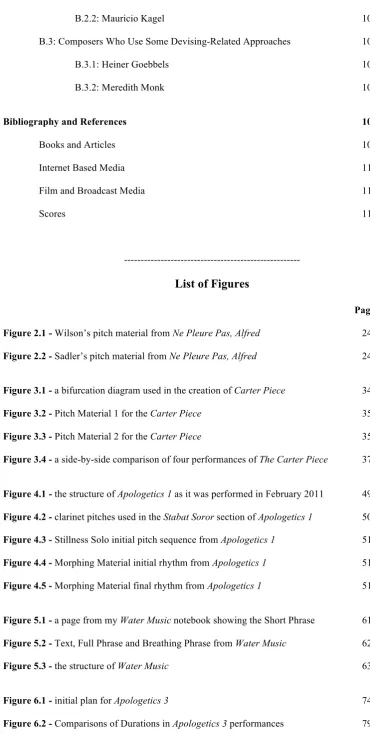
Figure 2.1 - Wilson’s pitch material from Ne Pleure Pas, Alfred 24
Figure 2.2 - Sadler’s pitch material from Ne Pleure Pas, Alfred 24
Figure 3.1 - a bifurcation diagram used in the creation of Carter Piece 34
Figure 3.2 - Pitch Material 1 for the Carter Piece 35
Figure 3.3 - Pitch Material 2 for the Carter Piece 35
Figure 3.4 - a side-by-side comparison of four performances of The Carter Piece 37
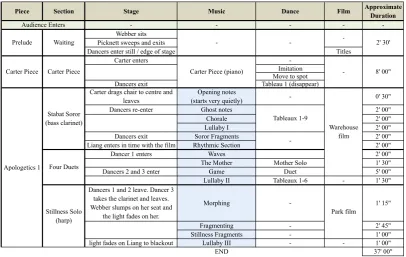
Figure 4.1 - the structureof Apologetics 1 as it was performed in February 2011 49
Figure 4.2 - clarinet pitches used in the Stabat Soror section of Apologetics 1 50
Figure 4.3 - Stillness Solo initial pitch sequence from Apologetics 1 51
Figure 4.4 - Morphing Material initial rhythm from Apologetics 1 51
Figure 4.5 - Morphing Material final rhythm from Apologetics 1 51
Figure 5.1 - a page from my Water Music notebook showing the Short Phrase 61
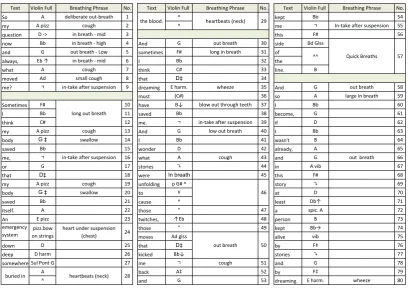
Figure 5.2 - Text, Full Phrase and Breathing Phrase from Water Music 62
[image:6.595.113.484.47.787.2]Figure 5.3 - the structure of Water Music 63
Figure 6.1 - initial plan for Apologetics 3 74
DVD Track and Performers List
The supplementary material for this commentary can be accessed through three different media:
• three DVDs
• a USB flash drive
• online resources.
DVD 1: Submitted Works
Ne Pleure Pas, Alfred [16’20”]
A stage work for two percussionists - performed by Claire Sadler and Sam Wilson in the Pit
Theatre of the Barbican Centre, London (9th February, 2011)
Carter Piece [6’30”]
A concert work for solo piano – performed by Jennifer Carter in the Music Hall of Guildhall
School of Music and Drama, London (29th March 2010)
Apologetics 1 (2011) [31’00”]
a stage work for harp and bass clarinet – performed by Fontane Liang and Charlotte Webber in
the Pit Theatre of the Barbican Centre, London (9th February, 2011)
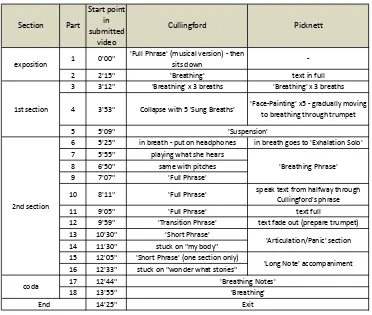
Water Music (2012) [14’30”]
A concert work for trumpet, violin, voice and electronics – performed by Sonya Cullingford
and myself and filmed on location in Guildhall School of Music and Drama, London (4th
November 2012)
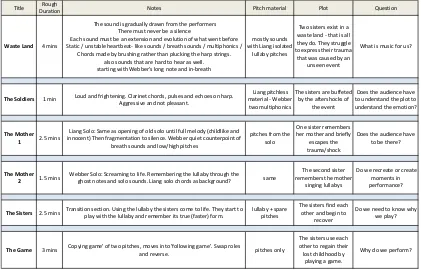
Apologetics 3 [16’00”]
A concert work for harp and bass clarinet – performed by Fontane Liang and Charlotte Webber
and filmed on location in Essex (20th December 2012).
DVD 2: Examples from Chapters 2-4
2.1 An annotated video of Ne Pleure Pas, Alfred showing structural sections [16’09”]
3.1 A short clip from my work Ame (2007) for harp and electronics – used as
a reference during the making of The Carter Piece(audio only) [0’15”]
3.2 A recording of Carter Piece in an open workshop (2010) (annotated audio) [6’25”]
3.3 A recording of Carter Piece in concert (2010) (annotated audio) [6’12”]
3.4 A recording of Carter Piece as part of a stage work (2011) (annotated audio) [7’16”]
3.5 A recording of Carter Piece as part of a lecture-recital (2011) (annotated audio) [2’13”]
3.6 A comparison between five performances of the Nausea 1 material
from Carter Piece(annotated audio) [0’50”]
4.1 An example of character work in Apologetics 1 [0’35”]
4.3 The whispers exercise used as part of laboratory techniques in Apologetics 1 [1’43”]
4.4 The Lullaby material from Apologetics 1 [1’15”]
DVD 3:Examples from Chapters 5 and 6
5.1 An example of the Ritual Practice from Water Music [1’48”]
5.2 The Short Phrase from a Water Music rehearsal (audio only) [0’49”]
5.3 The Full Phrase from Water Music [1’28”]
5.4 The Impulses task from Water Music [0’35”]
5.5 The Face Painting practice from Water Music [1’31”]
6.1 A clip of Apologetics 2 (sketches and Improvisations) (2011) [1’03”]
6.2 A section of a rehearsal for Repeat Indefinitely(2012) [4’24”]
6.3 A rehearsal of the Take Me Back task from Apologetics 3 [0’58”]
6.4 An annotated version of Apologetics 3 showing structural sections [16’06”]
6.5 An alternative take from the Apologetics 3 video recording session [17’19”]
6.6 Apologetics 3 performed live (London, 2013) [13’14”]
USB Flash Drive and Internet-Based Media:
All submitted works and examples are also included on a USB memory stick and are available online at:
doctorate.michaelpicknett.com 1
City, University of London Northampton Square London EC1V 0HB United Kingdom
T +44 (0)20 7040 5060
THE FOLLOWING PARTS OF THIS THESIS HAVE BEEN REDACTED
FOR COPYRIGHT REASONS:
Acknowledgements
Devising practices are based on long and intimate collaborations with performers. None of my research would have been possible without the generous contributions of the performers I have worked with: Sam Wilson, Claire Sadler, Jennifer Carter, Fontane Liang, Charlotte Webber and Sonya Cullingford.
The Guildhall School of Music and Drama has been everything I could have wished for from a research institution. I am indebted to their staff, especially by my supervisor Dr. Nye Parry, who has given me open and perceptive encouragement throughout my research, and to Dr. Julian Philips whose generous support has allowed me to undertake this research. I am also grateful for the insights, knowledge and experience of the composition department, especially Dr. Paul Newland, Dr. Richard Baker and Prof. Julian Anderson.
My research was inspired by my work with choreographers and theatre practitioners. I would not have been able to begin to understand devised practices without the knowledge and experience of Dr. Vanio Papadelli, Giuliana Majo, Vera Tussing, Marie Chabert and Jesus Rubio Gamo.
I am grateful for the support of The Leverhulme Trust in helping me complete my studies.
And finally I am grateful for all the loving and generous support of my family, who are always there for me. Without them, I would not have been able to even begin this research.
Author’s Declaration
I, Michael Picknett, the author, do hereby grant powers of discretion to the Librarian of the Guildhall School of Music and Drama to allow the thesis to be copied in whole or in part without further reference
to the author. [Note: This permission covers only single copies made for study purposes, subject to
Chapter 1
Devising
Overview, History and Terminology
I am not so interested in how they move as in what moves them (Pina Bausch in Climenhaga: 2009, p.2)
In this chapter, I give a brief history and definition of devising. Although the approaches and techniques of devising are widely practiced in contemporary dance, and are widely known in theatrical circles, these techniques are by no means universal. Much contemporary dance and theatre does not use devising techniques in any form. It is therefore important to define devising in general, as well as the specific devising practice explored within my research.
This chapter is in five sections:
• The first is an outline of my research question,
• The second, a brief overview of devising.
• The third outlines a set of definitions I have derived from established devising practices.
• The fourth is a sketch of the three principal models of practice I have used in my research.
• The last is an overview of the role of the composer/director in devising processes.
1.1 Research Question:
My principal research question is:
How can the directed devising techniques and principles of practice found in contemporary dance and theatre be adapted to the composition of music?
To address this question I must first ask some subsidiary questions:
• What is devising?
• What are the techniques of devising?
• What are the common features of devising practice?
• What is the role of the composer in a devised music project?
1.2 Overview of Devising:
I first encountered devising through working with contemporary dancers. My first contact with the concept of devised practice came through listening to performers talk about projects they had been involved in. I was immediately struck by the connection the performers felt to these projects. They were discussing issues and ideas linked with projects that had happened years previously, and these ideas still excited them as part of their artistic lives. As the dancers talked, I began to perceive a strong social aspect to the work. Performers were drawn together for intense working periods, forging social connections that it was often possible to perceive on stage. Later on, I began to see how the dancers viewed themselves as idiosyncratic performing artists, working in their spare time to develop skill sets that were not universal, but were skills that specifically interested them as creative-performers. I saw how choreographers chose performers because of these skill sets, their interests, their personalities and their connection to the ideas explored within projects. Gradually, I became aware of the creative mechanism which encouraged and thrived on these performer qualities. Later, as I started to also work with devising theatre practitioners, I began to associate the term ‘devising’ - which has become commonly used in contemporary dance circles - with this working process.
At the same time as I was discovering devising through dance, I was beginning to feel dissatisfied with my compositional practice. I wanted to work more socially with my performers. I wanted to work with performers who consider themselves idiosyncratic performing artists. I wanted to work with performers because of who they are, not what instrument they play. I began to investigate how I could adapt devising techniques and approaches from the theatrical and dance-based models to my own compositional practice.
Here it should be noted that ‘Devising’ is a particularly anglo-australian term. In the U.S.A. the practice is mostly commonly referred to as ‘collaborative creation’ (see Heddon and Milling: 2006, p.2). I chose to avoid using ‘collaborative creation’ as devising is by no means the only way of approaching
collaborative performance creation. For this reason, and as my practice is based in a British context, I prefer the term ‘devising’ as a better description of my approach.
Devising in theatre and dance could be divided into two broad categories, which I will call ‘group devising’ and ‘directed devising’. Group devising is where all the performers and collaborators take
equal responsibility for directing the rehearsals and creating the project2. Decisions on the topics and
contents of a piece are usually agreed on by extended discussion and a show of hands. Directed devising is where one person takes on the role of director, with overall responsibility for the process and project. The director takes every decision on the project alone after extensive input from the performers. It is also possible for performers to devise works on their own. In order to narrow my research field, I have decided to explore only directed devising.
A devised project usually begins as a research topic, which is explored through a series of improvisation exercises or tasks set by a director. These topics could take a range of forms. A good example of a research topic is Pina Bausch’s use of her company’s experiences in specific cultures in her ‘world
cities’ pieces.3 These exercises generate a range of improvised responses. The responses would then be
discussed, and adjustments made with the aim of exploring those elements or ideas that are found to be most interesting. As the process continues, the focus of research may change or the project may acquire more research topics. In this initial period of exploration, the project usually has several tasks. These can take many forms, such as questions or rules to which the performers improvise responses (see section 1.3 for a more detailed definition of tasks). The tasks usually generate several strands of material. During a process, the performer’s perspective can rapidly develop from improvising a response to a task, to performing material. In many cases the initial task can be forgotten by the time of performance, replaced by the material infused with the memories of the process that created it. This meaning within the material is created in a large part by the nature of the task set. But it is also informed by how the material is used and by subsequent discussions about the nature of the project. The material will then be combined to create longer structural sections – much of the material is normally discarded in this process. Performers are left with a clear and unambiguous idea of what is required to perform the piece including: the materials, the subject(s), the structure, and the relationships between the performers - as well as an understanding of the amount to which they can interact with the material, the audience and each other in performance. When a performer performs in a devised piece they rarely improvise, but perform material that was developed through a long and detailed process - adapting it to the
performance situation. This adaptation should have no unforeseen dimensions for the creators, as the piece will have been rehearsed as a totality many times before a public performance. Projects normally continue to develop beyond their first performance.
Principles of Devising:
The principles of devising as used in my research could therefore be defined as:
A project created through task and responses - The core of the creative process of devising is the performers’ improvised responses to tasks or questions. These tasks or questions are set by the
composer/director. Material is created through continued exploration and refinement of these responses.
A project that is collaboratively created with performers - A devising project is created around a
group of artists, some of whom may not perform4, but all add to the process through their feedback and
ideas. These participants, and their interactions, form the basis for the project. This implies secondary characteristics of devising practices, namely:
• That the project is unique to the performers.
• That the performers have an especially intimate relationship to the material.
A work created through an investigative process – Devising “is a process of generating performance” (Heddon and Milling: 2006, p.3), whereby a work is created collaboratively with the performers in
workshop/rehearsals. Devising processes include performances; therefore devising performers ‘perform the process’. This means that performances are not presentations of a single fixed piece; rather, each performance is unique to its situation.
A project that has no prior script - Devising is a “mode of work in which no script - neither written play-text nor performance score - exists prior to the work’s creation by the company” (Heddon and Milling: 2006 p.3). That is to say, that the work is entirely created through the process. However in practice the relationship between process and script is more nuanced. Pre-existing scripts are
occasionally used within a process. Nonetheless, the need for such scripts should arise from the process, rather than the process arising from the script. For example, The Wooster Group often uses texts taken from different sources, which are edited and re-ordered to fit the process they work on (See Champagne: 1981, p.23 and Savran, 1988).
Devising and Notation:
Although processes normally begin as an investigation into a particular subject, the resulting performances can be of a quite different nature from that which was originally proposed. This change of meaning and direction is a healthy part of a devising process. As Tim Etchells of Forced Entertainment notes, devising is “a process which refuses to know, at the outset, what it is looking for. Remaining, rather, a journey undertaken, in which the territory unfolds, as much of a surprise to us as it may be to anyone else.” (Etchells: 1999, p.17). It is, therefore, important that projects do not have immutable, or inflexible elements within their initial conceptual framework - although, many projects do not deviate from their initial concepts. This can make projects difficult to define outside of the process, even for performers – although individual performances are often clearer in their intention. It is for this reason that I have avoided scoring my devising projects, either during the process or retrospectively. Christopher Small asserts that the function of notation is:
twofold: first, to act as a surrogate memory so that the sequence of sounds can be fixed and its integrity preserved over multiple performances […], and second, to enable those who may be remote in place or time from its origin to learn […] and perform it.
Small: 1998, p.114
If this is the case, then devising in my practice needs no such fixing. Fluidity of material is for the most part integral to the process - a process that does not stop at performance. If a piece of material needs to be repeated exactly, it will have been set in rehearsal through repetition and understanding by the musicians. Equally the pieces do not need dissemination, as they are created by the participant
1.3 Definitions of Terms as Used in this Research:
Task: Tasks are instructions or questions given to performers in order to inspire, provoke or define guidelines/rules for an improvised response. This process of task and response forms the basic technique of devising.
Response: A response is an improved exploration of a task or question. When devising performers give a response, they are not necessarily looking for performance material. It is often important that the performers do not focus on how a response can fit into a performance. Instead performers are
encouraged to explore the task as fully as they can, irrespective of the technical quality of the material they are producing.
Material: Material refers to a performance idea (i.e. a section of music or choreography) as defined by explicit or tacit guidelines of production. Material can be drawn from the responses to one or several tasks. How the content of a particular piece of material is defined can vary through the process - from the very open to the very specific. Material can retain improvisatory elements in performance. However, as the context is a performance, not a creative exploration, the scope of these improvisations is generally clearly defined. Material forms the building blocks from which the piece is made, usually through collage or layering techniques.
Setting: Setting is a process by which material becomes defined to a performance standard. This process usually occurs near the end of a process as the materials are formed into a structure.
Process: Process refers to the creative process from conception through to performances, the process often continues through a piece’s life until it is no longer changed, or no longer performed.
Piece / Work: Piece and work are synonyms indicating the product of the process. ‘Piece’ is a fluid term referring to a performance-object that may go through several radically different manifestations. In my research, each performance is considered to be as valid as any other, and each is only valid within the context of the situation in which it is performed (i.e. the performance is not ‘repeated’ in another venue, but created anew each time).
Project: The project refers to the process, performers, aesthetics, concepts, ideas and performances as a
whole. Projects may include several different, but related pieces - such as Apologetics, which includes
Apologetics 1 and Apologetics 3, as well as several intermediate pieces (covered in Chapters 4 and 6). The project could be considered the totality of all performances and the process when considered together.
Practice: A practice is the creative approach and set of techniques favoured by a director, company, or a specific performer. A practice may develop and change over time.
Composer/Director: In my research, I have used the term composer/director where the subject could be applied equally to either a devising composer, or a devising director.
Creator/Performer: Performers take on a creative role in devising processes. In my research, reference to performers should be taken to include an aspect of creative input, unless explicitly stated otherwise. I have used the term performer as a general term to include devising musicians, devising dancers and devising actors. References to musicians should be taken to indicate devising musicians, and not musicians in general unless explicitly stated otherwise.
1.4 The Three Principal Models of DevisingUsed in My Research:
Within the broad framework of devising outlined above there are many radically different models of devising practice. I have chosen to focus on three well known devising practices as principal models for this discussion. These are not the only practices to which I have referred, but the three practices outlined here form the core of my practice models. I did not often use specific techniques from these practices (and where I have, I have endeavoured to make this explicit in the text) rather I used their ideas and aesthetics to form a starting point from which my practice could grow.
The first model I have chosen to examine is the Wooster Group, under the direction of Elizabeth LeCompte, an American devised theatre company with strong ties to the early devising scene in New York. My second model is Tanztheater Wuppertal Pina Bausch, specifically the period when Pina Bausch was artistic director, a dance company whose work has influenced much contemporary dance-theatre. The third model I have used is Forced Entertainment, under the direction of Tim Etchells, an influential British theatre company a generation younger than both of the other primary models. These models are drawn from very established companies in order to have access to a good quantity and quality of reliable material about their creative practices. In this section I will give an overview of the history and working practices of each company.
1.4.1 The Wooster Group:
The origins of the Wooster Group are hard to understand without the context of Jerzy Grotowski’s influence. Grotowski (1933-1999) was a Polish experimental theatre director and
occasionally completely replaced to fit the needs of the developing process (see Grotowski in Grotowski, Schechner and Chwat: 1968, p.36). The second was placing the director and actors at the creative centre of the project.
The origins of the Wooster Group are intimately tied up in the emergence of an American experimental theatre tradition that adapted Grotowski’s Polish Laboratory Theatre practice -which was orientated towards theatre productions at this stage- to form an alternative to Stanislavski’s Method (see Savran, 1988: p.2). Stanislavski’s method was a dominant force in American theatre at the time. Director Richard Schechner was moved by his experience of Grotowski’s first American workshop in 1967 to found his own company, the Performance Group based on exploring ideas from Grotowski’s work (see Dunkelberg: 2005, p.42). The Performance Group were by no means the only American theatre practitioners that emerged following this alternative approach. David Savran notes that:
All [these companies] redefined the performer’s responsibilities and altered the traditional relationship between actor and role. […] All rejected, to some extent, the traditional division of labor and created a theatre in which the director is the central creative force […]. All
questioned the notion that the mise en scene must be subordinate to a previously written script. Savran: 1988, p.2
In his Performance Group, Schechner created a “ritualistic theatre [that] was aimed at laying bare and transforming the psyche of all who participated in the theatrical event, both performers and spectators” (ibid. p.3). In 1968, the Performance Group bought the Performing Garage in Wooster Street, SoHo and in 1970 Elizabeth LeCompte joined the group as assistant director.
Although LeCompte would describe her time with Schechner as an “apprenticeship” (ibid. p3), she
became “increasingly critical of his methods” (ibid.). Gradually LeCompte began to produce her own
work within the company in a very different direction from Schechner’s. In 1980, she took over the Performing Garage and changed the name of the company to the Wooster Group.
As of 2014, the Wooster Group remains an active and influential company in experimental theatre worldwide. David Savran notes that: “of all the companies [that arose in the American experimental theatres of the late 1960s to early 1970s], the Wooster Group is the only one to retain its original organization and collaborative working practices. […] [T]he Wooster Group has remained squarely
within the experimental arena.” (ibid. p.2)
Aside from the designers and other non-performing staff, The Wooster Group comprises the director, Elizabeth LeCompte, and a slowly changing core of performers. These performers have included: Ron Vawter, Spalding Gray, Kate Valk and Willem Dafoe. This core group often work alongside other performers, who are brought in for specific projects.
(Dunkelberg: 2005 p.44). Their works often explore the act of acting, such as in Nayatt School (1978) where Spalding Gray and Joan Jonas break from their dialogue to discuss discrepancies in their editions of the text (see Savran: 1988 p.132). They often work with found texts or objects that might take the form of:
Recordings of private interviews or public events [occasionally secretly recorded as in Poor Theater (2004) - see Dunkelberg, 2005], previously written dramatic material […], pre-recorded sound, music, film and video, [… or the] performance space.
Savran: 1988, p.51
Previously created texts are often used in their work, such as T.S. Eliot’s The Cocktail Party (1949) in
Nayatt School (1978), or a video of Grotowski’s Akropolis (1965) in Poor Theater (2004). However, the Wooster Group’s performances should not be seen as a straightforward production of these texts, as might be expected from more mainstream companies. Instead, the Wooster Group brings together a range of texts (often including other plays), creating their own script from the interrelationships they discover between the texts. For example, Susan Letzier Cole lists some fourteen texts used to create
Frank Dell’s The Temptation of St. Anthony (1989) (See Letzier Cole: 1992, pp.94-96). Using their “psychological subjectivity” (Dunkelberg: 2005, p.44) the group find meta-narratives that both comment on the texts used and renders them into tools for expressing the company’s artistic vision. Although they use pre-created texts, the Wooster Group’s process is a devising one - based on improvisation, tasking and discussion, using the texts as a starting point for their own creation. LeCompte described her process as:
everything comes out of physical tasks. Something has to satisfy me formally,
psychologically, or in a larger architectural/choreographic construct. Everything is equally weighted. The language of the piece is as important as physical actions. I see the pieces as task-oriented, work-oriented, very verbal. I don't see them as visual imagery pieces.
LeCompte in Champagne: 1981, p.25
1.4.2 Tanztheater Wuppertal Pina Bausch
Pina Bausch’s practice is intimately connected to the origins of Tanztheater through the works of “Rudolf von Laban (1878-1958) and his pupils Mary Wigman and Kurt Jooss” (Fernandes: 2005, p.1). Laban first began to create dance pieces that “incorporated both everyday and pure movement in a
narrative, pure, or more abstract form” (ibid. p.3). Mary “Wigman founded Ausdruckstanz” (ibid.) a
practice which focused on “individual expression, and […] establish[ing] strategies for creating movement that directly evoked feelings” (Climenhaga: 2009 p.4). Kurt Jooss created the Folkwang
School in Essen “based on Laban’s theories” (ibid. p.5) which Bausch attended from 1955. In 1960,
Climenhaga: 2013 p.17). In 1973, Bausch took over the direction of the Ballet der Wuppertaler Bühnen, which changed its name first to Tanztheater Wuppertal, and eventually to Tanztheater Wuppertal Pina Bausch. Bausch directed the Tanztheater Wuppertal until her death in 2009.
Bausch’s early works “present an overall group chaos under certain order, favoring process over product” (Fernandes: 2005, pp.4-5). After she arrived at Wuppertal, she began to create works “based on set structures” (Climenhaga: 2009 p.10). Specifically, these set works were operas and ballets, including
Igor Stravinski’s Rite of Spring (1913), which she adapted in 1975. She developed a collage technique,
which became a feature of her practice, in order to “re-create the condition and mood of each story
rather than telling it through a more conventional linear narrative” (ibid. p.10). In these early pieces she
developed a second hallmark of her practice in her use of “her and her dancer’s personal experiences [to
create material as a] response to, rather than in the service of, formal story structures” (ibid. p.10).
However, Bausch’s early work “was built on more traditional principles of dance construction, and the rehearsal period mirrored that as the dancers learned complicated series of movements handed down from the choreographer.” (Climenhaga: 2009 p.51). In this sense, this early work cannot be considered devising under the definitions I am using for my research. Bausch’s work underwent a radical change
with the production of Blaubart – Beim Anhören einer Tonbandaufnahme von Béla Bartóks Oper
„Herzog Blaubarts Burg“ (1977) in which she developed a process which can be considered devising. This is often referred to as her mature style. The core of Bausch’s new process was an approach to collaborative creation based on drawing material from her dancers through a process of asking questions. Royd Climenhaga noted that: “Bausch insists that all she does is ask questions, and watch.” (Climenhaga: 2009, p.44). The dancers answer the questions through spoken dialogue or movement improvisations, from which Bausch selects material to work on. The performances are then constructed using the collage technique - probably derived from her New York experiences and developed in her early works. The key to Bausch’s technique is “not what she asks, but who she is asking.” (Climenhaga: 2009, p.44). This concept of the centrality of the performers to her work leads to her “career-defining
statement” (ibid. p.42): “I’m not so interested in how they move as in what moves them” (Bausch in
Climenhaga: 2009, p.42). For Bausch, the concept of content moved from the technical execution of
“the ornate surface of classical ballet” (ibid. p.5) to the expression of an individual within a collective
structure. This is a central idea within devised practices.
It is important to recognise that Bausch continued to give her performers small sections of pre-constructed movement throughout her career, however these movement sections were less creatively significant in the mature works then they had been in the early works.
Bausch worked within the structure of a dance company where a relatively large group5 of performers
were permanent company members. Company members would join, leave and return throughout her career, but the core of the company remained fairly stable.
1.4.3 Forced Entertainment
Forced Entertainment were formed in Sheffield in 1984 around a core of recent graduates from the drama course at the university of Exeter. Unlike the previous two models who have changed their
personnel gradually over the years, Forced Entertainment has only ever had eight creative members6
(two members left the group: Huw Chadbourn, and Susie Williams in 1986 and 1987 respectively, and two joined: Terry O’Connor (1986), and Claire Marshall (1989)). Patricia Benecke notes that one of the most significant early decisions was that: “Tim Etchells would no longer perform and would instead direct all of the pieces” (Benecke in Helmer and Malzacher: 2004, p.30). Whilst Etchells does
sometimes still appear on stage (such as in the 2013 performance of Quizoola!), generally he does not
perform, leaving a core of five performers.
Forced Entertainment’s output has covered many performance forms from conventional stage works, through to durational works of six, twelve or twenty-four hours, through to digital media and site-specific work. However, all of these performance forms were created through relatively similar processes. Like all the models discussed in this section, Forced Entertainment’s process evolved gradually through many stages and manifestations, as outlined in Patricia Benecke’s article in Helmer and Malzacher, 2004. Forced Entertainment were certainly influenced in the evolution of their process by the work of both Pina Bausch (Benecke in Helmer and Malzacher: 2004, p.27) and The Wooster
Group (ibid. p. 38). Tim Etchells describes their creative process as alternating periods of improvisation
and interrogation (see Etchells: 1999, p.52) in what he refers to as a “nice cop / nasty cop” (ibid.)
process. The improvisations are “relatively unstructured” (ibid.) and can last for several days of
rehearsal. Etchells elsewhere notes that he gives “instructions for impro” (ibid. p.55) and often passes
notes with ideas or text to the performers. This implies that the improvisations are not as unstructured as might have first been assumed, or that the relative structuring of the improvisations changes over the process. The interrogative phase of the process is characterised by watching videotapes of the
improvisations (see Etchells: 1999, p.52) and “asking questions that were largely denied [to the actors]
until [that] point” (ibid.). The questions include:
What is that doing there? What might that mean? What does this imply about structure? Would this work be sustainable as a ‘show’? What is missing from it? What does it remind one of? … and they’d [Forced Entertainment] make demands of the material - for more sense (or less) for more joy (or less), for more pain (or less), for more intelligence (or less).
Etchells: 1999, p.52
After “a day or two of this kind of talk” (ibid.) the improvisation phase would begin again informed by,
(or having half forgotten) the interrogation. The process would continue alternating between these two phases until the piece had settled. Etchells notes that they were: “only interested in ‘what worked’ (what worked for them, in this place in history, culture and time)” (Etchells: 1999, p.53). Maintaining that they
live by the sign: “you know it when you see it” (ibid.).
1.5 The role of the Composer/Director:
When talking about collaborative work it can be hard to see the role of the composer or director. In the case of this research, it is important to try to make clear as much as possible where my role as composer/director begins and ends in the process.
The three models of devising I have outlined above have superficially very different directorial styles to one another. However, it is possible to determine a commonality through an examination of their practices. This general role serves as a good definition of my own role within the processes.
The directorial styles of Bausch and LeCompte are more “autocratic” (Savran: 1988, p.115) than Etchells’. This, I believe, reflects the history of Forced Entertainment, beginning as they did as a collective organisation. Forced Entertainment still retain much of the “spirit of made and group-owned work” (Benecke in Helmer and Malzacher: 2004, p.30), leaving Etchells in the position of being one of a group of artists, rather than a leader. For example, it is rare to hear a stage work by Forced Entertainment being referred to as ‘by Tim Etchells’, whereas it is common to hear the person of Pina Bausch used interchangeably with ‘Tanztheater Wuppertal’. Etchells’s role within the creative process consists of feeding in text and ideas to the improvisations, being an outside eye (which gives him a
unique position when it comes to ordering the material), and planning the rehearsals (see ibid. p.33).
Both Bausch and LeCompte take on these roles with more emphasis on creative control of the process. For example, LeCompte remarked that:
I like to have the final say, not so much because I want the power of it, but because otherwise, I lose my way. These workers bring this material to me, and I sift and syphon through it. It isn’t that some material is “better” than other material. I use it when it links up to something very particular within me, when it extends my vision slightly […] it’s a slow process and it’s not democratic in any way.
LeCompte in Savran: 1998, pp.115-116
Note that LeCompte rejects any notion of democracy in her process, the process relies on input from the performers, but only LeCompte takes the final decisions. All the directors create their pieces through the process, where the process is as much creation as it is rehearsal.
The directorial and compositional role I have adopted for this research can be drawn from elements of all the practices outlined above. I initially tended towards the more autocratic style of directing, as this is closer to the relationship set up by pre-existing notions of ‘composer’ and ‘musician’. However, as my practice developed, I became less autocratic and more oriented towards notions of consent and leadership in the process and developing the idea of ‘risk’ in process and performance, alongside my sense of directorial responsibilities. The common responsibilities in my directorial model can be
summarised into the following considerations7:
Planning the work through finding the subject or field in which the investigations and process will begin, and choosing the performers to work with.
Guiding the rehearsal process through planning the rehearsals and giving the tasks for the improvisations.
Finding the material often within the rehearsal, but also by sifting through rehearsal footage or by listening to audio recordings between rehearsals. The final decision on what materials to include normally takes place at a very late stage in the process, as materials often need time to develop. “Nothing should be finished too hastily; fragments remaining fluid for a long time, to be tested in diverse combinations” (Helmer and Malzacher: 2004, p.16)
Shaping the material through increasingly more defined task rules or through discussion
Guiding the performers through feedback, taking on and discussing their ideas, and open discussions and debate. The devising director will often encourage performers to take creative risks. It is also important to encourage the performers to take a proactive, responsible role in the process, especially if they have never taken part in a devised project before.
Setting what goes into a performance including structure and content (often through experimentation with the performers). This would also include lighting, costume, and other performative considerations.
Chapter 2
Ne Pleure Pas, Alfred
Devising as a Musical Process / Music as a Physical Performance
[I don’t] look for actors, but for people who have clear ideas of who they are, where they're going. The work performers do has different requirements than acting. Performers have other qualities.
They must be full-bodied people. (Elizabeth LeCompte in Champagne: 1981, p.25)
In this chapter I describe my initial approach to adapting physical and semantic practices from devised theatre and dance into a process that focuses on aural and musical aspects. The chapter will
focus principally on how this issue affected the creation of a single project, Ne Pleure Pas, Alfred.
This chapter is in three sections:
• The first is an overview of the project idea.
• The second, a summary of the process - to place the theoretical discussion in the context of the
whole project.
• The third is a discussion across five areas of theory that derive from issues related to adapting
physical and semantic practices into music. These are issues that I continued to explore throughout my research: semantic communication, physicality in musical processes, individualisation, simultaneity and approaching tasks as investigations.
Ne Pleure Pas, Alfred is a staged music work for percussion duo, created with, and performed by, Sam Wilson and Claire Sadler.
2.1 Overview of the Project Idea:
I have attempted to describe the project Alfred in such a way that the reader may get a richer
understanding of how the process of devising can create a musical piece. To achieve this, I have avoided delving too deeply into specifics of the project - leaving that for later chapters. This necessarily entails a generalisation of some aspects of the process. I have attempted to install enough detail in these first sections to be able to use this overview to put the theoretical discussion in part 2.3 (p.25) into the context of the project as a whole.
My initial framework was to create a staged work of between fifteen and twenty minutes that explored the relationship between players in a small group of musicians.
I had become interested in using number sequences as structuring devices after seeing a devised dance
work (Inventario:J. Vidal, 2009) that utilised this very effectively. The device works as a repeating
sequence of bars of differing durations over a regular beat. In Inventario this device was used to create a
irregular bar. This created a structure that is felt rather than revealed. The audience was aware of some device in operation on the dance, but the nature of the device is not immediately apparent. This created a strong sense of structural integrity within the piece, which was especially necessary as the dance material was very naturalistic.
I decided that this approach to structuring could be explored even further in a musical project. Such a structuring device lends itself easily to devising in music, as musical material can be formed around the temporal grid - with the grid taking on a similar function to bars in notated music. Initially I wanted to push the nature of the structuring idea even further and use mathematical functions to evolve the bar structure slowly. However, I abandoned this idea before the first rehearsal, as the effect of the structural device is subtle and reliant on repetition. I decided that instead I would explore the sequence in different contexts. I planned that the different contexts would fit together as long as the structural device was present on some level. I was always aware that an explicit awareness of the number sequence should not be a necessary condition for understanding the piece. I decided on a sequence using the numbers: 3,4,7,2,5. This progression of numbers had a discernible movement between the long seven beat bar and the short 2 beat bar, which I hoped would allow an audience to recognise the sequence as it repeated.
The number sequence idea lent itself to percussion music. I was already interested in creating a new project with a percussion duo that I had worked with previously, creating music for a dance piece (King’s Cross: Codigo Dance Project, 2008-9). The musicians were asked to bring at least five percussion instruments that interested them, each of a different musical character. This instruction was vague enough to induce the musicians to begin a creative interaction with the project before the first rehearsal. The project was originally created in five four-hour rehearsals, with a dress rehearsal on the day of the first performance - making it by far the shortest process in my research.
I also decided to invite the physical theatre actress Vanio Papadelli onto this project as an outside eye. Papadelli is an experienced performer and lecturer in both dance and theatre. She also has some experience of creating music as part of a theatrical process. Papadelli’s main role was to observe some of the rehearsals, then act as a sounding board outside of rehearsals. Papadelli also assisted with exploring some staging and physical aspects of the project.
The title of the piece is taken from a quote by the French mathematician Évariste Galois (1811-1832). This was chosen when I was still considering a more complex mathematical approach to the structuring process. The title stuck, even though the piece changed.
When I began my research for Alfred, I was looking for specific techniques and tasks described by
themselves to be moved wherever A wishes” (ibid. p.160). This is a simple physical task, which can produce interesting results and relations within a group. It allows one performer to perform using both bodies through altering the physical relations between the bodies. However, it would be difficult to translate this exercise into a meaningful musical task - where one musician controls the combined performance of both. This is because emitting a sound does not restrict the sonic possibilities of another musician in the same way that physical contact restricts a physical performer’s movement possibilities. A less literal version of the task could work musically: where one performer physically manipulates the other’s mechanism of performance (for instance holding down their finger on a clarinet key). However, this approach has already altered the intention of the original task - where the manipulator is in control of the combined output - as the performing musician still controls most of the generation of the sound.
I realised that I was confusing adapting the general approach the companies followed with adapting specific process used to create specific pieces. Adapting a specific task used by a company would not work for my projects, as I was looking for a different kind of outcome. I decided a more fruitful approach would be to strip the physical techniques and practices down to a basic set of principles, then build my own tasks and techniques using established companies’ practices as guides to finding an approach - rather than blueprints to be specifically adapted. All the devising companies I studied used the same basic ground structure for their devising which can be described as: a workshop based practice where performance material is generated in rehearsal by the performer’s engagement with tasks or questions, where a director/composer guides the process, sets the tasks and questions and composes the material into a performance.
The process of creating Alfred became the initial basis for developing a way of approaching physical
and semantic practices from a musical perspective.
2.2 Summary of the Creative Process to the First Performance
This section is an overview of the creative process rehearsal by rehearsal. This could never be a complete description of the rehearsals, as devising rehearsals are multifaceted by nature with many aspects being dropped or absorbed unconsciously into other materials. Pina Bausch, for example, guessed that she only ever used 5 per cent of the material that was created (see Climenhaga: 2009, p.55). Devising processes have very organic developments, which are notoriously hard to document (see Tim Etchells ‘On Documentation and Performance’ in Etchells: 1999, pp.71-5). Therefore, in this summary I have left out many aspects that were not directly included in the performances. In the later chapters, I concentrate on picking out themes and highlighting the development of specific materials. However in this chapter, I wanted to give the reader a feel for the rehearsal-by-rehearsal development of the project. All musical sections referenced in this text are labelled with visual subtitles in example 2.1 - an
annotated video of the submitted performance8. It must be noted, however, that example 2.1 represents a
finished performance, and the substance of these sections would have been significantly different in rehearsal (particularly early rehearsals).
First Rehearsal
This rehearsal was mainly concerned with exploring materials and ideas for the project. The first half of the rehearsal consisted of long improvisations using a number sequence: 3,4,7,2,5. The most prominent idea from this rehearsal was that of marking the first beat of each number in the sequence, leaving the other beats either silent of filled with quieter sounds. Other prominent materials were: an early version of the opening ‘can solo’, the ‘unison’ material (a version of the number sequence played in unison with silence between the beats), the ‘chaos’ material (a version of the number sequence with the performers playing at different tempi) and an early version of the ‘clock’ material.
In the second half of the rehearsal we developed an exercise based on the rhythms of nursery rhymes. I also asked the performers to remember a spoken phrase from their childhood and perform the rhythms of this. Although these exercises did not produce material that would be used in the final performance, they helped to develop a working practice within the group and to shape the project’s aesthetics. Elements of the spoken phrase exercise remained within the can solo as isolated spoken words and rhythmic ideas. In this rehearsal we experimented with many instruments. Only in later rehearsals did I decide on the instruments we would use in the performances.
Second Rehearsal
This rehearsal was with Sadler only and mostly dedicated to developing the ‘clock’ and ‘phasing’ materials. In the ‘phasing’ task, I asked Sadler to play three pulses of differing tempi simultaneously. Later I changed the pulse to the number sequence, increasing the complexity. The idea was not to achieve a phase in the sense that a composer such as Steve Reich might use it, but to explore the sound and feeling of attempting to play such a phase. This material would lead to Sadler’s ‘phasing’ material, and also to the development of Wilson’s ‘interjection’ material in the third rehearsal.
Third rehearsal
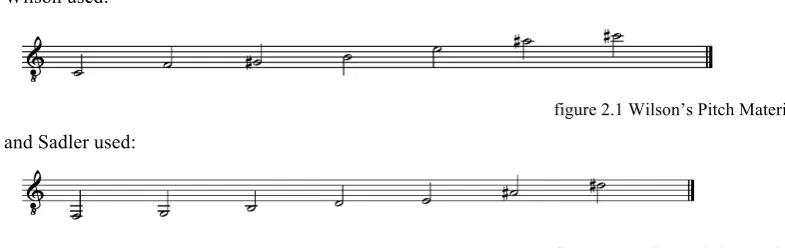
In this rehearsal I introduced the idea of tuned percussion giving each performer a set of seven pitches to use.
[image:26.595.114.507.550.674.2]Wilson used:
figure 2.1 Wilson’s Pitch Material and Sadler used:
figure 2.2 Sadler’s Pitch Material
We also experimented with cymbals played on the floor, developing a material for Wilson from the idea of accelerating the number pattern to the fastest he could play - we named this the ‘alarm’ section. We also developed the ‘three calls’ section from the ‘interjection’ material. I created a solo for Sadler using dyads, the number pattern and her pitch set. I also set a physical stage gesture, which was to have Sadler look at Wilson to signal the end of the piece. By the end of this rehearsal we had sketched out a
structure for the materials: ‘clock’ with ‘interjections’, then ‘phasing’ with ‘interjections’, ‘three calls’, ‘chaos’ going to ‘unison’, ‘number sequence’ with Wilson’s accelerando leading to ‘alarm’ section, Sadler’s ‘dyad’ section to finish.
Fourth Rehearsal
In this rehearsal we cleaned and set the structure we had developed in the previous rehearsal. I also set Wilson’s ‘can’ solo and added it as the opening section. Papadelli attended this rehearsal and led an exercise developed from theatre techniques – this exercise was used to increase the performers’
awareness of their physicality. The material developed a great deal over this rehearsal as we set both the details of the material and also the intention within the material.
Fifth Rehearsal
This final rehearsal was mainly used to set and embody the material. The piece was played and filmed several times over, with notes and discussions between runs.
Performances and After
The piece was performed twice with an interval of two months between the performances. Due to unforeseen complications, we were unable to rehearse and develop the project between performances. Despite the lack of rehearsals, the performers had no trouble remembering the piece down to the fine details in the second performance, describing it as: “instinctive” and “inside my body”.
2.3 Theoretical Discussion
In this section I outline five areas of research that derived from this initial exploration of the development of musical devising from physical models. I continued to explore these areas throughout the research. My development of these ideas is outlined in later chapters where appropriate.
2.3.1 Semantic communication
As we use this form of communication in our everyday lives, it is an extremely flexible, accurate and powerful tool in both the devising process and performance. Semantic communication in rehearsal is an effective way of bringing the performers’ personal history, thoughts and personality into a project. Therefore, spoken and written communication is almost always at the heart of the devising process. In my early research, I wanted to minimise the amount of semantic communication I used in the
performances, as I wanted to avoid becoming distracted away from a musical approach to a more
familiar theatrical one. However, I did use a very small amount of spoken dialogue in Alfred (Wilson
says: “these things are…” during the ‘can solo’).
2.3.2 Physicality in Musical Processes
As the work of practitioners such as Pina Bausch brought together the worlds of dance and theatre, so each art form drew on the aesthetics and techniques of the others - dancers speaking on stage, actors dancing etc.. The performers usually adapt such aesthetics and techniques to suit their own background. For example, dancers will usually have a different approach to speaking and
characterisation than actors. In my research, I wanted to explore aspects of physicality and theatricality in terms of musicians and musical performance.
As Alfred is a duet for two percussionists, the performers were more able to express with their bodies than other instrumentalists may be. For example, woodwind and brass players are limited in their use of facial expressions by the mechanics of playing their instruments. However, as neither of my two performers were trained actors or dancers and I am not a choreographer, I was reluctant to work on creating elaborate physical material. Instead I focussed on exploring aspects of their natural physicality.
In the early rehearsals I explored spatial relationships between the performers - especially looking at lines of sight and proximity. The two musicians reacted differently to this exploration. Sadler seemed less affected by her physical isolation than Wilson, whereas Wilson always seemed to be searching for a communicative contact. The characterisation of the performers developed from this observation. Sadler would develop a static character that performed tasks in isolation, whereas Wilson would develop an energetic character whose musical material was influenced by and responded to Sadler’s.
To increase the performers’ confidence with the physicality of the piece, I asked Papadelli to come into a rehearsal and run a short workshop on physicality. This workshop was designed to increase the performers’ awareness of their body in the space and our ability to use their physicality in the piece.
I began to look at other aspects of physicality in Wilson’s material. In particular I worked on the physicality of the alarm section. In this section I asked Wilson to play the number sequence as fast as he could for an extended period of time. This caused a great deal of physical exertion, which left Wilson obviously drained. In this case the musical material caused the physicality of a theatrical moment. This added to the drama of his exit and added to the auditory impact of the ‘Alarm’ material’s absence.
The use of physical aspects in the creation of Alfred moved me to explore other ideas drawn from the
physical models of devising - including: presence, complicity and physicality in musical performance.
These ideas were predominantly explored in Apologetics 1, Water Music and Apologetics 3 (outlined in
chapters 4-6 respectively).
2.3.3 Individualisation
Devising relies on performers expressing themselves as completely as possible, both in the creative rehearsal and in performance. This engenders performances in which certain performers are recognisable through their particular approach to the creative process. This is usually expressed in their physicality, their voice and the content of their semantic communication. The idea of individualisation of performers is intimately tied up in the concept of the performer-as-project - where performers are regarded as the sum of their unique combination of traits, interests and training, as well as the level of technique in their skills.
It takes a long time for performers to develop both the confidence and understanding to explore their individuality in a rehearsal space. This is especially true of performers trained in a single tradition. Even with performers who are experienced with performing in many styles, the idea of individualising their sound or aesthetic can be problematic. A devising project ideally has elements of creative discovery for the performers, alongside the creation of a new work.
Alfred was the shortest process of all my projects in this research, and as such I had to consider ways of focussing my use of individuation within the process. After the initial exploration of materials, I quickly sought to reduce the number of materials we worked on. I asked performers to re-visit material from different angles, looking to involve their creativity in different ways. I sought to challenge the
2.3.4 Simultaneity
It is a trope of many devising companies to have a stage full of overlaid activity of which the audience can take in but a single part at any one time. This trope is particularly noticeable in works by
Forced Entertainment9 or the Wooster Group.10 This stage technique is associated with devising
companies, but is not a necessary condition of the process, as can be seen in the many counter-examples - such as Pina Bausch’s work where often only a single performer is on stage. However, this trope serves to highlight an interesting difference between the worlds of physical theatre and of music. Musical sounds originating from any point in the stage will have a simultaneous effect on the entire stage, whereas physical movement - and to some extent spoken text - can occur both simultaneously and isolated from each other. For example, a physical stage work can have two events occurring at the same time with no relationship to each other - where it is sometimes possible for the audience to perceive one and not the other. Two musical events happening in the same location and at the same time will necessarily have an effect on each other. This effect I have labelled ‘simultaneity’.
Simultaneity is not a new aspect of musical composition. The musical output of a devising process could be considered in terms of counterpoint or harmony. However, I believe that to do so exclusively would be to misunderstand the performative processes. Counterpoint could be considered as the art of fitting simultaneous musical lines into an overarching harmonic structure. In contrast, devised music explores the effect of the musicians performing their tasks simultaneously with an awareness of each other’s musical content. The individual characters of the musicians are discernable and crucial to understanding the performative output. Percussive music is particularly effective at seeming homogenous if the sound sources are sufficiently similar, so it was important to me to find strong characters for each of my performers to highlight their musical lines in individualistic sections.
During the process of making Alfred, I worked on three approaches to explore the individualisation of
the musicians in simultaneous performance. The first approach was to use the performer’s physical presence. The performers’ position on stage and the presence of their instruments - notably the can and cymbals - serve to highlight the source of their musical lines, and the sense that a particular sound being played belongs to the character performing it. The visual aspect is therefore crucial to the performance of Alfred.
The second approach was to use the musical material to explore the gradual appearance of individuality from a seemingly homogenous sound. In the ‘Chaos’ section both musicians perform the same material, but at independent tempos. In their tempos they mark the number sequence, adding aleatoric sounds within the beats. Here the musicians are playing individualistically - but the effect is one of homogeny, as the individual lines cannot be discerned. The musicians then gradually reduce the dynamic of the aleatoric sounds until only the number sequence beats remained. The effect is complete when Wilson gradually adjusts his tempo to fit Sadler’s and they enter the ‘Unison’ section. Here the musicians are rhythmically homogenous (but not instrumentally). Wilson then gradually increases his tempo (the
9 “the well-crafted chaos of […] Hidden J or Club of No Regrets” (Helmer in Helmer and Malzacher, 2004, p.53)
acceleration section) until his number sequence becomes a single sound-object - the Alarm. As the Alarm dies away, Sadler’s dyads are exposed. Here the musician’s individuality is highlighted in terms of material, dynamics and physical spacing.
The third approach was to use the instrumentation to explore their individualisation. For example, the performers begin on very disparate sounding instruments - the tin can and the skinned percussion - and play non-simultaneously. This highlights the performer’s different characterisations. During the first simultaneous section, the performers gradually come together to finally play simultaneous (although different) material on the metallophones in the ‘Three Calls’ section. Here their sound is homogenous, and their individual identities difficult to discern aurally. This is the only time in which the musicians play such similar instruments. The musicians finish by again playing acoustically distinct instruments, this time simultaneously. For example, in the ‘Unison’ section, the performers play exactly the same material at the same time. However, their individuality is highlighted by their different instrumentation - Wilson on cymbals and Sadler on skinned drums.
The issue of simultaneity is one that I explored throughout my research, but Alfred offers an interesting
range of responses to it. I was drawn to the idea of textures created by more than one musician performing the same (basic) task at different tempi (the ‘Chaos’ section) as a way of creating material that was both defined and controlled by the musicians, and yet unpredictable in performance. As well as using the structural device of having only one musician performing in certain moments to highlight their effect on the stage-space - Wilson highlighting his appearance in the opening and Sadler highlighting her isolation at the conclusion.
2.3.5 Approaching Tasks as Investigations
Devising is a creative process through which materials and ideas are discovered. It would be easy for a composer/director to use tasks that are known to produce predictable ideas or sounds - in a sense pre-determining the sounds you would like and setting the tasks to create them. However, this would result in less of a creative process, than an exercise in rehearsing a verbal score. This does intermittently happen in any devising process - usually at a late stage where it has become clear that certain materials are needed to complement or complete the process. Pina Bausch, for instance, would occasionally demonstrate specific material for her dancers to learn, bypassing the task-based process altogether. However, the core of devising is an investigation into the performer’s responses. To facilitate this practice, I have tried mostly to set tasks that do not dictate specific outcomes. In many cases I do not know what I am searching for until I see a response that moves me.