Chapter 9 Successful Education of Professionals for Supporting Future BIM Implementation within the Architecture Engineering Construction Context
Farzad Pour Rahimian, Jack Steven Goulding, and Tomasz Arciszewski
1 INTRODUCTION
Scientific advances and innovative technologies in Architecture, Engineering, and Construction (AEC) projects are shaping the way in which decisions are made. These decisions are forming the governing foundations for determining and delivering progressive changes in order to address issues pertaining to Society, Knowledge, Economy, and People. These central tenets help support, underpin and drive societal drivers. However, whilst the AEC sector as a whole has been categorised as ‘fragmented’ (Egan, 1998; Latham, 1994; Hampson and Brandon, 2004; Wolstenholme, 2009), the consequence of this has somewhat hindered progress in the use of such innovative technologies (Pour Rahimian et al., 2011). That being said, from a United Kingdom (UK) perspective, there has been a resurgence to address these challenges in order to exploit the full potential of such technologies. In doing so, the UK Government mandated the implementation of Building Information Management (BIM) Level 2 in all public projects from 2016. This required AEC firms to use exchangeable digital building models amongst project parties to enable 2D/3D spatial compliance with British Standard BS1192:2007.
This approach was mandated to address a number of challenges, not least to optimise project costs and labour (by eliminating redundant/duplicate effort), but also to ensure parallel production of multiple design solutions could be more effectively leveraged. This requires unprecedented levels of integration, supported by seamless design/implementation platforms (to maximise automation). This presents a challenge, as automation per se is currently hindered at very early conceptual design and planning phases [as advanced visualisation and modelling technologies are traditionally only employed at the detailed design stages]. As such, many pioneering research endeavours are now attempting to engage BIM to bridge this gap, especially by promoting IT Integrated Design and Construction, or in other words Integrated AEC [originally pioneered at Stanford University].
seeking innovative opportunities through creativity and new inventions. This resonates with thinking derived from innovation literature (Akintoye et al., 2012; Elmualim and Gilder, 2014). As a result, designers and engineers in particular have seemingly lost their ability to innovate. This is partly attributable to ‘inappropriate’ education that has historically focussed on production, rather than creativity. This is just the opposite of what occurred in the 19th and early 20th Centuries, when designers and engineers were seen as the ‘true drivers’ of change. During this time, high-level education was aligned to incentives (e.g. the highest salary rates) which helped design and engineering schools attract the most talented students; and these graduates were capable of meeting all technological and socio-cultural challenges of the quickly expanding societies (Arciszewski, 2006; Arciszewski and Harrison, 2010a, 2010b; Arciszewski and Rebolj, 2008). For instance, the construction of some monumental buildings during this period in history created not only technological solutions, but also cultural revolutions- leading to a fundamental change in the way design and engineering was perceived.
This research posits that creativity has increasingly been underrepresented; and as such, needs to be revisited, especially in a rapidly evolving technological-driven world. For example, such challenges now include environmental and sustainability demands, increased levels of safety compliance, enhanced security issues, and whole life demands (energy, maintenance etc.). Whilst it could be argued that some of these challenges extend beyond the AEC domain per se, it is important to identify the key promoters and inhibitors of engineering creativity. In doing so, the profession as a whole will benefit from a new cogent way of embedding creativity into solutions; the result of which will not only benefit society, but also help inspire future AEC successors to follow this approach. Any changes, particularly those related to the ways that AEC students are educated, are extremely difficult, mostly because of the vector of psychological inertia (Altshuller, 1984a) in action. This phenomenon refers to a natural tendency of individuals and communities to resist any changes, thereby delaying progress as much as possible. This is also influenced by the way in which the instructors were originally educated (mostly as highly sophisticated analysts) as this has a significant impact on the way they want to teach students. Cognisant of this, it is important to recognise the need to apply a complex systems approach to analyse the impact of this in order address the current situation.
‘followers’ have been seen to create stagnation, producing what has been called “vector of psychological inertia” (Altshuller, 1984b), or fixation (Youmans and Arciszewski, 2014). This psychological phenomenon therefore tends to makes change and progress more difficult, and in some cases often even prevents it. The emphasis therefore is to consider the development of leaders (not followers), in order to minimise the negative impact of the vector of psychological inertia.
Building upon the principles of the theory of successful intelligence (Sternberg, 1985, 1996, 1997), this chapter describes “success” as a relative concept, which is defined by a given person in relation to the socio-cultural context and personal desires. This study therefore posits that there is a need to develop a new paradigm that recognises the importance of both analytical and creative works. Given this, this research defines analyst learners as the people who use rote learning and deduction, eventually induction, as opposed to creative people who use also abduction for reasoning. This approach extends learning capability beyond the learners’ cognitive capability. Relying on the principles of theory of successful intelligence (Sternberg, 1985, 1996, 1997), positive psychology (Schueller, 2012), and Appreciative Intelligence (Barrett and Fry, 2008), this chapter asserts that by using the ‘right’ methodologies and media, general principles of creative work could be translated into an explicit knowledge form and become part of a body of knowledge; hence, enabling the successful departments (Arciszewski, 2009) to teach learners the “creative intelligence” and “Appreciative Intelligence”. In this context, the potential of utilising advanced visualisation tools such as immersive game-like virtual reality interfaces is deemed vital - especially for augmenting analytical and parametric thinking capacity to the intuitive idea generation (which could both be supported by these interfaces).
2 LEARNING AND PEDAGOGY
adaptive technologies (which incorporates behavioural and attitude measures) is increasingly gaining momentum.
Education, training and pedagogical development embraces theoretical and applied research which draws upon the theory of Social Sciences (Pemberton and Stonehouse, 2000; Klimecki and Lassleben, 1998; Watkins and Marsick, 1992; McAdam et al, 1998). Given that this chapter acknowledges the need to apply successful education to AEC professionals wishing to engage with technology driven solutions (such as BIM), it uniquely aligns itself to both Social Sciences theory and Behavioural Science theory; as it fervently proffers that there is a real need to move away from a traditional education and training delivery approaches. Research has shown that a match between learning environments and learners’ learning styles can enhance learners’ performance, motivation, and efficiency (Buch and Bartley, 2002; Chang and Cox, 1995, Naoum and Hackman, 1996; Kumaraswamy, 1997; Brown, 1994; Oxford and Ehrman, 1993; O’Brien, 1989). This resonates with following section, which identifies how the theory of successful intelligence relates to context, place, and instructional goals.
3 THEORY OF SUCCESSFUL INTELLIGENCE
The theory of successful intelligence (Sternberg, 1985, 1996, 1997) is a major step toward understanding how individuals’ abilities are interrelated with their life success. In the context of design and engineering education, this theory presents a new understanding of how education can be conceptualised, designed, and delivered. Through this theory, successfully intelligent people are defined as those being able to achieve their goals by: leveraging their strengths; compensating for their weaknesses; and those able to adapt to, shape, and select environments that facilitate success. This theory is underpinned by three fundamental pillars:
1. Successful intelligence can be learned;
2. Successful intelligence is a combination of three independently acquirable abilities, namely: practical intelligence, analytical intelligence, creative intelligence;
3. Successful intelligence is dynamic; both the criteria of success and the abilities the individual employs (i.e. the relative combination of the three intelligences) to achieve success may change during one’s life-time.
Quotient (IQ) tests tend to measure. In addition, traditional engineering education often emphasises analytical intelligence almost entirely. However, the theory of successful intelligence stipulates that a balance of the three pillars of intelligence is absolutely necessary for life success, including professional success.
In the AEC context, creative intelligence is the ability to solve inventive problems, which require abductive skills and the use of existing knowledge. Solving such problems requires the development of unknown solutions or ideas, e.g. development of a new type of wind bracing system for a tall building or a new type of a tunnel. Creative intelligence is acquired through the combination of rote learning with learning of both deductive and abductive skills.
4 SUCCESSFUL EDUCATION
Successful education (Arciszewski, 2009) is a new paradigm in design and engineering education. This paradigm was inspired by the latest developments in modern cognitive psychology, especially by the theory of successful intelligence (Sternberg, 1985, 1996, 1997). This paradigm has also been strongly influenced by a new understanding of historical and social mechanisms behind the emergence of the Renaissance, including the Medici effect (Johansson, 2004) and the Da Vinci Principles (Gelb, 1998, 1999, 2004). It was during the Renaissance that Arciszewski (2009) argues that principles were particularly important because they provided a synthesis of attitudes practiced by Da Vinci and other eminent Renaissance engineers.
In this paradigm, the key concept focuses on successful designers and engineers; describing these who have not only acquired the necessary skills, and body of knowledge to practice engineering, but also learned successful intelligence, including its three components, practical, analytical and creative intelligence. Such graduates are prepared to not only undertake any kind of routine (traditional) work; but, if necessary, are also able to become inventors and leaders, since in both cases the key to success is an ability to develop new ideas.
In Table 9.1, successful education is compared with a past design and engineering education paradigm, called the ‘master–apprentice paradigm’, and the present one, called by us the ‘scientific paradigm’. This comparison is made from the theory of successful intelligence perspective (and its three main components). In this context, only successful education is complete, since it addresses all three components of successful intelligence, and consequently, creates an opportunity to educate (and deliver) successful engineers.
Table 9.1 Comparison of Teaching Paradigms
Teaching Paradigm
Practical Intelligence
Analytical Intelligence
Master-Apprentice
Yes Yes
Scientific Yes Yes
Successful
education Yes Yes Yes
Successful education requires not only a new understanding of design and engineering education priorities and several new or modified courses, it also requires a complex environment, called “successful department”, which will enable and stimulate the creation of successful engineers. A modern Medici Effect and the resulting intersection of ideas are crucial for the learning process. Therefore, they require a revolutionised environment (in terms of intellectual and technological structures) which is completely different that the current look of so many design and engineering departments. In essence, there are four major components of a successful department, namely courses, instructors, physical environment, and ambience (Arciszewski, 2009). This is aligned with Salama’s (2008) “Integrating Knowledge in Design Education” theory which argues that a responsive architectural design pedagogy giving credit to socio-cultural, and environmental needs can enable future architects to create liveable environments.
Traditional, analytical courses are absolutely necessary for the future successful engineers, although they are grossly insufficient for them. They require additional courses on inventive design and engineering, i.e. focused on the emerging science of inventive problem solving. For the best results, such courses could/should be offered to students through their entire period of studies. A single course for seniors (the present practice at George Mason University) is a step in the right direction, but it comes too late to impact learning in other courses and to transform students into successful engineers. A much better solution is a sequence of several courses, even if the total number of credit hours is the same.
Instructors are the key component of a successful department. Usually, faculty in academic units are surprisingly similar in many aspects (birds of feather flock together) despite all efforts to create diversity, which is often imposed only for political reasons. A successful department requires, however, a true diversity, which may be described as “balanced intersection”. This term is understood as a selection of instructors resulting in a department in which cultural backgrounds of instructors are strongly differentiated, they represent both applied and fundamental research, have experience in analytical and exploratory research and they represent various thinking styles.
dedicated to teaching practical intelligence and designed with all kinds of testing laboratories and workshops. Another building should be dedicated to teaching analytical intelligence and it should have various computer laboratories. A third building, “Inventors’ Heaven”, a must, should be dedicated to teaching creative intelligence with appropriately selected laboratories and workshops specifically designed for teams working on their inventive challenges. Finally, there should be an administrative building for faculty and classrooms.
A successful department would never be fully effective without a proper ambience. In this case, ambience is understood as a multi-sensory experience that positively affects students, faculty, and staff helping them to learn or teach in the best way to create successful engineers. Ambience obviously has an emotional dimension, which distinguishes it from a traditional department. Ambience is a reflection of people’s perception of an environment surrounding them and can be carefully created in such a way as to contribute successful designers and engineers. Arciszewski (2009) discussed various components of ambience in a successful department, e.g. guiding principles and stories, colours, music, art, various activities, and even the proper lighting in the successful department.
Building upon the theoretical bases discussed in the theory of successful education (Arciszewski, 2009), this chapter highlights the potential of advanced IT interfaces for leveraging all four components of such a successful department. The chapter advocates and defends the use of advanced game-like virtual workspaces to purposefully align education more meaningfully – to create successful designers and engineers within AEC sector professions.
5 GAMES AND VIRTUAL REALITY IN CONSTRUCTION ENGINEERING EDUCATION
aforementioned challenges, Pour Rahimian et al. (2011) noted that project teams are still facing real and signification problems and challenges regarding heterogeneous systems faced by project teams using project extranets. In this essence, the problem here is that the industry is experiencing confusion as to how to manage project information in order to support decision-making processes. This is the point where Fruchter (2004) suggested the digital integration of the whole data creation, retrieval, and management system within building industry in order to prevent tacit knowledge loss and miscommunication among various parties from different disciplines. In this respect, recent innovation in Virtual Reality (VR) technologies and AEC decision- support toolkits have now matured, enabling tele-presence engagement to occur through integrated collaborative environments. Several opportunities are now available, including significantly improved immersive interactivity with haptic support that can enhance users’ engagement and interaction.
Employing cutting edge ICT tools within the AEC sector requires appropriate training systems (Fruchter, 1998), particularly as the provision and implementation of effective training has a direct impact on the whole industry and concomitant stakeholders. In this respect, advanced ICT systems are expected to address the shortcomings of 'typical' learning models that often provide the trainees with only general instructions (Laird, 2003) and issues associated with unaffordable costs of the 'traditional' on -the-job trainings (Clarke and Wall, 1998). Therefore, new ICT advancements that incorporate innovative proactive experiential learning approaches which link theory with practical experience, using Virtual Reality interactive learning environments can be especially effective (Alshawi et al., 2007). This research builds upon the findings of previous studies in this area and links them to the principles of successful education (Arciszewski, 2009), with specific emphasis on supporting the decision-making process at the construction stages. In essence, the aim of this study is to advocate the advantages of applying flexible, interactive, safe learning environment for practicing new working conditions with respect to `in general, and Open Building Manufacturing (OBM) in particular; without the ‘do-or-die’ consequences often faced on real construction projects (Goulding and Rahimian, 2012).
goggles and wired clothing – thereby enabling the end users to interact in a realistic three-dimensional situation (Yoh, 2001).
Over the last 30 years, ICT systems have matured and enabled construction organisations to fundamentally restructure and enhance their core business functions. For example, Sampaio and Henriques (2008) asserted that the main objective of using ICT in construction was to support the management of digital data; specifically, to convert, store, protect, process, transmit, and securely retrieve datasets. They acknowledged VR techniques as an important stepping stone for data integration in construction design and management, as spatially-rich data was capable of holding and presenting detailed information and properties on buildings (e.g. size, material, spatial relationships, mechanical and electrical utilities etc.) through a single output. Similarly, Zheng et al. (2006) proposed the use of VR to reduce time and costs in product development, and to enhance quality and flexibility for providing continuous computer support during development lifecycle.
Whilst formative studies using VR in design was used primarily as an advanced visualisation medium, since the early 1990’s, VR has been widely used in the AEC sector and has become increasingly pervasive. This is due in part to VR’s ability to act as a natural medium for representing design through 3D models, which can be manipulated in real-time and used collaboratively to explore different stages of the construction process (Whyte et al., 1998). It has also been used as a design application to provide collaborative visualisation for improving construction processes (Bouchlaghem et al., 2005). However, expectations of VR have changed during the current decade. According to Sampaio and Henriques (2008), it is increasingly important to incorporate VR 3D visualisation and decision support systems with interactive interfaces in order to perform real-time interactive visual exploration tasks. This thinking supports the position that a collaborative virtual environment is a 3D immersive space in which 3D models are linked to databases, which carry characteristics. This premise has also been followed through other lines of thought, especially in construction planning and management by relating 3D models to time parameters in order to design 4D models (Fischer and Kunz, 2004), which are controlled through an interactive and multi-access database. In similar studies, 4D VR models have been used to improve many aspects and phases of construction projects by: 1) developing and implementing applications for providing better communication among partners (Kähkönen et al., 2003), 2) supporting design creativity (Rahimian and Ibrahim, 2011), 3) introducing the construction plan to stakeholders (Khanzade et al., 2007), and, 4) following the construction progress (Fischer, 2000).
intact opportunity to enhance engagement of trainees and revolutionise teaching and learning. ACS (2009) summarised the benefits of the emerging educational interactive immersive game environments: 1) annotated objects could provide deeper level of knowledge on demand, 2) incorporating additional dimensions of subjects (nD), 3) supporting distance team collaboration, 4) leveraging equal opportunities by providing distance learning opportunities and, 5) simulated learning by modelling a process or interaction that closely imitates the real world in terms of outcomes.
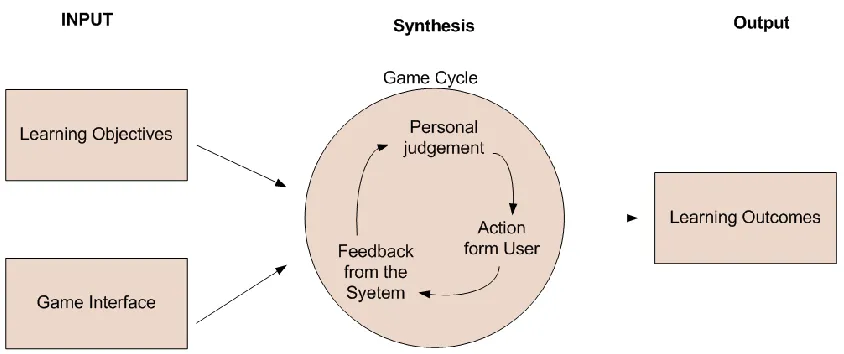
Figure 9.1 Educational Game Model Input-Synthesis-Outcome (Garris et al., 2002)
6 CLOUD BASED BIM IN AEC AREAS
BIM is a model-based design process that adds value across the entire lifecycle of the building project (Autodesk®, 2011). It is an intelligent integrating modelling tool for building design and construction, which allows data sharing with all the stakeholders. It has been advocated that the key to implementation of BIM as the principal design delivery method is the ability of the various team members to easily share building information data during the design and construction processes. The information contained in a BIM model comes in various formats, thus it needs to be exchanged in an efficient way (Santos, 2009). Exchanging data can often be a challenge due to software incompatibility, different specifications, categorisation, format requirements etc. However, addressing these issues can create interoperable systems that can help data modelling migrate between different teams with minimal data loss and with improved optimal accuracy (Fruchter, 1998).
capability. According to this model, BIM level one which is defined as three-dimensional modelling (stage 1A) and intelligent modelling (stage 1B). Intelligent modelling also includes data attached to it, whilst three-dimensional modelling is merely for visualisation purposes only. BIM level two refers to the ability of two or more computer systems or software applications to exchange the format by following a standard and to make use of the information delivered. It is frequently defined as an interoperability system that allows the user to respond to the delivered model and customise it based on its requirements, specification and needs by utilising the nD's modelling concept - 4D; time, 5D; cost, and 6D; facility management.
BIM can be considered more than a representation tool or a means for developing a model or prototype to generate intelligent input. Additional benefits embrace several other issues, including: facilitating the project teams to engage in innovative contractual relationships and new project delivery strategies. BIM level three offers an innovative way to excel in construction management. This new paradigm is known as Integrated Project Delivery (IPD). Here, the goal was to create a team effort to increase good communication and team's integration while working towards a consensus basis. This is often called as the future of BIM. On this theme, Santos (2009) asserted that amongst all barriers for achieving this goal was the interoperability problems of BIM.
Interoperability refers to incompatibility between inter-products and software applications. Incompatibility means that vendors have created a solution to this by having a BIM model converted into a neutral object-based file format; i.e., a format that is not controlled by any particular vendor, thus it can become a platform to exchange data. In essence, interoperability refers as the ability to exchange/share information between separate computer programs without any loss of content or meaning (Aranda-Mena and Wakefield, 2006). According to Succar (2009), interoperability is a linear workflow that allows the inability of simultaneous interdisciplinary changes to be shared in a single file-based platform, so there is no information loss as a result of each transition.
In the single operational file-based sharing model (Succar, 2009), once the building information model (1) is complete, it can be exported to the inter-operable model, BIModel (v1) to allow another process of modelling to be taken. This inter-operable model (v1) captures both geometry and properties of BIModel (1), thus facilitate the sharing of information. Then, this inter-operable model (v1) will be imported to the BIModel (2) to allow modelling process to take place; this procedure will be repeated for another modelling process until the project is completed. The capability of this interoperability system allows BIM to take one further step to improve the interdisciplinary collaboration among the project team. This could be considered as a stepping stone for web space-based platforms which are particularly beneficial for integrating visualisation components to give continuous related information sharing for the geographically dispersed end users.
One of the most referred industry (IEEE-1516) standards for large scale modelling and simulation is the High-Level Architecture (HLA) which was originally introduced by the U.S. Department of Defense (Kuhl et al., 2000). Zhang et al. (2012) advocated this system as it could integrate various simulation applications, providing a standard architecture for interconnectivity, interoperability and reusability. Uygun et al. (2009) also posited that integrating various approaches and applications in computer simulations (using a unique framework, functional rules and common interfaces) could support flexible distributed simulations; moreover, could also contribute to the reduction of software costs by supporting the reuse of simulation models within this infrastructure.
Similarly, Wang et al. (2014b) proposed a structured methodology for integrating Augmented Reality (AR) technology with BIM, in order to overcome issues related to limited sense of immersion and real-time communication of BIM within virtual environments; and, Wang and Dunston (2013) developed a tangible mixed-reality interface for facilitating non-collocated collaboration for problem-solving and design error detection. Moreover, Abrishami et al. (2013) proposed adopting Generative Algorithm with BIM to leverage deeper integration with the conceptual design phases; and Hou et al. (2013) developed a platform for controlling building components assembly procedures in order to improve accuracy and reduce errors; and Wang et al. (2014a) adopted an overarching approach which advocated the need for the development of a computer-mediated remote collaborative design support system to leverage distributed cognition and help capture the non-collocated team’s knowledge which is distributed in memories, facts, objects, individuals, and tools.
7 CASE STUDY
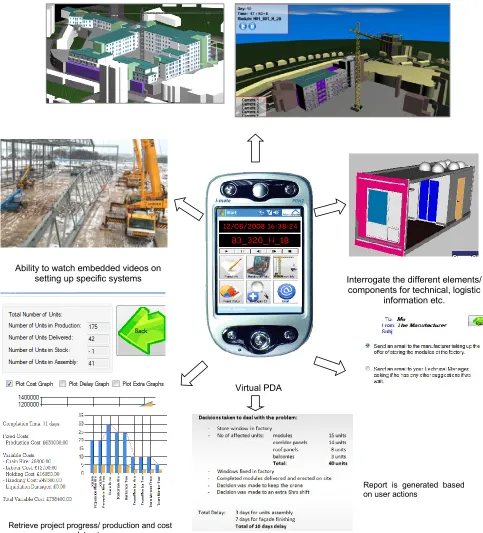
This section presents a developed Web-Based Game-Like VR Construction Site Simulator (WBGVRSS). The primary aim of WBGVRSS was to embrace ‘real life’ issues facing offsite construction projects in order to appeal to professionals by engaging and challenging them to find ‘real life’ solutions to problems often encountered on site. Embryonic work by Goulding et al (2012) established the philosophical underpinnings of this case study, and subsequent later developments are presented here for discussion. From the outset, a real construction project was used to map and govern construction processes – constructs, links and dependencies of which were embedded into a VR learning environment to replicate authenticity. In this context, the prototype learning simulator was designed specifically to allow ‘things to go wrong’, and hence, allow ‘learning through experimentation’ or ‘learning by doing’. In this respect, although the ‘scenes’ within the simulator took place on a construction site, the target audience [learners] focussed primarily on construction professionals e.g. project managers, construction managers, architects, designers, commercial directors, suppliers, manufacturers etc. Thus, the simulated construction site was used as the main domain through which all the unforeseen issues and problems (caused through upstream decisions, faulty work, weather, logistics etc.) could be enacted. The key learning impact areas acknowledged the importance and significance of these instances, placing emphasis on the decisions and subsequent implications on time, cost, resources etc. Embedded learning scenarios were therefore user-centric, and progressive, especially where concatenated decisions had implications for succeeding events. Learning was therefore well planned and managed. All outcomes (of decisions) culminated in a formal report, which was used to reinforce learning through a debriefing session. This allowed leaners to defend decisions and provide additional understanding, particularly with respect to mitigating circumstances. This reinforcement proved especially important for subsequent on-the-job learning. In this context, learning occurred through the following:
Learner autonomy - to make all decisions;
Interactivity - environment provides feedback on the decisions taken, and their implications on the overall project (cost, time, resources, health and safety, etc.);
Reflection - users are able to defend decisions on the feedback provided, and have the ability to identify means to avoid/mitigate potential problems in the future.
the opportunity to experience challenges of real-life AEC projects through simulated scenarios. In order to minimise interruption on the learners’ reasoning process, the Graphical User Interface (GUI) was designed to be as simple and straightforward as possible with respect to data input. Thereby, the interface was designed as to be accessible through any standard web browser to provide users with login account details and other criteria, e.g. selection of available construction sites, projects, contractors, equipment, scenarios etc. All choices made by ‘players’ as well as their registration data was automatically recorded in a MySQL database, which was also accessible through the immersive application for project simulation. After completing the initial decision-making process through the interactive ASP.Net Web Forms, learners are able to commence the training session, starting with a ‘walkthrough’ to experience and appreciate the complexity of the project. At this stage, the application provides users with a summary of the project and contract, and runs the simulation of the project within an immersive and interactive environment developed in Quest3DTM VR programming Application Programming Interface (API).
Figure 9.2 WBGVRSS Simulation Scenarios Navigate the environment and
walkthrough to appreciate the complexity and size of project
Retrieve project progress/ production and cost data etc.
Report is generated based on user actions
Ability to watch embedded videos on
setting up specific systems Interrogate the different elements/
components for technical, logistic information etc.
8 CONCLUSION
BIM is now a prevalent factor in the procurement of AEC projects. However, these projects are increasingly becoming more complex, which not only requires new business processes and technological solutions to meet ever-increasing demands, but also new skill-sets. In particular, these business demands often require the conjoining of high level skill sets to deliver the solutions needed. These skill sets are currently underrepresented, and seldom engage the collective ethos needed to envelop creative thinking, through such approaches pedagogical alignment and more specifically, successful intelligence in order to create new innovative solutions. It is therefore paramount that the industry as a whole engages the right type (and level) of skill sets and competence needed to meet these project requirements and business imperatives. Acknowledging this, it is also important that the causal drivers and influences associated with creativity and successful decision-making in global AEC teams are fully understood, engaged and supported. However, to do this requires a radical review in the way educational programmes and systems are designed and delivered. With respect to leveraging creativity and delivering innovation, this chapter reflected on the Renaissance period and the creativity-oriented learning/teaching paradigm called “master-apprentice paradigm”, as opposed to the current analysis focused “science paradigm”. From this, it introduced the theory of successful intelligence and its three pillars as an underpinning platform for educating the new generation of designers and engineers within AEC.
The successful education paradigm (Arciszewski, 2009) was presented as a new approach for educating AEC professionals. This included: the concept of a new educational environment; the need for a new combination of courses that focus on teaching the three kinds of successful intelligence (in the context of AEC sector); and specific guidelines of how to properly select instructors that are capable of implementing such approach. A proof-of-concept prototype using a web-based VR system and game-like cloud BIM platform for supporting integrated AEC projects was presented as an exemplar to demonstrate how the proposed approach could be implemented. This prototype simulator offers a risk free environment where learners can evaluate how decisions made affect business outputs. These decisions embraced (but are not confined to) design concerns, process challenges, communication, logistics and handling, supply chain management etc.
teams using Game-Like VR environments is an opportunity for industry reflection. This not only addresses the need to evaluate actor involvement in order to reveal new insight into AEC organisational behaviour, but also the social constructs underpinning this (which often affect decision making). Advanced VR training and simulation tools are such exemplars on this metaphorical journey; which not only highlight the possibilities available, but also emphasise the need to purposefully align pivotal drivers to specific learning outcomes. Future research in this area is likely to embrace the increased importance of pedagogy (learner styles/traits), as this is openly acknowledged as being particularly efficacious for delivering training material to specific learner-types.
REFERENCES
Abrishami, S., Goulding, J. S., Ganah, A., and Rahimian, F. P. (2013). Exploiting modern
opportunities in AEC industry: A paradigm of future opportunities. In: C. Anumba,
ed., AEI 2013: Building Solutions for Architectural Engineering - Proceedings of the 2013 Architectural Engineering National Conference, State College, PA, United States, pp. 320-332
ACS. (2009). 3D Learning and Virtual Worlds: An ACS: Expertise in ActionTM White Paper,
http://www.trainingindustry.com/media/2043910/acs%203d%20worlds%20and% 20virtual%20learning_whitepaper%20april%202009.pdf, Access Date, 12/10/2016.
Akintoye, A., Goulding, J. S., and Zawdie, G. (Eds.). (2012). Construction Innovation and
Process Improvement. London: Wiley-Blackwell.
Alshawi, M., Goulding, J. S., & Nadim, W. (2007). Training and Education for Open Building Manufacturing: Closing the Skills Gap. In A. S. Kazi, M. Hannus, S.
Boudjabeur & A. Malon (Eds.), Open Building Manufacturing: Core Concepts and
Industrial Requirements (pp. 153-172). Helsinki, Finland: ManuBuild in
collaboration with VTT - Technical Research Centre of Finland.
Altshuller, G. (1984a). Creativity as an Exact Science. New York: Gordon and Breach,
Science Publishers, Inc.
Altshuller, H. (1984b). Creativity as an Exact Science. New York: Gordon and Breach,
Science Publishers, Inc.
Aranda-Mena, G., and Wakefield, R. (2006). Interoperability of building information -
Myth or reality? , The 6th European Conference on Product and Process Modeling,
Valencia, Spain, pp. 173-178.
Arciszewski, T. (2006). Civil Engineering Crisis. ASCE Journal of Leadership and
Management in Engineering, 6(1), 26-30.
Arciszewski, T. (2009). Successful education. How to Educate Creative Engineers.
Fairfax, VA: Successful education LLC.
Arciszewski, T., and Harrison, C. (2010a). Successful Civil Engineering Education. ASCE
Journal of Professional Issues in Engineering Education and Practice, 136(1),
Arciszewski, T., and Harrison, C. (2010b). Successful Engineering Education. The International Conference on Computing in Civil and Building Engineering, Nottingham, UK.
Arciszewski, T., and Rebolj, D. (2008). Civil Engineering Education: Coming Challenges.
International Journal of Design Science and Technology, 14(1), 53-61.
Australian Institute of Architects. (2009). National Building Information Modelling (BIM) Guidelines and Case Studies. Brisbane, Australia: Construction Innovation. Autodesk®. (2011). Realizing the Benefits of BIM, Autodesk® Building Information
Modeling. Retrieved 11/10/2016, from
http://images.autodesk.com/adsk/files/2011_realizing_bim_final.pdf
Barrett, F. J., and Fry, R. E. (2008). Appreciative Inquiry: A Positive Approach to Building
Cooperative Capacity. Chagrin Falls, OH: Taos Institute.
Bouchlaghem, D., Shang, H., Whyte, J., and Ganah, A. (2005). Visualisation in
architecture, engineering and construction (AEC). Automation in Construction,
14(3), 287-295.
Buch, K., and Bartley, S. (2002). Learning Style and training delivery mode preference, Journal of Workplace Learning, 14, pp. 5-10.
Briggs, J. C. (1996, 09-01-1996). The Promise of Virtual Reality. The Futurist, 30-31.
Brown, A. L. (1994). The Advancement of Learning, Educational Researcher, 23, 4-12. Cera, C. D., Reagali, W. C., Braude, I., Shapirstein, Y., and C.Foster. (2002). a
Collaborative 3D Environment for Authoring Design Semantics. Graphics in
Advanced Computer-Aided Design, 22(3), 43-55.
Chang, W.P. and Cox, R.P. (1995). A Balance in Construction Education, CIB W89 Conference on Construction/Building Education and Research Beyond 2000, Orlando, USA, pp. 235-242.
Clarke, L., and Wall, C. (1998). UK construction skills in the context of European
developments. Construction Management and Economics 16(5), 553-567.
Coffield, F., Moseley, D., Hall, E. and Ecclestone, K. (2004) Learning Styles and Pedagogy in post-16 learning: a systematic and critical review. London: Learning and Skills Research Centre
Egan, J. (1998). The Egan Report - Rethinking Construction, Report of the Construction
Industry Taskforce to the Deputy Prime Minister. London: HSMO.
Elmualim, A., and Gilder, J., (2014). BIM: innovation in design management, influence
and challenges of implementation, Architectural Engineering and Design
Management, Vol. 10, Iss. 3-4, pp 183-199
Fischer, M. (2000). 4D CAD-3D models incorporated with time schedule, CIFE Centre for Integrated Facility Engineering in Finland, VTT-TEKES: CIFE Technical Report, Helsinki.
Fischer, M., and Kunz, J. (2004). The Scope and Role of Information Technology in
Construction CIFE Technical Report (pp. 19). San Francisco: Center for Integrated
Facility Engineering, Stanford University.
Friedman, T. L. (2005). The World is Flat: A Brief History of the 21st Century. New York:
Farrar, Straus and Giroux.
Fruchter, R. (2004). Degrees of Engagement in Interactive Workspaces. International
Journal of AI & Society, 19(1), 8-21. doi: 10.1007/s00146-004-0298-x
Garris, R., Ahlers, R., and Driskell, J. E. (2002). Games, Motivation, and Learning: A
research and Practice Model. Simulation Gaming, 33(4), 441-467.
Gelb, M., J. (1998). How to Think like Leonardo da Vinci. New York: Random House.
Gelb, M., J. (1999). How to Think like Leonardo da Vinci, Workbook. Random House: New
York.
Gelb, M., J. (2004). Da Vinci Decoded: Discovering the Spiritual Secrets of Leonardo's
Seven Principles. New York: Bantam Dell.
Goulding, J., Nadim, W., Petridis, P., Alshawi, M., (2012). Construction Industry Offsite Production: A Virtual Reality Interactive Training Environment Prototype,
Advanced Engineering Informatics, Vol. 26, Issue 1, January 2012, pp 103-116,
http://dx.doi.org/10.1016/j.aei.2011.09.004
Goulding, J.S., and Syed-Khuzzan, S., (2014). A Study on the Validity of a Four-Variant
Diagnostic Learning Styles Questionnaire Framework, Journal of Education +
Training, Vol. 56, Iss. 2-3, pp 141-164, DOI: 10.1108/ET-11-2012-0109
Goulding, J. S., Pour Rahimian, F., and Wang, X. (2014). Virtual reality-based cloud BIM
platform for integrated AEC projects. Journal of Information Technology in
Construction (ITCON), 19(Special Issue BIM Cloud-Based Technology in the AEC
Sector: Present Status and Future Trends), 308-325.
Goulding, J. S., and Rahimian, F. P. (2012). Industry Preparedness: Advanced Learning Paradigms for Exploitation. In A. Akintoye, J. S. Goulding & G. Zawdie (Eds.),
Construction Innovation and Process Improvement (pp. 409-433). Oxford, UK:
Wiley-Blackwell.
Hampson, K., and Brandon, P., Construction 2020: A Vision for Australia's Property and
Construction Industry. Construction 2020 Vision Report, ISBN 0-9750977-2-5
http://eprints.qut.edu.au/40762/1/40762.pdf Access Date: 12/10/2016.
Hou, L., Wang, X., Bernold, L., and Love, P. E. (2013). Using Animated Augmented
Reality to Cognitively Guide Assembly. Journal of Computing in Civil
Engineering, 27(5), 439-451.
Hou, Y., and Ji, L. (2010). Stimulating Design Creativity by Public Places in Academic
Buildings. Journal Structure and Envirinment, 3(2), 5-13.
Johansson, F. (2004). The Medici Effect. Boston, MA: Harvard Business School Press.
Juárez-Ramírez, R., Sandoval, G. L., Cabrera Gonzállez, C., and Inzunza-Soberanes, S.
(2009). Educational strategy based on IT and the collaboration between academy
and industry for software engineering education and training. m-ICTE 2009, V
International Conference on Multimedia and ICT's in Education, Lisbon, Portugal, pp. 172-176.
Kähkönen, K., Layden, A., Retik, A., Leinonen, J., & Hemiö, T. (2003). New Construction Management Practice Based on the Virtual Reality Technology. In I. Flood, R. R. Issa, & W. J. O’Brien (Eds.), 4D CAD and Visualization in Construction:
Developments and Applications. Taylor & Francis.
Khanzade, A., Fisher, M., and Reed, D. (2007). Challenges and benefits of implementing
virtual design and construction technologies for coordination of mechanical,
electrical, and plumbing systems on large healthcare project. CIB 24th W78
Kim, B. and Chris, S. (2001). Accommodating diverse learning style in the design and delivery of on-line learning experiences, International Journal of Engineering
Education, 17, 93-98.
Klimecki R., and Lassleben H., (1998). Modes of organisational learning: implications
from an empirical study, Management Learning, 29(4), pp. 405–430.
Kolb, D.A. (1984). Experiential Learning: Experience as the Source of Learning and Development, New Jersey, USA: Prentice-Hall Inc.
Kuhl, F., Weatherly, R., and Dahmann, J. (2000). Creating Computer Simulation Systems:
An Introduction to the High Level Architecture. New Jersey, New Jersey:
Prentice-Hall PTR.
Kumaraswamy, M. (1997). Improving Industry Performance through Integrated Training
Programmes, Journal of Professional Issues in Engineering Education and
Practice, 123 (3), pp. 93-97.
Laird, D. (2003). New Perspectives in Organisational Learning, Performance, and
Change: approaches to training and development (3rd ed.): Preseus Books Group,
USA.
Latham, M. (1994). Constructing the Team, Joint Review of the Procurement and
Contractual Arrangements in the UK Construction Industry, Final Report. London:
HSMO.
McAdam, R., Leitch, C., and Harrison, R., (1998). The links between organizational learning and total quality: a critical review, Journal of European Industrial
Training, 22 (2), pp. 47-56.
Mole, J. (2003), Mind your Manners: Business Cultures in Europe – Managing Business Cultures, Nicholas Brealey Publishing, London.
Nicholas Brealey Publishing, London.Naoum, S. and Hackman, S. (1996). Do site
managers and the head office perceive productivity factors differently? Journal of
Engineering, Construction and Architectural Management, 3 (12), pp. 147–160.
O'Brien, L. (1989). Learning styles: Make the student aware, NASSP Bulletin, 73 (519), 85-89.
Oxford, R.L., and Ehrman, E. (1993). Second language research on individual differences,
Annual Review of Applied Linguistics, 13, 188-205.
Pemberton J.D., and Stonehouse G.H., (2000). Organisational learning and knowledge
assets – an essential partnership, The Learning Organization, 7(4), 184-193.
Petric, J., Maver, T., Conti, G., and Ucelli, G. (2002). Virtual reality in the service of user
participation in architecture. CIB W78 Conference, Aarhus School of
Architecture, 12–14 June.
Pour Rahimian, F., Ibrahim, R., Rahmat, R. W. B. O. K., Abdullah, M. T. B., and Jaafar, M. S. B. H. (2011). Mediating Cognitive Transformation with VR 3D Sketching
During Conceptual Architectural Design Process. Archnet-IJAR, International
Journal of Architectural Research, 5(1), 99-113.
Rahimian, F. P., and Ibrahim, R. (2011). Impacts of VR 3D sketching on novice designers'
spatial cognition in collaborative conceptual architectural design. Design Studies,
32(3), 255-291.
Regenbrecht, H., and Donath, D. (1997). Architectural Education and Virtual Reality
Aided Design (VRAD). In D. Bertol (Ed.), Designing Digital Space - An
Salama, A. M. (2008). A Theory for Integrating Knowledge in Architectural Design Education. Archnet-IJAR, International Journal of Architectural Research, 2(1), 100-128.
Sampaio, A. Z., Ferreira, M. M., Rosário, D. P., and Martins, O. P. (2010). 3D and VR models in Civil Engineering education: Construction, rehabilitation and
maintenance. Automation in Construction, 19(7), 819-828.
Sampaio, A. Z., and Henriques, P. G. (2008). Visual simulation of previous termcivil
engineeringnext term activities: didactic virtual previous termmodels. WSCG
2008, 16th International Conference in Central Europe on Computer Graphics, Visualization and Computer Vision, Plzen, Czech Republic, pp. 143-149.
Santos, E. T. (2009). Building Information Modeling and Interoperability. XIII Congress
of the Iberoamerican Society of Digital Graphics - From Modern to Digital: The Challenges of a Transition Sao Paulo, Brazil, 2009 November 16 to 18.
Schueller, S. M. (2012). positive psychology. In V. S. Ramachandran (Ed.), Encyclopedia
of Human Behavior (Second Edition) (pp. 140-147). San Diego: Academic Press.
Sternberg, R. J. (1985). Beyond IQ: A Triarchic Theory of Intelligence. Cambridge: Cambridge University Press.
Sternberg, R. J. (1996). Successful intelligence. New York: Simon & Shuster.
Sternberg, R. J. (1997). A Triarchic View of Giftedness: Theory and Practice. In N. N. Coleangelo & G. A. Davis (Eds.), Handbook of Gifted Education (pp. 43-53). Boston, MA: Allyn and Bacon.
Succar, B. (2009). Building information modelling framework: A research and delivery
foundation for industry stakeholders. Automation in Construction, 18(3), 357-375.
Succar, B. (2011). Organizational BIM; How to assess and improve your organization's
BIM performance. Revit Technology Conference Australasia, V1.1, session 3 part
B.
Thai, A. M., Lowenstein, D., Ching, D., and Rejeski, D. (2009). Game Changer: Investing in digital play to advance children’s learning and health: The Joan Ganz Cooney
Center,
http://www.joanganzcooneycenter.org/wp-content/uploads/2010/03/game_changer_final_1_.pdf, Access Date: 12/10/2016. Uygun, Ö., Öztemel, E., and Kubat, C. (2009). Scenario based distributed manufacturing
simulation using HLA technologies. Information Sciences, 179(10), 1533-1541.
doi: http://dx.doi.org/10.1016/j.ins.2008.10.019
Vincent, A., and Ross, D. (2001). Personalise training: determine learning style,
personality types and multiple intelligence, The Learning Organisation, 8, 36-43.
Wang, X., and Dunston, P. S. (2013). Tangible mixed reality for remote design review: a
study understanding user perception and acceptance. Visualization in Engineering,
1(1), 1-15.
Wang, X., Love, P. E., Kim, M. J., and Wang, W. (2014a). Mutual awareness in collaborative design: An Augmented Reality integrated telepresence system.
Computers in Industry, 65(2), 314-324.
Wang, X., Truijens, M., Hou, L., Wang, Y., and Zhou, Y. (2014b). Integrating Augmented Reality with Building Information Modeling: Onsite construction process
controlling for liquefied natural gas industry. Automation in Construction, 40,
Watkins, K., and Marsick, V., (1992). Building the learning organization: A new role for
human resource developers. Studies in Continuing Education, 14 (2), pp. 115-129.
Watson, J., and Hardaker, G. (2005). Steps towards personalised learner management
system (LMS): SCORM implementation, Campus-Wide Information Systems, 22,
56-70.
Wellings, J., and Levine, M. H. (2010). The Digital Promise: Transforming Learning with Innovative Uses of Technology: A white paper on literacy and learning in a new
media age, Joan Ganz Cooney Center at Sesame Workshop,
http://www.digitalpromise.org/Files/Apple.pdf, Access Date: 13/10/2014.
Whyte, J., Bouchlaghem, N., and Thorpe, A. (1998). The promise and problems of
implementing virtual reality in construction practice. Paper presented at the The
Life-cycle of Construction IT Innovations: Technology Transfer From Research To practice (CIB W78), Stockholm, 3–5 June, 1998.
Wolstenholme, A. (2009). Never Waste a Good Crisis: A Review of Progress since Rethinking Construction and Thoughts for Our Future. London: Constructing Excellence
Yoh, M. (2001). The Reality of Virtual Reality. Paper presented at the Seventh International Conference on Virtual Systems and Multimedia (VSMM’01), Organized by Center for Design Visualization, University of California Berkley Berkley , USA, 25-27 October 2001.
Youmans, R. J., & Arciszewski, T. (2014). Design fixation: classifications and modern
methods of prevention. Artificial Intelligence for Engineering Design, Analysis and
Manufacturing, 28(02), 129-137.
Zhang, X., Wang, H., Ma, H., and Wang, H. (2012). The Research of Digital Proving
Ground Simulation System Based on HLA. Procedia Engineering, 29(0),
3624-3630. doi: http://dx.doi.org/10.1016/j.proeng.2012.01.542
Zheng, X., Sun, G., & Wang, S. (2005, May). An approach of virtual prototyping modeling
in collaborative product design. In International Conference on Computer
Supported Cooperative Work in Design (pp. 493-503). Springer Berlin Heidelberg.
Zudilova-Seinstra, E., Adriaansen, T., and van Liere, R. (2009). Trends in Interactive