THE PRO-t
-
CON PROJECT
THE
D
EVELOPMENT OF
A
SYSTEM FOR
CONTINUOUS PROCESS IMPROVEMENT USING
PRO-t-CON PROCESS OPTIMISATION
SOFTWARE
AT
AEP FILMPAC LTD.
A thesis
submitted
to
the Faculty of Technology and Engineering, Masse
y
University, in partial fulfilment of
the requirements for the degree of
Master of Technology
In
Quality Systems.
Paul I
<
enneth Mo
y
nagh
ABSTRACT
This project
details the
work
done to de
ve
lop
a
methodolo
gy
for
process improvem
e
nt
at
AEP Filmpac
in
Auckland, New Zealand.
The
company
had purchased
a
process
optimisation software package called
Pro-t-con
which
the
y
intended
to
use to improve
the
operating
conditions for each
product
on each
machine
in the plant. Early
use
of
the
Pro+con
software
produced
a
number
of
questions
as
to its
ability
to
optimise
processes
as
effectively
as
expec
ted
.
Thus research was
done to
test the effectiveness of
th
e
package
a
nd
ana
l
yse
it
s
strengths
a
nd
weaknesses.
The results
of
this work suggest
that
P
ro-t-con although very easy
to use
is limit
e
d
in its
a
bility
to effectively optimise
processes. Statistically it
l
acks
the rigor
of
Classical
and
Taguchi design
of ex
p
erime
nt
methods
and
cannot resolve processes
with
int
eractions or
non-linear
factors.
At the outset of the project the plant did not possess a
sys
tem
for suita
bl
y stori
n
g a
nd
retrieving machine set-up
inform
ation,
thus
any
imp
rovements
made to the
se
ttin
gs one
day
would
not be
ava
ilabl
e for
use the next time that product
was
run. Consequently
in
order
to longitudinally
deve
l
op
process
settings
it
was also
necessary to develop
a setting
sheet system
to
support
the process improvement initiatives.
The
combination of a
methodology
for
continuously
imp
roving
processes
and one
for
actua
ll
y
undertaking
experime
nt
s
t
o
exploit
such
a process produced
a
coherent
10
s
tep
DECLARATION
I declare that this is my own, unaided work. It is being submitted in partial fulfilment of
the requirements for the degree of Master of Technology at Massey University.
It has not
been submitted before for any degree or examination in any other University.
Paul Kenneth Moynagh
This
Twentieth day of October 2000
,-\CKl"\J O\'\'.LEDGEMENTS
Thanks to,
The Foundation for Research Science and Tcchnolo,gy for funding under the
Graduate in Industry Fellowship (GRIF) Program.
AEP Industries Australasia in particular AEP Filmpac, Auckland
J\like Mason, company supervisor
Mr Alan Wright, first academic supervisor
Mr Tom Robertson, second academic supervisor.
The staff of the AEP plants visited in particular those
111extrusion at AEP
CONTENTS
ABSTRACT ... 2
Declaration ... 3
Acknowledgements ... 3
1.0-INTRODUCTION ...... 9
1.1 J,Jlhy Pro-t-con? ......... 9
1.2 Aims ... 10
1.3 Objectives ................. 10
1.4 Thesis Structure ......... 11
1.5 Background ......................... 12
1.1.1: Company History ... 12
1.1.2: Competitors ... 13 1.1.3: Sales Initiatives ... 13 1.1.4: Company Performance ... 13
1.1.5 Machinery ... 15
1.1.6: Work force ... 16
1.1.7: Work Order System ... 16
1.1.8: A Tangled Web of Knowledge ... 17
2.0-LITERATURE REVIEW ........................ 19
2.1 Research Strategy .................................... 19
2.2 Implementation of Process Improvement Initiatives ... 20
2.3 Process Improvement Methodologies ........... 23
2.3.1: Eight Stages of Knowledge ... 23
2.3.2: A Seven Step Method of Process Improvement ... 24
2.3.3: Upton's 4 Levels of Involvement ... 25
2.3.4: Flow Charts for Process Improvement and Problem Solving ... 28
2.3.5: Goldratts five Steps ... 30
2.3.6: Pro-t-con Methodology ... 30
2.3.7: Taguchi 8 Stage Process ... 31
2.3.8: Summary ... 32
2.4 Statistical Techniques for Process Optimisation ........ 33
2.4.1: Classical Design of Experiments (DoE) ... 35
2.4.2: Response Surface Methodology (RSM) ... 36
2.4.3: Taguchi Methods ... 37
2.4.5: Statistical Process Control. ... 40
2.4.6: Pro-t-con ... 41
2.4.7: Summary ... 47
2.5 Blown Film Extrusion Fundamentals . ... 49
2.5.1: The Extrusion Process and Equipment. ... 49
2.5.2: The Extrusion Process ... 53
2.5.3: Fabrication Variables Influence On The Physical Properties of Blown Film ... 54
2.5.4: Resin Properties ... 57
2.5.5: Mechanical Properties and Film Defects ... 59
2.5.6: Palletfast Stretch Cling Film (SCF) Strength Measurement ... 61
2. 6 Conclusions ... 65
3.0-METHODOLOGIES ... 69
3.1 Recommended Method/or Process Improvement (10 Steps) ... 69
3.1.1: Explanation of 10 Step Flow Chart. ... 71
3.1.2 Testing the 10 Step Methodology ... 73
3.2 Setting Sheet System Development (Stage 4) ... 75
3.2.1 The Continuously Improving Setting Sheet System ... 76
3.2.2 Measuring the Effect of the Setting Sheet System ... 76
3.3 Pro-t-con Testing Methodology ... 78
3.3.1 Ability to Do Optimisations ... 79
3.3.2: Pro-t-con Testing Methods ... 81
3.4 Process Measurement Methods ... 82
4.0-ANALYSIS OF THE 10 STEP METHOD ... 85
4.1: Case Studies For Analysis of the 10 Step Process Improvement Method ... 85
4.1.1: Case Study Experiments ... 85
4.1.2: Suggested Improvements to the 10-Step Method ... 92
5.0-SETTING SHEET SYSTEM AT FILMP AC ... 97
5.1 Setting Sheet System ... 97
5.1.1: Environmental Considerations ... 98
5.1.2: Pro-t-con Recording Sheets ... 99
5.1.3: The Operators Role ... 100
5.1.4: The Supervisors Role ... 100
5.1.5: The Administrator ... 101
5.1.6: Work Order System ... 101
5.1.7: The Data Base ... 102
5.1.8: Improving/Updating Setting Sheets ... l 02 5.1.9: The Role of Pro-t-con ... 103
5.1.10: Expected Benefits of the System ... 104
5.2 Implementation of The System ... 105
5.3 Testing the System ... 107
5.3.1: Measuring The Improvement in Performance Due to the System ... 107
5.4 Results ... 108 5.4.1: Financial Effect of the Results ... 11 O
5.5
Discussion .................................................................... 1116.0-ANALYSIS OF PRO-t-CON ... I 13 6.1 Testing Pro+con Using Known Dummy Processes ................................. 113
6.1.1: Non Linear Process ... 113 6.1.2: All Linear Dummy Process ... 121
6.2 Palletfast Stretch Cling Film Optimisation (case Study) ..................................... 125 6.2.1: Experimental Design ... 125
6.2.2: Confirmatory Experiments ... 127
6.3 Machine C22, Chester Hill Plant, Sydney (Case STudy) ............... 129
6.3.1: Approach ... 129
6.3.2: Regression Analysis ... 130
6.3.3: Results ... 131 6.4 Other Experimental Data Sets ...... 133 6.4.1: Shrink Film Optimisation ... 133
6.4.2: Data sets from Glenvern Associates ... 134
6.5 Critique of Pro-t-con ................................................... 137 6.5.1: Concerning Observations ... 137
6.5.2: Probable Pro-t-con Optimisation Algorithm ... 139
6.5.3: Ability to Do Optimisations ... 139
6.5.4: How Much Information Does Pro-t-con Give? ... 140
6.5.5: Number of Experiments Necessary ... 141 6.5.6: Ease of Use ... 142
6.5.7: Summary of Pro-t-cons Capabilities ... 143
6.6 Discussion ................................. 144 7.0-OVERALL DISCUSSION ........................ 147
7. I. I: A side note ... 150
8.0-CONCLUSIONS ................................... 151
8.1 Further Work ... 152 8.1.1: Filmpac ... 152
1.0-INTRODUCTION
The flexible packaging industry is
very
competitive. AEP Industries is the second largest
manufacturer
of
flexible packaging
products in
Australasia.
In
order
to compete
effectively
in
a
competitive
commodity
market it is necessary
tonot
only
be better than
th
e
competition in the present, but also be better
at
getting better for the future. There
are
many initiatives th
at promote the improvement
of
a company's competitive
advantage,
one of
the
mos
t important
of
these is continuous processes improvement
.
Th
e
management
of
AEP Filmpac
understood thi
s
concept and on
the
recommendation
o
f
AEP Industries
Intern
ational, purchased
a
process
optimisation software
tool called
"Pro-t-con". Th
e
intention
was
to
apply
Pro+con to
a
variety
of Filmpac's
m
anufacturing
m
achines
in
order
to
identify optimal operating conditions
and
thus
impro
ve
their
processes.
Pro+co
n
came
highly
recommended by
various European
plants
within the
AEP
group
where it
had
made
significant
improvements
to
their
processes in terms
of
throughput
and
quality.
This
work
reports
o
n
the development of
a
system to
support Pro+con and investiga
tes
the
suitabili
ty and effectiveness
of
Pro+con
within AEP Filmpac
in
Auckland.
1.1 WHY PRO-T-CON?
The Management of
AEP Filmp
ac identified
an
urgent need to improve
the
m
anufacturing
efficiency of
their
operation. A substantial
investment in new
equipment
was
m
ade during
1997
and
1998, however despite restructuring the
company
to
simplify
aspects
of
the manufacturing
operation,
the potential
of
these new investments
was
not
realised. A
process
optimisation software
tool called
"Pro-t-con" was
thus purchased
with
the
view of applying
it to
each
product
on each
manufacturing machine
toidentify
optimal
operating
conditions. Pro-t-con came highly recommended by
various European
plants within the AEP
International
group where
it had helped them to make
significant
the
software would enhance
the competitive position and long term
viability of
the
company by helping to
exploit
its machinery constraints more effectively
.
GS Technology marketed the
Pro-t-con
software
worldwide
and approached AEP
Filmpac regarding its purchase
.
Steve Tilly from GS Technology thus
visited
Filmpac
and
gave a
demonstration of the software on Machine 9. He
spent
three
da
ys
organising and
conducting
experiments with 35
micron Palletfast
stretch
cling
film
and
achieved a
significant improvement in the machine's output through the study
.
This confirmed the
value of
Pro-t-con for Filmpac and they thus undertook to purchase
it
.
1.2 AIMS
The
aims
of this research
are
to
1) Develop
a
system for applying PRO-t-CON process optimisation
software
to the
AEP
Filmpac plant.
2
)
Analyse
the performance
of
the software
and system.
3) Make suggestions for
the future development
of
the
system and software.
1.3 OBJECTIVES
1
)
Define the necessary
systems and
procedures required to
achieve a substantial and
permanent improvement in the current machine
operating
conditions and to
enable
continuous improvement to take place
2
)
Demonstrate,
on selected
machines,
a
significant increase in plant output potential
through
application of
the ideas developed in
(1).
3
)
Demonstrate, on
se
lected
machines, the potential of the systems defined in
(1)
to
reduce
variation
in machine
output
and quality.
4
)
Improve product quality
and
consistency
on
the companies' ke
y
products.
The
establishment
of
a system
for continuous improvement will help to reduce
variation
between runs
of
the
same
product
and
longitudinally develop the company's
variety of
products
.
This
will
make
it
more difficult for competitors to
enter
such markets and
them.
A significant increase m output and quality will allow Filmpac to re-evaluate their
products in terms of their competitive dimensions i.e. cost, time, quality and flexibility. A
reduction in process variation will enable better planning of resources and make it easier
to reliably meet customer demands.
The achievement of the above objectives will help the company to maintain and grow
their competitive advantage over other manufacturers in an aggressive market.
1.4 THESIS STRUCTURE
The literature review follows this section and discusses issues relevant for achieving the
project's aims. A brief methodology section follows to describe the project's approach
and introduce the three key areas of work.
1)
A 10 step approach to process improvement,
2)
The development of a setting sheet system for documenting and saving
machine settings.
3)
An analysis of the Pro-t-con software.
1.5 BACKGROUND
AEP Industries NZ Ltd. is a division of AEP Industries Australasia and operates plants
that produce a wide range of flexible packaging products. Blown film extrusion,
flexographic printing, laminating, and bag converting processes are utilised in these
plants.
1.1.1: COMPANY HISTORY
Alex Harvey Industries (AHi)
Filmpac was started in the early 1970's as part of what was then AHI. An amalgamation
of fledgling plastic film manufacturing companies was put together on a new site in Mt
Wellington, Auckland, to form a powerful new company to take advantage of the
growing demand for flexible packaging. AHI Plastic Film Company was born, flexible
packaging was coming of age and waxed paper was a thing of the past. The company
very quickly became a producer of a wide range of products centred on bread packaging,
agricultural films, packaging for New Zealand's primary produce such as meat and butter
and a broad range of industrial packaging products, such as shrink and stretch cling films.
Borden
Through the various mergers and acquisitions that took place, the company grew to be
the largest and most diversified film manufacturing plant in New Zealand. In 1990
Borden, an American based company founded on the food industry, acquired the flexible
packaging division of what was then Printpac UEB.
AEP
In
late 1996, AEP Industries Inc. purchased the worldwide packaging group from a
troubled Borden. Three specialised plants were set-up in New Zealand as separate
divisions.
Filmpac focussed on polyethylene and PVC films for general packaging. The emphasis
was on extrusion with flexographic printing and bag making to support it.
Flexipac specialised in printing with strong bag converting capabilities. A small
extrusion operation supported their laminating requirements.
Simil
a
r operati
o
n
s
w
e
r
e
al
so
set up m Sydne
y
and Melbourne to make up the
A
u
s
tr
a
l
as
i
a
n
gro
up
.
1.1.2: COivfPETITORS
T
he
fl
e
xible p
a
ck
agi
n
g
indu
stry
in N
ew
Z
e
al
a
nd i
s ex
tremel
y
c
o
mp
e
titi
ve.
Thi
s
i
s
p
ar
ticul
a
rl
y
s
o
in th
e
p
o
l
ye
th
y
l
e
ne film
s s
ector that Filmpac
o
p
e
rat
e
s in
.
Du
e to t
h
e
r
ela
ti
ve
l
y
l
ow
c
os
t
o
f
e
n
try a
nd the fl
exi
bili
ty o
f film m
a
nufacturin
g
, printin
g a
nd b
ag
c
onver
tin
g
pr
o
c
esses
, it i
s
r
elativ
el
y e
a
sy fo
r
s
m
a
ll c
o
mp
a
ni
es
t
o
ent
e
r th
e
m
a
r
ke
t.
W
ith
a
s
in
g
l
e extr
ud
er
, printin
g
pr
ess a
nd b
ag
m
ac
hin
e a
wid
e ra
n
g
e
o
f p
ro
duct
s
c
a
n
eas
il
y
be
p
ro
du
ce
d
.
1.13: S:\LES INITIATIVES
F
ilmp
a
c h
as
p
urs
u
e
d
a s
tr
a
t
egy o
f bein
g
th
e
m
a
rk
e
t l
ea
d
e
r in m
a
n
y
hi
g
h
vo
lum
e se
ct
ors
of t
h
e
fl
exi
bl
e
p
a
c
kaging
m
arke
t
.
In m
a
n
y of
th
ese sec
t
o
r
s,
F
il
mp
ac
h
as secure
d th
e
bu
s
in
ess o
f th
e
m
a
rk
e
t l
ea
d
e
r
s a
nd th
e se
c
o
nd
ary s
uppli
e
r
s, o
ft
en w
it
h so
l
e s
upp
ly
contracts
.
Many o
f
F
ilmp
a
c
's
cu
s
t
o
m
ers are s
ub
s
idi
a
ri
es of
l
a
r
ge
m
u
ltin
a
ti
o
n
al o
r
ga
ni
satio
n
s
.
As
s
u
c
h
,
th
ese co
mp
a
ni
es
h
ave a
cc
ess
t
o
int
e
rn
a
ti
o
n
a
l b
e
nchm
a
rk p
r
i
c
in
g.
Th
e
"co
m
mo
dific
a
ti
o
n
" o
f p
ackag
i
ng i
n m
os
t
cases sees
it
v
i
ewe
d
as a
pur
e ex
p
e
n
se a
nd
a
n
area of foc
u
s fo
r
co
mp
a
ni
es
t
o
cut
cos
t
. Ove
r c
a
p
a
cit
y
in th
e
fl
exi
bl
e
p
ackagi
n
g
i
n
du
stry,
res
ult
s i
n m
os
t m
a
nu
fa
ctur
e
r
s
b
e
in
g eage
r t
o
fill thi
s
c
a
p
a
city
,
thu
s
p
a
c
kag
in
g
ma
nu
fac
tur
ers are eas
il
y
pl
aye
d
off aga
in
s
t
eac
h
o
th
e
r b
y
th
e
ir cu
s
t
omers
.
1.1.4: COt1PANY PERFORMANCE
T
he fo
ll
ow
in
g gr
aph
s (F
i
gs
1 t
o
5
) s
h
ow
d
e
t
a
il
s o
f th
e
l
as
t
s
i
x yea
r
s o
f
a
ctu
a
l r
es
ult
s a
nd
a
p
roje
c
tio
n
fo
r th
e yea
r 20
00
.
Figu
r
e 1
: S
a
l
es
T
onnes
8,400
8,200
I..J-- - - ---~!!'!"'---1
8,000
7,800
I.J • •t
-7,600
7,400
I..J-- --
-
- - ---1
~
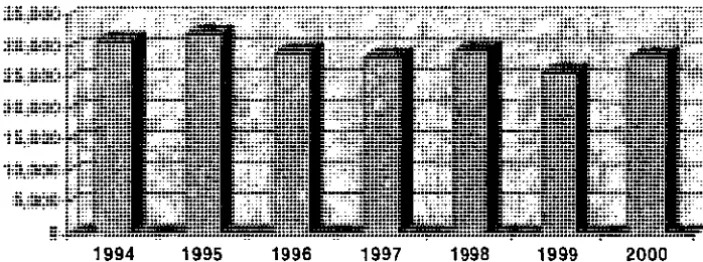
Figure 2: Sales Revenue - $000
35,000 30,000 25,000 20,000 15,000 10,000 5,000 01994 1995 1996 1997 1998 1999 2000
Figure 3: Capital Expenditure - $000
4,000 3,500 3,000 2,500 2,000 1,500 1,000 500 0
1994 1995 1996 1997 1998 1999 2000
Figure 4: Total Employees
160 140 120 100 80 60 40 20 0
1994 1995 1996 1997 1998 1999 2000
Figure 5: Operating EBIT - $000
3,500 3,000 2,500 2,000 1,500 1,000 500 0 -500
[image:15.571.110.462.93.224.2] [image:15.571.109.459.268.397.2] [image:15.571.114.458.437.573.2] [image:15.571.109.457.612.740.2]Figure 5
shows
a rapid decline in profitability from 1994 to 1997, this was due to
sig
nific
a
nt incr
eases
in raw material costs that were not passed
on
to customers due to
competitive pressures. The company began to downsize
and simplify their business while
aiming
to increase the volume of
product made.
1.1.511ACHINERY
Filmpac Auckland
is divided into
three sections, Extrusion,
Printin
g
and
Conversion.
The
ex
trusion
facility consists of
nine machines that
vary
considerably in their
capabilities.
Two
of these machines
are
three layer co-extrusion lines
and the
capita
l
s
p
e
nt in 1998
was for
the purcha
se
of
Machin
e
1 from
Maachi
in It
a
l
y.
Thi
s
hi
g
h
output
line
i
s
used
t
o
m
ake
much
of
the company's
br
ea
d,
form-fill-n-seal and
laminati
o
n films
.
Th
e ot
h
e
r
seven
blown film
extruders are
mono-la
yer
lines and vary
in th
e
ir us
e
from
high
o
utput indu
str
i
a
l films to l
ow o
utput lamination
films.
Low D
e
nsity, Lin
ear
L
ow
D
ensity an
d Hi
gh
Density P
o
l
yethy
l
e
nes
a
r
e
u
se
d
in
th
ese
m
a
chin
es
which
a
r
e genera
ll
y
accom
panied b
y a
regrinding
"Exa
ct" unit
for
reproc
ess
in
g
trim.
Corona
tr
ea
ter
s a
r
e
includ
ed
in six
lin
es
to produc
e a
printable
surface o
n th
e
film.
Si
x
lin
es
have Weighbatch
gravimetr
ic dosing
syste
m
s an
d much
o
f th
e
p
elle
ti
se
d raw materials
are
di
str
ibut
ed
to the
machines
th
o
u
g
h
a
silo
sys
t
em.
The printing
fac
ili
ty
consists
of
two
hi
gh-s
p
ee
d flex
ograp
hic printin
g
pr
esses (U
t
eco a
nd
Comexi)
.
Th
e eight
colour
Uteco
pr
ess
was
purch
ase
d
in 1997 to
imp
rove
th
e
p
erfo
rm
a
nce
of
th
e
printin
g
facility as
th
e
d
e
m
a
nd
for
hi
g
h quality printin
g
incr
eases
. A
microdot
m
ounti
n
g
m
ac
hine
was
purch
ase
d
in
1999 t
o
impro
ve
th
e
pl
a
t
e
m
o
untin
g
proc
ess
.
Th
e
c
o
n
ve
rsi
o
n
facility
consists
o
f
a variety of machines
for
makin
g
ba
gs,
perforating,
s
littin
g
and sealing.
Two hi
g
h
speed Amplas Wicketers and one old FMC
Wicketer
are
the backbone of the bread bag manufacturing operation. Two Gunters
allow sealing
a
nd
p
e
rforation
of an
y
thing from rubbish ba
gs
to mattress covers. The
slitter enables a wide
extruded roll
tobe slit into narrower rolls
for
use in various
products.
1.1.6: WORK FORCE
The
work force at
Filmpac
consists of a variety
of skill levels,
generally
extrusion
and
conversion operators
can be described as unskilled to
semi skilled
with
varying
levels
of
experience and ability with
their specific machines. It
was
decided that the present
experienced operators
were incapable
of
running Machine 1
efficiently
so a recent
initiative
in
extrusion
has been to
employ
qualified electricians to
operate
this new
co-extrusion
line
and
do
small electrical
jobs,. This has freed up these
experienced
operators
for other
machines
and
for training the new electrician
operators.
ers are
trade
qualified, there being
two
per
shift,
help is provided by semi
skilled
assistants.
The
extrusion supervisor
manages up to nine
operators on an extrusion shift and
helps
with
machine
set-ups and
problems. Supervisors have historically been promoted from
good
/
experienced operators
however
recently a
new
supervisor was appointed from
outside
the company
with
no
experience
in the
industry
in
an effort
to broaden the
knowledge
base
.
Conversion is run
by team leaders
who also operate
machines
and
Printin
g
is run by the trade qualified team leaders
who also run one of
the machines. The
plant m
a
na
ge
r o
v
ersees all
these
.
Because
of
the continuous nature
of
the
extrusion
process the plant must be run 24
hours
a
day
7
days
a week.
Filmpac has recently changed from
a
complicated mixture
of
12
and 8-hour shifts
to having
all
production
staff on a
12-hour, two days
on,
two nights
on, four
days
off shift
structure. This requires that there be four
shifts
in
each
department
and enables
machines to be run more consistently
without
the need for
significant overtime
during busy periods.
1.1.7: WORK ORDER SYSTEM
Jobs
are raised
by customer
service and sales staff
in relation to customer requirements.
This information is passed
on
to the planner
who raises a work order and
plans the
product
for a specific
machine.
Work order
information is
retrieved
from MFG. Pro, the
company's
accounting system, and a work order
developed.
Work-orders
contain
important
information for
running
a
job including
end
use, product dimensions, material
and specification
details
.
The
work-order
system is a "front end"
used by
operators
and supervisors on the floor for
printing
out
the
work orders
they
are
to complete for
work order
number.
Runs
vary
significantly
in length but
generally
the longer the run the better, as
set-up
costs become
a
lower proportion of the total. Often however sales staff promise a
product without consultation
with
production, this causes an otherwise reasonable job to
be interrupted
so
that the new
one
can be done. Consequentl
y
producti
o
n
is
characterised by
shorter
than
optimal
run l
e
n
g
ths and day to day planning.
Also as
man
y
products can be made
on a variety of
the machines
and
these machines
vary
in their
o
utput, the tim
e
tak
e
n to complete
an order
can
vary significantly.
Over
o
n
e
thou
sa
nd product
s
exist and
the
se a
re identified by individual item
codes.
In
m
any
cases
product
s
are exactly
the
same
in man
y
dim
e
nsions but,
for example,
a
chan
ge
in
w
idth
or roll
l
e
n
gt
h
will
requir
e
a
n
ew
item
code.
1.1.8: ,\ TA GLED \X/EB OF KNO\XILEDGE
In
the
manufacturing
a
rea
of AE
P
Filmpac
m
a
n
y
operators have
a
n
o
t
e
b
ook of
settings
and
tips for
runnin
g
specific
product
s
t
o
help them
n
ext
tim
e
the
se
product
s are
run.
Th
ey
tend
top
rotec
t thi
s
information,
as
there is
a
feeling that
it
ensures
th
e
ir c
onti
nu
e
d
e
mpl
oy
m
e
nt.
Anecdotes of
o
p
era
tors
who
ha
ve
struggled for
hour
s
t
o
start
up
a
machine
exist. Occas
i
o
n
a
ll
y ski
ll
ed o
p
erato
r
s
are phoned up
in
the
middle
of
th
e
ni
g
ht t
o
dict
ate
machine
se
ttin
gs
over
the phone
so a
n
ot
h
er s
hift
can
ge
t
a
j
o
b
go
ing. As there
i
s
no
d
oc
umentation
t
o s
u
gges
t
how the
product
s
h
o
uld b
e
run
This produc
es
the
s
itu
atio
n is
that
m
a
chin
es
are
se
t diff
eren
tl
y
each
tim
e
th
ey
are run, an obvious
spec
i
a
l cau
se
th
a
t
incr
eases variatio
n in th
e
fin
a
l
product.
Operating
st
aff ski
ll levels
a
re limited, particularl
y
in the
area of
line
optimisation.
Staff
tr
a
inin
g
h
as
mostl
y
focussed on
the primary job functi
o
ns
of operating
m
a
chines
rather
th
an o
n proces
s o
ptimisation
and
increa
s
in
g
the throu
g
hput
of
th
e
process. Du
e
to
limit
e
d formal tr
a
ining
and
tr
a
ditional
empirical
le
a
rnin
g
styles, the
understandin
g
of
p
rocess
fundam
e
ntals
and
their cau
se
and effects
is low.
Consequently
the
settings
used
b
y o
p
era
tors to
set
up
jobs
a
re
often far
from
optimal.
No
guidelines exist for
the
development
of
these
settings and
it is up to the operator to set it the
way
he feels is best
.
D
epe
ndin
g
upon the
operator
this might mean
at a
low
output and
unless the
supervisor
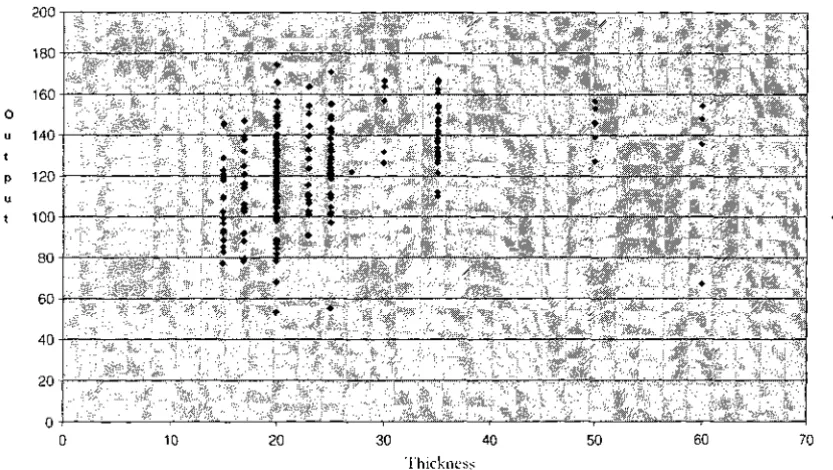
Figure 6: Variation in output between runs of the same product (Machine 9)
200
180
160 0
u 140
p 120
u
t 100
80
60
40
20
10
Output Kg/hr by Thickness for Palletfast (MC 9)
•
20 30 40 50 60 70
Thickness