PRIMON:
The Implementation of a Software Monitor
by
Anthony James McGregor
A thesis presented in partial fulfilment of the requirements for the degree of
Master of Science in Computer Science
at
Massey University
ABSTRACT
ACKNOWLEDGEMENTS
I would like to thank,
Tom Docker, my supervisor, particualarly for his efforts
while criticising the many drafts of this thesis, and
Table of Contents
Introduction ...•...•.•••....•.•.••..••...•...•.•.•..•••••••••••• 1 2 An introduction to computer performance evaluation •••••••••••••••••• 9 2. 1 Monitors •••.•••••••••••.••••••••.•••••••••••••.•••••••••••••••• 12 2.2 Models ••••••••••••••••••••••••••.•••••••••••••••••••••••••••••• 15
3 The
3.
1 3.23.3
principles of software monitoring •••••••••••••••••••••••••••••• 25 The structure of software monitors ••••••••••••••••••••••••••••• 25 Performance indices ....••...•...••.•••....••. 27
Measuring disciplines •••••••••••••••••••••••••••••••••••••••••• 28
3.3.1 Event trapping•••••••••••••••••••••••••••••••••••••••••••30 3.3.1.1 Collecting the data •••••••••••••••••••••••••••••• 31 3.3.1.2 Recording the data ••••••••••••••••••••••••••••••• 31 3.3.1.3 Problems with event trapping ••••••••••••••••••••• 33 3.3.1.3.1 Access •••••••••••••••••••••••••••••••••••••• 33 3.3.1.3.2 Overheads ••••••••••••••••••••••••••••••••••• 34
3.3.1.3.3 Sensitivity •.•••••••••••.••••••••••••••••••• 34
3.3.2 (Random) 3.3.2.1
Sampling • ••••••••••••••••••••••••••••••••••••••• 35 Collecting the data •••••••••••••••••••••••••••••• 36 3.3.2.1.1 Collecting data by unit workloading ••••••••• 41 3.3.2.1.1.1 Advantages of unit workloads ••••••••••• 42 3.3.2.1.1.2 Disadvantage of unit workloads ••••••••• 43 3.3.2.2 Recording the data ••••••••••••••••••••••••••••••• 43 3.3.2.3 Advantages of random sampling •••••••••••••••••••• 44 3.3.2.3.1 Reducing distortion ••••••••••••••••••••••••• 44 3.3.2.3.2 Simplicity of installation •••••••••••••••••• 46 3.3.2.4 Problems with random sampling •••••••••••••••••••• 46 Reporting the results of monitoring •••••••••••••••••••••••••••• 47 3.4.1 Quoting the indices•·•••••••••••••••·••••••••••••••••••••48 3.4.2 Tables•••••·••••••••••··•••····•••••·•·••••·••••••••••••·48 3.4.3 Histograms••·••••••••••••••••••••••••••••••••••••••••••••49 3.4.4 Gantt profiles ••••••••••••••••••••••••••••••••••••••••••• 50 3.4.5 Kiviat graphs •••••••••••••••••••••••••••••••••••••••••••• 52
4.1.11 I/Os per second and page faults per second •••••••••••••• 64 4.1.12 I/0 trace•••••••••••••••••·••·••••••••••••••••••••••••••64
4.1.13 Page out trace•••••·•••••••••••·••••·•••·•••••••••••••••65
4.2 Inappropriate measures••••••••••••·••••••••••••••••••••••••••••65 4.2.1 Memory utilisation·••·••··•··••••••••••••••••••••••••••••65 4.2.2 Number of processes in memory••••••••••••••••••••••••••••65
4.3 Difficult measures···••••••••·•·•···•••·•••••••••••••••••••••••66
4.3.1 Number and source of interrupts••••••••••••••••••••••••••66
5 Primon•••••••••••••••••••••••••••••••••••••••••••••••••••••••••••••68 5.1 Features•••••••••••••••••••••••••••••••••••••••••••••••••••••••70 5.2 Development •••••••••••••••••••••••••••••••••••••••••••••••••••• 71
5.3 XREF•••••••••••••••••••••••••••••••••••••••••••••••••••••••••••74 5.4 The monitors .•••••••••.•••••.••••.•.••••••••••••••••••••••••••• 76
5.5
5.4.1 Interactive queue length monitor•••••••••••••••••••••••••77 5.4.1.1 Purpose•·••·•••••••••••••••••••••••••••••••••••••77
5.4.1.2 Background ••••••••••••••••••••••••••••••••••••••• 77
5.4.1.3 Implementation•••••••••••••••••••••••••••••••••••78 5.4.1.4 Distortion and integrity considerations •••••••••• 79 5.4.2 Validation.••••••••••••••••••••••••••••••••••••••••••••••79
5.4.2.1 Known variations•••••••••••••••••••••••••••••••••80 Batch
5.5.1 5.5.2
5.5.3
5.5.4
queue length monitor••·••••••••••••••••••••••••••••••••••81 Purpose••••••••••••••••••••••••••••••••••••••••••••••••••81 Implementation ••••••••••••••••••••••••••••••••••••••• ~ ••• 82 5.5.2.1 Reports••••••••••••••••••••••••••••••••••••••••••82
5.5.2.1.1 Distortion and integrity considerations ••••• 85
5.5.2.2 Validation ••••••••••••••••••••••••••••••••••••••• 86
5.5.2.2.1 Known variations.••••••••••·••••••••••••••••87 Disk activity monitor••••••••••••••••••••••••••••••••••••89 5.5.3.1 Purpose••••••••••••••••••••••••••••••••••••••••••89 5.5.3.2 Background•••••••••••••••••••••••••••••••••••••••90 5.5.3.3 Implementation ••••••••••••••••••••••••••••••••••• 91 5.5.3.4 Reports••••••••••••••••••••••••••••••••••••••••••94 5.5.3.5 Testing••••••••·•••••••••••••••••••••••••••••••••97
5.5.3.6 Validation ••••••••••••••••••••••••••••••••••••••• 97
Relative availability monitor••••••••••••••••••••••••••••98 5.5.4.1 Purpose••••••••••••••••••••••••••••••••••••••••••98
5.5.4.2 Background ••••••••••••••••••••••••••••••••••••••• 98
5.5.4.3 Implementation••••••••••••••••••••••••••••••••••100
The sampler.•••••••••••••••••••••••••••••••101
5.5.4.3.1
5.5.4.3.1.1 The loosely coupled sampling
function•••••••••••••••••••••••••••••••••••••••101 5.5.4.3.1.2 The mini-benchmarks•••••••••••••••••••102 5.5.4.3.2 The reducer••••••••••••••••••••••••••••••••105 5.5.4.3.3 The plotter.•••••••••••••••••••••••••••••••105 5.5.4.3.4 The calibrator•••••••••••·•••••••••••••••••107
5.5.4.4 Testing•••••••••••••••••••••••••••••••••••••••••107 5.5.4.5 Validation •••••••••••••••••••••••••••••••••••••• 110
5.6.3 Disk record positioning•·•••••••••••••••••••••••••••••••115 5.7 Evaluation of Primon••••••••••••••••••••••••••••••••••••••••••118
6 Conclusions ••••••••••••••••••••••••••••••••••••••••••••••••••••••• 120
Appendix A
Appendix B
1 Introduction
Computer Performance Evaluation (CPE) has developed both as an
academic and an applied subject of considerable importance, as
witnessed by its mention in Discussion Paper 3 for the recent Brownlie
Committee report [BROW82]. As an applied discipline CPE is used
primarily in the areas of
o computer design and development
o capacity planning and
o system tuning.
A need for access to CPE tools can be identified when administering
most computer systems and to this end a range of tools is available on
most (large) computers. Prime computers are a notable exception and
several groups involved with Prime equipment have shown a desire for
access to CPE tools. These groups include computer centres, who wish
to improve the performance of the computer systems under their
control, researchers in CPE, and teaching staff who wish to
demonstrate the use of performance evaluation.
This thesis reports on the implementation of one such tool called
Primon. We begin in chapters two and three by discussing CPE in
general and measurement in particular. Following this, in chapters
four and five we discuss the specific area of measuring Prime
computers and the implementation of Primon. Finally in chapter six we
review the development of Primon and suggestions made in previous
chapters for further work that could usefully be undertaken. Details
of the architecture and systems software of Prime systems are
contained in Appendix A, and the program listings for Primon are given
in Appendix B.
2 An introduction to computer performance evaluation
The performance evaluation of computer systems has become widespread
because of the high cost and complex nature of modern computers.
As an example of the use of CPE consider a computer system operated by
Superior Operational Software (SOS), a fictitious software company
writing system software for Prlme computers. The system functions
well until the number of interactive users exceeds a threshold. The
System Administrator is faced with the task of raising this threshold,
while remaining within a strict capital budget.
He may proceed as in Figure 2.1 with a CPE study. The aim of the
study will be to identify the reasons for the current threshold, and
it is hoped that this will lead to an informed decision being made on
whether the performance can be improved by tuning the operating system
constants which the System Administrator has access to (e.g.the length
of the time slice, size of buffers etc) or whether the system will
need to be upgraded to meet requirements (capacity planning).
I V
Performance Problem
I
l(CPE Study)
I
I
A---.
I VProblem Identified Problem not Identified
I
I
I
I
I
I
I
I
I
(problem insoluble) V.---A--->
Problem not solved (solution Iavailable)! I
j(Tuning / Capacity Planning)
I
V
Problem solved.
Example use of CPE Fig 2.1
This type of scenario is common but is by no means the only use of
CPE. Performance questions also arise when designing new systems, or
when choosing a new or replacement system. Hopefully a company
installing a computer system for the first time will want to be
satisfied that the proposed system will have sufficient capacity to
process the workload within an acceptable time frame. A manufacturer
designing a new machine may have specified design criteria which
include instruction execution rate improvements over a previous model.
Performance Evaluation is used in these situations as well.
From the above discussion it is clear that CPE studies are performed
on many types of system, and have a wide range of objectives. This
has led to a range of tools to be developed for use in CPE. Many of
these tools have been developed for a particular CfE project, while
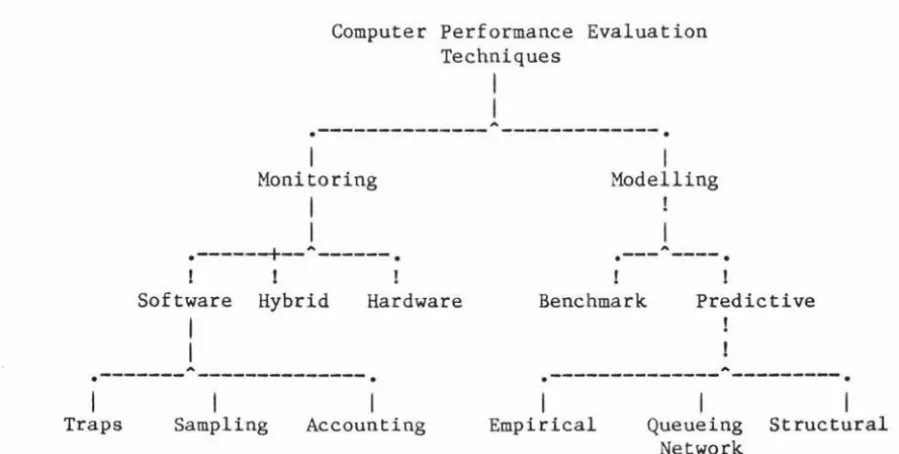
others are Operations Research techniques. Fig 2.2, and the rest of
this chapter, describe some of the more common techniques and their
relationships to one another. Other categorizations are possible and
some techniques are also known by other names.
A specific monitoring tool could be made up of more than one of these
techniques. For an example see the hybrid model of [SCHW78].
Computer Performance Evaluation Techniques
Monitoring
I
I
.---+--A---.
Software Hybrid HardwareA
I
I
AI Modelling
I
ABenchmark Predictive
.---
---.
A.--- ---.
Traps Sampling Accounting Empirical
The CPE tree Fig 2.2
11
Queueing Network
[image:11.559.47.497.318.545.2]