Becoming a Teacher
Teachers’ Experiences of Initial
Teacher Training, Induction and
Early Professional Development
Final Report
Research Report DCSF-RR115
Andrew J Hobson
1, Angi Malderez
2, Louise Tracey
1,
Matthew S Homer
2, Patricia Ashby
1, Nick Mitchell
1,
Joanna McIntyre
1, David Cooper
1, Tom Roper
2,
Gary N Chambers
2and Peter D Tomlinson
2 1University of Nottingham
2
University of Leeds
Becoming a Teacher
Teachers’ Experiences of Initial Teacher Training,
Induction and Early Professional Development
Final Report
Andrew J Hobson
1, Angi Malderez
2, Louise Tracey
1,
Matthew S Homer
2,Patricia Ashby
1, Nick Mitchell
1,
Joanna McIntyre
1,David Cooper
1, Tom Roper
2,
Gary N Chambers
2and Peter D Tomlinson
21
University of Nottingham
2
University of Leeds
and Ipsos MORI Social Research Institute
The views expressed in this report are the authors’ and do not necessarily reflect those of the Department for Children, Schools and Families.
© University of Nottingham 2009 ISBN 978 1 84775 454 7
June 2009
The Becoming a Teacher Research Team
Andrew J. Hobson (Co-ordinating Director; University of Nottingham) Angi Malderez (Co-Director; University of Leeds)
Fiona Johnson (Co-Director; Ipsos MORI)
Louise Tracey (University of Nottingham) Patricia Ashby (University of Nottingham) Nick Mitchell (University of Nottingham) Joanna McIntyre (University of Nottingham) David Cooper (University of Nottingham)
Matthew Homer (University of Leeds) Godfrey Pell (University of Leeds) Peter Tomlinson (University of Leeds) Gary Chambers (University of Leeds) Tom Roper (University of Leeds)
Adél Schofield (Ipsos MORI) Rachel Ellis (Ipsos MORI) Joanne Crouch (Ipsos MORI)
Jane Healy (Project Administrator; University of Nottingham)
Sponsors
The Becoming a Teacher research project was funded by the Department for Children, Schools and Families (DCSF), the General Teaching Council for England (GTC) and the Training and Development Agency for Schools (TDA).
Acknowledgements
Contents
Executive Summary ... i
1 Introduction ...1
2 Research design ...5
2.1 Introduction... 5
2.2 Overall design... 5
2.3 Methods of data generation... 5
2.4 Sampling strategies and sample characteristics ... 8
2.4.1 The survey sample... 8
2.4.2 The case study sample ... 13
2.5 Data analysis and presentation ... 17
2.5.1 Analyses of case study data ... 17
2.5.2 Analyses of survey data... 19
2.6 Conclusion... 19
3 Student teachers’ motives for undertaking Initial Teacher Training and their preconceptions, expectations and concerns about ITT and teaching ...20
3.1 Introduction... 21
3.2 Student teachers’ motives for undertaking ITT... 21
3.3 Influences on trainees’ choices of ITT route and provider... 23
3.4 Student teachers’ reservations about undertaking ITT and becoming a teacher .. 25
3.5 Student teachers’ hopes and expectations... 28
3.5.1 What trainees had looked forward to about undertaking ITT and becoming a teacher ... 28
3.5.2 How confident were student teachers that their ITT would prepare them to be effective teachers?...29
3.5.3 Did trainees think they would become teachers on completion of their ITT and still be teachers in five years’ time? ...29
3.6 Student teachers’ preconceptions about ITT course content and the provision of opportunities for learning and development ... 29
3.7 Variation in student teachers’ concerns and expectations by ITT route and other factors... 31
4 Student teachers’ experiences and evaluations of their ITT ...35
4.1 Introduction... 36
4.2 The highs and lows of undertaking ITT ... 36
4.3 Student teachers’ experiences in schools ... 39
4.3.1 Positive aspects of trainees’ school-based experiences... 39
4.3.2 Less positive aspects of trainees’ school-based experiences ... 40
4.4 Student teachers’ experiences of higher education institution- (HEI-) based elements of ITT... 41
4.4.1 Positive aspects of trainees’ HEI-based preparation ... 41
4.4.2 Less positive aspects of trainees’ HEI-based preparation ... 43
4.5 Student teachers’ perceptions of theoretical components of ITT ... 44
4.6 Constraints on ITT provision... 47
4.6.1 Constraints relating to time and workload... 47
4.6.2 The availability of placement schools ... 48
4.7.1 Variation by ITT route ... 50
4.7.2 Variation by other factors ... 56
4.8 Beginner teachers’ retrospective evaluations of their ITT ... 58
4.9 Conclusion... 61
5 Teachers’ experiences of their first year of teaching and Induction ...62
5.1 Introduction... 63
5.2 Working as a teacher... 63
5.2.1 Securing a teaching post ... 63
5.2.2 Obtaining a post in an ITT placement school... 65
5.2.3 The nature of participants’ work as teachers ... 65
5.2.4 Future employment intentions... 66
5.3 The highs and lows of NQTs’ first year of teaching ... 67
5.3.1 Factors associated with highs... 67
5.3.2 Factors associated with lows ... 70
5.4 Experiences of Induction ... 72
5.4.1 Meeting the Induction Standards ... 73
5.4.2 Factors that helped teachers in meeting the Induction Standards... 75
5.4.3 Factors that hindered teachers in meeting the Induction Standards... 76
5.4.4 NQTs’ relationships with Induction tutors/mentors... 77
5.4.5 The observation and assessment of NQTs... 79
5.4.6 The use of the Career Entry and Development Profile (CEDP)... 80
5.5 Support and professional development ... 81
5.5.1 NQTs’ experiences of support ... 81
5.5.2 Formal training and development opportunities... 82
5.6 Variation in beginner teachers’ experiences of their first year of teaching and Induction ... 84
5.6.1 Variation by ITT route ... 84
5.6.2 Variation by other factors ... 86
5.7 Conclusion... 88
6 Teachers’ experiences of their second year in post...89
6.1 Introduction... 90
6.2 The nature of teachers’ employment during their second year of teaching... 90
6.2.1 Employment status and type of post... 90
6.2.2 Roles, duties and responsibilities of second year teachers ... 93
6.3 Second year teachers’ ratings of their enjoyment of teaching and their work-based relationships ... 97
6.3.1 Levels of enjoyment in teaching... 97
6.3.2 Work-based relationships ... 98
6.4 Teachers’ perceptions of their effectiveness and strengths ... 101
6.4.1 Teachers’ perceptions of their effectiveness... 101
6.4.2 Teachers’ perceptions of their strengths... 102
6.5 Teachers’ experiences of support and professional development ... 102
6.5.1 Second year teachers’ perceptions of the conditions affecting their development as teachers... 102
6.5.2 Second year teachers’ ratings of support received... 103
6.5.3 Formal professional development opportunities and training ... 105
6.5.4 Collaborative professional development activities ... 106
6.5.5 Reviewing and planning professional development during the second year of teaching ... 107
6.5.6 Mentoring support for second year teachers ... 108
7 Teachers’ experiences of their third and fourth years in post ...110
7.1 Introduction... 111
7.2 The nature of teachers’ employment in their third and fourth years of ... 111
teaching ... 111
7.2.1 Current employment status... 111
7.2.2 The type of post and school... 112
7.2.3 Age ranges taught... 114
7.2.4 Roles and responsibilities undertaken ... 115
7.2.5 Additional hours worked... 117
7.3 Beginner teachers’ enjoyment of teaching ... 117
7.3.1 Positive and negative aspects of third and fourth year teachers’ experiences of teaching ... 119
7.4 Third and fourth year teachers’ perceptions of their effectiveness ... 124
and strengths... 124
7.4.1 Teachers’ perceptions of their effectiveness as teachers ... 124
7.4.2 Teachers’ perceptions of their strengths as teachers ... 125
7.5 Third and fourth year teachers’ work-based relationships... 126
7.5.1 Relationships with pupils... 126
7.5.2 Relationships with pupils’ parents... 127
7.5.3 Relationships with leaders and other staff ... 128
7.6 Teachers’ experiences of support and CPD during their third and... 128
fourth years of teaching ... 128
7.6.1 Factors helping and hindering teachers’ development ... 128
7.6.2 The support and mentoring of third and fourth year teachers... 129
7.6.3 Beginner teachers’ perceptions of the professional development opportunities experienced ... 130
7.6.4 The specific foci of CPD activities... 133
7.7 Teacher identity and characteristics of third and fourth year teachers ... 135
7.7.1 Teacher Identity ... 135
7.7.2 Characteristics of third and fourth year teachers ... 137
7.8 Conclusion... 140
8 Change in beginner teachers’ experiences: a longitudinal comparison ...141
8.1 Introduction... 142
8.2 Beginner teachers’ ratings of their enjoyment of teaching... 143
8.3 Beginner teachers’ ratings of their effectiveness as teachers ... 146
8.4 Factors helping and hindering teacher participants’ development ... 148
8.4.1 Factors helping teachers’ development ... 148
8.4.2 Factors hindering teacher participants’ development ... 150
8.5 Beginner teachers’ ratings of the support they were given... 154
8.6 Beginner teachers’ ratings of their work-based relationships ... 155
8.6.1 Relationships with pupils... 156
8.6.2 Relationships with teacher colleagues... 157
8.7 The number of additional hours worked by beginner teachers... 160
8.8 The career development of beginner teachers... 161
8.8.1 Primary teachers’ career development ... 162
8.8.2 Secondary teachers’ career development ... 163
8.9 Supply teaching ... 165
8.9.1 The proportion of beginner teachers working as supply teachers ... 165
8.9.2 The experience of working as a supply teacher... 168
9 Retention and attrition amongst beginner teachers ...171
9.1. Introduction... 172
9.2 Who left or planned to leave?... 172
9.2.1 Who left during ITT? ... 173
9.2.2 Non take-up of teaching posts at the end of ITT... 174
9.2.3 The end of teachers’ first year and beyond... 174
9.3 Why some beginner teachers left or planned to leave teaching... 176
9.3.1 Reasons for leaving during or at the end of ITT... 176
9.3.2 Why those who planned to return were not currently teaching ... 177
9.3.3 Why those who did not plan to return decided to leave teaching... 178
9.3.4 Reasons given by fourth year teachers who were not planning to be teaching in five years’ time ... 178
9.3.5 Factors associated with beginner teacher attrition... 179
9.4 The future plans of third and fourth year teachers... 179
9.4.1 The career aspirations of third and fourth year teachers who intended to stay in teaching... 180
9.4.2 Factors associated with retention ... 181
9.4.3 Fourth year teachers’ stated motives for remaining in teaching ... 181
9.4.4 Third and fourth year teachers’ reflections on their decision to teach... 183
9.5 Conclusion... 184
10 Ten beginner teachers’ stories...185
10.1 Introduction... 186
10.2 Mark’s story: in it for the long-haul – a lifestyle decision ... 186
10.2.1 Mark’s motivations and initial choices... 187
10.2.2 Mark’s experiences of ITT... 187
10.2.3 Mark’s first year in teaching ... 188
10.2.4 Mark’s second year in teaching and beyond... 189
10.3 Ruth’s story: passionate about working with children... 191
10.3.1 Ruth’s motivations and initial choices ... 192
10.3.2 Ruth’s experiences of ITT ... 192
10.3.3 Ruth’s first year in teaching... 193
10.3.4 Ruth’s second year of teaching and beyond... 194
10.4 Christina’s story: steady progress ... 197
10.4.1 Christina’s motivations and initial choices... 197
10.4.2 Christina’s experiences of ITT ... 197
10.4.3 Christina’s first year in teaching ... 199
10.4.4 Christina’s second year in teaching and beyond ... 200
10.5 Craig’s story: the value of teamwork ... 202
10.5.1 Craig’s motivations and initial choices ... 202
10.5.2 Craig’s experiences of ITT ... 203
10.5.3 Craig’s first year in teaching... 204
10.5.4 Craig’s second year in teaching and beyond ... 205
10.6 Jack’s story: a flying start, two years on ... 208
10.6.1 The story so far ... 208
10.6.2 Jack’s third and fourth years in post ... 209
10.7 Amy’s story: isolation and opportunity ... 213
10.7.1 Amy’s motivations and initial choices... 213
10.7.2 Amy’s experience of ITT ... 213
10.7.3 Amy’s first year in teaching ... 215
10.7.4 Amy’s second year of teaching and beyond ... 216
10.8 Simon’s story: a need for support... 218
10.8.2 Simon’s experiences of ITT ... 219
10.8.3 Simon’s first year in teaching ... 221
10.8.4 Simon’s second year of teaching and beyond ... 222
10.9 Elizabeth’s story: difficult beginnings, two years on ... 224
10.9.1 The story so far ... 225
10.9.2 Elizabeth’s third and fourth years in post ... 226
10.10 Lauren’s story: not cut out for teaching? ... 229
10.10.1 Lauren’s motivations and initial choices... 229
10.10.2 Lauren’s experience of ITT ... 229
10.10.3 Lauren’s reflections on her experience ... 231
10.11 Peter’s story: road closed ... 231
10.11.1 Peter’s motivations and initial choices ... 231
10.11.2 Peter’s experiences of ITT ... 232
10.11.3 Peter’s first year in teaching... 233
10.11.4 Peter’s second year in teaching and beyond ... 234
10.11.5 Peter’s reflections on his experience ... 236
10.12 Common strands in beginner teachers’ stories ... 236
10.13 Conclusion... 239
11 Conclusions and implications...240
11.1 Introduction... 240
11.2 Key factors associated with beginner teachers’ enjoyment of teaching, retention and perceived effectiveness ... 240
11.2.1 The importance of support ... 243
11.2.2 Beginner teachers’ support needs ... 243
11.3 Factors associated with variation in beginner teachers’ experiences... 246
11.3.1 Variation relating to ITT route ... 247
11.3.2 Variation relating to beginner teachers’ preconceptions ... 249
11.3.3 Variation relating to beginner teachers’ ethnicity ... 250
11.3.4 Variation relating to beginner teachers’ age ... 251
11.4 Summary implications ... 253
11.4.1 Implications for teacher educators involved in ITT... 253
11.4.2 Implications for school-based support for newly and recently qualified teachers ... 254
11.4.3 Implications for head teachers and others providing access to opportunities for CPD ...255
11.4.4 Implications for policy-makers... 255
Postscript: the impact of participants’ involvement in the Becoming a Teacher research ...257
References...259
Appendix I: An outline of the main ITT routes ...264
Appendix II: Statistical analysis techniques ...265
Charts, Graphs and Tables
Table 2.1: Research instruments and phases of data generation ... 6
Table 2.2: BaT project survey participants and inter-wave response rates ... 9
Table 2.3: Percentage of survey strand participants by ITT route, compared to the percentage following this route in England in 2004 ... 10
Table 2.4: Percentage of primary phase survey strand participants by route, Waves 1-6...11
Table 2.5: Percentage of secondary phase survey strand participants by route, Waves 1-6... 11
Table 2.6: Percentage of survey strand participants by age, Waves 1-6... 12
Table 2.7: Percentage of survey strand participants by gender, Waves 1-6 ... 12
Table 2.8: Percentage of survey strand participants by ethnicity, Waves 1-6 ... 12
Table 2.9: Response rates and number of achieved case study interviews, Waves 1-6 ... 14
Table 2.10: Primary phase case study participants by route, Waves 1-6 ... 14
Table 2.11: Secondary phase case study participants by route, Waves 1-6 ... 15
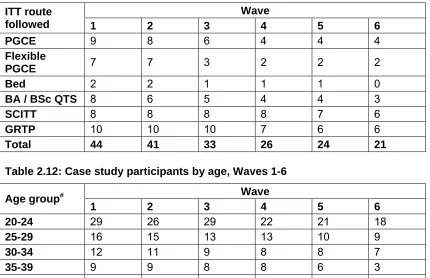
Table 2.12: Case study participants by age, Waves 1-6... 15
Table 2.13: Case study participants by gender, Waves 1-6 ... 15
Table 2.14: Case study participants by ethnicity, Waves 1-6 ... 15
Table 2.15: Ejournal responses at each time period, Waves 3-6 ... 16
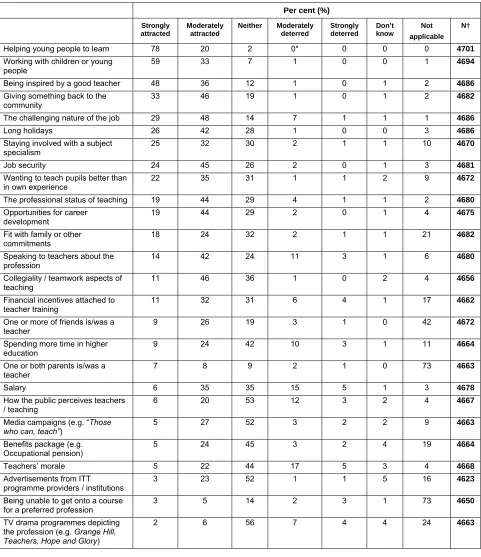
Table 3.1 In weighing up whether or not to undertake a teacher training programme, how much, if at all, did the following factors attract or deter you? ... 22
Table 3.2 Why did you choose this particular teacher training route? ... 24
Table 3.3 What were your reasons for choosing this particular training provider (e.g. university, school) to undertake your teacher training programme? ... 25
Table 3.4 Student teachers’ concerns prior to undertaking their ITT ... 26
Table 3.5 What were student teachers looking forward to about ITT and teaching? ... 28
Table 4.2 How confident are you, if at all, that your ITT has prepared you to be an effective teacher?... 37
Table 4.3 An overview of findings from logistic regression analyses: key variables 49
Table 4.4 How confident are you, if at all, that your ITT has prepared you to be an effective teacher? (Primary phase trainees) ... 50
Table 4.5 How confident are you, if at all, that your ITT has prepared you to be an effective teacher? (Secondary phase trainees) ... 51
Table 4.6 Thinking about your ITT programme, how would you rate your
relationships with school mentors in your teaching placement schools? (Primary phase trainees) ...51
Table 4.7 Thinking about your ITT programme, how would you rate your
relationships with school mentors in your teaching placement schools? (Secondary phase trainees) ...52
Table 4.8 Thinking about your ITT programme, how would you rate your
relationships with other teaching staff in your teaching placement schools? (Primary phase trainees) ...52
Table 4.9 Thinking about your ITT programme, how would you rate your relationships with other teaching staff in your teaching placement schools?
(Secondary phase trainees)... 52
Table 4.10 Thinking about your ITT programme, how would you rate the support you received during your training? (Primary phase respondents) ... 53
Table 4.11 Thinking about your ITT programme, how would you rate the support you received during your training? (Secondary phase respondents) ... 53
Table 4.12 Thinking about your ITT programme, how would you rate the balance between the theoretical and the practical aspects of your ITT programme? (Primary phase respondents) ... 54
Table 4.13 Thinking about your ITT programme, how would you rate the balance between the theoretical and the practical aspects of your ITT programme?
(Secondary phase respondents)... 54
Table 4.14 Generally speaking, how clear would you say the links between the theoretical and practical elements of your training have been? (Primary phase respondents) ... 55
Table 4.15 Generally speaking, how clear would you say the links between the theoretical and practical elements of your training have been? (Secondary phase respondents) ... 55
Figure 4.1: Mean degree of agreement that ITT had prepared respondents to be
effective teachers (primary phase)... 59
Table 4.17 My Initial Teacher Training programme prepared me to be an effective teacher (primary phase respondents at Wave 5)... 60
Figure 4.2: Mean degree of agreement that ITT had prepared respondents to be effective teachers (secondary phase) ... 61
Table 4.18 My Initial Teacher Training programme prepared me to be an effective teacher (secondary phase respondents at Wave 5) ... 61
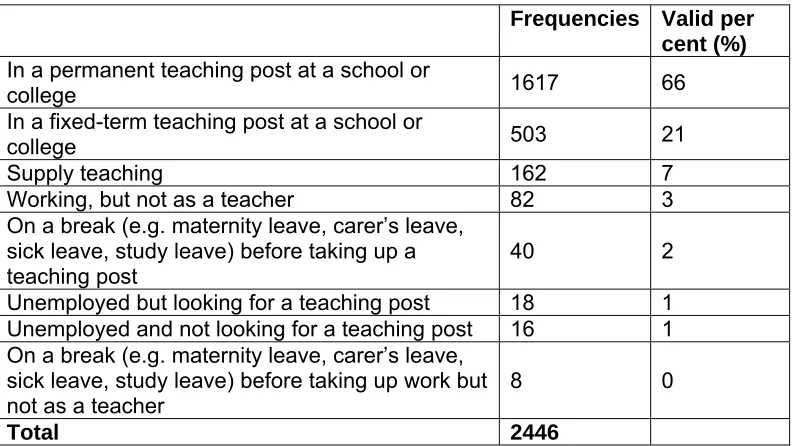
Table 5.1 Can I check which of the following best describes your current employment status?... 64
Table 5.2: What were the difficulties you encountered? ... 64
Table 5.3 In addition to the timetabled school day, how many hours do you usually work in a standard working week?...70
Table 5.4 Access to and passing Induction ... 74
Table 5.5 How much weekly non-contact time do you have?... 77
Table 5.6 Current Employment Status by ITT route (primary phase) ... 85
Table 5.7: Did you encounter/have you encountered any particular difficulties when looking for a teaching post? By ITT route (primary phase) ... 85
Table 5.8: Did you encounter/have you encountered any particular difficulties when looking for a teaching post? by ITT route (Secondary phase) ... 86
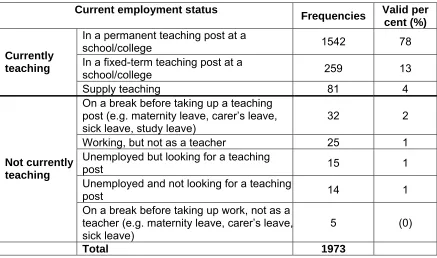
Table 6.1: Which of the following best describes your current employment status? 91 Table 6.2 ‘I enjoy working as a teacher’... 97
Table 6.3 Since completing your Induction, which of the following have been put in place for you? ... 107
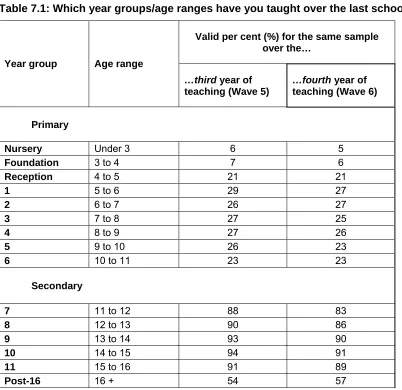
Table 7.1: Which year groups/age ranges have you taught over the last school year? ...114
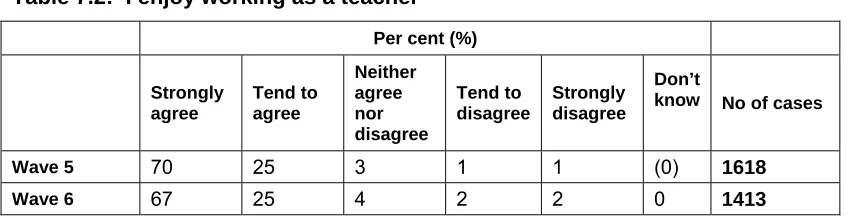
Table 7.2: ‘I enjoy working as a teacher’... 118
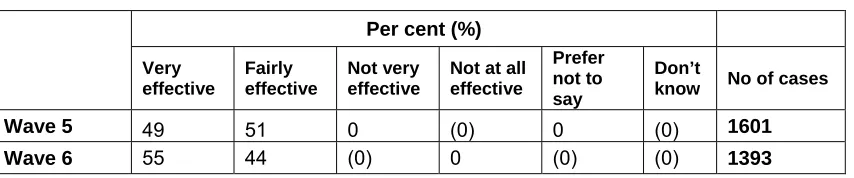
Table 7.4: How would you rate your effectiveness as a teacher?... 124
Table 7.5: The CPD I have experienced since September 2007… ... 132
Table 7.6: Teacher type categorisations at Waves 5 and 6... 140
Figure 8.2: Mean degree of agreement of enjoying working as a teacher (by ITT
route)... 144
Figure 8.3: Mean degree of agreement of enjoying working as a teacher (by phase) ...145
Figure 8.4: Mean degree of agreement of enjoying working as a teacher (by ethnicity)... 146
Figure 8.5: Mean ratings of effectiveness as a teacher ... 147
Table 8.1: How would you rate your effectiveness as a teacher compared to this time last year?... 148
Figure 8.6: Percentage stating ‘colleagues’ as helping respondents’ development as teachers ... 149
Figure 8.7: Percentage stating ‘additional training’ as helping respondents’ development as teachers... 150
Figure 8.8: Percentage stating ‘nothing’ as hindering teachers’ development... 151
Figure 8.9: Percentage stating ‘lack of support from colleagues’ as hindering teachers’ development... 152
Figure 8.10: Percentage stating ‘workload’ as hindering teachers’ development .. 153
Figure 8.11: Percentage stating ‘amount of administration/paperwork’ as hindering teachers’ development... 153
Figure 8.12: Mean ratings of support participants received ... 154
Figure 8.13: Mean ratings of support participants received (by ethnicity)... 155
Figure 8.14: Mean ratings of relationships with pupils (by phase) ... 156
Figure 8.15: Mean ratings of ratings of relationships with pupils (by ethnicity)... 157
Figure 8.16: Mean ratings of relationships with other teaching staff... 158
Figure 8.17: Mean ratings of relationships with other teaching staff (by phase).... 159
Figure 8.18: Mean ratings of relationships with other colleagues (by ethnicity)... 159
Figure 8.19: Mean number of additional hours worked per week ... 160
Figure 8.20: Mean number of additional hours worked per week (by phase) ... 161
Figure 8.21: Percentage undertaking the role of subject co-ordinator (primary).... 162
Figure 8.22: Percentage undertaking the role of Head of Department (primary)... 163
Figure 8.24: Percentage undertaking the role of Head of department (secondary) ...164
Figure 8.25: Percentage describing employment status as ‘supply teaching’ ... 167
Figure 8.26: Percentage describing employment status as ‘supply teaching’ (by ITT route)... 167
Figure 8.27: Percentage describing employment status as ‘supply teaching’ (by phase) ... 168
Table 8.2: The number of case study participants who had worked as supply
teachers over the year ... 168
Table 9.1 Have you completed, or are you about to complete, your Initial Teacher Training (ITT) course? ... 173
Abbreviations
AST - Advanced Skills Teacher
BA/BSc - Bachelor of Arts/Bachelor of Science BaT - Becoming a Teacher (research project) BEd - Bachelor of Education
BME - Black and Minority ethnic
BTEC - Business and Technology Education Council CEDP - Career Entry and Development Profile CPD - Continuing Professional Development
DCSF - Department for Children, Schools and Families DfES - Department for Education and Skills
D&T - Design and Technology
EAL - English as an Additional Language EPD - Early Professional Development ESOL - English as a Second Language FE - Further Education
GORs - Government Office Regions
GTC - General Teaching Council for England
GRTP - Graduate and Registered Teacher Programme GTP - Graduate Teacher Programme
HEI - Higher Education Institution HMI - Her Majesty’s Inspectorate HoD - Head of Department
ICT - Information Communications Technology INSET - In-service Training
ITE - Initial Teacher Education ITP - Initial Teacher Preparation ITT - Initial Teacher Training LA - Local Authority
LEA - Local Education Authority LSA - Learning Support Assistant MFL - Modern Foreign Languages NQT - Newly Qualified Teacher
PGCE - Postgraduate Certificate of Education PPA - Planning, Preparation and Assessment PSHE - Personal, Social and Health Education QTS - Qualified Teacher Status
RTP - Registered Teacher Programme
SCITT - School-centred Initial Teacher Training SATs - Standard Assessment Tests
SEF - Self-evaluation form
SEN - Special Educational Needs SLT - Senior Leadership Team SMT - Senior Management Team
i
Executive Summary
Introduction
The Becoming a Teacher (BaT) study, a six-year longitudinal research project (2003-2009), set out to explore beginner teachers’ experiences of initial teacher training (ITT), Induction and early professional development in England, including:
• the reasons that some did not complete their ITT, others completed ITT but did not take up a teaching post, and others took up a teaching post but subsequently left the
profession; and
• the extent to which beginner teachers’ experiences of ITT, Induction and early career progression, and their retention or attrition, were subject to variation relating to the ITT route that they followed, encompassing university-administered undergraduate and postgraduate programmes, employment-based and school-based programmes.
Research Design
The study tracked teachers who sought to enter the profession via a range of different ITT routes, between the beginning of one-year programmes or the beginning of the final year of two-, three- or four-year ITT programmestwo-, and (for those who took up teaching posts and were still in teaching at this point the end of their fourth year in post. Data were generated via:
• an annual survey, completed by an initial sample of 4790 student teachers (‘Wave 1’) and by 1443 respondents in the final year of the study (‘Wave 6’);
• annual in-depth, face-to-face interviews with a sub-sample of ‘case study’ beginning teachers (85 participants at Wave 1; 48 at Wave 6); and
• regular email exchanges (‘ejournals’) with case study teachers between Wave 3 (46 participants) and Wave 6 (25 participants) of the study.
Key Findings
Student teachers’ motives for undertaking ITT and their preconceptions, expectations and concerns about ITT and teaching
• The two motives which were reported as having ‘strongly attracted’ the largest
percentage of survey respondents to undertake ITT were the prospect of ‘helping young people to learn’ (78%) and of ‘working with children or young people’ (59%).
• The majority of student teachers reported that prior to starting their ITT:
o they had been particularly looking forward to ‘being in classrooms and interacting
with pupils’ (reported by 84% of survey respondents), ‘developing an
ii
o they had been concerned about workload (69% of survey respondents) and behaviour management (66%); and
o they had thought that it was very important that they developed their ‘ability to
bring about pupil learning’ (91%) and their ‘ability to maintain discipline in the classroom’ (86%).
• Prior to starting their ITT, most trainees reported that they had held a practical, classroom-orientated approach to learning to teach and had been sceptical about the value of the more ‘theoretical’ aspects of ITT provision.
• Nine-tenths of survey respondents were following their first choice ITT route and nearly half (46%) were attracted to their ITT programme by the ‘balance of in-school and out-of-school training’.
o The geographical location of their ITT programme had been influential in the choices of route and provider of over three-quarters of respondents (78%).
o Almost half of case study interviewees (40 out of 85) reported being attracted to their ITT course by the duration of the programme, with some wanting to
complete their ITT in the shortest period possible and others wanting to ensure that their course was long enough to enable them to receive a thorough
preparation.
• Ninety-two per cent of student teachers reported that they had been (‘very’ or ‘fairly’) confident, prior to the beginning of their teacher training, that their ITT would prepare them to be effective teachers.
• Four-fifths of respondents indicated that they expected to be in teaching in 5 years’ time and 5% reported that they did not intend to still be in the teaching profession by this time.
• In a number of respects there were significant differences between the reported motives, preconceptions and concerns of student teachers who chose to follow different ITT routes. For example:
o those following university-administered PGCE programmes were more likely than those from other ITT routes to state that a desire to ‘train alongside people in my peer group’ was an influence on their choice of route.
Student teachers’ experiences and evaluations of their ITT
• Most student teachers who took part in the telephone survey (97%) reported feeling (‘very’ or ‘fairly’) confident that their ITT had prepared them to be an effective teacher.
• Positive aspects of student teachers’ experiences were most commonly associated with: o establishing good relationships with pupils;
iii
o experiencing good relationships with and support from their mentors and/or tutors; and
o their perceptions of their development as teachers.
• Over three-quarters of survey respondents (79%) rated the support they received during their ITT as ‘good’ or ‘very good’.
• The majority of case study trainees stated that their school-based experiences were the most valuable aspect of their ITT.
• Most survey respondents (84%) reported their relationships with their school-based mentors as ‘very good’ or ‘good’ and 88% reported ‘good’ or ‘very good’ relationships with other teachers in their school-based placements.
• Case study interviewees perceived that school-based mentors were most helpful when they:
o provided ideas and techniques for teaching;
o provided encouragement;
o advised on workload issues; and
o
were accessible and available.
• Case study data indicate that HEI-based aspects of ITT were considered most valuable where they were perceived to have clear practical utility for trainees’ work in schools and, specifically, where they related to:
o lesson planning;
o classroom management;
o differentiation; and
o educational policy and legal obligations.
• Interviewees also valued the opportunities for meeting fellow student teachers that time in the HEI setting afforded.
• Whilst some case study interviewees were sceptical about the value of ‘theoretical’1
work:
o 66% of survey respondents stated that the balance between the theoretical and practical elements of the programme was ‘about right’; and
iv
o 85% felt that the links between the theoretical and practical elements of their programme were ‘usually’ or ‘always’ clear.
• Negative experiences of being a student teacher were most frequently associated with: o issues relating to pupil behaviour;
o feeling unsupported;
o assessments of their teaching; and
o workload.
• Where trainees experienced problematic relationships with their formal mentors some described benefiting from a (compensatory) type of informal dispersed mentoring, where other teachers in the placement school offered support.
• Teacher educators from the ITT programmes that case study trainees were following identified pressures of time and workload, plus the availability of suitable placement schools and school-based mentors, as constraints on their ITT provision.
• There were some differences in the reported experiences of those student teachers who followed different ITT routes. For example:
o trainees who had followed employment-based and school-centred programmes tended to give higher ratings of the support they received and their relationships with mentors and other school-based colleagues than those who had followed other ITT routes; while
o those who followed Flexible PGCE and more traditional university-administered PGCE programmes tended to give lower ratings of the support they received.
• Nevertheless, we should be wary of making generalisations about differences between ITT routes: on some questions (e.g. trainees’ ratings of the support they received) there were also statistically significant differences between the reported experiences of student teachers following the same ITT route with different providers.
Newly qualified teachers’ experiences of their first year of teaching and Induction
• Nearly nine-tenths (87%) of respondents to the Wave 3 survey reported obtaining a permanent or fixed-term teaching post in the year after completing their ITT. A further 7% were working as supply teachers.
o Nearly a third (32%) of NQTs secured a post in a school in which they had undertaken a placement during their ITT.
v
• The majority (93%) of survey respondents indicated that they were enjoying teaching. High points during the first year in post were most associated with:
o good relationships with pupils;
o perceptions of pupil learning and their role in bringing this about; and
o good relationships with colleagues.
• 97% of survey respondents stated that they had enjoyed ‘good’ (26%) or ‘very good’ (71%) relationships with their pupils; while
o 97% also rated their relationships with ‘other teaching staff’ as ‘good’ or ‘very good’; and
o over three-quarters (77%) of respondents rated the support they had received as ‘good’ or ‘very good’.
• The majority of survey respondents who had held a teaching post during their first year of teaching (88%) reported having had access to a formal Induction programme.
o Nearly all of these (99%) reported having had an Induction mentor; and
o 94% reported ‘good’ or ‘very good’ relationships with their mentor.
• ‘Colleagues at school / college’ was the most frequently given response (44%) to a survey question asking who or what had most helped respondents in working towards the Induction Standards.
• Over half of the survey respondents (54%) stated that nothing had hindered them in working towards the Induction standards, whilst others mentioned workload (11%) and lack of support from other staff (5%) as hindrances.
• Forty-nine of the 73 case study participants interviewed at the end of their first year of teaching described their workload as extensive.
o 49 per cent of those surveyed stated that in a standard working week, they worked 16 hours or more in addition to the timetabled school day;
o Over a third (35%) of respondents who worked full-time reported receiving 5 hours or more of non-contact time a week, whilst a quarter reported receiving 2 hours or less.
• Other ‘low points’ of the first year of teaching included, for some:
o poor relations with pupils (mentioned by 41 case study NQTs); and
o poor relations with colleagues (mentioned by 27 interviewees).
vi
Teachers’ second year in post
• Two-thirds (68%) of second year primary school teachers reported having taken on the role of subject co-ordinator.
• Amongst secondary teachers around a quarter (24%) stated that they had held a subject co-ordinator role and 9% reported being a head of department.
• 94% of survey respondents reported that they enjoyed working as a teacher.
• The factors contributing to second year teachers’ enjoyment of teaching included: o positive work-based relationships;
o feeling supported;
o receiving additional training;
o feeling more established and autonomous; and
o being recognised by others as established teachers.
• 98% of survey respondents reported their relations with pupils as ‘good’ or ‘very good’.
• 97% rated their relationships with teaching staff as ‘good’ or ‘very good’.
• 76% reported that the support they had received during their second year of teaching was ‘good’ or ‘very good’.
• 88% reported that they had received formal professional development or training opportunities during the year.
• A third (34%) reported having had a post-Induction mentor during their second year of teaching, 94% of whom reported ‘good’ or ‘very good’ relationships with their mentor.
• Approximately half of both case study teachers (13 out of 25 who discussed this) and survey respondents (49%) mentioned ‘colleagues at school/college’ as helping their development as a teacher during their second year.
• 99% of survey respondents described themselves as either ‘very’ (46%) or ‘fairly’ (53%) effective teachers.
• Case study data show that relationships with pupils and colleagues were (or remained) sources of ‘lows’ as well as ‘highs’ for some teachers.
vii
Teachers’ third and fourth years in post
• By the end of their third year in post, 80% of primary phase respondents reported that they had taken on the role of subject co-ordinator; by the end of their fourth year, this had risen to 83%.
• Amongst those working in secondary schools, over a third (36%) of respondents in their third year of teaching and nearly a half (46%) in their fourth reported taking on subject co-ordinator roles; and the proportion taking on the role of head of department rose from a sixth (16%) to a quarter (25%) over the same period.
• The vast majority of survey respondents (95% Wave 5 and 92% Wave 6) reported that they either ‘strongly agreed’ or ‘tended to agree’ that they enjoyed teaching.
• Case study and ejournal data indicate that positive aspects of third and fourth year teachers’ experiences included:
o inter-personal support from colleagues;
o confidence in their ability or perceptions of their effectiveness as teachers;
o positive or effective relationships with pupils; and
o achieving a good or improving work-life balance.
• Approximately two-thirds of respondents in both surveys (68% and 67% respectively) rated the support they received during the previous academic year as either ‘good’ or ‘very good’. Just over a fifth of third and fourth year teachers reported having a mentor.
o In both waves of the survey those third and fourth year teachers who reported having a mentor were more likely to rate the support they received as ‘very good’ than those teachers who did not.
• The majority of survey respondents were positive about their development as a teacher, with 33% (Wave 5) and 31% (Wave 6) stating that ‘nothing’ had hindered their
development. However, the most common specific hindrances reported were:
o ‘lack of support from colleagues’ (22% and 25%);
o ‘workload’ (14% and 11%);and
o ‘amount of administration / paperwork’ (10% in both surveys).
viii
• Characteristics of the majority of case study teachers in both their third and fourth years since completing their ITT were that they:
o expressed aspirations for career advancement;
o demonstrated a positive attitude towards change in their professional lives; and
o thought and / or acted as team players.
Change in beginner teachers’ experiences
• In each year between their first and fourth year of teaching, a minimum of 92% of survey respondents ‘strongly agreed’ or ‘tended to agree’ with the statement ‘I enjoy working as a teacher’, though the overall agreement levels of those who remained in teaching throughout this period showed a small but statistically significant decrease.
o Those respondents working in primary schools, as a group, consistently rated their enjoyment of teaching slightly more highly than those working in secondary schools.
• Survey respondents’ overall ratings of their effectiveness were consistently high and showed a small but significant increase between the second and fourth years of teaching.
• ‘Colleagues at school/college’ were consistently mentioned (without prompting) by the highest proportions of survey respondents, between the second and fourth year after completing their ITT, as a factor in helping them in their development as teachers.
o The percentage of respondents mentioning ‘additional training’ as a factor helping their development as a teacher more than doubled between the end of the
second and third years of teaching (from 10% to 23%).
• Beginner teachers’ ratings of their relationships with teacher colleagues showed a slight increase between their first and second years after completing their ITT, followed by a slight decline in the third and fourth years of teaching.
• Beginner teachers’ overall ratings of the support they received declined between the first and fourth years of teaching.
o At each Wave of the telephone survey, older teachers consistently tended to rate the support they felt they received less highly than their younger colleagues.
• The proportion of respondents mentioning a ‘lack of support from colleagues’ as a hindrance to their development as teachers increased from 18% in their second year of teaching to 22% in their third and fourth years.
ix
o In contrast the proportion of respondents mentioning ‘the amount of
administration / paperwork’ increased over the same time period (from 3-10%).
• There was a significant decline in the reported number of additional hours worked over the course of the first four years of teaching. By the fourth year of teaching survey respondents reported working an average of approximately 15 extra hours per week.
• Increasing and significant numbers of beginner teachers were advancing beyond classroom teacher positions to take on additional roles and responsibilities within their schools. For example:
o the proportion of primary teachers who had become subject co-ordinators increased from under a fifth (18%) in their first year of teaching to over four-fifths in their fourth year; and
o the proportion of secondary school teachers who had become heads of department increased from 4% in their first year to around a quarter in their fourth.
Retention and attrition amongst beginner teachers
Withdrawal from and take-up of teaching posts following ITT
• One in twenty (5%) of Wave 2 survey respondents reported that they had withdrawn from their ITT programme during the final (or only) year of their ITT.
o Secondary GRTP trainees were less likely to report having withdrawn from their ITT than those following other routes (3% compared, for example, to 13% of those following secondary Flexible PGCE programmes).
o Survey respondents who had previously (in Wave 1) indicated that they had been ‘strongly attracted’ to teaching by the idea of ‘working with children or young people’ were less likely to withdraw from ITT than those who had not stated this. Those who had stated (at Wave 1) that they were ‘strongly attracted’ by the ‘salary’ or the ‘financial incentives attached to ITT’ were more likely than those who had not stated this to withdraw.
• The main reasons given by those who withdrew from their ITT related to workload (22% of 135 survey respondents), a change of mind about teaching as a career (19%) and a perceived lack of support (15%).
x Factors associated with leaving teaching
• The reasons given by the highest proportions of those who left teaching during the first four years since completing ITT (and who did not plan to return) related to pupil discipline and workload. For example:
o of those survey respondents who left the profession at some stage during the four year period following completion of their ITT, around a quarter cited pupil
behaviour as a cause.
• Attrition from the profession was also statistically associated with low ratings, by beginner teachers, of their enjoyment of teaching and of the support given in or by their schools.
Factors associated with beginner teacher retention
• The vast majority (84%) of fourth year teachers who planned to be in teaching the following term (after the Wave 6 survey) also planned to still be in teaching in 5 years’ time.
o Factors associated with retention included whether or not beginner teachers strongly agreed that they enjoyed teaching and whether or not they had received additional training.
o The most frequently mentioned motivations for remaining in the profession were ‘helping young children to learn’ (84%) and ‘working with children or young people’ (76%).
Key, common influences on the experiences of beginning teachers
The BaT research shows that the experience of becoming and being a teacher is invariably an intensely demanding and challenging one, which can be a source of great reward, satisfaction and enjoyment on the one hand, yet a source of frustration and unhappiness on the other.
Over the course of the study, three key, common factors were found to be associated with beginner teacher enjoyment, retention and perceived effectiveness, with beginner teachers more likely to ‘strongly enjoy’ teaching, more likely to perceive themselves as ‘very effective’ and more likely to complete their ITT and remain in teaching where:
• they felt ‘very well’ supported by (for example) mentors and other teacher colleagues;
• they reported ‘very good’ relationships with pupils and did not regard the behaviour of the pupils they taught as problematic or unacceptable; and
xi
Additional, contributory factors which were found to be associated with beginner teachers’ enjoyment and retention, and with their perceptions of their effectiveness, included:
• their participation in appropriate training (post-ITT) and the availability and use of further opportunities for continuing professional development;
• collegiality and teamwork, including (for example) planning, sharing resources and team-teaching with colleagues; and
• having positive relationships with their head teacher.2
Our findings suggest that beginning teachers need to be supported by people (mentors and others) who:
(1) are ‘there for them’ - are accessible, willing and able to listen, and act as a sounding board;
(2) treat them as a ‘whole person’;
(3) have regard for their emotional and practical as well as professional needs, for example by providing encouragement, reassurance and ‘positive strokes’;
(4) make them feel welcome and ‘safe’ within their schools, and provide them with important information about (for example) school policies and access to resources;
(5) provide ideas relating to their teaching, and help them deal with specific problems, such as those relating to pupil behaviour and time and workload management;
(6) will empower them and give them confidence, e.g. through ‘recognition’, ‘trust’ and enabling them to be (or to feel) autonomous;
(7) will facilitate access to additional training or opportunities for CPD, such as
attendance on courses, observing colleagues’ lessons and working as part of a team; and
(8) can guide them, for example in terms of their career development.
Variation in the experiences of beginning teachers
The BaT research has uncovered evidence of variation in beginner teachers’ experiences (of ITT, Induction, early professional and career development, and retention and attrition) relating to a range of factors, especially:
• the ITT route that they followed;
• their motives for undertaking ITT, and their preconceptions, expectations and concerns abut ITT and teaching (which we refer to collectively as ‘preconceptions’);
• their ethnicity; and
• their age.
xii
While there were a large number of statistically significant variations in beginner teachers’
experiences of ITT and, to a lesser extent, the first year of teaching, relating to the ITT route they had followed and their preconceptions and expectations of ITT and teaching, such variation was largely ‘washed out’ over time by teachers’ subsequent experiences of teaching. Variation relating to beginner teachers’ ethnicity and (particularly) age tended to be more persistent, however. In general, minority ethnic and older entrants to the profession tended to report less positive experiences of ITT, Induction and EPD. Both groups, for example, tended to give lower ratings of their relationships with teaching colleagues, of the support they received and of their enjoyment of teaching.
Implications of the Becoming a Teacher Findings
The BaT research has a number of implications for (amongst others) teacher educators, mentors of beginning teachers, head teachers and policy-makers. It is suggested, for example, that:
• ITT providers should:
o try to ensure that applicants who are accepted onto their programmes possess genuine, intrinsic motivations for wanting to become teachers;
o try to ensure that they are sufficiently sensitive and responsive to the unique characteristics (e.g. relating to age, ethnicity, motivations, prior experience and conceptions) and needs (with respect to emotional states as well as learning) of individual trainees;
o prepare trainees as fully as possible to be able to deal effectively with pupil behaviour and to manage a heavy teacher workload; and
o continue work to strengthen ‘partnerships’ between schools and HEIs;
• school-based mentors and other supporters of beginning teachers should: o ensure that they pay particular attention to beginner teachers’ individual
characteristics and needs;
o ensure that they take sufficient account of beginner teachers’ emotional states and welfare; and
o support beginner teachers’ development of strategies for managing their workloads and pupil behaviour;
• head teachers and others who facilitate beginner teachers’ access to formal opportunities for CPD should:
o attempt to foster and maintain a collegial whole school ethos in which beginner teachers feel supported and part of a team;
o have clear and effective school procedures to support beginner teachers in dealing with problematic pupil behaviour; and
xiii
• policy-makers should:
o investigate further the reasons for the comparative early difficulties experienced by beginning teachers following or having followed certain ITT routes – most notably the Flexible PGCE (despite the reduction over time of noticeable
differences in the experiences of beginner teachers who had undertaken different ITT routes);
o investigate further and address the underlying causes of the apparent
non-provision, in some cases, of newly and recently qualified teachers’ entitlements to reductions in their teaching workloads;
o continue to consider the content, format and use of the CEDP, and possible alternatives to this, as one means of facilitating continuity and complementarity between and across ITT, Induction and early professional development;
o ensure that provision is in place for appropriate forms of individually tailored support and CPD for beginner teachers beyond the first year of teaching; and
o ensure that there also exists appropriate CPD provision for those who support the early development of teachers, with particular emphasis on mentor (and school-based coach) development and, more generally, on the implications for
1
1 Introduction
During the 1990s and the early years of the 21st Century, a number of initiatives were introduced in England with the intention of:
• boosting recruitment to the teaching profession;
• making teaching accessible to a broader range of potential entrants;
• achieving greater integration between initial teacher training (ITT)3 and teachers’ first and
early years in the profession, thus helping beginner teachers to negotiate these transitions; and
• minimising the number of trainee, newly and recently qualified teachers who withdraw from ITT, and who choose not to seek a teaching post on completion of their ITT or who take up a teaching post but subsequently leave the profession within a few years of qualifying.4
The initiatives designed to achieve these goals included:
• a diversification of pathways into teaching, including the introduction of employment-based and school-centred routes alongside more established HEI-administered programmes (Department for Education, 1993a; Department for Education and Employment, 1996; Teacher Training Agency, 1998);
• an increase in the amount of time that all student teachers must spend in schools during their ITT (Department for Education, 1992; Department for Education, 1993b);
• the introduction of coherent, developmental Standards (formerly known as Competences) for student teachers and newly qualified teachers (NQTs) (e.g. Department for Education and Employment, 1998a; Department for Education and Employment, 1998b; Department for Education and Employment / Teacher Training Agency, 2002);
• the introduction of a statutory Induction period, during which NQTs would be supported through (for example) the allocation of a restricted teaching timetable and a school-based Induction tutor or mentor (Teaching and Higher Education Act, 1998; Department for Education and Skills, 2003b);5 and
3 Throughout this report we refer to programmes for the pre-service preparation of teachers as initial teacher training
(ITT) as this is the official term used in England at this time. This term is, however, contentious on the grounds, for example, that ‘training’ is sometimes associated with a view of teaching as ‘performing a set of mechanical tasks’ (Stephens et al., 2004), to the exclusion of ‘understanding and intelligent awareness’ (Tomlinson, 1995: 11; Cameron and Baker, 2004: 13). Some writers thus prefer the terms ‘pre-service’ training (or education), ‘initial teacher
education’ (ITE), ‘initial teacher education and training’ (ITET) or initial teacher preparation (ITP) (Hobson et al., 2008).
4 The terms ‘trainee’ and ‘student teacher’ are used interchangeably, to refer to those following different kinds of ITT programme. The term ‘newly qualified teacher’ (NQT) is used to refer to those in their first year of teaching after successfully completing ITT, while ‘recently qualified teacher’ refers to those in their second, third or fourth years of teaching post-ITT. The terms ‘beginner teacher’ and ‘beginning teacher’ are used more broadly to relate to the whole period from ITT to the end of the fourth year of teaching (inclusive).
2
• the introduction of the Career Entry Profile (CEP).6
Against this background, the Becoming a Teacher (BaT) study (2003-2009) was conceived, by the (then) Department for Education and Skills (DfES), General Teaching Council for England (GTC) and the Teacher Training Agency (TTA), as a means of examining would-be and beginning teachers’ experiences during their ITT and (for those who remain in the profession) their first four years in post. The Research Specification which accompanied the Invitation to Tender for the proposed study stated that:
Research is required to investigate the different ITT routes, experiences during induction and early career development. This should be achieved by following cohorts of ITT trainees through their training and early career progression in order to analyse their
experiences and identify factors which promote, or hinder teacher retention. (DfES, 2003a)
The study was thus to include a particular emphasis on comparing the experiences (of ITT, Induction, early professional development and career progression) of those who sought to enter or entered the profession via a range of different ITT routes, an aspect of teacher education about which little was previously known (Chan and Lai, 2002). However, acknowledging that learners view and interpret new information and experiences through their existing network of personal knowledge, experience and beliefs (Fosnot, 1996; Richardson, 1997), and recognising the changing demographic profile of those entering the teaching profession, particularly the increase in the proportion of more mature entrants (Smithers and Robinson, 2004), the design of the BaT research also facilitated examination of the extent to which would-be and beginner teachers’ experiences may have been influenced by or might vary according to:
• their original motives for seeking to become teachers;
• their preconceptions and expectations (pre-ITT) about teaching and initial teacher preparation;
• their age;
• their gender;
• their ethnicity; and
• whether they were seeking to become or were becoming teachers in primary or secondary schools.
The main aims of the research were thus:
(1) to explore teachers’ experiences of ITT and their first four years of teaching, including their experiences of Induction, early professional development (EPD) and early career progression;
3
(2) to examine the extent to which there was continuity and coherence between beginner teachers’ experiences of ITT, Induction and their subsequent opportunities for early professional learning, up to the end of their fourth year in post;
(3) to explore possible relationships between trainees’ preconceptions and expectations of teaching and ITT, and their actual experiences of ITT, Induction, and early career progression;
(4) to ascertain the extent to which beginner teachers’ experiences of ITT, Induction and early career progression were subject to variation relating to the ITT route that they followed (encompassing university-administered undergraduate and postgraduate programmes, employment-based and school-based programmes) and other factors and characteristics (e.g. their age);
(5) to identify factors contributing to attrition from ITT programmes;
(6) to establish why some people choose not to take up teaching posts on completion of ITT; and
(7) to identify factors contributing to teachers’ decisions to leave the profession within four years of completing their ITT.
The empirical strand of the BaT study, the design of which is discussed in Chapter 2 and
findings from which are presented in Chapters 3-10 of this report, was accompanied by a review of literature which was designed to refine our thinking about issues pertinent to the research, to inform the development of research instruments and methods of data analysis, and to establish the broader knowledge base within which findings from the empirical strand of the study might be situated. A comprehensive account of this review of literature, which was ongoing and updated regularly between 2003 and 2008, has been published as a separate report (Ashby et al., 2008).
In our previous, interim reports of the empirical Becoming a Teacher research, we have presented findings relating to:
• student teachers’ motivations for undertaking ITT, and their experiences and prior conceptions of teaching and ITT (Hobson and Malderez, 2005);
• student teachers’ experiences of ITT (Hobson et al., 2006a);
• newly qualified teachers’ experiences of their first year of teaching and of Induction (Hobson et al., 2007); and
4
In this (final) report we summarise the main findings relating to these first four phases of the BaT research (Chapters 3-6), and present new material relating to:
• findings on teachers’ experiences of their third and fourth years in post (Chapter 7);7
• a longitudinal comparison of beginner teachers’ experiences (Chapter 8);
• findings on beginner teacher retention and attrition (Chapter 9); and
• stories of the lived experiences of ten beginning teachers (Chapter 10).
Finally, in Chapter 11 we highlight some of the main factors associated with positive and negative features of the experience of becoming a teacher, explore the factors associated with variation in beginner teachers’ experiences, and discuss a number of implications of the BaT research findings. First, though, in Chapter 2, we provide information regarding the design of the study, including the methods of data generation, sampling and data analyses which were
employed.
5
2 Research design
2.1 Introduction
This chapter outlines specific aspects of the research design of this study, including the overall design of the study, the methods of data generation, sampling and data analysis employed.
2.2 Overall design
The Becoming a Teacher(BaT) research project is a longitudinal study employing an ‘equal status mixed methods design’ (Tashakkori and Teddlie, 1998: 43-45). Data were generated over a five year period (2003-2008) and consisted of complementary ‘qualitative’ (case study) and ‘quantitative’ (survey) elements. This design enables us to provide detailed insights into the lived experiences of a relatively small number of beginner teachers (the case study strand) whilst addressing similar and additional issues amongst a larger, national sample (the survey strand). Consequently, whilst the survey strand allows us to comment with some confidence on, for example, the extent to which the reported experiences of beginner teachers were differentiated according to various factors such as the ITT route they had followed, their age, and whether they were teaching (or were trained to teach) in primary or secondary schools, the case study strand enables us to explore more fully the interaction of these various characteristics as experienced by individual beginner teachers.
The BaT research was not conducted within, nor did it seek to advance, any single theoretical framework. Nevertheless, the study had a phenomenological slant insofar as the primary concern was to investigate human experience (that of beginning teachers) from the perspective of the individual actor (Schutz, 1967; Bogdan and Taylor, 1975), while (as suggested in Chapter 1) the research design was also informed by the social constructivist position that learners view and interpret new information and experiences through their existing network of knowledge, experience and beliefs (Hollingsworth, 1989; Fosnot, 1996; Richardson, 1997). As a
commissioned study, the research design was part-shaped, too, by the perspectives,
expectations and needs of those individuals representing the commissioning bodies and serving on the project steering group.
2.3 Methods of data generation
The research instruments used and the phases and dates of data generation are detailed in Table 2.1. This shows that the principal forms of data generation were:
• an initial self-complete survey questionnaire followed by a yearly telephone survey;
• yearly in-depth face-to-face case study interviews;8 and
• regular email exchanges (‘ejournals’) with case study teachers.9
.
8 In a small number of instances, interviews with case study participants were conducted by telephone due to difficulties in arranging a face-to-face interview.
6
Table 2.1: Research instruments and phases of data generation
Wave Beginner teachers’ career stage Research instruments
Date of main phase of data
generation* Self-complete questionnaire
survey 1 Beginning of one-year or beginning of
final year of two-, three- or four-year
ITT programmes Case study interviews
Autumn 2003
Case study interviews 2 End of ITT programmes
Telephone survey Summer 2004
Case study ejournals
September 2004-July 2005#
Case study interviews
3 End of 1
st year since completion of
ITT
Telephone survey Summer 2005
Case study ejournals
September 2005-July 2006 Case study interviews
4 End of 2
nd year since completion of
ITT
Telephone survey Summer 2006
Case study ejournals
September 2006-July 2007 Case study interviews
5 End of 3
rd year since completion of
ITT
Telephone survey Summer 2007
Case study ejournals
September 2007-July 2008 Case study interviews
6 End of 4
th year since completion of
ITT
Telephone survey Summer 2008
*A small minority of case study interviews were administered outside the main fieldwork period due to the need to arrange times that were convenient to participants.
7
Table 2.1 also shows the career stage of our research participants at each ‘wave’ of data generation.10 Consequently, there was a different focus for each phase of the study:
• at Wave 1 participants were asked about their perceptions concerning teaching and ITT prior to starting their training programmes;
• at Wave 2 they were asked about their experiences of ITT and their expectations of the their first year in teaching and beyond;
• at Wave 3 the focus was on investigating newly qualified teachers’ (NQTs’) experiences of teaching, Induction, CPD and support;
• across Waves 4 to 6 participants were asked about their experiences of teaching, CPD and support.
At all waves of data generation, participants were asked about their future career plans and, where appropriate, why they had either left or deferred completion of their ITT, or had left the profession within the first few years of completing ITT.
To add to our understanding of case study teachers’ experiences, at a relatively early stage in the project interviews were also conducted with:
• ITT programme personnel associated with the programme followed by case study trainees, including course leaders, subject- and age-specialist tutors and school-based mentors (interviewed at Wave 2, i.e. Summer 2004); and
• Induction tutors and mentors associated with the Induction programmes followed by our case study teachers during their first year of teaching (interviewed at Wave 3, i.e. Summer 2005).
Research instruments were chiefly informed by: firstly, an ongoing review of the literature
relating to beginner teachers’ experiences of ITT, the early years in teaching, and issues relating to the retention of new teachers (Ashby et al., 2008);11 and secondly (from Wave 2 onwards), emergent findings from earlier phases of the BaT research.
The survey, interview and ejournal instruments used in the BaT research, together with additional background information, are available at .
10 It should be noted that where, elsewhere in this report, we refer to ‘first year teachers’, ‘second year teachers’ etc. this does in fact refer to the length of time since our beginner teachers’ completed their ITT. A small proportion of our beginner teachers did not enter teaching at the start of the academic year after completing their ITT; nor did all participants remain in continuous employment throughout their first four years after gaining QTS.
8
2.4 Sampling strategies and sample characteristics
In this section we outline the original BaT sampling strategy and the samples achieved in each phase of the project. In Sections 2.4.1 and 2.4.2 we provide separate details regarding the survey and case study samples respectively.
2.4.1 The survey sample
The sampling strategy underlying the initial questionnaire survey was informed by two main concerns. Firstly, the research team sought to generate a representative sample of student teachers (in England) for (or within) each of the ITT routes being studied - namely university-administered PGCE, Flexible PGCE, BEd, BA/BSc with QTS, SCITT, and GRTP.12 Secondly, it
was hoped to ensure that a sufficient number of trainees were recruited from among the routes with the least training places, in order to enable viable statistical analysis by route up to the end of the project in 2009 (allowing for attrition over a 5 year period). ITT providers were thus stratified by route and a random sample of providers within each route was selected, with a small number of providers being purposively selected to boost the numbers of trainees from the smaller ITT routes.
As a result of this strategy, 110 ITT-providers were approached (in 2003) with the request that they allow their trainees to participate, if they wished to do so, in the initial (Wave 1) survey. Of these 110 providers, 74 agreed to do so, a response rate of 67 per cent. Where possible the self-completion questionnaire was administered face-to-face by a project fieldworker, though in some cases (notably in very small ITT providers) it was necessary for the survey to be
administered postally. The Wave 1 questionnaire was completed by 4,790 student teachers, all of whom were expecting to complete a one-, two-, three- or four-year ITT programme in Summer 2004.13 All those who agreed (in the Wave 1 questionnaire) to be re-contacted for subsequent