,,, i ,,
..
'm
(JEUROPEAN COMMISSION
DIRECTORATE GENERAL XV Internal Market and Financial Services
General matters and coordination, free movement of persons and direct taxation
External dimension of the internal market and financial services
BRAZIL
J
Rue de la Loi 200, B-1049 Brussels, Belgium - Office: C107 08/43.
Brussels, 1 June 1995
Ref: RK/rk - assess\brazil
DGXV/A/2
I
I
! ;
'.I
!
I
'
~Introduction
GDP in Brazil is estimated at US$ 531.2 bn 1 ( 446 bn ECU) in 1994 showing a growth of
5.6%. With a population of 155.8 mn this represented US$ 3,408 (2,862 ECU) of GDP
per head. ·
The inflation rose to 929.3% during 1994. After the implementation of the third phase of the Stabilization Plan, with the introduction of the new currency (the Real - R$) as of
1 July 1994, inflation for the July-December period decreased sharply to 22,7%.
At the end of 1994, the net public sector debt reached 31.6% of GDP (US$·167.8 bn), or . approximately seven percentage points below the rate observed in the end of 1993. With respect to public sector fiscal performance, 1994 was marked by a primary surplus equivalent to 3.9% of GDP, while the operational surplus came to 0.6% of GDP, thus reflecting burdening net interest payments of3.3% of GDP during the year. According to preliminary figures, the output of financial services in 1994 can be estimated at 13.2% of GDP; the banking sector alone represented 7,4% of GDP.
Monetary and credit policy is formulated by the National Monetary Council and administered by the Central Bank. Traditional methods of controlling money and credit supply, such as reserve requirements for the commercial banking system, bank rediscount policy and open-market operations are used. Banco do Brasil remains the senior manager of public funding allocated for rural credit operations.
Brazilian financial institutions are diversified. The financial system consists of several sectors: commercial banking, investment banking, housing finance companies, consumer finance companies, financial leasing compani~s, securities exchanges, commodities and futures markets and insurance.
Formally, the financial system is highly segmented although, in practice, many institutions are privately owned conglomerates centred around commercial banks. These conglomerates provided all the main financial services through companies which are separate. in legal and accounting terms, but which had strong operational ties. At the end of 1988, the Central Bank eliminated this institutional segregation by allowing banks to widen their range of activities through the establishment of "multiple banks".
The financial system's most important component is clearly the banking sector, which is mixed, with large federal financial institutions operating alongside federal, regional, state commercial, and state development banks along with a more flexible private financial system. The banking system is relatively sophisticated and automated, but the high and widely fluctuating cost of credit and lack of available long-term financing affect in a non-discriminatory basis both multinational and'national companies.
Brazil, Argentina, Paraguay and Uruguay agreed . to launch a Common Market;
MERCOSUR entered into force on 1st January 1995. Tot; .Brazilian authorities are
effectively committed to introduce greater flexibility in granting direct access to the
Exchange rates :
1994 annual average : l ECU = 1.1907 US$
At the end of year : l ECU = l.230 US$
I ' .
3 Brazil
domestic market and full extension of national treatment to MERCOSUR banks and insurance firms; criteria still need to be defined. But even in this case, foreign banks and insurance companies already operating in MERCOSUR countries will be subject to ceilings on share holding in order to benefit from national treatment.
CREDIT INSTITUTIONS
The state banking system comprises four kinds of institutions : commercial banks, saving banks, development banks and multiple banks. Commercial banks, although subject to important controls from Federal authorities, are the true financial agents of their states, while savings banks and development banks operate subject to strict. regulations established at the Federal level. The multiple bank is essentially an all-service bank: Under Central Bank rules, a bank can qualify to receive multiple portfolios, and thereby offer commercial banking service, as well as leasing, brokerage or investment banking services.
The private banking system comprises commercial banks, multiple banks and investment banks, with a number of 314 institutions, of which ·68 (22%) were foreign owned.
The banking market is highly concentrated. In 1994, the state commercial and saving banks (that include Banco .do Brazil) hold by far the main market share of assets (41%) and deposits ( 4 7% ).
Domestic private multiple banks constitute the next most important sector with 32.5% of assets and 37.4% of deposits. This sector is also the most profitable (7.6% of total benefits) and less concentrated.
Table 1 - Number of institutions
Private commercial banks 10
Foreign commercial banks 20
.
State commercial banks 4State saving banks 2
Private multiple banks 136
.
Private saving banks 44State multiple banks 27
Foreign multiple banks 48
Development banks 6
Investment banks 17
TOTAL 314
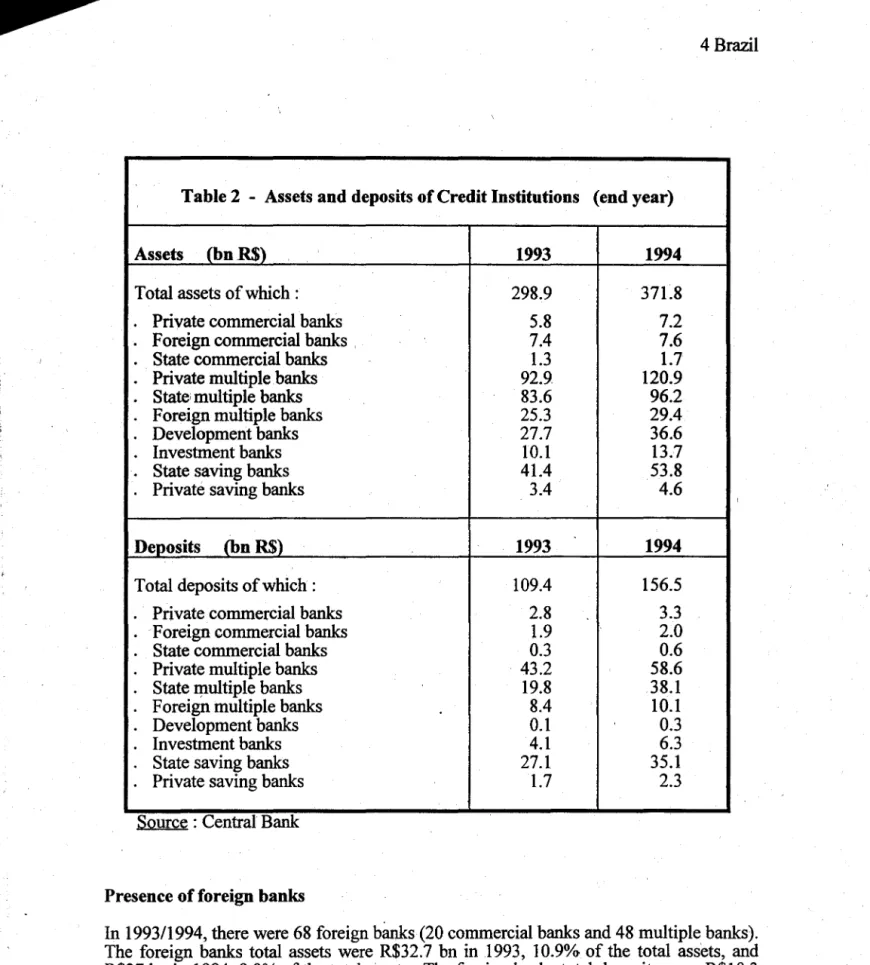
[image:3.601.14.581.8.867.2]Table 2 - Assets and deposits of Credit Institutions (end year)
Assets (bnRS)
1993
1994
Total assets of which: 298.9 371.8
Private commercial banks 5.8 7.2
.
Foreign commercial banks 7.4 7.6State commercial banks 1.3 1.7
.
Private multiple banks 92.9. 120.9.
State, multiple banks 83.6 96.2.
Foreign multiple banks 25.3 29.4Development banks 27.7 36.6
.
Investment banks 10.l 13.7.
State saving banks 41.4 53.8Private saving banks 3.4 4.6
Deposits <hn RS)
1993
1994
Total deposits of which: 109.4 156.5
Private commercial banks 2.8 3.3
.
Foreign commercial banks 1.9 2.0State commercial banks 0.3 0.6
Private multiple banks 43.2 58.6
State multiple banks 19.8 38.l
Foreign multiple banks 8.4 10.l
.
Development banks 0.1 0.3Investment banks 4.1 6.3
State saving banks 27.l 35.l
Private saving banks 1.7 2.3
Source : Central Bank
Presence of foreign banks
In 1993/1994, there were 68 foreign banks (20 commercial banks and 48 multiple banks). The foreign banks total assets were R$32.7 bn in 1993, 10.9% of the total assets, and R$37 bn in 1994, 9;9% of the total assets., The foreign banks total deposits were R$I0.3 bn in 1993, 9.4% of the total deposits, and R$12.l bn in 1994, 7.8% of the total deposits. Their profitability were about 6.9% of the total market in 1993, being the multiple banks .the more profitable (7.6% of the total profit of all multiple banks).
MARKET ACCESS AFFORDED TO EU CREDIT INSTITUTIONS
[image:4.599.8.581.20.650.2]t
1 ·
)
'
5 :ijrazil
Establishment and acquisition
The banking sector was closed to foreign investment by Article 52 of Brazil's 1988 Constitution. No new subsidiaries or additional branches can be established by foreign banks. Article 52 as a transitional provision provides also for a freeze of the number of foreign bank ,branches at the level of 5 October 1988, as well as for the prohibition on the · expansion of foreign ownership in banking. Even if those prohibitions could be waived · pursuant to international accords, based on considerations of reciprocity or the national interest, only few foreign banks have been authorised to enter Brazil under such a waiver. The adoption of enabling legislation by the Congress is required by Article 192 of the Constitution with a view to opening the Brazilian market to foreign banks and to defining the conditions for foreign capital participation in Brazil.
A constitutional reform is envisaged and is said to be submitted to Congress in the near future. The impact on further liberalisation of the Brazilian financial market is not yet clear. However, the new government which has taken office in January 1995, and in particular the new President of the Central Bank indicated their readiness to pursue a liberal policy.
Foreign banks already operating in the Brazilian market were grandfathered, but they remain subject to restrictions on expansion: their ownership in domestic institutions may, in principle, not be increased and they can be prohibited from expanding by way of merger or purchase. Moreover, the opening of foreign bank branches requires a lengthy authorisation period and is fully di~cretionary. Branching is limited in a discriminatory way. Whereas domestic banks are allowed to retain additional branches by acquiring other banks, foreign banks can only acquire branches of other foreign banks. Applications for more than one branch are refused; but they may relocate branches by closing one branch to open a new branch.
Minimum capital requirements for paid-in capital and net worth applicable to foreign commercial banks or commercial bank branches as well as to commercial banks controlled by foreign capital are discriminatory: they are twice those .established for Brazilian banks. In 1994, R 15,8 mn ·(US$ 17.5) mn were requested for foreign commercial banks while R$ 7,9 mn (US$ 8,7 mn) were requested for domestic commercial banks. However, in recent GATS negotiations, Brazil announced to drop these discriminatory capital requirements and to apply the standards of the Basle Convention both to domestic and foreign banks.
Already established banks are subject to important discriminatory measures with regard to the expansion of existing operations or the conduct of new activities: the permission may be denied by the Banco Central do Brasil or authorised on terms and conditions less favourable than those applied to Brazilian service suppliers. This restrictions may also be revised in the context of the ongoing reform process.
At present, settlement and clearing services are subject to a state monopoly of the Banco do Brasil so that all other private or public banks are excluded from providing these services.
The Brazilian Congress recently adopted a privatisation program of the banking sector.
In GATS negotiations, Brazil indicated that it is considering
an
opening of theprivatisation program to participation of foreign financial institutions. This might
provide for a limited new market entry of foreign banks despite the above mentioned constitutional ban.
Activity
Domestic and foreign banks operating in Brazil can make applications to the Ministry of Finance to become depositories for federal tax payments, accepting payments from individuals and business and periodically forwarding them to the federal government.
A service tax of 5 per cent is payable on remittances to the parent company of a foreign bank to reimburse the operating cost of a local representative.
Income obtained from Brazil by non-resident individuals and entities domiciled abroad is subject to a withholding tax at the rate of 25%. This tax is paid upon the remittance or payment in local currency or if the amount is credited to the non-resident. The profits of the Brazilian branches of foreign banking or non-banking companies are subject to a 15% tax upon the closing of the balance sheet, regardless of actual distribution. Brazil operates a system of foreign capital registration linked to its exchange control regulations which applies to both banking and non-banking foreign corporations. The Federal Law on Foreign Capital Registration (Law 4132/62)establishes the requirements · for repatriation of capital and remittances of dividends. The law covers virtually all forms of investment, including loans, equity capital, and property investments. It also defines special responsibilities for the banking system in reporting foreign currency transactions to the Central Bank. Remittances of interest on loans, credits or other forms of financing are limited to the maximum rates fixed by the Central Bank.
Foreign banks operating in Brazil can arrange lo~s subsidised by public financing programmes.
The term and rate structures of all incoming foreign loans must be approved by the Centr~l Bank. An application period of 30 days is applicable' for registration of foreign loans and investments, delay fees can be imposed after expiry of this period.
I
I
~
l
I
:
'7 Brazil
INSURANCE
By the standards of developed economies the Brazilian insurance industry is weak. In 1993, total premiums were 5.1 bn ofR$. (ECU 4.9 bn), of which 0.5 bn and4.6 bn ofR$ co.rrespond to life and non-life premiums respectively. That represented a real growth of
5.2% versus the previous year. As a percentage of GDP, total premiums represented
1.2%. In terms of total premiums per capita were about 32.7 R$, corresponding 3.2 R$ and 29.5 R$ per capita to life and non-life premiums respectively.
The insurance sector adapted well to the stabilisation plan of July 1994 ; life insurance is expected to be the leading sector in 1995. Because of the high minimum capital requirements, Brazilian companies are considered to be well capitalised.
The Brazilian insurance market is highly concentrated. In 1993, the five largest
companies held over 50:9% of the market premiums, being motor vehicles and fire the most important sectors.
While the limited importance of the insurance industry as a whole is mainly related to Brazil's relative level of economic development, the particularly limited importance of life insurance in the past was explained by the high level of inflation which interfered with the risk assessment of economic agents and their saving decisions and increases the uncertainty related to rates of return. Very high real interest rates were also thought to adversely affect insurance placements.
Table 3 - Indicators of insurance business
Life Non-life Total
Totazl premiums (bn R$) 0.5 4.6 5.1
.
Premiums as % of GDP 0.1 0.9 1.0Premiums per capita (in R$) 3.2 29.5 32.7
Number of insurance companies of which n.a. n.a. 132
EU insurance companies n.a. n.a. 9
Non EU-foreign insurance companies n.a. n.a. 21
..
[image:7.600.0.579.0.868.2]Presence of foreign insurance companies
In 1993, there were 132 insurance companies in the Brazilian market, of which 9 had Eu· capital partioipation. Established EU insurance owned companies play an important role in the Brazilian insurance market. In 1993, their share in the premiums market were of 8.1 %, equivalent to R$ 0.4 bn (0.3 bn ECU).
MARKET ACCESS AFFORDED TO EU INSURANCE COMPANIES
Establishment and acquisition
As in the banking sector, a constitutional ban on new establishment of foreign branches or wholly-owned subsidiaries and restrictions for the expansion of foreign companies already operating in Brazil fully apply to all foreign insurance companies.
If and when the removal of the constitutional ban will be effective, the entry of new foreign insurers in the domestic market will be regulated by existing restrictive rules with regard to ceilings on foreign share holding. Foreign investors buying into a domestic insurer, or setting up a new one, may only own up to 33% of voting shares and up to 49% of total capital. Wholly-owned companies already operating in Brazil will not be obliged to adapt to the maximum ceilings of share holding. Any purchases of such companies will also benefit from this exception. ·
Reinsurance business remains a state monopoly, since the Reinsurance Institute of Brazil is responsible for all reinsurance operations, including cross-border activities. However, Brazil announced in recent GATS negotiations that it was examining the possibility of a phase-in arrangement, providing for the gradual opening of reinsurance activities to the private sector, including foreign companies.
Both domestic and foreign insurance companies operating in Brazil may engage in all activities as a result of a reform of the financial services sector in 1990. Non-discriminatory minimum capital requirements in the life and non-life insurance sector are of R$ 2.9 mn for each sector. 50% of capital must be deposited as supplementary technical reserves (Central Bank Resolution 90/47). Solvency rate is based on EU legislation. ·
Activity
There is in general no • discrimination against foreign companies already established in relation to domestic companies. But there seems to be discrimination in favour of Brazilian companies in determining the allocation of the insurance business of state-owned enterprises.
9 Brazil
Tariffs are generally regulated both for foreign and domestic companies, except motor,
which
limits the ability of insurance. companies to give cover at their desired rates.SECURITIES TRADING
Of the country's nine bourses, listing a total of 829 companies, the main stock exchange markets are concentrated in Rio de Janeiro and Sao Paolo; they account for 97% of all transactions. '.fhe Rio exchange has inaugurated a nation-wide on-line trading system to widen access to the market. The total transactions of secondary stock exchanges in other state capitals are of minor importance. The Brazilian market is concentrated in few stocks. In 1994, the market and trading volume of the 10 largest corporations were 45%.
There are 578 domestic and foreign corporations operating in Brazil authorized to trade.
their shares in the domestic stock · exchange market. Other 251 corporations are
authorized to negotiate their shares only in the secondary, over-the-counter market; they frequently obtain resources by means of subscriptions of new issues of debentures or bonds fully or partly convertible into shares.
Securities markets are under the regulatory superv1s1on of the National Monetary Council, under participation of the Central Bank President, and effected through the Securities Exchange Commission (Comissao de .Valores Mobiliarios - CVM).
No segregation between banking and securities operations applies; as a result, business is in particular done by multiple banks, followed by large public and private pension funds
and mutual funds. 1
Brazil's stock markets are volatile and share issues are not a leading means of raising corporate fmance. However, the importance of Brazil's securities market as a funding - source has been increased by recent relaxation of controls on foreign investors. Since ·
~ j
;
.<
l
i
. I
Recently, reforms have also increased the inflow of funds into Brazil. _In 1993, domestic and foreign corporations operating in Brazil raised US$ 7.4 bn through overseas issues
of eurobonds, commercial papers, ADR, MTN, and other bonds. In 1994, these
corporations raised US$ 4.6 bn through similar oversea~ issues. The growing importance of foreign funds entering Brazil in order to invest in local fixed-income instruments (including money markets and debentures) made the government adopting certain restrictions: a 5 per cent financial operations tax on funds coming from foreign corporate and institutional investors for investment in public· or private fixed-income applications; investments to be channelled into a new fixed-income fund for foreign capital; new fund to allocate at least 35 per cent of its investments to federal debt obligations, a maximum of 20 per cent to private debt instruments, and the balance to other instruments.
I
Foreign investors are not subject to any capital gains tax on profits arising from their· transactions in the Brazilian securities market; however, a 15 per cent withholding tax is retained on dividends.
Further liberalisation of Brazil's capital markets was achieved in 1992 in the context of Mercosur. Brazilian corporate and individual investors were granted complete reciprocity in trading on the exchanges of Argentina, Paraguay and Uruguay, and all Mercosur-based investments were permitted to enter or leave in Brazil in any of the four countries' currencies or in dollars.
Whereas the market for new domestic issues remains less important, Brazilian firms operate increasingly on international markets, since publicly quoted companies have been permitted to offer securities and place commetcial paper abroad (National Monetary Council Resolution 1848 of July 1991).
There are two classes of stockbrokers, "corretoras0
and "distribuidoras". Corretoras are firms that actually hold seats on exchanges. Distribuidoras do not own seats, but accept buy/sell orders and must deal indirectly with the exchanges. Both foreign and domestic firms may function as either class, since legally, any firms already established may purchase a seat on an exchange. The Central Bank and the CVM limit the number of seats allowed on each exchange.
11 Brazil
[image:11.595.20.577.17.833.2]•
Table 4 - Securities market indicators - Shares
1993 1994
Turnover (market value of trading) (bn R$) 46.0 102.8
Turnover as % GDP 9.7 20.4
Capitalisation (Market value) (bn R$) 99.4 189.1
'
Trading volume (Nr of shares trad~d) (bn) 6.6 9.1
Nr of listed companies 583 584
Nr of companies newly listed 13 28
Source : Ministry of Finance/CVM
MARKET ACCESS AFFORDED TO EU SECURITIES COMPANIES
Establishment and acquisition
As in banking, Brazil's 1988 Constitution prevents foreign securities firms from entering the local market. They are not permitted to establish any new subsidiaries or additional branches, and increase of foreign share holding is not possible. However, foreign firms established before 1988 are grandfathered. They are allowed to do all securities business and to hold seats on Brazilian exchanges.
Despite the constitutional ban, foreign firm were exceptionally granted to participate on a minority basis in domestic firms by establishment of joint ventures.
Activity
Fund management by foreign firms is allowed, even if foreign mutual funds may not be sold to local investors.
Direct investment by foreign institutional investors has been authorised, but remains subject to a number of restrictions as set out in the introductory part.