Influence of reproductive and post-settlement processes on
recruitment in scallops
Tania Mendo Aguilar
BSc., MSc.
Submitted in fulfilment of the requirements for the Doctor of Philosophy in Marine and
Antarctic Studies
Institute for Marine and Antarctic Studies
University of Tasmania
Statements and declarations
Declaration of Originality
This thesis contains no material which has been accepted for a degree or diploma by the University or any other institution, except by way of background information and duly acknowledged in the thesis, and to the best of my knowledge and belief no material previously published or written by another person except where due acknowledgement is made in the text of the thesis, nor does the thesis contain any material that infringes copyright.
Authority of Access
This thesis may be made available for loan and limited copying and communication in accordance with the Copyright Act 1968.
Statement regarding published work contained in thesis
The publisher of the paper comprising Chapter 2 holds the copyright for that content, and access to the material should be sought from the journal. The remaining non published content of the thesis may be made available for loan and limited copying and communication in accordance with the Copyright Act 1968.
Tania Mendo Aguilar
Statement of Co-Authorship
The following people and institutions contributed to the publication of work undertaken as part of this thesis:
Tania MendoAguilar, Institute for Marine & Antarctic Studies, University of Tasmania = Candidate
Jeremy Lyle, Institute for Marine & Antarctic Studies, University of Tasmania = Author 1
Natalie Moltschaniwskyj, School of Environmental and Life Sciences, University of Newcastle, Australia = Author 2
Jayson Semmens, Institute for Marine & Antarctic Studies, University of Tasmania = Author 3
Sean Tracey, Institute for Marine & Antarctic Studies, University of Tasmania = Author 4
Author details and their roles:
Paper 1, Habitat characteristics predicting distribution and abundance patterns of scallops in D‟Entrecasteaux Channel, Tasmania from Eastern Australia. (2014) PlosOne. DOI: 10.1371/journal.pone.0085895 Located in chapter 2.
Candidate was the primary author and conducted all analyses. Authors 1-4 contributed to the idea, its formalisation and development and commented on the final manuscript before submission.
Dr. Jeremy Lyle Dr. Chris Carter
Primary Supervisor Director
Fisheries, Aquaculture and Coasts Fisheries and Aquaculture Centre
Acknowledgements
First of all I would like to express my sincere gratitude to my supervisory team: Jeremy Lyle, Natalie Moltschaniwskyj, Jayson Semmens and Sean Tracey. Thank you for all your guidance and advice. Without your support this PhD would not have been possible – and I would probably be insane by now.
The field work during this PhD would not have been possible without the help of many, many diving volunteers. Amelia Fowles, mate – thank you so much! Lara Marcus and your – venga va! Luis Henriquez, Ivan Hinojosa, Jaime McAllister, Alyce Hancock, Lucy Quayle, Tess Moriarty, Pearse Buchanan, Jorge Ramos, Felipe Briceño and many others who helped search for scallops, count baby scallops while freezing in Tassie cold waters, and surviving spider crabs attacks and shark encounters…
From IMAS, I gratefully acknowledge the assistance in the field provided by Luisa Forbes, Ed Forbes, Dane Jones, Simon Talbot and Graeme Ewing. I am also thankful to Rob Johnson, André Couto, Eric Olivier and Mauro Vargas for help with Matlab and Lisette Robertson for making lab work go smooth and with no major incident!. Cedric Simon, Bryan Choa and Basseer Codabaccus, thanks for your advice and help with lipid and glycogen analysis and for showing me the wonders of the reverse pipetting technique!Also a big thank you to Derek Cropp, for discussing scallop predation related issues with me
Thanks Julian Harrington for discussing several ideas at the start of my PhD and for your help and guidance in the field! Rafael Leon, thanks for giving me statistical advice throughout the PhD! I would also like to thank Simon Wotherspoon for statistical advice. Daniela Farias and Mana Inoue, thanks for being my little „elves‟ and helping me in the lab
Sebastian Schmidt-Roach for literally giving me electric discharges that motivated me throughout my PhD ;) and for helping me with a figure. To Sebastian and Alicia thanks for feeding me copious amounts of food during the last few months of my PhD! Narissa Bax, thanks for motivating me and sharing the occasional coffee. Kilian Stehfest „master of flow‟,
Ivan Hinojosa and Nick Jones, thanks for discussing my results in several occasions and helping me make them readable!
This study was kindly supported by funding from the Tasmanian Fishwise Community Grants Scheme. I was also supported by an Endeavour International Postgraduate Research Scholarship (EIPRS). Thanks to all scallop geeks at the International Pectinid Workshop in Florianopolis. Meeting people with similar interests and sharing a passion for bivalves was very encouraging!
Thanks to my family and friends in Peru, even though far away, they always know how to cheer me up. Last but not least, I would like to thank my better half Nick Jones. I am unbelievable lucky to have you by my side, and you have been my pillar of strength throughout the PhD. I would not have accomplished this without you.
Abstract
Knowledge about the key factors influencing recruitment of exploited benthic marine invertebrates is important, as it provides information necessary for sustainable fisheries management and population recovery. This information is especially relevant for stocks that have been severely depleted, such as the populations of Pecten fumatus, Equichlamys bifrons
and Mimachlamys asperrimus in the D‟Entrecasteaux Channel, Tasmania, Australia. Stock declines related to a combination of fishing pressure and recruitment failure have raised concerns about density related mechanisms that could influence recruitment. Correlations between numbers of recruits and numbers of adults have led to hypotheses that distribution patterns of adults might be explained by habitat-related characteristics. Therefore this study examined reproductive and post-settlement processes likely to contribute to patterns of recruitment in scallops, with a particular focus on P. fumatus to identify strategies for management and conservation of scallop populations in south-eastern Tasmania. This aim was addressed using a combination of field experiments, underwater observations and laboratory studies.
Spatial patterns of distribution and abundance for the three species of scallops were explained by sediment type, habitat structural components, and/or presence of predators. However, the nature of the relationships between these factors and the distribution patterns differed markedly among species. While Pecten fumatus was strongly associated with finer sediments and Equichlamys bifrons with coarse grain sediments, Mymachlamys asperrima
had a less selective association, possibly related to its ability to attach on a wide range of substrates. Other habitat characteristics explaining the abundance of P. fumatus were depth,
Asterias amurensis abundance, shell and macroalgae cover. Equichlamys bifrons was strongly associated with macroalgae and seagrass cover, whereas M. asperrima abundance was greatly explained by sponge cover. These relationships are likely mediated by predation pressure as well as the specific behavioural characteristics of each species. The findings highlighted the specific habitat characteristics relevant for spatial management and habitat restoration plans.
refuge from predation for this species was examined. Predation on spat and juveniles was a major factor affecting local population sizes; mortality rates up to 95% during the first weeks after settlement appeared to have prevented the establishment of an adult population at the study site as few adults were found during three consecutive sampling years. While macroalgae provided settlement substrate for spat, higher macroalgal biomass did not offer increased protection from predation during the juvenile phase. This appears to be linked to the recessing behavior of P. fumatus, which may be hindered or prevented when algal biomass is high. When recessed into the sediment scallops are assumed to be less vulnerable to detection by predators. Thus the interplay between prey behavior and substrate characteristics was considered important in determining scallop survival.
Pecten fumatus is a simultaneous hermaphrodite with a protracted spawning season from October to March supported by stored energy reserves early in the spawning season, whereas later in the spawning period energy from oocyte breakdown provides an energy source for development of new oocytes when primary productivity levels were low. Protracted spawning represents a bet-hedging strategy that would ensure some recruitment by increasing the probability of offspring survival when environmental conditions are unpredictable. However, for low density populations the advantages of protracted spawning may not be fully realized because of the negative relationship between density of spawning stock, aggregation patterns, and synchronization of spawning. Areas with lower densities of scallops had less small scale aggregation and increased nearest neighbour distances. Spawning synchronization was highly variable throughout the season, with 3.5-59.8% of individuals spawning at a given time. Pecten fumatus was more likely to spawn when present in high density aggregations and when in closer proximity to conspecifics. Reducing densities not only reduces the number of individuals contributing to the production of gametes, but also reduces the synchronization of spawning and rate of gamete release. At density levels currently observed in the D‟Entrecasteaux Channel it is probable that most
individuals are at distances too great for fertilisation. Also, this study suggests that despite being a hermaphrodite, P. fumatus seems to be favouring cross-fertilization over self-fertilization.
maintaining areas with a minimum density of 0.2 ind.m-2 of P. fumatus, which could be achieved under the current rotational harvesting system in south-eastern Tasmania. In the case of the D‟Entrecasteaux Channel, however, the populations are currently severely
Table of Contents
Chapter 1. General Introduction ... 14
1.1. Production of larvae ... 16
1.2. Larval dispersal ... 18
1.3. Settlement... 19
1.4. Post-settlement ... 20
1.5. Reducing complexity on a case by case analysis ... 20
1.6. Thesis Structure ... 24
Chapter 2. Habitat characteristics associated with distribution and abundance patterns of scallops in D‟Entrecasteaux Channel, Tasmania ... 26
2.1. Introduction ... 26
2.2. Materials and Methods ... 28
2.2.1. Study area ... 28
2.2.2. Distribution patterns ... 29
2.2.3. Habitat structural components, sediment type and depth ... 30
2.2.4. Relationship between abundance patterns and explanatory variables ... 31
2.3. Results ... 32
2.3.1. Distribution patterns ... 32
2.3.2. Habitat elements ... 34
2.3.3. Relationship between scallop abundance patterns and explanatory variables ... 36
2.3.3.1. Commercial scallop Pecten fumatus ... 36
2.3.3.2. Queen scallops Equichlamys bifrons ... 38
2.3.3.3. Doughboy scallop Mimachlamys asperrima ... 38
2.4. Discussion ... 39
Chapter 3. Early post-settlement mortality of the scallop Pecten fumatus and the role of algae mats as a refuge from predation ... 43
3.1. Introduction ... 43
3.2. Materials and methods ... 45
3.2.1. Temporal changes in scallop density and size ... 45
3.2.2. Contribution of predation to mortality rates ... 46
3.2.3. Relationship between scallop abundance and biomass of Hincksia sordida ... 48
3.2.4. Mortality and growth of juvenile Pecten fumatus ... 49
3.2.5. Statistical analyses ... 50
3.3. Results ... 52
3.3.1. Temporal changes in scallop density and size ... 52
3.3.2. Contribution of predation to mortality rates ... 55
3.3.3. Relationship between scallops abundance and Hincksia sordida biomass... 56
3.3.4. Mortality and growth on Hincksia sordida ... 58
Chapter 4. Reproductive strategies and energy sources fuelling protracted spawning in Pecten fumatus,
D‟Entrecasteaux Channel Tasmania ... 66
4.1. Introduction ... 66
4.2. Methods ... 69
4.2.1. Case study ... 69
4.2.1.1. Reproductive cycle ... 69
4.2.1.2. Proximal composition ... 72
4.2.1.3. Environmental variables ... 73
4.2.1.4. Data analysis ... 73
4.3. Results ... 75
4.3.1. Temporal patterns of gonad mass and reproductive stages ... 75
4.3.2. Atresia during reproductive period ... 78
4.3.3. Energy content ... 78
4.3.4. Environmental variables ... 81
4.3.5. Dynamics of energy use and storage by reproductive stage ... 81
4.3.6. Breeding strategies in scallops ... 82
4.4. Discussion ... 85
Chapter 5. Importance of density on aggregation patterns and synchronization of spawning the hermaphroditic scallop Pecten fumatus ... 89
5.1. Introduction ... 89
5.2. Materials and methods ... 91
5.2.1. Aggregation patterns, densities and conspecific distances ... 92
5.2.2. Temporal pattern of synchronization of spawning ... 93
5.2.3. Modelling the probability of spawning ... 94
5.3. Results ... 97
5.3.1. Relationship between density and aggregation patterns ... 97
5.3.2 Relationship between density and nearest neighbour distance ... 99
5.3.2. Temporal pattern of synchronization of spawning ... 101
5.3.3. Modelling the probability of spawning ... 102
5.3.4. Nearest Neighbour Distance and probability of spawning ... 103
5.4. Discussion ... 105
Chapter 6. General discussion ... 110
6.1 Implications of the findings ... 111
6.1.1 The importance of habitat characteristics ... 111
6.1.2 Early post-settlement predation: a driver of recruitment success ... 112
6.1.3 Reproductive processes influencing recruitment ... 113
6.2 Recommendations for scallop management in south-eastern Tasmania ... 114
List of Figures
Fig. 1.1. Diagram showing different factors influencing recruitment in benthic marine
organisms in different life cycle stages from gamete to adult. ... 16
Fig. 1.2. Scallop species found in the D‟Entrecasteaux Channel (DEC) a) P. fumatus, b) E. bifrons and c) M. asperrima... 22
Fig. 1.3. Relationship between P. fumatus spawner density in yearn and recruits yearn+1 in 24 sites in the DEC, from 2006 to 2012... 23
Fig. 2.1. Map of the D‟Entrecasteaux Channel (DEC). ... 29
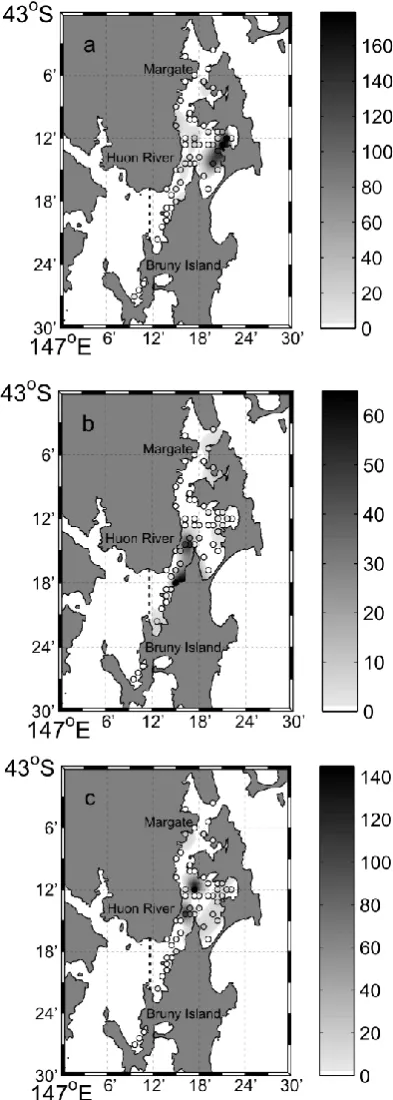
Fig. 2.2. The interpolated distribution and densities (scallops per 200 m2 transect) of P. fumatus (a), E. bifrons (b) and M. asperrima (c) scallops throughout the DEC in 2010... 33
Fig. 2.3. The relative size composition of a) P. fumatus, b) E. bifrons and c) M. asperrima sampled from the 59 sites within the DEC in 2010. ... 34
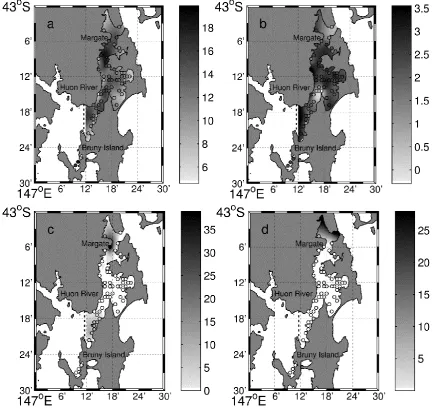
Fig. 2.4. The interpolated values of a) depth in meters, b) mean grain size, abundances (sea stars per 200 m2 transect) of A. amurensis (c) and C. muricata (d) throughout the DEC in 2010... 35
Fig. 2.5. Distribution of main structural components in the DEC: a) sponges; b) shells and c) algae. ... 36
Fig. 2.6. Graphical results of the GAM model fitted to abundance of P. fumatus. ... 37
Fig. 2.7. Graphical results of the GAM model fitted to abundance of E. bifrons. ... 38
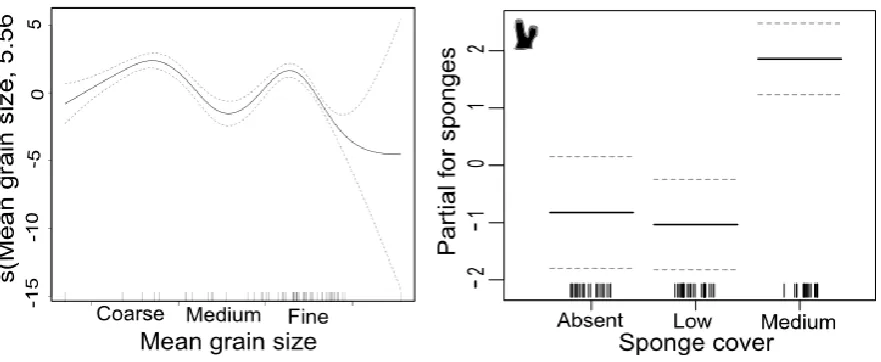
Fig. 2.8. Graphical results of the GAM model fitted to abundance of M. asperrima. ... 39
Fig. 3.1. Diagram of a) full exclusion containers and b) partial exclusion container ... 47
Fig. 3.2. Mean scallop density at Nutgrove Beach, Tasmania over four weeks in 2012. ... 52
Fig. 3.3. Size frequency distribution of commercial scallop P. fumatus at a) start of experiment on 30.12.11; b) after seven days; c) after 17 days, and d) after 28 days; ... 53
Fig. 3.4. Mean scallop density at Nutgrove Beach, Tasmania over 22 days in 2013. ... 54
Fig. 3.5. Size frequency distribution of commercial scallop P. fumatus in a) beginning of experiment, b) after eight days; c) after 22 days. ... 55
Fig. 3.6. Density of scallops.m-2 at the beginning of the experiment on 30 Dec 2011, and full exclusion (no predators present), no exclusion and partial exclusion (cage control) treatments at the end of the experiment on 16 Jan 2012. ... 56
Fig. 3.7. Relationship between Hincksia sordida biomass and scallop densities. ... 57
Fig. 3.8. Relationship between Hincksia sordida biomass and scallop size. ... 58
Fig. 3.9. Changes in the average survival of tethered scallops with the number of days that they were tethered for in 2012 (n=6 algal plots, total number of scallops = 151) and 2013 (n=10 algal plots, total number of scallops=221). ... 59
Fig. 3.10. Mortality (%, circles) of juvenile scallops on Hincksia sordida biomass during tethering experiments in a) 2012 and b) 2013. Fitted line (solid) and 95% confidence intervals (dashed) show the relative risk of dying on H. sordida biomass estimated from the Cox model. In 2013, the relative risk of dying could not be explained by algae or scallop size, therefore no model was fitted. ... 59
Fig. 3.11. Density of potential predators observed during transect counts in 2012 (black bars) and 2013 (gray bars). ... 60
Fig. 3.12. Relationship between the Hincksia sordida biomass and relative scallop growth. . 61
Fig. 4.1. Histological sections of P. fumatus female gonads showing the different reproductive stages (scale 200 um). ... 72
Fig. 4.2. Mean a) muscle, b) digestive gland and c) gonad mass (g) standardised for a 105 mm scallop. ... 77
List of Tables
Chapter 1.
General Introduction
A major goal in ecology is to understand factors that determine the change of population size through time (Krebs 1972). Population size depends on survival and reproduction, which are fundamental processes for population persistence, as individuals contribute genes to the next generation only if they survive to reproduce (Goodman 1987). Understanding which factors influence survivorship from zygote to adult, is particularly important in marine populations where adult abundances have been reduced through anthropogenic impacts, such as fishing (Jackson et al. 2001, Baum et al. 2003, Atkinson et al. 2008) or habitat degradation (Lenihan & Peterson 1998, Wilson et al. 2008). These reductions can result in population collapses (Hutchings and Myers 1994; Myers 1997; Hutchings 2000; Safina and Klinger 2008), localised extinctions (see review in Carlton et al. 1999; Spotila et al. 2000; Dulvy et al. 2003), and generally affect the overall recovery dynamics of the population (Fogarty et al. 1991, Hutchings & Reynolds 2004) due to reductions in individual fitness (Shelton & Healey 1999, Keith & Hutchings 2012, Saha et al. 2013), changes concerning interactions among species (Swain & Sinclair 2000, Walters & Kitchell 2001) or modification of life history traits (Lorenzen & Enberg 2002, Jorgensen et al. 2009).
Marine benthic invertebrates are frequently broadcast spawners (Giese & Kanatani 1987), and produce large quantities of microscopic gametes that are hard to observe and quantify in the field, making our knowledge of timing of spawning and fertilization rates in situ very limited (Levitan 1995, Yund 2000). Marine benthic invertebrate larvae are small and can disperse over large distances (Scheltema 1986), making it difficult to quantify the extent of movement and connectivity between subpopulations (exchange of individuals among geographically separated subpopulations that comprise a meta-population) (Pineda et al. 2007, Cowen & Sponaugle 2009, Pineda et al. 2010). Determining the impact each different factor has on population dynamics is difficult as they do not necessarily act in a linear fashion. Rather, they operate and interact on different temporal and spatial scales making it difficult to predict or adequately describe changes in population abundances (Roughgarden et al. 1988; Fogarty et al. 1991). Moreover, the understanding of each stage requires a multidisciplinary approach between marine biologists and physical oceanographers, as the dispersive stage of larvae is greatly affected by physical processes (Johnson 1939; Thorson 1950).
Fig. 1.1. Diagram showing different factors influencing recruitment in benthic marine organisms in different life cycle stages from gamete to adult. Arrow widths illustrate the relative reduction in individuals from one stage to the next one. Based on concepts by (Pineda et al. 2009) and (Underwood 2001).
1.1. Production of larvae
[image:16.595.75.534.65.360.2]availability. The use of a particular strategy has implications on the timing of offspring production and the numbers of gametes produced (Drent & Daan 1980).
Regardless of breeding strategy (or combination of strategies), most benthic marine invertebrates will produce a large number of gametes per spawning event, however, not all eggs are fertilized. Manipulative studies have shown that many factors among them adult population density (Levitan 1991; Levitan et al. 1992), degree of synchronisation in spawning (Oliver & Babcock 1992, Babcock et al. 1994), distance from a sperm source (Pennington 1985; Babcock et al. 1992), time since sperm release (Gemmill 1900; Powell et al. 2001) and hydrodynamic processes (Coma and Lasker 1997; Levitan 2002) affect successful fertilization.
Fertilization success can be highly variable with estimates ranging from 0 to 100% for benthic marine organisms (Babcock et al. 1992, Brazeau & Lasker 1992, Sewell & Levitan 1992). In this context, the concept of sperm limitation was introduced, stating that extreme dilution of sperm in the sea would result in many eggs remaining unfertilized (Levitan & Petersen 1995). Organisms, however, have evolved a number of mechanisms that maximise the number of eggs and sperm in any one area (hence reducing sperm limitation), such as releasing gametes at times of lower water motion (Serrão et al. 1996), spawning from elevated surfaces to increase suspension and mixing (Himmelman et al. 2008), pseudocopulation (male superposed on a female, but no actual sexual union occurs) (Lawrence et al. 2011), forming dense aggregations during spawning seasons (Petersen et al. 1992, Sewell & Levitan 1992) and highly synchronized spawning (Coma & Lasker 1997). Moreover, several mechanisms exist in most marine organisms to avoid the contact of eggs with too many sperm (polyspermy) (Rothschild 1947; see review in Gould and Stephano 2003), as it results in embryonic death (Boveri 1901; Wilson 1928). A review on fertilization success in field studies showed that on average, fertilization success in the field was quite high, but greatly variable among taxa (Yund 2000).
Levitan et al. 1992; Levitan and Sewell 1998) . This deterioration in individual fitness (i.e. probability of reproducing or output of fertilized eggs) as either the number or density of conspecifics decreases is called an “Allee effect” (Allee 1931; Allee 1938; Stephens et al.
1999). Stephens et al. (1999) further clarified this concept by dividing Allee effects into „component‟ (positive density dependence in some component of individual fitness) and „demographic‟ (positive density dependence in the per capita population growth rate) Allee
effects. In fisheries science the term depensation has been used to refer to positive density dependence mainly through predation or reproduction (Peterman and Gatto 1978; Hilborn and Walters 1992; Myers et al. 1995) and corresponds to a demographic Allee effect (Gascoigne and Lipcius 2004). Allee effects can have major consequences for population dynamics, because populations with few individuals and strong Allee effects will have a greater probability of decline and extinction than those with no or weak Allee effects (Stephens & Sutherland 1999). While there is considerable debate about the existence of Allee effects in marine systems (e.g. Myers et al. 1995; Liermann and Hilborn 1997; Shelton and Healey 1999; Stoner and Ray-Culp 2000; Keith and Hutchings 2012), there is increasing evidence that these effects are particularly relevant in sessile or semi-sessile marine broadcast spawners subjected to exploitation (e.g. Levitan et al. 1992; Shepherd and Brown 1993; Stoner and Ray-Culp 2000; Hobday et al. 2001; see review in Gascoigne and Lipcius 2004). Reducing harvesting mortality may be insufficient to allow prompt recovery of marine populations after abundance has been severely reduced (for a review see Hutchings 2000; Lotze et al. 2011), therefore considering Allee effects in exploited populations is critical for understanding population dynamics and for sustainable exploitation and management (Dennis 1989; Quinn et al. 1993; Berec et al. 2007).
1.2. Larval dispersal
Chia 1984), reduces the likelihood of inbreeding (Jackson 1986; Knowlton and Jackson 1993), minimises the risk of extinction (Roff 1974) and facilitates colonization of new habitats (Mayr 1970; Scheltema 1971; Doherty et al. 1985). As a result, the population dynamics of a species might depend upon larvae originating from different subpopulations – these subpopulations are considered connected (Gaines et al. 2007). There is growing evidence that populations might be less open (or connected) than previously thought. Thus, larvae can be retained close to their natal site (Swearer et al. 1999; Pineda et al. 2007; Cowen and Sponaugle 2009) and recruit back to their source population (Jones et al. 1999; Swearer et al. 2002; Jones et al. 2005).
Knowledge of the degree of dispersal of larvae is important to understand the dynamics in a population because in „open‟ populations, local reproduction might not affect
local population dynamics (Gaines & Lafferty 1995, Adams et al. 2004) while in „closed‟ populations a large degree of coupling between production of larvae and recruitment might occur (Peterson & Summerson 1992).
1.3. Settlement
1984; Hadfield and Scheuer 1985; Chia and Koss 1988). Therefore, habitat characteristics have a strong effect on patterns of distribution and abundance of settlers (Eggleston & Armstrong 1995, Moksnes 2002a).
1.4. Post-settlement
Post-settlement (Fig 1.1, Stage 4), up to 100% of the larvae die during the first few weeks after settlement (see review in Gosselin & Qian 1997). Post-settlement stages are subjected to biotic factors such as predation (Thorson 1966; Keough and Downes 1982; Stoner 1990; Gosselin and Chia 1995) and competition for space (Connell 1961a; Menge 1976; Davis 1987), and abiotic factors such as temperature, salinity, and desiccation (desiccation being relevant in intertidal organisms) (Denley and Underwood 1979; Moller 1986; Roegner and Mann 1995). The processes operating during this phase differ from those operating on adult phases since the use of microhabitat and food resources vary with ontogeny as does their vulnerability to external factors affecting survival (Wahle & Steneck 1991, Gosselin & Chia 1994). Mortality is generally greater during early post-settlement phases than when marine invertebrates reach adulthood (see review in Gosselin and Qian 1997), hence the importance of examining the magnitude of mortality at this stage to explain abundance of organisms.
Predation in juveniles is generally recognized as one of the key factors affecting post-settlement survival (see review in Hunt & Scheibling 1997), however, predation pressure can be mediated by habitat complexity, with more complex habitats typically providing improved shelter opportunities and impacting predator efficiencies (Paine 1976; Pohle et al. 1991; Smith and Herrkind 1992; Maldonado and Uriz 1998; Irlandi et al. 1999). Therefore, it is essential that specific habitat characteristics are examined when explaining variation in abundances.
1.5. Reducing complexity on a case by case analysis
predator control (Hobday et al. 2001, Orensanz et al. 2006)). This information is urgently required in populations that have been severely depleted, such as the population of Pecten fumatus in the D‟Entrecasteaux Channel (DEC), Tasmania, Australia (Tracey & Lyle 2011).
To identify the most important factors influencing recruitment in marine benthic organisms, a coherent simplification in the number of factors influencing patterns of abundance and distribution is necessary (Pineda et al. 2009). Field observations provide a logical starting position from which to begin to propose hypotheses and/or describe functional processes (Underwood et al. 2000). This study was undertaken to determine critical factors influencing distribution and abundance in scallops, focusing on P. fumatus in the DEC. Available data on the population dynamics of the scallop were first analysed to provide a logical framework that aided in the decision process about which factors warranted more consideration.
The D‟Entrecasteaux Channel is a semi-enclosed area between mainland Tasmania
1989). Juveniles and adults are usually attached by a byssus to hard substrates during most of their lifetime (Olsen 1955; Pitcher and Butler 1987). Nevertheless it can break the byssus and swim when exposed to predators (Pitcher and Butler 1987). This species reach smaller sizes than the other two and attains approximately 65-75 mm in its second year of life (Zacharin 1995).
The DEC supported a significant commercial dredge fishery for scallops from the early 1920s to late 1960s, with catches peaking at 4,500 tonnes of meat of P. fumatus in the mid 1960s, declining rapidly thereafter (Perrin & Croome 1988). Significant depletions of scallop populations have occurred at various times throughout the history of the fishery, resulting in area closures to allow for stock recovery. In 1990 the DEC was declared a recreational-only scallop fishery (Zacharin 1991), but the fishery was closed shortly afterwards due to the low numbers of scallops. By the mid-2000s there was evidence of stock rebuilding, following more than a decade of closure, which led to the area being reopened as a recreational dive-only fishery in 2005. Several measures were put in place to reduce the impact of the recreational fishery such as reduction of daily bag limits (from 200 in 1993 to 40 scallops), increased minimum size limit and restriction of the fishery to dive only harvesting (Tracey & Lyle 2011).
Fig. 1.2. Scallop species found in the D‟Entrecasteaux Channel (DEC) a) P. fumatus, b) E. bifrons and c) M. asperrima
Despite this ostensibly „conservative‟ approach to management, the abundance of
in part to the effects of fishing coupled with natural mortality and poor recruitment during this period (Tracey & Lyle 2011). This decline in the population size and associated poor recruitment (Fig. 1.3) raised concern about positive density-dependent mechanisms that could be affecting recruitment.
Fig. 1.3. Relationship between P. fumatus spawner density in yearn and recruits yearn+1 in 24
sites in the DEC, from 2006 to 2012.2006a refers to pre-season survey abundance (February 2006); 2006b refers to post-season abundance (July 2006). Major Axis regression model fitted lines (solid) and 95% confidence intervals (dashed) are shown. Relationship derived from unpublished data available from DEC scallop surveys (Tracey & Lyle 2012).
Habitat characteristics in the DEC might be important in influencing recruitment in scallops. Tracey & Lyle (2012) showed that these patterns were temporally and spatially consistent suggesting that habitat characteristics may be important for successful recruitment. Further evidence of the importance of habitat in regulating distribution and abundance in scallops was provided by a study on Pecten fumatus in Great Bay, DEC, where despite collections of large numbers of spat using artificial collectors, these spat did not necessarily translate into successful juvenile settlement to the benthos (Semmens et al. 2013a). Most juvenile scallops are present in sites with large numbers of adult scallops, suggesting that successful recruitment is a function of physical and biological site characteristics (Semmens et al. 2013a). However, even if a cohort of juveniles did settle in an area, few individuals survived to adulthood, suggesting that post-settlement processes are important in regulating
Adult scallops yearn (ind.m-2)
0.0 0.1 0.2 0.3 0.4 0.5 0.6 0.7
R
ec
rui
ts
y
ea
rnn+
1
(in
d.
m
-2 )
0.000 0.005 0.010 0.015 0.020 0.025
2006a 2006b
2007
2008 2009
20102011
scallop populations (Semmens et al. 2013a). No information is available on habitat characteristics and early post-settlement processes affecting abundance of P. fumatus.
In this context, this study examined reproductive and post-settlement processes likely to influence recruitment in scallops, with a particular focus on P. fumatus in order to identify factors that might be relevant for management and conservation of scallop populations in south-eastern Tasmania. Chapters 2 and 3 focused on settlement and post-settlement processes while Chapters 4 and 5 examined factors influencing the production of gametes. Dispersal of larvae in the DEC was not included within the scope of this study since the P. fumatus population within the DEC appears to be largely self recruiting, with negligible exchange of larvae with other populations from around Tasmania or southeastern Australia, presumably a consequence of the semi-enclosed nature of the DEC, (Woodburn 1988, Semmens et al. 2013b).
1.6. Thesis Structure
Each data chapter presents original data and is written in a style suitable for publication. Whilst I have attempted to maintain a logical flow of ideas throughout the thesis, each chapter can be read independently. This, however, has resulted in some repetition, particularly in the introductory sections of the chapters.
An understanding of the relationships between habitat characteristics and the distribution and abundance patterns in scallops provide insights into the ecological processes that regulate these populations. Chapter 2 examines the relationship between the distribution and abundance patterns of each of the three co-occurring scallop species in the DEC and associated habitat characteristics, including structural components, sediment type, predator abundance and depth.
Chapter 4 describes the reproductive biology of P. fumatus as a step to identifying spawning seasons and approximate timing of settlement. This chapter considers the sources of energy used to fuel the production of gametes and the underlying reproductive strategy adopted by the species. Chapter 5 builds on from Chapter 4 to examine two density-dependent mechanisms which affect the production of recruits: aggregation of spawners and synchronization of spawning.
.
Chapter 2.
Habitat characteristics associated with distribution and
abundance patterns of scallops in D’Entrecasteaux Channel, Tasmania
2.1. Introduction
The distribution and abundance of scallops are influenced by habitat characteristics such as depth, substrate type, currents, turbidity, and salinity (see review by (Brand 2006)). At a finer spatial scale, structural components of habitat, such as presence of polychaete tubes (Aguilar & Stotz 2000), hydroids (Harvey et al. 1993), sponges (Bremec et al. 2008), macroalgae (Cantillánez 2000) and or shells (Pacheco & Stotz 2006), provide settlement substrates for settled scallop larvae or „spat‟. Attachment by spat on structures can reduce
predation rates (Pohle et al. 1991), enhance growth - as an elevated position in the water column provides access to better quality food (Eckman et al. 1989), and avoids smothering by soft sediments (Merrill & Edwards 1976).
The value of habitat structure in reducing risk of predation continues into the juvenile and adult phase. Habitat characteristics greatly influence predation by affecting predation efficiency and predator-prey encounter rates (Myers et al. 1980, Heck et al. 1981). Predator encounters are reduced for juvenile bay scallops Argopecten irradians by attaching to the upper canopy of the eelgrass Zostera marina (Pohle et al. 1991). Complex habitats with greater numbers of horse mussels, sponges and ascidians provide refuge for Pecten novaezelandiae from predation by sea stars and gastropods (Talman et al. 2004). Beyond directly reducing scallop visibility to predators, structure may impact movement and foraging behaviours of predators, as is the case with the queen scallop Equichlamys bifrons which suffer less predation mortality in seagrass beds than on bare sand because starfish have reduced mobility within the seagrass (Wolf & White 1997).
where three species of scallops co-occur: the commercial scallop Pecten fumatus, queen scallop Equichlamys bifrons, and doughboy scallop Mimachlamys asperrima. The DEC supported a significant commercial dredge fishery for scallops from the early 1920s to late 1960s, with catches peaking 4500 tonnes of meat in the mid 1960s and declining rapidly thereafter (Perrin & Croome 1988). Significant depletions of scallop populations have occurred throughout the history of the fishery, resulting in area closures to allow for stock recovery. In 1990 the DEC was declared a recreational-only scallop fishery (Zacharin 1991) but the fishery was closed shortly afterwards due to the lack of scallops. By the mid-2000s there was evidence of stock rebuilding, following more than a decade of fishery closure, which led to the area being reopened as a dive-only fishery in 2005, with a reduced daily bag limit of 40 scallops per person. Despite this ostensibly „conservative‟ approach to
management, the abundance of commercial scallops declined by approximately 80% between 2006 and 2010, due in part to the effects of fishing coupled with natural mortality and poor recruitment during this period (Tracey & Lyle 2011).
The three co-occurring scallop species exhibited distinct and temporally consistent distribution patterns within the area during the 2000s (Tracey & Lyle 2011), suggesting that species-specific habitat requirements may have an influence on their distribution. The abundance of scallops, however, has varied significantly from year to year, with variable and episodic recruitment experienced by each of the species. The „commercial‟ scallop Pecten
fumatus is found mainly on a range of soft sediment substrates including silt-sand and coarse sand (Fairbridge 1953, Olsen 1955). When at the spat stage, P. fumatus bysally attach to filamentous substrate such as macroalgae until approximately 6-10 mm in shell length when they release the byssus and then recess in the substrate (Hortle & Cropp 1987). The „queen‟ scallop Equichlamys bifrons, does not recess (Minchin 2003) and is often found in association with the seagrass Heterozostera tasmanica (Olsen 1955, Wolf & White 1997). The „doughboy‟ scallop Mimachlamys asperrima, bysally attach throughout their lifetime to a
wide range of substrates such as bryozoans, seaweeds, sponges, oysters, mussels, old scallop shells, timber and rock (Zacharin 1994).
distribution by direct observation. In this study we have used dive surveys to examine the relationship between the distribution and abundance patterns of each species and associated habitat characteristics, including structural components, sediment type, predator abundance and depth. We hypothesize that specific habitat features influence the patterns of distribution of each species in different ways and discuss how these relationships are possibly mediated by predation pressure and the behavioural characteristics of each species.
2.2. Materials and Methods
2.2.1. Study area
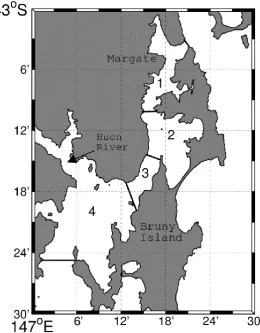
Fig. 2.1. Map of the D‟Entrecasteaux Channel (DEC). Numbers represent the Areas referred to throughout the manuscript.
2.2.2. Distribution patterns
Patterns of scallop abundance were analyzed by comparing them to a Poisson (random) distribution, which assumes that the expected number of organisms is the same in all sampling areas and is equal to the mean (Krebs 1994). Agreement between observed and expected values was evaluated using a chi-square test of goodness of fit at the 5% level of significance, the null hypothesis being that the distribution did not differ significantly from a Poisson distribution (Elliot 1971). To evaluate whether the distribution was aggregated, the standardised Morisita‟s Index of dispersion (I) was used because it is independent of
population density and sample size (Myers 1978). This index ranges from -1 to +1, with zero indicating a random distribution pattern, negative values indicating a uniform distribution and positive values an aggregated distribution pattern (Krebs 1999). Values >-0.5 and <0.5 are significant at the 5% level.
2.2.3. Habitat structural components, sediment type and depth
The main habitat structural components of the surveyed sites were macroalgal species (including seagrass), sponges, and shell debris. To generate semi-quantitative estimates of coverage, these structural components were ranked using a three-point scale of relative abundance. Sponges were ranked as being absent when none were recorded within the transect area, low when 1 – 10 sponges were counted and medium when more than 10 were present. Macroalgae and shell cover were estimated visually and when the component was not observed within the transect area it was ranked as absent, low when the coverage was judged to be less than about 10% and medium when the coverage was >10%. None of these components, however, had coverage levels in excess of 50%.
A sediment core, taken to a depth of approximately 2 cm, was collected by divers at each site for grain size assessment. Samples were dispersed using calgon (0.5% [mass:volume] sodium hexametaphosphate) (Gatehouse 1971) and then oven dried (60ºC, 48 hours), weighed and shaken through a series of eight sieves ranging from 63 µm to 8 mm. The sediment in each sieved fraction was weighed to the nearest 0.1 gram and the cumulative percentage by weight of the eight fractions was calculated and the mean plotted against a phi (Ф) scale where:
d
log
where d is particle diameter in millimeters. Mean grain size (dm) was estimated using
phi values corresponding to the 16th, 50th and 84th percentiles of the cumulative proportion of weight using the formula:
3
84 50 16
dm
(Folk 1968)
where larger dm values correspond to finer grain sizes (Wentworth 1922). Mean grain
size was classified according to the Wentworth scale (Wentworth 1922) which combines numerical intervals of grain size with rational definitions (pebble, sand, mud, etc) (Eleftheriou & McIntyre 2008). Water depth was measured at each site using dive computers with 0.1 m precision.
2.2.4. Relationship between abundance patterns and explanatory variables
To visualize the spatial distribution of scallops, sea stars, mean grain size and depth, a triangle-based cubic interpolation algorithm was applied to fit an interpolated surface to the average value recorded for each site using Matlab (MATLAB 2006). Coastlines for maps were extracted from the NOAA database (NOAA 2013).
Model selection was based on Generalized Cross Validation (GCV) (Wood 2006), percentage deviance explained and visual examination of residuals. Spatial autocorrelation in the models‟ residuals was investigated through Variogram analysis using the geoR package v
1.6-22 in R (Ribeiro 2001). One of the model assumptions is that there is no spatial autocorrelation. Violation of this assumption was tested by comparing a variogram of the deviance residuals with Monte Carlo envelope empirical variograms computed from 300 independent random permutations of the residuals (Diggle 2007). There was no evidence of significant spatial autocorrelation on the residuals of any model as the semi-variance was within the boundaries of the Monte Carlo envelopes in the variograms.
2.3. Results
2.3.1. Distribution patterns
Densest populations of Pecten fumatus were found in the eastern section of Area 2, with a maximum of 85 scallops per 100m2 but were very scarce in Areas 1, 3 and 4 (Fig. 2.2). Densest populations of Equichlamys bifrons were found in Area 3 with as many as 33 scallops per 100m2, scarce in Areas 1, 2 and were absent in Area 4. Highest densities of
Table 2.1 - Goodness of fit tests for a random (Poisson) or aggregated distribution (Morisita‟s Standarised Index of Dispersion).Asterisks (*) denote significant difference from a Poisson or a negative binomial distribution (p<0.05). A ^ denotes a significant departure from randomness at p<0.05.
Test Pecten
fumatus
d.f Equichlamys bifrons
d.f Mimachlamys asperrima
d.f
Random distribution -
Poisson
2976.5* 18 1350.6* 13 2131.3* 16
Test of Aggregation –
Morisita‟s Index
0.555^ 58 0.546^ 58 0.558^ 58
The size frequencies of the three species of scallops consisted of multimodal distributions and were dominated by large (adult) scallops (Fig. 2.3).
Fig. 2.3. The relative size composition of a) P. fumatus, b) E. bifrons and c) M. asperrima
sampled from the 59 sites within the DEC in 2010.
2.3.2. Habitat elements
north west of Area 1 and in the south of Area 3 with 1 – 39 stars per transect. The sea star
[image:35.595.71.505.176.586.2]Coscinasterias muricata was only found in the northern end of the Channel, in six out of the 59 sites surveyed and usually in very low numbers (one site with 28 individuals per transect and the other five with a single individual per transect) (Fig. 2.4 c and d, respectively).
Fig. 2.4. The interpolated values of a) depth in meters, b) mean grain size, abundances (sea stars per 200 m2 transect) of A. amurensis (c) and C. muricata (d) throughout the DEC in 2010.Circles indicate the survey sites and the colour intensity indicates the interpolated relative value. Note density scales vary between species. Areas located left of the dotted line were considered outside the model interpolation domain.
showing medium sponge cover than the other 3 Areas. There was no clear pattern in the distribution of shell cover (Fig. 2.5).
Fig. 2.5. Distribution of main structural components in the DEC: a) sponges; b) shells and c) algae.Circle colours indicate percent cover, with absent (white), low (gray) and medium (black) cover.
2.3.3. Relationship between scallop abundance patterns and explanatory variables
2.3.3.1. Commercial scallop Pecten fumatus
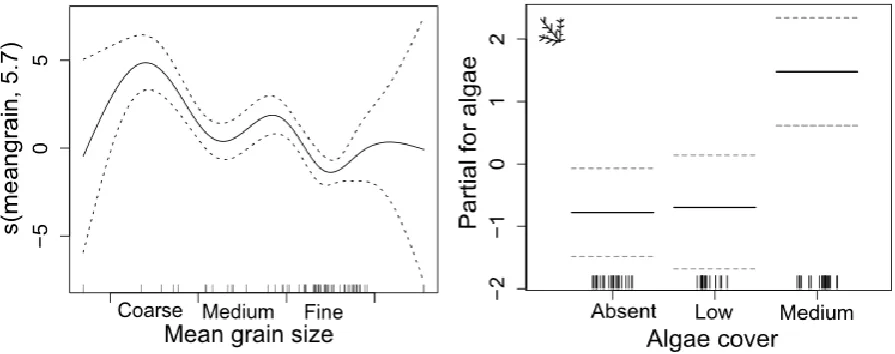
Sediment size, depth, A. amurensis abundance, shell and macroalgae cover explained 72% of the difference in the abundance of P. fumatus. Greatest numbers of the species occurred in areas of fine sand and in depths from 8 – 12 meters (Fig. 2.6) and numbers increased with shell cover (significant 1st and 2nd-order orthogonal polynomial contrast, t=4.65, df=1, p<0.001, and t=2.31, df=1, p=0.024, respectively). In contrast, P. fumatus
Fig. 2.6. Graphical results of the GAM model fitted to abundance of P. fumatus.Only significant variables are shown: a) mean grain size, b) depth, c) Asterias amurensis
[image:37.595.83.528.68.610.2]2.3.3.2. Queen scallops Equichlamys bifrons
[image:38.595.78.526.239.416.2]Mean grain size and algae and seagrass cover explained 68.3% of the variation in abundance of E. bifrons. The greatest numbers of E. bifrons were present in sites with medium to coarse sand (Fig. 2.7) and greater algae cover (significant 1st-order polynomial contrast, t=3.37, df=1, p=0.001). There was no evidence that depth, shell, sponges or sea star abundance contributed to explaining variation in the abundance patterns of E. bifrons.
Fig. 2.7. Graphical results of the GAM model fitted to abundance of E. bifrons. Significant explanatory variables are a) mean grain size and b) algae/seagrass cover. See Fig. 2.6 for explanation
2.3.3.3. Doughboy scallop Mimachlamys asperrima
Mean grain size and sponge cover explained 69.7% of the variation in abundance of
Fig. 2.8. Graphical results of the GAM model fitted to abundance of M. asperrima.Significant explanatory variables are a) mean grain size and b) sponge cover. See Fig. 2.6 for explanation.
2.4. Discussion
Within the study area, each of the three scallop species exhibited aggregated rather than random or uniform patterns of distribution; aggregated distributions being typical amongst scallop species (Langton & Robinson 1990, Stokesbury & Himmelman 1993). While the spatial distribution patterns for each species were explained by sediment type, habitat structural components and/or presence of predators, the nature of the relationships between these factors and the distribution patterns differed markedly among species.
Prevalence of P. fumatus in fine sediments suggests that abundances may depend, in part, upon increased survival in those sediments. The semi-burying or recessing behaviour of the juveniles and adults, in which the upper valve is level with or just below the surface of the sediment (Brand 2006) is favoured in finer sediments compared to coarser sediments and provides protection from visual and non-visual predators, reduces fouling on the shell, and can anchor the individual in areas of strong currents (Brand 2006). Moreover, this behaviour does not interfere with active predator escape responses such as swimming (Minchin 1992).
While the distribution of P. fumatus was negatively associated with macroalgal/seagrass cover, E. bifrons had a positive relationship with macroalgal/seagrass cover that may be related to its use of this structural component as a refuge from predation. Predation rates in E. bifrons by sea stars have been shown to be lower in seagrass beds compared to bare sand and this is linked to the reduced mobility of sea stars within seagrass compared with over bare sand (Wolf & White 1997). The positive relationship between M. asperrima and sponge abundances may be linked to the epizoic association between M. asperrima and sponges, including the red sponge (Crellidae family), the yellowish sponge (Myxillidae family), and the purple honeycomb sponge (Equinochlathria sp.) (Pitcher & Butler 1987). This association has the benefit that adhesion of the sea star Coscinasterias muricata tube feet on the scallop shell is reduced on sponges, effectively protecting the scallops from predation (Chernoff 1987, Pitcher & Butler 1987). To some extent the relationships between scallop abundance patterns and specific habitat characteristics canbe explained in terms of the benefits that these relationships afford in reducing predation pressure for each species.
changes in predation risk (Andruskiw et al. 2008). Vulnerability to predation can vary in a species-specific manner within habitat types even among species that are morphologically and phylogenetically similar (Seitz et al. 2001). For instance, the probabilities of encountering scallops and predation success rates for a related predator, Asterias vulgaris, were influenced by particle size (Wong & Barbeau 2003). In the present study, the nature of the relationship between A. amurensis and P. fumatus abundance is unclear and we cannot rule out preferential habitat use by A. amurensis or interactions with other sources of prey, such as the distribution of other epi-benthic bivalves (Ling et al. 2012), as explanatory factors for the sea star abundance.
This study has demonstrated that macroalgae and seagrass, shell and sponge cover have important roles in determining adult scallop distributions. It is uncertain, however, when these distribution patterns are established, whether at settlement and/or as a result of post-settlement processes. Scallop spat have distinct habitat requirements due to their need to attach to structural elements. Therefore, the habitat characteristics associated with settlement might be very different to those observed for the adults as observed by Howarth et al (Howarth et al. 2011) for Pecten maximus and Aequipecten opercularis. Information is needed about habitat specificity during the attached and unattached stage concurrently to determine whether habitat associations vary ontogenetically and therefore, if specific habitats need to be included in management plans.
habitats. From this a better understanding of the relative importance of settlement and post-settlement processes in regulating population size in different habitats will be possible (Eggleston & Armstrong 1995).
Chapter 3.
Early post-settlement mortality of the scallop
Pecten fumatus
and the role of algae mats as a refuge from predation
3.1. Introduction
Early post-settlement survival is one of the main processes determining distribution and abundance patterns of marine invertebrates with pelagic larvae (Gosselin & Qian 1997, Hunt & Scheibling 1997). Mortality during the first days to weeks after settlement is very high, often as much as 90% (see review in Gosselin & Qian 1997). In ascidians and barnacles mortality rates of 38-78% during the first 24 hours after settlement have been estimated (Stoner 1990, Young 1991, Gosselin & Qian 1996). Despite the high mortality documented in marine invertebrates, estimates of early post-settlement mortality for bivalves are scarce and collecting this information is particularly challenging as newly settled bivalves (spat) are very small and cryptic, making detection of any recruitment event in the field difficult. Determining post-settlement mortality in bivalves is important because it greatly impacts recruitment success (Williams 1980; Olafsson et al. 1994; Roegner and Mann 1995; Strasser 2002; Flach 2003).
as hydroids (Bremec et al. 2008), filamentous algae (Harvey et al. 1993), seagrasses (Pohle et al. 1991), and polychaete tubes (Aguilar & Stotz 2000). Most spat, once reaching a specific size, release the byssus and the unattached juveniles move onto the substrate move onto the substrate with a relatively more mobile behaviour (see review in Brand 2006). Thus, spat differ from other stages of life in their use of microhabitat, lack of mobility, and therefore in their vulnerability to different factors causing mortality, however, predation rates for spat and juvenile scallops in the field are essentially unknown.
Complex habitats, such as seagrass, play an important role in the persistence of marine invertebrate populations. Seagrass habitats provide refuge and can dramatically reduce predation rates compared to unvegetated substrata(Prescott 1990, Irlandi 1997, Bologna & Heck 1999, Heck & Orth 2006). Blades of seagrass plants can interfere with the mobility of predators (Wolf & White 1997) and their ability to detect prey visually (Coen et al. 1981, Hemminga & Duarte 2000). As a result, both the encounter rate with prey and the probability of capture upon encounter decrease as seagrass complexity (shoot density) increases (Wong 2013). Although macroalgae also offer a complex habitat with similar advantages for prey avoidance, our understanding of the role of macroalgal cover on the abundance of marine invertebrates is not as advanced as for seagrass. The macroalgae
Caulerpa taxifolia enhances recruitment and survival of the Sydney cockle Anadara trapezium (Gribben and Wright, 2006), while in contrast drifting Ulva lactuta mats have a detrimental effect on survival and growth of the clam Mercenaria mercenaria (Tyler 2007). Most studies contrast abundance and predation mortality in bivalves between vegetated and unvegetated areas, however, the relationship between the algal biomass levels and bivalve abundance is unknown.
The commercial scallop, Pecten fumatus, is an important species in the Australian scallop fishery, supporting significant production since early the early 1900s in the Derwent Estuary and the D‟Entrecasteaux Channel, south-eastern Tasmania. Significant depletions of
sordida, upon which larvae of several bivalves attach, including P. fumatus. Spat of P. fumatus spat attach to filamentous substrate until they reach a size of approximately 4 mm, after which they tend to release the byssus (Gwyther et al. 1984) and recess into the sediment as juveniles. Algal mats of Hincksia sordida appear to be beneficial to scallop recruitment, providing settlement substrate and may further extend this benefit to juvenile stages by providing refuge from predation.
The objectives of the present Chapter were to examine early post-settlement processes that are likely to affect abundance of spat and juvenile Pecten fumatus and determine the role of H. sordida biomass as a refuge from predation. This was undertaken by field observations of spat and juvenile abundance across different macroalgal biomass levels, a predator exclusion experiment to assess the contribution of predation to abundance of spat, and a tethering experiment to assess differential survival and growth of juveniles among different macroalgal biomass.
3.2. Materials and methods
Sampling was conducted at Nutgrove Beach, over an area of about 1 ha. (8 – 10 m deep) of sandy bottom. Nutgrove Beach is located in the Derwent Estuary, south-eastern Tasmania (42.90639 S., 147.35170 W.), a salt wedge estuary characterized by freshwater river input overlying marine saline waters, with a mean tidal amplitude of 0.8 m (Wild-Allen et al. 2009). From 2011 to 2013 over the summer months, these sediments were covered by mats of the brown algae Hincksia sordida algae (mean +/- SE 96.9 +/-14.5 g.dry weight algae.m-2). Spat of Pecten fumatus were defined as 0.4- 4 mm shell height, which are most likely to be attached to structures such as weeds and seagrass (Gwyther et al. 1984), and juveniles as > 4 mm and more likely to have detached and moved to the sediment.
3.2.1. Temporal changes in scallop density and size
Each replicate consisted of a 40.5 x 31.5 cm quadrat (total area = 0.1275 m2) randomly placed on the bottom. Due to the difficulty associated with detecting scallop spat in situ, algal mats of Hincksia sordida and the top 1 cm of sediment below the algal mat were removed from the quadrats using scissors to cut the algae inside the quadrat and a hand shovel to collect both algae and the associated sediment. Mats and sediments were then carefully transferred to a plastic bag underwater, sealed, and transported to the laboratory. All contents
were passed through a 500 m sieve and the retained material was fixed in 10% formalin for later analysis. A stereo microscope was used to detect scallops (magnification 6.3x) and images were taken of each scallop to estimate height (largest distance parallel to the hinge). Image J software was used to estimate total length (largest distance parallel to the hinge) of all scallops to the nearest 0.05 mm.
3.2.2. Contribution of predation to mortality rates
The first day of the experiment, 8 replicates of 40.5 x 31.5 cm quadrats containing algal mats and associated 1 cm of sediment below the algae were carefully removed as described above and placed in plastic bags underwater for analysis in the laboratory. Using the same techniques, algal mats and associated sediments were placed with a hand shovel into full exclusion cages and partial exclusion cages. Predator exclusion cages were rectangular plastic containers with tight-fitting lids (40.5 cm length x 31.5 cm width x 20 cm depth, Fig. 3.1) positioned on top of the sediment approximately 1 m away from each other. In the full exclusion container, the lid and sides of the container were covered with 500 µm nylon mesh (Fig. 3.1). The partial exclusion container acted as a cage control as it was the same design as the full cage, but the netting was removed from two sides and the top to allow predators to access the transplanted algal mat and associated sediments (Fig. 3.1). Containers were used to prevent access of potential predators, such as polychaetes, from the sediment. Small fish and rays could forage on spat from above the partial cages while crabs and starfish were observed passing through the openings in sides of the partial cages. The cages were made negatively buoyant using a metal bar secured on two sides. . In the no exclusion treatment, a peg was driven into the substrate at the start of the experiment to mark the area to be sampled at the end of the experimental period. Replicate units were placed haphazardly within the study area. Cages were cleaned of material clogging the mesh in situ by divers every three days using a brush. . At the end of the experiment (16 Jan 2012), the no exclusion treatment consisted of 8 replicates of 40.5 x 31.5 cm quadrats in which the algal mats and associated 1 cm of sediment below the algae were carefully removed as described above and placed in plastic bags underwater until analysis in the laboratory. Full exclusion and partial exclusion containers were placed into plastic bags underwater and sealed, and transported to the laboratory. The algal mats and samples were treated as described above (See Temporal changes in scallop density).
Fig. 3.1. Diagram of a) full exclusion containers and b) partial exclusion container
20 cm
40.5 cm
20 cm
40.5 cm
As the partial exclusion cages were open on the sides and the top it was possible that all or parts of the algal mat could be lost due to water movement. As scallop spat are attached to algae, loss of the algal mat would also result in loss of scallops. To ensure that loss of scallops could be attributed to predation and not due to loss of algal mats, a time lapse camera was positioned on a tripod 1.5 m above one of the partial cages to monitor algal mat loss from the cages. The camera took an image every minute for 24 hours during the first and fifth day of the experiment. These days covered a tidal amplitude of 0.7 m, which was very close to the average tidal amplitude observed in Nutgrove Beach. The time lapse photos revealed no movement of algal mats into or out of the cages, therefore any reduction of scallops in the partial exclusion treatment was attributed to predation.
Although cages can induce experimental artefacts such as altered prey or predator behavior, altered water flow, and settlement patterns (Peterson 1979, Hall 1990, Miller 2007), they are still recognized as the most reliable way of assessing predation, provided that the experimental design and analysis are rigorous (Hall 1990, Beseres & Feller 2007). In this study, the treatments were replicated, the layout was randomized and the duration of the experiment was short to avoid the possibility of new early post-settled juveniles confounding results. As the partial exclusion cages mimic the physical effects of the full exclusion cage but allow predator access, if there is no cage artefact then the density of scallops in partial exclusion cages and in no exclusion treatments should not differ. There was no evidence of cage artefacts in this study.
3.2.3. Relationship between scallop abundance and biomass of Hincksia sordida
3.2.4. Mortality and growth of juvenile Pecten fumatus
Two tethering experiments were undertaken to assess rates of predation and growth in juvenile scallops in „algal plots‟ of differing algal biomass, one during January/February 2012 and the second during January/February 2013. Juveniles were collected from the study site and supplemented with juveniles collected using mesh bag spat collectors located off Eastern Tasmania and kept in aquaria until tethered. Each algal plot covered an area of 2.25 m2 and between 24 - 31 juvenile (detached) scallops measuring from 4.6 - 24.4 mm were tethered individually to metal pins (15 cm long) which were inserted into the algal mat or the soft sediment, depending on algal cover. In 2012, six plots with varying amounts of algal biomass were assessed (ranging from 4.8 to 102.9 g dry wt.m-2 of algal biomass), while in 2013 ten plots were studied (15.6 to 226.5 g dry wt.m-2). These levels were dependent on the actual algal biomass observed in the field, as we chose the plots underwater and tried to cover the greatest range of algal biomass. No bare sand plots were included for the experiment as the entire study area was covered by at least some strains of H. sordida. The plots chosen both years were placed inside an area of roughly 50 x 50 m.
The shell of the tethered scallops was cleaned and dried with absorbent tissue before a piece of 0.7 kg braking strain monofilament was glued using cyanoacrylate (SuperGlue®) to
the top valve, about 3 mm away from the umbo, to ensure that the valves were not glued together. Monofilament tethers were >15 cm to ensure that the scallop could easily move
around within the plot. Each tether was attached to a numbered rectangular plastic label (2.5 x 4 mm) for scallop identification and then tied to a gardening mat pin. Images of each scallop were taken and then the software Image J was used to estimate scallop length to the nearest 0.05 mm. Survival of tethered scallops was assessed after 1, 3, 6, 10 and 14 days in 2012 and 3, 5, 8, 10 and 14 days in 2013. Scallops were classified as alive, dead, or missing; dead scallops were classified as “broken shells” or “clappers” (the two shells still held