Provided Notes as an Alternative to Juror Notetaking:
The Effects of Deliberation & Trial Complexity
by
Erin L. Kelly, BA (Hons)
Submitted in fulfilment of the requirements for the Degree of Doctor of Philosophy in the Faculty of Science, Engineering and Technology
School of Psychology
I, Erin Lee Kelly, can confirm, to the best of my knowledge and belief, that: • this thesis contains no material which has been accepted for a degree or
diploma by the University or any other institution, except by way of background information and duly acknowledged in the thesis
• this thesis contains no material previously published or written by another person except where due acknowledgement is made in the text of the thesis • this thesis does not contain any material which infringes copyright
Signed:... Date:...
This thesis may be made available for loan and limited copying in accordance with the Copyright Act 1968.
Abstract
To improve jurors’ ability to understand complex trials and render appropriate verdicts, a number of comprehension aids have been subjected to empirical examination, including preinstruction, notetaking, transcript access and flowcharts. This research has often failed to provide a definitive indication of the relative efficacy of these aids, and there is no consistent approach to their implementation and use in the courtroom (Ogloff, Clough, Goodman-Delahunty, & Young, 2006).
The current series of studies aimed to explore novel approaches by investigating the efficacy of a collection of court-provided materials (provided notes), including some which have been previously exposed to empirical analysis (trial transcript, written copy of judicial instructions and verdict flowcharts) and some new materials (offence criteria and chronology of events). Unlike previous experiments in the area, there was greater focus on combining several jury-aids rather than testing their efficacy in isolation (Ellsworth & Reifman, 2000). This combination of court-prepared jury-aids was
expected to provide a balanced and comprehensive presentation of both the facts and the law, allow opportunities for multiple exposure (Bourgeois, Horowitz, & ForsterLee, 1993), and encourage systematic, central route information processing to ultimately enhance juror comprehension of a mock criminal trial (Petty & Cacioppo, 1986).
component. Experiment 3 focused on the impact of group-work anticipation and the deliberation process itself on participants utilising own or provided notes, and the final study examined the impact of differing dimensions of trial complexity on the
comparative utility of own and provided notes.
Taken together, this series of experiments demonstrated that participants were able to make use of a collection of court-prepared provided materials to achieve significantly higher scores on objective measures of fact and law comprehension than participants who utilised notes they had taken themselves. This superiority of provided notes over own notes was firmly established, suggesting that provided notes should be viewed as a potential alternative to jurors’ own notes in the ongoing pursuit of
There is an African proverb that states, “If you wish to go quickly, go alone, but if you wish to go far, go together.” Seeing a PhD project through from beginning to end certainly serves to highlight the wisdom of this proverb! So many people were involved in making this body of work possible, and I am pleased to have the opportunity to express my most heartfelt gratitude and sincerest thanks for their contributions.
Firstly, I am extremely grateful to Peter for his ongoing guidance,
encouragement and feedback. Right from the conception of the project, through to its development and execution, and finally to its completion, Peter has walked alongside me every step of the way. He provided just the right amount of instruction and assistance to allow me to work independently but still feel adequately supported, and for that I am very thankful. Jenn’s encouragement, energy and positivity made her a valuable member of my supervision team, and I am very grateful for the assistance she provided in helping out with the finishing touches.
Julian Russell at 220 Productions kindly granted me permission to use his material as a basis for my own script, and David Plater, Lorana Bartels and Kate Warner from the UTAS Law Faculty provided invaluable expertise and advice regarding script modification and question development. I would also like to acknowledge Don
Mitchell, Brian Rousiett and the team at the Hobart Penitentiary Chapel for granting me access to an ideal filming location, and thanks must go to Peter, Lisa, Sandra, Phillip, Jane, Jenn, Christine, Simon, Mike, Mum and Dad for agreeing to put their acting skills to the test.
also like to express my gratitude to the hundreds of people who volunteered their participation and gave up their own time to become an integral part of this project. I enjoyed many an entertaining data analysis session with Michael Quinn, and would like to thank him for his outstanding knowledge of statistics and SPSS, and willingness to share this with me.
The empathy and humour provided by Carla and Megan helped me survive the difficult times with a smile (or even a face-splitting grin) on my face; I am so glad we were able to share the journey and make it so entertaining. Thanks must also go to the other postgraduate students, annexe-dwellers and UTAS School of Psychology staff who provided much-needed social support throughout, and are no doubt partly responsible for helping my sense of humour survive this experience intact.
The silent companionship offered by beautiful Charlie, Sooty and Henry at various stages of the project meant that I never felt I was doing this alone, and I am so appreciative of the quiet and loving presence they provided.
Table of Contents
Abstract ... i
Acknowledgements ... iii
Table of Contents ... v
List of Figures ... ix
List of Tables ... x
List of Appendices ... xii
Chapter 1. Experiment 1 ... 1
1.1 Criticisms of the Jury ... 1
1.2 Juror Competence ... 2
1.3 Improving Juror Comprehension ... 5
Rewriting juror instructions. ... 5
Preinstructing jurors. ... 8
Permitting juror notetaking. ... 9
1.4 Justification for Investigation of Alternative Jury-Aids ... 18
Content of juror notes. ... 19
Schema theory. ... 20
Processing style. ... 21
1.5 Alternatives to Juror Notetaking ... 22
Transcript access. ... 23
Providing a written copy of judicial instructions. ... 24
Bottom line summaries. ... 26
Special verdict forms. ... 27
Flowcharts. ... 28
1.6 Alternatives to Notetaking – Further Exploration of Provided Notes ... 31
Multiple reforms. ... 31
Recall versus understanding. ... 33
Judicial discretion. ... 34
1.7 Current Study ... 36
1.8 Hypotheses ... 39
Objective measures ... 39
Subjective measures. ... 42
Utility measures. ... 44
1.9 Method ... 45
Participants. ... 45
Design. ... 46
Materials. ... 47
Procedure. ... 51
1.10 Results ... 52
Objective measures of comprehension. ... 52
Subjective ratings. ... 57
Utility ratings. ... 59
Verdicts. ... 63
1.11 Discussion ... 63
Utility ratings. ... 72
Verdicts. ... 75
1.12 Conclusion ... 78
Chapter 2. Experiment 2 ... 79
2.1 Overview ... 79
2.2 Practical Advantages of Transcript Access ... 79
2.3 Mixed Outcomes of Previous Research ... 80
2.4 Current Experiment ... 81
2.5 Hypotheses ... 82
Objective measures. ... 82
Subjective measures. ... 84
Utility measures. ... 85
2.6 Method ... 86
Participants. ... 86
Design. ... 87
Materials. ... 87
Procedure. ... 88
2.7 Results ... 88
Objective measures of comprehension. ... 88
Subjective ratings. ... 91
Utility ratings. ... 91
Verdicts. ... 93
2.8 Discussion ... 95
Objective measures. ... 95
Subjective measures. ... 98
Utility measures. ... 99
Verdicts. ... 101
2.9 Conclusion ... 101
Chapter 3. Experiment 3 ... 102
3.1 Overview ... 102
3.2 Group Versus Individual Performance ... 103
Deliberation and group performance. ... 104
Deliberation and jury-aids. ... 108
3.3 Factors Affecting Group Productivity ... 110
3.4 Current Study ... 112
3.5 Hypotheses ... 112
Objective measures. ... 114
Subjective measures. ... 116
Utility measures. ... 118
3.6 Method ... 120
Participants. ... 120
Design. ... 120
Materials. ... 121
Procedure. ... 123
3.7 Results ... 124
Utility ratings. ... 129
Verdicts. ... 133
3.8 Discussion ... 135
Objective measures. ... 135
Subjective measures. ... 141
Utility measures. ... 143
Verdicts. ... 146
Future research. ... 146
3.9 Conclusion ... 147
Chapter 4. Experiment 4 ... 148
4.1 Overview ... 148
4.2 Trial Complexity ... 149
4.3 Relationship Between Trial Complexity and Jury-Aids ... 151
4.4 Hypotheses ... 154
Objective measures. ... 154
Manipulation checks. ... 155
Subjective ratings. ... 157
Utility ratings. ... 158
4.5 Method ... 158
Participants. ... 158
Design. ... 159
Materials. ... 159
Procedure. ... 163
4.6 Results ... 163
Objective measures of comprehension. ... 163
Manipulation checks. ... 165
Subjective ratings. ... 168
Utility ratings. ... 170
Verdicts. ... 172
4.7 Discussion ... 174
Objective measures. ... 174
Manipulation checks. ... 179
Subjective ratings. ... 182
Utility ratings. ... 184
Verdicts. ... 185
Implications. ... 185
4.8 Conclusions ... 186
Chapter 5. Overall Discussion ... 187
5.1 Overview ... 187
5.2 The Jury Simulation Paradigm ... 188
Inadequate sampling. ... 189
Inadequate trial simulations. ... 190
Lack of jury deliberation. ... 193
Inappropriate dependent variables. ... 194
The issue of role-playing. ... 199
Premeasure. ... 203
Working modifications. ... 203
5.4 Summary of Findings ... 204
5.5 Implementation of Jury-Aids ... 208
Resources required for implementation. ... 208
Objections from professionals. ... 209
Justification of resources required for implementation. ... 211
Overcoming potential obstacles. ... 213
5.6 Implications for the Field ... 214
5.7 Conclusion ... 215
List of Figures
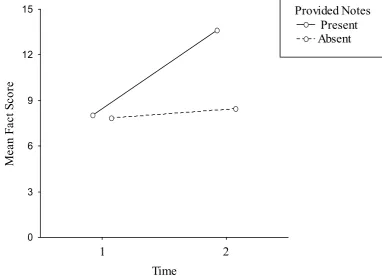
Figure 1. Mean fact scores for provided notes present and absent at
Times 1 and 2. 54
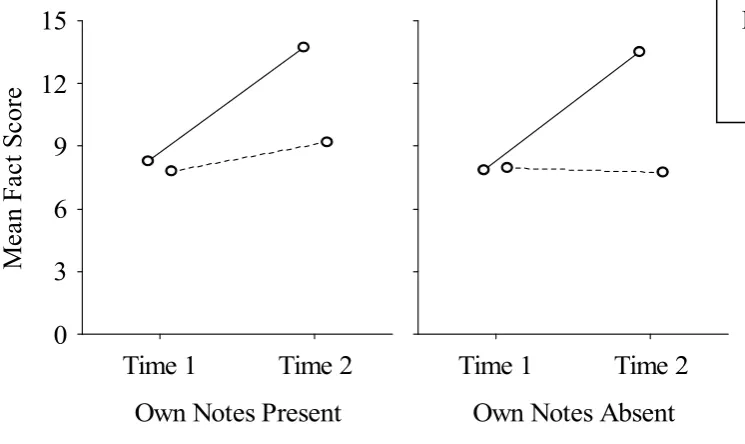
Figure 2. Mean fact score for own notes present and absent at
Times 1 and 2. 55
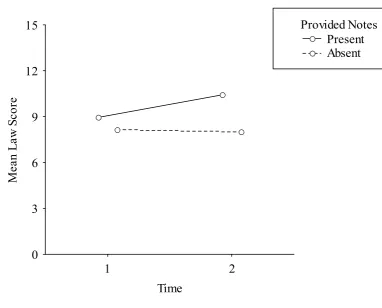
Figure 3. Mean law scores for provided notes present and absent
at Times 1 and 2. 56
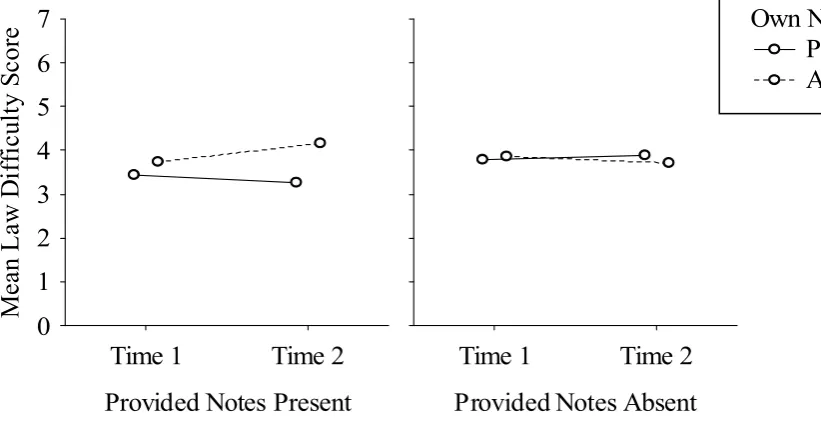
Figure 4. Mean law difficulty ratings for provided notes present
and absent at Times 1 and 2. 58
Figure 5. Mean pages of notes taken by participants who expected and did not expect to deliberate in each of the deliberation
conditions. 130
Figure 6. Mean evidence scores for participants with own and provided
List of Tables
Table 1 Mean Scenario Scores for Participants in the Provided
"otes Present and Absent Conditions 57
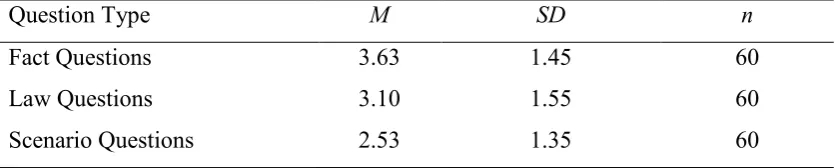
Table 2 Mean Utility Ratings of Own "otes for Each Question Type 60
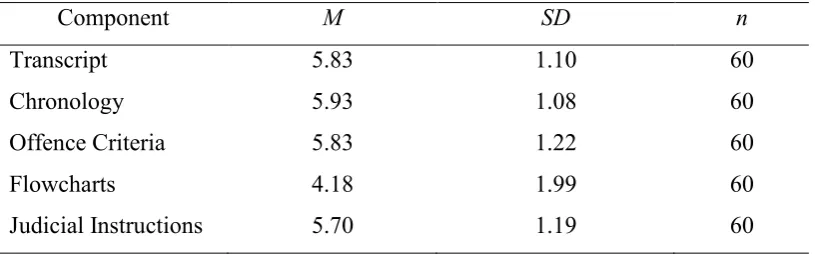
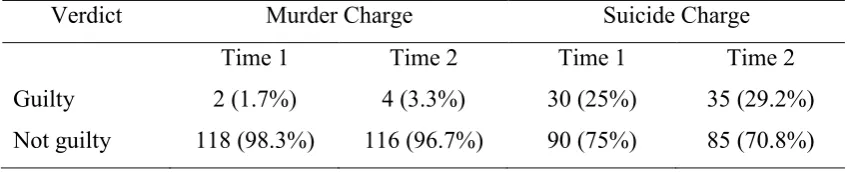
Table 3 Mean Utility Ratings for Each Provided "otes Component 61 Table 4 Murder and Suicide Verdict Frequencies and Percentages at Times 1 and 2 63 Table 5 Mean Fact Scores for Each "ote Type Condition 89
Table 6 Mean Law Scores for Each "ote Type Condition 90
Table 7 Mean Scenario Scores for Each "ote Type Condition 90
Table 8 Mean Utility Ratings of Own "otes for Each Question Type 92
Table 9 Mean Utility Ratings for Other Materials Components (Irrespective of "ote Type Condition) 93
Table 10 Frequencies and Percentages of Murder and Suicide Verdicts for Each "ote Type Condition 94
Table 11 Mean Fact Scores for Each Deliberation Condition 126
Table 12 Mean Law Scores for Each Deliberation Condition 127
Table 13 Mean Verdict Confidence Ratings for Each Deliberation Condition 128
Table 14 Mean Law Difficulty Ratings for Each Deliberation Condition 129
Table 15 Mean Utility Ratings for Each Provided "otes Component 131
Table 16 Frequencies and Percentages of Murder and Suicide Charge Verdicts 134
Table 17 Mean Fact Score for Each Complexity Condition 164
Table 18 Mean Evidence Scores for Each Complexity Condition 166
Table 19 Mean Ratings of Verdict Difficulty for Each Complexity Condition 169
List of Appendices
Appendix A ... 232
Experiment 1 Information and Consent Forms ... 232
Experiment 2 Information and Consent Forms ... 237
Experiment 3 Information and Consent Forms ... 242
Experiment 4 Information and Consent Forms ... 247
Appendix B ... 252
Experiment 1 Mock Criminal Trial DVD ... 252
Appendix C ... 253
Experiment 1 Questionnaire ... 253
Appendix D ... 264
Experiment 1 Provided Notes ... 264
Appendix E ... 288
Experiment 1 Participant Instructions ... 288
Appendix F ... 293
Experiment 2 Participant Instructions ... 293
Appendix G ... 296
Part C of Participant Questionnaire for Deliberating Participants ... 296
Part C of Participant Questionnaire for Non-Deliberating Participants ... 298
Appendix H ... 300
Experiment 2 Deliberation Instructions ... 300
Appendix I ... 301
Experiment 2 Rumination Worksheet ... 301
Overhead Reminder of Witness Names ... 304
Appendix J ... 305
Experiment 3 Participant Instructions ... 305
Appendix K ... 318
Experiment 3 Scenario Analyses ... 318
Appendix L ... 322
Experiment 4 Length Complexity Trial DVD ... 322
Appendix M ... 323
Experiment 4 Evidence Complexity Trial DVD ... 323
Appendix N ... 324
Additional Sections of Experiment 4 Questionnaire ... 325
Appendix P ... 330
Experiment 4 Trial Transcripts ... 330
Appendix Q ... 374
Experiment 4 Legal Complexity Provided Notes ... 374
Appendix R ... 401
Experiment 4 Participant Instructions ... 401
Appendix S ... 403
Experiment 1
1.1 Criticisms of the Jury
The jury is an institution often subjected to intense critical scrutiny (Flango, 1980). Issues highlighted by this scrutiny have included jury composition, lack of representativeness, criteria for jury eligibility, and cost of jury trials. The average length of criminal trials has increased by a factor of 10 in the past 50 years (one to two days versus two weeks or more) and the content has also become increasingly more complex (Dunford, 2004). As such, the focus of this criticism has recently shifted to the abilities of jurors to comprehend complex and lengthy trials, and render appropriate verdicts. The resultant lack of confidence in the jury has seen its scope and powers become more limited over recent years, as evidenced by the steady drop in reliance on jury trials in Australia (Chesterman, 1999). Although reliable
statistical trends are difficult to establish, recent indications suggest that as few as 1% of all Australian criminal trials are tried before a jury (Ogloff, Clough,
Goodman-Delahunty & Young, 2006). The limited experience or cognitive abilities of jurors could be blamed for this apparent lack of confidence, but some
responsibility may also lie with a system that does not provide jurors with the requisite tools to enhance their decisions (ForsterLee, Kent & Horowitz, 2005). It seems that juror competence could be enhanced by providing jurors with aids that allow them to cope with the increasing demands of modern trials (Edmond &
be fully explored before the functionality of the jury is discounted altogether (Lempert, 1993; O’Connor, 1997).
1.2 Juror Competence
In order for a trial to be fair, jurors must apply correct legal standards to the facts and evidence of the case, and reach a verdict (Lieberman & Sales, 1997). However, if jurors misunderstand the correct legal standards, justice itself is challenged (Elwork, Alfini, & Sales, 1982). For this reason, the level of juror comprehension is of serious concern, and a large body of literature has amassed dealing with this subject matter (Daftary-Kapur, Dumas, & Penrod, 2010). These studies consistently demonstrate that juror comprehension is poor, with even the most positive results suggesting that jurors understand little over 70% of the legal instructions given to them (e.g., Saxton, 1998; Strawn & Buchanan, 1976).
Strawn and Buchanan (1976) tested juror comprehension of pattern instructions employed in Florida using a 25 minute videotape of instructions for a burglary case. Instructed jurors performed better than uninstructed mock-jurors on a 40-item questionnaire, but still only scored an average of 70%, suggesting that a considerable portion of the instructions was misunderstood.
A similar result emerged in Ellsworth’s (1989) study of deliberating mock-juries. After viewing a 2 hour 30 minute videotaped murder trial simulation, 216 mock-jurors were randomly allocated into 12-person juries, in which they deliberated for 1 hour. These deliberations were videotaped and transcribed, and jurors
confirms that jurors have difficulty understanding and applying judicial instructions, even when they work hard at understanding them. Furthermore, it indicates that the process of deliberation has little impact on increasing comprehension and clarifying misunderstanding; an additional 72 non-deliberating jurors produced comprehension scores which were not significantly different from those of deliberating jurors.
An even more unsettling result was produced by Reifman, Gusick, and Ellsworth (1992), in a study which moved away from the jury simulation method, and instead questioned past jurors. Questionnaires were returned by 224 individuals who had recently been summoned for jury duty. These questionnaires contained questions about trial procedure and substantive criminal law issues; since the questionnaires were identical, every participant answered some questions about topics they had been instructed on, and some for which they had not received any information. Results revealed that although instructions improved performance on understanding of procedural issues, they had little effect on comprehension of the relevant substantive law to be applied, with instructed jurors overall answering fewer than half of the questions correctly. Admittedly, the fact that this study tested juror comprehension at the end of a jury duty term rather than immediately following a trial could mean that it was instruction recall, not understanding, which was being assessed. This casts some doubt over the especially low level of comprehension recorded in this study. Nonetheless, the results indeed confirm that jurors, whether in real or mock trials, do experience considerable difficulty comprehending and applying judicial instructions.
answer questions on that issue than their uninstructed peers, absolute levels of comprehension among instructed jurors were poor. For example, only 30.9% of instructed jurors correctly answered a question regarding the definition of beyond reasonable doubt. This study, then, simply added further weight to the growing research indicating jurors’ poor comprehension of judicial instructions.
One of the most comprehensive field studies on juror comprehension,
conducted by Saxton (1998), was undertaken in Wyoming, where data was collected from 253 jurors across 49 trials (17 civil and 32 criminal). Questionnaires
specifically tailored to test jurors’ understanding of the particular substantive issues which arose in each trial were designed, and distributed immediately after
deliberations were completed. To obtain control data, 146 abbreviated
questionnaires were also sent to individuals who had never served on a jury. Jurors reported spending a mean of 31% of their deliberation time studying the instructions, and 97% of jurors thought they had understood the instructions pretty well (61%) or completely (36%). Despite this, jurors correctly answered only 70% of questionnaire items. Research in the area of juror comprehension has revealed that it is not
In summary, the convergent results of this body of research clearly and consistently demonstrate that despite spending a considerable proportion of their time trying to understand judicial instructions, and often feeling that they have successfully achieved this, jurors’ overall comprehension rates are far from perfect. Jurors continue to misunderstand key aspects of instructions in ways that could affect trial outcomes.
1.3 Improving Juror Comprehension
The issue of juror comprehension then, remains paramount. In order to function in its intended manner, the jury must first understand the law (Lieberman & Sales, 1997), but this body of literature makes it abundantly clear that levels of juror comprehension are in serious need of improvement. This has led to the suggestion and testing of a wide variety of reforms and possible jury-aids (Munsterman, Hannaford, & Whitehead, 1997). These contemporary jury innovations focus on a number of factors including reducing jurors’ cognitive difficulties, improving the judge’s communication with the jury, increasing juror participation in the trial, and rewriting the legislation and instructions themselves. Each of these factors has been subjected to differing levels of empirical testing (Ellsworth & Reifman, 2000).
Rewriting juror instructions.
One factor that has been the focus of considerable reform and intervention is the clarity of judicial instructions (Elwork & Sales, 1985; Wiener, Pritchard, & Weston, 1995). In response to criticisms regarding the incomprehensibility of many judicial instructions, the legal profession worked on the development and
2010). They have provided many advantages to the legal system, reducing time demands on judges and lawyers, reducing the number of appeals, and eliminating any concerns over the effect of judicial bias on the outcome of a trial. Pattern instructions were also designed to increase juror comprehension, but it is less clear whether this has actually been achieved (Lieberman & Sales, 1997).
Concerned that pattern instructions had failed to increase juror
comprehension, Elwork et al. (1982) attempted to rewrite such instructions to make them more readily understandable. A simple and a complex set of instructions were chosen, and juror comprehension was tested via personal interview following videotaped presentation of the instructions. The instructions were then rewritten in an attempt to further improve them, and the cycle was repeated with new
participants. A total of 314 participants were involved. Significant improvements were achieved after each rewriting for the complex instructions. Jurors answered a mean of 51% of questions correctly with the original instructions, but after the initial rewrite, this score increased to 66%. The second rewrite saw the mean number of correct answers increase to 80%. Similarly for the simple instructions, original scores of 65% increased to 80% correct after only one rewrite. Such results clearly demonstrate that by rewriting judicial instructions, juror comprehension of such instructions can be significantly increased.
comprehension levels of subjects receiving no instructions, general plus pattern instructions, and those who received the revised pattern and general instructions. Although the benefits provided by the revised instructions did not reach statistical significance on the comprehension measures, jurors receiving the revised instructions were significantly better at applying the instructions than those who received pattern instructions or no instructions. Such data again suggests that revision of pattern instructions by applying psycholinguistic principles can lead to improved juror performance.
Severance and Loftus further extended their earlier work in a study involving 306 ex- and current jurors, who received either pattern instructions or revised
instructions, and were randomly allocated to deliberate or not deliberate (Severance, Greene, & Loftus, 1984). Jurors who heard the revised instructions tended to make fewer errors and apply the instructions more accurately than jurors who heard the pattern instructions, but this difference was not always statistically significant.
So, taken together, this body of research indicates that one possible way of improving juror comprehension is to devise legally accurate judicial instructions, but ones that are simplified and made more meaningful using basic psycholinguistic principles. However, this approach alone may not be sufficient. Although there is no definition of what constitutes an acceptable level of juror comprehension (Elwork et al., 1982; Lieberman & Sales, 1997), the fact that considerable rewriting of
Preinstructing jurors.
One of the critical variables affecting juror reasoning processes is the timing of the presentation of legal information (Cruse & Browne, 1987). The idea of presenting jurors with instructions prior to the commencement of the trial has been investigated as another potential reform which may increase juror comprehension. Legal scholars have reasoned that presenting jurors with some instruction at the beginning of the trial may allow them to organise and understand the evidence more effectively, since they will have some form of context or legal framework in which to interpret it (Smith, 1991). This would potentially lead to better recall of the evidence and instructions, less confusion and greater juror satisfaction. There are also,
however, a number of possible drawbacks: judges may be unable to decide upon appropriate instructions before evidence presentation has begun, jurors may arrive at their final conclusion before the end of the trial, and, perhaps most importantly, preinstruction may create a proplaintiff bias, by encouraging jurors to look for confirmatory evidence (ForsterLee & Horowitz, 1997; Hastie, 1983).
differentially worthy plaintiffs when preinstructed. Preinstructed jurors also recalled more probative (i.e., trial relevant) information than postinstructed jurors.
It seems, however, that the possibility of preinstruction creating a proplaintiff bias is still a noteworthy concern. ForsterLee and Horowitz (1997) found that preinstructed notetakers recorded items and evidence concerning the plaintiffs
significantly more than postinstructed notetakers. There was no other evidence that a proplaintiff bias had been engaged, but a more definitive test of this possibility would need to manipulate presentation order, which this experiment did not.
Bourgeois, Horowitz, ForsterLee, and Grahe (1995) also demonstrated a proplaintiff bias in jurors who were presented with a case which clearly favoured the defence. Jurors were preinstructed on the relevant law, and then watched a video re-enactment of a complex (i.e., highly technical language) or a less complex (i.e., simpler language) trial. Preinstruction led to prodefence verdicts only in the less complex trial, and engaged a proplaintiff bias in the more complex trial, suggesting that preinstruction will facilitate systematic processing of evidence in a less complex trial only. Thus, the possible use of preinstruction as a jury reform remains
questionable.
Permitting juror notetaking.
Other approaches to improving juror comprehension have focused on
processing, interpreting, inferring, rehearsing, condensing and paraphrasing of content (Aiken, Thomas & Shennum, 1975). The tasks faced by a juror are highly cognitive in nature, requiring the use of memory, judgement, evaluation and
decision-making skills, so theories regarding cognitive processes are highly relevant to this particular area of research (Devenport, Studebaker & Penrod, 1999).
Information processing theories.
When notetaking has been explored as a cognitive aid in more general settings (e.g., notetaking during lectures), experiments have returned mixed results. Some studies have found that taking notes while information is presented is
facilitative (DiVesta & Gray, 1972), others have failed to find this effect (Berliner, 1969), and others still have suggested that notetaking may in fact hinder memory for information (Peters, 1972).
Researchers have referred to several theories when attempting to explain these inconsistent results. Facilitative effects have been attributed to the encoding hypothesis, which states that notetaking should be beneficial as a result of the transformation of material into a subjectively more meaningful form (DiVesta & Gray, 1972). Of course, these kinds of transformational and elaborative processes are not necessarily guaranteed, and some researchers argue that notetaking is actually more comparable to verbatim transcription than meaningful and elaborative
the external storage hypothesis suggests that review and study of the notes assists the encoding process. Finally, other researchers have highlighted the role of
interference, pointing out that notetaking individuals are simultaneously attempting to listen to, process and record information and such attempted dual processing will more likely hinder rather than facilitate encoding (Peters, 1972). Each of these theories acknowledges that whether notetaking is a beneficial or unhelpful process for enhancing learning and memory is influenced by a number of other variables, including the rate and density of information delivery (Aiken et al., 1975) and individual variance in short-term memory capacity (DiVesta & Gray, 1973).
Considering these various cognitive processing theories, Carter and Van Matre (1975) investigated retention of lecture material by 172 college students, manipulating the presence of notetaking and of a pretest review of the notes. Participants who were able to both take and review notes achieved significantly higher scores on retention and efficiency measures than notetaking participants who were not given the opportunity for review. These results led the researchers to
conclude that performance is enhanced by “note having” as opposed to “note taking,” thus supporting the external storage hypothesis. The researchers proposed that review of notes provided an additional learning trial that allowed retrieval efforts to focus more effectively on relevant material. They also suggested that the cues provided by the notes may facilitate reconstruction of parts of the lecture that were not initially recorded, leading to improved recall of additional information.
lecture), a spaced notes condition (where notes were taken in short breaks at the end of each lecture segment) or a no notes condition. Lecture presentation rate and density of information were also manipulated. On recall measures, spaced
notetaking was superior to both parallel notetaking and no notes. Notably, there was no significant difference in recall between participants in the parallel and no notes conditions, suggesting that the interference caused by the dual task requirements (simultaneous processing and recording of the information) removed any advantage that may have been conferred by allowing notetaking. Other studies have found parallel notetaking to even be inferior to a no notes control group (e.g., Peters, 1972).
Studies of juror notetaking.
Although lectures and trials differ along a number of different dimensions (e.g., length, content, format and presentation of information), the investigation of notetaking in more general contexts encouraged jury researchers to explore this area. They rationalised that reducing unnecessary constraints on jurors’ cognitive abilities by allowing them to take notes throughout the trial, as opposed to retaining the content of lengthy and complex trials in their memories, should enhance both juror fact-finding and decision-making (Heuer & Penrod, 1988). Other postulated advantages associated with notetaking included the potential to enhance juror attention, and the opportunity notes provide for jurors to refresh their memory of important case facts (ForsterLee et al., 2005).
Initial field experiments produced somewhat counterintuitive results, finding no evidence to support the hypothesis that notetaking would serve as a useful
less well than non-notetakers on tests of individual judicial instruction recall. Hastie concluded that jurors do not take notes well, do not use them effectively, and do not find them useful, leading him to suggest that juror notetaking should be discouraged. However, jurors were not allowed to consult their notes during the recall test, so Hastie’s finding may simply be a reflection of jurors’ need to rely more on their notes as a memory aid and less on storing the information in memory. No significant differences in juror confidence were reported as a function of notetaking.
Similarly, Heuer and Penrod’s (1988) field study found no support for the hypothesis that juror notes would serve as a useful memory aid. In addition, juror ratings of difficulty understanding the law and verdict confidence were not affected by the notetaking manipulation. Heuer and Penrod (1988) did, however,
acknowledge that the absence of significant results may be due to the fact that jurors completed the comprehension measure approximately two days after the trial had been completed, and without the benefit of consulting their notes. Also, Heuer and Penrod (1988) were forced to rely on very general measures of recall, as they were unable to individually tailor a specific comprehension measure for each case. The very nature of field studies also implies that notetaking jurors decided different cases to non-notetaking jurors, making direct comparison difficult (ForsterLee et al., 2005).
substantially higher on recall measures than non-notetakers, reported feeling more involved in the trial, being more attentive, and found it easier to keep pace with trial proceedings. Thus, not only did notetaking improve recall, it also enhanced
subjective trial experience.
Further, ForsterLee, Horowitz and Bourgeois (1994) played a 2 hour audiotaped re-enactment of a prototypical toxic torts case to 192 mock-jurors who were randomly allocated to one of three notetaking conditions; notetaking jurors able to access their notes while making their decision; notetaking jurors not able to access their notes during decision-making; and non-notetaking jurors. Both notetaking groups were better able to distinguish between differentially worthy plaintiffs, and awarded appropriate compensation. Non-notetaking jurors did not differentiate between plaintiffs as successfully, and recalled significantly less probative information than those in both notetaking conditions. There were no significant differences in recall between the two notetaking conditions, suggesting that benefits of notetaking occur as a result of the process itself, consistent with the encoding hypothesis (DiVesta & Gray, 1972).
In a similar experiment, Horowitz and ForsterLee (2001) examined the potential benefits of notetaking, compared to allowing trial transcript access. A 1 hour videotaped version of a trial re-enactment was shown to 195 mock-jurors, who then deliberated for at least 30 minutes in groups of five to six members. Confirming their earlier findings, notetaking juries, regardless of whether or not they also had transcript access, were able to appropriately distinguish between the four
actually reviewed and relied upon the material therein is unclear, providing a possible explanation for the lack of transcript influence (Robbennolt, Groscup, & Penrod, 2006). Horowitz and ForsterLee infer from their data that note-taking led to more systematic processing and efficient discussion of the evidence, again consistent with the encoding hypothesis.
ForsterLee & Horowitz (1997) examined the possible synergistic effects of note-taking and preinstruction. Mock-jurors were randomly assigned to receive judicial instruction before evidence presentation or after, and were either permitted to take notes, or not permitted to take notes. They then watched a 1 hour 10 minute video re-enactment of a toxic torts case. Based on a recall measure, and the compensation awards, ForsterLee and Horowitz (1997) demonstrated that
preinstructed jurors assigned more appropriate awards to the plaintiffs, and recalled more relevant evidence than postinstructed jurors. Note-taking further enhanced the benefits provided by preinstruction.
Drawbacks to notetaking.
So, the research on the efficacy of notetaking is mixed; some jurors report satisfaction, field studies have failed to find measurable advantages, while more controlled laboratory-based experiments suggest that notetaking may enhance juror satisfaction and possibly improve performance (ForsterLee & Horowitz, 1997). Despite the positive findings of controlled studies, researchers and legal
acknowledged that “active” cognitive aids, like notetaking, consume cognitive resources, possibly depleting attentional resources and interfering with the
comprehension of difficult material (Horowitz & ForsterLee, 2001; ForsterLee et al., 2005), and studies concerning divided attention have demonstrated that when people simultaneously complete two cognitively demanding tasks, performance suffers and heuristic processing is activated (Gilbert & Hixon, 1991).
Other concerns pertain to the possible unfair advantage that a notetaker may have over non-notetaking jurors; notetaking jurors may dominate deliberations, and use their notes as a tool to exert undue influence over jurors who choose not to take notes. There is no guarantee that notetakers will be accurate transcribers (ForsterLee et al., 2005), and if jurors are unskilled at notetaking, have trouble keeping pace with the trial, have poor concentration spans, or include notes on inadmissible testimony, their notes are likely to be problematic (Flango, 1980). There is no assurance that jurors will note more probative information than nonprobative, and there is some concern that jurors may overemphasise evidence that was noted, at the expense of that which was not (ForsterLee et al., 1994). Notetaking may produce a bias in favour of the party presenting its evidence first; jurors’ initial enthusiasm and
Evidence for drawbacks of notetaking.
The results of Flango’s (1980) field trial provided some initial evidence regarding these possible drawbacks. The study involved one civil and one criminal jury who were allowed to take notes, and one civil and one criminal jury who were not. Notetakers reported finding the case less difficult to decide than those who did not take notes. A matter of concern, though, was that notetakers reported placing less reliance on other jurors than non-notetakers, and four out of six jurors on the criminal jury reported being persuaded to change their initial verdicts as a result of arguments other jurors made from their notes. Also, all jurors on the criminal trial reported that the person who kept the best set of notes was the most effective person in the deliberation. These results are based only on juror self-report, and the sample size is small (" = 24), so these tentative findings can be considered suggestive only, but they do add some weight to the possible problem of notetaking juror dominance. The study produced mixed results on the issue of unbalanced notes; half of the jurors reported taking more notes in the first half of the trial, but the remainder reported taking notes evenly throughout. Both Hastie’s (1983) and Flango’s studies failed to report a significant difference in deliberation time between notetaking and non-notetaking juries.
Heuer and Penrod (1988) briefly investigated each of the potential drawbacks of notetaking in a more comprehensive field trial involving 34 civil and 33 criminal trials, in which the presence or absence of notetaking was randomly assigned to each participating jury. As described above, they found that notetaking jurors did not perform better than non-notetakers on recall measures and were not any more
indicated that all jurors felt that notetakers should not, and did not, have more influence than non-notetakers. According to juror self-report, their notes tended to consist more of valuable records as opposed to doodles, and 87% of jurors reported that no part of the trial was too fast for them to keep pace with. One judge reviewed the notes taken in eight of his trials to provide some non-self-report insight into the accuracy of jurors’ notes, and concluded that approximately one third of all jurors took surprisingly detailed notes and demonstrated a good grasp on the issues of the case. Jurors did not report taking more pages of notes at any particular time during the trial, the notetaking manipulation failed to produce any reliable differences in deliberation time, and jurors did not report any differences in degree of agreement as a function of notetaking. Overall, Heuer and Penrod (1988) described notetaking as an “innocuous” procedure, concluding that while there was no clear support for most of the anticipated benefits of notetaking, they could find no evidence to suggest that notetaking resulted in any of the purported harmful consequences.
1.4 Justification for Investigation of Alternative Jury-Aids
as a result, there is no consistent approach to its implementation in the courtroom (Ogloff et al., 2006). Ideally, for a jury-aid to perform its intended function, there should be sufficient confidence in its efficacy for it to be employed consistently, as a standard approach to assist jurors in performing their role. Currently, due to the ongoing disagreement about the possible advantages and disadvantages of allowing jurors to take notes (Ogloff & Rose, 2005), juror notetaking is not held in this regard, suggesting that the search for alternative jury-aids needs to continue.
Content of juror notes.
Another compelling reason for the need to investigate alternatives to juror notetaking stems from the likely content of jurors’ notes. The role of the jury is to decide matters of fact, not law. However, in order to arrive at a decision, jurors must not only master the facts of the case, they must also have a sound comprehension of the relevant law and be able to employ the judicial instructions (Ogloff et al., 2006; Smith, 1991). There appear to be no published studies that have conducted an in-depth analysis of the content of jurors’ notes, though several studies have conducted an in-depth analysis of the content of jury deliberations. One general pattern
observed across these studies is that the largest proportion of statements tends to centre on testimony and facts of the case, while a smaller proportion of discussion relates to legal issues (Tanford & Penrod, 1986). For example, Ellsworth (1989) transcribed 18 videotaped 12-person jury deliberations, and classified the general nature of coded statements. This revealed that jurors spent more time discussing the facts of the case than anything else (47% of coded units referred to facts of the case), whereas jurors spent less than half the same amount of time (21%) trying to
understand the law. In addition, this study also acknowledged that jurors’
and issues, and this has been recognised as a general characterisation of jurors’ cognitive performance during trials (Ellsworth, 1989). Considering the
disproportionate amount of time jurors in Ellsworth’s study spent trying to
understand the law, as compared to the facts, it seems likely that an analysis of juror note content would similarly reveal that the focus of a large proportion of jurors’ notes is on the facts of the case rather than the law. The likely focus on facts may be attributed to their concrete nature, as opposed to the abstract set of decision criteria comprising the legal directions (Smith, 1991).
Schema theory.
Jurors’ tendency to focus on the facts rather than the law is also consistent with the premise of schema theory. This approach to memory and learning
postulates that our knowledge of the world consists of a set of schemata: structured representations or frameworks which are based on past experience, and centre around a specific area, helping to organise our knowledge and assumptions about that
particular topic (Baddeley, 1976; Bartlett, 1932). When we attempt to learn something new, we tend to base our learning around pre-existing schemata, so information consistent with such a pre-existing schema is easier to assimilate than information for which there is no pre-existing schema (Bartlett, 1932).
and thus more likely to be recorded than information regarding, for example, the standard of proof, the elements of an offence and the rules of evidence. Smith’s (1991) study provided some evidence for this proposition that jurors have a pre-existing schema for interpreting and organising factual information. While preinstruction about the law allowed jurors to apply the law to the presented trial more successfully, there were no differences between preinstructed, postinstructed, and pre- and postinstructed jurors on a measure of fact recall. Smith (1991) proposed that jurors’ processing of the facts and the law might be independent of each other, and that the absence of significant differences on the fact recall measure might be due to the pre-existence of appropriate schema for making sense of such information.
The likely emphasis on factual information at the expense of information about the law contained within jurors’ own notes would make it difficult for jurors to perform their role effectively. Some researchers have openly acknowledged that a reform like notetaking cannot eliminate or even profoundly reduce the significant differences in the levels of comprehension demonstrated by laypeople as opposed to legal professionals (Penrod & Heuer, 1997). Thus, in addition to reducing overall cognitive load, alternative jury-aids should also aim to compensate for the lack of balance likely in jurors’ own notes.
Processing style.
Jury-aids should also aim to encourage more systematic processing of information. It is generally accepted that when information is too complex or technical, decision-makers may rely on less elaborative methods and depend instead on heuristics; such concerns are highly relevant within the context of juror
cognitive effort and engage in systematic processing of the message being conveyed, using a central route (Petty & Cacioppo, 1986). In particular, provision of written, court-prepared jury-aids provides jurors with the opportunity to review material, and repeated exposure to complex information has been shown to enhance systematic processing and decrease the use of heuristics (Cacioppo & Petty, 1979; Petty & Cacioppo, 1986). Also, review of written material enhances effortful processing because it allows close attention to difficult passages which are not as easily retrievable using other presentation modes (Chaiken & Eagly, 1976).
When a juror engages in central route processing, they process the
information presented, generate thoughts about the quality of the evidence, and store and elaborate on these thoughts. This elaboration process involves accessing
relevant experiences and associations in memory, evaluating evidence based on its quality and the relevant associations, and making judgements based on the
constructed cognitive networks (Petty & Cacioppo, 1986). Elaboration is critical to central route processing, and it seems likely that the resulting coherent construction of the evidence would improve juror comprehension (Horowitz & ForsterLee, 2001).
1.5 Alternatives to Juror ,otetaking
and legal information jurors need to be aware of, there is a developing body of research into such written alternatives to notetaking. The suggestion that such procedural innovations which reduce the cognitive demands placed on jurors during a trial also facilitate jurors’ ability to follow limiting instructions, ignore inadmissible testimony and be less susceptible to extra-evidentiary factors (MacCoun, 1987) provides an additional rationale for investigating these jury-aids (Lieberman & Arndt, 2000). It has also been argued that since the courts usually give jurors very little guidance (aside from the instructions read from the bench), the provision of court-prepared jury-aids may also have indirect benefits, potentially increasing juror motivation by demonstrating a certain degree of commitment and investment in the jury’s task (ForsterLee et al., 2005).
This idea of providing jurors with some form of notes has been acknowledged, and some written alternatives to jurors’ own notes have been subjected to empirical investigation.
Transcript access.
systematic processing of the evidence should have resulted in a decision for the defendant). For jurors exposed to the high technicality version of the trial, transcript access led jurors to favour the defendant, while jurors in the no access condition decided for the plaintiff. Transcript access did not affect verdicts for jurors exposed to the low technicality trial. An additional recognition test, however, returned no significant results. Bourgeois et al. (1993) suggested that jurors may have used the transcript as an opportunity to check specific parts of witness testimony or judicial instructions that needed clarification rather than reviewing the entire case, thus explaining how transcript access could influence verdicts without increasing overall recognition scores. It was concluded that transcript access increased the
comprehensibility of the trial, allowing jurors to engage in more systematic processing of the evidence and reach more appropriate verdicts. Horowitz and ForsterLee (2001) explained the discrepancy between their results and those of Bourgeois et al. (1993) as a function of the differences in the mock trials used, the latter being more complex, longer and not turning on the interpretation of a single point.
Providing a written copy of judicial instructions.
written or visual aids (Forston, 1970; Tinsley, 2001). Considering this, and the fact that information is often processed more effectively when it is provided in a written form (Elwork et al., 1982) and that the repeated exposure that a written copy allows facilitates understanding and recall (Heuer & Penrod, 1989), some jury researchers have investigated the potential benefits of supplementing the oral presentation with a written copy of the instructions (Lieberman & Sales, 1997).
These studies have produced mixed results. Although written instructions have been demonstrated to lead to more efficient and higher quality deliberations (Forston, 1975) and greater juror satisfaction (Heuer & Penrod, 1989), both Heuer and Penrod (1989), and Reifman et al. (1992) failed to find any evidence that they increased jurors’ understanding of the law. In both of these studies, jurors receiving written instructions did not differ from jurors receiving oral instructions in the number of correct responses given, although jurors in Heuer and Penrod’s (1989) study responded positively when asked about the helpfulness of the written instructions. Jurors in these studies, however, completed comprehension
questionnaires some time after completing jury service. Kramer and Koenig (1990) and Prager, Deckelbaum, and Cutler (1989), on the other hand, tested jurors
immediately following the trial, and found evidence suggesting that written instructions did improve comprehension, such that jurors receiving written
Sand and Reiss (1985) investigated attitudes of judges and counsel to this reform, in a field investigation involving 12 trials. The procedure was rated as being very helpful in six cases, and somewhat helpful in the remaining six cases. Those who supported the procedure noted the fact that written instructions saved rereading of the charge as the main advantage provided. The legal professionals who
considered the procedure to be unhelpful cited concerns that it encouraged the jury to interpret the law on their own rather than asking for clarification, and that the
procedure entailed too much effort for the benefits it provided.
Bottom line summaries.
suggests that the provision of bottom line summaries of complex testimony fosters more competent juror decision-making.
ForsterLee et al. (2005) investigated the efficacy of bottom line summaries as compared to jurors’ own notes in a study involving 279 mock-jurors who witnessed a 90 minute toxic tort trial. Presentation of the summary statements enhanced the ability of jurors to discriminate appropriately between the claims of the plaintiffs as opposed to jurors who did not receive the summaries. A synergistic effect of the two jury-aids on the quality of decision-making was also observed, such that notetaking juries provided with summaries assigned appropriate monetary damages compared to juries who were not given the opportunity to take notes. Juries who did not have the benefit of either jury-aid were only able to distinguish the most severely injured plaintiff. On the recall measure, juries presented with summary statements recalled more trial relevant information than those who did not receive the statements, and notetaking juries recalled more case-related information than non-notetaking juries, though no interaction was observed. Presence of either jury-aid led to significantly higher ratings of satisfaction with trial proceedings, whereas the absence of jury-aids resulted in significantly lower satisfaction scores. The authors concluded that the summary statements simplified the evidentiary content and emphasised important details from expert testimony, thus facilitating the encoding process.
Special verdict forms.
eliminate certain logical and probabilistic instructions by breaking the jurors’ task down into a series of subdecisions (Schum & Martin, 1982). Wiggins and Breckler (1990) tested the efficacy of special verdict forms, requiring jurors to answer questions regarding burden of proof, and to determine verdicts in novel scenarios. While jurors receiving special verdict forms performed significantly better than jurors in the general verdict condition on the burden of proof questions, there was no difference between the groups on the verdict measure.
Heuer and Penrod (1994) conducted an extensive field investigation
involving 160 trials, in which they manipulated juror notetaking and question asking, as a function of different dimensions of trial complexity. Although not manipulated, the extent to which other trial procedures were employed was also examined, and included in this was the use of special verdict forms. Of the nonexperimental measures, the use of special verdict forms proved to be the most consistently beneficial, with jurors reporting feeling better informed, more satisfied, more confident in the accuracy of their verdict and more confident that their verdict properly reflected the judge’s instructions. It is, however, difficult to draw meaningful assumptions from jurors’ estimations of their understanding and performance; the utility of special verdict forms, then, remains unclear.
Flowcharts.
has therefore been suggested that the pictorial representation provided by a
flowchart, decision tree or diagram may complement verbal judicial instructions by holding jurors’ attention more effectively, and underscoring the underlying structure of the unfamiliar material which may better highlight the relationships between legal concepts (Graesser, 1981a, 1981b; Otto, Penrod, & Dexter, 1994). In addition, cognitive load theory (Sweller, 1988; Sweller & Chandler, 1994; Sweller, Chandler, Tierner, & Cooper, 1990) suggests that presenting material using both visual and verbal modalities may help to overcome barriers to comprehension caused by working memory limitations. The other benefit expected from a flowchart-type procedure is that the requirement that jurors actually answer specific questions assists in focusing their attention on the law (Dattu, 1998; Ellsworth & Reifman, 2000). Although there are no formal guidelines surrounding their use, flowcharts prepared by the judge are sometimes used in Australian and New Zealand courts, at the judge’s discretion (Ogloff et al., 2006; Young, 2003. For further information on rates of implementation, see below).
The possibility of utilising a flowchart to assist comprehension of judicial instructions has been explored by researchers, again producing mixed results. While Ogloff (1998) found that the use of a flowchart did not improve comprehension levels, and that jurors tended not to use the chart during deliberations, an
investigation conducted by the New Zealand Law Commission (1999) revealed that all jurors on two trials where the judge prepared a summary of his instructions and a flowchart with a sequential list of questions rated this as an ‘extremely useful’ aid to decision-making.
word case summary which described a murder case in which the defendant was claiming self-defence, followed by the relevant judicial instructions. The
experimenters manipulated the provision of either a written summary of the judicial instructions or a flowchart, and whether this was available to participants for review only (no access while completing the dependent measures), or for reference as they completed the recall tasks. Results revealed that participants who received the summary for review and those who received the flowchart for reference,
outperformed all other conditions when preparing a brief description of the elements of self-defence. Interestingly, participants who only reviewed the flowchart
performed no better than participants who received no comprehension aids. Semmler & Brewer elected to further test participants’ understanding of the principles of self-defence, by requiring them to apply their knowledge to novel scenarios. The apparent ability of participants in the review summary and refer flowchart conditions to more accurately describe the elements of self-defence did not seem to translate to this particular measure, as participants across all groups
performed relatively poorly. The dependent variables utilised represent an area of great strength in this particular study; they constitute comprehensive, varied and realistic methods of testing participant comprehension. However, considering that the overall question being explored by this study has strong links with elements of general information processing, it would be useful to conduct a similar experiment utilising a more realistic representation of a trial; participants attempting to make sense of instructions about self-defence would typically have been exposed to much more information than would be contained in a 700 word trial summary.
complement verbal judicial instructions, perhaps combating the typically “dry and abstract presentation of the law” (Ellsworth, 1989, p. 224) and subsequently improving juror comprehension.
The research in this area was extended by Brewer et al.’s (2004) study which investigated the potential efficacy of audio-visual presentation of judicial
instructions, utilising a combination of verbal information, computer animations and a flowchart. While law students performed better than novices on measures of self-defence comprehension when instructions were presented using audio only, novices’ comprehension scores matched those of law students when instructions were
administered using the audio-visual format. Although the study cannot provide a definite explanation for the performance improvements, cognitive load theory (Sweller & Chandler, 1994), as explained above, suggests that the use of both visual and verbal presentation modes exploits separate memory systems, thus allowing more information to be processed at once (Tindall-Ford, Chandler, & Sweller, 1997).
1.6 Alternatives to ,otetaking – Further Exploration of Provided ,otes
Despite the enthusiasm for jury-aids like those described above expressed by some authorities, these procedures are actually quite controversial and not
universally endorsed. Arguments for and against such aids have been advanced by courts, legal professionals, legal scholars and social scientists alike, and the debate over these procedures is far from new (Robbennolt et al., 2006). Based on this observation alone, the need for ongoing research and clarification is clear, but several other factors justify the need for the current investigation.
Multiple reforms.
Considering the wide range of written materials which may serve as
to empirical examination, and in many cases no clear outcome has been achieved. In addition, almost all of the research so far has considered each of these possible jury reforms in isolation (Ellsworth & Reifman, 2000). Such an approach allows elucidation of the benefits afforded by specific reforms, but provides little information on the possible effects and benefits occurring as a result of the
implementation of multiple reforms, and precludes insight into potential interactions between procedures (Penrod & Heuer, 1997). It seems logical that if the courts were prepared to provide jurors with materials to improve their comprehension, they would be happy to employ more than one type of jury-aid, and it seems likely that it will take a combination of remedies to maximise juror comprehension (Ogloff & Rose, 2005). It has been suggested that rather than merely tinkering with minor changes to the status-quo, a more comprehensive approach is required (Ogloff & Rose, 2005). Exploring the effects of several jury-aids working together is therefore an important avenue of study (Ellsworth & Reifman, 2000), especially considering that synergistic effects have previously been recorded (ForsterLee & Horowitz, 2003). Since the aim of jury-aids is to reduce the cognitive demands placed on jurors it would be important to ensure, for example, that the simultaneous introduction of multiple provided materials did not overwhelm jurors and compromise their
Recall versus understanding.
When the large body of literature investigating jury-aids is taken together, it seems fair to say that the dependent variables used throughout most of these studies test recall. The efficacy of the particular jury-aid is usually at least partly evaluated based on whether it improves participants’ memory of the relevant material, whether that is assessed via recognition, recall, or transfer measures, and a strong connection between improved memory and improved comprehension is assumed. While this emphasis on memory is understandable, when we consider that the value of increased recall depends on the value of what is being recalled, this emphasis on facilitating recall seems problematic (Diamond & Levi, 1996) It is also possible for a juror to correctly remember an instruction yet be completely mistaken about its meaning (Ogloff & Rose, 2005).
provided materials to improve their comprehension and understanding, rather than their recall.
Judicial discretion.
In response to the needs of jurors, Australian judges have implemented many of the above-mentioned jury-aids in an attempt to facilitate more effective
communication of critical information to juries, but these jury-aids have been used in an ad-hoc, case by case basis (Ogloff et al., 2006). Jury acts and procedures in each state and territory vary somewhat (Goodman-Delahunty & Tait, 2006), and because of the increased variability in practices from one court to another, it is difficult to determine which procedures are routine in different jurisdictions. Ogloff et al. (2006) attempted to clarify this issue by surveying Australian and New Zealand judges. From the 185 completed surveys returned across Australia and New
Zealand, Ogloff et al. (2006) established that of the respondents, the vast majority of judges allow jurors to take notes during the trial (84% from New Zealand, 71% from Australia). The practice of allowing transcript access however, is much less
prevalent in Australia. Eighty eight percent of New Zealand judges provide jurors with a copy of the trial transcript, and their qualitative survey responses suggest that complete transcript access is becoming almost common practice. On the other hand, despite the existence of both common law and legislative authority to support the practice, only 40% of the Australian judges sampled allow transcript access. Only a small minority of Australian judges argued in favour of transcript access, indicating that it is absurd that the main fact finders in the trial do not have an accurate record of the evidence.
in New Zealand for Crown counsel to prepare booklets for the jury containing a copy of the indictment, the list of witnesses, and plain English definitions of the charges. Sixty seven percent of New Zealand judges, compared to 13% of Australian judges, allow prosecutors to provide the jury with written information about the elements of the offences, and 65%, compared to 19% of Australian judges, allow a copy of the chronology of events. The majority of New Zealand respondents indicated that they provide the jury with written assistance about their summing up, but the responses from Australian judges varied dramatically by state. Fewer than half the judges in Queensland, Victoria and Western Australia provide such assistance, whereas approximately three quarters of judges in New South Wales (NSW), South Australia and Tasmania indicated that they do.
Despite the empirical support for the use of flowcharts or decision trees to assist jurors’ comprehension of the law, the responses of the surveyed judges indicate that it is rare for such aids to be implemented, though New Zealand judges are more likely to incorporate such aids in their case summaries (Goodman-Delahunty & Tait, 2006). A different survey, conducted by Young (2004) revealed that as many as two thirds of surveyed New Zealand judges routinely provide flowcharts, decision trees or lists of questions to guide jurors in applying legal directions to the evidence.
There are also anecdotal accounts of more comprehensive approaches being taken by Australian judges. Eames (2003) described the typical approach of Justice Bernard Teague of the Supreme Court of Australia, who provides jurors with a printed overview of the case including a summary of the charge(s), a list of witnesses, and a document addressing the methodology they might employ in conducting their deliberations and determining the verdicts for each charge.
presiding judges, and a subsequent need for formal and objective evaluation of the types of written materials that are most useful to jurors. It is hoped that the
additional empirical evidence regarding the efficacy of these particular jury-aids provided by the current study will help to encourage more systematic implementation between jurisdictions. These judicial surveys also reveal that judges are increasingly willing to provide jurors with tools to guide their decision-making
(Goodman-Delahunty & Tait, 2006); in this climate of readiness, implementation of these reforms is perhaps more likely than ever, so clarification of the most efficacious jury-aids is a timely matter.
1.7 Current Study
Bearing in mind the so far promising assessments of alternatives to jurors’ own notes in the literature, and the aforementioned justifications, continued investigation of the possibility of providing jurors with notes prepared by court officials and legal professionals seems a valuable research pursuit, particularly with more focus on the concept of combining several jury-aids rather than testing their efficacy in isolation. As indicated previously, not only do jurors need to understand the facts of the case to arrive at their decision, they must also have a sound
they are satisfied (Heuer & Penrod, 1989; Rose & Ogloff, 2001). Research in the area of cognitive psychology has amply demonstrated the benefits of both multiple exposure and written materials for improving comprehension (Craik & Lockhart, 1972; Nelson, 1977), and by making information more accessible and
understandable, court-prepared jury-aids should also encourage jurors to engage in systematic, central route processing (Petty & Cacioppo, 1986).
The aim of this initial study, then, was to investigate a primarily applied question by focusing on the idea of providing jurors with a collection of court-prepared materials, and subjecting these to empirical examination to compare the benefits provided by such materials to those afforded by basic juror notetaking, and exploring possible synergistic effects of the two. The court-prepared materials consisted of some which have previously been exposed to empirical analysis, including a trial transcript, written copy of judicial instructions and verdict flowcharts. Two other materials - forms detailing the offence criteria and a
chronology of events - were added. These materials are described in more detail in the Method section, but in brief, the forms detailing the offence criteria were
designed as a different way of presenting the legal requirements contained within the written judicial instructions, by listing the particular elements needed to be proven beyond a reasonable doubt in order to find the accused guilty of that particular charge. They were more generic, less detailed, and formatted using a well-spaced bullet-point style. It was hoped that, like the verdict flowcharts, the more
diagrammatic formatting and simplified nature of the information would aid in the comprehension of the legal concepts conveyed in the judicial instructions (Semmler & Brewer, 2002).