Abstract: Conventional classroom teaching and learning of programming tends to be didactic, which is usually tends to be monotonous and less interesting. In learning programming – a subject that is deemed extremely challenging to master – such a situation can have a serious repercussion in that students can easily become unmotivated and demoralized to learn. As such, students need to use relevant learning tools that can stimulate and motivate them to learn such a course. Of late, many researchers have started using online game-based learning (GBL) tools to improvestudents’ motivation and performance. Invariably, most of the studies mainly focused on GBL tools to move avatars. As such, this study focuses on programming as the activities in such a game. In this study, the researchers used the prototyping model to develop an online GBL application called Prog-GBL by integrating the elements of mastery learning approach and ARCS model to help motivate students in learning programming. The evaluation of the Prog-GBL was carried out through a survey involving 30 students from one public university in Perak, Malaysia. The research findings showed that the use of such an online learning tool helped improve students’ motivation in learning programming. More revealingly, the four elements of ARCS, namely attention, relevance, confidence, and satisfaction were highly rated by the students, suggesting that the use of Prog-GBL can motivate students to learn the subject matter.
Index Terms: Online Game-based learning application, learning programming, mastery learning, elements motivation ARCS.
I. INTRODUCTION
In this information-driven era, people rely on a dazzling array of technologies to carry out their activities. Such reliance on technological tools entails software developers to create applications that are both affordable and efficient. As such, the need to have competent, highly skilled programmers has grown more imperative, thus requiring universities to provide quality teaching of programming courses. In this regard, ACM and IEEE state that computer science is becoming one of the core disciplines of the 21st- century university education,
Revised Manuscript Received on September2, 2019.
Nor Hasbiah Ubaidullah, Department of Computing, Faculty of Art,
Computing and Creative Industry, Universiti Pendidikan Sultan Idris, 35900 Tg. Malim Perak, Malaysia. (corresponding author).
Jamilah Hamid, Department of Computing, Faculty of Art, Computing and Creative Industry, Universiti Pendidikan Sultan Idris, 35900 Tg. Malim Perak, Malaysia
Zulkifley Mohamed, Department of Mathematics, Faculty of Science and Mathematics, Universiti Pendidikan Sultan Idris, 35900 Tg. Malim Perak, Malaysia.
that is, something that any educated individual must possess some level of proficiency and understanding [1]. However, Sebastian and Gautatas [2] argue that many students are not keen to pursue computer science, let alone to learn programming. The rates of student attrition among students majoring in computer science have been climbing increasingly. To make matters worse, the rates of failure among high school students taking the programming subject are quite high [2].
As one of the core courses in computing program, quality teaching and learning of programming helps ensure the success of computer science education. Invariably, novice students, especially first-year programming students, find the learning of basic programming and problem-solving extremely challenging [2]. Admittedly, computer science students aspiring to become software developers must master the subject matter to help them develop strong programming skills. In this regard, learning how to encode a program can strengthen their problem-solving skill and logical thinking, which are important in any types of profession. According to Papert [3], learning programming can help improve students’ mental development and logical thinking, which is the main aims of computer science program. However, the learning of most of the courses of such a program has not been fully effective in developing students with a creative mind [4], which may be partly attributed to the pedagogical methods used by teachers or lecturers that tends to be didactic” [5]. As generally accepted, learning programming is deemed extremely challenging, especially among novice students. Hence, several novel teaching approaches have been proposed and used to help motivate students to learn programming. For example, Sebastian and Gautatas [2] and Matharani, Christian, and Ponder-Sutton [6] assert that one of the popular learning methods that can be used to motivate students in learning is game-based learning. In fact, games have been used in learning several decades ago. Its use in teaching has been instrumental in developing students’ creative minds and enhancing their motivation in learning. According to Baytak and Land [7], students view games favorably that can help create a stimulating learning environment in which they can gain mastery of a skill. In this respect, GBL involves using games for educational purposes, not solely for entertainment
per se.
Integrating The Arcs Motivational Elements Into
An On-Line Game-Based Learning Application:
Does The Application Enhance Students’
Motivation In Learning Programming?
Several researchers have highlighted the educational characteristics of games. For example, can help attract students’ attention [8], [9] and motivate them [10]. Also, games can provide rich experiences to students [11] and the feedback of their performances [12] and support student-centered learning. Also, Ketelhut and Schifter [14] made the following arguments about the benefits of games as follows: (i) Explorations and engagements in games can help motivate students to determine their levels of knowledge that have acquired, (ii) Prompt feedback allow students to determine their progress and to respond accordingly, (iii) Through games, students can share knowledge with one another, (iv) Using games, students can partake in informal learning without becoming bored, and (iv) Games can help facilitate discussion among students.
Clearly, such characteristics of games as highlighted by Ketelhut and Schifter [14] can be integrated into the teaching and learning process of programming. Such integration is important because programming skill is not a singular skill but a multi-faceted skill encompassing several skills, including cognitive skill, which they have to develop and use at higher thinking levels simultaneously. To date, several researchers have successfully used GBL as a strategy to teach programming [7], [15], [16], [17], [18], [2], [6] that helped improve students’ performances and enhance their motivation. These findings are hardly surprising given that “the primary goal of this approach is to improve learners’ motivation [19]”. Clearly, by integrating it in an appropriate learning approach, GBL can be an effective strategy to help students achieve their learning objectives. For example, to learn basic programming concepts, the mastery-learning method can be used to help students learn and master a game at a low level before proceeding to more complex levels. Such progression is consistent with the assertion of Block, Airasian, Bloom, and Carroll [20], who argue that mastery-learning method is a learning method that helps students master the learning outcomes of a learning unit before proceeding to learn the following units. In other words, students will be allowed to learn more difficult topics after they have mastered the contents of a basic topic.
According to Israel [21], GBL is the integration of an actual game in the learning process to help students learn and acquire specific skills or learning objectives. He also asserts that such a strategy provides students the opportunity to be immersed in the learning process such that they will feel happy in carrying out all the learning activities. Hence, the use of the mastery-learning approach can be used to ensure students become confident in mastering the learning outcomes of a certain topic before they start to learn more difficult topics. It is, therefore, clear that mastery learning is ideally suited to teaching basic programming skills. Only if students can demonstrate the competency of basic skills, they will be admitted to the second phase of programming learning, the project phase, which emphasizes a higher level of design skills [22].
In addition to using an appropriate learning strategy and approach, motivation plays a vital role in learning programming. According to Dresel and Hall [23], motivation is essentially a process of initiation, control, updating, and
evaluation of behaviors. In essence, motivation can be divided into two main types, namely intrinsic and extrinsic motivation. Intrinsic motivation refers to the internal urge and interest of an individual to carry out a task or an activity because he or she believes that such an undertaking can bring in satisfaction and happiness, enabling him or her to attain a positive experience. Also, such motivation helps an individual to remain focused on performing a task to completion without any external rewards, such as a gift [23], [24], [25], [26]. As such, intrinsic motivation will result in a more profound impact compared to that of the extrinsic motivation [27]. Malone and Lepper [24] argue that computer games can function an intrinsic motivation to inspire students to learn. As such, they proposed a guideline for the design of educational computer games that must have four elements, namely challenges, fantasy, control, and curiosity.
On the other hand, extrinsic motivation refers to the value acquired from the outcomes of an activity. An individual may not be interested to carry out a given task but he or she will do it anyway because of the reward given on the completion of such a task [23], [25], [26]. Hence, motivational elements were taken into account in the development of Prog-GBL to enhance students’ motivation. One of the popular motivation models is the ARCS (Attention, Relevance, Confidence, and Satisfaction) model developed by Keller [28], which focuses on creating, simulating, and maintaining the use of a motivation strategy in teaching. In principle, this model emphasizes the strategy and design of motivation that instructional designers or instructors can embed into the designs of their teaching materials. In other words, the ARCS model is a systematic model that can help them to design motivating instructions. It is, therefore, not surprising to note that such a model has been widely used in many fields, notably in education. [29], [30], [31], [32]. Of late, its use in the teaching of programming based on several settings has intensified, such as computer-based instruction [33], textual material [34], instructor-led formal lecture [35], and online assessment [32].
Fernandez [35] states that “the ARCS model focuses on the conditions necessary to be sustained to keep the learner interested in a topic”. According to Mills [36] and Hyland [32], such a model can explain how students can strive to learn more diligently when they have been motivated to do so. In essence, the ARCS model consists of four basic concepts [37] as follows:
(i) Attention (A) Refers to whether students’ curiosity has been stimulated or not, and whether such curiosity can be sustained over a given duration.
(ii) Relevance (R) Refers to students’ perception of their teacher’s teaching that can satisfy their personal needs or help them achieve their personal goals.
(iii) Confidence (C) Refers to students’ perception of success through personal control and efforts.
In addition to motivational elements, Uysal [38] proposed that teaching and learning of computer programming should include problem-solving strategy. Also, Mason [39] suggested that the lessons of computer programming must employ systematic instructional design activities that provide sufficient opportunities for practice and feedback. Despite the current teaching practice of computer programming that mainly focuses on personal communication, Mason [39] also emphasized the use of technology to make lectures and lessons more interactive. Over recent years, conventional learning is being gradually replaced or supplemented by online learning to help motivate students in learning computer programming. The latter can serve as a platform to enable students to collaborate, share materials or contents, and highlight and discuss important issues, effectively making them motivated and eager to learn. Initially, simple online applications were used by students to learn programming, but now, GBL applications have emerged that enable students to engage in games through which they learn programming [40]. The use of such applications can not only help students learn programming but also make them active and enthusiastic in learning. Also, teachers and lecturers can upload learning materials onto the online systems with ease, enabling students to use them anywhere, anytime.
In the context of this study, programming students enrolling in the Bachelor’s degree programs in Software Engineering (SE) and Information Technology (IT) were those who had completed their previous studies at the higher certificate level (STPM and STAM) and Matric and Diploma level. The former were found to have low motivation compared to those of the latter. Such low motivation could be attributed to several factors as follows:
(i) The reliance of lecturers on using the conventional method to teach programming which students find uninteresting, (ii) The lack of learning materials, especially in the native language, which students can use anywhere, anytime, (iii) The lack of time that precludes any meaningful interactions between students and lecturers, and (iv) The complexity of the programming course that makes learning extremely challenging. The fourth factor warrants greater attention as Damla Tolpalli and Cagiltay [41] argue that “…many problems in learning programming originate from the complexity of concepts, such as variables, loops, arrays, functions, and syntax in programming languages. These complexities may become barriers to learning programming and diminish student motivation”. Moreover, such students lacked basic skills in problem-solving and programming. Coupled with the above factors, they probably developed low motivation in learning programming, which ultimately led to poor learning performance.
Given such a predicament, the use of appropriate learning approaches and strategies needs to be given priority to help such students. In this regard, the integration of GBL conducted on the online platform in the teaching and learning of programming can help improve students’ motivation, learning performance, and creativity [7], [15], [16], [17], [18], [2], [6]. To date, several popular online game applications have been used, such as CodeCombat and CodeSpells, with some degree of success. Invariably, such applications for programming mainly involve moving avatars. To help
mitigate such a drawback, the Prog-GBL application was developed as a programming learning tool by adhering to the principles of mastery learning and motivational elements of the ARCS model. Essentially, the game embedded in this application entails students to perform an activity in which they are required to answer a few questions before proceeding to other higher-level activities.
Again such a backdrop, this study was carried out with the main aim of developing and evaluating an online Game-Based Learning (GBL) application called Prog-GBL to help motivate students in learning a selected programming topic. The development of such an application was based on the mastery-learning approach and motivational elements of the ARCS model
II. RESEARCHMETHOD
Research methodology involves the use of a systematic method to help address research questions [42]. This study involved the design, development, and evaluation of an online GBL application called Prog-GBL. The development of such an application was based on the prototyping model, and its evaluation used a quantitative approach based on a survey technique to collect relevant data. The researchers used the purposive sampling method to recruit programming students from the higher certificate background as the respondents of the survey. The details of the development and evaluation of Prog-GBL are as follows:
A. Development
The development of Prog-GBL involved four main phases of the prototyping model as follows:
Analysis Phase
Four elements were analyzed in this phase, namely instructional problem, learner characteristic, task analysis, and instructional objective.
(i) Instructional problem
In this phase, the learning problem identified was fresh students’ poor motivation in learning programming. Such low motivation was attributed to the following factors:
The lack of learning materials, especially in the native language, which students can use anywhere, anytime.
The lack of time that precludes any meaningful interactions between students and lecturers. The complexity of the programming course that
makes learning extremely challenging
Likewise, the desired learning outcomes were also identified in this phase. Students would attain appropriate learning outcomes as they played the game based on a certain level of difficulty. The learning outcomes that students had to achieve are as follows:
Fresh students who learn programming will be able to learn the concept of selection easily.
(ii) Learner characteristics
The designers of the application had to know the learner characteristics of users, notably the target users, their age range, and their existing knowledge. Knowing these characteristics was important to ensure the application would be able to be used with ease and easily learned.
The following were the learner characteristics:
Target users: Students enrolled in the C++ programming course.
Age range: Between 18 and 25 years.
(iii) Task analysis
Task analysis is a process to determine the required contents of the application. The following are the factors involved in such an analysis:
The contents of the application – embedding the concept of control structure in the application, such as questions or quizzes that students have to solve from a low level to a higher level of difficulty.
Required hardware: PC and Keyboard
(iv) Instructional objective
Understanding the main aims of teaching plays an important role in planning systematic teaching. At this stage, the learning outcomes and objectives were identified and written explicitly as follows:
To analyze students’ level of understanding of basic programming through an online game.
To develop a game that could help enhance new students’ motivation in learning basic programming.
To evaluate students’ level of skills in using selection structure and identify syntax errors.
Design Phase
The design phase involved three elements as follows:
(i) Content sequencing
Content sequencing is an instructional design to help achieve meaningful, effective learning by systematically structuring the learning contents. In the Prog-GBL application, the learning contents were arranged according to the learning sequence of the topic of the control structure of the C++ structured programming that students have to follow. Each student would be required to answer all the questions or quizzes of the topic to complete a particular level of the game.
(ii) Instructional strategy
In this phase, the appropriate learning strategy and media to teach students the learning contents were determined. The game in the Prog-GBL uses the mastery-learning strategy that ensures students would master a particular learning topic before proceeding to another topic of a higher level of difficulty. As such, students would have to solve all the quizzes by mastering a particular level of the game before attempting the next level of the game.
(iii) Message Design
In this phase, the message design connects students with the learning content. As such, the Prog-GBL application contains questions that are relevant to the C++ structured programming course to ensure students could learn the selected topic efficaciously.
Development and Implementation
Input from the analysis phase and the design phase was used to develop the Prog-GBL application, which had to be systematically carried out to meet all the user requirements. Several development tools were used in the development of the application, namelyAdobe Illustration, Adobe Flash, and Google. Meanwhile, the hardware used were laptop, keyboard, mouse, pen drive, hard disc, and mobile phone.
B. Evaluation
The evaluation of the application was based on the evaluation of the prototyping model by having two meetings with students. The first meeting was held to brief the students the purpose of this study and to provide them online access that they could use at any time. In the second meeting, a survey was carried out to determine students’ attitude toward the use of such an application, which they had used it for more than three weeks to cover the selected topic of learning. Such a survey helped reveal their level of motivation in using the application to learn programming. The details of the research instrument, respondents, and procedure of the survey are as follows:
. (i) Motivation Instrument
The research instrument in this study was based on IMMS [43] consisting of four sub-scales of the motivational construct, namely attention, relevance, confidence, and satisfaction. Several minor modifications were made to this instrument to cater to the needs of the context of the study. The modified instrument was validated by several language experts and quantitative research experts.
(ii) Respondents
The respondents of the survey consisted of 30 Bachelor’s education undergraduates majoring in Information Technology, who were recruited from a public university, 14 of whom had Malaysian Higher Islamic Education Certificate (STAM) qualification, and the remaining 16 had Malaysian Higher Education Certificate (STPM) qualification.
(iii) Procedure
The procedure carried out involved three phases as follows: Phase 1: To obtain written approval from the Head of Department and lecturers of the programming course of the selected public university.
Phase 2: First meeting in which the students were given a briefing of the purpose of this study and access to the online Prog-GBL application.
Phase 3: Second meeting in which the students were administered with a survey questionnaire regarding perceived motivation in learning programming with such a tool.
III. RESULTSANDDISCUSSION
As discussed earlier, the evaluation of the Prog-GBL application in terms of motivation was based on the motivation instrument adapted from IMMS [43]. Table 1 shows the four sub-scales (dimensions) of motivation, namely attention, relevance, confidence, and satisfaction. Table 2 summarizes the scores of such sub-scales in terms of
percentage. Table 3
the sub-scales or dimensions of motivation.
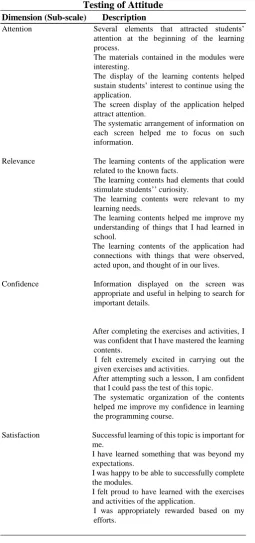
Table 1. Dimensions (Sub-scales) based on IMMS: Testing of Attitude
Dimension (Sub-scale) Description
Attention Several elements that attracted students’ attention at the beginning of the learning process.
The materials contained in the modules were interesting.
The display of the learning contents helped sustain students’ interest to continue using the application.
The screen display of the application helped attract attention.
The systematic arrangement of information on each screen helped me to focus on such information.
Relevance The learning contents of the application were related to the known facts.
The learning contents had elements that could stimulate students’’ curiosity.
The learning contents were relevant to my learning needs.
The learning contents helped me improve my understanding of things that I had learned in school.
The learning contents of the application had connections with things that were observed, acted upon, and thought of in our lives.
Confidence Information displayed on the screen was appropriate and useful in helping to search for important details.
After completing the exercises and activities, I was confident that I have mastered the learning contents.
I felt extremely excited in carrying out the given exercises and activities.
After attempting such a lesson, I am confident that I could pass the test of this topic. The systematic organization of the contents helped me improve my confidence in learning the programming course.
Satisfaction Successful learning of this topic is important for me.
I have learned something that was beyond my expectations.
I was happy to be able to successfully complete the modules.
I felt proud to have learned with the exercises and activities of the application.
I was appropriately rewarded based on my efforts.
The details of the findings of each dimension of motivation are as follows:
Attention
The findings showed the attention dimension was highly rated (based on a score of ‘5’) and moderately rated (based on a score of ‘4’) by 40% and 60% of the respondents, respectively, signifying that the style of presentations of the modules of the Prog-GBL application was able to attract their attention and motivate them to learn programming. The mean score of this dimension was 4.4, which was high, suggesting that students would likely to continue using the application.
Table 2. The percentage score of the four dimensions of motivation
Dimension Score (in percentage) 5 4 3 2 1
Extremely Moderately Satisfactory Unsatisfactory Extremely Satisfactory Satisfactory Unsatisfactory
% % % % %
Attention 40 60 - - -
Relevance 80 20 - - -
Confidence 20 80 - - -
Satisfaction 60 40 - - -
Table 3. The mean score of the four dimensions of motivation
Dimension Mean score
Attention 4.4
Relevance 4.8 Confidence 4.2 Satisfaction 4.6
As discussed, attention is one of the important elements of the ARCS model that helps motivate students to continue learning a course. As such, developing and nurturing students’ curiosity and using materials that could incite their interest have to be emphasized in the development of a teaching and learning tool. Such an emphasis is in line with Mitropoulou and Triantafyllidis’s assertion [44] that “researchers have shown that maintaining students’ interest is one of the factors that should be seriously taken into consideration during the design of educational software”. They also caution that student-computer interactions could raise students’ attention and interest to a high level that could only be realized if students are given sufficient opportunities to make their choices, answer questions or carry out a task that has been set by the programmer, and to receive prompt feedback of their actions.
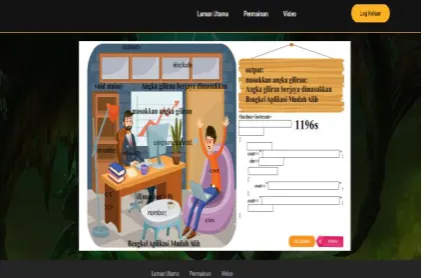
[image:5.595.45.301.87.632.2] [image:5.595.304.550.205.279.2]Fig. 1. A screenshot showing the element of attention infused in the Prog-GBL application
The attractive introduction screen of the application helped encourage the students to continue exploring the Prog-GBL application. As observed, the use of GBL based on relevant theoretical principles was able to influence students to continue learning the basics of programming with the Prog-GBL application. Overall, the findings suggest that GBL with the use of online learning applications, such as Prog-GBL, can help motivate students to learn programming with greater commitment and interest.
(ii) Relevance
For the relevance dimension, the findings showed that 80% of the respondents agreed that the relevance of the application was extremely high. The remaining 20% stated that the relevance of the application was high. Furthermore, the mean score of this dimension was 4.8. Such promising findings indicated that the learning contents of the application were relevant to the students’ learning needs. In particular, the learning contents of the application were deemed meaningful as they were related to students’ experiences.
Relevance, which is the second element of the ARCS model, refers to students’ perception of satisfactory learning to help them achieve their aims. Students will be motivated to learn if materials or contents delivered to them are relevant to their needs. To infuse such an element in the Prog-GBL application, several themes related to problem-solving were employed. Graphics were created for such themes relating to common problems faced by students. Also, graphics were used to represent the texts of questions. Figure 2 shows a screenshot of the element of relevance infused in the Prog-GBL application.
Fig. 2. A screenshot showing the element of relevance infused in the Prog-GBL application
The programming questions that students had to attempt were based on related themes, as the calculation of student grades. Engaging in the activities of the game and graphical animations of the Prog-GBL application, they became eagerly excited and, hence, motivated to learn. Such a positive development was hardly surprising given that the activities that they partook in were not only relevant but also interesting. These findings concur with the Popovich and Wongwiwatthanannukit’s [48] assertion that a teaching strategy that matches students’ profile can stimulate their interest in learning a particular topic. Given their experience and interest, students became excited to learn the selected topic of C++ structured programming through the game of the novel application. The use of the element of relevance was in line with one of the characteristics of games that challenge students to think critically in solving a given task [45], [46], [10], [47].
(iii) Confidence
The findings showed the confidence dimension was highly rated and moderately rated by 20% and 80% of the respondents, respectively. The mean score of this dimension was also high at 4.2. Collectively, such findings indicated that the use of the Prog-GBL application helped improve their confidence in learning programming by making a connection between the learning contents and their experiences. In this respect, according to Megat Aman Zahiri and Norliah Saman [49], making such a connection is important to ensure students can become confident as they can relate learning contents to their everyday lives. With high confidence, students were encouraged to keep using the application to carry out the game exercises and activities, which helped stimulate their feeling of curiosity. Eventually, they gained the confidence to complete such exercises and activities.
[image:6.595.47.261.611.750.2]Fig. 3. A screenshot of the level of quizzes of the game application.
Also, at the beginning of the game, the students were informed by the application of the aims and learning objectives to ensure they would be prepared and gain the confidence to engage in the learning activities. Such awareness of the learning objectives is in line with Deubel’s [50] assertion that “informing students of goals and objectives, and giving them frequent and early opportunities for success, can build confidence within the multimedia program”.
Moreover, the element of confidence infused in the application mirrors the control characteristic of a game, which according to Malone [45] can help empower students to learn with a high level of control.
(iv) Satisfaction
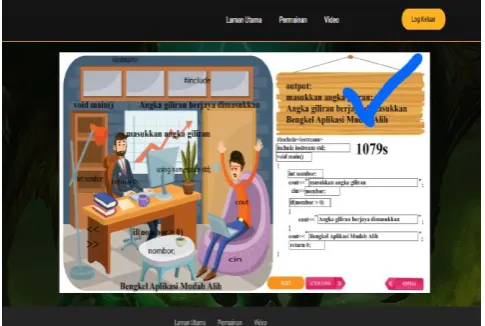
For the satisfaction dimension, the findings showed that 60% of the respondents indicated that they were highly satisfied in using the Prog-GBL application to learn the selected programming topic. The remaining 40% stated that they were moderately satisfied with using such a learning application. Furthermore, the mean score of this dimension was 4.6. Overall, such promising findings indicated that the students had high regard for the novel learning application such that they became extremely satisfied with its use. Such high satisfaction could be attributed to their gaming experiences in using such a novel learning application that was not only engaging but entertaining as well. As a result, they too became motivated to learn the selected programming topic. The feelings of satisfaction were evident by their positive responses. Figure 4 shows an example of positive reinforcement or a reward given to students.
Fig. 4. An example of the reinforcement rewards
As revealed, the elements of that influenced the satisfaction of the students were the positive reinforcements and prompt feedback of the Prog-GBL application. As such, they felt happy and satisfied when given compliments and positive rewards after making successful attempts at answering the game questions. In this regard, such rewards were significantly influential in making students satisfied, which concurs with the contention of Abramson [51] that “rewards for a correct response, such as praise, awards ribbons, or animation, should be appropriate for the activity”. Interestingly, the application had a clock that informed students of the time required to solve the quizzes. Naturally, they felt satisfied when they took less time to solve a module for the second time compared to that of the first time of taking the same module.
IV.CONCLUSION
The research findings suggest that the Prog–GBL application, which was developed based on the Prototyping model infused with the motivational elements and guided by the mastery-learning approach, can be used to help motivate students to learn programming. Its utility in enhancing students’ motivation to learn such a course is made evident by the positive findings of the four ARCS motivational elements or dimensions, namely attention, relevance, confidence, and satisfaction, which attained extremely high scores. Such promising findings clearly signify that all four motivational elements have been effectively infused in the application. Collectively, such elements of the learning application can help students to learn programming with more confidence and greater motivation as they engage in the game of quizzes to test their level of understanding of the subject matter. Overall, the research findings are consistent with previous findings showing that GBL can motivate students to learn programming. More revealingly, in this study, students’ motivation was highly apparent based on the analysis of their attitudes toward the use of such a novel learning application, which was attributed to the motivational elements of the ARCS model infused in such a learning application. Obviously, more studies are entailed to examine the full impact of the use of the Prog-GBL on students’ motivation in learning programming by focusing on more programming topics and using a greater number of participants.
ACKNOWLEDGMENT
The authors wish to acknowledge the support of the Research Management and Innovation Center, Universiti Pendidikan Sultan Idris, Malaysia for the research grant (Code - 2018-0184-107-01) that helped fund this study.
REFERENCES
1. ACM/IEEE, (2013), Computer Society, Computer Science Curricula 2013. Curriculum Guideline for Under-graduate Degree Programs in
Computer Science, New York: ACM Press,
Available:.https://www.acm.org/education/CS2013-final-report.pdf. 2. C.,Sébastien, B., Gytautas & D., Valentina, “Learning Programming
through Games and Contests: Overview, Characterisation and Discussion”. Olympiads in
[image:7.595.46.289.613.776.2]3. S., Papert, The children's machine: Rethinking school in the age of the computer, New York: Basic Books Inc., 1993.
4. M. Resnick, “All I really need to know (about creative thinking) I learned (by studying how children learn) in kindergarten”, In the Proceedings of the 6th ACM SIGCHI conference on Creativity & cognition, 2007.
5. B.-S. Jong, C.-H. Lai, Y.-T. Hsia, & C.-Y. Lu, “Using Game-Based Cooperative Learning to Improve Learning Motivation:
A Study of Online Game Use in an Operating Systems Course”, IEEE Transactions on Education, vol. 56, no. 2, 2013.
6. A., Mathrani, S., Christian, & A., Ponder-Sutton, “PlayIT: Game Based Learning Approach for Teaching Programming Concepts”, Educational Technology & Society, vol 19, no 2, pp. 5–17, 2016.
7. A.,Baytak, & S., M., Land, “A case study of educational game design by kids and for kids”, Procedia -Social and Behavioral Sciences, vol. 2, no 2, pp. 5242–5246. doi:10.1016/j.sbspro.2010.03.853, 2010. 8. M., D., Dickey, “Engaging by design: how engagement strategies in
popular computer and video games can inform instructional design”, Educational Technology Research and Development, vol 53, no. 2, pp. 67–83. doi: 10.1145/142040.142052, 2005.
9. I., Ahmad, & N., Abdullasim, Game design: Issues, trend and challenges, Durian Tunggal: Penerbit Universiti Teknikal Melaka, 2019.
10. M., Prensky, “Digital game-based learning”, Computers in Entertainment (CIE), vol 1, no. 1, pp. 21, 2003.
11. D., A., Arena, D., .L., Schwartz, “Experience and explanation: using videogames to prepare students for formal instruction in statistics”, Journal of Science Education and Technology, pp. 1–11, 2013.
12. V., J., Shute, “Stealth assessment in computer-based games to support learning”, In: S. Tobias and D. Fletcher (Eds.).Computer Games and Instruction. Information Age: Charlotte N. C., pp. 503–524, 2011. 13. J., P., Gee, “Good video games and good learning”, Phi Kappa Phi,
2005.
14. D., J., Ketelhut & C., C., Schifter, “Teachers and game-based learning: Improving understanding of how to increase efficacy of adoption”, Comput. Educ., vol. 56, no. 2, pp. 539–5462011. 15. A., Baytak & S., M., Land, “An investigation of the artifacts and process
of constructing computers games about environmental science in a fifth grade classroom”, Educational Technology Research and Development, vol. 59, no. 6, pp. 765–782, doi:10.1007/s11423-010-9184, 2011.
16. K., Cagin, K., Mary, B., Liz & M., Lachlan, “A serious game for developing computational thinking ad learning introductory computer programming”, Procedia- Social and Behavioral Sciences vol. 47, pp. 1991-1999, 2012.
17. G.-J., Hwang, C.-M., Hung, & N.-S. Chen, “Improving learning achievements, motivations and problem-solving skills through a peer assessment-based game development approach”, Educational
Technology Research and Development,
doi:10.1007/s11423-013-9320-7, 2013.
18. L., Tham & R., Tham, “Blended learning: Is game-based learning an effective instructional strategy to engage students in higher education in Singapore? A Pilot study”, Journal of the Research Center for Educational Technology, vol. 8, no. 1, pp: 2-10, 2012.
19. N. Vos, H. Van DerMeijden, & E. Denessen, “Effects of constructingversus playing an educational game on student motivation and deep learning strategy use,” Comput. Educ., vol. 56, no. 1, pp. 127–137, 2011.
20. J. H. Block, P. W. Airasian, B. S. Bloom, & J. B. Carroll, Mastery Learning: theory and practice, New York: Holt, Rinehart and Winston,
1971.
21. I., Michele, “Game-Based Learning and Gamification: Guidance From Experts”, White Paper, 2017.
22. J., Mehdi, “Combining Mastery Learning with Project-Based Learning in a First Programming Course: An Experience Report”, In Proceeding of the 37th International Conference on Software Engineering, vol. 2, pp. 315-318. Florence Italy – May 16-24, 2015.
23. M., Dresel & N., Hall, “Motivation”, In N. C. Hall & T. Goetz (Eds.), Emotion, motivation, and self regulation: A handbook for teachers (1st ed., pp. 57–122). Bingley: Emerald, 2013. 24. T. W., Malone & M. R., Lepper, “Making learning fun-A taxonomy of
intrinsic motivations for learning”, In R. E. Snow & M. J. Farr (Eds.), Aptitude, Learning, and Construction (3rd ed., vol. 3, pp. 223 – 253, New Jersey,USA: Lawrence Erlbaum Associates, 1987. 25. T., Noraini, M.Y., Siti Fatimah & M.N. Mohd Khalid, “Needs Analysis
Research For Programming Education Program”, International
Journal of AcademicResearch in Business and Social Sciences, vol. 7, no. 7, pp. 445-453, 2017.
26. A., E., Woolfolk, Educational psychology (7th ed.). Manhantan, USA: Allyn & Baccon, 1998.
27. T., W., Malone, “Toward a theory of instrinsically motivating instruction” Cognitive Science, vol. 5, no. 4, pp. 333-369, doi.org/10.1016/S0364-0213(81)80017-1. 1981.
28. J., M., Keller, “Development and use of the ARCS model of motivational design”, Journal of Instructional Development vol. 10, no. 3, pp. 2-10, 1987.
29. T. B., Means, D.H., Jonassen, & F. M., Dwyer, “Enhancing relevance. Embedded ARCS strategies vs. purpose”, Educational Technology, Research & Development, vol. 45, pp. 5-17, 1997.
30. B., Shellnut, A., Knowlton, & T., Savage, T. “Applying the ARCS model to the design and development of computer-based modules for manufacturing engineering courses”, Educational Technology, Research and Development, vol. 47, pp. 100-110, 1999.
31. S. H., Song, & J. M., Keller, “Effectiveness of motivationally adaptive computer-assisted instruction on the dynamic aspects of motivation”, Educational Technology, Research and Development vol. 49, pp. 5-22, 2001.
32. P., Hyland, (2006), “A case study of online assessment for basic mathematics to motivate learners and enhance learning”, Available: http:// www.pi.ac.ae/metsmac/proceedings/2006/Hyland-P-METSMaC 2006.pdf.
33. J. M., Keller & K., Suzuki, “Use of the ARCS motivation model in courseware design”, In Jonassen, D. H. (ed.). Instructional Designs for Microcomputer Courseware, Hillsdale NJ: Lawrence Erlbaum Associates, pp. 401- 434, 1988.
34. J. M. Keller & T. W., Kopp, ”An application of the ARCS model of motivational design”, In. Reigeluth C. M. (ed..), Instructional Theories in Action: Lessons Illustrating Selected Theories and Models, Hillsdale NJ: Lawrence Erlbaum Associates, pp. 289-320, 1987.
35. J. T., Fernandez, (199), “Attribution theory and Keller’s ARCS model of
Motivation”, Available:
http://cdh.gse.gmu.edu/immersion/knowledgebase/strategies/cognitivis m/keller_ARCS.htm.,
36. R. J., Mills, Kids CollegeTM 2004: An Implementation of the ARCS Model of Motivational Design., Utah State University, 2004.
37. J. M., Keller, (1983), “Keller’s ARCS Model of motivation. Florida State University: Program Leader, Instructional Systems”, Available:
http://www.iitheory.com/keller1.htm.,
38. M., P., Uysal, “Improving First Computer Programming Experiences: The Case of Adapting a Web-Supported and Well-Structured Problem-Solving Method to a Traditional Course,” Contemporary Educational Technology, vol.5, no. 3, 2014.
39. G., Mason, T., R., Shuman & K., E., Cook, “Comparing the effectiveness of an inverted classro om to a traditional classroom in an upper-division engineering course,” IEEE Transactions onEducation, vol. 56, no. 4, pp. 430–435, 2012.
40. S., Combéfis, & J., Wautelet, “Programming trainings and informatics teaching through online contest”, Olympiads in Informatics,vol. 8, pp. 21–34, 2014.
41. T., Damla & E., C., Nergiz,, “Improving programming skills in engineering education through problem-based game projects with Scratch”, Computers & Education, vol. 120, pp. 64-74, 2018. 42. C. R. Kothari, Research methodology (2nd ed.). New Delhi: New Age
International Publishers, 2004.
43. J., M., Keller, Motivational design for learning and performance: The ARCS model approach. Boston, MA: Springer, 2010.
44. V., Mitropoulou & G. Triantafyllidis, “Design of educational software: programmer and teacher approach”, In 3rd International Symposium of Interactive Media Design. 5-7 Januari 2005.
45. T., W., Malone, Toward a theory of instrinsically motivating, Cognitive Science, vol. 5, no. 4, pp. 333-369, 1981.
46. R., Garris, R., Ahlers & J. E., Driskell, “Games, motivation, and learning: A research and practice model”, Journal of Theory, Practice and Research, vol.33, no. 4, pp. 43-56, 2002.
47. W., Huang & T., Johnson, “Instructional game design using cognitive load theory”, In R. Ferdig (Ed.), Handbook of research on effective electronic gaming in education (pp. 1143-1165). Hershey, PA: Information Science Reference, 2008.
Author-4 Photo
American Journal of Pharmaceutical Education, vol 64, pp. 188-196, 2000.
49. M., Z., M., Aman Zahiri & S., Norliah, Saman. ”Pembangunan dan penilaian perisian berbantukan komputer bertajuk ”Promosi” menggunakan elemen motivasi ARCS. Fakulti Pendidikan: UTM, 2005.
50. P., Deubel, “Selecting curriculum-based software : Valuable educational software can help students rise to the challenge of standardized testing and assessment”, Learning and Leading with Technology vol. 29, no. 5, pp. 11-16, 2002. .
51. G., W., Abramson, “How to evaluate educational software”, Principal , vol. 78, no. 1, pp. 60-61, 1998.
AUTHORSPROFILE
Dr. Nor Hasbiah Ubaidullah is working as an Associate
Professor at Universiti Pendidikan Sultan Idris. She received degree in Computer Science from Universiti Kebangsaan Malaysia and master of Science in Information System from University of Salford. She obtained her PhD degree in Information Technology from Universiti Kebangsaan Malaysia. She has been teaching in higher education institutions since 1991 in several subjects such as Programming, Courseware Engineering and Information Systems Development. Her research areas include Data Management, Educational Software and Computer Science Education.
Dr. Jamilah Hamid is a Senior Lecturer in Faculty of Art,
Computing and Creative Industry. She holds a Bachelor of Science in Education (Hons.) majoring in Mathematics and Master of Science (Information Technology). She obtained her PhD in Internet and Web Computing from Universiti Pendidikan Sultan Idris, Malaysia She has been teaching in high education institutions since 1991 in several subjects such as Programming, Methodology in Courseware Development, Educational Technology and Teaching Methodology. Her research interests are on Virtual Reality, Educational Technology, Educational Software and Teaching Methodology in Programming. Currently, she is attached to Universiti Pendidikan Sultan Idris and teaching Methodology in Courseware Development.
Dr. Zulkifley Mohamed is working as an Associate Professor at Universiti Pendidikan Sultan Idris, Malaysia. He received a degree in Statistics from Universiti Teknologi MARA Malaysia and a master of science in Applied Statistics and Operational Research from University of Salford, UK. He obtained his PhD degree in Statistics from Universiti Kebangsaan Malaysia. He has been teaching in higher education institutions since 1991 in several subjects such as Probability, Statistics and Research Methodology in Education. His research areas include Robust Statistics, Statistical Modelling and Mathematics Education.