A Conceptual Framework for the Development of
Engineering Courses
Dr. Robert Ian Faulconbridge
University of Southern Queensland, Toowoomba, Australia [email protected]
Prof. David Dowling
University of Southern Queensland, Toowoomba, Australia [email protected]
Abstract: The design and delivery of effective engineering education to diverse cohorts of adult learners is challenging. The sheer volume and diversity of published literature relating to the scholarship of teaching and learning presents a challenge to teaching practitioners. A design and development framework that incorporates key principles from the literature can aid practitioners (particularly those new to teaching) in the effective design and delivery of technical courses. This paper presents a research-based
framework that has been applied successfully to the design and delivery of a number of technical courses involving different cohorts of adult learners.
Introduction
The design, development and delivery of engineering education must be undertaken carefully if it is to be effective in facilitating learning among diverse cohorts of adult learners. The many nuances
associated with teaching diverse groups of adult learners, combined with the challenges of exploring technically complex engineering topics add to the challenges of delivering effective engineering education.
The published literature associated with the scholarship of teaching and learning (SOTL) is a large body of work that spans a variety of disciplines and dates back hundreds of years. The sheer volume and diversity of the SOTL makes it challenging for practitioners to maintain an awareness of current trends and ideas.
A conceptual framework that incorporates key principles from the SOTL can help produce teaching strategies and the associated technical resources for diverse groups of adult learners. This paper discusses key principles of adult learning and teaching drawn from published literature, and then describes a conceptual framework that is based on these principles and has been successfully applied in a range of adult learning contexts (Faulconbridge, 2008).
Selected principles from the Scholarship of Teaching and Learning
A selection of key principles from the SOTL have been incorporated into the conceptual framework, including consideration of:
• some of the fundamental differences between educating adults and children, as explored by researchers such as Knowles (1990);
• the likely learning style diversity within groups of adult learners, and particularly the student boredom, failure and withdrawal from courses that mismatches between preferred learning style and the design and delivery of courses can cause (Felder and Silverman 1988);
• the importance of the human aspect of the teacher-student relationship in promoting effective and deeper learning by the student (Ramsden 2003), including willingness of the teacher to learn and improve based on student review and feedback.
The need for a conceptual framework
When confronted with the size and complexity of the SOTL, practitioners (especially those that are new to the teaching discipline) may find it beneficial to use a conceptual framework that incorporates key principles from the SOTL for the design, development and delivery of technical education to adult learners. This section describes a conceptual framework that may help practitioners in this regard.
A suitable lifecycle model
Lifecycle models are used to break complex problems into logical sequences of smaller, more
[image:2.595.127.472.325.390.2]manageable and measureable stages. Project management and systems engineering standards exist that present generic lifecycle models that can be tailored to specific complex problems (See PMI (1996) and AS/NZS15288:2003 (2003)). Designing, developing and delivering engineering education can be considered an example of a complex problem that could benefit from being broken into stages using a suitable lifecycle model. Houle (1972) proposed an educational lifecycle model that has been refined and simplified using the concepts in AS/NZS15288:2003. The revised lifecycle model is illustrated in Figure 1.
Delivery Development
Design Decision
Feedback
Figure 1: A simplified educational lifecycle model (Faulconbridge, 2008) Each of the five stages in the lifecyle model (including feedback) is explained in the following sections.
Stage 1: Decision
There is variation and debate over the definition of learning, but a theme that unites many authors and researchers is that learning is about effecting change in the learners (See Gagne (1965), Hilgard and Bower (1966), Knowles (1990), Jarvis et al., (2005), Ramsden (2003)). The first stage in the lifecyle model is, therefore, the identification of a need to effect change in a group of learners, and the subsequent decision to develop an educational activity to address that need.
Boyle (1982) develops a concept of learning as a continuous and recurrent process within a student’s life, and Jacks (1931) describes adult education as having continuity. The concept of adult learning as a journey from novice to expert (or similar construct) has been described by Taylor (1994) in his NOVEX model, and by Biggs (1989) in his SOLO taxonomy.
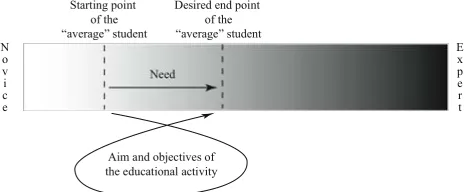
[image:2.595.182.417.619.715.2]Combining these ideas, a way of viewing the learning need is as a desired change in an “average” learner, expressed in terms of broad learning aims and objectives. This is illustrated in Figure 2.
learning and expressing that need in practical and relevant terms, the adult learner is more likely to be motivated, and to commit to a deeper approach to the learning experience (Biggs ,1991). This was also observed in a recent University of New South Wales (UNSW) survey reported by Lee and Trembath (2002). A well-documented need also allows the learning activity to be validated at the conclusion of the delivery stage to highlight any necessary changes. Changes are incorporated via the feedback mechanism illustrated in the lifecyle model.
Stage 2: Design
The design stage uses the broad aims expressed in the course aim to derive learning objectives and detailed learning outcomes prior to determining detailed content requirements.
Biggs (1991) emphasises that, in order to promote deeper learning approaches in adult learners, the design stage must be based on a structure that includes a clear knowledge framework with logical interconnections between different parts of the framework. In this way, the structure should assist learners to put the objectives and outcomes of the course into a meaningful context. The learners are able to consider the structure of the course as a knowledge structure that helps them not only understand what they are going to learn but why that learning is important to them, which Knowles (1990) describes as particularly important for adult learners.
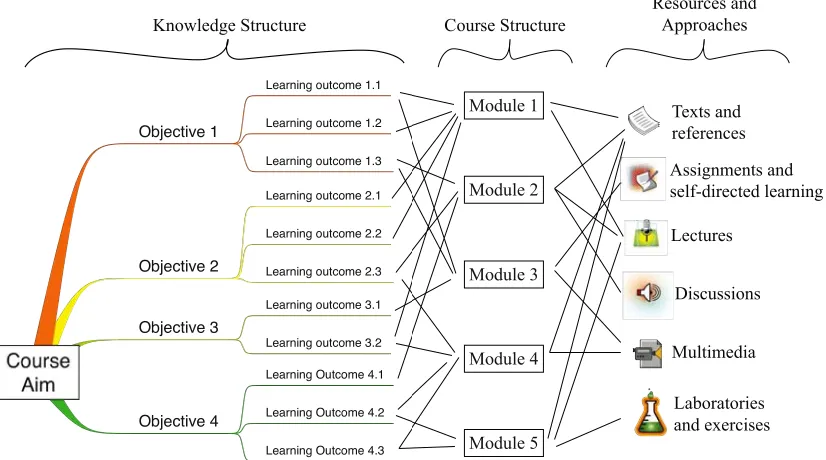
Once the knowledge structure is determined, designers then determine the structure of the course that will be delivered and, hopefully, produce the desired outcomes. Sternberg (1999) describes a logical course structure that builds on the knowledge structure as being accommodating of different learning styles within the group of learners. The course structure may be expressed as a series of inter-related course modules. For each of the course modules, the designers determine the preferred mix of learning and teaching resources and approaches to be used to deliver the modules. At each transition
[image:3.595.93.506.488.718.2](knowledge structurecourse structureresources and approaches) the designers establish linkages and dependencies to communicate the role of each element of the course in delivering specified parts of the knowledge structure. During the delivery of the course, this approach helps to explain to learners why the specific elements of the learning are important, and how they contribute to achieving the aims of the activity. It is also a convenient way of ensuring that all of the learning outcomes in the knowledge structure have been captured and addressed by the course structure, and that the course structure does not contain unnecessary detail that does not contribute to the knowledge structure (Faulconbridge, 2008). Figure 3 illustrates this concept.
Figure 3: The conceptual design of an educational activity (Faulconbridge, 2008)
Additionally, Gibbs (1992) recommends that, if possible, allowances should be made in the course design to provide students with some choice over course content.
The assessment strategy should also be considered during the design phase in order to encourage deeper learning approaches by the adult learners. Ramsden (2003) suggests that the assessment items need to be linked to deeper understanding and critical thinking, and provides 14 “rules” to guide the development of assessment regimes. Palmer (2004) recommends using authentic assessment by aligning assessment with relevant professional practice.
Stage 3: Development
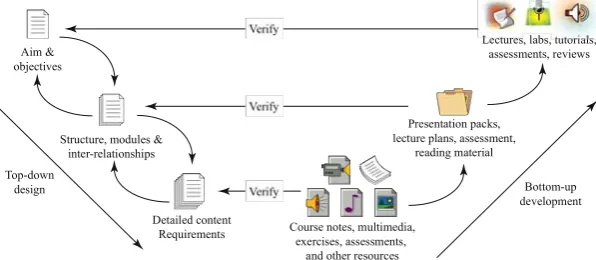
During the development stage, the resources and materials identified during the design stage need to be selected and sourced (if they exist) or developed in accordance with the requirements determined during that stage. Examples of materials and resources include course notes, multimedia, exercises, practicals, and assessments. Once sourced or developed, the designers verify that the material meets the detailed content requirements determined during the design stage. The basic resources can then be grouped and organised into presentation packs and lecture materials, before again being verified as addressing the requirements of the course design and structure.
[image:4.595.148.446.362.492.2]The iterative development process described here is based on a well-established systems engineering technique for solving complex, technical problems (see Faulconbridge and Ryan (2005)). It is often described and explained using a VEE construct as illustrated in Figure 4. The figure is designed to be “read” from top left going down the left hand side of the VEE, before crossing to the other side of the VEE and working up towards the top right hand corner.
Figure 4: VEE diagram applied to an educational context (Faulconbridge, 2008) The key benefits of this design and development approach include:
• The ability to trace aims and objectives down to detailed course content requirements, and the ability to trace detailed course content back to the defined aims and objectives;
• The identification and definition of the inter-relationships between the elements of the course structure and content;
• Progressive verification as the development proceeds enabling problems to be detected and addressed as early as possible in the delivery process; and
• Development of learning aims and objectives that are assessable and integrated into the course structure and detailed content to support the development of meaningful assessment regimes.
Stage 4: Delivery
The teaching and learning activities are delivered to the students using of the resources developed in the previous stage, and the learning is assessed in accordance with the assessment plan and materials. Knowles (1990) provides a useful set of guidelines describing the delivery stage of adult educational experiences. These include the following recommendations:
2. During delivery, provide the learners with ongoing feedback on their progress towards the goal or aim of the educational experience.
3. Make use of the experiences within the group of learners by considering those experiences to be valuable learning resources.
Various sources provide guidance on how to promote deeper learning approaches to students during the delivery stage. For example, Biggs (1991) recommends promoting an active learning environment including periods of “learning by doing” followed by reflection; and promoting interaction with others, including interaction with experts in relevant fields, and interaction among the learners. Felder and Silverman (1988) and others provide guidance on the likely learning style diversity within groups of adult learners, and the importance of accommodating this diversity during the delivery stage. Sternberg (1999), for example, recommends that a variety of presentation techniques are used and that long, spoken lectures should be avoided.
Stage 5: Feedback
The lifecycle model accommodates ongoing improvement to account for new information or a more mature understanding of the requirements. This improvement typically occurs at the end of each delivery. Student appraisals are a major example of feedback that may drive elements of the course to be revisited and revised.
Ramsden (2003) describes good teaching practice as including a willingness to learn from students (especially their feedback and assessment results) as a way of improving teaching. Ramsden cites research that concludes that students are very astute judges of effective teaching. This challenges the popular view that students confuse popular lecturers with good lecturers. Marsh (1987) agrees with Ramsden, stating that properly collected student feedback is reliable and valid, and relatively free from contamination and sources of bias. To support their evaluation approach, UNSW (2007) relies on relevant scholarly research that indicates students can provide valid observations and judgements on a range of aspects of teaching quality.
A complete conceptual framework, therefore, must accommodate feedback, review and improvement. The lifecycle model (Figure 1) shows that this feedback can be used to revisit and revise each of the lifecycle stages in the conceptual framework as required.
The Integrated Conceptual Framework
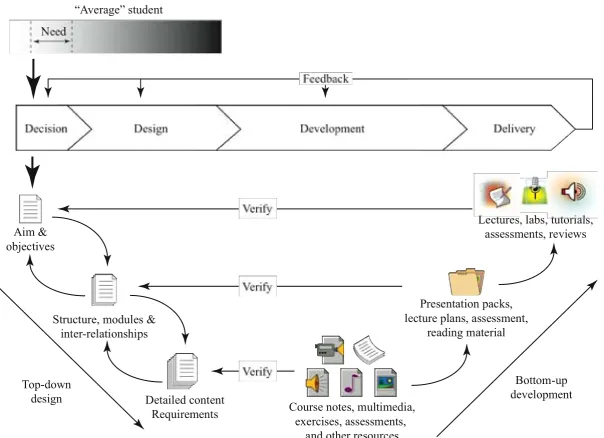
[image:5.595.150.452.510.729.2]The integrated conceptual framework is summarised in Figure 5.
Evaluation of the Conceptual Framework
The conceptual framework presented in this paper has been applied successfully to the development of a number of technical courses offered to different cohorts of adult learners, including:
• a radar systems course initially developed for officers under training in the Royal Australian Navy;
• a systems engineering course initially developed for 4th year Bachelor of Electrical Engineering
undergraduates; and
• an avionics systems course initially developed for 2nd year Bachelor of Technology undergraduates.
Faulconbridge (2008) provides a detailed explanation of how the framework was used in each case, and the success of each course. The success of these courses has been judged by the continued use of the courses in serving their original purpose, the significantly expanded application of each of the courses to serve additional audiences and applications, the technical publications that have resulted from the development of the courses, and relevant student and expert review of the courses and publications.
Conclusion
The conceptual framework presented in this paper was developed as an aid for the effective design, delivery, and review of a number of technical courses offered to different cohorts of adult learners. The framework was developed around a simplified educational lifecycle model that commences with the identification of a learning need and the decision to develop a learning activity to address that need. The educational need sits on top of a virtual VEE and initiates a top-down design and development effort. The process builds on the educational need by developing an integrated and meaningful knowledge structure. From this knowledge structure, a suitable course structure and associated module content and resources are determined. Once the design stage has been completed, the development and sourcing of appropriate learning resources begins. The resources are verified against the relevant design requirements before being integrated to form presentation packs. The course is delivered to the target audience during the delivery stage. The target audience provides a major source of review and feedback during and after the delivery, which is used to feed back into the subsequent design and development process. The feedback is designed to improve the learning experience to ensure the experience addresses the original learning need.
The framework described in this paper provides teachers with a simple but effective tool to design and deliver courses for adult learners.
References
AS/NZS15288:2003 (2003) Australian/New Zealand Standard - Systems Engineering - System Life Cycle Processes.
Biggs, J. B. (1989) Does Learning About Learning Help Teachers with Teaching? The University of Hong Kong Gazette, 26.
Biggs, J. B. (1991) Teaching for Learning: The View from Cognitive Psychology, Melbourne, Australia, The Australian Council for Educational Research Ltd.
Boyle, C. (1982) Reflections on Recurrent Education. International Journal of Lifelong Education, 1, 5-18. Entwistle, N. J. & Ramsden, P. (1983) Understanding Student Learning, Canberra, Croom Helm.
Faulconbridge, R.I. (2008), The Development of Learning and Teaching Strategies and Technical Texts for Diverse Groups of Adult Learners, Doctoral Thesis, USQ. (http://eprints.usq.edu.au/4785/)
Faulconbridge, R. I. & Ryan, M. J. (2005) Engineering a System: Managing Complex Technical Projects, Canberra, Australia, Argos Press.
Felder, R. M. & Silverman, L. K. (1988) Learning and Teaching Styles in Engineering Education. Journal of Engineering Education, 78(7), 674-681.
Gibbs, G. (1992) Improving the Quality of Student Learning, Bristol, UK, Technical & Educational Services Ltd. Hilgard, E. R. & Bower, G. H. (1966) Theories of Learning, New York, Appleton-Century-Crofts.
Houle, C. O. (1972) The Design of Education, San Francisco, United States of America, Jossey-Bass. Jacks, L. P. (1931) The Education of the Whole Man, London, Harper & Brothers.
Jarvis, P., Holford, J. & Griffin, C. (2005) The Theory and Practice of Learning, London, UK, RoutledgeFalmer. Knowles, M. S. (1990) The Adult Learner - A Neglected Species, Houston, USA, Gulf Publishing Company.
Lee, A. & Trembath, K. (2002) Report on the UNSW Student Survey 2001. Office of the Pro-Vice-Chancellor (Education and Quality Improvement) and the Planning Office, University of New South Wales.
Marsh, H. (1987) Students' Evaluations of University Teaching: Research Findings, Methodological Issues, and Directions for Future Research. International Journal of Educational Research, 11, 253-388.
Palmer, S. (2004) Authenticity in assessment: reflecting undergraduate study and professional practice.
European Journal of Engineering Education, 29, 193-202.
PMI (1996) A Guide to the Project Management Body of Knowledge, Upper Darby, Project Management Institute Standards Committee.
Ramsden, P. (2003) Learning to Teach in Higher Education, Oxon, United Kingdom, RoutledgeFalmer.
Sternberg, R. J. (1999) Thinking Styles, Cambridge, United Kingdom, Cambridge University Press. Taylor, J. C. (1994) Novex Analysis: A Cognitive Science Approach to Instructional Design. Educational
Technology, 34, 5-13.
UNSW (2007) The CATEI Process, Sydney, UNSW Quality System Development Group.