City, University of London Institutional Repository
Citation:
Ring, M., Derwent, C. L. T., Gaigg, S. B. and Bowler, D. M. (2017). Structural learning difficulties implicate altered hippocampal functioning in adults with Autism Spectrum Disorder. Journal of Abnormal Psychology, 126(6), pp. 793-804. doi: 10.1037/abn0000277This is the accepted version of the paper.
This version of the publication may differ from the final published
version.
Permanent repository link:
http://openaccess.city.ac.uk/17532/Link to published version:
http://dx.doi.org/10.1037/abn0000277Copyright and reuse: City Research Online aims to make research
outputs of City, University of London available to a wider audience.
Copyright and Moral Rights remain with the author(s) and/or copyright
holders. URLs from City Research Online may be freely distributed and
linked to.
City Research Online: http://openaccess.city.ac.uk/ [email protected]
Structural learning difficulties implicate altered hippocampal functioning
in adults with Autism Spectrum Disorder
Melanie Ring Claire L. T. Derwent
Autism Research Group Autism Research Group
City, University of London City, University of London
Sebastian B. Gaigg Dermot M. Bowler
Autism Research Group Autism Research Group
City, University of London City, University of London
Author note
We would like to thank all the participants, who have taken part in this research.
Melanie Ring was supported by a PhD studentship from City, University of London. Claire
Derwent was supported by a PhD studentship from the Department of Psychology, City,
University of London. Earlier versions of these data were presented at The European
Conference on Developmental Psychology (ECDP, 2013) in Lausanne, Switzerland by
Melanie Ring, who was supported by a City Graduate School Conference Attendance Fund,
and at the Joint Cognitive Psychology Section and Developmental Psychology Section
Annual Conference (CogDev, 2013) in Reading, UK by Claire Derwent.
Please address all correspondence concerning this article to Melanie Ring via
[email protected] or Autism Research Group, Department of Psychology, School of
Social Sciences, City, University of London, Northampton Square, London, EC1V 0HB,
Abstract
Structural Learning is fundamental to the formation of cognitive maps that are
necessary for learning, memory, and spatial navigation. It also enables successful navigation
of the social world, which is something that individuals with Autism Spectrum Disorder
(ASD) find particularly difficult. To master these situations, a person needs to bind pieces of
information to one another and to consider the context in which experiences happen. Such
binding is a capacity of the hippocampus. Although altered hippocampal function has for
long been suspected to play a role in the aetiology of ASD, the relevant evidence has
remained inconclusive because few behavioural tests that are known to specifically
necessitate preserved hippocampal function have been employed in studies of ASD. To
address this gap in the literature, a total sample of 57 pairs of age and ability matched ASD
and comparison participants was divided into three subsamples who were asked either to
complete Structural Learning, or one of two configural learning control tasks (Biconditional
Discrimination and Transverse Patterning) drawn from animal research. As predicted, ASD
adults demonstrated specific difficulty with Structural Learning but not with other forms of
configural learning. These differences were not attributable to decreased attentional shifting
or increased perseveration, which would have indicated atypical frontal modulation of
hippocampal processes. Instead, the observations implicate atypical hippocampal functioning
as the source of structural learning difficulties in ASD. The data suggest that disturbances in
domain-general cognitive processes such as Structural Learning, caused by altered
hippocampal function, play a critical role in the aetiology of ASD.
General scientific summary
The role of hippocampal abnormalities in the aetiology of Autism Spectrum Disorder
(ASD) has remained unclear because few studies have employed tasks that necessitate
hippocampal function. This study confirms hippocampal involvement in ASD by
demonstrating specific impairments on a particular kind of configural learning (Structural
Introduction
An organisms’ environment comprises a large number of elements (colours, shapes,
objects, people, etc.) that can combine in a seemingly infinite number of ways to constitute
unique experiences. The central nervous system thus faces the computational challenge of
discriminating among experiences that share a great number of elements whilst extracting
commonalities that serve effective adaptation to new situations. This problem is evident
across numerous functional domains, ranging from spatial navigation and memory through
imagination and creativity to social interaction and the use of language (e.g., Rubin et al.,
2014). For example, when an animal learns to navigate its surroundings to forage for food, it
needs to discriminate among various landmarks, represent the locations that have already
been searched, and extract commonalities among the locations that have been visited to
effectively seek out new sources of food. Similarly, humans, and other species that must
navigate complex social environments, need to discriminate a myriad of
social-communicative behaviours (e.g., facial expressions, gestures, vocalisations, etc.) across a
large number of pragmatic contexts in order to develop an understanding of social norms,
conventions and interpersonal relations that govern successful interactions with others. The
hippocampus has for long been known to mediate these computational demands in the
context of spatial navigation, learning and memory (O’Keefe & Nadel, 1978; Rudy &
Sutherland, 1995; Sutherland & Rudy, 1989) and more recently it has also been implicated in
higher order cognitive domains such as imagination, language and social interaction (Rubin
et al., 2014; Schiller et al., 2015). This raises the possibility that hippocampal abnormalities
play a critical role in the aetiology of Autism Spectrum Disorder (ASD), which is
characterised by abnormalities across many of these functional domains.
ASD is a lifelong neurodevelopmental disorder that is clinically defined by
Psychiatric Association, 2013). It affects approximately 1% of the population (Baird et al.,
2006) and is frequently associated with significant language (Loucas et al., 2008;
Tager-Flusberg & Joseph, 2003) and intellectual impairments (Baird et al., 2006; Idring et al., 2015;
Kim et al., 2011; Yeargin-Allsopp et al., 2003) as well as mental health difficulties, such as
depression, and anxiety (Croen et al., 2015; Simonoff et al., 2008). Sub-clinically, ASD is
also associated with abnormalities in a number of cognitive domains, including learning and
memory (see Boucher & Bowler, 2008), which has led to the suggestion that atypical
hippocampal function plays a critical role in the aetiology of the disorder (Boucher &
Warrington, 1976; Bowler et al., 2011; DeLong, 1992; Waterhouse et al., 1996). For instance,
consistent with altered hippocampal function, individuals with ASD have difficulties
remembering the temporal order of sequentially presented stimuli (Bigham et al., 2010;
Gaigg et al., 2014; Ni Chuileann and Quigley, 2013; Poirier et al., 2011). Their episodic
memory for past events as well as their ability to imagine themselves in the future (i.e.,
episodic future thinking; Tulving, 2002) is also compromised (Bowler et al., 2007; Lind et
al., 2014a, b; Terrett et al., 2013) and they have difficulties with spatial memory (Bowler et
al., 2004, 2014; Cooper et al., 2015; Ring et al., 2015, 2016) and spatial navigation (Lind et
al., 2013, 2014a; Pellicano et al., 2011). Beyond studies of learning and memory, the
hippocampus has also been implicated in ASD through animal models, which demonstrate
that lesions to the medial temporal lobes including the hippocampus result in social
impairments and repetitive behaviours akin to those seen in ASD (Bachevalier, 1994, 1996).
Moreover, the extent of hippocampal and medial temporal lobe damage is thought to account
for the heterogeneity across the autism spectrum, particularly with respect to general
intellectual functioning (Bachevalier, 1994; Bachevalier & Loveland, 2006; Waterhouse,
The evidence outlined above implicates hippocampal abnormalities in ASD only
indirectly and the observations can equally well be explained with reference to abnormalities
in other brain areas, particularly the frontal lobe executive system (Hill, 2004a, b; Minshew
& Goldstein 1998). In fact there is now a broad consensus that the neuropathology of ASD is
not localised to particular regions but that it involves abnormalities in inter-regional
connectivity and broader network function instead (Minshew & Keller, 2010; Uddin, Supekar
& Menon, 2013). It is thus not surprising that direct examinations of hippocampal
morphology in ASD have yielded inconsistent results, with some studies reporting no
differences in hippocampal volume between ASD and comparison groups (Haznedar et al.,
2000) whilst others have reported increased (Schumann et al., 2004) or decreased volumes
(Nicolson et al., 2006; see Stigler et al., 2011 for a review). The few existing functional
imaging studies have been equally inconclusive with a study by Solomon et al. (2015)
observing no evidence for ASD related hippocampal abnormalities during a transitive
inference task, whilst Cooper et al. (2017) observed reduced hippocampal connectivity during
the retrieval but not the encoding of specific object features (see also Gaigg et al., 2015). In
the context of this limited literature, it is important to shed further light on particularly those
hippocampal processes in ASD that are known to operate across functional domains, and to
use tasks that are specifically sensitive to hippocampal function (cf. Solomon et al., 2015).
The current study addresses this aim by borrowing a task from the non-human animal
literature to examine a domain-general learning process known as Structural Learning.
Structural Learning constitutes a sub-type of configural learning that necessitates the
processing of spatial (or temporal) relations among the elements of an experience and, thus,
critically depends on the hippocampus (Aggleton et al., 2007, 2009, 2010; Browning &
Gaffan, 2008; Butt & Bowman, 2002). For example, Structural Learning is necessary for an
safe source of food whereas other spatial arrangements of these features signal no food or
even danger. Similarly, Structural Learning is involved when we learn that certain behaviours
in one pragmatic context facilitate social affiliation with certain individuals whilst the same
behaviours in a different context or in relation to different individuals can lead to
confrontation. If atypical hippocampal function plays an important role in the presentation of
ASD, it follows that Structural Learning should pose particular difficulties, whereas other
forms of configural learning that pose similar processing demands but do not necessitate
hippocampally mediated processing of spatial-temporal information, should be preserved
(Aggleton et al., 2007, 2009; Sanderson et al., 2006). For example, Biconditional
Discrimination also requires the processing of specific relations among the elements of a
stimulus but unlike in Structural Learning, the spatial or temporal configuration of these
relations is irrelevant. Returning to the earlier example, Biconditional Discrimination would
therefore allow an animal to learn that the combination of yellow moss and a gnarled branch
at the base of a tree signals a source of food so long as the spatial arrangement of these
features is irrelevant. Another example of configural learning that does not rely on
hippocampally mediated processing of spatial-temporal information is Transverse Patterning,
which requires learning of non-transitive binary relations among three stimuli such as in the
well-known game “rock-paper-scissors” where paper beats rock, rock beats scissors and
scissors beat paper.
To test the prediction that specifically Structural Learning, but not Biconditional
Discrimination or Transverse Patterning is impaired in ASD, the current study adopts a
paradigm by Sanderson et al. (2006), who examined the consequences of hippocampal
lesions on these three types of configural learning in rats. In their experiment, independent
groups of rats first learned to discriminate between pairs of stimuli that were constructed to
partition wall within a water tank in which the rats learned to find a submerged platform by
swimming towards one of the stimuli. Once the rats had successfully learned the
discriminations across a number of training sessions, half received hippocampal lesions and
the other half received sham lesions. Following recovery, rats needed to re-learn the original
discriminations across another set of training blocks and whilst hippocampal lesions had no
effects on Biconditional Discrimination and Transverse Patterning, they led to significant
reductions in learning across all blocks of Structural Learning (Sanderson et al., 2006). Of
interest, however, was also that the response to mirror-image stimuli in Biconditional
Discrimination was superior in rats with hippocampal lesions compared to sham lesions. This
was assessed by ratio scores setting performance on mirror images in relation to performance
on studied trials (mirror images/(mirror images + studied)). Rats with hippocampal lesions
showed higher ratio scores compared to sham lesioned rats. Recall that in Biconditional
Discrimination, the spatial arrangement of stimuli is irrelevant such that B│W and W│B
would both be correct whereas in Structural Learning this spatial arrangement strictly defines
the correct response. As the authors explain, the automatic employment of Structural
Learning during Biconditional Discrimination makes the learning of mirror-image stimuli
more difficult because the spatial arrangement of stimuli is processed as critical. Because
hippocampal damage reduces sensitivity to the structural arrangement of stimulus elements,
the level of performance on mirror-image stimuli in Biconditional Discrimination provides an
additional measure of hippocampal function. A similar test can be included for Structural
Learning where performance on re-paired stimuli of previously studied images is set in
relation to studied images (re-paired/( re-paired + studied)). Similarly to Biconditional
Discrimination, reduced learning of the structural arrangement of the mirror images presented
in Structural Learning should lead to better performance on re-paired trials and higher ratio
Based on the literature reviewed above, the first aim of the present study was to adapt
the task by Sanderson et al. (2006) to test the prediction that ASD would be characterised by
specific impairments in Structural Learning, but not Biconditional Discrimination, or
Transverse Patterning. In addition, we expected better performance in novel test trials
(re-paired for Structural Learning and mirror images for Biconditional Discrimination) and
higher ratio scores for ASD compared to TD participants. Given that human participants are
likely to employ various executive control processes to regulate their learning, a third aim
was to control for the possible moderating role of executive functions in these configural
learning processes.
Materials and Methods Participants
Since no means, standard deviations, or effect sizes were available in Sanderson et al.
(2006), sample sizes were based on the size of samples previously used in studies of this
kind. Sanderson et al. (2006) tested six rats on average in each group for each of the three
tasks. To increase statistical power to detect a possible between-group difference between
ASD and TD individuals because of the heterogeneity of ASD samples, overall 114 adults
took part in either of three tasks, resulting in 19 typically developing (TD) and 19 ASD adults
each performing Structural Learning, Biconditional Discrimination, or Transverse
Patterning. The sub-samples assigned to each of the experimental tasks were closely matched
on gender (X2max< 2.18, pmin > .14), chronological age (CA; max. Cohen’s d< 0.12), Verbal
(VIQ; max. Cohen’s d< 0.23), Performance (PIQ; max. Cohen’s d< 0.06), and Full-scale
Intelligence Quotient (FIQ; max. Cohen’s d< 0.12) as measured by the third or fourth version
Corporation, 2000, 2008). Also, across the three experimental tasks there were no significant
differences in the sample characteristics (all relevant p values > .49; see Table 1).
Table 1: Participant characteristics for ASD and TD groups, split up by task – Structural
Learning, Biconditional Discrimination, and Transverse Patterning.
TD M (SD)
ASD
M (SD) t(df) p Cohen’s d
Structural (12m, 7f) (16m, 3f)
Age (years) 41.06 (13.69) 42.02 (13.30) 0.22 (36) .83 0.07
VIQa 110 (14.0) 111 (16.8) 0.14 (36) .89 0.04
PIQb 105 (15.5) 104 (16.8) 0.06 (36) .95 0.02
FIQc 108 (14.0) 108 (17.0) 0.15 (34) .88 0.05
CTT2d 0.37 (0.7) 0.26 (0.6) 0.52 (36) .61 0.17
Biconditional (16m, 3f) (15m, 4f)
Age (years) 43.57 (11.88) 43.85 (13.03) 0.07 (36) .94 0.02
VIQa 109 (14.2) 110 (18.0) 0.23 (36) .82 0.07
PIQb 105 (16.1) 105 (17.1) 0.00 (36) 1 0.00
FIQc 107 (15.3) 108 (17.1) 0.28 (33) .79 0.09
Transverse Patterning (15m, 4f) (16m, 3f)
Age (years) 41.77 (12.81) 43.37 (12.85) 0.38 (36) .70 0.12
VIQa 112 (12.7) 115 (16.1) 0.71 (36) .49 0.23
PIQb 107 (13.4) 108 (15.0) 0.17 (36) .87 0.06
FIQc 109 (14.4) 111 (16.0) 0.33 (29) .74 0.12
Total sample
AQe 15.05 (6.54) 35.34 (7.62) 15.96 (111) .00 3.00
AQ range 1 - 28 18 - 49
[image:11.595.62.531.211.645.2]Participants were all native English speakers recruited from a database of participants
with whom the Autism Research Group at City, University of London is in regular contact.
All ASD adults had been diagnosed according to DSM-IV-TR (American Psychiatric
Association, 2000) criteria by experienced clinicians and it was possible to administer the
Autism Diagnostic Observation Schedule (ADOS; Lord et al., 2000) to 48 of the 57
participants. In all cases this observational measure corroborated impairments in social
communication behaviors commensurate with ASD, and in line with the expected sensitivity
of the instrument (see Hus & Lord, 2014), 44 individuals (92%) met the cut-off for the
Reciprocal Social Interaction domain and 39 individuals (81%) met the cut-off for the
Communication domain. Because of time constraints on the day of testing, it was not possible
to administer the ADOS to nine participants (2 in Structural Learning, 6 in Biconditional
Discrimination and 1 in Transverse Patterning), but since available records confirmed their
clinical diagnosis all participants were retained for analysis. Furthermore, participants in both
groups (except for one ASD individual on Biconditional Discrimination) completed the
Autism-Spectrum Quotient (AQ; Baron-Cohen et al., 2001), which provides a self-report
measure of autistic-like traits. This confirmed significantly higher scores for the ASD
compared to the TD group (t = 15.2, df = 111, p < .001, Cohen’s d = 2.9) and average scores
(ASD: M = 35.3, SD = 7.6; TD: M = 15.1, SD = 6.5) fell well within the expected ranges
recently reported in a comprehensive meta-analysis (Ruzich et al., 2015)1. In the current
study, six out of 56 persons with ASD (10.71 %) scored below the cut-off score of 26
suggested by Woodbury-Smith, Robinson, Wheelwright and Baron-Cohen (2005) and one of
the 57 TD individuals (1.75%) scored above this cut-off. We did not use AQ scores as an
inclusion/exclusion criterion because it is not generally used to establish a diagnosis and
1
because preserving a wide range of self-reported autistic-like traits in both groups was
important for the correlation analyses reported below.
TD individuals did not report taking psychotropic medication or a personal or family
history of a psychological or neurodevelopmental disorder including ASD. Twelve of the
ASD participants (4 in Biconditional Discrimination, 5 in Structural Learning and 3 in
Transverse Patterning) reported taking antidepressants of whom three (2 in Biconditional
Discrimination and 1 in Strucural Learning) also reported prescriptions for antipsychotics. A
further two ASD participants (1 in Structural Learning and 1 in Transverse Patterning)
reported taking only antipsychotics. Participants were not asked to stop taking their
medication before participation. All participants were reimbursed for their time and travel
costs with standard university fees. Informed consent was taken prior to participation. This
study was approved by City, University of London’s ethics committee (name: Complex
visual discrimination in Autism Spectrum Disorder; approval number: PSYETH 11/12 017),
and procedures adhere to the ethical guidelines set out by the British Psychological Society.
Materials
The materials and procedures were adapted from Sanderson et al. (2006) and similar
rodent studies (e.g., Aggleton et al., 2007) and involved minimal verbal instructions. Black
and white images (see Figure 1) were presented on a touch-sensitive 12-inch laptop-screen. A
detailed overview of the stimuli and reinforcement contingencies is provided in the
supplemental materials. In order to take frontal lobe executive processes into consideration,
the Colour Trails Test (CTT; D’Elia et al., 1996) was administered and the number of errors
on part 2 (hereafter CTT2) of this task was taken as an index of frontal lobe executive
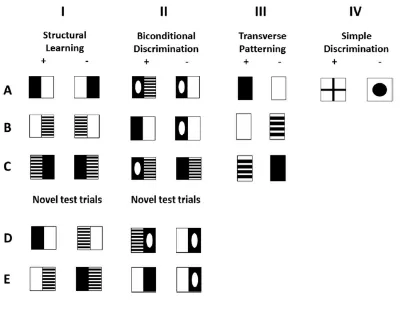
Figure 1. Examples of stimuli for Simple Discrimination (Column IV), which was part of all
three tasks. Structural Learning (Column I) with test trials presenting re-paired stimuli in
Block 5 in Row D and E, Biconditional Discrimination (Column II) with test trials presenting
mirror images in Rows D and E, and Transverse Patterning (Column III). The stimuli
presented below the plus sign are reinforced in the example.
Procedure
To familiarize participants with the general task procedures, the experiment began
with a Simple Discrimination task (Figure 1 Column IV), in which participants simply
learned that touching one of two distinct images on the screen would result in the
presentation of either a smiling cartoon face or a frowning cartoon face that indicated that a
correct or incorrect response had been made respectively. Age and ability matched subgroups
Discrimination, or Transverse Patterning that included also a number of interspersed Simple
Discrimination trials to ensure participants maintained their attention on the task and did not
perseverate on certain screen locations in their responses (Sanderson et al., 2006). The
experimenter stayed in the room with the participant to be available for questions.
Each task (Structural Learning, Biconditional Discrimination and Transverse
Patterning) consisted of five blocks, across which relevant stimuli were successively
introduced until participants either demonstrated reliable acquisition of all necessary stimulus
contingencies or failed to reach a learning criterion within a pre-determined maximum
number of trials (see details below). After each block of trials there was a brief pause that
participants could terminate to continue the task by pressing a pause button on the
laptop-screen. On every trial, two images were presented simultaneously and participants were asked
to pick the correct image by touching it. The same smiling or frowning cartoon faces as
during the Simple Discrimination practice trials served as feedback and participants were told
to aim for as many correct responses as possible. Which images were reinforced, the screen
locations of reinforced stimuli and the block in which stimuli were introduced were all fully
counterbalanced across participants.
Every trial started with the presentation of a blank screen for 1 s, followed by the two
images on the left and right side of the screen, which remained until participants touched one
of them. Feedback stayed on-screen for 1.5 s, after which the next trial started. In every
block, participants had to learn to a pre-determined criterion. If the criterion was reached, the
task continued with the next block. Otherwise the block was presented a maximum of three
times before the program continued automatically to the next block. For example, in Block 1,
participants received 10 experimental trials and two Simple Discrimination trials and needed
to achieve 80% accuracy on the experimental trials and 50% accuracy on the Simple
participants and there was no criterion. Tables S1 – S3 in the supplemental material provide
details of all trial numbers and learning criteria for the three experimental conditions. For
simplicity, we note here only that every task started with the presentation of one pair of
experimental images and new pairs were then added across successive blocks, until all shapes
were repeated in Blocks 4 and 5. In addition, in Block 5 of Structural Learning studied
images were presented intermixed with new re-paired images (see Figure 1 Column I Rows D
& E) and in Biconditional Discrimination mirror-images of studied stimuli were introduced
(see Figure 1 Column II Rows D & E). Figure 1 provides an overview of the experimental
materials involved in each of the three conditions and we briefly outline critical details of
each of them below.
Structural Learning
In Structural Learning (Figure 1 Column I Rows A, B & C) participants were
successively introduced to three pairs of compound stimuli that were mirror images of each
other. The images were made up of simple patches of white, black, or striped. Participants
were asked to learn to discriminate between the mirror images, which required them to bind
the two patches of an image and represent their specific spatial configuration. For instance,
participants needed to learn that black and white constituted a correct image only if the black
patch was on the left side of the white patch (Row A). When white was presented with
striped, participants needed to know that only the shape with white on the left side of striped
was correct (Row B), and so on. Image pairs were introduced consecutively across three
blocks. In Block 4 all three image pairs were presented in a mixed random order and in Block
5 previously studied image pairs were presented along with re-paired trials that had never
been presented together previously (see Figure 1 Column I Rows D & E). For example, the
striped/white (Row B) were recombined in a novel test trial that asked participants to choose
between black/white vs. striped/white (Row D) or white/striped vs. white/black. Re-paired
trials were included to establish whether the structural arrangement of the stimuli had been
fully processed and would thus transfer to new trials that could not be solved through simpler
learning processes.
Biconditional Discrimination
In Biconditional Discrimination (Figure 1 Column II), participants were asked to
discriminate between four pairs of compound images that were again made up of simple
patches such as black, white, striped, and black with a white ellipse. As in Structural
Learning, pairs were introduced consecutively across three blocks, with two new pairs
introduced in Block 3. Blocks 4 and 5 again presented all image pairs in random order with
Block 5 including novel test trials that comprised mirror images of the studied images (Rows
D & E). Unlike in Structural Learning, the spatial configuration of the images was irrelevant
and of interest was how readily learning would transfer to the new stimulus configurations.
Transverse Patterning
In Transverse Patterning (see Figure 1 Column III), participants needed to
discriminate between three pairs of simple patches (black, white & striped) in which the
correct response was determined by the combination of patches that was presented in a given
trial. The rules were analogous to that of the hand game rock-paper-scissors, where rock beats
scissors, scissors beat paper, and paper beats rock. Participants needed to learn that black was
correct when presented with white (Row A), that white was correct when presented with
three pairs were introduced consecutively across three blocks and then presented together in a
random order in Blocks 4 and 5.
Statistical analysis
The data were analysed in SPSS version 23 with Chi-Squared Tests for nominal data,
and bivariate correlations, t-tests, and repeated measures ANOVAs and ANCOVAs for
interval data. In case the Sphericity assumption was violated in ANOVAs, the Greenhouse
Geisser correction (GGC) was used. Significant effects were clarified with
Bonferroni-corrected post-hoc tests and within subjects contrasts were examined to determine whether
learning was characterised by non-linear trends. The significance level was chosen at .05 for
all tests. Cohen’s d and partial eta squared are reported as measures of effect size.
Results
Simple Discrimination
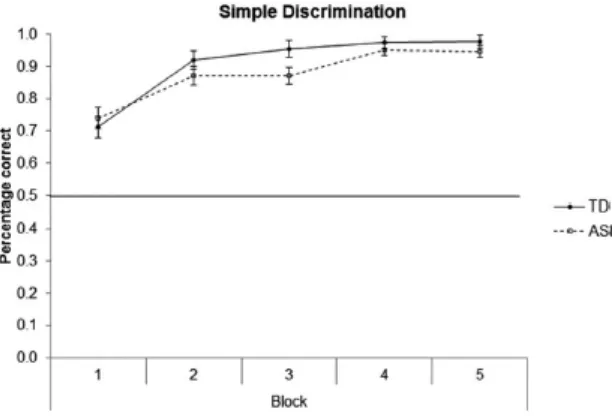
Accuracy scores (percentage correct) for the Simple Discrimination trials that were
included in all trial blocks are presented in Figure 2. Performance for both groups was
significantly above chance in all five blocks, all t > 6.35, all p < .001. A 2 (Group [ASD,
TD]) x 3 (Task [Structural Learning, Biconditional Discrimination, Transverse Patterning])
x 5 (Block [1, 2, 3, 4, 5]) repeated measures ANOVA revealed a significant main effect of
Block, F(1.91,206.60) = 41.06, p < .001, ηp2 = .28, GGC, but no other significant main
effects or interactions, Fmax < 1.80, pmin > .17, ηp2max < .02, indicating that learning over
Figure 2. Accuracy as percentage correct for Simple Discrimination for ASD and TD
individuals for the five blocks of the tasks averaged across Structural Learning, Biconditional
Discrimination, and Transverse Patterning. The horizontal line indicates chance
performance. The data are presented as mean + SEM.
Structural Learning Learning
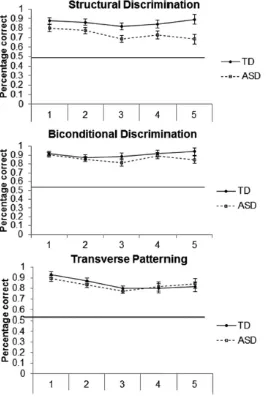
Accuracy scores (percentage correct) are presented in Figure 3, and they were
analysed with a 2 (Group [ASD, TD]) x 5 (Block [1, 2, 3, 4, 5]) repeated measures ANOVA,
which showed a significant main effect of Group, F(1,36) = 6.74, p < .05, Cohen’s d = 0.84,
95 % CI(0.16, 1.49), with lower performance of the ASD (M = 0.73, SD = 0.15) compared to
the TD group (M = 0.86, SD = 0.15) overall. A significant main effect of Block,
F(2.73,98.25) = 3.64, p < .05, ηp2 = .09, GGC that was characterised by a quadratic trend
(F(1,36) = 6.22, p < .05, ηp2 = .15), demonstrated decreases in performance from Blocks 1 – 3
(p < .05) with no further significant changes through Blocks 4 and 5. No Block x Group
interaction, F(2.73,98.25) = 2.10, p = .11, ηp2 = .06, GGC, was found. Some individuals in
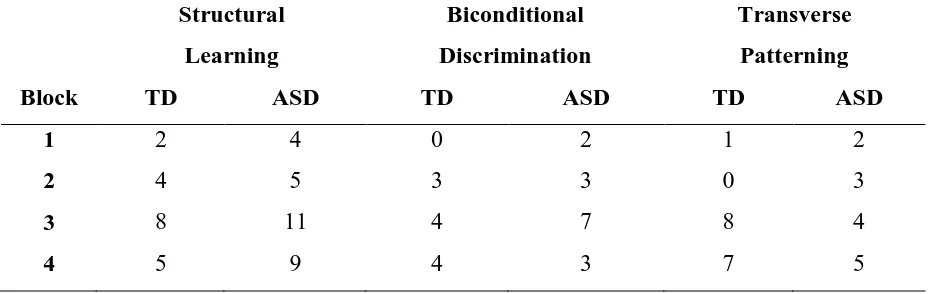
[image:19.595.143.449.202.410.2]Table 2. Numbers of individuals with Autism Spectrum Disorder (ASD) and typical
development (TD) that needed three attempts or did not reach criterion at a certain block -
sorted by task: Structural Learning, Biconditional Discrimination, and Transverse
Patterning.
Structural Learning
Biconditional Discrimination
Transverse Patterning
Block TD ASD TD ASD TD ASD
1 2 4 0 2 1 2
2 4 5 3 3 0 3
3 8 11 4 7 8 4
4 5 9 4 3 7 5
Following Sanderson et al. (2006), the strictest test of Structural Learning occurs in
Block 4 where participants see all three image pairs in randomised order. To test whether
participants from both groups acquired Structural Learning or just learned one or two out of
the three pairs, we compared Block 4 performance against chance level separately for each of
the three pairs in both groups. We ranked performance for each individual on each of the
pairs according to best, middle, and worst to see if participants’ worst discrimination was
greater than chance. Whereas TD individuals performed significantly better than chance on
all three discriminations (Mmin = 0.72, SDmin = 0.25), all p < .01, the ASD individuals’
performance was greater than chance only for the two best discriminations (Mmin = 0.73,
SDmin = 0.23), both p < .001. Their worst discrimination was not significantly different from
chance (M = 0.58, SD = 0.28), p = .24, suggesting that they did not acquire Structural
[image:20.595.66.530.183.330.2]Figure 3. Accuracy as percentage correct for Structural Learning (top), Biconditional
Discrimination (middle), and Transverse Patterning (bottom) for ASD and TD individuals for
the five blocks of the tasks. The horizontal line indicates chance performance. The data are
presented as mean + SEM.
Test
Ratio scores (re-paired/(re-paired + studied)) were calculated to assess the two
[image:21.595.170.436.226.626.2]score, t(36) = 3.42, p < .01, Cohen’s d = 1.11, 95 % CI(0.40, 1.77) resulting from better
performance on re-paired as opposed to studied trials. Directly comparing participants
performance on re-paired and originally studied trials using a 2 (Group [ASD, TD]) x 2 (Trial
type [studied, re-paired]) repeated measures ANOVA revealed a significant main effect of
Group, F(1,36) = 4.71, p < .05, Cohen’s d = 0.70, 95 % CI(0.03, 1.34), with higher
performance for the TD (M = 0.87, SD = 0.19) compared to the ASD group (M = 0.73, SD =
0.19). A significant Group x Trial type interaction, F(1,36) = 10.49, p < .01, ηp2 = .23,
showed that TD participants only performed better on studied pairs (MTD = 0.89, SDTD =
0.15; MASD = 0.69, SDASD= 0.28), p < .01, Cohen’s d = 0.92, 95 % CI(0.23, 1.57), but not
re-paired trials (MTD = 0.85, SDTD = 0.19; MASD = 0.78, SDASD = 0.18), p = .26, Cohen’s d =
0.36, 95 % CI(-0.28, 1.00), because the ASD group performed significantly better in
re-paired compared to studied pairs, p < .01, Cohen’s d = 0.45, 95 % CI(-0.20, 1.09). The main
effect of Trial type was not significant, F(1,36) = 1.24, p = .27, Cohen’s d = 0.12, 95 %
[image:22.595.113.483.603.748.2]CI(-0.34, 0.56).
Figure 4. Accuracy as percentage correct for studied and re-paired test trials in Block 5 for
Structural Learning (left) and for studied and mirror images in Block 5 for Biconditional
Discrimination (right) for ASD and TD individuals. The horizontal line indicates chance
Relation to social deficits in ASD
A bivariate correlation analysis across the combined sample of ASD and TD
participants showed a significant positive correlation between ratio scores and AQ scores (r =
.43, p < .01), which was primarily due to an inverse association between performance on
studied pairs and AQ (r = -.36, p < .05) rather than repaired trials and AQ (r = -.16, p = .33).
At a subscale level, significant positive correlations were found between ratio scores and the
AQ subscales Social Interaction (r = .37, p < .05), Attention Switching (r = .55, p < .001), and
Communication (r = .42, p < .05) that again reflected inverse associations with performance
on studied (Social Interaction: r = -.37, p <.05; Attention Switching: r = -.43, p <.01;
Communication: r = -.31 p = .06) rather than repaired trials. Thus greater difficulties in
acquiring structural discriminations were associated with higher self-reported autistic-like
traits, especially in the social-communication and attention switching domains.
Relation to executive functions
Having established that there were no between-group differences in the CTT2 (Table
1), bivariate correlation analysis across the combined sample of ASD and TD participants
showed significant negative correlations between CTT2 errors and performance on studied (r
= -.43, p < .01; TD: r = -.46, p < .05; ASD: r = -.51, p < .05) and re-paired trials (r = -.44, p <
.01 ; TD: r = -.51, p < .05; ASD: r = -.39, p < .1) of Block 5 of Structural Learning, indicating
the more errors participants in both groups made on the CTT2, the worse their Structural
Learning was. ANCOVAs analysing Structural Learning performance, with CTT2 as a
covariate, however, left the pattern of results reported above unchanged. In particular, the
main effect of group remained significant, F(1,35) = 8.81, p < .01, ηp2 = .20, as did the
associations between ratio scores and AQ total (r = .42, p < .05), Social Interaction (r = .36, p
Biconditional Discrimination Learning
Analysis of the percentage correct learning data in Figure 3 showed a marginal main
effect of Block, F(2.74,98.64) = 2.71, p = .05, ηp2 = .07, GGC, that was characterised by a
significant quadratic trend (F(1,36) = 7.19, p < .05, ηp2 = .17) due to non-significant
decreases in performance over Blocks 1 – 3, followed by a significant increase to Block 4 (p
< .05). There was no main effect of Group or Block x Group interaction, Fmax < 1.20, pmin >
.29, ηp2max < .04. Numbers of individuals needing three attempts or not reaching criterion at a
certain block are presented in Table 2.
Test
Ratio scores (mirror images/(mirror images + studied)) were calculated to assess the
two groups’ difference between studied and mirror image trials. Although the groups did not
differ significantly in their ratio scores (MASD = 0.52, SDASD = 0.06; MTD = 0.50, SDTD =
0.02), t(36) = 1.69, p = .11, Cohen’s d = 0.55, 95 % CI(-0.11, 1.18), direct comparison of the
groups’ performance on mirror image and studied trials using a 2 (Group [ASD, TD]) x 2
(Trial type [mirror image, studied]) repeated measures ANOVA showed a marginal Group x
Trial type interaction, F(1,36) = 3.17, p = .08, ηp2 = .08, with the ASD group performing
better on mirror image (M = 0.89, SD = 0.17) compared to initially studied stimuli (M = 0.85,
SD = 0.25), p < .05, Cohens d = 0.26, 95 % CI(-0.38, 0.90). No main effects were significant,
Fmax < 1.65, pmin > .20, Cohen’s dmax < 0.12, 95 % CImax(-0.34, 0.56), (see Figure 4).
Analysis of the data from Figure 3 revealed a significant main effect of Block,
F(2.73,98.31) = 7.21, p < .001, ηp2 = .17, GGC, that was again characterised by a significant
quadratic trend (F(1,36) = 19.23, p < .001, ηp2 = .35) due to significant decreases in
performance over Blocks 1 – 3 (p < .05) but no further significant changes in performance
thereafter. There was no main effect of Group or Block x Group interaction, Fmax < 0.88, pmin
> .44, ηp2max < .03. Numbers of individuals needing three attempts or not reaching criterion at
a certain block are presented in Table 2.
Discussion
The aim of this study was to examine the functional integrity of a hippocampal
process known as Structural Learning in ASD that could play a critical role in the aetiology
of the disorder because of its wide reaching involvement in many functional domains (Rubin
et al., 2014). By adapting a paradigm from the non-human animal learning literature, it was
possible to examine Structural Learning as well as other forms of configural learning that
pose very similar processing requirements and that need minimal verbal instructions.
Although all tasks involved simultaneous discriminations of simple geometric shapes,
participants needed to take spatial arrangements into account only in Structural Learning. The
current study, therefore, is a relatively direct behavioural test of hippocampal function in
ASD.
We predicted lower learning performance for the ASD group only in Structural
Learning. Moreover, we predicted that this lower performance would not be attributable to
difficulties in executive functions, which would have implicated abnormalities in
frontal-hippocampal interactions (Sanderson et al., 2006). These predictions were confirmed by the
significantly lower performance in ASD compared to TD individuals over the five blocks of
simple discriminations. In addition, ASD participants who took part in Biconditional
Discrimination or Transverse Patterning performed as well as TD individuals, suggesting
that difficulties with Structural Learning result from the unique requirement to process the
specific structural arrangement of stimuli rather than simply to bind two elements of a
stimulus or to represent the rules common to all tasks. In the context of animal lesion studies,
which demonstrate selective impairments in Structural Learning following hippocampal
lesions (Sanderson et al., 2006), our findings lend support to the long-held view that atypical
hippocampal function plays an important role in the aetiology of ASD (Bowler et al., 2011;
Cooper et al., 2017; DeLong, 1992; Gaigg et al., 2015). This view is further supported by the
significant associations between Structural Learning difficulties and self-reported autistic-like
traits as measured by the AQ, especially in the domains of social interaction, communication
(core autism features) and attention switching. Finally, the performance of participants who
completed the Biconditional Discrimination task also pointed to Structural Learning
difficulties in ASD. Here we expected ASD individuals to demonstrate better performance on
mirror image compared to studied images because Sanderson et al., (2006) had shown that
the automatic engagement of Structural Learning normally hinders performance on mirror
image stimuli. Although not apparent in a ratio score, this pattern was confirmed by a trend
for higher performance on mirror images compared to studied trials for ASD but not TD
participants. Taken together, therefore, the findings reported here point relatively strongly to
the possibility of altered hippocampal functioning in ASD and provide solid empirical
foundations for further investigations of the relation between performance on Structural
Learning tasks and structural or functional changes in the hippocampus in this disorder.
It has previously been shown that individuals with ASD have difficulties transferring
information from one context to another (Plaisted et al., 1998; Swettenham, 1996). In light of
on re-paired compared to studied trials in the Structural Learning task. A possible explanation
is the fact that on each re-paired trial there are two possible routes to a correct answer instead
of just one in the studied trials because information from two previously studied trials is
crossed. For example, to perform well on a studied trial such as black/white vs. white/black
(Figure 1 Column I Row A), the participant needs to know which configuration is correct, i.e.
that black needs to be on the left side of white. However, to make the correct choice on a
re-paired trial such as black/white vs. striped/white (Figure 1 Column I Row D), the participant
may either remember that black/white rather than white/black (Figure 1 Column I Row A) is
correct, or they may remember that white/striped rather than striped/white is correct (Figure 1
Column I Row B). Via such a strategy ASD individuals would have been able to increase
their performance to above 2/3 of the trials.
Another feature of the current observations that may seem surprising when looking at
Table 2 is that several individuals in both groups did not learn to criterion whereas the rats
with hippocampal lesions in Sanderson et al., (2006) acquired three discriminations
successfully. It is important to keep in mind, in this context, that the testing procedures for
rats are in many ways quite different from those used here. Rats undergo pre- and
postoperative testing, which is not possible in humans. In addition, rats are usually trained in
several sessions over several days whereas the humans in the current study took part in one
experimental session lasting about 30 minutes. It is possible that human participants may
simply need more learning opportunities to acquire Structural Learning. This could be tested
in a future study. In the current study, it is important to note that the overall performance of
both groups was well above chance on the tasks suggesting that the adapted paradigm,
overall, was of suitable difficulty. The question also arises as to whether ASD individuals are
able to successfully perform Structural Learning at all. Inspection of performance on Block 4
presented discriminations in the task at a level that was above chance indicating that they had
not acquired Structural Learning but rather that they used extra-hippocampal strategies (e.g.,
intact Transverse Patterning) for the task.
It may also seem surprising that Sanderson and colleagues` rats showed better
performance on Structural Learning compared to Transverse Patterning (Sanderson et al.,
2006), whereas the opposite pattern was found in the human participants in the current study.
It is possible that the difference in rat performance may be an artefact caused by a
between-subjects design and differences in cognitive abilities in different rat populations since the rats
performing Structural Learning also performed better in the Simple Discrimination task. This
suggests that the rats performing Transverse Patterning may have had initial difficulties
discriminating two simple geometric shapes. The current study has the advantage that, despite
being a between-subjects design, all groups were matched on cognitive ability, age, and
gender, thus making comparison of task difficulty easier.
It is also possible to argue that the Structural Learning task was the most complex of
the three and that because of their difficulties with complex information processing (Minshew
& Goldstein, 1998), this task might have been more difficult for the ASD participants.
However, there is a danger of circularity in assuming a task is complex simply because ASD
participants find it difficult. An alternative explanation is in terms of relational binding
(Bowler et al., 2011), which posits particular difficulties in ASD with forming relations
between items and their contexts. Bowler et al. (2011) cite Halford’s (1992) taxonomy of
cognitive development to define the relational processing requirements of any given task by
defining the number of items and relations and the type of relations. Of particular relevance
to ASD is Halford's notion of ternary relations - the processing of relations among triplets of
items, which the Structural Learning task can be interpreted as requiring. On this analysis, the
relational binding and by implication the capacity to process ternary relations has been shown
to be specifically related to the hippocampus (Opitz, 2010), further research is needed to
confirm the hippocampal-dependent nature of levels of relational complexity.
Further, there is a possibility that ASD individuals in the current study were affected
by atypical parietal lobe functioning. Behavioural similarities in ASD and parietal patients in
the areas of memory (Adlam et al., 2009; Berryhill et al., 2010; Davidson et al., 2008;
Drowos et al., 2010) and attention (Behrmann et al., 2004; Han et al., 2004; Malhotra et al.,
2009) have led to the parietal lobes being advocated as contributors to the observed
behavioural difficulties in ASD (Boucher and Mayes, 2012; Maister et al., 2013). In addition,
rats with hippocampal and parietal lesions showed close to chance structural learning
(Aggleton et al., 2007; Sanderson, 2005). Finally, the correlations reported in the current
study suggest that good attentional shifting skills may have benefitted participants’
performance in Structural Learning.
The current findings also have important implications for future research and
remediation for persons with ASD. The findings can help to identify the kinds of situations
that are taxing for persons with ASD and which could be taken into consideration when
designing daily life environments. For example activities such as learning to navigate new
environments, trying to remember where they met a person and what their name was, or
trying to predict an outcome of a situation depending on the context can all involve Structural
Learning. The design of remediation programmes should aim to draw on an understanding of
the strengths of persons with ASD to alleviate their difficulties in a manner similar to that
used in amnesia research. For instance, individuals with hippocampal amnesia have been
found capable of performing scene construction relying on their intact semantic memory
(Mullally et al., 2014). In a similar vein, ASD individuals may be able to draw on preserved
real-life situations. Finally, further studies should examine whether a Structural Learning
deficit in ASD extends to the temporal domain (Aggleton et al., 2007), as studies showing
difficulties remembering the temporal order of item presentation (Bigham et al., 2010; Ni
Chuileann and Quigley, 2013; Poirier et al., 2011; Ring et al., 2016) would suggest.
There are some limitations to the current study. The results may have been
compromised by a ceiling effect in the TD group. However, this seems unlikely since there
were participants who needed three attempts or did not reach criterion on a particular block.
The sample size may be considered relatively small and together with the use of a
between-subjects design, it was not possible to examine performance across experimental tasks in the
same participant. However, the design choice used here seemed more appropriate to avoid
transfer and interference effects caused by the similarity of the procedures and materials used
in the three tasks. A further limitation is that it was not possible to administer the ADOS to
all participants to corroborate their clinical diagnosis and formally characterise their clinical
presentation using this standardised measure. Finally, a number of ASD participants in the
current sample reported prescriptions for psychotropic medication (primarily
antidepressants), which is to be expected given the high co-morbidity of ASD with other
psychiatric disorders (Buck et al., 2014). Although this may affect the results, these
participants were relatively evenly distributed across the three experimental conditions, thus
mitigating this potential confound. Future studies, should, however, consider using
medication washout procedures to reduce the impact of medication or, preferably, recruit
sufficiently large samples to formally examine the role of medication and co-morbidity on the
findings.
Perhaps the greatest advantage of the paradigm presented here is that because it is a
direct human adaptation of a non-human animal paradigm, it enables us to speculate about
potential utility for the use in less verbal or non-verbal individuals and as such makes
possible the testing of severely disabled as well as very young individuals with ASD, who
currently are an under-researched population and one for which it has been very difficult to
find suitable test procedures. Overall the data presented here suggest specific difficulties in
Structural Learning in ASD that are likely to form the basis of more complex processes such
as spatial navigation, episodic memory and the competencies necessary for successful social
interactions. The findings further underpin the idea that ASD is not characterised solely by
References
Adlam, A.-L. R., Malloy, M., Mishkin, M., & Vargha-Khadem, F. (2009). Dissociation
between recognition and recall in developmental amnesia. Neuropsychologia, 47(11),
2207-2210. Doi: 10.1016/j.neuropsychologia.2009.01.038
Aggleton, J. P., Albasser, M. M., Aggleton, D. J., Poirier, G. L., & Pearce, J. M. (2010).
Lesions of the rat perirhinal cortex spare the acquisition of a complex configural
visual discrimination yet impair object recognition. Behavioral Neuroscience, 124(1),
55-68. Doi: 10.1037/a0018320
Aggleton, J. P., Poirier, G. L., Aggleton, H. S., Vann, S. D., & Pearce, J. M. (2009). Lesions
of the fornix and anterior thalamic nuclei dissociate different aspects of
hippocampal-dependent spatial learning: Implications for the neural basis of scene learning.
Behavioral Neuroscience, 123(3), 504-519. Doi: 10.1037/a0015404
Aggleton, J. P., Sanderson, D. J., & Pearce, J. M. (2007). Structural learning and the
hippocampus. Hippocampus. 17(9), 723-734. Doi: 10.1002/hipo.20323
American Psychiatric Association (2000). Diagnostic and statistical manual of mental
disorders – DSM-IV-TR (4th ed., text revision). Washington, DC: Author.
American Psychiatric Association (2013). Diagnostic and statistical manual of mental
disorders – DSM-5 (5th ed.). Washington, DC: Author.
Bachevalier, J. (1994). Medial temporal lobe structures and autism: A review of clinical and
experimental findings. Neuropsychologia, 32(6), 627-648.
Bachevalier J. (1996). Brief report: Medial temporal lobe and autism: A putative animal
model in primates. Journal of Autism and Developmental Disorders, 26(2), 217-220.
Bachevalier, J., & Loveland, K.A. (2006). The orbitofrontal-amygdala circuit and
self-regulation of social-emotional behavior in autism. Neuroscience and Biobehavioral
Baird, G., Simonoff, E., Pickles, A., Chandler, S., Loucas, T., Meldrum, D., & Charman, T.
(2006). Prevalence of disorders of the autism spectrum in a population cohort of
children in South Thames: The special needs and autism project (SNAP). The Lancet,
368(9531), 210-215. Doi: 10.1016/S0140-6736(06)69041-7
Baron-Cohen, S., Wheelwright, S., Skinner, R., Martin, J., & Clubley, E. (2001). The
Autism-Spectrum Quotient (AQ): Evidence from Asperger
syndrome/high-functioning autism, males and females, scientists and mathematicians. Journal of
Autism and Developmental Disorders, 31(1), 5-17. Doi: 10.1023/A:1005653411471
Behrmann, M., Geng, J. J., & Shomstein, S. (2004). Parietal cortex and attention. Current
Opinion in Neurobiology, 14(2), 212-217. Doi: 10.1016/j.conb.2004.03.012
Berryhill, M. E., Picasso, L., Arnold, R., Drowos, D., & Olson, I. R. (2010). Similarities and
differences between parietal and frontal patients in autobiographical and constructed
experience tasks. Neuropsychologia, 48(5), 1385-1393. Doi:
10.1016/j.neuropsychologia.2010.01.004
Bigham, S., Boucher, J., Mayes, A., & Anns, S. (2010). Assessing recollection and
familiarity in autistic spectrum disorder: Methods and findings. Journal of Autism and
Developmental Disorders, 40(7), 878-889. Doi: 10.1007/s10803-010-0937-7
Boucher, J., & Bowler, D.M. (2008). Memory in Autism: Theory and Evidence. Cambridge:
Cambridge University Press.
Boucher, J., & Mayes, A. (2012). Memory in ASD: Have we been barking up the wrong tree?
Autism, 16(6), 603-611. Doi: 10.1177/1362361311417738
Boucher, J., & Warrington, E. K. (1976). Memory deficits in early infantile autism: Some
similarities to the amnesic syndrome. British Journal of Psychology, 67(1), 73-87.
Bowler, D. M., Gaigg, S. B., & Gardiner, J. M. (2014). Binding of multiple features in
memory by high-functioning adults with autism spectrum disorder. Journal of Autism
and Developmental Disorders, 44(9), 2355-2362. Doi: 10.1007/s10803-014-2105-y
Bowler, D. M., Gaigg, S. B., & Lind, S. (2011). Memory in autism: Binding, self and brain.
In I. Roth & P. Rezaie (Eds.), Researching the autism spectrum: Contemporary
perspectives (p. 316-346). Cambridge: Cambridge University Press.
Bowler, D. M., Gardiner, J. M., & Berthollier, N. (2004). Source memory in adolescents and
adults with Asperger’s syndrome. Journal of Autism and Developmental Disorders,
34(5), 533-542. Doi: 10.1007/s10803-004-2548-7
Bowler, D.M., Gardiner, J. M., & Gaigg, S. B. (2007). Factors affecting conscious awareness
in the recollective experience of adults with Asperger’s syndrome. Consciousness and
Cognition, 16(1), 124-143. Doi: 10.1016/j.concog.2005.12.001
Browning, P. G., & Gaffan, D. (2008). Prefrontal cortex function in the representation of
temporally complex events. Journal of Neuroscience, 28(15), 3934-3940. Doi:
10.1523/JNEUROSCI.0633-08.2008
Buck, T.R., Viskochil, J., Fareley, M., Coon, H., McMahon, W.M., Morgan, J. & Bilder,
D.A. (2014). Psychiatric comorbidity and medication use in adults with autism
spectrum disorder, Journal of Autism and Developmental Disorders, 44, 3063-3071.
Butt, A. E., & Bowman, T. D. (2002). Transverse patterning reveals a dissociation of simple
and configural association learning abilities in rats with 192 IgG-saporin lesions of the
nucleus basalis magnocellularis. Neurobiology of Learning and Memory, 77(2),
Cooper, R.A., Richter, F.R., Bays, P.M., Plaisted-Grant, K.C., Baron-Cohen, S. & Simons,
J.S. (2017). Reduced hippocampal functional connectivity during episodic memory
retrieval in autism. Cerebral Cortex, January 4, Epub ahead of print. Doi:
10.1093/cercor/bhw417
Cooper, R. A., Plaisted-Grant, K. C., Hannula, D. E., Ranganath, C., Baron-Cohen, S., &
Simons, J. S. (2015). Impaired recollection of visual scene details in adults with
autism spectrum conditions. Journal of Abnormal Psychology, 124(3), 565-575. Doi:
10.1037/abn0000070
Croen, L. A., Zerbo, O., Quian, Y., Massolo, M. L., Rich, S., Sidney, S., & Kripke, C.
(2015). The health status of adults on the autism spectrum [Special Issue]. Autism,
19(7), 814-823. Doi: 10.1177/1362361315577517
Davidson, P. S. R., Anaki, D., Ciaramelli, E., Cohn, M., Kim, A. S. N., Murphy, K. J., …
Levine, B. (2008). Does lateral parietal cortex support episodic memory? Evidence
from focal lesion patients. Neuropsychologia, 46(7), 1743-1755.
D’Elia, L. F., Satz, P., Uchiyana, C. L., & White, T. (1996). Color trails test. Professional
manual. Lutz, FL: Psychological Assessment Resources.
DeLong, G. R. (1992). Autism, amnesia, hippocampus, and learning. Neuroscience and
Biobehavioral Reviews, 16(1), 63-70. Doi: 10.1016/S0149-7634(05)80052-1
Drowos, D. B., Berryhill, M., André, J. M., & Olson, I. R. (2010). True memory, false
memory, and subjective recollection deficits after focal parietal lobe lesions.
Neuropsychology, 24(4), 465-475. Doi: 10.1037/a0018902
Gaigg, S. B., Bowler, D. M., Ecker, C., Calvo-Merino, B., & Murphy, D.G. (2015). Episodic
recollection difficulties in ASD result from atypical relational encoding: Behavioural
Gaigg, S. B., Bowler, D. M., & Gardiner, J. M. (2014). Episodic but not semantic order
memory difficulties in autism spectrum disorder: Evidence from the Historical
Figures Task. Memory, 22(6), 669-678. Doi: 10.1080/09658211.2013.811256
Halford, G. S. (1992). Children’s understanding: The development of mental models.
Hillsdale, N. J.: L. Erlbaum.
Han, S. H., Jiang, Y., Gu, H., Rao, H. Y., Mao, L. H., Cui, Y., & Zhai, R. Y. (2004). The role
of human parietal cortex in attention networks. Brain, 127(Pt 3), 650-659. Doi:
10.1093/brain/awh071
Haznedar, M.M., Buchsbaum, M.S., Wei, T., Hof, P.R., Cartwright, C., Bienstock, C.A. &
Hollander, E. (2000). Limbic Circuitry in patients with autism spectrum disorders
studied with positron emission tomography and magnetic resonance imaging.
American Journal of Psychiatry, 157(12), 1994 – 2001.
Hill, E. L. (2004a). Executive dysfunction in autism. Trends in Cognitive Sciences, 8(1),
26-32. Doi: 10.1016/j.tics.2003.11.003
Hill, E. L. (2004b). Evaluating the theory of executive dysfunction in autism. Developmental
Review, 24(2), 189-233. Doi: 10.1016/j.dr.2004.01.001
Hus, V. & Lord, C. (2014). The Autism Diagnostic Observation Schedule, Module 4:
Revised algorithm and standardized severity scores. Journal of Autism and
Developmental Disorders, 44, 1996-2012.
Idring, S., Lundberg, M., Sturm, H., Dalman, C., Gumpert, C., Rai, D., … Magnusson, C.
(2015). Changes in prevalence of autism spectrum disorders in 2001-2011: Findings
from the Stockholm youth cohort. Journal of Autism and Developmental Disorders,
Kim, Y. S., Leventhal, B. L., Koh, Y.-J., Fombonne, E., Laska, E., Lim, E.-C., … Grinker, R.
R. (2011). Prevalence of autism spectrum disorders in a total population sample.
American Journal of Psychiatry, 168(9), 904-912. Doi:
10.1176/appi.ajp.2011.10101532
Kopp, B., Rosser, N., Tabeling, S., Sturenburg, H. J., de Haan, B., Karnath, H. O., & Wessel,
K. (2015). Errors on the trail making test are associated with right hemispheric frontal
lobe damage in stroke patients. Behavioural Neurology, 2015:309235. Doi:
10.1155/2015/309235
Lind, S. E., Bowler, D. M., & Raber, J. (2014a). Spatial navigation, episodic memory,
episodic future thinking, and theory of mind in children with autism spectrum
disorder: Evidence for impairments in mental simulation? Frontiers in Psychology,
5:1411. Doi: 10.3389/fpsyg.2014.01411
Lind, S. E., Williams, D. M., Bowler, D. M., & Peel, A. (2014b). Episodic memory and
episodic future thinking impairments in high-functioning autism spectrum disorder:
An underlying difficulty with scene construction or self-projection? Neuropsychology,
28(1), 55-67. Doi: 10.1037/neu0000005
Lind, S. E., Williams, D. M., Raber, J., Peel, A., & Bowler, D. M. (2013). Spatial navigation
impairments among intellectually high-functioning adults with autism spectrum
disorder: Exploring relations with theory of mind, episodic memory and episodic
future thinking. Journal of Abnormal Psychology, 122(4), 1189-1199, doi:
10.1037/a0034819
Lord, C., Risi, S., Lambrecht, L., Cook, E. H., Leventhal, B. L., Dilavore, P. C., Pickles, A. &
Rutter, M. (2000). The Autism Diagnostic Observation Schedule-Generic: A standard
measure of social and communication deficits associated with the spectrum of autism.