UNIVERSITI TEKNIKAL MALAYSIA MELAKA
THE DEVELOPMENT OF MICROCONTROLLER BASED WIRELESS STOLEN
CAR DETECTION SYSTEM
This report submitted in accordance with requirement of the UniversitiTeknikal Malaysia Melaka (UTeM) for the Bachelor Degree of Electrical Engineering
Technology
(Industrial Power) (Hons.)
by
AMY RASYIDAH BINTI SALLEH B071310590
940202-11-5042
UNIVERSITI TEKNIKAL MALAYSIA MELAKA
BORANG PENGESAHAN STATUS LAPORAN PROJEK SARJANA MUDA
TAJUK: DEVELOPMENT OF MICROCONTROLLER BASED WIRELESS STOLEN CAR DETECTION SYSTEM
SESI PENGAJIAN: 2015/16 Semester 1
Saya AMY RASYIDAH BINTI SALLEH
Mengaku membenarkan Laporan PSM ini disimpan di Perpustakaan Universiti Teknikal Malaysia Melaka (UTeM) dengan syarat-syarat kegunaan seperti berikut:
1. Laporan PSM adalah hak milik Universiti Teknikal Malaysia Melaka dan penulis. 2. Perpustakaan Universiti Teknikal Malaysia Melaka dibenarkan membuat salinan untuk
tujuan pengajian sahaja dengan izin penulis.
3. Perpustakaan dibenarkan membuat salinan laporan PSM ini sebagai bahan pertukaran antara institusi pengajian tinggi.
4. **Silatandakan ( )
SULIT
TERHAD
TIDAK TERHAD
(Mengandungi maklumat yang berdarjah keselamatanatau kepentingan Malaysia sebagaimana yang termaktub dalam AKTA RAHSIA RASMI 1972)
(Mengandungi maklumat TERHAD yang telahditentukan oleh organisasi/badan di mana penyelidikan dijalankan)
Alamat Tetap:
NO.133, KAMPUNG PANTAI,
SEBERANG MARANG
21600 MARANG, TERENGGANU
Tarikh: ________________________
Disahkan oleh:
(TANDATANGAN PENYELIA)
Cop Rasmi:
DECLARATION
I hereby, declared this report entitled “Development Of microcontroller-based wireless stolen car detection system” is the results of my own research except as
cited in references.
Signature :
APPROVAL
This report is submitted to the Faculty of Engineering Technology of UTeM as a partial fulfillment of the requirements for the degree of Bachelor of Electrical Engineering Technology (Industrial Power) with Honours. The member of the supervisory is as follow:
I
ABSTRAK
Projek ini membentangkan sistem keselamatan menggunakan perkhidmatan
GSM-SMS. Pembangunan GSM Sistem Keselamatan Kereta adalah penyelesaian
II
ABSTRACT
III
DEDICATION
I dedicate this theses especially to my parent. I hope this thesis achievement will fulfil the dream that you had for me. Special thanks to my supervisor, Prof Madya
Mohd Ariff Bin Mat Hanafiah and thank you very much too to all my friends especially Muhammad Zulfitri Bin Zainal Abidin and Muhammad Hafiszan Bin
IV
ACKNOWLEDGEMENT
Alhamdulillah, I would like to express my grateful to Allah S.W.T. because the goodness that give me strength to complete this project. I have succeed finished my PSM project even though many challenged during the period for finishing this project.
I would like to wish special thanks to my lovely parents and family because their support in term of financial, strength and moral support until the end of this semester In addition, I would like to wish my special and sincerest appreciation to my supervisors, Prof.Madya Mohd.Ariff Bin Mat.Hanafiah and Ahmad Aidil Bin Abdul Rahman as co-supervisor for their supports, ideas and comments and valuable guidance. Their support and suggestion is very useful for me to complete this project. Their words have kept me going and his kindness has made this project a valuable experience.
V
TABLE OF CONTENT
Abstrak i
Abstract ii
Dedication viii
Acknowledgement ix
Table of Content x
List of Table xiii
List of Figures xiv
List Abbreviations, Symbols and Nomenclatures xv
CHAPTER 1: INTRODUCTION
1.0 Introduction 1
1.1 Background 1
1.2 Problem Statement 2
1.3 Objective 2
1.4 Project Scope 2
VI
1.5.1.2 Infra structure less (ad hoc) network 3
1.5.2 Communication coverage area 4 1.5.2.1 Wireless Local Area Network (WLAN) 3 1.5.2.2 Wireless Metropolitan Area network (WM) 3 1.5.2.3 Wireless Wide Area Network (WWAN) 4 1.5.2.4 Wireless Personal Area Network (WPAN) 5 1.5.3 Access Technology 4 1.5.3.1 GSM Network 4 1.5.3.2 TDMA Networks 4 1.5.3.3 CDMA Networks 4 1.5.4 Satellite Networks 5 1.5.4.1 Radio Networks 5 1.5.4.3 Microwave network 5 1.5.4.3 Infrared Networks 5
CHAPTER 2: LITERATURE REVIEW
2.0 Introduction 7
2.1 Related Work 7
2.1.1 GPS Vehicle tracking system 7 2.1.2 A Smart Anti-theft System for Vehicle Security 7 2.2.3 Design and Implementation of a Vehicle Theft Control Unit using GSM and CAN Technology 7 2.2 Microcontroller PIC16F877A 9 2.3 Global System for Mobile Communication (GSM) 11 2.4 Serial Communication 13 2.5 Short Message Service (SMS) 13
VII
2.7 AT Command 14
Type of AT command 14
2.8 Base station 17
2.9 The system of a car security system 17 2.10 Methodology of project 18
CHAPTER 3: METHODOLOGY
3.1Introduction 19
3.1 Project Progress 19
3.2 Flowchart of Project Construction 22
3.3 Software 24
3.3.1 Mikro C as PIC Compiler 23 3.3.2 Proteus 8.0 professional 25
3.3.3 PICkit2 26
3.4 Hardware 28
3.4.1 IC MAX 232 28
3.4.2 LCD 30
3.4.3 Buzzer 31
3.4.4 Relay 31
3.4.5 IR sensor 32
3.4.6 Photomicro sensor 33
3.4.7 GSM 33
3.4.8 RF 4CH control remote 33
VIII
3.6 Expected result 34
CHAPTER 4: RESULT DISCUSSION
4.0 Introduction 35
4.1 project overview 35
4.2 Software Analysis 36
4.3 Hardware Analysis 38 4.3.1 Circuit Development Result 38 4.3.2 Result of LCD 38 4.3.3 Input Circuit Microcontroller 39 4.3.4 Holding Circuit 41
4.4 Analysis of Result 42 4.4.1 Result for IR Sensor at the door 42 4.4.2 Result for Photomicro Sensor at the door 43 4.5 Combination of Circuit 45 4.6 Discussion of Result 45 CHAPTER 5: CONCLUSION AND RECOMMENDATION
5.0 Introduction 47
5.1 Conclusion 47
5.2 Recommendation 48
5.3 Problem Face during Research 48
REFERENCES 49
IX
LIST OF TABLE
Table 2.2: Comparison between PIC16F877A and PIC18F4550………...…………10
Table 2.7.: AT command...15
Table 3.1a : Gantt chart for final year project 1...20
Table 3.1b : Gantt chart for final year project 2...21
Table 4.4.1a: Result for IR sensor at the door...…....42
Table 4.4.1b: Result for IR sensor at the door………42
Table 4.4.2a: Result for photomicro sensor at the hood………..42
X
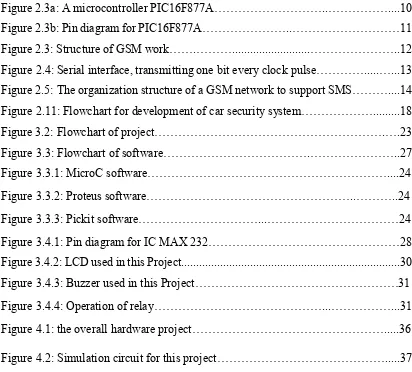
[image:14.595.112.524.164.536.2]LIST OF FIGURES
Figure 2.3a: A microcontroller PIC16F877A………..………....10
Figure 2.3b: Pin diagram for PIC16F877A………..………11
Figure 2.3: Structure of GSM work…….………...………..12
Figure 2.4: Serial interface, transmitting one bit every clock pulse…………...…...13
Figure 2.5: The organization structure of a GSM network to support SMS………....14
Figure 2.11: Flowchart for development of car security system………...18
Figure 3.2: Flowchart of project……….….23
Figure 3.3: Flowchart of software……….………..27
Figure 3.3.1: MicroC software………....24
Figure 3.3.2: Proteus software………..………..24
Figure 3.3.3: Pickit software………...………24
Figure 3.4.1: Pin diagram for IC MAX 232………28
Figure 3.4.2: LCD used in this Project...30
Figure 3.4.3: Buzzer used in this Project………31
Figure 3.4.4: Operation of relay………...………...31
Figure 4.1: the overall hardware project………...36
Figure 4.2: Simulation circuit for this project………...37
Figure 4.3: Result of LCD………...39
Figure 4.3a: The IR sensor circuit………...40
Figure 4.3b: The photomicro sensor circuit………..……..40
Figure 4.3c: The RF alarm circuit……….………..40
Figure 4.4.4a: Holding circuit on the hardware………..……41
Figure 4.4.4b: Holding circuit on the software………...42
XI
LIST OF ABBREVIATIONS, SYMBOLS AND
NOMENCLATURE
GSM - Global System for Mobile Communication SMS - Short message service
LAN - Local Area Network WANET - wireless ad hoc network
WPAN - Wireless Personal Area Network WLAN - Wireless Local Area Network
WMAN - Wireless Metropolitan Area Network WWAN - Wireless Wide Area Network
WLL - Wireless Local Loop
TDMA - time division multiple access CDMA - Code-Division Multiple Access UHF - ultra-high-frequency
IR - Infrared
GPS - global positioning system DTMF - Intelligent Electronic Devices CAN - Control Area Network
ECM - Engine Control Module
XII
HLR - Home Location Register BBS - Base station system UE - User Equipment MT - Mobile Termination TE - Terminal Equipment TA - Terminal Adapter
SIM - Subscriber Identity Module PID - Protocol Identifier
1
CHAPTER 1
INTRODUCTION
1.0 Introduction
This chapter explains about the project. The explanation include the problem statement of this project and also the objectives of the research. There are also have a few guidelines listed.
1.1 Background
The development of microcontroller based wireless stolen car detection system is the major concern nowadays. By developing this project, the car theft cases can be avoided. If the presence of the intruder is detected, the owner of the car will be informed by receiving a message on their hand phone. The hardware development and software design are combine this project. For hardware development, this system is controlled by a microcontroller PIC 16F877A and for the software design is conduct by using proteus 8 professional.
2
1.2 Problem Statement
In Malaysia, the car theft occur at the parking places which is it has become a matter of concern. This current issues is become higher in this country. It is because the vehicles does not have the security system. Sometimes, the owner does not realized when the car was stolen because they are far away from the car. The theft try hard to steal the car such as they looking for exposed wiring that can be cut, cut the steering wheel itself if there's a steering wheel lock and break the window or break the lock to gain entry into a locked car.
Thus, the GSM security system provides the solution for this problem by using PIC microcontroller. It can perform in two function which is detecting vehicle theft and give the information of location the car by SMS. GSM system is install in the vehicle for receive and send the information wirelessly to the owner of the car. This car security system is one tool that can help owner to avoid car theft in lower cost.
1.3 Objective
The project objectives are:
1) To develop microcontroller to detect the theft based on the related software. 2) To propose the notification system by implement modem in this project.
1.4 Scope of project
There are the scopes that have been outline in order to achieve the objective for this project
3
2) The project to be develop a GSM system that can be used to reduce based on the car theft problem by deliver a warning SMS to the users.
1.5 Medium of wireless
Wireless network is a medium that not use the wire and the function this network is to share information and resource between devices by frequency signals. It works on radio waves and microwaves. There are several type of network such as network formation and architecture, communication coverage area, access technology and satellite networks.
1.5.1 Network formation and architecture
1.5.1.1 Infra structure based network
Infrastructure-based wireless networks have or access point base stations. For mobile terminal the base stations can access. Base station are connect the coordinated control which perform the network control functions. Base station coordination can be function as networks scheduling, dynamic resource allocation, power control, and handoff which control the transmission schedule.
1.5.2 Communication coverage area
1.5.2.1 Wireless Local Area Network (WLAN)
WLAN is a wireless local area network. It is limited area coverage which is links two or more devices using a wireless distribution method whether spread-spectrum or OFDM radio. WLAN gives the ability to move around to users within a local coverage area and the user still be connected to the network because WLAN can provide a connection to the wider Internet. WLANs also call Wi-Fi brand at the marketed.
4
WMAN is a Wireless Metropolitan Area Network. It is also called Wireless Local Loop (WLL). The effectiveness can reach transfer speeds of 1 to 10 Mbps within a range of 4 to 10 kilometres by using WLL. It can reach speeds on the order of 70 Mbps over a radius of several kilometres as it also know WiMAX of wireless metropolitan area network.
1.5.2.3 Wireless Wide Area Network (WWAN)
WWAN is the wireless wide area network. It can coverage a large area by connecting separate areas of coverage wirelessly. The WWANs use as 3G or 4G networks because wireless WANs commonly use 3G and 4G mobile network connection types. WWANs usually used low data rates based on publicly shared data networks owned by service providers. WLAN are typically privately-owned networks that cover a smaller area such as a warehouse with data rates based on usage. Normally, WWANs are primarily used for smartphones and other handheld devices offered by cellular service providers.
1.5.2.4 Wireless Personal Area Network (WPAN)
WPAN is a wireless personal area network. WPAN is wireless connection that interconnecting devices centred on an individual person's workspace such as office or school. It is a personal area network which is. Typically, a WPAN only can use about 10 meters which a very short range such as Bluetooth.
1.5.3 Access Technology
5
Short for global system for mobile communication. GSM is type technology that send the SMS to the cell phone. Individual may receive the amount of coverage from GSM modem.
1.5.3.2 TDMA Networks
TDMA is a time division multiple access. In digital cellular telephone communication, to use the TDMA it is divide into three time parts in cellular channel. Each slots the amount of data that can be carried will increase.
1.5.3.3 CDMA Networks
CDMA is a Code-Division Multiple Access. CDMA divide into two generation which is in second-generation (2G) and third-generation (3G) wireless communications. The behaviour CDMA is a multiplexing where it allows numerous signals to occupy a single transmission channel and every use available bandwidth can optimize. In the cellular telephone systems, the ultra-high-frequency (UHF) use 800-MHz and 1.9-GHz bands.
1.5.4 Satellite Networks
1.5.4.1 Radio Networks
6
1.5.4.2 Microwave network
Microwave is use electromagnetic for transmission energy. The frequency spectrum range in 1.0 gigahertz (GHz) to 300 GHz. It is widely used for point to point communication because the wavelength is 30 centimetres down to 0.1 cm. The small wavelength allows it connect directly them in narrow beam which pointed at the receive antenna
1.5.4.3 Infrared Networks
7
CHAPTER 2
LITERATURE REVIEW
2.0 Introduction
This chapter discusses about the literature and review of structural analysis and some definition of the components used in this project such as GSM modem, PIC16F877A and IC MAX232. There have many difference sources and researches about the concept, design and implementation of the development of microcontroller using GSM. It also included the investigation of what others have done in this area. This study included the areas of hardware and software development. This chapter will explain the literature reviews related to the development of the car system which based on information that obtained from various sources, articles, technical reports, general reports, websites, books and personal communication about GSM. At the same time, to understand on how to use the software and device in the GSM control system.
2.1 Related Work
2.1.1 GPS Vehicle tracking system
8
information to GSM. GSM receive the information and can alert the owner. This system is low cost and very useful for car theft detection system. If the car was stolen, it will detect and inform the location within in second according to Shital Mohol, Amit Pavanikar and Ganesh Dhage, 2014.
2.1.2 A Smart Anti-theft System for Vehicle Security
Commonly parking places occur the car stolen. So, this proposed work is an attempt to develop a smart anti-theft system. This system use GPS and GSM system to prevent theft and tracking the location of car after car was stolen. The system contain GPS module, GSM modem, Infrared sensors, DTMF decoder IC MT8870DE, 8051 microcontroller, relay switch, vibration sensor, paint spray and high voltage mesh. It is use two way communication which is GSM will receive and transmit the data. The main circuit combination of two circuit which is for detecting the motion of car using infrared sensor and DTMF tone decoding for switching on and off the relay. When the thief try to open the car door, the sense of motion will sent the signal to 8051 microcontroller. Then, the microcontroller will trigger the circuit to relay. The microcontroller send signal to GSM mobile. So, calling signal send to owner’s car to inform the about the condition of their car in dangerous. The second circuit take the action which is ignition cut-off, fuel supply cut-off, windscreen paint spray and electric shock. It will fail the car theft from occur according to Pritpal Singh, Tanjot Sethi, Bibhuti Bhusan Biswal, and Sujit Kumar Pattanayak, 2015.
2.2.3 Design and Implementation of a Vehicle Theft Control Unit using GSM and CAN Technology