Page 1 Principals in remote New South Wales, Australia: The work lives of central school principals in the context of devolution reforms of the New South Wales Department of Education and Training, and social and economic changes in remote Australia
By Bruce Pietsch
MA, Grad Dip (Ed Admin), MEd (Hons)
A thesis submitted in fulfilment of the requirements for the degree of Doctor of Philosophy
Faculty of Education University of Tasmania
Launceston, Tasmania
Page 2 Declaration of originality
This thesis contains no material which has been accepted for a degree or diploma by the University or any other institution, except by way of background information and duly
acknowledged in the thesis, and to the best of my knowledge and belief no material previously published or written by another person except where due acknowledgement is made in the text of the thesis, nor does the thesis contain any material that infringes copyright.
Bruce Pietsch
Authority of access
This thesis may be made available for loan and limited copying in accordance with the Copyright Act 1968.
Page 3 Acknowledgements
I would like to acknowledge the many people who have given support, critical appraisal and friendship during this research project.
I thank the principals of central schools in the remote inland areas of New South Wales, who shared their hopes and disappointments with me about their work lives during both school hours and out-of-school hours. I thank them for their trust and openness in discussing what, for at least some of the principals, were distressing and potentially traumatic issues.
I have enjoyed the many aspects of travel in the journey of this research; travelling to the principals in their remote inland locations, travelling from the Australian mainland to the island state of Tasmania to meet with my supervisor and my research colleagues and the journey of discovery as I progressed on the research project.
I thank my study colleagues, both international and Australian. I feel privileged that they have shared with me many life stories and provided inspiration and encouragement to extend and continue with my studies.
Professor John Williamson has been unusually patient and tolerant in providing guidance and subtle suggestions for improvement as I have made my many mistakes along the way. I value his understanding and friendship along the way and I thank him for his affirmation of the value of this study and his encouragement to share the research findings at research conferences. I thank Dr Tony Dowden for his additional insights during the later stages of this research and his encouragement to keep polishing and improving my writing.
Page 4 Glossary of Terms Used
ABS Australian Bureau of Statistics
ACARA Australian Curriculum, Assessment and Reporting Authority
Central school New South Wales central schools have 13 Years from Kindergarten to Year 12. A very small number of central schools have 11 Years from Kindergarten to Year 10. The NSW DET plans to extend all central schools to Year 12
Deputy principal The second level of promotion in a NSW secondary school. Only a small number of central schools had a deputy principal
Head teacher First level of promotion in a secondary school or department. The majority of central schools have one head teacher, who is usually nominated by the principal as a de facto deputy principal in the school
HSC Higher School Certificate, awarded at end of Year 12 and serving as the entrance examination for university
ICSEA Index of socio-economic advantage used by ACARA as the provider of socio-economic information about schools and their communities K (Kindergarten) The first year of school in NSW
MCEETYA (Australian) Ministerial Council on Education, Employment, Training and Youth Affairs (from June 1993), now MCEECDYA – Ministerial Council for Education, Early Childhood Development and Youth Affairs (from July 2009)
NSW New South Wales
NSW DEC NSW Department of Education and Communities (from 2011) NSW DET NSW Department of Education and Training (from 1998) NSW DSE NSW Department of School Education (up to 1997)
Primary school NSW primary schools have seven Years from Kindergarten to Year 6 Secondary school NSW secondary schools have six Years from Year 7 to Year 12
SED School Education Director
Page 5 Contents
Declaration of originality ... 2
Authority of access ... 2
Acknowledgements ... 3
Glossary of Terms Used... 4
Contents ... 5
Tables ... 14
Figures... 15
Tables in Appendices ... 15
Abstract ... 16
Chapter 1 Introduction and Background ... 1
Introduction ... 1
Locating central schools in multiple contexts ... 2
Section 1: Education Policy Context of Devolution ... 3
Education policy context: Devolution, accountability and performativity ... 4
Devolution of New Zealand and Australian state education systems ... 5
Uniform standards of accountability ... 7
Mandatory Annual School Reports and school management plans ... 7
NSW standardised curricula and school exit point certificates ... 7
NSW and national standardised testing: Publication of results ... 7
Section 2: Community Context – Remote and low-SES ... 8
Remote schools different from other rural schools in NSW ... 8
Population decline in remote towns ... 11
Decline in farm populations ... 11
Declining services and facilities in remote towns ... 12
Rationalisation of services: Concern for “sustainability of rural life” ... 12
Low socio-economic status (SES) of remote NSW towns ... 14
New residents of remote towns on welfare ... 15
Changing demographic nature of student cohorts in remote schools ... 16
Aboriginal population an increasing proportion of total population ... 16
Decline in social capital ... 17
Section 3: School Context - Small and K-12 ... 18
Context of a small school: Central schools have decreased in size ... 18
Page 6
Remote schools getting smaller: Resistance to closure ... 20
Context of a K-12 school providing 13 years of education ... 21
Section 4: Impetus and Rationale of the Thesis - Work Lives and School Context ... 24
Insider research ... 25
Work lives ... 26
Conflicts of values and expectations ... 27
Paradox of principals‟ satisfaction and dissatisfaction ... 27
Research problem and Research Questions ... 28
Generic models of successful school leadership and contextual practice ... 29
Contingency and successful principalship ... 29
Significance of the thesis ... 30
Significance for educational research ... 31
Significance for educational policy ... 31
Significance for educational practice ... 32
Thesis Structure ... 32
Summary of Chapter 1 ... 35
Chapter 2 Literature Review... 36
Introduction ... 36
Section 1: Education Policy Context – Devolution, ... 37
Work intensification and working hours in Australia ... 37
Work intensification and the professional work force ... 38
Work intensification and the teaching workforce ... 39
Work intensification and school principals ... 40
Work intensification: Endogenous as well as exogenous contributing factors ... 41
Work intensification: Expanded job roles for the teaching workforce... 43
Work Intensification of School Principals: Context of Devolution ... 44
The “greedy work” of principals ... 48
Diversification of principals‟ tasks ... 49
Generic models of leadership ... 50
The “romance” of leadership ... 51
Models of “heroic” principals ... 52
Page 7 Distributed leadership: Response to complexities of school principals‟ work . 56
Principals‟ dilemmas ... 56
Paradoxical attitudes of principals: The work of Herzberg revisited ... 59
Stress levels, loneliness and wellbeing of principals... 61
Principals‟ feelings of failure and guilt in not achieving all goals ... 64
Shortage of applicants for principalship of schools in general... 65
Shortage of applicants for principalship in remote Australian schools ... 67
Section 2: Community Context – Remote and low-SES ... 69
Work Lives of Principals of Remote Schools ... 69
Work Lives of Principals of Low-SES Schools ... 72
Section 3: School Context – Small and K to 12... 74
Work Lives of Principals of Small Schools ... 75
Constraints on management of small schools ... 76
Constraints on career progression of principals of small schools ... 77
Survival of small schools... 77
Very small schools and the intensity of interactions with the community ... 79
Work Lives of Principals of K-12 Schools ... 80
Summary of Chapter 2 ... 81
Chapter 3 Methodology ... 83
Introduction ... 83
Research Approach ... 84
Study of a collective case ... 84
Mixed Methods Research ... 85
Compatibility and pragmatism ... 85
Triangulation and crystallisation ... 86
A qualitative paradigm ... 87
A “thick description” ... 87
Researcher identity ... 88
Impression management ... 89
Insider research ... 91
Objectivity and distance between researcher and interviewees ... 91
Understanding of the work lives of principals of all central schools ... 92
Page 8
Research timeline for ethics approval, survey and interviews ... 92
Selection of survey respondents and interview participants... 94
Quantitative Data Gathering: Survey Questionnaire ... 95
Survey Section A: Principals‟ perceptions of school-based management ... 96
Survey Section B: Principals‟ perceptions of time spent on principals‟ tasks ... 97
Survey Section C: Principals‟ characteristics, background information ... 98
Quantitative Data Analysis ... 98
Coding and creation of data sets ... 98
Single variable analysis: Descriptive statistics ... 98
Possible associations: Cross tabulations and Pearson‟s chi-square ... 99
Reduction of data: Factor analysis ... 99
Cronbach‟s alpha coefficient ... 99
Extracting factors ... 100
Comparisons of means ... 100
Rationale for use of parametric tests ... 101
Qualitative Data Gathering: Program of Interviews ... 101
Collection of data: Interview recordings and transcripts ... 102
Reducing researcher subjectivity in recording and transcription ... 104
Qualitative Data Analysis ... 104
Use of computer software in analysis of transcripts ... 104
Summary of Chapter 3 ... 105
Chapter 4 Results: Research Question 1, 2 and 3 ... 107
Introduction ... 107
Coding and de-identification of towns, schools and principals ... 108
Survey data: Background context of principals of central schools ... 108
Principals as novices in their different contexts ... 109
Section 1: Education Policy Context of Devolution ... 111
Comparisons between demographic subgroups in the survey ... 111
Possible associations ... 111
Factor analysis and comparison of means ... 112
Principals‟ views on school-based management ... 112
Page 9
Levels of satisfaction of principals with devolution reforms ... 114
Uniform standards of accountability ... 115
Responses to standardised tests ... 115
Annual School Reports ... 117
School management plans ... 118
Work Intensification: Working longer hours ... 119
Survey of endogenous and exogenous factors in working longer hours ... 119
Increased number and diversity of tasks ... 121
Health concerns ... 123
“Marketisation”: Free bus passes for students... 124
Devolution: The principal seen as „the Department‟ ... 125
Dealing with parent and staff complaints ... 126
Parent complaints ... 126
Staff complaints ... 130
Relationships with School Education Directors ... 130
Conflicting roles of the School Education Director ... 132
Systemic accountability and relationship with Directors ... 133
Dealing with school crises ... 134
Section 2: Community Context – Remote and low-SES ... 134
Remote Context ... 135
Long distance travel – OH&S... 135
Issues of isolation ... 135
Isolation from family and friends ... 135
Isolation of family members ... 137
Critical relations with local community: Principals being forced out ... 138
Living in the town? ... 140
Buying a house in the town? ... 142
Attitudes to female principals ... 143
Socio-economic Status (SES) Context ... 144
Declining populations ... 144
Prolonged drought: Effect on remote area populations ... 145
Page 10
Demographic and social change in remote areas ... 147
Social effects of the drought, lack of employment opportunities ... 147
Low levels of income ... 147
High proportion of students with special needs or social problems ... 148
Time taken on discipline and welfare issues ... 148
Community resentment of newer residents ... 149
Decline in respect for authority ... 149
Rationalisation of services: The last remaining government agency ... 150
Child sexual abuse ... 151
Violence and lack of personal safety ... 154
Violence in the community ... 154
Threats of violence to principals ... 155
Section 3: School Context – Small and K-12 ... 157
Small School Context ... 157
Decreasing enrolments in central schools ... 158
Central School Context: K-12 (primary and secondary departments) ... 159
Documentation work load for a central school ... 160
Staffing issues ... 160
Providing a broad curriculum ... 161
Recruitment of teachers ... 162
Teaching outside subject specialist area ... 163
Principals teaching classes when teaching positions were not filled ... 164
Professional isolation... 164
Isolation from primary and secondary principal colleagues ... 165
Lack of collegial support ... 166
Lack of experience as principal or working in a central school ... 167
Central schools overlooked by DET ... 167
High turnover of principals, leaving central school and end of career ... 168
Secondary-trained principals: Career progression ... 169
Three Research Questions and Major Emergent Findings ... 171
Frequency of comments and concerns ... 171
Page 11
Chapter 5 Findings and Discussion ... 178
Overview ... 178
1. Changed demographic of central school principals ... 180
2. Principals as novices removed from collegial support ... 181
3. Recruitment and retention of staff ... 182
RQ1: Education Policy Context - Devolution ... 183
Major Finding 1: Education Policy and Work Intensification ... 183
Endogenous as well as exogenous factors ... 185
Work Intensification Component 1: Working longer hours ... 186
Work Intensification Component 2: Increased number of tasks each day ... 187
Work Intensification Component 3: Increased diversity of tasks ... 188
Resilience and health issues ... 189
Remote and Low-SES Community and Work Intensification ... 190
Remote community and work intensification... 190
Diversity of additional tasks in remote communities ... 192
Reporting child sexual abuse ... 192
Telephone, computer and internet maintenance ... 193
Low-SES community and work intensification ... 194
Reduced social capital and community capacity to support remote school ... 196
Small K-12 Schools and Work Intensification ... 197
Limited availability of specialist secondary staff: Principals‟ workloads ... 198
Summary of work intensification finding ... 198
RQ2: Community Context – Remote and Low-SES ... 199
Major Finding 2: Community Context and Principals‟ Isolation ... 199
Remote communities and central schools different from other rural schools ... 199
Social isolation and separation from family ... 201
Attitudes towards female principals ... 202
Threats of violence to principals ... 203
Small K-12 Schools, Loneliness and Principals‟ Isolation ... 204
Loneliness and professional isolation ... 204
Isolation from colleagues ... 206
Page 12
Summary of work isolation finding ... 207
RQ3: School Context – Small School and K to 12 ... 208
Major Finding 3: School Context and Limited Career Prospects ... 208
Remote area decline ... 209
Concern for viability of small schools ... 209
Career concern ... 210
Lower classification of school: Forced transfer of principal ... 210
Risk of being „forced out‟ ... 211
Parent or community dissatisfaction ... 211
Staff dissatisfaction ... 212
Education Policy and Limited Career Prospects ... 213
Parental choice of school, free buses and school viability ... 213
Privileging standardised tests and career concerns in principal evaluation .... 214
Decreased opportunities for transfer or promotion ... 215
Implications for Research, Policy and Practice ... 216
Implications for research ... 216
Remote context different from that of other rural or low-SES contexts ... 216
Generic leadership models ... 217
Implications for Educational Policy and Practice for Principals of Central Schools218 Suggestions for Future Research ... 220
Summary ... 220
References ... 222
Appendices ... 257
Appendix A Preparation of study ... 257
Appendix A1 Map of NSW: Inland areas and location of central schools ... 258
Appendix A2 Request re survey of principal‟s perceptions ... 260
Appendix A3 Ethics committee report ... 262
Appendix A4 Ethics committee final approval... 265
Appendix B Quantitative Data Gathering, Survey and Analysis ... 266
Appendix B1 Survey questions for principals of NSW central schools ... 267
Appendix C Qualitative Data Gathering, Interviews and Analysis... 277
Appendix C1 Questions for Stage 1 semi-structured interview ... 278
Page 14 Tables
Table 1.1 NSW government schools, 2005 ... 2
Table 1.2 Number of central schools in Classes 1 and 2 ... 19
Table 1.3 Retention rates to complete Year 12 ... 19
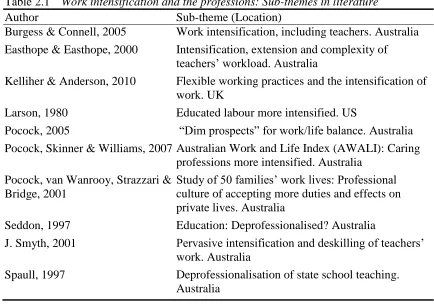
Table 2.1 Work intensification and the professions: Sub-themes in literature ... 40
Table 2.2 Endogenous and exogenous factors: Sub-themes in literature ... 41
Table 2.3 Work intensification of principals: Sub-themes in literature ... 47
Table 2.4 Diversification, expanding roles: Sub-themes in literature ... 50
Table 2.5 Heroic leadership: Sub-themes in literature ... 54
Table 2.6 Designer leadership - Professional standards: Sub-themes in literature .... 55
Table 2.7 Principals’ dilemmas: Sub-themes in literature ... 59
Table 2.8 Herzberg’s satisfiers and dissatisfiers: Sub-themes in literature ... 61
Table 2.9 Loneliness and isolation of principals: Sub-themes in literature ... 63
Table 2.10 Shortage of principal applicants: Sub-themes in literature ... 66
Table 2.11 Leading remote and low-SES schools: Sub-themes in literature ... 74
Table 2.12 Small schools: Sub-themes in literature... 80
Table 3.1 Timeline of research activities ... 94
Table 4.1 Principals of central schools: Gender, Age ... 109
Table 4.2 Principal experience: Training and school tenure ... 110
Table 4.3 School-based management and flexibility ... 113
Table 4.4 Benefit of current level of school-based management ... 114
Table 4.5 Standardised tests, Annual School Report and Management Plan ... 115
Table 4.6 Endogenous and exogenous factors in time spent by principals ... 121
Table 4.7 Size of schools led by surveyed principals ... 157
Table 4.8 Three Research Questions and major emergent findings ... 171
Table 4.9 Major finding – Work intensification: Number of comments ... 173
Table 4.10 Major finding – Isolation: Number of comments ... 174
Page 15 Figures
Figure 5.1 Research Questions: Contexts and work lives implications ...178
Tables in Appendices Table A 1 Comparison of areas of NSW, France, Germany areas in km2 ... 259
Table B 1 Variable categories used in survey and number of items ... 272
Table B 2 Professional autonomy and effects on student success ... 273
Table B 3 Internal consistency: Reliability coefficients of section groups ... 274
Table B 4 Internal consistency: Reliability coefficients of item subgroups ... 275
Table B 5 Principal components from factor analysis of survey Section A ... 276
Table C 1 NVivo tree nodes sorted according to groups of people ………. …. 294
Page 16 Abstract
This thesis investigated the work lives of principals of central schools situated in remote inland areas of the state of New South Wales (NSW), Australia. This research considered how the situational contexts of central school leadership in remote NSW have affected the work lives of principals of central schools in remote NSW. These contexts included the education policy context of devolution of government school systems, the community context of remoteness and low socio-economic status (SES) and the specific school context of leading a small school and leading both secondary and primary
departments.
Research literature such as Ballet and Kelchtermans (2008), Gronn and Rawlings-Sanaei (2003) and Southwell (2008) on the factor of the education policies of devolution in the work lives of principals described characteristics which match the attributes of work intensification including longer hours of work, more tasks to be completed in a day, and diversification of skills. However, current literature has much less data about the particular contexts of the work lives of principals living in, and working with the issues of, remote and low SES communities. There is even less data about the implications for principals
attempting to provide secondary education in such communities.
This research study used a mixed methods design beginning with a survey questionnaire of all principals of central schools in NSW. Nearly half of the survey respondents then participated in a longitudinal program of interviews conducted in the schools of the principals. The rapport with principals developed by the researcher as an „insider‟ facilitated the collection of rich data on the work lives of the principals. Many of the issues raised had not been fully researched in broader studies.
The study confirmed the research of Starr and White (2008) and Hatton (1995, 1996), who reported “massive intensification” in the work lives of principals in remote Australian schools. In addition, the study provided a more nuanced understanding of the work
Page 17 study provided a greater understanding with respect to the issue of low numbers of
applications for the principalship, particularly in remote areas.
Much of the literature on school leadership is generic in nature with considerable reliance on theories of leadership and management which have been developed in non-school contexts. This study suggested that there needs to be more research on the variety of
Page 1 Chapter 1 Introduction and Background
Introduction
This thesis investigates the work lives of principals of central schools situated in remote inland areas of the state of New South Wales (NSW), Australia. In NSW, central schools provide both secondary and primary levels of education in small towns and villages, which are not large enough to justify having a secondary school as well as a primary school. Historically, central schools were created by extending existing primary schools in remote areas to include the early years of secondary schooling, that is, up to Years 7 and 8. However, at the time of this thesis, nearly all central schools in NSW had extended the provision of secondary education up to university matriculation level at the end of Year 12. Central schools in NSW have provided curriculum for the 13 years of education from Kindergarten (K) to Year 12 and are known as K-12 schools.
The majority of central schools in the state of NSW are in small towns, which are located in semi-arid or desert regions of the state. Typically, residents of these towns require at least two hours driving to access the facilities of the nearest provincial city. They are typically located at least one hour‟s drive from the nearest rural town of over 1000 people making collegial meetings and professional development difficult, and constraining the use of personal services such as banking and medical services.
Geographically, the 58 central schools considered in this research project are located in inland areas up to 1000 kilometres distance from Sydney, the state capital of NSW, and similar distances from the next largest cities, Newcastle and Wollongong. All three major cities are located on the NSW coast.
Page 2 metropolitan or larger rural centres. In this research, the group of remote central schools was considered as a distinct subcategory of rural schools. The overwhelming majority of the 2246 principals of NSW public schools work in metropolitan or provincial cities, which have over 95 per cent of the NSW population. School principals in rural centres constitute a minority of the total group of NSW principals and principals of central schools form a minority within the minority of principals of all rural schools. (See Table 1.1 for an indication of the small proportion of central schools in NSW)
Table 1.1 NSW government schools, 2005
Type of school Years of schooling Number of schools
Primary K-6 1635
Separate Infants K-2 17
Secondary 7-12 397
Schools for specific purposes (SSPs) Various 108 Environmental education centres (EECs) Various 23
Community K-12 6a
Central K-12 or K-10 60b
Total government schools 2246
Note. NSW government schools provide education in 13 years, from Kindergarten (K) to Year 12. At the end of Year 12, students are able to matriculate to university.
a
Community schools are large schools in coastal, large city locations and are not included in the study. b Two central schools, one on an island and a large coastal school near the capital, Sydney, are not included in the study. At the time of the study, all except three of the central schools were K-12. Data were from NSW Department of Education and Training (DET) (2006b, p. 1, see Table 1.2) .
Locating central schools in multiple contexts
Central schools are located in several contexts that significantly affect the way in which they provide for students and the work lives of their staff.
These contexts include:
1. The broader educational policy context which governs the provision of education in 2246 government schools across NSW;
2. The particular geographic and socio-economic contexts which constitute the local community context in which central schools operate; and
[image:19.612.131.557.241.368.2]Page 3 Each of the above contexts has particular characteristics which have combined to form the unique conditions in which principals of central schools work:
1. At the systemic level, over the past two decades the NSW government has implemented a policy of devolving the government education system from a centralised system to a system of school-based responsibilities and accompanying accountabilities, particularly for principals;
2. Central schools usually are located in remote and low socio-economic status (SES) communities and;
3. They have a specific school context of being small and providing 13 years of education from Kindergarten to Year 12. Central schools are known as K-12 schools.
The three contexts will be described further in the first three Sections of Chapter 1.
Section 1: Education Policy Context of Devolution
The educational policy, community and school contexts in which NSW central schools are located has had many implications for the work lives of principals of these schools. Initial perceptions of the implications of these contexts for the work lives of principals provided the impetus for this research. This project explored the extent to which the work lives of principals of remote central schools have been affected by changes in state and national education policies, changes in the remote community context and the characteristics of a small K-12 school.
It is the principalship, particularly leadership of teaching in these schools
Page 4 Education policy context: Devolution, accountability and performativity There has been a significant body of literature which has dealt with the overall policy context of schools in general and the changes over the past two decades as school systems across the world moved from highly centralised to highly decentralised systems. This global trend toward decentralisation and, in some cases, to devolution of school systems, began in the late 1980s and continued into the 1990s (Bjork, 2003; Bottani, 2000; Caldwell, 2006a; Derqui, 2001; McGinn & Welsh, 1999; Pascoe & Pascoe, 1998; Sahid, 2004; Sayed, 2002; Wylie, 1995). Critics of previously established centralised systems of government education have expressed dissatisfaction with issues such as the lack of students‟ abilities in basic literacy, grammar, spelling and mathematics and school management issues such as student discipline (Barnett, 2001; Donnelly, 2004).
Internationally, the movement to devolution is characterised by a number of policy changes. These include the marketisation of schools and the introduction of competition amongst schools for students; the introduction of mechanisms which have given parents more choice of schools (Ladd & Fiske, 2001; Lidstrom, 1999; Lubienski, 2003; R. Morgan & Blackmore, 2007; Whitty, Halpin, & Power, 1998). Parents and communities are provided with more avenues for participation in school governance (B. W. Scott, 1989, 1990b) and financial and human resources are devolved to local management. The devolution of financial and human resources has been accompanied by an
increasing focus on accountability and performativity and the requirement that schools satisfy a range of externally imposed standards. This move to devolution, in which devolved schools were given directions using accountability mechanisms, came to be seen as a process of “steering at a distance” (Kickert, 1995, p. 135). The same process has been referred to in the UK and New Zealand as „new public management‟
(Goldspink, 2007, p. 27) and in Australia as „corporate managerialism‟ (Hatton, 1995, p. 25).
Page 5 (Buchanan, Tollison, & Tullock, 1980; Chubb & Moe, 1988; Friedman, 1955). This process became known as „provider capture‟ (Donnelly, 2004, p. 197). Their research has argued that the influence of the professional providers of school education should be balanced by greater consumer control, which can be achieved by increasing the role of parents and community members in school governance, the devolution of responsibility and resources to local schools and by subjecting government schools to market forces of competition.
In England and Wales, the reaction to provider capture led to the development of school-based management following the 1988 Education Reform Act. The Act initiated a version of market devolution in which parents were given more choice of schools for their children and schools were forced to compete for their clients. League tables comparing schools on the basis of student performances in national standardised tests were designed to assist parents in making their choice of school (Lingard, Hayes, & Mills, 1999). Levacic (1995) found that, of the four main criteria associated with
intentions for the UK devolution of school systems (effectiveness, efficiency, equity and choice), efficiency was the one for which there was most evidence that local
management had achieved the aims set for it by government (p. 190). The same concern for efficiency characterised much of the rhetoric around the devolution of management responsibility to local schools in NSW (B. W. Scott, 1989, 1990a, 1990b).
Devolution of New Zealand and Australian state education systems
Page 6 Following the devolution reforms in Western Australia and Victoria, in 1997, Queensland announced the Leading Schools program to implement school based management (Education Queensland, 1998). South Australia launched its version of local school management referred to as Partnerships 21 in 1999 (Sahid, 2004; South Australia Department of Education Training and Employment, 1999). Tasmania
introduced local self-management in several stages after the Cresap Report (1990) by an independent firm of consultants, and the internal Department of Education review (DECCD, 1996).
As part of the “policy borrowing” (Lingard, 2010, p. 129), that was evident in the global and national trend to devolution, NSW also developed its model of school-based management (B. W. Scott, 1989, 1990b). In a white paper for the NSW government, the Minister for Education stated that his proposals for a more devolved system of NSW public education would achieve a variety of benefits for public schools (Metherell, 1989). Metherell maintained that these benefits included more efficient management of resources, a system of staffing schools which would be more responsive to local needs, improved staff morale, improved student achievement and a higher level of teacher professionalism. Some researchers, such as Riordan and Weller (2000), described the subsequent NSW Education Reform Act (1990) as being the most significant reform in NSW education in over a century, since Sir Henry Parkes introduced the Public Schools Act (1866) and the Public Instruction Act (1880) in the then colony of NSW.
Page 7 Uniform standards of accountability
Mandatory Annual School Reports and school management plans
The NSW Education Reform Act (1990) required principals of NSW government schools to produce an Annual School Report, which had a standard template and
principals were required to provide detailed information under specific subheadings. For example, principals of primary and central schools were required to publish
comprehensive reports and statistics on school results in standardised testing in literacy and numeracy. Principals of high schools and central schools were required to publish achievement levels in School Certificate examinations (set at the end of Year 10) and the Higher School Certificate examinations (set at the end of Year 12) and to prepare school management plans with targets and strategies to achieve improved outcomes in student achievement levels based on data from standardised tests.
NSW standardised curricula and school exit point certificates
Summative testing, previously administered by the NSW Department of School Education, across a wide range of subjects at the end of Years 10 and Years 12 for the School Certificate and Higher School Certificate awards remained in place as before 1990. The Education Reform Act (1990) established an independent Board of Studies. The NSW Board of Studies (BOS) took over from the Department of School Education the responsibility of preparing curricula for both government and non-government schools in NSW and setting examinations for the School Certificate and Higher School Certificate.
NSW and national standardised testing: Publication of results
At the time of the research, the NSW Board of Studies (BOS) was responsible for the setting and marking of a range of standardised tests related to students‟ literacy and numeracy skills which were mandatory in all NSW government schools. These included Basic Skills Tests (BSTs) in literacy, numeracy and writing for Years 3 and 5;
Page 8 Assessment (ELLA) tests in Years 7 and 9. In the process of reporting the results of these tests and examinations to individual schools, the BOS sent packages to schools which included student results and school statistics associated with these results. For the BSTs, SNAP and ELLA basic skills testing programs, the results were treated as
formative and the BOS provided detailed analysis of responses to test items and resources to assist teachers in improving the basic educational skills of students.
In 2008, the standardised testing in NSW government schools was replaced by nationally uniform standards for all government and non-government schools using National Assessment Program - Literacy and Numeracy (NAPLAN) tests. The results of the NAPLAN tests are published on the „My School‟ website and the public are able to use the NAPLAN results to compare results of schools across Australia and within groups of schools with the same measurement on the Index of Community Socio-Educational Advantage (ICSEA).
Early studies and reviews of devolution reforms in NSW (NSW Director-General of School Education, 1996; NSW External Council of Review, 1994; Pietsch, 1993; Steering Committee for the Review of Commonwealth/State Service Provision, 1998), Victoria (Caldwell, 1998; Caldwell & Hayward, 1998) and New Zealand (Wylie, 1997b, 2003) generally reported positive responses by principals to the devolution reforms. However, little account was taken in the implementation of devolution reforms of the differentiated contexts within which principals worked and accountability mechanisms were rarely adjusted to accommodate the exigencies of local contexts.
Section 2: Community Context – Remote and low-SES Remote schools different from other rural schools in NSW
Page 9 people (ABS, 2004). The overwhelming majority of NSW schools are located in the metropolitan area and other coastal cities which have continued to experience population growth in contrast to the towns and villages in which central schools typically are
located.
Use of the broad category of „rural‟ in socio-economic, and education studies, has often obscured the differences between various types of non-metropolitan communities. In 2013, the NSW Department of Education and Communities (DEC) advertised the benefits of becoming „rural teachers‟ (NSW DEC, 2013a). In the advertisement, all four of the featured rural teachers worked in larger rural cities and towns. Two of the centres had access to local universities and two are in larger centres with resident SEDs and education offices supporting professional development. These descriptions of teachers‟ work lives do not adequately represent the experience of all teachers working in rural areas. In particular, the experience of teachers and principals in remote schools is often under-represented or not represented at all.
The Australian Bureau of Statistics (ABS, 2001) and several Australian socio-economic studies (Haslam-McKenzie, 1998; Lloyd, Harding, & Hellwig, 2000; Vinson, 1999, 2002a, 2002b, 2002c) have attempted to address this problem by providing data on more refined subcategories of rural populations. Use of the undifferentiated term, „rural‟, has led to misinterpretation of statistics. For example, although the ABS has described a steady population growth in rural areas over the previous 30 years, when „rural‟ areas are limited to those depending on agricultural production and can be defined as entirely rural and remote, the ABS data for remote towns and villages shows that their populations has been steadily decreasing (Haslam-McKenzie, 1998). Residents of remote communities have believed they were the “forgotten people”
(Haslam-McKenzie, 1998, p. 41) and that policy makers did not understand the issues and
challenges of remote communities. They were concerned about the “continuing drain of young people” (p. 47) from their communities to Sydney, coastal areas and other larger rural centres in NSW.
Page 10 Education and Training (NSW DET), now NSW Department of Education and
Communities (NSW DEC), allocated incentive points for appointments to designated hard-to-staff schools. Teachers with incentive points are awarded small supplements to their salary. In addition, those who accepted appointments to a remote school gained a right to transfer after two or three years. Of the 58 central schools in this study, 22 were assigned the highest incentive points, six or eight, for remoteness, which guaranteed teachers an entitlement to transfer after either two or three years at the school (NSW DET, 2005, p. 10). Although this policy was designed to attract teachers to isolated schools, it also had the effect of increasing the turnover or churning of staff as teachers took up more favoured positions after spending two or three years at the school. As a result, teachers and principals in remote schools tend to be less experienced compared to teachers in Sydney and larger rural cities (Human Rights and Equal Opportunity
Commission (HREOC), 2000b; Letts, Novak, Gottschall, Green, & Meyenn, 2005; Preston, 2000a, 2000b; P. C. Roberts, 2004).
Page 11 Population decline in remote towns
Central schools are located in towns and villages which have for some time been the sites of population decline in both farming populations and in the supporting towns and villages which are dependent on farms for their own livelihood. During the years 2001 to 2009 in the dry inland areas of NSW, Bourke and Central Darling populations fell by 22 and 18 per cent respectively; and the towns of Warren, Urana, Jerilderie and Walgett fell by 18, 15, 13 and 13 per cent respectively (ABS, 2010a). The decline in population was accompanied by a decline in facilities available for residents who remained. This decline has meant that school staff are not only increasingly
professionally isolated by distances to colleagues and educational services, but are also isolated from mainstream personal services such as banking and medical facilities. After the devolution reforms in NSW, the DET state office still appointed classroom teachers to tenured positions. However, principals have had an increased responsibility to recruit short-term casual staff, executive staff and other staff in schools with special needs. In remote communities with declining populations and services and an aging population, it has been more difficult to attract and retain staff.
Decline in farm populations
Adding to the pressures in remote areas are deteriorating economic conditions for farming communities which are key to the survival of remote schools. Farming
communities have been facing declining commodity prices, increases in productivity and capital intensity, parallel restructuring in service industries, and the restructuring and rationalisation of rural processing. Farm populations have declined. The number of farming families in Australia decreased by 22 per cent between 1986 and 2001 and the median age of farmers increased from 47 years in 1986 to 51 years in 2001 (ABS, 2003). In remote towns there was a “high cost of service delivery, declining population,
declining property values [and] ageing population” (Worthington & Dollery, 2001, p. 60). The same declines have occurred in NSW (Judd, Cooper, Fraser, & Davis, 2006).
Page 12 NSW with over 20 000 people still experienced population growth, the aggregation of data for rural regions that included growing provincial cities, coastal resort growth areas and remote villages has obscured the specific data that scattered small towns and
localities in inland NSW have continued to experience substantial population decline (McKenzie, 1996, p. 207). Remote area employment, especially for school leavers and younger people with families, has become much more limited and has led to a
significant reduction in the numbers of young people residing in remote towns. The continuing deterioration in terms of trade for farmers‟ agricultural produce, combined with the increasing use of on-farm technologies and withdrawal of previous government support for closer settlement and farm subsidies has led to farm
amalgamations and a decline in the on-farm labour force (Higgins, 1998, p. 21). Higgins described the process as a “vicious cycle”, a “dynamic of decline” in which populations decreased, services decreased and residual communities found it difficult to remain economically and socially viable (Higgins, 1998). The typical farmer now manages a larger area on his or her own, in some cases with the support of a marriage partner or family member, and needs extra labour only during occasional times of peak activity.
Declining services and facilities in remote towns
Rationalisation of services: Concern for “sustainability of rural life”
The rationalisation of services has resulted in the loss of essential services and concomitant employment loss. The impact of these losses on the quality and
sustainability of life in rural communities has led to a rise in rural dissatisfaction and there are genuine concerns over the “sustainability of rural life” amidst a growing outflow of essential public and private services (Argent & Rolley, 2000, p. 183).
Between 1988 and 1995, 5,000 hospital beds were closed in NSW and 30 hospitals, the majority in rural areas, were closed, downgraded or privatised ("The Land", cited in HREOC, 1999, p. 4). Health services in more remote locations had difficulty in recruiting and retaining an adequate number of qualified professional staff, resulting in concerns about the health and wellbeing of residents in remote areas
Page 13 concern has been the high rate of suicide in remote NSW towns (Judd et al., 2006) and the lack of available maternity services (C. Roberts & Algert, 2000). Women living in remote areas have often had no option but to travel during pregnancies and such concerns have led some to suggest that this is a factor in a reduction in the number of people who want to raise families in remote areas (Dietsch, Davies, Shackleton, Alston, & McLeod, 2008).
Although mining activity has generated employment opportunities and population growth in some remote centres in states such as Queensland and Western Australia this has not been the case for inland NSW. The remote areas of inland NSW have remained dependent on farming and farm services as the main source of employment.
The decline resulting from rationalisation of services has been more acute in remote towns compared to other rural centres. In 1997-98, during a period of general bank closures, 199 bank branches were closed in NSW, the most in the nation (Iemma, 1998). Residents of remote towns worried that closing the only bank in town would eventually create a “ghost town” (Beal & Ralston, 1998, p. 55) and when people were forced to travel to larger towns to obtain cash and do their shopping it spelt “death to local businesses, local services and local communities” (p. 59).
In addition, Beal and Ralston (1998) noted that the social fabric of these towns was affected by the movement of population to larger centres. During the previous decade, the reduced populations of people working directly on farms or in farm service industries resulted in a reduced number of people available to support the local school. Women, in particular, were predominantly involved in contacts with teachers in the school and in voluntary activities, such as staffing a school canteen or organising a school fete. In the changed economic conditions of the previous decade, women are now more often employed directly in farm work or supplementing the reduced family
Page 14 Low socio-economic status (SES) of remote NSW towns
Remote central schools are located in towns and villages which share some of the characteristics of rural locations but which also demonstrate more starkly the effects of population decline and the emergence of distinct issues which differentiate remote communities from larger rural towns and cities. Most of the remote communities that are served by central schools have a low socio-economic status (SES) profile and are
characterised by declining population and services.
Nearly all remote NSW towns with central schools have populations of only 200-999 people, although some central schools serve even smaller villages. When local government areas of rural populations were examined by (Lloyd et al., 2000), remote towns were found to be not only more disadvantaged when compared to capital cities but also when compared to towns and cities in other groupings of larger rural centres. In non-metropolitan areas of Australia, the groups with greatest disadvantage were
“residents of small rural towns rather than residents of rural areas” (p. 22).
Vinson (1999, 2002a, 2002b, 2002c) observed similar contrasts when he examined small population divisions based on postcodes. Rural areas outside the capital, Sydney, and the second city, Newcastle, had only 30 per cent of the state‟s population yet the rural areas had 77 per cent of the most disadvantaged areas (Vinson, 1999). Eighty per cent of central school communities were in the 49 per cent of postcode areas with most disadvantage in NSW. Over half, 52 per cent, of the central school communities were in the 29 per cent of post code areas of most disadvantage (Vinson, 1999, pp. 68-80). Seven out of ten post code areas with the highest ranking mortality ratio scores in NSW were the communities of Brewarrina, Collarenebri, Goodooga, Ivanhoe, Lightning Ridge, Menindee and Wilcannia, which had matching central schools (Vinson, 1999, pp. 36-38).
Page 15 unemployment. At the same time, there are reduced levels of services, such as banking and health services (p. 110), to provide support for an increasingly disadvantaged population.
The Australian Senate Community Affairs References Committee (2004) found that in remote areas average incomes have declined, populations have aged and newer residents who had moved to remote towns have high welfare needs. In addition, the Committee heard submissions about the consequences of economic deregulation, industry restructuring, the withdrawal of government services, such as hospitals and schools, and the closure of banks and other businesses (pp. 323-324) and deleterious consequences of the prolonged drought, such as increasing levels of family breakdown and crime (p. 327).
New residents of remote towns on welfare
Many low-income households are attracted to declining or static rural towns because housing is cheaper or public housing waiting lists are shorter and consequently these towns have increasing numbers of households on social security payments
Page 16
Changing demographic nature of student cohorts in remote schools
The nature of student cohorts in remote schools across the state also has changed. These changes include an increased proportion of students in the secondary levels of the school who require teachers with specialist subject skills. In addition, the increased proportion of students from low-SES backgrounds with special needs has required teachers to exercise special skills in classroom management and social and cultural awareness of students whose backgrounds are different to that of teachers at the school.
Remote NSW schools have had an increasing proportion of their enrolments who are Aboriginal students. For example, from 1993 to 2008 the proportion of Aboriginal students at Boggabilla Central School had increased from 60 per cent to approximately 80 to 90 per cent (Patty, 2008b). Likewise, between the early 1990s and 2006, although the total enrolment of Mungindi Central School had decreased from 200 to 80 the proportion of Aboriginal students had increased from 60 per cent to 100 per cent (Patty, 2008a). Another medium-sized central school, which in earlier years had had a mixed enrolment of Aboriginal and Aboriginal students, had no enrolments of non-Aboriginal students at the time of the study. The increasing proportion of non-Aboriginal students in remote school populations presented mainly novice principals of central schools with the particular challenges of accommodating specialist Aboriginal cultural knowledge within curriculum provision and developing cultural awareness and
competence in teaching staff, as well as managing a range of social and economic issues associated with entrenched social and economic disadvantage.
Aboriginal population an increasing proportion of total population
Page 17 Government Office of Communities – Aboriginal Affairs, 2006a; 2006b; 2006c). In each of the three remote communities above, the proportion of Aboriginal people in the total population has increased significantly over the five-year period.
The ageing of the non-Aboriginal population in remote areas was partly hidden in aggregated population statistics by the influence of a significantly younger median age of the Aboriginal population. In 2006, the median age of the Aboriginal population of Australia was 16 years less than that of the non-Aboriginal population (ABS, 2006). Aboriginal families had a higher birth rate than the average non-Aboriginal family and the teenage fertility rate of Aboriginal women was almost five times the teenage fertility rate of all women (ABS, 2011). In addition, the average life expectancy for Aboriginal people was much lower than the Australian average (ABS, 2009). In some remote towns, and in their schools, the increasing levels of social disadvantage are accompanied by the emergence of an undercurrent of racial tension.
Decline in social capital
Social capital has been broadly defined as “the norms and social relations
embedded in the social structures of societies that enable people to co-ordinate action to achieve desired goals” (Organisation for Economic Co-operation and Development (OECD), 2003, p. 1). The use of the term „social capital‟ and its association with social cohesion, personal investment in the community and the quality of education in schools, particularly in rural communities, has had a long history. Hanifan (1916) demonstrated the importance of social capital and community involvement for students to achieve success in the remote schools of West Virginia. In the United States context, a decline in social capital has been expressly linked to falling parent participation in schools and was associated with and measured by the decline in community participation in Parent Teacher Associations from 12 million in 1964 to approximately 7 million in 1995 (Putnam, 1995).
Page 18 community groups with their professional skills and thereby increased the social capital available in small communities. In addition, as populations in remote communities have become older and a greater proportion of women have elected to work outside the home, rural community groups such as the Country Women‟s Association and school Parents and Citizens Associations have found it increasingly difficult to recruit people for voluntary work or holding office in such organisations.
The Scott Report (1989) on NSW education aimed to “Promote more active involvement by the community, parents and industry in the delivery of education” (B. W. Scott, 1989, p. 3). However, such involvement appears to be problematic in declining communities with limited social capital. Vinson (2002) cited Squires who, in his role as a consultant in Distance Education and Vocational Education for the NSW DET,
identified a declining self-efficacy or sense of confidence about residents‟ ability to hold office or offer advice in community organisations. The decline in remote town
populations was exacerbated by a “dynamic of decline” (Squires, cited in Vinson, 2002b, p. 110). The place of the local school as a focus for community activity has changed and community commitment to, and capacity to ensure, the school‟s survival and success has been curtailed significantly (Vinson, 2002).
Section 3: School Context - Small and K-12
At the school level, school management and the work lives of principals of central schools are affected by the small size of both the student population and the staff of the school and by the requirement by the DET that the school provided for the 13 years of combined primary and secondary education from Kindergarten to Year 12 (K-12).
Context of a small school: Central schools have decreased in size
Page 19 NSW DET, 2008, see Table 1.2). Despite some improvement in retention rates of students staying at school to matriculation level the total population of students in remote schools has declined at an even faster rate than the decline in the population of local remote town communities. In some cases, such as in Hatton‟s studies (1995, 1996), remote central schools have been reduced to primary schools providing education to Year 6 only. The typical central school in a remote town is considerably smaller than was the case 20 years previously.
Table 1.2 Number of central schools in Classes 1 and 2
Class of central school 1987
% of all central
schools 2007
% of all central schools
Class 1: More than 300 students 11 17 4 a 6
Class 2: 100-300 students 38 58 9 13
Central schools with more than 100 students 49 75 13 19
Total number of central schools 65 67
Note. a The larger schools were in coastal regions near higher growth areas. Data from NSW DET, 1998; 2008.
Lower school retention rates
In addition to a decline in the general student population, the proportion of students staying at school until matriculation remains at low levels. Remote town students are less likely to finish school than not only their metropolitan counterparts but also students in other rural centres. What is particularly striking is that the gap of 9 per cent between remote towns and the group of all rural centres is even greater than the gap of 4 per cent between students from metropolitan areas and students from the group of all rural centres (see Table 1.3).
Table 1.3 Retention rates to complete Year 12
Remote town All rural centres Metropolitan
54 per cent 63 per cent 67 per cent
[image:36.612.126.558.239.360.2] [image:36.612.121.559.616.649.2]Page 20
Remote schools getting smaller: Resistance to closure
When governments have attempted to close smaller schools, they have faced strong resistance from local communities who have raised funds for the facilities in the local school and feared losing the heart of their communities. According to Peshkin‟s (1978) study of small rural school closures there has been a long tradition of residents acting in response to the imminent loss of their school with a passion comparable to that of people who feel their cultural survival is threatened (Peshkin, cited in Hampel, 2002).
The long distances from remote towns to alternative schools in other centres limit the choice for parents and their children, especially for very young children. State governments have not always been responsive to these concerns. For example, shortly after the Education Reform Act (1990), the Greiner government in NSW closed small schools across the state. However, after a series of protest rallies, the new Minister for Education adopted a more conciliatory approach in implementing reforms and avoided further school closures, especially in remote areas.
In the state of Victoria in Australia and in New Zealand, closures of small rural schools were similarly resisted. Following the 1993 Schools of the Future reforms in the state of Victoria, the new Kennett government closed 55 schools within a few months of its election. Remote communities of Victoria strongly resisted these closures (Bowie, 1995). In New Zealand, small communities were most opposed to school closures following the 1989 Tomorrow’s Schools’ reforms (A. Campbell, 2004).
Page 21 Context of a K-12 school providing 13 years of education
When specifically considering the principalship in small towns and remote areas, studies have usually considered the work lives of principals of primary schools which educated children in the first seven years (K-6) of their school lives. Historically, central schools in NSW were developed as extensions of primary schools and provided some secondary education only up to the early years, Years 7 and 8, of secondary schooling. The academic years in secondary departments of NSW central schools have been gradually extended as the minimum age for leaving school has increased.
This change in policy has resulted in a significant change in the staffing of central schools. Historically, central schools were established to provide at least some secondary education for isolated students who had completed their primary education and needed to stay at school until they had reached the minimum school leaving age, which was gradually increased during the 20th century. At the time of the Australian Federation in 1901, the minimum school leaving age in NSW was 13 years and until 1943, when the minimum school leaving age in NSW was increased to 15 years, retention of students to secondary education remained at low levels. Low attendance was indicated by the study of Burke and Spaull (2001), who found that in 1936, NSW secondary education systems could not account for about 40 per cent of children who had completed their primary schooling in 1934 (G. Burke & Spaull, 2001), but were not enrolled in secondary schools.
Low enrolments compounded by low attendance rates, of secondary age children meant that there was little urgency to employ secondary trained teachers, let alone secondary-trained principals, in remote central schools, and significant numbers of families seeking secondary education for their children sent them to boarding schools in metropolitan or regional centres. In 1943, the minimum school leaving age in NSW was increased to 15 years and this remained the case until the implementation of the
Page 22 age to 17 years and the extended leaving age has created a continuing demand for accessible secondary education. At the time of this research, 95 per cent of central schools in NSW provided an education up to matriculation level for small cohorts of local students.
The typical central school in NSW now provides education for all students up to university matriculation level. In the state of NSW, Australia, the DET, known as the Department of Education and Communities (DEC) after 2011, maintains central schools which offer to “provide a comprehensive education for children from Kindergarten to Year 12” (NSW DEC, 2012, p. 1), usually in areas where the population is insufficient to warrant the establishment of separate primary and secondary schools. In 1997, Year
11 and Year 12 students preparing for the NSW Higher School Certificate (HSC) can
choose from a range of 140 courses (NSW Department of School Education, 1997).
In December 1997, the NSW Department of School Education (DSE) and NSW Technical and Further Education (TAFE) amalgamated to become the NSW Department of Education and Training (NSW Government, 2011b). As part of the facility of a combined DET, HSC students can also select from the full range of TAFE–delivered vocational (VET) courses, known as TVET courses (TAFE NSW, 2010). These courses include 12 Industry Curriculum Framework (ICF) courses developed by the NSW Board of Studies, by means of which students can gain accreditation in industry traineeships at the same time as gaining a HSC. The expectation is that all students, regardless of geographic location, should and will have access to the full provision of this broad curriculum.
The information provided by the NSW DEC about the nature of central schools
has been sparse. On its webpage, “Going to a public school” (NSW DEC, 2012), the
DEC provides extensive information about each type of school in the NSW system of
public education. However, the description of a central school consists of only two
statements; they “reflect and respond to the needs of their local communities” and they provide remote communities with “comprehensive education” (p. 1).
The DEC‟s statement that central schools provide remote communities with a
Page 23 students with choices from over 100 possible courses. In providing a comprehensive education to Higher School Certificate (HSC) level in Year 12, central schools need to
find the required specialist teaching resources, either on-site or off-site, for any of the
full range of over 100 HSC courses including Vocational Education Training (VET)
courses provided either by the school or a TAFE campus. In addition, central schools also are required to provide school based apprenticeships in remote communities which do not have other providers of apprenticeship training. Principals of central schools need to spend considerable time in consultation with a wide range of bodies to ensure that students are provided with fully accredited courses. The checklist of consultation processes in NSW (DEC, 2013b) is four pages long.
In one of their major principalship roles, that of being instructional leaders, principals of central schools therefore have had the task of providing a complete curriculum not only for the seven years (K-6) of primary education but also for the six years (7-12) up to university matriculation level. When schools do not have specialist staff available to deliver a course chosen by the student then the DET, and the local community, expect that the school should attempt to guide students in ways to enrol and study such courses externally. The main external providers of the full range of HSC courses are the DET Distance Education Centres and TAFE Institutes, which are located in larger rural centres. In order to complete the work placement components of VET courses students need to travel each week to workshops and other vocational training facilities in the major rural centres.
Vocational Education Training (VET) courses are particularly popular in
communities with higher proportions of students who do not aspire to matriculate to a university course. Making transport and timetable arrangements for students to work in enterprises which have suitable facilities for work placement programs as prescribed in each VET course, poses particular problems for central schools located in small towns which do not have such enterprises.
Page 24 often novice teachers, are professionally developed to take up their teaching roles. Teachers are often the only on-site specialist in their field and, in addition, are usually teaching at least some classes outside their own specialist area to fulfil timetable requirements with a small staff. The requirement to provide a full curriculum is compounded by the geographical isolation imposed on leaders of schools in remote areas which significantly inhibits in particular the opportunity for staff to gain
specialisations or to develop collegial relationships with other teachers within the same specialty.
Principals of central schools therefore work in multiple contexts, some of which they share with principals of schools in metropolitan or larger rural centres, but many of which are peculiar to the situation of schools in remote towns and villages. However, the literature available on each of these contexts has often omitted consideration of the key relationships between the school and the context. Thus, there has been a decided gap in the literature concerning schools in remote Australia and even more so in discussion about the work lives of principals working in these settings. The remainder of this thesis will address this important gap.
Section 4: Impetus and Rationale of the Thesis - Work Lives and School Context Between 1990 and 2005, in my capacity as a principal of a NSW central school, I met and worked with other principals of central schools, especially in telephone
Page 25 intensification described by Larson (1980, pp. 163-164). Larson‟s work, and the
literature on the work lives of teachers and principals which has referred to Larson‟s analysis will be reviewed in detail in Chapter 2.
In addition to increasing work demands, principal colleagues referred to the effects of remoteness on both professional and personal lives, and how there seemed to be little appreciation by either the Department or their colleague principals in other rural centres of the special circumstances of principalship of a central school in a remote community. Although expressing many elements of dissatisfaction, principals also discussed aspects which they found to be satisfying, most commonly in their more direct relations with students. In order to retain this positive aspect of their work, some principals opted to take on additional duties such as teaching a class or supervising groups of students in extra-mural activities.
This thesis examines the way in which school principalship, particularly the leadership of teaching, is mediated by the situational context in which a school is located; a context which comprises the specific geographical, historical and socio-economic circumstances within which educational policy and practice is carried out. One of the most robust findings from leadership research is that “context matters” (Southworth, 2004, p. 1).
In particular, the thesis was intended to consider the work lives of principals of these schools with a view to identifying the distinguishing features of the principalship in conditions of geographic, professional and personal remoteness. This thesis therefore elicited and analysed perceptions of principals in remote central schools in NSW concerning their work lives in the contexts of the devolution reforms of government schools in NSW, the remote area economic and demographic decline and the particular school characteristics of being small and being a K to 12 school providing 13 years of education.
Insider research