Depression-related presenteeism:
Identifying the correlates, estimating the
consequences, and valuing associated lost
productive time.
by
Fiona M. Cocker, BA (Psychology) (Hons)
Submitted in fulfilment of the requirements for the degree of
Doctor of Philosophy
Menzies Research Institute Tasmania
University of Tasmania
ii
Declaration of originality
This thesis contains no material which has been accepted for a degree or diploma by
the University or any other institution, except by way of background information
duly acknowledged in the thesis, and to the best of my knowledge and belief no
material previously published or written by any other person except where due
acknowledgement is made in the text of the thesis, nor does the thesis contain any
material that infringes copyright.
iii
Statement of authority of access
This thesis can be made available for loan. Copying of any part of this thesis is
prohibited for two years from the date this statement was signed; after that time
limited copying is permitted in accordance with the Copyright Act 1968.
iv
Statement of authorship
This thesis includes papers for which Fiona Cocker (FC) was not the sole author.
FC conceptualised the papers, analysed the data and wrote the manuscripts, and
where relevant, participated in data collection. The contributions of FC and
co-authors are detailed below.
1. The paper reported in Chapter 3:
Cocker F, Martin A, Scott J,Venn A, Otahal P, Sanderson K. Factors associated with
presenteeism amongst employed Australian adults reporting lifetime major
depression with 12-month symptoms. Journal of Affective Disorders, 2011; 135,
231-40.
The contribution of each author:
FC conceptualised the paper, conducted the data analysis and wrote the manuscript.
PO advised on data analysis and interpretation.
KS assisted in conceptualising the paper, helped with analyses and interpretation of
the results and revised the manuscript.
AM helped with interpretation of the results and revised the manuscript.
JS helped with interpretation of the results and revised the manuscript.
AV helped with interpretation of the results and revised the manuscript.
2. The paper reported in Chapter 4:
Cocker F, Martin A, Scott J,Sanderson K. The antecedents and consequences of
depression in small-to-medium enterprise owner/managers: A review and future
research agenda. Submitted to International Journal of Mental Health Promotion,
July 2012.
The contribution of each author:
FC conceptualised the paper, designed and conducted the review, and wrote the
manuscript.
AM helped revise the manuscript.
JS helped revise the manuscript.
v 3. The paper reported in Chapter 5:
Cocker F, Martin A, Venn A, Scott J,Sanderson K. Psychological distress and work
attendance behaviour amongst small-to-medium enterprise (SME) owner/managers.
Submitted to European Journal of Work and Organisational Psychology, December
2012.
The contribution of each author:
FC conceptualised the paper, participated in data collection, data management and
cleaning, and comprised the initial draft of the manuscript. With the advice of PO she
undertook all the analyses and interpretation of the data, and completed revisions.
AM helped with interpretation of the results and revised the manuscript.
KS helped with interpretation of the results and revised the manuscript.
JS and AV helped with interpretation of the results and revised the manuscript.
4. The manuscript reported in Chapter 6:
Cocker F, Martin A, Scott J, Venn A, Graves N, Nicholson J, Oldenburg B, Palmer
A, Sanderson K. Beyond dollar outcomes: Comparing the costs and health outcomes
of depression-related work attendance behaviours.
The contribution of each author:
FC conceptualised the paper, collated the data, analysed and interpreted the data and
wrote the manuscript.
KS assisted in conceptualisation of the paper, advised on data analysis and
interpretation, and revised the manuscript.
JN helped with interpretation of the results and revised the manuscript.
NG helped with analyses and interpretation of the results and revised the manuscript.
BO helped with interpretation of the results and revised the manuscript.
AP helped with analyses and interpretation of the results and revised the manuscript.
AM helped with interpretation of the results and revised the manuscript.
JS helped with interpretation of the results and revised the manuscript.
vi 5. The paper reported in Chapter 7:
Cocker F, Martin A, Sanderson K. Managerial understanding of presenteeism and its
economic impact. International Journal of Workplace Health Management, 5 (2):
76-87.
The contribution of each author:
FC conceptualised the paper, collected all data, analysed the data, and wrote the
manuscript.
KS advised on study design, data analysis and interpretation and revised the
manuscript.
AM advised on data analysis and interpretation and revised the manuscript.
Signed by first named supervisor, Dr Kristy Sanderson:
vii
Abstract
Background: Employed individuals reporting depression can take a sickness absence
(absenteeism) or continue working when ill (“presenteeism”); either decision has
potential benefits and harms. Whilst absenteeism has received considerable attention
from researchers, presenteeism is a newer concept. Understanding of its causes and
consequences, particularly amongst individuals reporting depression, is less
established.
Aims: This thesis aimed to determine the socio-demographic, financial, work and
health-related correlates of depression-related presenteeism, in the Australian
workforce generally and in the under-researched small-to-medium enterprise (SME)
sector. It systematically compared the costs and health outcomes of
depression-related presenteeism and absenteeism. Finally, it explored managers‟ understanding of sickness presenteeism, and validated the “Team Production Interview” method for
valuing related productivity loss.
Methods: Population-based data was used to identify correlates of presenteeism
amongst employed Australian adults reporting lifetime major depression (Chapter 3),
and used in state-transition Markov models to estimate the costs and health outcomes
of depression-related absenteeism versus presenteeism (Chapter 6). A systematic
review aimed to determine the prevalence and correlates of depression, psychological
distress, related absenteeism and presenteeism, and the associated health and
economic outcomes, in SMEs (Chapter 4). Baseline data from a RCT designed to
evaluate a mental health promotion program for SME owner/managers was used to
identify the proportion reporting high/very high psychological distress, the
prevalence and correlates of associated absenteeism and presenteeism, and estimate
the subsequent productivity loss (Chapter 5). Cognitive interviewing data with
managers was used to validate the “Team Production Interview” (Chapter 7).
Results: Work and health factors had little influence on presenteeism behaviour over
and above socio-demographic and financial factors. Significant factors were marital
status, housing tenure and co-morbid mental disorders (Chapter 3). The systematic
viii
correlates of depression, related absenteeism and presenteeism, and the associated
health and economic outcomes (Chapter 4). Approximately 30% of SME
owner/managers reported high/very high psychological distress, of which 90%
reported past month presenteeism and reduced productivity. No SME-specific factors
were associated with presenteeism (Chapter 5). Absenteeism was more costly than
presenteeism and offered no improvement in health (Chapter 6). Finally, managers
misunderstood concepts of presenteeism and chronic disease, and reported an
inability to answer Team Production Interview items due to perceived inexperience
managing workers with chronic disease, or difficulty applying questions to their
workplace (Chapter 7).
Conclusions: Presenteeism reporters may be milder cases of depression, and benefit
from arrangements that allow absence for treatment and recovery whilst maintaining
work attendance and the potential benefits of social support. As better self-rated
health was associated with presenteeism amongst SME owner/managers, flexible
work arrangements may also benefit the SME sector. Employers benefit from
continued employee productivity and reduced long-term sickness absence. The
finding that absenteeism costs more than presenteeism and offers no additional health
benefit provides support for such measures. Modifying the Team Production
Interview will improve managers‟ understanding of chronic illness and presenteeism,
and ensure precise valuation of presenteeism-related lost productive time to inform
employers, and relevant decision makers, of the relative efficiency of the
ix
Acknowledgements
First and foremost, I would like to thank my primary supervisor, Kristy Sanderson.
Your guidance, advice and patience have been invaluable. I have thoroughly enjoyed
our time working together and hope we will continue to do so in the future. I will
continue to be impressed and inspired by your achievements as I begin my own
research career.
I‟d also like to especially thank my co-supervisor Dr Angela Martin. Thank you for
the guidance you have given me throughout my PhD and for the opportunity to work
on a fascinating research project. Thank you for the employment and the financial
support you‟ve provided me, without which pursuing a PhD would not have been
possible. Finally, your humour and warmth have been invaluable in the past 3 and a
half years and your friendship is something I treasure.
Thank you to the other members of my supervisory team, Dr Jenn Scott, Professor
Alison Venn and Petr Otahal. Thank you to Alison and Jenn for giving me some of
your precious time and for sharing your wealth of experience. Thank you to Petr for
your exceptional stats advice and guidance.
Thank you to the participants in the Business in Mind study and to the participants in
my cognitive interviewing research who kindly donated their time. Thank you to the
University of Tasmania, Pro-Vice Chancellor of Research for their financial
assistance in the form of a scholarship. Thank you to my fellow students and
Menzies staff, past and present, who‟ve shared this time with me. Most notably,
thank you Charlotte, Sam, Laura, Kylie, Kara, Dawn, Bev, Siyan, Seana, Marita,
John, Kim and Verity for your support, encouragement and chats.
Thank you to my friends, Philippa, Cara, Tiffany, Claire, Pete, Jill and Mark. In
particular, I‟d like to thank my dear friend Michelle Kilpatrick. In you, I‟ve made a friend for life. I can‟t wait to help you celebrate when you‟re a freshly minted
Doctor. Last but certainly not least, thank you to my fabulous family, Mum, Dad,
Claire, Andrew and James, for your never-ending patience and love. Your
x
Table of contents
Declaration of originality ... ii
Statement of authority of access ... iii
Statement of authorship ... iv
Abstract ... vii
Acknowledgements ... ix
Table of contents ... x
List of tables ... xvi
List of figures ... xvii
List of abbreviations ... xviii
Publications ... xix
Chapter 1. Introduction ... 21
1.1 Background ... 21
1.2 Depression ... 23
1.2.1. Definition and classification of depression ... 23
1.2.2. Etiology of depression ... 25
1.3 Epidemiology and burden of depression ... 25
1.3.1. Course and prognosis ... 27
1.4 Depression in the workplace ... 28
1.5 Depression-related work attendance behaviour: Presenteeism ... 30
1.5.1. Correlates of presenteeism ... 31
1.5.2. Health and economic consequences of presenteeism – is it all negative? ... 37
1.5.3. Valuation of presenteeism-related lost productive time ... 39
1.5.4. Existing presenteeism measurement ... 39
1.5.5. Developing job-specific wage multipliers using managers estimates of productivity loss ... 41
1.6 Summary ... 42
1.7 Thesis aims and research questions ... 43
1.7.1. General aim ... 43
1.7.2. Specific objectives ... 43
1.8 References ... 44
Chapter 2. Methods ... 56
2.1 Preface ... 56
xi
2.2.1. Survey Development ... 56
2.2.2. Sample Design ... 57
2.2.3. Data Collection ... 58
2.2.4. Survey Response ... 59
2.2.5 Measuring mental disorders ... 59
2.3 Study sample ... 60
2.3.1. Chapter 3 ... 60
2.3.2. Chapter 6 ... 61
2.4 Study factors ... 63
2.4.1. Labour force status ... 63
2.4.2. Work attendance behaviour ... 64
2.4.3. Socio-demographic factors ... 64
2.4.4. Financial factors ... 65
2.4.5. Work–related factors ... 65
2.4.6. Health factors ... 65
2.4.7. Standard error calculation ... 68
2.5 Business in Mind ... 69
2.5.1. Research Design ... 69
2.5.2. Intervention details and treatment allocation ... 70
2.6 Study sample ... 70
2.7 Study factors ... 71
2.7.1. Psychological Distress ... 71
2.7.2. Absenteeism, presenteeism and lost productive time ... 72
2.8 Cognitive Interviewing Study ... 73
2.9 Study sample ... 74
2.9.1. Cognitive interviewing: The specifics ... 74
2.10 Ethics ... 76
2.11 Data analysis ... 76
2.12 Postscript ... 76
2.13 References ... 77
Chapter 3. Factors associated with presenteeism amongst employed Australian adults reporting lifetime major depression with 12-month symptoms. ... 81
3.1 Preface ... 81
3.2 Introduction ... 81
3.3 Methods ... 83
xii
3.3.2. Data ... 84
3.3.3. Outcome variable ... 84
3.3.4. Predictors Variables ... 84
3.3.5. Financial factors ... 85
3.3.6. Work–related factors ... 85
3.3.7. Health factors ... 85
3.3.8. Data analysis ... 86
3.4 Results ... 87
3.4.1. Prevalence of Sickness Presenteeism ... 87
3.4.2. Factors associated with depression-related presenteeism ... 89
3.5 Discussion ... 93
3.5.1. Limitations ... 97
3.5.2. Strengths ... 97
3.6 Conclusions ... 98
3.7 Postscript ... 99
3.8 References ... 100
Chapter 4. The antecedents and consequences of depression in small-to-medium enterprise owner managers A systematic literature review and future research agenda…… ... 106
4.1 Preface ... 106
4.2 Introduction ... 106
4.2.1 Definition of small-to-medium enterprises and SME owner/managers.107 4.3 Antecedents of stress and depression in small to medium enterprises (SMEs)… ... 107
4.3.1. Responsibility to employees, family and self.. ... 107
4.3.2. Emotional Contagion ... 107
4.4 Moderators of Stress, Burnout and Depression ... 108
4.4.1. Active Job Hypothesis: High Demands and High Control: ... 109
4.4.2. Entrepreneurial Personality ... 111
4.5 Consequences of Depression in Small-to-Medium Enterprises ... 112
4.5.1. Depression-related absenteeism and presenteeism: Cost and health outcomes………112
4.5.2. Reduced innovation and creativity ... 115
4.6 Methods ... 116
4.6.1. Definition of small-to-medium enterprises, owner/mangers and entrepreneurs ... 116
xiii
4.6.3. Selection of Articles ... 117
4.6.4. Inclusion criteria ... 117
4.6.5. Abstraction of data and data synthesis ... 117
4.7 Results ... 119
4.7.1. Prevalence of depression in small-to-medium enterprises (SMEs) ... 119
4.7.2. Predictors and/or consequences of depression with SMEs ... 119
4.7.3. Predictors of depression-related work attendance in SMEs ... 121
4.8 Discussion ... 123
4.8.1. Implications and Direction for Future Research ... 123
4.9 Conclusions ... 126
4.10 Postscript ... 127
4.11 References ... 128
Chapter 5. Psychological distress and work attendance behaviour amongst small-to-medium enterprise owner/managers. ... 136
5.1 Preface ... 136
5.2 Introduction ... 137
5.2.1. Background and Rationale for the Study ... 137
5.2.2. Theoretical Approach ... 140
5.3 Method ... 145
5.3.1. Participants, Sampling and Recruitment Procedures ... 145
5.3.2. Measures ... 146
5.3.3. Statistical Methods ... 150
5.4 Results ... 151
5.4.1. Psychological Distress ... 151
5.4.2. Past month sickness absenteeism and presenteeism by psychological distress………151
5.4.3. Total absenteeism and presenteeism by psychological distress ... 152
5.4.4. Correlates of absenteeism and presenteeism ... 153
5.4.5. Inefficiency due to presenteeism by psychological distress ... 154
5.5 Discussion ... 155
5.5.1. Limitations ... 158
5.5.2. Strengths ... 160
5.6 Conclusions ... 160
5.7 Postscript ... 161
5.8 References ... 161
xiv
6.1 Preface ... 170
6.2 Introduction ... 171
6.3 Methods ... 172
6.3.1 Analytic Structure and Time Horizon ... 173
6.3.2. Data Sources ... 174
6.3.3. Initial Probabilities ... 175
6.3.4. Transition Probabilities ... 176
6.3.5. Costs ... 176
6.3.6. Health Outcomes ... 177
6.3.7. Sensitivity Analysis ... 178
6.4 Results ... 179
6.4.1. Base Case Model ... 179
6.4.2. Blue- and White-collar Models ... 180
6.4.3. Sensitivity Analysis ... 182
6.5 Discussion ... 183
6.5.1. Limitations ... 186
6.5.2. Strengths ... 187
6.6 Conclusion ... 188
6.7 Postscript ... 189
6.8 References ... 189
Chapter 7. Managerial understanding of presenteeism and its economic impact. ... 196
7.1 Preface ... 196
7.2 Introduction ... 196
7.2.1. Limitations of existing methods ... 197
7.2.2. Key job characteristics and lost productive time: The team production approach ... 197
7.2.3. Difficulty valuing presenteeism-related lost productive time ... 198
7.2.4. Benefits of instrument evaluation and improvement ... 199
7.3 Methods ... 200
7.3.1. Sample and recruitment ... 200
7.3.2. Interview procedure ... 200
7.3.3. Team production interview ... 201
7.3.4. Cognitive interview ... 201
7.3.5. Analysis ... 202
7.4 Results ... 202
xv
7.5.1. Limitations ... 207
7.6 Conclusions ... 208
7.7 Postscript ... 209
7.8 References ... 209
Chapter 8. Discussion ... 212
8.1 Recap of Methods ... 212
8.2 Key findings and unique contribution to the literature ... 214
8.2.1. Correlates of depression-related presenteeism in the Australian working population ... 214
8.2.2. Psychological distress and related work attendance behaviour in small-to-medium enterprise owner managers ... 214
8.2.3. Economic costs and health outcomes of depression-related absenteeism versus presenteeism in the Australian working population ... 215
8.2.4. Validation of the Team Production Interview ... 216
8.3 Implications of findings ... 216
8.3.1. Presenteeism reporters are milder depression cases and ideal targets for early intervention ... 217
8.3.2. Small-to-medium enterprises (SME) need improved strategies to manage and prevent psychological distress, related presenteeism and associated lost productive time. ... 217
8.3.3. Approaches that encourage employees reporting depression to continue working may be warranted. ... 218
8.3.4. Further development of the Team Production Interview is needed to eliminate difficulties managers have understanding chronic illness and valuing related presenteeism. ... 221
8.4 Limitations ... 221
8.5 Recommendations for future research ... 224
8.6 Summary and Conclusions ... 226
8.7 References ... 227
Bibliography ... 230
Appendix A: The Team Production Interview ... 264
Appendix B: Data assumptions and inputs in base case model ... 268
Appendix C: Data inputs and assumption in absenteeism model ... 271
xvi
List of tables
Table 1-1 Definitions of presenteeism. 31
Table 3-1 Employed individuals with lifetime major depression by absenteeism or presenteeism and socio-demographic, financial stress, work and health factors.
88-89
Table 3-2 Univariable regression analyses. Predictors of presenteeism amongst employed individuals reporting lifetime major depression with 12-month symptoms.
90-91
Table 3-3 Sequential logistic regression. Predictors of presenteeism amongst employed individuals reporting lifetime major depression with 12-month symptoms.
92
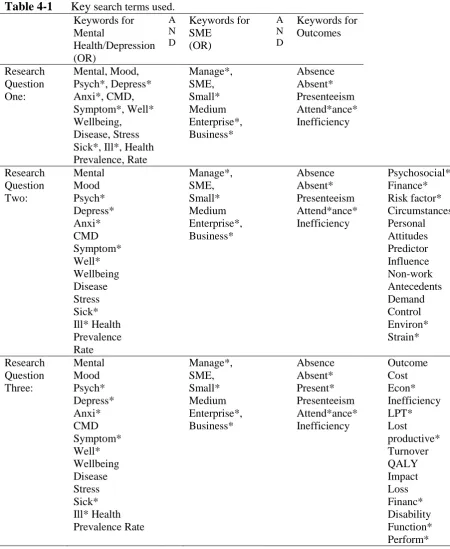
Table 4-1 Key search terms used. 118
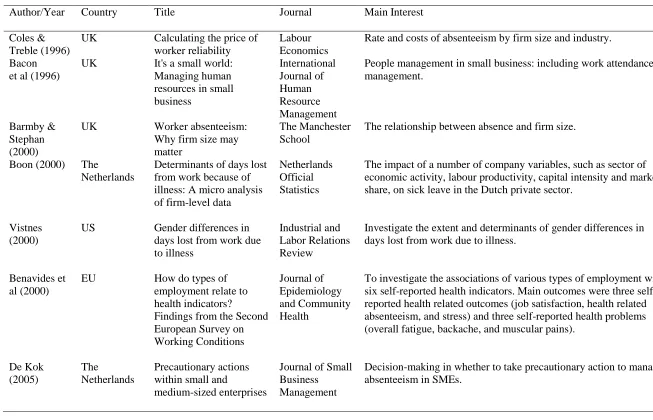
Table 4-2 Studies focused on absenteeism in small-to-medium enterprises (SMEs).
122
Table 5-1 Sample characteristics of Business in Mind participants compared to Australian Bureau of Statistics (ABS), SME demographic information.
146
Table 5-2 Proportion of absenteeism and presenteeism days and mean absenteeism and presenteeism days amongst SME
owner/managers by psychological distress category.
152
Table 5-3 Antecedents and correlates of absenteeism and presenteeism. 153
Table 5-4 Mean absenteeism and presenteeism days by factors identified as significantly associated these work attendance behaviours.
154
Table 6-1 One-year cost and health outcomes of absenteeism and presenteeism.
179
Table 6-2 One year costs of absenteeism and presenteeism. 181
Table 6-3 Absenteeism and presenteeism cost outcomes of selected one-way sensitivity analysis over one-year.
183
Table 7-1 Details and key themes emerging from cognitive interview analyses and suggested development of interview items classified by problem type.
203
Table 7-2 Managers‟ estimates of replaceability: absenteeism and presenteeism, time sensitivity and team production.
xvii
List of figures
Figure 1-1 A model for research into sickness presenteeism. 31
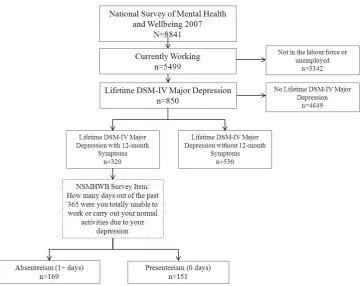
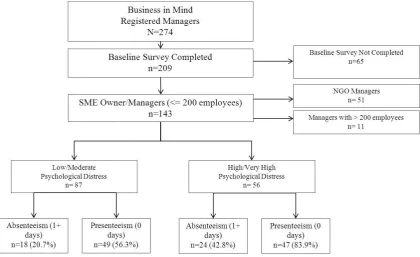
Figure 2-1 Study sample size derived from the 2007 National Survey of Mental Health and Wellbeing (NSMHWB).
61
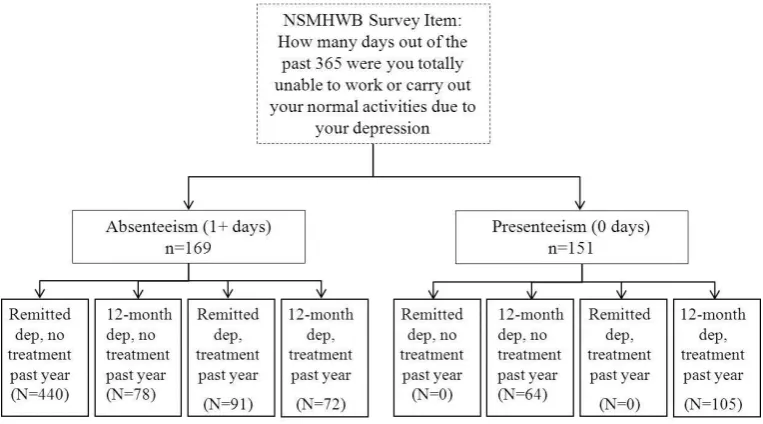
Figure 2-2a Hypothetical cohort used in state transition Markov models described in Chapter 6, derived from the NSMHWB.
62
Figure 2-2b Hypothetical cohort use din state transition Markov models described in Chapter 6, derived from the NSMHWB.
63
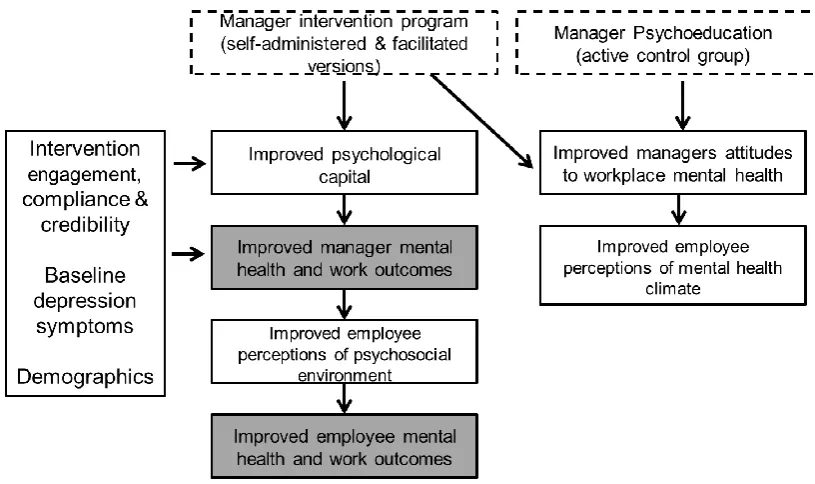
Figure 2-3 Business in Mind proposed theoretical model. 69
Figure 2-4 Study sample derived from the baseline phase of Business in Mind.
71
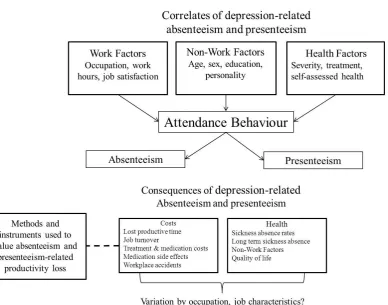
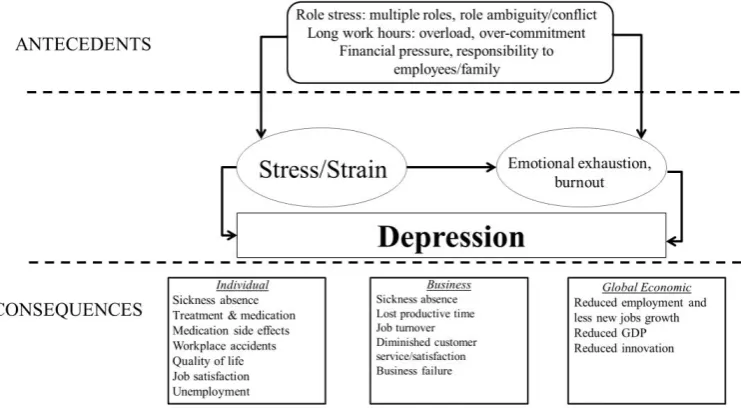
Figure 4-1 Potential predictors, correlates and health and economic consequences of depression and related work attendance behaviour in small-to-medium enterprises.
126
Figure 5-1 Potential antecedents and consequences of depression in small-to-medium enterprise owner/managers.
142
Figure 5-2 Inefficiency amongst SME owner/managers reporting past month presenteeism by psychological distress.
155
xviii
List of abbreviations
HCA Human Capital Approach MDD Major Depressive Disorder
ICD International Classification of Diseases DSM-IV Diagnostic and Statistical Manual APA American Psychiatric Association
NSMHWB 2007 National Survey of Mental Health and Wellbeing ABS Australian Bureau of Statistics
CI Confidence interval
RR Risk ratio
SD Standard deviation SE Standard error
SME Small-to-medium enterprise
K10 Kessler 10 Psychological Distress Scale
OECD Organisation for Economic Cooperation and Development RCT Randomised Controlled Trial
PSU Population Sampling Unit GP General Practitioner
xix
Publications
Publications directly arising from the work described in this thesis
Chapter 3:Cocker F, Martin A, Scott J, Venn A, Otahal P, Sanderson K. Factors associated with presenteeism amongst employed Australian adults reporting lifetime major depression with 12-month symptoms. Journal of Affective Disorders, 2011; 135, 231-40.
Chapter 7:
Cocker F, Martin A, Sanderson K. Managerial understanding of presenteeism and its economic impact. International Journal of Workplace Health
Management, 2012;5: 76-87.
Manuscripts submitted for peer-reviewed journals
Chapter 4:Cocker F, Martin A, Scott J, Sanderson K, The antecedents and consequences of depression in small-to-medium enterprise owner/managers: A review and future research agenda. Submitted to International Journal of Mental Health Promotion, July 2012.
Chapter 5:
Cocker F, Martin A, Scott J, Sanderson K, Psychological distress and work
attendance behaviour amongst small-to-medium enterprise (SME)
owner/managers. Submitted to European Journal of Work and
Organisational Psychology, December 2012.
Manuscripts prepared for submission to peer-reviewed journals
Chapter 6:Cocker F, Martin A, Scott J, Venn A, Graves N, Nicholson J, Oldenburg B, Palmer A, Sanderson K. Beyond dollar outcomes: Comparing the costs and health outcomes of depression-related work attendance behaviours.
Conference presentations using the work described in this thesis
Cocker F, Nicholson J, Graves N, Oldenburg B, Sanderson K. Absenteeism and Presenteeism amongst Employed Adults reporting Major Depression: Results from the 2007 National Survey of Mental Health and Wellbeing. Australian Society for Psychiatric Research (ASPR) Annual Conference, December, 2009 Canberra, A.C.T. Oral presentation.
xx
National Survey of Mental Health and Wellbeing. International Society of Affective Disorders (ISAD) 5th Biennial Conference, April, 2010 Vancouver, Canada. Oral presentation.
Cocker F, Martin A, Scott J, Otahal P, Venn A, Sanderson K. Do predictors of depression-related absenteeism amongst employed, Australians vary by symptom severity? 13th International Congress of IFPE (International Federation of
Psychiatric Epidemiology), March/April, 2011 Kaohsiung, Taiwan. Oral presentation.
Cocker F, Martin A, Scott J, Otahal P, Venn A, Sanderson K. Psychological Distress and Work Attendance Behaviour amongst Small-to-Medium Enterprise (SME) Owner/Managers. Australian Society for Psychiatric Research (ASPR) Annual Conference, December, 2011 Dunedin, New Zealand. Oral presentation.
Cocker F, Martin A, Scott J, Otahal P, Venn A, Sanderson K. Managing
productivity loss associated with employee depression: Balancing individual and organisational outcomes. 9th Industrial and Organisational Psychology Conference, June 2011, Brisbane, Queensland. Symposium presentation.
Awards received from the work described in this thesis
2010 Travel Bursary Award, 2010 International Society of Affective Disorders
(ISAD) 5th Biennial Conference, Vancouver, Canada.
2011 Travel Bursary Award, 2011 13th International Congress of IFPE
(International Federation of Psychiatric Epidemiology), Kaohsiung, Taiwan.
2011 Travel Bursary Award, 2011 Mental Health Council of Australia Grant in
Aid to attend the Australian Society of Psychiatric Research (ASPR) Annual Conference, Dunedin New Zealand.
2012 Finalist in Australian Society of Medical Research (ASMR) Medical
21
Chapter 1.
Introduction
1.1
Background
Depression is highly prevalent within the working population and potentially costly
(1, 2). Workers experiencing depression can take a sickness absence (absenteeism) or
continue working when sick, known as presenteeism. Employed individuals
reporting depression are often able to continue working, and more likely to do so
than individuals with other health conditions (3, 4). Therefore, a large proportion of
the economic cost of depression can be attributed to presenteeism-related lost
productive time. Recent US estimates suggest 80% of depression-related productivity
loss is attributed to presenteeism alone (2).
Presenteeism research has become increasingly widespread over the last decade (5).
Studies have focused on the prevalence of presenteeism in different occupational
groups, its determinants or risk factors, the effect it has on health and productivity,
and, most recently, accurate and reliable methods to capture its health and economic
impact. However, as recently as 2008, the number of articles addressing sickness
presenteeism was just 0.01% of those dealing with sickness absenteeism (6). Further,
research identifying the positive association between depression and presenteeism
frequency emerged as recently as 2001 (4). Therefore, there is little known about
what prompts continued work attendance amongst individuals experiencing
depression, the costs compared to health outcomes of depression-related
presenteeism, and the most accurate methods of valuing presenteeism-related lost
productive time.
In a review of studies exploring factors associated with absenteeism and
presenteeism among depressed workers, Lagerveld et al (7) found most described
relationships between disorder-related factors, such as symptom severity, and the
presence of co-morbid physical or mental disorders. However, identifying which
work and personal/non-work factors influence work attendance decisions is also
necessary. Ascertaining which factors are amenable to intervention and change may
improve illness management in the workplace via informed development of practice
guidelines for employers designed to prevent or reduce presenteeism and the
22
influence of work-related and personal/non-work factors differ by occupation type or
work setting is important for informing the adaptation of the aforementioned
guidelines to specific groups of workers with potentially more favourable outcomes.
To date, the majority of research into the consequences of working when ill has
focused the economic impact. Therefore, much less is known about the potential for
presenteeism to confer positive health and social outcomes for individuals (8-10) via
social support, daily structure, and the sense of purpose work can provide (11). Such
outcomes may outweigh any costs. Systematic comparison of the costs and the
positive and negative health outcomes of absenteeism compared to presenteeism
amongst employed individuals reporting depression are vital, as it will provide
evidence for recommendations as to whether to continue working when ill, or take an
absence from work.
Finally, the potentially large economic impact of lost productive time due to
depression-related presenteeism highlights the need for precise monetary valuation;
that is, an established method to derive monetary estimates of the cost of lost
productivity. To date, several methods for valuing lost productive time due to
sickness absenteeism and presenteeism have been developed, most of which require
a judgment or decision on the managers or supervisors part. However, none of these
existing methods have been validated. Further, recent reviews of methods used to
measure health-related productivity loss have highlighted the fact that existing
instruments are extremely varied in their approach, produce widely disparate
estimates of productivity loss, and identified that direct measurement of job
productivity is difficult, particularly in knowledge-based occupations (12, 13).
Additionally, several studies have now posited that commonly used methods, such as
the Human Capital Approach (HCA), which express productivity loss as the product
of self-reported lost time by daily salaries, may only provide a lower-bound estimate
of lost productive time (12, 14-16). Therefore, rigorous evaluation of methods
designed to capture variations across job types in how output is valued is warranted.
This thesis will address the identified gaps in knowledge regarding the correlates and
consequences of presenteeism amongst employed individuals experiencing
depression and psychological distress, and the valuation of associated lost productive
23
1.2
Depression
Depression can be experienced on a continuum from sub-threshold symptoms to
major depressive disorder (MDD). An individual‟s experience can differ according to
symptoms reported, natural history, and treatment response. Depression can be
chronic and recurrent and, combined with an average age of onset around thirty, can
affect an individual‟s behavioural, cognitive, emotional, interpersonal, and physical
function throughout much of their lives (3, 17). Depression often occurs with, and is
complicated by, chronic mental or physical disorders such as anxiety, cardiovascular
disease, and diabetes (18, 19) and has been identified as a risk factor for certain
chronic diseases, including cardiovascular disease, arthritis, asthma, hypertension
and migraines (20).
1.2.1
Definition and classification of depression
Depression describes a variety of sometimes concurrent experiences. For some,
being depressed may mean feeling sad, dejected, disappointed or upset. However,
experiencing these emotions does not warrant a diagnosis of „clinical' depression as
such feelings are common, occur briefly, are often reactions to events or
circumstances, and have a minor impact on daily functioning. By contrast, clinical
depression is an intense emotional, physical and cognitive state which lasts for at
least 2 weeks and has a significant, negative effect on an individual‟s life and their
ability to function. Therefore, “depression” covers a range of states from feeling sad,
helpless, or demoralized, to a major depressive episode (21). The term depression is
used to variously describe depressive symptoms only, and a disease with strict
definition criteria. The two most widely used, criteria-based classification systems
for mental disorders, including depression, are the International Classification of
Diseases (ICD) developed by World Health Organization (WHO), and the Diagnostic
and Statistical Manual of Mental disorders (DSM -IV) developed by the American
Psychiatric Association (APA) (22).
To date, many of the depression measurement scales are assessed in terms of their
24
disorders category and relies on classification by symptoms. Specifically, marked
weight loss or gain, insomnia or hypersomnia, psychomotor agitation or retardation,
fatigue, feelings of worthlessness or guilt, diminished ability to concentrate, and
suicidal threats are used as boundary markers for major depression. At least five or
more must be present to warrant a diagnosis. Further, frequency and duration of
symptoms are considered as they must have occurred nearly every day for the past
two weeks. Severity is determined by the number of these symptoms an individual
reports and the degree to which they hinder their participation in their daily activities.
The symptoms of depression are varied and can affect emotions, thinking or
cognition, behaviour and physical wellbeing, and are generally grouped into
affective, cognitive and somatic (21). Affective and cognitive symptoms are
commonly reported and can include feelings of sadness, anxiety, guilt, anger,
hopelessness, and helplessness. Excessive worry and negative thinking are also
common as individuals‟ thoughts about themselves and their circumstances are
characterised by self-criticism, self-blame and pessimism. Such thought patterns may
also increase suicidal ideation and thoughts of death. Further to changes in thought
patterns, cognition is often affected, leading to indecisiveness, confusion and
impaired memory or concentration. Individuals experiencing depression may report
changes in their behaviour such as an inability to complete daily tasks or enjoy
previously pleasurable activities due to a loss of interest (anhedonia). They may also
withdraw from others, neglect their responsibilities and personal appearance, and
experience decreased motivation.
The affective and cognitive symptoms included in a DSM-IV diagnosis of depression
may be exacerbated by additional somatic symptoms such as disruption to regular
sleeping patterns, including sleeping too much (hypersomnia) or having trouble
sleeping (insomnia), or changes in eating habits, such as a loss of appetite or eating
too much, which can produce significant weight changes. Irritability and agitation is
commonly expressed due to annoyance at a lack of energy or drive. Other disruptive
physical symptoms may include irregular menstrual cycles for women, loss of sexual
25
1.2.2
Etiology of depression
Depression has a complex multifactorial etiology (23-25). Contributing factors can
include genetic susceptibility, life stressors or adverse life events (26), illness or
injury (27, 28), or unfavourable working conditions and work stress (29-31). More
specifically, environmental or psychosocial factors, including stressful work-related
or life events like organisational change or the death of a significant person (32), lack
of social support, and experience of a severe or chronic physical disorder such as
myocardial infarction (33) or cancer (34), have all been implicated in the
development of depression (32). Neuroimaging studies suggest abnormalities in the
orbital and medial prefrontal cortex of the brain, the amygdala, and related parts of
the striatum and thalamus contribute to the pathogenesis of depressive symptoms
(35). A family history of depression also increases the risk of developing depression
when compared to individuals with no history of depression amongst their relatives
(36). Personality features such as dependence on social support and approval from
others, lower tolerance for frustration, and unstable self-esteem (37), constricted
social skills and behaviours (38), or a negative perception of self may also dispose an
individual to develop depression (39). Personality may also influence how a person
reacts to a stressful life event and thus play a significant role in the development of
depression. Finally, socio-economic and socio-demographics factors, such as gender
(24) and low socio-economic status (i.e. low educational outcomes and income
levels) (40-42), may influence the development of depression.
1.3
Epidemiology and burden of depression
During the 20th century and into the 21st, depression has received increased public
attention and drawn the focus of policy makers at the national and international level.
Depression is now recognised as a significant public health concern.
A recent review of the World Health Organisation‟s World Mental Health (WMH)
surveys on the global burden of disease, reported major depressive disorder has a
lifetime prevalence of 4-10% and 12-month prevalence estimates in the 3-6% range
(43). This makes it second only to social phobia as the most prevalent mental
26
Organization (WHO) also estimates that depression accounts for 4.5% of the
worldwide total burden of disease and was responsible for the greatest proportion of
burden attributable to non-fatal health outcomes, accounting for almost 12% of total
years lived with disability globally (44). Further demonstrating this impact, the WHO
predicts depression will become the second most important cause of disability in the
world, after cardiovascular disease by the year 2020 (45).
Contributing further to the burden of depression are the elevated risk of suicide and
suicide attempts and the high prevalence of comorbid physical health conditions.
Existing evidence confirms a strong association between major depressive disorder
and completed suicide (46-49), with a lifetime mortality risk by suicide for
individuals with major depressive disorder around 15% (50). Major depression is
also common in people with medical illnesses. Recent WHO estimates revealed the
12-month prevalence for an ICD-10 depressive episode rose from 3.2% to 4.5% for
individuals experiencing angina, and 4.1% and 3.3% for individuals experiencing
arthritis and asthma respectively, and between 9.3% and 23% of individuals with one
or more chronic physical disease had comorbid depression (44). Further, using WHO
World Health Survey data, Moussavi et al (44) reported that the comorbid state of
depression incrementally worsens health compared with depression alone (51).
Finally consistent epidemiologic evidence suggests that co-occurrence of depression
with other mental conditions is highly prevalent (55). For example, a recent Finnish
cohort study revealed 79% of patients with Major Depressive Disorder (MDD)
suffered from 1 or more current co-morbid mental disorder, including anxiety
disorder (57%), alcohol use disorder (25%), and personality disorder (44%). Similar
findings were reported in the 2007 National Survey of Mental Health and Wellbeing
which revealed that 25.4% of persons with an anxiety, affective or substance use
disorder had at least one other class of mental disorder (13).
The impact of depression is felt particularly keenly within the Australian population
because of its high lifetime prevalence, its effect on an individual‟s physical, mental
and social functions (3), and its association with an increased risk of premature death
(52). Data from the 2007 National Survey of Mental Health and Wellbeing
(NSMHWB) (53) revealed 3.2 million (20%) Australians had a 12-month mental
disorder, that is, the presence of disorder symptoms in the 12 months prior to the
27
including Depressive Episode and Dysthymia. Depression, in combination with
anxiety, accounts for over half of the 7.3% of the total burden of disease and injury
represented by mental disorders in Australia (54).
1.3.1
Course and prognosis
Depression can be considered a chronic-episodic mental disorder. Cross-sectional
surveys have consistently reported that the prevalence ratio of 12-month major
depression versus lifetime major depression is between 0.5 and 0.6 (55). This
indicates between 50% and 60% of people who have ever been clinically depressed
will be in a major depressive episode in any given year. Further, more than 80% of
people with a history of major depression have recurrent episodes (56). Specifically,
the National Comorbidity Survey (NCS) conducted in the United States, found 72%
of depressive patients reported more than one episode (56), and estimates from the
Netherlands Mental Health Survey and Incidence Study (NEMESIS) (30) and the
German National Health Interview and Examination Survey (GHS-MHS) are around
50% (31).
The course of major depression varies depending on a number of determinants
including age at onset, sex, family history, co-morbidities and severity of symptoms
(57). Age at onset is an extremely important determinant as a major depressive
episode can begin at any point in an individual‟s life (58). It is common for
prodromal symptoms, such as anxiety symptoms (panic attacks, phobias) or
depressive symptoms that do not meet diagnostic criteria to occur in the preceding
period. However, major depression can also develop suddenly, such as when it is a
reaction to a stressful, major life event (28).
The severity of presenting symptoms of major depression varies from mild to severe
with the most severe cases potentially leading to suicide and warranting life-saving
interventions (57). Further evidence suggests that age at onset and severity of
depressive symptoms are correlated with “chronicity” of depressive disorder. That is,
individuals who experience more severe symptoms and at an earlier age tend to have
a more chronic disease course than individuals who experienced later onset and less
28
Important terms to consider in the longitudinal course of major depressive illness are
“response”, “recovery”, “relapse”, “remission” and “recurrence”. Frank et al
conceptualized these terms as (59):
“Response” is a reduction in depressive symptoms without returning to
normal baseline as opposed to remission.
“Remission” is the stage of decrease in symptoms to baseline levels
“Recovery” is a sustained period of remission for an arbitrarily chosen time criterion (4-6 months)
“Relapse” is the return to major depression within the period of remission.
“Recurrence” is a new episode of major depression following a period of
remission.
Further, important aspects in the longitudinal course of major depression to be
considered in terms of prognosis are relapse and/or recurrence, duration of episode
and time to recurrence. Many depressive patients recover fully between episodes, but
20 to 30% of cases only partial remit and experience persistent residual symptoms
and impairment. Further, a significant number of depressive patients suffer from a
“progressive” course of disease, defined by “cycle acceleration”, where the length of
time to their next episode decreases with each recurrent episode.
Also worthy of consideration is that the course and prognosis of major depression
can be further complicated by co-morbidity. Community samples show that there is
substantial lifetime and episode comorbidity between depression and other mental
disorders and substance use disorders (56). Results from the National Co-morbidity
Survey Replication (NCS-R) revealed that almost three quarters of respondents with
lifetime major depressive disorder also met criteria for at least one lifetime comorbid
substance use disorder (56). Further, approximately two thirds (65.2%) of
respondents with 12-month major depressive disorder met criteria for at least one
other 12-month disorder.
1.4
Depression in the workplace
Depression is highly prevalent in the general population and thus common within the
individual-29
level effect on work performance when compared to other conditions (62), and can
impair a worker‟s cognitive, behavioural, emotional and physical ability (63).
Moreover, the peak onset of depression or depressive illnesses often occurs between
30 and 40 years of age meaning it is likely to affect workers early in and throughout
their entire working life (64). Therefore, the high prevalence and early onset of
depression, its often chronic and recurrent course, and the associated functional
impairment combine to make it a leading cause of disability worldwide.
Depression symptoms experienced in the workplace may lead to unfinished projects,
loss of interest in work or a substandard work performance. Individuals can
experience poor concentration, lack of motivation, restlessness, and fatigue and
reduced decision-making capacity, which may prevent them from carrying out their
employment duties. Irritability combined with these symptoms can further affect the
employee‟s working relationships with employers and co-workers. Furthermore,
reduced work productivity due to depression is evident across all types of work
activity including mental-interpersonal tasks such as speaking with people in person,
in meetings or on the phone and time management tasks such as the ability to “get going” at the beginning of a work day and to stick to a routine or schedule (3).
Individuals experiencing depression are often able to continue working and are more
likely to do so than persons experiencing other health complaints (3, 4, 65). This
means that much of the health and economic burden of depression is likely to be
borne by the workforce. It is well established that the economic costs of depression
are high. The substantial economic impact of depression is in part due to direct
treatment costs such as inpatient, outpatient and pharmaceutical care as well as
indirect costs including early retirement costs, increased workplace accidents, and
premature death (17, 66, 67). However, research indicates the economic burden of
depression is mostly attributed to losses arising from sickness absence and, more
significantly, reduced productivity of sick individuals who continue to work, or
presenteeism (68). This thesis will review depression-related presenteeism from a
behavioural perspective in which presenteeism is a health behaviour i.e. continuing
to work when ill. However, first, a more general review of the presenteeism field is
30
1.5
Depression-related work attendance behaviour: Presenteeism
Unlike absenteeism, an easily understandable concept of failing to attend work when
ill, the idea of presenteeism is relatively new and has been subject to numerous
definitions. For example, Table 1-1 summarizes nine main definitions of
presenteeism taken from existing literature and demonstrates that although all of the
definitions concern being present at work, there are important difference between
them. In his recent review Johns (69) highlights that presenteeism has been portrayed
as positive behaviour (definitions a and b), obsessive (definitions c, d, and e), at odds
with one‟s health status (definitions e, f, and g), and less than fully productive
(definitions h and i).
Table 1-1. Definitions of presenteeism
a. Attending work, as opposed to being absent (70) b. Exhibiting excellent attendance (71, 72)
c. Working elevated hours, thus putting in “face time” even when unfit (73,74) d. Being reluctant to work part-time rather than full-time (75)
e. Being unhealthy but exhibiting no sickness absenteeism (76) f. Going to work despite feeling unhealthy (8)
g. Going to work despite feeling unhealthy and experiencing other events that might normally compel absence (e.g. child care problems) (77)
h. Reduced productivity at work due to health problems (78)
i. Reduced productivity at work due to health problems or other events that distract one from full productivity (e.g. office politics) (79,80)
Evidenced by the number of published studies that employ it, the most widely
accepted definition of presenteeism is the one developed by Aronsson, Gustafsson,
and Dallner (8) (definition f): attending work despite complaints of ill health that
would normally prompt rest or absence. Put more simply, presenteeism is the act of
attending work when ill (10) and this definition does not attribute motives or
consequences to presenteeism. This definition is employed throughout this thesis.
Initial presenteeism research posited that continued work attendance when ill
occurred in a minority of workers. However, more recent studies expose it as a
widespread phenomenon (6, 81) which manifests indiscriminately across
occupational groups (82) and results in substantial productivity losses (83). To date,
current presenteeism research can be categorized into two schools of thought; i)
organisational scholars who have been concerned with precursors, correlates and
31
34whose focus has been the consequences, both health and economic, of continued
work attendance e.g. (84, 85). Potentially diverse motives may underpin not only the
act of presenteeism but also the unequal degrees of productivity loss exhibited by
employed individuals experiencing the same condition. Therefore the main questions
that have driven presenteeism research thus far have been; a) what influences an
individual‟s decision to continue working when ill; b) do these same factors
determine or influence the related health and economic consequences and; c) what
are the health outcomes and costs of continued work attendance behaviour. A third
more emerging field of presenteeism research relates to developing new instruments
to accurately value the costs associated with presenteeism-related lost productive
time in response to identified inadequacies with current methods of estimation.
Figure 1-1, adapted from a model developed by Aronsson et al (5) represents these
[image:31.595.144.533.336.641.2]distinct research foci.
Figure 1-1. A model for research into sickness presenteeism.
1.5.1
Correlates of presenteeism
Identifying which factors influence work attendance decisions and which are
32
workplace mental health promotion programs and interventions designed to not only
reduce presenteeism behaviour but also prevent, or at least ameliorate, the associated
health and economic consequences or outcomes. Further, by identifying whether the
most influential factors are work or non-work related, setting-specific preventive
strategies can be designed and implemented in the workplace.
To date, research in this area has been guided by the assumption that factors related
to sickness absenteeism also affect sickness presenteeism (86, 87). Specifically,
Caverley et al (84) formulated the substitution hypothesis which posited that presenteeism occurs in situations where absenteeism is not possible. That is, any
work or non-work factors that constrain absenteeism may prompt presenteeism (69).
As a result, research into the correlates and precursors of presenteeism behaviour
have been largely guided by existing research into the predictors of sickness absence.
However, because sickness presenteeism is a relatively new concept compared to
absenteeism, emerging as a subject of empirical research as late as the 1990s, this
information is relatively sparse. Further, no studies have attempted to determine what
influences work attendance decisions amongst individuals reporting depression,
despite the recognised impact it has on employee productivity.
Three distinct models have emerged which incorporate existing research. They are
commonly used to guide research into the correlates of sickness presenteeism.
Aronsson and Gustafsson‟s (5) model was one of the first to identify the act of
presenteeism as part of a decision process in which an individual chooses to continue
working or take a sickness absence. Hansen and Andersen (2008) expanded this
model by considering the influence of organisational and individual factors on work
attendance decisions. Briefly, these models identify specific health problems as
primary presenteeism determinants, but posit that individual and organisational
factors are the decision levers that determine the choice to come to work in spite of
their illness. That said, it must be acknowledged that some employers, such as small
business owner/managers who have multiple role responsibilities, may not have a
choice or may not consider sickness absenteeism a viable option. This approach is
championed by Johns (88) who suggests all of the associated productivity loss is due
to semi-objective health indicators (83, 89) and that presenteeism research must
move beyond the assumption the behaviour is a function of a medical condition and
33
Existing literature, informed by the aforementioned models, has identified several
factors that may influence work attendance decisions. These have included
organisational policies concerning pay (8, 90), sick pay (89, 92), downsizing (93),
and permanency of employment (8, 94-96). Various job design factors such as
workload and job demands (97-99), workers replacement practices (6, 8, 9, 84),
teamwork (90), and occupation type may also prompt or discourage presenteeism.
Finally, attendance pressure from employers and colleagues (9, 101), corporate
culture and norms within an occupational group (102) may also influence work
attendance decisions, as might personal attitudes (6), values, and personality
characteristics.
In terms of organisational policies, several studies have reported that less generous
sick leave plans lead to less sickness absence (80) and thus increased presenteeism
(91). Specifically, Lovell (103) revealed that workers without paid sick leave are
more likely to continue working when ill as failure to attend or taking an
unauthorised sickness absence can lead to loss of pay, job loss or diminish their job
advancement prospects. Lovell also noted that working mothers are more likely to
continue to work when ill as they “save” their sick leave for when they need to care
for their sick children. Fear of job loss has also been used to describe the positive
association between downsizing, intentional reduction in workforce size for
supposedly strategic reasons (69), and presenteeism. Additionally, changes to job
design and increases in workload that occur as a result of the downsizing process
make absenteeism less favourable (69). Further, in their longitudinal, prospective
cohort study of Finnish employees, Vahtera et al (94) identified that temporary
employees were the most likely to engage in presenteeism following downsizing as
they are most vulnerable to job cuts. This finding is supported by several studies
which found that temporary, fixed-term, non-permanent employees exhibit more
presenteeism, most likely due to a sense of job insecurity (8, 95, 96, 104).
Pressures to attend work despite illness may arise due to the structure of the work
environment, work contract or the expectations placed on workers by employers and
colleagues. Johns (69) suggested that job demands that necessitate attendance, such
as care giving, may increase presenteeism and Demerouti (99) posited that
34
maintain high levels of performance. Worthy of note is recent research suggesting
that work attendance pressures may also increase feelings of job dissatisfaction, low
psychological well-being and other symptoms related to stress (105) thus
exacerbating the experience of depression. The complex interplay between low
short-term sickness absence, high presenteeism and long-short-term sickness absence may also
be influenced by employees‟ working conditions. That is, a failure to take a genuine
short-term sickness absence, often influenced by pressure from employers,
co-workers or the co-workers themselves, and continued work attendance whilst ill has
been shown to lead to long-term sickness absence in the future (10, 35).
Other important job design features that may influence work attendance decisions are
ease of replacement, team work, occupation type (8), and “sickness flexibility” (106),
or the degree of control an individual has in the work situation (8). Sickness
flexibility has two dimensions, adjustment latitude and attendance requirements.
Adjustment latitude refers to the ease with which an employee is able to adjust or
reduce their work demands to adapt task performance to his or her physical or mental
condition. Attendance requirements refer to the negative consequences of absence
such as the impact it may have on the individual, work-mates or a third party e.g.
clients, care recipients, or students. A low degree of adjustment latitude, or less
control over the pace of work, may increase an individual‟s risk of sickness absence
at the cost of sickness presence. However, it must be noted that whilst Johansson and
Lundberg confirmed that high attendance requirements increased the probability of
attending when ill, adjustment latitude had little influence on presenteeism. In fact,
they reported a slight trend for those who had to work full-time to continue working
when ill more often than those who reported being able to reduce their work effort.
Therefore, whilst worthy of mention, these findings suggest the direction and degree
to which adjustment latitude influences work attendance behaviour is not yet firmly
established.
Research into the impact of ease of replacement on presenteeism, defined as the
degree to which work missed due to sickness absence has to be made up upon return
to work, is more established and suggests individuals who know their work will
accumulate during their absence are more inclined to continue working (8, 9). This
may be due to their workplace being under-staffed or their job being highly
35
colleagues, may also influence work attendance decisions. This may be particularly
important in smaller business and organisations where a sense of family often
develops. Finally, welfare and teaching occupations (8), jobs that require frequent
customer contact (96) or jobs with supervisory responsibilities are associated with
higher rates of presenteeism, due to perceived duty to clients, colleagues, or students.
Such findings have also been reported amongst nurses (108-111), allied health
professionals, hospital workers, and physicians (70, 112), and police officers (113,
114).
Recent studies have also suggested the importance of non-work factors such as
demographics, personality characteristics, attitudes, values, and personal
circumstances in an employed individual‟s decision to continue working when ill.
Among the most important demographic predictors of presenteeism are gender (5),
age (9, 104), and family status (6). Specifically, presenteeism is more common
amongst older workers, women, and individuals for whom their home life may be
more taxing than their work life. Regarding personality, conscientiousness has been
found to be consistently, negatively associated with absenteeism (116-119),
suggesting that more conscientious individuals will continue to work when ill. This is
perhaps due to the fact that conscientious people tend to be reliable, responsible, and
thorough (120) - traits that might motivate them to attend work even in the face of
ill-health. Further, Aronsson and Gustafsson (5) coined the term „individual
boundarylessness‟ to describe a personality characteristic that makes it difficult for people to say no to other people‟s wishes, similar to what Siegrist (121) calls „over-commitment‟. Behind both concepts is the idea that a strong commitment to work
will increase the likelihood of presenteeism. In terms of attitudes, Hansen and
Andersen (6) reported that employees with “conservative” ideas about sickness
absence and absence from work were most likely to engage in presenteeism.
Although a variety of factors have been identified as potential correlates of
presenteeism behaviour, what influences continued work attendance amongst
individuals reporting depression is less established. A recent systematic review (7)
identified 30 studies exploring factors associated with absenteeism and presenteeism
among depressed workers. However, presenteeism was defined as work functioning,
including loss of productivity and work limitations, and not as behaviour. Further,
36
personal or work-related factors were addressed less frequently. This highlights the
need to identify potentially modifiable factors associated with presenteeism
behaviour within this population.
A more extensive search for studies exploring the potential correlates or predictors of
depression-related work disability and/or presenteeism behaviour failed to identify
any which investigated the relative importance of socio-demographic, financial, work
and health-related factors. Further, no studies were found which investigated the
degree to which depression-specific factors influence an employee's behaviour, nor
any which investigated whether factors associated with presenteeism amongst
employed individuals reporting depression differ by occupation type. Understanding
the relative association of work and non-work characteristics with work attendance
behaviours may identify which factors are amenable to change and/or intervention,
potentially improving illness management through the development of informed
practice guidelines. Additionally, identifying occupation specific factors may allow
such recommendations to be tailored to particular job types or work settings such as
small-to-medium enterprises (SMEs), where both poor mental health and
presenteeism may be more common and more costly in terms of health and economic
outcomes. Workplace practices which support employees experiencing depression
and provide access to evidenced-based care could improve workers' quality of life
and reduce costs to employers associated with absenteeism, presenteeism and lost
productivity (122).
In relation to the research opportunities identified above, several studies were
conducted and are reported in this thesis. Chapter 3 describes a study using national representative population-level data to determine which work and non-work factors
are associated with depression-related presenteeism; the relative importance of
socio-demographic, financial, work and health-related factors in this association; and the
degree to which depression-specific health factors influence work attendance
decisions. Additionally, Chapter 4 conducted a systematic review of stress, burnout and depression literature to determine whether SMEs experience poor mental health
and related presenteeism more than other work settings. SMEs were considered
worthy of particular investigation as unique organisational features may increase
owner/managers susceptibility to depression, the frequency of presenteeism and
37
review, and the identified dearth of SME-specific literature addressing mental
health-related work attendance behaviour and the health-related consequences, precedes the study
reported in Chapter 5 of this thesis. Chapter 5 used baseline data from a randomised controlled trial designed to evaluate a workplace mental health
promotion program aimed at improving the mental health of small-to-medium
enterprise owner/managers to determine whether the correlates of presenteeism differ
by work setting. Identifying SME-specific correlates of continued work attendance
may allow the development of management guidelines and intervention strategies
designed to reduce presenteeism and the negative consequences, tailored to the needs
of the SME sector. This in turn is likely to benefit not only the business
owner/managers and their employees, but the broader economy due to the significant
contribution SMEs make to most developed economies worldwide.
1.5.2
Health and economic consequences of presenteeism – is it all
negative?
The second significant area of presenteeism research relates to the associated health
and economic consequences of the behaviour with the majority of research focusing
on the costs associated with continued work attendance, particularly the cost of
related lost productive time. Locally, health-related presenteeism costs the Australian
economy an estimated $25.7 billion (AUD) annually (123). This is approximately
four times the cost of absenteeism and equates to an average of six working days of
productivity per employee lost per annum (123). However, it must be noted that
although this estimate is reflective of health-related presenteeism costs, it is from a
report commissioned by Medibank Private, one of Australia‟s leading private health
insurance funds, and completed by the economic modeling service provider
Econtech. Therefore it is not a reliable, independent, academic reference. To our
knowledge no such reference is available. Further, US estimates have shown
presenteeism accounts for as much as 60% of the total direct and indirect costs of
poor employee health, with medical, pharmacy, absenteeism, and disability costs
accounting for the remainder (124).
The enormity of the estimated cost of depression-related presenteeism has ensured
that attending work when ill is typically characterized as a negative phenomenon and