0022-538X/96/$04.0010
Copyrightq1996, American Society for Microbiology
Efficient Dual Transcomplementation of Adenovirus E1 and E4
Regions from a 293-Derived Cell Line Expressing a
Minimal E4 Functional Unit
PATRICE YEH,1* JEAN-FRANC¸ OIS DEDIEU,1CE´ CILE ORSINI,1EMMANUELLE VIGNE,1
PATRICE DENEFLE,2ANDMICHEL PERRICAUDET1
Laboratoire des Virus Oncoge`nes, Centre National de la Recherche Scientifique URA 1301/Rhoˆne-Poulenc Rorer Gencell, Institut Gustave Roussy, 94805 Villejuif Cedex,1
and Rhoˆne-Poulenc Rorer Gencell, CRVA, 94403 Vitry-Sur-Seine Cedex,2France
Received 3 July 1995/Accepted 29 September 1995
Transgene expression after the administration of recombinant adenovirus with E1 deleted is constantly transient. It is admitted that E1A-substituting activities of cellular or viral origin allow viral antigen synthesis and trigger cytotoxic lymphocyte-mediated clearance of the recipient cells. Our approach to solving this problem relies on the additional deletion of the E4 region from the vector backbone as this region upregulates viral gene expression at both transcriptional and posttranscriptional levels. As a prerequisite to the construc-tion of E1 E4 doubly defective adenoviruses, we investigated the possibility of transcomplementing both
functions within a single cell. In particular, the distal ORF61ORF7 segment from the E4 locus of adenovirus
type 5 was cloned under the control of the dexamethasone-inducible mouse mammary tumor virus long terminal repeat. Following transfection into 293 cells, clone IGRP2 was retained and characterized as it can
rescue the growth defect of all E11E42adenoviral deletants tested. DNA and RNA analysis experiments
verified that the mouse mammary tumor virus promoter drives the expression of the ORF61ORF7 unit and
permits its bona fide alternative splicing, generating ORF6/7 mRNA in addition to the ORF6-expressing primary transcript. Importantly, IGRP2 cells sustain cell confluence for a period longer than that of 293
parental cells and allow the plaque purification of E12or E42defective viruses. The dual expression of E1 and
E4 regulatory genes within IGRP2 cells is demonstrated by the construction, plaque purification, and
helper-free propagation of recombinantlacZ-encoding doubly defective adenoviruses harboring different E4 deletions.
In addition, the emergence, if any, of replicative particles during viral propagation in this novel packaging cell line will be drastically impaired as only a limited segment of E4 has been integrated.
Contrary to the other viral vectors being evaluated in gene transfer clinical protocols, E1-deleted adenoviruses retain most of the genome and express viral antigens in vivo, as documented for mice, cotton rats, and xenografts of human bronchial epithelia (8, 9, 43). Because E1a encodes transcrip-tion transactivators that target most viral promoters, residual viral gene expression is a likely consequence of cellular trans-activators (referred to hereafter as E1A-like factors). For ex-ample, E1A-like activity has been documented for undifferen-tiated F9 embryonal carcinoma cells (18). c-MYC and an interleukin 6 (a major inflammatory cytokine)-regulated cellu-lar factor are candidates to mediate this transactivating func-tion, as previously proposed (26, 32, 33). As do others, we believe that dose-dependent inflammation after the adminis-tration of E1-deleted adenoviruses is actually mediated by cy-totoxic lymphocytes specifically recognizing viral antigens on the surfaces of infected cells (42, 43).
Doubly crippled (second-generation) adenoviral vectors have been designed by the additional introduction of a ther-mosensitive mutation (ts125) into the E2a gene of E1-deleted
vectors. At 398C, this point mutation completely inactivates the
72-kDa DNA-binding protein, a protein critical for not only viral DNA replication (37) but also efficient transactivation of the viral late transcription unit, at least in vitro (6). Impor-tantly, the administration of a lacZ-encoding second-genera-tion virus improved transgene persistence and decreased the
inflammatory response after transfer to mouse livers (10). However, the ts125 mutation is subject to frequent reversion (37a), and the mutated DNA-binding protein is partially
func-tional at 378C (10). Furthermore, E4 mRNAs are significantly
increased in H5ts125-infected cells at the nonpermissive tem-perature (1). Upregulation of E4, a natural target of DNA-binding protein repression (23), is therefore possible after in vivo transfer of second-generation adenovectors, at least in those cells which exhibit E1A-substituting activities.
The only E2a-transcomplementing cell lines previously de-scribed have been derived from HeLa cells and as such do not transcomplement the E1 region (4, 19). Recently, a 293-de-rived cell line capable of transcomplementing the pTP adeno-viral protein has been reported; it might be useful for the construction of adenoviruses with double deletions of E1 and pTP (31). Our approach to silence viral gene expression relies on deletion of the E4 regulatory genes together with deletion of E1. This regulatory region was targeted because it is re-quired for viral propagation as a result of its broad involvement in viral gene expression (transcriptional and posttranscrip-tional). First, maximal transactivation of the E2a promoter requires the simultaneous activity of E1 and E4 proteins (for a review, see reference 20). Second, growth-defective E4 mu-tants exhibit multiple defects, including delays in viral DNA replication and the accumulation of DNA concatemers (14, 39), together with defects for both viral late nuclear RNA and late protein synthesis (5, 14, 15, 30, 41), virus particle assembly (11), and host cell protein shutoff (14, 45). In fact, E4 somehow is involved in the overall process of viral late protein synthesis,
* Corresponding author. Phone: (33-1) 45 59 70 89. Fax: (33-1) 45 59 70 08.
559
on November 9, 2019 by guest
http://jvi.asm.org/
perhaps by controlling or allowing alternative polyadenylation and/or splicing of the 28-kb late transcription unit (24, 25) from which most virion structural proteins are generated. Third, E4 is mostly expressed during the early phase of infection (i.e., prior to viral DNA replication), so efficient transcomplemen-tation from a limited number of integrated copies is
achiev-able. In fact, the W162 cell line, a Vero-derived (E12) cell line,
stably expresses E4 from its own promoter and allows the
growth of (E11) E4-defective adenoviruses (40), further
dem-onstrating that E4 is amenable to deletion and transcomple-mentation from a cell line. Fourth, large E4 deletions exist. Genetic analyses have actually demonstrated that E4 deletants are defective for viral growth when the deletion simultaneously inactivates two E4 gene products (ORF3 and ORF6) (2, 17), as these redundant proteins are required for the overall process of late protein synthesis during infection (5, 14, 15, 41). This redundancy is obviously the molecular basis of the absence of known thermosensitive mutations in E4. Finally, no cellular E4-substituting activity has ever been reported. It should also be remembered that E4 is somehow involved in host cell pro-tein synthesis shutoff, apparently through an unknown late product (45). It is therefore conceivable that even low-level expression of the E4 region could be directly cytotoxic to the recipient cell in vivo. In that respect, the deletion of E4 from the vector backbone is also certainly desired.
E1 and E4 encode regulatory functions which interact with common cellular targets during a productive viral cycle. One example is E2F, a crucial transcription factor for cell cycle control and progression which is also involved in cooperative binding to a unique cognate target DNA sequence, the adeno-viral E2a promoter (for a review, see reference 20). E1 and E4 cross talk is also evidenced by the E1B 55-kDa interaction with the p53 cellular protein and the E4 ORF6 gene product, lead-ing to the followlead-ing outcomes: inhibition of p53-mediated tran-scriptional activation (44) and selective cytoplasmic accumula-tion of viral late mRNAs (28). Finally the E1/E4 interplay is further documented by the effect of the E4 ORF4 gene prod-uct on the phosphorylation status of cellular and viral proteins, including E1A (22). As many of the E4 proteins antagonize and/or interact with E1A and E1B proteins, we assumed that a cell line transcomplementing both functions would certainly not express these regulatory genes to high constitutive levels. As some of the E4 gene products are dispensable for viral growth (15, 17), we constructed and characterized a 293-de-rived cell line expressing a limited portion of the E4 locus from a dexamethasone (DEX)-inducible promoter.
MATERIALS AND METHODS
Construction of plasmid pORF6Gen.The adenovirus type 5 (Ad5) 1.6-kb BglII restriction fragment (positions 34115 to 32490) encodes a 1.3-kb fragment (po-sition 34115 to the E4 polyadenylation signal at po(po-sition 32821) corresponding to the 39half (ORF61ORF7) of the E4 region (nucleotide numbers refer to the sequence submitted under GenBank accession no. M73260). This BglII fragment was cloned between the BglII and BamHI sites of plasmid pIC20H (21). The resulting construct thus carries the ORF61ORF7 unit within a XhoI-SphI frag-ment. This restriction fragment was cloned between the SalI and SphI sites of plasmid pPY4, a pIC20H derivative containing a 1.4-kb AvrII-SalI restriction fragment corresponding to the mouse mammary tumor virus (MMTV) long terminal repeat (LTR) of plasmid pMSG (Pharmacia). Therefore, the resulting plasmid (pPY15) carries the ORF61ORF7 unit cloned under the control of the MMTV LTR. In this expression cassette, the first translation initiation codon is that of ORF6 (position 34077 of the Ad5 genome); it is separated from the CAP site of the MMTV LTR-derived transcript by 325 nucleotides (nt). Plasmid pORF6Gen is derived from plasmid pPY15 and contains the XhoI fragment of plasmid pKIXX (Pharmacia) which confers geneticin resistance in eukaryotic cells. In plasmid pORF6Gen, the geneticin resistance gene and the E4 ORF61 ORF7 unit are transcribed in the same direction.
Cells and viruses.The 293 cell line used in this report was from the European Collection of Animal Cell Cultures. In our hands, the viral productivity of a
first-generation adenovirus grown in these cells was approximately 100 PFU per cell. 293 cells were transfected as previously described (13). Geneticin selection was performed at 400mg/ml. H2dl808 (ORF11) (5, 41), H5dl1004 (ORF11), H5dl1007, H5dl1014 (ORF41) (2), and H5dl1011 (3) are defective (E11) ad-enoviruses carrying large deletions of the E4 region (see Fig. 1A). Viral stocks (108to 109PFU) of these deletants were prepared, and the titers of virus were
determined on W162 cells (40), as they do not replicate in 293 cells. For each virus, the extent of the E4 deletion was confirmed by DNA sequencing. In particular, the deletion in H5dl1014 (ORF41) extends from the SmaI site at position 33093 to position 33695 and from the SspI site at position 34634 to the
SmaI site at position 35355. AdRSVbGal is a first-generation recombinant virus
expressing a nucleus-targetedb-galactosidase from the Rous sarcoma virus LTR (35). All viral stocks were purified by step and isopycnic CsCl gradient centrif-ugations, with subsequent dialysis at 158C. They were aliquoted and stored at 2708C in 10% glycerol.
PCR analysis of genomic DNA.Genomic DNAs were prepared from 293 and IGRP2 cells as previously described (29). Two micrograms was used as the template for PCR with Taq polymerase from Appligene (Strasbourg, France) and oligonucleotide 1 (59-AAGCAGCCAAGGGGTTGTTT-39[nt 52 to 71 of the MMTV LTR from plasmid pMSG]) and oligonucleotide 2 (59-ACCCTAG TATTCAACCTGCC-39[positions 32921 to 32940 of the Ad5 genome]). These primers amplify a fragment of 2,617 bp from plasmid pORF6Gen. PCR was performed with an initial denaturation step of 948C for 5 min, followed by 30 cycles consisting of denaturation at 948C for 1 min, annealing at 608C for 2 min, and extension at 708C for 3 min, with extension in the last cycle lasting for 10 min. The PCR products were analyzed on a 1% agarose gel by electrophoresis and identified by Southern blotting and hybridization with a radiolabeled probe spanning either the 1.6-kb ORF61ORF7 region or the 1.4-kb MMTV LTR. [a-32P]dCTP was incorporated by random priming and Klenow DNA polymerase
incubation.
RT-PCR.Total mRNAs were prepared from subconfluent IGRP2 cell mono-layers essentially as previously described (34), and poly(A)1RNAs were isolated by oligo(dT) selection (29). All reagents for the reverse transcription (RT) step were obtained through Life Technologies. Poly(A)1preparations (500 ng) were treated with 0.5 U of DNase I and reverse transcribed with an oligo(dT) primer. One-tenth of the first-strand cDNA preparation was used as a template for PCR with oligonucleotides 2 and 3 (59-ATCATCACAAGAGCGGAACG-39[nt 227 to 246 relative to the MMTV LTR CAP site; see Fig. 2D]). These primers were designed to amplify a fragment of 1,255 bp from the unspliced ORF6 mRNA and 545 bp from the spliced ORF6/7 mRNA (12, 36, 38). PCR amplification products were analysed on a 1% agarose gel by electrophoresis and identified by Southern blotting and hybridization to the 1.6-kb radiolabeled ORF61ORF7 probe.
Protein analysis.Cells infected at 20 PFU per cell were collected late (48 or 72 h postinfection) and washed twice with phosphate-buffered saline (PBS). They were lysed in 13sodium dodecyl sulfate (SDS) gel loading buffer (29), and boiled samples were submitted to 7% polyacrylamide–0.1% SDS gel electro-phoresis. Proteins were transferred from the gel onto Hybond-C membranes (Amersham) and probed with fiber-specific antibodies (a polyclonal serum tained from P. Boulanger, Montpellier, France, or a monoclonal antibody ob-tained from J. Chroboczek, Grenoble, France). Bound antibodies were detected with secondary horseradish peroxidase-conjugated antibodies according to the instructions of the manufacturer (ECL detection kit; Amersham).
Clonal construction of virus AdbGal/dl1014.AdbGal/dl1014 was constructed in IGRP2 cells by homologous recombination between three electropurified fragments. (i) Fragment I (6.8 kb) is a lacZ-encoding NarI fragment from the left end of the AdRSVbGal genome; contamination with the uncut (replicative) AdRSVbGal genome is very unlikely because complete NarI digestion generates this fragment among 25 other fragments ranging from 26 nt to 3.8 kb. (ii) Fragment II is a 9.4-kb DraI fragment derived from the AdRSVbGal genome which overlaps fragment I by 1,509 nt. It was purified from 10 additional frag-ments ranging from 494 nt to 4.8 kb after complete restriction with DraI and
AflII. (iii) Fragment III is a 21.3-kb NsiI fragment from the H5dl1014 genome
which overlaps fragment II by 1,652 nt. It was purified after complete NsiI digestion, producing seven other fragments ranging from 178 nt to 4 kb. The purified fragments were cotransfected in IGRP2 cells as described above for 293 cells, except that 1mM DEX was added to the culture medium every 4 days for 3 weeks. At this stage, cells were harvested, frozen and thawed three times in a dry ice-ethanol bath, and centrifuged at 3,0003g for 20 min. The cell lysate was
then added to fresh IGRP2 cells in the presence of DEX (1mM), and a cyto-pathic effect (CPE) was observed after 5 days.
Viral stock preparation and titration of AdbGal/dl1014.Viral stocks were obtained after progressive amplification of a singleb-galactosidase-expressing plaque of the virus with both deletions on fresh IGRP2 cells grown in the presence of 1mM DEX. After CsCl gradient purifications and dialysis, the titers of the virus were determined on IGRP2-derived monolayers or as lacZ-trans-ducing units (TU) after the infection of nonpermissive cells. The titration of AdbGal/dl1014 on IGRP2 cells was performed by plaque assay, as described above for AdRSVbGal on 293 cells, with an agar overlay containing 1mM DEX. Fresh DEX-containing agar overlay was added every 6 days, and X-Gal (5-bromo-4-chloro-3-indolyl-b-D-galactopyranoside) staining was performed at 3 weeks postinfection. For the determination of viral titers expressed in TU/ml, subconfluent monolayers of W162 cells or primary rabbit vascular smooth muscle
on November 9, 2019 by guest
http://jvi.asm.org/
cells (a gift from D. Branellec, Rhoˆne-Poulenc Rorer, Vitry, France) were in-fected on six-well plates with serial dilutions of the virus in PBS (0.4 ml) for 1 h at 378C. After the removal of the inoculum, culture medium containing 0.5% fetal calf serum was added, and cells were incubated for 48 h prior to overnight X-Gal staining. Positive cells were counted at a magnification of3240 on at least 10 fields (with a minimum of 100 positive cells counted), and the titer was calculated from the mean value by using a ratio of 1/1,225 between the surface of the observation field and that of the culture well.
Molecular characterization of AdbGal/dl1014.The viral DNA was prepared from one stock as previously described (5). DNA samples (2mg) were submitted to restriction analysis and run on a 1% agarose gel. The fragments were trans-ferred to Hybond-N membranes (Amersham) and hybridized with a radiolabeled probe corresponding to the adenovirus inverted terminal repeat (ITR) to spe-cifically detect the fragments located at both ends of the viral genome (i.e., E1 and E4). For PCR amplification of the E4 region, viral DNA was first extracted from a purified viral stock. DNA (0.1 fg to 1mg) was used as the template for PCR with oligonucleotide 59-TTTCATTCAGTAGTATAGCCC-39and oligonu-cleotide 59-CTGGTAAGGCTGACTGTTAGGC-39. These primers amplify fragments of 2,692 and 1,368 bp from the RSVbGal (E41) and dl1014 viral
genomes, respectively. For PCR amplification of the E1 region, oligonucleotide 59-AGTAGTACGGATAGCTGTGACT-39 and oligonucleotide 59-TCTTGT GTCTCACAACCGCTCT-39, which amplify a 750-bp fragment from the dl1014 (E11) viral genome, were used. The PCR products were run on a 1% agarose gel by electrophoresis, and their identities were verified by Southern blotting and hybridization with an E1- or E4-specific radiolabeled probe.
RESULTS
Design of a minimal E4 functional unit. The 2.8-kb E4
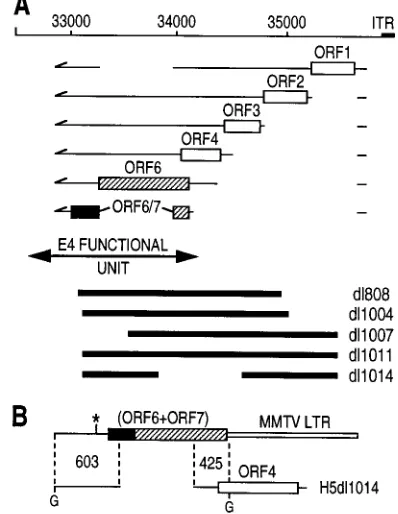
transcription unit from Ad5 is spliced into at least 18 mRNAs (7, 36, 38). The most abundant mRNAs encode six identified ORF gene products (Fig. 1A). Many of these proteins are dispensable for viral growth because a virus (H5ilE4I)
engi-neered to contain only the 1.3-kb distal segment of E4 ORF61
ORF7, thus with ORF1 to ORF4 deleted, can be efficiently propagated in both 293 and HeLa cells (15). Consequently, this 1.3-kb fragment can be referred to as a functional E4 unit (Fig. 1A), at least when it is expressed within an adenoviral back-bone (H5ilE4I), from which it directs the expression of the ORF6 and the ORF6/7 gene products (15).
Plasmid pORF6Gen harbors the MMTV LTR-ORF61
ORF7 expression cassette, together with a geneticin selectable marker, as described in Materials and Methods. Translation of
the primary transcript ORF61ORF7 from this plasmid has
been designed to generate the ORF6 gene product, as de-scribed in Materials and Methods. On the other hand, trans-lation of the alternatively spliced mRNA (positions 33904 to 33192) should generate the ORF6/7 gene product, as described during infection with H5ilE4I (15).
Isolation of clone IGRP2.Preliminary experiments with the
293 cell line indicated only a slight increase in MMTV-driven expression of a chloramphenicol acetyltransferase reporter gene
in the presence of 1mM DEX, while the additional
introduc-tion of plasmid pSG5HGR, a simian virus 40-driven gluco-corticoid receptor (16) expression plasmid, resulted in a sig-nificant enhancement of chloramphenicol acetyltransferase synthesis, suggesting that glucocorticoid receptor availability may be a limiting factor for optimal induction in 293 cells. Thus, plasmids pORF6Gen and pSG5HGR were cotransfect-ed in a molar ratio of 1:2, respectively, to ensure sufficient levels of the glucocorticoid receptor. At 4 weeks
posttransfec-tion and after selecposttransfec-tion in the presence of 400mg of geneticin
per ml, 24 clones were randomly picked up for subsequent cloning. Thirteen clones disappeared at various stages of the amplification process, and the remaining clones were screened
for their potential to propagate virus H2dl808 (ORF11), a
prototypic (E11) E4 deletant (Fig. 1A). Among them, clone
IGRP2 was retained because a CPE appeared quickly (6 days) after infection at a low multiplicity (0.2 PFU per cell) in
the presence of 1mM DEX. The CPE on fresh IGRP2 cells
was amplifiable, demonstrating that viral propagation was
in-deed occurring. Identical results were observed after infection
with other E4-defective viruses, including H5dl1004 (ORF11),
H5dl1007, H5dl1011, and H5dl1014 (ORF41). Therefore, clone
IGRP2 transcomplements E4 independently of the extent of the deletion harbored by each defective virus. IGRP2 cells infected with E4 deletant dl1014 also exhibited a partial shutoff of host cell protein synthesis (data not shown), a result which also supports E4 transcomplementation in these cells, as this phenomenon is likely mediated by a late gene product (45). We also noticed that IGRP2 cells grown in the absence of DEX divide quickly and are two to three times smaller than paren-tal 293 cells. In contrast, cells lost their regular shapes and exhibited arborescence upon continuous passage under DEX conditions, suggesting that the expression of ORF6 and/or ORF6/7 somehow interferes with cell metabolism.
The additional introduction of the E4 unit within 293 cells did not significantly interfere with the initial ability to
trans-complement the E1 function, because AdRSVbGal (35) could
be grown to roughly normal titers in IGRP2 cells, at least when cells were grown in the absence of DEX (data not shown).
Molecular characterization of IGRP2 cells. Southern blot
analysis indicated that clone IGRP2 contains one copy of an
MMTV LTR-ORF61ORF7 cassette within the cellular
ge-nome, together with an extra copy of the glucocorticoid-ex-pressing gene derived from plasmid pSG5HGR (data not shown). The integrity of the MMTV LTR-E4 unit in IGRP2
FIG. 1. (A) Genetic organization of the E4 region. The main mRNAs en-coding E4 ORF1, ORF2, ORF3, ORF4, ORF6, and ORF6/7 gene products have been previously described (7). H2dl808, H5dl1004, H5dl1007, H5dl1014, and H5dl1011 are defective (E11) adenoviruses with large E4 deletions (solid bars). Because the viral sequence encompassing ORF1, ORF2, ORF3, and ORF4 can be deleted without dramatic consequences for viral growth (15), the distal part of the E4 region, ORF61ORF7, constitutes the minimal E4 functional unit (double arrow) expressed from the MMTV LTR promoter in plasmid pORF6Gen. Note the absence of overlapping sequences upstream of E4 ORF6 between the ORF61ORF7 unit and all E4 deletant viral genomes, with the exception of H5dl1014 (see below). (B) The ORF61ORF7 unit of plasmid pORF6Gen ex-hibits two stretches of overlapping sequences (603 and 425 bp) with H5dl1014 DNA (only the relevant part of the genome is represented). G, BglII site (posi-tions 32490 and 34115;p, E4 polyadenylation site at position 32821.
on November 9, 2019 by guest
http://jvi.asm.org/
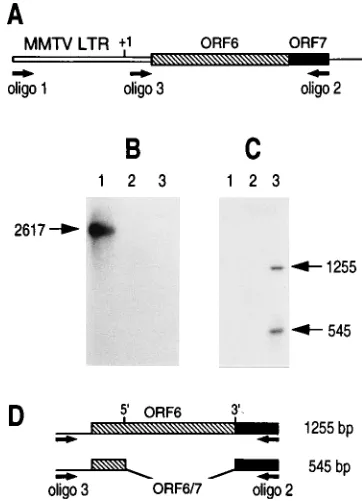
[image:3.612.331.530.76.333.2]cells is supported by the observation that PCR amplification of genomic DNA with a 20-mer oligonucleotide (oligonucleo-tide 1) corresponding to the beginning of the MMTV
LTR-ORF61ORF7 cassette and a 20-mer oligonucleotide
(oligo-nucleotide 2) from the C-terminal part of ORF7 (Fig. 2A) generates a 2.6-kb DNA fragment which is specifically detected
by a radiolabeled ORF61ORF7 or MMTV LTR probe (Fig.
2B and data not shown).
We used Northern (RNA) blot analysis to detect the
differ-ent mRNAs derived from the ORF61ORF7 unit when
unin-fected IGRP2 cells were grown in the presence or absence of DEX. However, no E4-specific signals could be detected, sug-gesting either a low transcriptional level of expression or rapid degradation of the E4-derived mRNAs synthesized in the ab-sence of additional adenoviral proteins. As previously
men-tioned, virus H5ilE4I contains an ORF61ORF7 unit from
which a truncated ORF6/7 mRNA is generated after the re-moval of a 712-nt intron (positions 33904 to 33192) during viral infection (15). To document E4 expression and to investigate if alternative splicing also occurs in clone IGRP2, we used RT-PCR amplification techniques and determined the sizes of the
different mRNAs derived from the ORF61ORF7 unit of clone
IGRP2. As shown in Fig. 2C, two main signals are specifically
detected with the radiolabeled ORF61ORF7 probe after
RT-PCR amplification of poly(A) RNAs from uninfected IGRP2 cells grown in the presence of DEX. The larger signal is ap-proximately 1.3 kb long, a size which matches the amplification
of an unspliced signal derived from the MMTV LTR-ORF61
ORF7 unit. The smaller signal is approximately 0.6 kb long, a size consistent with the removal of the 712-nt intron and the emergence of the ORF6/7 E4 mRNA. Taken together, these results suggest that a bona fide alternative splicing of the
ORF61ORF7 primary transcript derived from the MMTV
LTR promoter occurs in IGRP2 cells. Consequently, the ORF6 and ORF6/7 gene products are likely generated in IGRP2 cells after the translation of the primary transcript and spliced ORF6/7 mRNA, respectively.
Clone IGRP2 expresses a functional ORF6 gene product. Because Western blotting (immunoblotting) with specific mono-clonal antibodies did not detect the ORF6 regulatory protein per se within IGRP2 cells, we turned to a functional assay that relies on ORF6-dependent correction of the synthesis defect of a late structural protein. For that purpose, we studied the ability of IGRP2 cells to express a functional ORF6 gene product by specific immunodetection of the fiber protein, a prototypic viral protein derived from the late transcription unit, after infection with defective E4 deletants. We first used a polyclonal serum raised against the fiber protein (Fig. 3). 293 cells infected with H5dl1007 do not express detectable levels of the fiber protein late (72 h) in infection (Fig. 3, lane 7). In contrast, a fiber-specific signal is detected in the extracts from
(E12E41) infected W162 cells used as a positive control (Fig.
3, lane 6). The viral fiber protein is also unambiguously de-tected in infected IGRP2 cells (Fig. 3, lane 4), but not in extracts from uninfected IGRP2 cells (lane 3). A three- to fivefold induction is observed for IGRP2 cells treated with
1mM DEX at the time of infection (Fig. 3; compare lanes 4
and 5), a result which supports MMTV LTR-driven expres-sion of the ORF6 protein. The fiber synthesis defect is also corrected to the same extent in IGRP2 cells infected with
H2dl808 (ORF11), H5dl1004 (ORF11), H5dl1011, or H5dl1014
(ORF41) in the presence of DEX (data not shown).
[image:4.612.86.267.71.322.2]There-fore, clone IGRP2 expresses a functional ORF6 gene product in a DEX-responsive manner after infection with various E4 deletants. Identical conclusions were reached when a fiber-specific monoclonal antibody was used, although in this case the induction effect seemed much more pronounced as the signal was barely detectable without DEX, a direct conse-quence of the much lower sensitivity of this monoclonal anti-body compared with that of the polyclonal serum used (data not shown).
FIG. 3. Correction of the late-protein synthesis defect in IGRP2. Mock- and H5dl1007-infected cells (20 PFU per cell) were collected at 72 h postinfection. Cell extracts were submitted to Western blot analysis with a serum raised against the fiber protein (arrow). Lanes: 1, purified AdRSVbGal virus; 2, extracts from uninfected 293 cells; 3, extracts from uninfected IGRP2 cells; 4 to 7, H5dl1007-infected extracts from IGRP2 cells grown with (lane 5) or without (lane 4) 1mM DEX or from W162 (lane 6) or 293 (lane 7) cells.
FIG. 2. Molecular characterization of IGRP2. (A) Representation of the MMTV LTR-ORF61ORF7 cassette. Oligonucleotides 1 and 2 (oligo 1 and oligo 2, respectively) are separated by 2,617 bp and were used for genomic PCR amplification. Oligo 2 and oligo 3 are separated by 1,255 bp and were used for RT-PCR amplification.11, the transcriptional start site. (B) PCR amplification of 2mg of genomic DNAs from IGRP2 (lane 1) and 293 (lane 2). Lane 3, same as lane 1, except no DNA was included. The amplified fragment was hybridized with a radiolabeled ORF61ORF7 probe. (C) Autoradiogram obtained after RT-PCR amplification of 500 ng of poly(A) RNA from 293 cells (lane 1) and IGRP2 cells supplemented with DEX (lane 3). Lane 2, same as lane 3, except no reverse transcriptase was included. Cells were grown for 48 h in 1mM DEX before the extraction of cellular RNAs. The radiolabeled ORF61ORF7 probe was used. The amplified products migrate as 1,255- and 545-bp fragments (ar-rows). (D) Representations of the amplified products from the primary transcript encoding the ORF6 protein (top) and from the ORF6/7 mRNA (bottom). 1255 and 545 bp refer to the distances separating oligo 2 and oligo 3 after RT-PCR amplifications of the primary transcript and spliced ORF6/7 mRNA, respectively.
on November 9, 2019 by guest
http://jvi.asm.org/
Construction of virus AdbGal/dl1014. Recombinant lacZ-encoding adenoviruses with E1 and E4 deletions can be con-structed in IGRP2 cells by the conventional strategy that relies on a single homologous recombination event between a plas-mid corresponding to the left end of the recombinant genome, coding the Rous sarcoma virus lacZ expression cassette in-serted in place of the E1 region (35), with an overlapping restricted viral genome corresponding to the long right end of the desired E4 deletant. A major drawback of this approach is that it relies on the presence of a unique ClaI restriction site (position 918) in the E4-deleted genomes so that contamina-tion with uncut and/or infectious DNA is almost inevitable and leads to a viral mixture composed of the desired lacZ-encoding viruses and the starting E4 deletant. This strategy was indeed time-consuming as many rounds of plaque purification were
needed to recover the b-galactosidase-expressing virus.
Fur-thermore, we also wanted to truly demonstrate that clone IGRP2
can propagate a doubly defective E12E42 adenovirus (e.g.,
virus AdbGal/dl1014) in the absence of any E11or E41
po-tential helper virus, so we used a clonal construction strategy involving the cotransfection of purified restriction fragments free of any uncut (infectious) viral DNA, as described in Ma-terials and Methods to incorporate the E4 deletion of H5dl1014 into the backbone of a recombinant adenovirus with an E1
deletion. The E4 deletion of H5dl1014 (ORF41) was chosen
because it is associated with a unique viral DNA replication defect (3). In contrast to the other E4 deletants in this study, all of which lack ORF4, H5dl1014 has sequences homologous to both ends of the E4 unit of clone IGRP2 (Fig. 1B). We intro-duced this particular deletion to investigate the possible
emer-gence of E41replicative particles (i.e., ORF41ORF61ORF7)
by homologous recombination during viral propagation in IGRP2 cells (see below).
Virus AdbGal/dl1014 was constructed in IGRP2 cells after
homologous recombinations between three overlapping re-striction fragments that combine the E4 deletion from
H5dl1014 and the E1 deletion from AdRSVbGal (Fig. 4A). No
CPE was evident after the transfection of these fragments in IGRP2 cells supplemented with DEX, a likely consequence of the low frequency with which the two homologous recombina-tion events required to generate a replicative viral particle take place within a single cell. However, a CPE appeared when the cellular content was subsequently added to fresh IGRP2 cells
grown in the presence of 1mM DEX, demonstrating that viral
propagation indeed occurred. Restriction analysis of the viral DNA prepared by the Hirt procedure generated the pattern
expected of the AdbGal/dl1014 genome, with no obvious
con-tamination with E11 or E41 fragments, as judged after
ethidium bromide staining of the gel (data not shown). Fur-thermore, the amplified mixture was plated on IGRP2-derived monolayers in the presence of DEX, and all viral plaques
stained positive forb-galactosidase, supporting the absence of
contamination with virus H5dl1014.
Growth kinetics and viral productivity. Several stocks of
AdbGal/dl1014 were prepared after the infection of 53 108
IGRP2 cells supplemented with 1mM DEX. After CsCl
band-ing, the titers of the purified virus were determined on IGRP2-derived cell monolayers supplemented with DEX and stained with X-Gal at 3 weeks postinfection. This is roughly twice as long as the titration of a virus with E1 deleted on 293-derived monolayers, indicating that the growth of a virus with both deletions in IGRP2 cells is significantly slower. We also noticed that the plaquing efficiency was drastically impaired when DEX was omitted; the number of plaques was reduced by several orders of magnitude and the plaques grew much more slowly when no exogenous DEX was added. This is in good
agreement with the results shown in Fig. 3, demonstrating a basal level of E4 rescue in the absence of exogenous DEX addition and its significant induction after the inclusion of 1
mM DEX. Viral stocks ranging from 33109to 1010PFU were
obtained in the presence of DEX and indicated productivity that ranged from at least 7 to 20 PFU per cell. Because the viral titers of adenoviruses with E1 or E1 and E4 deletions are determined on their respective permissive packaging cells (i.e., 293 and IGRP2 cells), one has to be cautious of direct com-parisons of viral stocks expressed in PFU. In fact, the viral
titers were similar when they were expressed as b
-galactosi-dase-expressing cells (or TU) after the infection of nonpermis-sive cells for both viruses (e.g., W162). In fact, purified stocks
of virus AdRSVbGal of 531010(n52) and 931010PFU (n
52) had values of 3.431010(n52) and 4.431010TU (n5
2), respectively, in W162 cells. In comparison, purified stocks
of virus AdbGal/dl1014 of 33109(n53) and 53109PFU
(n53) had values of 5.331010(n52) and 2.131010 TU
(n 5 2), respectively. When primary rabbit vascular smooth
muscle cells were used, the values were 3.23108(n51) and
2.53108TU (n51) for AdRSVbGal (93 1010PFU) and
AdbGal/dl1014 (33109PFU), respectively. Taken together,
these observations indicate that although the growth kinetics of
AdbGal/dl1014 in IGRP2 cells is somehow impaired, its viral
productivity is indeed very similar to that of an E1-deleted adenovirus grown in 293 cells.
Helper-free propagation of virus AdbGal/dl1014. The
ab-sence of potential contaminating E11 or E41 virus was
as-sessed by Southern and PCR amplification analyses of the DNA recovered from a purified viral stock. As shown in Fig.
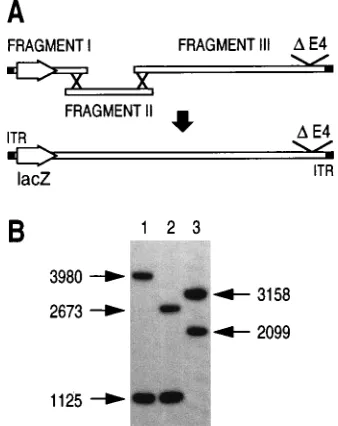
FIG. 4. (A) Construction of virus AdbGal/dl1014 in IGRP2 cells. Fragments I, II, and III are overlapping purified restriction fragments derived from the AdRSVbGal and H5dl1014 genomes, as described in Materials and Methods. The purified fragments were introduced into IGRP2 cells, and DEX (1mM) was added every 4 days for 3 weeks. The cell lysate was subsequently added to fresh IGRP2 cells in the presence of DEX. The CPE observed after 5 days was amplified, and the viral stock (1010
PFU) from which DNA was recovered was prepared. (B) Southern blot analysis of StuI-restricted viral DNA. Two micro-grams of StuI-restricted DNA was submitted to Southern analysis with a radio-labeled ITR probe. Lane 1, AdRSVbGal DNA; lane 2, AdbGal/dl1014 DNA; lane 3, H5dl1007 DNA. The sizes (in base pairs) and positions of the E12StuI
fragment from AdRSVbGal (1125), the E42fragments from H5dl1014 and H5dl1007 (2673 and 2099, respectively), an E11fragment (3158), and an E41
fragment (3980) are indicated.
on November 9, 2019 by guest
http://jvi.asm.org/
[image:5.612.350.519.73.286.2]4B, after a 30-min exposure, StuI digestion of viral DNA gen-erates only two fragments, and their sizes correspond exactly to those of the expected ITR-bearing fragments of the virus with both E1 and E4 deleted (lane 2). One fragment displays mo-bility which corresponds to that of the 1,125-bp lacZ-encoding
fragment from AdRSVbGal (Fig. 4B, lane 1), while the second
migrates as the 2,673-bp StuI fragment encompassing the E4 deletion of H5dl1014. Prolonged exposure (28 h) of the auto-radiogram did not reveal any additional band with a size
cor-responding to an E11(3,158-bp) fragment (Fig. 4B, lane 3) or
to the E41fragment (3,980 bp) of AdRSVbGal (lane 1).
Im-portantly, neither could a fragment corresponding in size
(3,267 bp) to the introduction of the ORF41ORF61ORF7 E4
functional unit within the vector backbones be detected, dem-onstrating that a double recombination event between the cellular E4 unit and the vector backbones did not occur at detectable levels during viral propagation (Fig. 1B). PCR am-plification of the viral stock DNA confirmed the absence of
detectable contamination with E11or E41viruses, with
sen-sitivities of 1025and 1026, respectively (Fig. 5).
DISCUSSION
Clone IGRP2 is a novel packaging cell line constructed by integrating a minimal E4 functional unit, MMTV
LTR-ORF61ORF7, into the genome of 293 (E11) cells (Fig. 1).
These cells can rescue the growth defect associated with all of
the E11 E42 adenoviral deletants tested, obviously because
they express the ORF6 gene product to levels restoring late viral protein synthesis (Fig. 3). The results of DNA and RNA analysis experiments were consistent with MMTV LTR-driven
expression of the ORF61ORF7 unit and indicated that bona
fide alternative splicing generated the ORF6 and ORF6/7 mRNAs (Fig. 2). The concomitant expression of E1 and E4 regulatory genes within IGRP2 cells has been demonstrated by the construction of a recombinant lacZ-encoding virus with both deletions that exhibits the E4 deletion of virus H5dl1014. Molecular characterization of the genome from a purified viral stock by Southern and PCR amplification techniques demon-strated the absence of potential helper viruses exhibiting the
E1 or E4 region. Neither was an E41 virus containing the
ORF41ORF61ORF7 segment detected, although such a
vi-rus could emerge as a result of homologous recombination on both sides of the dl1014 deletion (Fig. 1B). A fortiori, the
emergence of E41particles during the propagation of viruses
combining the E1 deletion of AdRSVbGal and the E4 deletion
of the other defective viruses in this study is not possible in IGRP2 cells because (i) the E4 deletion from H5dl1014 is the only one which exhibits overlapping sequences on both sides of
the ORF61ORF7 unit (Fig. 1) and (ii) a single homologous
recombination between the cellular and viral genomes gener-ates a virus lacking its right ITR.
The importance of expressing a minimal E4 functional unit
to avoid the emergence of E41replicative particles during viral
stock preparation is further supported by the observation that a 293-derived cell line engineered to express the complete Ad5 E4 region from the MMTV LTR (clone IGRP4) actually did
allow the recovery of b-galactosidase-expressing E41viruses
(i.e., AdRSVbGal) during the viral growth of AdbGal/dl1004
(6a). Moreover, although this cell line allowed the construction
of AdbGal/dl808, AdbGal/dl1004, AdbGal/dl1007, AdbGal/
dl1011, and AdbGal/dl1014, these viruses could not be plaque
purified on IGRP4-derived monolayers, as the cells could not sustain cell confluence long enough (37b). In contrast, upon inclusion in agar, IGRP2 cells sustain cell confluence for a longer period than do 293 cells in the presence of DEX. We believe that some of the additional E4 ORF expressed in IGRP4 (i.e., ORF1, ORF2, ORF3, or ORF4) is indeed respon-sible for the IGRP4-associated phenotype. ORF4 is a likely candidate for this because it is expressed in IGRP4 cells (un-published result) and it targets AP1 (22), an important com-ponent of proliferative signal transduction pathways (27). Vi-ruses with both deletions constructed in IGRP4 were in fact plaque purified on IGRP2-derived monolayers (Fig. 6), as these cells are viable for more than 4 weeks in the presence of DEX after they reach cell confluence.
The possibility that the expression of nondeleted viral anti-gens is a triggering determinant for the immune clearance of recipient cells after adenovirus-mediated gene transfer is cer-tainly attractive. The evaluation of the host inflammatory
re-sponse and the persistence ofb-galactosidase expression after
the transfer of viruses with both deletions from this study in relevant animal models will be helpful in understanding the role of the E4 genes in viral antigen synthesis in the absence of E1A.
[image:6.612.62.294.70.184.2]FIG. 6. AdbGal/dl1011 plaque formation on IGRP2. DEX (1 mM) was added at the time of infection and every 5 days thereafter. The plaques were stained with X-Gal at 22 days postinfection.
FIG. 5. Comparative PCR analysis of AdRSVbGal and AdbGal/dl1014 DNAs. Viral DNAs were extracted from CsCl-purified viral stocks, and the indicated quantities were used as substrates for PCR amplification: 1mg (lane a), 100 ng (lane b), 10 ng (lane c), 1 ng (lanes d), 100 pg (lanes e), 10 pg (lanes f), 1 pg (lanes g), 100 fg (lanes h), 10 fg (lanes i), 1 fg (lane j), and 0.1 fg (lane k). Lanes S and s, 1- and 0.1-kb DNA standards, respectively; lane2, the absence of DNA in the amplification mix. The oligonucleotides used amplify a 2.69-kb fragment from an E41virus (upper arrow) or a 1.37-kb fragment when the E4 deletion of dl1014 is introduced (lower arrow). Southern blot analysis of the gel confirmed no contamination with the 2.69-kb E41-specific fragment when 1mg
of AdbGal/dl1014 DNA was used for PCR amplification, indicating a sensitivity of at least 1026as the E41fragment is detected when 1 pg of AdRSVbGal DNA
is used.
on November 9, 2019 by guest
http://jvi.asm.org/
[image:6.612.316.556.539.699.2]ACKNOWLEDGMENTS
We thank G. Ketner (Baltimore, Md.) for providing the E4 deletants and the W162 cell line, P. Boulanger (Montpellier, France) for pro-viding the fiber-specific antibodies, and H. Richard-Foy (Biceˆtre, France) for providing pSG5HGR. L. D. Stratford-Perricaudet and M. M. Lakich are acknowledged for critically reading the manuscript and making helpful suggestions, and A. Brie, A. Gillardeaux, M. Lep-eut, C. Jullien, and I. Mahfouz are acknowledged for technical assis-tance.
E.V. was supported from the BioAvenir multidisciplinary program.
REFERENCES
1. Blanton, R. A., and T. H. Carter. 1979. Autoregulation of adenovirus type 5 early gene expression. III. Transcription studies in isolated nuclei. J. Virol.
29:458–465.
2. Bridge, E., and G. Ketner. 1989. Redundant control of adenovirus late gene expression by early region 4. J. Virol. 63:631–638.
3. Bridge, E., S. Medghalchi, S. Ubol, M. Leesong, and G. Ketner. 1993. Adenovirus early region 4 and viral DNA synthesis. Virology 193:794–801. 4. Brough, D. E., V. Cleghon, and D. F. Klessig. 1992. Construction, charac-terization, and utilization of cell lines which inducibly express the adenovirus DNA-binding protein. Virology 190:624–634.
5. Challberg, S. S., and G. Ketner. 1981. Deletion mutants of adenovirus 2: isolation and initial characterization of virus carrying mutation near the right end of the viral genome. Virology 114:196–209.
6. Chang, L.-S., and T. Shenk. 1990. The adenovirus DNA-binding protein stimulates the rate of transcription directed by adenovirus and adeno-asso-ciated virus promoters. J. Virol. 64:2103–2109.
6a.Dedieu, J.-F. Unpublished data.
7. Dix, I., and K. N. Leppard. 1993. Regulated splicing of adenovirus type 5 E4 transcripts and regulated cytoplasmic accumulation of E4 mRNA. J. Virol.
67:3226–3231.
8. Engelhardt, J. F., L. Litzky, and J. M. Wilson. 1994. Prolonged transgene expression in cotton rat lung with recombinant adenoviruses defective in E2a. Hum. Gene Ther. 5:1217–1229.
9. Engelhardt, J. F., Y. Yang, L. D. Stratford-Perricaudet, E. D. Allen, K.
Kozarsky, M. Perricaudet, J. R. Yankaskas, and J. M. Wilson.1993. Direct gene transfer of human CFTR into human bronchial epithelia of xenografts with E1-deleted adenoviruses. Nat. Genet. 4:27–34.
10. Engelhardt, J. F., X. Ye, B. Doranz, and J. M. Wilson. 1994. Ablation of E2A in recombinant adenoviruses improves transgene persistence and decreases inflammatory response in mouse liver. Proc. Natl. Acad. Sci. USA 91:6196– 6200.
11. Falgout, B., and G. Ketner. 1987. Adenovirus early region 4 is required for efficient virus particle assembly. J. Virol. 61:3759–3768.
12. Freyer, G. A., Y. Katoh, and R. J. Roberts. 1984. Characterization of the major mRNAs from adenovirus 2 early region 4 by cDNA cloning and sequencing. Nucleic Acids Res. 12:3503–3519.
13. Graham, F. L., and A. J. van der Eb. 1973. A new technique for the assay of infectivity of human adenovirus 5 DNA. Virology 52:456–467.
14. Halbert, D. N., J. R. Cutt, and T. Shenk. 1985. Adenovirus early region 4 encodes functions required for efficient DNA replication, late gene expres-sion, and host cell shutoff. J. Virol. 56:250–257.
15. Hemstro¨m, C., K. Nordqvist, U. Pettersson, and A. Virtanen.1988. Gene product of region E4 of adenovirus type 5 modulates accumulation of certain viral polypeptides. J. Virol. 62:3258–3264.
16. Hollenberg, S. M., C. Weinberger, E. S. Ong, G. Cerelli, A. Oro, R. Lebo,
E. B. Thompson, M. G. Rosenfeld, and R. M. Evans.1985. Primary structure and expression of a functional human glucocorticoid receptor cDNA. Nature (London) 318:635–641.
17. Huang, M. M., and P. Hearing. 1989. Adenovirus early region 4 encodes two gene products with redundant effects in lytic infection. J. Virol. 63:2605– 2615.
18. Imperiale, M. J., H.-T. Kao, L. T. Feldman, J. R. Nevins, and S. Strickland. 1984. Common control of the heat shock gene and early adenovirus genes: evidence for a cellular E1A-like activity. Mol. Cell. Biol. 4:867–874. 19. Klessig, D. F., D. E. Brough, and U. Cleghon. 1984. Introduction, stable
integration, and controlled expression of a chimeric adenovirus gene whose product is toxic to the recipient human cell. Mol. Cell. Biol. 4:1354–1362. 20. La Thangue, N. B. 1994. DRTF1/E2F: an expanding family of heterodimeric
transcription factors implicated in cell-cycle control. Trends Biochem. Sci.
19:108–114.
21. Marsh, J. L., M. Erfle, and E. J. Wykes. 1984. The pIC plasmid and phage
vectors with versatile cloning sites for recombinant selection by insertional inactivation. Gene 32:481–485.
22. Mu¨ller, U., T. Kleinberger, and T. Shenk.1992. Adenovirus E4orf4 protein reduces phosphorylation of c-Fos and E1A proteins while simultaneously reducing the level of AP-1. J. Virol. 66:5867–5878.
23. Nevins, J. R., and J. J. Winkler. 1980. Regulation of early adenovirus tran-scription: a protein product of early region 2 specifically represses region 4 transcription. Proc. Natl. Acad. Sci. USA 77:1893–1897.
24. Nordqvist, K., K. O¨ hman, and G. Akusja¨rvi. 1994. Human adenovirus
en-codes two proteins which have opposite effects on accumulation of alterna-tively spliced mRNAs. Mol. Cell. Biol. 14:437–445.
25. Ohman, K., K. Nordqvist, and G. Akusjarvi. 1993. Two adenovirus proteins with redundant activities in virus growth facilitate tripartite leader mRNA accumulation. Virology 194:50–58.
26. Onclercq, R., P. Gilardi, A. Lavenu, and C. Cremisi. 1988. c-myc products
trans-activate the adenovirus E4 promoter in EC stem cells by using the same
target sequence as E1A products. J. Virol. 62:4533–4537.
27. Pennypacker, K. R., J.-S. Hong, and M. K. McMillian. 1994. Pharmacolog-ical regulation of AP-1 transcription factor DNA binding activity. FASEB J.
8:475–478.
28. Pilder, S., M. Moore, J. Logan, and T. Shenk. 1986. The adenovirus E1B-55K transforming polypeptide modulates transport or cytoplasmic stabiliza-tion of viral and host cell mRNAs. Mol. Cell. Biol. 6:470–476.
29. Sambrook, J., E. F. Fritsch, and T. Maniatis. 1989. Molecular cloning: a laboratory manual, 2nd ed. Cold Spring Harbor Laboratory, Cold Spring Harbor, N.Y.
30. Sandler, A. B., and G. Ketner. 1989. Adenoviral early region 4 is essential for normal stability of late nuclear RNAs. J. Virol. 63:624–630.
31. Schaack, J., X. Guo, W. Y.-W. Ho, M. Karlok, C. Chen, and D. Ornelles. 1995. Adenovirus type 5 precursor terminal protein-expressing 293 and HeLa cell lines. J. Virol. 69:4079–4085.
32. Spergel, J. M., and S. Chen-Kiang. 1991. Il-6 enhances a cellular activity which functionally substitutes for E1A in trans-activation. Proc. Natl. Acad. Sci. USA 88:6472–6476.
33. Spergel, J. M., W. Hsu, S. Akira, B. Thimmappaya, T. Kishimoto, and S.
Chen-Kiang.1992. NF-IL6, a member of the C/EBP family, regulates E1A-responsive promoters in the absence of E1A. J. Virol. 66:1021–1030. 34. Stallcup, M. R., and L. D. Washington. 1983. Region-specific initiation of
mouse mammary tumor virus RNA synthesis by endogenous RNA poly-merase II in preparation of cell nuclei. J. Biol. Chem. 258:2802–2809. 35. Stratford-Perricaudet, L. D., I. Makeh, M. Perricaudet, and P. Briand. 1992.
Widespread long-term gene transfer to mouse skeletal muscles and heart via an adenovirus vector. J. Clin. Invest. 90:626–630.
36. Tigges, M. A., and H. J. Raskas. 1984. Splice junctions in adenovirus 2 early region 4 mRNAs: multiple splice sites produce 18 to 24 RNAs. J. Virol. 50: 106–117.
37. van der Vliet, P. C., and J. S. Sussenbach. 1975. An adenovirus type 5 gene function required for initiation of viral DNA replication. Virology 67:415– 426.
37a.Vigne, E. Unpublished data.
37b.Vigne, E., and J.-F. Dedieu. Unpublished data.
38. Virtanen, A., P. Gilardi, A. Naslund, J. M. LeMoullec, U. Pettersson, and M.
Perricaudet.1984. mRNAs from human adenovirus 2 early region 4. J. Virol.
51:822–831.
39. Weiden, M. D., and H. S. Ginsberg. 1994. Deletion of the E4 region of the genome produces adenovirus DNA concatemers. Proc. Natl. Acad. Sci. USA
91:153–157.
40. Weinberg, D. H., and G. Ketner. 1983. A cell line that supports the growth of a defective early region 4 deletion mutant of human adenovirus type 2. Proc. Natl. Acad. Sci. USA 80:5383–5386.
41. Weinberg, D. H., and G. Ketner. 1986. Adenoviral early region 4 is required for efficient viral DNA replication and for late gene expression. J. Virol. 57: 833–838.
42. Yang, Y., Q. Li, H. C. J. Ertl, and J. M. Wilson. 1995. Cellular and humoral immune responses to viral antigens create barriers to lung-directed gene therapy with recombinant adenoviruses. J. Virol. 69:2004–2015.
43. Yang, Y., F. A. Nunes, K. Berencsi, E. E. Furth, E. Gonczol, and J. M.
Wilson.1994. Cellular immunity to viral antigens limits E1-deleted adeno-viruses for gene therapy. Proc. Natl. Acad. Sci. USA 91:4407–4411. 44. Yew, P. R., X. Liu, and A. J. Berk. 1994. Adenovirus E1B oncoprotein tethers
a transcriptional repression domain to p53. Genes Dev. 8:190–202. 45. Zhang, Y., D. Feigenblum, and R. J. Schneider. 1994. A late adenovirus
factor induces eIF-4E dephosphorylation and inhibition of cell protein syn-thesis. J. Virol. 68:7040–7050.