Open Access
Research article
Improving survey methods in sero-epidemiological studies of
injecting drug users: a case example of two cross sectional surveys
in Serbia and Montenegro
Ali Judd*
1, Tim Rhodes
2, Lisa G Johnston
3, Lucy Platt
2, Violeta Andjelkovic
4,
Danijela Simi
ć
5, Boban Mugosa
6, Milena Simi
ć
7, Sonja Žerjav
8, Ruth P Parry
9and John V Parry
2,9Address: 1MRC Clinical Trials Unit, London, UK, 2Centre for Research on Drugs and Health Behaviour, London School of Hygiene and Tropical
Medicine, London, UK, 3Tulane University, School of Public Health and Tropical Medicine, New Orleans, Louisiana, USA, 4International Aid
Network, Belgrade, Serbia, 5Institute of Public Health of Serbia, Belgrade, Serbia, 6Institute of Public Health, Podgorica, Montenegro, 7Department
of Social Medicine, University of Bristol, Bristol, UK, 8HIV/AIDS Centre, Institute for Infectious and Tropical Diseases, School of Medicine,
University of Belgrade, Serbia and 9Virus Reference Department, Health Protection Agency Centre for Infections, London, UK
Email: Ali Judd* - [email protected]; Tim Rhodes - [email protected]; Lisa G Johnston - [email protected]; Lucy Platt - [email protected]; Violeta Andjelkovic - [email protected]; Danijela Simić- [email protected]; Boban Mugosa - [email protected]; Milena Simić- [email protected]; Sonja Žerjav - [email protected]; Ruth P Parry - [email protected]; John V Parry - [email protected]
* Corresponding author
Abstract
Background: Little is known about the prevalence of HIV or HCV in injecting drug users (IDUs) in Serbia and Montenegro. We measured prevalence of antibodies to HIV (anti-HIV) and hepatitis C virus (anti-HCV), and risk factors for anti-HCV, in community-recruited IDUs in Belgrade and Podgorica, and determined the performance of a parallel rapid HIV testing algorithm.
Methods: Respondent driven sampling and audio-computer assisted survey interviewing (ACASI) methods were employed. Dried blood spots were collected for unlinked anonymous antibody testing. Belgrade IDUs were offered voluntary confidential rapid HIV testing using a parallel testing algorithm, the performance of which was compared with standard laboratory tests. Predictors of anti-HCV positivity and the diagnostic accuracy of the rapid HIV test algorithm were calculated.
Results: Overall population prevalence of anti-HIV and anti-HCV in IDUs were 3% and 63% respectively in Belgrade (n = 433) and 0% and 22% in Podgorica (n = 328). Around a quarter of IDUs in each city had injected with used needles and syringes in the last four weeks. In both cities anti-HCV positivity was associated with increasing number of years injecting (eg Belgrade adjusted odds ratio (AOR) 5.6 (95% CI 3.2–9.7) and Podgorica AOR 2.5 (1.3–5.1) for ≥ 10 years v 0–4 years), daily injecting (Belgrade AOR 1.6 (1.0–2.7), Podgorica AOR 2.1 (1.3–5.1)), and having ever shared used needles/syringes (Belgrade AOR 2.3 (1.0–5.4), Podgorica AOR 1.9 (1.4–2.6)). Half (47%) of Belgrade participants accepted rapid HIV testing, and there was complete concordance between rapid test results and subsequent confirmatory laboratory tests (sensitivity 100% (95%CI 59%–100%), specificity 100% (95%CI 98%–100%)).
Published: 9 February 2009
BMC Infectious Diseases 2009, 9:14 doi:10.1186/1471-2334-9-14
Received: 16 August 2008 Accepted: 9 February 2009
This article is available from: http://www.biomedcentral.com/1471-2334/9/14
© 2009 Judd et al; licensee BioMed Central Ltd.
Conclusion: The combination of community recruitment, ACASI, rapid testing and a linked diagnostic accuracy study provide enhanced methods for conducting blood borne virus sero-prevalence studies in IDUs. The relatively high uptake of rapid testing suggests that introducing this method in community settings could increase the number of people tested in high risk populations. The high prevalence of HCV and relatively high prevalence of injecting risk behaviour indicate that further HIV transmission is likely in IDUs in both cities. Urgent scale up of HIV prevention interventions is needed.
Background
While an evidence base characterising the epidemiology of HIV and hepatitis C virus (HCV) among injecting drug users (IDUs) has emerged in many Eastern Europe tries,[1,2] less is known of South Eastern European coun-tries, including the Western Balkans. This is despite countries in the Western Balkans and Eastern Europe shar-ing many characteristics of the HIV risk environment, such as major social and economic transition linking with expanding illicit drug markets, increased poverty, and weakening public health infrastructure.[3] Studies suggest low prevalence of HIV in IDUs in the region but higher prevalence of HCV, with estimates ≥ 50% in Bulgaria, Romania, Slovenia and Croatia.[4] There are only two published surveys of HIV prevalence among IDUs in Ser-bia,[5,6] and none in Montenegro. In Belgrade, HIV prev-alence was 39% in 472 IDUs admitted to a drug treatment centre in 1987/8.[5] A later study of IDUs treated for drug problems in Belgrade found that 44% were anti-HIV pos-itive.[6] HIV and AIDS registry data suggest that injecting drug use is yet to be a major transmission route for HIV in Serbia and Montenegro; between 2002 and 2006, 494 newly diagnosed HIV infections were reported in Serbia, of which 66 were attributed to injecting drug use, and sim-ilarly 25 in Montenegro, of which 3 were in IDUs.[7] No estimates of anti-HCV prevalence in IDUs in Serbia and Montenegro have been published.
A number of contextual factors shape the delivery of HIV and HCV testing services for IDUs in Serbia and Montene-gro, which in turn introduce challenges for conducting sero-epidemiological research.[8,9] Resources for the delivery of low-threshold and confidential HIV and HCV antibody testing at testing centres is limited, with reports of inconsistent availability of testing kits. Qualitative research suggests reluctance among IDUs to access local testing centres, related to concerns over confidentiality, a lack of trust in services and expertise, and experience of stigma when interfacing with health care and other insti-tutions.[8,9] Avoidance of service contact can be a strategy of stigma avoidance.[8] There exists a culture of silence and non-disclosure regarding viral infections among some sectors of the IDU population.[8] This emphasizes the need for sero-epidemiological research approaches which focus upon methods of community recruitment. It
also emphasizes the potential afforded by delivering HIV and other testing services directly in the community and outside the laboratory. At the time of the study, however, all HIV and HCV testing services in Serbia and Montene-gro were provided within designated medical centres. This study obtained specific approval by the relevant Govern-ment Ministries to offer point-of-care tests (POCT) for HIV directly in community settings as part of its aim to explore improvements in survey methods in sero-epide-miological research in hidden populations of IDUs.
Sampling hidden populations
Although most epidemiological studies measuring HIV and HCV prevalence in IDUs recruit a theoretically biased selection of participants from drug treatment clinics, some have used "snowball sampling", often with peer inter-viewers, to recruit IDUs from non-treatment community settings. These "community based" snowball samples are often themselves biased by several factors, including over-sampling of participants with larger social networks, insufficient recruitment waves rendering a final sample with characteristics biased by the initial participants, and widespread masking (protecting friends due to privacy concerns) and volunteerism.[10,11] Recently, a modified version of snowball sampling, known as "respondent driven sampling" (RDS), has been developed which aims to eliminate several such biases to achieve representative samples of high risk, hard-to-react populations.[10,12] RDS uses a coupon system of recruitment whereby peers recruit their peers to create numerous recruitment waves, long recruitment chains and an incentive mechanism for participating in the study; this in turn helps eliminate some of the biases inherent in snowball sampling meth-ods.[10,13] Furthermore, data gathered using RDS are subject to specialised statistical analysis to mitigate factors associated with biased recruitment.[13,14] However, the method has been associated with operational, design and analytical challenges in some studies [15] and there is some discussion about the ethics of incentive-based recruitment systems [16]. RDS requires careful implemen-tation to maximise its success.
Services at the point of recruitment
offers researchers the opportunity to provide much needed services to these populations, as well as improve the validity and reliability of survey methods. For instance, many previous studies have employed unlinked anonymous testing of biological samples in which, for practical reasons, results are not returned to participants: turnaround times for returning results from a reference laboratory are usually in the order of days rather than hours; re-contacting marginalised groups to deliver test results are poor.[17] Point-of-care tests (POCT) for HIV offer a novel and alternative strategy whereby the testing is moved from the laboratory into the community, in this case to the RDS study site, and results can be provided to the most hard-to-reach populations at the same visit.[18] POCTs are simple to use and thus facilitate administration by non-laboratory staff who have received appropriate training and had their competency checked. This enables voluntary counselling and testing (VCT) programmes to be extended to community settings and offered as an added incentive to participate in epidemiological studies. Fixed sites also enable studies to use audio-computer assisted survey interviewing (ACASI), which has been shown to elicit higher reports of high risk and often stig-matised behaviours, which are assumed to be closer to true levels.[19,20]
Recent studies suggest that rapid HIV testing in commu-nity settings can effectively target groups at high risk of HIV infection.[21] Rapid testing has been conducted in parks, shelters, syringe exchanges, community clinics, VCT programmes and antenatal clinics. [21-25] The per-formance of algorithms employing several different POCTs either in consecutive or parallel testing strategies has also been reported, with varying outcomes. One field evaluation suggested that different combinations of POCTs provided sensitivity and specificity similar to standard enzyme immunoassays and Western Blot.[22] Another study evaluating the performance of the Deter-mine HIV-1/2 in pregnant women in Mexico reported high sensitivity and specificity, though a lower positive predictive value associated with the low prevalence of anti-HIV in this population.[25] Another study reported successful implementation of rapid HIV testing in several different types of community settings but only measured the positive predictive value for those receiving confirma-tory tests after testing anti-HIV positive on the rapid HIV assay.[21] A study employing the Determine and Uni-Gold rapid HIV test assays in Uganda reported good sen-sitivity, though specificity was compromised because of the occurrence of weak reactions with the test band. These weak reactions were associated in the main with the Determine test, most of which were later ascertained to be HIV negative on enzyme immunoassay (EIA) and Western blotting.[26]
This paper reports on the findings of two parallel surveys of IDUs conducted in Belgrade and Podgorica in 2005 using RDS. Both recruited IDUs from community settings and employed ACASI, with the Belgrade survey including a voluntary confidential rapid HIV testing component and a diagnostic accuracy study.
Methods
Two cross sectional, anonymous, surveys of IDUs were undertaken simultaneously in Belgrade and Podgorica in September and October 2005. Both surveys used identical sampling and interview methods. Inclusion criteria were: injecting drugs in the previous four weeks; living or work-ing in Belgrade or Podgorica; aged 18 years or older; will-ing to give a dried blood spot (DBS) for antibody testwill-ing; and not having been interviewed for the study previously.
Participants were recruited using RDS,[10] and were inter-viewed at fixed sites located in the centre of each city. The Belgrade site was housed within a discrete building used by the International AID Network (IAN), an NGO work-ing with vulnerable people in South Eastern Europe. The Podgorica site was housed within some unmarked rooms in a mini shopping mall near the centre of the city, and comprised part of the premises of a local NGO called "Juventas", which provides youth services in the city. Sur-vey staff members in both cities included outreach work-ers and former injectors whom had extensive experience working with vulnerable populations in Serbia and Mon-tenegro. Potential participants were screened using a list of questions about injecting drug preparation, type and cost and by looking at injection stigmata. Pre-survey train-ing in both cities included RDS methodology, processtrain-ing potential participants through screening for inclusion cri-teria, gathering RDS specific data for analysis, providing assistance to participants using ACASI, and managing incentive payments. Recruitment began with a set of ini-tial recruits ("seeds") who met the inclusion criteria and who were diverse in terms of key characteristics of the drug injecting community (eg. age, gender, area of resi-dence, duration of injecting).
After giving written informed consent, all participants were interviewed using ACASI, taking approximately 30 minutes to complete. The questionnaire included sections on socio-demographics, drug use, injecting and sexual risk behaviour, sex work, contact with the police, and HIV test-ing history. It was developed from other survey question-naires[2,27], underwent piloting, and was informed by a linked qualitative study.[9]
nature of DBS testing in the Information Sheet for the study, and had the option to withdraw consent and opt out of the study. No identifiers were collected and so it was not possible to trace participants to report to them their test results. However all participants in Belgrade were offered voluntary anonymous rapid HIV testing and results, along with full pre- and post-test counselling. HIV test results were available within approximately 30 min-utes after receiving pre-test counselling. Those testing HIV positive were referred to the Belgrade AIDS centre for appropriate confirmatory testing. HIV/AIDS educational materials, condoms and trained VCT counsellors were available throughout the duration of the study. In Podgor-ica, instead of rapid testing, participants were referred to a local, newly opened, free of charge HIV VCT centre.
IDUs received "primary" and "secondary" cash reimburse-ments of €10 each for participation in the survey and €5 for each of their recruited peers (maximum three) who met the inclusion criteria and enrolled in the survey.
Laboratory methods – unlinked anonymous testing
Capillary blood was collected onto absorbent paper (Whatman 903, Astron, Huntingdon, UK) by finger prick using single use disposable lancets, and left to dry, thus becoming a DBS. Specimens were stored in plastic pouches with desiccant in on-site freezers, and were later transferred to the Clinic for Infectious and Tropical Dis-eases, Belgrade where they were stored at -25°C until test-ing.
DBS specimens were tested at the Clinic for Infectious and Tropical Diseases, Belgrade, under the supervision of staff of the Health Protection Agency Virus Reference Depart-ment. Six mm diameter disks were punched and each was placed in a designated well of a 96-well microplate. Plasma proteins, including antibodies, were eluted from the disks by overnight immersion in 200 μL of PBS/tween buffer.
Anti-HCV test
Testing for anti-HCV was carried out using a modified protocol for the Ortho HCV 3.0 SAVe ELISA (product number 940982, Ortho Diagnostics, Amersham).[28] The method employs a cut-off (CO) optical density (OD) of 0.090, and any DBS sample giving an OD value between 0.080 and 2.500 was eluted from a new punch and re-tested in duplicate using the same assay. Those that were repeatedly reactive, as well as those whose initial screen-ing OD value exceeded the maximum for the plate reader (2.500), were considered to be anti-HCV positive. It was decided not to apply a second line assay with the intent to confirm the presence of anti-HCV primarily because the method employed is highly reproducible and specific. Even for a low HCV prevalence in IDUs of, for example,
30% the positive predictive value is 1.0.[28] Particularly with the added safeguard of duplicate re-testing of any specimen with an OD in the range 0.08 – 2.5 the applica-tion of a second test would not have added significantly to testing accuracy.
Anti-HIV test
For Anti-HIV testing an in-house version of the GACELISA HIV 1+2 enzyme immunoassay was employed [29] as the commercial kit is no longer manufactured. In local valida-tion studies it had been shown to have an accuracy equiv-alent to that of the commercial GACELISA. Specimens that were anti-HIV reactive on initial testing were re-tested using the GACELISA. All repeatedly reactive samples and several of those that were reactive only on initial testing were examined by a modified Western Blot procedure (HIV Blot 2.2, Abbott Diagnostics, Maidenhead, UK).
Rapid HIV testing
Rapid HIV testing was conducted using a parallel rapid testing algorithm. Capillary blood samples collected using single use disposable lancets were dropped into the sam-ple ports of the rapid test devices according to the manu-facturers' instructions. An additional DBS was taken from each participant for anti-HIV confirmatory testing (proto-col as above) at a later date to estimate the diagnostic accuracy of the algorithm.
Two rapid HIV tests, Uni-Gold Recombinant HIV-1/2 (Trinity Biotech, Bray, Ireland) and Determine HIV-1/2/O (Abbott Laboratories, Abbott Park, IL, USA) were employed simultaneously to avoid the need to take a sec-ond blood sample should the first test be reactive. These tests have undergone evaluation by the World Health Organization; both had 100% sensitivity, with the Deter-mine test having 99.4% and Uni-Gold 100% specifi-city.[32] A detailed protocol was followed which incorporated the manufacturers' instructions for use. Test-ing was conducted in a small temporary laboratory estab-lished within the Belgrade study site, and each test result was read by two trained technicians.
Additional file 1 describes the rapid testing algorithm. Reactivity of at least one rapid test result (two red bars, one in the "Test" and one in the "Control" window) indi-cated the possibility of HIV infection and the participant was referred to the Belgrade AIDS centre for appropriate confirmatory testing. Blood samples that were concord-antly non-reactive, or where one test was non-reactive and the other invalid, were interpreted as indicating no evi-dence of HIV infection, and in which case no referral was made. In addition, the intensity of each reaction was recorded on a scale of one to four (no reaction; weak reac-tion; moderate reacreac-tion; strong reaction), as a quality check.
Statistical analysis
Characteristics of the two samples of IDUs were com-pared, and the Respondent Driven Sampling Analysis Tool (RDSAT) v. 5.0.1 http://www.respondentdrivensam pling.org was used to weight the sample to control for dif-ferences in network size, homophily (the tendency for
people to preferentially recruit others similar to them-selves) and recruitment patterns, to provide population based estimates and 95% confidence intervals (CI) of IDU characteristics in each city.[33] Correct implementation of RDS methodology (eg collection of participant's network sizes, and tracking who recruited whom) and analysis with RDSAT, provides representative estimates of the pop-ulation sampled.[14]
We then evaluated predictors of anti-HCV positivity using univariable and multivariable logistic regression, consid-ering the following variables: age group, sex and educa-tion; injecting drug use characteristics (duration of injecting, frequency of injecting, main drug injected, fre-quency of use of new needles/syringes, main source of new needles/syringes); injecting risk behaviours and ever having engaged in sex work; history of arrest, imprison-ment, drug treatment and HCV testing. As a result of incorrect programming of ACASI, which allowed some questions to be skipped without a value being entered, several variables had ≥ 5% missing values: duration of injection (20%); frequency of injection (9%); main drug injected (9%); number of times using a needle/syringe before disposal (21%); main source of new needles/ syringes (9%); ever injected with used needles/syringes (12%); injected with used needles/syringes in the last four weeks (19%); shared injecting paraphernalia (9%); ever engaged in sex work (16%); and ever detained or arrested by the police (36%). Therefore multiple imputations were used in multivariable models assuming the data were missing at random to avoid excluding different injectors from different analyses.[34] This involved creating or imputing plausible values for missing observations reflecting the uncertainty about the non-response model. Fifteen imputations were run on the missing data. The imputed datasets were combined and analysed together to allow for the uncertainty in the imputation model to be taken into account. Multivariable models were adjusted for robust standard errors as there was evidence of cluster-ing by recruitment network. Statistical significance was assessed using Wald tests. All analyses were conducted using Stata 10 (Stata Corp, College Station, Texas).
Multivariable models were also adjusted for population weights on key demographic indicators to compensate for recruitment biases. Population weights adjusting for recruitment biases by education and sex were used for Bel-grade, and age and education for Podgorica. Population weights were calculated using RDSAT v. 5.0.1 with anti-HCV status as the outcome variable.
Ethics
Uni-versity of Belgrade approved the study and, in the absence of a suitable research ethics committee in Podgorica, approval for the study was granted by the Montenegrin Ministry of Health. In addition the Serbian Ministry of Health granted specific approval for the collection of bio-logical specimens at study sites, and the rapid testing algo-rithm.
Results
Sample and population characteristics
Additional file 2 shows both sample and population char-acteristics of IDUs recruited in Belgrade (n = 433) and Podgorica (n = 328). After adjusting for differences in net-work sizes, homophily and recruitment patterns, most population estimates of most characteristics were similar to observed proportions in both cities. However, in Bel-grade sample characteristics underestimated by ≥ 10% the proportion of IDUs in the population who had injected less than daily (47% observed v 59% population) and used a pharmacy for their main source of needles/syringes (72% v 83% respectively).
A quarter of the sample (27%) in Belgrade, and 41% in Podgorica, were aged <25 years; 22% and 7% respectively were female; 26% and 16% respectively reported having been in higher education (≥ 12 years schooling). A higher percentage of IDUs in Podgorica had shorter injecting careers (68% v 34% ≤ 4 years, respectively), obtained their syringes from an "other" source (29% v 1%), and had ever injected with used needles/syringes (66% v 50%) than those in Belgrade. Levels of other injecting and sexual risk behaviours were similar in both samples. Around a quar-ter in each city had injected with used needles and syringes in the last four weeks, and around 5% had ever engaged in sex work. A higher proportion of Belgrade injectors had been detained or arrested by the police in the last 12 months (62% v 52% respectively), imprisoned (43% v 34%), previously been in drug treatment (45% v 28%), and had ever been tested for HCV (51% v 24%).
Laboratory testing for anti-HIV and anti-HCV
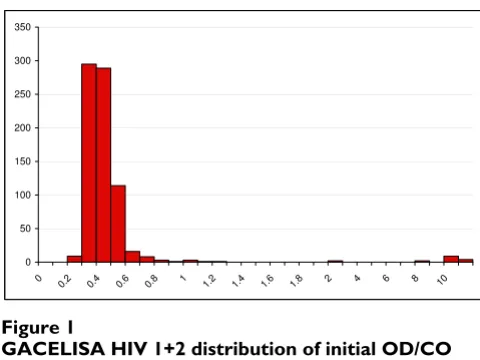
DBS from the IDUs recruited in Belgrade and Podgorica were tested for anti-HIV and anti-HCV. Fifteen were ini-tially reactive by GACELISA HIV 1+2, and there was excel-lent discrimination between non-reactive and reactive specimens (Figure 1). All 15 were repeatedly reactive (all OD/CO > 8.0), and all were confirmed to contain anti-HIV-1 by Western blot. A further seven specimens were initially weakly reactive (OD/CO 1.02–2.08), of which six were non-reactive on re-testing. As a quality check, three of these six were examined by Western Blot and were non-reactive. The remaining specimen (initial OD/CO 2.01) was not re-tested by GACELISA or Western blot and was therefore excluded from further analyses. Of the 315 DBS specimens tested in the diagnostic accuracy study 11 were
initially reactive, ten of which were confirmed by Western blot to be anti-HIV-1 positive.
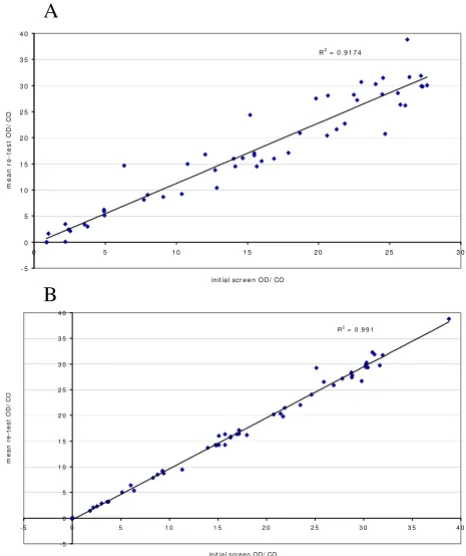
The anti-HCV reactivities also showed excellent polarisa-tion between those non-reactive and those that were reac-tive (Figure 2). To check for reproducibility, 55 samples that gave an OD in the range 0.8–2.5 were retested in duplicate. All of those with an OD/CO > 1.0 were repeat-edly reactive, apart from a single DBS whose initial OD/ CO was weak, at 2.2 (retest OD/CO 0.03). The two sam-ples with an initial OD/CO between 0.8 and 1.0 were non-reactive on repeat testing. The anti-HCV test method employed also exhibited very good quantitative reproduc-ibility. Figure 3A illustrates the close correlation between the initial anti-HCV reactivity and the mean of the dupli-cate re-tests (R2 = 0.92), and figure 3B that between the
duplicate re-tests (R2 = 0.99).
[image:6.612.313.553.84.264.2]GACELISA HIV 1+2 distribution of initial OD/CO values (n = 757)
Figure 1
GACELISA HIV 1+2 distribution of initial OD/CO values (n = 757).
0 50 100 150 200 250 300
0
0.2 0.4 0.6 0.8 1 1.2 1.4 1.6 1.8 2 4 6 8 10
350
Anti-HCV testing distribution of initial OD/CO values (n = 748)
Figure 2
Anti-HCV testing distribution of initial OD/CO val-ues (n = 748).
0 50 100 150 200 250 300
[image:6.612.314.554.531.690.2]Overall adjusted population estimates of bloodborne virus prevalence were 3% (CI 2–6%) for anti-HIV and 63% (CI 57–70%) for anti-HCV for IDUs in Belgrade, and 0% (CI 0–1%) and 22% (CI 17–27%) for IDUs in Podgorica.
Predictors of anti-HCV positivity
Additional file 3 displays univariable and multivariable predictors of anti-HCV positivity. Predictors of anti-HIV positivity were not explored as anti-HIV prevalence was too low. In Belgrade, females were more likely to be infected with HCV than males (adjusted odds ratio (AOR) 2.3, CI 1.5–3.7), and prevalence was lower in those with secondary or higher education compared to only primary (AOR 0.4, CI 0.2–0.8 and AOR 0.2, CI 0.1–0.6 respec-tively). Prevalence and odds also increased with length of injecting (eg. AOR 5.6, CI 3.2–9.7 for ≥ 10 years v 0–4 years), and were higher for those who injected daily com-pared to less than daily (AOR 1.6, CI 1.0–2.7). Those who used a needle or syringe two or more times prior to dis-posal had half the odds of anti-HCV compared to those
using it just once (AOR 0.5, CI 0.3–0.7), whilst partici-pants reporting having ever injected with used needles and syringes had twice the odds than those who had not (AOR 2.3, CI 1.0–5.4). Finally, for Belgrade anti-HCV prevalence was higher in those who had ever been in prison (AOR 1.6, CI 1.1–2.5).
In Podgorica, as in Belgrade, anti-HCV positivity was asso-ciated with longer lengths of injecting, albeit less mark-edly (AOR 2.5, CI 1.3–5.1 for ≥ 10 years v 0–4 years), as well as daily injecting (AOR 2.1, CI 1.3–5.1) and ever hav-ing injected with used needles and syrhav-inges (AOR 1.9, CI 1.4–2.6) (Additional file 3). In contrast to Belgrade, anti-HCV positivity in Podgorica was also raised in older par-ticipants (AOR 3.5, CI 2.2–5.8 for those aged ≥ 30 v <25 years), those who had been detained or arrested by the police in the last 12 months (AOR 2.5, CI 1.2–5.2) and those ever tested for HCV (AOR 2.0, CI 1.4–2.9).
There were minor differences in predictors of anti-HCV positivity in the multivariable imputed models displayed in Additional file 3 and ordinary multivariable models (not shown). For Belgrade, frequency of injection was associated with anti-HCV in the imputed but not the ordi-nary model (OR = 1.3, CI 0.8–2.21), as was ever injected with used needles/syringes (OR = 2.5, CI 0.9–7.1). For Podgorica higher education was associated with anti-HCV positivity in the ordinary model (OR = 6.9 CI 3.1–15.1) but not the imputed model, as was ever sex work (OR = 2.2, CI 1.0–4.5) and ever received drug treatment (OR = 3.3, CI 2.0–5.5 for current treatment).
Rapid testing uptake and diagnostic accuracy
All participants in Belgrade were offered a rapid HIV test, of whom 204 (47%, CI 42%–52%) took up the offer. Five withdrew after pre-test counselling, resulting in 199 par-ticipants with rapid test results. For these, an additional DBS was collected from 176 participants for confirmatory testing.
Additional file 4 shows a comparison of the results from the rapid test algorithm and the confirmatory testing. There was complete concordance between the rapid test algorithm and confirmatory tests, resulting in excellent specificity and negative predictive value (100.0%, CI 97.8–100.0% for both indicators), as well as sensitivity and positive predictive value (100%, CI 59.0–100.0% for both indicators) albeit with a wide confidence interval reflecting the small number of true positives in the sam-ple.
The intensity of reaction for all 191 negative results on the Unigold test was recorded as "0" (no reaction; for one par-ticipant the Determine test alone was employed). For the seven positive reactions, one scored "2" (moderate
[image:7.612.56.289.91.369.2]reac-A: Comparison of anti-HCV initial screen & mean re-test OD/CO values
Figure 3
A: Comparison of anti-HCV initial screen & mean re-test OD/CO values. A new disc was punched eluted and tested in duplicate when the initial eluate gave an OD in the range 0.080 – 2.500 (n = 53). B: Comparison of duplicate anti-HCV OD/CO values on new eluates from DBS whose initial screen OD was in the range 0.080 – 2.500 (n = 53).
R2 = 0 . 9 1 7 4
- 5 0 5 1 0 1 5 2 0 2 5 3 0 3 5 4 0
0 5 1 0 1 5 2 0 2 5 3 0
in it ia l scr e e n OD/ CO
m
ean r
e-tes
t O
D
/
C
O
R2 = 0 .9 9 1
- 5 0 5 1 0 1 5 2 0 2 5 3 0 3 5 4 0
- 5 0 5 1 0 1 5 2 0 2 5 3 0 3 5 4 0
in it ia l s cr e e n OD/ CO
m
e
a
n
re
-t
e
s
t
O
D
/
C
O
A
tion) and six scored "3" (strong reaction). Similarly for the Determine, all 192 negative results scored "0", whilst all seven positive reactions scored "3".
Discussion
A simple analysis of the laboratory findings indicated how well the test protocols developed for HIV and anti-HCV testing of DBS segregate reactive and non-reactive specimens. Moreover, retesting the anti-HIV reactive spec-imens and confirmatory testing with Western blot high-lighted the specificity of the GACELISA method. Similarly, retesting the minority of anti-HCV specimens whose reac-tivity was not at the extremes of the distribution of reactiv-ities demonstrated the reproducibility of the method. Our original description of the anti-HCV DBS method indi-cated that it was highly accurate and these findings are consistent with that conclusion.[28]
Prevalence and risk
In our study, prevalence of anti-HIV was 3% in Belgrade and 0% in Podgorica, suggesting that injecting drug use is yet to have a major impact on the HIV epidemic in either city. However, the much higher prevalence of anti-HCV, at around 60% for Belgrade and 20% for Podgorica, and high levels of injecting risk behaviour, indicate the need for a cautious response as levels of risk behaviour appear sufficient to enable considerable onward bloodborne virus transmission. Our study indicates that only half of IDUs in Belgrade and only a quarter of IDUs in Podgorica had ever been tested for HCV, and around a quarter of IDUs in both cities reported injecting with used needles and syringes in the previous four weeks.
IDUs in Podgorica were younger, had shorter duration of injecting, and were less likely to inject on a daily basis than their Belgrade counterparts, suggesting a more recent introduction of injecting drug use in Podgorica. Three risk factors for HCV were the same for the two cities: anti-HCV positivity increased with longer lengths of injecting; it was higher for daily injectors; and it was raised in partic-ipants who reported having ever injected with used nee-dles and syringes. In Belgrade, anti-HCV positivity was also associated with being female, lower educational attainment, less frequent use of the same syringe before disposal, and imprisonment, whilst in Podgorica it was associated with older age, being detained or arrested by the police and having ever had a previous HCV test. These results suggest an urgent need for interventions which focus on reducing injecting risk behaviour and targeting recent initiates to injecting prior to the point of HCV transmission. Mathematical modelling studies suggest that in each population of IDUs there may be a small pro-portion which is at the greatest risk of acquiring HIV and HCV, and that targeting these may have a large impact on subsequent levels of infection.[35] Qualitative research in Montenegro also emphasises an adverse relationship
between policing practices and injecting risk behav-iour.[26] Elevated risk linked to policing and prison sug-gests the need for hepatitis C prevention which focuses not only on risk awareness among IDUs but on social and institutional change.[36]
Testing
Uptake of rapid HIV testing during the study in Belgrade was relatively high, considering it was a novel interven-tion in this populainterven-tion; half of the sample wanted to know their HIV status and had pre-test counselling. This finding, similar to other evidence, suggests that rapid HIV testing in community settings can effectively target large numbers of people at high risk of HIV infection.[21] Qualitative research in Serbia suggests reluctance among IDUs to access state testing services, and a lack of normal-ised routine testing for anti-HIV and anti-HCV.[9,37] This is in a context of fears that confidentiality may be breached, mistrust of state health services, and a culture of non-disclosure regarding viral health status. We found complete concordance between the results from rapid testing and confirmatory testing, and no samples from HIV-infected participants registered weak positive reac-tions. Our rapid test algorithm therefore provided specifi-city comparable to EIA/Western Blot, and good sensitivity, albeit with broad confidence intervals due to few posi-tives.
Limitations
A limitation of our study was that despite some piloting of the ACASI program, we only detected during analysis that one of the facilities enabling participants to skip questions was not functioning properly. This led to missing data, the potential effects of which we have attempted to minimise through the use of multiple imputation methods. Also, on occasions the numbers of IDUs trying to enrol in the study at any one time were too large to manage at the recruit-ment sites, with the risk that not all of those invited to return at a later appointed time actually did so. We recorded a few instances of individuals trying to enrol who did not meet the eligibility criteria for the study or attempting to enrol for a second time,(LG Johnston, per-sonal communication) which may indicate that the incen-tive used in the study may have been too high.
Despite these limitations, we believe that the combina-tion of community recruitment using RDS techniques, ACASI, and rapid HIV testing, with linked diagnostic vali-dation, is the optimal methodology for future community surveys of IDUs. RDS provided a useful method to recruit a large number of IDUs from community settings in a rel-atively short space of time (six weeks in Belgrade and five weeks in Podgorica). There was strong anecdotal support among the survey staff that the study penetrated previ-ously unknown social networks of IDUs. For instance, three weeks into the study in Podgorica groups of IDUs who were younger, more affluent and from a 'stable' area of the city, began enrolling in the study (LG Johnston, per-sonal communication). The use of fixed sites enables sur-vey staff to screen potential participants for eligibility to join the study, administer questionnaires by ACASI, and deliver VCT to a hard-to-reach population in an informal community setting.
Conclusion
In settings where there are multiple social and structural barriers to gaining access to testing services,[9] rapid HIV testing may not only provide an incentive to participate in research but may also be considered an ethical public health imperative, providing research participants with low threshold access to testing services. Alongside an urgent need to provide low threshold access to testing services among IDUs who remain hidden or reluctant to contact existing medical services, our findings emphasise a general need for harm reduction interventions targeting IDUs early in their injection careers to prevent HCV and maintain containment of HIV. With only one needle and syringe outlet in each of the cities of Belgrade and Podgor-ica at the time of the study, and limited access to opioid substitution treatment at optimum dose, a key target is the scale-up of harm reduction services for IDUs in Serbia and Montenegro.
Competing interests
The authors declare that they have no competing interests.
Authors' contributions
AJ, TR, LGJ and JVP designed the study. AJ, TR, LGJ, LP, VA, DS, BM, MS and JVP contributed to fieldwork and data collection. SŽ, RPP and JVP oversaw the laboratory testing. AJ, LGJ and LP conducted the statistical analysis. All authors contributed to the drafting of the manuscript and gave final approval of the version to be published.
Additional material
Acknowledgements
We are grateful to the UK Department for International Development for providing funding for this study, and to the UK Department of Health National Coordinating Centre for Research and Capacity Development for providing core funding to the Centre for Research on Drugs and Health Behaviour who coordinated the study. We are indebted to Ingrid Hamilton who performed the tests to validate the performance of the in-house GACELISA HIV 1+2 assay. We would like to thank the laboratory staff at the Clinic for Infectious and Tropical Diseases, Belgrade for assisting with the laboratory work, and all the staff members at IAN and Juventas who helped with the surveys. We are also grateful to all the participants who gave up their time to participate in this study.
Additional file 1
Table 1: Rapid testing algorithm. This table describes the rapid testing algorithm.
Click here for file
[http://www.biomedcentral.com/content/supplementary/1471-2334-9-14-S1.xls]
Additional file 2
Table 2: Sample and population characteristics of injecting drug users in Belgrade and Podgorica. This table shows the sample and population characteristics of IDUs recruited in Belgrade and Podgorica.
Click here for file
[http://www.biomedcentral.com/content/supplementary/1471-2334-9-14-S2.xls]
Additional file 3
Table 3: Univariable and multivariable predictors of anti-HCV posi-tivity in Belgrade and Podgorica: logistic regression. This table shows the univariable and multivariable predictors of anti-HCV positivity. Click here for file
[http://www.biomedcentral.com/content/supplementary/1471-2334-9-14-S3.xls]
Additional file 4
Table 4: Comparison of rapid and confirmatory anti-HIV testing results. This table shows a comparison of the results from the rapid test algorithm and the confirmatory testing.
Click here for file
References
1. Hamers FF, Downs AM: HIV in central and eastern Europe.
Lan-cet 2003, 361(9362):1035-1044.
2. Rhodes T, Lowndes C, Judd A, Mikhailova LA, Sarang A, Rylkov A,
Tichonov M, Lewis K, Ulyanova N, Alpatova T, et al.: Explosive
spread and high prevalence of HIV infection among injecting
drug users in Togliatti City, Russia. AIDS 2002, 16(13):F25-31.
3. Rhodes T, Simic M: Transition and the HIV risk environment.
BMJ 2005, 331(7510):220-223.
4. Aceijas C, Rhodes T: Global estimates of prevalence of HCV
infection among injecting drug users. Int J Drug Policy 2007,
18(5):352-358.
5. Cobic P, Keserovic N, Radovanovic Z, Dobec M, Bjeljac ZS, Jung M,
Prelic A, Vukov M, Baba-Milkic N, Gledovic Z: HIV-1 and HTLV-1 infections among intravenous drug abusers in Belgrade,
Yugoslavia. J Acquir Immune Defic Syndr 1990, 3(12):1197-1199.
6. Kilibarda M: HIV infection among drug abusers in the
Bel-grade area. Bulletin on Narcotics 1993, 45(1):135-146.
7. EuroHIV: HIV/AIDS surveillance in Europe. End-year report
2006. No. 75. Saint-Maurice: Institut de Veille Sanitaire; 2007.
8. Rhodes T, Prodanovic A, Zikic B, Kuneski E, Pavicevic T, Karadzic D,
Bernays S: Trust, disruption and responsibility in accounts of
injecting equipment sharing and hepatitis C risk. Health, Risk
and Society 2008, 10:221-240.
9. Rhodes T, Zikic B, Prodanovic A, Kuneski E, Bernays S: Hygiene and
uncertainty in qualitative accounts of hepatitis C
transmis-sion among drug injectors in Serbia. Soc Sci Med 2008,
66(6):1437-1447.
10. Heckathorn DD: Respondent-driven sampling: A new
approach to the study of hidden populations. Social Problems
1997, 44(2):174-199.
11. Erickson BH: Some problems of inference from chain data.
Sociological Methodology 1979, 10:276-302.
12. Malekinejad M, Johnston LG, Kendall C, Kerr LGFS, Rifkin M,
Ruther-ford GW: Using respondent-driven sampling methodology for HIV biological and behavioral surveillance in
interna-tional settings: a systematic review. AIDS Behav 12(4
Suppl):S105-S130.
13. Heckathorn DD: Respondent-driven sampling II: Deriving valid
population estimates from chain referral samples of hidden
populations. Social Problems 2002, 49(1):11-34.
14. Salganik MJ, Heckathorn D: Sampling and estimation in hidden
populations using respondent-driven sampling. Sociological
Methodology 2004, 34(1):193-240.
15. Johnston LG, Malekinejad M, Kendall C, Iuppa IM, Rutherford GW:
Implementation challenges to using respondent-driven sam-pling methodology for HIV biological and behavioral
surveil-lance: field experiences in international settings. AIDS and
Behavior 2008, 12(4 Suppl):S131-141.
16. Scott G: "They got their program, and I got mine": a
caution-ary tale concerning the ethical implications of using
respond-ent-driven sampling to study injection drug users. Int J Drug
Policy 2008, 19(1):42-51.
17. Sullivan PS, Lansky A, Drake A: Failure to return for HIV test
results among persons at high risk for HIV infection: results
from a multistate interview project. JAIDS 2004,
35(5):511-518.
18. Respess RA, Rayfield MA, Dondero TJ: Laboratory testing and
rapid HIV assays: applications for HIV surveillance in
hard-to-reach populations. AIDS 2001, 15(Suppl 3):S49-59.
19. Turner CF, Ku L, Rogers SM, Lindberg LD, Pleck JH, Sonenstein FL:
Adolescent sexual behavior, drug use, and violence:
increased reporting with computer survey technology.
Sci-ence 1998, 280(5365):867-873.
20. Des Jarlais DC, Paone D, Milliken J, Turner CF, Miller H, Gribble J, Shi
Q, Hagan H, Friedman SR: Audio-computer interviewing to measure risk behaviour for HIV among injecting drug users:
a quasi-randomised trial. Lancet 1999, 353(9165):1657-1661.
21. Centers for Disease Control and Prevention: Rapid HIV testing in
outreach and other community settings – United States,
2004–2006. MMWR 2007, 56(47):1233-1237.
22. Stetler HC, Granade TC, Nunez CA, Meza R, Terrell S, Amador L,
George JR: Field evaluation of rapid HIV serologic tests for
screening and confirming HIV-1 infection in Honduras. AIDS
1997, 11(3):369-375.
23. San Antonio-Gaddy M, Richardson-Moore A, Burstein GR, Newman
DR, Branson BM, Birkhead GS: Rapid HIV antibody testing in the New York State Anonymous HIV Counseling and Testing
Program: experience from the field. JAIDS 2006,
43(4):446-450.
24. Bucher JB, Thomas KM, Guzman D, Riley E, Dela Cruz N, Bangsberg
DR: Community-based rapid HIV testing in homeless and
marginally housed adults in San Francisco. HIV Med 2007,
8(1):28-31.
25. Viani RM, Hubbard P, Ruiz-Calderon J, Araneta MR, Lopez G,
Chacon-Cruz E, Spector SA: Performance of rapid HIV testing using Determine HIV-1/2 for the diagnosis of HIV infection
during pregnancy in Tijuana, Baja California, Mexico. Int J
STD AIDS 2007, 18(2):101-104.
26. Gray RH, Makumbi F, Serwadda D, Lutalo T, Nalugoda F, Opendi P,
Kigozi G, Reynolds SJ, Sewankambo NK, Wawer MJ: Limitations of rapid HIV-1 tests during screening for trials in Uganda:
diag-nostic test accuracy study. BMJ 2007, 335(7612):188.
27. Judd A, Hickman M, Jones S, McDonald T, Parry JV, Stimson GV, Hall
AJ: Incidence of hepatitis C virus and HIV among new
inject-ing drug users in London: prospective cohort study. BMJ 2005,
330(7481):24-25.
28. Judd A, Parry J, Hickman M, McDonald T, Jordan L, Lewis K,
Contre-ras M, Dusheiko G, Foster G, Gill N, et al.: Evaluation of a
modi-fied commercial assay in detecting antibody to hepatitis C
virus in oral fluids and dried blood spots. J Med Virol 2003,
71(1):49-55.
29. Connell JA, Parry JV, Mortimer PP, Duncan J: Novel assay for the
detection of immunoglobulin G antihuman
immunodefi-ciency virus in untreated saliva and urine. J Med Virol 1993,
41(2):159-164.
30. Tamashiro H, Constantine NT: Serological diagnosis of HIV
infection using oral fluid samples. Bull World Health Organ 1994,
72(1):135-143.
31. Connell JA, Parry JV: Detection of anti-HIV in saliva and urine
at the time of seroconversion. Clin Diagn Virol 1994, 1:299-311.
32. World Health Organization: HIV simple/rapid assays:
opera-tional characteristics (Phase 1). Report 12 whole blood spec-imens. Geneva: World Health Organization; 2002.
33. Heckathorn DD, Semaan S, Broadhead RS, Hughes JJ: Extensions of
respondent-driven sampling: a new approach to the study of
injection drug users aged 18–25. AIDS and Behavior 2002,
6(1):55-67.
34. Horton NJ, Kleinman KP: Much ado about nothing: A
compari-son of missing data methods and software to fit incomplete
data regression models. The American Statistician 2007,
61(1):79-90.
35. Sutton AJ, Hope VD, Mathei C, Mravcik V, Sebakova H, Vallejo F,
Suli-goi B, Brugal MT, Ncube F, Wiessing L, et al.: A comparison
between the force of infection estimates for blood-borne viruses in injecting drug user populations across the
Euro-pean Union: a modelling study. J Viral Hepat 2008,
15(11):809-816.
36. Rhodes T, Treloar C: The social production of hepatitis C risk
among injecting drug users: a qualitative synthesis. Addiction
2008, 103(10):1593-1603.
37. Rhodes T, Prodanovic A, Zikic B, Kuneski E, Bernays S: Trust,
dis-ruption and responsibility in accounts of injecting equipment sharing and hepatitis C risk in Serbia and Montenegro.
Health, Risk and Society in press.
38. Joint United Nations Programme on HIV/AIDS (UNAIDS) – WHO:
Revised recommendations for the selection and use of HIV
antibody tests. WER 1997, 72:81-88.
Pre-publication history
The pre-publication history for this paper can be accessed here: