S T U D Y P R O T O C O L
Open Access
The Seamless Transfer-of-Care Protocol:
a randomized controlled trial assessing the
efficacy of an electronic transfer-of-care
communication tool
Barbara M Okoniewska
1*, Maria J Santana
1*, Jayna Holroyd-Leduc
2,3, Ward Flemons
4, Maeve O
’
Beirne
5,
Deborah White
6, Fiona Clement
2,3, Alan Forster
7and William A Ghali
1Abstract
Background:The transition between acute care and community care represents a vulnerable period in health care delivery. The vulnerability of this period has been attributed to changes to patients’medication regimens during hospitalization, failure to reconcile discrepancies between admission and discharge and the burdening of patients/ families to take over care responsibilities at discharge and to relay important information to the primary care physician. Electronic communication platforms can provide an immediate link between acute care and community care physicians (and other community providers), designed to ensure consistent information transfer. This study examines whether a transfer-of-care (TOC) communication tool is efficacious and cost-effective for reducing hospital readmission, adverse events and adverse drug events as well as reducing death.
Methods:A randomized controlled trial conducted on the Medical Teaching Unit of a Canadian tertiary care centre will evaluate the efficacy and cost-effectiveness of a TOC communication tool. Medical in-patients admitted to the unit will be considered for this study. Data will be collected upon admission, and a total of 1400 patients will be randomized. The control group’s acute care stay will be summarized using a traditional dictated summary, while the intervention group will have a summary generated using the TOC communication tool. The primary outcome will be a composite, at 3 months, of death or readmission to any Alberta acute-care hospital. Secondary outcomes will be the occurrence of post-discharge adverse events and adverse drug events at 1 month post discharge. Patients with adverse outcomes will have their cases reviewed by two Royal College certified internists or College-certified family physicians, blinded to patients’group assignments, to determine the type, severity, preventability and ameliorability of all detected adverse outcomes. An accompanying economic evaluation will assess the cost per life saved, cost per readmission avoided and cost per QALY gained with the TOC
communication tool compared to traditional dictation summaries. (Continued on next page)
* Correspondence:[email protected];[email protected]
1Department of Community Health Sciences, W21C Research and Innovation
Centre, Institute of Public Health, University of Calgary, 3280 Hospital Drive NW, Calgary, AB, Canada
Full list of author information is available at the end of the article
(Continued from previous page)
Discussion:This paper outlines the study protocol for a randomized controlled trial evaluating an electronic transfer-of-care communication tool, with sufficient statistical power to assess the impact of the tool on the significant outcomes of post-discharge death or readmission. The study findings will inform health systems around the world on the potential benefits of such tools, and the value for money associated with their widespread implementation.
Trial registration:ClinicalTrials.gov NCT01402609.
Keywords:Medical informatics, Care transitions, Electronic health records, Randomized controlled trials, Hospital discharge
Background
The transition between acute care and community care represents one of the most vulnerable periods in health care delivery, particularly as the complexity of inpatient populations increases. The vulnerability of this period has been attributed to three main factors. First, changes to patients’ medication regimens during hospitalization are numerous, yet failure to reconcile discrepancies be-tween admission and discharge is frequent [1]. Second, the patient/family is required to take over care responsi-bilities at discharge and must often personally relay im-portant information to the primary care physician [1]. This can be particularly challenging if the TOC informa-tion is poorly communicated, presented too rapidly, if instructions are verbal only, or if the patient struggles with health literacy [1-3]. Finally, crucial information is often not transferred between acute care physicians and community physicians [1].
Information about the hospitalization (such as medica-tion changes, patient diagnoses, intervenmedica-tions, diagnostic findings, and necessary follow-up) is commonly trans-ferred to the community care physician through a sum-mary of the patient’s acute care stay that is faxed or mailed. Deficits with respect to timeliness and/or com-plete failure to transmit are widespread [1,4]. At the first post-discharge appointment, this summary is unavailable to the community care physicians up to 75% of the time [1,5-7]. This negatively impacts the continuity of care provided to many patients [1,7]. When summaries are received, inconsistent content and inaccuracies are com-mon [1,4]. Acute care physicians, whether medical or surgical, often neglect to include diagnostic findings, treatment/hospital course, discharge medications, pend-ing tests results, and whether the patient and family received counseling [7].
Computer-enabled TOC communications have poten-tial to avert such problems. These communication tools, operating on electronic health record or web-based plat-forms can provide an immediate link between acute care and primary care physicians, and interfaces can be designed to ensure consistent information transfer. In addition, physicians in both settings have expressed
preference for electronic discharge documents over hand written/dictated summaries with respect to clar-ity, comprehensiveness, and positive impacts on con-tinuity of care [8-11].
Kripalani and collegues [4] published a systematic re-view examining the prevalence of discharge communica-tion deficits and looked broadly at all types of interventions that target those deficits. Very few of the interventions reviewed by Kripilani et al. involved signifi-cant contributions from electronic medical record data to construct the discharge summary, and none used the internet to transmit information. However, the publica-tions years considered spanned 1977 to 2005.
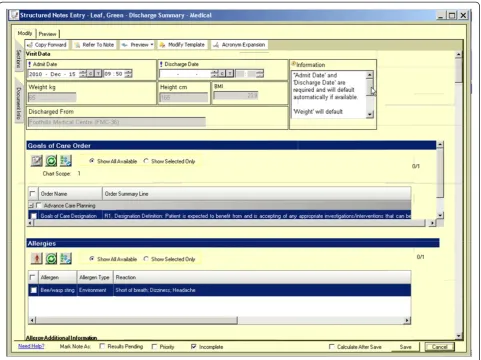
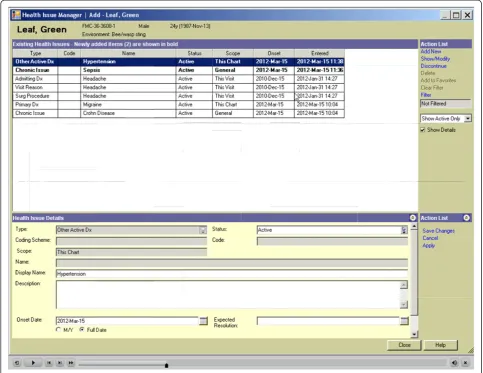
The Ward of the 21stcentury (W21C) initiative at the University of Calgary, in Alberta, Canada is an interdis-ciplinary research and innovation program focused on health system safety and quality (see www.w21c.org). The W21C team, working collaboratively with Alberta Health Services, the provincial health authority, under-took iterative consultation with multiple clinical stake-holders as well as patients and family, and developed an electronic communication TOC tool. The tool was built off of the already functioning electronic platform called Sunrise Clinical Manager (SCM) that physicians use to manage inpatient orders and to access patient medical records, diagnostic imaging and laboratory results. An initial pilot test of the tool involving 100 actual patient transfers of care summaries from an adult internal medi-cine ward to the community was performed on the Medical Teaching Unit (MTU) affiliated with the W21C. This pilot study involved detailed assessments of usabil-ity issues, provider and patient satisfaction, completeness and timeliness of the discharge summaries. The informa-tion generated from this pilot led to the refinement of the tool to the extent that it satisfied the needs of acute care physicians, primary care physicians, and patients. The refined tool will be made available for use by physi-cians and medical students on the MTU and used for this study.
On this backdrop of iterative tool development and pilot work, a protocol for a randomized controlled trial to more definitely test the efficacy of the TOC commu-nication tool was developed. With funding from the Canadian Institutes of Health Research, the RCT will as-sess the efficacy of the TOC communication tool for re-ducing the endpoint of death or hospital readmission at 3 months. Secondary objectives are: i) to assess the im-pact of the tool on the occurrence of post-discharge ad-verse events and adad-verse drug events; ii) to evaluate the cost-effectiveness of the tool.
Methods Setting
The study will be conducted on the Medical Teaching Unit (MTU) of a Canadian tertiary Medical Center. The MTU is a general internal medicine unit that provides care to adults who have non-surgical medical problems that necessitate hospitalization. The typical patient on the team has multi-system disease and/or complex symptom presentations that require detailed diagnostic evaluation and/or inpatient therapies. Patients typically have multiple comorbid illnesses and complicated medi-cation profiles that require careful scrutiny and review at time of discharge. Pilot work on the MTU revealed that approximately one in four patients discharged from the unit were readmitted within a 3 month period (i.e., 51 out of 219 cases reviewed in our pilot work).
The MTU consists of three physician teams working in parallel on multiple hospital wards throughout the hospital. The three teams have indistinguishable clinical expertise and consist of similarly-trained attending staff physicians and rotating medical residents and students. They care for similar patient populations and work in the same environment, with assistance from the shared nurse discharge coordinator. The teams are already undertaking a diligent process of pre-acute care dis-charge preparation (i.e., prior to implementation of the TOC communication tool) in which attempts are made to prepare communication materials for community pro-viders. This is therefore a highly appropriate setting for the study of a TOC tool, because the patient population is at high risk for readmission, and one for whom enhanced clinical communication produced by the TOC communication tool can be evaluated on a backdrop of already diligent discharge preparation practices.
Participants
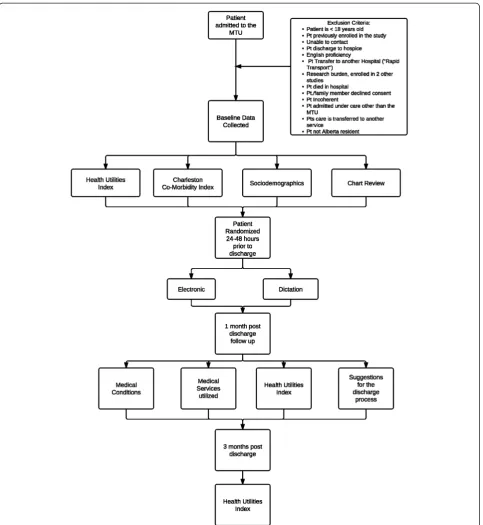
All patients admitted to the MTU will be considered for this study. Patients will be excluded if the patient and/or family member declines consent; is under 18 years of age; cannot provide contact information; and/or family member lacks English proficiency and the team cannot communicate with them; has a research burden (en-rolled in 2 other studies); is admitted under or has their acute care transferred to a clinical service other than the MTU; is not an Alberta resident; was previously enrolled in the study; is being discharged to hospice care; is transferred to another Hospital (“Rapid Transport”); is incoherent; or dies in hospital.
Written information about the study will be provided to patients before obtaining informed consent. The study has been approved by the Conjoint Health Research Ethics Board at the University of Calgary (# 23469) and registered at ClinicalTrials.gov (NCT01402609).
Study design
using the traditional model of TOC communication with dictated/transcribed summaries. This usual care typically involves paper-based handwritten summaries with sub-sequent provision of a dictated summary produced some time after the patient leaves hospital, with unpredictable success and timing of delivery and with unstructured and sometimes haphazard content.
Upon admission to the MTU, the research team will approach the patient for consent and will collect baseline data including socio-demographic informa-tion, co-morbidities (using the Charlson co-morbidity measurement method [21]), and current health status using the Health Utilities Index (HUI) [22,23]. A chart review will be conducted on each patient. This information will be collected on a secure, web-based program that was developed by the University of Cal-gary’s new Clinical Trial Research Unit (CRU). The CRU has also generated a web-based method for ran-dom allocation of patients to intervention versus con-trol. Randomization will be requested from the investigators, and will be entirely concealed from the
researchers. Randomization will be performed within 48 hours of patients leaving hospital rather than at the time of them leaving due to the nature of the MTU in which, decisions about when patients can leave often occur without much notice and residents often do not have time to complete a summary im-mediately given competing clinical activities. To en-sure that patients will be leaving the hospital with either a copy of the completed summary produced by the TOC tool or, conversely, a hand written note for the control group, the summaries will be started by providers some time prior to the patient leaving. Figure 4 provides a summary of this process.
Study measures Baseline measures
[image:4.595.58.540.88.448.2]Patient sociodemographic characteristics At the first study visit (baseline assessment) the patients will be pre-sented with a brief sociodemographic questionnaire. Items included are age, sex, level of education, employ-ment status, and admission diagnosis.
Chart review
Information about the patients’admission to the MTU, comorbidities, medication changes, alcohol and sub-stance abuse, and living arrangements will be collected from patients’ hospital charts prior to their discharge from hospital.
Outcome measures
The primary outcome of interest for the clinical trial is the composite, at 3 months, of death or readmission to any Alberta acute-care hospital. Secondary outcomes of inter-est are the occurrence of post-discharge adverse events and adverse drug events at 1 month post discharge. Pa-tient health status, meanwhile, will be assessed at baseline, 1 and 3 months using the Health Utilities Index [22,23].
The elements of our composite primary outcome (i.e., death or readmission) are identified for study because these are recognized to be major events that we are
ultimately trying to prevent through safer health care. The 3 month time frame is felt to be most relevant, be-cause it is short enough to potentially relate to discharge communications, but also long enough after discharge to permit some events to accrue. The primary outcomes of interest will be assessed through existing linkages to hospitalization data from the Alberta Health Services Health Outcomes Group (for readmission to acute care hospitals), and to the Alberta Vital Statistics for post-discharge mortality. Such an approach to post-post-discharge outcome ascertainment avoids the shortcoming of unre-liable patient self-report on readmission, and the poten-tial challenges associated with determining vital status of patients that we are unable to reach by telephone.
[image:5.595.58.540.87.487.2]patient group assignments, will administer a telephone survey using a survey tool that takes approximately 15 minutes to complete to determine the post-hospital course for all consenting patients. This will allow us to determine readmission/physician visits/emergency de-partment visits, and whether an adverse event or adverse drug event occurred. Two Royal College certified inter-nists or College-certified family physicians, also blinded to patients’group assignments, will independently rate the type, severity, preventability and ameliorability of all possible adverse events. Adverse events will be classified into the following types: 1. adverse drug events; 2. procedure-related injury; 3. nosocomial infection, 4. care-related fall, 5. therapeutic error, 6. diagnostic error or 7. other types. Further information on this validated multi-step method is available elsewhere [24,25].
Health utilities index
Patient health status and health-related quality of life (HRQOL) will be measured using the Health Utilities
Index Mark 3 (HUI3) [22,23]. HUI3 assesses a full range of health among diverse groups of patients and reflects co-morbidities, and has been widely used in every major Statistics Canada population health survey in Canada since 1990 [23]. Additionally, the HUI3 can be converted to a utility score; the required input to calculate the cost per QALY gained. During the 1 and 3 months post-hospital stay, a trained investigator, blinded to patient group assignments, will administer a telephone version that takes approximately 15 minutes to complete.
Economic evaluation
[image:6.595.56.540.90.463.2]cost of the TOC communication tool will be calculated from corporate financial data including the cost of devel-opment, implementation, integration and training. The cost of dictation (for type-written dictated discharge summaries the usual mode of discharge summary cre-ation in the absence of this discharge tool) will be esti-mated based on physician time, transcription costs, and
[image:7.595.58.542.87.613.2]dissemination costs. Costs of on-going care will be esti-mated from administrative data including ER visits, physician visits and hospitalization. Total costs of care and outcome events will be calculated for each arm of the trial. For each objective, the cost difference between arms will be divided by the benefit difference to result in cost to benefit ratio.
Sample size calculation and anticipated patient enrollment
As previously mentioned, a recent pilot done by the W21C team demonstrated that patients discharged from the MTU had a 23% probability of readmission to Cal-gary hospitals within 3 months (51 out of 219 discharged patients assessed in a pilot chart review). From this, we estimate an absolute event rate of 25% in the control group for the composite of death or readmission, and have designed our study to detect an approximately 25% relative reduction (i.e., a 6.25% absolute reduction) in the readmission rate in the intervention group. There-fore, using p1=0.25, and p2=0.1875, with alpha=0.05 and
beta=0.80 in our two-tailed sample size calculation, we will require 686 patients per group. Our research plan is to enroll 700 patients per group, allowing for a safety margin for attrition. Each of the three teams usually pro-cesses an average of 2 to 4 discharges per day. As such, we anticipate that we will complete enrollment of 1400 subjects within an 18 month period and full assessment of outcomes and follow-up surveys in a 2 year period. For the secondary endpoints of post-hospital adverse events and adverse drug events, we will have adequate statistical power given that these adverse events are known to occur frequently, in approximately one quarter of patients discharged from acute-care hospitals [1,2]. The sample size is appropriate to assess patient health status measured by HUI3 to compare two independent means for a parallel trial design, 697 patients in each group are needed to detect a clinically important differ-ence (CID) in HUI3 overall score of 0.03 (SD=0.20).
Data analysis
The baseline characteristics (age, sex, principal diagnosis categories, and comorbididy conditions) of intervention and control subjects will be recorded and compared be-tween groups using Chi-square tests or Fisher Exact tests where appropriate. We will also use t-tests for comparison of continuous variables. The same statistical tests will be used to compare outcomes between the two groups. Chi-square and Fisher exact tests will be used to compare the frequency of dichotomous outcomes (i.e., death or readmission, adverse events, adverse drug events). For the subset of patients who are readmitted in the two groups, we will use t-tests to compare the time-to-readmission of patients and patient health status (HUI3 overall scores) in the intervention versus control groups. A Kaplan-Meier analysis with log-rank test will be used to perform a time-to-event analysis in all sub-jects. For the economic evaluation, total costs of care and outcome events will be calculated for each arm of the trial. For each outcome, the cost difference between arms will be divided by the benefit difference to result in cost to benefit ratio.
The analysis will be performed by intention-to-treat. Patients will be analyzed in the group to which they were randomized, even if the summary of their hospital stay is generated using a communication method that differs from their group assignment. CONSORT report-ing guidelines (http://www.consort-statement.org) will be used to diligently track and report treatment cross-overs and losses to follow-up through a progressive flow-chart. We will work diligently during the course of the study to limit the frequency of such occurrences. This will be achieved by a system of clear labeling of pa-tient charts immediately after random allocation so that the care team will be aware of the assigned summary of care communication method. Research associates affiliated with the study will also be present among the clinical care team daily to reinforce the issue of compli-ance to patient assignments.
Discussion
This paper outlines the study protocol for a sufficiently powered randomized controlled trial, incorporating an economic evaluation, looking at an electronic communi-cation TOC tool developed through the partnership be-tween Alberta Health Services, the University of Calgary, and the W21C. Since the tool is designed to transfer standardized, appropriate and accurate information in a timely manner, the study will provide evidence on how efficacious the tool will be at reducing hospital readmis-sion, death after discharge, adverse events, adverse drug events, improving patients’ health status and its cost-effectiveness.
Randomized controlled trials (RCT) are regarded as the gold standard for clinical research assessing the effi-cacy of an intervention. Unlike many of the pre-post studies identified in our previously-mentioned system-atic review, the present RCT is a parallel design that provides for an unbiased estimate of the effects of the intervention. Another key aspect of the present RCT is that allocation will be concealed.
contamination (for example, the use of the electronic discharge template by a provider to guide a dictated summary in the usual care group), this method is less efficient than individual-randomized trials as members within a cluster tend to be more similar to one another than randomly allocated participants [26-28]. To com-pensate for the inefficiency of cluster-randomization, a larger sample size is required to meet statistical signifi-cance [28]. Furthermore, there is potential for there to be between-service differences that would affect the in-ternal validity of the study and the comparability of the intervention and control groups. Balancing these com-peting concerns, and in dialogue with funding agency peer reviewers, we opted for the randomization of indi-vidual patients to intervention and control to maximize the benefits of comparability between groups.
Other challenges inherent to this study relate to acute-care physician preference and familiarity with one method for generating hospital summaries over the other, and community-care physician software incom-patibilities. In a few instances, acute-care physicians may have or will develop a preference of using one sys-tem over the other. This may result in a given physician not following the patient’s assigned randomization, resulting in the exclusion of the patient and a loss of that randomization. We expect to minimize this prob-lem by continually educating and informing the phy-sicians of the study and the importance to adhere to the randomization assignments, as well as maintaining a strong presence throughout the MTU. More so, some community-care physicians may experience ac-cessibility issues to the TOC summaries electronic records due to software program incompatibilities. While we foresee this as a current problem, we hope that this study will encourage the implementation of compatible programs.
This study will be one of the first to have sufficient statistical power to definitively examine the important clinical outcomes of readmission, mortality and adverse events after patients leave an acute-care facility using an electronically-based TOC communication tool. The tool that we are assessing has the potential to ameliorate a vulnerable period in health care, thus enhancing patient safety and quality of care through better communication at times of transfers of care. The tool has already been pilot tested in our jurisdiction, and through this RCT is being evaluated more broadly. This study will inform our own and other health systems globally on the poten-tial efficacy and cost implications of such electronic communication tools. Given the widespread demand and growing investments into such electronic tools (e.g., President Obama’s $19.2 billion investment into elec-tronic health information technology [29]) the implica-tions of such research are truly far reaching.
Abbreviations
W21C: Ward of the 21stCentury; MTU: Medical Teaching Unit; CRU: Clinical Research Trial Unit; RCT: Randomized Controlled Trial.
Competing interests
There are no competing interests.
Authors’contributions
OB–Paper writing; SM–Paper writing, and Co-Principal Investigator; H-LJ– Co-investigator; FW–Co-investigator; O’BM–Co-investigator; WD– Co-investigator; FA–Co-investigator; GW–Principal Investigator. All authors read and approved the final manuscript.
Author’s information
Barbara M Okoniewska and Maria J Santana Co-First Authors on this paper.
Author details 1
Department of Community Health Sciences, W21C Research and Innovation Centre, Institute of Public Health, University of Calgary, 3280 Hospital Drive NW, Calgary, AB, Canada.2Department of Community Health Sciences, Faculty of Medicine, University of Calgary, 3280 Hospital Drive NW, Calgary, AB, Canada.3Department of Medicine, Faculty of Medicine, University of Calgary, 3280 Hospital Drive NW, Calgary, AB, Canada.4Department of
Medicine, Faculty of Medicine, University of Calgary, 3280 Hospital Drive NW, Calgary, AB, Canada.5Department of Family Medicine, Faculty of Medicine,
University of Calgary, 3280 Hospital Drive NW, Calgary, AB, Canada.6Faculty of Nursing, University of Calgary, 3280 Hospital Drive NW, Calgary, AB, Canada.7Department of Medicine, University of Ottawa, Ottawa, Canada.
Received: 18 September 2012 Accepted: 22 October 2012 Published: 21 November 2012
References
1. Kripalani S, Jackson AT, Schnipper JL, Coleman EA:Promoting effective transitions of care at hospital discharge: a review of key issues for hospitalists.J Hosp Med2007,2(5):314–323.
2. Makaryus AN, Friedman EA:Patients’understanding of their treatment plans and diagnosis at discharge.Mayo Clin Proc2005,80:991–994. 3. Calkins DR, Davis RB, Reiley P,et al:Patient-physician communication at
hospital discharge and patients’understanding of the postdischarge treatment plan.Arch Intern Med1997,157:1026–1030.
4. Kripalani S, LeFevre F, Phillips CO, Williams MV, Basaviah P, Baker DW:
Deficits in communication and information transfer between hospital-based and primary care physicians: implications for patient safety and continuity of care.JAMA2007,297(8):831–841.
5. van Walraven C, Seth R, Laupacis A:Dissemination of discharge summaries. Not reaching follow-up physicians.Can Fam Physician2002,
48:737–742.
6. Pantilat SZ, Lindenauer PK, Katz PP, Wachter RM:Primary care physician attitudes regarding communication with hospitalists.Am J Med2001,
111(9B):15S–20S.
7. van Walraven C, Seth R, Austin PC, Laupacis A:Effect of discharge summary availability during post-discharge visits on hospital readmission.J Gen Intern Med2002,17(3):186–192.
8. Stiell AP, Forster AJ, Stiell IG, van Walraven C:Maintaining continuity of care: a look at the quality of communication between Ontario emergency departments and community physicians.CJEM2005,
7(3):155–161.
9. Afilalo M, Lang E, Léger R, Xue X, Colacone A, Soucy N, Vandal A, Boivin JF, Unger B:Impact of a standardized communication system on continuity of care between family physicians and the emergency department.CJEM
2007,9(2):79–86.
10. Lang E, Afilalo M, Vandal AC, Boivin JF, Xue X, Colacone A, Léger R, Shrier I, Rosenthal S:Impact of an electronic link between the emergency department and family physicians: a randomized controlled trial.CMAJ
2006,174(3):313–318.
12. van Walraven C, Laupacis A, Seth R, Wells G:Dictated versus database-generated discharge summaries: a randomized clinical trial.CMAJ1999,
160(3):319–326.
13. Branger PJ, van der Wouden JC, Schudel BR, Verboog E, Duisterhout JS, van der Lei J, van Bemmel JH:Electronic communication between providers of primary and secondary care.BMJ1992,305(6861):1068–1070. 14. Motamedi SM, Posadas-Calleja J, Straus S, Bates D, Lorenzetti D, Baylis B,
Gilmour J, Kimpton S, Ghali W:The efficacy of computer-enabled discharge communication interventions: a systematic review.BMJ Qual Saf2011,20:403–415.
15. Casas A, Troosters T, Garcia-Aymerich J, Roca J, Hernández C, Alonso A, del Pozo F, de Toledo P, Antó JM, Rodríguez-Roisín R, Decramer M, members of the CHRONIC Project:Integrated care prevents hospitalisations for exacerbations in COPD patients.Eur Respir J2006,28(1):123–130. 16. Gray JE, Safran C, Davis RB, Pompilio-Weitzner G, Stewart JE, Zaccagnini L,
Pursley D:Baby CareLink: using the internet and telemedicine to improve care for high-risk infants.Pediatrics2000,106(6):1318–1324. 17. Garcia-Aymerich J, Hernandez C, Alonso A, Casas A, Rodriguez-Roisin R,
Anto JM, Roca J:Effects of an integrated care intervention on risk factors of COPD readmission.Respir Med2007,101(7):1462–1469.
18. Kirby J, Barker B, Fernando DJ, Jose M, Curtis C, Goodchild A, Dickens C, Olla E, Cooke R, Idris I, Thomson GA:A prospective case control study of the benefits of electronic discharge summaries.JTelemed Telecare2006,
12(Suppl 1):20–21.
19. O’Leary KJ, Liebovitz DM, Feinglass J, Liss DT, Evans DB, Kulkarni N, Landler MP, Baker DW:Creating a better discharge summary: Improvement in quality and timeliness using an electronic discharge summary.J Hosp Med2009,4(4):219–225.
20. Chin JP, Diehl VA, Norman KL:Development of an instrument measuring user satisfaction of the human-computer interface, Proceedings of SIGCHI’88. New York: ACM/SIGCHI; 1988:213–218. http://lap.umd.edu/quis/. 21. Charlson ME, Pompei P, Ales KL, MacKenzie CR:A new method of
classifying prognostic comorbidity in longitudinal studies: development and validation.J Chron Dis1987,40(5):373–383.
22. Feeny D, Furlong W, Torrance GW,et al:Multiattribute and single-attribute utility functions for the health utilities index mark 3 system.Med Care
2002,40(2):113–128.
23. Horsman J, Furlong W, Feeny D, Torrance G:The health utilities index (HUI): Concepts, measurement properties and applications.Health Qual Life Outcomes2003,1:54.
24. Forster AJ, Clark HD, Menard A, Dupuis N, Chernish R, Chandok N, Khan A, van Walraven C:Adverse events among medical inpatients after discharge from hospital.CMAJ2004,170:345–349.
25. Forster AJ, Murff HJ, Peterson JF, Gandhi TK, Bates DW:The incidence and severity of adverse events affecting patients after discharge from the hospital.Ann Intern Med2003,138(3):161–167.
26. Bland MJ:Cluster randomized trials in the medical literature: two bibliometric surveys.BMC Med Res Metho2004,13:1–6.
27. Davis W:Design and analysis of cluster randomization trails in health research.J Am Stat Assoc2011,31:1529–1530.
28. Donner A:Some aspects of the design and analysis of cluster randomization trails.J Royal Stat Soc1998,47(1):95–113.
29. Manchikanti L, Hirsch HA:Obama health care for all Americans: practical implications.Pain Phys2009,12:289–304.
doi:10.1186/1472-6963-12-414
Cite this article as:Okoniewskaet al.:The Seamless Transfer-of-Care Protocol: a randomized controlled trial assessing the efficacy of an electronic transfer-of-care communication tool.BMC Health Services Research201212:414.
Submit your next manuscript to BioMed Central and take full advantage of:
• Convenient online submission
• Thorough peer review
• No space constraints or color figure charges
• Immediate publication on acceptance
• Inclusion in PubMed, CAS, Scopus and Google Scholar
• Research which is freely available for redistribution