SOLVER FOR DISCRETE DECISION MAKING
Luca Masi, Massimiliano Vasile
Department of Mechanical & Aerospace Engineering, University of Strathclyde, 75 Mon-trose Street G1 1XJ, Glasgow, UK
Tel.: 0141 548 2083 Fax: 0141 552 5105
[email protected], [email protected]
Abstract In this paper, a bio-inspired algorithm able to incrementally grow deci-sion graphs in multiple directions is presented. The heuristic draws inspiration from the behaviour of the slime mould Physarum Poly-cephalum. In its main vegetative state, theplasmodium, this large single-celled amoeboid organism extends and optimizes a net of veins looking for food. The algorithm is here used to solve classical problems in op-erations research (symmetric Traveling Salesman and Vehicle Routing Problems). Simulations on selected test cases demonstrate that a mul-tidirectional modified Physarum solver performs better than a unidi-rectional one. The ability to evaluate decisions from multiple directions enhances the performance of the solver in the construction and selection of optimal decision sequences.
Keywords: Discrete Optimization,Physarum, Multidirectional
1.
Introduction
Over the past two decades, bio-inspired computation has become an appealing topic to solve NP-hard problems in combinatorial optimization using a reasonable computational time [3]. Ant Colony Systems, Genetic Algorithms and Particle Swarms are examples [6]. The method proposed in this paper takes inspiration fromPhysarum Polycephalum, an organ-ism that was endowed by nature with heuristics that can be used to solve discrete decision making problems. It has been shown that Physarum Polycephalum is able to connect two food sources by solving a maze, us-ing morphus-ing properties [7]. In [9] and [1] it has been shown that a livus-ing Physarum is able to reproduce man-made transportation networks, i.e. Japan rail network and Mexican highway network. Physarum based
gorithms have been developed recently to solve multi-source problems with a simple geometry [5, 11], mazes [8] and transport network problems [9, 8]. In this paper a multidirectional modifiedPhysarum Polycephalum algorithm able to solve NP-hard discrete decision making problems is presented. In the mathematical model proposed in Sect. 2, discrete de-cision making problems are modeled with dede-cision graphs where nodes represent the possible decisions while arcs represent the cost associated with decisions. Decision graphs are incrementally grown and explored in multiple directions using the Physarum-based heuristic. This paper aims at proving that a multidirectional incremental Physarum solver is more efficient, in terms of success rate (see Sect. 3.2), than a unidi-rectional incremental Physarum solver when applied to the solution of decision problems that can be represented with directed symmetric de-cision graphs, i.e. graphs where the contribution of an arc to a complete path can be evaluated moving forward or backward along the graph. This thesis will be demonstrated in Sect. 4 solving a series of test cases. Symmetric Traveling Salesman and Vehicle Routing Problems (known with the acronyms TSP and VRP), introduced in Sect. 3, were chosen as representative examples of the above type of decision making problems, here called reversible decision-making problems, i.e. problems in which a decision can be taken either moving forward or backward along the graph, as explained in Sect. 2.
2.
Biology and mathematical modeling
Physarum Polycephalum is a large, single-celled amoeboid organism that exhibits intelligent plant-like and animal-like characteristics. Its main vegetative state, the plasmodium, is formed of a network of veins (pseudopodia). The stream in these tubes is both a carrier of chemical and physical signals, and a supply network of nutrients throughout the organism [11]. Physarum searches for food by extending this net of veins, whose flux is incremented or decremented depending on the food position with reference to its centre.
2.1 Mathematical modeling and multiple direction growing decision Physarum graphs
Reversible decision making problems. Assuming that a discrete
to the cost C(b,a), but the decision that brings from b toa exists and can be evaluated. The symmetric directed graph can be seen as the superposition of two directed graphs (direct-flow,DF, and back-flow,BF, graphs) whose nodes are coincident and edges have opposite orientation. In so doing, the decision between state a and b has a forward link a
to b and a superposed backward link b to a. It is assumed that the first decision node is the heart of a growing Physarum in DF, and the end decision node the heart of a growing Physarum in BF. The two Physarum are supposed able to incrementally grow the decision graph in the two directions by extending their net of veins. The result is a graph where both nodes and links are incrementally built by two expanding Physarum.
Multidirectional incremental modified Physarum algorithmic.
The flux through the net ofPhysarumveins can be modeled as a classical Hagen-Poiseuille flow in cylindrical ducts with diameter variable with time [9, 5, 11, 8]:
Qij =
πr4ij
8µ
∆pij
Lij
(1)
whereQij is the flux between iand j, µis the dynamic viscosity, ∆pij
the pressure gradient, Lij the length and rij the radius. Following [5],
these two last main parameters are taken into account in the algorithm. Diameter variations allow a change in the flux. Veins’ dilation due to an increasing number of nutrients flowing can be modeled using a monotonic function of the flux. In the present work, a function linear with respect to the product between the radiusrij of the veins traversed by nutrients,
and the inverse of the total lengthLtottraveled, will be used for the veins’
dilation:
d dtrij
dilation
=m rij Ltot
(2)
where the coefficient m is here called linear dilation coefficient. Veins’ contraction due to evaporative effect can be assumed to be linear with radius:
d dtrij
contraction
=−ρrij (3)
whereρ∈[0,1] is defined evaporation coefficient. The probability asso-ciated with each vein connectingiandjis then computed using a simple adjacency probability matrix based on fluxes:
Pij =
{ Q
ij
∑
j∈NiQij if j∈Ni
0 if j /∈Ni
Algorithm 1Multidirectional incremental modified Physarum solver initializem,ρ,GFini,Nagents,pram,α,rini
generate a random route from start to destination in DF and BF
foreach generation do
for each virtual agent in all directions (DF and BF) do if current node̸= end node then
if rand≤pram then
using Eq. (6) create a new path, building missing links and nodes
else
move on existing graph using Eq. (4).
end if end if end for
look for possible matchings
contract and dilate veins using Eqs. (2), (3) for each agent, (5) update fluxes and probabilities using Eqs. (1), (4)
end for
whereNi is the set of neighbour fori.
A further social term in the dilation process was added in the al-gorithm and takes inspiration from the behavior of the Dictyostelium Discoideum’s pacemaker amoeba [6]:
d dtrijbest
elasticity
=GF rijbest (5)
where GF is the growth factor of the best chain of veins and rijbest
the veins’ radii. This is an additive term in the veins’ dilation process, whose first main term is expressed in Eq. (2). The incremental growth of decision network in multiple directions is then based on a weighted roulette. Nutrients inside veins are interpreted as virtual agents that move in accord with adjacency probability matrix in Eq. (4). Once a node is selected, there is an a priori probability pram of ramification
towards new nodes that are not yet connected with the actual node. The probability of a new link construction from the current nodec to a new possible nodeni∈N, whereN is the set of new possible decisions, is
here assumed to be inversely proportional to the costLcni of the decision
betweencand ni, i.e. the length:
pcni ∝
1
Lα cni
whereα is a weight. Once a new link is built, a complete decision path is constructed (creating other links if necessary). Assuming then one DF and one superposed BF Physarum, a matching condition can be defined. If an arc connecting two nodes that belong to DF and BF Physarum respectively, exists or can be created, it is traversed by the agent and becomes part of both the DF and the BF. Several types of matching strategies are possible: all-matching, in which all joint paths are saved and evaluated,random-matching, in which some joint paths are selected among all the possible joint paths with a probabilistic rule and selective-matching, in which some joint paths are selected among all the possible joint paths according to an elitist criterion. At each generation, the elitist criterion selects a joint path if and only if it is better in terms of total cost than the previous joint paths selected during the same generation. The pseudocode of the multidirectional incremental modified Physarum solver is provided in Algorithm 1, where rini is the
initial radius of the veins, always sets equals to 1 in this paper, and
Nagents the number of virtual agents. A unidirectional algorithm is a
special case of multidirectional algorithm, obtained by freezing theBF: flux and graph growth are allowed in only one direction.
Simulations on selected test cases (see Sect. 4) were carried out adding in thePhysarumsoftware a routine for the adaptive control of the growth factorGF. This control was introduced in order to incrementally boost the effect of GF during a simulation, driving exploring agents towards best veins. Simulations showed that the adaptive control of GF helps the convergence of the algorithm towards optimal solution. Given an initial value for the growth factorGFini, GF is incremented by a fixed
percentage σ = 0.01 after every generation. If the probability pbest
associated with the best path so far (see adjacency probability matrix, Eq. (4)) is higher than a fixed valueplowlim = 10−4 , the increment is set to zero. Then, if pbest exceeds a valuephighlim = 0.85 , GF is set equal to
GFini and veins are dilated and contracted to their initial value.
3.
Application to Traveling Salesman and
Vehicle Routing Problems and benchmark
Algorithm 2Testing procedure
set toN the max number of function evaluations for the algorithmP
applyP top forntimes and setjs= 0
forall i∈[1, ..., n]do
if fbest
p +tol≤fibest≤fpbest−tol then
js =js+ 1
end if end for
evaluateps=js/n
3.1 Benchmark
TSPLIB [12] was used to benchmark the proposed Physarum algo-rithm, developed in Matlab⃝R R2010b, on the TSP problem. In Sect. 4 are reported the results obtained by applying the multidirectional solver to test case Ulysses16, normalised with a factor equals to 10000, and to test case Eil51. The reference optimal solutions for this particular TSP instance can be found in the TSPLIB. The Physarum solver ap-plied to VRP was tested on a map of 9 cities plus one depot. The map is built using 9 Italian cities (Firenze, Livorno, Montecatini, Pistoia, Prato, Montevarchi, Arezzo, Siena, San Gimignano), with a city considered the depot (Ponsacco). The Euclidean distance in kilometers was used. Opti-mal tour with constant demand for each city equals to 1 and one vehicle with capacity equals to 4, was found using an exhaustive search.
3.2 Testing procedure
The testing procedure proposed in [13] was used in this paper and is reported in Algorithm 2. The success rateps = js/n, expressing the
estimate of algorithm’s success probability. Using n = 175 one would obtain an error ≤0.05 with a 95% of confidence. A value equals to 200 fornis used in the simulations presented in this paper. Tolerance is set to 10−8.
4.
Results
The multidirectional modified Physarum solver, named D&B in the following, was compared against a unidirectional modified Physarum solver, named D. Simulations were carried out on a 64-bit OS Windows 7 Intel⃝R
CoreTM2 Duo CPU E8500 3.16GHz 3.17GHz. D&B was tested without and with matching ability (see Sect. 2.1), named D&B with xM. The prefix x indicates the type of matching selected. nM means no-matching,rMrandom-matching,aM all-matching and sM indicates selective-matching.
1 1.5 2 2.5 3 3.5 4 4.5 5 5.5 6
x 105
0 0.1 0.2 0.3 0.4 0.5 0.6 0.7 0.8 0.9 1
Function evaluations
Success Rate
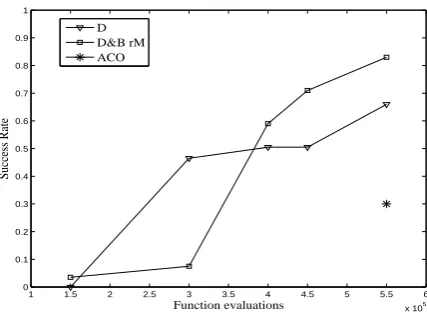
[image:7.595.204.418.361.520.2]D D&B rM ACO
Figure 1. Variation of the success rate with the number of function evaluations -TSP test caseUlysses16
The multidirectional and unidirectional modifiedPhysarumalgorithms were applied to the symmetric TSP test case Ulysses16, described in Sect. 3.1. The values used as input parameters in the simulations are
m= 5×10⁻⁵,ρ= 1×10⁻⁵,GFini= 5×10⁻³,Nagents = 100,pram= 0.8,
α= 0,rini = 1, and were chosen after a series of trials. Results, as shown
0 100 200 300 400 500 600 700 800 0.68
0.685 0.69 0.695 0.7 0.705 0.71 0.715
Simulations
Best value
D D&B rM
300000 function evaluations
400000 function evaluations
450000 function evaluations
[image:8.595.197.415.160.316.2]550000 function evaluations
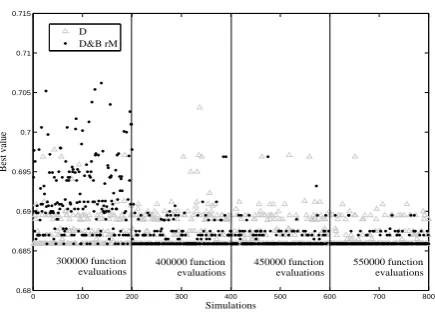
Figure 2. Best solution found by D and D&B with rM on groups of 200 runs for different function evaluation limits - TSP test caseUlysses16 - best value = 0.6859.
whilst success rate of D&B with rM is under 0.1), increasing the number of function evaluations the performance of multidirectional exceeds the performance of direct only solver. At 550000 function evaluations the success rate of D&B with rM reaches 0.83, against the 0.66 of D. Fig. 1 shows also the performance of a simple Ant Colony Optimization solver (ACO [10]) at 550000 function evaluations. This solver is the implemen-tation of the algorithm provided in [4]. Results show that D&B and D&B with rM have a good performance (success rate are respectively 0.66 and 0.83) if compared with ACO solver (success rate is 0.30). This compar-ison was made in order to check if the required function evaluations for thePhysarum solver were comparable, in terms of order of magnitude, with a simple ACO solver. This comparison did not absolutely aims at demonstrating that the modifiedPhysarum solver performs better than a general ACO solver.
0.5 1 1.5 2 2.5 3 3.5 4 4.5 5 5.5 6 x 10⁶ 0
0.1 0.2 0.3 0.4 0.5 0.6 0.7 0.8 0.9
Function evaluations
Success Rate
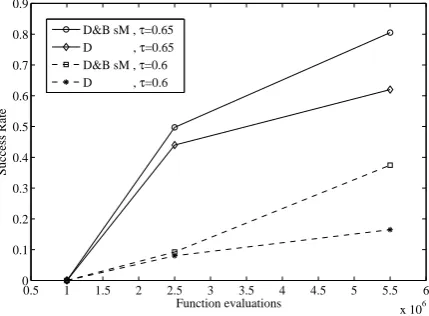
[image:9.595.204.419.165.323.2]D&B sM , τ=0.65 D , τ=0.65 D&B sM , τ=0.6 D , τ=0.6
Figure 3. Variation of the success rate with the number of function evaluations -TSP test caseEil51.
between (0.6859,0.6978] and a 0% probability to reach a value in the band (0.6978,0.7070]. At 550000 function evaluations the probability of exact value outcome using D&B with rM rise up to 83% with a 17% probability to reach a value in the band (0.6859,0.6950], whilst there is only a 66% probability using D, with a 27% probability to reach a value in the band (0.6859,0.6950] and a 7% in the band (0.6950,0.6978]. It is evident the fastest convergence towards exact solution of black dots increasing the number of function evaluations.
The multidirectional and unidirectional modifiedPhysarumalgorithms were also applied to the symmetric TSP test case Eil51, described in Sect. 3.1. The values used as input parameters in the simulations are
m= 5×10⁻⁵,ρ= 1×10⁻⁵,GFini= 5×10⁻³,Nagents = 100,pram= 0.8,
α = 1, rini = 1, and were chosen after a series of trials. A candidate
list of dimension 10 was introduced. Results, as shown in Fig. 3 where
τ = fbest
i (see Algorithm 2) represents the value of the threshold
0 0.5 1 1.5 2 2.5 3 3.5
x 105
0 0.1 0.2 0.3 0.4 0.5 0.6 0.7 0.8 0.9 1
Function evaluations
Success Rate
[image:10.595.197.415.162.321.2]D D&B nM D&B aM D&B sM
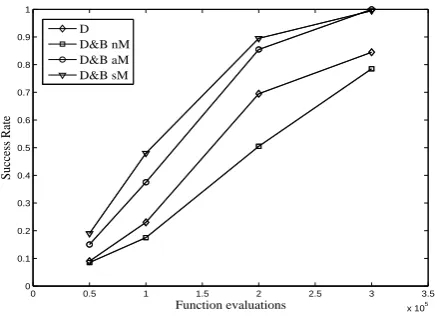
Figure 4. Variation of the success rate with the number of function evaluations -VRP test case.
Finally, the multidirectional and unidirectional modified Physarum algorithms were applied to the VRP test case described in Sect. 3.1. The values used as input parameters in the simulations are m = 1×10⁻⁵,
ρ = 1×10⁻⁵, GFini = 5×10⁻³, Nagents = 150, pram = 0.8, α = 0,
rini = 1, and were chosen after a series of trials. The success rate
is reported in Fig. 4. Results demonstrate that the multidirectional algorithm with matching ability (D&B with sM and D&B with aM) performs better than the unidirectional algorithm (D). After analysing more in depth the results and considering the mathematical modeling in Sect. 2.1, one could argue that:
I. At 300000 function evaluations the gain in success rate using D&B withsM oraM instead of D is around 20%.
II. The performance of D&B withsM and D&B withaM are almost comparable. The real gain using D&B with sM is the saving in com-putational time. The mean comcom-putational time in the simulations (200 runs) is reduced considerably (between 33% and 37%) using a selective matching instead of a non selective matching. This is due to the selec-tion of best joint decision sequence at each generaselec-tion: discarding worst joint decision sequences the updating of veins is done only for the best sequences.
Simulations on bigger TSP and VRP problems (50 to more than 100 cities) are currently under way. Due to the fact that an higher number of generations are necessary to solve higher dimensional problems, the adaptive control ofGF (see Sect. 2.1) may cause an uncontrolled growth of the flux inside few veins (it should be noted that flux is related to the fourth power of the radius, see Eq. (1) ). A good solution is to setσ= 0 when dealing with high dimensional problems.
4.1 Conclusion
This paper proposed a multidirectional incremental modifiedPhysarum solver for discrete decision making problems. The algorithm showed the ability to solve simple symmetric TSP and VRP problems, selected as representative examples of reversible decision making problems. Simula-tions on selected test cases proved that a multidirectional approach with matching ability performs better than a unidirectional one when applied to reversible discrete decision making problems. The possibility for the twoPhysarum to evaluate each step of the decision sequence from mul-tiple directions and create joint paths enhances the performance of the solver: this forward and backward decision making process increased the gain in success rate up to 20% during selected simulations. Furthermore simulations on TSP selected test cases showed a good performance of multidirectional incremental modified Physarum solver if compared to a simple ACO solver. Simulations on bigger TSP and VRP problems (50 to more than 100 cities) are currently under way. After these last series of tests, the multidirectional incrementalPhysarum solver will be applied to other challenging decisional problems with a special focus on aerospace engineering.
References
[1] A. Adamatzky, G.J. Martinez, S.V. Chapa-Vergara, R. Asomoza-Palacio and C.R. Stephens. Approximating Mexican Highways with Slime Mould.Natural Compu-tation, 2011, in press.
[2] N.R. Burns, M.D. Lee, D. Vickers. Are Individual Differences in Performance on Perceptual and Cognitive Optimization Problems Determined by General Intel-ligence?.The Journal of Problem Solving 1(1):5-19, 2006.
[3] M. Dorigo and L.M. Gambardella. Ant Colonies for the Travelling Salesman Prob-lem. BioSystems, 43:73-81, 1997.
[4] M. Dorigo, V. Maniezzo, A. Colorni. The Ant System: Optimization by a colony of cooperating agents. In IEEE Transactions on Systems, Man, and Cybernetics-Part B, 26(1):29-41,1996.
Manchester University, September 2-4, 2008
[6] D.R. Monismith Jr. and B.E.Mayfield. Slime Mold as a Model for Numerical Optimization. In2008 IEEE Swarm Intelligence Symposium, St. Louis MO USA, September 21-23, 2008.
[7] T. Nakagaki, H. Yamada and A. Toth. Maze-Solving by an Amoeboid Organism.
Nature, 407: 470, 2000.
[8] A. Tero, R. Kobayashi and T. Nakagaki. Physarum Solver: a Biologically Inspired Method of Road-Network Navigation. Physica: A Statistical Mechanics and its Applications, 363(1):115-119, 2006.
[9] A. Tero, S. Takagi, T. Saigusa, K. Ito, D.P. Bebber, M.D. Fricker, K. Yumiki, R. Kobayashi and T. Nakagaki. Rules for Biologically Inspired Adaptive Network Design,Science, 439:327, 2010.
[10] H. Wang. Solving Symmetrical and DisSymmetrical TSP based on Ant Colony Algorithm. Retrieved from MATLAB⃝R
CENTRAL, URL: http://www.mathworks.com/matlabcentral/fileexchange/14543.
[11] A. Tero, K. Yumiki, R. Kobayashi, T. Saigusa and T. Nakagaki. Flow-Network Adaptation in Physarum Amoebae.Theory in Biosciences, 127(2): 89-94, 2008. [12] TSPLIB, library of instances for travelling salesman and vehicle routing
problems, Ruprecht Karls Universitaet Heidelberg, URL: http://comopt.ifi.uni-heidelberg.de/software/TSPLIB95/.