“Making ESOL
policy work better
for migrants and
wider society…”
ON SPEAKING TERMS
Ally Paget
Neil Stevenson
The English language is vitally important to the capabilitiesand integration of migrants who wish to build a successful future in the UK. However, in the last Census around 850,000 migrants reported that they could not speak English well or at all. This is partly due to current policy – delivered chiefly through the English for Speakers of Other Languages (ESOL) framework – which suffers from fragmentation, a lack of clarity and a short-termist approach.
Based on interviews, focus groups, FOI requests and a review of international evidence, this report investigates the state of ESOL provision in England, and how it compares with other countries. It uncovers a number of issues with the system, including disincentives to find employment while studying, and the fact that funding from government has reduced by 40 per cent in the past five years, despite the large waiting lists around the country. It concludes that ESOL in England is not functioning as well as it could, especially considering the demand associated with demographic projections.
On Speaking Termsrecommends a number of ways to improve the system. It identifies funding as a key stumbling block, and so suggests that student-style loans are provided and that employers and local authorities do more to support ESOL. A coherent national strategy would ensure that this vital policy area remains on the agenda, and so the report calls on all parties to include one in their forthcoming manifestos. These changes would help to unlock migrant capabilities, save costs to public services in the long term and promote a more integrated and socially cohesive society.
Neil Stevenson is a Junior Associate at Demos, working on the integration programme. Ally Paget is a Researcher at Demos. On Sp eaking T erms | Ally P
aget · Neil Stevenson
thinkers and host thought-provoking events. We have spent 20 years at the centre of the policy debate, with an overarching mission to bring politics closer to people.
Demos is now exploring some of the most persistent frictions within modern politics, especially in those areas where there is a significant gap between the intuitions of the ordinary voter and political leaders. Can a liberal politics also be a popular politics? How can policy address widespread anxieties over social issues such as welfare, diversity and family life? How can a dynamic and open economy also produce good jobs, empower consumers and connect companies to the communities in which they operate?
Our worldview is reflected in the methods we employ: we recognise that the public often have insights that the experts do not. We pride
ourselves in working together with the people who are the focus of our research. Alongside
quantitative research, Demos pioneers new forms of deliberative work, from citizens’ juries and ethnography to social media analysis.
Demos is an independent, educational charity. In keeping with our mission, all our work is available to download for free under an open access licence and all our funders are listed in our yearly
London, SE1 2TU, UK
ISBN 978 1 909037 64 9 Series design by modernactivity Typeset by Chat Noir Design, Charente Set in Gotham Rounded
and Baskerville 10
circulation of our work as widely as possible while retaining the copyright. We therefore have an open access policy which enables anyone to access our content online without charge.
Anyone can download, save, perform or distribute this work in any format, including translation, without written permission. This is subject to the terms of the Demos licence found at the back of this publication. Its main conditions are:
· Demos and the author(s) are credited
· This summary and the address www.demos.co.ukare displayed · The text is not altered and is used in full
· The work is not resold
· A copy of the work or link to its use online is sent to Demos
You are welcome to ask for permission to use this work for purposes other than those covered by the licence. Demos gratefully acknowledges the work of Creative Commons in inspiring our approach to copyright. To find out more go to
Acknowledgements 7
Executive summary
9Introduction
171
A brief history of ESOL policy: from
integration to employment, via skills
372
What needs to change?
433
An international review of host language
learning policy and practice
654
Conclusions and recommendations
81Appendix 1 Language levels and national
standards
87Appendix 2 CEFR levels
89Notes 91
Acknowledgements
This report would not have been possible without the support of Cambridge English Language Assessment. We are indebted to Andrew Williams at Cambridge Assessment for his guidance throughout the research. Thanks are also due to the many experts who have given up their time to meet or correspond with us, and to attend our research workshops. They are:
Khadijah Amani, Hackney ESOL Advice Service
Blandine Bastié, Cambridge English Language Assessment Pamela Baxter, Cambridge English Language Assessment Phil Bird, Lambeth College and ESOL Nexus
Michael Carrier, Cambridge English Language Assessment James Cupper, NATECLA
Terry Day, Greater London Authority Hilary Fletcher, Cambridge Assessment Don Flynn, Migrant Rights Network Janet Golding, ESOL Special Interest Group Tricia Hartley, Campaign for Learning
Karen Irving, Department for Communities and Local Government
Judith Kirsch, NATECLA
Lee Knapp, Independent Consultant Joy Mercer, Association of Colleges Martin Nickson, University of Hull
Catherine Paulson-Ellis, Department for Business, Innovation and Skills
Silvia Perin, Hackney ESOL Advice Service Dot Powell, British Council
Habib Rahman, Joint Council for the Welfare of Immigrants Harvey Redgrave, Office of Ed Miliband
Philida Schellekens, Independent Consultant James Simpson, University of Leeds
Alex Stevenson, NIACE
Kate Thompson, Department for Communities and Local Government
The insights of these experts have been invaluable. We are particularly grateful to Dr Nick Saville of Cambridge English Language Assessment and Dr Philida Schellekens for their extensive help.
Above all, we extend heartfelt thanks to the ESOL learners who participated in our two service-user focus groups, and to Harbi Farah at Help Somalia Foundation and Judy Wellington at the Lifeline Training Network for kindly arranging them.
At Demos, thanks go to David Goodhart for conceiving the original project and providing ongoing support and, as ever, to Ralph Scott and Rob Macpherson for expertly steering the report through publication. Adam Riley, Ahmed Odushola and Benjamin Thom have all provided tireless research support, and we thank them for their effort and dedication.
All errors and omissions remain the authors’ own.
Executive summary
English learning provision for migrants is called English for Speakers of Other Languages (ESOL). ESOL began as a grassroots movement providing courses for migrants, and is now a professional industry, with standards overseen by government and a specialised method of teaching and learning, backed by research, funding and various professional bodies. Government funded ESOL courses are mainly provided through further education (FE) colleges, adult community colleges and indepen-dent training providers. The Department for Business, Innova-tion and Skills (BIS) is the main government body responsible for ESOL, with funding administered via the Skills for Life programme by the Skills Funding Agency (SFA). In addition, a large number of initiatives around the country deliver ESOL via voluntary and community networks.
The English language is vitally important to the
between 25 per cent and 43 per cent of the total population by
2056.1A coherent ESOL policy should be fit to unlock migrant
capabilities, save costs to public services in the long term, and promote a more integrated and socially cohesive society.
Based on desk research, focus groups, interviews and workshops, this report evaluates the policy on ESOL in England, in order to understand the value of English language learning for students and wider society, identify deficiencies in current policy and practice, and suggest how England might offer a system that is of high quality, sustainably funded and equitably available to those who need it.
Advantages of ESOL
Our research identifies a number of advantages associated with English ability, which extend far beyond the labour market outcomes that often dictate the current, narrow ESOL policy remit. These range from so-called ‘soft’ outcomes such as independence, confidence and self-determination, to more tangible benefits such as better access to healthcare and education (and hence better health and better qualifications). We therefore argue for a view of ESOL that sees its aim as ‘unlocking migrant capabilities’, acknowledging the assets migrants already have, including bi- or multilingualism. Related to this, we find evidence for wider societal benefits from ESOL in the long term, from saving costs to health and welfare, to harnessing migrants’ existing and potential employment skills to strengthen the economy, and to creating a more socially cohesive society.
Problems with the current system
has reduced by 40 per cent in the past five years, but there are large waiting lists around the country, which points to a paradox: an identifiable ESOL need and withdrawal of state support.
Furthermore, the funding system creates perverse incentives, which disadvantage learners at both the lowest and the highest levels, while migrants in employment find it hard to access classes. Workplace-based ESOL has proven effective and offers a potential solution for this group. Current provision fails to take account of the wide range of learner needs, aspirations and circumstances. The Skills Funding Agency and individual FE colleges try hard to meet the needs of learners from
unregulated and discretionary sources of funding, but this is not a sustainable solution.
We find examples of good practice in the UK and internationally with the following features:
· opportunities for informal learning, including mentoring schemes
· workplace-based language learning
· information ‘hubs’ that unite FE colleges and the voluntary and community sector
· courses tailored to different starting levels and different learning circumstances, combined with initial learner assessments · collection of data on learners that is used to inform future
provision
· opportunities for migrants to use their first language
Recommendations
1 Demos calls on parties across the political spectrum to include in their
manifesto in the run-up to the 2015 general election a commitment to a
national strategy for ESOL.This strategy will ensure that England
functions at the same level as Scotland and Wales, and should:
· include short-, medium- and long-term plans for change
· have clearly defined aims with a wider scope than the current,
· provide for the establishment of dedicated groups such as an all-party parliamentary group (APPG), ESOL provider umbrella body, and
national champion, responsible for raising awareness of ESOL,
supporting local authorities, providers and other stakeholders to make the transition to the new strategy, and sharing best practice to improve quality of provision
· commit to the collection of cost-benefit dataon ESOL across a
range of (departmental) outcomes. Where cross-departmental initiatives occur, these should not simply be time-limited funding pots for innovations which, once tried, do not go anywhere; there should be clear plans to move from ‘pathfinder’ schemes that prove effective to more sustainable programmes and funding streams.
2 BIS should consult on extending FE advanced learning loans to ESOL
level 2 and below.BIS has recently launched a consultation on
extending these loans to lower levels. The proposals under consideration exclude ESOL, though no explanation is given for this. As course costs are a significant barrier to accessing ESOL, and given the evidence that learner contributions increase learner engagement, loans would seem to have potential for widening participation among migrants.
3 Employers should be encouraged to contribute towards the cost of, or
otherwise support, ESOL learning for employees.The national
strategy should include a programme of education for employers about the benefits of promoting English language learning in the workplace in terms of health and safety, productivity, cohesion and reduced staff turnover. BIS should reintroduce funding for workplace-based ESOL, but employers should also be
encouraged to provide non-financial support.
4Demos backs the National Institution of Adult Continuing
Education (NIACE) in calling for the introduction of personal skills
accounts combining government-, employer- and learner-funding.2We
further propose that:
· the Government should provide matched funding for employer
· accounts should be administered in the form of a prepaid cardfor user convenience, to assist monitoring, and to avoid fraud or mitigate suspicion of fraud
· there should be alternative, non-financial ways for learners to earn
‘credits’, for example by mentoring less advanced learners, or
by volunteering in the community – a form of ‘time-banking’ scheme
5 There should be a statutory requirement for local authorities to maintain
an ESOL ‘hub’ websitewith information about how to access
learning (including informal opportunities such as mentoring and volunteering) and how courses are funded, and details of local courses and providers; where possible this should include Ofsted evaluations of the quality of ESOL provision in the local area. Websites should include a facility for learners to rate and provide feedback on learning opportunities. This would be similar in purpose and scope to the ‘local offer’, which local authorities are required to publish from September 2014 under the Children and Families Bill 2013, and which sets out local provision for children and young people with special educational needs and disabilities.3
6There should be a statutory requirement on local authorities to carry out
a needs assessment specifically for migrants. A strategic assessment of
migrant needs (SAMN) would encompass the full range of potential migrant needs, including housing, employment, health and education. ESOL providers would feed into the SAMN by supplying data on participation and monitoring information (including, where possible, learner destinations). Finally, there would be a link with the learner ratings gathered through the ‘hub’ website. The SAMN would therefore allow a comparison of demand and latent (unmet) need, which would inform local targeting of ESOL in the future.
7 If local authorities stop spending money on the translation of documents
into foreign languages, savings should be ploughed back into ESOL
provision. As part of his 2012 guidance to local authorities, ‘50
local authorities stop spending money on translating documents into foreign languages.4If the aim is to reduce segregation and improve cohesion, local authorities ought to follow through by putting any money saved in this way back into ESOL – perhaps on a matched funding basis from DCLG itself.
8FE colleges should be contracted by the local authority to carry out
formal and transferable initial needs assessments. This would result in
referral to one of the full range of local learning opportunities, including pre-ESOL courses and informal opportunities such as volunteering. Providers should receive funding for carrying out the needs assessment itself, to incentivise them to make
appropriate referrals without regard for the likelihood of the learner achieving a qualification.
9The Government should consult awarding organisations and providers
about how to reform the current ESOL standards and national framework, as well as how to improve the overall quality of ESOL
provision. There is widespread agreement that the current
national framework creates perverse funding incentives, and fails adequately to capture learners’ needs and progress. This has an adverse effect on learners at both the highest and the lowest ends of the spectrum. Adopting the Common European Framework of Reference (CEFR) is a promising option, as it is tailored specifically to language acquisition and adopting it would bring the UK in line with most other developed countries and offer clarity on benchmarking and talking about levels of language ability.
10BIS and providers should look at ways of combining formal and
informal or non-formal learning. Learners spend most of their time
11BIS should work with providers to develop ‘fast-track’ pathways into
employment where talented ESOL learners can use their bilingual skills.
Introduction
Aims
This project evaluates the policy on English for Speakers of Other Languages (ESOL) in England, in order to understand the value of ESOL for learners and wider society, identify deficiencies in current policy and practice, and suggest how the UK might offer a system that is of high quality, sustainably funded and equitably available to those who need it.
Methodology
In compiling this short report, we carried out a combination of desk-based and qualitative research. We:
· reviewed literature relating to past and present ESOL policy in the UK.
· reviewed (English and French language) literature on host language policy and practice in France, Germany, Italy, Spain, the Netherlands and New Zealand; this included (where available) statistics on migration, migrant outcomes and language learning, information on language requirements, and evaluations of host language programmes
· held two focus groups with around 10 ESOL learners, one with a group of Somali women in north west London, and another with a group of Polish learners in west London
What is ESOL?
In the context of this report ESOL refers to English provision for adult migrants settling in the UK who do not have English as their first language. This should not be conflated with terms such as English as an Additional Language (EAL), and English as a Foreign Language (EFL). England, Wales and Scotland have different ESOL systems. This report looks at ESOL in England – the only country of the three not to have a national ESOL strategy.
Government-funded ESOL courses are mainly provided through further education (FE) colleges, adult community colleges and independent training providers. The Department for Business, Innovation and Skills (BIS) is the main govern-ment body responsible for ESOL, with funding administered via the Skills for Life programme by the Skills Funding Agency (SFA). In addition, a large number of initiatives around the country deliver ESOL via voluntary and community networks. These may be wholly voluntary funded or part funded by local authorities. Until 2013, initiatives may have received support from the European Integration Fund, which existed (since 2007) to promote EU member states’ efforts to facilitate integration for third country nationals.
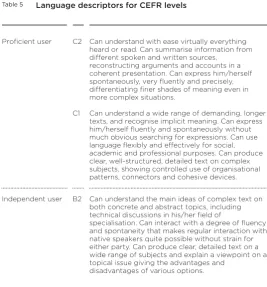
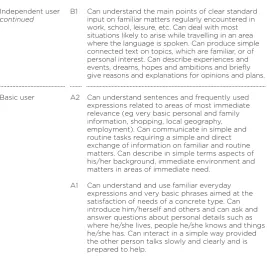
Migrants are able to take ESOL classes at different levels: entry 1, entry 2, entry 3, level 1 and level 2 (see appendix 1 for more information on ESOL levels and qualifications). The highest, level 2, is roughly equivalent to GCSE level, although there is debate around real equivalencies, descriptions and assessment of different levels of English between different benchmarking systems. For instance, there is a forceful argument about adopting the CEFR, which this report covers later, to offer clarity on this issue.
The aim of the current ESOL system is for learners to progress from ESOL to mainstream adult learning. Students learn three components of the English language: speaking and listening, reading, and writing. Courses use a specific ESOL core curriculum, which is based on National Standards for Adult Literacy.
It should be noted that the term ‘migrants’ includes people who are here as students as well as longer-term and permanent residents. When we use the term ‘migrants’ we are referring to long-term settlers in the UK. The profile of UK ESOL learners – long term migrants learning English – varies dramatically, by country of origin, starting level of English, level of education (including first language literacy), cultural background, and personal circumstances. All these affect how best, and how quickly, people learn English. The 2011 UK Census provides a rough, recent snapshot of learner profiles. Of the 850,000 people who reported that they could not speak English well or very well in 2011, the two largest groups of migrants broken down by their first languages are the 37 per cent of people who speak South Asian languages and the 17 per cent of Polish speakers. This is mirrored in the ethnic composition of ESOL learners on the main Skills for Life programme, with 29 per cent Asian British and 33 per cent classified as ‘White Other’ in 2011/12.
What is putting pressure on our ESOL system?
A high proportion (95 per cent) of Britons think that to be considered ‘truly British’ you must be able to speak English, a figure that has increased from 86 per cent in 2003.5The Government has taken note of this view and raised the English language requirements for settlement in the UK. The Labour Government introduced the Life in the UK test in 2002, which is a civic test carried out in English. Initially intended only for those applying for citizenship, it has since become a requirement for any non-EU migrants wishing to become long-term UK residents (the right to free movement means that EU migrants are exempt from this requirement, unless they are applying for naturalisation as UK citizens). In 2009, points began to be awarded for English language ability under the new points-based immigration system for non-EEA migrants. In 2010, a language requirement (A1 level on the CEFR) was introduced for spouses or partners. The level required for those looking to settle was set at B1 on the CEFR in 2013, and the option for migrants with low English ability to take ESOL and citizenship classes instead of the Life in the UK test was abolished.
Meanwhile, funding for the adult skills budget has been steadily decreasing, with implications for access to ESOL. The adult skills budget, which funds most ESOL, has decreased from around £2.8 billion in 2008, to £2.2 billion in 2014, and is forecast to drop to about £2 billion in 2015. ESOL funding on the main Skills for Life programme has declined from
approximately £210 million in 2008 to £130 million in 2013.6In a survey of ESOL providers, 66 per cent attributed waiting lists to a lack of government funding.
Why is ESOL important?
midst of proposed government cuts in 2010–11, the campaign group Action for ESOL wrote in their ESOL Manifesto that the opportunity to learn the common language of the community in
which you live and work is a human right.7However true, this
sort of claim is insufficient for the prevailing political climate. The squeeze on public spending and living standards has contributed to scepticism about state support for any group perceived as not ‘paying in’ to the system. Immigrants are one such group. A more robust and evidenced argument of the benefits of ESOL is required.
In this report, we adopt a capabilities approach akin to that put forward by philosopher Amartya Sen. The idea is to consider the major freedoms and abilities required for indi-viduals to reach their potential. Accordingly, we ask, ‘What are migrants capable of and how can English (or ESOL) help them reach their potential?’ Our argument is that the English language is an essential capability for getting ahead in English society. This capabilities approach acknowledges the place of people who come here as spouses, and retired people who may never enter the workplace and live predominantly within their family or a monolingual community, but who nevertheless need to be able to interact with speakers of other languages, at least in a limited way.
Speaking English is a key means by which migrants can develop their personal assets – first, in soft measures like confidence and empowerment – which in turn leads to increased education and labour market capabilities for many. This
increases the likelihood of integration overall. Finally, while initial benefits accrue to the migrant, in aggregate, society as a whole collects dividends when the linguistic and skills bases of its migrant population are ‘unlocked’.
Everyday capabilities and aspiration
reported a significant gain in their sense of control over their lives and a sense of purpose from ESOL learning. These so-called ‘soft skills’ are a prerequisite for a successful – aspirational – transition in a new society, and need to be recognised in any cost-benefit analysis of ESOL provision and learning. One ESOL learner said,
It makes my life easier, I talk to people… I can deal with officials… I can go to the doctor… I learn new things, I can read books and newspapers, I can
listen to the news, I have contact with other people.8
Various surveys have asked English learners how they benefit from being able to speak English. Everyday capability aspects are regularly cited, including:
· improving official and formal communication like filling out government forms and accessing government services · improving shopping and informal public interactions · the ability to learn new things
· the ability to undertake daily tasks like paying bills
· being more engaged and having more effective parental skills
· general increased confidence and independence9
It is common for migrants’ children to have better English skills than their parents and for them to be more confident speaking English than their parents’ first language. This also applies to migrants who are children when they arrive. ESOL learners in our focus groups, overwhelmingly women, said that ESOL helped them interact with their children and support them at school, for example by talking to teachers and helping with homework. A mother said: ‘I have problem speaking with my son because I don’t understand many things and I cannot help him.’ Building on the success of programmes such as Ocean Maths, which delivers school-based numeracy skills workshops
for parents and children together,10the Greater London
Learners in our focus groups commented on their fear of embarrassment, which acted for some as an incentive to learn, and for others as a deterrent to trying. One woman told us, ‘Most people are scared to speak English, they are shy; from my experience I was very shy [I] don’t want to be laughed at.’ Those we spoke to described how simply talking to the bus driver had the potential to turn into public embarrassment and confusion. Learners therefore felt that ESOL learning gave them more confidence and self-esteem in general public settings.
Furthermore, there is a big difference in the self-esteem attached to the societal role of ‘student’ as opposed to that of ‘immigrant’; hence, even the fact of learning, before any improvement was realised, tended to affect feelings of self-worth.
An initiative that is exploring teaching English through drama techniques is addressing aspects of everyday capabilities (see case study 1).
Case study 1 FaithAction: Creative English FaithAction: Creative English is a programme that uses improvised drama techniques to build confidence in using the English language. A soap opera runs through sessions and learners take on the role of fictional characters. The script contains everyday functional language helping learners develop their skills for practical experiences while engaging with one another in a creative, enjoyable atmosphere.
Self-determination and safety
The evidence suggests that we should not ignore the cumulative impact of ‘everyday’ confidence and self-determination. This is something students experience as a strong incentive to learn, and as a tangible outcome of learning. At the opposite end of the spectrum from the everyday, self-determination may on occasion lead to improved safety and a wholesale improvement in life chances. For example, one study cites the experience of a Pakistani woman acknowledging that learning English helped her gain the confidence to stand up to her abusive partner.11 Although it is obviously important not to sensationalise, stereotype or overstate the frequency with which such practices occur, English language ability needs to be considered in the context of individuals’ (especially women’s and children’s) safety – for example, by agencies encouraging communities to speak out about issues such as female genital mutilation and human trafficking.
The same applies to the risk of labour exploitation. Migrant workers with a poor level of English may be at greater risk of exploitation by employers because they are often unaware of their rights under UK law. A study of Eastern European agency workers in Doncaster found that the majority of agency workers in the survey had no employment contract and were
unaware of the terms and conditions of their employment.12A
UK report into ESOL and the workplace concluded that ESOL helps migrant workers reduce their vulnerability to exploitation by improving their communication skills and therefore their awareness of their rights and responsibilities.13
Health capabilities
English proficiency is related to migrants’ state of health. Knowledge of English affects the ability of migrants to navigate the healthcare system, impacting on their access to healthcare and the quality of their experience. Where patients are unwilling or unable to access primary care, they are more likely to need more resource-intensive secondary care later.
Case study 2 Speaking English with Confidence Around 750 volunteers lead a network of informal
conversational language clubs in 15 priority London Boroughs. Speaking English with Confidence (SpEC) is investing in its volunteers by providing a training course, which could lead to the level 3 Award in Learning Support. Thus, the prospects of volunteers and learners are enhanced.
There is a demand from ESOL learners and local service providers for improving people’s English confidence to enhance the individual’s ability to integrate within the community outside their immediate family and ethnic group. This is well illustrated by a GP’s surgery in Lambeth, which has offered space to the SpEC programme’s conversational classes because many of their patients need support to develop their English skills in order to use the surgery effectively.
Census data show that those with low proficiency in English are more likely to report worse health than those proficient in English (of the people who said their English was poor, 65 per cent reported good health compared with 88 per cent of those
with high English proficiency).14Those who report lower
proficiency in English are likely to be educated to a lower level and on a lower income, which are both correlates with poor health outcomes. However, improving migrants’ English lan-guage capabilities could play a useful part in improving migrant health outcomes through prevention and early intervention and maintaining more positive relationships with medical practi-tioners. This is very important considering that GPs increasingly have a ‘gatekeeping’ role with regard to other support services – referring to food banks and social housing, for example. Migrants most in need who cannot speak to a GP confidently when they first recognise they require medical assistance may later require substantial medical intervention, which could have been prevented had they been able to express themselves earlier.
Persons who have limited English proficiency are less likely to have a regular source of primary care and are less likely to receive preventive care. They also are less satisfied with the care that they do receive, are more likely to report overall problems with care, and may be at increased risk of
experiencing medical errors.15
Although the UK has a different healthcare system from that in the USA, this evidence still suggests that having a poor level of English serves as a barrier to registering with a doctor, and therefore accessing healthcare.
A 2002 Commonwealth Fund study looked at the relationship between English proficiency among Hispanics and their healthcare in the USA. Spanish-speaking Hispanics were much more likely to describe their health as ‘poor’ or merely ‘fair’ (31 per cent) than English-speaking Hispanics (12 per cent), and were more likely to be uninsured, at 54 per cent and 22 per cent respectively. Even controlling for education and poverty, access to and quality of healthcare were still reportedly worse among the Spanish-speaking than the English-speaking group. For instance, 66 per cent of uninsured Spanish-speaking Hispanics had no regular doctor, compared with 46 per cent of English-speaking Hispanics, and the number reporting ‘a great deal of trust and confidence’ in their doctor was 16 per cent lower (56 per cent compared with 72). Overall, the non-English-speaking group scored worse on measures including frequency of care, having a doctor, understanding medical instructions on medicines, and patient–provider communication.
Participants in our focus groups commonly said that having ESOL helped with medical issues and most agreed that knowing ESOL would help with prevention or early intervention:
Speaking English is much easier in any situation, in public transport, neighbours, going to the doctor, or going to the hospital urgently.
In health, it is really important to be able to explain what is happening to you.
would not see a physician if interpreting services were not
available.16Research by Demos with Pakistani women in the
north east of England confirmed this: women reported that they did not have a choice of when to go to the GP, and often had to wait longer than white British patients, because when they could go was dictated by availability of interpreters.17When the Government is increasingly trying to deliver choice within primary care, this is a clear source of inequality. Furthermore, when there is no interpreter available, family members may be called on to translate, although this is contrary to NHS good practice guidelines. Using family members as translators has a potential impact on reporting of more sensitive issues like women’s health, sexual health, mental health and domestic violence. There is a strong argument, to which we will return later, that money cut from providing materials in translation (whether from local authority or NHS budgets) should be diverted towards ESOL provision, thereby tackling the root of the issue and not the symptom.
Educational capabilities
Possessing a command of English has a pronounced relationship with educational progression. In a Demos focus group, one Polish student now attending a British university noted that going to university would not have been possible if she had not learned English. A major survey of ESOL learners by BIS found that 27 per cent of ESOL learners went on to further learning, 90 per cent of learners said they had become more enthusiastic about learning and 80 per cent said they now had a clearer idea of what they wanted to do in their lives.18
(self-reporting good or very good English levels).19Figure 1 illustrates the percentage of people who say they have no qualifications by age and English proficiency. The prior
relationship between proficiency and qualifications holds across age groups, suggesting that English proficiency is an important factor in educational opportunities. However, we also need to keep in mind that a third of migrants in the UK have a post-school qualification.20
Labour market capabilities
[image:30.340.39.301.74.298.2]Similar to the picture in education, labour market capabilities are related to English proficiency. Crudely put, high English
Figure 1 Non-native English speakers without qualifications by
level of English proficiency and age group (%)
Source: 2011 Census
Pe
r
ce
n
t
ag
e
30
20
10
0 40 50 60 70 80 90
Age 25—49 Age 50—64 Age 65 and over Age 16—24
proficiency (self-reporting good or very good English levels) is related to better labour market outcomes – better employment rates, better representation in more prestige and knowledge-based occupations, and better pay – than low English proficiency (self-reporting poor or very poor English levels).
Table 1 compares high and low proficiency English speakers (excluding native speakers) by economic activity at the time of the 2011 census. The former are more likely to have higher employment rates, lower unemployment rates, and lower rates of economic inactivity than the latter.21
Taken together, these measures point to English being a key capability for accessing the labour market, but English is likely to be just one of many factors. For example, migrants are more likely than non-migrants to be in income poverty, so we need to be careful about assertions that English proficiency is a
singular cause of labour market outcomes.22Nevertheless, there
is a very real correlation between English and labour market access. One study found that fluency in English improves the
chances of employment by 22 per cent.23Another study looked
at the children of adult migrants and showed that the odds of a pupil with English as an Additional Language claiming free school meals (a poverty indicator) are 1.7 times higher than for a pupil who is identical in all other respects but has English as their first language.24
Where table 1 looked at access to the labour market, this next section looks at those who are employed. English
proficiency is related to occupation and income. Table 2 is based on 2011 census data and shows that non-native English speakers
Table 1 English proficiency and economic activity
High proficiency (%) Low proficiency (%) Gap
Employment rate 65.4 48.3 –17.1
Unemployment rate 9.5 12.3 2.8
Economic inactivity 27.7 44.8 17.1
with a good command of English are three times more likely to work in higher professional jobs than those who struggle with English. Furthermore, if we add together the skilled trades, machines operatives and elementary positions together (emboldened), we can see that those who possess a low level of English are about twice as likely (76.2 per cent compared with 39.5 per cent) to work in these occupations than those with a high English proficiency.25
Taking the average annual income (2013) across skilled trades, machine operatives and elementary occupations, 76.2 per cent of people employed without a good command of English will earn on average, £21,819 compared with 39.5 per cent of those with good English ability.26At the other end of the scale – managerial and professional positions – 25.7 per cent of people with a good level of English earn on average £38,130 annually, compared with just 7.5 per cent of those with low English levels who earn this amount.
Evidence from the USA shows that improvements in English skills contribute to the closing of the native-immigrant wage gap by around 18 per cent for males and around 10 per cent
for females.27UK evidence shows that the native-immigrant
wage gap attributable to English as an additional language is
[image:32.340.41.291.75.204.2]about 26 percentage points for males and 22 points for females.28
Table 2 Occupation type and level of English proficiency
Occupation Main language High Low
was English proficiency proficiency
(%) (%) (%)
Managerial 10.9 8.6 4.0
Professional 17.7 17.1 3.5
Technical 13.2 9.0 2.5
Administrative 11.9 7.3 2.6
Skilled trades 11.4 10.0 21.1
Caring and leisure 9.5 9.9 5.9
Sales 8.5 8.5 5.3
Machine operatives 6.8 10.3 16.9
Elementary 10.1 19.2 38.2
A Demos focus group illustrated that migrants closely link English proficiency and the job market. Asked why she was motivated to learn English, one participant said that it was ‘to speak the language properly, to communicate better, to get a better job and a better life’.
Integration
Parallel to the improvements in capabilities, ESOL has the potential to increase integration. In a report to the Migration Advisory Committee, the exercise of quantifying integration was defined as ‘understanding the trajectories of first (and second) generation immigrant performance in a range of economic and social spheres (employment, housing, health, social interaction,
marriage and so on)… measured in hard and soft ways’.29In this
report, our focus is narrower – on ‘linguistic’ integration, in the sense of possessing the linguistic capability to join British life and society, and of not being linguistically isolated from others. It refers both to the potential and the reality of communicating effectively in English.
Migrants with poor levels of English can struggle to access the culture and social relationships offered by the host country and the majority population. Evidence suggests that knowledge of the host language increases the chances of ‘cross contact’ with people from other cultures and ethnicities. A 2007 study of migrants’ lives beyond the workplace surveyed 600 migrants working in the UK. It found that English proficiency had a relationship with spending leisure time with British-born people. Depending on their English proficiency, those who said they spent none of their leisure time with Britons varied as follows: fluent (21 per cent); adequate (39 per cent); basic (50 per cent);
none (71 per cent).30In other words, the more a migrant knows
Demos focus group participants revealed that a common motivation for English learning was to be able to interact easily with (English-speaking) others, as the following quotations demonstrate:
I would like to speak in English like an English person, I wouldn’t like for people not to understand me properly.
From my experience with other parents at my son’s nursery, when I speak and they realise my English is not perfect they don’t want to speak to me later on, especially from English mothers.
However, there is likely a two-way process here: migrants both learn English faster and interact more with natives by continued native-immigrant exposure. This was illustrated by a third participant, who explained that she had picked English up naturally: ‘At work and other places, I have to talk to people all the time so eventually I’ve been speaking better’.
An English-speaking workforce
Occasionally, it may be possible for migrant workers to learn English language and literacy on site – or elsewhere, but with employer support. This is becoming less common, as BIS has now withdrawn funding for all workplace-based adult skills provision. Where such initiatives exist, they are often the result of partnerships between trade unions, employers and ESOL providers. Course content is usually work-specific, covering for example health and safety, but there is flexibility. Scotland in particular has well-established guidance on ESOL in the workplace.32
Workplace-based ESOL has been shown to improve workplace relations, communication, health and safety compliance and productivity. A UK report found that employers reported better communication, cohesiveness, teamwork and improved retention rates because of workplace ESOL. The learners themselves reported enhanced
awareness of workplace rights.33The Union Learning Funding reports on a trial of workplace ESOL in one UK company with a high proportion of Polish employees. The company’s
productivity increased by 20 per cent because ESOL allowed workers to unlock their skills base, and provided greater levels of promotions including in high skilled positions, better workplace cohesion, greater health and safety compliance, and fewer disciplinary citations.34
Health and safety are of paramount importance in this regard. Some of the most dangerous workplaces – building sites and factories, for example – are also those that are most reliant on low-waged migrant labour. A study by the Health and Safety Executive found that migrant workers are exposed to added risk in large part because of their lack of knowledge of health and safety and cultural differences. The report specifically pinpointed language:
For some migrant workers with limited or no English, training in health and safety is not effectively communicated and such workers may remain ignorant of basic health and safety procedures, such as what to do in the
event of a fire, or where the main exit routes are.35
Unlocking migrant potential
We have argued that ESOL should be viewed in the context of capabilities. What is needed – and what we have begun to sketch out in this chapter – is a better understanding of how ESOL can be used to ‘unlock’, or to help migrants develop, the capabilities to navigate life in the UK. Yet this is not just a case
of individual benefits for migrants. These aforementioned
benefits – capabilities and integration – pay dividends at societal level.
It is right that English should be prioritised as the common language of the UK, but in a globalised world we need to play the long (and the ‘broad’) game, leveraging the potential of migrants’ skills and linguistic abilities. Given the many positive aspects associated with knowing multiple languages, it makes sense to recognise that using languages other than English is valuable.
It is worth briefly referencing the evidence base for the benefits of knowing multiple languages:
· Multilinguals show greater creative and cognitive abilities than
monolinguals36
· Some evidence shows business opportunities are lost because of language deficits37
· Multilingualism is related to the reduction and delay of the onset of dementia38
· Multilinguals are better at multitasking39
· Multilinguals and those who learn another language are better and faster at learning new things40
· Foreign language learners and multilinguals are more tolerant and accepting of difference and ambiguity thus making integration less of a challenge41
· Multilinguals have more foreign friends and participate more in cultural activities42
British people, and particularly those who employ migrants, should therefore be encouraged to appreciate individuals’ linguistic and cultural resources. More could be done to see migrants as language teachers, as well as language learners. This could be achieved through informal skills exchanges, encouraging higher level English learners to mentor lower level ones (perhaps in the workplace), or through more formal arrangements – for example, a scheme on the model of one in New Zealand to ‘fast-track’ talented learners into qualifying as specialist EAL teaching assistants or ESOL
Migrants’ capabilities are not surplus to requirements; they answer to economic needs that the home-grown population is particularly bad at fulfilling. The All-Party Parliamentary Group on Modern Languages recently stated that the UK could lose an estimated £48 billion a year because of language and cultural ignorance.43A 2012 CBI report reinforces this view: 72 per cent of businesses said they valued foreign language skills among their employees while 68 per cent reported they were not satisfied with young people’s foreign language skills in the
UK.44Demographic projections show that the ethnic minority
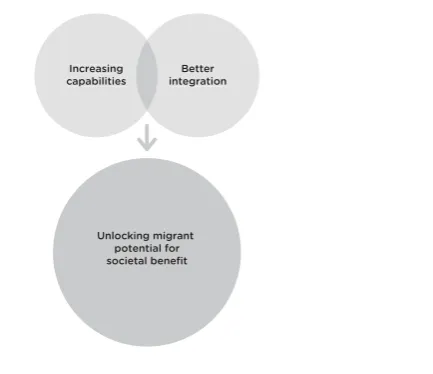
population of the UK is set to rise to between 25 and 43 per cent by 2056.45With the right systems in place to unlock potential, we ought to be able to recognise our growing foreign-born population as a national cultural and economic resource. Figure 2 summarises our argument so far.
[image:37.340.70.287.69.256.2]In short, we must be clear about the many benefits society as a whole stands to gain from a well thought out ESOL policy. The next two chapters examine where ESOL policy stands at the moment, and what needs to change so that these gains can be realised.
Figure 2 The potential benefits of a changed ESOL policy
Unlockingmigrant
potential for
societal benefit Increasing
capabilities Increasing
capabilities
Better integration
1
A brief history of ESOL
policy: from integration
to employment, via skills
The original responsibility for English language training for migrants lay with the Home Office, as it does today in other European countries including France and Germany. Under Section 11 of the Local Government Act 1966, funding for learning was provided ‘in consequence of… substantial numbers of immigrants from the Commonwealth whose language or
customs differ from those of the community’.46ESOL thus
began under the banner of integration.
Provision was informal with a mix of voluntary
organisations, activists and local education authority providers trying to meet the demand. This arrangement continued more or less unchanged until the late 1990s when, following sustained lobbying by ESOL stakeholders, migrant English language learning was swept up in the call for a wider shakeup of adult skills. A Fresh Start – The Moser Report(1999) typified the political concern about the declining standards of adult literacy and
numeracy at this time.47Problematically, ESOL was in a sense an
afterthought to the adult literacy drive, which made up the bulk of the focus.
The DfEE report Breaking the Language Barriers(2000)
followed shortly after A Fresh Start, and specifically looked at ESOL as a core adult skill with a view to increasing labour
market participation.48Concerns about social cohesion were a
further motivation; these were salient after the riots in northern English towns, and the Cantle Report (2001) was explicit about the importance of English to social cohesion.49
benchmarked against national standards. ESOL was now managed centrally through the Adult ESOL Core Curriculum. ESOL teachers were required to be qualified, and students expected to gain a qualification from the national curriculum. Thus, with net migration of between 150,000 and 250,000
people per year,51funding tripled (between 2001 and 2008) to
£300 million52and national enrolments rose (between 2001 and
2006) from around 150,000 to 500,000.53Moreover, ESOL
provision was extended to many who needed it, with relaxed eligibility criteria.
In short, under New Labour, funding expansion – coupled with a social cohesion agenda and loose eligibility criteria – had drastically increased access to ESOL for learners while driving up professionalisation (in standards, curriculum and teaching) of the industry; we note how this has now began to reverse in chapter 2.
Skills for Life was criticised for narrowly defining English language as a skill and thus tying ESOL to an employment and
skills agenda.54Centring on literacy and numeracy as an engine
for economic growth, the Leitch Review of Skills in 2006 reinforced a labour market focus still further.55
In 2007, in response to increased immigration and, consequently, student numbers, the Labour Government restricted ESOL fee remission to a needs-based eligibility criterion. In 2009 the central position of ESOL within Skills for
Life was ended in favour of the new approach to ESOL.56
According to this, provision was increasingly coordinated at the local level, yet as claimed by at least one review, later cuts to local government hampered local authorities’ ability to meet demand effectively.57Only those on means-tested benefits and non-working dependants now qualified for access to fully funded
ESOL classes.58Funding for ESOL, literacy and numeracy in the
workplace was removed because the number of funded hours was so low as to be ineffective.59
The Coalition Government has further streamlined fully
government funded ESOL courses to those on active benefits60
Labour’s relatively more generous entitlement criteria.61FE colleges are given leeway to waive fees for those who are on inactive benefits (eg Council Tax Benefit, Housing Benefit, Income Support and Working Tax Credit) but the colleges have to show the training is related to finding work, and this comes out of their existing budget (which is a disincentive).
A recent review of ESOL policy in the UK concluded:
At policy level ESOL students are viewed in terms of how they can become more economically productive. Predictably, with ESOL students positioned as migrant workers needing English to contribute to the economy, ESOL provision increasingly orients towards short, modular,
employability-focused courses.62
Further confirming this, from April 2014, Jobcentre Plus customers deemed to have poor English skills are referred to
ESOL providers for further assessment and training.63In
addition, funding by results for providers through DWP’s work programme is based on learners getting employment after a course of ESOL learning. This encourages very short courses with the aim of shuttling learners on – an accusation,
incidentally, that applies equally to other client groups within the
work programme.64
As eligibility criteria are tightening, the government is reducing funding for adult skills, with a knock-on effect on ESOL provision. Demos issued a request under the Freedom of Information Act 2000 to the Skills Funding Agency, asking it to set out the amount of funding it had contributed annually towards ESOL provision from 2008 to 2014, compared with its contribution to the overall adult skills budget. The figures are set out in table 3.
The figures show that, following a trough in 2010/11, both budgets slightly increased in 2012/13, though they have not returned to 2008/9 levels. Furthermore, ESOL funding has taken a bigger year-on-year funding cut than the Adult Skills Budget as a whole.
compared with a 39.57 per cent hit for ESOL. Forecasts to 2015 show a 25 per cent decrease in the FE resources budget and a 19 per cent reduction in the total Adult Skills Budget over the next two years (2014/15 and 2015/16).65
These budget cuts have affected participation: demand for ESOL is outstripping supply. A survey found that 80 per cent of providers had waiting lists – sometimes of up to 1,000 students – and 66 per cent cited the lack of government funding as the main
reason for this.66On the main Skills for Life Programme, ESOL
participation dropped to around 150,000 in 2011/12 from about 288,000 in 2005/06. On another route, Adult English and Maths ESOL participation went from about 188,000 students in 2008/09 to 146,000 in 2011/12.
The supply–demand mismatch is just one indicator that the current system is not increasing English language capabilities among immigrants as well as it could. Further illustrating this, of the 348 councils in England and Wales, 91 have a ward in which at least 5 per cent of the population rates themselves as having
poor English ability.67Many of the migrants in our focus groups
had themselves been (or knew others who had been) living in the UK for over a decade, yet spoke limited English: ‘My dad is here 14 years and he doesn’t speak English at all. He can only say hello and introduce himself.’
[image:42.340.24.299.78.178.2]The current system is not fit for purpose or for future demand – but neither was the expansive (and expensive)
Table 3 Skills Funding Agency funding estimates of ESOL in England,
2008/09–2012/13 (Demos FOI request)
Academic year Adult Skills Budget of which ESOL ESOL as a notional funding notional funding proportion of Adult (£ million) (£ million) Skills Budget (%)
2008/09 2,786 212.3 7.62
2009/10 2,741 204.7 7.47
2010/11 2,448 168.6 6.89
2011/12 2,458 118.7 4.83
approach initially trialled by Labour, which suffered from an arguably inefficient funding allocation that raised questions about value for taxpayers’ money.
2
What needs to change?
Introduction
As we saw in the last chapter, the history of ESOL in England has been one of slow professionalisation in qualifications, curriculum and provision. Yet we still do not have an effective approach to meeting demand (or need) for migrant English language learning. Nor, more worryingly, are we much nearer to a coherent overall strategy for ESOL. In contrast, Wales recently published an ESOL strategy on the back of a prior review, which concluded that there was inadequate ESOL provision, under-qualified staff, lack of planning, and patchy quality.68
In England, confusion persists at government level about what outcomes are desired and how they can be measured. We
argued in the introduction that ESOL learners’ needs are our
needs, too; unlocking migrants’ potential has a long-term, wider societal benefit – saving costs to the public purse in welfare and health, adding a skills boost to the economy, and creating a better integrated, more socially cohesive Britain.
There is a tendency for debates about ESOL to converge narrowly on issues of funding and access, but there is a broader range of challenges to be considered if the system is to be improved. Some relate to specific but important aspects of learners’ experience, while others are ideological in nature, and demand a change of attitude on the part of decision-makers. Both kinds of challenge are outlined in this chapter.
Government: strategy and information gaps
Strategy and responsibilityexisting system. As discussed in the previous section, it took the publication of Breaking the Language Barriersin 2000 – written by a working group put together in the wake of the Moser Report (1999) – to stimulate organisation of ESOL at government
level.69Since then, lucid, long-term government thinking has not
been evident.
For instance, there is no consensus on the desired levels of English that people with different skills and background need to achieve (and for what purposes), which feeds into the more general lack of clarity on the aims and outcomes for England’s ESOL policy. Experts pointed to international examples such as Scotland, France and Australia, where migrant language learning is overseen by a single department, and underpinned by a comprehensive national strategy. We will see in chapter 3 that there is evidence that this is more effective than where provision is left to regional authorities, as in (for instance) Italy and Spain.
As discussed in chapter 1, migrant English language learning sits at the intersection of a number of pathways, all of which relate to different departmental agendas. While the Home Office is concerned with citizenship and immigration, the Department for Communities and Local Government (DCLG) is responsible for integration. Both the Department for Work and Pensions (DWP) and the Department for Business, Innovation and Skills (BIS) consider ESOL from an employment
perspective, with BIS taking a wider view of English ability as a skill on a par with adult literacy and numeracy. That is before considering any potential role for others, such as the Department of Health (DH) – an agency that, as we have argued in chapter 1, should have a significant interest in ESOL.
There is also disjuncture between local provision and central government. A New Approach to English for Speakers of Other
Languages (ESOL)(2009) was designed to push ESOL provision
and responsibility to the local authority level, and was generally acknowledged by practitioners to be a good idea in principle, but it was not followed up by additional funding, rendering it unworkable in reality.70
translating documents into foreign languages – a practice he
claimed had cost councils £100 million in 2006.71Pickles made
this recommendation on the grounds that translating documents ‘undermine[d] community cohesion by encourag[ing] segrega-tion’.72While this has an incentivising rationale – remove translation support and more people will be forced to learn English – it is silent on the fact that current demand for migrant language learning is outstripping supply. An improved ESOL system is not a short- or medium-term solution to the need for translation. Even in the long term, it is unrealistic to assume that no one will need or benefit from translated documents. However, ESOL is surely part of the solution. If the aim is truly to reduce segregation and improve cohesion, local authorities ought to follow through by putting any money saved in this way back into ESOL – perhaps on a matched funding basis from DCLG itself.
Understanding needs
Apart from the rudimentary statistics published by BIS and SFA, there is little systematic monitoring at the central government level of ESOL provision, funding, teaching quality or student outcomes across different programmes. There is also no
systematic local government data being collected and published about ESOL learning. This effectively means that the
Government does not know the impact, or the value for money, of its budget spend on ESOL.
As ESOL receives public funding and is largely delivered through FE colleges (which are also publicly funded), we ought to demand greater accountability for how money is spent. At present, it is regularly left to surveys by professional bodies like NATECLA to judge the scale of need for ESOL. There have been reports in the media recently about students being allowed to cheat on English tests for visas; it is not unreasonable to suggest that these are directly related to the current lack of
oversight and monitoring.73Better government monitoring
enable funds to be targeted towards areas of need, and facilitate an understanding of the wider costs and benefits of ESOL.
Moreover, it is important to be able to establish the scale of the underlying need for ESOL, as opposed to manifest demand. The latter is more easily evidenced, through student numbers and waiting lists. However, considering that the 2011 census showed about 850,000 people self-reporting low levels of English, and the number of funded ESOL learners on Skills for Life at around 150,000, there is a large discrepancy in numbers that points to a significant ‘hidden’ need. Community outreach work and partnerships with the third sector are the best ways to uncover those who may need to learn English yet have been so far unable to.
Quality of teaching and quality of provision
Experts Demos consulted consistently highlighted quality of provision as an important issue. One interviewee said that ‘historically providers and Ofsted have rated ESOL, literacy and numeracy as low’. A 2008 Ofsted report commented that only around half of the college provision and a fifth of adult and community learning provision was judged by institutional inspections to be good or outstanding. It specifically pointed to teaching quality: ‘Quality improvement processes did not ensure consistently good standards of teaching and learning.’74
being motivated by commercial more than educational considerations. Particularly in this funding environment, both the government and the individual learner need to know they are getting value for the money and time they spend on learning English. Currently, this is not always the case.
One interviewee with experience as an inspector commented on some of the variations in quality:
Aspects such as the quality of teaching and learning, the degree of stretch and challenge, pace, the focus on feedback on the learners’ own language use and optimising learning opportunities require improvement (and behind these, the quality of teacher training).
Compounding the problem is the fact that, since 2013, the requirement has been removed for FE ESOL teachers in the UK to have (or be working towards) a recognised subject-specific teaching qualification.75The level of qualification is left to the discretion of the college principals in hiring teachers. Those we spoke to were understandably concerned about the potential effect of this on the quality of teaching.
Over and above the trend towards deprofessionalisation, some practitioners pointed to the high number of part-time ESOL teachers and the widespread (and growing) use of zero hours contracts as factors likely to work against a stable, knowledgeable teaching profession.
Furthermore, variation between courses might be tolerable if there were a proper ESOL ‘market’ operating (if learners actually had a choice of where to learn). In practice, they do not have such a choice for various reasons – a simple lack of provision near to them, waiting lists, travel barriers and, most importantly, the fact that they are often ill informed (as many in our focus groups said they were).
importantly, we need to ensure that learners themselves are properly served.
Monitoring outcomes
As is the case with needs, outcomes for ESOL learners are not routinely measured in any meaningful way. The current system measures participation and achievement at entry level, level 1 and level 2, and by ethnicity. Post-study outcomes are not collected, which is a crucial indicator to assess how well the system serves learners and wider society. Also, national student surveys are not collected or published; again, this is a missed opportunity for feedback and adaptation.
The effectiveness of provision might be measured by meaningful standards of learning; learners’ achievement over time and post-learning outcomes; and the quality and effective-ness of learning and teaching. For example, the Government is being more transparent about school pupils’ destinations and there should be greater clarity over ESOL so that providers are transparent and accountable.76Also, a regular national survey could be implemented to get feedback on students’ needs, performance and satisfaction, which would enable more granular and targeted feedback. In this regard, the UK could learn from New Zealand’s Longitudinal Immigrant Survey (LisNZ), which collects outcomes data that feed back into how ESOL is delivered, and is funded by a levy on migrants (see chapter 3).
Providing information
ESOL provision around the country is highly variable in quantity, quality and nature. Some local authorities have a dedicated organisational body that acts as a hub that advises learners, connects them with providers, and tracks their learning progress and outcomes. Two examples are the Hackney ESOL Advice Service and the Migrant English Support Hub (MESH) in Leeds (case studies 3 and 4).
Case study 3 Hackney ESOL Advice Service
Hackney’s integrated local educational authority, the Learning Trust, realised that poorly organised ESOL provision was resulting in inefficient delivery and missed learning
opportunities. In response, it set up the ESOL Advice Service. Regular, free ESOL advice sessions are held across the borough, where English proficiency levels are determined and learners are connected to appropriate providers. Learners’ journeys are also tracked with a purpose-built database, and the Learning Trust uses this data to assess local need and continuously improve the effectiveness of learner–provider matches. Providers have forged partnerships with community organisations, allowing them to create courses that meet learners’ specific needs – for example people with children.
Case study 4 Migrant English Support Hub (MESH), Leeds As in Hackney, in Leeds, fragmented ESOL provision was felt to be inhibiting participation and progression. MESH provides a ‘one stop shop’ for adult migrants and advisers to find up-to-date information about ESOL in Leeds, including information such as class type, locality, times of lessons, costs and crèche provision. The organisers hope that by supporting coordination of provision, they can reduce some of the pressure on, and the costs of, interpreting and translation services, and deliver a higher quality service to the city’s migrant learners.
Leeds, Leeds Asylum Seekers’ Support Network (LASSN) and provider representatives.
Qualifications and funding: contradictions and
inefficiency
The current ESOL system does not serve providers or migrants as well as it should because the qualifications and funding framework is riddled with problematic assumptions and inefficiencies.
Access: migrants in work miss out
Our focus groups with students revealed that the cost of courses is one of the biggest barriers to learning. They are thus
prohibited either from starting to learn or from continuing their learning to higher levels.
Many who are in low paid work (and are thus ineligible for full remission) simply cannot afford even the subsidised price of ESOL classes, which is normally between £400 and £1,000 per year depending on the mode of study. According to the most recent Annual Survey of Hours and Earnings, the average gross annual salary for caring, leisure and other services (sectors in
which migrants are most likely to be employed) is £17,000.77
This is just £800 above the minimum income standard – enough money to maintain a socially acceptable quality of life – as
calculated by the Joseph Rowntree Foundation.78One focus
group participant said:
[I]t’s expensive for someone that works 10 hours a day, 5 or 6 days a week; they can only afford basic life and haven’t got the extra money to pay for things [like ESOL provision].
Migrants with young children who earn anywhere above this most likely have to find the money not only for 50 per cent of their ESOL course costs, but also for childcare that allows them to attend classes.
Another example of short-termism is the removal of workplace ESOL funding. Given the evidence of the benefits of such provision, this is a major missed opportunity. Many migrants are likely to work in low-wage labour, surrounded by other migrants. This means their English levels are likely to stagnate after they learn the required ‘scripts’ to get by in the workplace. One focus group participant said that the men she knew only ‘learn the English for work and that’s