^ãmmm*.
1962 N o . 2
■ ■■■>■ ■ T ^ ' Æ ? --y· ■ ■ i :; : ^ :
¡ι
U L L
I
ISI
P o w e r reactors
N u c l e a r Physics
eufatom
Information Bulletin of the European A t o m i c Energy Community
19 6 2
No. 2
On the 25th March 1957 in Rome, six states, namely:
THE KINGDOM OF BELGIUM
THE GERMAN FEDERAL REPUBLIC
THE FRENCH REPUBLIC
THE ITALIAN REPUBLIC
THE DUCHY OF LUXEMBOURG
THE KINGDOM OF THE NETHERLANDS
1 signed the treaty which instituted the European
Atomic Energy Community (Euratom).
Reactor Technology
N u c l e a r Fusion
Radioisotopes
M i n e r a l o g y and
G e o c h e m i s t r y
Ship Propulsion
Biology
A u t o m a t i c I n f o r m a t i o n
Methods
Health Protection
Law
Insurance
Economics
Education and T r a i n i n g
When will nuclear energy truly be at the
service of M a n ? When will nuclear energy be
found everywhere, in our cities, i n our fac
tories, even in the h u m b l e s t of cottages? The
e c o n o m i s t s m i l e s and a n s w e r s : "When nu
clear energy can c o m p e t e on equal t e r m s
with the conventional sources of energy".
"The e c o n o m i s t m a y be right" said Prof.
Medi, Vice-President of Euratom, in a recent c o m m e n t , "but it would be unfair to confine
our attention to purely c o m m e r c i a l consider ations without taking into due account the
benefits of a social kind w h i c h we are entitled to expect f r o m the utilization of this n e w
energy. Will the m i n e r not rejoice w h e n his son dons the white coat of the nuclear
technician"? High temperature gas-cooled reactors, thermonuclear fusion, w h i c h are
d i s c u s s e d in this issue, are s o m e of the i n s t r u m e n t s of this transformation.
Of course a t o m i c energy brings n e w dangers as well a s n e w benefits. We m u s t learn to
m a s t e r t h e m just as our forebears m a s t e r e d all the other forces of nature w h i c h are n o w
established as the servants of Man: there will be mention in s o m e of the following pages
of a recent victory of medicine in this field.
Doctors m a y still have m a n y t a s k s to fulfill,
but they are keeping pace with the forward
Controlled
Thermonuclear
Fusion
A S O U R C E OF E N E R G Y FOR T H E F U T U R E
Donato Palumbo
Director of Euratom's plasma physics and controlled thermonuclear fusion research programme.
:'X:
T h e reactions which seem to be of greatest interest involve two isotopes of hydrogen, namely d e u t e r i u m and tritium. D e u t e r i u m is a b o u t twice as heavy as o r d i n a r y hydrogen since, instead of having a nucleus consisting of just a proton as in the case of hydrogen, it possesses one n e u t r o n in addition. As for tritium it is almost three times as heavy as hydrogen owing to the presence of yet a n o t h e r n e u t r o n in its nucleus.
T h e most useful reactions can be represented as follows:
I)
I) D
*■ Τ + proton + energy (4 M e V ) """>. H e3 + neutron + energy (3.25 M e V )
Τ > H e4 + neutron + energy (17.6 M e V )
I n all three cases the reaction can truly b e described as "fusion" inasmuch as the two original nuclei merge into a heavier nucleus, b u t the specially interesting point a b o u t the reaction is t h a t it involves a slight reduction in mass which is converted into energy, according to the famous law of Einstein.
I n comparison with fission, which has already been har nessed in nuclear reactors, fusion has two major a d v a n tages :
First of all the fuel is, to p u t it mildly, in plentiful supply since it is virtually just water. Admittedly there is only one molecule of heavy water ( D20 ) for every 6000 mole
cules of ordinary water, b u t it is still true to say that the energy available in the d e u t e r i u m contained in one gallon of w a t e r is equivalent to the heat p r o d u c e d by the com bustion of some 300 gallons of petrol. T r i t i u m is m u c h scarcer t h a n d e u t e r i u m b u t it is possible to p r o d u c e it in the course of the fusion reaction by m a k i n g the emitted neutrons react with lithium nuclei.
(neutron + Lic ^►He4
T)
Another favourable feature of fusion is the fact that it does not produce in any quantity the radioactive wastes the disposal of which is such a problem in the case of nuclear fission reactors. T h e only active nucleus present is the tritium nucleus, but the ß-rays which it emits have low energies. As for the neutrons which are produced, they should all theoretically be consumed by the re-generation of tritium just mentioned.
In spite of these marked theoretical advantages it is still quite clear that fusion is well behind fission in terms of practical applications. W e are of course not talking of un-controlled reactions such as those used in the H-bomb but of the creation of'controlled thermonuclear fusion for peace-ful purposes. T h e special problems involved make the task of development particularly difficult, and if progress is slow, this is not for any want of trying on the part of the research teams investigating fusion; it is just that the road leading from the idea to the realization of the idea is strewn with obstacles. Let us look at some of them.
F u s i o n a n d i t s p r o b l e m s
There are two categories of forces present in a nucleus : on the one h a n d the short-range forces which hold the constituents of the nucleus together; on the other the electrostatic forces which are forces of repulsion and form the so-called "Coulomb barrier". Before the reactions al-ready mentioned can occur, the two nuclei which are to fuse must collide with sufficient energy to overcome this barrier and come close enough to each other to bring into play the short-range forces, which are responsible for the reaction.
a n d prevent t h e m from meeting. T h e m e t h o d of b o m b a r d i n g d e u t e r i u m or tritium targets with a d e u t e r i u m b e a m will not work either, as most of the energy of the b e a m is absorbed by the electrons of the target atoms rather t h a n by their nuclei. T h e m e t h o d which thus seems to be richest in promise consists in confining D or Τ within a restricted space.
It is of course not enough to confine the D or Τ atoms and keep them together; their nuclei have also to be b r o u g h t u p to the required energies, which are of the order of ioo K e V . W h e n we talk of energy in this context, we m e a n energy of motion or kinetic energy. According to the well known molecular theory of heat, if a certain a m o u n t of gas is confined in a vessel a n d h e a t e d , its mole cules are b r o u g h t into a state of greater a n d greater agitation. O n a m o r e practical plane this agitation means a rise in the t e m p e r a t u r e a n d the pressure of the gas. T h u s if w e were to carry out an experiment starting with a certain mass of D in, say, a steel pressure vessel, we should have to heat the gas to a t e m p e r a t u r e of h u n d r e d s of millions of degrees centigrade before the kinetic energy of the D nuclei were sufficient to b r i n g a b o u t fusion reactions at an appreciable r a t e . T h e n obviously the ex p e r i m e n t would be nonsensical from the very beginning as no steel vessel, in fact no vessel of any m a t e r i a l known to us, would stand u p to these conditions. I t m u s t also be pointed out that at these high energies the atoms would have gone t h r o u g h a certain c h a n g e ; initially the D atoms would consist, quite normally, of a positively charged nucleus a n d a negatively charged electron, b u t the high energies we are thinking of in order to m a k e fusion possible are substantially higher t h a n the energy which binds the electron to the nucleus, with the result t h a t the atoms would be ionised, i.e. " s h o r n " of their electrons. O u r gas having therefore become a " m i x t u r e " of ions a n d electrons we should be in presence of a kind of fourth state of m a t t e r , a fully ionised plasma.
A w a y t o w a r d s a s o l u t i o n : M a g n e t i c f i e l d s
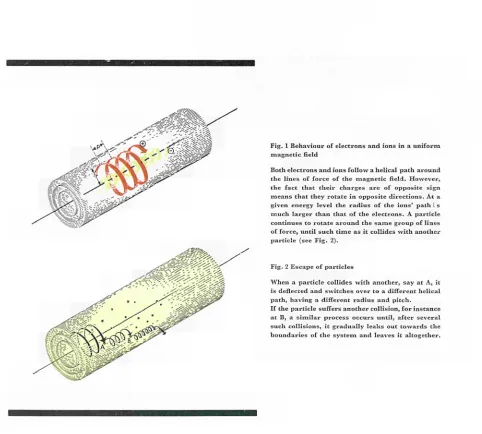
I t has already been shown t h a t the use of m a t e r i a l con tainers for confining the plasma is out of the question. However there is a consolation; the separation of the nuclei from their electrons means t h a t all the particles m a k i n g u p the plasma are c h a r g e d either positively or negatively, a n d hence the way is open for the use of electromagnetic fields. T h e confinement effect of a m a g netic field can be considered in two ways. If attention is t u r n e d first of all to the behaviour of the individual par ticles, it can be noted t h a t they whirl r o u n d the lines of
force of the m a g n e t i c field along w h a t is roughly a helical p a t h (see Fig. ï ) . O n the other h a n d if a macroscopic instead of a microscopic view of the p h e n o m e n o n is taken, it is observed t h a t the m a g n e t i c field, if it is given a suit able shape, produces a pressure which is c a p a b l e of b a l a n c i n g the pressure of the p l a s m a .
F u s i o n ' s " e n e r g y b a l a n c e "
Different shapes h a v e been proposed for the required m a g n e t i c fields b u t , before showing something of the con figurations which are at the m o m e n t the subjects of ex periments, it is w o r t h c o m m e n t i n g on w h a t m i g h t be called the " e n e r g y b a l a n c e " of nuclear fusion devices in general. This " e n e r g y balancesheet", like a n y b a l a n c e sheet, covers a certain space of time a n d shows on one side the a m o u n t of energy derived from fusion reactions a n d on the other side the a m o u n t of energy which it has been necessary to p u t into the system to m a k e these reactions occur.
This confrontation of o u t p u t with i n p u t is not of course restricted to t h e r m o n u c l e a r fusion. I t can be m a d e in the case of familiar processes such as ordinary combustion. T h e combustion of a piece of coal, for instance, is in actual fact a kind of fusion process, with the difference t h a t molecules a r e involved a n d not nuclei. I t is known to all w h o h a v e m a d e a t t e m p t s to light a fire, especially if their a t t e m p t s h a v e been unsuccessful, t h a t it is not e n o u g h simply to b r i n g the coal into contact with air, b u t t h a t it is necessary to ignite it. This involves supplying a certain a m o u n t of h e a t for the sole purpose of bringing t h e coal a n d air u p to the "ignition t e m p e r a t u r e " , i.e. to the t e m p e r a t u r e w h e r e selfsupporting combustion can take place. Before the ignition t e m p e r a t u r e is reached, the energy b a l a n c e is very unfavourable : of the h e a t a b sorbed by the fuel a n d air, some is lost to the surroundings, some is used to e v a p o r a t e the water in the coal etc., a n d w h a t is retained, a l t h o u g h it contributes to raising the t e m p e r a t u r e , h a r d l y pays any dividends in the form of actual combustion. W h e n the coal actually starts burning the books are exactly b a l a n c e d ; enough heat is being pro duced by the combustion reaction to m a k e u p for the losses incurred, a n d the reaction is therefore selfsup porting.
Fig. 1 Behaviour of electrons and ions in a uniform magnetic field
Both electrons and ions follow a helical path around the lines of force of the magnetic field. However, the fact that their charges are of opposite sign means that they rotate in opposite directions. At a given energy level the radius of the ions' path i s much larger than that of the electrons. Â particle continues to rotate around the same group of lines of force, until such time as it collides with another particle (sec Fig. 2).
Fig. 2 Escape of particles
When a particle collides with another, say at A, it is deflected and switches over to a different helical path, having a different radius and pitch. If the particle suffers another collision, for instance at B, a similar process occurs until, after several such collisions, it gradually leaks out towards the boundaries of the system and leaves it altogether.
actual practice, once the fire has been burning for some time, these amounts become quite negligible and hardly deserve to be shown in the overall energy balance. This can unfortunately not be said in the case of nuclear fusion. Research workers admittedly have succeeded in creating the conditions necessary to bring about controlled fusion reactions, but they have had to unleash such dispropor-tionately large amounts of energy to obtain them that the process is quite uneconomic. T o return to our analogy, they are rather like the novice pipe-smoker who uses up a whole box of matches to get one puff out of his pipe. Why does this h a p p e n ? A closer look at the way the energy balance is made up will help to show w h y : it is important in this connection to bear in mind the dis-tinction beUveen the plasma's internal balance and the
overall energy balance.
As far as the plasma's own internal balance is concerned,
the only entry which can be m a d e on the credit side is that part of the fusion energy which is kept by the charged particles (protons, tritium nuclei and helium nuclei) ; the greater part of the energy produced is in fact to be found in the neutrons which, as they have no charge, are un-affected by the magnetic field and therefore immediately escape from the volume of confinement.
There are several entries on the debit side corresponding to the energy losses incurred by the plasma. At best they will include only the following:
—losses through "Bremsstrahlung", a radiation effect caused mainly by collisions between ions and electrons ;
—losses through cyclotronic radiation which stem from the helical motion of electrons in the magnetic field, but whose exact magnitude is still unknown;
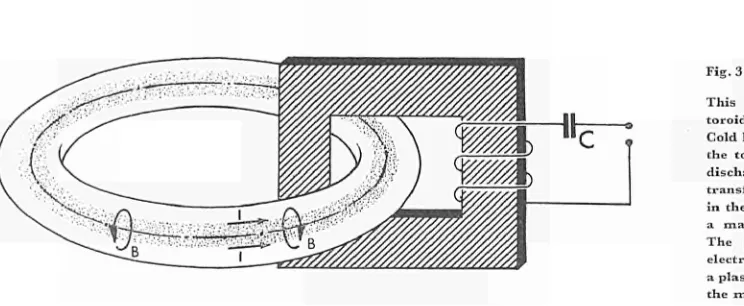
Fig. 3 Toroidal pinch
l'his is a schematic example of the famous toroidal "pinch" devices.
Cold low-pressure gas is initially contained in. the toroidal vessel. When the condenser C is discharged, as in a conventional electrical transformer, an electrical current I is induced in the gas along the torus; this current creates a magnetic field Β which "pinches" the gas. The gas, having been heated both by the electric current and the pinch effect becomes a plasma which should ideally be contained by the magnetic field.
and electrons which filter out of the magnetic field either along the lines of force of the magnetic field or across them, for instance by collision, as illustrated in Fig. 2. These particles possess kinetic energy and it is the escape of this energy which constitutes the loss to the system. T h e higher the temperature of the plasma becomes, the higher are the odds in favour of the occurrence of fusion reactions. At the same time there is an increase in the Bremsstrahlung-loss suffered by the system. At relatively low temperatures, the inventory of losses is m u c h greater than the inventory of the fusion energy produced and consequently the internal energy balance of the plasma shows a deficit. As the temperature rises there comes a point however where the balance begins to show a slight
profit; this corresponds to the ignition temperature of the
plasma and marks the stage from which a self-sustaining system can be envisaged. For a mixture of D and T, this temperature is of the order of 45 million °C. and, for pure D, 400 million °C.
T h e internal energy balance has its importance for the
determination of the ignition temperature, and is there fore of great interest to the physicist. O n the other hand the overall energy balance is almost a business m a t t e r ; it takes into account all the overheads, which include main ly the energy necessary to bring the gas to thermonuclear conditions and the energy necessary to create a n d main tain the magnetic field. T h e credit side, as before, shows the energy derived from fusion reactions, but can also show any energy produced by putting to good use the neutrons escaping from the plasma. Normally it is the
energy involved in building u p and maintaining the tre mendous magnetic fields required which is the largest entry on the debit side. As part of this energy is a kind of fixed investment, independent of the confinement time (whereas the energy produced is directly proportional to it), a positive energy balance will depend on how long the plasma is kept confined.
T o this day, although there are no fundamental obstacles of a theoretical nature to prevent the attainment of a positive energy balance, attempts even to come within striking distance have failed. In the case of the solutions which seemed richest in promise, such as toroidal pinch magnetic configurations (see Fig. 3), instabilities of dif ferent kinds destroyed the plasma in extraordinarily shorter times than the theoretical data at our disposal at the time might have led us to expect.
E u r a t o m ' s c o n t r i b u t i o n
T h e U n i t e d States of America, G r e a t Britain a n d the U.S.S.R. have a n a d v a n t a g e over the countries of the E u r o p e a n C o m m u n i t y mainly because they m a d e an ear lier start in controlled thermonuclear research a n d be cause they have devoted larger resources to it. However, as j u s t hinted, they have from time to time found t h e m selves suddenly in a blind alley a n d h a v e consequently not translated this earlier start into as great an a d v a n t a g e as m i g h t have been expected. This m e a n s t h a t a deter mined effort a n d a suitable d e p l o y m e n t of resources within the C o m m u n i t y could bring it abreast with these three countries.
T h u s the U n i t e d States Atomic Energy Commission alone devoted $32 million to plasma research in i960 a n d em ployed m o r e t h a n 550 research scientists in this particular field. As for the E u r o p e a n C o m m u n i t y a sum of $ 12 million has been earmarked by E u r a t o m within the b u d g e t of its first fiveyear plan (19581962), to which must be a d d e d a more or less equivalent a m o u n t corresponding to the expenditure of the m e m b e r States' own organi zations. E u r a t o m ' s policy has consisted in concluding contracts of association with laboratories inside t h e E u r o p e a n C o m m u n i t y which h a d already started working on nuclear fusion.
T h e first threeyear contract was concluded in J u l y 1959 with the French Commissariat à l'Énergie A t o m i q u e (C.E.A.) ; a second contract, connected with the first, was concluded in i960 with the I t a l i a n Comitato N a z i o n a l e Energia Nucleare (C.N.E.N.) ; a third was signed in 1961 with the new G a r c h i n g laboratory founded on the initi ative of the M a x Planck Institute in M u n i c h , u n d e r t h e auspices of the M a x Planck Gesellschaft. T h e terms of these special contracts stipulate t h a t both parties, E u r a tom a n d its associate, share in the m a n a g e m e n t of t h e research work, a n d in the supply of b o t h the personnel a n d the material resources required. T h e impression could be g a t h e r e d that E u r a t o m ' s a p p r o a c h to the p r o b l e m is split along three completely separate lines, b u t this is not in fact the case. Provision has been m a d e for constant exchanges of information between the various p a r t n e r institutions, in order to ensure that they benefit m u t u a l l y from each other's achievements.
Fig. 4 Magnetic Mirrors
The figure shows a kind of double-necked "magnetic bottle". At both extremities, where the lines of force of the magnetic field come close together, the pitch of the particles' trajectories tightens. In the case of trajectory A, the pitch eventually vanishes and is then reversed. Thus the particle is in a manner of speaking "reflected" (hence the name magnetic mirrors). As this process will be repeated at the opposite "neck", the particle will move back and forth and remain confined for a long time if it is not disturbed by a collision. In the case of trajectory Β the pitch is much larger initially and, although it is reduced to a certain extent near the "neck", it does not vanish. Hence the particle continues in the same direction and leaves the bottle.
F o n t e n a y - a u x - R o s e s
[image:9.593.342.568.489.645.2]Fig. 5 High energy injection
A molecular deuterium ion (D„-|-, i.e. two atoms of Dj one of which is without an electron) is injected into a magnetic field which, at least near the axis, is of the magnetic m i r r o r (double-necked "bottle") shape. After colliding with particles of an electric arc created t n-dependently along the axis, or with the residual gas (as far as possible this process occurs of course in a vacuum), the molecular ion can be split into one neutral D atom and one D-f- ion. As the latter has a velocity equal to that of the molecular ion, but has only half its m a s s , the diameter of its trajectory in the magnetic field is smaller than the radius of the magnetic m i r r o r "bottle", and thus the ion is trapped. The neutral atom is not affected by the magnetic field and leaves the system immediately. If the molecular ion is not dissociated it shall leave the system (bottom trajectory).
[image:10.593.33.279.319.523.2]- _ _ - ' ' y
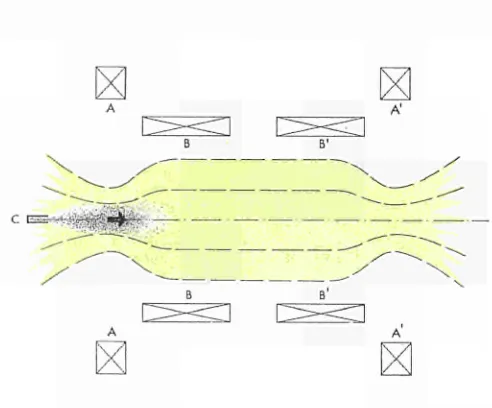
Fig. 6 DECA (Dispositif Experimental Compression Adiabatique)
A plasma "gun" (positioned at C) projects a puff of plasma into a
weak "mirror"-shaped magnetic field produced by coils A and A1.
Part of this plasma is trapped in the central region and then the
main coils B and B1 are energized, thus producing a strong
mag-netic field, still of the " m i r r o r " type, which compresses the trapped plasma adiabatically. The final result should be a hot dense plasma confined by the magnetic field.
m i r r o r " devices. Fig. 4 gives some idea of what is invol-ved ; the lines of force of the magnetic field come close together at two extremities of the machine, with the result that the pitch of the helical paths of the ions and electrons is reduced more and more as they approach these extremities; ultimately, if the initial pitch is not too large, its direction is reversed and the particles are reflected back. Hence the name "magnetic mirrors". O n the other hand particles whose motion is principally axial cannot be reflected and so it is only possible to obtain partial confinement in the longitudinal direction. T h e loss of particles is actually continuous : ions collide against the neutral gas remaining inside the system or collide against each other and against the faster moving elec-trons; once deflected because of these collisions, the
partic-les make a swift exit though either of the two extremities of the system.
Two devices are under development at the m o m e n t in Fontenay-aux-Roses.
of efficiency. Heating the plasma is no problem in the case of this device since the particles can be injected with a sufficient velocity for the plasma they form to have a temperature of a thermonuclear level. T h e success of the device depends on obtaining a high density plasma, and this in turn depends on the intensity of the ionic stream which can be supplied from the source and on the effi ciency with which the particles can be retained in the plasma.
A second way of feeding a magnetic mirror geometry consists in using "plasma guns" which produce high velo city plasma jets. Different devices, some of a novel charac ter, are being tested in Fontenay-aux-Roses. T h e jet enters the magnetic mirror system from one or both ex tremities, and some of the particles, after colliding with each other, are retained in the magnetic field. T h e result is a low density and low temperature plasma. Immediate ly afterwards, a rapid rise in the intensity of the magnetic field and consequently of the pressure exerted in the plasma, leads to an increase in density a n d temperature. One of the more important devices of this type, christened D E C A (Dispositif Experimental Compression Adiabati-que), has been completed and is being tested at the mo ment in Fontenay-aux-Roses (Fig. 6).
F r a s c a t i
In Frascati, where the work of the E u r a t o m / C N E N as sociation is being carried out, experiments are based on
a different method (so-called Q-pinck). T h e magnetic field
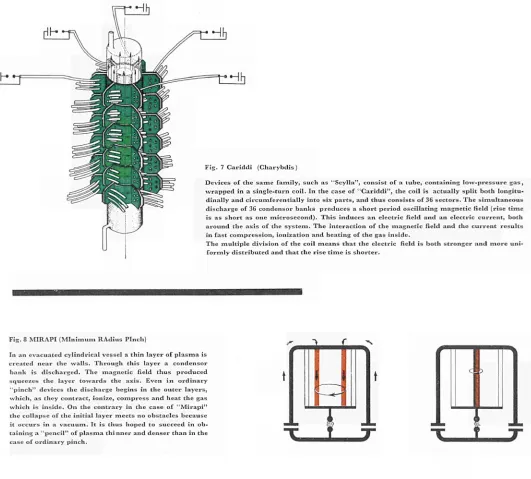
is similar in shape to that shown in fig. 4 b u t the device, instead of receiving high energy particles from a n outside source, contains, inside a glass tube, low-pressure pre-ionized gas; the magnetic field is stabilized in a very short time and compresses the plasma, thereby generating shock waves which heat it and ionize it further. This principle has already been used in the "Scylla" experi ments in Los Alamos (hence the Frascati experiment's n a m e " C a r i d d i " ) and has m a d e it possible to obtain short-lived plasmas but at high density and temperature conditions. In " C a r i d d i " the coil is split into six sectors and it is this feature which is responsible for the quicker build up of the magnetic field and the greater intensity and uniformity of the electric field (Fig. 7).
Finally, still in Frascati, a special group is investigating the possibility of realizing plasmas of an even higher density than in the case of " C a r i d d i " . This increase in q density is achieved at the expense of the duration of the
plasma, which is even shorter-lived. T h e attainment of a positive energy balance depends directly both on the
plasma's density and on its duration ; it is therefore quite justifiable to admit the decrease of one factor as long as
the other is increased correspondingly.
Fig. 8 shows the kind of arrangement envisaged : a layer of plasma, created initially near the walls of an evacuated cylindrical vessel, is driven by a magnetic field against the axis to form a thin pencil of plasma. T h e experiment has been given the n a m e of M I R A P I ( M i n i m u m RAdius P i n c h ) . Concurrently another experiment is under way whose object is to produce a machine capable of pro ducing the enormous magnetic fields (of the order of ι o million gauss) which will be needed for confining a plasma of such high density. This part of the research task has also been christened: it is called M A F I N (MAgnetic Field INtensification).
It is not our intention to describe here all the other ex periments, perhaps smaller in size, b u t no less important, which are being carried out within the framework of the two contracts. Their object is the measurement of funda mental quantities, a n d the detailed study of certain funda mental phenomena, such as the interaction between a b e a m of particles and a plasma etc. A considerable part of the work is also devoted to the development of different observation techniques, electrical, magnetic, photo graphic etc., whose frequent a n d skilful use is essential to a full understanding of the phenomena involved. As in stances we can quote the use of cine-cameras capable of making several pictures within a millionth of a second, and the development of micro-wave generators operating on wave-lengths as small as 2 m m .
G a r c h i n g
As for the Munich-Garching laboratory, its work will in
clude the study of %-pinch devices, several of which are
Fig. 7 Cariddi (Charybdis )
Devices of the s a m e family, such as "Scylla", consist of a tube, containing l o w p r e s s u r e g a s , w r a p p e d in a singleturn coil. In the case of " C a r i d d i " , the coil is actually split both longitu dinally and circumferentially into six p a r t s , and t h u s consists of 36 sectors. The simultaneous discharge of 36 condensor b a n k s produces a s h o r t period oscillating magnetic field (rise t i m e is as s h o r t as one microsecond). This induces a n electric field and an electric current, both a r o u n d the axis of the s y s t e m . T h e interaction of the magnetic field and the c u r r e n t results in fast compression, ionization and heating of the gas inside.
The multiple division of the coil m e a n s t h a t the electric field is both stronger and m o r e uni formly distributed and t h a t the rise t i m e is s h o r t e r .
Fig. 8 MIRAPI ( M i n i m u m RAdius Pinch)
In an evacuated cylindrical vessel a thin layer of p l a s m a is created near the walls. Through this layer a condensor b a n k is discharged. The magnetic field t h u s produced squeezes the layer t o w a r d s the axis. Even i n o r d i n a r y " p i n c h " devices the discharge begins in the outer layers, which, a s they contract, ionize, c o m p r e s s and heat the gas which is inside. On the contrary in the case of " M i r a p i " the collapse of the initial layer m e e t s no obstacles because it occurs in a v a c u u m . It is thus hoped to succeed in ob taining a "pencil" of p l a s m a t h i n n e r and denser than in the case of o r d i n a r y pinch.
■v {_
I t is very p r o b a b l e t h a t in the years to come the Com m u n i t y ' s overall p r o g r a m m e will e x p a n d until it reaches proportions c o m p a r a b l e if not equal to t h a t of the U n i t e d States. I should like, in conclusion, to m a k e two remarks. As far as the scientific p r o g r a m m e is concerned, it is our opinion that the basic knowledge which we have at our disposal is not sufficient to w a r r a n t the construction of large machines, an exercise which a m o n g other things would involve us in the risk of b e c o m i n g the prisoners of projects absorbing a volume of h u m a n a n d m a t e r i a l resources quite out of proportion with their usefulness. If on the other h a n d the deployment of large resources is d e m a n d e d by particular lines of research it is desirable t h a t expansion should take place in easy stages, in such
a way that each step gives time not only for reflection on the advisability of widening the project further, b u t also for the g a t h e r i n g of scientific a n d technical d a t a , for which there is a pressing need at the m o m e n t .
M y second r e m a r k concerns distribution of tasks; in the U n i t e d States most of the tasks in the field of controlled t h e r m o n u c l e a r research are distributed u n d e r the a u t h o r i ty of the A t o m i c Energy Commission. I n the E u r o p e a n C o m m u n i t y it is desirable, if an efficient use is to be m a d e of money a n d brains, to m a k e it possible for the different laboratories to distribute the tasks a m o n g themselves a n d fulfil together the aims which they share. O n e of E u r a tom's ambitions is precisely to facilitate effective colla boration by all the means at its disposal.
[image:12.593.21.552.37.516.2]J u l e s G u é r o n
The
Administration
of Research
Research is one thing; organizing research is another.
If these two arts have nevertheless something in common, then it is
perhaps because they make the same demands on their exponents'
ingenuity and imperturbability.
On the occasion of the international O.E.C.E. symposium on the
Administration of Research, held in Ménars (France) from 25 to 29 April
i960 Dr. Jules Guéron, Director General of Research and Training at
Euratom, presented the following note, the scheme of which conforms
with the headings of the circular introducing the symposium.
11
I n t r o d u c t i o n
T h e large research establishments of our day, private or public, are a product of the last war and in particular of the needs it created in the fields of communications and atomic energy. T h e technical rhythm of our age has stabilized their characteristics. Some important labora-tories, mostly industrial, were certainly in existence be-fore the war but there were relatively few of them and, although they were recognized as efficient instruments of systematic investigation, their standing as centres of thoroughgoing research was disputed.
It was by no means unusual, in the past, for eminent men to state that a group of research-workers of more than
15 to 20, with a small staff of assistants, is no longer manageable or efficient. Nowadays we reckon in terms of thousands, not in dozens, of employees. In fact the need for a technical and administrative framework (workshops, stores etc.) entails a minimum size for the establishment if it is not to be weighed down by absurd overheads and
if its productive staff is not to be smothered by the mass of ancillary departments.
Growth is essentially an amoeboid process which is parti-cularly noticeable in nuclear centres, where practically all disciplines and many specialized skills must be strongly represented. A "convergent" organization and the co-ordination under "projects" of operations requiring the services of many different specialists are the logical result of this natural state of affairs. This does not necessarily mean that they are naturally accepted and put into effect. On the contrary this is often not the case, and there fol-lows a confusion of functions, a feeling of uneasiness a n d a long series of reorganizations which have a serious effect on the morale and efficiency of the establishment.
INK».
-■■■.. ; - . ■ ■ ■
_ f H l III .· Λ"!*
-1. Bull. At. Sc. JuneJuly 1949, p . 186
2. cf. T a r k o w s k i and Turnbull, Public Administration—Fall N u m b e r 1959; N. Hilberry " E l e m e n t s of Basic Mana gement Philosophy" Argonne National Laboratory 1953 etc.
3. cf. the recent (and remarkable) book by A. Dujarric de la Rivière and M. Chabrier "La vie et l'oeuvre de La voisier".
4. It is clear that physical e n v i r o n m e n t has some influence on the critical size: this m u s t not be forgotten when de centralisation is envisaged.
collection should be mentioned in its entirety. I n particular the pathology of research centres has been discussed with b o t h wit a n d p e n e t r a t i o n by K o w a r s k i1. M a n y British a n d A m e r i c a n books a n d articles should also
be m e n t i o n e d . Ingenious Kriegsspiel themes have even been proposed on the subject with which we are d e a l i n g2.
I t is no less instructive to delve deeper into the p a s t ; not to m e n t i o n Pasteur, we can find in Lavoisier's writings an echo to our preoccu pations3.
T h e r e is therefore no purpose in saying m o r e a b o u t the diagnosis which, at least in general terms, is clear. W i t h o u t claiming to write a treatise, or even the outline of one, I shall try, b e a r i n g in m i n d some results gained from experience, to marshal a few thoughts a n d to propose m e t h o d s (and not rules) of action.
I. S t r u c t u r e a n d A d m i n i s t r a t i o n
T h e m i n i m u m size of a research establishment is d e t e r m i n e d on the one h a n d by the efficiency of its administrative d e p a r t m e n t s , a n d on the other by the personnel required for the carrying out of the prescribed tasks in the allotted time4.
T h e m a x i m u m size of a centre is t h a t of its director. . .
T h e director must be—or at least h a v e b e e n — a respectable scientist5.
H e must be a respectable person6.
I n a centre which specializes in one field of enquiry, or w h e r e one field of inquiry is d o m i n a n t , the director can have overall authority. In establishments combining several different disciplines, the director must
A general view of one of the four establishments of Eura tom's Joint Research Centre: IS Ρ RA
5. At the very least he must have to his credit a notable achievement as a technician or engineer.
6. To take purely classical instances, see Stendhal (Henri Brulard) or Ger hardt (Correspondence with Laurent) where comments of quite a disillusi oned nature can be found on the char acter of certain scientists of undoubted standing.. .complete with examples!
13
exercise an influence over every department, but his authority is confined to "projects", which are horizontal operations cutting across the specialized vertical activities. This applies when the organization comprises only one re search centre, in which case the director of research is also the director of the centre. When there are several establish ments it is the central director who controls the projects.
T h e local director has in any case complete authority over the administrative departments, which must be limited, and put at the disposal of the active departments. T h e latter will then feel they are being helped and supported and the centre will enjoy a harmonious balance. It is far too often the case that the administrative departments direct the director. T h e establishment is then in a per manent state of guerilla warfare and subsists only through clandestine administrative circuits. It is ruled by a true organizational black market.
In large establishments there is an inevitable tendency on the part of functional units toward isolation. Beating down partitions as fast as they form is a task which makes a Sisyphus of the director, b u t it is an essential part of his work. H e can only succeed in this by knowing what is going on in his establishment, a necessary condition of which is his skill in making himself into a familiar and welcome figure in all departments, including those whose activities are scientifically foreign to him.
At the same time he will be able to exercise his influence in order to maintain a certain balance between the tasks which are strictly within the programme and the flights of fancy which are essential to the intellectual health of the establishment.
I I . P r o g r a m m e s a n d f i n a n c i a l c o n t r o l
In our countries most large research establishments are not in a state of stability; they have not even, in general, reached their cruising speed. They are in rapid expansion and hence require a special kind of management.
At any rate they are not suited to the old-established methods of yesterday, firmly upheld by tradition. This is particularly true of state organizations which super visory bodies endeavour to maintain or squeeze into moulds which would burst but for the iron hoops of regulations. T h e United States solve the problem by farming out to private companies the management of national centres. This method sometimes fills me with nostalgia, but its importation seems to be prohibited in Europe (except perhaps in Germany).
and initiative, combined with an a posteriori analysis— both technical and financial. T h e Acheson-Lilienthal re-port 7 contains the best discussion I know on the subject.
Dra\vn u p in 1946 by a team of politicians, scientists and industrialists, it brings out clearly the simple idea that effective surveillance means that you must have com-petent and intelligent overseers. Intelligent people refuse to tackle negative tasks, and only productive activity makes competent people. Therefore cooperation and joint management constitute the only reasonable control there is, as soon as the problem is no longer one of caste8.
Detailed forecasts are founded on good analytical ac-counting methods. Hence they are only possible after long experience. Attempts, however premature, should nevertheless be made, if only for practice. R o u g h overall estimates are useful during the early life of an establish-ment ; average values of initial investestablish-ment and of annual running costs per head are surprisingly uniform.9 In any
case financial estimates can only be a point of departure and should not be binding toward external authorities, except for the total amount involved and the financial and technical honesty with which it is used. An attitude at variance with this way of thinking derives from ad-ministrative sadism, a complete lack of understanding, or both. If he cannot make his superiors realize this, a director anxious at the same time to succeed in his task and not to die before his time, should resign.
M a n a g e m e n t analysis'0 is indistinguishable from
intelli-gent accounting.
Although the movement of funds must be recorded with absolute accuracy, a margin of uncertainty must however be allowed, which entails a slightly higher overheads percentage than in the case of industrial organizations. Nothing is worse than spurious accuracy and nothing more vital than correct orders of magnitude. It is only with the latter that management analysis of research centres should be concerned. It is sublimely ridiculous to try and force an engineer or a research scientist to use a stop-watch for the purpose of charging his activity to this or that heading of the budget as he passes, in the course of the day, from one task to another. He is capable of making a perfectly acceptable estimate on a weekly or monthly basis. When he is coerced into adopting a pro-cedure which is idiotic he is perfectly justified in at-tempting to prove that such is indeed the case: this sparks offa new conflict.
Quite special problems occur also in connection with purchasing, storage, maintenance, etc. In general,
econo-. econo-. econo-. healing down partilions as fast as they
form is a task which makes a Sisyphus of the director . . .
my results from a good compromise between flexibility in procedure, a b u n d a n c e of stocks, swift maintenance, and the preservation of a certain degree of discomfort, which fosters ingenuity. T h e main difficulty consists in trying to put one's finger on something which bears all the hall-marks of an economy measure b u t which in fact is con-cealing a waste of resources. Here are some examples: T h e fact that there is no bus scheduled to leave half an hour after normal finishing-time entails enormous losses because the last working-hour is not utilized to the full. W h o would care to assess the real expenditure caused by the closing of libraries at week-ends ; or by the rule against buying more than n copies of the same book (whereas anyone is free to make photo-copies on the premises) ; or by narrowly interpreted regulations concerning pur-chasing procedure etc.?
This seems to me to be a subject of such obvious interest for a management analyst that I consider it a failure of my administrative career in that I have been unable to persuade anybody to take up a systematic study of the matter, which, I admit, is a difficult one.
T h e best link between programmes and budget is the concept of unit operations, which must possess technical individuality and which must not be too weak financially. It is preferable to devise them in such a way that their size in terms of money does not vary to any extent from one project to another. T h e adoption, on a broad basis, of this idea, and its implementation by means of standard-ized punched cards: that is the distant ideal we can set as our aim, the culmination of the idea expressed in Dautry's oft repeated adage, which would be relevant to many of the topics of this note :
"to administer well means having well-designed forms". As for the technical definition and constant adaptation
7. "A report on the international control of atomic energy". Department of State Publication 2498, March 1946, US Government Printing Office, Washington.
8. A structure well symbolized by the notice which suddenly appeared in the laboratory of an irreverent assistant of mine whenever "personalities" were visiting the centre; the notice read: "It's smart to be incompetent". 9. In nuclear energy, assuming 4 ± 1 auxiliaries per research-scientist or qualified engineer, one can allow S 4.000 initial investment + 30 m2 of building, and S 10.000
per year running costs (salary included)per head. A margin of 30% around these figures covers the difference between austerity and luxury. To this one must add large apparatus and the buildings to house them.
10. I prefer this term to the more current "management supervision" : it is a better description of what is actually done by those who indulge in this exercise and does not offend those who are subjected to it.
of the p r o g r a m m e it is of primary importance to arrive, both rapidly and circumspectly, at a collective judgment. This means "integrating" the judgments of all the in-dividuals within the organization. This method can only work if the organization possesses a sufficient n u m b e r of men of high quality (including the director), and if ideas are allowed to move about quickly, so that a strong back-wash of opinion can be m a d e to flow from the executive grades back towards the policy-making grades. We have already mentioned, at the end of section I, an essential condition for success: the integration of the director into his establishment. This implies that the
ad-ministrative departments are under the control of a m a n of high calibre, so that the director can focus all his energies on three things: the programme, personnel a n d exceptional cases (including accidents, and therefore safety and health protection).1 1
I I I . Day-to-day o r g a n i z a t i o n of w o r k
T h e propagation of instructions and, in the opposite direction, of results presents many problems, especially in large centres. A certain a m o u n t of intellectual ven-tilation must also be provided for, as a centre soon be-comes big enough to tend to lead an isolated existence.
meetings should be held on an informal basis .
15
Instructions are issued in written form or verbally at meetings. Documents must be circulated as widely as possible. T h e trust which is thus quite clearly put in the staff makes it possible in exchange to insist on discretion and to punish breaches of discipline.
Although there must be plenty of meetings, their number should not become excessive (see Parkinson) ; they should be held on an informal and regular basis. It is essential that the results of each meeting be recorded in the form of a document, which serves as a reminder to those re-sponsible for carrying out the decisions. Official minutes drafted merely as potential exhibits in the event of dis-putes are to be outlawed.
Regularly held meetings are a great asset, but cliques tend to spring u p if there are too m a n y of them.
deli-this discomfort should be organized .
cate matter. Without going into detail let us mention in passing the "Comité d'entreprise" which is a well-established institution in French companies. Experiments have also been made in this direction by having staff members attend board meetings.
It is, incidentally, useful to adapt to research centres the military but nevertheless reasonable practice of switching personnel at intervals from "regimental" to "staff" duties.
T o a great extent, the propagation of results follows the same channels, only in the opposite direction. Other channels are however available.
First of all, it is effected by direct contacts between the director and the departments—it is impossible to exag-gerate the importance of this channel.
Then comes the routine report which, although a for-mality, is indispensable. Indeed, it not only gives in-formation on progress made, but it is an efficient instru-ment of internal discipline for each departinstru-ment. T h e routine reports must be frequent enough to give a kind of cinematographical impression of the establishment's life. Written with simplicity, to make both the writer's and the reader's task easier, they must circulate quickly (it is actually the director's responsibility to make sure that this in fact happens; an obsolete report is of no use to the reader and is a source of annoyance to its authors). They should be monthly, if possible, and never more than two-monthly. Hence there can be no objection to the phrase "nothing to report" under a good number of headings.
T h e organization of work in a laboratory is still best sum-med up by the maxim attributed, I think, to F a r a d a y :
"begin, finish, publish".
Frequent meditation on this formula should be recom-mended to all those it concerns, from the isolated re-search-worker to the head of a centre 6,000-strong.
I mentioned above the stimulating virtues of a certain measure of discomfort. This discomfort should be or-ganized :
Materially : by refraining from treating research workers as spoilt children; they should not have too many gadgets, which merely become useless toys, nor too m a n y oppor-tunities for building them (this only delays the start of actual research in the sense of Faraday's dictum).
Intellectually : each unit in the establishment must have two tasks. T h e first should be of a routine character and should thus foster assiduity while affording the comfort of a productive activity; it justifies the individual's salary, or the existence of the group. T h e other task should be ambitious and add the spice of daring (technical or intellectual) and the apprehension of failure.
Since the programme of the symposium mentions the incidents of professional life, I should like to stress the salutary effects of the unexpected incident and especially its exploitation. During a difficult period in the life of the Montreal atomic laboratory in 1943, 15 litres of heavy water (10% of the total stock) were accidentally spilt and quickly absorbed by granulated mica (which was kept for the purpose of smothering any fires that might
b r e a k out). I organized on the spot a round-the-clock effort to recover the water by distilling it from the sodden mica. This could perfectly well have waited, but for a staff anxious to get down to work, waiting impatiently for a programme, this break in the routine acted as a tonic.
IV. T h e r e s e a r c h - w o r k e r ' s s e l e c t i o n a n d h i s career " T h e need was for a calculator,
A dancer was appointed",
says a French classic. Speaking from "inside" the profession, Bradley is said to have advised Queen Elizabeth the First, for the same reason, against filling the post of Astronomer Royal.
T h e coming into being of large institutes of research has forced the research worker out of the kind of monastic existence which was his lot before. Auto-selection, once founded on the certainty of living in modest circumstances but in freedom, supplied to research, in acceptable numbers, both efficient enthu-siasts12 and timorous eccentrics.13 This does not satisfy modern needs any
longer. T h e need for auxiliaries at all levels and the increasingly important part played by research in every-day life have made the unworldliness of the research-worker out of date. Furthermore the very name "research-worker" is tending to convey a different meaning, particularly because of the ever-growing importance of team-work as opposed to isolated action. These changed requirements, coupled with the sheer increase in numbers, make spontaneous selection out of the question and raise specific problems of personnel ad-ministration in research.
O n e of these problems frequently finds a convenient but pernicious solution and consists in the failure to distinguish between the research-scientist as such and the engineer. Indeed both are to be found in research centres and they normally work together, so that the superficial administrator tends not to be clearly aware of this distinction. This gives rise to a certain amount of friction between individuals, but it especially creates the risk of fundamental mistakes in the allotment of tasks. These mistakes could easily sterilize a research centre by seriously upsetting the above- mentioned balance between, on the one hand what might, even in the scientific field, be called production tasks, inasmuch as they lead with almost complete certainty to results, and on the other the bolder and more risky ventures. T o use what is by now well-established termi-nology, the equilibrium between research and development would be upset to the advantage of the latter.
It is therefore necessary : to distinguish the inventive research-scientist from the efficient engineer and from the good technician; to recognize the comple-mentary nature of their functions and to bring it home to the persons con-cerned; to trace out well-defined careers for them, in such a way that their essential equivalence is m a d e clear.
It is useful to refer to the report by Hilberry, mentioned earlier, for the description of a system of personnel management in large research establishments.
11. This is a particularly sensitive point in atomic energy.
12. There will always be people like Bernard Palissy, ready to burn their furniture (G. Urbain, "Les disciplines d'une science, la chimie", foreword 1924).
13. A late acquaintance of mine, a chemist turned astronomer, stated that it was the study of secondary school staff promotion lists which drove him into the latter profession.
14. Besides, any establishment of more than 100 people should put at the disposal of its staff outside working hours a good psychologist or psychi atrist, with all necessary guarantees as far as the management is concerned. This visible expense would certainly, I think, produce large invisible savings.
the spice of daring
appreciable period of time (five to ten years). This study should include systematic psychotechnical tests on candi-dates as well as on the existing members of the staff.14 I n
conjunction with management analysis, with the assess-ments of departmental heads, such a study seems to m e to hold out the promise of being extremely fruitful. Would it not be possible to organize an international conference of heads of large establishments which could discuss this problem and the others I have mentioned? T h e conference could suggest the appointment of an executive committee responsible for preparing investiga-tions; it could choose the men to lead them and the organizations to be used as guinea-pigs. Once intellectu-ally accepted, such a scheme would probably not remain long without financial backing ( U N E S C O , O E C D , Eura-tom, N A T O , large private foundations).
T h e best method of showing students what research means as a profession is to make them live in a research establishment and to attach them to someone working alone or to a team. T h e well-established stages of a medical student's career, involving some years of practical experience in hospitals, can be transposed quite easily, here again as long as the temptation to form castes even before professional life has begun is avoided.
T h e acceleration of science and technology makes it ne-cessary to establish the sabbatical year as a firm rule in the management of scientific staff. This means, every five to ten years, one year of activity outside the normal en-vironment. Even without any change in specialization, there is no better way to rejuvenation nor a better method of maintaining intellectual resilience. If this practice is generalized and administered with intelligence it should not interfere with the smooth running of establishments. Research and teaching should be dissociated only in ex-ceptional cases of confirmed inability to teach. Admit-tedly outside a university career, teaching should only take up a moderate amount of time, b u t it should never be absent for long.
Switches between actual research, management of con-tracts, planning and administration should occur early in the career of those of whom it is thought that :
they are easily adaptable;
their strong point must be discovered ; they must be trained for management posts.
This will be the best way of preparing for the changes which are inevitable in any organization, and which are determined by staff turnover, whether it be because of changes of interest, family considerations or simply old age.
The Dragon Project
V /
Ï
i
19
The name which this project has received is not, for once, a clever
arrangement of syllables or initials : DRAGON is in fact a symbol
of what the scheme aims to achieve, a nuclear reactor working at
very high temperature. Dr. Franco, who is Chief Engineer of the
project, outlines the main features of the reactor and discusses
the special problems which will have to be solved before the final
aim can be fulfilled.
Dr. Franco is a member of an international team of more than
200 scientists and engineers, not counting their supporting staff,
which has gradually been built up since 1959; it was in that year
that the agreement launching the project was signed by Austria,
Denmark, Norway, Sweden, Switzerland, Great Britain and the
six Euratom countries. The cost of the project was initially
estimated at
£
13.6 million, Euratom and Great Britain each
paying 43.4% of the first
£
10 million. Great Britain has agreed
to pay up to
£
3.6 million in addition, as the project's reactor
experiment is being built in the United Kingdom at the
U.K.A.E.A.'s Winfrith Heath establishment. Negotiations are
however at the moment under way for renewal of the agreement
and it is possible that they should lead to some modifications to
these arrangements.
Dr. Gianfranco Franco, Chief Engineer of the D r a g o n project and author of this article
A view of the D r a g o n site
A British scientist and a German scientist working; together in one of the Winfrith Heath laboratories.
x>|7
M ^ É ^ É Ë ' '-
iäi&äsia&K
T h e A i m
Modern thermal power stations of the conventional type have become increasingly efficient in the past ten years, mainly because of the adoption of high temperature steam conditions in boilers and turbines; temperatures of something over 550o C are now quite normal. On the
other hand it is a striking fact that all the nuclear power plants at present in operation or nearing completion are operated at temperatures reaching a m a x i m u m of about 400° C, which means that it is not possible to produce steam at much above 3500 C.
Yet there are no fundamental differences between a con-ventional power station and a nuclear power station as far as the boiler/turbine/alternator system is concerned.
T h e difference lies only in the source of heat : hot gases resulting from the combustion of a fuel such as coal or oil on the one hand, and on the other a coolant, such as carbon dioxide gas, which circulates over u r a n i u m fuel-elements heated by the nuclear fissions taking place within them. However a n u m b e r of factors, for instance the compatibility problems between the different materials used in the reactor, impose limitations on the outlet temperature of the coolant and hence prevent the most modern steam conditions from being adopted.
The aim of the DRAGON experiment is precisely to over-come these limitations and to produce a reactor where the coolant will be heated to a temperature of the order of 750° C. This will make it possible to use not only a modern steam cycle, but also gas turbine systems. No
21
a t t e m p t will be m a d e in the DRAGON reactor to transform h e a t into electricity; the h e a t will merely be rejected to the atmosphere. This is because the m a i n scope of t h e reactor facility is to study the specific problems of design a n d construction arising from the use of high t e m p e r a tures, a n d to examine the behaviour of materials a n d in particular of fuelelements d u r i n g the operation of thè reactor. It is considered t h a t the generation of electricity would not present any particular difficulties as use could be m a d e of the most modern conventional steam or gas t u r b i n e systems.
A reactor project similar to DRAGON is u n d e r w a y in the U n i t e d States, namely the General AtomicsPhiladelphia Electric project, also known as the Peach Bottom project. This p l a n t will generate a b o u t 100 M W of heat a n d 40 M W of electricity a n d is p l a n n e d to come into opera tion early in 1964. BeUveen the two projects an a g r e e m e n t for exchanges ofinformation a n d personnel has been m a d e in order to coordinate the c o m m o n efforts a n d therefore save time a n d money.
I think it worth while to mention that all the information on research a n d development a n d on the engineering of the DRAGON Project is disseminated to the Signatories by means of reports, m e m o r a n d a and symposia. I n addition all m a i n contracts for reactor components a n d for re search are distributed in the different countries. I t can thus really be said that all the Signatories participate actively both in the realization of this particular p l a n t and in the development of high t e m p e r a t u r e reactors in general.
T h e P r o b l e m s
W h a t are the new problems presented by this type of reactor? T h e y are manifold, b u t can be grouped u n d e r two m a i n headings :
High temperature is the first one : materials have to be used which not only can withstand the high levels of tempera ture involved, b u t are compatible with each other. Disposal of fission products is the second heading, the diffi culties which it creates being a direct consequence of the nearly ubiquitous presence in the reactor core of graphite, an essentially porous substance.
T h e DRAGON reactor is indeed basically of the graphite m o d e r a t e d gascooled type which is familiar to m a n y , b u t once this has been said the recital of its similarities with the current generation of gascooled reactors is almost at an end. As we shall see, the coolant is not to be carbon dioxide, and the design of the fuel elements will be entirely different.
T h e S o l u t i o n s
1. Helium
I n order to secure a n outlet t e m p e r a t u r e of 750o C for the
reactor coolant, the surface t e m p e r a t u r e of the fuel ele ments will have to exceed iooo0 C. At this level of t e m p e
r a t u r e most of the gases which could be used as coolants, such as c a r b o n dioxide, would react with g r a p h i t e , a n d it has therefore been necessary to decide in favour of a compatible gas, namely helium. T h e r e still remains t h e possibility of attacks on the different materials used in t h e system by the chemical impurities present in the helium coolant. I n order to reduce this effect to a m i n i m u m , a small p a r t of the total gas circulating is to be continuously bypassed t h r o u g h each fuelelement a n d cleansed in a purification plant. At the same time the helium will be purified of the highly radioactive fission products in ordei ro control the contamination of the p r i m a r y circuit of the reactor.
I n order to prevent the escape of any radioactive gas from the p r i m a r y circuit a high s t a n d a r d of leaktightness has been a d o p t e d ; the m a x i m u m allowable total leakage has been fixed at ο. 1 % per d a y of the a m o u n t of gas contained in the system. This exacting r e q u i r e m e n t has led to a substantial a m o u n t of research and development work over the design of the p r i m a r y circuit components as a whole, a n d in particular of the pressure vessels, valves, heat exchangers, helium circulators, flange joints, penetrations of cables a n d wires for po\ver supply, etc. T h e experimental information already available actually confirms t h a t it will be possible to r e m a i n within the limits imposed for leaks.
2. Graphite
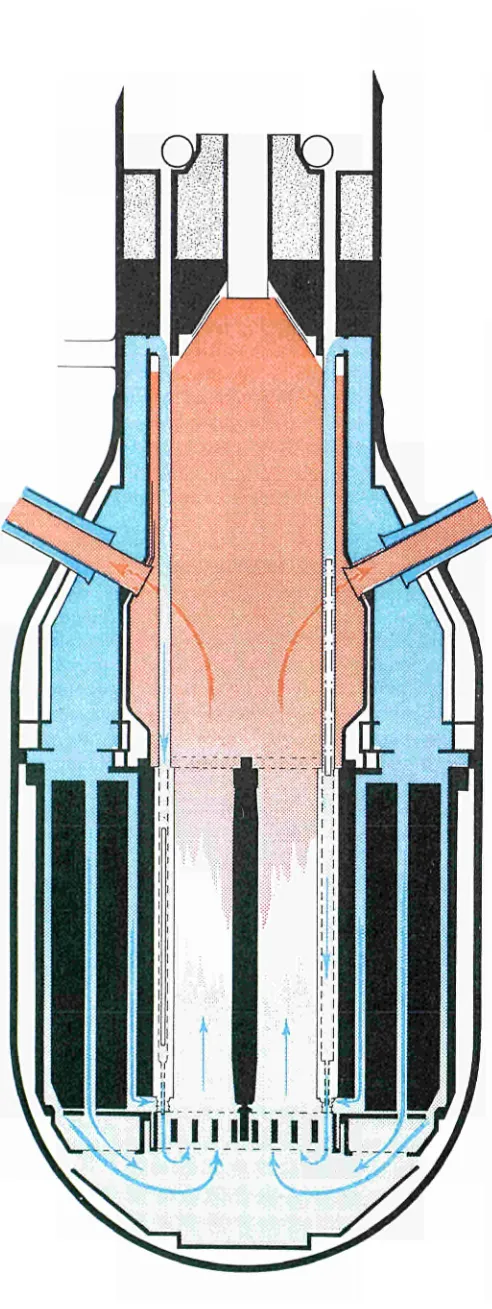
Fig. 1 Diagram of the reactor vessel showing the path of the helium coolant.
fuel-elements, whose design is being completed, will be composed essentially of graphite boxes. T h e active part in each box consists of fuel particles dispersed in a tubular shaped graphite insert which fits round a bar of the same material. These boxes will be stacked in-side graphite tubes which will be grouped in bundles of seven to form a fuel-element (see figure 2).
Thus in this type of reactor graphite has a multitude of functions : it is slowing down neutrons to the energies re-quired for efficient fission of the fuel, i.e. it acts as a
moderator. It is at the same time the main structural material
of the fuel elements, a role to which it is suited in view of its good behaviour under high temperature conditions. It also acts as canning material inasmuch as the outer casing of the boxes is primarily intended to act as a barrier to the escape of fission products.
3. Keeping the fission-products in check
Graphite suffers under the handicap of being porous, which would imply the diffusion of the emitted fission products into the main gas stream. In order to reduce this diffusion and to control more easily the contamination of the primary circuit of the reactor by these very radio-active products, a n u m b e r of systems will be adopted. T h e first is the coating of the fuel particles with a suitable material like, for instance, carbon, which could be pyro-litically deposited on their surface.
T h e second is to increase the impermeability of the graphite used for the fuel elements in order to slow down the escape of the fission products.
Thirdly, as already mentioned, a flow of clean helium will continously purge the space between the fuel tubes and the fuel boxes, carrying the fission products to a plant where they will be trapped along with normal chemical impurities.
In this way the primary circuit of the reactor will not be too radioactive and hence maintenance-work and repairs should be possible without any great difficulty. T h e problems related to this type of reactor and in particular to the treatment of the fission products are numerous and
Fig. 2 Above: A cross-section of a fuel element, emptied of its fuel boxes. The n a r r o w spaces between the rods are swept by the helium coolant.
Below : A view in perspective of an element, showing its division into seven
rods. The fuel boxes are stacked inside each of the rods.
23
often complicated ; hence a massive research a n d develop-ment programme has been necessary in the physicall chemical a n d engineering fields in order to overcome al, the difficulties, but there is every justification for these efforts in view of the advantages offered by the high temperature reactor concept.
4. Thorium
In the gas-cooled reactors operating or under construction at the m o m e n t in Europe, the fuel is natural uranium, i.e. a mixture of U-235 (0.7%) and U-238 (99.3%). U-235 is the essentially fissile isotope which is responsible for the maintenance of the energy-producing chain-re-action; thus when an atom of U-235 's sp h t by a neutron,
several fresh neutrons are produced (2.5 on an average), of which one is needed to fission a further a t o m and keep the reaction working, while the others are captured or escape out of the system. Capture normally means that the neutron is lost and serves no useful purpose, but this is not the case if it is captured by a U-238 atom, for this will lead to the production of plutonium-239, another fissile material. It is clear that if, for every atom of fissile material fissioned, one atom of U-238 were converted into Pu-239, the "conversion r a t i o " would be unity, and the a m o u n t of fissile material present in the core would re-main constant. U n d e r these ideal circumstances, the whole mass of U-238 present in the fuel elements would gradually become Pu-239 a n c^ therefore be eventually all
used u p ; the " b u r n - u p " would be complete.
Unfortunately this extremely convenient situation does not occur in the reactors I have mentioned : the conver-sion ratio is well below unity and, although new fissile material is constantly being produced, the overall stock is gradually whittled down until it is insufficient to sustain the chain-reaction. T h e r e is in any case another factor which militates against a high b u r n - u p , and that is the creation of fission-products which "poison" the reaction. In the case of DRAGON, this latter disadvantage will be reduced by the continuous removal of the fission products, from the core. As for the fuel itself it will consist of a