Rochester Institute of Technology
RIT Scholar Works
Theses
Thesis/Dissertation Collections
12-19-2014
Sustainable Packaging Design Visually Explained
Guidebook Prototype
Sara Almudhaf
Follow this and additional works at:
http://scholarworks.rit.edu/theses
This Thesis is brought to you for free and open access by the Thesis/Dissertation Collections at RIT Scholar Works. It has been accepted for inclusion in Theses by an authorized administrator of RIT Scholar Works. For more information, please [email protected].
Recommended Citation
A Thesis submitted in partial fulfillment of the requirements for the degree of
Master of Fine Arts
in Visual Communication Design
School of Design
College of Imaging Arts and Sciences Rochester Institute of Technology
Rochester, NY
Sara Almudhaf
Thesis Candidate
Approval Date
12/19/2014
Sustainable
Packaging Design
Visually Explained
Approval of Thesis
Chief Advisor
Associate Advisor
Associate Advisor
Nancy A. Ciolek
Associate Professor, Graphic Design
Signature Date
Lorrie Frear
Associate Professor, Graphic Design
Signature Date
Chris Jackson
Professor, Visual Communication Design
Signature Date
Peter Byrne
School of Design Administrative Chair
Copyright and Permissions Statement
I, ___________________________________, hereby grant permission to Rochester Institute of Technology to reproduce my thesis
documentation in whole or part. Any reproduction will not be for commercial use or profit.
Signature Date
Inclusion in the RIT Digital Media Library Electronic Thesis and Dissertation (ETD) Archive
I, ___________________________________, additionally grant to
Rochester Institute of Technology Digital Media Library the non-exclusive license to archive and provide electronic access to my thesis in whole or in part in all forms of media in perpetuity. I understand that my work, in addition to its bibliographic record and abstract, will be available to the worldwide community of scholars and researchers through the RIT DML. I retain all other ownership rights to the copyright of the thesis.
I also retain the right to use in future works (such as articles and books) all or part of this thesis. I am aware that Rochester Institute of Technology does not require registration of copyright for ETDs. I hereby certify that, if appropriate, I have obtained and attached written permission
statements from owners of each third party copyrighted matter to be included in my thesis. I certify that the version I submit is the same as that approved by my committee.
Signature Date
Reproduction Granted
iii
Abstract
Synopsis
Keywords
, it is important to keep their applications sustainable and green. Unaware graphic and packaging designers need to have an easy-to-comprehend source of information about sustainability. Developing an educational information graphics guidebook prototype has potential to serve as a unique tool for understanding the need for sustainable packaging design. The purpose of it is to eases the understanding of a complex system and enables users to discover relationships and connections among design, economy, environment, and society.
This prototype project involved designing a comprehensive sustainability symbol set where no satisfactory symbol set existed. The symbol set is intended to simplify the basics of sustainable packaging design for international audiences through educational information graphics content. A survey was conducted to gather over 600 symbols from during the design process, sketches for the symbol set were created using feedback from advisors, consultants, professionals, and students. Using biomimicry, the “golden ratio” was adapted as a grid system for
The second part of this project outlines a model for the guidebook’s the relationships, interaction, and connections between packaging design, related systems, networks, and the people involved. Section 2 of the table of contents provides a road map for the reader. In particular study. This section provided the big picture for the context of Kuwait, recommended sustainable strategies for consumer acceptance and graphic design educators, researchers, professionals, and students. Sustainability, Green, Biomimicry, Golden Ratio, Symbols, Signs, Graphic Design, Eco-design, Packaging, Infographics,
Table of Contents
Section 1 Section 2 Section 3 Section 4 Section 5 Section 6Approval of Thesis
Copyright and Permission Abstract
Introduction
Thesis Statement
Target Audience
Review of Literature
Information Design Resources Sustainability Resources Packaging Design Resources Kuwait Culture Resources
Process
Thesis Parameters Design Considerations
Final Design Application
Conclusion
Challenges and Technical Issues Final Reflection
Appendix
Survey 1: Kuwait Detergent Market Survey 2: Existing Symbols
Survey 3: Environmental Awareness Survey 4: Health Awareness
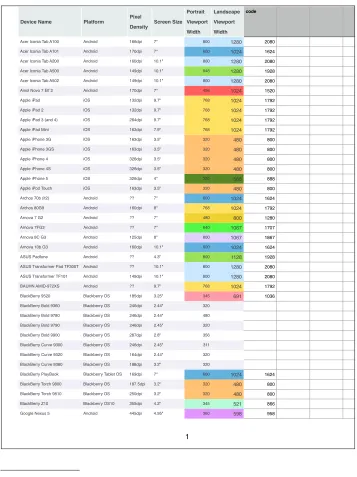
Survey 5: Existing Labels in Kuwait Survey 6: Screen Sizes and Ratios Guidebook Table of Contents Thesis Proposal Acknowledgment Bibliography i ii iii 1 4 5 10 15 16 18 22 28 29 30 32 43 225 253 327 330 334 351 374 375 1.1 1.2 2.1 2.2 2.3 2.4 3.1 3.2 5.1 5.2 6.1 6.2 6.3 6.4 6.5 6.6 6.7 6.8 v
In today’s growing issues of industrial pollutions, solid waste, climate change, depletion of resources, energy consumption, and social
distress, made the practice of sustainable and green design a necessity
and responsibility towards the planet.1 Society’s daily consumption
generate a great amount of solid waste that often ends up in landfills or
as litter causing negative environmental impact;2 especially when waste
management infrastructure in some countries has not maintained speed and efficiency with the rapid increase in consumption.
Countries with landfill infrastructures, such as Kuwait, suffer most from solid waste and household waste problems. Recent studies showed that the volume of consumption of household waste in Kuwait makes up
more than 4000 tons per day.3 Moreover, the U.S. EPA reported in 1998
that packaging generated more than one-third of the U.S. municipal solid waste stream and a recent report in 2013 indicated that only
34.7% of solid waste is being recycled.4 5 This is because of the fact
that packaging is a byproduct with a short lifespan and is being mass produced. Furthermore, most designers did not consider sustainable solutions nor encouraged consumers to reuse, refill, or recycle. Perullo claims that packaging design has been known for focusing more on
marketing and sales rather than sustainability.6Fortunately, consumer
packaging nowadays is getting much attention regarding the resources used for production and their contribution to waste.
1. Scott Boylston, Designing Sustainable Packaging (London: Laurence King, 2009), 30.
2. Unilever, “Our Waste & Packaging Strategy” in Unilever.com, last modified December 13, 2013, http://goo.gl/opazlc.
3. “4 Thousand Tons of Household Waste Per Day” in Alqabas Newspaper, last modified April 9, 2014, http://alqabas.com.kw/node/854909.
4. U.S. EPA, Characterization of Municipal Solid Waste in the United States: 1997 Update (Washington, DC: U.S. EPA, 1998).
5. United States Municipal Waste Management, "2011 Municipal Characterization Report" in UpstreamPolicy.org, last modified June 21, 2013, http://goo.gl/jAJdAN.
6. Yvette Perullo, “The Wicked World of Packaging,” Sustainable Printing Awareness Organization, in Re-nourish.com, last modified December 10, 2011,
Section 1.1 Introduction
Thesis Statement
The equation of contributing to waste systems can be redirected towards closed-loop cycles that would contribute positively to other systems
and eliminate waste, not just reduce it.7 The call for a sustainable future
requires breaking out of the old mindsets and have a wider perspective and understanding of the bigger picture.
Sustainability is a design plan that is in harmony and well habituated with the environment where economy and society's present needs are met
without compromising the ability to satisfy future needs.8 The practice
of sustainability in design will help eliminate waste, nourish nature, use local and renewable resources, and blend in harmony with the culture.
Designers should design packaging with reuse and longevity in mind.9
It should also be created for cyclically not linearly.10 It should be
cost-effective, made of local and renewable resources, safe and nontoxic, aim
at zero waste, and encourage social change.11
Biomimicry is a new science that combines the disciplines of biology and design together. It studies nature's time-tested models and uses
these designs and processes to solve human problems.12 Through
biomimicry, designers explore ways to create resource-efficient design solutions by imitating forms, systems, and elements found in nature that are well-adapted to life on earth. For example, the radiant colors found
in a butterfly wing is created by structural colors rather than pigments.13
Another example is hollow hexagon structures found in beehives are known to be structurally very strong forms that uses maximum amount of space with minimal amount of material and energy as Charles Darwin
described it "economizing labor and wax."14
7. William McDonough and Michael Braungart. Cradle to Cradle: Remaking the Way We Make Things. 1st ed. New York: North Point Press, 2002.
8. United States Environmental Protection Agency, “What Is Sustainability?” in EPA.gov, last modified December 13, 2013, http://goo.gl/w1i60.
9. Aaris Sherin, SustainAble: a Handbook of Materials and Applications for Graphic Designers and Their Clients (Beverly, Mass.: Rockport Publishers, 2008), 19.
10. Ibid. 11. Ibid.
12. Biomimicry 3.8, “About Biomimicry.” in Biomimicry.net, last modified 2014, http://goo.gl/MGTx0f.
13. Tom Vanderbilt, “How Biomimicry Is Inspiring Human Innovation” in SmithsonianMag.com, last modified September 2012, http://goo.gl/WpnrX0.
14. Robert Krulwich, “What Is It About Bees And Hexagons?” in NPR.org, last modified May 14, 2013, http://goo.gl/Wo0S7.
2
Need
Research Question
Scope
As the fields of graphic and packaging design continue to evolve, it is important to keep their applications sustainable and green. Unaware graphic and packaging designers need to have an accessible, easy to comprehend source of information about the subject of sustainability.
The concern raises the question about the best method and application to explain and deliver the subject of sustainable packaging design for designers with little or no understanding of sustainability. In addition to the type of information the reference should include to satisfy and meet the needs of the intended audience (Section 1.2 – Target Audience).
Sustainable and green graphic and packaging design references are currently present in forms including written text, videos, and imagery (Section 2 – Review of Literature). Nevertheless, developing an educational information graphics guidebook prototype that eases the understanding of a complex system and enables users to discover relationships and connections among design, economy, environment, and society has potential to serve as a unique tool for understanding and applying the principles of sustainable packaging design.
This prototype project involved designing in a sustainable manner a new and comprehensive sustainability symbol set where no satisfactory and complete symbol set existed. The symbol set is intended to simplify the basics of sustainable packaging design for international audiences through educational information graphics contents. It is also intended for use throughout the guidebook content as bookmarks to identify sections.
The second part of this project outlines a model for the guidebook structure and content. The scope of the guidebook content covers packaging for detergents and cleaning products as daily household consumables. The content of this research excluded all packaging categories that fall under food, drugs, or cosmetics because they require complex understanding of chemistry since they get in direct contact with the human body.
Section 1.2 Introduction
Target Audience
The final guidebook will benefit the personas listed below. Each group of audience presents different limitations, needs, education and experience levels. However, they all share the need to gain the basic knowledge about biomimicry and sustainability as they have little or no understanding of biomimicry and sustainability in graphic and
packaging design. Another common characteristic is they all have the ability to read English and symbols as a universal visual language.
Graphic Design Educator or Researcher
20s–And Above
Extremely knowledgeable and experienced in the field of visual
communication design. Specialty: information graphics, system design, layout and grid structure, typography, or packaging design.
Introduce biomimicry and sustainability in teaching
Uses a computer / laptop / tablet to read books and documents
Graphic Design Professional
20s–And Above
College degree or self-taught with a career relating to graphic or packaging design.
Mass production of projects in print and packaging design
Reduce cost, cut down waste, practice responsibly, nourish nature, create awareness, and meet cultural needs.
Does not have time to read long and complex textbooks
Uses a computer / laptop / tablet to find online resources and inspiration
Graphic Design Undergraduate Student
16–23
General knowledge in the field of visual communication design. Little or no professional experience.
Learn responsible practices in graphic and packaging design Have short attention span and does not want to read a full textbook Uses a computer / laptop / tablet to find online resources and inspiration
Persona #1 Age Range Experience Needs Technical Skills Persona #2 Age Range Experience Involvement Needs Limitations Technical Skills Persona #3 Age Range Experience Needs Limitations Technical skills 4
The following are excellent resources for building knowledge about biomimicry, sustainability, packaging, and information design. In addition to resources about the consumer culture in Kuwait, as a case study, will provide a social context for applying this understanding. Those valuable resources draw attention to theoretical approaches including environmental impacts of print and packaging design, ethical practices in design, principles of green and sustainable design, and the ecology of print design. In addition, technical design features including biomimicry in design, material choices, ink usage or type techniques that use no ink, as well as ink-saving typography design.
Ehmann, Sven, Stephan Bohle, and Robert Klanten. Cause and Effect:
Visualizing Sustainability. Berlin: Die Gestalten Verlag, 2012.
This book provides information that focuses on behavior change and creating environmental awareness. It shows a new visual language represented for sustainability. It explains that sustainable practices are not an option but a necessity. As such, designers and business owners are increasingly pressing this topic. A wide range of target audiences have to be persuaded of the importance of a conscious lifestyle. The authors believe that a new visual language must be found for this topic because the traditional understanding of environmentalism is no longer effective. This book is a collection of work from around the world that displays reliable and understandable contemporary visual language for communicating sustainability. The examples presented in this book get the message across by utilizing graphic design, information graphics, illustrations, and photography. The examples in the book inspire graphic designers and challenge consumers. They describe relationships and complex technical processes serve as a unique presentation of the most significant, intelligent, and entertaining communication standards and proposed solutions for sustainability today.
Section 2.1 Review of Literature
Information Design Resources
Abdullah, Rayan, and Roger Hübner. Pictograms, icons & signs: A guide to information graphics. New York; London:
Thames & Hudson, 2006.
Symbols are the origin of non-verbal and multicultural communication. This book defines pictograms, explains the appropriate use of them and their advantages. The authors also show the technicalities for building them along with pictogram design rules and principles. In addition to the traps that symbol and pictogram designers must bypass. This book displays examples from around the world outlines the history of pictograms and shows their uses in commercial and creative fields over the past century. It also offers invaluable hints and advice to designers. The book features tips from successful pictogram designers, with real-life examples to instruct and inspire. It discusses icons in detail in the chapter about the quest to create a visual language that crosses all grammatical, semantic, and semiotic boundaries in order to build a language of non-verbal communication methods.
Wildbur, Peter, and Michael Burke. Information graphics: Innovative solutions in contemporary design. New York: Thames and Hudson, 1998.
This book offers a wide range of international selection and successful contemporary design examples in transportation systems, maps, databases, three-dimensional renderings, and electronics manuals with informed commentary. It focuses on the importance of structure, organization, and presentation of information whether faced with masses of material or sophisticated sign systems. It explains the process
of arriving at useful and aesthetic solutions which make complex information appear simple, accessible, and available to particular audiences. The authors offer detailed analysis on each design solution, how it responded to the client's needs, and why it succeeds. Including every chapter are case studies that explore each project in depth, from the client's request to the completed product.
6
Dreyfuss, Henry. Symbol sourcebook: An authoritative guide to international graphic symbols. New York: Van Nostrand Reinhold Co, 1984.
This resource recognizes the significance of symbols in delivering faster and more efficient message. The author and his team gathered and classified visual symbols from all areas of people's daily lives throughout the world. The book is very functional and easy-to-use. The author arranged the symbols within sections that are easy to grasp. The basic symbols section outlines standard symbols such as on-off and up-down. The disciplines section, for example, displays symbols used in business, travel, safety, traffic controls, agriculture, communications, engineering, photography, sports, and architecture. In color, the psychological
meanings behind using colors in applications worldwide and in particular cultures. Whereas, in the graphic form section, symbols across
disciplines are grouped based on their forms, for instance, squares, circles, arrows, and human figures. This book serves as a set of criteria and a frame of reference for designing new symbols.
United States Department of Transportation. Symbol signs: The system of passenger/pedestrian oriented symbols developed for the U.S. department of transportation. New York: Hastings House, 1981.
San Martin, Macarena. Diagraphics. Enfield; New York: Harper Design, 2011.
Organizing information, especially complex information, is not a simple task. This book showcases successful design solutions in varied applications such as maps, sketches, diagrams, and graphs. Even though the designers who are displayed in the book are international, they express universal messages and themes through information design. Their work illustrates how a single idea can be executed in numerous, various, and unique ways, while sustaining the design's main purpose to organize and communicate complex information in an easily obtainable and engaging way.
Klanten, Robert, Nicolas Bourquin, and Sven Ehmann, eds.
Data Flow: Visualising Information in Graphic Design.
Berlin: Gestalten Verlag, 2008.
Wherever complex information is present, the need for information visualization becomes apparent; symbols, diagrams, pie-charts, histograms, and maps make information faster and easier to digest whether it is a book, magazine, business report or exhibition. The Data Flow book shows varied possibilities in visualizing data and information. The examples shown are not limited to classical representations of information, but there are numerous types of diagrams designed for different cases and categories. These range from chart-like diagrams, graph-based diagrams, and molecular diagrams to complex three-dimensional diagrams. Some examples include complex data thus making the final solutions appear as abstract art forms while others contain simple data, therefore, adding more functionality and readability to the outcome. The book also outlines and explains various methodologies for solving problems concerning complexity, simplification, and readability.
8
Katz, Joel. Designing Information: Human Factors and Common Sense in Information Design. Hoboken, N.J.: John Wiley & Sons, Inc, 2012.
The author applied the understanding of information design throughout the content of this book. The book itself is inspirational in terms of the organization of complex visual and verbal information. It outlines methods for designing complex data while still maintaining meaning, relevance, and clarity. In addition, illustrations include real-life examples and problems as well as provide a historical dimension to demonstrate concepts, hypothesis, and human-factors driven information design. Both successful and failed design case studies are introduced to help readers understand the design principles under discussion. This resource is very clear, organized, easy to follow, and understand for designers in all fields.
Katz, Joel. “Designing for Understanding Issues in Information Design.” presented at the 2013/2014 Lecture Series: Design Conversations, Vignelli Center for Design Studies, Rochester Institute of
Technology, March 18, 2014.
Jedlicka, Wendy. Packaging Sustainability: Tools, Systems, and Strategies for Innovative Package Design. Hoboken, N.J.: John Wiley & Sons, 2009.
This book describes how to take the lead with sustainable packaging design solutions. Producing sustainable packaging is an essential part of today’s global dynamic market. This reference is a comprehensive, single source of actionable information, written by experts from a wide variety of fields. This book will enable designers to make smart decisions and create new possibilities for truly innovative solutions. It describes environmental impacts for designers to consider in their early design process. It is not solely about materials; it incorporates all aspects of packaging: functionality, aesthetic quality, and life-cycle. This book looks at packaging from every aspect. It presents the inter-connectivity of packaging, methods, and human influences. This resource is essential for understanding sustainable packaging design, its techniques,
and processes.
Wann, David, and Center for Resource Management. Deep Design: Pathways to a Livable Future. Washington., D.C.: Island Press,1996.
This book concentrates on the ultimate goal before working on the first step in the design process. Design that start with such focus are sensitive to living systems and can potentially fulfill their mission without negative environmental, social, and economical impacts. Such profound designs fit the fundamental principles of recyclability, renewability, and non-toxicity. Usually based on natural systems, they are straightforward and provide more refined approaches to getting the services and
functions needed. This book offers information from innovative designers in a wide variety of fields. It outlines numerous case studies that
demonstrate the theory and practice of deep design.
Section 2.2 Review of Literature
Sustainability Resources
10
Brian, Dougherty, and Celery Design Collaborative. Green Graphic Design. New York: Allworth Press, 2008.
This book breaks down the concept of green design in simple steps. It reframes the way designers think about the work they produce while remaining focused on cost restraints and corporate identity. The author demonstrates simple eco-innovative developments in the design process stages. This resource involves selecting projects, strategizing with
clients, and choosing materials for manufacture and shipping. In addition, understanding users, printing choices of ink and paper, binding, packing, building strong brands, and working with clients to promote transparency and social change. The author filled this book with illustrations and case studies of green design implementation. This reference guide provides a comprehensive glossary of fundamental terminologies and resources to assure that any designer can perform practical green solutions. This book is a vital resource for graphic designers willing to view to the future of business and the environment.
Boylston, Scott. Designing Sustainable Packaging.
London: Laurence King, 2009.
Sherin, Aaris. SustainAble: a Handbook of Materials and Applications for Graphic Designers and Their Clients. Beverly, Mass.: Rockport Publishers, 2008.
Sustainable design is gaining prominence as a crucial issue for the future of current design practices at design schools and professional design conferences. Graphic designers and clients are frequently demanding sustainable solutions. Designers want to approach these needs when presenting their work for consideration. As companies continue to accommodate to and provide environmental solutions with their goods, they require it from their creative partners. For that reason, designers need to be well informed and on the forefront of these initiatives. This book will provide designers with information to be leading on
sustainability issues and inform them on sustainable applications such as paper, printing, formats, materials, inks, and executions.
Carver, Jessicah, Natalie Guidry, and Melissa Brumer. Rethinking Paper & Ink: The Sustainable Publishing Revolution. Portland, Or.: Ooligan Press, 2011.
This book contributes critical research about the book-publishing industry and examines approaches to achieve sustainable practices. Through comprehensive research and experience in the professional field, the authors practiced the concept of sustainability throughout the design production of the book, reviewing the environmental impacts of editing, printing, marketing, distribution, and both print and digital sales. This book includes a detailed record of the choices to produce a book. It also features business profiles that highlight individuals and businesses representing sustainable standards.
12
McDonough, William, and Michael Braungart. Cradle to Cradle:
Remaking the Way We Make Things. 1st ed. New York: North Point Press, 2002.
This book paints an entirely unique philosophy and practice of production and environmentalism. The authors argue in their idealistic book that the “reduce, reuse, and recycle” approach preserves a linear direction, “cradle to grave” production model. This design-minded model begins with the industrial revolution and accounts for 90 percent of the material used as waste. The authors examine the assumption that human industry must surely damage the natural world. They then use nature as a model for sustainable design. For example, a tree produces thousands of blossoms in order to create another tree; its excess is not considered wasteful but safe, beautiful, and highly effective. From this example, the book introduces “waste equals food” as the first sustainable principle. They argue that products should be designed to enrich and benefit something new after their first life is over, either as biological nutrients that go back to nature or as technical nutrients that go into an industrial closed-loop cycle for reproduction. Of course, this industrial cycle would not down-cycle or reduce the materials quality like the recyclables of today. Elaborating their principles from experience, the authors address an inspiring and viable case for change.
Stephens, Suzanna M. W, and Anthony B. Stephens, eds. The Big Book of Green Design. 1st. ed. New York: Collins Design, 2009.
American Institute of Graphic Arts. “Print Design and Environmental Responsibility” no. 7. AIGA Design Business and Ethics Series (2003): 28. http://goo.gl/QjxzsM.
This series encounters significant ethical and professional regarding designers and their clients. This brochure presents graphic designers with an introduction to design and print production practices that express challenges of critical issues of today: the balance between economic profit and environmental degradation. For design to be responsive to a client’s requirements, it should be responsible and suitable. This issue includes best-practices tips and resources that will improve the ability to design and print responsibly. Social responsibility has economic and environmental dimensions. Sustainable design has become a term-of-art for developing economic activity without harming the future’s potential. Exhibiting respect for these consequences is no longer a fringe matter. Designers should perform reliable communication methods to serve customers efficiently.
Fuad-Luke, Alastair. 2004. “Chapter 3: Materials.” In Eco-Design: The Sourcebook, Rev. ed. San Francisco: Chronicle Books.
For people planning to adopt an eco-friendly lifestyle without losing quality, this book is the ultimate one-stop materials resource. This edition of this comprehensive sourcebook includes listings for various consumer products that have a minimal impact on the nature while remaining beneficial and attractive. This book has an extensive index reference section presenting detailed and illustrated entries of eco materials, and another part provides information on manufacturers, design studios, and green organizations.
14
Capsule. Design Matters: Packaging 01: An Essential Primer for Today’s Competitive Market. Design Matters. Beverly, Massachusetts: Rockport Publishers, 2008.
This book concentrates on creating, improving, and executing package designs from a marketing perspective. The design bar is always high for those confident to engage in the industry. Today’s designers must educate themselves on all the actions needed to create designs that standout in an increasingly competitive market. This book takes an in-depth strategy, enabling designers to discover how to create work that is aesthetically appealing, strategy-driven, and intelligent.
Edward Denison, and Richard Cawthray. The Big Book of Packaging Prototypes: Templates for Innovative Cartons, Packages, and Boxes. Switzerland: RotoVision, 2010.
This book is a reference that provides a visual inspiration for the creation of attractive packaging designs. The various types of carton templates demonstrate the diversity of packaging possibilities. This book covers product appropriateness and distinguishing features for each design, and a system of symbols provides ease of access to information to all design aspects, from their ecological connections through to their material suitability. Authoritative essays feature the principles of packaging, along with the concerns and challenges encountered by contemporary packaging designers. A beneficial guide includes all the main kinds of closure and quick reference list abstracts traditional packaging materials and their typical uses.
Section 2.3 Review of Literature
“Kuwait Central Statistical Bureau.” State of Kuwait. CSB.gov.kw.
Accessed December 12, 2013. http://www.csb.gov.kw.
This resource provides statistical facts about different domains in Kuwait. The Annual Statistical Abstract includes statistical data that cover many economic and social activities in Kuwait. This report is one of the most-important official references of statistical data in the country. This report includes the most-relevant up-to date data published by the Central Statistical Bureau, in addition, to other data provided by ministries and governmental organizations in Kuwait. It examines quantities and qualities of residential, commercial, agricultural, and construction wastes. The General Census of Population is another important source for population data. It provides detailed data on population size and demographic, economic, and social characteristics. This dataset will be very useful for the creation of economic and social development plans. Another essential report is the Household Income and Expenditure Survey. It identifies the products and services consumed by different levels of society. It also classifies consumer spending in several goods and services categories.
“Our Environment: Kuwait Official Environmental Portal.” Environment Public Authority, State of Kuwait. Beatona.net.
Accessed December 12, 2013. http://www.beatona.net.
This website database is an excellent resource for journals, maps, articles, reports, and photo albums related to Kuwait’s environments. The Waste Management section of the website provides 159 journal issues and 72 articles about waste in general. Number of articles discuss sustainability actions, household waste, and disposal infrastructure. This resource provides factual and statistical information describing the past, current, and future situations and plans of Kuwait’s environment.
Section 2.4 Review of Literature
Kuwait Culture Resources
16
Conclusion
Kuwait Municipality. Baladia.gov.kw. Last modified July 24, 2014.
Accessed August 2, 2014. http://www.baladia.gov.kw.
Kuwait Municipality's official website presents resources that would help complete the picture of Kuwait legal boundaries for environmental actions and waste behaviors. Although the website is poorly designed and disorganized, it holds very useful resources for this research area. It outlines the responsibilities of the administration of environmental affairs in Kuwait such as municipal solid waste treatment and utilization projects, studies of municipal landfill waste, banning non-biodegradable plastic bags and regulations for hygiene and waste transportation.
“Environment Public Authority, State of Kuwait.” EPA.org.kw. Accessed July 31, 2014. www.epa.org.kw.
This resource covers established laws, policies, and standards in Kuwait regarding the environment. It has information about Kuwait's local
environment condition, provides a comprehensive database that includes digital maps. Additionally, an environmental Atlas is available for the six governorates in the State which provides data related to water, soil, and air. Furthermore, there are digital satellite maps for all regions in Kuwait.
Packaging of Detergent and Cleaning Products
While researching the subject of sustainable packing, it became apparent how complex and scientific the subject is. Narrowing the subject to the basic level of packaging became necessary to meet the needs of the intended target audience (Section 1.2 –Target Audience). The subject was narrowed down to non-food, non-drug, and non-cosmetic daily household consumables. Products under those categories are intend to get in direct contact with the human body, which the U.S. Food and Drug Administration further described in the following quotation:
The Federal Food, Drug, and Cosmetic Act (FD&C Act) defines cosmetics by their intended use, as "articles intended to be rubbed, poured, sprinkled, or sprayed on, introduced into, or otherwise applied to the human body . . . for cleansing, beautifying, promoting attractiveness, or altering the
appearance." The FD&C Act defines drugs, in part, by their intended use, as "articles intended for use in the diagnosis, cure, mitigation, treatment, or prevention of disease" and "articles (other than food) intended to affect the structure or any function
of the body of man or other animals."15
When chemicals get in contact with the human body, the responsibility requires advance level of understanding in chemistry to assure health and safety of consumers. For example, it is important to understand the connection between shelf-life and the migration of packaging chemicals into the packaged product when designing packaging for food, drugs, or cosmetics.
This finding brought the scope down to detergent and cleaning products related to windows, counter tops, dishes, floors, and laundry. Detergent and cleaning products does not require deep understanding of chemical compounds because they are not intended for use on the human body. Thus, the subject is simple and easy to comprehend for designers with no background in chemistry.
15. U.S. Food and Drug Administration. “Is It a Cosmetic, a Drug, or Both? (Or Is It Soap?)” in FDA.gov, last modified April 30, 2012, http://goo.gl/LkSmXl.
Section 3.1 Process
Thesis Parameters
Scope
18
Guidebook Table of Contents
Prior to the investigation of sustainable and green design for this thesis project, I considered myself as one of the research's audience (Section 1.2 – Target Audience) since I had very little understanding about the subject. My need to understand the basics of sustainable packaging design helped me put together section 1 of the table of contents
(Appendix 6.7 – Guidebook Table of Contents). Throughout the process of acquiring knowledge about sustainable packaging and print design, I came across resources that were easy to comprehend and others that were complex. Complex resources required prerequisite knowledge to be able to grasp the content whereas simple resources reflected basic information and were rich with verbal and visual examples. Section 2, was developed by conducting four culture specific surveys on Kuwait as a case study.
Section 1: Theory
Part 1: Ecology System (The Bigger Picture)
Part 2: Unintended Consequences & Consumer Behavior Part 3: Sustainable Strategies Around The World
Part 4: Methods of Evaluation & Assessment Part 5: Materials and Production
Part 6: Case Studies
Section 2: Road Map (Practice)
Part 1: Kuwait’s Infrastructure
Part 2: Kuwait Consumer Culture & Behavior Part 3: Packaging Strategies for Kuwait Part 4: Case Studies
The first section of the guidebook was developed to provide a
theoretical base to enable the reader to see the relationships, interaction, and connections in the bigger picture of packaging design related
systems, network, and the people involved. This guidebook does not intend to provide a one-size-fits-all model; however, it demonstrates how sustainability is tied closely to its context and surrounding. This section means to identify the different sustainable strategies adopted in different parts of the world and explain clearly the fact that a strategy that is sustainable in one country may not be sustainable in another. In support of this notion, this section will showcase existing sustainable approaches for packaging design, describing the logic behind their design decisions
Table of Contents
Section 2
In addition, the guidebook aims to point out downsides of unsuccessful methods that were performed in the past by corporations alongside consumer behavior change. Furthermore, this section intends to focus on creative labeling as means for consumers to engage in the pursuit of good. Labeling that educates, informs, raises awareness, and helps consumers participate in making responsible decisions. Moreover, it is planed to have a part dedicated to list responsible, safe, non-toxic, renewable resources, and production techniques including but not limited to ink-efficient production, ink-less typography and graphics such as laser, die-cut, and embossing, and biodegradable and recyclable materials. Data was collected for the previously stated chapters but was not included in the appendix because it was not germane to the purpose of this prototype.
Case Study: Kuwait
Section 2 was developed to provide a road map for the reader and a practical real-life application for a particular culture. For this project, Kuwait was chosen as a case study for two main reasons. First, the lack of awareness and practice of sustainability in the country as a whole. Also, the high need of raising the awareness in the Arab region at large. Second, my existing knowledge and experience of the Kuwaiti culture and context as a Kuwaiti citizen. Part of this section intends to explore the context of Kuwait such as existing laws, policies, consumer culture, adaptability, or resistance to change, resources, energy, waste infrastructure, technology, ecology system, the people involved in packaging, etc. The previous listed data was collected for the purpose of developing the guidebook's table of contents, however, it was not covered in the appendix since it was not pertinent to the scope of
this prototype.This part aims to provide the big picture or the context
of Kuwait and recommend effective sustainable strategies based on consumer acceptance and adaptability from survey results (Appendix 6.3 – Survey 3: Environmental Awareness). In addition, this section means to display current packaging types (Appendix 6.1 – Survey 1: Kuwait Detergent Market), labeling (Appendix 6.5 – Survey 5: Existing Labels in Kuwait), and their limitations in order to suggest solutions that would align with consumer needs and expectations (Appendix 6.4 – Survey 4: Health Awareness). Moreover, it intends to use consumer values and habits to the advantage of achieving desired behavior outcomes towards acceptability and positive change. For example, explore reasons for consumer decision to reuse certain packaging rather than others.
20
Sustainable Packaging Symbol Set
The major part of this thesis project covers a universal design for a 45 symbol set for packaging sustainability. The data collection and evaluation process was inspired by the American Institute of Graphic Arts (AIGA) Symbol Signs book designed for the U.S. Department of Transportation. A comprehensive survey was conducted to gather existing symbols (Appendix 6.2 – Survey 2: Existing Symbols). Soon after the collection was refined and evaluated, a symbol system was developed using biomimicry or design inspired by nature. The golden ratio was adopted as a grid system for unity and solidity, in addition, to its effective use of space and ink. During the design process, sketches and ideation were generated, feedback from advisors, consultants, professionals, and students were taken into account to enhanced the development of the comprehensive sustainable packaging symbol set. The symbol set is intended for use in information graphics to help explain the subject of sustainable packaging visually throughout the guidebook.
Section 3.2 Process
Design Considerations
Introduction
Inspiration
Building a thesis about biomimicry and sustainability in visual
communication design, specifically packaging design, was a rewarding opportunity. It is vital for today's expanding consumer market, industrial pollutions, and climate change to gain the necessary knowledge
and rightful practices. Resources pursued in Rochester Institute of
Technology (RIT) were invaluable. Knowledge-building resources were not limited to books, journals, and dissertations in the subject of sustainability at the RIT Library, as mentors from RIT in the fields of sustainable
packaging science and industrial design enriched and enhanced my whole experience. The information graphics guidebook intends to exhibit a contemporary visual language for sustainability, a unique learning tool that simplifies complex data for designers who are new to the subject and want to practice in a responsible manner.
My previous experience in building the MEDesign: Human Health book at RIT provided excellent foundation and inspiration for this thesis
project.16 This book serves to educate the layperson about health
issues and complex systems in the human body. The primary method used to ease the understanding was through information design pieces that communicated the main idea as well as small and easy-to-digest portions of text to support the visuals. This book will greatly influence the direction of the guidebook.
Another inspiration was the Cause And Effect book.17 This book
showcased outstanding worldwide examples of contemporary
information visualization approaches. Some of those applications were campaigns, posters, brochures, and digital media. Projects mainly focused on raising awareness and education, which encouraged moving towards the information graphics guidebook project.
16. Sara Almudhaf, Rui Ma, Bochuan Li, Jia Cai, Xun Zhao, Wenyu Ouyang, Scott Howard, et al. MEDesign: Human Health, ed. by Bruce Ian Meader (Rochester: Vignelli Center for Design Studies, 2013), http://goo.gl/HF08EZ.
17. For more information, please read Section 2.1 Literature Review, 5.
22
Moreover, a conference titled Biomimicry in Architectural Design, held at The Royal Danish Academy of Fine Arts in Copenhagen, emphasized the importance of learning to do things the way nature does. Nature, as Pawlyn described it, is a sourcebook of successful solutions that have
been researched and developed through millions of years.18 He showed
and explained that hollow structures in biology are stronger and more efficient in saving on resources. Another example was the Caviar Project; it illustrates a simple ecological system that aims at producing zero waste
achieved by collaboration.19 This finding added a dimension of biology to
the thesis that inspired exploring successful solutions in nature for design applications.
Furthermore, Ecofont, an ink-saving typeface, mimicked nature and applied the hollow structure concept to prove the effectiveness of a
design inspired by nature.20 In addition, the University of Wisconsin
saved 30% on ink and toner when switching from Arial to Century Gothic
because it uses thinner print lines.21
18. Michael Pawlyn, “Biomimicry in Architectural Design” presented at the 5th VELUX Daylight Symposium, The Royal Danish Academy of Fine Arts, Copenhagen, May 15, 2013, www.youtube.com/watch?v=wdoriWPaaDI.
19. Ibid.
Biomimicry was adopted for this project as an approach for innovation through copying nature's time-tested models and designs in order to
achieve sustainable solutions to human challenges.22 Therefore, the
golden ratio was adopted from nature and applied to build the structure of the symbol set in order to design unified, balanced, ink-efficient, aesthetic, visible, and readable symbols.
The golden ratio is a precise mathematical proportion measurement
operating as a universal law in nature.23 It operates as the true ideal
measures in the areas of both nature and art.24 The golden ratio holds the
ground principle of all structures, forms, and proportions whether organic
or inorganic that strive for beauty and perfection.25
Researcher Zeising claimed to have found the golden ratio in its fullest
realization in the human form as well as plants.26 He extended his
investigation to the proportions of animals, chemical compounds, in
addition to leading man-made artworks and architectural forms.27 The
golden ratio is found in the skeleton of the human body. The Apple logo, as an example, is designed and constructed using the golden ratio.
22. The Biomimicry Institute. “What Is Biomimicry?” in Biomimicry.org, November 24, 2014. http://biomimicry.org/what-is-biomimicry.
23. Richard Padovan, Proportion: Science, Philosophy, Architecture, (London: Taylor & Francis, 1999), 305–06.
24. Ibid.
25. Singer, Alan E. "Sustainable Art and Human Systems." Sustainability: The Journal of Record 6, no. 3 (2013): 171-175.
26. Ibid. 27. Ibid.
Structure & Grid System
24
Existing Sustainability Symbol Set Development Process and Evaluation Basis
This study offers a visual recommendation of 45 symbols that help explain the subject of sustainable packaging design and simplify basic messages to graphic and packaging designers who are unfamiliar with sustainability concepts and practices. This study introduces a new and comprehensive symbol set where no satisfactory ideas exists. This symbol set took three stages to be developed.
First stage in this project was to collect existing and commonly used symbols with qualities of immediacy and recognition to many people.
The second stage used the semiotic evaluation method to analyze the three primary dimensions of a visual design:
Semantic–Meaning
The relationship of the visual design to meaning conveyed.
Syntactic–Form
The interrelationship among parts of the visual design such as size, shape, weight, contour, figure/ground, massing, tone, texture, position, orientation, and color.
Pragmatic–Technical
The relationship of the visual design to the user in terms of visibility, readability, legibility, lighting conditions, viewing distances, and the practical aspects of fabrication, manufacturing and production processes.
This evaluation was performed through discussions with thesis advisors and consultants, and graduate-level graphic design students.
Finally, setting up a grid system and design principles to redesign the complete and unified sustainable packaging design symbol set.
Data Collection
Data Evaluation
Survey of Existing Symbols
From readings and advisors feedback, a keyword list was created to identify the major symbols needed to explain the big picture of sustainable packaging design. Data were color coded and visualized to easily categorize major and minor symbols (Appendix 6.7 – Guidebook Table of Contents).
Three revisions were generated for the existing symbols to find the best representational group of symbols for the keyword. Around 700 symbols were gathered from royalty free websites and symbols in the public domain. Then, existing symbols were evaluated and reviewed by advisors, consultants, and design students to opt out unsuccessful symbols and combine effective ideas in a new symbol design.
1
2
3
Stopwatch Semiotic Evaluation
Groups Concepts Semantic Syntactic Pragmatic 1 Watch with numbers
2 Watch without numbers 3 Watch with duration
Summary
The number indicators are functional except that they make the form busy and hard to read when scaled down. The design style is straightforward, simple, and uniform. The design form allows the form to be scaled down and still maintain its quality and readability. However, there is no indication for passed duration. The duration is clearly indicated through the symbols design, which delivers the meaning effectively. However, the form becomes too busy when scaled down.
Adopt the design of group 2 and the functionality of group 3.
Stopwatch Existing Symbols
1 2 3 4 5 6
Primary Existing Symbols
Packaging Royalty Free
1
2
3
4
Secondary Existing Symbols
Packaging Royalty Free
26
Design Ideation
Designing a New Comprehensive Symbol Set
Below are sample sketches were created based on features and qualities identified and discussed during the evaluation process for the keyword Industry. Further sketches and design process can be found in (Appendix 6.2 – Survey 2: Existing Symbols).
Using the golden ratio as base and structure, a simplified form was designed to represent the visual vocabulary for Industry.
13 8 5 3 2 1
golden
ratio
bio
mimicry
This section features the final design of the 45 packaging sustainability symbols. For additional design process images, please view Appendix (Section 6.2 – Survey 2: Existing Symbols).
Section 4.1 Results
Final Design Application
Efficiency Energy Solar Energy Tidal Energy Wind Energy
Toxins Health Coal Gas Oil
Government Retail Institution Profit Cost
Factory Process Warehouse 2nd Packaging 1st Packaging
Extraction Cargo Truck Cargo Train Cargo Ship Cargo Plane
Walking Bicycle Motorbike Car Bus
Sun Global Warming Deer Fish Bird
Time Designer Media ShoppingOnline Shopping
Water Forest RenewableResources Disposal Recycle
symbol
set
28
During the proposal, little research was conducted on existing symbol sets for packaging and sustainability. It was anticipated for the guidebook to use existing symbols to create the visual explanation designs.
However, after researching in this area, it was found that no satisfactory comprehensive symbol set existed. The focus of the thesis shifted to designing a complete packaging and sustainability symbol set consisting of 45 symbols to be used throughout the guidebook.
The process of designing the symbol set was partly inspired by the AIGA "Symbol Signs" book designed for the U.S. Department of Transportation. This book reveals five-year effort of a design team to accomplish a universal 45 symbol system project wayfinding systems for airports and train stations. Whereas, the sustainability symbol set of this thesis project was designed in a 5 month time frame. The research and design process of the symbol set took much time from designing the guidebook content. However, a good sense of direction was established through conducting surveys and analyzing the results.
Throughout this project, a few technical issues were encountered by survey participants, which prevented 75 surveys from being completed. The survey was distributed through cell phone text messaging service and social media. Most technical issues were encountered with the use of cell phone internet browsers and loss of internet connection. Because the survey is programmed to accept one participant per IP Address, participants who closed the browser and reopened it or lost connection were taken to the last page of the survey automatically after the page was refreshed.
Another technical issue was faced in the process of this research
documentation. As more pages were added to the document the slower the computer processes and the more crashes occurred to the Adobe InDesign software.
Section 5.1 Conclusion
The development of the guidebook prototype was a great learning experience. It has potential to continue on after thesis with possibility for publication and short video development.
Extensive research, content collection, and organization took place in gathering information to direct the guidebook's table of contents as well as develop the symbol set system. The knowledge and
experience acquired from conducting surveys was invaluable. Accuracy of information illuminates a true path of possibilities and eliminates uncertainty. The collection process allowed for deep exploration and new level of appreciation for sustainable packaging design, biomimicry, and information graphics.
A practical understanding for the golden ratio and system design was acquired during the development of the sustainability symbol set. A great level of skill in technical illustration and precision in measurements was learned in order to create a highly balanced and systematic set. A highly valued, critical step in the process was the interaction, discussion, and critique during the development of the set.
The final guidebook has potential to serve as a comprehensive hands-on guidebook providing all the research, processes, and findings through the documentation of this thesis and beyond this time frame. This prototype project will continue to progress so that it could reach and fulfill its vision.
Based on consumer comments and requests regarding package labeling, new questions have emerged such as (1) how can package labeling become more visible, readable, and engaging? (2) can package labeling change its application from print to digital? (3) will information graphics encourage consumers to read labels? (4) can label design educate and inspire behavior change?
According to feedback from advisors, possibilities for future application other than the printed and digital guidebook have surfaced such as educational short infographics videos and board games whether digital or physical. Learnings New Questions Future Consideration
Section 5.2 Conclusion
Final Reflection
30
Survey 1: Kuwait Detergent Market Survey 2: Existing Symbols
Survey 3: Environmental Awareness Survey 4: Health Awareness
Survey 5: Existing Labels in Kuwait Survey 6: Screen Sizes and Ratios Guidebook Table of Contents Thesis Proposal
32 43 225 253 327 330 334 351 6.1
6.2 6.3 6.4 6.5 6.6 6.7 6.8
Section 6 Appendix
Section 6.1 Appendix
Survey 1
Survey 1 Brief
Snapshots
Kuwait Detergent Market
The sample of this survey is focused on detergent products sold in Alsurra Co-opetive Society in Kuwait. Products sold in this or any Co-opetive Society in Kuwait are approved and imported by The Union of Consumer Co-operative. In other words, the sample products that are found in Alsurra Co-op are also found in all Co-ops in all areas in the country. This survey aims to identify the existing types of packaging used and sold in Kuwait consumer market. A total of 77 snapshots of all types of detergents were taken from the shelves in Alsurra Co-op.
Detergent Products Packaging in Alsurra Co-operative
32
Snapshots
34
Snapshots
36
Snapshots
38
Snapshots
40
Section 6.1 Appendix
Survey 1 Results
Types of Detergent Packaging in Alsurra Co-op in Kuwait
Full-color cardboard box for powder detergent. Full-color laminated paper wrap for detergent bar.
Transparent hard plastic for liquid detergent lightened with water. Opaque hard plastic for liquid detergent lightened with water. Opaque hard plastic for concentrated liquid detergent. Opaque full-color soft plastic for powder detergent.
Mixed plastic and metal spray head for liquid detergent lightened with water.
Full-color aluminum spray can for compressed detergent. Full-color laminated label double-sided print.
Full-color laminated label single-sided print. • • • • • • • • • • Results 42
Section 6.2 Appendix
Survey 2
Preface Existing Sustainability Symbol Set Development Process
1
2
3
4
Section 6.2 Data Collection of Existing Symbols
Time Period
44
Process Final
Process Final
Process Final
Process Final
Section 6.2 Symbol Redesign
Time Period
Process
Process Final
Process Final
Process
Process Final
Process Final
Section 6.2 Symbol Redesign
Time Period
46
Section 6.2 Symbol Redesign
Shopping
13 8 5 3 2 1
golden
ratio
bio
mimicry
13 8 5 3 2 1
golden
ratio
bio
mimicry
2 3 1 2 13 8 8 5 5 3 1 2 13 8 2 3 2 3 8 5 8 5
Section 6.2 Symbol Redesign
Time Period
Final
48
1
2
3
4
Section 6.2 Data Collection of Existing Symbols
70° 70° Process
Final
Section 6.2 Symbol Redesign
Shopping
Process
70° 60° Process
Final
70° 60° Process
Final
50
Section 6.2 Symbol Redesign
Shopping
13 8 5 3 2 1
golden
ratio
bio
mimicry
2 3 1 2 13 8 8 5 5 3 1 2 1 2 1 2 1 2 1 2 8 5 2 3 13 8
Section 6.2 Symbol Redesign
Shopping
Final 13 8 5 3 2 1golden
ratio
bio
mimicry
52
1
2
3
4
Section 6.2 Data Collection of Existing Symbols
45° Process
Final
Section 6.2 Symbol Redesign
Home
Process
Process Final
45° Process
Final
54
Section 6.2 Symbol Redesign
Home
13 8 5 3 2 1
golden
ratio
bio
mimicry
2 3 1 2 13 8 8 5 5 3 13 8 8 5 8 5
Section 6.2 Symbol Redesign
Home
Final 13 8 5 3 2 1golden
ratio
bio
mimicry
56
1
2
Section 6.2 Data Collection of Existing Symbols
Section 6.2 Symbol Redesign
Retail
Prefinal
58
13 8 5 3 2 1
golden
ratio
bio
mimicry
2 3 1 2 13 8 8 5 5 3 13 8 8 5 8 5 2 3
Section 6.2 Symbol Redesign
Retail
Final 13 8 5 3 2 160
Sustainable Packaging Design Visually Explained: Guidebook Prototype Sara Almudhaf
1
2
3
4
Section 6.2 Data Collection of Existing Symbols
Section 6.2 Symbol Redesign
Light
Process
Section 6.2 Symbol Redesign
Light
Prefinal
62
13 8 5 3 2 1
golden
ratio
bio
mimicry
2 3 1 2 13 8 8 5 5 3 2 3 1 2 13 8 8 5 8 5
Section 6.2 Symbol Redesign
Light
Final 13 8 5 3 2 164
Sustainable Packaging Design Visually Explained: Guidebook Prototype Sara Almudhaf
1
2
3
4
Section 6.2 Data Collection of Existing Symbols
20° 70° Process
Final
20° 70° Process
Final
Section 6.2 Symbol Redesign
Energy
Process
30° 70° Process
Final
20° 70° Process
Section 6.2 Symbol Redesign
Energy
Prefinal
66
13 8 5 3 2 1
golden
ratio
bio
mimicry
2 3 1 2 13 8 8 5 5 3 2 13 8 8 5 2 3 1 2 1 2 3 2 3
Section 6.2 Symbol Redesign
Energy
Final 13 8 5 3 2 168
Sustainable Packaging Design Visually Explained: Guidebook Prototype Sara Almudhaf
1
2
3
Section 6.2 Data Collection of Existing Symbols
Section 6.2 Symbol Redesign
Water
Process
Section 6.2 Symbol Redesign
Water
Prefinal
70
13 8 5 3 2 1
golden
ratio
bio
mimicry
2 3 1 2 13 8 8 5 5 3 13 8 8 5 8 5
Section 6.2 Symbol Redesign
Water
Final 13 8 5 3 2 172
Sustainable Packaging Design Visually Explained: Guidebook Prototype Sara Almudhaf
1
2
3
Section 6.2 Data Collection of Existing Symbols
Section 6.2 Symbol Redesign
Toxins / Pollution
Process Final
Section 6.2 Symbol Redesign
Toxins / Pollution
Process
Process Final
Process Final
74
13 8 5 3 2 1
golden
ratio
bio
mimicry
13 8 5 3 2 1
golden
ratio
bio
mimicry
13 8 5 3 2 1
golden
ratio
bio
mimicry
1 2 13 8 2 3 5 3 13 8 5 3 2 1
golden
ratio
bio
mimicry
13 8 5 3 2 1
golden
ratio
bio
mimicry
13 8 5 3 2 1
golden
ratio
bio
mimicry
Section 6.2 Symbol Redesign
Toxins / Pollution
13
8
5 3 2 1
golden
ratio
bio
mimicry
13
8
5 3 2 1
golden
ratio
bio
mimicry
Section 6.2 Symbol Redesign
Toxins / Pollution
Process
76
13 8 5 3 2 1
golden
ratio
bio
mimicry
2 3 1 2 13 8 8 5 5 3 1 2 13 8 8 5 8 5 2 3 2 3
Section 6.2 Symbol Redesign
Toxins / Pollution
Final 13 8 5 3 2 1
78
Sustainable Packaging Design Visually Explained: Guidebook Prototype Sara Almudhaf
1
2
3
Section 6.2 Data Collection of Existing Symbols
55° Process
Final
13
8
5 3 2
1
golden
ratio
bio
mimicry
55° Process
Final
Section 6.2 Symbol Redesign
Forest
Process
45° Process
Final
45° Process
Section 6.2 Symbol Redesign
Forest
Prefinal
80
13 8 5 3 2 1
golden
ratio
bio
mimicry
2 3 1 2 13 8 8 5 5 3 2 13 8 8 5 8 5 2 3 1 5 2
1 2 1
Section 6.2 Symbol Redesign
Forest
Final 13 8 5 3 2 182
Sustainable Packaging Design Visually Explained: Guidebook Prototype Sara Almudhaf
1
2
3
4
Section 6.2 Data Collection of Existing Symbols
Section 6.2 Symbol Redesign
Renewable
Section 6.2 Symbol Redesign
Renewable
Process
Process Final
84
Section 6.2 Symbol Redesign
Renewable
13 8 5 3 2 1
golden
ratio
bio
mimicry
2 3 1 2 13 8 8 5 5 3 13 8
Section 6.2 Symbol Redesign
Renewable
Final 13 8 5 3 2 1golden
ratio
bio
mimicry
86
1
2
3
4
5
Section 6.2 Data Collection of Existing Symbols
Section 6.2 Symbol Redesign
Fuel
Process
Process Final
45° Process
Final
88
Section 6.2 Symbol Redesign