RESEARCH
Exploring malaria vector diversity
on the Amazon Frontier
Brian P. Bourke
1*, Jan E. Conn
2,3, Tatiane M. P. de Oliveira
1, Leonardo S. M. Chaves
1, Eduardo S. Bergo
4,
Gabriel Z. Laporta
5and Maria A. M. Sallum
1Abstract
Background: Deforestation in the Amazon and the social vulnerability of its settler communities has been associated with increased malaria incidence. The feeding biology of the most important malaria vectors in the region, notably
Nyssorhynchus darlingi, compounds efforts to control vectors and reduce transmission of what has become known as “Frontier Malaria”. Exploring Anophelinae mosquito diversity is fundamental to understanding the species responsi-ble for transmission and developing appropriate management and intervention strategies for malaria control in the Amazon River basin.
Methods: This study describes Anophelinae mosquito diversity from settler communities affected by Frontier Malaria in the states of Acre, Amazonas and Rondônia by analysing COI gene data using cluster and tree-based species delimi-tation approaches.
Results: In total, 270 specimens from collection sites were sequenced and these were combined with 151 reference (GenBank) sequences in the analysis to assist in species identification. Conservative estimates found that the number of species collected at these sites was between 23 (mPTP partition) and 27 (strict ABGD partition) species, up to 13 of which appeared to be new. Nyssorhynchus triannulatus and Nyssorhynchus braziliensis displayed exceptional levels of intraspecific genetic diversity but there was little to no support for putative species complex status.
Conclusions: This study demonstrates that Anophelinae mosquito diversity continues to be underestimated in poorly sampled areas where frontier malaria is a major public health concern. The findings will help shape future stud-ies of vector incrimination and transmission dynamics in these areas and support efforts to develop more effective vector control and transmission reduction strategies in settler communities in the Amazon River basin.
Keywords: Malaria, Species discovery, Mosquito, Anophelinae, Amazon, Deforestation
© The Author(s) 2018. This article is distributed under the terms of the Creative Commons Attribution 4.0 International License (http://creat iveco mmons .org/licen ses/by/4.0/), which permits unrestricted use, distribution, and reproduction in any medium, provided you give appropriate credit to the original author(s) and the source, provide a link to the Creative Commons license, and indicate if changes were made. The Creative Commons Public Domain Dedication waiver (http://creat iveco mmons .org/ publi cdoma in/zero/1.0/) applies to the data made available in this article, unless otherwise stated.
Background
Deforestation is the permanent destruction of forests in order to harvest timber, develop farms and pasture, and build roads and urban areas. Many of the world’s most biologically diverse regions are now subject to the high-est rates of deforhigh-estation and one of the most severely affected of these is the Amazon tropical rainforest. In Brazil over the past 50 years, deforestation in the Ama-zon has reached unprecedented levels, with estimated
losses of between 4 and 29 thousand km2 annually [1].
During the same period, the human population in the region has increased from approximately 4 to 24 million [2]. Additional effects of regional deforestation include a dramatic loss of endemic species [3], creation of social conflict, contribution to global climate change, and ele-vated human vulnerability to socio-environmental con-ditions [4]. It is also having a negative impact on public health [5–7], and increases vector-borne diseases in the Amazon River basin [8]. One of the most important pub-lic health impacts is the increased transmission of Plas-modium species responsible for human malaria [9–13].
The increased incidence of Plasmodium infec-tion in humans in Amazonian villages resulting from
Open Access
*Correspondence: [email protected]
1 Department of Epidemiology, Faculty of Public Health, University of São
Paulo, São Paulo, SP, Brazil
deforestation has been described as “Frontier Malaria”. This has been characterized as a temporal process com-prised of epidemic, transition, and endemic phases [14,
15]. The epidemic phase involves changes in the natural forest landscape, including the biotic and abiotic condi-tions of forest larval habitats, that can favour species that are actively involved in the transmission of the Plasmo-dium to humans. Ongoing anthropogenic changes in the environment, which alter the abiotic characteristics and ecology of larval habitats [16], lead to an increase in abundance of the most important vector species and, ultimately, higher biting rates and Plasmodium infection in settler communities with poor housing conditions, lack of access to health services and low or no immunity to the pathogens [17]. The transition phase occurs sev-eral years after the initial settlements and sees gradual declines of transmission as a result of improved hous-ing, infrastructure and public health services. The final endemic phase is reached when transmission reaches low and stable levels, normally within 10 years of the initial settlement. A developed public health service can achieve effective diagnosis and treatment of Plasmodium falcipa-rum infection, due to symptoms occurring before game-tocyte production. Plasmodium vivax infection, however, is more difficult to diagnose and treat, as the pathogen can exist at much lower densities [18] and persist as hyp-nozoites in the liver [19]. The only licensed treatments of the liver stage of P. vivax are primaquine and tafenoquine, but they are of limited use in some populations due to the adverse effect of acute haemolysis in people with G6PD deficiency [20, 21]. Plasmodium falciparum transmission emerges in the early stages of settlement and is joined by
P. vivax in later stages, with the latter generally becoming more prevalent. An emerging public health consensus is that the dynamics of malaria in the Amazon River basin is unstable, with waves of disease emergence accompa-nied by explosive epidemics in many localities. These are usually associated with changes to natural environments and ecologies, waves of economic development, and migratory influxes between endemic and non-endemic areas. This dynamic process has challenged control pro-grammes developed to mitigate the burden of malaria in the Amazon [22].
There are several vectors of malaria in the Neotrop-ics that vary in importance at the local, regional and continental scale [23]. Although the highest rates of experimental Plasmodium infection have been found in
Nyssorhynchus aquasalis and Nyssorhynchus albitarsis
[24], with the latter presenting higher biting indices [25],
Nyssorhynchus darlingi has the highest rates of natu-ral infection and is seen as the most important malaria vector through much of South America [25, 26] (herein
Nyssorhynchus is elevated from subgenus to genus rank, as proposed by Foster et al. [27]). This species is the most anthropophilic, endophilic and opportunistic vector, and is relatively abundant in the more populated localities of the Amazon [16]. It is also strongly associated with human environments in deforested areas in the Amazon [28, 29].
A great variety of potential vectors have been recorded in the deforested areas of the Amazon [30–32], but the frequent occurrence of morphologically indistinguish-able sibling species, which form species complexes [33], means that vectors are often misidentified or cryptic species boundaries go undetected [34–36]. Some vec-tors, such as Nyssorhynchus triannulatus and Anopheles peryassui, inhabit the forest edge, away from domestic environments and conventional vector control activities, but may be associated with human activity such as defor-estation [37]. Failure to properly elucidate the diversity present in vector species complexes at locations where forest gives way to frontier settlements will likely obstruct the understanding of vector ecology and the Plasmodium
transmission cycle associated with deforestation in the Amazon and impede efforts to develop strategies to con-trol frontier malaria [10, 38]. It is, therefore, essential to develop and employ a range of tools to discover potential vectors in malaria endemic areas.
Molecular tools are commonly employed to identify known species and delimit new species [39]. DNA bar-coding is now seen as an important first step in biodi-versity assessment and sorting specimens into tentative species, and COI the marker of choice because of the availability of universal primers that amplify across a diverse range of species, and the relatively low intraspe-cific and high interspeintraspe-cific divergence that occurs at this locus. It is clear that barcoding approaches are helping to resolve morphologically indistinguishable species within Anophelinae [31, 34, 40, 41].
Although barcoding studies frequently employ phylo-genetic (and normally NJ) trees to delimit species, resolv-ing intraspecific from interspecific phylogenetic structure is frequently subject to observer bias [42, 43]. Approaches explicitly designed for empirically and objectively delim-iting species boundaries have been developed, among which are clustering and tree-based approaches, which do not require a priori definitions of taxa [44] or even a threshold for intraspecific diversity [45]. The use of such approaches can therefore allow species richness and delimitation to be independently estimated and tested against a priori species morphological definition.
(Automatic Barcode Gap Discovery; [44]) and tree-based (multi-rate Poisson tree processes; [45]) species delimi-tation approaches. The ability to describe diversity and delimit species in this setting is fundamental to under-standing the vectors driving malaria transmission and allows for the development of more effective vector con-trol and management strategies in frontier settlements in the Amazon River basin. In the study we pay particular attention to vector complexes and the potential for these to harbour new morphologically similar and potentially medically important species.
Methods
Mosquito collection
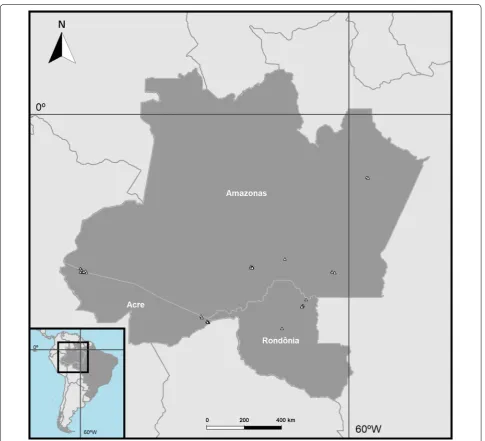
In total, 270 mosquito specimens from 47 collection sites in the Brazilian states of Acre, Amazonas and Rondônia were included in this study (Fig. 1). Collection sites were selected based on a high annual malaria parasite index (annual parasite index, API ≥ 50) in 2015 or 2016 and
lev-els of forest cover depletion greater than 10%, assuming this was representative of a human colonization process in the Amazon Forest. Field females were collected at the forest edge by either Shannon trap or human land-ing interception, usland-ing a small, manual aspirator. Females were euthanized with ethyl acetate vapors inside a plastic
[image:3.595.57.543.269.710.2]chamber in the field, and kept in silica gel and separated hourly. Collections at each site were made on a single day from 06:00 p.m. to 06:00 a.m., during the months of January, April, May, August, and October 2015. Speci-mens were identified from the Genus Anopheles and the recently elevated Genus Nyssorhynchus [27]. After spe-cies identification, females were kept individually frozen at − 80 °C. One or two legs were removed with small, pointed scissors and used for sequencing the 658 base pair COI barcode region of the mitochondrial genome. One hundred and fifty-nine sequences from thirty spe-cies were downloaded from GenBank and used in the phylogenetic analysis as references (Additional files 1, 2).
DNA extraction
Genomic DNA extraction was performed from 1 or 2 legs of each Anophelinae specimen (Additional file 1). Each extraction was carried out as follows: legs were macerated in 10 µl of NaCl 0.9% with an autoclaved pis-til; 20 µl of Chelex-100 5% was added then, vortexed; the solution was incubated at 99 °C for 10 min and then cen-trifuged at 13,000 rpm for 5 min at 25 °C; the superna-tant was recovered and an aliquot was frozen at − 20 °C and the remaining DNA at − 70 °C in the entomological frozen collection of the Faculdade de Saúde Pública, São Paulo, Brazil.
DNA amplification
Primers described by Folmer et al. [46] were used to amplify the barcode region of the cytochrome c oxidase gene (COI). Each reaction was performed with final vol-ume of 25 µl containing 2 µl of DNA extracted by Chelex, 1× PCR Buffer (Invitrogen), 1.5 mM MgCl2 (Invitrogen),
0.2 mM each dNTPs (Amresco), 0.1 μM each primer (LCO1490 5′-GGT CAA CAA ATC ATA AAG ATA TTG G-3′ and HCO2198 5′-TAA ACT TCA GGG TGA CCA AAA AAT CA-3′), 0.625 U Taq Platinum polymerase (Inv-itrogen) and the remaining volume of ultra-pure water. The thermocycler conditions were 94 °C for 3 min, 5 cycles of 94 °C for 30 s, 45 °C for 90 s, 68 °C for 60 s, fol-lowed by 35 cycles of 94 °C for 30 s, 51 °C for 30 s, 68 °C for 60 s and a final extension at 68 °C for 10 min [47]. PCR products were purified using PEG precipitation (20% polyethyleneglycol 8000/2.5 M NaCl).
Sequencing and alignment
Sequencing reactions proceeded in both directions using a Big Dye Terminator cycle sequencing kit v3.1 (Applied Biosystems, Foster City, CA, USA) and Applied Biosystems 3130 DNA Analyzer (Applied Biosystems). Sequencing reactions were carried out with the same set of PCR primers. The sequencing products were puri-fied using Sephadex G50 columns (GE Healthcare) and
analysed in an Applied Biosystems 3130 DNA Analyser (PE Applied Biosystems). Sequences were edited in Sequencher v.4.9 software (Genes Codes Corporation, Ann Arbor, MI, USA), and the primer regions removed. In addition to these novel sequences, 162 sequences from GenBank were also included, to serve as references in the phylogenetic and species delimitation analysis. The COI
gene sequences were aligned first by nucleotides using the Muscle algorithm [48] implemented in SeaView [49], and then by amino acid using TranslatorX [50].
Phylogenetic analysis
A Bayesian phylogenetic analysis was applied to sequences using a codon partitioning scheme to allow different partitions to have their own model characteris-tics (composition, rate matrix and among-site variation) and to allow for among-partition rate variation. Optimal evolutionary models for the sequences were determined for each partition using the corrected Akaike Informa-tion Criterion (AICc) in jModelTest 2 [51]. With the exception of 2 singletons, codon position 2 was invari-able and so was excluded from phylogenetic analyses. The optimal models for codon positions 1 and 3 were GTR + G and GTR + G + I, respectively. All Bayesian phylogenetic analyses were performed using MrBayes 3.2 [52] at the CIPRES Science Gateway [53] and each analy-sis conanaly-sisted of two simultaneous runs, which were then repeated to provide confirmation of convergence of pos-terior probability distribution. Each Bayesian phyloge-netic analysis was run for fifty million generations, with the first twenty-five million generations being discarded as burn-in. The Metropolis-coupled Markov chain Monte Carlo strategy was used with four heated chains; adequate mixing was achieved by setting the chain temperature to 0.03. Convergence of topology between the two simul-taneous runs was monitored using the average standard deviation of split frequencies—this index consistently fell to below 0.01 in the post-burn-in samples. Convergence was also monitored by noting that the potential scale reduction factor values were all approximately 1.0 in the post-burn-in samples. Consensus trees were constructed containing nodes with posterior probability support of at least 70% using SumTrees [54, 55]. Pairwise Kimura-two-parameter (K2P) [56] distances were calculated from the
COI alignment using APE [57].
Species delimitation
require the setting of an intraspecific threshold (set to the range Pmin= 0.005–Pmax 0.1), below which interspecific
diversity will not be detected.
The second species delimitation method employed was the multi-rate Poisson tree process—mPTP (multi-rate Poisson tree processes; [45]), which is a “phylogeny-aware” method that uses differences in mutation rate in a phylogenetic tree to resolve interspecific from intraspe-cific diversity. Unlike the previous method, it does not rely on a priori distance thresholds but does require a bifurcating non-ultrametric phylogenetic tree for input. A maximum likelihood (ML) tree was generated using RAxML-HPC BlackBox 8.2.10 [58] on the CIPRES Sci-ence Gateway [53] using gene partitioning by codon (with the 2nd codon position excluded due to invariabil-ity) under the model GTR + G, based on 1000 bootstrap replicates.
Results
Phylogenetics
A total of 421 sequences (270 newly sequenced from Amazonian rural settlement collections, and 151 down-loaded from GenBank databases) from the genus Anoph-eles (in the Arribalzagia series from subgenus Anopheles) and genus Nyssorhynchus (in the Albimanus and Argyri-tarsis Series) were included in the analysis (Additional file 1). After alignment these yielded 359 COI haplotypes of 658 base pairs in length. Chagasia bonneae (GenBank accession no. KF671010) was also included to serve as an outgroup taxon.
Results of the Bayesian analysis found no evidence for reciprocal monophyly between the subgenera Anoph-eles and Nyssorhynchus (Figs. 2a and 3a). The subgenus
Anopheles is paraphyletic with respect to Nyssorhynchus, with two of its clades forming a three-way polytomy with the latter (BPP 85%; Fig. 2a).
Genus Anopheles (see Fig. 2a)
Anopheles peryassui was recovered as a strongly sup-ported but highly diverse monophyletic clade (99% BPP). It contained a haplotype (Sample id: RO38_2; Accession number: MF381690) that is at least 7.4% different (K2P distance) from its conspecifics. Although Anopheles intermedius from the state of São Paulo was included in the analysis, it appeared from the phylogenetic tree (and was confirmed in subsequent species delimitation analy-sis) that this sequence was the sole representative of An. intermedius in this study.
Anopheles punctimacula formed two strongly sup-ported monophyletic clades (both with BPP of 100%) that appear to have very different evolutionary histories. The first clade was sister (96% BPP) to a clade containing all but one (An. peryassui) of the ingroup species. This
first clade is also highly diverse, containing a haplotype (Anopheles punctimacula AC22_64) that is at least 5.9% different (K2P distance) from other haplotypes within the clade. The second An. punctimacula clade contains hap-lotypes from An. punctimacula sensu stricto/lineage A and An. punctimacula lineage B detailed in Loaiza et al. [36]. It is recovered in a disparate part of tree from the first An. punctimacula clade.
Anopheles fluminensis was recovered as two phyloge-netically distant clades (both with BPP of 100%). The first clade includes An. fluminensis from the type locality in Rio de Janeiro, and herein considered sensu stricto. It is found on a three-way polytomy with the Nyssorhynchus
clade and a clade containing Anopheles costai, Anopheles malefactor, An. punctimacula s.s./lineage A, An. puncti-macula lineage B and the second An. fluminensis clade. This second clade was found to be sister (100% BPP) to a highly distinct lineage of An. malefactor. There is a differ-ence of 8.0–9.3% (K2P distance) between these two An. fluminensis clades. The highly distinct An. malefactor lin-eage is herein denoted An. near malefactor and is clearly resolved from An. malefactor sensu lato by a difference of 8.4–9.0% (K2P distance).
Anopheles costai was resolved (100% BPP) as a highly diverse clade (0.0–7.8% K2P distance). The An. costai
haplotype relationships within this clade are suggestive of between three and six lineages, but the lineage compo-sition of this clade will be more clearly described in the results from species delimitation below.
Genus Nyssorhynchus (see Fig. 3a)
Members of the Oswaldoi Subgroup included in this study are the Oswaldoi Complex, the Konderi Complex and the Nuneztovari Complex. Members of the Oswal-doi Complex in this study are Nyssorhynchus oswaldoi
sensu stricto, Ny. oswaldoi A, Ny. oswaldoi B, and Nys-sorhynchus rangeli. One of these, Ny. oswaldoi A (100% BPP), forms a monophyletic clade within the three-way polytomy (97% BPP) with Nyssorhynchus konderi and
Ny. near konderi. Nyssorhynchus rangeli (100% BPP) is a monophyletic clade on a five-way polytomy (97% BPP) that also contains a clade (96% BPP) comprised of Ny. oswaldoi s.s. (87% BPP) and Ny. oswaldoi B (100% BPP), which are reciprocally monophyletic. The two members of the Konderi Complex, Ny. konderi (100% BPP) and
Ny. near konderi (100% BPP), each form monophyletic clades within the three-way polytomy described above. The Nuneztovari Complex (100% BPP) is composed of
IV (100% BPP) are found to be monophyletic and Ny. goe-ldii Group III are Ny. goeldii Group V are paraphyletic.
Nyssorhynchus dunhami is also paraphyletic with respect to other members of the Nuneztovari Complex.
Sequences from six members of the Strodei Subgroup are included in this study. Nyssorhynchus benarrochi is resolved into two quite distinct clades. The first is identi-fied from Acre and Rondônia (100% BPP) and is found as
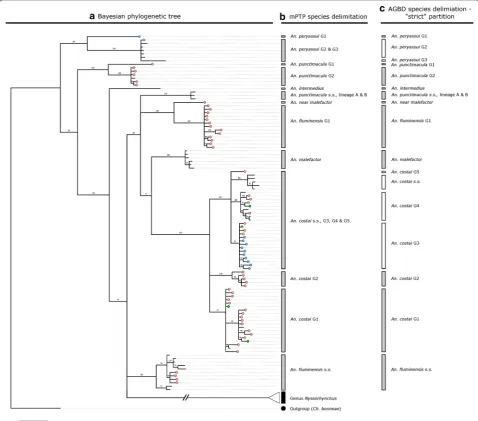
Fig. 2 Phylogenetic and species delimitation analysis detailing collection specimens and reference sequences belonging to the Genus Anopheles.
a Consensus tree from a Bayesian phylogenetic analysis using the COI gene. Numbers at branches indicate Bayesian Posterior Probability (≥ 70%). Haplotypes from collection specimens are coloured: Red = Acre, Green = Amazonas, Blue = Rondônia. Chagasia bonneae was included as an outgroup taxon, b Multi-rate Poisson Tree Process (mPTP) species delimitation analysis, c Automatic Barcode Gap Discovery (ABGD) analysis
(See figure on next page.)
Fig. 3 Phylogenetic and species delimitation analysis detailing collection specimens and reference sequences belonging to the Genus
[image:6.595.58.537.89.510.2]a sister (97% BPP) to the Ny. nuneztovari complex. The second is a distantly related Ny. benarrochi B clade (100% BPP) found to be sister (87% BPP) to the Nyssorhynchus strodei subgroup (100% BPP). Nyssorhynchus arthuri A (100% BPP) and Ny. arthuri C (98% BPP) formed distinct clades on a three-way polytomy (100% BPP) with the Ny. strodei/Nyssorhynchus albertoi clade (100% BPP), which are unresolved.
The Albitarsis Series is comprised of the Albitarsis Group, made up of the Albitarsis Complex, and the Bra-ziliensis Group, made up of Nyssorhynchus brazilien-sis. In this study, the Albitarsis Complex is resolved as a monophyletic clade (100% BPP), and all (Ny. albitarsis, 100% BPP; Nyssorhynchus deaneorum, 100% BPP; Nysso-rhynchus marajoara, 97% BPP; Nyssorhynchus oryzalim-netes, 100% BPP) but one (Ny. albitarsis H) of its multiple species form monophyletic clades. Nyssorhynchus bra-ziliensis (100% BPP) is resolved from all other species in
Nyssorhynchus (100% BPP) and shows high levels of hap-lotype diversity, up to 3.3% (K2P distance).
Nyssorhynchus darlingi (100% BPP) is resolved as a sis-ter species (99% BPP) to the highly diverse Ny. triannula-tus clade (100% BPP), with intraspecific diversity of up to 3.8% (K2P distance).
Species identification
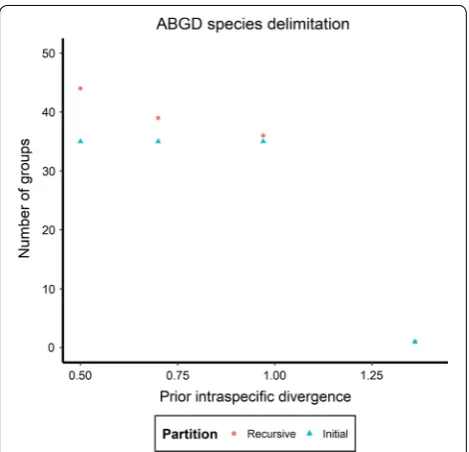
Collection and reference specimens are delimited into 30 “species” groups by the mPTP analysis (Additional file 3; Figs. 2b, 3b). The ABGD analysis provided three possi-ble partitions for these specimens before grouping them
together as a whole (Fig. 4). The most conservative par-titioning produces 36 groups (Additional file 4; Figs. 2c,
3c) and is herein referred to as the “strict” partition. The most fragmented partitioning produces 44 groups (Addi-tional file 5) and is herein referred to as the “relaxed” partition.
Genus Anopheles (see Fig. 2b, c)
Under the mPTP (phylogeny-aware) analysis, 3 groups are delineated for An. costai. The first group, herein denoted An. costai G1, has a large distribution, and is identified in the states of Acre and Amazonas and the Colombian departments of Putumayo (Accession num-ber: JX205128) and Amazonas (Accession numnum-ber: KF698865). This group has good support in the Bayes-ian phylogenetic tree (89% BPP). The second delineated group, herein denoted An. costai G2, is only identified from rural settlements in Acre and is well supported in the Bayesian phylogenetic analysis (100% BPP). Both An. costai G1 and An. costai G2 are consistently delineated in the strict and relaxed ABGD species partition. The third group includes An. costai sensu stricto haplotypes from the state of São Paulo (the type locality; Field Speci-men ID: SP02_17_3) as well as haplotypes from other locations in Acre, Amazonas, Bahia, Rondônia, and the Colombian departments of Meta (Accession numbers: HM022403 and HM022404) and Putumayo (Accession number: JX205127). This group is further partitioned into four groups in both the strict and relaxed ABGD (K2P distance-based) species partitions. These groups are herein denoted An. costai sensu stricto (identified from Bahia and São Paulo), An. costai G3 (identified from Acre, Amazonas and Rondônia), An. costai G4 (identified from Acre, Amazonas and Colombia) and An. costai G5 (identified from Acre only).
Anopheles fluminensis is consistently partitioned into two groups across all species delimitation analyses, and these groups represent the two polyphyletic clades identi-fied in the Bayesian phylogenetic analysis. The first group includes specimens from five rural settlements in Acre in addition to specimens from Rio de Janeiro (the type locality—Reserva Biológica do Tinguá; Accession num-ber: MF381677), São Paulo and Ecuador, but denoted An. nr fluminensis in Linton et al. [59]. This group is tenta-tively denoted An. fluminensis sensu stricto, although there is considerable intra-group diversity that ranges from 0.6 to 3.3% (K2P distances), with the São Paulo and Rio de Janeiro haplotypes (0.6% different) having dis-tances of between 2.0 and 3.3% with the other members of the group. The second group is comprised of speci-mens collected from eight rural settlements in Acre, and is herein denoted An. fluminensis G1. The two groups dif-fer by between 7.7 and 9.3% (K2P distances). Anopheles
[image:8.595.57.292.86.312.2]malefactor is also partitioned into two groups across all species delimitation analyses and is again consistent with the polyphyly observed to the phylogenetic analysis. The first group is An. malefactor, of González et al. [41] and Gómez et al. [31], whereas the second is herein denoted
An. near malefactor, and they differ by between 8.4 and 9.0% (K2P distance).
Both mPTP and ABGD species delimitation approaches found three groups in An. punctimacula. Two of these groups are found in the highly diverse An. punc-timacula clade and herein are denoted An. punctimacula
G1 (a singleton) from Acre and An. punctimacula G2 from Acre and the Colombian department of Putumayo
(Accession number: JX205122). The third group is made up of the An. punctimacula ss, An. punctimacula lineage A and An. punctimacula lineage B (from [36]).
The mPTP species delimitation approach identified two groups in An. peryassui. The first group, herein denoted
An. peryassui G1, is represented by a single haplotype from Rondônia (Sample id: RO38_2; Accession number: MF381690), and identified as highly divergent (7.4% K2P distance) in the phylogenetic analysis. The second group is made up of haplotypes from Acre, Para, the Colom-bian departments of Amazonas (Accession numbers: KF698875–KF698877; [31]) and Meta (HM022405), and the state of Amapa, with this latter haplotype delineated
[image:9.595.57.536.86.526.2]as a third group in both the strict and relaxed partitions of the ABGD species delimitation. The An. intermedius
singleton from São Paulo was separately delimited across all species delimitation analyses.
Genus Nyssorhynchus (see Fig. 3b, c)
Within the Strodei Subgroup, Ny. albertoi and Ny. stro-dei are not delineated in either mPTP or ABGD analyses.
Ny. arthuri A and Ny. arthuri C are delineated across all analyses but only Ny. arthuri C was collected in this study at a rural settlement in Rondônia. Two groups are identi-fied from the Benarrochi Complex. The first is Ny. benar-rochi B, which is delineated in the mPTP analysis and from the ABGD strict partition (but splits into 4 groups in ABGD relaxed partition). Nyssorhynchus benarrochi B was collected from five rural settlement in Acre. The sec-ond group is delimited in the mPTP analysis, but splits into two further groups, herein denoted Ny. benarrochi
G1 and Ny. benarrochi G2, in both the strict and relaxed partition from the ABGD analyses. Nyssorhynchus benar-rochi G1 was collected from a rural settlement in Acre, while Ny. benarrochi G2 was collected from three rural settlements in Rondônia.
The sole representative from the Argyritarsis Series included in this study is Ny. darlingi. This species is clearly delineated across all analyses, and identified from six rural settlements in Acre and Amazonas. With respect to the Albitarsis Series, Ny. braziliensis is delim-ited in mPTP analysis and in the ABGD strict partition. However, it decomposes into five separate groups (of which 3 were singletons) in the ABGD relaxed partition. Within the Albitarsis Complex, only Ny. albitarsis and
Ny. oryzalimnetes are delimited in analyses (ABGD strict and relaxed partitions). Nyssorhynchus albitarsis, Ny. deaneorum and Ny. marajoara are consistently grouped together in all species delimitation analyses.
The Oswaldoi Subgroup contains the Konderi, Oswal-doi and Nuneztovari Complexes, all of which are rep-resented in this study. Species from this subgroup that can be clearly delimited across all species delimitation analyses are Ny. rangeli (rural settlements in Acre and Rondônia), Ny. oswaldoi A (rural settlements in Acre, Amazonas, Rondônia), Ny. konderi and Ny. near konderi. In the case of Ny. konderi, the “An. konderi of Amapá” (GenBank accession: JF437967 and JF437968) in Motoki et al. [60], the “An. konderi of Sallum” (GenBank acces-sion: KF809030–033) in Ruiz-Lopez et al. [61] and “An. konderi” (GenBank accession: JF923716) in Saraiva et al. [34] all belong to this lineage. This lineage was col-lected in rural settlements in Acre as well as from sites in Amapá. In the case of Ny. near konderi, the “An. kon-deri of Acre” (GenBank accession: JF437965) in Motoki et al. [60] and the “An. near konderi” (GenBank accession:
KF670997 and KF809137) in Ruiz-Lopez et al. [61] belong to this lineage. This lineage was collected from rural set-tlements in Acre and Amazonas. Nyssorhynchus oswaldoi s.s. and Ny. oswaldoi B are delimited in the mPTP analy-sis and the ABGD relaxed partition, but not in the ABGD strict partition. This species delimitation (and the phylo-genetic analysis) suggests the “An. konderi of Paraná and Rondônia” (GenBank accession: JF437969–JF437974) in Motoki et al. [60] belongs to Ny. oswaldoi s.s. (GenBank accession: KF809126 and KF809128). Nyssorhynchus oswaldoi s.s. was collected from a single rural settlement in Amazonas, whereas Ny. oswaldoi B was absent from all rural settlements in our study. None of the members of the Ny. nuneztovari complex are resolved in any of the species delimitation analyses. Finally, Ny. triannulatus is delineated as a single group across all analyses, and iden-tified from a single rural settlement in Acre.
Summary of species delimitation for collection specimens
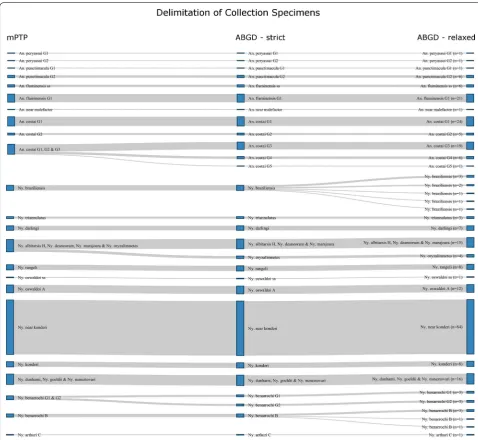
The most conservative species delimitation approach used in this study (mPTP) delimits at least 23 putative species from these collection sites (Fig. 5), and 30 from the study as a whole i.e. including reference sequences. The strict clustering-based (ABGD) partition delimits 27 putative species (Fig. 5) and 36 from the study as a whole, while the relaxed clustering-based (ABGD) partition delimits 33 putative species (Fig. 5) and 44 from the study as a whole.
Discussion
Several species are well resolved in our phylogenetic tree and consistently delineated as coherent groups across analyses. These include Ny. darlingi, Ny. rangeli
and An. intermedius. Ny. darlingi is the primary vector of malaria in the Amazon River basin [16]. It is a highly anthropophilic species and can vary from endophagy to exophagy, and endophily to exophily [64]. As such, vec-tor control can be extremely challenging and the pres-ence of this species at six rural settlements in Acre and Amazonas is significant for malaria transmission and vector control. In addition, Ny. rangeli has been found to be important in local malaria transmission in Colombia [65] and its larval habitat is associated with human-mod-ified environments [66]. Its presence in rural settlements in Acre and Rondônia may indicate a potential role in frontier malaria at these localities. Anopheles interme-dius sequence data (a singleton from São Paulo state) was included in the analysis as a reference as it is a poten-tial malaria vector in the region, with natural infection detected in Amapa [67], Pará [68], and French Guiana [69]. However, this species was not detected at any of the study’s collection sites.
Although Ny. braziliensis was recovered as a mono-phyletic species and singularly grouped in both spe-cies delineation approaches, the spespe-cies appeared to be highly diverse and partitioned into multiple groups in the relaxed ABGD partition. Insufficient sampling meant that we could not attribute any significance to this struc-ture. The local abundance of this species in the Amazon River basin varies considerably [37, 67, 70] but it appears to be common in human-modified environments [71]. The species is highly anthropophilic [37] and it has been found naturally infected with P. malariae [70], P. vivax
[25, 72] and P. falciparum [25, 73]. Its presence in rural settlements may therefore have implications for frontier malaria transmission.
To date, there is little genetic data available for An.
peryassui, whose range covers most of northern South America. There is some evidence to suggest that the spe-cies may play a role in malaria transmission, with natu-ral infection by P. falciparum and P. vivax reported in the state of Amazonas [74]. The current study included specimen reference data from Colombia in Gómez et al. [31], the only other source of An. peryassui genetic data available in GenBank. Results of the analyses demon-strated that An. peryassui appears to exist as a species complex with at least two (and possibly three) lineages identified, with the first found in Rondônia and the sec-ond found in Acre, Amapa, Colombia and Para (with the Amapa haplotype possibly splitting into a third lineage). However, the systematics of this complex remains poorly understood, because of the lack of material from the type locality in Rio Bonito in the state of Minas Gerais.
The genetic diversity of An. fluminensis has also been poorly explored. This lack of interest may be due to the understanding that An. fluminensis is not an impor-tant malaria vector [75], although specimens identi-fied as An. near fluminensis have been incriminated as a malaria vector in the department of Junin, Peru [76] and more recently the species was found naturally infected by Plasmodium malariae in the Atlantic Forest of São Paulo, Brazil [77]. A study of mosquito diversity in the Ecuadorian Amazon found some genetic support for
An. near fluminensis, demonstrating a 2.75–3.77% dif-ference between sequences from the province of Orel-lana in Ecuador and São Paulo state, Brazil. However, despite the identification of similar levels of diversity between the two regions in this study, this is considered to be intraspecific, according to the approaches used, and grouped with the topotype specimen (Accession number: MF381677) from Rio de Janeiro. However, An. flumin-ensis was split into two sympatric lineages (with Ecua-dorian specimens and sensu stricto specimens grouped together), which, given their distinct evolutionary his-tories, may be of varying epidemiological importance. Clearly, An. fluminensis has, to date, been understudied and overlooked but, given the species diversity that has been identified in this study from specimens morpholog-ically identified as An. fluminensis and the limited sam-pling effort (only collected from Acre), a more thorough evaluation of lineage diversity and relationships across its considerable South American range is to be encouraged.
Like An. peryassui and An. fluminensis, there are scant genetic data available for An. costai. The species appears to be found mainly in forest habitat [78] and is not believed to be an important malaria vector. However, An. costai has been frequently misidentified as An. medio-punctatus [79], which has been found naturally infected with Plasmodium vivax in the state of Amazonas [74] and it may yet be recognized as epidemiologically important. This study reveals that An. costai exists as a diverse spe-cies complex (between 3 and 6 lineages), and several of its lineages have geographical distributions that span the Amazon River basin and beyond. More extensive sam-pling will be required to determine whether An. costai
s.s. lineage identified in the clustering-based delimitation occurs in the Amazon River basin, while the ecologies of each species complex member should be explored to determine their potential importance in rural settlements affected by frontier malaria.
Anopheles punctimacula ranges from Mexico to Argen-tina and the Caribbean and has previously been impli-cated as a malaria vector in Panama [80] and Colombia [81], although this occurred prior to An. malefactor and
as a species complex, with at least two lineages from Pan-ama supported across multiple genes [36]. The two line-ages identified in this study appear to be distantly related to those identified in Loaiza et al. [36], which included the sensu stricto form collected near the type locality in Colón, Panama (and consistently grouped with the Line-age A and B form denoted in that study). One of these lin-eages exists over quite a considerable range (~ 1000 km; Acre, Brazil—Putumayo, Colombia) and further stud-ies of the phylogeny and ecology of these taxa necesi-tate employing a range of molecular and morphological markers and more comprehensive sampling in order to more clearly define evolutionary relationships, geo-graphical boundaries, ecological niches and, ultimately, their role in malaria transmission in the region. Anoph-eles malefactor, previously elevated from synonomy with
An. punctimacula [82], collected from a rural settlement in Acre, was clearly distinct from the An. malefactor from the Panama (type locality) and Colombia, and appears to be a new species and sister to a newly delineated An. flu-minensis G1 lineage.
The close relationships observed among the Ny. konderi
and Ny. oswaldoi complexes indicate that these should be considered a unique species complex named Oswaldoi-Konderi [34]. There are now considered to be five species in this Oswaldoi–Konderi Complex, which include Ny. oswaldoi s.s., Ny. oswaldoi A, Ny. oswaldoi B, Ny. kon-deri and Nyssorhynchus nr. konderi [34, 61]. Although Ny. konderi and Ny. oswaldoi are generally not considered vectors of human malaria, Quiñones et al. [65] found Ny. oswaldoi B (although denoted Ny. oswaldoi in their study) infected with P. vivax in the state of Putumayo, Colombia. The complex may therefore be of epidemiological impor-tance. Although all five species could be effectively delin-eated in the current study, only four were identified from the collection sites in Acre, Amazonas and Rondônia. Ny. oswaldoi s.s. was identified from a site south of Amazo-nas and (with the inclusion of other data from GenBank) it can also be found Espírito Santo state (type locality; Accession number: JF923721), Paraná, Rondônia and São Paulo. This range covers both the Paraná and Ama-zon river basins, which are connected by the Parapetí River alluvial fan and may allow fluvial species relatively uninhibited expansion between basins [84]. Whereas
Ny. oswaldoi A appears to be found through much of the Amazon River basin (Amazonas, Acre, Pará, Rondônia),
Ny. oswaldoi B was not identified at the collection sites, although it has previously been identified from a site in the northern reaches of the Brazilian Amazon (Santana, Amapá; [34]). A Ny. oswaldoi specimen (Field Speci-men ID: SP22_9) from Pariquera-Mirim, Pariquera-Açu, São Paulo was included in this study to aid in delineat-ing geographic distribution. However, this specimen was
consistently resolved from Ny. oswaldoi s.s. and is likely a new species within the Oswaldoi–Konderi Complex. The
Ny. konderi specimens collected in this study were con-fined to sites in the state of Acre but this species has also been collected from sites in Amapá (previously denoted
An. konderi Amapa [60]). Saraiva et al. [34] also identified this species from Amazonas, Pará and Rondônia. With respect to Ny. nr. konderi, previous studies have found this species in Colombia, Ecuador, Peru [61] and the Brazilian states of Amazonas and Rondônia [34]. In this study, this species was collected from Amazonas but also from a large number of rural settlements in Acre.
Recent studies have confirmed Ny. benarrochi as a spe-cies complex, with the identification of Ny. benarrochi
B in Colombia [85] and Peru [86]. Although Ny. benar-rochi is predominantly zoophilic [87] and therefore not believed to be an important malaria vector, highly anthropophilic behaviour does occur in some areas and it may be play a role in malaria transmission in the Peru-vian Amazon [85, 88]. This study confirms the existence of Ny. benarrochi B, using data from Conn et al. [86], in rural settlements in the state of Acre. It also identi-fies at least one other Ny. benarrochi lineage from Acre and Rondônia (and perhaps representing two). Unfortu-nately, this lineage cannot be confirmed as Ny. benarrochi
s.s. as material from the type locality in the municipal-ity of La Ceiba, Trujillo State, Venezuela is unavailable. It is, therefore, essential that collections be obtained from this type locality in order to undertake a meaning-ful systematic review of the Ny. benarrochi complex and determine whether species diversity within this complex is associated with variation in anthropophilia and vector competence.
Nyssorhynchus triannulatus is found throughout Cen-tral and South America, and has been incriminated in the transmission of human malaria in the states of Amapa [67], Amazonas [74] and Pará [68], Brazil. Recent studies have shown that Ny. triannulatus forms a species com-plex with two other recently identified species; Ny. halo-phylus [89] and Ny. triannulatus C [90]. Nyssorhynchus triannulatus sensu lato has been found to form para-phyletic (at a combined ITS2, white and COI gene tree; [91]) and monophyletic sister [using RAPD markers; 92] relationships with an Ny. halophylus and Ny. triannulatus
from the states of Minas Gerais to the east, Espírito Santo on the Atlantic coast, São Paulo in the south east of Bra-zil, and neighbouring Colombia. Despite a considerable geographic distribution and habitat range [91, 92], results from the current analysis show that, although the Ny. triannulatus s.l. clade is extremely diverse, relationships among its COI haplotypes cannot be meaningfully parti-tioned into separate species i.e., all branch structure and pairwise distances within Ny. triannulatus are considered intraspecific. It appears that relationships may be better explained by complex population histories [92], where elevated levels of genetic diversity have been maintained perhaps by historical fragmentation, secondary contact and gene-flow followed by more recent divergence due to geographical isolation. Further phylogenetic and species delimitation analyses at multiple loci may reveal more compelling support for species designation within Ny. triannulatus, as phylogenetic analysis of COI frequently fails to resolve well supported species of Anophelinae mosquitoes, e.g., Ny. strodei and Ny. albertoi. Conflict among gene trees due to incomplete lineage sorting and horizontal gene transfer (gene-flow) is pervasive in very closely related species, making molecular identification of such species difficult. High density codominant mark-ers such as single nucleotide polymorphisms (SNPs) offer some opportunities to overcome such phylogenetic chal-lenges [93–96] and an exploration of the hierarchy of structure within Ny. triannulatus (and Ny. braziliensis) may be better achieved using such markers in combina-tion with populacombina-tion genetic approaches [97].
Several of the morphospecies collected in this study are highly diverse complexes, the diversity of which is supported by a range of ecological, morphological and genetic data. However, the use of species delimitation approaches with the COI gene failed to detect several of these species boundaries. Currently, 10 species have been identified within the Ny. albitarsis complex, five of which (Ny. albitarsis, Ny. albitarsis H, An. deaneorum,
Ny. marajoara and Ny. oryzalimnetes) were collected in this study. A range of morphological and molecular data has been employed to resolve and support species in this complex [98–100]. Nevertheless, the close relationships observed among Ny. albitarsis H, Ny. deaneorum and
Ny. marajoara at the COI gene in the present study were consistent with patterns of intraspecific variation when employing cluster- and tree-based species delimitation. It appears that species delimitation of this complex at the
COI gene will fail to detect important species boundaries supported by other data and further exploration and dis-covery of species diversity in the Albitarsis Complex will require a multilocus approach, possibly using loci such as ITS2 and the white gene, which have been used to resolve many of the species within the complex [101, 102].
Similar issues were encountered when dealing with the Nuneztovari Complex and Strodei Subgroup. The former is comprised of Ny. dunhami, Ny. goeldii, Ny. nuneztovari
[103], supported by a range of morphological and molec-ular data [104–106]. Its geographical distribution runs from the Isthmus of Panama to northern South Amer-ica and Ny. nuneztovari sensu lato is considered one of the most important malaria vectors in the region [26]. A recent study by Scarpassa et al. [40] found Ny. nun-eztovari s.l. haplotypes were variously identified as Ny. dunhami, Ny. goeldii, Ny. nuneztovari and an additional unknown clade. They found that population genetic and phylogenetic analysis were in some agreement, although lineage delineation and relationships among COI trees that differed in sampling effort were to some degree incongruent. Although the current study combined the sequences from Scarpassa et al. [40] with those from specimens collected from the Brazilian Amazonian states of Acre, Amapá, Amazonas, Pará, Rondônia, it failed to delineate any species within the Nyssorhynchus nunez-tovari complex. The Strodei Subgroup is made up of Ny. albertoi, Ny. strodei [107], Ny. striatus [108], Ny. rondoni
and finally Ny. arthuri, which is comprised of four spe-cies A - D [35]. Given the systematic complexity of this group and the recent emergence of many of its species, the importance of these species in malaria transmission is unknown. However, Ny. strodei has previously been found naturally infected with P. vivax in Ariquemes, Ron-dônia [73], although this case may refer to Ny. arthuri C [35]. Nyssorhynchus albertoi and Ny. strodei, despite hav-ing considerable support as separate species within the Strodei Subgroup [107], are known to be unresolved with the COI gene [35] and, unsurprisingly, species delimita-tion in the current study using this same gene failed to identify the respective species. The other members of the subgroup included in the study were resolved and clearly delineated. As in Bourke et al. [35], Ny. arthuri A was not detected from the Amazon region and Ny. arthuri
C has so far only been identified from the state of Ron-dônia. Further analysis of this species range and habitat is required before its epidemiological importance in rural settlements can be determined.
provide a preliminary description of species boundaries (possible gene tree-species tree discordance) and the new species delimited in this study remain putative. Rather, it allows for the establishment of viable species hypotheses, to be tested against a range on independent data sources that may be, for example, morphological, molecular and/ or ecological in nature. In particular, there have been few or no classical studies of Anophelinae taxonomy con-ducted in the Amazon River basin in recent years, and further studies of species diversity in Anophelinae are, therefore, encouraged to better explore morphological variation among these species. Future work on species exploration and discovery in the Amazon River basin should also employ a multilocus delimitation approach [43, 109] to better enable the resolution of all recognized species within important complexes, such as Albitarsis and Nuneztovari. In addition, the study demonstrates that exceptional diversity detected in morphospecies can be consistent with a model of intraspecific diversity and is suggestive of a complex evolutionary history that may be better explored using high-density markers and popu-lation genetic approaches.
This study has been successful in revealing a large num-ber of unknown Anophelinae species that are likely to be new to science and occur in areas with endemic malaria transmission. One of the great challenges for malaria control in the Amazon River basin is the transmission that occurs outside of rural dwellings and the detection of new species that belong to groups containing important vectors will, therefore, have an important impact on the development of effective vector management and control strategies in the region. The World Health Organization recommends that vector management and control inter-ventions should take account of potential impacts on the environment and biodiversity and should be focused on avoiding unintended impacts on non-vector species. The findings from this study will assist in refining such strate-gies, help build capacity in public health entomology and provide an important contribution to effective malaria control in the region.
Conclusion
Anophelinae mosquito diversity continues to be under-estimated in poorly sampled tropical rain forest areas where frontier malaria is a major public health concern. Delimitation approaches used to explore Anophelinae mosquito diversity in these areas reveal a large number of unknown species that are likely to be new to science. These findings will help shape future studies of vec-tor incrimination and transmission dynamics and sup-port efforts to develop more effective vector control and transmission reduction strategies in settler communities in the Amazon River basin.
Additional files
Additional file 1. Sample information of collection specimens and refer-ence sequrefer-ences.
Additional file 2.COI sequence data for all collection specimens and references used in this study.
Additional file 3. Output from mPTP analysis of collection specimens and reference sequences.
Additional file 4. “Strict” partition from ABGD analysis of collection speci-mens and reference sequences.
Additional file 5. “Relaxed” partition from ABGD analysis of collection specimens and reference sequences.
Authors’ contributions
Study design: MAMS, BPB. Data analysis and illustrations: BPB. Interpretation of results: BPB, MAMS. Scientific writing: BPB, MAMS, JEC. Field collections: MAMS, ESB, LSMC, GZL. Sequence data: TMPO, MAMS. All authors read and approved the final manuscript.
Author details
1 Department of Epidemiology, Faculty of Public Health, University of São
Paulo, São Paulo, SP, Brazil. 2 Wadsworth Center, New York State Department
of Health, Slingerlands, NY 12159, USA. 3 Department of Biomedical Sciences,
School of Public Health, State University of New York-Albany, Albany, NY 12222, USA. 4 Superintendência de Controle de Endemias, Secretaria de
Estado da Saúde de São Paulo, Araraquara, SP, Brazil. 5 Setor de Pós-graduação,
Pesquisa e Inovação, Faculdade de Medicina do ABC, Santo André, SP, Brazil.
Competing interests
The authors declare that they have no competing interests.
Consent for publication
Not applicable.
Funding
This work was funded by the São Paulo Research Foundation (FAPESP) Grant No. 2014/26229-7 (to MSMS and ESB) and National Institutes of Health (NIH) 1 R01 AI110112-01A1 (to JEC and MAMS). GZL is supported by the São Paulo Research Foundation (FAPESP) and Biota-FAPESP Program, process n. 2014/09774-1.
Publisher’s Note
Springer Nature remains neutral with regard to jurisdictional claims in pub-lished maps and institutional affiliations.
Received: 15 July 2018 Accepted: 10 September 2018
References
1. Instituto Nacional de Pesquisas Espaciais. Annual deforestation rate in the Brazilian Legal Amazon. 2018. http://www.obt.inpe.br/prode s/ dashb oard/prode s-rates .html. Accessed 3 Mar 2018.
2. Garcia B. The characteristics of the Amazon Region. The Amazon from an international law perspective. Cambridge: Cambridge University Press; 2011. p. 23–49.
3. Barlow J, Lennox GD, Ferreira J, Berenguer E, Lees AC, Mac Nally R, et al. Anthropogenic disturbance in tropical forests can double biodiversity loss from deforestation. Nature. 2016;535:144–7.
4. Menezes JA, Confalonieri U, Madureira AP, de Brito Duval I, Santos RBD, Margonari C. Mapping human vulnerability to climate change in the Brazilian Amazon: the construction of a municipal vulnerability index. PLoS ONE. 2018;13:e0190808.
6. Camargo LM, Ferreira MU, Krieger H, De Camargo EP, Da Silva LP. Unstable hypoendemic malaria in Rondonia (western Amazon region, Brazil): epidemic outbreaks and work-associated incidence in an agro-industrial rural settlement. Am J Trop Med Hyg. 1994;51:16–25. 7. Vasconcelos PF, Rodrigues SG, Degallier N, Moraes MA, da Rosa JF, da
Rosa ES, et al. An epidemic of sylvatic yellow fever in the southeast region of Maranhao State, Brazil, 1993–1994: epidemiologic and ento-mologic findings. Am J Trop Med Hyg. 1997;57:132–7.
8. Nava A, Shimabukuro JS, Chmura AA, Luz SLB. The impact of global environmental changes on infectious disease emergence with a focus on risks for Brazil. ILAR J. 2017;58:393–400.
9. Lima JMT, Vittor A, Rifai S, Valle D. Does deforestation promote or inhibit malaria transmission in the Amazon? A systematic literature review and critical appraisal of current evidence. Philos Trans R Soc Lond B Biol Sci. 2017;372:20160125.
10. Ferreira MU, Castro MC. Challenges for malaria elimination in Brazil. Malar J. 2016;15:284.
11. Hahn MB, Gangnon RE, Barcellos C, Asner GP, Patz JA. Influence of deforestation, logging, and fire on malaria in the Brazilian Amazon. PLoS ONE. 2014;9:e85725.
12. Marques AC. Human migration and the spread of malaria in Brazil. Parasitol Today. 1987;3:166–70.
13. WHO. World malaria report. Geneva: World Health Organization; 2017. 14. Sawyer DR. Frontier malaria in the Amazon region of Brazil: types of
malaria situations and some implications for control. Brasília: PHO/ WHO/TDR; 1988.
15. Castro MC, Monte-Mór RL, Sawyer DO, Singer BH. Malaria risk on the Amazon frontier. Proc Natl Acad Sci USA. 2006;103:2452–7. 16. Hiwat H, Bretas G. Ecology of Anopheles darlingi root with respect to
vector importance: a review. Parasites Vectors. 2011;4:177.
17. Castro MC, Singer BH. Malaria in the Brazilian Amazon. In: Selendy JMH, editor. Water and sanitation related diseases and the environment: chal-lenges, interventions, and preventive measures. Somerset: Wiley; 2011. p. 401–19.
18. Cheng Q, Cunningham J, Gatton ML. Systematic review of sub-micro-scopic P. vivax infections: prevalence and determining factors. PLoS Negl Trop Dis. 2015;9:e3413.
19. White NJ, Imwong M. Relapse. Adv Parasitol. 2012;80:113–50. 20. Ashley EA, Recht J, White NJ. Primaquine: the risks and the benefits.
Malar J. 2014;13:418.
21. Watson J, Taylor WRJ, Bancone G, Chu CS, Jittamala P, White NJ. Implications of current therapeutic restrictions for primaquine and tafenoquine in the radical cure of vivax malaria. PLoS Negl Trop Dis. 2018;12:e0006440.
22. Sampaio VS, Siqueira AM, Alecrim MDGC, Mourão MPG, Marchesini PB, Albuquerque BC, et al. Malaria in the State of Amazonas: a typical Brazil-ian tropical disease influenced by waves of economic development. Rev Soc Bras Med Trop. 2015;48(Suppl 1):4–11.
23. Conn JE, Quiñones ML, Póvoa MM. Phylogeography, vectors and transmission in Latin America. In: Manguin S, editor. Anopheles mosqui-toes: new insights into malaria vectors. London: IntechOpen; 2013. p. 145–72.
24. Rios-Velásquez CM, Martins-Campos KM, Simões RC, Izzo T, dos Santos EV, Pessoa FAC, et al. Experimental Plasmodium vivax infection of key Anopheles species from the Brazilian Amazon. Malar J. 2013;12:460. 25. da Silva-Vasconcelos A, Kató MYN, Mourão EN, de Souza RTL, Lacerda
RNDL, Sibajev A, et al. Biting indices, host-seeking activity and natural infection rates of anopheline species in Boa Vista, Roraima, Brazil from 1996 to 1998. Mem Inst Oswaldo Cruz. 2002;97:151–61.
26. Sinka ME, Rubio-Palis Y, Manguin S, Patil AP, Temperley WH, Gething PW, et al. The dominant Anopheles vectors of human malaria in the Ameri-cas: occurrence data, distribution maps and bionomic précis. Parasites Vectors. 2010;3:72.
27. Foster PG, de Oliveira TMP, Bergo ES, Conn JE, Sant’Ana DC, Nagaki SS, et al. Phylogeny of Anophelinae using mitochondrial protein coding genes. R Soc Open Sci. 2017;4:170758.
28. Vittor AY, Gilman RH, Tielsch J, Glass G, Shields T, Lozano WS, et al. The effect of deforestation on the human-biting rate of Anopheles darlingi, the primary vector of Falciparum malaria in the Peruvian Amazon. Am J Trop Med Hyg. 2006;74:3–11.
29. Vittor AY, Pan W, Gilman RH, Tielsch J, Glass G, Shields T, et al. Linking deforestation to malaria in the Amazon: characterization of the breed-ing habitat of the principal malaria vector, Anopheles darlingi. Am J Trop Med Hyg. 2009;81:5–12.
30. Reis IC, Codeço CT, Câmara DCP, Carvajal JJ, Pereira GR, Keppeler EC, et al. Diversity of Anopheles spp. (Diptera: Culicidae) in an Amazonian urban area. Neotrop Entomol. 2018;47(3):412–7.
31. Gómez GF, Bickersmith SA, González R, Conn JE, Correa MM. Molecular taxonomy provides new insights into Anopheles species of the neo-tropical Arribalzagia series. PLoS ONE. 2015;10:e0119488.
32. Tadei WP, Thatcher BD, Santos JM, Scarpassa VM, Rodrigues IB, Rafael MS. Ecologic observations on anopheline vectors of malaria in the Brazilian Amazon. Am J Trop Med Hyg. 1998;59:325–35.
33. Rosa-Freitas MG, Lourenço-de-Oliveira R, de Carvalho-Pinto CJ, Flores-Mendoza C, Silva-do-Nascimento TF. Anopheline species complexes in Brazil. Current knowledge of those related to malaria transmission. Mem Inst Oswaldo Cruz. 1998;93:651–5.
34. Saraiva JF, Souto RNP, Scarpassa VM. Molecular taxonomy and evolu-tionary relationships in the Oswaldoi–Konderi complex (Anophelinae: Anopheles: Nyssorhynchus) from the Brazilian Amazon region. PLoS ONE. 2018;13:e0193591.
35. Bourke BP, Oliveira TP, Suesdek L, Bergo ES, Sallum MAM. A multi-locus approach to barcoding in the Anopheles strodei subgroup (Diptera: Culicidae). Parasit Vectors. 2013;6:111.
36. Loaiza JR, Scott ME, Bermingham E, Sanjur OI, Rovira JR, Dutari LC, et al. Novel genetic diversity within Anopheles punctimacula s.l.: phylogenetic discrepancy between the Barcode cytochrome c oxidase I (COI) gene and the rDNA second internal transcribed spacer (ITS2). Acta Trop. 2013;128:61–9.
37. Barbosa LMC, Souto RNP, Dos Anjos Ferreira RM, Scarpassa VM. Behav-ioral patterns, parity rate and natural infection analysis in anopheline species involved in the transmission of malaria in the northeastern Brazilian Amazon region. Acta Trop. 2016;164:216–25.
38. Barros FSM, Honório NA, Arruda ME. Mosquito anthropophily: implica-tions on malaria transmission in the Northern Brazilian Amazon. Neotrop Entomol. 2010;39:1039–43.
39. Vogler AP, Monaghan MT. Recent advances in DNA taxonomy. J Zoolog Syst Evol Res. 2007;45:1–10.
40. Scarpassa VM, Cunha-Machado AS, Saraiva JF. Evidence of new species for malaria vector Anopheles nuneztovari sensu lato in the Brazilian Amazon region. Malar J. 2016;15:205.
41. González R, Carrejo N, Wilkerson RC, Alarcon J, Alarcon-Ormasa J, Ruiz F, et al. Confirmation of Anopheles (Anopheles) calderoni Wilkerson, 1991 (Diptera: Culicidae) in Colombia and Ecuador through molecular and morphological correlation with topotypic material. Mem Inst Oswaldo Cruz. 2010;105:1001–9.
42. Collins RA, Cruickshank RH. The seven deadly sins of DNA barcoding. Mol Ecol Resour. 2013;13:969–75.
43. Leavitt SD, Moreau CS, Thorsten Lumbsch H. The dynamic discipline of species delimitation: progress toward effectively recognizing species boundaries in natural populations. Recent advances in lichenology. New Delhi: Springer; 2015. p. 11–44.
44. Puillandre N, Lambert A, Brouillet S, Achaz G. ABGD, Automatic Barcode Gap Discovery for primary species delimitation. Mol Ecol. 2012;21(8):1864–77.
45. Kapli P, Lutteropp S, Zhang J, Kobert K, Pavlidis P, Stamatakis A, et al. Multi-rate Poisson tree processes for single-locus species delimitation under maximum likelihood and Markov chain Monte Carlo. Bioinfor-matics. 2017;33:1630–8.
46. Folmer O, Black M, Hoeh W, Lutz R, Vrijenhoek R. DNA primers for ampli-fication of mitochondrial cytochrome c oxidase subunit I from diverse metazoan invertebrates. Mol Mar Biol Biotechnol. 1994;3:294–9. 47. Zapata S, Mejía L, Le Pont F, León R, Pesson B, Ravel C, et al. A study of a
population of Nyssomyia trapidoi (Diptera: Psychodidae) caught on the Pacific coast of Ecuador. Parasites Vectors. 2012;5:144.
48. Edgar RC. MUSCLE: multiple sequence alignment with high accuracy and high throughput. Nucleic Acids Res. 2004;32:1792–7.