This is a repository copy of A classification scheme for fluvial–aeolian system interaction in desert-margin settings.
White Rose Research Online URL for this paper: http://eprints.whiterose.ac.uk/89057/
Version: Accepted Version
Article:
Al-Masrahy, MA and Mountney, NP (2015) A classification scheme for fluvial–aeolian system interaction in desert-margin settings. Aeolian Research, 17. 67 - 88. ISSN 1875-9637
https://doi.org/10.1016/j.aeolia.2015.01.010
© 2015, Elsevier. Licensed under the Creative Commons Attribution-NonCommercial-NoDerivatives 4.0 International http://creativecommons.org/licenses/by-nc-nd/4.0/
[email protected] https://eprints.whiterose.ac.uk/
Reuse
Unless indicated otherwise, fulltext items are protected by copyright with all rights reserved. The copyright exception in section 29 of the Copyright, Designs and Patents Act 1988 allows the making of a single copy solely for the purpose of non-commercial research or private study within the limits of fair dealing. The publisher or other rights-holder may allow further reproduction and re-use of this version - refer to the White Rose Research Online record for this item. Where records identify the publisher as the copyright holder, users can verify any specific terms of use on the publisher’s website.
Takedown
If you consider content in White Rose Research Online to be in breach of UK law, please notify us by
1
A
classification
scheme
for
fluvial aeolian
system
interaction
in
desert margin
settings
Mohammed A. Al-Masrahy1 and Nigel P. Mountney1
1 – Fluvial & Eolian Research Group, School of Earth and Environment, University of Leeds, Leeds, LS2 9JT, UK. Email [email protected]
Abstract
This study examines 130 case examples from 60 desert regions to propose a generalised framework to account for the diverse types of interaction known to exist between active aeolian and fluvial depositional systems at modern dune-field margins. Results demonstrate the significance of aeolian and fluvial system type, orientation of aeolian versus fluvial landforms, distribution of open versus closed interdune corridors, and fluvial flow processes in controlling the distance and type of penetration of fluvial systems into aeolian dune fields.
Ten distinct types of fluvial-aeolian interaction are recognised: fluvial incursions aligned parallel to trend of linear chains of aeolian dune forms; fluvial incursions oriented perpendicular trend of aeolian dunes; bifurcation of fluvial flow between isolated aeolian dune forms; through-going fluvial channel networks that cross entire aeolian dune fields; flooding of dune fields due to regionally elevated water-table levels associated with fluvial floods; fluvial incursions emanating from a single point source into dune fields; incursions emanating from multiple sheet sources; cessation of the encroachment of entire aeolian dune fields by fluvial systems; termination of fluvial channel networks in aeolian dune fields; long-lived versus short-long-lived modes of fluvial incursion.
Quantitative relationships describing spatial rates of change of desert-margin landforms are presented. The physical boundaries between geomorphic systems are dynamic: assemblages of surface landforms may change gradationally or abruptly over short spatial and temporal scales. Generalised models for the classification of types of interaction have application to the interpretation of ancient preserved successions, especially those known only from the subsurface.
2
1. Introduction
Desert dune fields are not necessarily covered with aeolian bedforms; most are also characterised by other morphological bodies of aeolian-derived or aeolian-related sediment deposits, including interdunes, sand sheets, soils, lacustrine systems, and perennial, intermittent or ephemeral fluvial systems. These geomorphic forms are commonly developed between active aeolian dunes, else they define the limits of dune fields, with sharp or gradational boundaries. Figure 1 depicts common depositional processes that operate at dune-field margins, many of which control the mechanisms by which successions accumulate to form bodies of preserved strata. Significant diversity in the arrangement and type of interaction of competing depositional sedimentary systems is recognised in modern desert dune fields and their marginal areas, and these give rise to complex yet predictable geomorphological patterns that commonly vary over space and time (e.g. Lancaster, 1989; Cooke et al., 1993; Bullard and Livingstone, 2002; Al-Masrahy and Mountney, 2013). The record of these interactions is also recognised in the ancient sedimentary record (e.g. Langford and Chan, 1989; Kocurek, 1991; Spalletti and Veiga, 2007), where spatial and temporal changes in the type of interaction between aeolian dune and associated desert sub-environments are known to have resulted in the preservation of complex arrangements of sedimentary deposits and stratigraphic architectures (Mountney, 2006a, 2012).
3
The role of fluvial systems in aeolian-dominated deserts is significant: they are important landscape-forming and developing agents in many dryland systems (Wainwright and Bracken, 2011). Although many studies have documented types of interaction between aeolian and fluvial systems in both modern systems (e.g. Langford, 1989; Trewin, 1993; Stanistreet and Stollhofen, 2002; Bullard and McTainsh, 2003) and their ancient preserved successions recognised in the geological record (e.g. Langford and Chan, 1988; 1989; Herries, 1993; Chakraborty and Chaudhuri, 1993; Mountney and Jagger, 2004; Jordan and Mountney, 2010; Spalletti et al., 2010), relatively few geomorphological studies have explicitly focused on types of interaction between contemporaneously active aeolian and fluvial systems (e.g. Frostick and Reid, 1987; Cooke et al., 1993; Tooth, 2000; Bull and Kirkby, 2002; Parsons and Abrahams, 2009; Reid and Frostick, 2011; Liu and Coulthard, 2014). Analysis of types of aeolian-fluvial system interaction has implications for gaining an improved understanding of the effects of climate change. Furthermore, such analysis aids in the reconstruction of ancient palaeoenvironments (cf. Trewin, 1993; Herries, 1993; Yang et al., 2002; Al Farraj and Harvey, 2004; Simpson et al., 2008; Jordan and Mountney, 2010).
The increasing availability and global coverage of high-resolution satellite and aerial-photograph imagery through resources such as Google Earth (Butler, 2006; Yu and Gong, 2012; Fisher et al., 2012) has enabled the study of geomorphological relationships in detail for remote dryland settings (e.g. Tooth, 2006; Bullard et al., 2011; Al-Masrahy and Mountney, 2013). Significantly, the global coverage of such data means that comprehensive analyses can now be undertaken. This study utilises the latest generation of remotely sensed imagery to investigate the nature of aeolian and fluvial system interactions in a representative set of desert systems.
4
different types of aeolian-fluvial interaction give rise to complex geomorphic arrangements of landforms; and (vi) to consider the implications of such arrangements for the palaeoenvironmental reconstruction of ancient preserved counterparts (Figure 1).
This research is significant because it presents a robust framework to account for all the commonly identified types of aeolian-fluvial interaction in desert systems, which can be used as a tool to predict the likely spatial extent over which such interactions occur in both modern systems and their ancient counterparts preserved in the rock record.
2. Methodology
The morphological expression and areal distribution of 130 examples of fluvial-aeolian interaction have been mapped using high-resolution satellite imagery of 60 desert dune fields around the world (Figure 3). Case study examples have been classified to propose a framework of ten distinct types of system interaction. Studied desert systems include the Namib Desert and Skeleton Coast (Namibia), Taklamakan Desert (northwest China), Rigestan Desert (southwestern Afghanistan), Sahara Desert (North Africa), Algodones (southeastern California), White Sands (New Mexico), Rub’ Al-Khali and An Nafud sand seas (Saudi Arabia), and Wahiba Sands (Oman), Great Sany, Great Victoria, and Simpson deserts (Australia).
The Google Earth Pro software tool provides global coverage of remotely sensed imagery, including for desert regions that are generally not readily accessible by land. The satellite imagery used is from multiple sources and is of variable age; study sites have been selected in part on the availability of high-quality imagery with spatial resolution of resolution 15 m per pixel, derived from 15 to 30 m-resolution multispectral Landsat data that have been pan-sharpened with panchromatic Landsat image processing software. The software and its associated datasets have been used to generate a high-resolution images in the form of tiles, each up to 4800 x 2442 pixels, that have been near-seamlessly stitched together to yield detailed composite mosaic images that are well suited to detailed analysis of desert landforms.
3. Types of fluvial-aeolian interaction in aeolian dune fields
5
3.1 Fluvial incursions oriented parallel to trend of aeolian dune forms
In cases where the configuration of aeolian dunes is such that they form elongate ridges with crestlines aligned close to parallel to the direction of fluvial flow and where neighbouring dune ridges are separated by interdune flats, fluvial systems are typically able to penetrate along the interdune corridors and into the aeolian dune field, in some cases for many tens of kilometres. One example of this type of interaction is the northern margin of the Simpson Desert, Australia (Nanson et al., 1995), where fluvial systems flow along open interdune corridors with an average width of 450 m, between linear dunes (Figure 4a). A second example is the Kharan Desert, Pakistan, where fluvial systems flow along open interdune corridors with an average width of 1250 m between barchanoid and transverse dune ridges (Figure 4b). These and other representative examples are listed in Table 1.
Where interdune corridors between dunes are open, they serve to guide flood waters and provide the required paths for water to advance significant distances into aeolian dune fields. Where interdune corridors narrow but nevertheless remain open, they may promote a localised increase in stream power as floods of a given discharge are forced through a narrow constriction, which may result in localised erosion, either laterally from the toes of adjoining aeolian dunes or via scour on the bed of the interdune corridor. Where erosion of aeolian deposits occurs, the nature of the sediment load being carried by flood waters will change, and this will influence the sedimentary character of resultant flood deposits. Where interdune corridors become closed, for example where two neighbouring dune ridges meet, flood waters will pond, giving rise to standing water bodies that gradually desiccate in the aftermath of the flood event; Sossusvlei in the Namib Desert is one such example. Where aeolian sand is blown over the course of river channels during dry episodes, the fluvial course may be progressively diverted with each successive flood event (Figure 5a) or terminated (Figure 5b).
6
incursion along interdune corridors can generate a local supply of sediment suitable for later aeolian construction. Conversely, the deposition of mud drapes through suspension settling in ponded flood waters may limit the availability of underlying sand substrates for later aeolian transport (Cain and Mountney, 2009, 2011).
3.2 Fluvial incursions oriented perpendicular to the trend of aeolian dune forms
In cases where the configuration of aeolian dunes is such that they form elongate ridges with crestlines aligned close to perpendicular to the direction of fluvial flow, aeolian topography will exert a significant control on fluvial flood pathways, and the nature of the flooding event. In cases where such a configuration is present at the outer margin of an aeolian dune field, flood events may be prevented from passing into the dune field and may instead become ponded or be diverted in orientations parallel to the trend of the dunes at the outer dune-field margin (Figure 6). Where flood waters pond, the water level may rise to a point where saddles (cols) between neighbouring dune crests are breached, thereby allowing fluvial incursion into the inner part of a dune field. Fluvial breaching at specific sites will rapidly lead to erosion and incision as flow is forced through a narrow gap between dunes. Three examples where this process is documented are the interaction between sand dunes of the Mu Us Desert and the Sala Us River, Inner Mongolia, China (Li et al., 2012), ephemeral rivers of the Skeleton Coast, northwestern Namibia, including the Hoanib, Uniab, and Hunkab rivers (Stanistreet and Stollhofen, 2002), and the Todd River, northwestern Simpson Desert, Australia (Hollands et al., 2012). The interaction of Wadi Batha Oman with aeolian dunes of the Wahiba Sand Sea (Warren, 1988; Figure 6a) records a 120 km-long fluvial system that flows eastwards along the northern margin of a dune field composed of north-south trending linear dunes with an average dune spacing of 1900 m. Fluvial incursion into the dune field is restricted to the outermost 1 to 2 km of open interdune corridors where localised ponding of floodwater occurs. The northern and eastern boundaries of the dune field are delineated by the Wadi Batha, which maintains a course close to perpendicular to the tip-out points of the large linear dunes. At the northern margin of the Namib Desert, Namibia (Figure 6b), the northward advance of large linear dunes of the Namib sand Sea is curtailed by the Kuiseb River, which intermittently flows westwards: aeolian sand blown into the river channel during dry episodes is periodically flushed up to 147 km downstream during major seasonal flood events. These and other representative examples are listed in Table 1.
7
edge of an aeolian dune field, fine-grained, mudstone layers will progressively accumulate (e.g. Wadi Al Ayn and Wadi Al Batha, Oman: Glennie, 2005). In cases where flood waters are saline and where ponded water evaporates or infiltrates only slowly, salts such as calcium carbonate, gypsum, halite or potash may be precipitated (Valyashko, 1972). For example, the salt flats of Umm as Samim, close to the eastern border of the Rub’ Al-Khali Sand Sea, Oman, occur in a low-lying area between the alluvial fans to the north, the aeolian dunes of the Rub' Al Khali to the west and south (Figure 2, Goodall et al. 2000). If the outer edge of the aeolian dune field gradually expands over time via dune migration, aeolian deposits may become juxtaposed over flood deposits. Conversely, if the outer edge of the aeolian dune field gradually retreats (contracts), aeolian deposits may become overlain by flood deposits.
3.3 Bifurcation of fluvial flow between isolated aeolian dune forms
In cases where fluvial flood waters pass into the outer parts of aeolian dune fields that are characterised by isolated bedforms or small clusters of bedforms of variable size, orientation and spacing, the physical organisation of the dunes (or dune clusters) may encourage flood waters to bifurcate around the topographic obstacles on both sides. This process is common in the southeastern part of the Rub’ Al-Khali Desert, Oman (Figure 2), which is dominated by fields of simple and compound star dunes that are bordered by the mountains of Oman from which flood events emanate. The distance of penetration of these fluvial systems is 20 to 40 km (Figure 7a), and this is governed by the flow frequency and magnitude, surface topography, substrate type (which governs infiltration rate and capacity) and aeolian bedform morphology. In some examples, such as the Keriya River in the Taklamakan Desert, China, intricate threading of fluvial channels between migrating but spatially isolated aeolian dunes is widespread (Figure 7b): in this example aeolian bedforms or clusters of bedforms that comprise small dune fields are fixed in position by well-established fluvial courses. Similar types of interaction are also common in non-desert aeolian settings, including on Skeiðarársandur, southern Iceland (Mountney and Russell, 2009). These and other representative examples are listed in Table 1.
8
preservation potential of migrating but spatially isolated aeolian bedforms may be enhanced (cf. Mountney and Russell, 2009).
3.4 Through-going fluvial channel networks that cross entire aeolian dune fields
In cases where fluvial systems pass through entire aeolian dune fields, the presence of a fluvial course may act to effectively partition the dune field by disrupting or limiting aeolian sediment transport pathways (Figure 8a; cf. Ward, 1987; Krapf et al., 2003). Such fluvial channel networks (or non-channelised fluvial pathways) may be either permanent (e.g. Nile River, Sudan), intermittent (e.g. Saoura River, Algeria) or ephemeral (e.g. Uniab River, Skeleton Coast, Namibia and Wadi Juweiza, United Arab Emirates). Such fluvial systems may operate as an agent of aeolian erosion; seasonally active fluvial courses may be filled with aeolian-derived sediment during dry episodes, and this sediment will be flushed downstream out of the dune field during each flood event. In some cases, this acts to transport sediment suitable for aeolian construction to parts of the dune field further downstream. In cases where fluvial flooding along the fluvial flow pathway is frequent and regular, repeated flushing of sediment may severely limit the availability of sediment for aeolian construction to the part of the dune field lying downwind of the river course (Figure 4). Alternatively, through-going fluvial systems may act to generate a localised supply of sediment for further aeolian construction, especially if they undergo a downstream reduction in flow competency. Where aeolian dunes are prevented from migrating across fluvial courses, the aeolian bedform character (size, morphological type, sediment composition) will be markedly different on the downwind side of fluvial course. The world’s largest example is the 2000 km-long course of the Nile River through the eastern Sahara Desert (Figure 8a), which separates dune fields of the Nubian Desert from those in the main Saharan sand seas. A second example is Warburton River which separates the Simpson Desert from the Tirari Desert, Australia: average channel width is 182 m (Figure 8b). These and other representative examples are listed in Table 1.
9
3.5 Fluvial flooding of aeolian dune fields associated with elevated water-table level
In aeolian dune fields where floods of relatively high magnitude and frequency occur, or where charge to subsurface aquifers is high due to either direct or indirect precipitation, interdune areas may be inundated by water not only during flood events. The local water table may remain permanently at or close to the accumulation surface such that low-lying interdune flats remain wet or damp between successive flood events (Nash, 2011). Thus, aeolian dunes may be surrounded for protracted episodes by wet (i.e. flooded) or damp interdunes (Figure 9). Such wet aeolian systems (sensu Kocurek and Havholm, 1993) undergo aeolian construction and accumulation in a manner that differs from dry aeolian systems. Aeolian sediment transport across wet and damp sediment surfaces is severely restricted (Hotta et al., 1984; Good and Bryant, 1985; Crabaugh and Kocurek,1993; McKenna and Scott, 1998; Mountney and Russell, 2009), which limits the volume of sediment available for aeolian dune construction. Airflows in wet aeolian systems are therefore commonly under-saturated with respect to their potential sand transport capacity, rendering dry sand on existing aeolian dunes susceptible to erosion as the wind attempts to entrain more sediment. If direct precipitation in the dune field acts to render dune surfaces damp for protracted periods, the effects of aeolian deflation may be limited. Rates of aeolian dune migration may be low or zero where flooded interdunes prevent bedform advancement. Fluctuations between relatively higher and lower water-table levels can allow interdunes to change from a dry, to damp, to wet state on a seasonal basis and associated aeolian activity will reflect these changes. For example, the Lençóis Maranhenses dune field, Brazil, is characterised by the presence of chains of barchanoid and transverse dunes separated by interdune lakes and lagoons that flood during the wet season (Parteli et al., 2006; Luna et al., 2012). Sauda Nethil Sabkha, Qatar (Ashour, 2013) and Chott Rharsa playa lake basin (Blum, et al., 1998) are other similar examples. Other examples of wet aeolian systems in which interdune depressions are flooded in response to a high water-table level include parts of the Gobi Desert of northern China (Figure 9a) and part of the Al Jafurah Desert, eastern Saudi Arabia (Figure 9b). In this latter example a progressive rise in relative water table is enabling preservation of the toesets of aeolian dunes that pass over the damp surface. These and other representative examples are listed in Table 1.
10
Kocurek and Fielder, 1982). Elevated water-table levels promote aeolian accumulation and long-term preservation, especially in systems where aeolian dune fields are constructed in subsiding sedimentary basins: slow but progressive basin subsidence will gradually cause the aeolian dune deposits to sink beneath a static but relatively high water table via a so-called relative water-table rise (sensu Kocurek and Havholm, 1993), as is the case for the Skeiðarársandur dune fields in southern Iceland (Mountney and Russell, 2009) and part of the Al Jafurah Desert, eastern Saudi Arabia (Figure 9b). An elevated water table also limits the effects of aeolian deflation (Fryberger et al., 1988).
3.6 Fluvial incursions into aeolian dune fields associated with a single point source
The arrangement of landforms at the margins of desert sedimentary basins can act as a fundamental control on the nature of fluvial-aeolian interaction (Mountney, 2005). In many desert settings fluvial systems emanate from basin-bounding highland areas to pass as single-thread systems into the receiving desert basin in which aeolian dune fields are developed, as is the case for wadis at the southern edge of the Rub’ Al-Khali (Glennie, 1970). Thus, fluvial systems commonly intersect aeolian dune fields at specific points along their margins. One common scenario is where an aeolian dune field lies in front of a valley where a mountain stream emerges from its catchment. The confinement of the stream within a valley system, the short distance from the catchment to the aeolian dune field, and the generally high gradient of the fluvial profile each act to reduce the opportunity for fluvial avulsion, thereby confining the river to a single point for a protracted period. Thus, the site of fluvial incursion of such single-thread fluvial systems into an aeolian dune field remains fixed. Where such fluvial systems intersect the leading outer edge of an aeolian dune field, their ability to penetrate the dune system will be dictated by factors such as the magnitude and frequency of the flood events, together with the orientation and continuity of dune ridges present at the dune-field margins. The areal extent over which dune-field flooding associated with single-thread fluvial channels operates tends to be limited, as is the case in examples from the White Sand Desert, New Mexico (Figure 10a). In cases where several single-thread channels enter into an aeolian dune field, the lateral spacing of such fluvial courses dictates the types of fluvial-aeolian interaction, as is the case in the Grand Erg Occidental Desert, North Sahara Desert, Algeria (Figure 10b). These and other representative examples are listed in Table 1.
11
episodes. Consequently, the preserved sedimentary record may reveal limited lateral variations.
3.7 Fluvial incursions into aeolian dune fields associated with a multiple sheet source
Alluvial fans commonly form extensive bajada where multiple catchments are present in close proximity along mountain fronts in arid settings (e.g., Padul Depression bajada, Spain, Calvache et al., 1997; bajada of northern Oman, Rodgers and Gunatilaka, 2002; Death Valley, Nevada, USA, Harvey, 2011). Similarly, distributive fluvial systems form networks of channels where they pass out onto low relief desert plains (cf. Hartley et al., 2010; Weissmann et al., 2011). Fluvial networks in such systems are commonly arranged into broad areas occupied by poorly-defined channels and are in some cases subject to non-confined flow over low-gradient surfaces (Hampton and Horton, 2007). Where such systems meet aeolian dune-field margins, they typically do so as sheet-like sources that may be active across distances of many tens of kilometres. Examples include part of the Sonoran Desert, northwestern Mexico (Figure 11a), and part of the Gobi Desert, northern China (Figure 11b). Aeolian-fluvial system interactions of this type occur over wide areas and multiple fluvial incursions may occur at many places along the dune-field margin. Non-confined sheet-like flood flows are typical, especially in the immediate aftermath of rainstorms. High-magnitude rainfall events, catchment area and relief, the low infiltration capacity of the substrate, the short run-off length from catchment to receiving basin the lack of appreciable relief on the basin plain, and the general absence of dense vegetation cover that might otherwise act to subdue run off, are all factors that contribute to sheet-like floods over large areas (Blair and McPherson, 1994; Blair, 1999; Arzani, 2005; Goudie, 2013). Such non-confined flows typically pass into dune fields penecontemporaneously along multiple open interdune corridors with access gained from multiple points along the dune-field margin. Representative examples are listed in Table 1.
12
3.8 Cessation of encroachment of aeolian dune fields by fluvial systems
The downwind margins of several very large aeolian dune fields are defined as spatially abrupt boundaries due to the presence of ephemeral or perennial fluvial systems that are effective in limiting the downwind encroachment of the dune field. One large-scale example is the eastern boundary of the Sahara Desert, which terminates at the Nile River (Figure 8a). Even relatively small ephemeral fluvial systems may be effective in halting dune-field encroachment, as is the case for the Kuiseb River at the northern (downwind) margin of the Namib Sand Sea (Figure 6b). Other examples include the northern limit of the Skeleton Coast Dune Field, Namibia, which terminates at the Kunene River (Figure 12a), and the Mu Us Desert, northern China, which terminates at the Yellow River (Figure 12b). Flash floods passing down channel networks are commonly of sufficient magnitude to flush aeolian sand downstream, in some cases to a long-term sediment sink – the Atlantic Ocean in the case of the Kuiseb River that defines the northern margin of the Namib Sand Sea and the Kunene River that defines the limit of the Skeleton Coast Dune Field (both Namibia). These and other representative examples are listed in Table 1.
3.9 Termination of fluvial channel networks in aeolian dune fields
Where fluvial systems terminate within the inner parts of aeolian dune fields they do so in a variety of ways (e.g., Al Farraj and Harvey, 2004). A common type of fluvial termination is associated with a transformation from channelized to non-channelized flow, which tends to reduce flow competence, thereby expediting flow termination. Such conditions are common in ephemeral systems and may occur in any part of the aeolian dune field depending on the energy of the flow. At the point of fluvial termination, suspended sediment comprising clay and fine silt sediment fractions are deposited (Reid and Frostick, 1987; Reid, 2002) to form mud layers in interdunes and playas. During dry seasons, aeolian sediment may to migrate over fluvial channels, thereby blocking the fluvial channel course and reducing the opportunity for future flood events to breach into the central parts of aeolian dune fields during subsequent wet seasons (e.g., Mountney, 2006b). Examples include the Skeleton Coast Dune Field, Namibia (Figure 13a), the Simpson Desert, Australia (Figure 13b), and the Trarza Desert, Mauritania (Figure 13c). These and other representative examples are listed in Table 1.
3.10 Examples of short-term versus long-term fluvial-aeolian interaction
13
intermittent flow that have been blocked by encroaching aeolian dunes or sand-sheet deposits. Damming of fluvial courses typically occurs during the dry seasons or during drought episodes that are sufficiently long-lived to allow aeolian deposits to accumulate in fluvial channels (e.g., Glennie, 1970; Figure 5). One such example is where aeolian dunes have partially migrated across a playa lake basin at the terminus of an ephemeral river in part of the eastern Sahara Desert, Egypt (Figure 14a). Another example is in the Hamada Du Draa Desert, Algeria (Figure 14b). Episodic floods commonly act to flush out the system. Such fluvial flood deposits typically have a sedimentary character similar to that of the surrounding aeolian deposits, though grains are usually more tightly packed, producing lower primary porosities and permeabilities sandstones.
Over longer time scales, the impact of climate variation on depositional environments tends to be pronounced and significant, since it influences sediment yield, aeolian transport capacity of the wind, and the availability of sediment for aeolian transport. Together these factors govern the aeolian sediment state of the system (e.g., McKee et al., 1967; Herries, 1993; Kocuerk, 1999; Kocurek and Lancaster, 1999; Robinson et al., 2007). Short-term or long-term shifts in the positions and form of the boundaries between aeolian and fluvial systems are controlled by the competition between fluvial flood events and sites of aeolian dune construction, which are subject to the external (allogenic) control of climate change (cf. Porter, 1986). During relatively more arid episodes, for example, accumulated sedimentary successions tend to be characterised by dry aeolian deposits such as dunes and sand sheets (Kocurek and Nielson, 1986; Basilici et al., 2009). During relatively more humid episodes, fluvial process tend to dominate, generating more heterogeneous successions (e.g., Stanistreet and Stollhofen, 2002). Representative examples are listed in Table 1.
4. Discussion
4.1 Geomorphic and sedimentary impact of fluvial-aeolian system interactions
14
composed solely of fluvially reworked aeolian sand (Svendsen et al., 2003; Stromback et al., 2005).
Where externally sourced fluvial systems are able to penetrate into the interior of aeolian dune systems (Figures 15 and 16), the principal morphological controls on the distance and type of fluvial incursion are as follows: (i) morphological dune type, which defines the length and continuity of individual dune segments; (ii) the orientation of dunes relative to the direction of fluvial flooding; (iii) the form of interdune corridors that are present between dune segments, which are defined in terms of their width and length, and spatial changes in these parameters that dictate whether such features are classed as open or closed morphological elements (Table 1); (iv) the type and rate of aeolian dune and interdune migration relative to the frequency of fluvial flood events.
Accumulation and preservation of the sedimentary record of aeolian-fluvial interactions requires an appropriate mechanism to enable accumulation of both aeolian and fluvial deposits. One such mechanism is the gradual and progressive subsidence of the system within an evolving sedimentary basin (Blakey, 1988; Mountney et al., 1999). The nature of preserved types of interaction will be dictated in part by both the spatial arrangement of interdune corridors along which fluvial systems penetrate into aeolian dune fields and the
temporal change in the morphology of these interdune corridors (Mountney, 2012).
Additionally, the nature of preserved types of interaction will also be dictated by the frequency and intensity of the flood events. The spatial extent of fluvial incursions may vary over time between successive floods as aeolian dunes and their intervening interdunes migrate, or as the intensity of successive flood events wax or wane in response to external controls such as climate change.
4.2 The role of fluvial flooding in controlling aeolian dune-field expansion and
contraction
15
governing how aeolian dune-field margins expand or contract over time (e.g., Herries-1993; Clarke and Rendell, 1998; Yang and Li Ding, 2013).
Increases in either the frequency or magnitude of fluvial flood events in dune-field margin areas in response to climate change will impact continued aeolian dune-field construction in a number of ways. Increased fluvial discharge and stream power will promote erosion of older aeolian deposits. Fluvial reworking of aeolian sediment, its transport downstream and its ultimate re-deposition in areas where floods terminate will influence the supply and availability of sediment of a calibre suitable for later aeolian construction (Figure 15). Increased fluvial flood activity will limit the potential for aeolian dune migration (e.g., Pickup, et al., 2002; Bullard and McTainsh, 2003). The availability of water provides conditions suitable for vegetation colonisation, thereby promoting stabilisation of interdune flats and limiting the capability of the wind to erode such substrates (e.g., Levin et al., 2009). Similarly, the deposition of mud drapes via settling from suspension over wide areas in the aftermath of repeated flood events will also limit the availability of underlying sediment for aeolian transport. Frequent floods will act to charge the ground-water table beneath the aeolian dune field, thereby raising the water table, possibly to the level whereby formerly dry interdunes become damp or wet (Figures 13, 15 and 16). An elevated water table tends to limit the availability of sediment for aeolian transport. However, it also increases the preservation potential of the aeolian bedforms that gradually subside beneath it (e.g., Mountney and Russell, 2009).
4.3 Controls on the form and spatial extent of fluvial incursion into aeolian dune fields
The distance that fluvial systems are able to penetrate into dune fields is partly dependent on bedform morphological type and spacing, which itself controls interdune width and shape (Figure 16). Further, the orientation of open interdune corridors relative to the angle of incidence of fluvial floods also plays a significant role, as does the rate of lateral migration of the dunes and their adjacent interdunes. The distance of penetration of fluvial incursion into the margins of aeolian dune fields is greatest for regularly-spaced trains of relatively straight-crested aeolian dunes for which bedforms are separated by broad interdune flats and where fluvial systems impact the dune-field margin at an angle whereby flood waters associated with high-magnitude events can pass relatively unhindered along open interdune corridors.
16
northwestern Namibia; Stanistreet and Stollhofen, 2002): they act as a catchment for excess water during flood events, thereby acting to buffer flood discharge (Figure 15b,c). In cases where interdune corridors terminate in closed depressions, they typically host ponded flood waters, the suspended-load deposits of which commonly form mudstone or salt layers that are relatively resistant to erosion due to their cohesive nature (Loope et al., 1995; Bloomfield et al., 2006 McKie et al., 2010; Höyng et al., 2014; Figure 15b). This has an important impact on sediment preservation potential. From an applied perspective, understanding the distribution of such layers in ancient preserved successions is important because they act as stratigraphic heterogeneities that restrict flow in water aquifers and hydrocarbon reservoirs, thereby compartmentalising subsurface bodies (e.g., Fryberger et al., 1990; Mountney 2006a).
4.4 Controls on the accumulation and preservation of mixed aeolian and fluvial deposits
In modern desert dune-field settings, the relative dominance of aeolian versus fluvial activity is highly variable over a range of spatial and temporal scales, and this gives rise to complex arrangements of aeolian and fluvial morphological landforms and their deposits. In systems subject to infrequent or low-magnitude flood events, aeolian processes tend to dominate; conversely in systems subject to high-frequency, high- magnitude floods, fluvial processes dominate.
17
fine-grained or crystalline deposits is important from an applied perspective because elements composed of such material have the potential to form laterally extensive and continuous low-permeability baffles or barriers to flow in subsurface water aquifers and hydrocarbon reservoirs (e.g., Fryberger et al., 1990; Bloomfield et al., 2006; Bongiolo and Scherer, 2010; McKie et al., 2010; Höyng et al., 2014; Romain and Mountney, 2014).
5. Conclusions
Fluvial and aeolian processes in desert-margin settings rarely operate independently: they are usually dynamically linked and exhibit a range of sedimentary interactions between fluvial and aeolian systems that are important and widespread in modern deserts. The diverse range of system interactions gives rise to considerable complexity in terms of geomorphology, sedimentology and preserved stratigraphy. Ten distinct types of fluvial-aeolian interaction are recognised (Figure 16, Table 1): fluvial incursions aligned parallel to trend of linear chains of aeolian dune forms; fluvial incursions oriented perpendicular to trend of aeolian dunes; bifurcation of fluvial systems around the noses of aeolian dunes; through-going fluvial channel networks that cross entire aeolian dune fields; flooding of dune fields due to regionally elevated water-table levels associated with fluvial floods; fluvial incursions emanating from a single point source into dune fields; incursions emanating from multiple sheet sources; cessation of the encroachment of entire aeolian dune fields by fluvial systems; termination of fluvial channel networks in aeolian dune fields; and long-lived versus short-lived types of fluvial incursion. These interaction types form the basis for a classification scheme that can be applied to desert dune-field systems generally.
The varied range of temporal and spatial scales over which aeolian-fluvial processes interact means that simple generalised models for the classification of types of interaction must be applied with caution when interpreting ancient preserved successions, especially those known only from the subsurface. By understanding the nature and surface expression of various types of aeolian and fluvial interaction, and by considering their resultant sedimentological expression, predictions can be made about how the preserved deposits of such interactions might be recognised in the ancient stratigraphic record and assessment can be made of the spatial scale over which such interactions are likely to occur.
Acknowledgements
18
are thanked for their sponsorship of the wider FRG-ERG research programme at the University of Leeds, of which this study forms a part. We thank three anonymous reviewers for their valuable recommendations, which have significantly improved this work.
References
Al Farraj A., Harvey, A.M., 2004. Late Quaternary interactions between aeolian and fluvial processes: a case study in the northern UAE. Journal of Arid Environments 56, 235-248. Al-Masrahy, M.A., Mountney, N.P, 2013. Remote sensing of spatial variability in aeolian dune and interdune morphology in Rub’Al-Khali, Saudi Arabia. Aeolian Research 11, 155-170.
Arzani, H., 2005. The fluvial megafan of Abarkoh Basin (Central Iran): an example of flash-flood sedimentation in arid lands, in: Harvey, A.M., Mather, A.E., Stomps, M. (Eds.), Alluvial Fans: Geomorphology, Sedimentology, Dynamics. Geological Society, London, pp. 41-59.
Ashour, M.M., 2013. Sabkhas in Qatar Peninsula. Landscape and Geodiversity, Studies of Integrated Geography 1, 10-35.
Basilici, G, Führ Dal’ Bó, P.F, Bernades Ladeira, F.S., 2009. Climate-induced sediment-palaeosol cycles in a Late Cretaceous dry aeolian sand sheet: Marília Formation (North-West Bauru Basin, Brazil). Sedimentology 56, 1876-1904.
Belnap,J., Munson, S.M., Field, J.P., 2011. Aeolian and fluvial processes in dryland regions: the need for integrated studies. Ecohydrology 4, 615-622.
Blakey, R.C., 1988. Basin tectonics and erg response. Sedimentary Geology 56, 127-151. Blair, T.C., 1999. Cause of dominance by sheetflood vs. debris-flow processes on two adjoining alluvial fans, Death Valley, California. Sedimentology 46, 1015-1028.
Blair, T.C., McPherson, J.G., 1994. Alluvial fan processes and forms, in: Abrahams, A.D., Parsons, A. (Eds.), Geomorphology of desert environments. Chapman Hall, London, pp. 354-402.
Blair, T.C., McPherson, J.G., 2009. Alluvial fan process and forms, in: Parsons, A.J., Abrahams, A.D. (Eds.) Geomorphology of Desert Environments, second edition. Springer, pp. 413-467.
Bongiolo, D.E., Scherer, C.M.S., 2010. Facies architecture and heterogeneity of the fluvial aeolian reservoirs of the Sergi formation (Upper Jurassic), Recôncavo Basin, NE Brazil. Marine and Petroleum Geology 27, 1885-1897.
Bloomfield, J.P., Moreau, M.F., Newell, A.J., 2006. Characterization of permeability distributions in six lithofacies from the Helsby and Wilmslow sandstone formations of the Cheshire Basin, UK, in: Barker, R. D., Tellam, J. H. (Eds.), Fluid Flow and Solute Movement in Sandstones: The Onshore UK Permo-Triassic Red Bed Sequence. Geological Society, London, Special Publications 263, pp. 83-101.
19
Bull, L.J., Kirkby, M.J., 2002. Dryland river characteristics and concepts, in: Bull, L.J., Kirkby, M.J (Eds.), Dryland rivers: Hydrogeology and Geomorphology of Semi-Arid Channels. John Wiley and Sons, Ltd, Chichester, pp. 3-15.
Bullard, J.E., Livingstone, I., 2002. Interactions between aeolian and fluvial systems in dryland environments. Area 34, 8-16.
Bullard, J.E., McTainsh, G.H., 2003. Aeolian-fluvial interactions in dryland environments: scales, concepts and Australia case study. Progress in Physical Geography 27, 471-501. Bullard, J.E., White, K., Livingstone, I., 2011. Morphometric analysis of aeolian bedforms in the Namib sand sea using ASTER data. Earth Surface Processes and Landforms 36, 1534-1549.
Butler, D., 2006. The web-wide world. Nature 439, 776-778.
Cain, S.A., Mountney, N.P., 2009. Spatial and temporal evolution of a terminal fluvial fan system: the Permian Organ Rock Formation, Southeast Utah, USA. Sedimentology 56, 1774-1800.
Cain, S.A., Mountney, N.P., 2011. Downstream changes and associated fluvial-aeolian interactions in an ancient terminal fluvial fan system: the Permian Organ Rock Formation, SE Utah, in: Davidson, S., Leleu S., North, C., (Eds.), From River to Rock Record. Society for Sedimentary Geology, Special Publication 97, pp. 165-187.
Calvache, M.L, Viseras, C., Ferrkndez, J., 1997. Controls on fan development – evidence from fan morphometry and sedimentology; Sierra Nevada, SE Spain. Geomorphology 21, 69-84.
Chakraborty, T., Chaudhuri, A.K., 1993. Fluvial-aeolian ineractionin a Proterozoic alluvial plain: example from the M,ancheral Quartzite, Sullavai Group, Pranhita-Godavari Valley, India. Geological Society of London, Special Publication 72, 127-141.
Clarke, M.L., Rendell, H.M., 1998. Climate change impacts on sand supply and the formation of desert sand dunes in the southwest USA. Journal of Arid Environments 39, 517-531. Cooke, R.U., Warren, A., Goudie, A.S., 1993. Desert Geomorphology. UCL Press, London. 526 p.
Crabaugh, M., Kocurek, G., 1993. Entrada Sandstone: an example of a wet aeolian system, in: Pye, K. (Ed.), The Dynamics and Environmental Context of Aeolian Sedimentary Systems. Geological Society, London, Special Publication 72, pp. 103-126.
Fisher, G.B., Amos, C.B., Bookhagen, B., Burbank, D.W., Godard, V., 2012. Channel widths, landslides, faults, and beyond: The new world order of high-spatial resolution Google Earth imagery in the study of earth surface processes, in: Whitmeyer, S.J., Bailey, J.E., De Paor, D.G., Ornduff, T., (Eds.), Google Earth and Virtual Visualizations in Geoscience Education and Research. Geological Society of America Special Paper 492, pp. 1-22.
Frostick, L.E., Reid, I., 1987. Desert sediment: Ancient and Modern. Geological Society of London Special Publication 35, Blackwell Scientific, Oxford. 401 p.
Fryberger, S.G., Schenk, C.J., Krystinik, L.F., 1988. Stokes surfaces and the effect of near-surface groundwater table on aeolian deposition. Sedimentology 35, 21-41.
20
Glennie, K.W., 1970. Desert sedimentary environments, in: Glennie, K.W. (Ed.), Developments in Sedimentology 14. Elsevier, 211 p.
Glennie, K.W., 1987. Desert sedimentary environments, present and past , a summary. Sedimentary Geology 50, 135-165.
Glennie, K. W., 2005. The desert of southeast Arabia: Desert Environments and Sediments. Gulf Petrolink, Bahrain. 215 p.
Good, T.R., Bryant, I.D., 1985. Fluvio-aeolian sedimentation – an example from Banks Island, N. W. T., Canada. Geografiska Annaler, Series A, Physical Geography 67A, 33-46. Goodall, T.M., North, C.P., Glennie, K.W., 2000. Surface and subsurface sedimentary structures produced by salt crusts. Sedimentology 47, 99-118.
Goudie, A.S., 1972. Climate, weathering, crust formation, dunes and fluvial features of central Namib Desert near Gobabeb, South West Africa. Madoqua 2, 15-31.
Goudie, A.S., 2013. Arid and semi-arid geomorphology. Cambridge University Press, New York, 454 p.
Hartley, A., Weissmann, G.S., Nichols, G.J., Warwick, G.L., 2010. Large Distributive Fluvial Systems: Characteristics, Distribution, and Controls on Development. Journal of Sedimentary Geology 80, 167- 183.
Hampton, B.R., Horton, B.K. 2007. Sheetflow fluvial processes in a rapidly subsiding basin, Altiplano plateau, Bolivia. Sedimentology 54, 1121-1147.
Harvey, A., 2011. Dryland alluvial fans, in: Thomas, D. S. (Ed.), Arid zone Geomorphology, Process, Form and Change in Drylands, third edition. John Wiley and Sons, Ltd., pp. 333-401.
Herries, R.D., 1993. Contrasting style of fluvial-aeolian interaction at a downwind erg margin: Jurasic Kayenta-Navajo transition, northeastern Arizona, USA., in: North, C.P., Prosser, D.J. (Eds.), Characterization of fluvial and aeolian reservoirs. Geological Society of London Special Publication 73, pp. 199-218.
Hollands, C. B., Nansona, G.C., Jonesa, B. G., Bristow, C.S., Pricea, D.M., Pietsch, T.J., 2012. Aeolian–fluvial interaction: evidence for Late Quaternary channel change and wind-rift linear dune formation in the northwestern Simpson Desert, Australia. Quaternary Science Reviews 25, 142-162.
Hotta, S., Kubota, S., Katori, S., Horikawa, K., 1984. Sand transport by wind on sand surface. Coastal Engineering 2, 1265-1281.
Höyng, D., D’Affonseca, F.M., Bayer, P., Gomes de Oliveira, E., Perinotto, J.A., Reis, F., Weiß, H., Grathwohl, P., 2014. High-resolution aquifer analogy of fluvial-aeolian sediments of the Guarani aquifer system. Journal of Environmental Earth Science 71, Springer Berlin Heidelberg. 3081-3094.
Jordan, O.D., Mountney, N.P, 2010. Styles of interaction between aeolian, fluvial and shallow marine environments in the Pennsylvanian to Permian lower Cutler beds, south-east Utah, USA. Sedimentology 57, 1357-1385.
Kocurek, G.A., 1981. Significance of interdune deposits and bounding surfaces in eolian dune sands. Sedimentology 28, 753-780.
21
Kocurek, G., 1999. The aeolian rock record. In: Goudie, A.S., Livingstone, I., Stokes, S. (Eds.), Aeolian Environments Sediments and Landforms. Chichester, John Wiley and Sons Ltd., 239-259.
Kocurek, G.A., Fielder, G., 1982. Adhesion structures. Journal of Sedimentary Petrology 52, 1229-1241.
Kocurek, G.A., Nielson, J., 1986. Conditions favourable for formation of warm-climate aeolian sand sheet. Sedimentology 33, 795-816.
Kocurek, G., Havholm, K.G., 1993. Eolian sequence stratigraphy - a conceptual framework, in: Weimer, P., Posamentier, H.W. (Eds.). Siliciclastic Sequence Stratigraphy: Recent Developments and Applications. American Association of Petroleum Geologists, Memoir 58, pp. 393-409.
Kocurek, G.A., Lancaster, N., 1999. Aeolian system sediment state: theory and Mojave Desert Kelso dune field example. Sedimentology 46, 505-515.
Krapf, C.B., Stollhofen, H., Stanistreet, I.G., 2003. Contrasting styles of ephemeral river systems and their interaction with dunes of Skeleton Coast erg (Namibia). Quaternary International 104, 41-52.
Krapf, C.B.E., Stanistreet, I.G., Stollhofen, H., 2005. Morphology and fluvio-aeolian interaction of the tropical latitude, ephemeral braided river dominated Koigab Fan, north-west Namibia, in: Blum, M.D., Marriott, S.B., Leclair, S.F. (Eds.), Fluvial Sedimentology VII. International Association of Sedimentologist Special Publication 35, pp. 99-120.
Lancaster, N., 1989. Star dunes. Progress in Physical Geography 13, 67- 91.
Lancaster, N., 1995. Response of eolian geomorphic systems to minor climate change: examples from the southern Californian deserts. Geomorphology 19, 333-347.
Langford, R.P., 1989. Fluvial-aeolian interactions: Part I, modern systems. Sedimentology 36, 1023-1035.
Langford, R.P., Chan, M.A., 1988. Flood surfaces and deflation surfaces within the Cutler Formation and Cedar Mesa Sandstone (Permian), southeastern Utah. Geological Society of America Bulletin 100, 1541-1549.
Langford, R.P., Chan, M.A., 1989, Fluvial-aeolian interactions; Part II, Ancient systems. Sedimentology 36, 1037-1051.
Levin, N., Tsoar, H., Herrmann, H.J., Maia, L.P., Claudino-Sales, V., 2009. Modelling the formation of residual dune ridges behind barchan dunes in north-east Brazil. Sedimentology 56, 1623–1641.
Li, S., Sun, J., Li, B., 2012. Holocene environmental changes in central Inner Mongolia revealed by luminescence dating of sediments from the Sala Us River valley. The Holocene 22 (4), 397-404.
Liu, B., Coulthard, T.J., 2014. Mapping the interactions between rivers and sand dunes: implications for fluvial and aeolian geomorphology. Geomorphology, in press. http://dx.doi.org/10.1016/j.geomorph.2014.12.011.
22
Luna, Marco C. M. de M., Parteli, Eric J. R., Herrmann, H.J., 2012. Model for a dune field with an exposed water table. Geomorphology 159-160, 169-177.
McKee, E. D., Crosby, E. J., Berryhill, H. L., 1967. Flood deposits, Bijou Creek, Colorado, June 1965. Journal of Sedimentary Petrology 37, 829-851.
McKenna, C.N., Scott, M.M., 1998. A wind tunnel study of the influence of pore water on aeolian sediment transport. Journal of Arid Environment 39, 403-419.
Mckie, T., Jolley,S.J., Kristensen, M.B., 2010. Stratigraphic and structural compartmentalization of dryland fluvial reservoirs: Triassic Heron Cluster, Central North Sea. Geological Society, London, Special Publication 347, 165-198.
Mountney, N.P., 2005. Deserts, in: Selley, C.R, Cocks, L.R.,Plimer, R.I. (Eds.). Encyclopedia of Geology 4, Elsevier, pp. 539-549.
Mountney, N.P., 2006a. Eolian Facies Models, in: Posamentier, H., Walker R.G. (Eds.), Facies Models Revisited. Society for Sedimentary Geology, Special Publication 84, pp. 19-83.
Mountney, N. P., 2006b. Periodic accumulation and destruction of aeolian erg sequences: the Cedar Mesa Sandstone, White Canyon, southern Utah. Sedimentology 53, 789-823.
Mountney, N. P., 2012. A stratigraphic model to account for complexity in aeolian dune and interdune successions, Sedimentology 59, 964-989.
Mountney, N.P., Jagger, A., 2004. Stratigraphic evolution of an aeolian erg margin system: the Permian Cedar Mesa Sandstone, SE Utah, USA. Sedimentology 51, 713-743.
Mountney, N.P., Russell. A.J., 2009. Aeolian dune-field development in a water table-controlled system: Skeidararsandur, Southern Iceland. Sedimentology 56, 2107-2131.
Mountney, N.P., Howell, J.A., Flint, S., Jerram, D.A., 1999. Climate, Sediment Supply and Tectonics as Controls on the Deposition and Preservation of the Aeolian-Fluvial Etjo Sandstone Formation, Namibia. Journal of the Geological Society 156, 771-777.
Nanson, G.C., Chen, X.Y., Price, D.M., 1995. Aeolian and fluvial evidence of changing climate and wind patterns during the past 100 ka in the western Simpson Desert, Australia. Palaeogeography, Palaeoclimatology, Palaeoecology 113, 87-102.
Nanson, G.C, Tooth, S., Knighton, D., 2002. A global prospective on dryland rivers: Perceptions, Misconcepts and Distinctions, in: Bull, L.J., Kirkby, M.J. (Eds.), Dryland Rivers: Hydrology and Geomorphology of Semi-Arid Channels. John Wiley and Sons, Ltd, Chichester Ltd., pp.17-54.
Nash, D.J., 2011. Ground water controls and process, in: Thomas, D. S. (Ed.) Arid zone Geomorphology, Process, Form and Change in Drylands, third edition. John Wiley and Sons, Ltd., pp. 402- 424.
Parsons, A.J., Abrahams, A.D., 2009. Geomorphology of desert environment, second edition. Springer Science+Business Media B.V, Netherland, 831 p.
Parteli, E.J.R., Schwammle, V., Herrmann, H.J., Monteiro, L.H.U., Maia, L.P., 2006. Profile measurement and simulation of a transverse dune field in the Lençóis Maranhenses. Geomorphology, 81, 29- 42.
23
Porter, M.L., 1986. Sedimentary record of erg migration. Geological Society of America, Geology 14, 497-500.
Powell, D.M., 2009. Dryland rivers: process and forms, in: Parsons, A.J., Abrahams, A.D. (Eds.), Geomorphology of desert environments, second edition. Springer Science+Business Media B.V, Netherland, pp. 333-373.
Reid, I., 2002. Sediment Dynamics of ephemeral channels, in: Bull, L.J., Kirkby, M.J. (Eds.), Dryland Rivers: Hydrology and Geomorphology of Semi-Arid Channels. John Wiley and Sons, Ltd, Chichester, pp. 107-128.
Reid, I., Frostick, E.L., 1987. Flow dynamics and suspended sediment properties in arid zone flash floods. Hydrological Processes 1, 239-253.
Reid, I., Frostick, E.L., 2011. Channel form, flows and sediemnts of endogenous ephemeral rivers in deserts, in: Thomas, D. S. (Ed.), Arid zone Geomorphology, Process, Form and Change in Drylands, third edition. John Wiley and Sons, Ltd., pp. 301-332.
Robinson, C.A, El-Baza, F., Kusky, T.M, Mainguet, M., Dumay, F., Al Suleimani, Z., Al Marjeby, A., 2007. Role of fluvial and structural processes in the formation of the Wahiba Sands, Oman: A remote sensing perspective. Journal of Arid Environments 69, 676-694. Rodgers, D.W., Gunatilaka, A., 2002. Bajada formation by monsoonal erosion of a subaerial forebulge, Sultanate of Oman. Sedimentary Geology 154, 127-146.
Romain, H., Mountney, N.P., 2014. Reconstruction of three-dimensional eolian dune architecture from one-dimensional core data through adoption of analog data from outcrop. American Association of Petroleum Geologists Bulletin 98, 1-22.
Schenk, C.J., Fryberger, S.G., 1988. Early diagenesis of eolian dune and interdune sands at White Sands, New Mexico. Sedimentary Geology 55, 109-120.
Simpson, E.L., Hilbert-Wolf, H.L., Simpson, W.S., Tindall, S.E., Bernard, J.J., Jenesky, T.A. and Wizevich, M.C., 2008. The interaction of aeolian and fluvial processes during deposition of the Upper Cretaceous capping sandstone member, Wahweap Formation, Kaiparowits Basin, Utah U.S.A.. Palaeogeography, Palaeoclimatology, Palaeoecology 270, 19-28.
Sharp, R.P., 1966. Kelso Dunes, Mojave Desert, California. Geological Society of America Bulletin 77, 1045-1074.
Spalletti, L.A., Veiga, G.D., 2007. Variability of continental depositional systems during lowstand sedimentation: an example from the Kimmeridgian of the Neuquen basin, Argentina. Latin America Journal of Sedimentology and Basin Analysis 14, 85-104.
Spalletti, L.A., Limarino, C.O., Colombo, F., 2010. Internal anatomy of an Erg sequence from the aeolian-fluvial system of the De La Cuesta Formation (Paganzo Basin, northwestern Argentina). Geologica Acta, 8, 431-447.
Stanistreet, I.G., Stollhofen, H., 2002. Hoanib River flood deposits of Namib Desert interdunes as analogues for thin permeability barrier mudstone layers in aeolianite reservoirs. Sedimentology 49, 719-736.
24
Svendsen, J., Stollhofen, H., Krapf, C.B., Stanistreet, I.G., 2003. Mass and hyperconcentrated flow deposits record dune damming and catastrophic breakthrough of ephemeral rivers, Skeleton Coast Erg, Namibia. Sedimentary Geology 160, 7-31.
Tooth, S., 2000. Process, form and change in dryland rivers: a review of recent research. Earth-Science Reviews 51, 67-107.
Tooth, S., 2006. Virtual globes: a catalyst for the re-enhancement of geomorphology?. Earth Surface Processes and Landforms 31, 1192-1194.
Trewin, N.H., 1993. Controls on fluvial deposition in mixed fluvial and aeolian facies within the Tumblagooda Sandstone (Late Silurian) of Western Australia. Sedimentary Geology 85, 387-400.
Valyashko, M.G., 1972. Scientific works in the field of geochemistry and the genesis of salt deposits in the USSR. Earth Science (Paris), Sciences de la Terre 7, 289-311.
Wainwright, J., Bracken, L.J., 2011. Runoff generation, overland flow and erosion on hillslopes, in: Thomas, D. S. (Ed.), Arid zone Geomorphology, Process, Form and Change in Drylands, third edition. John Wiley and Sons, Ltd., pp. 237-267.
Ward, J.D., 1983. A reappraisal of the Cenozoic stratigraphy in the Kuiseb valley of the central Namib desert, in: Vogel, J.C. (Ed.), Late Cainozoic palaeoclimates of the southern hemisphere. Rotterdam, Balkema, pp. 455-63.
Warren, A., 1988. The dunes of the Wahiba Sands. in: Datton, R.W. (Ed.), The Scientific results of the royal geographical society’s Oman Wahiba Sands project 1985 -1987. Journal of Oman Studies, special report 3. Ministry of National Heritage and Culture, Muscat, Sultanate of Oman, pp. 131-160.
Weissmann, G.S., Hartley, A.J., Nichols, G.J., Scuderi, L.A., Olson, M., Buehler, H., Massengill, L.C., 2011. Alluvial facies distributions in continental sedimentary basins Distributive fluvial systems, in: Davidson, S.K., Leleu, S., North, C. (Eds.), From River to Rock Record: The Preservation of Fluvial Sediments and their Subsequent Interpretation. Society of Sedimentary Geology, Special Publication 97, pp. 327-355.
Yang, X., Jaekelc, Z.D., Owend, L.A., Han, J., 2002. Late Quaternary palaeoenvironment change and landscape evolution along the Keriya River, Xinjiang, China: the relationship between high mountain glaciation and landscape evolution in foreland desert regions. Quaternary International 97-98, 155-166.
Yang, L., Ding, Z., 2013. Expansion and contraction of Hulun Buir Dunefield in north-eastern China in the last late glacial and Holocene as revealed by OSL dating. Environmental Earth Sciences 68, 1305-1312.
Yu, L., Gong, P., 2012. Google Earth as a virtual globe tool for Earth science applications at the global scale: progress and perspectives. International Journal of Remote Sensing 33, 3966-3986.
Figure captions
25
Figure 2: Google Earth image from southern Arabian Peninsula showing the location of the Rub’ Al-Khali sand sea and surrounding mountains. Note the presence of alluvial systems with catchments in the mountainous regions that surround the dune fields and the fluvial drainage networks that enter the dune fields.
Figure 3: Geographic locations of the sixty studied desert systems: 1 – Rub’ Al-Khali Desert, 2 – An Nafud Desert, 3 – Ad Dahna Desert, 4 – Al Jafurah Desert, and 5 – Tihama Dune Fields Saudi Arabia; 6 – Wahiba Sands, Oman; 7 – Coastal Dune Field southern Yemen; 8 – Syrian Desert, Syria; 9 – Eastern Desert, 10 – Western Desert, and 11 – Sinai Desert, Egypt; 12 – Nubian Desert, northern Sudan; 13 – Libyan Desert, eastern Sahara Desert; 14 – Idhan Murzuq Desert, Sahara Desert, Libya; 15 – Grand Erg Occidental Desert, 16 – Grand Erg Oriental Desert, 17 – Tassili-N-Ajjer Desert, 18 – Erg lguidi Desert, and 19 – Hamada Du Draa Desert, Sahara Desert, Algeria; 20 – Tassili-Oua-Ahaggar Desert, Sahara Desert, Niger; 21 – Tenere Desert, Southern Sahara Desert, Chad; 22 – El Djouf Desert, 23 – Akchar Desert, and 24 – Trarza Desert, Sahara Desert, Mauritania; 25 – Western Sahara 26 – Chalbi Desert, Kenya; 27 – Namib Desert, 28 – Skeleton Coast, and 29 – Giribes Plain, Namibia; 30 – Kalahari Desert, South Africa; 31 – Rigestan Desert, Afghanistan; 32 – Thar Desert, 33 – Kharan Desert, Baluchistan, Pakistan; 34 – Garagum Desert, Turkmenistan; 35 – Qizilqum Desert, Uzbekistan; 36 – Betpaqdala Desert, Southern Kazakhstan; 37 – Kavir Desert , and 38 – Lut Desert, Iran; 39 – Taklamakan Desert, 40 – Mu Us Desert, 41 – Gobi Desert, 42 – Turpan Desert, 43 – Gurbantünggüt Desert, 44 – Junggar Basin, and 45 – Horqin Desert, Inner Mongolia, China; 46 – Dune Fields northern Tibetan Plateau, China; 47 – Simpson Desert, 48 – Tirari Desert, 49 – Strzelecki Desert, 50 – Great Sandy Desert, 51 – Great Victoria Desert, and 52 – Tanami Desert, Australia; 53 – White Sand Desert, New Mexico, 54 – Algodones Dune Field southeastern California, and 55 – Mojave Desert, California, United States; 56 – Sonoran Desert, Northeastern Mexico; 57 – Marayes Dune Field, and 58 – Vallecito Dune Field, Monte Desert, Argentina 59 – Salinas Grandes Desert, Argentina; 60 – Lençóis Maranhenses, or Brazilian Sahara, Brazil.
26
Figure 5: Examples of mobile dunes occupying fluvial channel courses. (a) Sahara Desert, Northern Chad (19 59 03 N 19 31 19 E); (b) Gurbantünggüt Desert, northwestern China (44 24 03 N 91 05 17 E). See text for discussion. (Image source: Google Earth Pro).
Figure 6: Examples of fluvial incursions oriented perpendicular to trend of the crestlines of aeolian dune forms. (a) Wahiba Sand Sea, Oman (22 25 19 N 58 49 11 E); (b) Namib Desert, Namibia (23 40 59 S 15 14 16 E). See text for discussion. (Image source: Google Earth Pro).
Figure 7: (a) Example of ephemeral fluvial channel network between star draa, southeastern Rub’ Al-Khali Desert, Oman (18 31 24 N 53 22 06 E). (b) Example of intricate threading of fluvial channels between migrating aeolian dunes and small disconnected dune fields in the Taklamakan Desert, China (38 22 42 N 81 53 46 E). (Image source: Google Earth Pro).
Figure 8: Examples of through-going fluvial channel networks that cross entire aeolian dune fields. (a) Eastern Sahara Desert (18 55 06 N 30 33 47 E); (b) Tirari Desert, Australia (27 49 13 S 137 37 34 E). (Image source: Google Earth Pro).
Figure 9: Examples of fluvial flooding of aeolian dune fields associated with elevated water-table level. (a) Gobi Desert, northern China (39 46 11 N 102 09 00 E); average interdune width is 1.13 km. (b) Al Jafurah Desert, eastern Saudi Arabia (25 47 17 N 49 48 28 E); progressive migration of barchan dunes across a damp, water table-controlled surface. Note how lee-slope strata of the lowermost flanks for the migrating barchans have been left as a record of the passage of the dunes. (Image source: Google Earth Pro).
Figure 10: Examples of fluvial incursions into aeolian dune fields associated with a single point source. (a) White Sands, New Mexico, USA (32 51 54 N 106 12 11 W); (b) Grand Erg Occidental Desert, northern Sahara Desert, Algeria (32 30 19 N 00 08 39 W). The maximum extent of fluvial channel penetration into the dune field is 5 km. (Image source: Google Earth Pro).
27
Figure 12: Examples of the cessation of encroachment of aeolian dune fields by fluvial systems. (a) Namib Desert, Namibia (17 15 29 S 11 49 17 E); (b) Mu Us Desert, northern China (40 04 26 N 106 44 06 E). Note the direction of the resultant aeolian sand drift direction. (Image source: Google Earth Pro).
Figure 13: Examples of termination of fluvial channel networks in aeolian dune fields. (a) Skeleton Coast, Namibia (20 01 46 S 13 16 17 E); (b) Simpson Desert, Australia (24 10 29 S 135 15 53 E); (c) Trarza Desert, Mauritania (19 33 58 N 13 19 54 W) showing the recent flooding. (Image source: Google Earth Pro).
Figure 14: Examples of long-term versus short-term fluvial-aeolian interaction. In modern dryland systems many examples demonstrate how fluvial channels subject to ephemeral flow have been blocked by encroaching aeolian sediment. This usually occurs during the dry season or during drought episodes that are sufficiently long-lived to allow aeolian deposits to accumulate in fluvial channels. Episodic floods act to flush out the system and promote the development of vegetation at later stage. (a) Eastern Sahara Desert, Egypt (23 09 39 N 30 42 44 E); (b) Hamada Du Draa Desert, Algeria (28 58 03 N 4 02 14 W). (Image source: Google Earth Pro).
Figure 15: Examples of aeolian system expansion and contraction. (a) Taklamakan Desert, China. (37 46 00 N 81 27 30 E). (b) Namib Desert, Namibia (24 43 41 S 15 20 40 E); depicts various types of fluvial-aeolian system interaction and their geomorphic and sedimentary impact. Note the fluvial terminations within the dune fields, where large-scale dune bedforms have acted to pond flood waters and limit the extent of fluvial incursion. Playa deposits result in the generation of a significant surface crust of calcrete or gypcrete (white colour on the image) where flood waters have repeatedly ponded. (c) Southeastern Sahara, Sudan (15 39 11 N 26 25 44 E); shows vegetation development within a repeatedly flooded interdune and on the lower flanks of adjacent aeolian dunes; the presence of vegetation may act to partially stabilize the aeolian system. (d) Rigestan Desert, Afghanistan (31 22 26 N 65 53 19 E); demonstrates the role of fluvial flooding in controlling aeolian dune-field expansion and contraction. (Image source: Google Earth Pro).
28
interaction discussed in the text and listed in Table 1. The frequency of types of interaction for the 130 case studies listed in Table 1 is indicated.
Table caption
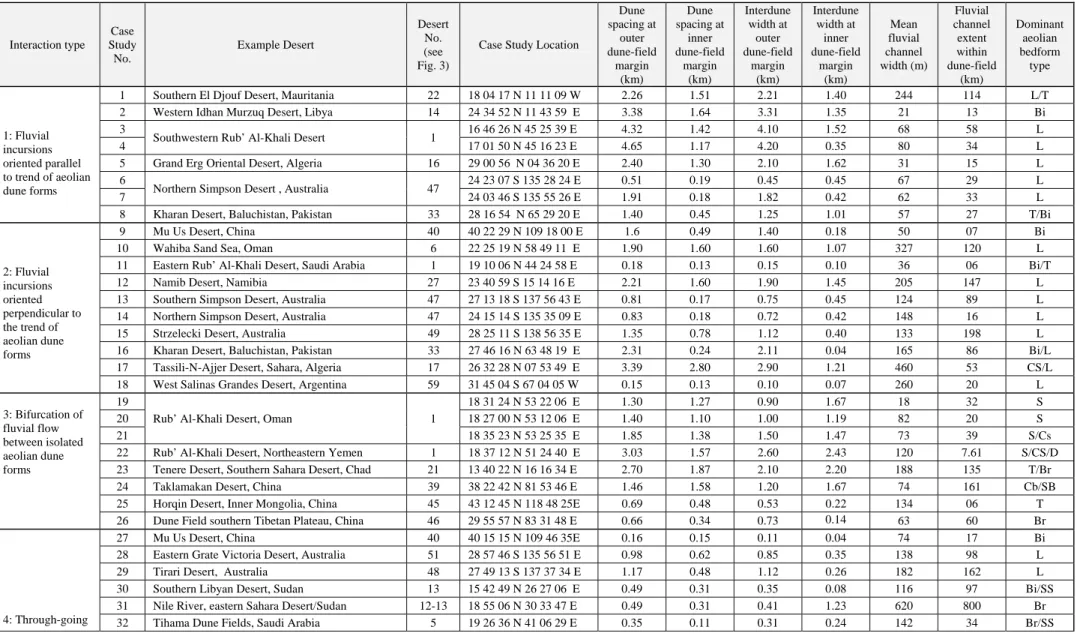
Table 1: Scheme for the classification of types of aeolian-fluvial system interaction. Interaction type Case Study No. Example Desert Desert No. (see Fig. 3)
Case Study Location
Dune spacing at outer dune-field margin (km) Dune spacing at inner dune-field margin (km) Interdune width at outer dune-field margin (km) Interdune width at inner dune-field margin (km) Mean fluvial channel width (m) Fluvial channel extent within dune-field (km) Dominant aeolian bedform type 1: Fluvial incursions oriented parallel to trend of aeolian dune forms
1 Southern El Djouf Desert, Mauritania 22 18 04 17 N 11 11 09 W 2.26 1.51 2.21 1.40 244 114 L/T 2 Western Idhan Murzuq Desert, Libya 14 24 34 52 N 11 43 59 E 3.38 1.64 3.31 1.35 21 13 Bi 3
Southwestern Rub’ Al-Khali Desert 1 16 46 26 N 45 25 39 E 4.32 1.42 4.10 1.52 68 58 L
4 17 01 50 N 45 16 23 E 4.65 1.17 4.20 0.35 80 34 L
5 Grand Erg Oriental Desert, Algeria 16 29 00 56 N 04 36 20 E 2.40 1.30 2.10 1.62 31 15 L 6
Northern Simpson Desert , Australia 47 24 23 07 S 135 28 24 E 0.51 0.19 0.45 0.45 67 29 L
7 24 03 46 S 135 55 26 E 1.91 0.18 1.82 0.42 62 33 L
8 Kharan Desert, Baluchistan, Pakistan 33 28 16 54 N 65 29 20 E 1.40 0.45 1.25 1.01 57 27 T/Bi 2: Fluvial incursions oriented perpendicular to the trend of aeolian dune forms
9 Mu Us Desert, China 40 40 22 29 N 109 18 00 E 1.6 0.49 1.40 0.18 50 07 Bi 10 Wahiba Sand Sea, Oman 6 22 25 19 N 58 49 11 E 1.90 1.60 1.60 1.07 327 120 L 11 Eastern Rub’ Al-Khali Desert, Saudi Arabia 1 19 10 06 N 44 24 58 E 0.18 0.13 0.15 0.10 36 06 Bi/T 12 Namib Desert, Namibia 27 23 40 59 S 15 14 16 E 2.21 1.60 1.90 1.45 205 147 L 13 Southern Simpson Desert, Australia 47 27 13 18 S 137 56 43 E 0.81 0.17 0.75 0.45 124 89 L 14 Northern Simpson Desert, Australia 47 24 15 14 S 135 35 09 E 0.83 0.18 0.72 0.42 148 16 L 15 Strzelecki Desert, Australia 49 28 25 11 S 138 56 35 E 1.35 0.78 1.12 0.40 133 198 L 16 Kharan Desert, Baluchistan, Pakistan 33 27 46 16 N 63 48 19 E 2.31 0.24 2.11 0.04 165 86 Bi/L
17 Tassili-N-Ajjer Desert, Sahara, Algeria 17 26 32 28 N 07 53 49 E 3.39 2.80 2.90 1.21 460 53 CS/L 18 West Salinas Grandes Desert, Argentina 59 31 45 04 S 67 04 05 W 0.15 0.13 0.10 0.07 260 20 L
3: Bifurcation of fluvial flow between isolated aeolian dune forms 19
Rub’ Al-Khali Desert, Oman 1
18 31 24 N 53 22 06 E 1.30 1.27 0.90 1.67 18 32 S
20 18 27 00 N 53 12 06 E 1.40 1.10 1.00 1.19 82 20 S
21 18 35 23 N 53 25 35 E 1.85 1.38 1.50 1.47 73 39 S/Cs
22 Rub’ Al-Khali Desert, Northeastern Yemen 1 18 37 12 N 51 24 40 E 3.03 1.57 2.60 2.43 120 7.61 S/CS/D 23 Tenere Desert, Southern Sahara Desert, Chad 21 13 40 22 N 16 16 34 E 2.70 1.87 2.10 2.20 188 135 T/Br 24 Taklamakan Desert, China 39 38 22 42 N 81 53 46 E 1.46 1.58 1.20 1.67 74 161 Cb/SB 25 Horqin Desert, Inner Mongolia, China 45 43 12 45 N 118 48 25E 0.69 0.48 0.53 0.22 134 06 T
26 Dune Field southern Tibetan Plateau, China 46 29 55 57 N 83 31 48 E 0.66 0.34 0.73 0.14 63 60 Br 4: Through-going