RESEARCH ARTICLE
Ethnobotanical perspective
of antimalarial plants: traditional knowledge
based study
Abdul Qayum
1,3*, Rakesh Arya
2and Andrew M. Lynn
1Abstract
Background: Considering the demand of antimalarial plants it has become essential to find and locate them for their optimal extraction. The work aims to find plants with antimalarial activities which were used by the local people; to raise the value of traditional knowledge system (TKS) prevalent in the study region; to compile characteristics of local plants used in malaria treatment (referred as antimalarial plants) and to have its spatial distribution analysis to establish a concept of geographical health.
Methods: Antimalarial plants are listed based on literature survey and field data collected during rainy season, from 85 respondents comprised of different ethnic groups. Ethno-medicinal utilities of plants was extracted; botanical name, family, local name, part used, folklore, geographical location and image of plants were recorded after cross validating with existing literatures. The interview was trifurcated in field, Vaidya/Hakims and house to house. Graphical analysis was done for major plants families, plant part used, response of people and patients and folklore. Mathemati-cal analysis was done for interviewee’s response, methods of plant identification and people’s preferences of TKS through three plant indices.
Results: Fifty-one plants belonging to 27 families were reported with its geographical attributes. It is found plant root (31.75 %) is used mostly for malaria treatment and administration mode is decoction (41.2 %) mainly. The study area has dominance of plants of family Fabaceae (7), Asteraceae (4), Acanthaceae (4) and Amaranthaceae (4). Most popular plants found are Adhatoda vasica, Cassia fistula and Swertia chirata while % usage of TKS is 82.0 % for malaria cure. Conclusion: The research findings can be used by both scientific community and common rural people for bio-discovery of these natural resources sustainably. The former can extract the tables to obtain a suitable plant towards finding a suitable lead molecule in a drug discovery project; while the latter can meet their local demands of malaria, scientifically.
Keywords: Antimalarial plants, Ethnobotany, Ethnoecology, Geographical health, Medicinal plants, Plant indices, Traditional knowledge system
© 2016 Qayum et al. This article is distributed under the terms of the Creative Commons Attribution 4.0 International License (http://creativecommons.org/licenses/by/4.0/), which permits unrestricted use, distribution, and reproduction in any medium, provided you give appropriate credit to the original author(s) and the source, provide a link to the Creative Commons license, and indicate if changes were made. The Creative Commons Public Domain Dedication waiver (http://creativecommons.org/ publicdomain/zero/1.0/) applies to the data made available in this article, unless otherwise stated.
Background
Traditional medicine plays a pivotal role in the econ-omy and sustainable growth of developing nations especially for poor countries like India. The preventive health measures have still not been able to penetrate the
economically downtrodden societies including typical rural and schedule tribe areas. Their life is purely depend-ent on traditional knowledge system (TKS) of herbal plants for medicinal cure purposes. The native people are exploiting a variety of herbals for effective curing of vari-ous ailments and most widely malaria. Such herbal plants possess potential remedy even for some incurable dis-eases as well. The plant parts used, preparation method of medicine from it, and its administration as drug var-ies geographically [1]. However, the knowledge of herbal
Open Access
*Correspondence: [email protected]
1 Center for Biology and Bioinformatics, School of Computational
and Integrative Sciences, Jawaharlal Nehru University, New Delhi 110067, India
medicines is gradually perishing, although some of the traditional herbal men like Vaidyas and Hakims are still practicing the art of herbal healing effectively in such regions. Ethno-medicinal and ethno-botanical studies have offered immense scope and opportunities for the development and synthesis of new drugs. Modern drugs have been deducted from folklore and traditional medi-cines [2].
Malaria is a culprit that has victimized almost half of the modern civilization and it is endemic across more than 100 countries [3]. Malaria is a major public health problem in India, 40 million people are suffering from this single celled Plasmodium, a protozoan parasite and more than 1.5 million confirmed cases are reported annually by the National Vector Borne Disease Control Programme (NVBDCP), New Delhi of which 40–50 % is due to Plasmodium falciparum (Pf). However, in the study area malaria is only due to Plasmodium vivax as Pf count was found to be zero [4]. Malaria can be consid-ered as poor man’s disease and hence it requires focussed planning both at the level of government and at the com-munity level.
In the Tarai regions of Eastern Uttar Pradesh (UP)
the spreading of vector borne diseases becomes uncon-trolled especially during rainy seasons [4]. In recent stud-ies, chloroquine-resistant P. falciparum malaria has been observed with increasing incidence in the whole coun-try, while it was effective for treating nearly all cases of malaria in the past. P. falciparum has become drug resist-ant now. The continued treatment of such cases with chloroquine is probably one of the factors responsible for the increased proportion of P. falciparum cases relative to
P. vivax [5]. The current malaria therapies include meth-ods such as passive surveillance of malaria, use of arte-misinin combination therapy (ACT) and introduction of intervention like rapid diagnostic tests (RDT) for malaria cure [6]. The commercial industry on antimalarial drug is facing huge a challenge primarily due to development of drug resistance of malarial parasites. And, hence bio-discovery of antimalarial plants has become inevitable towards discovering a novel plant in order to find a lead compound towards malaria medication efforts. It is very likely that in times to come sustainable harvesting of this natural wealth needs to be done to meet the public health demands.
In this circumstance, ethnobotanical and ethnoeco-logical study of antimalarial plants in three districts of Eastern UP was carried out. The native communities have been using their unique traditional knowledge (TK) system, culture, indigenous skills and expertise since the ancient times towards the disease control. TK refers to the ancient and non-conventional practices towards disease control mechanism. Local knowledge of a
community is spread across various diseases and masses from developing countries utterly rely on the herbal treat-ment methods. India has witnessed its legacy from the times of Charaka and Susruta for traditional knowledge for antimalarial activities of various medicinal plants [7]. Considering the high time demand of antimalarial plant it has become inevitable to find and locate them for its optimal extraction for antimalarial actions.
A series of similar work has been done by many people in the country including Verma et al. [2] that has found 72 plant species in campus of Banares Hindu University, Varanasi, UP and has compiled the traditional uses by the local inhabitants. Ethnobotanical work has also been done for the Gorakhpur regions [8, 9] while Kumar and
Akhtar [10] have worked on ethanomedicinal
solana-ceous plants of eastern UP and have found 14 species of medicinal angiosperms. Qayum et al. [1] has done geo-graphic information system based study for antimalarial plants in three districts of UP to highlight geographi-cal attributes of these plants. Tomar [11] has worked on folk medicinal uses of plant roots of Meerut city and has found 39 medicinal plant species belonging to 39 gen-era and 28 families which are used by rural and common people for various diseases. Srivastava [12] has done eth-nobotanical exploration with respect to food values of 27 underutilized edible fruits consumed by ethnic people of north-eastern terai region of UP and have established database of these fruits which is useful in bio-discovery projects for achieving food security and environmental sustainability. Shankar et al. [13] have listed all the anti-malarial plants of north east India and has emphasized the need for an alternative drug for malaria for develop-ing new antimalarial plants from the indigenous plants.
Panda et al. [14] have documented phyto-therapeutical practices in Mayurbhanj district of Orissa, eastern India and has described 112 plants from 62 families which are therapeutically used against different ailments including malaria. Bahekar and Kale [15] on “Herbal Plants Used for the Treatment of Malaria” have highlighted many plants which are used since ancient times for the treat-ment of malaria and have established pharmacotherapy is the most common treatment strategy for the disease. Sampath et al. [16] have described Swertia chirata as a traditional herb and has found it is used as a preventa-tive measure for malaria during epidemics. Kamaraj et al. [17] has done an ethno-pharmacological investigation on antimalarial activities of medicinal plants traditionally used in the villages of Dharmapuri regions of south India and has identified 24 such plants.
prevalent in the region. Therefore, it is aimed to compile and list characteristics of antimalarial plants prevalent in three districts of Kushinagar, Maharajganj and Gorakh-pur of eastern UP and to show the distribution of antima-larial in various geographical regions. Further, the scope of present work has been extended to find out geographi-cal health (GH) of antimalarial plants. GH refers to the state of plant presence in the study area. It is found that many plants are at the verge of either extinction, critically endangered or vulnerable [18]. Hence, immediate atten-tion is highly expected from policy makers to safeguard the interest of people at large and some immediate action is needed from the government bodies to safeguard the current bio-diversity and medicinal plant richness of the region.
The current work is a fine mixture of literature survey and supplemented with collected information through interviews and field visits after cross validating the study
area findings from Vaidyas/Hakims, and native rural
people. The TK skills and practices thus developed are freely exchanged, cared for and nourished as a common property of the communities [19]. The current work has also highlighted the geographical location of antimalar-ial plants along with listing them with its family name, folklore, and image of plant in its natural habitat and geographical health has also been explored. It is antici-pated that with these observations; traditional method of malaria cure can be accelerated especially for the low socio-economic regions where modern health measures are nearly absent.
Methods Study area
The study area lies in the north-eastern corner of the most populous state of UP, India. It comprises a large stretch lying to the north of the river Rapti tributary to the Gandak river and also surrounded by Rohini river at northern side which is the major source of water in the region. The area comprised of three district of UP viz. Gorakhpur, Kushinagar and Maharajganj (Fig. 1). It has total area of 9291 Km2 (3.82 % of the state). This much of land area is home to people of countries like, Greece, Portugal, Sweden, etc. It also shares international borders with Nepal. The study area is one among highly dense region of the country (average density around 1210
peo-ple per Km2) and is home to more than 10.67 million
Indian population [20]. The region is one among several vector borne diseases sensitive zones especially for Japa-nese encephalitis and malaria.
The study region is home to Tharu, Buksa, Raji and Jaunsari tribes (114,876 people) which are 1.075 % of total population. Two religious communities Hindus
(82 %) and Muslims (15 %) find dominance while Bud-dhists and others constitute 3 % population of the study area. The economics is primarily based on agriculture (97.48 %) with 87,400 main industry working and to some extent on tourism because of presence of Kushinagar Baudh temple (one of the main attraction for the Bud-dhists). As per the recent census (2011) of UP, India [20] total Population of study area is 10,690,142 (Table 1) with 48.60 % female population and 1,680,587 as total house hold of which 87.98 % is rural house hold. The rural peo-ple migrate to big cities for work very often. Entire study area happens to be least developed part of one of the poorest State in India. It makes low socio-economic pro-file for the region with 3,462,855 total work participation (female: 28.3 %) and 1,708,932 main work participation (female: 19.1 %) and 1,753,923 marginal worker (female: 37.3 %) (Fig. 1).
Methodology
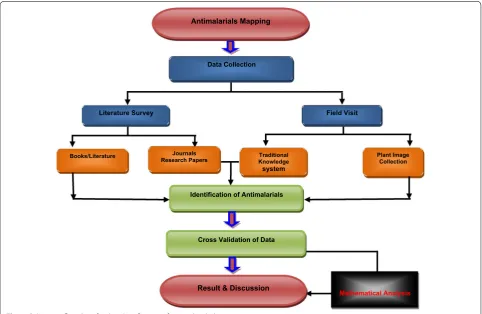
The work has been carried out as per the schematic flow-chart (Fig. 2) and its various dimensions are
Pre‑ethnobotanical surveys
Before conducting actual ethnobotanical survey pre-ethnobotanical survey was conducted to set the standard goal targets. It began with extraction of ethno-medicinal utilities of plants extracted from the relevant literature available in journals and books and cross examined with accessing traditional knowledge (TK) available with local community including tribal. Numerous related publications of different journals, accepted literature from books like Flora of upper Gangetic Plains [21], Flora Gorakhpurensis [22], Herbal
Medicines [23] were searched and cross examined with
databases like PubMed Central (PMC) and finally this collected information was compared with the field data collected.
Ethnobotanical survey setup
Survey was conducted in the study area based on the interviews of respondents chosen on criteria discussed below. The interview was trifurcated with respect to field,
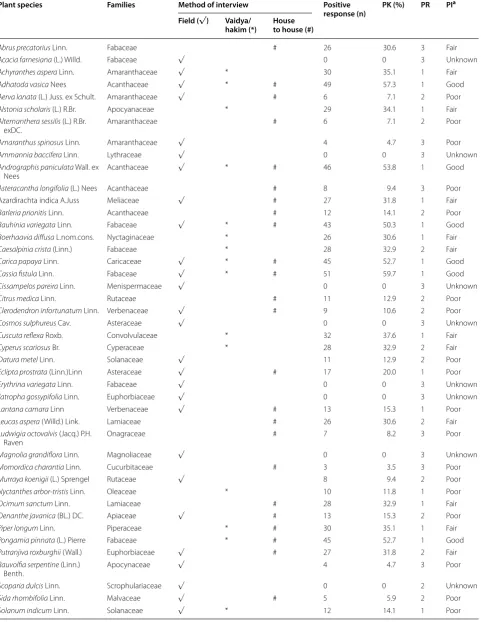
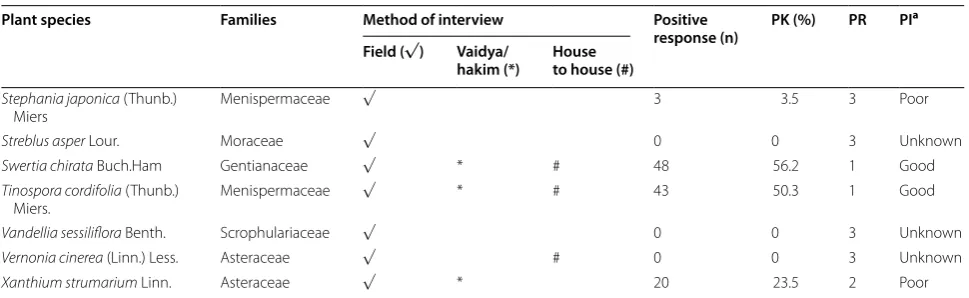
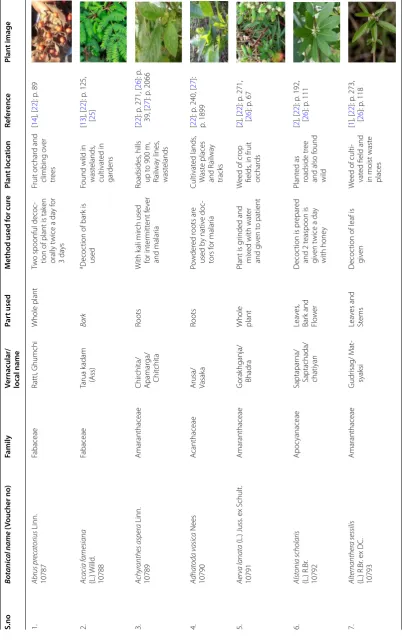
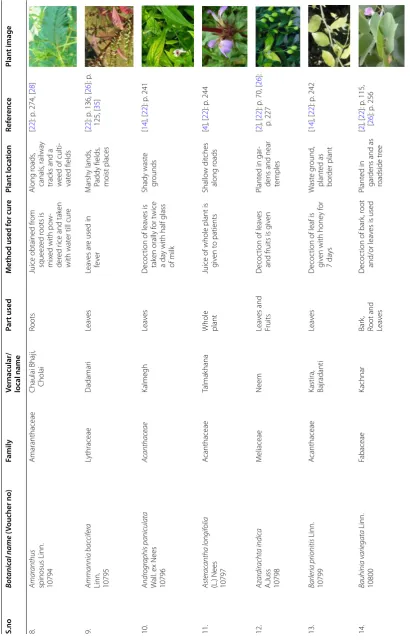
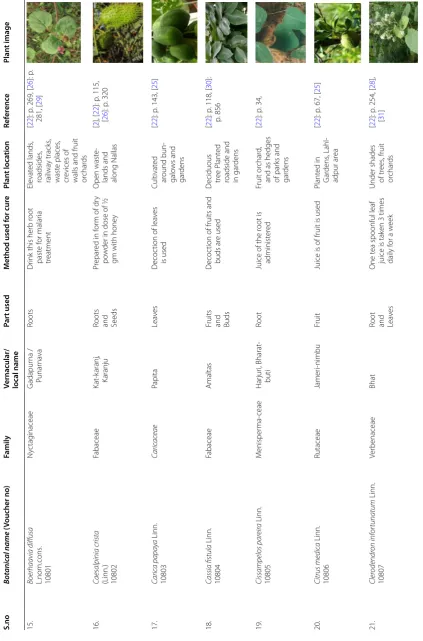
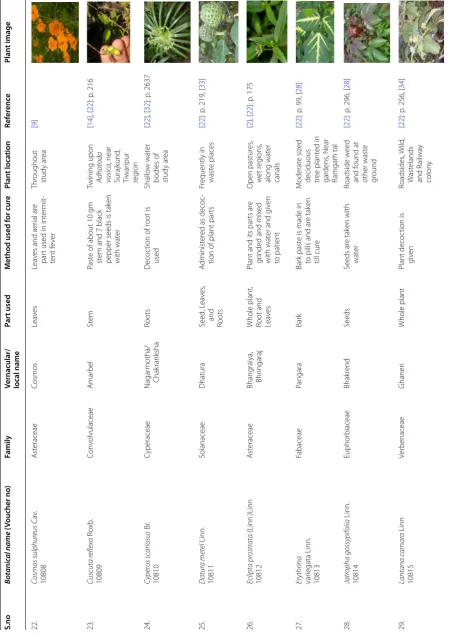
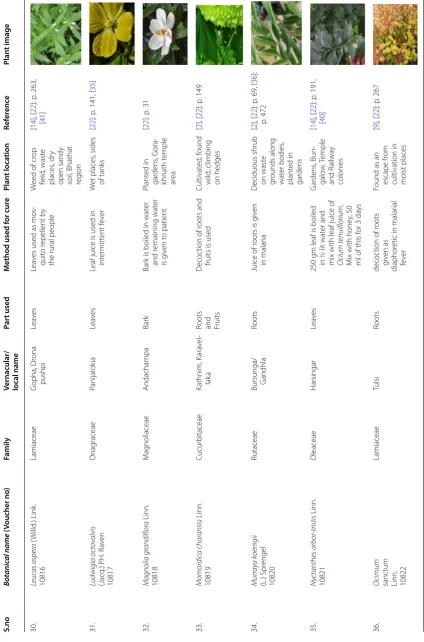
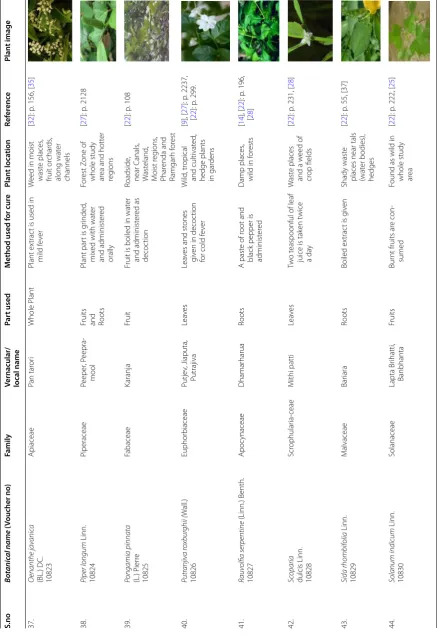
Vaidya/Hakims and house to house (Table 2). Total of 51 plants (Table 3) were recorded and tabulated. Interview was conducted to find out number of positive cases (n) towards malaria treatment for a particular plant of the region.
Sampling method
followed. Survey locality chosen based on the study of API (Annual parasitic index) of Malaria obtained from District Malaria Office. All those areas with relatively high API were selected for the survey while respondents were chosen based on their interface with TK System and this information was obtained from a local survey while
herbalists (Vaidya/Hakim) of the locality were given
precedence. In total 85 independent respondents were
chosen from Gorakhpur (22), Kushinagar (38) and Maha-rajganj (35) districts (Table 4).
Identification of plants
Ethnobotanical data collected was observed by expert taxonomist and botanist Dr. H.B. Naithani (Senior Sci-entist, FRI University Dehradun, India) and taxonomic details were ascertained (Table 3). Botanical names of
Kushinagar
Gorakhpur Maharajganj
84°30'0"E 84°30'0"E
84°15'0"E 84°15'0"E
84°0'0"E 84°0'0"E
83°45'0"E 83°45'0"E
83°30'0"E 83°30'0"E
83°15'0"E 83°15'0"E
83°0'0"E 83°0'0"E
27°15'0"
N
27°15'0"
N
27°0'0"N 27°0'0"N
26°45'0"
N
26°45'0"
N
26°30'0"
N
26°30'0"
N
26°15'0"
N
26°15'0"
N
¯
LOCATION OF STUDY AREA
INDIA
UTTAR PRADESH
0 10 20 30 405 Kilometers
Fig. 1 Location of study area
Table 1 Socio-economic profile of the study area
Source: census of India, 2011
District name Population type Total house hold Total population Total male Total female
Gorakhpur Rural 554,999 3,604,766 1,838,726 1,766,040
Urban 137,961 836,129 439,051 397,078
Total 692,960 4,440,895 2,277,777 2,163,118
Kushinagar Rural 533,834 3,396,437 1,730,377 1,666,060
Urban 27,228 168,107 87,678 80,429
Total 561,062 3,564,544 1,818,055 1,746,489
Maharajganj Rural 175,359 1,101,460 564,281 537,179
Urban 7497 45,201 23,349 21,852
[image:4.595.57.536.90.420.2] [image:4.595.57.541.465.598.2]plants and authority were established and cross. The data obtained from ecological sampling was used to deter-mine geographical health of any plant in terms of vulner-able, nearly extinct or under threat. This was specified in terms of PK (percentage known) = 0 or PI (plant impres-sion) as ‘unknown’.
Ethics statement and consent
This is to declare that the work has no completing inter-est. All respondents actively participated and the survey was purely participative and voluntarily in nature. Partic-ipants provided verbal informed consent to participate in this study. They were free to withdraw their information at any point of time. Participant consent was recorded on the designed sheet. The authors adhered with ISE 2006 and 2008 guidelines and all the principles laid down were followed. The entire voucher numbers of specimen col-lected were deposited in Forest Research Institute, Deh-radun herbarium (Voucher Number 10787–10837). The work did not involve any protected area (National Park, Wildlife Sanctuary or Private Plantation). It was done on the land which can be easily accessed by the public and hence no such permission was required. The field stud-ies did not involve any endangered or protected specstud-ies.
GPS co-ordinates for the study region are: Gorakhpur (Lat. 26°13′N to 27°29′N and Long. 83°05′E to 83°56′E), Kushinagar (Lat. 26°39′N to 27°15′N and Long. 83°38′E to 84°15′E) and Maharajganj (Lat. 26°59′N to 27°19′N and Long. 83°09′E to 83°45′E).
Interview details and criteria
Eighty-five respondents from all ethnic groups compris-ing Tharu tribes, Hindus, Muslims were interviewed against designed format of set of questions like collec-tion date, local name, plant image, plant locacollec-tion/region, plant description, method of usage of plant in malarial cases. There were 63 male and 22 female respondents from all three major localities (Table 4). No pre-test was conducted as the obtained information was cross validated with the existing TK system in literature data-bases (PMC etc.). Elderly (as they are TK rich) people above 50 years (mean age 52.0 years) and mainly males (74.12 %) were interviewed because of their easy availa-bility. Samples were collected throughout the study area making each geographical representation possible (such as people residing in the area of forest, near water bod-ies, urban areas and rural areas). Participants were cho-sen based on their experience and as well as age. Plant
Mathematical Analysis
Traditional Knowledge
system
Plant Image Collection Books/Literature Research PapersJournals
Identification of Antimalarials
Result & Discussion Cross Validation of Data Antimalarials Mapping
Data Collection
Literature Survey Field Visit
[image:5.595.57.540.89.403.2]Table 2 Methods of plant identification and people’s preferences
Plant species Families Method of interview Positive
response (n) PK (%) PR PI
a
Field (√) Vaidya/
hakim (*) House to house (#)
Abrus precatorius Linn. Fabaceae # 26 30.6 3 Fair
Acacia farnesiana (L.) Willd. Fabaceae √ 0 0 3 Unknown
Achyranthes aspera Linn. Amaranthaceae √ * 30 35.1 1 Fair
Adhatoda vasica Nees Acanthaceae √ * # 49 57.3 1 Good
Aerva lanata (L.) Juss. ex Schult. Amaranthaceae √ # 6 7.1 2 Poor
Alstonia scholaris (L.) R.Br. Apocyanaceae * 29 34.1 1 Fair
Alternanthera sessilis (L.) R.Br.
exDC. Amaranthaceae # 6 7.1 2 Poor
Amaranthus spinosus Linn. Amaranthaceae √ 4 4.7 3 Poor
Ammannia baccifera Linn. Lythraceae √ 0 0 3 Unknown
Andrographis paniculata Wall. ex
Nees Acanthaceae √ * # 46 53.8 1 Good
Asteracantha longifolia (L.) Nees Acanthaceae # 8 9.4 3 Poor
Azardirachta indica A.Juss Meliaceae √ # 27 31.8 1 Fair
Barleria prionitis Linn. Acanthaceae # 12 14.1 2 Poor
Bauhinia variegata Linn. Fabaceae √ * # 43 50.3 1 Good
Boerhaavia diffusa L.nom.cons. Nyctaginaceae * 26 30.6 1 Fair
Caesalpinia crista (Linn.) Fabaceae * 28 32.9 2 Fair
Carica papaya Linn. Caricaceae √ * # 45 52.7 1 Good
Cassia fistula Linn. Fabaceae √ * # 51 59.7 1 Good
Cissampelos pareira Linn. Menispermaceae √ 0 0 3 Unknown
Citrus medica Linn. Rutaceae # 11 12.9 2 Poor
Clerodendron infortunatum Linn. Verbenaceae √ # 9 10.6 2 Poor
Cosmos sulphureus Cav. Asteraceae √ 0 0 3 Unknown
Cuscuta reflexa Roxb. Convolvulaceae * 32 37.6 1 Fair
Cyperus scariosus Br. Cyperaceae * 28 32.9 2 Fair
Datura metel Linn. Solanaceae √ 11 12.9 2 Poor
Eclipta prostrata (Linn.)Linn Asteraceae √ # 17 20.0 1 Poor
Erythrina variegata Linn. Fabaceae √ 0 0 3 Unknown
Jatropha gossypifolia Linn. Euphorbiaceae √ 0 0 3 Unknown
Lantana camara Linn Verbenaceae √ # 13 15.3 1 Poor
Leucas aspera (Willd.) Link. Lamiaceae # 26 30.6 2 Fair
Ludwigia octovalvis (Jacq.) P.H.
Raven Onagraceae # 7 8.2 3 Poor
Magnolia grandiflora Linn. Magnoliaceae √ 0 0 3 Unknown
Momordica charantia Linn. Cucurbitaceae # 3 3.5 3 Poor
Murraya koenigii (L.) Sprengel Rutaceae √ 8 9.4 2 Poor
Nyctanthes arbor-tristis Linn. Oleaceae * 10 11.8 1 Poor
Ocimum sanctum Linn. Lamiaceae # 28 32.9 1 Fair
Oenanthe javanica (BL.) DC. Apiaceae √ # 13 15.3 2 Poor
Piper longum Linn. Piperaceae * # 30 35.1 1 Fair
Pongamia pinnata (L.) Pierre Fabaceae * # 45 52.7 1 Good
Putranjiva roxburghii (Wall.) Euphorbiaceae √ # 27 31.8 2 Fair
Rauvolfia serpentine (Linn.)
Benth. Apocynaceae √ 4 4.7 3 Poor
Scoparia dulcis Linn. Scrophulariaceae √ 0 0 2 Unknown
Sida rhombifolia Linn. Malvaceae √ # 5 5.9 2 Poor
[image:6.595.59.541.106.729.2]images have been taken from the plant’s natural habitat to build digital database to facilitate the easy recogni-tion of plant by the local people and later it is integrated with the known traditional applications of these plants as antimalarial plants. The interview was done in three
modes of field, Vaidya/Hakims and house to house to
strengthen the data collection process and at the finally it was cross checked.
Data collection
Data on ethno-medicinal applications of plants are col-lected in the sequences of: Serial number, botanical name, family, vernacular/local name, part used, methodology used, plant location, and plant image. Later, collected data was referenced using surveyed literature and databases. Demographic and socio-economic survey was also done to find correlation with malaria epidemic with these fac-tors. Additional information (Additional file 1) like age of respondents, education background, monthly income and occupation was also recorded (Table 4). It was also queried for how frequent people use TK system for malaria cure.
Data analysis
Data obtained through ethnobotanical survey was analy-ses through following parameters:
1. Percentage known (PK): This is % of people who have knowledge of usage of plant species for malaria treat-ment and calculated as: PK = [n/m] × 100; n = total number of positive responses and m = total number of respondents.
2. Preference ranking (PR): It is similar to the rank system used by Asase et al. [24]. Here, plants were ranked as per their effectiveness towards treatment. Rank 1, 2 and 3 were assigned where rank 1 means highly effective in treatment while rank 3 means least effective.
3. Plant impression (PI): It is the index indicating how a plant is perceived in the locality. PI is comprised of four categories as good, fair, poor and unknown. PI is ‘Good’ if PK ≥ 50 %; ‘Fair’ if 30 ≤ PK < 50 %; ‘Poor’ if 0 < PK < 30 %; and ‘Unknown’ if PK = 0 %. PK = 0 means plant is unknown among community people but found in the field and also available in the literatures. 4. Graphical analysis: Pie charts have been drawn to
assess the most frequent part of plant usage in TK system of antimalarial plants (Graph 1), major plant families (Graph 2), response of people and patients (Graph 3) and folklore (Graph 4).
5. Analysis of the interviewee response [17] has been presented (Tables 2 and 4) to include observations related to geographical profile of study area, literacy, monthly income, occupation etc.
Results
Traditional knowledge system of antimalarial plants: Compilation of all antimalarial plants prevalent in the region (Table 3).
Graphical analysis (Fig. 3): Four pie charts are drawn and results are:
• Roots are mainly (31.8 %) used towards malaria cure (Graph1).
• As many as 12 plant families have more than one plant in the region (Graph 2) and Fabaceae family makes highest influence of 7 plants in the list (Table 3).
• Response of people and patients was analysed. It was found that 41.2 % responses are ‘poor’ while 19.6 % people are unknown for any TK Based system in the region (Graph 3).
• In 41.2 % cases plant part used as decoction followed by plant usage as juices or in some form of beverage# (27.5 %) and plants are also used as mosquito repel-lent (2 %) (Graph 4).
a PI is ‘Good’ if PK ≥ 50 %, ‘Fair’ if 30 % ≤ PK < 50 %, ‘Poor’ if 0 < PK < 30 %, and ‘Unknown’ if PK = 0 % Table 2 continued
Plant species Families Method of interview Positive
response (n) PK (%) PR PI
a
Field (√) Vaidya/
hakim (*) House to house (#)
Stephania japonica (Thunb.)
Miers Menispermaceae √ 3 3.5 3 Poor
Streblus asper Lour. Moraceae √ 0 0 3 Unknown
Swertia chirata Buch.Ham Gentianaceae √ * # 48 56.2 1 Good
Tinospora cordifolia (Thunb.)
Miers. Menispermaceae √ * # 43 50.3 1 Good
Vandellia sessiliflora Benth. Scrophulariaceae √ 0 0 3 Unknown
Vernonia cinerea (Linn.) Less. Asteraceae √ # 0 0 3 Unknown
[image:7.595.56.541.100.249.2]Table
3
List of plan
ts used f
or malaria tr
ea
tmen
t in the study r
egion S.no Bota nic al na me (V oucher no ) Family
Vernacular/ local name
Par
t used
M
ethod used f
or cur e Plan t loca tion Ref er enc e Plan t image 1. Abrus pr ec atorius Linn. 10787 Fabaceae Ratti, Ghumchi Whole plant Tw
o spoonful decoc
-tion of plant is tak
en
orally t
wice a da
y f or 3 da ys Fruit or char d and climbing o ver tr ees [ 14 ], [ 22 ]: p . 89 2. Ac acia f arnesiana (L.) W illd . 10788 Fabaceae Tarua k adam (A ss) Bark aD ecoc
tion of bar
k is
used
Found wild in wast
elands , cultivat ed in gar dens [ 13 ], [ 22 ]: p . 125, [ 25 ] 3. Achyr anthes asper a Linn. 10789 Amaranthaceae Chir chita/ Apamar ga/ Chit chita Roots W ith k ali mir ch used for int er mitt ent f ev er and malar ia Roadsides , hills up t
o 900 m,
Railwa y lines , wast elands [ 22 ]: p
. 271, [
26 ]: p . 39, [ 27 ]: p . 2066 4. Adhatoda v asic a Nees 10790 A canthaceae Arusa/ Vasak a Roots Po w der ed r oots ar e used b y nativ e doc -tors f or malar ia Cultivat ed lands , W ast e places and R ailwa y tracks [ 22 ]: p
. 240, [
27 ]: p. 1899 5. Aer va lanata (L.) Juss
. ex S
chult. 10791 Amaranthaceae G orak hganja/ Bhadra Whole plant
Plant is g
rinded and
mix
ed with wat
er and g iv en t o patient W
eed of cr
op
fields
, in fruit
or char ds [ 2 ], [ 22 ]: p . 271, [ 26 ]: p . 67 6.
Alstonia scholaris (L.) R.Br
. 10792 Apoc yanaceae Saptapar na/
Saptachada/ chatiyan
Lea ves , Bar k and Flo w er D ecoc
tion is pr
epar
ed
and 2 t
easpoon is
giv
en t
wice a da
y with hone y Plant ed as roadside tr ee
and also f
ound wild [ 2 ], [ 22 ]: p . 192, [ 26 ]: p . 111 7. Alternanther a sessilis (L.) R.Br
. ex DC.
10793 Amaranthaceae Gudr isag/ M at -syaksi Lea ves and St ems D ecoc
tion of leaf is
giv
en
W
eed of culti
-vat
ed field and
in moist wast
[image:8.595.84.487.95.736.2]Table 3 c on tinued S.no Bota nic al na me (V oucher no ) Family
Vernacular/ local name
Par
t used
M
ethod used f
or cur e Plan t loca tion Ref er enc e Plan t image 8. Amar anthus
spinosus Linn. 10794
Amaranthaceae
Chaulai Bhaji, Cholai
Roots
Juice obtained fr
om
squeez
ed r
oots is
mix
ed with po
w
-der
ed r
ice and tak
en
with wat
er till cur
e Along r oads , canals , railwa y
tracks and a weed of culti
-vat ed fields [ 22 ]: p
. 274, [
28 ] 9. Ammannia bac cifer a Linn. 10795 Lythraceae Dadamar i Lea ves Lea ves ar
e used in
fe ve r M arsh y lands , Paddy fields , moist places [ 22 ]: p
. 136, [
26 ]: p . 125, [ 35 ] 10. Andr ogr aphis paniculata W all
. ex Nees
10796 Ac anthac eae Kalmegh Lea ves D ecoc
tion of lea
ves is
tak
en orally f
or t
wice
a da
y with half glass
of milk Shady wast e gr ounds [ 14 ], [ 22 ]: p . 241 11. Aster ac antha longifolia
(L.) Nees 10797
A
canthaceae
Talmak
hana
Whole plant Juice of whole plant is giv
en t o patients Shallo w dit ches along r oads [ 4 ], [ 22 ]: p . 244 12. A zar dir achta indic a A.Juss 10798 M eliaceae Neem Lea ves and Fruits D ecoc
tion of lea
ves
and fruits is g
iv
en
Plant
ed in gar
-dens and near temples
[
2
], [
22
]: p
. 70, [
26 ]: p. 227 13. Barleria prionitis Linn. 10799 A canthaceae Kastira, Bajradanti Lea ves D ecoc
tion of leaf is
giv
en with hone
y f or 7 da ys W ast e g round , plant ed as bor der plant [ 14 ], [ 22 ]: p . 242 14. Bauhinia v ariegata Linn. 10800 Fabaceae Kachnar Bar k,
Root and Lea
ves
D
ecoc
tion of bar
k, r
oot
and/or lea
ves is used
Plant
ed in
gar
dens and as
[image:9.595.68.479.91.735.2]Table 3 c on tinued S.no Bota nic al na me (V oucher no ) Family
Vernacular/ local name
Par
t used
M
ethod used f
or cur e Plan t loca tion Ref er enc e Plan t image 15.
Boerhaavia diffusa L.nom.cons
. 10801 N yc tag inaceae G adapur na / Punar na va Roots Dr
ink this her
b r oot past e f or malar ia tr eatment Ele vat ed lands , roadsides , railwa y tracks , wast e places , cr evices of
walls and fruit orchar
ds
[
22
]: p
. 269, [
26 ]: p . 281, [ 29 ] 16.
Caesalpinia crista (Linn.) 10802
Fabaceae Kat -k aranj , Karanju
Roots and Seeds
Pr
epar
ed in f
or
m of dr
y
po
w
der in dose of ½
gm with hone
y
Open wast
e-lands and along Nallas
[ 2 ], [ 22 ]: p . 115, [ 26 ]: p . 320 17. Caric a papay a Linn. 10803 Caric ac eae Papita Lea ves D ecoc
tion of lea
ves is used Cultivat ed ar ound bun -galo ws and gar dens [ 22 ]: p
. 143, [
25 ] 18. Cassia fistula Linn. 10804 Fabaceae Amaltas
Fruits and Buds
D
ecoc
tion of fruits and
buds ar
e used
D
eciduous tree P
lant
ed
roadside and in gar
dens
[
22
]: p
. 118, [
30 ]: p. 856 19. Cissampelos par eir a Linn. 10805 M enisper ma-ceae Harjur i, Bharat -buti Root
Juice of the r
oot is administ er ed Fruit or char d,
and as hedges of par
ks and gar dens [ 22 ]: p . 34, 20. Citrus medic a Linn. 10806 Rutaceae Jamer i-nimbu Fruit
Juice is of fruit is used
Plant ed in G ar dens , Lahl -adpur ar ea [ 22 ]: p
. 67, [
25 ] 21. Cler odendr on infor tunatum Linn. 10807 Ver benaceae Bhat
Root and Lea
ves
One t
ea spoonful leaf
juice is tak
en 3 times
daily f
or a w
eek
Under shades of tr
ees , fruit or char ds [ 22 ]: p
. 254, [
28
],
[
31
[image:10.595.70.494.95.737.2]S.no Bota nic al na me (V oucher no ) Family
Vernacular/ local name
Par
t used
M
ethod used f
or cur e Plan t loca tion Ref er enc e Plan t image 22. Cosmos sulphur eus C av. 10808 A st eraceae Cosmos Lea ves Lea
ves and aer
ial ar
e
par
t used in int
er mit -tent f ev er Thr
oughout study ar
ea [ 9 ] 23. Cuscuta r eflex a R ox b. 10809 Con volvulaceae Amar bel St em Past
e of about 10 g
m
st
em and 7 black
pepper seeds is tak
en
with wat
er
Twining upon Adhatoda vasic
a , near Surajk und , Tiwar ipur reg ion [ 14 ], [ 22 ]: p . 216 24. Cyperus sc ariosus B r. 10810 Cyperaceae Nagar motha/ Chak ranksha Roots D ecoc
tion of r
oot is
used
Shallo
w wat
er
bodies of study ar
ea [ 22 ], [ 32 ]: p . 2637 25. D atur a metel Linn. 10811 Solanaceae Dhatura Seed , L ea ves , and Roots A dminist er ed as decoc
-tion of plant par
ts
Fr
equently in wast
e places
[
22
]: p
. 219, [
33 ] 26. Eclipta pr ostr ata (Linn.)Linn 10812 A st eraceae Bhang raiya, Bhr ingaraj
Whole plant, Root and Lea
ves
Plant and its par
ts ar
e
gr
inded and mix
ed
with wat
er and g
iv en to patient Open pastur es , w et r eg ions , along wat er canals [ 2 ], [ 22 ]: p . 175 27. Er ythrina var iegata Linn. 10813 Fabaceae Pangara Bar k Bar k past
e is made in
to pills and ar
e tak en till cur e M oderat e siz ed
deciduous tree plant
ed in gar dens , Near Ramgar h tal [ 22 ]: p
. 99, [
28 ] 28. Jatr opha gossypifolia Linn. 10814 Euphor biaceae Bhak rend Seeds Seeds ar e tak en with wat er Roadside w eed and f ound at other wast e gr ound [ 22 ]: p
. 296, [
28 ] 29. Lantana c amar a Linn 10815 Ver benaceae Ghaner i Whole plant Plant decoc tion is giv en Roadsides , W ild , W ast elands and R ailwa y colon y [ 22 ]: p
. 256, [
[image:11.595.69.519.95.737.2]Table 3 c on tinued S.no Bota nic al na me (V oucher no ) Family
Vernacular/ local name
Par
t used
M
ethod used f
or cur e Plan t loca tion Ref er enc e Plan t image 30. Leuc as asper a (W illd .) Link . 10816 Lamiaceae G opha, Dr ona pushpi Lea ves Lea
ves used as mos
-quit
o r
epellent b
y
the rural people
W
eed of cr
op field , wast e places , dr y
open sandy soil
, Bhathat reg ion [ 14 ], [ 22 ]: p . 263, [ 41 ] 31. Ludwigia octo valvis (Jacq .) P .H. R av en 10817 Onag raceae Panijalok ia Lea ves
Leaf juice is used in int
er mitt ent f ev er W et places , sides of tanks [ 22 ]: p
. 141, [
35 ] 32. Magnolia gr andiflor a Linn. 10818 M ag noliaceae Andachampa Bar k Bar
k is boiled in wat
er and r emaining wat er is g iv en t o patient Plant ed in gar dens , G ora -khnath t emple ar ea [ 22 ]: p . 31 33. Momor dic a char antia Linn. 10819 Cucur bitaceae Kathnim, K ara vel -lak a
Roots and Fruits
D
ecoc
tion of r
oots and
fruits is used
Cultivat ed , f ound wild , climbing on hedges [ 2 ], [ 22 ]: p . 149 34. Murr ay a k oenigii (L.) Spr engel 10820 Rutaceae
Bursunga/ G
andhla
Roots
Juice of r
oots is g
iv
en
in malar
ia
D
eciduous shrub on wast
e gr ounds along wat er bodies , plant ed in gar dens [ 2 ], [ 22 ]: p
. 69, [
36 ]: p. 472 35. N yctanthes arbor -tristis Linn. 10821 Oleaceae Harsingar Lea ves 250 g
m leaf is boiled
in ½ lit wat
er and
mix with leaf juice of Ocium tenuiflorium
.
M
ix with hone
y, 50
ml of this f
or 3 da
ys G ar dens , Bun -galo w , T emple and R ailwa y colonies [ 14 ], [ 22 ]: p . 191, [ 40 ] 36. O cimum sanc tum Linn. 10822 Lamiaceae Tulsi Roots decoc
tion of r
oots
giv
en as
diaphor
etic in malar
ial
fe
ve
r
Found as an escape fr
om
cultivation in moist places
[image:12.595.70.495.93.736.2]S.no Bota nic al na me (V oucher no ) Family
Vernacular/ local name
Par
t used
M
ethod used f
or cur e Plan t loca tion Ref er enc e Plan t image 37. O enanthe jav anic a
(BL.) DC. 10823
Apiaceae Pan tar or i Whole P lant Plant ex trac
t is used in
mild f
ev
er
W
eed in moist wast
e places , fruit or char ds , along wat er channels [ 32 ]: p
. 156, [
35 ] 38. Piper longum Linn. 10824 Piperaceae Peeper , P eepra -mool
Fruits and Roots
Plant par
t is g
rinded
,
mix
ed with wat
er and administ er ed orally For est Z one of
whole study area and hott
er reg ions [ 27 ]: p . 2128 39.
Pongamia pinnata (L.) P
ier re 10825 Fabaceae Karanja Fruit
Fruit is boiled in wat
er and administ er ed as decoc tion Roadside , near C anals , W ast eland , M oist r eg ions , Phar enda and Ramgar h f or est [ 22 ]: p . 108 40. Putr anjiv a r oxbur ghii ( W all .) 10826 Euphor biaceae Putje v, Jiaputa, Putrajiva Lea ves Lea
ves and st
ones
giv
en in decoc
tion
for cold f
ev er W ild , tr opical and cultivat ed ,
hedge plants in gar
dens [ 9 ], [ 27 ]: p . 2237, [ 22 ]: p . 299. 41. Rauv olfia serpentine (Linn.) Benth. 10827 Apoc ynaceae Dhamar harua Roots A past
e of r
oot and
black pepper is administ
er
ed
Damp places
,
wild in f
or ests [ 14 ], [ 22 ]: p . 196, [ 28 ] 42. Sc oparia
dulcis Linn. 10828
Scr ophular ia-ceae M ithi patti Lea ves Tw o t
easpoonful of leaf
juice is tak
en t wice a da y W ast e places
and a w
eed of cr op fields [ 22 ]: p
. 231, [
28 ] 43. Sida rhombifolia Linn. 10829 M alvaceae Bar iara Roots Boiled ex trac
t is g
iv
en
Shady wast
e
places near tals (wat
er bodies),
hedges
[
22
]: p
. 55, [37]
44. Solanum indicum Linn. 10830 Solanaceae Lapta Br ihatti, Banbhanta Fruits Bur
nt fruits ar
e con
-sumed
Found as wild in whole study ar
ea
[
22
]: p
. 222, [
[image:13.595.69.508.96.736.2]Bev
er
age is also plan
t e
xtr
ac
t based dr
ink which usually ha
ve lo
w c
onc
en
tr
ation than dec
oc
tion
a D
ec
oc
tion is an e
xtr
ac
tion method b
y boiling of dissolv
ed chemicals of medicinal plan
t or plan
t par ts S.no Bota nic al na me (V oucher no ) Family
Vernacular/ local name
Par
t used
M
ethod used f
or cur e Plan t loca tion Ref er enc e Plan t image 45. Stephania japonic a (T hunb .) M iers 10831 M enisper maceae Rajpatha Roots Sun-dr ied r oots po w
-der is g
iv
en orally
with boiled wat
er
twice a da
y
Hedges on moist gr
ound [ 2 ]: p . 36 46. Str eblus asper L our . 10832 M oraceae Singhor Bar k
Juice obtained fr
om
squeez
ed bar
k is
tak
en till cur
e Small e ver gr een tr ee f ound thr oughout
the study ar
ea
[
22
]: p
. 308, [
28 ] 47. Sw er tia chir ata Buch.Ham 10833 G entianaceae Chiraita, Chara yatah Kirata tikta Whole plant Plant par
t is boiled
in wat
er till 75 % is
evaporat
ed and it is
dr ink lik e t ea Temperat e H imala yas , 4000-10000 f t, Paniara r eg ion [ 27 ]: p . 1664 48. Tinospor a c or difolia (T hunb .) M iers . 10834 M enisper ma-ceae Gur ch, Giloe St ems and Roots D ecoc
tion of r
oots is
giv
en f
or malar
ia
On hedges and tr
ees , tr opical reg ions of study ar ea [ 2 ], [ 22 ]: p
. 35, [
36 ]: p. 77 49. Vandellia sessiliflor a Benth. 10835 Scr ophular ia-ceae Linder nia sp .Indian Whole plant D ecoc
tion of whole
plant is used
Damp and shady places
, g ro ws with g rasses [ 22 ]: p
. 229, [
38 ] 50. Vernonia ciner ea (Linn.) L ess . 10836 A st eraceae Sahde vi Whole plant D ecoc
tion is pr
epar
ed
and 2 t
ea spoonful is
giv
en t
wice a da
y
W
eed of cr
op
field and wast
e gr ounds [ 2 ], [ 22 ]: p . 181 51. Xanthium strumarium Linn. 10837 A st eraceae Lapetua Roots D ecoc
tion is pr
epar ed of r oots of Lapetua W ast e places , long railwa y
tracks and roadsides
[image:14.595.70.460.92.736.2]Plant identification and people’s preferences:
• Considering people’s perception there are 11 plants reported to be ‘unknown’ to the community people against malaria treatment while 8 plants are ‘Good’, 12 plants are ‘Fair’ and 21 plants are ‘Poor’ in their efficacy.
• Only 7 plants were reported during all three modes of interview conducted.
• Cassia fistula has got highest number of positive response (n = 51) among community people,
fol-lowed by Adhatoda vasica (n = 49) and Swertia chi-rata (n = 48). All these plants are most popular anti-malarial plants.
Socio-economic and ethnographic results:
• 97.48 % population is agrarian, mean age of respond-ents is 52.0 years, total literacy is 68.5 %, monthly income is 4298.3 INR (~70.3 USD), and Gender (M/F) respondents were (78/22) %. TK system usage is among 82 % of population but they also rely on modern
Graph 1: Plant parts used
Graph 2: Major Plant Families
(Number of plants from each family is indicated on the chart)
Graph 3: Response of people & patients Graph 4: Folk-lore (Mode of administration)
Bark9.5% Stem 3.2%
Root 31.8%
Leaf 25.4 % Plant
14.3 % Fruit 11.1%
Seed 4.8%
4
4
2
4 2 7
2 3
2 2
2 2
Acanthaceae
Amaranthaceae
Apocyanaceae
Asteraceae
Euphorbiaceae
Fabaceae
Lamiaceae
Menispermaceae
Rutaceae
Scrophulariaceae
Solanaceae
Verbenaceae
Good 15.7 %
Fair 23.5 % Poor
41.2 %
Unknown for TK 19.6 %
41.20%
7.80% 27.50%
11.80% 9.80%
2.00% Decoction
Powder
Beverage/Jiuce
Boiled Water
Oral Administration & Paste
Mosquito Repellant
[image:15.595.56.542.84.562.2]method of allopathic treatment when TKS becomes ineffective.
Discussion
In the study area two species namely Nagarmotha (Cyperus scariosus) and Goma or Drona pushpi ( Leu-cas aspera) are at the verge of extinction mainly due to the change in water reservoir structure i.e. because of loss of water bodies like ponds and other reservoirs for
the former and because of change in land-use pattern for the latter. The ethnoecology of the study region does not produce the scintillating picture. Further, due to ruthless exploitation, many important medici-nal plants species are becoming rare and some of them are critically endangered as per the IUCN (Interna-tional Union for Conservation of Nature and Natural resource), Switzerland red list criteria. It is estimated that 10 % of all plant species are currently endangered in India [39].
Table 4 Mathematical analysis of interviewee’s response
Location Total
interviewees (M/F)
Occupation Literacya (M/F) Mean ageb
(years) Monthly incomec,d
(INR)e
Agri Non‑agri
Gorakhpur 22 (18/4) 74 % 26 % 74.5 (79/54) % 52.7 4915.0
Kushinagar 38 (27/11) 78 % 22 % 63.7 (68/53) % 55.0 3887.0
Maharajganj 35 (28/7) 82 % 18 % 67.2 (72/48) % 48.4 4093.0
Totalf 85 (63/22) 78 % 22 % 68.5 (73/52) % 52.0 4298.3
Details of plants
Surveyed plants 51
Most commonly used plants 3 Number of families of
surveyed plants 27
Number of families with
two or more plants 12
Major plant families
Fabaceae 7
Asteraceae 4
Acanthaceae 4
Amaranthaceae 4
Menispermaceae 3
Most popular plants (With PK ≥ 55 %)
Adhatoda vasica Nees
Cassia fistula Linn.
Swertia chirata Buch.Ham Geographical profileg
Average annual rainfall 1148.3 mm
Average relative humidity 68.33 %
Average high temperature 30.92 °C
Average low temperature 19.58 °C
Average Mean Temperature 25.25 °C
Average no of days with precipitation 44.88
Frequency of usage of traditional knowledge Yes (%) No (%)
70 (82 %) 15 (18 %)
a Calculated on weighted mean %, M males, F females b Mean of ages of M and F
c Based on India census 2011
d Economics and Statistics Division, Govt. of Uttar Pradesh, India e 1 USD 61.11 INR
f Calculated on arithmetic mean %
[image:16.595.58.542.102.500.2]It is found that 51 plant species out of various plants studied in the region belong to 27 families are used by native people malaria treatment (Table 3) and out of these families studied certain family of plants like, Fabaceae (7), Acanthaceae (4), Amaranthaceae (4), Asteraceae (4), and Menispermaceae (3) are prevalent in the region. A com-mendable work has been done by Duthie for the flora of Flora of Upper Gangetic Plains [21] and by Srivastava for the Flora Gorakhpurensis [22]. Some plants like Cosmos sulphurous, Piper longum and Swertia chirata were found in the study area which missed its place in the Srivasa-tava’s work and also these are not listed in Duthie’s work. These plants might have grown up in the area during the recent decades or may have come through migrations.
Spatial distribution of antimalarial plants found in the study area including types of habitat is supplied in Table 3. Plant diaspora usually found in the tree/forest, open pastures, river and water body regions; while some are found in some specific locations like Lahladpur, Sura-jkund, Tiwaripur, Ramgarh Tal, Gorakhnath Temple, Pharenda (forest), Ramgarh (forest), Paniara, Bhathat areas whereas and some are found vaguely throughout the region. Further, there are few plants which are found in fruit orchards, waste/open areas and along railway tracks. Some are distributed in moist waste places, crop fields and along roadside and some are in marshy lands, moist places, garden and temples (in settlements) and near nallas/canals.
The region falls in low socio economic zones with monthly income ~70.3 USD while population is agrar-ian (97.48 %) and hence their obvious dependency for malaria cure is TKS. It is also found that malaria inci-dences are relatively higher in the socio-economic
infe-rior regions. There are sizeable amount of Vaidya/
Hakims (Experts in TKS based applications) who derive their raw material from nearby forests, railway tracks, fruit orchards or from target plantations. The region has
1,436,878 as total households in which 87.98 % is rural while merely 12.02 % is urban and demographic divide lies with 51.25 % males while 48.75 % females in the entire study area [20].
In drawing Pie Chart for plant parts used; rationale used is total number of plants with a particular plant part used is divided by total plants in the study area and multi-plied by 100 to compute its %. It is found that among col-lected plants mostly (31.75 %) roots are used for malaria treatment followed by leaf (25.40 %) and the least used part of plant is stem (3.17 %) preceded by seeds (4.76 %) (Graph 1). Details of most widely plant parts used is nec-essary to ascertain the significance of that particular part and to establish the coherence of the work with other similar works e.g. for the medicinal plants of BHU region of Varanasi UP [2]. It has been established that for that given region 30 % of preparations are derived from roots which is maximum in plant parts used. In another simi-lar work of Shankar et al. [13] on antimalarial plants of northeast India, frequently used plant parts were roots (31 %), after leaves (33 %). It can be established that in most of the cases root is most frequently used towards medicinal purposes and in some cases leaves are also widely used. Thus, there is a need of expertise for extrac-tion of artemisinin or quinine alkaloid compounds pref-erably from the roots and leaves.
There are 12 plant families including Acanthaceae, Amaranthaceae, Apocyanaceae, Asteraceae, Euphor-biaceae, Fabaceae, Lamiaceae, Menispermaceae, Ruta-ceae, ScrophulariaRuta-ceae, Solanaceae and Verbenaceae that have more than one plant in the region (Graph 2) while Fabaceae makes highest contribution of 7 plants
namely Abrus precatorius, Acacia farnesiana, Bauhinia
variegate, Caesalpinia crista, Cassia fistula, Erythrina variegate and Pongamia pinnata (Table 3). Response of these plants among people and patients was upright and it had been acting as good alternative to modern means Table 5 IUCN status for frequently used plants towards malaria cure
Based on IUCN red list criteria
S. no Plant species IUCN status S. no Plant species IUCN status
1 Abrus precatorius Not threatened 11 Cassia fistula Linn Not yet been assessed 2 Achyranthes aspera Not yet assessed 12 Cuscuta reflexa Roxb Not yet been assessed
3 Adhatoda vasica Not yet assessed 13 Cyperus scariosus Not yet been assessed
4 Alstonia scholaris Least concerned 14 Leucas aspera Not yet been assessed
5 Andrographis paniculata Not yet assessed 15 Ocimum sanctum Not yet been assessed
6 Azardirachta indica Not yet assessed 16 Piper longum Not yet been assessed
7 Bauhinia variegata Not yet assessed 17 Pongamia pinnata Least concerned
8 Boerhaavia diffusa Not yet assessed 18 Putranjiva roxburghii Not yet been assessed
9 Caesalpinia crista Not Threatened 19 Swertia chirata Not yet been assessed
[image:17.595.59.541.103.246.2]of medication and had been catering to the need of mil-lions from the ancient times. Folklore (mode of admin-istration) of plant parts is decoction (41.2 %) where plant parts are boiled in water and water is evaporated to extend that plant part makes thick syrupy liquid. It is an excellent way to prepare herb with an awful taste. Decoctions of roots and barks are very often prepared while decoctions of leaves, flowers, or seeds are rarely prepared.
The interview was trifurcated in three categories of field, Vaidya/Hakims and house to house to understand the method of plant identification and people perception (Table 2). It was found that as many as seven plants were obtained through all three interview modes. Three indi-ces PK, PR and PI are used to understand perception of plants among community people. Total number of posi-tive responses (n) were collected and combined for all 51 reported plants. PK signifies popularity of a plant as antimalarial. If PK > 55 %; such plants are considered as most popular plants. For 11 plants, PK = 0 was reported that signifies plant is unknown in the locality among people, during field survey they were found and such plants also found space in literature and journals. Plants with PK = 0 are highly important and further work has to be done to enhance its PI which will lead to increased plant’s medicinal utility. These are the plants which have least importance among communities and these are eco-logically available for future potential application. These plants are not known due to over-dependence on plants with PK > 55, in the study area.
PR has been assigned to each plant either as 1, 2 or 3 depending on people perception as well as research find-ings. 1 signifies for highly effective in treatment while 3 for least effective in treatment. There are 19 plants with PR as 1 i.e. They are rated as effective in malaria treat-ment. It is observed that indices like PR and PI are in resonance for most of the plants; higher is PR (PR = 1) higher is PI (Good) and vice versa and runs parallel. 21 plants have ‘Poor’ PI (41.2 %). It is because of its ineffi-cacy towards fever, intermittent fever or malaria cure and hence these plants are least preferred by the local com-munities. IUCN status of plants with ‘fair’ and ‘good’ impression (PK > 30 %) towards malaria cure is tabulated to understand geographical health of the plant as per the red list criteria (Table 5).
Having life in close vicinity of the nature, traditional societies have acquired unique knowledge about the use of flora and fauna in wild, most of which are still unknown to the common masses. The research findings can be used by both scientific community and common rural/tribal people for bio-prospecting of these natural resources sustainably. The former can extract the tables obtained in the research work to obtain a suitable plant
for finding a lead molecule towards a drug discovery pro-ject; while the latter can use Table 3 information to meet the local demand for malaria cure. Plant image, method-ology and plant location can be seen together to bring malaria cure measures in friendly manner for local com-munities at their door step. This will be much useful for the developing countries like India where the modern medical facilities have still not penetrated down deeper. It provides sustainable alternate to the existing system of malaria medication. Findings of such works should be made open and unrestricted for its elaborated application to benefit the public at large. The work has also included many plants that are not widely used and are not popular in the study area. This widens the scope of extraction of other non-traditional plants in cases of poor ethnoecol-ogy especially during extinction or vulnerability of the traditional plants because of over harvesting and over exploitation of these medicinal plants.
Conclusion
The study region has monsoonal rainfall with numerous rivers emanating from Himalayas and low gradient leads to stagnation of water that makes it favourable for vector borne diseases. TK coupled with information technology makes the study highly useful for basic amenity stressed population. The lack of ecology-related knowledge and awareness which is evident from low socio-economic profile of the study region gives signs of over harvesting of plants. This is reinforced by the observed poor geo-graphical health of plants as some plants are found vul-nerable; some has become rare, while some are nearly extinct. It further widens the horizon of socio-economic based utility of this kind of research work. The research work fully addresses the issue of making public the avail-ability of information of antimalarial plants for its cheap-est and sustainable harvcheap-esting for malaria cure locally and it opens gates for numerous opportunities of public health at large.
causes little or no side effects and also it is very cheap and affordable. Some plants are nearly extinct in the region, the reason being change in land use pattern and shrink-ing of water bodies along with over harvestshrink-ing of herbs. The bio-depletion of these antimalarial plants is due to the burgeoning population and unscientific management of the natural resources.
The work has highlighted the fact that some species with medicinal applications are not ethnoecologically rich. People residing in the study area are not aware that some of the medicinal plants are becoming extinct grad-ually. The current work of listing these antimalarial plants would assist people in identifying ecologically sensitive species and hence adoption of regeneration technique for that particular plant species, thus it supports health and economy of the community. There exists alarm-ing need to conserve and protect these important spe-cies for sustainable harvesting. A serious endeavour has to be taken to save these natural resources for the gen-erations to come. Study area in the work happens to be least developed part of one of the poorest State in India. Thus, working for low socio-economic profile region will certainly be useful at larger scale and will bear extended benefits when the work will be thoroughly evaluated.
Future work
Exhaustive research should be done on comparative anal-ysis of different antimalarial plants to comprehend if the local evaluation of the effectiveness of the different spe-cies can be scientifically authenticated. Listed medicinal plants can be potentially used for extracting antimalarial plants content for further chemical extraction and its analysis as a potential constituent of malaria drug can be established. The plants can be further studied across its family to establish antimalarial activity relationship of various families and correlation based study can also be done to generate coefficient of correlation for a particu-lar plant family as an antimaparticu-larial. The present findings can be extended to chalk out a complete roadmap of geo-graphical health of antimalarial plants in terms of IUCN criteria of red list and for detailed ethnoecology work.
Authors’ contributions
AQ proposed the idea, made analysis, drafted the manuscript and imple-mented the idea. AML channelized the work, made critical evaluation and provided continuous feedbacks. RA was responsible for socio-economic evaluation and ethnoecology and was responsible for carrying theoretical work related to the manuscript preparation. All authors read and approved the manuscript and designed the overall architecture of the work. All authors read and approved the final manuscript.
Additional file
Additional file 1. Survey format.
Author details
1 Center for Biology and Bioinformatics, School of Computational and
Integra-tive Sciences, Jawaharlal Nehru University, New Delhi 110067, India. 2 Centre
for the Study of Regional Development, Jawaharlal Nehru University, New Delhi, India. 3 Indira Gandhi National Forest Academy, Dehradun, India. Acknowledgements
The authors express our deepest regards to Vaidyas/Hakims, herbalists, traditional healers and various rural people, who provided lot of information on TK system of the study area. We also acknowledge the computer labora-tory facility at SCIS and CSRD, Jawaharlal Nehru University, New Delhi for the essential support in carrying out this work. We are highly indebted to the CSIR for providing financial assistance rendered which kept constant motivation throughout the work. The author is also grateful to Dr. HB Naithani and Dr. Vinay Kant Misra, IFS for plant verification and cross validating the authority of botanical names and is equally indebted to the Ministry of Environment and Forest, MoEF Govt. of India for its continuous support towards making this work plausible. Further, author is grateful to IGNFA, Dehradun for its constant motivation and encouragements.
Competing interests
The authors declare that they have no competing interests.
Received: 19 September 2014 Accepted: 21 December 2015
References
1. Qayum A, Lynn A, Arya R. Traditional knowledge system based GIS map-ping of antimalarial plants: spatial distribution analysis. J Geogr Inf Syst. 2014. doi:10.4236/jgis.2014.65041.
2. Verma AK, Kumar M, Bussmann RW. Medicinal plants in an urban environ-ment: the medicinal flora of Banares Hindu University, Varanasi, Uttar Pradesh. J Ethnobiol Ethnomed. 2007;3:35.
3. National Vector Borne Disease Control Programme: Malaria situation in India. Ministry of Health and Family Welfare, Delhi. Govt. of India. http:// www.nvbdcp.gov.in/Doc/malaria1.pdf.
4. Qayum A, Lynn AM, Arya R, Jaiswal SK. GIS integrated epidemiological indices for risk area identification towards malaria control measures. IJEAT. 2013;2(6):376–81.
5. National Vector Borne Disease Control Programme: Guidelines for diag-nosis and treatment of malaria in India 2009.
6. Qayum A, Arya R, Kumar P, Lynn AM. Socio-economic, epidemiologi-cal and geographic features based GIS-integrated mapping to identify malarial hotspot. Malaria J. 2015;14:192. doi:10.1186/s12936-015-0685-4. 7. Gupta A, Singh AK, Qayum A. Evaluating ancient Indian history and
cul-ture towards malaria control measures based on traditional knowledge system. Int J Interdiscip Multidiscip Stud. 2014;1(8):181–90.
8. Pandey AK, Tripathi NN. Aromatic plants of Gorakhpur division: their anti-mycotic properties and medicinal value. Int J Pharm Sci Rev Res. 2011;7(2):142–7.
9. Pandey AK, Tripathi NN. Diversity and distribution of aromatic plants in forests of Gorakhpur division, U.P., India. Biol Forum Int J. 2010;2(2):25–33. 10. Kumar V, Akhtar M. Ethanomedicinal solanaceous plants of eastern Uttar
Pradesh. Ind J Life Sci. 2013;2(2):95–8.
11. Tomar A. Folk medicinal uses of plant roots from Meerut district, Uttar Pradesh. Ind J Tradit Knowl. 2009;8(2):298–301.
12. Srivastava R. Underutilised fruits: a potential of local food resource. Int J Pharm Bio Sci. 2013;4(3):1301–5.
13. Shankar R, Deb S, Sharma BK. Antimalarial plants of northeast India: an overview. J Ayurveda Integr Med. 2011;3(1):10–6.
14. Pandal SK, Rout SD, Mishra N, Panda T. Phytotherapy and traditional knowledge of tribal communities of Mayurbhanj Orissa India. J Pharma-cognosy Phytother. 2011;3(7):101–13.
15. Bahekar S, Kale R. Herbal plants used for the treatment of malaria—a literature review. J Pharmacognosy Phytochem. 2013;1(6):141–6. 16. Kumar KS, Bhowmik D, Chandira M. Swertia chirayita: a traditional herb
• We accept pre-submission inquiries
• Our selector tool helps you to find the most relevant journal
• We provide round the clock customer support
• Convenient online submission
• Thorough peer review
• Inclusion in PubMed and all major indexing services
• Maximum visibility for your research Submit your manuscript at
www.biomedcentral.com/submit
Submit your next manuscript to BioMed Central
and we will help you at every step:
17. Kamaraj C, Kaushik NK, Rahuman AA, Mohanakrishnan D, Bagavan A, Elango G, et al. Antimalarial activities of medicinal plants traditionally used in the villages of Dharmapuri regions of South India. J Ethnophar-macol. 2012;141:796–802.
18. Prakash A. Uses of some threatened and potential ethnomedicinal plants among the tribals of Uttar Pradesh and Uttrakhand in India. In: National Conference on Forest Biodiversity—Earth’s Living Treasure. 2011:93-99. 19. Pushpangadan P, Kumar B. Ethnobotany, CBD, WTO and the Biodiversity
Act of India. Ethnobotany. 2005;17:2–12.
20. Directorate of Census Operations UP: Census of India 2011. Uttar Pradesh administrative atlas. 2012.
21. Duthie JF. Flora of upper gangetic plains, vol I and II. Botanical Survey of India.1960.
22. Srivastava TN. Flora Gorakhpurensis. New Delhi: Today and tomorrow’s print and Publ; 1976.
23. Zulfeqar AM. Herbal Medicine. New Delhi:APH Publications;2008. p. 31-56. 24. Asase A, Oteng-Yeboah AA, Odamtten GT, Simmonds MS.
Ethnobotani-cal study of some Ghanaian anti-malarial plants. J Ethnopharmacol. 2005;99:273–9.
25. Sharma UK. Medicinal plant of Assam. Dehradun: Bishen Shingh Mahen-dra Pal Singh Publisher; 2004.
26. Vaidyaratnam PS Varier’s, Arya Vaidya Sala: Indian medicinal plants. Vol I, Orient Longman, 1994.
27. Kitikar KR, Basu BD: Indian Medicinal Plants, vol III. Periodical experts Delhi;1975.
28. Rahmatullah M, Hossan S, Khatun A, Seraj A, Jahan R. Medicinal plants used by various tribes of Bangladesh for treatment of malaria. Hindawi Publishing Corporation, Malaria Research and Treatment;2012. 29. Bhowmik D, Sampath KKP, Srivastava S, Paswan S, Sankar A. Traditional
Indian herbs Punarnava and its medicinal importance. J Pharmacognosy Phytochem. 2012;1(1):52–8.
30. Kitikar KR, Basu BD. Indian medicinal plants, vol II.. Periodical Experts Delhi;1975.
31. Kohli YP, Mibang T, Chaudhuri SK. Ethnomedicines of the tribes of Arunachal Pradesh. Itanagar: Himalayan publishers; 2003. 32. Kitikar KR, Basu BD. Indian Medicinal Plants, vol IV. Periodical Experts
Delhi; 1975.
33. Mahanti N. Tribal ethno-botany of Mizoram, tribal studies of India. New Delhi: Inter India Publications; 1994.
34. Mishra SB, Dwivedi S, Shashi A, Prajapati K. Ethnomedicinal uses of some plant species by ethnic and rural peoples of the Salem district of Tamil-nadu with special reference to the conservation of vanishing species. Ethnobot Leaflets. 2008;12:873–87.
35. Gond DK, Kumar S, Samuel CO, Saini DC, Kulshreshtha K, Abbasi P. Ethano-Medicinal Plants on Indigenous Wetland Plants of Mau District of Uttar Pradesh. Uttar Pradesh: Biodiversity and Conservation India, National conference on climate change; 2012. p. 33–8.
36. Kitikar KR, Basu BD. Indian medicinal plants, vol I. Periodical Experts Delhi;1975.
37. Purkayastha P, Dutta M, Nath SC. Ethno-medicinal plants from Dibru-Saikhowa biosphere reserve Assam. Ind J Trad Knowl. 2007;6:477–80. 38. Shankar R, Rawat MS. Medicinal plants vis a vis forest management in
Arunachal Pradesh: ayurveda and drugs for all. New Delhi : Himalayan Publisher; 2007. p. 110–8.
39. Pandey AK, Patra AK, Shukla PH. Medicinal plants in Satpura Plateau of Madhya Pradesh: current status and future prospects. Ind Forester. 2005;131(7):857–83.
40. Puri A, Saxena R, Saxena RP, Saxena KC, Srivastava V, Tandon JS. Immuno stimulant activity of Nyctanthes arbor-tristis L. J Ethnopharmacol. 1994;42(1):31–7.