R E S E A R C H A R T I C L E
Open Access
Effect of physical activity on sex hormones
in women: a systematic review and
meta-analysis of randomized controlled trials
Kaoutar Ennour-Idrissi
1,2,3, Elizabeth Maunsell
1,2,3,4and Caroline Diorio
1,2,3,4*Abstract
Introduction:
Exposure to high levels of endogenous estrogens is a main risk factor for breast cancer in women,
and in observational studies was found to be inversely associated with physical activity. The objective of the
present study is to determine the effect of physical activity interventions on sex hormone levels in healthy women.
Methods:
Electronic databases (MEDLINE, EMBASE, CENTRAL), from inception to December 2014, and reference lists
of relevant reviews and clinical trials were searched, with no language restrictions applied. Randomized controlled
trials (RCTs) were included if they compared any type of exercise intervention to no intervention or other
interventions, and assessed the effects on estrogens, androgens or the sex hormone binding globulin (SHBG) in
cancer-free women. Following the method described in the Cochrane Handbook for Systematic Reviews of
Interventions, data on populations, interventions, and outcomes were extracted, and combined using the
inverse-variance method and a random-effects model. A pre-established protocol was drawn up, in which the primary
outcome was the difference in circulating estradiol concentrations between the physical activity (experimental) and
the control groups after intervention. Pre-specified subgroup analyses and sensitivity analysis according to the risk
of bias were conducted.
Results:
Data suitable for quantitative synthesis were available from 18 RCTs (1994 participants) for total estradiol
and from 5 RCTs (1245 participants) for free estradiol. The overall effect of physical activity was a statistically
significant decrease of both total estradiol (standardized mean difference [SMD] -0.12; 95 % confidence interval [CI]
-0.20 to
−
0.03; P = 0.01;
I
2= 0 %) and free estradiol (SMD
−
0.20; 95 % CI
−
0.31 to
−
0.09; P = 0.0005;
I
2= 0 %).
Subgroup analyses suggest that this effect is independent of menopausal status and is more noticeable for
non-obese women and for high intensity exercise. Meta-analysis for secondary outcomes found that physical activity
induces a statistically significant decline of free testosterone, androstenedione, dehydroepiandrosterone
–
sulfate and
adiposity markers, while a significant increase of SHBG was observed.
Conclusions:
Although the effect is relatively modest, physical activity induces a decrease in circulating sex
hormones and this effect is not entirely explained by weight loss. The findings emphasize the benefits of physical
activity for women.
* Correspondence:[email protected]
1Axe Oncologie, Centre de recherche du CHU de Québec-Université Laval, St-Sacrement Hospital, 1050 chemin Sainte-Foy, Quebec City, QC, CanadaG1S 4L8
2
Centre de recherche sur le cancer, Université Laval, St-Sacrement Hospital, 1050 chemin Sainte-Foy, Quebec City, QC, CanadaG1S 4L8
Full list of author information is available at the end of the article
Introduction
The practice of regular physical activity is recommended
worldwide by different public health agencies [1] for
pri-mary or secondary prevention of many health problems,
including cancers [2, 3]. In particular, physical activity is
associated with a 25 % reduction in the average risk of
breast cancer among women [4], and this protective
ef-fect appears to be independent of menopausal status [5].
Many interrelated biological mechanisms may underlie
this association, such as the effect of physical activity on
glucose metabolism, inflammation, immune function,
and sex hormones [6]. Indeed, endogenous sex
hor-mones, particularly estrogens, seem to be involved in the
initiation, promotion, and progression of tumors [7].
Prolonged exposure to high endogenous hormone levels
is considered one of the main risk factors for female
breast cancer [8
–
10], with a relative risk of 2.00 (95 %
confidence interval (CI): 1.47
–
2.71) for postmenopausal
women with the highest estradiol levels [10]. Several
ob-servational studies have found an inverse association
be-tween physical activity and circulating estrogen levels
[11, 12]. This effect may be mediated by the decrease in
fat mass [13], the main source of estrogens in
postmeno-pausal women. It may also be mediated by the
disrup-tion of the menstrual cycle before menopause [14],
especially when exercise is associated with low energy
intakes. However, the assessment of the exposure to
physical activity remains imprecise, because it is
gener-ally only possible to measure it in naturgener-ally living
sub-jects using questionnaires [4, 15].
Sex hormones levels could be an objective marker for
evaluating the level and the effectiveness of exposure to
physical activity, and for specifying the type and dose of
appropriate physical activity. If physical activity is shown to
have an effect on sex hormones levels, the present
system-atic review would also clarify one of the biological
mecha-nisms linking physical activity to breast cancer risk. The
objective of this systematic review of randomized controlled
trials is to determine the effect of physical activity on
healthy women
’
s sex hormone levels, according to the type,
modality, intensity, and duration of physical activity, and
according to the women
’
s weight and hormonal status.
Methods
A systematic review of randomized controlled trials,
with meta-analysis where possible, was performed
fol-lowing a pre-established protocol and in accordance
with the method described in the
Cochrane Handbook
for Systematic Reviews of Interventions
[16].
Criteria for considering studies for this review
Types of studies
Any randomized controlled trial that assessed the effects
of physical activity or exercise interventions on sex
hormones in women was considered, regardless of the
modality, type, intensity, or duration of the intervention.
Crossover trials were considered eligible, but only the
re-sults from the first phase were eligible for inclusion in
the quantitative analysis, as an intervention could lead
to long-term effects. No restrictions were applied
re-garding the language or the publication type (articles,
short reports, and abstracts).
Types of participants
Adult cancer-free women were eligible, regardless of
hormonal group (premenopausal, perimenopausal, or
postmenopausal) and body mass index (BMI; normal
weight, overweight, or obese). Age, weight, and
hormo-nal status were considered as defined by the studies. No
participants were excluded based on ethnicity.
Types of interventions
Trials that compared a physical activity intervention
with no treatment, or with any other treatments or
pro-cedures, were included. Physical activity interventions
included: physical exercise of any type, modality,
inten-sity, and duration, as well as lifestyle interventions that
included exercise (i.e., exercise advice); with or without
diet or other cointervention. Trials comparing more
than one form of physical activity were also eligible, and
if no definition was provided by the authors, the less
in-tense intervention was considered the control group. No
restriction was applied regarding who administered the
intervention (physical activity professionals, health
pro-fessionals, or researchers).
Types of outcome measures
The primary outcomes were circulating concentrations
of total and free estradiol.
The secondary outcomes were circulating
concentra-tions of the other estrogens (estrone and estriol),
andro-gens (testosterone and its derivatives, androstenedione
and dehydroepiandrosterone (DHEA)), sex hormone
binding globulin (SHBG), urinary concentrations of sex
steroid metabolites, anthropometric factors (weight,
BMI, and other measures of adiposity), hormonal
func-tion (menstrual regularity and cycle length, or
meno-pausal symptoms
–
that is, hot flushes or night sweats),
and any side effects of exercise interventions.
The effect of intervention on the primary and
second-ary outcomes was estimated using the measurements
obtained after intervention and/or the variation observed
after intervention (the differences between the values
obtained before and after intervention).
Search methods for identification of studies
CENTRAL (Cochrane Central Register of Controlled
Trials) from inception to December 2014 (see Additional
file 1: Table S1). Search strategies were developed for
each of these databases with text words and index terms
related to the population, intervention, and sex
hor-mones, using appropriate filters for randomized trials on
MEDLINE and EMBASE [16]. No language or
publica-tion date restricpublica-tions were applied. The reference lists of
relevant reviews as well as the included studies were
scanned.
Data collection and analysis
Selection of studies
The references identified by the search strategy were
reviewed by one author (KE-I) in a two-step process: the
title and abstract of each study were screened to exclude
the obviously noneligible studies; and the full text of
retained articles was examined and subjected to
evalu-ation using the predefined eligibility criteria. Whenever
required, a second review author (CD) was consulted.
When required, further information was sought from
the authors by email.
Data extraction
Data extraction was performed using an exhaustive
stan-dardized and piloted form designed for this review and
tested on a reference publication by one review author
(KE-I). Information about the study (eligibility criteria,
sample size, and methodology), participant characteristics
(age, ethnicity, unhealthy behaviors, hormonal group,
BMI, hormonal derivatives use, type and level of habitual
physical activity, diet, and habitual energy intake), the
de-scription of the intervention, co-interventions, and
comparators, and different quality evaluation criteria
(se-quence generation, allocation concealment, blinding of
participants and personnel, blinding of outcome
assess-ment, incomplete outcome data, selective reporting bias,
and other sources of bias) were collected. The study
defin-ition of each characteristic or variable retained was
re-corded. In the case of multiple publications related to the
same study, the publication reporting the outcomes of
interest to the present review or the publication with the
longer term follow-up of these outcomes was considered
as the reference, and information was supplemented by
secondary publications as required. The data were
ex-tracted twice over the course of several days to ensure
their quality.
Assessment of risk of bias in retained studies
The assessment of the risk of bias was performed twice
by a review author (KE-I) using the Cochrane risk of
bias assessment tool [16], both for the risk of bias in
each study and for the overall risk of bias across studies.
When required, a second reviewer (CD) was consulted.
Sensitivity analyses were planned to explore the impact
of different levels of risk of bias on the overall
interven-tion effect.
Assessment of heterogeneity
Differences between studies, including intervention
characteristics (differences in modality, type, intensity,
and duration), presence or absence of cointervention,
and participants
’
characteristics before (BMI and
hormo-nal status) and after (weight loss) intervention, were
considered for subgroup analysis.
Measures of intervention effect and data synthesis
A quantitative synthesis of data for the comparison
“
Any
intervention that includes physical activity
”
versus
“
Any
intervention that does not include physical activity
”
was conducted with RevMan 5.3 software (Cochrane
Review Manager Version 5.3; Nordic Cochrane Centre,
Cochrane Collaboration, Copenhagen, Denmark).
software or considered separately when the distinction
was relevant.
The inverse-variance method was used to combine
data from different studies, using a random effects
model to account for both random error and real
differ-ences in populations and interventions between studies
(variability within and between studies). The overall
ef-fect was expressed as the MD between the two groups.
The standardized mean difference (SMD) was used when
the measurement scales between the different studies
could not be corrected by the conversion into a single
unit of measurement, suggesting an error in the unit
re-ported or a difference in the methods used for
measure-ments [16]. Statistical heterogeneity was assessed by the
I
2test, with
I
2> 50 % or greater indicating the presence
of substantial heterogeneity [18]. The predefined
sub-group analysis and sensitivity analysis were performed
regardless of the value of
I
2. The overall risk of bias
across studies and the presence of potential publication
bias (funnel plot method) were evaluated [16, 19]. A
statistical significance level of 5 % was applied to all
analyses.
Results
Results of the search
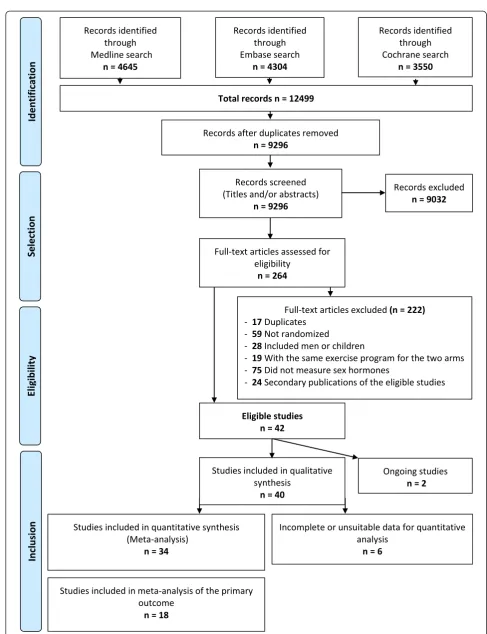
A total of 9296 references were retrieved by electronic
search, of which 42 were eligible, including two ongoing
studies [20, 21] (Fig. 1). For six studies, the data were
not suitable for quantitative analysis and were not
in-cluded (see Additional file 1: Table S2). Eighteen studies
were included in the meta-analysis of the primary
out-come, circulating estradiol concentrations.
Description of studies
Characteristics of included studies by hormonal groups
are summarized in Table 1 and are described in Table S3
(see Additional file 1). The 40 included studies were
published between 1994 and 2014 and had randomized
between 12 and 439 participants (median = 47
partici-pants). Ten studies were conducted on premenopausal
eumenorrheic women [22
–
32], one study on
perimeno-pausal women [33], 13 studies on postmenoperimeno-pausal women
[21, 34
–
53], and 12 studies on women with polycystic
ovary syndrome (PCOS) [54
–
67]. One study did not
spe-cify the hormonal status of participants [68], and one
study was conducted on perpartum women [69] and two
studies on postpartum women [70, 71]. The mean age of
participants varied between 15.5 and 71.0 years; the mean
BMI varied between 19.9 and 39.0 kg/m
2.
Risk of bias in retained studies
Because the nature of the intervention precluded
blind-ing participants and personnel administerblind-ing the
inter-vention, all studies were considered to be at high risk of
performance bias (Additional file 1: Figure S1). Since this
criterion does not discriminate between studies, it was
not considered in the assessment of the overall risk of
bias for each study.
Overall, the risk of bias of the included studies was
unclear, with only two studies judged to be at low risk of
bias [40, 41, 48, 49].
Effects of interventions
Primary outcomes
–
Total estradiol
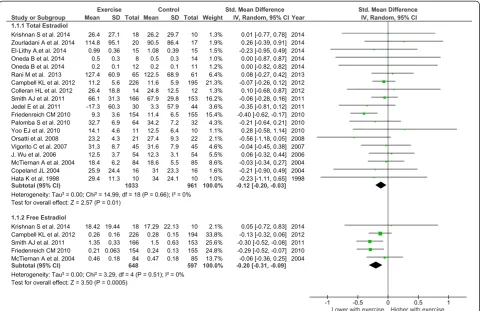
: 21 studies evaluated circulating
concentrations of total estradiol (Fig.
2
). Data from
three studies [
31
,
42
,
53
] were not included in the
meta-analysis (incomplete or unsuitable data; see
Additional file
1
: Table S2). The overall effect of
in-terventions including physical activity was a decrease
of total estradiol concentrations (
n
= 18, SMD =
−
0.12, 95 % CI:
−
0.20 to
−
0.03,
I
2= 0 %). Subgroup
analyses indicated that this effect was more
pro-nounced when studies did not include a
cointerven-tion, when the intervention group was compared
with a nonintervention group, when participants
were overweight (baseline BMI between 25 and
30 kg/m
2), and when the intervention resulted in
substantial weight loss. This effect was particularly
noticeable for resistance exercise, high-intensity
ex-ercise, exercise performed 3
–
5 hours per week, for
interventions that included supervised and
nonsu-pervised sessions, and for exercise performed in
group sessions (see Additional file
1
: Table S4). The
only study reporting a statistically significant
inter-vention effect was judged to be at low bias risk [
40
,
41
], and when excluded the overall effect was no
longer significant (SMD =
−
0.06, 95 % CI:
−
0.16
to 0.03,
I
2= 0 %). The funnel plot was roughly
symmetrical, suggesting a low risk of publication
bias (Additional file
1
: Figure S2).
–
Free estradiol
: five studies evaluated circulating
concentrations of free estradiol (Fig.
2
).
Interventions including physical activity resulted in
an overall decrease of free estradiol concentrations
(
n
= 5, SMD =
−
0.20, 95 % CI:
−
0.31 to
−
0.09,
I
2=
0 %). None of these studies included a
remained significant (SMD =
−
0.17, 95 % CI:
−
0.30
to
−
0.04,
I
2= 0 %). However, a gap in the left bottom
corner of the funnel plot graph may indicate a
sub-stantial risk of bias (Additional file
1
: Figure S3).
Secondary outcomes
–
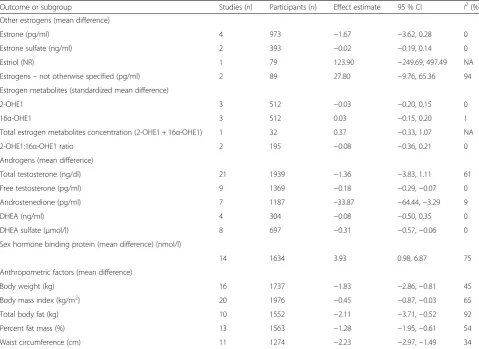
Other estrogens
: the overall effect on estrone
circulating concentrations was not significant (
n
= 4,
MD =
−
1.67, 95 % CI:
−
3.62 to 0.28,
I
2= 0 %). Few
studies reported the effect on the other estrogen and
estrogen metabolites, and the overall effect for each
of them was not significant (Table
2
).
–
Androgens
: 26 studies reported the effect on
circulating concentrations of total testosterone, of
which five were not suitable for quantitative
synthesis (see Additional file
1
: Table S2). The
funnel plot was roughly symmetrical (Figure not
shown) and the overall effect was a nonstatistically
significant decrease of total testosterone (
n
= 21,
MD =
−
1.36, 95 % CI:
−
3.83 to 1.11,
I
2= 61 %).
Significant effects were observed for free
testosterone (
n
= 9, MD =
−
0.18 pg/ml, 95 % CI:
−
0.29 to
−
0.07,
I
2= 0 %), androstenedione (
n
= 7,
MD =
−
33.87 pg/ml, 95 % CI:
−
64.44 to
−
3.29,
I
2= 9 %), and DHEA sulfate (
n
= 8, MD =
−
0.31
μ
mol/l, 95 % CI:
−
0.57 to
−
0.06,
I
2= 0 %).
These effects seemed to be independent of
hormonal group, BMI at baseline, and weight loss
after intervention (see Additional file
1
: Tables S5
and S6). The effect on free testosterone was
slightly more pronounced for interventions with
high-intensity exercise and for resistance exercise.
The effect on androstenedione was more
notice-able for supervised exercise (see Additional file
1
:
Table S6). The effect on DHEA was not
signifi-cant (
n
= 4, MD =
−
0.08 ng/ml, 95 % CI:
−
0.50 to
0.35,
I
2= 0 %).
[image:6.595.305.540.112.226.2]–
SHBG
: 19 studies reported the effect on SHBG, of
which five were not included in quantitative
Table 1
Summary characteristics of eligible studies (
n
= 40)
Participants
–Number of randomized participants: 12–439
–Mean age: 15.5–71.0 years
–Mean BMI: 19.9–39.0 kg/m2
–Hormonal groups:
–Pre-menopausal:n= 10
–Peri-menopausal:n= 1
–Post-menopausal:n= 13
–Polycystic ovary syndrome (PCOS):n= 12
–Per-partum:n= 1
–Post-partum:n= 2
–Unspecified:n= 1 Interventions
–Type of exercise:
–Endurance:n= 17
–Resistance:n= 6
–Endurance and resistance:n= 11
–Yoga/Tai chi:n= 2
–Free choice or education to exercise:n= 4
–Modality
–Supervision/monitoring
–Direct or indirect supervision ± monitored exercise:n= 25
–Monitored only exercise:n= 3
–Mix of supervised and not supervised exercises:n= 4
–No supervision:n= 5
–Unknown:n= 3
–Group sessions:
–Exercise within group sessions:n= 5
–Unknown:n= 35
–Intensity:
–Light:n= 1
–Moderate:n= 9
–High:n= 19
–Unknown:n= 11
–Frequency:
–<3 days/week:n= 5
–3 to <5 days/week:n= 21
–≥5 days/week:n= 10
–Unknown:n= 4
–Total duration:
–<3 months:n= 2
–3 to <6 months:n= 20
–6 to <12 months:n= 9
–≥12 months:n= 9
Table 1
Summary characteristics of eligible studies (
n
= 40)
(Continued)
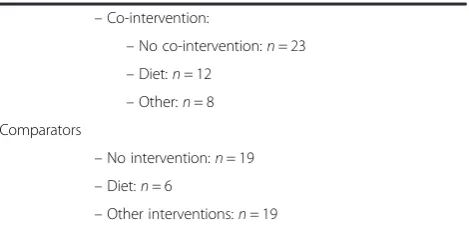
–Co-intervention:
–No co-intervention:n= 23
–Diet:n= 12
–Other:n= 8 Comparators
–No intervention:n= 19
–Diet:n= 6
–Other interventions:n= 19
synthesis. The overall effect was a statistically
significant increase in SHBG concentrations (
n
= 14,
MD = 3.93 nmol/l, 95 % CI: 0.98
–
6.87,
I
2= 75 %).
The analysis of the different subgroups indicated
that the observed effect mainly reflected the effect in
the PCOS hormonal group (
n
= 8, MD = 6.76 nmol/l,
95 % CI: 5.56
–
7.96,
I
2= 77 %) (see Additional file
1
:
Table S6). A gap in the bottom-left corner of the
funnel plot graph was observed, indicating some risk
of bias (Figure not shown).
–
Anthropometric factors
: overall, physical activity
interventions resulted in statistically significant
decreases in body weight, BMI, total fat mass,
percent fat mass, and waist circumference (Table
2
).
–
Hormonal function
: the data from the 17 studies
reporting hormonal function were not suitable for
quantitative synthesis. Overall, there was no
significant change in menstrual cycle length of
premenopausal women (3 studies) [
25
,
27
,
28
]. An
improvement in the regularity or the frequency of
the menstrual cycle and ovulatory parameters was
observed among PCOS participants (11 studies). For
postmenopausal women (two studies), there was no
significant change in menopausal symptom
occurrence [
36
,
49
].
–
Side effects
: of 13 studies evaluating intervention side
effects, seven did not report side effects related to
exercise. One out of three studies [
36
,
48
,
71
]
reported a significant decrease of bone mineral
density and a nonsignificant increase of
musculoskeletal injuries [
36
].
Discussion
The present systematic review and meta-analysis
based on randomized controlled trials conducted among
healthy women demonstrates a significant decrease
in total and free circulating estradiol concentrations
induced by physical activity, a finding that confirms
the associations reported in observational studies
[11
–
14, 72
–
75]. Even though the studies reporting
the effect of exercise on free estradiol represent a
small part of those reporting total estradiol, the effect
of exercise was more obvious for free estradiol than
for total estradiol. This effect seems to be independent
of menopausal status and was observed in nonobese
women.
[image:7.595.58.540.89.400.2]The observation that the decrease in total estradiol
was related to weight loss after intervention, whereas the
decrease in free estradiol was not, suggests that the
ef-fect of exercise on estradiol is not mediated solely by
weight loss and may reflect the sequestration of estradiol
by increasing levels of binding proteins, as was observed
with SHBG levels. Similarly, there was a significant
de-crease in free testosterone but not in total testosterone.
Except for the type of exercise, the conditions associated
with the effect on total estradiol
—
that is, resistance
ex-ercise, high-intensity exex-ercise, exercise performed for 3
–
5 hours per week
—
are also associated with weight loss.
On the other hand, the effect of exercise modality
(supervision and group sessions) indicates potential
con-founding and performance biases. However, it should be
kept in mind that subgroup analyses are observational
by nature [16] and that a major limitation for these types
of interventions is the risk of performance bias. Some
studies attempted to prevent this problem by
administer-ing a minimal exercise or light conditionadminister-ing intervention
to the comparator group. That can still be insufficient to
overcome the effect of supervision and direct interaction,
especially when continuous prompting is needed to
main-tain strenuous effort. Moreover, lack of adherence may be
a problem in this type of intervention, which may negate
the benefits of randomization and introduce a selection
bias. In particular, the
“
intent-to treat
”
analysis is seldom
really achieved and the reported values are those obtained
from the participants still in the study at the end. Another
problem is the social interactions introduced by
group-session exercise that can potentially confound the
ob-served associations. Therefore, the overall risk of bias
within and across the included studies is unclear.
[image:8.595.57.537.100.449.2]The strengths of this systematic review include the
ex-tensive and highly sensitive search strategy used to
re-trieve as many relevant studies as possible, and the
pre-established protocol that followed procedures outlined
in the
Cochrane Handbook for Systematic Reviews of
In-terventions
[16]. Limitations include the noninclusion of
all eligible studies because of unsuitable data and the
lack of high-quality evidence, as indicated by the unclear
overall risk of bias. However, the observed effect on the
Table 2
Meta-analysis of secondary outcomes
Outcome or subgroup Studies (n) Participants (n) Effect estimate 95 % CI I2(%)
Other estrogens (mean difference)
Estrone (pg/ml) 4 973 −1.67 −3.62, 0.28 0
Estrone sulfate (ng/ml) 2 393 −0.02 −0.19, 0.14 0
Estriol (NR) 1 79 123.90 −249.69, 497.49 NA
Estrogens–not otherwise specified (pg/ml) 2 89 27.80 −9.76, 65.36 94
Estrogen metabolites (standardized mean difference)
2-OHE1 3 512 −0.03 −0.20, 0.15 0
16α-OHE1 3 512 0.03 −0.15, 0.20 1
Total estrogen metabolites concentration (2-OHE1 + 16α-OHE1) 1 32 0.37 −0.33, 1.07 NA
2-OHE1:16α-OHE1 ratio 2 195 −0.08 −0.36, 0.21 0
Androgens (mean difference)
Total testosterone (ng/dl) 21 1939 −1.36 −3.83, 1.11 61
Free testosterone (pg/ml) 9 1369 −0.18 −0.29,−0.07 0
Androstenedione (pg/ml) 7 1187 –33.87 −64.44,−3.29 9
DHEA (ng/ml) 4 304 −0.08 −0.50, 0.35 0
DHEA sulfate (μmol/l) 8 697 −0.31 −0.57,−0.06 0
Sex hormone binding protein (mean difference) (nmol/l)
14 1634 3.93 0.98, 6.87 75
Anthropometric factors (mean difference)
Body weight (kg) 16 1737 −1.83 −2.86,−0.81 45
Body mass index (kg/m2) 20 1976 −0.45 −0.87,−0.03 65
Total body fat (kg) 10 1552 −2.11 −3.71,−0.52 92
Percent fat mass (%) 13 1563 −1.28 −1.95,−0.61 54
Waist circumference (cm) 11 1274 −2.23 −2.97,−1.49 34
different outcomes remains consistent despite the fact
that different studies were involved for each outcome,
which provides some reassurance about our conclusions.
Considering that the study with the largest sample size
among studies which were not included yielded
nonsig-nificant declines in sex hormones concentrations [42],
the true effect of physical activity on sex hormones
might be slightly underestimated. Finally, the effect of
physical activity on circulating sex hormones is relatively
modest, and probably not clinically significant. The
amount of circulating sex hormones may not necessarily
reflect their effects on target tissues, and physical activity
may still have an effect on sex hormone function by
modulating target-tissue sensitivity to these hormones.
Conclusions
In the last 20 years, numerous randomized trials with
physical activity interventions targeting women have
been conducted. To the best of our knowledge, this is
the first systematic review and meta-analysis of such
tri-als aimed at determining the effect of physical activity
on sex hormone levels. Overall, physical activity induces
a decrease in circulating sex hormones. Although
differ-ent studies were involved for the differdiffer-ent outcomes we
considered, the results for overall meta-analysis and
sub-group analyses were consistent. Even if it appears that
the effect of physical activity is not completely accurately
reflected by measures of circulating sex hormones,
phys-ical activity is a safe intervention with undeniable
bene-fits for women, regardless of menopausal status and
weight loss induced by exercise.
Additional file
Additional file 1: Table S1. Presenting search strategies;Table S2. Presenting studies not included in quantitative synthesis;Table S3. presenting characteristics of eligible studies by hormonal group;Table S4.presenting subgroup analyses of primary outcomes;Table S5. presenting subgroup analyses of secondary outcomes: total and free testosterone;Table S6.presenting subgroup analyses of secondary outcomes: androstenedione, DHEA sulfate, and SHBG;Figure S1. showing risk of bias graph: review authors’judgments about each risk of bias item presented as percentages across all included studies;Figure S2.showing funnel plots for the comparison“Any exercise intervention versus no exercise intervention”, outcome: total estradiol; andFigure S3. showing funnel plots for the comparison“Any exercise intervention versus no exercise intervention”, outcome: free estradiol. (DOCX 549 kb)
Abbreviations
BMI:Body mass index; CI: Confidence interval;
DHEA: Dehydroepiandrosterone; MD: Mean difference; PCOS: Polycystic ovary syndrome; SHBG: Sex hormone binding globulin; SMD: Standardized mean difference.
Competing interests
The authors declare that they have no competing interests.
Authors’contributions
KE-I designed the protocol and the search strategy, performed study selection, data extraction, and synthesis, and drafted the manuscript. EM participated in interpretation of the results and helped to draft the manuscript. CD conceived the study, participated in its design and coordination, participated in study selection and interpretation of the results, and helped to draft the manuscript. All authors read and approved the final manuscript.
Author details
1
Axe Oncologie, Centre de recherche du CHU de Québec-Université Laval, St-Sacrement Hospital, 1050 chemin Sainte-Foy, Quebec City, QC, CanadaG1S 4L8.2Centre de recherche sur le cancer, Université Laval, St-Sacrement Hospital, 1050 chemin Sainte-Foy, Quebec City, QC, CanadaG1S 4L8. 3
Département de médecine sociale et préventive, Faculté de médecine, Pavillon Ferdinand-Vandry, Loc 2428, Université Laval, 1050 avenue de la Médecine, Quebec City, QC, CanadaG1V 0A6.4Centre des Maladies du Sein Deschênes-Fabia, St-Sacrement Hospital, 1050 chemin Sainte-Foy, Québec City, QC, CanadaG1S 4L8.
Received: 23 September 2015 Accepted: 19 October 2015
References
1. World Health Organization. Global recommendations on physical activity for health. Geneva: World Health Organization; 2010.
2. Kushi LH, Doyle C, McCullough M, Rock CL, Demark-Wahnefried W, Bandera EV, et al. American Cancer Society Guidelines on nutrition and physical activity for cancer prevention: reducing the risk of cancer with healthy food choices and physical activity. CA Cancer J Clin. 2012;62:30–67. doi:10.3322/ caac.20140.
3. Rock CL, Doyle C, Demark-Wahnefried W, Meyerhardt J, Courneya KS, Schwartz AL, et al. Nutrition and physical activity guidelines for cancer survivors. CA Cancer J Clin. 2012;62:243–74. doi:10.3322/caac.21142. 4. Lynch BM, Neilson HK, Friedenreich CM. Physical activity and breast cancer
prevention. Recent Results Cancer Res. 2011;186:13–42. doi:10.1007/978-3-642-04231-7_2.
5. International Agency for Research on Cancer. IARC handbooks of cancer prevention. Volume 6: Weight control and physical activity. Lyon: IARC Press; 2002.
6. McTiernan A. Mechanisms linking physical activity with cancer. Nat Rev Cancer. 2008;8:205–11. doi:10.1038/nrc2325.
7. Pike MC, Krailo MD, Henderson BE, Casagrande JT, Hoel DG.“Hormonal”risk factors,“breast tissue age”and the age-incidence of breast cancer. Nature. 1983;303:767–70.
8. Key TJ, Appleby PN, Reeves GK, Travis RC, Alberg AJ, Barricarte A, et al. Sex hormones and risk of breast cancer in premenopausal women: a collaborative reanalysis of individual participant data from seven prospective studies. Lancet Oncol. 2013;14:1009–19. doi:10.1016/s1470-2045(13)70301-2.
9. Eliassen AH, Missmer SA, Tworoger SS, Spiegelman D, Barbieri RL, Dowsett M, et al. Endogenous steroid hormone concentrations and risk of breast cancer among premenopausal women. J Natl Cancer Inst. 2006;98:1406–15. doi:10.1093/jnci/djj376.
10. Key T, Appleby P, Barnes I, Reeves G. Endogenous sex hormones and breast cancer in postmenopausal women: reanalysis of nine prospective studies. J Natl Cancer Inst. 2002;94:606–16.
11. Chan MF, Dowsett M, Folkerd E, Bingham S, Wareham N, Luben R, et al. Usual physical activity and endogenous sex hormones in postmenopausal women: the European prospective investigation into cancer-norfolk population study. Cancer Epidemiol Biomarkers Prev. 2007;16:900–5. doi:10.1158/1055-9965.epi-06-0745.
12. Bertone-Johnson ER, Tworoger SS, Hankinson SE. Recreational physical activity and steroid hormone levels in postmenopausal women. Am J Epidemiol. 2009;170:1095–104. doi:10.1093/aje/kwp254.
13. McTiernan A, Wu L, Chen C, Chlebowski R, Mossavar-Rahmani Y, Modugno F, et al. Relation of BMI and physical activity to sex hormones in postmenopausal women. Obesity (Silver Spring). 2006;14:1662–77. doi:10.1038/oby.2006.191.
15. Sallis JF, Saelens BE. Assessment of physical activity by self-report: status, limitations, and future directions. Res Q Exerc Sport. 2000;71 Suppl 2:1–14. doi:10.1080/02701367.2000.11082780.
16. Higgins JPT, Green S, editors. Cochrane handbook for systematic reviews of interventions. Version 5.1.0. Updated March 2011. Cochrane Collaboration; 2011. www.cochrane.org/training/cochrane-handbook.
17. Higgins JP, White IR, Anzures-Cabrera J. Meta-analysis of skewed data: combining results reported on log-transformed or raw scales. Stat Med. 2008;27:6072–92. doi:10.1002/sim.3427.
18. Higgins JP, Thompson SG. Quantifying heterogeneity in a meta-analysis. Stat Med. 2002;21:1539–58. doi:10.1002/sim.1186.
19. Ioannidis JP, Trikalinos TA. The appropriateness of asymmetry tests for publication bias in meta-analyses: a large survey. CMAJ. 2007;176:1091–6. doi:10.1503/cmaj.060410.
20. Seneviratne SN, Parry GK, McCowan LM, Ekeroma A, Jiang Y, Gusso S, et al. Antenatal exercise in overweight and obese women and its effects on offspring and maternal health: design and rationale of the IMPROVE (Improving Maternal and Progeny Obesity Via Exercise) randomised controlled trial. BMC Pregnancy Childbirth. 2014;14:148. doi:10.1186/1471-2393-14-148. 21. van Gemert WA, Iestra JI, Schuit AJ, May AM, Takken T, Veldhuis WB, et al.
Design of the SHAPE-2 study: the effect of physical activity, in addition to weight loss, on biomarkers of postmenopausal breast cancer risk. BMC Cancer. 2013;13:395. doi:10.1186/1471-2407-13-395.
22. El-Lithy A, El-Mazny A, Sabbour A, El-Deeb A. Effect of aerobic exercise on premenstrual symptoms, haematological and hormonal parameters in young women. J Obstet Gynaecol. 2015;35:389–92. doi:10.3109/ 01443615.2014.960823.
23. Rani M, Singh U, Agrawal GG, Natu SM, Kala S, Ghildiyal A, et al. Impact of Yoga Nidra on menstrual abnormalities in females of reproductive age. J Alter Comple Med (New York, NY). 2013;19:925–9. doi:10.1089/ acm.2010.0676.
24. Moghadasi M, Siavashpour S. The effect of 12 weeks of resistance training on hormones of bone formation in young sedentary women. J Altern Complement Med. 2013;113:25–32. doi:10.1007/s00421-012-2410-0. 25. Smith AJ, Phipps WR, Arikawa AY, O'Dougherty M, Kaufman B, Thomas W,
et al. Effects of aerobic exercise on premenopausal sex hormone levels: results of the WISER study, a randomized clinical trial in healthy, sedentary, eumenorrheic women. Cancer Epidemiol Biomarkers Prev. 2011;20:1098–106. doi:10.1158/1055-9965.epi-10-1219.
26. Smith AJ, Phipps WR, Thomas W, Schmitz KH, Kurzer MS. The effects of aerobic exercise on estrogen metabolism in healthy premenopausal women. Cancer Epidemiol Biomarkers Prev. 2013;22:756–64. doi:10.1158/ 1055-9965.epi-12-1325.
27. Williams NI, Reed JL, Leidy HJ, Legro RS, De Souza MJ. Estrogen and progesterone exposure is reduced in response to energy deficiency in women aged 25–40 years. Hum Reprod. 2010;25:2328–39. doi:10.1093/ humrep/deq172.
28. Campbell KL, Westerlind KC, Harber VJ, Bell GJ, Mackey JR, Courneya KS. Effects of aerobic exercise training on estrogen metabolism in premenopausal women: a randomized controlled trial. Cancer Epidemiol Biomarkers Prev. 2007;16:731–9. doi:10.1158/1055-9965.epi-06-0784. 29. Hakkinen K, Pakarinen A, Hannonen P, Hakkinen A, Airaksinen O, Valkeinen
H, et al. Effects of strength training on muscle strength, cross-sectional area, maximal electromyographic activity, and serum hormones in
premenopausal women with fibromyalgia. J Rheumatol. 2002;29:1287–95. 30. Hata K, Hata T, Miyazaki K, Kunishi H, Masuda J. Effect of regular aerobic
exercise on cerebrovascular tone in young women. J Ultrasound Med. 1998;17:133–6.
31. Carpenter SE, Tjaden B, Rock JA, Kimball A. The effect of regular exercise on women receiving danazol for treatment of endometriosis. Int J Gynaecol Obstet. 1995;49:299–304.
32. Libardi CA, Nogueira FR, Vechin FC, Conceicao MS, Bonganha V, Chacon-Mikahil MP. Acute hormonal responses following different velocities of eccentric exercise. Clin Physiol Funct Imaging. 2013;33:450–4. doi:10.1111/ cpf.12051.
33. Krishnan S, Gustafson MB, Campbell C, Gaikwad NW, Keim NL. Association between circulating endogenous androgens and insulin sensitivity changes with exercise training in midlife women. Menopause. 2014;21:967–74. doi:10.1097/gme.0000000000000198.
34. Oneda B, Cardoso Jr CG, Forjaz CL, Araujo TG, Bernardo FR, de Gusmao JL, et al. Effects of estrogen therapy and aerobic training on sympathetic
activity and hemodynamics in healthy postmenopausal women: a double-blind randomized trial. Menopause. 2014;21:369–75. doi:10.1097/GME.0b013e31829d2a00.
35. Kim JW, Kim DY. Effects of aerobic exercise training on serum sex hormone binding globulin, body fat index, and metabolic syndrome factors in obese postmenopausal women. Metab Syndr Relat Disord. 2012;10:452–7. doi:10.1089/met.2012.0036.
36. Campbell KL, Foster-Schubert KE, Alfano CM, Wang CC, Wang CY, Duggan CR, et al. Reduced-calorie dietary weight loss, exercise, and sex hormones in postmenopausal women: randomized controlled trial. J Clin Oncol. 2012;30:2314–26. doi:10.1200/jco.2011.37.9792.
37. Foster-Schubert KE, Alfano CM, Duggan CR, Xiao L, Campbell KL, Kong A, et al. Effect of diet and exercise, alone or combined, on weight and body composition in overweight-to-obese postmenopausal women. Obesity (Silver Spring). 2012;20:1628–38. doi:10.1038/oby.2011.76.
38. Tartibian B, Hajizadeh Maleki B, Kanaley J, Sadeghi K. Long-term aerobic exercise and omega-3 supplementation modulate osteoporosis through inflammatory mechanisms in post-menopausal women: a randomized, repeated measures study. Nutr Metab (Lond). 2011;8:71. doi:10.1186/1743-7075-8-71.
39. Yoo EJ, Jun TW, Hawkins SA. The effects of a walking exercise program on fall-related fitness, bone metabolism, and fall-related psychological factors in elderly women. Res Sports Med. 2010;18:236–50. doi:10.1080/
15438627.2010.510098.
40. Friedenreich CM, Woolcott CG, McTiernan A, Ballard-Barbash R, Brant RF, Stanczyk FZ, et al. Alberta physical activity and breast cancer prevention trial: sex hormone changes in a year-long exercise intervention among postmenopausal women. J Clin Oncol. 2010;28:1458–66. doi:10.1200/ jco.2009.24.9557.
41. Friedenreich CM, Woolcott CG, McTiernan A, Terry T, Brant R, Ballard-Barbash R, et al. Adiposity changes after a 1-year aerobic exercise intervention among postmenopausal women: a randomized controlled trial. Int J Obes (Lond). 2011;35:427–35. doi:10.1038/ijo.2010.147.
42. Monninkhof EM, Velthuis MJ, Peeters PH, Twisk JW, Schuit AJ. Effect of exercise on postmenopausal sex hormone levels and role of body fat: a randomized controlled trial. J Clin Oncol. 2009;27:4492–9. doi:10.1200/ jco.2008.19.7459.
43. Velthuis MJ, Schuit AJ, Peeters PH, Monninkhof EM. Exercise program affects body composition but not weight in postmenopausal women. Menopause. 2009;16:777–84. doi:10.1097/gme.0b013e318197122a.
44. Orsatti FL, Nahas EA, Maesta N, Nahas-Neto J, Burini RC. Plasma hormones, muscle mass and strength in resistance-trained postmenopausal women. Maturitas. 2008;59:394–404. doi:10.1016/j.maturitas.2008.04.002.
45. Wu J, Oka J, Tabata I, Higuchi M, Toda T, Fuku N, et al. Effects of isoflavone and exercise on BMD and fat mass in postmenopausal Japanese women: a 1-year randomized placebo-controlled trial. J Bone Miner Res. 2006;21:780–9. doi:10.1359/jbmr.060208.
46. Valkeinen H, Hakkinen K, Pakarinen A, Hannonen P, Hakkinen A, Airaksinen O, et al. Muscle hypertrophy, strength development, and serum hormones during strength training in elderly women with fibromyalgia. Scand J Rheumatol. 2005;34:309–14. doi:10.1080/03009740510018697. 47. Copeland JL, Tremblay MS. Effect of HRT on hormone responses to
resistance exercise in post-menopausal women. Maturitas. 2004;48:360–71. doi:10.1016/j.maturitas.2003.09.025.
48. McTiernan A, Tworoger SS, Ulrich CM, Yasui Y, Irwin ML, Rajan KB, et al. Effect of exercise on serum estrogens in postmenopausal women: a 12-month randomized clinical trial. Cancer Res. 2004;64:2923–8.
49. McTiernan A, Tworoger SS, Rajan KB, Yasui Y, Sorenson B, Ulrich CM, et al. Effect of exercise on serum androgens in postmenopausal women: a 12-month randomized clinical trial. Cancer Epidemiol Biomarkers Prev. 2004;13:1099–105.
50. Atkinson C, Lampe JW, Tworoger SS, Ulrich CM, Bowen D, Irwin ML, et al. Effects of a moderate intensity exercise intervention on estrogen metabolism in postmenopausal women. Cancer Epidemiol Biomarkers Prev. 2004;13:868–74.
51. Irwin ML, Yasui Y, Ulrich CM, Bowen D, Rudolph RE, Schwartz RS, et al. Effect of exercise on total and intra-abdominal body fat in postmenopausal women: a randomized controlled trial. JAMA. 2003;289:323–30. 52. Aiello EJ, Yasui Y, Tworoger SS, Ulrich CM, Irwin ML, Bowen D, et al. Effect
53. Figueroa A, Going SB, Milliken LA, Blew RM, Sharp S, Teixeira PJ, et al. Effects of exercise training and hormone replacement therapy on lean and fat mass in postmenopausal women. J Gerontol A Biol Sci Med Sci. 2003;58:266–70.
54. Nybacka A, Carlstrom K, Fabri F, Hellstrom PM, Hirschberg AL. Serum antimullerian hormone in response to dietary management and/or physical exercise in overweight/obese women with polycystic ovary syndrome: secondary analysis of a randomized controlled trial. Fertil Steril. 2013;100:1096–102. doi:10.1016/j.fertnstert.2013.06.030.
55. Nybacka A, Carlstrom K, Stahle A, Nyren S, Hellstrom PM, Hirschberg AL. Randomized comparison of the influence of dietary management and/or physical exercise on ovarian function and metabolic parameters in overweight women with polycystic ovary syndrome. Fertil Steril. 2011;96:1508–13. doi:10.1016/j.fertnstert.2011.09.006.
56. Curi DD, Fonseca AM, Marcondes JA, Almeida JA, Bagnoli VR, Soares Jr JM, et al. Metformin versus lifestyle changes in treating women with polycystic ovary syndrome. Gynecol Endocrinol. 2012;28:182–5. doi:10.3109/ 09513590.2011.583957.
57. Jedel E, Labrie F, Oden A, Holm G, Nilsson L, Janson PO, et al. Impact of electro-acupuncture and physical exercise on hyperandrogenism and oligo/ amenorrhea in women with polycystic ovary syndrome: a randomized controlled trial. Am J Physiol Endocrinol Metab. 2011;300:E37–45. doi:10.1152/ajpendo.00495.2010.
58. Palomba S, Falbo A, Giallauria F, Russo T, Rocca M, Tolino A, et al. Six weeks of structured exercise training and hypocaloric diet increases the probability of ovulation after clomiphene citrate in overweight and obese patients with polycystic ovary syndrome: a randomized controlled trial. Hum Reprod. 2010;25:2783–91. doi:10.1093/humrep/deq254.
59. Karimzadeh MA, Javedani M. An assessment of lifestyle modification versus medical treatment with clomiphene citrate, metformin, and clomiphene citrate-metformin in patients with polycystic ovary syndrome. Fertil Steril. 2010;94:216–20. doi:10.1016/j.fertnstert.2009.02.078.
60. Brown AJ, Setji TL, Sanders LL, Lowry KP, Otvos JD, Kraus WE, et al. Effects of exercise on lipoprotein particles in women with polycystic ovary syndrome. Med Sci Sports Exerc. 2009;41:497–504. doi:10.1249/MSS.0b013e31818c6c0c. 61. Hoeger K, Davidson K, Kochman L, Cherry T, Kopin L, Guzick DS. The impact of metformin, oral contraceptives, and lifestyle modification on polycystic ovary syndrome in obese adolescent women in two randomized, placebo-controlled clinical trials. J Clin Endocrinol Metab. 2008;93:4299–306. doi:10.1210/jc.2008-0461.
62. Thomson RL, Buckley JD, Noakes M, Clifton PM, Norman RJ, Brinkworth GD. The effect of a hypocaloric diet with and without exercise training on body composition, cardiometabolic risk profile, and reproductive function in overweight and obese women with polycystic ovary syndrome. J Clin Endocrinol Metab. 2008;93:3373–80. doi:10.1210/jc.2008-0751.
63. Thomson RL, Brinkworth GD, Noakes M, Clifton PM, Norman RJ, Buckley JD. The effect of diet and exercise on markers of endothelial function in overweight and obese women with polycystic ovary syndrome. Hum Reprod. 2012;27:2169–76. doi:10.1093/humrep/des138.
64. Vigorito C, Giallauria F, Palomba S, Cascella T, Manguso F, Lucci R, et al. Beneficial effects of a three-month structured exercise training program on cardiopulmonary functional capacity in young women with polycystic ovary syndrome. J Clin Endocrinol Metab. 2007;92:1379–84. doi:10.1210/jc.2006-2794. 65. Bruner B, Chad K, Chizen D. Effects of exercise and nutritional counseling in
women with polycystic ovary syndrome. Appl Physiol Nutr Metab. 2006;31:384–91. doi:10.1139/h06-007.
66. Hoeger KM, Kochman L, Wixom N, Craig K, Miller RK, Guzick DS. A randomized, 48-week, placebo-controlled trial of intensive lifestyle modification and/or metformin therapy in overweight women with polycystic ovary syndrome: a pilot study. Fertil Steril. 2004;82:421–9. doi:10.1016/j.fertnstert.2004.02.104.
67. Guzick DS, Wing R, Smith D, Berga SL, Winters SJ. Endocrine consequences of weight loss in obese, hyperandrogenic, anovulatory women. Fertil Steril. 1994;61:598–604.
68. von Thiele SU, Lindfors P, Lundberg U. Health-related effects of worksite interventions involving physical exercise and reduced workhours. Scand J Work Environ Health. 2008;34:179–88.
69. Field T, Diego M, Delgado J, Medina L. Yoga and social support reduce prenatal depression, anxiety and cortisol. J Bodyw Mov Ther. 2013;17:397–403. doi:10.1016/j.jbmt.2013.03.010.
70. Zourladani A, Zafrakas M, Chatzigiannis B, Papasozomenou P, Vavilis D, Matziari C. The effect of physical exercise on postpartum fitness, hormone and lipid levels: a randomized controlled trial in primiparous, lactating women. Arch Gynecol Obstet. 2015;291:525–30. doi:10.1007/s00404-014-3418-y.
71. Colleran HL, Wideman L, Lovelady CA. Effects of energy restriction and exercise on bone mineral density during lactation. Med Sci Sports Exerc. 2012;44:1570–9. doi:10.1249/MSS.0b013e318251d43e.
72. Verkasalo PK, Thomas HV, Appleby PN, Davey GK, Key TJ. Circulating levels of sex hormones and their relation to risk factors for breast cancer: a cross-sectional study in 1092 pre- and postmenopausal women (United Kingdom). Cancer Causes Control. 2001;12:47–59.
73. Tworoger SS, Missmer SA, Eliassen AH, Barbieri RL, Dowsett M, Hankinson SE. Physical activity and inactivity in relation to sex hormone, prolactin, and insulin-like growth factor concentrations in premenopausal
women—exercise and premenopausal hormones. Cancer Causes Control. 2007;18:743–52. doi:10.1007/s10552-007-9017-5.
74. van Gils CH, Peeters PH, Schoenmakers MC, Nijmeijer RM, Onland-Moret NC, van der Schouw YT, et al. Physical activity and endogenous sex hormone levels in postmenopausal women: a cross-sectional study in the Prospect-EPIC Cohort. Cancer Epidemiol Biomarkers Prev. 2009;18:377–83. doi:10.1158/1055-9965.EPI-08-0823.
75. Yager JD, Davidson NE. Estrogen carcinogenesis in breast cancer. N Engl J Med. 2006;354:270–82. doi:10.1056/NEJMra050776.
Submit your next manuscript to BioMed Central
and take full advantage of:
• Convenient online submission
• Thorough peer review
• No space constraints or color figure charges
• Immediate publication on acceptance
• Inclusion in PubMed, CAS, Scopus and Google Scholar
• Research which is freely available for redistribution