International Journal of Innovative Technology and Exploring Engineering (IJITEE) ISSN: 2278-3075, Volume-8 Issue-6S2, April 2019
Abstract:. Relevance of cloud has been increasing since the inception of internet, cloud has been one of the promising technologies which provide services over the internet .There are various cloud providers, Multiple clients need cloud resources over the internet. Clients have multiple option to choose among various cloud providers. Thus cloud providers aim to provide a cost minimal product which can be achieved via The utilization of resources should be scheduled efficiently properly in order to make the cloud system work efficiently. Cloud data center are assigned resources with the help of virtual machine scheduling and simultaneously request for resources has become an problem to address this problem improving the system performance by impacting the cost and scheduling technique VM are needed. In this paper we propose a hybrid resource utilization strategy known as cuckoo-Particle Swarm Optimization (PSO).
Index Terms: Cloud computing, Cloud resource scheduling Cloud workloads, Make span, Profit maximization,. Resource distribution policies, Resource management, Resource scheduling tools,
I. INTRODUCTION
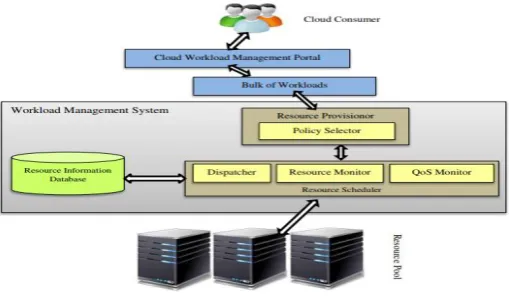
Resource Management comprises of various phases of workload and resources from submission to execution Resource management has 2 steps: i)resource provisioning ii)resource scheduling. Resource provisioning is the analysis where requirements by consumers based on QoS and check proper resources are given to workload where the resource scheduling continues the work of resource provisioning according to the resources selected by the consumer the workload are mapped accordingly as shown in Fig 1intially,consumers submits workload details for workload execution. Broker reads the details and finds the suitable resource according to the workloads, Based on the QoS requirement feasibility is determined. The request is sent by broker to resource scheduling. Broker also manages monitoring, information, releasing of resources after all this resource scheduling is done in second stage. Provisioned resources are in queue while other are kept in resource pool. Submitted workloads are passed workload queue. In this stage, scheduling agenize maps the provisioned resources will provided for workload(s), execute the workload(s) Also arrival the assets again will resources pool then afterward successful completion about workload(s). Dependent upon QoS requirements, planning for assets to sufficient workloads is a testing issue. For an productive planning from claiming resources, it is vital should think about those QoS prerequisites. Resource planning is An hotspot range of exploration clinched alongside cloud because of extensive execution duration of the time and asset expense. Diverse
Revised Manuscript Received on December 22, 2018.
Naresh T, Computer Science and Engineering, K L University, Vijayawada, India.
Dr. A. Jayalakshmi, Computer Science and Engineering, MIC College of Technology, Vijayawada, India.
Dr. Vuyyuru Krishna Reddy, Computer Science and Engineering, K L University, Vijayawada, India.
[image:1.595.308.563.179.329.2]asset planning criteria Furthermore parameters would guided resource scheduling algorithm (RSAs).
Fig 1: Resource Scheduling in Cloud
Key player in cloud is consumers and Provider, Providers allocates the resources according to the resources demanded by cloud consumer both players have different agenda, providers want more as earn much profit as possible with minimum investment many requests handled on one resource will lead to performance downgrade while the user wants minimum cost and minimum execution time service quality is maintained by rejecting the request which has indefinite result. Scheduling becomes hectic and information trading between is mostly not followed. Challenges in resource scheduling include dispersion, uncertainty which are not solved by RSA. Altering cloud environment properties is not enough. Consumers submits the workload is queued. Resources are assigned to the workflow according to the details provided.
Workload are provided with demanded resources by resource provisioned, resource pool contains all the resources. if occurred shortage of resources on basis of QoS requirements the workload management system send a new request by informing SLA with new QoS requirements. Resources Scheduler is provided with workload just after provisioning of resources is completed successfully. In the next phase result are provided to the Workload Management System. Request provided by the cloud consumer on the basis of request scheduling policy is picked by the policy selector [2].Cloud Environment also a scheduler that executes diverse planning strategies dependent upon the choice taken toward arrangement selector. In view of the planning policy, the resources need aid allocated of the cloud workloads. The asset scheduler schedules those approaching cloud workloads In light of those workloads’ points. 1st from claiming all,
Resource Optimization Using Cloud Scheduling
get cloud workloads should plan etc Figure proper What's more accessible assets and cloud workloads mapped effectively In view of those planning strategies. Dispatcher may be used to dispatch the workloads to execution. Those workload will be dispatched only, On those workloads will make executed as stated by the QoS parameters specified over SLA. Asset screen will be used to check those status from claiming planning for assets like if the required number of assets is given alternately not. QoS screen holds the data in regards QoS parameters to weigh if every last one of workloads would executing inside their specified reach or not. Suppose due date is a QoS parameter, In this way obligation about QoS screen may be will check if workloads need aid executed in front of fancied due date or not. There will be violation of SLA though workload if it exhausts the deadline.
A. Need of Resource Scheduling
1) Enhance the time and resource utilization parameter with reference to workloads.
2) The amount of Resources of should be minimum for the workload to satisfy the Quality Level.
3) To Minimize the Completion time for better Resource Scheduling.
4) Allocate Suitable Workload to the Virtual Machines.
II.LITERATURE REVIEW
Harshpreet Singh et al proposed that Cloud will be rising as a utility standard for adequately executing expansive scale conveyed workflows for immense calculation Furthermore information exchange prerequisites. Those heterogeneity in cloud assets makes it testing for planning workflow assignments successfully. Those objective may be with Figure an optimized mapping between distinct workflow assignments and cloud resources, In view of Different personal satisfaction from claiming benefits. Those dependencies On workflows make it testing to planning assignment for precedence imperatives. Those assignments compelling reason should make planned On such route that it minimizes those makespan Furthermore execution expense for workflow. This paper proposes An workflow planning algorithm In light of cuckoo quest for discovering a plan for workflow errands. Those assignments are included will execution rundown then afterward prioritizing them as stated by the period about execution Furthermore dependencies. Cuckoo search algorithm may be adjusted will Figure a ideal mapping from claiming workflow errands on cloud assets. The workflow may be executed inside An client characterized due date same time upgrading those in general makespan.[5]. Nidhi Chaudhary et al suggested that Cloud registering is the a most recent advancement over innovation organization clinched alongside which give administrations like foundation gives more provisions to end-users Likewise for every pay-as-you-go model. It could furnish virtualized benefits as stated by the necessities from claiming end-users fluctuating with chance. Those assets of the cloud need aid accessible all around What's more client could get these assets anytime. Cloud registering gives virtualization for physical machine under a few virtual machines, which increments those asset accessibility. It gives secondary execution of the users, gives more benefit of the administration suppliers of cloud. Cloud assets are allocated rapidly once interest for clients. Those challenge may be to ideally guide the assets with clients so as
on fulfill clients QoS constraints, known as undertaking planning. Because of np finish nature of planning problem, accurate results can't be found Previously, limited the long haul. [6].
Pengze Guoet al Suggested that Cloud registering need developed Concerning illustration a capable stage for giving registering assets in the past decade. Creating workflow planning calculations might proficiently decrease the cosset about executing assignments in cloud frameworks. The features from claiming versatility What's more heterogeneity about cloud registering achieve tests to planning methodologies. To ongoing workflows, lessening execution the long haul Furthermore lessening execution expense are two clashing destinations. To deliver this issue, we recommend in this paper an enhanced ongoing workflow planning algorithm In light of particle swarm optimization (PSO). Unique in relation to customary planning heuristics which depend on the introductory asset pool, their algorithm could adaptively streamline the resource utilization. [7]. Wei-Neng Chen et al Suggested that Cloud computing has risen similarly as an capable registering standard that empowers clients should right registering administrations anyplace for interest. It gives a adaptable best approach should execute computation-intensive workflow requisitions around a pay-per-use foundation. Since clients would additional concerned on the fulfillment for personal satisfaction for administration (QoS) for cloud systems, those cloud workflow planning issue that addresses diverse QoS prerequisites from claiming clients need turned a paramount and testing issue to workflow administration clinched alongside cloud registering. In that paper, they tackle a cloud workflow planning issue which empowers clients with characterize Different QoS imperatives similar to those due date constraint, those plan constraint, and the dependability demand. It also empowers clients with point out particular case favored QoS parameter Similarly as those streamlining objective. A set-based PSO (S-PSO) approach is suggested for this planning issue. Similarly as those allotment about administration instances could make viewed, Previously, S-PSO will be characteristic to those acknowledged issue. Over addition, the S-PSO gives an compelling lifestyle to take advantage about issue built heuristics on further quicken hunt. They defined penalty based fitness function to address this problem imperatives also incorporated those S-PSO with seven heuristics. An discrete adaptation of the far reaching, Taking in PSO (CLPSO) calculation [8].
International Journal of Innovative Technology and Exploring Engineering (IJITEE) ISSN: 2278-3075, Volume-8 Issue-6S2, April 2019
Those method concentrates for proficient VM allotment to physical servers in place with minimize those downright asset wastage and the amount from claiming servers utilized. Recreation investigations were led to see the allotment of VMs of the servers and should assess the recommended algorithm with admiration to execution What's more adaptability. Those effects need aid compared with Best-Fit, First-Fit Also Worst-Fit placement methodologies. Reenactment examine led should assess the execution uncovers the adequacy of the model.[9].
Keqin Li et al., studied a theory where the performance and cost guarantee are predicted by the cloud service providers and also added a point Cloud service providers can enhance the performance to cost ratio with reference to elastic scaling scheme[110].
Rui Zhang et al., reported that Pricing can be managed by broker by aiding the customers and provide flexible discount strategy by using cost efficent resource scheduling online offered cloud service provider[11].
Fatemeh Ebadifarf et al.enhanced the black hole optimization problem which is an heuristic algorithm and presented an pareto optimizer algorithm which was based on the multi-objective scheduling which would interest the service providers. They considered balanced and unbalanced workflow they compared their algorithm with various methods parameter like cost, resource efficiency and completion time [12].
K.Sutha et al.one of the most prioritized concept known’s as job scheduling is utilization of cloud services, To get more profit from these resources. In their paper they highlighted the exceptional points of job scheduling algorithm in cloud. Their work mostly focused on trust power, bandwidth utilization , Load balancing and cost optimization [13].
Qiufen Xia et al., they Proposed that to maximize the system performance while minimizing the cost of service provider depending upon the resource and usage constraint this was aimed to solve the distributed cloud computing problems [14].
Xiang Deng et al, suggested an online algorithm known as ecopower,to manage load scheduling and power for geographically scattered cloud data centers.Their main aim is to reduce the power cost while maintaining the quality of experience with user request constrain [14].
Zheng Chang et al , scrutinized various scheduling algorithm for reducing the cost,energy with context to orthogonal frequency-division multiple-access (OFDMA) collaborative mobile clouds (CMCs) with simultaneous wireless information and power transfer receivers [15].
Xiaolong Xu et al, proposed an EnReal system to enhance to solve energy issues they implemented dynamic deployment of virtual machine
Deployed application on cloud targeted for them an special an energy model was presented and algorithm is proposed for VM Scheduling [16].
Li Shi et al, emphasized on the parallel job scheduling and considered energy conservation which consisted group of independent tasks .Their main goal was to place the task and make a plan which intern would reduce the Job Completion Time [17].
Wanyuan Wang et al., presented a distributed MA-based resource allocation approach to minimize cloud system energy cost. The proposed MA approach consists of two
complementary mechanisms: 1) an auction-based VM allocation mechanism, 2) a negotiation-based VM consolidation mechanism [18].
Ray, Soumya et al [19] studied the problem of load balancing where they came up with Round Robin and Randomized algorithm. Where all the processors share the processes equally. Allocation of processes is maintained locally n processors itself , processes the users request in an circular manner key advantage was round robin does not demand Inter Process Communication.
S. Bilgaiyan et al [20] introduced an Genetic Algorithm for Load Balancing.GA has three important - selection, crossover, and mutation of tasks which used centralized approach resulted in balancing of scheduling efficiently only constraint was it didn’t use the distributed scheduled approach.
Jigna Acharya [21] suggested that dynamic allocation of task to the Virtual machine is an prime factor of cloud computing. Client has to pay according to the resources demanded. Cloud Providers face multiple issues. Load balancing is considered one of the prime issues. Various
Algorithm is considered in their studied they found that particle swarm based algorithm that can optimize the load in an efficient way.
Tai-Won et al.[22] presented an CDN resource scheduling algorithm respectively, execution time and cost parameter were considered as the they would indirectly affect QoS divisible task scheduling are implemented on FoS resource consumption pattern on SLA.
Xiaocheng et al.[23] suggested that to consider the response time and count of migration as parameters for QoS and FoS which can be achieved by consolidation oriented priority based resource scheduling algorithm
Bing et al. [24], Qiang Li [25] and Ying et al. presented distributed environment oriented QoS based, stochastic oriented optimization and DVS (Dynamic Voltage Scaling) based energy aware resource scheduling algorithm respectively. Time, resource utilization, power consumption and system utility are considered as a QoS parameters and FoS is network performance, SLA and consolidation of workloads
III.PROPOSED SYSTEM
As we have implemented PSO scheduling and I-PSO Scheduling in cloud scheduling environment in first phase we’re going to implement the Cuckoo PSO Algorithm in cloud workflow scheduling
Cuckoo Algorithm:
A few animal categories have developed so that they can copy the shading and example of the eggs of a couple of picked have species. In this manner, the likelihood of the eggs being surrendered is lessened and the re-profitability of these species is expanded.
Animal seek food in generalized manner in nature. This process of seeking the food is random in nature each every move is based on the present state and transitional probability in next state. Direction chosen depends on the mathematical based probability. Studies have shown that mostly animals and insects have characteristics of Levy flights. An Levy flight is an random walk, length of steps is based on the weight based probability, stabilization is achieved after various steps
Begin
Initialize objective function
( ),
( 1,...,
d)
Tf x x
x
x
Generate an initial population of
P n
a host nests
1, 2,..., n
i
x
While (t < Max Generation) or (stop criterion) Get a cuckoo randomly by Lévy flight
Evaluate its quality/fitness F
Choose a nest among n (say j ) randomly
if
(
F
i
F
j)
Replace j by the new solution End if
Abandon worse nests with a fraction
P
a and rebuildnew nests
Retain the best solutions among all or the nest with the best solutions
Rank the solutions and find the current best End while
Post-process results and visualization End
new solutions provided is
x t
i(
1)
for cuckoo, current generation are i , t, a Lévy flight is performed:1
( )
(
)
( )
i i
x
t
x
t
a
L
ev
y
(1)
α > 0 step size α > 0
⊕= entry-wise multiplications[7].
Lévy distribution as follow:
Levy
u
t
,1
3
(2)Provided with infinite mean and variance. Random walk process of cuckoo follows the power law step-length distribution which consists of heavy tail
We enhanced IPSO by implementing the cuckoo algorithm random path in levy flight’s implementing in it.
IV.
CUCKOO-PSO ALGORITHM
In I-PSO, an potential sollution to the optimization problem in a point D-dimesion space is represented by every particle.
Particle i has its position
x
(
x x
i1,
i2,...,
x
id)
and velocity1 2
( ,
i i,...,
id)
v
v v
v
, Position and velocity determines the flying distance and the distance. Every particle has an fitness values which are optimized by the fitness function. Each particles travels in problem space with the best solution. In every iteration, each particle updates its position by tracking two best values.best position so for is pBest and in whole swarm the best position is known as gBest We’ve also improved PSO on weight charactestics.As by merging the cuckoo search algorithm we will be randomizing initial egg selection which will be provided byIn Cuckoo-PSO, particles are manipulated as follows:
1
1
(
)
2(
) *
k k k k k
id id id id d id
v
w
w pbest
x
w gbest
x
Levy
……..(1)
1 1
k k k
id id id
x
x
v
……….(2)where
W
1
c r
1 andW
2
c r
2 is the inertia weight,c
1 andc
2 are two positive constants which represents theacceleration co-efficient
within range 0 and 1 rand 1 and rand2 are the random function,c1 AND c2 are the prefered constants and int is 2.0
According to the local exploitaion and global exploratin, the function of intertia w is being balanced and it is responsible for current velocity and previous velocity influence control.
.
According to equation 3 inertia weight w decreases
max min
max
max
*
w
w
w
w
k
k
………….. (3)max
w
=Intial weight
k
max=maximal iteration numbersmin w=final weight k =current iteration number
International Journal of Innovative Technology and Exploring Engineering (IJITEE) ISSN: 2278-3075, Volume-8 Issue-6S2, April 2019
Fig 2: Simulated Results
In the above figure we have achieved implementing cuckoo PSO algorithm which provides us much better results than of IPSO algorithm improvement in fitness value and make span has also been observed.
[image:5.595.49.303.64.288.2]The outcome has been simulated in cloudsim tool ,which provides an library in java which is used to provide an cloud architecture where the developer can handle the VM through various scheduling policy and varying various parameters.
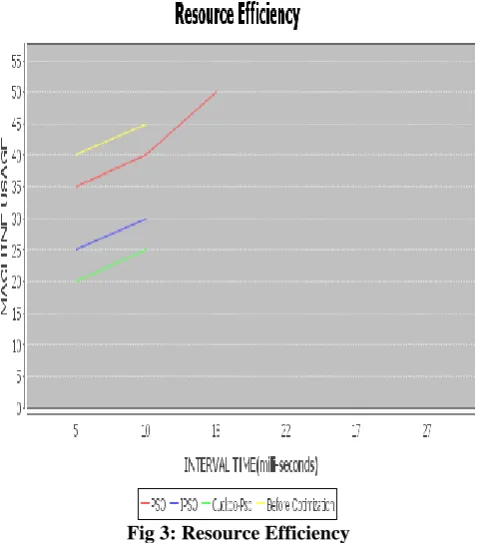
Fig 3: Resource Efficiency
[image:5.595.346.552.405.683.2]In the above analysis we conclude that the analysis that efficiency of resources increases w.r.t machine usage in the Cuckoo-PSO implementation as compared to IPSO and PSO
Fig 4: Makespan
In the above analysis we conclude that the analysis make span of each algorithm w.r.t to the cloudlets is more efficient in the Cuckoo-PSO implementation as compared to I-PSO and PSO as the start time and end time of a cloudlets are calculated with difference between start end time. Yellow bar represent the normal start /end time when there was no scheduling algorithm applied.
Fig 5: Average Execution Time
In the above analysis we conclude that the analysis that efficiency of Average execution time of each algorithm w.r.t to the cloudlets is more efficient in the Cuckoo-PSO
implementation as
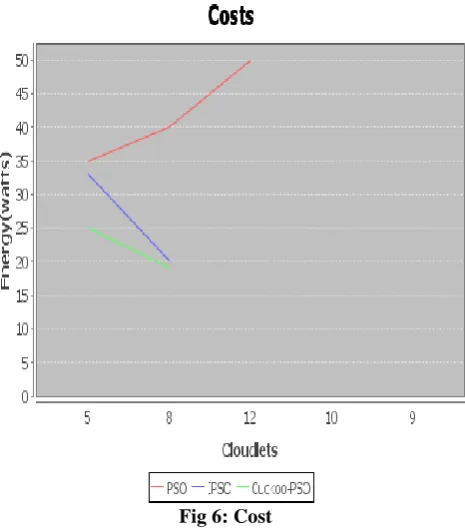
[image:5.595.49.289.472.744.2]Fig 6: Cost
In the above analysis we conclude that the analysis that efficiency of Cost of each algorithm w.r.t to the cloudlets is more efficient in the Cuckoo-PSO implementation as compared to I-PSO,PSO.
VI.CONCLUSION
The project has been implemented in cloud sim environment as we have implemented PSO/IPSO in previously where we found out on the basis of weight parameter we were able to enhance and improve PSO algorithm .In this papers we have demonstrated the implementation of the Cuckoo-PSO algorithm where we have merged Cuckoo-PSO which returned more,Enhanced results than of I-PSO. The properties of cuckoo such as levy flights and randomization of PSO with nest was the main contribution which enhanced the results of Cuckoo-PSO.
REFERENCES
1. Singh et al.,” Q-aware: quality of service based cloud resource provisioning”, Computer. Electrical. Eng. - J. – Elsevier.2015. 2. Chana, I et al ,“QRSF: QoS-aware resource scheduling framework in
cloud computing”, J. Supercomputer,2015.
3. Singh et al ,“Quality of service and service level agreements for cloud environments: issues and challenges”,In: Cloud Computing-Challenges, Limitations and R&D Solutions. Springer International Publishing,2014.
4. Singh, S., Chana, I.: Cloud resource provisioning: survey, status and future research directions. Knowledge, Information System 2015. 5. Harshpreet Singh et al,” Cuckoo Search based Workflow Scheduling
on Heterogeneous Cloud Resources”,ICCDSE,2017.
6. Nidhi Chaudhary et al,” An improved Harmony Search algorithm with Group technology model for scheduling workflows in cloud environment”, IEEE,2017.
7. Pengze Guo et al,” An Adaptive PSO-Based Real-Time Workflow Scheduling Algorithm in Cloud Systems”, IEEE, 2017.
8. Wei-Neng Chen et al,” A Set-Based Discrete PSO for Cloud Workflow Scheduling with User-Defined QoS Constraints”,IEEE,2012. 9. Dinesh Kumar et al,” A PSO based VM Resource Scheduling Model
for Cloud Computing”, IEEE, 2015.
10. Keqin Li.. Quantitative Modeling and Analytical Calculation of Elasticity in Cloud Computing, IEEE Transactions on Cloud Computing, 2017
11. Rui Zhang et al.. Online Resource Scheduling Under Concave Pricing for Cloud Computing, IEEE Transactions On Parallel And Distributed Systems, 2016
12. K.Sutha, Dr.G.M.Kadhar Nawaz.. Research Perspective of Job Scheduling in Cloud Computing, IEEE Eighth International Conference on Advanced Computing,. 2016
13. Qiufen Xia, et al.. Collaboration- And Fairness-Aware Big Data Management in Distributed Clouds, IEEE Transactions on Parallel and Distributed Systems, 2016.
14. Xiang Deng et al.. Eco-Aware Online Power Management and Load Scheduling for Green Cloud Datacenters, IEEE Systems Journal, 2016. 15. .Zheng Chang et al.. Energy-Efficient Resource Allocation and User Scheduling for Collaborative Mobile Clouds with Hybrid Receivers, IEEE Transactions on Vehicular Technology, 2016.
16. Xiaolong Xu et al.. EnReal: An Energy-Aware Resource Allocation Method for Scientific Workflow Executions in Cloud Environment, IEEE Transactions On Cloud Computing, 2016
17. Li Shi et al.. Energy-Aware Scheduling of Embarrassingly Parallel Jobs and Resource Allocation in Cloud, IEEE Transactions On Parallel And Distributed Systems, 2017
18. Wanyuan Wang et al.. Multiagent-Based Resource Allocation for Energy Minimization in Cloud Computing Systems, IEEE Transactions on Systems, Man, and Cybernetics: Systems, 2017. 19. Ray, Soumya, and A. D. Sarkar. "Execution analysis of load balancing
algorithms in cloud computing environment." International Journal on Cloud Computing: Services and Architecture (IJCCSA) ,2015. 20. Rana, Madhurima, S. Bilgaiyan, and U. Kar. "A study on load
balancing in cloud computing environment using evolutionary and swarm based algorithms." Control, Instrumentation, Communication and Computational Technologies (ICCICCT), 2014 International Conference on. IEEE, 2014.
21. Jigna Acharya Manisha Mehta Baljit Saini : Particle Swarm Optimization Based Load Balancing in Cloud Computing,IEEE,2017. 22. Um, T.-W., Lee, H., Ryu, W., Choi, J.K.: Dynamic resource allocation and scheduling for cloud-based virtual content delivery networks. ETRI J.,2014.
23. Sotomayor, B., Montero, R.S., Llorente, I.M., Foster, I.: Virtual infrastructure management in private and hybrid clouds. IEEE Internet Computing ,2009.
24. Li, B., Song, A.M., Song, J.: A distributed QoS-constraint task scheduling scheme in cloud computing environment: model and algorithm. Adv. Inf. Sci. Serv. Sci. (AISS), 2012.
25. Ying, C., Jiong, Y.: Energy-aware genetic algorithms for task scheduling in cloud computing. In: 2012 Seventh ChinaGrid Annual Conference (ChinaGrid), pp. 43–48. IEEE ,2012.
AUTHORSPROFILE
Naresh T Completed M.Tech(CSE) from Walchand College Of Engineering, Sangli. And B.Tech(CSE) from JNTU KAKINADA. Presently perusing Ph.d from K L University and also working as Asst. Prof. at Sandip Institute of Technology and Research Center, Nasik Under SPPU Pune.
Dr. A Jaya Lakshmi Professor and Head Department of Computer Science & Engineering, MIC College of Technology, Vijayawada.