Applied Epidemiology:
within, at the border and outside Australia
A thesis submitted for the degree of Master of Philosophy (Applied Epidemiology) of the Australian National University
Dr Patiyan Andersson
31 October 2018
Health Emergency Management Branch and Immunisation Branch Office of Health Protection, Australian Government Department of Health
This research was supported by an Australian Government Research Training Program Scholarship
Academic supervisor: Dr Katrina Roper Field supervisors: Rhonda Owen and Dr Masha Somi
‘I hereby declare that this submission is my own work and that to the best of my knowledge it
contains no materials previously published or written by another person, or substantial proportions of material which have been accepted for the award of any other degree or diploma at the Australian National University or any other educational institution, except where due acknowledgement is made in the text. Any contribution to the research by others is explicitly acknowledge in the thesis. I also declare that the intellectual content of this thesis is the product of my own work, except to the extent that assistance from others in the project’s design and
conception or in style, presentation or linguistic expression is acknowledged.’
iii
THESIS ABSTRACT
My placement was with the Immunisation and the Health Emergency Management branches in the Office of Health Protection at the Australian Government Department of Health during 2017-2018. During this time, I also had the opportunity to also work at the Australian Institute of Health and Welfare (AIHW), the Canberra Hospital and on a deployment to Fiji. I focused on the following five projects during my training.
I deployed as an epidemiologist through the World Health Organization Global Outbreak Alert and Response Network mechanism to assist in an international response to an outbreak of multi-resistant Acinetobacter baumannii in the neonatal intensive care unit (NICU) at the Colonial War Memorial Hospital, Suva, Fiji. Review of patient clinical variables identified several plausible risk factors, with the most significant being re-use of single-use respiratory equipment. Transmission was successfully ceased. The mission also included an evaluation of infection control practices at the three major hospitals in Fiji and was presented together with the findings of the outbreak response in a technical report.
In the first five months of 2017 the Canberra Hospital experienced its first known outbreak of vancomycin resistant enterococci (VRE) in the NICU. Multivariate analysis identified an association of colonisation with prematurity. Whole genome sequencing showed that the VRE strain was closely related to a highly successful VRE clone endemic to the Canberra Hospital, likely introduced to the NICU from other wards. The study contributed to the growing literature on these emerging VRE strains.
As part of a larger Burden of Vaccine Preventable Diseases study (BoVPD) at AIHW, I developed an incidence-based burden of disease model for invasive pneumococcal disease (IPD). A published model from the European Centres for Disease Control and Prevention was adapted to Australian conditions following a systematic literature review. I used data from national Australian databases to inform the model. IPD accounted for the second highest overall burden of all the VPDs in the study and was shown to have a high burden on both on a population and individual level.
v
ACKNOWLEDGEMENTS
Firstly, I like to acknowledge the fantastic efforts of my academic supervisor Katrina Roper. Thank you for being an inspiration and a guiding star throughout the MAE journey, and for always being available for advice and discussions. I would not have been as comfortable as I was deploying to Fiji without your guiding hand on my shoulder. But also thank you for being a good friend and for providing non-MAE related advice, such as what mountain bike components to buy. I look forward to the opportunity to working together in the future.
Thank you to Masha Somi and Rhonda Owen for selecting me into the MAE in the first place and for providing a placement in your branches. You both have always had your doors open and been interested and supportive despite your enormous work commitments. I’m grateful to all the staff in the Immunisation Policy Section, and all three sections in the Health Emergency Management Branch, who all have help me navigate the processes of the public service and quietly whispered during meetings what all the acronyms mean. A thanks must also go to the epidemiologists in the Communicable Disease Epidemiology and Surveillance Section, who generously took me on as an extra MAE student and provided valuable support throughout the two years.
I’m grateful to Fadwa Al-Yaman and Tracy Dixon for the opportunity to work at the Australian Institute of Health and Welfare and to the staff in the Indigenous Modelling and Research Unit. It was a highly useful introduction to management and statistical analysis of large datasets. Big thanks to Nicholas Coatsworth for giving me the opportunity to work at the Canberra Hospital. It has been a true pleasure to work with and learn from you. Odd how it took for us both to leave Darwin before engaging in a project together. Thanks also to Wendy Beckingham and her infection control team for their valuable contributions to the work, and to all the interested infectious diseases physicians that were involved in the work.
It was a privilege to work with some fantastic people during the deployment to Fiji. Meghan Lyman and Peta-Anne Zimmerman, thank you for being a great field team to work with and for showing me the ropes. Also thank you to Asaeli Raikabakaba and Sister Susanna for all your hard work in guiding us, both in the hospital and in Suva in general.
forward to seeing the exciting things that you all will be doing in the future.
I would like to thank my mother and father who on a weekly basis have tuned in from Sweden to excitedly hear what has gone on in the week. Your unwavering support is warming and thanks for not being worried when your 38-year-old son declared he was quitting his job and going back to school.
vii
TABLE OF CONTENTS
Originality statement ……….. ii
Abstract ……… iii
Acknowledgements ………. iv
Chapter 1. Master of Applied Epidemiology experience and Public Health at the Australian Government Department of Health ………. 1
1.1 Master of Applied Epidemiology experience ……….. 3
1.2 Summary of MAE core competencies ……….. 6
1.3 International disease surveillance for Commonwealth Games ……….. 7
Chapter 2. International outbreak response to a multi-resistant Acinetobacter baumannii in the NICU at the Colonial War Memorial Hospital in Suva, Fiji ……….. 25
Abstract ………. 29
Extended prologue ……… 30
Chapter 3. Vancomycin resistant enterococci in the neonatal intensive care unit at the Canberra Hospital ……….. 95
Prologue ……… 101
Abstract ………. 104
3.1 Background ……… 105
3.2 Methods ……….. 107
3.3 Results ……….. 110
3.4 Discussion ……….. 121
Chapter 4. Modelling the burden of invasive pneumococcal disease in Australia ……….. 149
Prologue ……… 157
Abstract ………. 160
4.1 Background ……… 162
4.2 Methods ……….. 169
4.3 Results ……….. 177
4.4 Discussion ……… 197
Australian Border ………. 219
Prologue ……… 226
Abstract ………. 229
5.1 Introduction ……….. 231
5.2 Objectives of the evaluation ……….…………. 236
5.3 Methods ……….. 238
5.4 Description of the surveillance system ………... 242
5.5 Results ……… 246
5.6 Surveillance system attributes ………..…….. 258
5.7 Performance of the surveillance system ……….. 267
5.8 Summary of recommendations ……….. 269
5.9 Discussion ……….. 271
5.10 Conclusion ……….. 273
Chapter 6. Evaluation of the traveller with illness checklist surveillance system for listed human diseases at the Australian border ……… 285
Prologue ……….. 291
Abstract ……… 294
6.1 Background ……….. 295
6.2 Methods ………..……….. 296
6.3 Results ………..…… 298
6.4 Assessment of surveillance system attributes ……….…… 312
6.5 Discussion ………..…… 315
6.6 Recommendations ……… 318
Chapter 7. Teaching experience ………. 329
MAE teaching requirements ……… 332 7.1 Lessons from the Field ……… 332
Chapter 1 – MAE experience
1
CHAPTER 1
Master of Applied Epidemiology (MAE) experience
and
Public Health at the Australian Government
Department of Health
Australian National University
Health Emergency Management Branch, Office of Health Protection
TABLE OF CONTENTS
1 MAE EXPERIENCE ... 3
1.1 Coming into the MAE... 3
1.2 Office of Health Protection, AIHW and Canberra Hospital ... 3
1.3 Public health experience at the Office of Health Protection ... 4
2 SUMMARY OF MAE CORE COMPETENCIES ... 6
3 INTERNATIONAL COMMUNICABLE DISEASE SURVEILLANCE FOR THE GOLD COAST 2018 COMMONWEALTH GAMES ... 7
3.1 Introduction ... 7
3.2 Reporting process ... 8
3.3 After the games ... 8
3.4 Public Health Implications ... 9
3.5 Lessons learned ... 9
3.6 Acknowledgements ... 10
APPENDIX 1A – Standard Operating Procedure protocol for international communicable disease surveillance for the Gold Coast 2018 Commonwealth Games ... 11
APPENDIX 1B – Sample of international communicable disease report for the Gold Coast 2018 Commonwealth Games ... 17
Chapter 1 – MAE experience
3
1
MAE EXPERIENCE
My placement was with the Immunisation and the Health Emergency Management branches in the Office of Health Protection at the Australian Government Department of Health during 2017-2018. During this time I also had the opportunity to also work at the Australian Institute of Health and Welfare (AIHW), the Canberra Hospital and on a deployment to Fiji.
1.1
Coming into the MAE
Up until February 2017 my entire adult working life had been spent in the academic research sphere, with time spent on narrowly focussed projects in the field of molecular genetics. While utterly exhilarating at times, the feeling of having blinders and that the effects of the findings on the population could only be seen far off in the distance, had me itching for a change. As with many others in the program, I was introduced to the MAE by a scholar in the program, Jana Lai (MAE2015 cohort). Speaking at a party she told me about the program and encouraged me to apply.
The MAE has far exceeded my expectations. It has opened a world of seemingly endless opportunities to engage in work that make a difference in people’s lives, from the individual level in halting an outbreak, to the population level in monitoring international spread of diseases or informing vaccination programs. It is a very well-designed program that efficiently builds the knowledge and confidence of the scholars through hands-on field and applied epidemiology work, true to the motto of learning-by-doing. Drawing upon an impressive battery of engaging and knowledgeable staff and lecturers creates a truly inspiring experience.
Transitioning from the academic world to the public service world of the Australian Government was always going to be a challenge. Coming from a flat organisational structure of a research group, the strict hierarchical processes of the public service felt cumbersome at first, but I have come to understand the necessity of this given the range of areas that the senior leadership has to cover. The breadth of knowledge that the staff at the Office of Health Protection (OHP) must have to conduct their work was impressive. I came to recognise that OHP is probably one of the more technical areas of the Department of Health, which made me feel much more at home. I just had to remove my blinders and quickly learn about the wider public health world of weird, wonderful and sometimes frightening infectious diseases.
1.2
Office of Health Protection, AIHW and Canberra Hospital
preparation and response to health disasters. As mentioned in the first lines of this chapter, my placement was split between the Immunisation Branch, which mainly deals with the planning, policy and implementation of the National Immunisation Program (NIP); and the Health Emergency Management Branch (HEMB), which has responsibility for prevention, preparedness and response activities related to national and international health emergencies and functions as the National Focal Point (NFP) for Australia under the International Health Regulations. Two of my projects (Chapters 5 and 6) were conducted in the Border Health Section of HEMB, which is responsible of the international and cross-border health protection and surveillance matters. The Immunisation Branch and HEMB do not have any dedicated epidemiologists, and therefore several of my projects were conducted in collaboration with other sites and with epidemiological assistance from my academic supervisor, Katrina Roper.
For my project with the Immunisation Branch (Chapter 4) I had the opportunity to be seconded to the Australian Institute of Health and Welfare, which is the national agency for information
and statistics on Australia’s health and welfare. This provided a good insight into the high-end statistics and data management conducted in the institute.
I also conducted an epidemiological study with the Infectious Diseases and Infection Control units at the Canberra Hospital (Chapter 3). This placement provided more of a field experience flavour as well as easy access to the medical expertise in the units and to conduct onsite visits to the clinics in the study.
Finally, I was fortunate to have exposure to a true field epidemiology experience in the form of a deployment with the World Health Organization to assist with the outbreak response at a major hospital in Fiji (Chapter 2). This was a fantastic experience of doing something that had immediate impact on the population in need, and one that most definitely reinforced my interest in public health and providing technical assistance in resource poor settings.
A summary of the MAE core competencies met in each of the projects are outlined in Section 2 of this Chapter.
1.3
Public health experience at the Office of Health Protection
Chapter 1 – MAE experience
5 These duties involved receiving and disseminating information from national and international sources to the relevant Australian jurisdictions; assemble passenger information for the purpose of contact tracing in response to communicable disease alerts and inform the relevant Australian jurisdictions or NFPs in other countries; communicate information during response activities.
I was also involved in the preparation of the response to international communicable disease incidences regarding the Ebola outbreaks in the Democratic Republic of the Congo in 2018 and the Polio outbreak in Papua New Guinea 2018. In both incidences I assisted with collating up-to-date surveillance information. During the first Ebola outbreak in the DRC in 2018 I was tasked with assembling a comparison of the outbreak response activities in the current outbreak with those in the 2014 Ebola outbreak in West Africa.
MAE scholars at the Australian Government Department of Health are responsible for the collation and preparation of a fortnightly report on international communicable disease surveillance for the Communicable Disease Network Australia (CDNA) committee, and I shared this responsibility with the other MAE in the department. This provided an interesting overview of the ongoing and emerging communicable disease issues around the world.
During the Gold Coast 2018 Commonwealth Games the report was modified to provide a more detailed surveillance of communicable disease events around the world, and with a more frequent reporting schedule. This project was led by a fellow MAE Kaitlyn Vette and myself, and is detailed in Section 3 of this chapter.
Being situated in the Australian Government Department of Health provided the opportunity to sit in on high level national meetings of committees such as: the Chief Human Biosecurity Officers; the Australian Technical Advisory Group on Immunisation; the Communicable Disease Network of Australia; the National Immunisation Committee; the Jurisdictional immunisation Coordinators; and witnessing hallmark events like the presentation of the findings of the first Joint External Evaluation of Australia.
2
SUMMARY OF MAE CORE COMPETENCIES
Chapter 1: International communicable disease
surveillance for the Gold Coast 2018 Commonwealth Games
Chapter 2:
Outbreak response for Acinetobacter baumannii in the neonatal intensive care unit the Colonial War Memorial Hospital, Suva, Fiji Chapter 3: Epidemiological studies of vancomycin resistant enterococci in a neonatal intensive care unit at Canberra hospital
Chapter 4: Modelling of the burden of invasive pneumococcal disease in Australia
Chapter 5: Evaluation of the surveillance system for yellow fever at the Australian border
Chapter 6: Evaluation of the traveller with illness checklist surveillance system for Listed Human Diseases at the Australian border
Chapter 7: Teaching experience
Outbreak investigation
Epidemiological study
Analyse a public dataset
Establish or evaluate a
surveillance system
(
)
Literature review
Communication for
lay-audience
Conference presentation
(
)
Manuscript for peer
review
Lessons from the field
Teaching for first year
Chapter 1 – MAE experience
7
3
INTERNATIONAL COMMUNICABLE DISEASE SURVEILLANCE FOR THE
GOLD COAST 2018 COMMONWEALTH GAMES
3.1
Introduction
Between the 4 and 15 April 2018 Gold Coast hosted the XXI Commonwealth Games (here after referred to as GC2018). This was a large mass-gathering event with 71 competing teams from 52 members of the Commonwealth of Nations, which represent a third of the World’s
population. With over 6,600 competing athletes and their support staff arriving from overseas and an anticipated influx of spectators for the event (estimated at 500,000), there were a number of public health concerns to manage. One of these was the introduction and spread of communicable diseases. The rapidity of air travel means that infected individuals may enter Australia well within the incubation period of many diseases. With the diversity of nations in the Commonwealth there was a risk of introduction of diseases endemic to these countries, but may be unfamiliar to health professionals in Australia and not normally be considered as differentials in the diagnosis. The medical coordination unit of the GC2018 organising committee and the public health units in Queensland needed to have visibility of international disease outbreaks that may have an effect on Australia during the games period.
In early 2017, a year before the opening of the GC2018, the Medical Director at the Communicable Diseases Branch at the Queensland Department of Health approached the Office of Health Protection (OHP) at the Australian Government Department of Health, to ask for assistance with international communicable disease monitoring leading up to and during the GC2018. This piece of work was assigned to the Emergency Preparedness and Response Section (EPRS) and the Communicable Diseases Epidemiology and Surveillance Section (CDESS) of OHP, who routinely are responsible for national and international disease monitoring. Within these sections the role for international communicable disease surveillance is traditionally given to MAE scholars that are placed with the Australian Government Department of Health. I and Kaitlyn Vette, a fellow MAE 2017 scholar, were given the task of establishing a process for reporting of international communicable disease monitoring for the GC2018.
3.2
Reporting process
The requested surveillance report differed in terms of its scope from the international communicable disease report routinely produced by the MAEs in the EPRS and CDESS for the Communicable Diseases Network Australia (CDNA) committee. We determined that a more detailed analysis was required with an emphasis on Commonwealth countries, but still maintaining the wider international view as the GC2018 event may also attract visitors from non-Commonwealth countries. Establishing the surveillance reporting system involved: defining the scope; inclusion- and exclusion-criteria for health events; ongoing record keeping; report structure; reporting schedule; and distribution lists. During the development process we had regular consultation with the stakeholders at Queensland Health to ensure that the report would suit their needs.
The reporting schedule was informed from surveillance processes at previous mass-gathering events, such as the Sydney Olympics in 2000 and the Glasgow Commonwealth Games in 2014. Reports were provided from January 2018 to the conclusion of the GC2018. The reporting schedule was monthly for January and February, weekly from end of February to mid-March, and from there on daily until 4 days following the closing ceremony.
The report was provided to: the Queensland Department of Health; local public health units; the medical coordination unit of the GC2018 organising committee; CDNA; and staff at OHP and Sports branch of the Australian Government Department of Health. The Queensland Department of Health also disseminated the report to pathologists and general practitioners throughout Queensland.
For the occasions when both Kaitlyn and I were unable to compile and distribute the report, epidemiologists in the CDESS assisted. At the end of March, two new scholars from the first year cohort of MAE2018, Celeste Marsh and Hendrik Camphor, commenced their placements with OHP and were included in the reporting workflow.
3.3
After the games
Chapter 1 – MAE experience
9 provides a legacy for similar engagements by the Australian Government Department of Health in the future.
3.4
Public Health Implications
The international communicable disease surveillance report provided local, state and national health departments with continuous and up-to-date information allowing them to make informed decisions and assessments of risk. The report provided reassurance that they would have visibility of any significant disease concern.
During the reporting period for the GC2018, 25 reports were assembled and distributed to stakeholders. A total of 27 communicable disease events were followed, of which the following were notable:
- The to-date largest outbreak of Lassa fever in Nigeria - Dengue in the Pacific
- An outbreak of meningococcal disease in Fiji
- Mumps in the Pacific, with a large outbreak in Auckland, New Zealand.
3.5
Lessons learned
This was my first experience in developing a reporting system, from which I learned a number of lessons. The initial request from Queensland Health was quite vague and more probed what the Australian Government Department of Health would be able to provide. It proved to be a delicate balance to offer something useful without over-stretching the resources we had at hand. These resources were only Kaitlyn and I, and we would have to do the surveillance scanning and compilation of all the reports. With both of us having 4-5 other projects that simultaneously required attention we had to be timewise.
It also became apparent that the purpose and limits of the task had to be clearly defined, with inclusion and exclusion criteria established. From our previous experience with preparing international communicable disease surveillance reports for CDNA we knew that you can only start nailing down these criteria once you are familiar with the data. Initially there was an element of flexible stability to the criteria, which solidified after the second report and a standard operating procedure (SOP) established and documented. The SOP was critical as we had to hand the process over to other epidemiologists while we attended a MAE course block.
3.6
Acknowledgements
Chapter 1 – MAE experience
11
Chapter 1 – MAE experience
Chapter 1 – MAE experience
Chapter 1 – MAE experience
17
Chapter 1 – MAE experience
Chapter 1 – MAE experience
21
Chapter 1 – MAE experience
Chapter 2 – GOARN outbreak response in Fiji
25
CHAPTER 2
International outbreak response to a
multi-resistant
Acinetobacter baumannii
in the
NICU at the Colonial War Memorial Hospital in
Suva, Fiji
The Colonial War Memorial Hospital
Suva, Fiji
GOARN deployment
“If it looks like a duck, and quacks like a duck, we have at least to consider the possibility that we have a small aquatic bird of the family
Anatidae on our hands.”
TABLE OF CONTENTS
Chapter 2 – GOARN outbreak response in Fiji
27
TABLE OF FIGURES
Figure 1 Neonatal intensive care unit at CWMH, the level 3 care facility (highest level of care) on the left and level 2 care facility on the right. ... 31
Figure 2 Handwritten, loose leaf paper-based patient medical charts and the MRO books. .... 32
Figure 3 Re-processing of use respiratory equipment. Shown from left to right: a single-use nozzle for CPAP with mucus residue still remaining after cleaning; oxygen tubing rinsed in tap water and air drying; and an Ambubag that was unclear if it was single-use or not as the manual was in Portuguese. ... 33
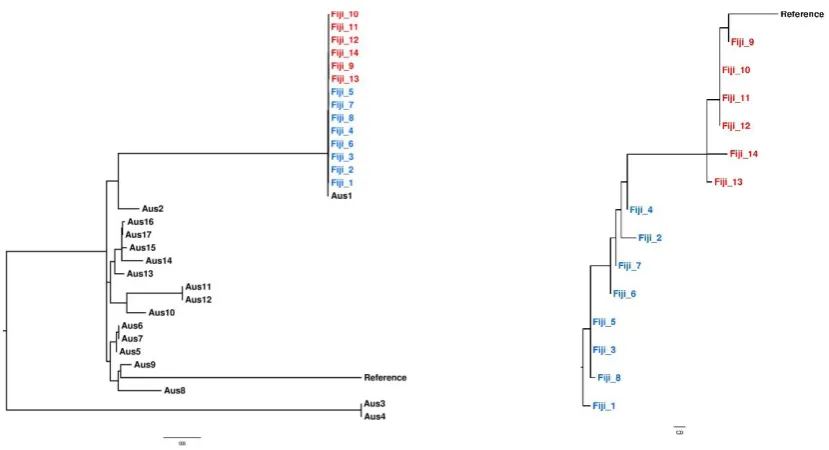
Figure 4 Phylogenetic analysis of Acinetobacter baumannii ST2 outbreak isolates in blue and red, in context with published ST2 isolates from Australia. The second tree shows the evolution of the outbreak isolates, from early to late in the outbreak, in blue and red, respectively. ... 34
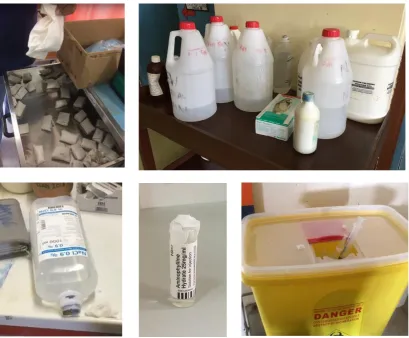
Figure 5 Infection control issues. Clockwise from top left: autoclaved gauze packed in butcher’s
paper that does not maintain sterility; saline solution diluted with tap water for wound irrigation and wetting of wound pads in surgical ward; overfilled sharps containers due to very low numbers of containers; multi-access of single use ampules, multi-access of 1L sterile saline for multiple patients. ... 35
ABBREVIATIONS
CPAP continuous positive airway pressure
CWMH Colonial War Memorial Hospital
EIS Epidemic Intelligence Service
ELBW extremely low birth weight (<1000 grams)
FPBS Fiji Pharmaceutical and Biomedical Services
GOARN Global Outbreak Alert and Response Network
ICU intensive care unit
IPC infection prevention and control
LBW low birth weight (≥1500 grams to <2500 grams)
MAE M.Phil. Applied Epidemiology
MOHMS Ministry of Health and Medical Services
MRO multi-resistant organism
NICU neonatal intensive care unit
PICU paediatric intensive care unit
SNP single nucleotide polymorphism
ST sequence type
VLBW very low birth weight (≥1000 grams to <1500 grams)
WHO World Health Organization
Chapter 2 – GOARN outbreak response in Fiji
29
ABSTRACT
Background: Between December and June 2017, the Colonial War memorial Hospital (CWMH) in Suva, Fiji, had 12 neonatal intensive care patients with Acinetobacter baumannii resistant to all tested antibiotics isolated from blood or cerebrospinal fluid specimen. All 12 patients died. With the outbreak still ongoing, the Fiji Ministry of Health and Medical Services requested international assistance from the WHO. An outbreak response team was assembled and deployed from the Global Outbreak Alert and Response Network (GOARN). I was deployed as an epidemiologist, together with another epidemiologist and an infection control expert. The terms of reference were to conduct an outbreak investigation at CWMH and an evaluation of the infection control practices at the three major hospitals in Fiji.
Methods: Log-books of multi-resistant organisms were reviewed back to January 2015 to establish the baseline presence of A. baumannii. A descriptive study was conducted using clinical and demographic data from medical records. The evaluation of infection control practices was conducted using an assessment tool developed at Griffith University.
Results: The epidemiological investigation revealed a long-term presence of a highly resistant A. baumannii strain in the neonatal intensive care unit (NICU), but with a steep increase in infections and deaths from December 2016. A total of 34 patients were identified, 14 patients with highly invasive disease (positive blood or cerebrospinal specimens) and 20 patients with positive specimens from other sites. Twenty-three of the 34 patients died from their infections. The descriptive analysis identified a universal use of respiratory support equipment among the infected infants. Whole genome sequencing of 14 specimen from 11 patients, showed an A. baumannii sequence type 2, with a phylogenetic tight clustering characteristic of an outbreak and with signs of microevolution consistent with the timeline.
The evaluation of the infection control practices indicated systemic infrastructure issues not conducive to support effective and consistent infection control, including unreliable supply of: single use respiratory equipment leading the inappropriate and unsafe reprocessing of items; personal protective equipment; intravenous fluids and medication; hand hygiene equipment and supplies.
EXTENDED PROLOGUE
This prologue will be more extensive compared to other prologues in this thesis in order to provide context for the technical report from the mission included as Appendix 2A in this chapter. The report describes the detailed findings from the mission, and in the prologue I will provide information on the deployment, the work conducted and my role in the mission. The report was written by the outbreak response team on behalf of the WHO and provided to the Fiji Ministry of Health and Medical Services (MOHMS). The enclosed version is the one approved (for release) by the WHO and MOHMS.
GOARN outbreak response mission
In early July 2017 the Ministry of Health and Medical Services (MOHMS) of Fiji submitted a formal request to the World Health Organization (WHO) for international assistance with outbreaks of multi-resistant Acinetobacter baumannii in the neonatal intensive care unit (NICU) at the Colonial War Memorial Hospital (CWMH) in Suva (Figure 1). The CWMH had been battling two consecutive outbreaks of the bacterium in the NICU since the beginning of 2017. At the time of the request for assistance the outbreaks had resulted in a significant number of deaths of neonates and had overwhelmed the in-country capacity. There was intense media interest and a growing perception in the wider community that the hospital was no longer safe to go to.
WHO assembled and deployed an outbreak response team from the Global Outbreak Alert and Response Network (GOARN). This is a network of emergency management resources (including field epidemiologists) around the world, from which WHO can deploy experts to provide assistance in response to requests. The Terms of Reference for the mission were to provide emergency outbreak response and to conduct a formal evaluation of the infection control practices at the three major hospitals in Fiji. The team deployed was composed of two epidemiologists tasked with the outbreak response and an infection prevention and control (IPC) expert. I was suggested as a suitable candidate for the mission by the ARM network, the GOARN focal point for Australia, and was selected to be deployed as an epidemiologist with laboratory expertise. The other epidemiologist was Dr Meghan Lyman, a medically trained Epidemic Intelligence Service (EIS) officer from the Centers for Disease Control and Prevention in Atlanta, USA; and the IPC expert was Dr Peta-Anne Zimmerman, from the Griffith University, Gold Coast, Australia.
Chapter 2 – GOARN outbreak response in Fiji
31 the CWMH was the largest hospital, Dr Lyman and I assisted in the evaluation and the compilation of the evaluation findings. During the second week Dr Lyman and I also continued with the outbreak investigation. In the third week we concluded the outbreak investigation and commenced drafting of the final report. Dr Lyman and I presented the final mission findings to the Permanent Secretary of the MOHMS, Executives and senior medical staff from the Lautoka, Labasa and CWM Hospitals and Executives from the Fiji Pharmaceutical and Biomedical Services (FPBS) (Appendix 2B). Dr Lyman returned to the US at the end of this week. I remained in-country for yet another week where I followed up on and confirmed data, and liaised with the Fiji WHO office to finalise the technical report. The team worked every day during the mission, with the exception of one. The time constraints of the mission allowed only a descriptive study to be conducted instead of an analytical study.
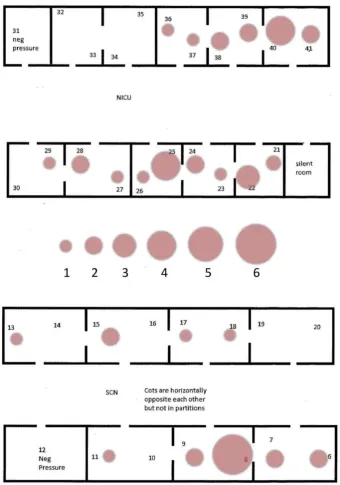
Figure 1 Neonatal intensive care unit at the Colonial War Memorial Hospital, the level 3 care facility (highest level of care) on the left and level 2 care facility on the right.
Outbreak overview
[image:39.595.122.540.297.580.2](PICU) as there was significant staff and equipment movement between the two units. Two patterns emerged, with the NICU dominated by a highly multi-resistant (resistance to 3rd generation cephalosporins and carbapenemases) Acinetobacter baumannii clone (hereafter referred to as the AB investigation strain) and the PICU dominated by an Acinetobacter baumannii clone sensitive to 3rd generation cephalosporins and carbapenemases. The review also highlighted that the presence of the AB investigation strain in a wide range of specimens, whereas up to this point the CWMH IPC team and NICU doctors only considered positive bacterial cultures from blood and cerebrospinal fluid specimens as part of the outbreak. When expanding the case definition, it became evident that the two outbreaks observed, were in fact one sustained outbreak, where the transmission of the bacterium had never been interrupted.
Figure 2 Handwritten, loose leaf paper-based patient medical charts and the MRO books.
Descriptive analysis of risk factors
A total of 40 patients were thought to be part of the outbreak, but medical charts could only be located from 34 patients. Twenty-three (67%) of these infants died from their infections. The clinical notes in the medical charts formed the basis of the information used for assessment of risk factors for infection with the AB investigation strain. The medical charts were all handwritten with papers only loosely bound, and inevitably there were missing documents and incomplete information for some patients (Figure 2).
The descriptive analysis of the clinical variables found a near universal (33/34 patients) exposure to mechanical ventilation prior to the first positive specimen. Blood transfusions prior to first positive specimen was also common (28/34 patients). It should be noted that this patient group is critically ill with significant comorbidities, and that much of the procedures were routine treatments for premature infants. Therefore, without an analytical study format it was very difficult to establish a statistical association between a risk factor and infection.
Chapter 2 – GOARN outbreak response in Fiji
33 units at the hospital. The interviews provided insight into the operation of the NICU and the hospital and were conducted with clinical and auxiliary staff (such as cleaners) in the NICU and PICU; scientists in the microbiology laboratory; the IPC team; the consumables store manager; pharmacists and representatives from the FPBS; and the antimicrobial stewardship unit.
The interviews revealed significant long-standing supply issues at the hospital, the reasons for which were multifaceted. The wards expressed a difficulty in obtaining sufficient consumables from the hospital stores for the operation of the units, but also could not define what their monthly consumption was likely to be as they had operated at deficit levels for a prolonged time. The hospital consumables stores manager claimed that they were not aware of how much stock
was available at the FPBS and only requested supplies to maintain the store’s levels. The FPBS
in turn stated they were bound by the available budget and, without a statement of need from the hospital, were unable to advocate for an adjustment of the budget. The result was that the hospital worked with a frustratingly consistent deficit of supplies, ranging from simple items such as hand sanitizer of sufficient strength to advanced equipment such as single-use ventilator tubing. This undersupply led to dangerous practices such as the re-use of single-use ventilator and oxygen tubing (Figure 3). As these items were meant for single use, they were not able to be cleaned or sterilized appropriately, and were only rinsed in tap water and air dried.
The observation regarding the re-use of respiratory equipment supported the observation of near universal use of respiratory equipment among the infected patients. The lack of small volume vials of consumables such as sterile saline, led to large 1L vials being accessed multiple times, and sometimes for multiple patients. The evaluation of infection control practices revealed that these issues were common to all wards at CWMH, and also to the hospitals in Lautoka and Labasa.
Whole genome sequencing analysis
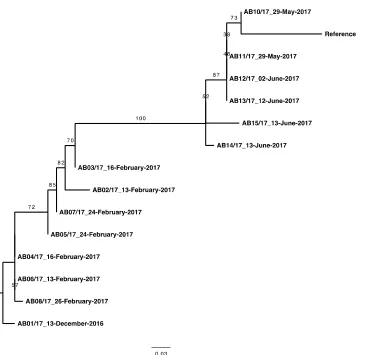
Whole genome analysis of 14 isolates from 11 patients was conducted by the Microbiological Diagnostic Laboratory Public Health Laboratory in Melbourne, Australia. The whole genome sequencing was carried out following their standard protocols on an Illumina NextSeq 500, with subsequent bioinformatic analysis using the in-house Nullarbor pipeline (https://github.com/tseemann/nullarbor). In the bioinformatic analysis Australian isolates of the same sequence type were included for contextual purposes. The analysis revealed the AB investigation stain to be an Acinetobacter baumannii sequence type 2 (ST2), harbouring a blaOXA-23 carbapenemase gene and a 16S rRNA methyltransferase armA gene conferring high-level aminoglycoside resistance. The phylogenetic analysis showed the isolates to be highly clonal, with evidence of micro evolution over the outbreak period (Figure 4).
Figure 4 Phylogenetic analysis of Acinetobacter baumannii ST2 outbreak isolates in blue (collected in December to Feb) and red (collected May to June), in context with published ST2 isolates from Australia. The second tree shows the evolution of the outbreak isolates, from early to late in the outbreak, in blue and red, respectively.
Evaluation of infection control practices
[image:42.595.62.477.321.546.2]Chapter 2 – GOARN outbreak response in Fiji
35 have any functioning recording device to ensure that it reached adequate temperature and pressure during the sterilisation cycle. In additional to this sub-optimal operation, this situation also meant that should there be a failure with the remaining autoclave, the hospital would be paralyzed as no equipment or waste could be sterilized until a replacement machine could be sourced and delivered. This would have far reaching adverse impacts as the CWMH is a referral hospital for all of Fiji and some neighbouring countries.
Health care workers form part of the transmission chain and arguments can be made to screening for MROs among the work force. However, in the current situation such concerns are overshadowed by the more immediate IPC issues identified.
[image:43.595.121.531.367.705.2]A concerning fact was the discovery of reports from 11 previous outbreak investigations from 2006 to 2016 that had identified the same infection control problems and supply issues and made very similar recommendations to those that our outbreak response team presented. However, the response from the MOHMS this time seemed very encouraging, and at the time of writing there have been no further outbreaks of Acinetobacter baumannii in the NICU.
My role
I was deployed as a short-term WHO contractor with field epidemiology and laboratory skills.
The laboratory skills complemented Dr Lyman’s medical skills from her background as a
physician, allowing us to tackle problems from multiple angles. This was particularly useful when it came to conducting interviews with various staff members at the hospital.
My role in the outbreak response involved a range of tasks, including:
• Assemble historical data from 2015 onwards on Acinetobacter baumannii in the NICU and PICU at the CWMH to establish baseline data to contextualise the outbreak. • Establish a case definition, create a line list of infected patients in the NICU and extract
demographic and clinical data from medical charts.
• Conduct descriptive analysis of the extracted data and produce visual representations. • Review of the literature on Acinetobacter baumannii and other multi-resistant
organisms (MRO) in the Pacific.
• Conduct interviews with nursing staff and doctors in the NICU, with laboratory staff in the microbiology unit, medical supply personnel at the CWMH and representatives at the FPBS.
• Interpret whole genome sequencing and phylogenetic data.
• Prepare and give regular briefings to the WHO Representative at the Fiji WHO office and the Permanent Secretary of MOHMS.
• Prepare and deliver a presentation for the MOHMS and CWMH hospital staff at the mid-point of the mission, and a final presentation to the MOHMS, FPBS and Executives from the three major hospitals at the conclusion of the mission.
• Provide a technical debriefing teleconference with the WHO Western Pacific Office. • Write a final technical report for the WHO to the MOHMS (drafted the outbreak
response section and reviewed the complete report).
While I was mainly focussed on the outbreak response, Dr Lyman and I also helped Dr Zimmerman with the evaluation of infection control practices at the CWMH, as this was the largest hospital and there was a very limited time to conduct the evaluation. Dr Lyman and I also assisted in training of the IPC nursing team at the CWMH in basic surveillance of MROs. I set up and trained the IPC nursing team in the use of an Excel spreadsheet for ongoing monitoring of MROs. I assisted Dr Lyman in training of NICU staff in infection control procedures such as contact precautions and movement patterns of equipment to reduce risk of transmission.
Chapter 2 – GOARN outbreak response in Fiji
37 the opportunity to present to the staff at the infectious diseases and infection prevention and control units at the Canberra Hospital, as well as at a Canberra Hospital Grand Rounds seminar, together with Dr Nicholas Coatsworth and Wendy Beckingham.
Lessons learned
At the time of deployment, I had been in the MAE program less than 5 months and had a case of impostor syndrome as I was sitting on the flight to Fiji. I had been well briefed on how to prepare and what to expect on a deployment by my academic supervisor, Dr Katrina Roper, who had extensive experience of international deployments. But still, flying into an unknown situation with only very brief Terms of Reference indicating the situation and no previous experience with outbreak responses, made me admittedly nervous. This dissipated within the first few hours of commencing the work. The first briefings with the local WHO office and at the CWMH painted a dire situation with significant knowledge gaps. Dr Lyman and I established a plan and got working. This is how the MAE training functions: learning by doing.
It was a fantastic learning opportunity. The situation forced me to be fully engaged and take on what needed to be done, regardless if I felt comfortable or competent for the task. I learnt from Dr Lyman and Dr Zimmerman how important it was to triangulate the information that you received, especially with regards to areas where there may be political or personal interests
involved. This also became apparent in terms of people’s expectations and what they thought
the mission should include. This was both from local staff at the CWMH and the MOHMS, but also from the Western Pacific Region WHO (WPRO) office that had a wide range of suggestions of additional work. Staying on target with the Terms of Reference and the time frame became very important, and also to acknowledge that a lot of these suggestions fell outside the expertise of the outbreak response team.
Nothing motivates like seeing suffering patients and their families, and hospital staff working hard under challenging circumstances to save lives. You simply want to do everything that you can to help. This motivation was critical, as I also learned that there is very little down-time during a mission, even if you are on a paradise island. A normal day would often be work at the hospital gathering information during the day, go back to the hotels at 5pm to do analysis of the data, followed by seeking input or advice from home offices (the CDC in Dr Lyman case and Dr Roper in my case), with days often ending at midnight. Every day. 7 days a week. The support from home became invaluable, both in terms of work input but most importantly debriefing.
3) or a cohort study. Suitable reference groups for such analytical studies were available in the form of infants with overlapping admissions to those in the current study, but without A. baumannii infection or colonisation. As both groups would be composed of patients admitted to the NICU, one could argue that this would technically be a case-case study, but the analysis procedure is the same as for a case-control study.
Having commenced a project on vancomycin resistant enterococci in the NICU at the Canberra Hospital, the challenges of the IPC unit at the CWMH became very apparent. At the Canberra Hospital the IPC unit have a well-recognised and respected role in the hospital system, providing them with authority to implement effective action in emergency situations. The IPC unit at the CWMH on the other hand were composed of relatively junior staff, who held little authority in the rigid hierarchical hospital system, making their work very difficult. The vulnerabilities of paper-based systems also became evident, where in contrast to the computer-based system of medical charts at Canberra Hospital, there often were missing or incomplete medical charts for patients in CWMH, which had an effect on the analysis. With all this said, I do recognise that Fiji probably have one of the more developed health care systems in the region, Australia and New Zealand aside. Finally, what was similar between the NICUs in the two countries was the impressive commitment and hard work of the nurses and doctors.
Public health implications
The most significant public health implication of the GOARN mission was that we managed to stop the outbreak. The immediate cessation in transmission was likely due to changes in infection control practices in the NICU, most significantly stopping the re-use of single use respiratory equipment but also reduced sharing of other equipment, cohorting of infected patients, and changed movement patterns of equipment and staff in the NICU. The MOHMS action of releasing emergency funds to procure consumable equipment for the NICU, including single-use respiratory equipment and disinfection agents, also assisted in ceasing transmission. The influx of equipment was also intended to estimate the usage and requirements of the NICU, which had operated at a starved level for such a long time that the staff were unable to tell the outbreak response team what the minimum levels of consumable equipment required for normal operation were. This information was to be used to inform future budget estimates.
Chapter 2 – GOARN outbreak response in Fiji
39 identified gaps in human resources and lack of articulated public health strategies. The MOHMS was going to seek international assistance to establish such guidelines.
In August 2018, Dr Zimmerman was invited back to follow up on the recommendations and to conduct another evaluation. She reported in conversations that there had not been no further outbreaks with Acinetobacter baumannii in the NICU.
Ethics
Ethics approval for the inclusion of this piece of work and the report in the bound volume was obtained from the Australian National University Human Research Ethics Committee (Protocol number 2018/537).
Acknowledgements
I would like to thank Dr Meghan Lyman and Dr Peta-Anne Zimmerman for being excellent team members to deploy with, and for teaching me the inner workings of an outbreak response and how to work effectively in the WHO bureaucracy. Thanks also to Dr Zimmerman for ongoing contact and stimulating discussions about public health. Huge thanks to my academic supervisor, Dr Katrina Roper for preparing and supporting me during the deployment. It made the whole experience seem possible and provided an invaluable stability during the time in country. Thank you to Professor Martyn Kirk and the ARM network members for putting my name forward to the WHO, and to Dr Anthony Stewart at the WHO for selecting me to be part of the team.
Figure 6 Sister Susana, head nurse of IPC team together with Dr Lyman. Our colleague from the Fiji WHO office, Asaeli Raikabakaba, together with Dr Lyman and myself.
MAE core activity requirements
Chapter 2 – GOARN outbreak response in Fiji
41
APPENDIX 2A
–
Technical report:
Acinetobacter baumannii
outbreak in the
NICU at the Colonial War Memorial Hospital, Suva, Fiji, December 2016
–
July
2017
The report was written on behalf of WHO by the outbreak response team at the conclusion of the
ACINETOBACTER BAUMANNII OUTBREAK IN NICU AT THE
COLONIAL WAR MEMORIAL HOSPITAL SUVA, FIJI, DECEMBER
2016 – JULY 2017
Technical report
11 July 2017 – 9 August 2017
Authors:
2
TABLE OF CONTENTS
LIST OF ABBREVIATIONS 3
MISSION BACKGROUND 4
Terms of reference 4
GOARN team 5
Objectives 6
GOARN team activities 6
ACKNOWLEDGEMENTS 8
1. EXECUTIVE SUMMARY 9
2. INTRODUCTION 11
3. METHODS AND DATA SOURCES 12
3.1 Epidemiological investigation 12
3.1.1 Case finding 12
3.1.2 Case definitions 12
3.1.3 Epidemiological analysis 12
3.1.4 Environmental sampling 13
3.1.5 Whole genome sequencing 13
3.2 Infection prevention and control evaluation 13
4. RESULTS 14
4.1 Epidemiological investigation 14
4.1.1 Case finding 14
4.1.2 Microbiological description of the cases 15 4.1.3 Epidemiological description of the cases 21
4.1.4 Environmental sampling 25
4.1.5 Whole genome sequencing 25
4.2 Infection prevention and control evaluation 26
4.3 Previous MDRO outbreak investigations 27
5. DISCUSSION 28
6. LIMITATIONS OF THE STUDY 29
7. ACTIONS AND RECOMMENDATIONS 30
7.1 Immediate actions taken 30
7.2 Recommendations 31
7.2.1 Proposed action plan for hospital infection prevention and control 33
8. ANNEXES 41
REFERENCES 42
LIST OF ABBREVIATIONS
AMS Antimicrobial stewardship
CHW Children’s ward
CSF Cerebrospinal fluid
CSSD Central sterilizing supply department CSU Catheter specimen of urine
CVC Central venous catheter CWMH Colonial War Memorial Hospital
DoA Date of admission
DoB Date of birth
DoFPS Date of first positive specimen
ETT Endotracheal tube
FPBS Fiji Pharmaceutical and Biomedical Services GOARN Global Outbreak Alert and Response Network HAI Healthcare associated infection
ICC Infection Control Committee IPC Infection prevention and control
IPCP Infection prevention and control program MOHMS Ministry of Health and Medical Services MDRAB Multi drug resistant Acinetobacter baumannii
MDRO Multi drug resistant organism
MDU-PHL Microbiological Diagnostic Unit Public Health Laboratory NICU Neonatal intensive care unit
OGT Orogastric tube
OT Operating Theatre
PICU Paediatric intensive care unit
SCM Supply chain management
SXT Trimethoprim- sulfamethoxazole UVC Umbilical venous catheter
4
MISSION BACKGROUND
The Fiji Ministry of Health and Medical Services (MOHMS) requested the support of WHO to investigate 12 neonatal intensive care unit (NICU) patients at the Colonial War Memorial Hospital (CWMH) in Suva with
Acinetobacter baumannii resistant to all tested antibiotics (referred to as AB investigation strain in this report). The 12 cases were reported by the MOHMS as having occurred in two clusters from 13 December 2016 – 26 February 2017 and 27 May – 23 June 2017. The AB investigation strain was isolated in the blood or cerebrospinal fluid (CSF) samples from these patients, all of whom died.
The purpose of the Global Outbreak Alert and Response Network (GOARN) mission was to assist with the epidemiological investigation of the outbreak of multi-drug resistant A. baumannii (MDRAB) in the NICU at the CWMH. A review of the infection prevention and control (IPC) practices at the CWMH and hospitals in Lautoka and Labasa was to be conducted at the same time as requested by the MOHMS.
TERMS OF REFERENCE
These are the specific terms of reference for the mission:
Outbreak investigation
1. Literature review of published and/or unpublished data and studies that will assist with collection of information relevant to the current review of MDRAB cases in CWMH.
2. Review the case records and line listing of the cases from the two recent NICU clusters, and collect any additional data needed for the epidemiological investigation
3. Conduct a retrospective audit of sterile site infections among admissions to NICU at CWMH since Jan 2015
4. Review the surveillance system for health care associated infections at CWMH and specifically in NICU and Paediatric Intensive Care Unit (PICU)
5. If required, extend these investigations to adult Intensive Care Unit (ICU.
Review of Infection Prevention and Control (IPC) practices and antimicrobial stewardship
1. Review current IPC policy and audit IPC practices at CWMH, with a focus on NICU and other high dependency wards
2. Conduct a retrospective review of restricted antibiotics usage and prescribing practices 3. Identify any risks for the spread of MDRAB posed by engineering controls0F
1, IPC policies and
procedures, staff movements, work practices in NICU and other high dependency wards
4. In collaboration with the hospital pharmacy, review supply chain management of essential drugs, materials and supplies for antimicrobial stewardship and good IPC practice
5. Review the current Terms of Reference, membership and procedures of the IPC Committee 6. Conduct ward visits and interview CWMH staff and other key informants
1
Engineering controls of the physical environment aim to reduce the concentration of infectious agents in the environment and the likelihood of their spread. They include, but are not limited to, the physical layout of the facility, adequate environmental ventilation, the spatial separation between patients, and facilities for hand washing and hand hygiene.
7. Conduct training and presentations to key health workers including the CWMH IPC Committee members
8. Interview World Health Organization (WHO) technical staff, including verification/validation of collated information
9. Synthesise and summarise information gathered in a detailed report, including key conclusions and recommendations
10. Provide a debriefing to the CWMH IPC Committee and senior management, Ministry of Health and Medical Services senior executives, and WHO
Amendments to Terms of Reference (TORs):
On 13 July 2017, the TORs were amended following a discussion between WHO and the consultants with the aim of clarifying the intent and feasibility of activities described in the original TORs. For example, the original TOR #3 was changed from "Conduct a retrospective audit of sterile site infections in patients admitted to NICU at CWMH since Jan 2015" to that defined in TOR #3 below. What was in and out of scope of TOR #4 was also better defined. These changes did not affect either the overall intent or focus of the GOARN mission.
Outbreak investigation:
TOR #3. Conduct a count of the number of Acinetobacter baumannii and Klebsiella pneumoniae
infections in blood stream infections (and possibly other sterile sites if such data is readily available) in NICU since Jan 2015, to establish a baseline for the current NICU outbreak.
TOR #5. As required, extend the investigations to count Acinetobacter baumannii and Klebsiella pneumoniae infections in the PICU and ICU.
Review of IPC practices and antimicrobial stewardship
TOR #4. The team will not be able to do a detailed review of supply chain management (SCM) of essential drugs and antimicrobial stewardship (AMS) but will conduct interviews with pharmacists and Fiji Pharmaceutical and Biomedical Services Centre (FPBS) staff in order to understand the current procurement and supply system in place. There are currently two Australian pharmacists working on AMS with FPBS and CWMH over a 12 month period, and as such are better placed to address these issues than the GOARN team during the short mission.
GOARN TEAM
Name Dr Peta-Anne Zimmerman
Institution Griffith University/Gold Coast Hospital and Health Service/Menzies Health Institute, Queensland/Australasian College for Infection Prevention and Control
Role in team Infection Prevention and Control Consultant
Conduct review of IPC practices at CWMH, Lautoka and Labasa hospitals Training of IPC team
Location Suva, Lautoka, Labasa Time in country 12 July - 24 July 2017
Name Dr Meghan Lyman
6 Role in team Epidemiologist
Conduct epidemiological investigation of NICU outbreak at CWMH Assist in review of IPC practices at CWMH
Training of IPC team and NICU staff
Location Suva
Time in country 11 July - 3 Aug 2017
Name Dr Patiyan Andersson
Institution National Centre for Epidemiology and Population Health, Australian National University
Role in team Epidemiologist
Conduct epidemiological investigation of NICU outbreak at CWMH Assist in review of IPC practices at CWMH
Assist in training of IPC team and NICU staff
Location Suva
Time in country 12 July - 9Aug 2017
OBJECTIVES
Overall objectives of the mission: • Outbreak investigation
• Review of IPC practices and antimicrobial stewardship
Outputs:
• MDRAB situation analysis and audit report
• Key health workers and IPC Committee members trained on IPC practices and outbreak interventions
• Final technical report with key findings and recommendations
GOARN TEAM ACTIVITIES
Summary of GOARN team activities (Annexes 1 and 2 provide the details)
• Epidemiological investigation of outbreak in NICU at CWMH (M. Lyman and P. Andersson)
• Review of Infection Prevention and Control capacity in Fiji in collaboration with relevant IPC teams (Lead by P-A. Zimmerman, assisted at CWMH by M. Lyman and P. Andersson)
• Provision of guidance at divisional hospital and national levels (P-A. Zimmerman, M. Lyman and P. Andersson)
• Ensuring key stakeholder agreement to IPC implementation work plan (P-A. Zimmerman, M. Lyman and P. Andersson)
• Workshops with IPC team at CWMH (Lead by P-A. Zimmerman, assisted by M. Lyman and P. Andersson)
• Collaboration with key stakeholders and Infection Control Committees at each facility • Provision of locally relevant feedback at each facility (P-A. Zimmerman)
• Review, evaluation, and reporting of IPC at Lautoka Hospital (P-A. Zimmerman) • Review, evaluation, and reporting of IPC at Labasa Hospital (P-A. Zimmerman)
• Review, evaluation, and reporting of IPC at CWMH (P-A. Zimmerman, M. Lyman and P. Andersson) • Workshops conducted at CWMH with IPC team (P-A. Zimmerman, M. Lyman and P. Andersson) • Development of workplan for IPC implementation with CWMH IPC team (P-A. Zimmerman) • On-site guidance on improving IPC practices at CWMH NICU (M. Lyman)
• Development of workplan for improving IPC practices in NICU at CWMH (M. Lyman)
• Development of electronic databases and analysis components for ongoing MDRO surveillance with IPC team (P. Andersson)
• Briefing of Permanent Secretary of Health and Ministry of Health and Medical Services (MOHMS) partners (P-A. Zimmerman, M. Lyman and P. Andersson)
8
ACKNOWLEDGEMENTS
Many thanks to all who organised this mission in the WHO HQ GOARN Operations Support Team, WHO South Pacific Office | Division of Pacific Technical Support, WHO Western Pacific Regional Office (WPRO) and the Ministry of Health and Medical Services of Fiji. Special thanks to the in-country counterparts who we respect and acknowledge for their expertise and assistance.
We would also like to acknowledge the support from our home institutions, Griffith University, US Centers for Disease Control and Prevention and the Australian National University for their invaluable input during the course of the investigation, and the Microbiological Diagnostic Unit Public Health Laboratory, Peter Doherty Institute for Infection and Immunity, University of Melbourne which conducted the full genome sequencing of the clinical specimens.
1.
EXECUTIVE SUMMARY
From December 2016 to June 2017, the Colonial War Memorial Hospital (CWMH) in Suva, Fiji, identified 12 neonatal intensive care unit (NICU) patients with Acinetobacter baumannii resistant to all tested antibiotics isolated from blood or cerebrospinal fluid (CSF) samples (referred to as the AB investigation strain throughout this report). All 12 patients died. These 12 case-patients were reported by CWMH as having occurred in two clusters from 13 December 2016 – 26 February 2017 and 27 May – 23 June 2017. The purpose of the GOARN mission from 11 July – 9 August 2017 was to assist with the epidemiological investigation of the outbreak and to conduct a review of the infection prevention and control (IPC) practices at the CWMH and hospitals in Lautoka and Labasa as requested by the Fiji Ministry of Health and Medical Services (MOHMS).
The epidemiological and laboratory investigations revealed an A. baumannii strain resistant to all tested antibiotics including meropenem, which was more common in the NICU than other paediatric wards. Along with a rise in the number of patients testing positive for this strain, there had been an increase in invasive infections and deaths among these patients.
A review of admissions to the NICU and paediatric ICU (PICU) from 1 December 2016 – 31 July 2017 identified two additional patients with the AB investigation strain considered part of the second cluster, bringing the total to 14 patients with this strain of A. baumannii in blood or CSF specimens (sterile site infections). Nine blood culture isolates and 5 cerebrospinal fluid isolates from 11 of these patients were sent to the Microbiological Diagnostic Unit Public Health Laboratory, University of Melbourne in Australia for whole genome sequencing, with 3 patients having samples from both sites sent for testing. Multilocus sequence typing (MLST) of the isolates showed 14 belonging to sequence type 2 (ST2) genotype but two different sub-groups clustering by sample collection date based on whole genome sequencing, with one group evolving from the other.
In addition, 20 patients tested positive for the AB investigation strain on specimens collected from sites other than blood and CSF. While these case-patients were very ill on admission to the ICU, many did not have cultures positive for this strain on admission. While respiratory conditions and ventilator support were observed for nearly all for patients, many of the other characteristics and exposures of these case-patients varied.
In collaboration with the Infection Control Committees and staff of the Colonial War Memorial, Lautoka, Labasa Hospitals, an evaluation of IPC policies, practices and infrastructure was conducted at each facility using a standardised assessment tool. Findings indicated systemic infrastructure issues not conducive to support effective and consistent IPC practices due to the unreliable supply of: single patient use respiratory equipment leading to inappropriate and unsafe reprocessing of patient care items; personal protective equipment; intravenous fluids, medication and associated equipment; and hand hygiene equipment and supplies. Associated with, but not limited to these findings is: the need for greater leadership support; inconsistent cleaning methodologies; and non-specific healthcare associated infection and hand hygiene surveillance. The findings of the current investigation are consistent with reports from similar outbreaks spanning 10 years.
10 ICUs and hospital-wide. An appropriate and uninterrupted supply of personal protective equipment, other IPC equipment and supplies, and the equipment and consumables needed for individual patient care, is essential for good IPC practice.
It is recommended that there be a consistent commitment, not only at a NICU or facility level but at a whole of health service level, to support and strengthen IPC practice in the delivery of safe care through appropriate supply management and strong and consistent leadership in IPC. A work plan to this end was developed in collaboration with the MOHMS, Infection Control Committees, and staff identifying clear and achievable short, medium, and long-term goals for remediation across the whole health sector. In order to effect long term and sustainable improvements IPC practices, linkage with other health systems strengthening approaches is needed.