International Journal of Innovative Technology and Exploring Engineering (IJITEE) ISSN: 2278-3075, Volume-8 Issue-11, September 2019
Abstract: Over one third of world workforce are employed in agriculture and the amount is steadily falling because of the financial losses of the farmers. One of the key reason behind this financial loss is the lack of technology in agriculture. Continuous cropping and overuse of fertilizers cause the decline in soil productivity and effect the environment as well. This paper demonstrates how the soil productivity can be optimized by implementing an IoT (Internet of Things) based model. Specifically, the paper describes the way to identify the amount of soil nutrients and environmental conditions, followed by the recommendations for cropping and site specific fertilization. Nitrogen, phosphorous and potassium are the key nutrients that are responsible for the plant growth. Soil moisture, pH level of soil and environmental conditions also effects the productivity of crops. In this present work, the system incorporated with various chemicals and sensors to report NPK level, pH level, soil moisture level, temperature and weather forecast. The proposed system takes the soil sample as the input and performs the chemical reactions, corresponding changes in the color of sample is sensed by color sensors and decoded by colorimetry technique. An android application has been built to show the test report and recommendations based on sensed data. The paper has proposed a scientific way to develop a robust, fully automated and low-cost smart farming solution to suit the socioeconomic conditions of small scale farmers in developing countries.
Keywords: Soil Nutrients, Precision Agriculture, Arduino.
I. INTRODUCTION
Over centuries, the development of agriculture contributed to the rise of civilizations that is climacteric to economic growth [1]. Abiotic components including topography and soil are the factors influencing production of plants [2]. Today, agriculture occurs on large scale but the agrarian driven growth, poverty reduction, and food security are at stake. The climate change could cut crop yields, especially in the world’s most food insecure regions. All plants require a balanced supply of micronutrients for its growth. Among all the nutrients for plant growth nitrogen, potassium and phosphorous are the primary macronutrients required by the plants for robust growth [3]. Most commonly urea (includes
Revised Manuscript Received on September 06, 2019
Arun Kumar, Apex Institute of Technology, Chandigarh University, Mohali, India. Email: [email protected]
Abhishek Kumar, Apex Institute of Technology, Chandigarh University, Mohali, India. Email: [email protected]
Akash De, Apex Institute of Technology, Chandigarh University, Mohali, India. Email: [email protected]
Shashank Shekhar, Apex Institute of Technology, Chandigarh University, Mohali, India. Email: [email protected]
Rohan Kumar Singh, Apex Institute of Technology, Chandigarh University, Mohali, India. Email: [email protected]
nitrogen) used for plant cultivation gets enzymatically hydrolyzed to ammonia by an enzyme known as urease that is found in soil microorganisms [3], [4]. As the conversion is very swift and exceeds the rate of which plants can utilize the released ammonia. Only 40% - 50% of urea applied in conventional fertilizers appears to be utilized by the plants while the rest leaches into the water, or is lost to the atmosphere by denitrification [3], [4]. Phosphorous is a major component in plant DNA and RNA. It is critical in seed production, crop maturity and roots development [4]. Fertilizers like Ammonium phosphate and Di ammonium phosphate are some sources for phosphorous. The role of potassium is indirect as it is used to activate over 80 enzymes throughout the plant [4]. It helps plants make strong stems and it increases plant’s ability to withstand extreme weather conditions and making them grow fast and fight with diseases. It increases water use efficiency and converts sugar to starch in the grain filling process. Potassium Chloride – Potash is one of the source for Potassium [4]. The acidity of the soil or pH is key factor in ensuring healthy plant growth. Specific plants vary in the soil pH they prefer universally. Hence, soil monitoring is the basic procedure for farming. The unprecedented crop yield due to unfavorable weather conditions and infertile soil led the farmers to face financial problem causing many suicidal cases across the world. So to minimize such drawback there is a need of structured and balanced framework which is helpful for rugged developments of agriculture field.
II. EXISTING SYSTEM
For crop optimization and to protect the plant from environmental contamination soil testing is important. Generally for soil testing purpose farmers are advised to take soil samples to laboratories. A laboratory soil test has definite advantages, but it takes longer time to wait for the test results. Electrochemical sensors are also used for checking soil nutrients [5]-[7]. It uses ion selective electrodes (ISE) and ion selective field effect transistor (ISFET) for soil nutrient detection and is incapable of real time sensing implementations because of the delay in execution time. Electrochemical sensors are often more expensive and larger in size which makes it least affordable for the farmers.
IoT Based Farming Recommendation System
Using Soil Nutrient and Environmental
Condition Detection
III. PROPOSED SYSTEM
[image:2.595.304.547.224.418.2]For quick look into soil reports, the cost efficient home kits have been provided that are trained to analyze the data gathered by sensors. The system rely on color charts to match the nutrient levels in a soil solution. The kit provides basic guide of the pH and nutrients that are immediately available and they are best for farmers from diverse demographic dimensions. A user friendly mobile application has been provided so that any farmer and gardener can get real time access to data management, weather forecasting, soil scanning and Internet of Things. Thus the farmers can strategies accordingly with the data that have been gathered and can precisely measure the steps to increase the effectiveness of fertilizers and pests and use them judiciously.
Figure 1: Proposed Kit
A. Block Diagram
The proposed system comprises of NPK and pH testing chemicals, color sensors, soil moisture sensor, temperature sensor, GPS, Arduino mega and an android application.
Figure 2: Block Diagram of Proposed System
[image:2.595.46.293.232.350.2]B. Arduino Mega Microcontroller
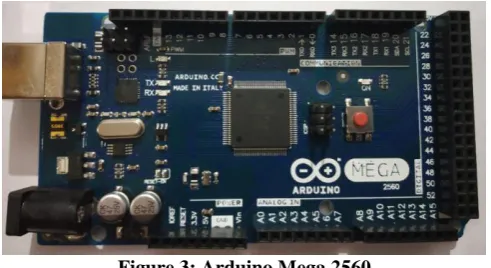
Figure 3: Arduino Mega 2560
Arduino is a computer hardware and microcontroller board. It is based on Microcontroller ATmega 2560. It is equipped
with 54 digital I/O pins and 16 analog pins [8]. In Arduino Mega 2560 every single pin can provide or receive a maximum of 40 mA. Arduino Mega has an internal pull-up resistor of 20-50 Kiloohm [8]. In 54 digital I/O pins, 15 pins are for pulse width modulation, 16 are analog input pins and 4 are hardware serial port [8]. The Arduino Mega 2560 has a lots of features like for communicating with a computer, another arduino or other microcontrollers. The arduino software includes a serial monitor which gives a permission to simple textual data to be sent to and from the board. For programming in Arduino Mega 2560, it uses Arduino IDE that supports C, C++, Java and Python languages. In Arduino IDE, we write code that is called sketch and that is transferred by USB cable [8].
[image:2.595.48.269.447.554.2]C. NPK and pH Testing Chemicals
Figure 4: NPK and pH Testing Chemicals
The chemical test uses colorimetry and turbidimetry to measure four variable common in soil testing - nitrogen, phosphorus, potassium, and pH. The test is supplied with MT 5009-0 NITRATE reagent, MT 5010-0 PHOSPHATE reagent, MT 5002-0 POTASSIUM reagent which on reacting with solution gives varied colors [9]. And based on the intensity of color produced, we can predict whether the intensity of nutrients are low or high. The soil pH range from pH 5.5 to 7.0 is idle for most plants [10]. However, some species favor a more acidic or alkaline nature. In spite ofthat, every plant advance within a distinct pH range that strongly influences the availability of nutrients in soil.
D. Color Sensor
[image:2.595.46.292.617.751.2]International Journal of Innovative Technology and Exploring Engineering (IJITEE) ISSN: 2278-3075, Volume-8 Issue-11, September 2019
Figure 5: TCS3200 Color Sensor
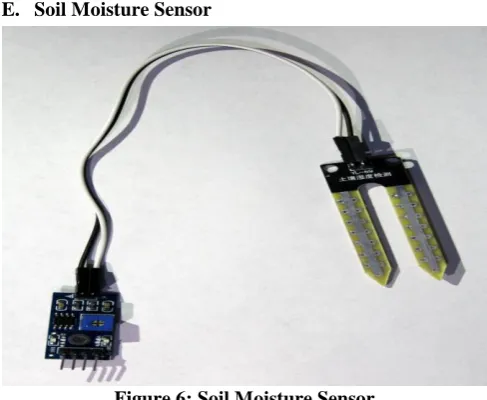
[image:3.595.305.549.167.332.2]E. Soil Moisture Sensor
Figure 6: Soil Moisture Sensor
The moisture sensor is mainly used to measure the volumetric water content in soil. The soil moisture sensor that has been used in the present work is having two probes which can be inserted into the soil. The soil moisture sensor gives the output in the analog form which is converted into digital form [13]. The final output is in the form of percentage of water level in the soil. Moisture sensor is used in various field like irrigation system and agriculture.
[image:3.595.46.290.230.430.2]F. Temperature Sensor
Figure 7: DS18B20 Temperature Sensor
The temperature sensor is used to detect the temperature level. DS18B20 temperature sensor has been used in the
system. The DS18B20 can measure the temperature from -55°C to +125°C with a proper precision of ±5°C. This sensor consists of three pins [14]. The DS18B20 is perfect choice for measuring temperature at numbers of points. This sensor is very small in size and takes very low amount of energy. This sensor comes with a waterproof module so that it can withstand in any climatic condition.
G. GPS
Figure 8: GPS NEO – 6M
GPS stands for Global Positioning System. It is used in various places like in military application, agriculture field etc. GPS NEO 6M has been used in the system. NEO 6M GPS module is a complete GPS receiver with a built-in 25 x 25 x 4mm ceramic antenna [15]. NEO 6M GPS provides a strong satellite search capability. By the help of power and signal indicators, the status of the module can be monitored. By the help of data backup battery, the module can save the data when the main power is shut down accidentally or by mistakenly. It provides a built-in EEPROM to save configuration parameter data. The required power supply for NEO 6M GPS is 3-5V and default baud rate is 9600bps [15].
[image:3.595.314.518.509.639.2]H. Wi–Fi Microchip (ESP8266)
Figure 9: ESP8266 Microchip
[image:3.595.46.290.576.729.2]I. Cloud Storage - ThingSpeak
Cloud storage is the solution for storing the huge amount of data in physical devices. The data gathered from sensors are stored on server as it helps in having back up, sync and can be easily accessed to all possible devices that have internet connection [17]. Data visualization is then done and the farmers are provided with simple results. There are many available cloud storage and among which ThingSpeak has been used. ThingSpeak is an open IoT platform supported by MATLAB analytics [18]. Cloud storage reduces costs, simplifies IT management, improves user experience, and allows farmers and gardeners to work and survey vast fields.
J. Android Application
An android application is an application software which is running on android platform. By using android software development kit we can write android applications by Kotlin and Java languages [19]. The android application has been used to show the soil test report. Only the authorized users have the access of soil test report. All the required data have been fetched from the cloud storage by using the android application. The aim to make the application is to help the farmers to get the soil report in their mobile device easily.
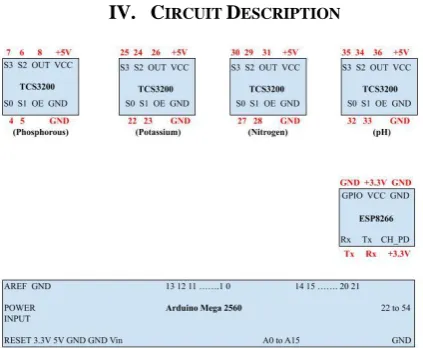
[image:4.595.56.268.333.507.2]IV. CIRCUIT DESCRIPTION
Figure 10: Circuit Connection
The four color sensors have been connected with the digital pins and VCC (+5V) of Arduino Mega 2560. These color sensors have been fitted in such a way that they give the actual result of the corresponding sampling cups. When the power supply is on, the four LEDs on each color sensors start glowing. These LEDs are used to reflect back the color of the liquid and transfers the result to the arduino. It has been programmed using Arduino Communication Software.
The three pins of temperature sensor have been connected with the VCC, GND and digital pin of arduino.
The GND and VCC of GPS have been connected to GND and +5V of arduino respectively. The RX and TX have been connected with the digital pins of the arduino. The RX and TX have been used to receive and transmit the data.
The VCC and GND of soil moisture sensor have been connected to +5V and GND of arduino respectively. The output pin of soil moisture sensor has been connected to the analog pin of arduino mega 2560.
The VCC and GND of ESP8266 have been connected to
+5V and GND of arduino respectively. Rest of the pins have been connected to digital pins of arduino mega 2560.
V. WORKING
The working of the system can be divided into three parts –
A. Sampling
Firstly, the soil sample has been taken in such a way so that it must truly represent the area being sampled. Following steps have been followed to take the sample of soil –
1. The field has been divided into homogeneous units based on visual observation.
2. The surface litter has been removed from the sampling area.
3. The soil sample has been drawn after digging to a plough depth of around 15 centimetre.
4. The samples have been collected in the same way from each sampling unit and have placed in a bucket. 5. The samples have been thoroughly mixed and all foreign materials like roots, stones, pebbles and gravels have been removed.
6. The soil sample and water have been taken into a bucket in the ratio 1:2.
7. The sample has been thoroughly mixed and left until the soil gets settled down.
8. The sampling cups have been taken out from the kit and the sample has been put upto the marked level. 9. The soil sample has been taken in one another box to
detect the soil moisture level.
B. Processing
1. NPK and pH testing chemicals have been put in the respective sampling cups.
2. The sample has been mixed until the chemicals get dissolved.
3. The sample has been left for 20 minutes for color to be changed.
4. Kit has been switched on by powering up the supply. 5. All sensors have been activated and started to sense
data.
6. All the sensed data have been sent to cloud storage (ThingSpeak) with the help of ESP8266 module.
C. Soil Report
1. The provided android application has been lunched to get the corresponding soil report and recommendation for farming.
VI. EXPERIMENTAL RESULT
International Journal of Innovative Technology and Exploring Engineering (IJITEE) ISSN: 2278-3075, Volume-8 Issue-11, September 2019
[image:5.595.61.283.365.639.2]Figure 11: Experimental Result
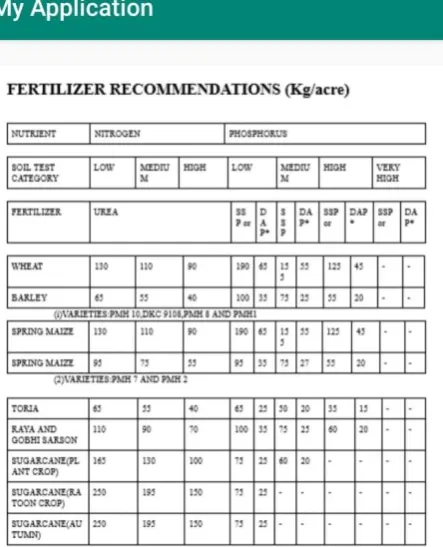
Figure 12: Site Specific Fertilizer Recommendation
Figure 11 shows the actual experimental result on the android application. The result contains the time of the experiment, entry id, phosphorous level, potassium level, nitrogen level, pH, soil moisture, temperature and weather forecast.
Figure 12 shows the site specific fertilizer recommendation on the android application. The recommendation suggests the use of different fertilizers according to the need of various crops.
VII. CONCLUSION
This paper exhibits how exorbitant laboratory soil test can be brought to reasonable and cost effective soil test using the kit. Considering all possibilities of error occurrence the kit has been built and the system has been coded and tested with great attention to detail. The proposed system has taken the soil sample as the input and performed the chemical reactions using reagents. The corresponding changes in the color of the sample have been sensed by the color sensors and decoded by colorimetry technique. Soil moisture sensor and temperature sensor have also been used to check the moisture level and temperature. A GPS has been used to get the location of the field so that the weather forecast can be fetched from the nearest weather station. Arduino Mega 2560 interfaced with Wi-Fi microchip ESP8266 has been used to get the data from the sensors and to send those data to cloud. An android application has been built to show the test report and recommendations. The study has suggested that rather than relying on time consuming laboratory soil reports, the user can have alternative means of checking the soil reports using portable IoT - cloud based soil kit. Furthermore, chemicals and sensors have been used in the system instead of electrochemical sensors to make it affordable for the end users. Also the special designing of the proposed kit has increased the sustainability of the system.
CONFLICT OF INTERESTS
It has been declared that the choice of all hardware devices and software applications used in the present work was solely on a professional basis. There is no any direct financial relation with the trademarks mentioned in this paper that might lead to a conflict of interest.
ACKNOWLEDGMENT
The authors of this paper would like to thank their colleagues from Apex Institute of Technology, Chandigarh University who provided insight and expertise that greatly assisted the research, although they may not agree with all the conclusions of this research paper.
The authors also thank Dr. Parveen Kumar Jain, Head of Department, Department of Agricultural Sciences, Chandigarh University for the assistance with the preparation of the soil nutrient and fertilizer data set to provide recommendation to the user.
REFERENCES
1. Agriculture, 2019. [Online]. Available: https://www.nationalgeographic.org/encyclopedia/agriculture/. [Accessed March 08, 2019].
2. Topography as Abiotic Factor, 2019. [Online]. Available: https://www.cropsreview.com/abiotic-factors.html. [Accessed March 08, 2019].
3. Essential Nutrients, 2019. [Online]. Available: https://www.ctahr.hawaii.edu/mauisoil/c_nutrients.aspx. [Accessed March 08, 2019].
4. Dr. Y.S. Parmar, Package of Practices. India: University Of Horticulture and Forestry, 2018.
5. Prof. Shilpa Chavan, Akshay Badhe, Sandeep Kharadkar, Rushikesh Ware and Pratik Kamble, “IOT Based Smart Agriculture And Soil Nutrient Detection System,” International Journal on Future Revolution in Computer Science & Communication Engineering, Volume: 4, Issue: 4, April 2018.
6. R.Sindhuja and B.Krithiga, “Soil Nutrient Identification Using Arduino,” Asian Journal of Applied Science and Technology (AJAST), Volume 1, Issue 4, Pages 40-42, May 2017.
7. Salve Akshay B, Sagar Sonali S, Patne Mahesh L and Jangam Omkar R, “Soil Nutrient Identification Using Arduino And Electrochemical Sensor,” International Research Journal of Engineering and Technology (IRJET), Volume: 05, Issue: 02, Feb. 2018.
8. Arduino Mega 2560, 2019. [Online]. Available: https://store.arduino.cc/usa/mega-2560-r3. [Accessed March 08, 2019].
9. Soil Analysis, 2019. [Online]. Available: https://www.milwaukeeinst.com/site/manuals/eng/mt6003_ENG.pdf. [Accessed March 10, 2019].
10. Soil Acidity, 2019. [Online]. Available: https://www.cropnutrition.com/efu-soil-ph. [Accessed March 08, 2019].
11. Color Sensor TCS3200, 2019. [Online]. Available: https://randomnerdtutorials.com/arduino-color-sensor-tcs230-tcs3200 /. [Accessed March 09, 2019].
12. Color Sensor Module TCS3200, 2019. [Online]. Available: https://components101.com/tcs3200-color-sensor-module. [Accessed March 10, 2019].
13. Soil Moisture Sensor, 2019. [Online]. Available: https://en.wikipedia.org/wiki/Soil_moisture_sensor. [Accessed March 08, 2019].
14. Temperature Sensor DS18B20, 2019. [Online]. Available: https://components101.com/sensors/ds18b20-temperature-sensor. [Accessed March 12, 2019].
15. Ublox,”Neo -6 GPS Modules,” Neo-6 GPS Datasheet,2011. 16. Espressif Systems,”Espressif Smart Platform Connectivity:
ESP8266,”ESP8266 Datasheet,2013.
17. T.B. Rehman, Cloud Computing Basics. Herndon, VA: Mercury Learning & Information, 2018.
18. Thingspeak, 2019. [Online]. Available: https://thingspeak.com. [Accessed March 15, 2019].
19. Rick Rogers, John Lombardo, Zigurd Mednieks, and Blake Meike, Android Application Development. CA: O’Reilly Media Inc., 2009.
AUTHORSPROFILE
Arun Kumar is currently pursuing his Bachelor of Engineering in Computer Science & Engineering with the specialization in Internet of Things at Apex Institute of Technology, Chandigarh University. His main research areas of interest are Internet of Things, Blockchain, Machine Learning, Artificial Intelligence and Computer Networking. He is technically skilled in Python, Android Development, Web Development and Neural Network.
Abhishek Kumar is currently pursuing his Bachelor of Engineering in Computer Science & Engineering with the major in Mobile Computing at Apex Institute of Technology, Chandigarh University. His main research areas of interest are Mobile Computing, Machine Learning, and Computer Networking. He is technically skilled in Python, C++ and Application Development.
Akash De is currently working on his Bachelor of Engineering with major in Internet of Things from Chandigarh University, Mohali, India. His main areas of research interest are Internet of Things, Crypto Mining, Blockchain Technology, Cubechain Technology, Hyperledger. He is technically skilled in front-end web development, back-end web development, Javascript, Python, Ethereum, Blockchain and C++. He has earned certificates for Startup event organizing, content writing and digital marketing.
Shashank Shekhar is currently pursuing his Bachelor of Engineering in Computer Science & Engineering with the major in Mobile Computing at Apex Institute of Technology, Chandigarh University. His main research areas of interest are Internet of Things, Machine Learning, Artificial Intelligence and Computer Networking. He is technically skilled in Python, Android Development and Web Development.