
IFIP–The International Federation for Information Processing
IFIP was founded in 1960 under the auspices of UNESCO, following the First World Computer Congress held in Paris the previous year. An umbrella organization for societies working in information processing, IFIP’s aim is two-fold: to support information processing within its member countries and to encourage technology transfer to developing nations. As its mission statement clearly states,
IFIP’s mission is to be the leading, truly international, apolitical organization which encourages and assists in the development, exploitation and application of information technology for the benefit of all people.
IFIP is a non-profitmaking organization, run almost solely by 2500 volunteers. It operates through a number of technical committees, which organize events and publications. IFIP’s events range from an international congress to local seminars, but the most important are:
The IFIP World Computer Congress, held every second year; Open conferences;
Working conferences.
The flagship event is the IFIP World Computer Congress, at which both invited and contributed papers are presented. Contributed papers are rigorously refereed and the rejection rate is high.
As with the Congress, participation in the open conferences is open to all and papers may be invited or submitted. Again, submitted papers are stringently refereed.
The working conferences are structured differently. They are usually run by a working group and attendance is small and by invitation only. Their purpose is to create an atmosphere conducive to innovation and development. Refereeing is less rigorous and papers are subjected to extensive group discussion.
ARTIFICIAL INTELLIGENCE
APPLICATIONS AND
INNOVATIONS
IFIP 18th World Computer Congress
TC12 First International Conference on
Artificial Intelligence Applications and Innovations (AIAI-2004)
22–27 August 2004
Toulouse, France
Edited by
Max Bramer
University of Portsmouth, UK
Vladan Devedzic
University of Belgrade, Serbia and Montenegro
KLUWER ACADEMIC PUBLISHERS
eBook ISBN: 1-4020-8151-0
Print ISBN: 1-4020-8150-2
Print ©2004by International Federation for Information Processing.
All rights reserved
No part of this eBook may be reproduced or transmitted in any form or by any means, electronic, mechanical, recording, or otherwise, without written consent from the Publisher
Created in the United States of America
Boston
©2004 Springer Science + Business Media, Inc.
Contents
Foreword
Acknowledgments
Paper Sessions
Applications 1
Artificial Intelligence Systems in Micromechanics
FELIPE LARA-ROSANO, ERNST KUSSUL, TATIANA BAIDYK,
LEOPOLDO RUIZ, ALBERTO CABALLERO AND GRACIELA VELASCO
Integrating Two Artificial Intelligence Theories in a Medical Diagnosis Application
HADRIANPETER AND WAYNEGOODRIDGE
Artificial Intelligence and Law
HUGO C. HOESCHL AND VÂNIABARCELLOS
Virtual Market Environment for Trade PAULBOGG AND PETERDALMARIS
xi
xiii
1
11
25
vi AI Applications and Innovations
Neural Networks and Fuzzy Systems
An Artificial Neural Networks Approach to the Estimation of Physical Stellar Parameters
A.RODRIGUEZ,I.CARRICAJO,C.DAFONTE,B.ARCAY AND
M.MANTEIGA
Evolutionary Robot Behaviors Based on Natural Selection and Neural Network
JINGANYANG,YANBINZHUANG AND HONGYANWANG
Control of Overhead Crane by Fuzzy-PID with Genetic Optimisation A. SOUKKOU,A.KHELLAF AND S. LEULMI
Creative Design of Fuzzy Logic Controller LOTFIHAMROUNI AND ADELM. ALIMI
On-Line Extraction of Fuzzy Rules in a Wastewater Treatment Plant J. VICTOR RAMOS, C. GONÇALVES AND A. DOURADO
Agents
An Autonomous Intelligent Agent Architecture Based on Constructivist AI
FILIPOSTUDZINSKIPEROTTO,ROSAVICARI ANDLUÍSOTÁVIOALVARES
Finding Manufacturing Expertise Using Ontologies and Cooperative Agents
OLGANABUCO,MAUROKOYAMA,FRANCISCOPEREIRA ANDKHALILDRIRA
Using Agents in the Exchange of Product Data UDOKANNENGIESSER AND JOHNS. GERO Applications 2
A Pervasive Identification and Adaptation System for the Smart House
PAULOF. F. ROSA,SANDROS. LIMA,WAGNERT. BOTELHO,
ALEXANDREF. NASCIMENTO AND MAXSILVAALALUNA
45
55
67
81
87
103
117
129
vii
Deductive Diagnosis of Digital Circuits
J. J. ALFERES,F. AZEVEDO,P. BARAHONA,C. V. DAMÁSIO ANDT. SWIFT
Verification of Nasa Emergent Systems CHRISTOPHERROUFF,AMYVANDERBILT,
WALTTRUSZKOWSKI,JAMESRASH AND MIKEHINCHEY Theory
Knowledge Base Structure: Understanding Maintenance JOHNDEBENHAM
Learning Bayesian Metanetworks from Data with Multilevel Uncertainty
VAGANTERZIYAN ANDOLEKSANDRAVITKO
Using Organisational Structures Emergence for Maintaining Functional Integrity In Embedded Systems Networks JEAN-PAULJAMONT AND MICHELOCCELLO
Efficient Attribute Reduction Algorithm
ZHONGZHISHI,SHAOHUILIU AND ZHENGZHENG
Using Relative Logic for Pattern Recognition JULIUSZ L. KULIKOWSKI
Intelligent Tutoring and Collaboration
MathTutor: A Multi-Agent Intelligent Tutoring System JANETTECARDOSO,GUILHERMEBITTENCOURT,
LUCIANAFRIGO,ELIANEPOZZEBON AND ADRIANA POSTAL
Analysis and Intelligent Support of Learning Communities in Semi-structured Discussion Environments
ANDREAS HARRER
An Adaptive Assessment System to Evaluate Student Ability Level ANTONELLACARBONARO,GIORGIOCASADEI AND
SIMONERICCUCCI
155
167
177
187
197
211
223
231
243
viii AI Applications and Innovations
Forming the Optimal Team of Experts for Collaborative Work ACHIMKARDUCK AND AMADOUSIENOU
Internet
Impact on Performance of Hypertext Classification of Selective Rich HTML Capture
HOUDABENBRAHIM ANDMAXBRAMER
Introducing a Star Topology into Latent Class Models for Collaborative Filtering
AND
Dialoguing with an Online Assistant in a Financial Domain: The VIP-Advisor Approach
JOSEFAZ. HERNANDEZ,ANAGARCIA-SERRANO AND
JAVIERCALLE
An Agency for Semantic-Based Automatic Discovery of Web Services
SIMONACOLUCCI,TOMMASODINOIA,
EUGENIODISCIASCIO,FRANCESCOM.DONINI,
MARINA MONGIELLO,GIACOMOPISCITELLI AND
GIANVITOROSSI Genetic Algorithms
GESOS: A Multi-Objective Genetic Tool for Project Management Considering Technical and Non-Technical Constraints
CLAUDEBARON,SAMUELROCHET AND DANIELESTEVE
Using Genetic Algorithms and Tabu Search Parallel Models to Solve the Scheduling Problem
PEDROPINACHO,MAURICIOSOLAR,MARIOINOSTROZA AND ROSA MUÑOZ
Modelling Document Categories by Evolutionary Learning of Text Centroids
J.I. SERRANO AND M.D. DELCASTILLO
267
279
293
305
315
329
343
ix
Ontologies and Data Mining
ODEVAL: A Tool for Evaluating RDF(S), DAML+OIL and OWL Concept Taxonomies
ÓSCARCORCHO,ASUNCIÓNGÓMEZ-PÉREZ,
RAFAELGONZÁLEZ-CABERO AND M. CARMENSUÁREZ-FIGUEROA
AIR - A Platform for Intelligent Systems
DRAGANDJURIC,DRAGANGASEVIC AND VIOLETADAMJANOVIC
SwissAnalyst
O. POVEL AND C. GIRAUD-CARRIER
Data Mining by MOUCLAS Algorithm for Petroleum Reservoir Characterization from Well Logging Data
YALEIHAO,MARKUSSTUMPTNER,GERALDQUIRCHMAYR AND
QINGHE
Reasoning and Scheduling
Verification of Procedural Reasoning Systems (PRS) Programs Using Coloured Petri Nets (CPN)
RICARDOWAGNERDEARAÚJO AND ADELARDOADELINO
DEMEDEIROS
Online Possibilistic Diagnosis Based on Expert Knowledge for Engine Dyno Test Benches
O.DEMOUZON,X. GUÉRANDEL,D. DUBOIS,H.PRADE ANDS. BOVERIE
CBR and Micro-Architecture Anti-Patterns Based Software Design Improvement
TIEFENG,JIACHENZHANG,HONGYUANWANG AND XIANWANG
A Decision Support System (DSS) for the Railway Scheduling Problem
L. INGOLOTTI,P. TORMOS,A. LOVA,F. BARBER,M.A. SALIDO ANDM.ABRIL
An Interactive Multicriteria Optimisation Approach to Scheduling MARTINJOSEFGEIGER AND SANJAPETROVIC
369
383
393
407
421
435
449
465
Foreword
The papers in this volume comprise the refereed proceedings of the First International Conference on Artificial Intelligence Applications and Innovations (AIAI-2004), which formed part of the 18th World Computer Congress of IFIP, the International Federation for Information Processing (WCC-2004), in Toulouse, France in August 2004.
The conference is organised by the IFIP Technical Committee on Artificial Intelligence (Technical Committee 12) and its Working Group 12.5 (Artificial Intelligence Applications). Further information about both can be found on the website at http://www.ifiptc12.org.
A very promising sign of the growing importance of Artificial Intelligence techniques in practical applications is the large number of submissions received this time - more than twice the number for the Artificial Intelligence stream of the last World Computer Congress two years ago. All papers were reviewed by at least three members of the Programme Committee. The best 40 were selected for the conference and are included in this volume. The international nature of IFIP is amply reflected in the large number of countries represented here.
The conference also featured an invited talk by Eunika Mercier-Laurent and a Symposium on Professional Practice in Artificial Intelligence, which ran alongside the refereed papers.
xii AI Applications and Innovations
Devedzic for all their efforts in organising the conference and the members of our programme committee for reviewing an unexpectedly large number of papers to a tight deadline. I should also like to thank my wife Dawn for her help in editing this volume of proceedings.
This is the first in a new series of conferences dedicated to real-world applications of AI around the world. The wide range and importance of these applications is clearly indicated by the papers in this volume. Both are likely to increase still further as time goes by and we intend to reflect these developments in our future conferences.
Max Bramer
Acknowledgments
Conference Organising Committee
Conference General Chairs
John Debenham (University of Technology, Sydney, Australia)
Eunika Mercier-Laurent (Association Francaise pour l’Intelligence Artificielle, France)
Conference Program Chairs
Max Bramer (University of Portsmouth, United Kingdom)
Vladan Devedzic (University of Belgrade, Serbia and Montenegro)
Programme Committee
Agnar Aamodt (Norway) Luigia Carlucci Aiello (Italy) Adel Alimi (Tunisia)
xiv
Yves Demazeau (France) Vladan Devedzic (Yugoslavia) Rose Dieng (France)
Henrik Eriksson (Sweden) Ana Garcia-Serrano (Spain) Nicola Guarino (Italy) Andreas Harrer (Germany) Jean-Paul Haton (France) Timo Honkela (Finland) Kostas Karpouzis (Greece)
Dusko Katic (Serbia and Montenegro) Ray Kemp (New Zealand)
Kinshuk (New Zealand)
Piet Kommers (The Netherlands) Jasna Kuljis (United Kingdom) Ilias Maglogiannis (Greece) Eunika Mercier-Laurent (France) Antonija Mitrovic (New Zealand) Riichiro Mizoguchi (Japan) Enrico Motta (United Kingdom) Wolfgang Nejdl (Germany) Erich Neuhold (Germany) Bernd Neumann (Germany) Natasha Noy (USA)
Zeljko Obrenovic (Serbia and Montenegro) Mihaela Oprea (Romania)
Petra Perner (Germany) Alun Preece (United Kingdom) Abdel-Badeeh Salem (Egypt) Demetrios Sampson (Greece) Pierre-Yves Schobbens (Belgium) Yuval Shahar (Israel)
Stuart Shapiro (USA)
Derek Sleeman (United Kingdom) Constantine Spyropoulos (Greece) Steffen Staab (Germany)
Mia Stern (USA)
Gerd Stumme (Germany)
ARTIFICIAL INTELLIGENCE SYSTEMS IN
MICROMECHANICS
Felipe Lara-Rosano, Ernst Kussul, Tatiana Baidyk, Leopoldo Ruiz, Alberto Caballero, Graciela Velasco
CCADET, UNAM
Abstract: Some of the artificial intelligence (AI) methods could be used to improve the automation system performance in manufacturing processes. However, the implementation of these AI methods in the industry is rather slow, because of the high cost of the experiments with the conventional manufacturing and AI systems. To lower the experiment cost in this field, we have developed a special micromechanical equipment, similar to conventional mechanical equipment, but of much smaller size and therefore of lower cost. This equipment could be used for evaluation of different AI methods in an easy and inexpensive way. The proved methods could be transferred to the industry through appropriate scaling. In this paper we describe the prototypes of low cost microequipment for manufacturing processes and some AI method implementations to increase its precision, like computer vision systems based on neural networks for microdevice assembly, and genetic algorithms for microequipment characterization and microequipment precision increase.
Key words: artificial intelligence, micromechanics, computer vision, genetic algorithms
1.
INTRODUCTION
2 F.Lara-Rosano, E.Kussul, T.Baidyk, L.Ruiz, A.Caballero, G.Velasco
with fully automated manufacturing processes. This is a very difficult and expensive task.
2.
MICROEQUIPMENT TECHNOLOGY
To make a very small mechanical microequipment, a new technology was proposed [13,14]. This technology is based on micromachine tools and microassembly devices, which can be produced as sequential generations of microequipment. Each generation should include equipment (machine-tools, manipulators, assembly devices, measuring instruments, etc.) sufficient for manufacturing an identical equipment set of smaller size. Each subsequent equipment generation could be produced by the preceding one. The equipment size of each subsequent generation is smaller than the overall size of preceding generation.
The first-generation microequipment can be produced by conventional large-scale equipment. Using microequipment of this first generation, a second microequipment generation having smaller overall sizes can be produced.
We call this approach to mechanical microdevices manufacturing MicroEquipment Technology (MET) [15].
The proposed MET technology has many advantages:
(1) The equipment miniaturization leads to decreasing the occupied space as well as energy consumption, and, therefore, the cost of the products.
(2) The labor costs are bound to decrease due to the reduction of maintenance costs and a higher level of automation expected in MET.
(3) Miniaturization of equipment by MET results in a decrease of its cost. This is a consequence of the fact that microequipment itself becomes the object of MET. The realization of universal microequipment that is capable of extended reproduction of itself will allow the manufacture of low-cost microequipment in a few reproductive acts because of the lower consumption of materials, energy, labor, and space in MET. Thus the miniaturization of equipment opens the way to a drastic decrease in the unit cost of individual processing.
Artificial Intelligence Systems In Micromechanics 3
(FMS and CAM) to the ideas of unified containers and clamping devices and techniques of numerical control. However automation of micromanufacturing has peculiarities that will require the special methods of artificial intelligence.
3.
AI BASED CONTROL SYSTEM FOR
MICROMECHANICAL FACTORY
Let us consider a general hierarchical structure of the automatic control system for a micromechanical factory. The lowest (first) level of the system controls the micromechanical equipment (the micro machine-tools and assembly manipulators), provides the simplest microequipment diagnostics and the final measurement and testing of production. The second level of the control system controls the devices that transport workpieces, tools, parts, and the whole equipment items; coordinates the operation of the lowest level devices; provides the intermediate quality inspection of production and the more advanced diagnostics of equipment condition. The third control level contains the system for the automatic choice of process modes and routes for parts machining. The top (fourth) level of the control system performs detecting of non-standard and alarm situations and decision making, including communication with the operator.
We proceed from the assumption that no more than one operator will manage the microfactory. It means that almost all the problems arising at any control level during the production process should be solved automatically and that operator must solve only a few problems, that are too complex or unusual to be solved automatically.
4 F.Lara-Rosano, E.Kussul, T.Baidyk, L.Ruiz, A.Caballero, G.Velasco
At the second control level, the AI system should detect all deviations from the normal production process and make decisions about how to modify the process to compensate for the deviation. The compensation should be made by tuning the parameters of the lower level control systems. The examples of such deviations are the deviations from the production schedule, failures in some devices, off-standard production, etc. At this level the AI system should contain the structures in which the interrelations of production process constituents are represented. As in the previous case, it is desirable to have the algorithms working without the supervisor.
The third control level is connected basically with the change of nomenclature or volume of the production manufactured by the factory. It is convenient to develop such a system so that the set-up costs for a new production or the costs to change the production volume should be minimal. The self-learning AI structures formed at the lowest level could provide the basis for such changes of set-up by selection of the process parameters, the choice of equipment configuration for machining and assembly, etc. At the third control level the AI structures should detect the similarity of new products with the products which were manufactured in the past. On the basis of this similarity, the proposals about the manufacturing schedule, process modes, routing, etc. will be automatically formed. Then they will be checked up by the usual computational methods of computer aided manufacturing (CAM). The results of the check, as well as the subsequent information about the efficiency of decisions made at this level, may be used for improving the AI system.
The most complicated AI structures should be applied at the top control level. This AI system level must have the ability to reveal the recent unusual features in the production process, to make the evaluation of possible influence of these new features on the production process, and to make decisions for changing the control system parameters at the various hierarchical levels or for calling for the operator’s help. At this level, the control system should contain the intelligence knowledge base, which can be created using the results of the operation of the lower level control systems and the expert knowledge. At the beginning, the expert knowledge of macromechanics may be used.
At present many methods of AI are successfully used in the industry [16,17]. They could be used also for micromechanics. But the problems of fully automated microfactory creation can not be investigated experimentally in conventional industry because of the high cost of the experiments. Here we propose to develop low cost micromechanical test bed to solve these problems.
Artificial Intelligence Systems In Micromechanics 5
CCADET, UNAM. The prototypes use adaptive algorithms of the lowest level. At present more sophisticated algorithms based on neural networks and genetic algorithms are being developed. Below we describe our experiments in the area of such algorithms development and applications.
4.
DEVELOPMENT OF MICROEQUIPMENT
PROTOTYPES AND ADAPTIVE ALGORITHMS
4.1
Micromachine Tools
[image:20.431.137.305.239.426.2]The developed prototype of the first generation micromachine tool is shown in Fig. 1. We have been exploiting this prototype for approximately four years for experimental work and student training.
Figure 1. The developed second prototype of the first generation of micromachine tool. This prototype of the micromachine tool has the size
and is controlled by a PC. The axes X and Z have 20 mm of displacement and theY-axis has 35 mm of displacement; all have the same configuration. The resolution is per motor step.
4.2
Micromanipulators
6 F.Lara-Rosano, E.Kussul, T.Baidyk, L.Ruiz, A.Caballero, G.Velasco
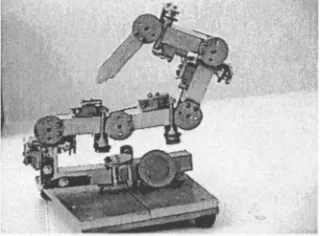
microequipment generation are developed. All these works are accompanied with of the prototypes development (Fig.2).
Figure 2. Sequential micromanipulator prototype
4.3
Computer vision system
[image:21.431.134.294.81.199.2]To obtain a low cost microequipment it is necessary to use low cost components. Low cost components do not permit us to obtain high absolute accuracy of the assembly devices. To avoid this drawback we have developed an adaptive algorithm for microassembly using a technical vision system (Fig. 3).
Figure 3. The prototype of visual controlled assembly system
Artificial Intelligence Systems In Micromechanics 7
needle with the microring relative to the hole. The microring is to be inserted into the hole. We use a neural classifier to recognize the relative position.
The problem of automatic microdevices assembly is very important in mechatronics and micromechanics. To obtain the high precision, it is necessary to use adaptive algorithms on the base of technical vision systems. We proposed an approach, that permits us to develop the adaptive algorithms based on neural networks. We consider the conventional pin-hole task. It is necessary to insert the pin into the hole using a low cost technical vision system.
For this purpose it is necessary to know the displacements (dx, dy, dz) of the pin tip relative to the hole. It is possible to evaluate these displacements with a stereovision system, which resolves 3D problems. The stereovision system demands two TV cameras. To simplify the control system we propose the transformation of 3D into 2D images preserving all the information about mutual location of the pin and the hole. This approach makes it possible to use only one TV camera.
Four light sources are used to obtain pin shadows. Mutual location of these shadows and the hole contains all the information about the displacements of the pin relative to the hole. The displacements in the horizontal plane (dx, dy) could be obtained directly by displacements of shadows center points relative to the hole center. Vertical displacement of the pin may be obtained from the distance between the shadows. To calculate the displacements it is necessary to have all the shadows in one image. We capture four images corresponding to each light source sequentially, and then we extract contours and superpose four contour images. We use the resulting image to recognize the position of the pin relative to the hole. We developed the neural network system which permits us to recognize the pin-hole displacements with errors less than 1 pixel [11,12].
4.4
Adaptive Algorithm of the Lowest Level
To compensate for the machine tool errors we have developed a special algorithm for the workpiece diameter measurement using the electrical contact of the workpiece with the measurement disk (Fig. 4). This measurement allows us to develop the algorithm for brass needle cutting. We obtained a brass needle with a diameter of and a length of
8 F.Lara-Rosano, E.Kussul, T.Baidyk, L.Ruiz, A.Caballero, G.Velasco
Figure 4. The workpiece with measurement disk
Figure 5. The brass needle with diameter
4.5
Genetic Algorithm for Micromachine Tool
Characterization
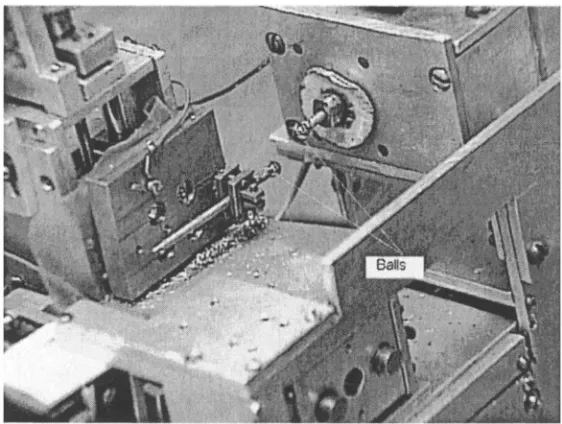
To improve the micromachine tool precision it is necessary to correct its errors. To obtain the information about the micromachine tools errors, we use a two balls scheme for machine tool parameters measurement. One ball is fixed on the special tool support, which is inserted to the chuck. The second ball is fixed on the machine tool carriage (Fig. 6).
[image:23.431.163.268.255.332.2]Artificial Intelligence Systems In Micromechanics 9
5.
CONCLUSIONS
[image:24.431.71.352.209.421.2]AI algorithms could be used to increase the level of manufacturing processes automatization. The experiments with AI algorithms in real industry factories are too expensive. In this article a low cost test bed for AI method examinations is proposed. This test bed is composed of the micromechanical models of conventional industry devices. The prototypes of micromachine tools and micromanipulators were developed and examined with some AI algorithms. The test bed examination results show that AI systems could be proved with low expenses.
Figure 6. Ball location in the micromachine tool
ACKNOWLEDGEMENTS
This work was supported by CCADET, UNAM, projects CONACYT 33944-U, PAPIIT 1112102, NSF-CONACYT 39395-A.
REFERENCES
10 F.Lara-Rosano, E.Kussul, T.Baidyk, L.Ruiz, A.Caballero, G.Velasco 2. 3. 4. 5. 6. 7. 8. 9. 10. 11. 12. 13. 14. 15. 16. 17. 18.
Hui, T., Brown, D., Haynes, B., Xinxian Wang: Embedded e-diagnostic for distributed industrial machinery. IEEE International Symposium on Computational Intelligence for Measurement Systems and Applications (2003) 156-161
Awadallah, M., Morcos, M.: Application of AI tools in fault diagnosis of electrical machines and drives-an overview. IEEE Transactions on Energy Conversion 18, Issue 2 (2003) 245-251
Werbos, P.: Advanced Forecasting Methods for Global Crisis Warning and Models of Intelligence. In: General Systems Yearbook 22 (1977) 25-38
Prokhorov, D., Wunsch, D.: Adaptive Critic Designs. IEEE Trans. on Neural Networks8, N 5 (1997) 997-1007
Xiaoou Li, Lara-Rosano, F.: A weighted fuzzy Petri net model for knowledge learning and reasoning. International Joint Conference on Neural Networks, IJCNN ’99 4 2368 –2372 Xiaoou Li, Wen Yu, Lara-Rosano, F.: Dynamic Knowledge Inference and Learning under
Adaptive Fuzzy Petri Net Framework. IEEE Transactions on Systems, Man, and Cybernetics39, N4 (2000) 442-450
Bottou, L., Cortes, C., Denker, J., Drucker, H., Guyon L., Jackel L., LeCun J., Muller U., Sackinger E., Simard P., Vapnik V.: Comparison of Classifier Methods: a Case Study in Handwritten Digit Recognition. In: Proceedings of IAPR International Conference on Pattern Recognition 2 (1994) 77-82
Fukushima, K. Neocognitron: A hierarchical neural network capable of visual pattern recognition. Neural Networks 1 (1988) 119-130
Roska, T., Rodriguez-Vazquez, A.: Toward visual microprocessors. Proceedings of the IEEE90, Issue 7 (July 2002) 1244-1257
Baidyk, T.: Application of Flat Image Recognition Technique for Automation of Micro Device Production. Proceedings of the International Conference on Advanced Intelligent Mechatronics “AIM’01”, Italy (2001) 488-494
Baidyk, T., Kussul, E., Makeyev, O., Caballero, A., Ruiz, L., Carrera, G., Velasco, G.: Flat image recognition in the process of microdevice assembly. Pattern Recognition Letters25/1 (2004) 107-118
Kussul, E.: Micromechanics and the perspectives of neurocomputing. In: Neuron-like Networks and Neurocomputers, Kiev, Ukraine (1993) 76-82 (in Russian)
Kussul, E., Rachkovskij, D., Baidyk, T., Talayev, S.: Micromechanical Engineering: a Basis for the Low-cost Manufacturing of Mechanical Microdevices Using Microequipment. Journal of Micromechanics and Microengineering6 (1996) 410-425
Kussul, E., Baidyk, T., Ruiz-Huerta, L., Caballero, A., Velasco, G., Kasatkina, L.: Development of Micromachine Tool Prototypes for Microfactories. Journal of Micromechanics and Microengineering12 (2002) 795-812
Wenxin Liu, Venayagamoorthy, G., Wunsch, D.: A heuristic dynamic programming based power system stabilizer for a turbogenerator in a single machine power system. IAS Annual Meeting on Industry Applications1 (2003) 270-276
Croce, F., Delfino, B., et al.: Operations and management of the electric system for industrial plants: an expert system prototype for load-shedding operator assistance. IEEE Transactions on Industry Applications37, Issue 3 (2001) 701-708
INTEGRATING TWO ARTIFICIAL
INTELLIGENCE THEORIES IN A MEDICAL
DIAGNOSIS APPLICATION
Hadrian Peter1, Wayne Goodridge2
1
University of the West Indies, Barbados;2Dalhousie University, Canada
Abstract: Reasoning Systems (Inference Mechanisms) and Neural Networks are two major areas of Artificial Intelligence (AI). The use of case-based reasoning in Artificial Intelligence systems is well known. Similarly, the AI literature is replete with papers on neural networks. However, there is relatively little research in which the theories of case-based reasoning and neural networks are combined. In this paper we integrate the two theories and show how the resulting model is used in a medical diagnosis application. An implementation of our model provides a valuable prototype for medical experts and medical students alike.
Key words: Medical diagnosis, neural networks, case-based reasoning, reasoning system.
1.
INTRODUCTION
12 Hadrian Peter, Wayne Goodridge
the literature. The knowledge base of INTERNIST, and the strategy used by INTERNIST to address the diagnosis of patients, are described in [5, 6,7, 8]. QMR (Quick Medical Reference) [9, 10, 11], a reengineering of INTERNIST, is an in-depth information resource that helps physicians to diagnose adult disease. However, again, the underlying reasoning and knowledge systems employed in this diagnosis system are not readily available in the literature. Although MDDB [12] uses case-based reasoning, it uses simple lists as its knowledge base. A disadvantage of most of these methods is that, although they exhibit the capability of making differential diagnoses1, they do not offer definitive medical consultation2. A few earlier attempts at combining the theories of neural networks and case-based reasoning are found in [13,14,15].
In this paper we attempt to correct the shortcomings of the above methods by presenting a new approach to medical diagnosis in which we combine a knowledge base, whose underlying structure is the neural network [16, 17,18], with a Case-Based Reasoning system [19,20,21, 22]. We begin by reviewing case-based reasoning (CBR), we identify problems with such reasoning when used in the medical domain, and provide the motivation for our approach. We then examine neural networks, in particular the mathematical underpinnings of heteroassociative memory neural networks [23], and how they are incorporated in our model. The architecture of our model – the Case-based Memory Network (CBMN) – is introduced in the next section. We then present the medical diagnosis process in our model, followed by the operational model, a short simulation, and a consultation session. The paper ends with a brief evaluation of the model.
2.
MATERIALS AND METHODS
2.1
Case-Based Reasoning
Case-based Reasoning (CBR) [19] is an inference mechanism that has found increasing use in expert systems. It consists of the following four stages: retrieve the most similar case or cases; reuse the retrieved case or cases to solve the problem by analogical reasoning; revise the proposed
1
2
A differential diagnosis results when 2 or more diagnoses are possible. These diagnoses are prioritized.
Integrating Two AI Theories In A Medical Diagnosis Application 13
solution; retain the parts of this experience which are likely to be useful for future problem solving.
When CBR is applied to medical diagnosis systems, the following problems are usually identified:
There is a concentration on reference rather than on diagnosis. There is a lack of intelligent dialog. This may result in “missing information” and therefore a decrease of the accuracy of the diagnosis.
Inability of most similarity algorithms to handle attributes whose values are unknown.
If the case base contains cases with attributes that take on multiple (rather than just binary) values, then the case base will be quite complex – requiring large numbers of predicates, relations, constraints, and operators [24].
Updating (revision) of the case base requires complex algorithms and/or highly skilled users.
To overcome these problems, therefore, we developed a variation to the CBR technique called the Case-Based Memory Network (CBMN) model [25]. It was primarily developed to solve medical diagnostic problems and not “pure” classification problems [22]. To simulate the CBMN model we have also designed and implemented an expert system prototype called CaseB-Pro - an interactive system that accepts observed findings, generates appropriate questions, and makes conclusions based on the observed findings.
2.2
The role of Neural Networks
14 Hadrian Peter, Wayne Goodridge
Let the findings associated with a case be represented by a vector s(p), where p = 1,2, ...,P. Each vector s(p) is an n-tuple. Let the case associated with findings, s(p), be represented by a vector t(p). Each t(p) is an m-tuple.
In our model we store (findings, case) pairs – that is, p = 1,....,P. Here, a “case” is an actual patient, and a “finding” is a symptom, sign, or an investigation. “P” is the maximum number of cases in the database, where
We also define a weight matrix where
The heteroassociative neural network can be described as a discrete network where the input and output nodes take values from the set {-1, 0,1}. We interpret the values as follows: -1 represents the findings that are absent, 0 represents the unknown findings, and 1 represents the findings that are present. Now (observed findings) can be represented as an n-tuple input vector, say k. Vector k will then be mapped to the domain by the matrix – findings will be mapped onto cases. That is,
or
where
Example
If the output layer of the network contains 3 nodes, then some of the following mappings are possible:
map 1 map 2 map 3
Whenever new findings are presented to the current case, k is changed and, when multiplied with the weight matrix the vector t(p) is determined. This value of t(p) is then used to determine a set of actual cases from the case base that matches the observed findings.
3 The term training set is sometimes used to describe the vector t(p).
Integrating Two AI Theories In A Medical Diagnosis Application 15
If a node in vector t has a positive value, then this node represents a case in which the disorder associated with that case matches the current observed findings. For example, in map 1 the disorder associated with case 1 is a possible candidate.
If a mapped vector t contains nodes with varying positive values, then the node with the largest positive value is most likely to be the case that has the most likely associated disorder for the observed findings. For example, if t = (3,1,-1) then the disorders associated with cases 1 and 2 are likely. However, the disorder associated with case 1 is the more likely candidate.
A disorder, say k, is a part of a definitive diagnosis only if the available findings that will lead to a diagnosis of k exceed the findings that are known. This serves as the point at which we stop posing questions to the system.
Let unknown input nodes not included
and only unknown nodes included
If then k can be a part of the definitive diagnosis.
2.3
Architecture of the CBMN
In its simplest form the CBMN structure consists of input information entity (IE) nodes and output (case) nodes. The design goal of the CBMN model is to ensure that a knowledge base, and learning and reasoning mechanisms can be incorporated in the same data structure and be used for diagnostic problem solving. In diagnosing a patient the physician utilizes information from past typical or known exceptional cases that are usually described by a list of symptoms.
To design a medical case base used for diagnostic purposes it is necessary to have two types of cases in the case base [28]:
1.
2.
Case Generalizations called prototypes (pure cases) - these are the “classical” (textbook) cases as viewed by the medical expert. General domain cases – these are actual cases.
The features of disorders – in the input layer of the network - are mapped onto case prototypes (in the hidden layer) which represent the “text book” view of disorders in terms of its identifying features. A case – representing the output layer of the network - is an instance of a prototype, in the same way that an object is an instance of a class in the object oriented programming paradigm [29, 30]. The arrows in the diagram denote weighted links from the input nodes to the case nodes, and the calculation, and adjustment, of these weights is known as training the network.
16 Hadrian Peter, Wayne Goodridge
disorders. That is, every case in the case-base must be associated with one and only one known classical medical case (prototype).
Figure 1. The CBMN Architecture with Prototypes
2.4
The Medical Diagnostic Process in the CBMN
A medical consultation consists of the following stages:
Recording of symptoms and patient history. Elicitation / Identification of signs.
Formulation of notion of diagnosis [31] leading to a hypothesis and differential diagnosis.
Investigations to narrow down or confirm the diagnosis.
Integrating Two AI Theories In A Medical Diagnosis Application 17
again, making a definitive diagnosis is one of the essential differences between CBMN and many extant medical diagnosis systems.
The new approach to the CBMN model includes a certainty factor4 [18] and a prevalence factor for each prototype in the case base. A certainty factor is a number ranging from 0 to 10 that represents the physician’s impression of the significance of the presence of a feature with respect to the prototype. A prevalence factor is a number ranging from 0 to 10 that expresses the physician’s impression that a patient will have the disorder associated with a given prototype. The certainty factor and prevalence factor may or may not be a scientific measurement since it represents only the physician's notion of the disorder.
The presence or absence of features will affect the physician’s belief or disbelief in his hypothesis. Hence the concept of the belief factor is used in the CBMN to “balance” a physician’s belief and disbelief in a hypothesis.
We now present the algorithm to find the next best question to be asked at a given stage of the medical consultation process. The system cannot reach any definitive conclusions until it has exhausted each stage.
1. 2. 3.
4.
5.
6.
Find the set, say S, of prototypes that match the observed findings. Find the prototype, say k, with the highest belief factor in the set S. Use the unknown feature, say f, of prototype k with the highest certainty factor to generate the next question.
If the certainty factor of f is greater than a question threshold value set by the experimenter), then the system moves to the next consultation stage until the investigation stage is reached.
When a diagnostic stage is finished the system lists all the prototypes with a confidence measure greater that a threshold value as candidates for the diagnosis of the presented features.
Repeat steps 1-5 above until the investigation stage is completed.
The main objective of this algorithm is to find the optimum diagnostic path that will: (a) Get the correct diagnosis by asking the minimum number of questions and (b) exhaust each diagnostic stage before moving on to the next.
2.4.1
Simulation
The simulation of the diagnostic process is implemented in Delphi using a prototype called CaseB-Pro. Its functional specifications can be divided into
18 Hadrian Peter, Wayne Goodridge
the following two steps: training the system to identify new cases and using the case base to gain a computer-generated diagnosis.
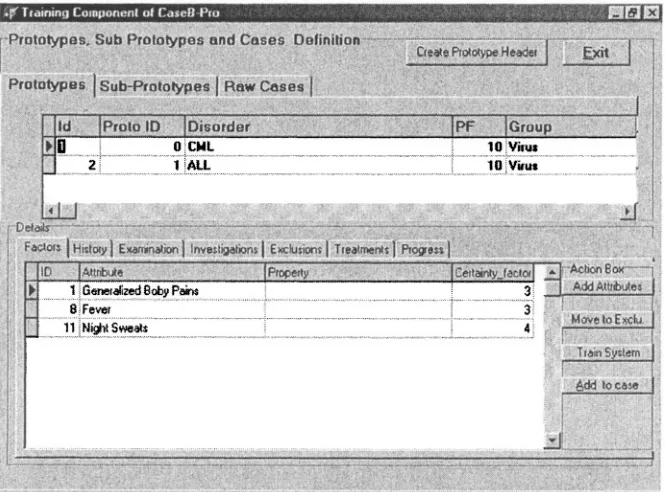
[image:33.431.57.390.161.407.2]The two main design goals of the CaseB-Pro prototype - an expert system that combines the theories of neural networks and case-based reasoning – are to implement and test the CBMN model and to develop a computer system that can assist medical students and physicians with the diagnosing of patients. In section 4 we provide an evaluation of the model and an assessment of its “success”.
Figure 2. Creating Prototype for CML
The CBMN model uses three types of data structure to represent knowledge. These include: feature information entity data structures, prototype information entity data structures and case information entity data structures.
Integrating Two AI Theories In A Medical Diagnosis Application 19
prototype, sub-prototype, and case, of the case base, has in common a node identification number that uniquely identifies the network node in question.
Figure 2 illustrates how the prototype for the Chronic Myeloid Leukaemia (CML) disorder can be added to the system. Other prototypes can be added in a similar manner.
[image:34.431.46.386.282.534.2]2.4.2
Interacting with the System
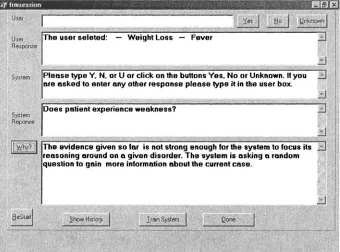
Figure 3 provides the interface through which users – namely, medical students, physicians, or other medical experts - interact with the CaseB-Pro system. A typical session (consultation) is invoked when a user types the “consult” command. A list of symptoms is then shown where the user can select major presenting symptoms in the case under consideration. The system then allows the user to enter examination results of the case in question. When the examination stage is exhausted the consultation enters into the investigation stage. An example consultation is provided for illustration.
20 Hadrian Peter, Wayne Goodridge
3.
RESULTS
For purposes of testing the system ten cases of Haematological conditions and related disorders were added to the case base. In order to make a preliminary evaluation of CaseB-Pro’s diagnostic capabilities, two medical experts who specialize in Haemoncological disorders independently simulated 18 classical Haematological cases within the scope of the system.
Key of symbols/abbreviations used in the table:
DD = Differential Diagnosis
+++ = DD Relevant (Related Disorders) ++ = DD Relevant (Unrelated Disorders) + = DD Possibly Relevant
- = DD Irrelevant
ALL = Acute Lymphoblastic Leukaemia AML = Acute Myeloid Leukamia
AA = Aplastic Anemia
MM = Multiple Myeloma
NHL = Non Hodgkins Lymphoma CML = Chronic Myeloid Leukaemia MF = Myelofibrosis
PRV = Polycythaemia Rubra Vera TB = Tuberculosis
Table 1 shows the results of five out of 18 randomly selected simulated interactions. It is, however, important to note that although only 5 of the 18 cases are included in the table, in none of the 18 cases did the medical expert and CaseB-Pro arrive at totally different diagnoses. More specifically, in 9 of the 18 (50%) of the cases the diagnoses were the same at the end of stage 2 (see section 2.4) of the medical consultation. Of the 9 cases in which the diagnoses did not match exactly at the end of stage 2, 7 (77.8%) of them resulted in a match after the differential diagnosis (third) stage. The remaining 2 cases, for which concrete results were not possible at the end of stage 3, produced results in concurrence with the medical expert’s diagnoses after further investigations were conducted (in stage 4).
Integrating Two AI Theories In A Medical Diagnosis Application 21
the system would expose their lack of knowledge. However, after being persuaded by their medical instructor to use the system as a classroom exercise, the students were noticeably more relaxed. Under the guidance of their medical professor, the students were allowed to conduct an extensive interaction with the system in an effort to diagnose MM, MF, PRV, ALL, and AA (please see the table below). In 80% of the cases the students were able to arrive at the correct diagnoses largely due, they reported, to the ease with which they were able to follow the “trend of thought” used by CaseB-Pro.
4.
EVALUATION AND CONCLUSION
Many medical diagnosis systems have been designed and are currently in use. The originality of our approach, however, is that we have designed and implemented a system that combines case-based reasoning and artificial neural networks. Because of the restriction placed on the length of our paper, we were unable to provide a more detailed comparison with other approaches. Consistent with our goals we were able to (a) implement and test our model, and (b) to develop a computer system that can assist medical students and physicians with the diagnosing of patients. We have been able to develop a prototype, the CaseB-Pro, based on our new approach, whose authenticity medical experts and medical students were able to test.
It may be too early to make strong pronouncements about the success of our model because it was tested on a small domain. Therefore more research using our approach should be conducted using larger domains and different evaluation strategies. Thus far the feedback from persons who have interacted with our prototype has been encouraging, and therefore we are confident that with further development and testing our prototype can evolve into a useful, full-fledged system.
REFERENCES
1.
2. 3.
Buchanan, B.G., Shortliffe, E.H. (eds.): Rule-Based Expert Systems: The MYCIN Experiments of the Stanford Heuristic Programming Project. Addison-Wesley, Reading, Mass. (1984)
Shortliffe, B.G. Computer-Based Medical Consultants: MYCIN. Elsevier/North-Holland, Amsterdam (1976)
22 Hadrian Peter, Wayne Goodridge 4. 5. 6. 7. 8. 9. 10. 11. 12. 13. 14. 15. 16. 17. 18.
Adlassnig, K. –P., Kolarz, G. : Representation and semiautomatic acquisition of medical knowledge in CADIAG-1 and CADIAG-2. Computers and Biomedical Research, 19
(1986) 63-79
Miller, R. A., Pople, Jr., H. E., and Myers, J. D. INTERNIST-I, an Experimental Computer-Based Diagnostic Consultant for General Internal Medicine, New England J. Med.,307
(August 1982) 468-476.
Pople, Jr., H. E. The Formation of Composite Hypotheses in Diagnostic Problem Solving: An Exercise in Synthetic Reasoning, IJCAI 5 (1977)
Pople, Jr., H. E. Heuristic Methods for Imposing Structure on Ill-Structured Problems: The Structuring of Medical Diagnostics, in P. Szolovits (ed.), Artificial Intelligence in Medicine, Boulder, CO (1982) 119-185
Masserie, F. E., Miller, R.A., and Myers, J.D. INTERNIST-I properties: Representing common sense and good medical practice in a computerized medical knowledge base. Computers and Biomedical Research, 18 (1985) 458-479
Arene, I., et al : Evaluation of quick medical reference (QMR) as a teaching tool. MD Comput.,15(1998) 323-326
Aliferis, C.F., et al: A temporal analysis of QMR. J. Am. Med. Inform. Assoc.,3 (1996) 79-91
Miller, R.A., Masarie, F.E.,Jr. : Use of the Quick Medical Reference (QMR) program as a tool for medical education, Methods Inf. Med.,28 (1989) 340-345
Gierl, L., Stengel-Rutkowski, S. Integrating Consultation and Semi-automatic Knowledge Acquisition in a Prototype-based Architecture: Experiences with Dysmorphic Syndromes. Artificial Intelligence in Med.,6 (1994) 29-49
Myllymaki, P., Tirri, H. Bayesian case-based reasoning with neural networks. In Proceedings of the IEEE International Conference on Neural Networks, San Francisco, CA,1 (March 1993) 422-427
Honkela, T. Self-Organizing Maps and Case-based Reasoning. [Electronic Version] retrieved April, 2004 from http://www.mlab.uiah.fi/networks99/honkela.html
Agre, G. Koprinska, I. Case-based Refinement of Knowledge-Based Neural Networks. In: Proceedings of International Conference Intelligent Systems: A Semiotic Perspective, Gaithersburg, MD (Oct. 20-23, 1996)
Gallant, S.I.: Neural Network Learning and Expert Systems. MIT, Mass. (1993)
Goodridge, W. : The Case-Based Memory Network Model and its Use in Medical Expert Systems: MPhil Thesis, University of the West Indies, Barbados (2000)
Russell, S.J., Norvig, P. : Artificial Intelligence : A Modern Approach, ed. Pearson Education, Inc., New Jersey (2003)
19.
20. 21.
Aamodt, A., Plaza, P. Case-Based Reasoning: Foundations Issues, Methodological Variations, and Systems Approaches. AI Communications, 7(1) (1994) 39-59
Kolodner, J.L. Case-Based Reasoning. Morgan Kaufmann, New York (1993)
Integrating Two AI Theories In A Medical Diagnosis Application 23
23.
application. In: Lecture Notes in Computer Science, Vol. 1400. Springer-Verlag, New York (1998)
Fausett, L. Fundamentals of Neural Networks. Architectures, Algorithms, and Applications. Prentice-Hall International Editions, New Jersey (1994
24. 25.
26. 27. 28.
29. 30. 31.
Bergmann, R., Wilke, W. Case-Based Reasoning: Foundations Issues, Methodological Variations, and Systems Approaches. AI Communications,3 (1995) 53-118
Goodridge, W., Peter, H., Abayomi, A. The Case-Based Neural Network Model and Its Use in Medical Expert Systems. In: Lecture Notes in Artificial Intelligence, Vol.1620. Springer-Verlag, Denmark (1999)
Anderson, J. A. A simple neural network generating an interactive memory. Mathematical Biosciences, 14 (1972) 197-220.
Kohonen, T. Correlation matrix memories. IEEE Transactions on Computers,21 (1972) 353--359
Rainer, S., Pollwein, B., Gierl, L. Experiences with Case-Based Reasoning Methods and Prototypes for Medical Knowledge-Based Systems. In: Lecture Notes in Artificial Intelligence, Vol. 1620. Springer-Verlag, Denmark (1999)
Schach, S.R. Object-Oriented and Classical Software Engineering, ed. McGraw-Hill, New York (2002)
Booch, G. Object-Oriented Analysis and Design with Applications. Addison-Wesley Publishing Company, California (1994)
ARTIFICIAL INTELLIGENCE AND LAW
Hugo C. Hoeschl;Vânia Barcellos
E-Gov, Juridical Intelligence and Systems Institute – Ijuris
Keywords: Artificial Intelligence (AI); Natural Intelligence (NI), Law; Information of Technology
Abstract: This article intends to make an analysis of the intersection between Artificial Intelligence (AI) and Natural Intelligence (NI) and its application in the scope of Right. The impact caused by the Information Technology, methodologies and techniques used by the main systems developed in the last years and which the elements for the development of intelligent applications in the legal domain, with the aim of demonstrating the capacity to manipulate the knowledge properly and, being so, systemizing its relations, clarifying its bonds, to evaluate the results and applications. There is a real need of new tools that conciliate the best of AI and NI techniques, generating methods and techniques of storage and manipulation of information, what will reflect on law and justice.
1.
INTRODUCTION
26 H.Hoeschl, V.Barcellos
The present study intends to start with the elements for the development of intelligent applications in the legal domain (section 2), demonstrating the intersection between AI and the NI, applied to Law (section 3). It intends to evaluate how the research is getting on, in a world-wide context (section 4), we will illustrate (section 5) the application of AI in Law through some empirical procedures adopted by the author and his team (section 5).
2.
ELEMENTS FOR THE APPLICATION OF AI TO
THE LAW SPHERE
The AI sphere has been studied academically since the 1950s, but it has generated an increasing interest nowadays because of the arising of practical commercial applications.
Researches in AI are related to areas of application that involve human reasoning, trying to imitate it and performing inferences. According to Savory[22], these areas of application that are generally enclosed in the definitions of AI include, among others: specialized systems or systems based on knowledge; intelligent / learning systems; understanding / translation from natural language; understanding / voice generating; analysis of image, scene in real time and automatic programming.
Notice, then, an introductory and superficial vision, about how artificial intelligence can be defined [18]: “Artificial intelligence - The field of the computer sciences that intends to perfect the computers endowing them with some peculiar characteristics of human human intelligence, as the capacity to understand natural language and to simulate the reasoning in uncertainty conditions”.
The following are important aspects of AI, as Rabuske [21], among others: development of heuristical methods for the solution of problems; representation of knowledge; treatment of natural language; acquisition of knowledge; artificial reasoning and logics and tools. Amongst its main applications, we have the following: mastering systems; processing of natural language; recognition of standards; robotics; intelligent databases; test of theorems and games.
To make use of intelligent techniques and to try to develop computational tools endowed with logic or structured in cases, in order to assist in the study of legal data, involves another difficult task, which is, to analyze the form chosen by men to communicate and to materialize its norms: the codification of the word in abstract symbols and rigorous grammar rules.
Artificial Intelligence And Law 27
treatment of the natural language and the search of new techniques of storage.
In the first one, the structure of a mechanism, which reads texts and, properly guided, identifies a series of relevant characteristics for the user, in some specific stages. It must search superficial and static references, as dates, names, numbers, etc; to identify subjects, subjects and sub-subjects and, finally, to detect conclusions and lessons, highlighting them, obviously, from other functions.
In the second task, it is good to inquire about the return to the origins of the language. i.e.: the first forms of writing were pictographic, and, in the computational scope, the development of languages and interfaces are in allowing the use of icons (pictographic forms) [12], a more comfortable and practical means of communication than orthography.
This is allowing to idealize a significant advance in communication, according to which “written texts will give place to mental images that present real as well as symbolic objects and emphasize the interaction and the experience in detriment of the passive learning” [12].
3.
ARTIFICIAL INTELLIGENCE vs. NATURAL
INTELLIGENCE
In the sense of searching, in the practical sphere, this evolution announced, has a powerful referential: the intersection between NI and AI, where it is possible to try to conciliate the processing speed of the second and sophistication of the first one, as pointed by Epstein [11].
Artificial intelligence, in the delimited context - without damage of the already already presented definition - can also be understood, in a still very primary vision, as “the set of techniques used to try to carry through automatons adopting behaviors similar to the ones of human thought”, as pointed by Morvan (apud Epstein) [11].
We know that NI is inferior to AI in the capacity of search and the examination of options, but superior in refined and percipient tasks, such as making analogies and to creating metaphors.
Thus, a mechanism that combines NI and AI techniques, intending an adequate manipulation of natural language, allows the identification of ideas of a legal text.
28 H.Hoeschl, V.Barcellos
3.1
Reasoning’s figures
Is important to emphasize that AI it is a figure typical of the information technology, practically molded by it. For the delineation of the intersection pointed, we will soon devote attention to some figures linked to NI, as the analogical reasoning, existing before computers [18]:
Analogical reasoning - A form of knowledge in which the dynamics of a phenomenon of the real world – such as aerodynamics of an airplane which is intended to make - is understood from the study of a model of the phenomenon. One of the biggest contributions of the computer sciences was to reduce costs (and to increase convenience) of analogical reasoning.
The reasoning based on some case is something almost as old as the human habit of “to walking forward”. However, we are dealing with a tool of artificial intelligence that uses such nomenclature, being able to be defined as a “methodology”, which has as a basic characteristic to search the best solution for a current situation in previous experiences in previous experiences, applying the already consolidated knowledge and whose effectiveness was already validated.
Such procedures, derived from the information technology, has an evident similarity to a traditional figure of the legal reasoning, analogy, one of the most efficient and pertinent instruments for the integration of the commands of law.
According to Bobbio, the analogy can be defined as follows [3]: “we understood by “analogy” the procedure by which a not-regulated case is attributed the same discipline than to a similar regulated case.... The analogy is certainly more typical and the most important interpretative procedures of a certain normative system,: it is the procedure by means of which the called trend of each legal system to become is explained to enlarge itself beyond the cases expressly regulated.”
According to Bobbio, “To be able to come to a conclusion, that is, to make the attribution to the non-regulated case of the same legal consequences attributed to the similar regulated case, there is a need of not any similarity between the two cases, but a relevant similarity, is necessary to ascend from the two cases to a quality that both have in common, that is at the same time the very reason by which those and not other consequences had been attributed to the regulated case”.
Artificial Intelligence And Law 29
horizontalized, they are significantly different from each other, pointed also by the very author [3].
This difference causes a strong impact on the construction and modeling of intelligent systems in the legal area, since the proposal is not the construction of systems that generate norms, but that facilitate its application (at least for the time being).
The comparison between institutes demonstrates the importance of the analysis of the structuralized logical processes around the reasoning of a specific area, and demonstrates also, that the logics has much to contribute with artificial intelligence – even in systems based on cases -, being exactly this one of the most favorable aspects of the intersection pointed between AI and NI. This comparison has the purpose of demonstrating that the approach of these institutes tends to produce good results, as well as the viability of the intersections, of AI with the NI, as well as of the figures of reasoning derived from the technology of information with those particular to the legal universe.
4.
STATE OF ART IN THE INTERNATIONAL
SCENERY
We focus on the scientific production in the area of artificial intelligence and law in the International Conference of Artificial Intelligence and Law -ICAIL, edition carried through in Oslo, Norway. In this context, the following works are distinguished:
Towards adding knowledge to learning algorithms for indexing legal cases, Bruninghaus[6]. The authors mainly ratify important basic concepts in the scope of the development of intelligent systems for the legal domain -those structured in cases - as, for example the high cost and the slowness of the manual representation of concrete situations. A classification based on boarding was used in the Smile System, constructed by the authors, to locate prompt situations in legal texts, in a automatic way. A controlled vocabulary and linguistic information were integrated to the system with an algorithm of machine learning, important allies in the task of surpassing the traditional difficulties of language.
30 H.Hoeschl, V.Barcellos
Some observations on modeling case based reasoning with formal argument models, Bench-Capon [2] warns the international community about the importance of conciliating cases and norms in the modeling of a system for this type of application, affirming that “the truth on the subject is that both are essential”.
The evaluation of legal knowledge based system, Stranieri and Zeleznikow [23] perform important premises on the evaluation of systems based on the legal knowledge, affirming that strategical evaluations of systems that operate in a so complex domain as the legal one are difficult because of the specificity of the systems, considering a model of evaluation with neural nets, referenced by the binoms “structural/functional” and “ qualitative/ quantitative” to evaluate the answers emitted by a system.
Dialectic semantic for argumentation frameworks. Jakobovits and Vernier [15] proposed a formalist study of dialogues, where a dialogue is seen with a shock between two people, initiated by the proponent who defends the proposed thesis. Carrying through an examination of the argumentative criteria and the different types of dialogues, the authors consider to provide a semantics correspondence allusive to the blocked dialogue.
Precedent, deontic logic and inheritance. Horty [14] considers the establishment of some connections between reasoning based on precedents and deontic and monotonic logics He supports that deontic logics acts as a prioritary sensitive reasoning in a norms conflict, reformulating and simplifying a reasoning model based in Ashley’s precedents, according to the deontic logics.
AI techniques for modeling legal negotiation. Bellucci and Zeleznikow [1], the authors centralize the study in the introduction of the development of an algorithm that uses methods of AI to support the production of a business decision, using a form of cognitive mapping called “bi directed fuzzy cognitive maps”.
The integration of retrieval, reasoning and drafting for refugee law: a third generation legal knowledge based system. Yeardwood and Stranieri [25]. The authors had developed a structure for the construction of arguments that includes more than 200 arguments, in contribution with the Refugee Review Court of Australia. The process of construction of these arguments requires the integration of retrieval of literal information (IR) with reasoning.
31 Artificial Intelligence And Law
A demonstration of a legal reasoning system based on teleological analogies, text in the which Kakuta and Haraguchi [16], using a structure called GDA (Goal-Dependent Abstraction), the authors analyze an exemplary situation judged by the Supreme Court of Japan, ahead of two consistent doctrinal trends, demonstrating how the system can become an important aid in the task of evaluating and to revise interpretations of norms.
Agents and norms: how to fill the gap?, Falcone and Sartor [9] affirm that two specific structural approaches are important to the work described: 1. That of the legal theory and related computational applications, especially in the areas of specialist legal systems, normative reasoning and juridical diagnostic; e 2. That of the theory of the multiagent systems (MAS) and the related computational applications, especially in the areas of computerized cooperative work (to computer supported cooperative work, CSCW). The most important aspects are the following: language and its formalism; reference theories (legal philosophy and deontic philosophy, reverenced by the theory of the agents); targets (models of legal institutions, systems of legal information); rhetoric philosophy and the norm concept.
Norms in artificial decision making, Boman [5] effected a study on independent artificial agents programmed to represent and to evaluate vacant or inexact information, with the characterization of agents with a production method of decision in real time, at risk or uncertainty, finishing for presenting a model of“contraining action” using norms.
Prescribed mental attitudes in goal-adoption and norm-adoption. In this paper, with a theoretical approach, Castelfranchi [8] affirms that the norms do not only want behavioral conformity, but produces culturing and reassures the authority of the norms, considering that they require submission.
Approximate syllogisms, on the logic of everyday life, Philips [19] affirms that, since Aristotle, it is recognized that a valid syllogism cannot have two specific premises, claiming that some rules can be established to similar syllogisms with particular premises, affirming that the lay are correct if it is considered that that these syllogisms do not have strict validity, but similar, having in mind that the premises available in daily life are typically particular.
5.
APPLICATION OF AI TO LAW
We will illustrate the application of AI to law through some empirical procedures adopted by the author and his team.
32 H.Hoeschl, V.Barcellos
team the Context Structured Search– CSS and the Dynamically Contextualised Knowledge Representation (DCKR).
CSS® is a methodology that allows the search in natural language through the context of the information contained in the knowledge base, thus breaching, the search paradigm by means of key words and connectors, making it possible for the user to describe a number of characters presented by each consultation, allowing thus, a more elaborated conception of the search. The research is considered ‘ contextual ’ and ‘ structured ’ because of the following reasons: 1. We take into consideration the context of documents stored at the formation of the rhetorical structure of the system 2. This context guides the process of adjustment of the entrance as well as the comparison and election of documents; 3. At the moment of the elaboration of the consultation, the entrance is not limited to a set of words, or the indication of attributes, being able to assume the format of a question structured by the set of a long text is added to the possibility of operating dynamic weights on specific attributes, that work as ‘ filters ’ and make a preliminary election of documents to be analyzed.
DCKR® consists of a dynamic process of analysis of the general context that involves the problem focused. It makes comparisons between the context of documents, enabling the accomplishment of a more precise search and with a better quality. Moreover, the documents are retrieved through pre-determined indexes, that can be valuated by the user when consulting. This technique implies a significant increment in the performance in knowledge structured systems
The Group of intelligence applied to law has been developing researches and implementing systems, involving technology of the legal information. Among the already developed systems, the following ones are distinguished among others:
Alpha Themis® - Intelligent software for the retrieval of the knowledge contained in the “resolutions” of the national courts. It is a system of legal technology, one of the first ones in Brazil to unite Artificial Intelligence and Law. It uses techniques of textual Data base and CBR.
Jurisconsulto® - Innovative system to retrieve sentences in computerized data bases through CBR. It uses techniques of textual Data Base and CBR.
Jurisconsulto® – Sistema inovador para recuperar decisões judiciais em bancos de dados informatizados através de CBR. Utiliza técnicas de Bando de Dados textuais e CBR.



![Figure 6 shows the schematic diagram of the crane system [14], as wellas its structure](https://thumb-us.123doks.com/thumbv2/123dok_us/8099558.233858/91.431.115.314.451.595/figure-shows-schematic-diagram-crane-wellas-structure.webp)
