Learning from the experts: Exploring playground experience and activities using a write and draw technique
Running head: Exploring playground experience
Original research
Key words: Qualitative methods; games, play, children, school Abstract word count:179
Abstract
Background: Qualitative research into the effect of school recess on children’s physical activity is currently limited.This study used a write and draw technique to explore children’s perceptions of physical activity opportunities during recess. Methods: 299 children aged 7-11 years from 3 primary schools were enlisted. Children were grouped into Years 3 & 4 and 5 & 6 and completed a write and draw task focussing on likes and dislikes. Pen profiles were used to analyse the data. Results: Results indicated ‘likes’ focused on play, positive social interaction and games across both age groups but showed an increasing dominance of games with an appreciation for being outdoors with age. ‘Dislikes’ focused on dysfunctional interactions linked with bullying, membership, equipment and conflict for playground space. Football was a dominant feature across both age groups and ‘likes/dislikes’ that caused conflict and dominated the physically active games undertaken. Discussion: Recess was important for the development of conflict management and social skills and contributed to physical activity engagement. The findings contradict suggestions that time spent in recess should be reduced because of behavioural issues.
Introduction
wide range of self-chosen activities stimulated by own ideas and interests, and is minimally constrained by adult demands.1, 3,
.Play makes a unique contribution to children’s social, creative, physical and emotional development. 5,6,7 and is positively linked to self perceptions,8 self esteem,9 resilience10and conflict management skills.6.During school time play occurs during recess or, as known in the UK, playtime.. Recess provides a break from classroom time and promotes learning behaviours, problem-solving skills, and learning readiness 5, 11, 12 Recess also offers children the opportunity to engage in physical activity on a daily basis.13
In the United Kingdom, recess is mandatory and can account for up to 25% of the school day.14. At a policy/curriculum level there has been a recent trend to reduce the duration and frequency of recess, which is largely attributed to curricular pressures and perceived behavioural problems.15 Conversely given the positive impact of play reductions in recess time may inadvertently hinder development which requires children to be free to explore and manipulate the physical and social world that they live in. 16, 17
No scientific data exist to show that reducing recess,and increasing classroom time, increases attainment.18 While recess is arguably a victim of a societal drive for safety19, a
However, qualitative research with children, and in particular those in the first few years of compulsory education, can be problematic and practically challenging. More specifically, children can be inconsistent in their thinking, beliefs and reasoning abilities and be restricted by language and communication difficulties in conversation based methodologies. Therefore, to explore younger children’s perceptions of recess may require a more developmentally appropriate and creative methodology.
Participatory methods such as story games, concept mapping, photography drawing and writing are thought to be developmentally appropriate techniques for children’s to convey their perceptions to adults in a meaningful way, and for adults to gain an insight into matters or experiences which affect children’s lives. Write and draw is one participatory method that has been used as a stand-alone task or as part of a wider set of research methods in child development, sociology, psychology, anthropology, health promotion and education based research. Write and draw has also been used to investigate children’s perceptions of exercise and sport,23sport education,24 and learning physical education skills.25 Write and draw (and its variations) enables children to demonstrate thinking at their own levels of cognitive development,26 to express opinions and views as well as providing an insight into
their belief systems. Practically, this can be achieved by listening to children as they draw and paying attention to their narratives. This process ‘records the journey of the construction of meaning and provide the insight into the children’s understandings and perspectives’ (p.219).27 Researchers using the draw and write technique have offered substantial critique on its ethical issues, methodological and analytical limitations.27, 28, 29 Backett-Milburn and
McKie28 note that a technique like draw and write has:
Administration issues, or the process by which the children are instructed when and how to complete the task, have been raised within the literature. Specifically, questions relate to whether the children would draw what they found easy to depict, whether recent lessons or experiences (such as recess in the case of the present research) would affect the process. In addition the influence of proximity to friends when undertaking the task, the length of time taken to complete the activity, or a desire in their efforts to please their teacher/parent/researcher based on the premise of asymmetrical relationships can also affect the process. Broadly speaking within write and draw analysis researchers have noted the tendency to under or over analyse the data produced. For example, the use of the drawing alone (and thus simply the end product of the drawing and a representation of physical elements) is in contrast to the more comprehensive analysis of narrative elicited from producing the drawing. Other considerations include using labelling or unguided writing (perhaps through a scribe in younger age groups) as a source of data and the quantification of the picture content. The use of the picture-associated words of children verbatim is seen by some researchers as essential together with practices such as member checking to ensure no interpretation from an adult. Typically, pictures and words 27 or segments of verbatim
transcript 30 have been presented however other researchers have subjected data to thematic analysis systematically and objectively coding qualitative data into categorical data, extracting patterns/themes and organising observations.31, 32
Rationale
Methods Participants
Three hundred and twenty three children (179 boys, 144 girls) aged 7-11 years from 3 primary schools located in areas of high social and economic deprivation in one major city in the North West of England returned informed written parental consent and child assent to participate in the project. All schools were participating in the Liverpool Sporting Playgrounds Project (LSPP), which investigated the impact of a playground markings and physical structures intervention (Zoneparc) on the physical activity levels and behaviours of primary school children during school recess .14 All participating schools had a playground that consisted of a tarmac surface area Two schools had grassed areas, though children were not allowed to play in these areas. The playgrounds varied in size and layout however all schools provided small pieces of portable equipment (e.g. soccer balls, bats, jump ropes) for use. Teachers supervised the morning and afternoon recess times, whilst lunch time recess was supervised by midday assistants.
For the purposes of the research children were grouped into school years 3 & 4 (8-9 years) and 5 & 6 (10 – 11 years). When years 3 & 4 were at lunch, years 5 & 6 played on the tarmac area (and vice versa). Once children had consumed lunch, they returned to the playground until the conclusion of lunch time recess. All children had access to the playground during morning and afternoon recess time. Data were collected from the LSPP control schools at baseline (between 2003 and2004).
Measures and Procedures
and perceptions. For the teacher this period represented a time when the children would usually be engaged in seated classroom activity and the timing was of minimal disruption. The write and draw was administered during morning registration. The write and draw questionnaire was single sided and contained three sections. Two statements ‘what I like about playtime is…?’ and ‘what I dislike about playtime is…?’ were answered on lines below the statements to indicate to the children to write here. The term ‘playtime’ was used on the instrument as opposed to recess. A large box titled ‘what playtime means to me’ offered the child an opportunity to draw, write or present a combination of these in order to answer the question. Verbal instructions were given to the children by their class teacher and one of the co-authors. No written instructions were provided to minimise distraction from the task. The children were informed that the research team were interested in their overall experiences of recess , the task would be independent (not completed in conjunction with peers), anonymous (to encourage them to express their thoughts and views), and that they only had to indicate their sex and year group age at the top of the sheet. The task sheets were submitted in a confidential envelope for collection by the researcher. The completion of the task took on average between 30-45 minutes and teachers noted that the majority of children enjoyed the task although some children wanted to provide more detail or take more time colouring in the pictures than was permitted.
Data analysis
A form of content analysis was used to explore the ‘likes’ and ‘dislikes’ data and involved the production of pen profiles. This approach has been previously used in qualitative work involving young children as the participants.33 Pen profiles provide an efficient representation of key themes from data analysis demonstrating examples of verbatim data and frequency
procedures34. Quotations and pictures were subsequently used to expand the pen profiles and highlight emerging themes.
Triangulation of the analysis occurred through presentation of the profiles together with associated verbatim/illustrative material by the third author to two members of the research team. These authors then critically questioned the analysis and interrogated the data independently tracking the process in reverse from the pen profiles (or outcome) to the write and draw data sheets (data source). This process continued until an acceptable consensus had been reached by the group. Methodological rigour, credibility and transferability was achieved via verbatim transcription of data and triangular consensus procedures. Dependability was demonstrated through the comparison of pen profiles with verbatim/illustration data and triangular consensus processes.
Results
Two hundred and ninety-nine children (years 3 & 4; n =134; years 5 & 6;n = 165) completed the task met inclusion criteria. Blank returns were due to children being absent from school on that day. The following quality measures were used in the analyses of the data. Drawings needed to be a legible representation of people, events and/or places labelling (using words) was defined identifying factors (names, place, activity etc) and/or a denoted interaction or association. Table 1 summarises the completion of this questionnaire task by picture and labelling.
Table 1. Write and draw task completion by section Likes Dislikes Picture in the
box
Writing in the box
Year 3 & 4 97% 88% 56% 47%
Year 5 & 6 89% 76% 73% 31%
The following procedure and terminology were adopted to analyse the questions ‘what I like about playtime is…?’ and ‘what I dislike about playtime is…?’. Responses to these statements were classified as a written ‘report’. When children reported more than one like or dislike, the reports where categorised to ‘marks’ in relation to a specific theme (i.e., play, games, environment). A 'mark' refers to where participant ‘reports’ were identifiable with a ‘theme’. In most cases one report identified more than one theme and subsequently more than one mark. For example the report: “I have lots of fun with my friends”, would require marks
for more than one theme (both interaction and fun).
Year 3 & 4
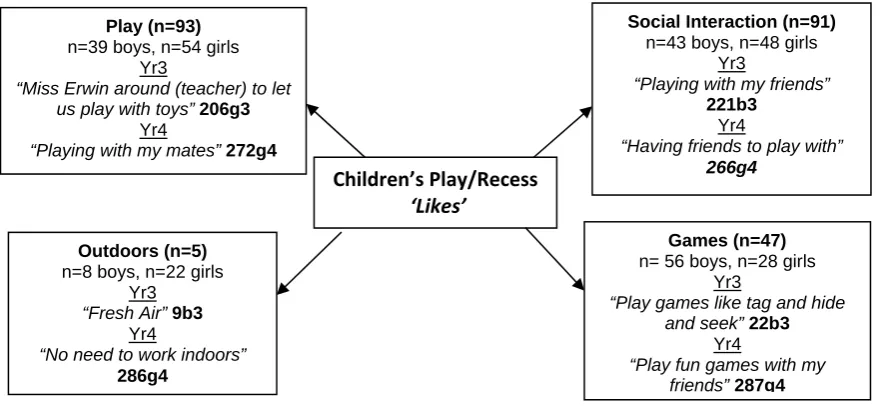
[image:9.595.70.511.454.657.2]One hundred and thirty participants completed the ‘what I like about playtime is…?’ section (boys n= 70 girls n = 60), and 245 reports were extracted with 1 indefinable entry and 329 marks on specific themes within the data analysis. Figure 1 illustrates the composite pen profile with play (n=93) and social interaction (n=91) as the highest frequency themes.
Figure 1. Pen profile for year 3 and 4 ‘What I like about playtime is’
Social Interaction (n=91) n=43 boys, n=48 girls
Yr3
“Playing with my friends”
221b3 Yr4
“Having friends to play with”
266g4 Play (n=93)
n=39 boys, n=54 girls Yr3
“Miss Erwin around (teacher) to let us play with toys” 206g3
Yr4
“Playing with my mates” 272g4
Children’s Play/Recess ‘Likes’
Outdoors (n=5) n=8 boys, n=22 girls
Yr3
“Fresh Air” 9b3 Yr4
“No need to work indoors”
286g4
Games (n=47) n= 56 boys, n=28 girls
Yr3
“Play games like tag and hide and seek” 22b3
Yr4
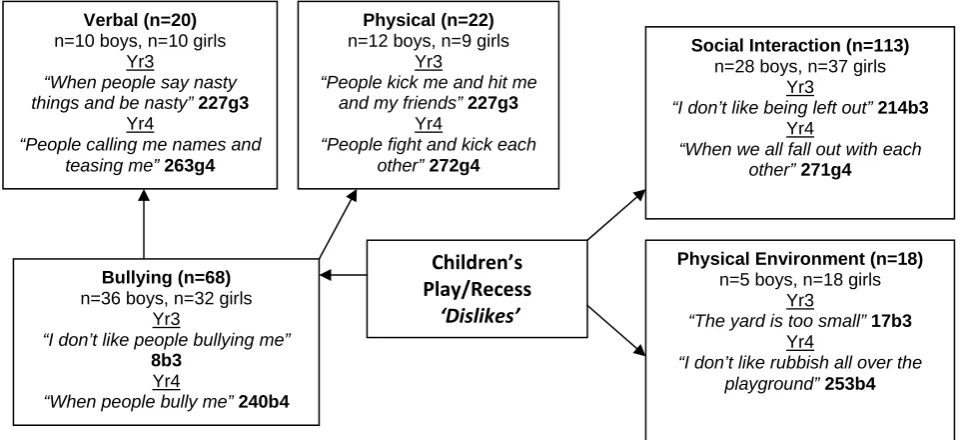
One hundred and nineteen participants completed the ‘what I dislike about playtime is…?’ section (boys n=55 girls n=64), and174 reports were extracted with 3 indefinable entries. There were 262 marks from reports on specific themes. Figure 2 illustrates the composite pen profile with social interaction (n=113) and bullying (n=68) the most frequently referenced themes.
Figure 2. Pen profile for year 3 and 4 ‘What I dislike about playtime is’
Year 5 and 6
One hundred and forty-seven participants completed the ‘what I like about playtime is…?’ section (boys n=76 girls n = 68), and 297 reports were extracted with 0 indefinable entries. There were 364 marks from reports on specific themes. Figure 3 illustrates the composite pen profile with games as the most frequently cited theme (n=130) before play (n=93).
Verbal (n=20) n=10 boys, n=10 girls
Yr3
“When people say nasty things and be nasty” 227g3
Yr4
“People calling me names and teasing me” 263g4
Physical (n=22) n=12 boys, n=9 girls
Yr3
“People kick me and hit me and my friends” 227g3
Yr4
“People fight and kick each other” 272g4
Social Interaction (n=113) n=28 boys, n=37 girls
Yr3
“I don’t like being left out” 214b3
Yr4
“When we all fall out with each other” 271g4
Children’s Play/Recess
‘Dislikes’ Bullying (n=68)
n=36 boys, n=32 girls Yr3
“I don’t like people bullying me”
8b3 Yr4
“When people bully me” 240b4
Physical Environment (n=18) n=5 boys, n=18 girls
Yr3
“The yard is too small” 17b3
Yr4
Figure 3. Pen profile for year 5 and 6 ‘What I like about playtime is’
One hundred and four participants completed the ‘what I dislike about playtime is…?’ section (boys n=56, girls n=48), and190 reports were extracted with 5 indefinable entries. There were 206 marks from reports on specific themes. Figure 4 illustrates the composite pen profile with social interaction (n=54) and Physical Environment (n=41) as the most frequently cited themes.
Figure 4. Pen profile for year 5 and 6 ‘What I dislike about playtime is’ Play (n=64)
n=31 boys, n=43 girls Yr5
“Playing a lot of things” 88b5
Yr6
“Playing anything” 130b6
Social Interaction (n=75) n=33 boys, n=42 girls
Yr5
“Talking with my friends” 88b5
Yr6
“Chatting with dinner ladies”
170g6
Children’s Play/Recess ‘Likes’
Outdoors (n=47) n=12 boys, n=35 girls
Yr5
“I get fresh air” 57b5 Yr6
“Getting fresh air” 131g6
Games (n=130) n=86 boys, n=44 girls
U
“Me and my friends make up games” 90g5
Yr6
“Making up games” 123g6
Social Interaction (n=54) n=24 boys, n=30 girls
Yr5
“I hate it when nobody plays with me” 88b5
Yr6
“When you break up with friends” 100g6
Bullying (n=16) n=5 boys, n=11 girls
Yr5
“When (people) are nasty” 36g5
Yr6
“One word – Bullies!!!” 138b6
Not Enough Equipment/Activities (n=27)
n=11 boys, n=16 girls Yr5
“There’s not many things to do”
48g5 Yr6
“I don’t like the year 3’s getting skipping ropes and balls and
hoops and we don’t” 184g6
Physical Environment (n=41) n=16 boys, n=25 girls
Yr5
“There’s not enough room in the playground” 74b5
Yr6
“The playground is too small”
157b6
Children’s Play/Recess
[image:11.595.74.533.465.728.2]Discussion
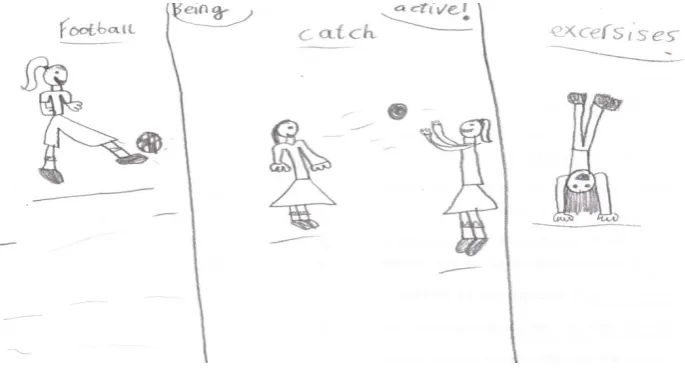
[image:12.595.72.462.266.428.2]The aim of this study was to use a write and draw technique to examine children’s views, experiences and perceptions of recess. Years 5 and 6 completed a higher percentage of drawings associated with the task than those in years 3 and 4 who engaged in both labelling and also offered statements ‘in the box’ more frequently than their older counterparts. Drawings ranged from depicting single events to a range of activities and interactions with associated ‘labelling’ (see figure 5).
Figure 5. Drawing from year 6 girl illustrating a range of playtime activities and labelling
The pen profile data revealed a shift in traditional forms of play in years 3 and 4 to more structured games in years 5 and 6. Football was the dominant activity and proved both a negative and positive influence in this theme. Children reported an appreciation of being outdoors for recess and also an awareness of how the physical environment (playground appearance and greenery) and provision/absence of equipment/activity influenced their recess experience. Social interaction was the most frequently cited theme across both ‘likes’ and ‘dislikes’ of recess and dominated the perceptions of recess across both groups.
findings to some extent, though social interactions were less cited, particularly by boys in the older group where football related activities required fewer social interactions. Conversely, a lack of social interactions was also reported as one of the reasons that children did not like recess , particularly by girls, highlighting the importance of recess for promoting socialising with others.37 Overall, recess provided opportunities for children to develop friendships, social skills and social networks,6, 7 which are essential for children’s cognitive and social development and adjustment to school.15 Our data suggest that these opportunities are valued by the majority of children but that negative interactions linked with behaviours associated with bullying can affect the recess experience. Recent suggestions to reduce recess time5, 15 would provide fewer opportunities for children to interact and experience positive social interactions and find strategies to overcome negative interactions. Practically, recess also provides an opportunity to identify negative behaviours associated with bullying and allow timely and direct intervention from adults to develop children’s awareness and motivation to overcome negative behaviour. The data highlighted examples of this and infers that the draw and write methodology was sensitive in design and administration to allow the disclosure of bullying.
In the present study, being able to engage in games was linked to children’s liking of recess and this was more commonly cited by the older than younger age group. In contrast, play was more commonly cited by the younger group. Pellegrini38 noted that play is typically engaged in by younger children with benefits related to novelty and creativity, while older children engaged in games that are governed by agreed sets of rules (e.g. football). In our data years 5 and 6 girls cited examples of ‘making up games’ that were creative and spontaneous in nature (see figure 7).
Figure 7. Drawing from Year 5 girl illustrating ‘making up’ games
Figure 8. Drawing from a year 3 boy illustrating football
sedentary time14, this strategy may also increase physical activity levels in children during recess particularly in girls.
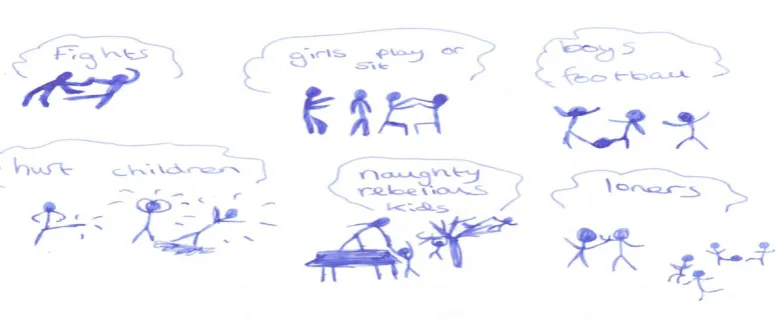
Figure 9. Drawing from Year 6 girl illustrating conflict of space and perceptions of activity
Previous research has suggested that as children grow older, the size of their social groups at recess increases.44 On the other hand Blatchford et al 35 found that girls were also more likely than boys to dislike recess due to having no-one to play with or nothing to do. Whilst our data support previous findings, we further suggest that these concerns were common across boys and girls, and greater in older children. Since aggressive behaviours displayed during recess have been linked to boredom and disputes,45 we suggest that schools could improve the quality of recess , by providing equipment, or organising separate areas for dominant activities to allow children to enjoy recess . However, consideration needs to be given to the space available, appropriate adult supervision and equipment provided to ensure that girls and boys have similar opportunities to engage in positive play during recess time.
generalisable to other schools and settings. Second, offering only a drawing or question responses (i.e. one without the other) may not be ‘write and draw’ as is typically defined, though arguably this approach invoked a sense of choice and thus allowed children to engage using their preferred response that were generally legible. On occasions, children wrote responses to questions in the draw box and as a result did not follow the instructions, although such incidences were minimal.
Conclusions
References
1. Lindon J.What is play? [Fact sheet]. Children’s Play Information Service, London; 2002.
2. Pellegrini AD. Research and policy on children’s play. Child Development
Perspectives.2009;3:131-136.
3. Pellegrini AD, Smith PK. Physical activity play: The nature and function of a neglected aspect of play. Child Development. 1998; 69:577-598.
4. Rippe JM, WeissbergRP, Seefeldt V.The purpose of play: a framework for improving childhood health and psychological and physical development. Medicine Exercise Nutrition
and Health. 1993; 2:225-231.
5. Ginsburg KR. The importance of play in promoting healthy child development and maintaining strong parent-child bonds. Pediatrics. 2007; 119:182-191.
6. Blatchford P, Sumpner C. What do we know about breaktime? Results from a national survey of breaktime and lunchtime in primary and secondary schools. British Educational
Research Journal. 1998; 24:79-94.
7. Ramstetter CL, Murray R, Garner AS. The crucial role of recess in schools. Journal of
School Health. 2010; 80:517-526.
9. MHF. Bright Futures – Promoting Children and Young Peoples Mental Health. London:
Mental Health Foundation; 1999.
10. Lester S, Russell W. Play for a change- play, policy and practice: A review of
contemporary perspectives. London: Play England; 2008.
11. Barros RM, Silver EJ, Stein REK. School recess and group classroom behaviour.
Pediatrics. 2009; 123:431-436.
12. Hill L, Williams JHG, Aucott L, et al. Exercising attention in the classroom.
Developmental Medicine & Child Neurology. 2010: 929–934.
13.Ridgers N.D. Stratton G. Clark E. Fairclough S.J. Richardson D.J. Day-to-day and
seasonal variability of physical activity during school recess. Preventive Medicine, 2006; 42,
372-374.
14. RidgersND, Fairclough SJ, Stratton G. 12-month effects of a playground intervention on children’s morning and lunchtime recess physical activity levels. Journal of Physical Activity
and Health. 2010; 7:167-175.
16. Gleave, J. 2010. Making it our place: Community views on Children’s play. Play England.
http://www.playday.org.uk/playday_campaigns/2010_our_place/playday_2010_research.aspx
Accessed 10th January, 2010.
17. Bateson P, Martin P. Design for Life: How Behaviour Develops. London: Jonathan Cape;
1999.
18.Pellegrini AD, Blatchford P. Time for a break. The Psychologist. 2002; 15:60-62.
19. CPIS. Factsheet number 15: The benefits of school playtime. London: Childrens Play
Information Service; 2011.
20.Bundy AC, Luckett T, Tranter PJ, et al. The risk is that there is ‘no risk’: a simple, innovative intervention to increase children’s activity levels. International Journal of Early
Years Education. 2009; 17:33–45.
21.McKenzie TL, Crespo NC, Baquero B, Elder NF.Leisure-time physical activity in elementary schools: analysis of contextual conditions. Journal of School Health. 2010;
80:470-477.
22.Thomson S. A well equipped hamster cage: The rationalisation of primary school playtime. Education 3-13: International Journal of Primary, Elementary and Early Years
23.Burrows C, Eves F, Cooper B. Childrens perceptions of exercise – are children mini-adults? Health Education. 1999; 99: 61-69.
24. MacPhail A, Kinchin G, Kirk D. Students’ conceptions of sport and sport education.
European Physical Education Review. 2003;9:285–299.
25. Koekoek J, Knoppers A, Stegeman H. How do children think they learn skills in physical education?Journal of Teaching in Physical Education. 2009; 28: 310-332
26. Pridmore P, Bendelow G. Images of health: exploring beliefs of children using the draw and write technique. Health Education Journal. 1995;54:473-488.
27. Einarsdottir J, Dockett S, Perry B. Making meaning: children's perspectives expressed through drawings. Early Child Development and Care. 2009; 179:217 — 232.
28. Backett-Milburn K, McKie L. A critical appraisal of the draw and write technique. Health
Education Research: Theory and Practice. 1999; 14:387-389.
29. Horstman M, Aldiss S, Richardson A, Gibson F. Methodological issues when using the draw and write technique with children aged 6-12 years. Qualitative Health Research. 2008;
18: 1001-1011.
31. Franck LS, Sheikh A, Oulton K. What helps when it hurts: children’s views on pain relief. Child: Care Health and Development. 2008; 34:430-438.
32. Woods SE, Springett J, Porcellato L, Dugdill L. ‘Stop it, it's bad for you and me’: experiences of and views on passive smoking among primary-school children in Liverpool.
Health Education Research. 2005; 20:645−655.
33..Ridgers ND, Knowles Z, Sayers J. Play in the natural environment: a child focused evaluation of forest school. Children’s Geographies. In press.
34. Knowles Z. Exploring the themes and processes of reflection: enhancing professional
training curricula in higher education and sports social sciences.2009; Thesis (PhD).
Liverpool John Moores University.
35..Blatchford P, Creeser R, Mooney, A. Playground games and playtime: The children's view. Educational Research. 1990; 32:163-174.
36. Evans J. 1996. Children's attitudes to recess and changes taking place in Australian primary schools. Research in Education. 1996; 56:49-61.
37. Blatchford P, Baines E, Pellegrini AD. The social context of school playground games: Sex and ethnic differences, and changes over time after entry into junior school. British
38. Pellegrini AD. Games and play mean different things in an educational context. Nature.
2010; 467:27.
39.Ross, C., Ryan, A., 1990. Researching early schooling poststructural practices and academic writing in an ethnography. British Journal of Sociology of Education, 17, 21-39.
40. Thorne B. Gender Play: girls and boys in school. New Brunswick: Rutgers University
Press; 1993.
41. Renold D. 1997. ‘All they’ve got on their brains is football’. Sport, masculinity and gendered practices of playground relations. Sport, Education and Society. 1997; 2:5-23.
42. .SwainJ.‘The Money’s Good, the Fame’s Good, the Girls Are Good’: The Role of Playground Football in the Construction of Young Boys’ Masculinity in a Junior School.
British Journal of Sociology of Education. 2000; 21:95-109.
43. Thomson S. ‘Territorialising’ the primary school playground: Deconstructing the geography of playtime. Children’s Geographies. 2005; 1:63-78.
44. Ridgers ND, Carter LM, Stratton G, McKenzie TL. Examining children’s physical activity and play behaviors during school playtime over time. Health Education Research. In