Computer Security,
Privacy, and Politics:
Current Issues, Challenges,
and Solutions
Ramesh Subramanian
Quinnipiac University, USA
IRM Press
Senior Managing Editor: Jennifer Neidig Managing Editor: Jamie Snavely Assistant Managing Editor: Carole Coulson Copy Editor: Jennifer Young Typesetter: Larissa Vinci Cover Design: Lisa Tosheff Printed at: Yurchak Printing Inc.
Published in the United States of America by IRM Press (an imprint of IGI Global) 701 E. Chocolate Avenue, Suite 200 Hershey PA 17033-1240
Tel: 717-533-8845 Fax: 717-533-8661 E-mail: [email protected] Web site: http://www.irm-press.com
and in the United Kingdom by
IRM Press (an imprint of IGI Global) 3 Henrietta Street
Covent Garden London WC2E 8LU Tel: 44 20 7240 0856 Fax: 44 20 7379 0609
Web site: http://www.eurospanonline.com
Copyright © 2008 by IGI Global. All rights reserved. No part of this book may be reproduced in any form or by any means, electronic or mechanical, including photocopying, without written permission from the publisher.
Product or company names used in this book are for identification purposes only. Inclusion of the names of
the products or companies does not indicate a claim of ownership by IGI Global of the trademark or registered trademark.
Library of Congress Cataloging-in-Publication Data
Computer security, privacy, and politics : current issues, challenges and solutions / Ramesh Subramanian, editor. p. cm.
Summary: “This book offers a review of recent developments of computer security, focusing on the relevance and implications of global privacy, law, and politics for society, individuals, and corporations.It compiles timely content on such topics as reverse engineering of software, understanding emerging computer exploits, emerg-ing lawsuits and cases, global and societal implications, and protection from attacks on privacy”--Provided by publisher.
Includes bibliographical references and index. ISBN-13: 978-1-59904-804-8 (hardcover) ISBN-13: 978-1-59904-806-2 (e-book)
1. Computer security. 2. Computer networks--Security measures. 3. Computer security--Government policy. I. Subramanian, Ramesh.
QA76.9.A25C6557 2008 005.8--dc22
2007037717
British Cataloguing in Publication Data
A Cataloguing in Publication record for this book is available from the British Library.
Computer Security,
Privacy, and Politics:
Current Issues, Challenges,
and Solutions
Table of Contents
Preface... vi
Section.I
Security.and.Privacy:.Global.Concepts
Chapter.I
Web.Privacy:.Issues,.Legislations.and.Technological.Challenges... 1
Alok Mishra, Atilim University, Turkey
Section.II
Privacy,.Nations,.and.Laws
Chapter.II
Is.It.Safe.to.Talk,.Yet?.The.Evolution.of.Electronic.Privacy.Law... 23
A.Neo.Institutional.Theory.Perspective... 36
Sushma Mishra, Virginia Commonwealth University, USA Amita Goyal Chin, Virginia Commonwealth University, USA
Chapter.IV
The.Impact.of.the.UK.Human.Rights.Act.1998.on.Privacy.
Protection.in.the.Workplace... 55
Bernd Carsten Stahl, De Montfort University, UK
Section.III Privacy.and.Technology
Chapter.V
Privacy.Preserving.Data.Mining:.Taxonomy.of.Existing.Techniques... 70
Madhu V. Ahluwalia, University of Maryland, Baltimore County (UMBC), USA
Aryya Gangopadyay, University of Maryland, Baltimore County (UMBC), USA
Chapter.VI
Rational.Concerns.about.Biometric.Technology:.
Security.and.Privacy... 94
Yue Liu, University of Oslo, Norway
Chapter.VII
Business.Cases.for.Privacy-Enhancing.Technologies... 135
Roger Clarke, Xamax Consultancy Pty Ltd., Australia, University of New South Wales, Australia, Australian National University, Australia, and University of Hong Kong, Hong Kong
Section.IV
Privacy.and.Organizations
Chapter.VIII
Privacy.through.Security:.Policy.and.Practice.in.a.
Small-Medium.Enterprise... 157
Privacy and Security: Where do they fit into the Enterprise
Architecture.Framework?... 180
Richard V. McCarthy, Quinnipiac University, USA Martin Grossman, Bridgewater State College, USA
Chapter.X
Information.Systems.Security:.A.Survey.of.Canadian.Executives... 195
Frederick Ip, Queen’s University, Canada Yolande E. Chan, Queen’s University, Canada
Section.V
Security.and.Privacy:.Emerging.Issues
Chapter.XI
Emerging.Technologies,.Emerging.Privacy.Issues... 232
Sue Conger, University of Dallas, USA
Chapter.XII
Digital.Democracy:.Democracy.in.the.Light.of.Information.and.
Communication.Technology... 271
Anza Akram A., Management Consultant, USA,
Chapter.XIII
Trust.Modeling.and.Management:.From.Social.Trust.to.
Digital.Trust... 290
Zheng Yan, Nokia Research Center, Finland Silke Holtmanns, Nokia Research Center, Finland
Chapter.XIV
Security,.Privacy,.and.Politics.in.Higher.Education... 324
Dan Manson, California State Polytechnic University, USA
About.the.Contributors... 334
Preface
The last decade of the 20th century was the decade of the Internet. The invention
of the World Wide Web (Web) by Tim Berners-Lee, who built the first Web site in
1991 while working at the European Organization for Nuclear Research (or CERN) in Geneva, Switzerland, started a world-wide trend in developing Web sites not only for personal and research purposes, but for disseminating governmental information and for engaging in global electronic commerce. Thus the Internet, with its “killer application,” the Web, heralded the furious pace of globalization in the 1990s. Today, as the Internet and the Web continue their furious growth and global spread,
they have filtered down to encompass every aspect of society. Nowadays it is rare to
see an aspect of domestic or public life that is not in some way touched by the Inter-net. This situation is not restricted only to the technologically developed countries, but is becoming increasingly prevalent in developing countries too. As a result, new terms and phrases such as “virtual world,” “cybercrime,” “computer virus,” “data privacy,” “identity theft,” and “data mining” have entered the everyday vocabulary. Debates have ensued on the virtues and vices of the Web and the consequent large scale digitization that it has heralded.
an erosion of privacy and cause them to become exposed to malware and identity theft. This would, they argue, curb e-commerce and seriously affect global economic development and growth. Indeed, in the 1990s the Internet was considered to be a virtual world that was ungovernable and thus could not fall under the purview of any government. Proponents of this view felt that the users of the Internet would somehow govern themselves and make it into a global vehicle of commerce and
information outside of any governmental influence. However, in recent years, real
-izing the importance of the Internet, governments also have stepped in to flex their
muscles in an attempt to gain control of the Internet through regulations and laws. Predictably, increasing government regulation of the Internet has its detractors who believe that certain fundamental rights such as the freedom of expression may be lost if the government controls the Internet.
These developments and trends have, inevitably, led to a four-way tussle: between the public, governmental policy makers, the technology industry, and the businesses that use the technologies. This intersection of politics, law, privacy, and security in the context of computer technology is both sensitive and complex.
As we are all aware, computer viruses, worms, Trojan horses, spy-ware, computer exploits, poorly designed software, inadequate technology laws, politics, and terror-ism all have a profound effect on our daily computing operations and habits. Further,
new technological innovations such as file-sharing software and location-based
tracking tools also have major privacy-related, political, and social implications. In such an environment, various questions arise, such as: Can there be global laws to preserve security? How will such laws affect privacy? What are the politics of secu-rity and privacy? What is the role of legal systems in the way privacy is addressed in various nations? What is the connection between privacy and democratization in various countries? How do organizations tackle the issue of privacy? What are the
implications of file-sharing software, peer-to-peer systems and instant messaging in autocratic societies? What are the global effects of file sharing? Are there cultural
differences that account for differences in perceptions of security and privacy? Does national or regional culture play a role in shaping the political arguments pertaining to security and privacy? If yes, to what extent?
Unfortunately, basic knowledge and understanding of computer security, especially the legal, political and social underpinnings concerning the use of security tech-nologies within organizations and in the society at large is generally lax. There is a general sense that while security has not improved, privacy has been lost. There is concern about the misuse of information by companies and governments. There also is a general sense that the problems are only getting worse—new
develop-ments including electronic voting, Radio Frequency Identification (RFID) tags,
ad-dition, national and international politics play a very important role in shaping the discourse on privacy and security.
This book aims to provide a window to academics and practitioners to view and understand the ties that bind computer technology, security, privacy, and politics. In addition to chapters on the above topics, the book will also include chapters that delve into emerging lawsuits and cases, global and societal implications, and how an individual can protect herself from attacks on privacy.
The 14 chapters of this book offer:
• A point-in-time review of the new developments and thought in the field of
computer security, with a special focus on privacy, law, and politics in a global context
• Its implications on people, business, and law
• The evolution of security and privacy laws and their relevance to society, individuals, and corporations
• An examination of security and privacy communities: the practitioners of the art
• Provide a vision for the future of security and privacy in the context of global politics.
The audience for the book would be anyone from advanced-novice to expert in the
fields of security, privacy, law, and politics; academics, technology managers, social, and political scientists, CIOs, and information security officers.
Organization.of.the.Book
The book is organized into five sections, with a total of 14 chapters. The first section
briefly introduces the notions of security and privacy in a global context, setting the
pri-vacy and security laws. In Chapter.II, John Thomas traces the development in the United States of legal protections of the right to privacy. The chapter begins with the common law “right to be let alone” in the early 1900s and proceeds through the enactment of the U.S. Patriot Act in 2001 and the National Security Administration’s warrant-less wire tapping program revealed to the public in 2005. It concludes with a discussion of emerging electronic threats to the security of privacy of the public and concomitant challenges to law makers and law enforcers.
In Chapter.III,.Sushma Mishra and Amita Goyal Chin discuss some of the most
significant of the governmental regulations recently mandated of the IT industry
and their considerable impact and implications on information technology, both from a technical and managerial perspective. Employing neo institutional theory as the guiding framework for analysis, they suggest that the plethora of regulations being imposed on the IT industry are migrating organizations in the IT industry to conform and implement standardized processes and practices, resulting in the industry wide commoditization of IT.
In Chapter.IV,.Bernd Carsten Stahl presents the current state of legal protection of privacy in the United Kingdom. He argues that there are different philosophical concepts of privacy that underpin different pieces of legislation and explores what
this may mean for the justification of privacy protection. He then speculates on where the future development in this field may be heading.
The third.section focuses on emerging privacy technologies, their uses, and im-plications.
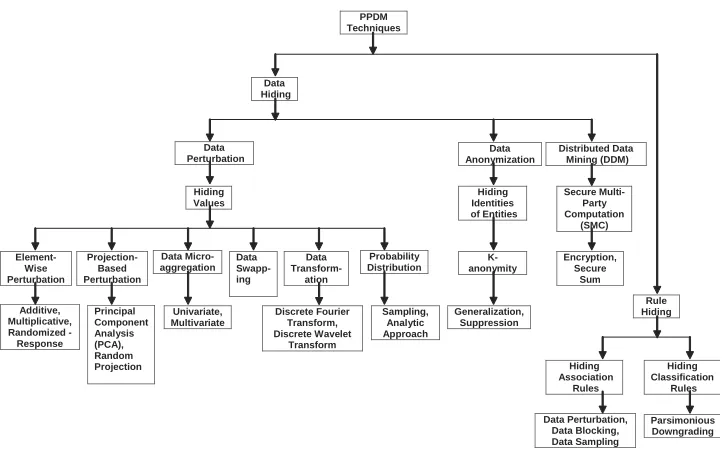
This section starts with Chapter.V, discussing a taxonomy of existing data mining techniques, by Madhu Ahluwalia and Aryya Gangopadyay. Their chapter gives a synopsis of the techniques that exist in the area of privacy preserving data mining. Privacy preserving data mining is important because there is a need to develop
ac-curate data mining models without using confidential data items in individual records.
In providing a neat categorization of the current algorithms that preserve privacy for major data mining tasks, the authors hope that students, teachers, and researchers
can gain an understanding of this vast area and apply the knowledge gained to find
new ways of simultaneously preserving privacy and conducting mining.
In Chapter. VI,.Yue Liu discusses some rational security and privacy concerns about biometric technology. The author.gives a critical analysis of the complexities involved in using this technology through rational discussions, technology assess-ment and case examples.
several constituencies can harness PETs. Clarke’s chapter thus examines PETs, their application to business needs, and the preparation of a business case for investment in PETs.
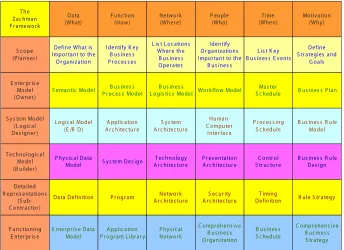
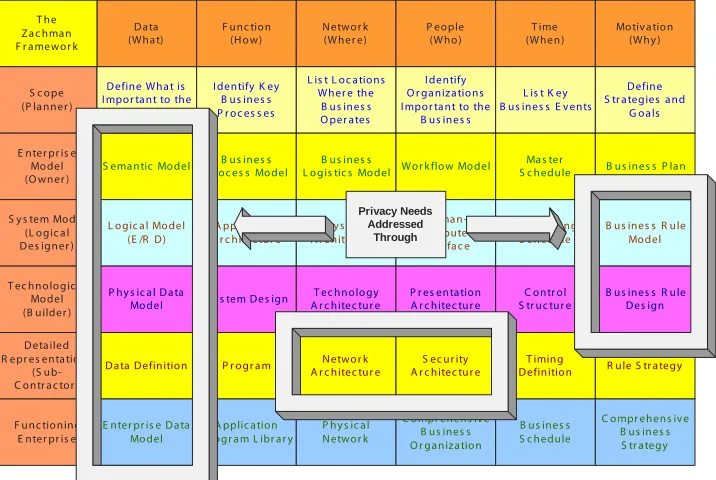
The fourth.section focuses on how privacy and security are handled in the organi-zational context. In Chapter.VIII,.Ian Allison and Craig Strangwick discuss how one small business planned for, and implemented, the security of its data in a new enterprise-wide system. The company’s data was perceived as sensitive and any breach of privacy as commercially critical. From this perspective, the chapter out-lines the organizational and technical facets of the policies and practices evidenced. Lessons for other businesses can be drawn from the case by recognizing the need for investments to be made that will address threats in business critical areas. In Chapter.IX,.Richard McCarthy and Martin Grossman examine the connection between Privacy, Security and the Enterprise Architecture Framework. Enterprise Architecture is a relatively new concept that has been adopted by large organizations for legal, economic and strategic reasons. It has become a critical component of an overall IT governance program to provide structure and documentation to describe
the business processes, information flows, technical infrastructure and organizational
management of an information technology organization. The chapter describes two of the most widely used enterprise architecture frameworks (the Zachman Frame-work and the Federal Enterprise Architecture FrameFrame-work) and their ability to meet the security and privacy needs of an organization.
In Chapter. X,.Frederick Ip and Yolande Chan turn to the ever-important busi-ness issue of information security in organizations by researching these issues in
the context of Canadian financial firms and educational organizations. Taking a resource-based view of the firm, they examine relationships between the following
organizational variables. The organization’s appreciation of the strategic value of its knowledge bases, the information systems security resources, the number and nature of security breaches experienced, and the organization’s customer capital and human capital are studied. Relationships between various variables are tested and a managerially-friendly information security model is validated.
The fifth section discusses some important, interesting, emerging topics and issues in the arena of security, privacy and politics. In Chapter. XI, Sue Conger com-prehensively discusses emerging technologies and emerging privacy issues. With each new technology, new ethical issues emerge that threaten both individual and household privacy. Conger’s chapter investigates issues relating to three emerging technologies—RFID chips, GPS, and smart motes—and the current and future impacts these technologies will have on society.
informa-tion and communicainforma-tion technologies on democracy and focuses on the driving forces, citizen and technology, to understand the effects and future implications. The research is based on literature review and uses informative approach to analyze the existing practices in electronic democracy. It inquires the relationship between the theories in communications and democracy, and analyzes the interaction with the citizens from Athenian and the Orwellian perspectives in Politics. It proposes a framework to identify and analyze the driving forces and the issues related to the digital democracy.
In Chapter.XIII, Zheng Yan and Silke Holtmanns introduce trust modeling and trust management as a means of managing trust in digital systems. They state that trust has evolved from a social concept to a digital concept, and discuss how trust modeling and management help in designing and implementing a trustworthy digital system, especially in emerging distributed systems.
Finally, in Chapter.XIV, Dan Manson brings a pedagogical focus to the theme of the book. His chapter introduces the interrelationships of security, privacy and politics in higher education. University curriculum politics are ingrained through organizational structures that control faculty hiring, retention, tenure, and promotion, and self-governance policy bodies such as academic senates and faculty curriculum committees that control curriculum approval and implementation. Compounding the politics of curriculum are different constructs of security and privacy, with security viewed as a technical issue versus privacy as a legal and organizational is-sue. Manson believes that multiple disciplines must learn to work together to teach
the constantly changing technical, scientific, legal, and administrative security and
privacy landscape. While university “ownership” of security and privacy curriculum may create new political challenges, it has the potential to help limit competing faculty, department and program politics.
Editing this book has been an enlightening and thought-provoking experience to
me. I hope that you enjoy reading this book, and that your interest in the field of
security, privacy and politics are further aroused through reading the varied perspec-tives presented by the authors of the various chapters.
Ramesh Subramanian
Hamden, Connecticut, USA
Acknowledgment
Two years ago I was searching the Web, looking for teaching materials in the inter-section of computer security, policy, and privacy. To my pleasant surprise, I came across Ming Chow’s course on Security, Privacy, and Politics in the Computer Age, an experimental course he was teaching at Tufts University, Boston. Thrilled by this coincidence, I wrote to Ming and soon an exchange of e-mails followed. I sounded the idea of jointly editing a book on the topic with him. Unfortunately, time constraints precluded Ming from co-editing this book, and I ended up working on this project alone. I would like to use this opportunity to acknowledge and thank Ming. This book was inspired by his course at Tufts.
This project began in early 2006 in Connecticut, USA, and moved to Chennai, India in early 2007—a change that caused many logistical challenges and required tremendous personal adjustment. I was fortunate in having a great set of authors, reviewers, and colleagues, for without their active and prompt participation this book would not have been possible. My sincere thanks to all of them.
I would also like to thank Mehdi Khosrow-Pour, DBA, Information Resources Management Association, and Jan Travers, vice president editorial of IGI Global for
inviting me to develop this book; Kristin Klinger for handling the contract details; Kristin Roth for overseeing the development process of the book; Deborah Yahnke,
the editorial assistant;.and finally, the two development editors of the project, Meg
Stocking and Jessica Thompson—whose unstinting and cheerful assistance through-out the project made it an enjoyable experience.
And last but not least, I would like to thank my wife Ramya for her constant en-couragement and understanding during the various stages of development of this book.
Section I
Chapter.I
Web.Privacy:
Issues,.Legislations,.and.
Technological.Challenges
Alok Mishra, Atilim University, Turkey
Deepti Mishra, Atilim University, Turkey
Abstract
People all over the world increasingly are concerned about the privacy issues sur-rounding the personal information collected by private organizations, governments and employers. Privacy relates to issues regarding collection, secure transmission, storage, authorized access, usage, and disclosure of personal information. This information is used for commercial gain by many organizations..Individual privacy
concerns significantly affects consumer willingness to engage in electronic com
Introduction
The Internet is proliferating in an exponential way all over the world. It has the potential to change the way people live. With only a few mouse clicks, people can follow the news, look up facts, buy goods and services, and communicate with others from around the world (Chung & Paynter, 2002). People can provide information about themselves if they are not careful. This raises concerns regarding threats to their personal privacy whilst online. Information privacy has been recognized as an
important issue in management, and its significance will continue to escalate as the value of information continues to grow (Mason, 1986; Raul, 2002; Rust, Kannan,
& Peng, 2002). Therefore personal privacy in information systems is becoming increasingly critical with widespread use of networked systems and the Internet
(Earp, Anton, Aiman-Smith, & Stufflebeam, 2005). These technologies provide
opportunities to collect large amounts of personal information about online users,
potentialy violating those users’ personal privacy (Bellotti, 1997; Clarke, 1999).
Web users are becoming increasingly concerned about what personal information they may reveal when they go online and where that information might end up. It’s common to hear about organizations that derive revenue from personal information collected on their Web sites. Information you provide to register for a Web site might later be used for telemarketing or sold to another company. Seemingly anonymous
information about your Web-surfing habits might be merged with your personal in
-formation. Web sites might e-mail you to say that their privacy policies are changing,
but most of us find it difficult and time-consuming to read and understand privacy policies or to figure out how to request that the use of our personal information be
restricted. Privacy concerns are making consumers nervous about going online, but
current privacy policies for Web sites tend to be so long and difficult to understand
that consumers rarely read them.
Although there is no universally accepted definition, privacy can be articulated as
the need to secure for the individual “the right to be left alone” or as the “state or
condition of limited access to a person” (Schoemann, 1984; Warren, & Brandeis, 1980). Alan Westin’s well known definition of privacy describes privacy as the claim
of individuals, groups, or institutions to determine for themselves when, how, and to what extent information about them is communicated to others (Westin, 1967).
While Warren and Brandeis (1980) defined privacy as the “right to be left alone.”
Information privacy exits when the usage, release and circulation of personal in-formation can be controlled (Culnam, 1993). Three key elements of inin-formation
and beneficial use implies that only data owners or parties explicitly authorized to receive the information are able to benefit from its use (Toscana, 2001).
There are three technical barriers to the continued widespread adoption of electronic commerce on the Internet, including ease of use, access to the hardware needed to
participate, and privacy (Chaum & Chaum, 1997). Privacy concerns remain a signifi
-cant inhibitor preventing more extensive use of the Internet for conducting business-to-consumer (B2C) e-commerce. Privacy pertains to the protection of information about individuals, transactions, or organizations. Web user information is a valued commodity that provides business organizations with a means to more effectively
target and segment its market. Sellers of information goods find it advantageous to
segment their markets based on observable characteristics or revealed consumer
behaviour that can be used to increase profits (Bakos & Brynjolfsson, 1999).
U.S. Congressional hearings in the 1970s, where privacy advocates sought to ban credit bureaus from using centralized computer databases, lead to the recoginition that organizations have certain responsibilities and individuals have certain rights, regarding information collecton and use. Since 1973, the Fair Information Practice (FIP) principles (The code of FIP, 1973) have served as the basis for establishing and evaluating U.S. privacy laws and practices. The FIP principles consist of : 1)
notice/awareness; 2) choice/consent; 3) access/participation; 4) integrity/security; and
5) enforcement/redress (The code of FIP, 1973). U.S. government agencies, Internet users, and industry leaders all agree that organizational privacy policies—particularly
those belonging to organizations using electronic transactions—should reflect the
FIPs [18-20]. Several studies, however, have found that often they do not (Anton,
Earp, & Reese, 2002; Culnan, 1999; Electronic Privacy Information Center, 1999).
In 1980 the Organization for Economic Cooperation and Development (OECD), an international organization, issued Guidelines on the protection of privacy and
trans-border flows of personal data (OECD, 1980). The OECD guidelines are the current
best-practice global standard for privacy protection and are the recommended model for legislation in member countries. Although not legally binding, the guidelines are recognized by all OECD members, including the European Union (EU) and the U.S. They are implemented differently among individual nations, suggesting privacy views differ between countries (Baumer et al., 2005). The US FIPs do not include
all of the OECD guidelines, but reflect a subset of them. The EU directives are even
more comprehensive with respect to privacy, and provide the legal foundation for those countries. In making online consumer privacy recommendations to the U.S. Congress, the Federal Trade Commission (FTC) has relied on four studies assessing organizational awareness of and adherence to the U.S. FIP principles (Adkinson et
al. 2002; Culnan, 1999; FTC, 1998; FTC, 2000). FTC conducted a study in March
e-mail address, postal address) while 56.8 percent were collecting at least one type of demographic information (gender and preferences). The monetary value of this information explains why so many Web sites gather personal information. This raises consumers’ concern about their privacy rights. Consumers worry about the security of their personal information and fear that it might be misused (Chung and Paynter, 2002).
In 1999, DoubleClick Inc. became a target of privacy advocates and lawsuits for
collecting and selling information on individual Web surfing habits merged with
information from other databases to identify users by name and create online
cus-tomer preference profiles (Straub & Collins, 1990). In 2002, U.S. Bancorp paid a $7.5 million fine to settle one lawsuit, agreed to stop sharing customer account
information, including credit card numbers, account balances, and Social Security
numbers with unaffiliated, nonfinancial third parties to settle yet another suit, and
still has other privacy lawsuits pending (Joss, 2001). Users of the Internet are getting lots of unwanted e-mails from even those companies with whom they have not had a previous business relationship. A year 2000 poll shows that 63 percent of U.S. online users who have never made a purchase were very concerned about the use of personal information and 92 perecent were not very comfortable with having their information shared with other organizations (Business Week-Harris Poll, 2000). With references to public concerns various countries have implemented varying de-grees of privacy legislations designed to regulate how companies access and utilize information on potential customers. The United States to date has had a relatively business-friendly, minimal intervention approach encouraging organizationas to provide self-regulated privacy protections. By contrast, the European Union (EU) has taken a pro consumer approach with stringent regulations banning the use of personal information until consent is received (Turner & Dasgupta, 2003). The effective mitigation of privacy issues will improve consumer willingness to shop on the Web, thus improving revenue for online business initiatives and facilitating future growth in the international e-commerce market place. Information technology
will continue to redefine organizational practices and business models with respect
Privacy.Transition.Stages.
The advent of mainframe data processing in the 1960s provided mostly large or-ganizations with a means to obtain, store, and manipulate information in a central-ized manner that up until that time was not possible (Westin, 1967). As mainframe computer technology was assimilated into mainstream business and governmental organizations, users of the technology began exploiting the massive computing and storage capabilities to create databases of information on individuals, much of it considered personal. The explosive growth of the multibillion dollar direct marketing industry, for example, was facilitated by the availability of large com-mercial databases compiled from the public information, including motor vehicle and real estate records, telephone and other directories, or from responses supplied by consumers on warranty cards and other surveys (Turner & Dasgupta, 2003). The
new capabilities also allowed profiles of individuals to be created to assist firms in
credit decisions. The resultant public anxiety led to the passage of the Fair Credit Reporting Act in 1970 and the Privacy act of 1974, which defined the rights of in -dividual citizens and outlined the U.S. Government’s responsibility for protecting the personal information it maintains (Davis, 2000).
Web.User.Privacy.Concerns.
Practically all nations are now monitoring their respective citizens’ individual In-ternet usage, including:
• What they write in e-mail and to whom (the equivalent of opening the envel-poes of conventional private mail),
• What sites they browse on the Web (the equivalent of looking over shoulders at the book store ), and often
• What they type on their “personal” computers—even if it is never sent over the Internet (the equivalent of standing behind us all the time, taking notes on our every act).
Unlike law enforcement investigations (as opposed to secret police monitoring), launched only after crimes have been committed, wholesale monitoring of Internet usage is done before any illegal act occurs (Caloyannides, 2003).
Continued advances in information technology in general, and the growth of
Internetworking technologies specifically, further facilitate the collection, distribution,
and use of personal information. Due to increasing Web users day by day people have also started raising concerns while doing online transactions over the Internet. A 1998 survey examining scenarios and privacy preferences suggests that Web users can be statistically clustered into three primary groups based on their attitudes and privacy (Ackerman, Cranor, & Reagle, 1999). Privacy fundamentalists (17 percent) are described as unwilling to provide any data to Web sites and are very concerned about any use of data. The pragmatic majority (56 percent) are concerned about data use but could be made comfortable by the presence of privacy protection measures such as laws and privacy policy statements, and the remaining respondents (27 percent) are categorized as marginally concerned (Turner & Dasgupta, 2003). Similar results from a separate study conducted in Germany in 2000 not only identify the privacy fundamentalists (30 percent) and the marginally concerned (24 percent), but also describe two distinct subgroups within the middle tier delineated as identity concerned
(20 percent) and profiling averse (25 percent) (Grimm & Rossnagel, 2000).
The most pervasive individual Web privacy concerns stems from secondary use of
information, defined as personal information collected for one purpose and used,
subsequently, for a different purpose (Culnan, 1993). Studies suggests that (a) users
are more willing to provide personal information when they are not identified, (b)
overwhelmingly disliked unsolicited communications and any form of automatic data transfer. Most consumers want to be informed about what information is be-ing collected from them, how the data will be used, and whether their information will only be used in an aggregate form. Users are less likely to perceive business practices as privacy invasive when they perceive that information is collected in the context of an existing relationship, is relevant to the transaction, will be used to draw reliable and valid inferences, and they have the ability to control its future
use (Baker, 1999; Culnan, 1993).
Privacy.Protection.Laws.
In many countries, governments have discussed and proposed laws to regulate privacy protection and mechanisms to punish people and organizations that break the rules. Until privacy laws are really enforced, however, companies will find few incentives to protect and respect user privacy, mainly because most users don’t even realize that their privacy can be violated. A central problem is that behavior on the Web can’t be controlled. To regulate the Web, governments would have to regulate code writing or how Web applications (browsers, Java, e-mail systems, and so on )
function (Lessig, 1999). Also it is difficult to reach international consensus on Web
privacy because the privacy concept is heavily dependent on widely variable cultural and political issues. Despite this, however, there is a set of common activities that are undoubtedly privacy invasion:
• Collecting and analyzing user data without the user’s knowledge/consent or authorization,
• Employing user data in a way other than was authorized, and
• Disclosing or sending user data to others without the user’s knowledge and authorization.
Even if international privacy laws existed, some countries and companies would still be likely to operate in an opprobrious way. Consequently, users can’t rely on laws to protect their privacy. Mechanisms must exist to let users improve the protection of their data (Ishitani, 2003).
In 1991, the President of the Association for Computing Machinery (ACM)
that collect personal information (White, 1991). Later on U.S. government asked the Commerce Department to work with the Federal Trade Commission (FTC) to encourage organizations to implement self-regulatory practices. An FTC report in 2000, however concluded that U.S. self-regulatory approaches were ineffective
in safeguarding consumer information, marketing techniques employed to profile
customers were increasingly intrusive, and congressional legislative action was warranted to protect consumer privacy online (Electronic Privacy Information Center, 2000). The self-regulatory approach adopted by the U.S. is in direct contrast with the government-mandated approach adopted by the European Union (EU). Under the EU’s 1995, and subsequent 1997, Directive on Data Privacy, the burden is placed on companies and organizations—not individuals—to seek permission before using personal information for any purpose (Consumer International, 2003).
The EU member countries have agreed to stringent controls on personal information, much stronger than exists in the USA, which took effect on October 25, 1998. The EU is restricting the operation of American companies unless they fall in line with the EU guidelines and it is estimated that 90 percent of US companies have not addressed the EU directive. An example of one of the directives is that companies are required to inform customers when they plan to sell their personal information
to other firms (Kruck, Gottovi, Moghadami, Broom, & Forcht, 2002).
In July 2000, however, the United States negotiated a safe harbor agreement with the EU commission, wherein U.S. companies can voluntarily self-certify to adhere to a set of privacy principles loosely based on the fair information practices developed by the commerce department and the EU Commission. The primary difference under safe harbor is the ability of U.S. companies to administer self-enforcement by the European Commissioner or other agencies for compliance with the explicit rules of the EU directive (Consumer International, 2003). Although the United States recently passed new online privacy legislation, including the Childerns Online Privacy Protection Act (COPPA), Provisions in the Gramm-Leach-Bliley Financial Modernization Act (GLB) and the Health Insurance Portability and Accountability Act (HIPAA), these laws are applicable to relatively narrow types of information and particular industry sectors (Turner & Dasgupta, 2003).
Privacy legislation came into existence in Australia in 1988. The Commonwealth Privacy Act 1988 laid down strict privacy safeguards which Commonwealth (federal) and ACT Government agencies must observe when collecting, storing, using, and disclosing personal information. This act also gave individuals access and correc-tion rights in relacorrec-tion to their own personal informacorrec-tion. Later on Australian Federal Parliament passed the Privacy Amendment (Private Sector) Act 2000 on December 6, 2000 to come into effect on December 21, 2001. This Act has empowered
private sector organizations hold about them and a right to correct that information if it is wrong (Moghe, 2003).
New Zeland’s Privacy Act 1993 does not create a right of privacy nor is its rec-ognition of privacy interests absolute (Slane, 2000). Its coverage includes both electronic and paper information. Any business based in New Zeland wishing to engage in electronic commerce with consumers must ensure its activities comply with the Privacy Act, to the extent that they involve personal information about their
consumers. Personal includes any information about an identifiable living person, whether it is on a computer, in a paper file or in someone’s head (Slane, 2000). The
Privacy Act applies to the handling of all personal information collected or held by agencies, whether in the public or private sectors (Slane, 2000).
In New Zeland, consumers’ privacy concerns can largely be met through business complying with the Privacy Act. To comply with information privacy principle 3 of section 6 of the Privacy Act 1993, New Zeland Web sites that collect personal information should include a privacy statement that sets out the purpose of the col-lection the uses and any disclosures that may be made of that information (Ministry of Economic Developement, 2000).
Privacy.and.Technology
The issue of who has control over personal data and how this data is used needs to be addressed at a global level in order for the Internet to develop into a trusted, widely acceptable international marketplace for the exchange of goods and services. The primary technology for collecting information on an individual’s activities over the Internet has been the Web “Cookie.” Cookies are digital information sent from a Web server and stored on the hard drive of an individual’s computer by the browser software or network application. Cookies were designed to address the problem of statelessness inherent in the Hypertext Transfer Protocol (HTTP) (Kristol, 2002). Because a browser does not stay connected to a server, but instead makes a connec-tion, sends its request, downloads the response, and makes a new connection to send another request, it severely limited the functionality of Web services and complicated application development. Web cookies provide a solution to this statelessness by allowing for continuity in the interaction between the browser and the Web server. The cookie has proven to be the most reliable, robust, and network friendly means to provide needed state functionality on the Web, although this functionality can
also be provided by embedding state information in URLs, using hidden fields in
Web cookies can be classified into two general types: Session and Persistent (Berghel,
2001). The session cookies last only as long as the browser session with the server. However, persistent cookies remain stored on the hard drive of the client computer until they reach an expiration date or are deleted. Persistent cookies can be used to store information useful to both the user and the Web site, including account names, passwords, and past navigation streams. This cookie information is exchanged using the packet header and can be used by the Website to eliminate the need for users to log-in, set user preferences based on past behaviour, and to customize or personalize user experience (Harding, 2001). The persistent cookie also has more
significant privacy implications because storage of navigational streams and log-in
information could be used to monitor and track user browsing behaviour and linked to any other personal information provided. Persistent cookies can also be shared by a third party Web host and used to track activities at a particular Web-site or as a user moves from site to site (Turner & Dasgupta, 2003).
Web bugs are hidden images that can be covertly added to any Web page; e-mail, or Microsoft Word, Excel, or PowerPoint file and used to collect information about
user bahaviour. Web bugs send messages back to a server indicating its location, including the IP address of the computer, the URL of the page, the time the Web page or document was viewed, the type of browser used, and the previously set cookie value. Web bugs can also be used to determine if and when a Web page, e-mail message, or document is opened, the IP address of the recipient, and how often and to whom information is forwarded and opened (Harding, 2001). Web bugs can also be used to associate a Web browser cookie to a particular e-mail address and read previously set cookie values. Thus, a source server with a very small or invisible
window could be added to any Web site or Web-enabled file and used serendipitously
for a variety of tracking, surveillance, and monitoring activities (Berghel, 2001). Monitoring browsing activities in and of itself is not considered by most Web users
to be privacy invasive; however it is the ability to then link these activities back to
an individual that has most consumers and privacy advocates alarmed (Turner & Dasgupta, 2003).
Registration and billing, and observation are two main ways for a company to gather personally identifying consumer information (Shapiro & Varian, 1999). A 1999 study found that more than half of surveyed Web sites were collecting personal identifying information and demographic information on users that connected to that site (Culnan, 1999).
data mining tools that employ advanced statistical techniques allow organizations to perform analyses to uncover a great deal of information about Web site users, some of it considered personal and beyond what the user has knowingly agreed to provide (Mason, 2001). The high value of information has created great incentive
for the information broker industry and made it increasingly difficult for users to
control what, when, and how information about them is distributed and used.
Web.Privacy.Enhancing.Technologies.
One of the first technologies available for protecting privacy on the Internet was
the anonymizer. Anonymizers provide the ability to sanitize packet headers passed from the client to the server. Early versions consisted of software that would act like a proxy server, intercepting all communication between the browser and the server and removing all information about the requester. Current versions use Se-cure Socket Layers (SSL) technology for sending URL requests, establishing an encrypted communications tunnel between the user and the anonymizer proxy, and
routing traffic through a number of proxy servers (Electronic Privacy Information Center, 1999). This firewall- like technology disguises a user’s IP address, similar
to most Internet service providers, and supplies with dynamic IP addresses every time they log on. Software tools are also available that provide a pseudonym proxy for logging on the Web sites, giving users consistent access to registration based systems without revealing personal data (Gabber, 1999).
Web users can also install a filter, such as the one offered by Anonymizer. Filters are
software programs that block cookies, banner advertisements and Web bugs. The
disadvantage of filters is that they fail to consider consent; they block all cookies
and thus users lose access to all personalized services, even those from the most
trustworthy of sites. Also filters make privacy invasion difficult, but not impossible.
A site can still identify users by IP address, interaction time, and geographical loca-tion, for example. Given this users might need additional levels of privacy protection (Ishitani, 2003). These tool provide a means to protect the network identity of the
computer; however, there are also negative performance and reliability consequen
-ses. In addition, some specialized proxy servers can be used to intercept and alter information between client and server (Berghel, 2002).
There are other technology-based solutions available for protecting privacy,
includ-ing tools for filterinclud-ing HTML allowinclud-ing users to block certain URLs, anonymous
used specifically to counter the placement of Web cookies on user hard drives.
Most browsers have a parameter that can be set to either inform users when a site is attempting to install a cookie, allowing users the option to accept or decline it, or prevent any cookies from being installed. However common browser defaults are set to accept all cookies and most users are not aware or sophisiticated enough to change the browser defaults. Users also have the capability to go in and delete cookies from their browsers (Turner & Dasgupta, 2003). Another latest tool to pro-tect privacy is Evidence Eraser—professional PC security software. It will destroy
all evidence of the Internet activities stored deep in Windows’ log files. Evidence Eraser exceeds Department of Defense specifications for PC data destruction. Their
claim is that its ability to defeat even “forensic analysis” software used by many private investigators and law enforcement agencies. In addition, the user will re-claim disk space and increase PCs performance by permanently destroying cookies,
cache files, temp files, browser history, temporary Internet files, and many more
types of secret hidden data. Evidence Eraser will clean and compact your registry
and also securely destroy the information contained in your index.dat file which
is not accessible through Windows (Computer Privacy, 2003). Cookie Cutters and Anonymyzing Proxies are two popular independent privacy protection mechanisms. There are other software products and services that provide cookie management capability, allowing individuals to view, block, control, and remove existing cook-ies. Web bugs, however, are generally not affected by this so-called cookie crusher software technology (Berghel, 2001).
The.Platform.for.Privacy.Preferences.(P3P).
Today, enormous amounts of information are being collected by many thousands of Web sites. While an effective technology, called SSL (Secure Socket Layer), exists for protecting the privacy of the transaction between a Browser and a Web Server, there is no protection once the information is on the Server and in the hands of the company or organization that “lured” you to them.
The 1998 World Wide Web Consortium (W3C)’s platform for privacy preferences (P3P) guidelines request developers of P3P agents to follow and support principles categorized into four groups: information privacy, choice and control, fairness and integrity, and security. These principles are also in accordance with the US principles of Fair Information Practices. In April 2002, the World Wide Web Consortium (W3C)
developed its first release of a standard, the Platform for Privacy Preferences (P3P
site to provide server-side machine-readable privacy policies that Web browsers could use to automatically compare with the privacy preferences directed by the user (P3P 1.0, 2003). It provides a framework to describe categories of information and how that information can be used in standard computer readable format based on the extensible Markup Language (XML). P3P Web privacy framework includes following (Kolari, 2005):
• Web.Site.Privacy.Policy: Web sites are required to publish their privacy policy
in XML using the P3P policy vocabulary and store policy files in standard
locations to facilitate user access.
• User.Privacy.Preference.Policy: Users can specify their preferences in terms of a recommended policy language.
• User.Agent: While accessing a Website, a P3P user agent (inbuilt into Web browser) will automatically retrieve the Website’s P3P policy and compare it with user’s privacy policy for conformance.
P3P has been touted as “privacy tool.” In fact it is a tool that facilitates the transfer of information from your computer to Web sites. The system simply sets standards about transferring information and works with your browser. It works in the fol-lowing way:
• Your personal information is stored in your browser in a standard format (name, address, credit card information, etc.)
• Web site privacy policies are translated into a standard format. This is done by answering a series of standard questions.
• The user sets their “preferences” in their browser. These preferences are based on answers to the standard set of questions used by the Web site. For example:
Questions.to.Web.Site: Does Web site release personal information to third parties?
Possible.Answer:.Yes, NO, or Yes with specific permission from the user.
User.Preference:.If answer is “Yes” don’t release information, If answer
is “yes with specific permission” or “No” bring up a warning box.
• The privacy policy data is placed in a specific file at the Web site and the
• The privacy policy is then compared to the user preferences and decisions are made automatically to transfer information, not to transfer information, or to show a warning before the transfer. [Note: The initial version of P3P does not include the transfer of user information to the Web site but that is the eventual goal of the system].
P3P is actually a convenience tool for both consumers and marketers to facilitate shopping and other Internet commerce. Whether the system actually helps protect
privacy depends on the specific way the questions are asked and the default settings
it will have. Right now personal information is not transferred at all until a user enters it. With P3P data may be transferred automatically so there is no increase in the privacy level. The claims are that such a standard system will reduce the confu-sion seen now with ambiguous and non-standard privacy policies.
In order to implement P3P the software vendors will need to implement P3P into their software (browsers, program installation/registration software, etc.). The privacy policies will also have to be translated into answers to the standard set of questions and put into XML data format (P3P 1.0, 2006).
The.Future.of.the.P3P.Standard.Success.
A study examining the privace practices of Web extensions found that privacy policy statements generally lack candor, provide loop-holes, use technical jargon
and legalese, and are difficult for most users to use effectively (Martin, 2000). Ad
-ditionaly, an organization can get the majority of users to accept its privacy policy by simply making it the default or the response that is provided if no user action is taken (Bellman, Johnson, & Lohse, 2001).
According to a critique of P3P it will be seen that P3P is dangerously myopic, and
needs substantial enhancement. The five areas of critical need are:
1. More specificity in declaring the purpose behind taking information,
2. A means to establish a negotiated contract that goes beyond W3’s APPEL (A P3P Preference Exchange Language),
3. A means in the law for policing the contracts obtained
5. An IETF (Internet Engineering Task Force) definition that does not require the Web (specifically, the HTTP protocol) (Thibadeau Robert, 2003).
P3P works as a series of HTTP communications. The first is a Browser request to a Web Server for a file or an action. In this communication, the Browser says
nothing about privacy to the Web Server. However, the Web Server responds to the Browser with whatever the Browser asked for, plus a special reference to a Privacy Policy Reference Page. The Browser or person operating it, can now determine what do with the Web Server’s response based on the Privacy Policy Reference page provided by a second HTTP request. The Browser reads the Policy-Ref page and decides what to do. This Policy Ref page is in the language of XML. It has many
very definite things it can say. A Privacy policy reference page is very special and
can be used to determine whether the Browser should ever come back to that Web Server again, and whether information from a form on a Web page should be sent to that Web Server.
So in P3P, the Browser, at the very beginning, exposes itself to a minimum of two
invasions of privacy. The first is the initial request to a Web Server page. The second is the request to the PolicyRef page specified in the first response by the Web Server
(Thibadeau Robert, 2003).
P3P clearly provides a way to stipulate the purpose to which the user’s information disclosure is put. This is highly commendable. Perhaps the choice of particular purposes is not so good.
According to the writers of P3P 1.0 it explicitly lacks the following desirable char-acteristics:
• A mechanism to allow sites to offer a choice of P3P policies to visitors
• A mechanism to allow visitors (through their user agents) to explicitly agree to a P3P policy
• Mechanisms to allow for non-repudiation of agreements between visitors and Web sites
• A mechanism to allow user agents to transfer user data to services
is how to protect your privacy after the information is handed to somebody else. If a violation of privacy is generally a misuse of information about you or
informa-tion that you provide (e.g., a trade secret, a confidential comment to a Web master),
then there must be a way in the privacy protocol to indicate that a privacy directive is essentially non-negotiable only back to the original owner, and this needs to be passed on to the next processor of the information (Thibadeau Robert, 2003). But Finally P3P is taking us in the right direction to take care of Web privacy. It deserves to be supported and added to. P3P clearly represents a good start. People in all aspects of the Internet socio-economic-political system need to sit up and think this through for themselves.
The.Present.Scenario.of.P3P.Implementation
According to Cranor, Byers, and Kormann (2003) only 53 of the top 556 Web sites were P3P-enabled (published valid P3P policies) as of May 2003. Ernst and Young (2004) P3P DashBoard report shows a very low increase in P3P adoption for the top 500 sites, from 16 percent (August 2002) to 23 percent (January 2004). Therefore, users seldom access Web sites with published P3P policy. This situation, together with P3P’s limitation on the user side has resulted in low P3P adoption from users (Kolari, Ding, Shashidhara, Joshi, Finin, & Kagal 2005). Maintaining and build-ing customer trust is an important criterion for the growth of e-commerce. A recent survey (DeVault, Roque, Rosenblum, & Valente, 2001) reports that 56 percent of online consumers believe that Websites do not adhere to their privacy policies and
90 percent of online consumers believe that independent verification is a sufficient measure for trusting a Web site. The P3P framework adopts a certificate based trust model. A P3P policy can estabish its trust by specifying its certifier, which is
a trusted authority for accontability of P3P policy such as TRUSTe.com. However
according to (Kolari et al., 2005) it does not incorporate trust sufficiently and have two main limitations. First, it is highly coupled to the presence of a certifier, whose adoption is low among Web sites. Second, in the absence of a privacy certifier the model makes a strong assumption that the presence of P3P policies is sufficient for
building trust.Therefore, Kolari et al.(2005) further proposed the following two key enhancements of P3P as:
preferences, extensible to constrain the behaviour of available privacy enforcement mechanisms.
Enhancing P3P Trust Model: Beside the certificate trust model, user should have more choices to establish trust in Web sites.
Conclusion
The privacy concerns are posing a barrier to the development of e-commerce. It is an issue that online business cannot afford to ignore because privacy concerns are hampering Internet business. Therefore, in spite of rapidly growing e-business, there are also indications that consumers are wary of participating in it because of concern about how their personal information is used in the online market place. Consumers have little privacy protection on the Internet. Privacy will have a widespread and deep
influence on the economic vitality of cyberspace. Information is power, and privacy
management is the control, and thereby the economic unleashing, of that power. P3P technology implementation is just the beginning of a long road ahead for all those involved in e-commerce and are concerned about privacy protection. Various privacy enhancing technologies and legislations promulgated by the Governments in different countries will also help to ensure Web privacy for secure e-commerce transactions. In this chapter we have tried to assess various technologies used by the organizations to monitor Web usage, legislations in some major countries and technologies available to protect the privacy. P3P implementation its and its future success potential have been discussed. Legislation, self-regulation, technical solutions and combination solutions are different ways that this can be implemented. Empirical evidence of application of privacy-enhancing technologies in organizations and for individual Web users in the future will strengthen research in this area.
Acknowledgment
References
Ackerman, M., Cranor, L., & Reagle, J. (1999). Privacy in e-commerce: Examining user scenarios and privacy preferences. Proceedings of the ACM Conference on E-Commerce, Denver, CO.
Adkinson, W.F., Eisenach, J.A., & Lenard, T.M., (2002). Privacy online: A report on
the ınformation practices and policies of commercial Web sites. Washington,
DC: Progress & Freedom Foundation.
Anton, A.I., Earp, J.B., Potts, C., & Alspaugh, T.A. (2001, August 27-31). The role of policy and privacy values in requirement engineering. Proceedings of the IEEE 5th International Symposium Requirements Engineering [RE’01],
Toronto, ON, Canada (pp. 138-145).
Anton, A.I., Earp, J.B. & Reese, A. (2002, September 9-13). Analyzing Web site privacy requirements using a privacy goal taxonomy. Proceedings of the 10th Anniversary IEEE Joint Requirements Engineering Conference (RE’02), Es-sen, Germany (pp. 23-31).
Baker, J. (1991). Personal ınformation and privacy. In J. Warren, J. Thorwaldson, and
B. Koball (Eds.), Proceedings of the First Conference on Computers, Freedom, and Privacy (pp. 42-45). IEEE Computer Society Press: Los Alamitos, CA.
Bakos, J., & Brynjolfsson, E. (1999). Bundling information goods: Pricing, profits,
and efficiency. Management Science, 45(12), 1613-1630.
Baumer, D.B., Earp, J.B., & Poindexter, J.C. (2004). Internet privacy law: A comparison between the United States and the European Union. Computer Security, 23, 400-412.
Bellman, S., Johnson, E., & Lohse, G. (2001). To opt-ın or opt-out? It depends on
the question? Communications of the ACM, February, 25-27.
Bellotti, V. (1997). Design for privacy in multimedia computing and communica-tions environment in technology and privacy: The new landscape. P.E. Agre & M. Rotenberg, Eds. Cambridge, MA: MIT Press, pp.63-98.
Berghel, H. (2001). Cyberprivacy in the new millenium. IEEE Computer Magazine,
34(1), 133-134.
Berghel, H. (2002). Hijacking the Web – Cookies revisited – Continuing the dia-logue on personal security and underlying privacy issues. Communications of the ACM, April, 23-28.
Business Week-Harris Poll (2000). Results printed in Business Week, March 20.
Federal Trade Commission. (2000). Privacy online: Fair information practices in the electronic marketplace, A Report to Congress.
Gabber, E., Gibbons, P., Kristol, D., Mataias, Y., & Mayer, A. (1999). Consistent, yet anonymous access with LPWA. Communications of the ACM, 39-41. Glaser, B.C. & Strauss, A.L. (1967). The discovery of grounded theory. Chicago,
IL: Aldanine.
Grimm, R. & Rossnagel, A. (2000). Can P3P help to protect privacy worldwide?
ACM Mutimedia Workshop.
Harding, W. (2001). Cookies and Web bugs: What they are and how they work together. Information Systems Management, 18(3), 17-25.
Ishitani, L., Almeida, V., Meira, W., Jr. (2003). Masks: Bringing anonymity and personalization together. IEEE Security & Privacy, 1(3).
Joss, M. (2001). Do you need a CPO? ComputerUser, Retrieved June 1, 2001, from http://www.computeruser.com/articles/2006.1.2.0601.01.html
Kolari, P., Ding, L., Shashidhara, G., Joshi, A., Finin, T., & Kagal, L. (2005). En-hancing Web privacy protection through decelarative policies. Proceedings of the Sixth IEEE International Workshop on Policies for Distributed Systems and Networks (POLICY’05).
Kristol, D. (2001). HTTP cookies: Standard, privacy and politics. ACM Transactions on Internet Technology, 1(2), 151-198.
Kruck, S.E., Gottovi, D., Moghadami, F., Broom, R., & Forcht, K.A. (2002). Pro-tecting personal privacy on the Internet. Information Management & Security,
10(2).
Lessig, L. (1999). Code and other laws of cyberspace. Basic Books.
Louis, Harris and Associates, Inc. (1992). Harris-Equifax Consumer Privacy Survey Equifax Inc., Atlanta, GA.
Martin, D., Smith R., Brittain, M., Fetch, I., & Wu, H., (2000). The privacy practices of Web browser extensions. Communications of the ACM, February, 45-50.
Mason, R. (1986). Four ethical ıssues of the ınformation age. MIS Quarterly, 10,
4-12.
Mason, R., Ang, S., & Mason, F. (2001). Privacy in the age of the Internet. In G. Dickson & G. DeSantis (Eds.), Information technology and the future enterprise: New models for managers. Upper Saddle River, NJ: Prentice-Hall.
Ministry of Economic Development (2000). New Zeland’s Privacy Act and Electronic Commerce. Retrieved from http://www.privacy.org.nz/privacy/index.html Moghe, V. (2003). Privacy management: A new era in the Australian Business
En-vironment. Information Management & Security, 11(2), 60.
Organization for Economic Cooperation and Development (OECD) (1980). OECD
guidelines on the protection of privacy and transborder flows of personal data.
[Online]. Retrieved from: http://www.oecd.org/EN/document/(),,EN-docu-ment-43-1-no-24-10255-4300.html
P3P 1.0 (2003). A new standard in online privacy. Retrieved from http://www.w3c. org/P3P/
Payton, F., (2001). Technologies that do steal! Decision Line, March, 13-14.
Platform for Privacy Preferences (P3P) (2006). http://www.privacy.net/p3p/ Raul, A.P. (2002). Privacy and the digital state: Balancing public ınformation and
personal privacy. Norwell, MA: Kluwer.
Rust, R., Kannan, P., & Peng, N. (2002). The customer economics of Internet privacy.
Journal of the Academy of Marketing Science, 30, 455-464.
Schoemann, F. (1984). Philosophical dimensions of privacy: An anthology. New York: Cambridge University Press.
Shapiro, C., & Varian, H. (1999). Information rules: A strategic guide to the network economy. Boston: Harvard Business School Press.
Slane, B. (2000). Killing the Goose? Information Privacy Issues on the Web. Ret-rieved from http://www.privacy.org.nz/media/Killgoos.html
Straub, D. & Collins, R. (1990). Key ınformation liability ıssues facing managers:
Software piracy, databases and ındividual rights to privacy. MIS Quarterly,
June, 143-156.
Thibadeau, R. (2003). A critique of P3P: Privacy on the Web. Retrieved from http:// dollar.ecom.cmu.edu/P3P critique/
Toscana, P. (2001). Taming the cyber frontier: Security ıs not enough! Retreived
from http://www.untrust.com/news/taming-cyberspace.html
Turner, E.C., & Dasgupta, S. (2003). Privacy on the Web: An examination of
user concerns, technology, and ımplications for business organizations and
ındividuals. Information System Management, 20(1), 8-18.
Warren, S., & Brandeis, L. (1980). The right of privacy. Harvard Law Review,
4(5), 193-220.
Westin, A. (1967). Privacy and freedom. New York: Atheneum.
Chapter.II
Is.It.Safe.to.Talk,.Yet?
The.Evolution.of.Electronic.
Privacy.Law
John Thomas, Quinnipiac University School of Law, USA
Abstract
This chapter traces the development in the United States of legal protections of the right to privacy. It begins with the common law “right to be let alone” in the early 1900s and proceeds through the enactment of the U.S. Patriot Act in 2001 and the National Security Administration’s warrantless wire tapping program revealed to the public in 2005. It concludes with a discussion of emerging electronic threats to the security of privacy of the public and concomitant challenges to lawmakers and law enforcers.
Introduction
The notion of a right to privacy first entered the legal lexicon in 1890 with the Har
response both to perceived threats to the enjoyment of life and to social recognition of the value of that enjoyment:
That the individual shall have full protection in person and in property is a principle
as old as the common law; but it has been found necessary from time to time to define
anew the exact nature and extent of such protection. Political, social, and economic changes entail the recognition of new rights, and the common law, in its eternal youth, grows to meet the demands of society. (Warren & Brandeis, 1890, p. 195)
As a result, the eventual legal recognition of the right to privacy in “[t]houghts, emotions, and sensations” (Warren & Brandeis, 1890. p. 206) was inevitable:
The intense intellectual and emotional life, and the heightening of sensations which came with the advance of civilization, made it clear to man that only a part of the
pain, pleasure, and profit of life lay in physical things. (Warren & Brandeis, 1890
p. 207)
Of course, recognized Warren and Brandeis, “[r]ecent inventions and business methods can create new needs for protection of what courts as early as 1834 called a right ‘to be let alone’” (Warren & Brandeis, 1890. p. 208).
The passage of time has proven Warren and Brandeis prescient. Invention has driven both the need for privacy protection and the development of law to ensure that protection. From the telephone to the magnetic tape recorder, photography, the personal computer, wireless telephone, electronic payment systems, and the Internet, technology has created new challenges to our privacy and the law’s ability to protect privacy. Indeed, security and privacy laws are the progeny of invention.
Origins.of.the.“Right.to.Be.Let.Alone”
“The right to privacy” that Brandeis and Warren conjured derived from an earlier notion that Thomas McIntyre Cooley articulated in his Treatise of the Law of Torts