International Journal of Innovative Technology and Exploring Engineering (IJITEE) ISSN: 2278-3075,Volume-8 Issue-12, October, 2019
Abstract: The article is dedicated to the substantiation of approaches to the improvement of the quality of the educational process in the multi-level higher education system. It has been established that the time has come for the state-public management of the quality of higher education. It has been proved that to keep the high quality of higher education, public authorities need to draw for the accreditation of educational programs independent assessment institutions and to assure the quality of higher education, as well as to ensure the cooperation of national and international higher education institutions. It has been determined that when performing an external assessment of higher education and public professional accreditation independent bodies’ approaches and principles should be much wider than those used for state accreditation.
Index Terms: accreditation, assessment, development, educational process, higher education institution, higher education, quality, system.
I. INTRODUCTION
Demand for higher education has been growing in the modern postindustrial society, which makes it necessary to continue its development. When responding to challenges of the present time as part of the Bologna Process, the Russian Federation strives to achieve the best possible results in all areas of higher education, and this, in turn, requires close attention to the measures to ensure and assess the quality of higher education. The society expects professionals who hold university diplomas to make professionally competent proposals and to take action to improve public order, possibilities for self-realization and self-sufficiency, and to ensure decent living standards. At the same time, the global trend towards a new quality of higher education has been seen through a rising number of comprehensive, systematic, inter-disciplinary and integral requirements for the level of university graduates’ education so that they are able to play both professional and social roles in the society. In modern Europe, problems related to the quality of higher education are taken as a subject for public unity and consolidation of various national education systems. The analysis of the latest
Revised Manuscript Received on , 2019.
Nataliya Alexandrovna Kindrya, Financial University under the Government of the Russian Federation, Moscow, Russia.
Larisa Nikolaevna Aleshina, Financial University under the Government of the Russian Federation, Moscow, Russia.
Svetlana Victorovna Bezhanova, Financial University under the Government of the Russian Federation, Moscow, Russia.
Tatyana Vasilyevna Satina, Financial University under the Government of the Russian Federation, Moscow, Russia.
Alexander Valentinovich Kosevich, International Institute of Economics and Law, Moscow, Russia.
research and publications allows us to state that in scientific and practical terms, the development of legal basis, mechanisms and tools aimed to assess the quality of higher education is a difficult problem. This is certified by research conducted by O.V. Grigorash [1], A.N. Grigoriev [2], O.N. Katova [3], O.V. Nazarova [4], N.I. Podgrebelnaya [5], E.R. Torsunova [6], etc. In a number of publications, researchers reviewed competency, systematic activity, personal activity, value and other approaches to the management of the quality of higher education. However, the time has come to practically apply the results, which were achieved in the course of performing the measures designed to develop mechanisms for the public management of the quality of higher education in the Russian Federation, and to assess the quality of higher education taking into account European and foreign experience, and whether public, private institutions and the community participate in the process. Once internationally recognized transparent assessment criteria and methods appeared, and independent accreditation agencies are more often used to assess the quality of higher education, it is possible to use the concept of “excellence” as a means of improvement of the current quality.
II. METHODS
The theoretical and methodological basis of the research is the abstract logical method, techniques of induction, deduction, analysis, synthesis and systematization used in order to substantiate approaches to the improvement of quality of the educational process in the multi-level higher education system, the graphic methods used to analyze the level and trends of cooperation in higher education, the analysis methods aimed to rate academic teachers in higher education institutions in the modern conditions. The article’s information base includes statistical data from public authorities, legislative and statutory acts that govern measures designed to improve the quality of the educational process in the multi-level higher education system [7]-[9]. In the course of the research, we plan to enhance approaches designed to improve the quality of the educational process, to elaborate measures for coordination of activities among main participants of the educational process in a higher education institution, to substantiate the viewpoint about the formation of inter-cultural communication as a means of ensuring
efficient innovation
development of higher education.
Improvement of the Quality of the Educational
Process in the Multi-Level Higher Education
System
III. RESULTS
The quality of higher education means the compliance of the processes and improvement results achieved by the next generation with the development level reached by the current generation and the next generation’s potential ability to make its own contribution and to provide descendants with more
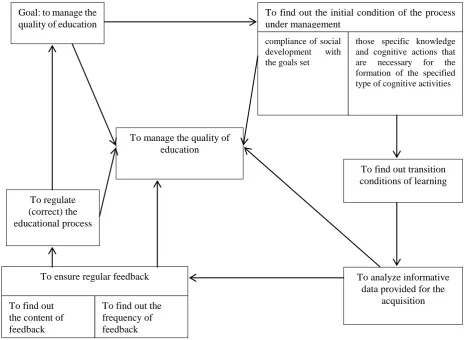
[image:2.595.65.533.147.487.2]assets than the generation itself received for expansion, renewal and creation of a new quality. At the same time, the quality of higher education can be viewed as balanced compliance of higher education with needs, requirements, ideas, goals, norms and standards which are set by separate individuals, organizations, enterprises, the society and the state as a whole (Fig. 1).
Fig. 1. Structural components of education quality management
In accordance with the modern approaches to the quality of higher education, in the course of external and internal assessment within the existing procedures of licensing and accreditation, management bodies attempt to measure, assess and keep record of humanitarian parameters of the educational process. Generally recognized ratios for the assessment of higher education in Russia, which are far from perfect examples (the condition of teaching, methodical, scientific, financial and technical conditions, staff potential) should give way to such ratios as the degree of mastery of the state educational standard, the compliance of education goals with the results in a specific higher education institution or education system, compliance among diverse ratios for the assessment of higher education results.
For this reason, the impact of the quality of higher education on the performance of higher education institutions is beyond any doubt. The assessment is a necessity that is stipulated by the needs of the educational market’s parties (students, academic staff, employers, the state and the society) for the competitive quality of higher education. The quality of higher education is also assessed by public authorities that are in charge of higher education for the necessary and timely
managerial impact to ensure the quality, and the relevant assessment results can and should become an indicator for government funding of higher education institutions.
Within quite a long period, the Russian Federation was virtually indifferent to the solution of problems related to the quality of higher education due to the lack of funds, theoretical and practical developments, targeted scientific research, and the unwillingness of many university leaders to complicate the difficult life of people. The adhesion to the Bologna Process makes such a position unacceptable.
The unification of European countries by means of the Bologna Agreement requires the search for unified mechanisms for the state and public management of the quality of higher education, their amendment as agreed upon with the European community and acceptance of the best of the generally accepted European standards and regulations, and, if necessary, the creation of new ones that would ensure the attainment of main objectives for the establishment of an open European higher education space.
In all Bologna Process meetings, member states’ focus on the measures Goal: to manage the
quality of education
To find out the initial condition of the process under management
compliance of social development with the goals set
those specific knowledge and cognitive actions that are necessary for the formation of the specified type of cognitive activities
To manage the quality of education
To regulate (correct) the educational process
To ensure regular feedback
To find out the content of feedback
To find out the frequency of feedback
To find out transition conditions of learning
To analyze informative data provided for the
International Journal of Innovative Technology and Exploring Engineering (IJITEE) ISSN: 2278-3075,Volume-8 Issue-12, October, 2019
designed to create relevant systems to ensure the quality of education at European and national levels has deepened. However, the Russian Federation has not yet completed the establishment of such a system at the national or institutional levels. The time for compliance with European requirements has been reduced drastically compared with those countries that previously did not refrain from solving problems related to the quality of higher education.
The analysis of the problem related to the quality of higher education in the Russian Federation shows that there is no systematic approach to its solution. State higher education authorities and the system of higher education itself currently lack forms of control of the acquisition of knowledge and the training of specialists, which are focused on the assessment of the quality of higher education. It is ironic that all management activities nowadays constitute the management of quality, and the assessment of learned knowledge and acquired skills still dominates in higher education institutions. There is a shortage of systematic research and developments in the field of state management of this urgent problem.
At the same time, the terms which are accepted for the entry into the European educational space, domestic scientific discussions, analysis of European experience, the latest technologies and methods, including doubt and fluctuations, contributed to the formation of public and scientific thinking in Russia that the focus on state and public management of the quality of higher education is inevitable and the quality of higher education is recognized as a leading factor of the quality of living.
One of Bologna Process terms is the formation in the country of a system for the external assessment of the quality of higher education and public professional accreditation. For this reason, the Ministry of Science and Higher Education of the Russian Federation provides for the relevant system activities. The Ministry defines the quality of higher education as a level of knowledge, abilities, and skills acquired by a person, which reflects his/her competence in accordance with higher education standards.
The structure of the system aimed to ensure the quality of higher education in the Russian Federation should, therefore, consist of the following: a system designed to encourage higher education institutions to ensure the quality of educational activities and the quality of higher education (a system for the internal assurance of quality), a system for the external assurance of quality for higher education institutions’ educational activities and the quality of higher education.
The practice has shown that the accreditation procedure for higher education institutions has not yet changed substantially; the public and the society are insufficiently informed of its results. Despite the fact that public accreditation committees were formed as part of regional education authorities, there is still no system designed to transparently inform the public and the society about results of higher education institutions’ accreditation.
Students take virtually no part in the assessment of the quality of higher education. Even though they are members of academic councils in universities, student self-government bodies and groups formed for the introduction of the Bologna Process, their role, as a rule, is formal, non-systematic, local and does not produce any impact on managerial decisions
(just like with the participation of business and social partners, next to nothing has been done to develop cooperation with them as part of the Bologna Process). Prospects of drawing employers into the training and re-training of staff look unlikely in the modern political and economic conditions.
However, in most cases of accreditation in Russian higher education institutions, advanced methods of assessment of the quality of higher education are not used, while they are considered important parameters of education systems, and approaches to the resolution of problems related to the quality of higher education simply include the mechanical control over the compliance with standards (educational qualification levels, educational professional programs, and educational qualification characteristics).
At the same time, the analysis of approximate criteria used in the assessment of the activity of higher education institutions to ensure the quality of education, which were approved by the Russian Ministry of Science and Higher Education, showed that they are not sufficiently justified or compliant with their direct designation. To ensure the high quality of higher education, it is necessary for public authorities that are in charge of higher education management and independent agencies, which are established to assess the quality, to develop methods of assessment and self-assessment of quality, a measuring scale, and methods for the calculation of parameters.
Research shows that the quality of higher education cannot be based only on the measurement of quality, comparative indicators or the management of quality on the part of management authorities or external consumers of an educational product. The quality should be guaranteed by a higher education institution’s permanent attention, and the higher education institution’s goals should set a list of recommendations on quality guarantees.
To a certain extent, the quality also depends on framework conditions and restrictions imposed by central executive authorities and each level of quality has its goal. We do not share some researchers’ viewpoint that the quality of higher education can be improved by means of resultative monitoring, but agree that the parliament, the government and the society have the right to receive information about the quality of higher education and influence framework conditions, while the management system of the educational process is a higher education institution’s prerogative.
The evolutional heritage of the procedure for assessing the quality of higher education is the application of the so-called meta assessment – the control over applied assessment procedures, analysis of their authenticity with scientifically studied international technologies and practice accepted in a specific country – to this procedure. Experts can conduct meta assessment when examining and assessing means of control and quality assurance that are used in a higher education institution or its division. It can be applied to the entire system of higher education if an expert control organization, e.g. a country’s central body for education management, assesses control procedures and by
At the same time, the global educational space differentiated two methods of assessment. The first method is to assess the quality against standards (the majority of European countries do not have any state standards because it is considered that there should be a diversity of educational programs rather than unification). Accreditation standards exist, the compliance with which experts examine. The second method is to assess the quality against the achievements of specified goals, the essence of which is as follows: a higher education institution announces expected results of training, while experts verify to what extent the higher education institution achieves them. Meanwhile, the importance of goals (the compliance with labor market requirements, employers’ requests, the level and the status of an educational institution) is not secondary.
For modified types of accreditation – state, professional, state public, state professional and international, possibilities are still sought to implement them in domestic practice based on external independent assessment of the quality of higher education, which should be based on the parameters of internal self-assessment and monitoring of the quality of higher education.
IV. DISCUSSION
The reliability of the presented approaches is confirmed by the fact that currently, there are no official independent or public professional associations, and the development of the statutory base has just started [10]-[12]. In this connection, it would be advisable to make a register of expert organizations whose conclusions will be accepted by public authorities that are responsible for the assurance of quality of higher education.
Research shows that state accreditation should determine the compliance of the content and the quality of students’ and graduates’ training with state educational standards, while public professional accreditation should set the compliance with those standards which are defined by one or another professional organization or an agency that the society currently needs.
At the same time, the procedure for any accreditation contains expert appraisal and measures aimed to determine whether the current level of quality complies with specific standards. However, we believe that the procedures for state and public professional accreditation are parallel by nature, although complementary. While state accreditation is organized by the state represented by the Ministry of Sciences and Higher Education that mainly attracts state officials and professionals, the procedure for public professional accreditation should involve not only professional organizations, but also representatives from other parties interested in the quality of education (employers, students, community, leading manufacturers and consumers).
However, in modern conditions, higher education institutions are often not interested in improving the quality of education through state accreditation and are only interested in obtaining a certificate of accreditation. A decision on accreditation is made based on an expert report issued by state experts despite the absence of any clear legal mechanisms that would ensure its objectiveness and impartiality.
In this connection, the problem related to the independence of the accreditation committee from a higher education institution does exist. Finally, it is again relevant to draw independent expert organizations into accreditation procedures for the conduct of an external assessment of the quality of education in a higher education institution. In this case, not separate experts, but an organization or an agency will be responsible for expert conclusions, i.e. legal mechanisms for interaction among public authorities and expert organizations will take effect.
V. CONCLUSION
To sum up, it can be pointed out that the time has come for state public management of the quality of higher education, as well as an improvement in the procedures for state and independent accreditation conducted by attracting independent expert organizations. To ensure the high quality of higher education, it is necessary for public authorities to attract for the conduct of accreditation procedures for educational programs relevant accredited independent institutions engaged in assessment and measures aimed to ensure the quality of higher education, and to provide cooperation among national and international institutions in higher education, particularly those which mainly specialize in the assurance of quality of higher education and accreditation.
At the same time, while performing external assessment of the quality of higher education and public professional accreditation, independent institutions’ approaches and principles should be much wider than those applied to the procedure of state accreditation because state accreditation is carried out within minimum standards with a threshold, which a higher education institution cannot drop to. For this particular reason, state accreditation does not give any fair view of the real quality of education in a higher education institution as one higher education institution can take pains to approach it, while another can reach it easily.
REFERENCES
1. O.V. Grigorash, “Povyshenie effektivnosti upravlenia kachestvom obrazovatelnogo protsessa” [“Improvement of the efficiency of management of the quality of the educational process”]. Higher education in Russia, vol. 1, 2013, pp. 72-78.
2. A.N. Grigoriev, and V.V. Fadeeva, “Informatsionno-obrazovatelnaia sreda kak faktor povyshenia kachestva obrazovatelnogo protsessa v vuze” [“Information educational environment as a factor for the improvement of quality of the educational process in a higher education institution”]. News of the Baltic State Fishing Fleet Academy: Psychological and pedagogical sciences, vol. 3(21), 2012, pp. 151-160.
3. O.N. Katova, “Monitoring pedagogicheskoi deiatelnosti kak
funktsionalnyi instrument povyshenia kachestva obrazovatelnogo protsessa” [“Monitoring of pedagogical activities as a functional tool designed to improve the quality of educational process”]. Professional Education, vol. 2(24), 2016, pp. 37-39.
4. O.V. Nazarova, “Professionalnaia adaptatsia nachinaushchih
International Journal of Innovative Technology and Exploring Engineering (IJITEE) ISSN: 2278-3075,Volume-8 Issue-12, October, 2019
5. N.I. Podgrebelnaya, and Yu.V. Sorokopud, “Informatsionnye
kompiuterniye tekhnologii kak sredstvo povyshenia kachestva i effektivnosti obrazovatelnogo protsessa” [“Information computer technologies as a means for the improvement of quality and efficiency of educational process”]. Journal of Humanitarian Sciences, vol. 9, 2015, pp. 74-78.
6. E.R. Torsunova, “Povyshenie effektivnosti upravlenia kachestvom obrazovatelnogo protsessa vuza” [“Improvement of the efficiency of management of the quality of the educational process in a higher education institution”]. Topical issues of the comtemporary science, vol. 1(2, 3), 2014, pp. 127-133.
7. I.N. Abanina, E.V. Ogloblina, N.N. Drobysheva, M.I. Seredina, and K.A. Lebedev, “Methodological techniques for assessing the unevenness of economic development in the world”. The Journal of Social Sciences Research, vol. 3, 2018, pp. 8-12.
8. N.N. Drobysheva, E.P. Zvyagintseva, E.A. Fedorova, N.A. Kindrya, and O.E. Lebedeva, “Development of crisis phenomena in social and economic systems in conditions of globalization”. International Journal of Engineering and Technology (UAE), vol. 7(4.38), 2018, pp. 131-134. 9. A.V. Kosevich, O.E. Matyunina, A.G. Zhakevich, N.A. Zavalko, and K.A. Lebedev, “Methodology to estimate the financial market condition”. Journal of Advanced Research in Law and Economics, vol. 7(7), 2016, pp. 1749-1753.
10. A.D. Burykin, V.V. Zholudeva, E.E. Kuzmina, N.F. Melnichenko, and K.A. Lebedev, “Methodological aspects of assessing the quality of life of regions' residents”. International Journal of Engineering and Technology (UAE), vol. 7(4.38), 2018, pp. 96-99.
11. A.V. Kosevich, V.O. Kozhina, G.V. Pinkovskaya, O.I. Rybyakova, and O.E. Lebedeva, “Competitiveness management of educational services in higher education”. International Journal of Engineering and Technology (UAE), vol. 7(4.38), 2018, pp. 284-287.
12. G.V. Tretyakova, O.A. Azarova, V.V. Levchenko, O.V.