This is a repository copy of Consult, Negotiate, and Involve: Evaluation of an Advanced
Communication Skills Program for Health Care Professionals.
White Rose Research Online URL for this paper:
http://eprints.whiterose.ac.uk/131405/
Version: Accepted Version
Article:
Coad, J, Smith, J orcid.org/0000-0003-0974-3591, Pontin, D et al. (1 more author) (2018)
Consult, Negotiate, and Involve: Evaluation of an Advanced Communication Skills
Program for Health Care Professionals. Journal of Pediatric Oncology Nursing, 35 (4). pp.
296-307. ISSN 1043-4542
https://doi.org/10.1177/1043454218765136
© 2018 by Association of Pediatric Hematology/Oncology Nurses. This is an author
produced version of a paper published in Journal of Pediatric Oncology Nursing. Reprinted
by permission of SAGE Publications.
[email protected] https://eprints.whiterose.ac.uk/
Reuse
Items deposited in White Rose Research Online are protected by copyright, with all rights reserved unless indicated otherwise. They may be downloaded and/or printed for private study, or other acts as permitted by national copyright laws. The publisher or other rights holders may allow further reproduction and re-use of the full text version. This is indicated by the licence information on the White Rose Research Online record for the item.
Takedown
If you consider content in White Rose Research Online to be in breach of UK law, please notify us by
1
TitleConsult, negotiate and involve: evaluation of an advanced communication skills program for
healthcare professionals
Coad J, Smith J, Pontin D, Gibson F
Authors
Professor Jane Coad, Professor in Children and Family Nursing, Associate Dean of Research
PhD; FRCN; BSc; BA; PG Dip; RSCN, RGN Coventry University,
Faculty of Health and Life Sciences, Richard Crossman Building, Coventry Tel: 02477 793802
Email [email protected]
Dr Joanna Smith, Associate Professor in Children’s nursing PhD, MSc (Hons), BSc (Hons), RSCN, RGN
School of Healthcare, Baines Wing, University of Leeds, Leeds, West Yorkshire, UK, LS2 9JT Tel: +44 (0) 113 34 36297
Email: [email protected]
Professor David Pontin, Aneurin Bevan Chair of Community Health PhD, MSc, BSc (Hons), PG Dip, RN (Adult & Child), RSCPHN University of South Wales,
Faculty of Life Sciences and Education, Glyn Taff Campus, Pontypridd, Wales CF37 4BD
Tel : (01443) 4 83059
Email : [email protected]
Professor Faith Gibson, Professor of Child Health and Cancer Care PhD, MSc (Cancer Nursing), RGN, RSCN, ONC Cert, Cert Ed, FRCN
Centre for Outcomes and Experience Research in Children’s Health, Illness and Disability (ORCHID), Great Ormond Street Hospital for Children NHS Foundation Trust and School of Health Sciences, University of Surrey, Duke of Kent Building, Stag Hill, Guildford, Surrey, GU2 7TE
Tel: +44(0)20 7813 8543
2
AbstractEffective communication is central to children, young people and their families’ experiences of
healthcare. Most patient complaints in developed health care systems result from ineffective
communication including: inadequate information provision; not feeling listened to; failure to value
patients concerns; and patients not feeling involved in care decisions. Advanced communication skills
training is now embedded within cancer care policy in the United Kingdom and now features
prominently within cancer education in many countries. Here we share findings from a research
evaluation of an Advanced Communication Skills Training program dedicated to health professionals
caring for children and young people with cancer. We evaluated participants’ (n = 59) perceptions of
the program, impact on their skills, knowledge, competence and confidence. An Appreciative Inquiry
design was adopted; data included interviews, pre-post course evaluations, e-mail blog survey and
360-degree reflective work records. The framework approach underpinned data analysis and
triangulation of data sets. Key findings highlighted good and poor practice in health professionals’
engagement with children, young people and their families; the purpose of communicating effectively
was not always consistent with collaborative working. Attending a program helped participants expand
their knowledge of communication theories and strategies. Participants valued using simulated
scenarios to develop their skills, and were keen to use their new skills to enhance care delivery. Our
emphasis within this evaluation, however remained on what was communicated, when and how,
rather than to what effect. The impact of programs such as these must now be evaluated in terms of
3
IntroductionInternational and United Kingdom (UK) health policy advocates a model of participatory and
collaborative care delivery (BMJ and NHS England 2014, Department of Health (DH), 2009;
International Alliance of Patients' Organizations, 2007). Interactions between patients and health
professionals is integral to the concept of patient collaboration (Drew et al. 2001) and person-centred
care (Santana et al. 2017). The quality of patient-professional interactions and the way health
professionals communicate with patients can impact on the effectiveness of information exchanged,
the development of relationships and rapport building, as well as patient participation in care
decisions (Ammentorp et al. 2009; Collins et al. 2005; Davies et al. 2016). Effective patient
communication is a core professional value and essential clinical skill across health care settings
(Baille et al. 1997; Baille et al. 1999; Fleischer et al. 2009): it has the potential to improve patient
satisfaction and care outcomes (Kelley et al. 2014). Most patient complaints in developed health care
systems result from ineffective communication (Levetown, 2008; Smith et al. 2015). Since 2008,
cancer care delivery, guidance and polices, have stressed the value of effective patient-professional
communication and for health professionals to undertake advanced communication skills training
(CST) (Quail et al. 2016). Prudent healthcare requires evaluation of professional training so that
practitioner needs and expectations are met, and the potential impact on care delivery identified. In
this exploratory study, we aimed to identify whether health professionals attending a UK national
advanced CST program self-reports increased skills, knowledge, competence and confidence when
communicating with children, young people and their families. Based on our findings, we make
recommendations about future programs, the need and focus for further evaluation.
Background
Communicating openly and compassionately with children, young people and families about illness
and treatment options is essential for effective health care. It leads to improved knowledge and
understanding of illness and probable consequences, and better engagement in decision-making
(Levetown, 2008; Gibson et al. 2010; Coad et al. 2013; Henricks-Ferguson et al. 2015 a;b). In
addition, effective communication, has a positive impact on patients’ emotional health, symptom
4
usage (Kruijver et al. 2000; Stewart 1995). For many families, effective therapeutic relationships
developed through creative, skilled and sensitive communication can be an essential lifeline, helping
them to cope with their situation, and develop trust in those caring for their child (Levetown, 2008;
Rodgers et al. 2016; Salmon and Young 2011; Street et al. 2009). Nurses in particular have described
challenges building these relationships, often associated with not being able to respond effectively to
questions, particularly around a negative prognosis and death, maintaining relationships with families
who have rejected therapy, and managing conflicts that arise with the patient’s families (Akgun Citak
et al 2013; Newman 2016). Evidence suggests that although many health professionals focus on
interactions with parents it can be challenging to ensure all family members are included and heard,
irrespective of age or abilities (Lambert et al. 2008; Ranmal et al. 2009; Montgomery et al. 2016).
Further challenges for health professionals working in cancer settings include initiating early and
ongoing discussions around treatment choice and end of life care (Coad et al 2013;
Hendricks-Ferguson et al. 2015 a,b). In addition, health professionals must be sensitive to and appreciate the
unique needs of the adolescent population, where poor communication can lead to treatment refusal,
non-adherence and abandonment of therapy (Essig et al. 2016). Communication difficulties have
been identified as one of the three most common causes of conflict within healthcare, the others
being disagreements about treatment and unrealistic expectations (Forbat et al 2016a).
Delivering communication training has become a high priority in cancer care, for all professional
groups (Leonard 2017; Patenaude et al. 2015; Snaman et al. 2016; Stiefel et al. 2010). Insufficient
communication training has contributed to health professional stress, job dissatisfaction and
emotional burnout (Fallowfield et al. 2001; Fallowfield 2005). Evidence to date, however suggests that
communication skills do not necessarily improve with experience, therefore, educational programs
have been developed to improve health professionals’ communication skills (Moore et al. 2013;
Salmon and Young, 2016). Advanced CST programs have been required for senior cancer and
palliative care health professionals working in England since 2003. The CST was initially delivered by
the National Cancer Action Team, and superseded by the Connected© program in 2008 (Turner et al
2011): it used training approaches to produce participant behavioural change (Maguire et al. 1996;
Wilkinson et al. 1999; Fallowfield et al. 2001). Similar to other programs (Kissane et al. 2012; Snaman
5
communication in order to improve cancer patients’ experiences. This also meets the UK National
Health Service (NHS) Cancer Plan (2000) commitment that advanced communication skills should
form part of health care professional continuing professional development. In the more recent cancer
strategy (Independent Cancer Taskforce 2015), CST is described as ‘mandatory’ training for all new
and existing staff (p52
https://www.cancerresearchuk.org/sites/default/files/achieving_world-class_cancer_outcomes_-_a_strategy_for_england_2015-2020.pdf) and a number of courses have been made available following the withdrawal of central funding from the National Cancer Action
Team (for example, http://www.christie.nhs.uk/media/3300/maguire_course_prospectus_2016.pdf).
The Connected© program was established to advance communication skills for professionals working
with adult patients. However, over time increasing numbers of child health professionals accessed the
training and a dedicated program pilot was developed. The dedicated program involved a three-day
experiential learner-centred workshop. Didactic teaching was restricted to Day 1. Day 2 and 3 used
interactive learning with professional actors to simulate clinical scenarios. This allowed participants to
practice different approaches to communicating with ’patients’, and receive individual performance
feedback from specialist trainers.
Our commissioned research sought to explore health professional’s self-reported communication
skills and aimed to answer the following questions:
1. Does the training program increase skills, knowledge, competence and confidence of health
professionals in order to provide appropriate support to children, young people with cancer
and their families?
2. What changes are required to its current form as part of a planned roll out via a ‘train
-the-trainer’ approach planned in future years to deliver the program more locally?
Methods and data collection
Our evaluation design followed Appreciative Inquiry (AI) principles, which seeks to discover ‘what
works well’ and ‘why it works well’ (Cooperrider and Whitney 1999; Carter 2006; Carter and Coad,
2009). Appreciative Inquiry lends itself well to a pragmatic approach, which was a good fit with our
6
health professional practice and our methods were chosen to encourage participants to interact,
share and generate ideas with minimal direction from the research team.
Participants were drawn from a range of UK health settings using purposive sampling from six
communication programs run over six months. Our sample therefore included health professionals
who had participated in a CST program, primarily medical practitioners and nurses. In line with the
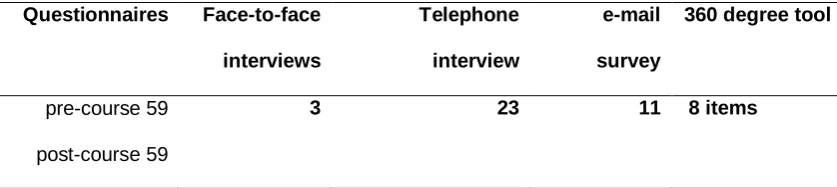
commissioned brief we used three sources of data collection. This included: pre and post course
questionnaires, individual interviews, an e-mail survey and a 360-degree reflective work record.
Recruitment was good with all 59 out of the 60 courses delegates responding to our pre and
post-course questionnaires, and three of the four trainers participated in individual interviews. We recorded
23 interviews, 11 participants contributing to an email open question survey and three completing a
360-degree feedback tool. To summarize:
1. We analysed the completed pre- and post-course questionnaires developed by education provided
and included the qualitative data in our analysis. The questionnaire was developed with the funder
and was used as a before and after assessment for all participants on the program, one week before
and four weeks after, so not solely used by the respondents in our study. In total, all 59 participants
on the program agreed to complete the questionnaires including 16 Doctors (10 male; 6 female); 32
Nurses (30 female; 2 male) and 16 Allied Health Professionals (14 female; 2 male). Questionnaire
items focused on perceived skill set, confidence and current practice and helped the team to
understand the program as an intervention and what was most and least useful in relation to
communication skills training.
2. We offered semi structured interviews both in a focus group style and one to one interviews in
recognition of professional’s commitments, thus allowing staff to attend in small groups or as
individuals on the telephone, providing choice to maximise participation. The interview guide was
designed to elicit a range of views about the communication program and was developed through a
series of discussions between the research team, lead trainers, user input and experts in the field of
communication skills training. The interview guide included open questions about the program, group
7
implications for health professionals individual practice. We included a stop/start/continue exercise to
enable participants to reflect on the program and its impact on their clinical front-line work. Of the total
59 participants, 26 agreed to interview (4 doctors including 2 females; 2 males; 19 nurses all female
and 3 allied health professionals 2 female and 1 male). Telephone interviews lasted approximately 45
minutes. No focus groups were undertaken as all health professional and trainers opted for individual
interviews. As a follow up, we also offered an email open question survey if any reflections came to
mind as they interacted in normal clinical practice (n = 11 gender and professional group unknown).
3. We devised a succinct 360-degree reflective work record for all participants who were participants
on the program (Table 1). This was based on the programs learning outcomes and used a 5-point
Likert scale with invitations for free text comments. This record was distributed via agreed email
contacts to the participants who then approached a peer and a user, such as a parent or child/young
person, and asked them to complete the questions electronically. We received completed records
from only three doctors but this encompassed eight sets of rich data as each included a peer report
and two included a parent perspective. Although the detailed findings from this data set will be
published elsewhere, an exemplar is included in the findings section.
Ethics approval was granted by the [INSERT NAME] University Health and Life Sciences Research
Ethics committee. Direct extracts from the data have been used to illustrate themes and bring the data
to life, and enable judgments to be made about the credibility of findings. Identities were protected by
not referring to participants by name or identifying which course they attended. Participants were
referred to as their appropriate title/role in the study with an assigned a confidential number and data
collection tool source.
Data Analysis
The principles of the framework approach underpinned our triangulation of data analysis (Spencer et
al. 2003; Ritchie et al. 2014; Smith and Firth 2011). The framework approach consists of three
interlinked stages: familiarization and identifying codes; indexing and charting data to develop a
thematic framework; and explaining findings, which for this study brief, included making
8
1. Building the research teams’ familiarity with each data set through each member of the team
analysing a sample of 10 pre and post questionnaires, six email blog surveys and
reading/re-reading two of participants’ interview narratives. Two members reviewed all the completed
360-degree tools (JC, DP). One member of the team then brought all the initial data sets
together (JS). We then agreed the collective initial codes and preliminary categories and
discussed these between the team to develop a shared understanding of the data and
analytical processes. A coding frame was developed from the preliminary categories, which
was used to sort and organise the whole data set.
2. Once all data sets were coded, preliminary categories were grouped together to form broad
themes and refined to form the final themes.
3. Data triangulation using 360-degree reflective work records, questionnaires and interviews
enabled us to explore competence integration and how practice is influenced within the
participant’s scope of practice. This iterative process reduced researcher bias such as checking
meaning through a data analysis workshop and refining themes through email communication.
Findings
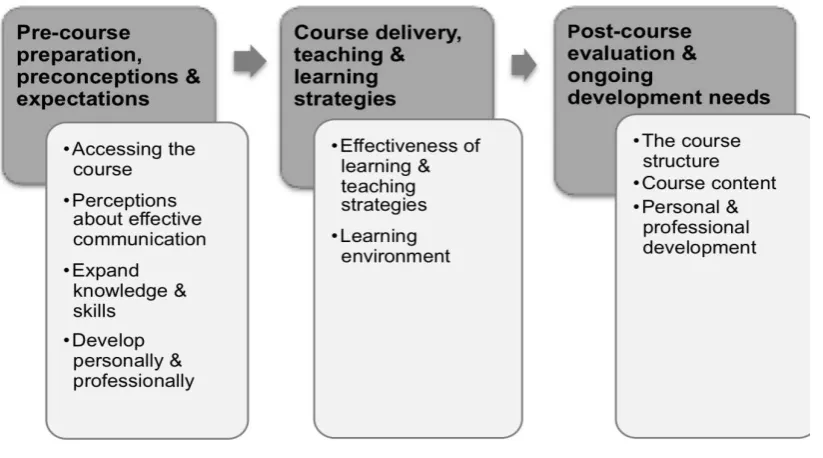
Findings from the qualitative analysis have been grouped into three themes, broadly pre-course,
intra-course and post-intra-course (INSERT See Figure 1). Overall, health professionals participating in this
evaluation study reported on the importance of developing effective communication skills. They
specifically valued the role-play and simulations and despite some initial anxiety enjoyed the
scenarios and actors as an effective learning and teaching strategy. The complexity of the triadic
nature of communication was mostly reflected in the 360-degree work record, for example it was
noted that parents and children are rarely invited to discussions on their own: the value of reflecting
on practice after the program for some was clearly helpful. We detail these findings further drawing on
illustrative quotes from both participants and trainers where relevant.
9
Four interrelated categories were associated with this theme related to health professionals’
preparation before attending the course, communicating with children and young people with cancer
and their families and the anticipated benefits from attending the course. These categories were
labelled: accessing the course; perceptions about effective communication; expanding knowledge and
skills and developing personally and professionally.
The majority of participants were recommended to attend by their manager for example, ‘I was
recommended to undertake the course by the matron as I am new in post and all senior staff are to
undertake the course, so timing was good for me’ Participant 4 (e-mail correspondence). Few course
delegates had sought information about current programs or available places. Participants who
actively sought a place on the course perceived the skills gained would enhance their clinical skills
repertoire:
‘I thought with being new in post it would be appropriate as I had concerns with my own
performance and want to check out how well I was doing and improve my own performance and
skills’ Participant 15 (Interview).
Trainers reported that children and young people’s advanced CST programs could be promoted more
effectively within child health services. Having the course accredited and endorsed by national
professional bodies, such as the Children’s Cancer and Leukaemia Group
(http://www.cclg.org.uk);
Royal College of Paediatrics and Child Health (http://www.rcpch.ac.uk); Royal College of Nursing
(https://www.rcn.org.uk) or preferably embedded in a Higher Education Institute/Organisation
curriculum were highlighted as possible solutions for making the course more attractive to managers
and potential delegates. Preparing for the course was influenced by the time available to commit to
the pre-course reading.
An important finding was the variability of health professionals’ engagement with children and young
people living with cancer and their families; participants reported observing both good and poor
practice. They described observing health professionals taking time to listen to children/ young people
and family members’ viewpoints, and a willingness to consider ways to develop effective rapport in
10
and poorly planned interactions ignoring children/young people and parent’s perspectives. An
inconsistent approach by inter-disciplinary teams to communicating with children, young people and
family members was described as preventing effective relationship development:
‘Professionals care very much… they are scared of getting it wrong … and …concerned about
making things worse’ Participant 20 (Interview).
‘My experiences of health professional’s communicating, well its variable, never had the
confidence to challenge them, especially doctors, frustrated about that’ Participant 3 (Interview).
Some participants’ accounts about the purpose of communicating effectively were not always
consistent with a collaborative approach to working with this population; for example, a belief that the
aim of effective communication was to ensure consent and adherence with healthcare treatments was
evident. This was particularly striking in the pre-course questionnaires. For example:
‘Parents that have their own treatment agenda and have strong own ideas about what they want
and have difficulties in allowing me and the doctors and nurses to carry out a plan of care they
need’ Participant 8 (Pre-course Questionnaire).
‘Parent and child do not comply, lots just do their own thing and this is difficult to talk through
calmly and professionally’ Participant 9 Pre-course Questionnaire).
A range of outcomes were anticipated as a result of undertaking an advanced CST program. Drawn
from the 360-degree tool, these are grouped into two key areas: to expand knowledge and skills of
communicating with children and young people and their families, and to develop personally and
professionally. From this data, it was interesting to find that participants also expected the program
would enable participants to expand their knowledge of communication theories and strategies.
Ultimately, it was perceived that the skills developed would improve child and parent-professional
communication and collaboration, which would have the potential to enhance care delivery.
Participants also identified specific knowledge deficits in relation to effectively communicating with
parents from diverse ethnic groups, with children and young people who have communication
difficulties, and when confronted with sensitive topics such as discussing sexual health issues with
11
‘Learn different communication strategies in difficult situations’; to ensure imparting the ‘most
effective information/ advice/ support using most appropriate skills; developing improved ‘cultural
based practice knowledge’ and ‘asking about sexual activity’ Participant 22 (Pre-course
Questionnaire).
Participants welcomed the opportunity to develop their communication skills and practise in a safe
controlled environment. They also enjoyed building on Day 1’s learning in Day 2, and Day 3 and found
the incremental learning structure to be logical. A key finding was that participants from all professional
groups lacked confidence in their ability to communicate effectively with children, young people and
their families when providing information about prognosis or discussing palliative and end of life care.
Participants described frustrations when observing colleagues not communicating effectively with
children and young people. Many did not consider themselves sufficiently skilled to challenge
behaviours hindering effective child and parent-professional communication and collaboration.
Course delivery, teaching and learning strategies
The CST program was highly rated in terms of skill development (Table 2) and participants valued the
role of health professionals from their field of practice as trainers. Participants and trainers suggested
that the course would be of value to all professionals working with children, young people and their
families, and should not be restricted to cancer and palliative care: a wider range of issues could be
included to address those challenged by mental health and/or learning disability.
This was the first experience of shared learning with colleagues from different professional
backgrounds for many participants. Some were anxious about senior doctors’ receptiveness to the
course being delivered by other professional groups. However, participants indicated that trainers were
key to reducing their anxieties about multi-professional learning because trainers made sure the
learning environment was a safe place to share personal concerns and difficulties when
communicating with this population. Participants valued the trainers’ knowledge and experience,
12
In contrast, a few participants described the learning environment as intimidating and perceived their
contribution was not always valued. Some novice participants experienced variable support from more
experienced colleagues and consequently their confidence waivered when support was absent, which
reduced their ability to work effectively with all participants. Participants identified peer support had a
positive effect on the learning achieved:
‘Thoroughly well facilitated course. As a co-facilitator, I felt very supported and encouraged by both
facilitators. By taking the lead, I felt have learned a lot about this course and it helped my
confidence’ Participant 18 Trainer (Post-course Questionnaire).
Interestingly, in the pre-questionnaire, role play had been a concern for participants but it was the use
of simulated role play and working with the actors that were most highly valued by all participants. For
example:
‘Best aspects of the course: role play was very educational, very surprising and insightful’.
Participant 21(Post-course Questionnaire).
‘Role play - increases confidence and challenges each individual’ Participant23 (Post-course
Questionnaire).
‘Effective use of professional actors / actresses. They really made the role playing real and to
be able to practice or test our ways in a safe environment. It was certainly the closest thing I
could get to have a feedback from a real-life situation’ Participant 1 (E-mail survey).
In summary, multi-professional learning and simulated role-play were powerful and effective teaching
and learning strategies were employed. The role of trainers in terms of their ability to influence learning
cannot be underestimated.
Post-course evaluation and ongoing development needs
Across data sets it was evident that participants were very positive and highly satisfied with the training
received. The feedback from trainers and participants about timetabling and program length was
variable. For many participants two days would be sufficient by streamlining the introduction and
13
Participants considered the content appropriate to meet communication with children and young people
with cancer and their families. Notably, practical skills teaching and practise were highly valued:
‘Have a structure to impart news… I learned cues, empathy, silences, less is more, summarising,
check understanding … I just need to put into practise’. Participant16 (Post-course questionnaire)
‘Useful to do silences and will practise them’ Participant9 (Post-course questionnaire).
‘I thought I was fine at communicating prior to the course but have found that the skills that I learnt
invaluable. They've made the difference in a wide range of situations and I think have made the
biggest improvement in my medical practice of any course’ Participant 16 (E-mail survey).
All data sets indicated that participants considered the program had helped them reflect on and
develop their communication skills with this population. The 360-degree work record provided useful
insights into how participants contextualised the training to fit the needs of their clinical areas following
the course e.g. children’s intensive care or community clinics. In addition, the reflective accounts
suggested change in the way participants interacted with young people as highlighted by participant 2,
and a colleague and parent reflecting on their practice:
‘Actually, am meeting more of young peoples’ needs now since the course but I realise I do not
see parents alone unless it’s really bad news. Guess I need to work on this one’ Participant 22
(360-degree tool).
‘Since the course, I have noticed ‘she’ always invites them (young people) in an open way so they
can’t just say no’ Colleague of Participant 22 (360-degree tool).
‘(Providing information) yes and she checks it with my son each time and never rushes us’ Parent
of Participant 22 (360-degree tool).
Participants felt their skills were developed and they had been able to put into practice strategies
learned from the course, for example: new ways of working with a medical consultant; being prepared
to listen more; and establishing heath professional roles prior to a consultation. One health professional
had implemented a dedicated ‘teenage clinic’ since the course. Some elements however remained
difficult, indicating to participants and trainer’s areas for ongoing development, such as meeting the
14
romantic relationships. Peer and parental reporting in the 360-degree work record noted positive
impact on the way health professionals’ interacted in every-day practice such as:
‘I think I will always find communicating in palliative care situations difficult, however the course has
helped me learn new skills to take forward and make communication easier / more effective’.
Participant 10 (Post-course questionnaire).
‘I've noticed the difference in patient satisfaction through skills I learnt on the course. I've have
been able to help people express longstanding concerns or problems’. ‘It's even useful in everyday
life!’ Participant 16 (e-mail survey).
Discussion
Key findings emerged which merit further consideration as they have implications for practice, and
reinforce the requirement for communication training for all health professionals. First, reports of poor
collaboration between health professionals and children, young people and families, and between
professionals were reported. Second, participants provided examples of the variability in some health
professionals’ communications with this population, reporting good and poor practice. The program
was highly rated in terms of personal and professional learning; as a way of developing participants
practice. There was general consensus that this must focus on children, young people and their
families’ specific communication needs, and be delivered by expert trainers with experience of child
health.
Our research focussed on the program, and how this was perceived by learners and by trainers. It is
possible that some participants were highly skilled communicators prior to the course, and their
experience could be incorporated into the course delivery. The extent of potential attendees’ level of
communication skills would be difficult to assess, and given some of the attitudes implied in the
pre-course questionnaire, it appears that undertaking the pre-course was very important to participants’
confidence in communicating in difficult situations.
Clearly there are challenges in delivering a standardised program as experience varies immensely.
Peer performance was challenging but overall enjoyable. However, pre-course preparation raises
15
event, for others it was a hurried decision at short notice. This impacted on readiness for learning, an
important antecedent in the process of learning to communicate with this group (Ranmal et al. 2009;
Gibson et al. 2010; Montgomery et al. 2016; Newman, 2016). Trainers perceived the work as very
challenging because of the intensity of the program, personal commitment required, skill development
and confidence needed to support participants with diverse experiences and professional
backgrounds. Participants and trainers both expressed some anxiety about working with actors and
simulation. This has been highlighted previously, coming to the same conclusion that despite initial
anxiety, the benefits outweigh the challenges once it is experienced (Kenny et al. 2016, Quail et al.
2016).
Interestingly, participants and trainers suggested that the course would be of value to all professionals
working with children and young people and their families, and should not be restricted to those
working in cancer and palliative care services. There has also been some debate in the literature
about the best way to train health professionals especially doctors, and whether this should be as
uni-professional groups (Wilkinson et al; 2003; Henricks Ferguson, 2015 a;b). This study did not seek to
specifically explore inter-professional training per se. However, our findings suggest that shared
learning across professional groups was effective, and valued despite some initial reservations.
Additional issues merit further discussion with respect to educators of communication theory and the
nursing/medical curriculum. Participants reported that there was a conducive learning environment,
and that well trained reflexive trainers or educators are crucial for course success. However, some
participants suggested a need for more flexibility in structuring the program and responding to the
group needs. This was also echoed by the trainers, and their request for follow up mentoring for novice
trainers through specific mentorship arrangements was one of our recommendations. Support for the
actors using a de-brief session was highlighted positively, and trainers identified the need for ongoing
trainer support and mentoring for themselves as individuals and as a group.
Finally, this dedicated program meets many of the consensus recommendations reported by Stiefel et
al. (2009) i.e. program length, learner centred and multi-professional, simulation using actors or
16
impact is however needed to evaluate skill maintenance, uni-disciplinary skills as well as collaborative
communication skills e.g. diagnosis and prognosis communication (Newman 2016), communication
about clinical trials (Pearce et al. 2016), palliative and end of life communication (Hendricks-Ferguson
et al 2015 a;b), communicating with parents (Drew et al 2001) and child decision-making (Coyne et al
2016).
Limitations
Our emphasis within this evaluation, was on what was communicated, when and how, rather than to
what effect. We focussed mainly on self-report, a lack of an objective measure means that we cannot
comment on whether the course makes any difference to an individual’s communication skills in the
long-term. Nonetheless, comments made by participants indicated enthusiasm for the training, and
highlight their perception that the course improved their skills for patient benefit. Our funder did not
commission us to explore patient or families’ perspectives. However, this would be important to
include in future evaluation studies as the quality of patient interactions with health professionals can
influence the effectiveness of information exchange. The inclusion of a period of observation, would
be a further important addition to data collection. We were commissioned to undertake this evaluation,
we were not involved in the development or delivery of the course, our brief was to provide an
assessment of the CST program at that time. Through team analysis we mitigated against personal
views influencing our analysis of the data collected.
Implications for practice and research
Cancer communication is a complex problem and effective solutions require multifaceted approaches,
of which communication training is one important element. We conclude that delivering a dedicated
advanced CST program around communicating with this population to health professionals is a
much-needed development, and should be sustained. Training is not however a one-off exercise,
maintaining excellent communication skills must be finely tuned and improved constantly. We agree
with Salmon and Young (2016) that communication training that remains only at the level of skills
training does not go far enough. Bringing judgements about communication goals to the foreground of
communication training offers a potentially more realistic way to influence communication (Salmon
17
participants, to involve family members in simulated sessions, and find ways to bring creativity and
holism into the classroom (Salmon and Young 2011, Gorniewicz et al 2017). In addition, the use of
case studies, script role plays with ‘genuine’ content are additional approaches to content that
educators should consider as essential: we show here the individual benefit of such approaches that
now need to be evaluated in terms of patients’ satisfaction, well-being, and managing conflict (Forbat
et al 2016b). Although participants were initially cynical about the value of role-play as an educational
tool, they subsequently describe the value of role-play methods as a means of critically reflecting on
their own communication skills in a safe environments .
We would encourage educators and trainers to go one step further and draw upon the ‘arts’ much
more to bring practice into the classroom and focus more on the ‘person’ in communication
encounters, and what is the shared goal of these encounters. For example the ‘skills compass’
(http://www.kingshealthpartners.org/assets/000/000/588/Circle_of_Care_original.pdf) is one way to
get us to think about the way we teach communication skills as one part of compassionate healthcare
by placing it in a broad social and interpersonal context, describing a multi-directional flow of care
between healthcare professionals and their colleagues, patients and carers (INSERT See Figure 2).
Development of the skills on the compass draws on methods from simulation, Human Factors skills
training and techniques and ways of thinking that come from the arts (Clod Ensemble and Guy’s and
St Thomas’ NHS Foundation Trust, 2016): offering ways that emphasise health professional’s
creativity as they craft original solutions to unique communication needs (Salmon and Young 2011).
Conclusion
18
References
Akgun Citak, E., Kilcarslan Toruner, E., & Bora Gunes, N. (2013) Exploring communication difficulties in pediatric hematology: oncology nurses. Asian Pacific Journal of Cancer Prevention, 14, 5477-5482.
Aldiss, S., Horstman M. O’Leary, C., Richardson, A., & Gibson, F. (2008) What is important to young children who have cancer while in hospital? Children & Society, 23:, 85-98.
Ammentorp, J., Sabore, S., Kofoed, P.E., & Mainz, J. (2009) Effects of a communication course for
clinicians on parents’ perception of care-a randomized controlled trial. Scandinavian Journal of Caring Science, 23, 506-17
Baille, W.F., Lenzi R., Kudelka, A. et al (1997) Improving physician-patient communication in cancer care: outcome of a workshop for oncologists. Journal of Cancer Education, 12, 166-73.
Baille, W.F., Kudelka, A.P., Beale, E.A. et al (1999) Communication skills training in oncology. Description and preliminary outcomes of workshops on breaking bad news and managing patient reactions to illness. Cancer, 86, 887-97.
Beresford, B.Y., & Sloper, P. (2003) Chronically ill adolescents’ experiences of communicating with doctors: a qualitative study. Journal of Adolescent Health, 33, 172-179.
Brinkert, R. (2010) Aliterature review of conflict communication causes, costs, benefits and interventions in nursing. Journal of Nursing Managagement, 18, 145-56.
Bylund, C.M. (2017) Taking the training out of communication skills training. Patient Education and Counseling, 100, 1408-1409.
Carter, B. (2006) 'One expertise among many'-- working appreciatively to make miracles instead of finding problems: Using appreciative inquiry as a way of reframing research. Journal of Research in Nursing, 11, 48-63.
Carter, B., & Coad, J. (2009) An evaluation using appreciative review of children perspectives on what is working well and the potential development of future community services. Department of Health. Summary report available from 1st author.
Coad, J., Patel, R., & Murray, S. (2013) Disclosing Terminal Diagnosis to Children/Families: a review
of Palliative Professionals’ Communication Barriers. Death Studies, 38, 302-7.
Cooperrider, D.L., & Whitney, D. (1999) Appreciative Inquiry: a positive revolution in change. In The Change Handbook: Group Methods for Shaping the Future. (Holman P & Devane T, eds.), Berrett-Koehler Publishers, Inc., San Francisco, pp. 245-261.
Collins, S., Drew, P., Watt, I., & Entwistle, V. (2005) ‘Unilateral’ and ‘bilateral’ practitioner approaches in decision-making about treatment. Social Science and Medicine, 61, 2611-262.
Coyne, I., Amory, A., Gibson, F., & Kiernan, G. (2016) Information-sharing between healthcare professionals, parents and children with cancer: more than a matter of information exchange. European Journal of Cancer Care, 25, 141-156.
Clod Ensemble and Guy’s and St Thomas’ NHS Foundation Trust, (2016) Circle of care http://www.kingshealthpartners.org/assets/000/000/588/Circle_of_Care_original.pdf accessed February 10th 2016.
Davies, s., Salmon, P., Young, B. (2016) When trust is threatened: qualitative study of parents’ perspective on p[roblematic clinical relationships in child cancer care. Psycho-Oncology, 26, 1301-1306.
Department of Health (2009) Your health your way: a guide to long-term conditions and self care. DH, London.
Drew, P., Chatwin J., & Collins, S. (2001) Conversation analysis: a method for research into interactions between patients and health-care professionals. Health Expectations, 4, 58-70.
Essig, S., Steiner, c., Kuehin, CE, Weber, H., & Kiss, A. (2016) Improving communication in adolescent cancer care: a multiperspective study. Pediatric Blood and Cancer, 63, 1423-1430.
19
Fallowfield, L., Saul, J., & Gilligan, B. (2001) Teaching senior nurses how to teach communication skills in oncology. Cancer Nursing, 24, 185-191.
Fleischer, S., Berg, A., Zimmermann, M., Wüste, K., & Behrens, J. (2009) Nurse-patient interaction and communication: a systematic literature review. In: Journal of Public Health, 17, 339-353.
Forbat, L., Sayer, C., McNamee, P., Menson, E., & Barclay, S. (2016a) Conflict in a paediatric hospital: a prospective mixed-methods study. Archives Disease in Childhood 101, 23-27.
Forbat L, Simons J, Sayer C., Davies, M., Barclay, S. (2016b) Training paediatric healthcare staff in recognising, understanding and managing conflict with patients and families: findings from a survey on immediate and 6-month impact. Archives Disease in Childhood, doi: 10.1136/archdischild-2016-310737 [Epub ahead of print]
Gabe, J., Olumide, G., & Bury, M. (2004) ‘It takes three to tango’ a framework for understanding patient partnership in paediatric clinics. Social Science & Medicine, 59, 1071-1079.
Gibson, F., Aldiss, S., Horstman, M., Kumpunen, S. & Richardson, A. (2010) Children and young
people’s experiences of cancer care: a qualitative research study using participatory methods, International Journal of Nursing Studies, 47, 1397–407.
Gorniewicz, J., Floyd, M., Krishnan, K., Bishop, TW., Tudiver, F., & Lang, F. (early view) Breaking bad news to patients with cancer: a randomized control trial of a brief communication skills training module incorporating the stories and preferences of actual patients. Patient Education and Counseling, http://dx.doi.org/10.1016/j.pec.2016.11.008
Hendricks-Ferguson, V.L., Kane, J.R., Pradhan, K.R., Shih, C.S., Gauvain, K.M., Baker, J.N., & Haase, J.E. (2015a) Evaluation of Physician and Nurse Dyad Training Procedures to Deliver a Palliative and End-of-Life Communication Intervention to Parents of Children with a Brain Tumor. Journal of Pediatric Oncology Nursing, 32, 337-347.
Hendricks-Ferguson, V.L., Sawin, K.J., Montgomery, K., Dupree, C., Phillips-Salimi, C.R., & Haase, J.E. (2015b) Novice Nurses' Experiences With Palliative and End-of-Life Communication. Journal of Pediatric Oncology Nursing, 32, 240-252.
Independent Cancer Taskforce (2015) Achieving world class cancer outcomes: a strategy for England 2016-2020
https://www.cancerresearchuk.org/sites/default/files/achieving_world-class_cancer_outcomes_-_a_strategy_for_england_2015-2020.pdf
International Alliance of Patients' Organizations (2007) Patient-centre healthcare review 2nd edition. International Alliance of Patients' Organizations.
Kelley, J.M., Kraft-Todd, G., Schapira, L., Kossowsky, J., & Riess, H. (2014) The Influence of the Patient-Clinician Relationship on Healthcare Outcomes: A Systematic Review and Meta-Analysis of Randomized Controlled Trials. PLoS ONE, 9, e94207. doi:10.1371/journal.pone.0094207
Kenny, G., Cargil, J., Hamilton, C., & Sales, R. (2016) Improving and validating children's nurses communication skills with standardized patients in end of life care. Journal of Child Health Care, 20, 145-152.
Kissane, D.W., Bylund, C.I., Banerjee, S.S., Bialer, P.A., Levin, T.T., Maloney, E.K., & D’Agostino, T.A. (2012) Communication skills training for oncology professionals. Journal of Clinical Oncology, 30, 1242-1247.
Kruijver, I.P.M., Kerkstra, A., Francke, A.L., Bensing, J.M., & Van de Wiel, H.B.M. (2000) Evaluation of communication training programs in nursing care: a review of the literature. Patient Education and Counselling, 39, 129-145.
Lambert, V., Glacken, M., & McCarron, M. (2008) ‘Visible-ness’: the nature of communication for
children admitted to a specialist children’s hospital in the Republic of Ireland. Journal of Clinical Nursing, 17, 3092-3102.
Leonard, P. (2017) Exploring ways to manage healthcare professional-patient communication issues. Supportive Care in Cancer, 25 (Supplement), S7-S9.
20
Maguire, P., Booth, K., Elliott, C., & Jones, B. (1996) Helping health professionals involved in cancer care acquire key interviewing skills - the impact of workshops. European Journal of Cancer, 32A, 1486-1489.
Montgomery, K.E., Sawin, K.J., & Hendricks-Ferguson, V. (2016) Communication During Palliative Care and End of Life: Perceptions of Experienced Pediatric Oncology Nurses. Cancer Nursing, 40, E47-E57.
Moore, P.M., Rivera Mercado, S., Grez Artigues, M., & Lawrie, T.A. (2013) Communication skills training for healthcare professionals working with people who have cancer. Cochrane Database of Systematic Reviews 3. 2013 Mar 28;(3):CD003751. doi: 10.1002/14651858.CD003751.pub3.
NHS England (2014) Understanding The New NHS’– a guide for everyone working and training with the NHS. BMJ and NHS England, London.
Newman, A.R. (2016) Nurses’ Perceptions of Diagnosis and Prognosis-Related Communication: An Integrative Review. Cancer Nursing, 39, E48-60. doi: 10.1097/NCC.0000000000000365
Patenaude, A.F., Pelletier, W., & Bingen, K. (2015) Communication, documentation, and training standards in pediatric psychosocial oncology. Pediatric Blood & Cancer, 62, S870-S895.
Pearce, S., Brownsdon, A., Fern, L., Gibson, F., Whelan, J., & Lavender, V. (2016) The perceptions of teenagers, young adults and professionals in the participation of bone cancer clinical trials. European Journal of Cancer Care, doi: 10.1111/ecc.12476.
Pham, A.K., Bauer, M.T., & Balan, S. (2014) Closing the patient-oncologist communication gap: a review of historic and current efforts. Journal of Cancer Education, 29, 106-113.
Quail, M., Brundage, S.B., Spitalnick, J., Allen, P.J., & Beilby, J. (2016) Student self-reported communication skills, knowledge and confidence across standardised patient, virtual and traditional clinical learning environments. BMC Medical Education, 16, doi: 10.1186/s12909-016-0577-5.
Ranmal, R., Prictor, M., & Scott, J.T. (2009) Interventions for improving communication with children and adolescents about their cancer (Review) Cochrane Database of Systematic Reviews 2008, Issue 4.
Ritchie, J., Lewis, J., McNaughton Nicholls, C., & Ormston R. (2014) Qualitative research practice. Second Edition. Sage Publications, London
Rodgers, C.C., Stegenga, K., Withycombe, J.S., Sachse, K., & Patterson Kelly, K. (2016) Processing
information after a child’s cancer diagnosis-how parents learn: a report from the Children’s Oncology Group. Journal of Pediatric Oncology Nursing, 33, 447-459.
Salmon, P., & Young, B. (2011) Creativity in clinical communication: from communication skills to skilled communication. Medical Education, 45, 217-226.
Salmon, P., & Young, B. (2016) A new paradigm for clinical communication: critical
review of literature in cancer care Medical Education, doi: 10.1111/medu.13204
Santana, M.J., Manalili, K., Jolley, R.J., Zelinsky, S., Quan, H., & Lu, M (2017) How to practice person-centred care: a conceptual framework? Health Expectations; eprint 1-12
Smith, J,. & Firth, J. (2011) Qualitative data analysis: application of the framework approach. Nurse Researcher, 18, 52-62.
Smith, J., Cheater, F., Bekker, H., & Chatwin, J. (2015) Are parents and professionals making shared
decisions about a child’s care on presentation of a suspected shunt malfunction: a mixed method
study? Health Expectations, 18, 1299-315.
Snaman, J.M., Kaye, E.C., Cunningham, M.J., Sykes, A., Levine, D.R., Mahoney, D., & Baker, J.N. (2016) Going straight to the source: a pilot study of bereaved parent-facilitated communication training for pediatric subspecialty fellows. Pediatric Blood & Cancer, 64, 156-162.
Sobo, E.J. (2004) Good communication in pediatric cancer care: a culturally-informed research agenda. Journal of Pediatric Oncology Nursing, 21, 150-154.
21
Stewart, M.A. (1995) Effective physician-patient communication and health outcomes: a review. Canadian Medical Association Journal, 152, 1423-1433.
Stiefel, F., Barth, J., Bensing, J., Fallowfield, L., Jost, L., Razavi, D., & Kiss, A. (2010) Communication skills training in oncology: a position paper based on a consensus meeting among European experts in 2009. Annals of Oncology, 21, 204-207.
Street, R.L., Makoul, G., Arora, N.K., & Epstein, R.M. (2009) How does communication heal? Pathways linking clinician-patient communication to health outcomes. Patient Education and Counseling, 74, 295-301.
Tobin, G.A., & Begley, C.M. (2004) Methodological rigour within a qualitative framework. Journal of Advanced Nursing, 48, 388-396.
Turner, M., Payne, S., & O’Brien, T. (2011) Mandatory communication skills training for cancer and palliative care staff: does one size fit all? European Journal of Oncology Nursing, 15, 398-403.
Wilkinson, S.M., Bailey,K., Aldridge, J., & Roberts, A. (1999) A longitudinal evaluation of communication skills programme. Palliative Medicine, 13, 341-348.
Wilkinson, S.M., Roberts, A., Leliopoulou, C., & Gambles, M. (2003) Can intensive three-day programmes improve nurses' communication skills in cancer care? Psycho Oncology, 12, 747-759.
Wittenburg, E., Ferrell, B., Goldsmith, J., Ragan, S.L., & Buller, H. (2017) COMFORTTMSM
communication for oncology nurses: programme overview and preliminary evaluation of a nationwide train-the-trainer course. Patient Education & Counseling, pii: S0738-3991(17)30552-9. doi:
22
Table 1: Range of data collected and participant numbers
Questionnaires Face-to-face interviews
Telephone interview
e-mail survey
360 degree tool
pre-course 59
post-course 59
3 23 11 8 items
Table 2: Perceived skills as a result of the program
Perceived Professional Skills Perceived Personal Skills Critically reflective Critically reflective
Concerns identified Communication with colleagues/peers
Treatment choice Handling family emotion better
Health advice given Listening skills improved
Children having choice to talk alone Being more flexible
23
Figure 1: Key findings: themes and categoriesFigure 2 Circle of care
Clod Ensemble and Guy’s and St Thomas’ NHS Foundation Trust, (2016) Circle of care