STUDY ON FIXED DOSE COMBINATION (POLYPILL)
FOR CVD PREVENTION
A dissertation submitted to
THE TAMILNADU Dr. M.G.R. MEDICAL UNIVERSITY CHENNAI - 600 032
In partial fulfilment of the requirements for the award of degree of MASTER OF PHARMACY
IN
PHARMACY PRACTICE
Submitted by Reg. No. 261240208
Under the guidance of
Dr.K.Sattanathan, M.Pharm.,Ph.D.,
Department of Pharmacy Practice
J.K.K. Nattraja College of Pharmacy
Kumarapalayam-638183. Tamil Nadu
EVALUATION CERTIFICATE
This is to certify that the dissertation work entitled “Study on fixed dose
combination (Polypill) for CVD prevention” submitted by the student bearing
[Reg. No: 261240208] to “The Tamil Nadu Dr. M.G.R. Medical University”,
Chennai, in partial fulfillment for the award of Degree of Master of Pharmacy in
Pharmacy Practice was evaluated by us during the examination held
on………..……….
CERTIFICATE
This is to certify that the dissertation “Study on fixed dose combination
(Polypill) for CVD prevention”
,
is a bonafide work done by [Reg.No.261240208]J.K.K. Nataraja College of Pharmacy, in partial fulfillment of the University rules
and regulations for award of Master of Pharmacyin Pharmacy Practiceunder my
guidance and supervision during the academic year 2013-14.
Dr.K.Sattanathan. M.Pharm., Ph.D N.Venkateswaramurthy. M.Pharm. Guide HOD
CERTIFICATE
This is to certify that the work embodied in this dissertation entitled ,
“Study on fixed dose combination (Polypill) for CVD prevention”, submitted to
“The Tamil Nadu Dr. M.G.R. Medical University”, Chennai, in partial
fulfillment to the requirement for the award of Degree of Master of Pharmacy
in Pharmacy Practice, is a bonafide work carried out by [Reg.No.261240208]
during the academic year 2013-2014, under the guidance and supervision of
Dr.K.Sattanathan, M.Pharm.,Ph.D., Professor,Department of Pharmacy Practice,
J.K.K. Nattraja College of Pharmacy, Kumarapalayam.
Dr.R.Sambath Kumar M.Pharm., Ph.D Place: Komarapalayam Principal,
CERTIFICATE
This is to certify that the work embodied in this dissertation entitled “
“Study on fixed dose combination (Polypill) for CVD prevention”,
submitted to “The Tamil Nadu Dr. M.G.R. Medical University”, Chennai,
in partial fulfillment to the requirement for the award of Degree of Master of
Pharmacy in Pharmacy Practice, is a bonafide work carried out by
[Reg.No. 261240208] during the academic year 2013-2014, under my
guidance and direct supervision in the Department of Pharmacy Practice,
J.K.K. Nattraja College of Pharmacy, Kumarapalayam.
Place: Kumarapalayam Dr.K.Sattanathan, M.pharm,PhD., Date : Professor,
Department of Pharmacy Practice, J.K.K. Nattraja College of Pharmacy, Komarapalayam-638 183.
DECLARATION
I do hereby declared that the dissertation
“Study on fixed dose
combination (Polypill) for CVD prevention”,
submitted to “TheTamil Nadu Dr.M.G.R Medical University”, Chennai, for the partial
fulfillment of the degree of Master of Pharmacy in Pharmacy Practice, It is
a bonafide research work has been carried out by me during the academic year
2013-2014, under the guidance and supervision of Mr.K.Sattanathan.,
M.Pharm.Ph.D., Professor, Department of Pharmacy Practice, J.K.K.Nattraja
College of Pharmacy, Kumarapalayam .
I further declare that this work is original and this dissertation has not
been submitted previously for the award of any other degree, diploma
,associate ship and fellowship or any other similar title. The information
furnished in this dissertation is genuine to the best of my knowledge.
Place:Kumarapalayam Syed Hussain Asaf
Date: Reg.no.261240208
Dedication
I dedicate this work to the people in my life that I appreciate
and love more than words can say:
ACKNOWLEDGEMENTS
I express whole my sincere thanks to my guide
Dr.K.Sattanathan.M.Pharm.,Ph.D., Professor of Department of Pharmacy
Practice, for suggesting solution to problems faced by me and providing
indispensable guidance, tremendous encouragement at each and every step of
this dissertation work. Without his critical advice and deep-rooted knowledge,
this work would not have been a reality.
I am proud to dedicate my deep sense of gratitude to the founder,
(Late) Thiru J.K.K. Nattraja Chettiar, providing us the historical institution
to study.
My sincere thanks and respectful regards to our reverent
Chairperson Smt. N. Sendamaraai, B.Com., Managing Director Mr. S.
Omm Sharravana, B.Com., LLB., and Executive Director Mr. S. Omm
Singarravel, B.E., M.S., J.K.K. Nattraja Educational Institutions,
Komarapalayam for their blessings, encouragement and support at all times.
It is most pleasant duty to thank our beloved Principal Dr. R.
SambathKumar, M.Pharm., Ph.D., J.K.K.Nattraja College of Pharmacy,
Komarapalayam for ensuring all the facilities were made available to me for
the smooth running of this project.
My sincere thanks to Mr. N. Venkateswaramurthy, M.Pharm.,
Professor and Head, Department of Pharmacy Practice. Mrs. K. Krishna
Veni, M.Pharm., Lecturer, Department of Pharmacy Practice, Mrs. Christy
practice,Kavitha., M.Pharm., Lecturer, Department of Pharmacy
Practice,and Kameswaran.,M.Pharm., Lecturer, Department of Pharmacy
Practice for their help during my project.
It is my privilege to express deepest sense of gratitude toward Dr. R.
Shanmugasundaram, M.Pharm., Ph.D., Professor & Vice Principal,
Department of Pharmacology, Mr. V. Rajesh, M.Pharm., Mr. C. Sridharan,
M.Pharm., Lecturer, Department of Pharmacology, Mr. S. Venkatesh,
M.Pharm., Lecturer, Department of Pharmacology for their valuable
suggestions during my project work.
My sincere thanks to Mr. R. Sambath Kumar M.Pharm., Ph.D.,
Professor and Head, Department of Pharmaceutics Mrs. S. Bhama,
M.Pharm., Assistant Professor, Dr. S.K. Senthilkumar, M.Pharm., Ph.D.,
Assistant Professor, Mr. R. Kanagasabai, B. Pharm. M.Tech., Assistant
Professor, Mr. K. Jaganathan, M.Pharm., Lecturer, Department of
Pharmaceutics, Mr. C. Kannan M.Pharm., Lecturer, Department of
Pharmaceutics and Mr. Kamalakannan M.Pharm., Lecturer, Department
of pharmaceutics for their valuable help during my project.
My sincere thanks to Mr. M. Vijayabaskaran, M.Pharm.,Assistant
Professor and head Department of Pharmaceutical chemistry, Mr. S.V.
Arunachalam, M.Pharm., Lecturer, Department of Pharmaceutical
chemistry, Mrs. S. Gomathi, M.Pharm., Lecturer, Department of
Pharmaceutical chemistry and Mrs. S. Vasuki, M.Pharm., Lecturer,
My sincere thanks to Mr. V. Sekar, M.Pharm., Professor and Head,
Department of Analysis,Mr. M. Senthilraja, M.Pharm., Assistant Professor,
and Mr. S. Jayaseelan, M.Pharm., Assistant Professor, Department of
Pharmaceutical Analysis for their valuable suggestions.
My sincere thanks to Dr. N. Mahadevan, M.Pharm., Ph.D., Professor and
Head, Department of Pharmacognosy, Mr. P. Balasubramaniam, M.Pharm.,
Lecturer, Department of Pharmacognosy, and Meena Prabha.,M.Pharm.,
Lecturer, Department of Pharmacognosy for their valuable suggestions during
my project work.
. I greatly acknowledge the help rendered by Mrs. K. Rani, Office
Superintendent, Miss. Prabha, Mrs. V. Gandhimathi, M.A., M.L.I.S.,
Librarian, and Mrs. S. Jayakala, B.A., B.L.I.S., Asst. Librarian for their
co-operation.
“Friends are in need are friends indeed”, I am really thankful and grateful to
beloved friends, C.Sam pushparaj, Sumitha, N.Malaravan, A.Sivakumar
for their constant encouragement and moral support throughout my course and
stay.
I owe my thanks to all the technical and non-technical staff members of
the institute for their precious assistance and help.
Last, but nevertheless, I am thankful to my lovable parents and all my
friends for their co-operation, encouragement and help extended to me
INTRODUCTION
An epidemic of Cardiovascular disease (CVD) is a predicted in the Indian subcontinent as a result of change in demographics and lifestyle and poor childhood nutrition impacting on disease in adult life.1, 2 In contrast to the west the prevalence of
ischemic heart disease in India has been steadily increasing over the last two decades, from around 1-4% to over 10%, these figures are based on survey data but supported by clinical impression.3, 4, 5 the prevalence in rural areas is about half that of urban
populations.6It is predicted that CVD will be the leading cause of death in india in
years to come
Asian Indians have higher prevalence of premature ischemic heart disease than Europeans, Chinese and Malayas5; this is likely to be influenced by conventional risk factors such as smoking, blood pressure and cholesterol levels plus an increasing prevalence of insulin resistance and other metabolic abnormalities.6
Reducing CVD and the impact of the epidemic will require extensive public health strategies at the population and individual levels. The lack of facilities for diagnosis and treatment of CVD and the cost of treatment mean that large sections of the Indian populations have poor access to both prevention and treatment,3 one cost effective approach, which could achieve substantial benefits within a few years, is provision of combined Cardiovascular (CV) medication to those at highest risk.
Indications for three classes of treatment (antiplatelet therapy, blood pressure lowering and cholesterol lowering) exist among people at highest risk of CVD. Individuals with symptomatic coronary or Cerebrovascular Disease or diabetes with complications have over a 20% risk of a CV event in the next 5 years.9
Land mark trails recently published, including the heart protection study18 and progress 19 definitely show that these treatments should be provided largely irrespective of baseline factor levels or concomitant treatments. These and other large scale trails such as hope20 and lipid21, 22 as well as overuse of antiplatelet therapy23 show that the benefits extended to all major subgroups eg: defined by age sex and type of vascular disease thus there unequivocal evidence that virtually all people with established vascular disease or who are otherwise at high risk would benefit from treatment with antiplatelet, blood pressure and cholesterol lowering therapies.24, 25
A cross sectional survey of approximately 1,100 residents of two areas in Urban South India found that of the 47 individuals with Definite Coronary Artery Disease only 23.4% of these were on therapy with blood pressure lowering drugs (with only half receiving β–blockers) and (2%) was on a lipid lowering drugs.5 Comparison of 71 tertiary and secondary centers over India with data over 4,000 acute coronary syndrome patients found that at 30 days nearly all were receiving antiplatelet agents but less than half were prescribed β –blockers(60% and 51%).28 similarly a study of acute myocardial infarction (MI) showed that Thrombolysis, β-blockers and Angiotensin-converting enzyme-I(ACE-I)inhibitors, were used in 674(63%), 596(47%) and 413(38%) respectively of 1072 patients.27
EUROASPIRE II surveyed CHD patients in across Europe found good levels of antiplatelet use, a range of β-blocker use between countries (47-88%) and persistent low use of statins (40-60%), although this represented a substantial increase in statin use since the previous survey four year earlier.40 A British survey showed that less than half of women with a history of myocardial infarction or stroke were taking antiplatelet medication and only one in five were receiving a statin31a review in Italy
Potential to improve adherence with fixed dose combination(polypill) medication The reasons for treatment gaps are complex and likely to include resistance (on the part of both physicians and patients) to the cost, complexity and stigmatization of prescribing for or more separate CV medications and resultant low adherence, as well as poor dissemination and uptake of guidelines .Including dosing more than one day .35Cost can be an important factor36, 37and patients can delay or omit doses38and not fill prescreptions.37 As strategies for cost reduction. Despite widespread perceptions, placebo–controlled trails show that non–adherence for common CV medications are rarely due to pharmacological side effects. In long term trials of low dose aspirin, blood pressure and cholesterol lowering, Only 1-3% percent of people stopped medication due to side effects attributable to the medicines, but a further 10-25% stopped for other reasons. For example, in PROGRESS 13% of people in the active group stopped all treatment over 4 years, but so did 11% in the placebo group.19
Simple, low cost combination pills may represent an important opportunity for improving provision and adherence of effective CV medications. Encouraging but inconclusive results were seen in a systematic review (Connor et al, in press39) of randomized trials assessing the effect of combination pills and unit-of-use packing compared with the same medications presented as separate pills. Despite very small sample sizes in many of the trials (less than half had over 100 participants), tends to improvements in adherence and on clinical outcomes were seen in 11 of 14 trials including 3 trails of hypertension treatment and one study of combination packing conducted in people with diabetes in New Zealand.40
Hypertension: 42
This is called as high blood pressure, is a medical condition in which the blood pressure is chronically elevated.
Types of Hypertension:
Physicians classify the different kinds of hypertension based on their causes and characteristics.
1. Primary (essential) hypertension. 2. Secondary hypertension. Primary (essential) Hypertension:
It indicates that no specific medical cause can be found to explain patient’s condition. About 95% of hypertension is essential hypertension. Primary hypertension is caused by variety of factors.
Isolated Systolic Hypertension:
This is one of the types of primary hypertension. As people age their arteries tend to lose elasticity and become less able to accommodate blood surges. The damage created in the vessel lining when blood flow through the arteries at high pressure can accelerate plaque build up, this lead to atherosclerosis this can elevate systolic blood pressure, while diastolic blood pressure stays in the normal range. This is called isolated systolic blood pressure.
Secondary Hypertension:
It is indicates that the high blood pressure is a result of secondary to another condition such as kidney disease or tumors (Adrenal adenoma or Pheochromocytoma).
Causes of secondary hypertension are:
Blood pressure Measurement:43
Blood pressure is measured in the form of two numbers, namely, the systolic and the diastolic blood pressure. It is written as 120/80, where 120 is the systolic blood pressure and 80 is the diastolic blood pressure. Systolic pressure is the pressure of the blood when heart beats. This is the highest pressure exerted by the blood. Diastolic pressure is the pressure of the blood when the heart rests between beats this is the lowest pressure exerted by the blood.
There are two ways of measuring blood pressure. 1) The Auscultatory method.
2) The Oscillometric method.
1. Auscultatory method:
In this method, a Stethoscope and a sphygmomanometer are used. In this method, an inflatable cuff is placed around the upper arm, at roughly the same vertical height as the heart. The cuff is attached to mercury. The cuff is inflated manually by squeezing a rubber bulb repeatedly until the artery is completely occluded.
The pressure in the cuff is slowly reduced. A whooshing or pounding sound is heard. The pressure at this point is called systolic pressure. Then the pressure in the cuff is further reduced, till no sound is heard. The pressure at this point is called diastolic blood pressure. Both these pressures are record to find out the accurate blood pressure.
2. Osillometric method:
Regulation of blood pressure:44
Classification of Hypertension for Adults according to JNC-VII45:
Condition Systolic Blood pressure Diastolic Blood pressure
Normal < 120 mm of Hg and < 80 mm of Hg
Prehypertension 120-139 mm of Hg (or) 80-89 mm of Hg
Hypertension
Stage-I (Moderate) 140-159 mm of Hg (or) 90-99 mm of Hg Hypertension
Stage-II (severe) ≥ 160 mm of Hg (or) ≥ 100 mm of Hg
Blood pressure Cardiac out put Stroke volume Systemic vascular resistance Heart rate PSNS SNS Catecholamines Venous tone Contractility Preload Intra vascular volume Direct interaction Circulatory regulators Local regulators A.T II
Na+/H2O
retention
1
-RT C.A
Pharmacological treatment of Hypertension:46
S.No. Category Drug classification Drugs
1. Diuretics a)Thiazide diuretics
b)Loop diuretics
c) K+-sparing diuretics
Chlorthiazide, Hydrochlorothiazide Furosemide, Ethacrynic acid, Torsemide, Amiloride, Spiranolactone, Triamterene.
2. Sympatholytics a) CNS sympathetic out flow blockers.
b) Ganglionic blockers
c) Post Ganglionic adrenergic nerve terminal antagonists d)1 -Adrenergic blockers
e)1 -Adrenergic blockers Clonidine, Methyldopa. Trimethophan, Hexamethonium Gunethidine, Reserpine
Prazosin ,
Terazosin(selective)
Phentolamine, Phenoxy-benzamine (Non selective) Atenolol, Timolol, Pindolol
3. Vasodilators a) Ca2+channel blockers. b) K+ channel openers. c) Arteriolar Venular vasodilators
Nefidipine, Amilodpine Minoxidil, Hydralazine. Sodium nitroprusside.
Mechanism action of Antihypertensive drugs:46
Renin-Angiotensin Aldosterone System:47
Renin-Angiotensin-Aldosterone System (RAAS) plays an important role in regulating blood volume and systemic vascular resistance, which together influence cardiac output and arterial pressure.
Blood pressure Cardiac out put Stroke volume Systemic vascular resistance Heart rate -antagonist Calcium channel blockers Venous tone Contractility Preload Intra vascular volume Direct interaction Circulatory regulators Local regulators
Na+/H2O
retention
1
-antagonists Central 2 antagonists Endothelin antagonists Sodium nitroprusside e ACE inhibitors A.T I antagonists -antagonist Calcium channel blockers 1 -antagonists Central 2 antagonists A.T I antagonists ACE inhibitors
1
- antagonists Sodium nitroprusside ACE inhibitors A.T I antagonists
Renin is a proteolytic enzyme that is released from the kidneys, its release is stimulated by the:
Sympathetic nerve activation (acting via β1adrenoceptors).
Renal artery Hypotension (caused by Systemic Hypotension or Renal artery stenosis).
Decreased Sodium delivery to the distal tubules of the kidney.
Functions of Angiotensin II:
Constricts resistance vessels (via AII, AT1 receptors) there by increasing
systemic vascular resistance and arterial pressure.
Act on the adrenal cortex to release Aldosterone, which in turn acts on the kidneys to increase sodium and fluid retention.
Stimulates the release of vasopressin (anti diuretic hormone, ADH) from the Posterior pituitary, which increases fluid retention by the kidneys.
Stimulates thirst centers within the brain.
Facilitates Norepinephrine release from sympathetic nerve endings and inhibits Norepinephrine re-uptake by nerve endings, there by enhancing sympathetic adrenergic function.
Stimulates cardiac hypertrophy and vascular hypertrophy.
Manipulation of this pathway is very important in treating hypertension. ACE inhibitors, AII receptor blockers and Aldosterone receptor blockers are used to decrease arterial pressure, ventricular after load, blood volume and hence ventricular preload, as well as inhibit and reverse cardiac and vascular hypertrophy.
Adverse effects of ACE inhibitors:48
Common adverse drug reactions: Hypotension,
Cough, Hyperkalemia Headache Dizziness Fatigue Nausea
A persistent Dry cough is a relatively common adverse effect believed to be associated with the increases in Bradykinin levels produced by ACE inhibitors.
Rash and taste disturbances are infrequent with most ACE inhibitors.
Renal impairment is a significant adverse effect of all ACE inhibitors. The reason for this is still unknown. ACE inhibitors may cause Hyperkalemia. Suppression of Angiotensin II leads to a decrease in Aldosterone levels. Since Aldosterone is responsible for increasing the excretion of potassium, ACE inhibitors ultimately cause retention of potassium. A severe allergic reaction can occur that rarely can affect the bowel wall and secondarily cause abdominal pain. This "Anaphylactic" reaction is very rare as well. Some patients develop Angioedema due to increased Bradykinin levels.
Dyslipidemia (Hyperlipidemia)49:
It is defend as an abnormality in lipid metabolism leads to increased elevation of disorder of lipoprotein metabolism, including lipoprotein over production or deficiency. Dyslipidemia may be manifested by elevation of the total cholesterol, the "bad" low-density lipoprotein (LDL) cholesterol and the triglyceride concentrations, and a decrease in the "good" high-density lipoprotein (HDL) cholesterol concentration in the blood.
Dyslipidemiacan be divided into,
Primary Hyperlipidemia:
S.No. Disease Characteristic lipid profile
1. a. b. c. d. Primary Hypercholesterolemia Familial hypercholesterolemia Familial defective ApoB100
Autosomal recessive
hypercholesterolemia Polygenic Hypercholesterolemia ↑↑LDL. ↑↑LDL. ↑LDL. ↑cholesterol 2. a. b. c. Primary Hypertriglyceridemia Familial Hypertriglyceridemia Familial lipoprotein lipase deficiency Apo CII deficiency
↑TG, ↑VLDL, ↓HDL. ↑↑ TG ↑↑ TG 3. a. b. Mixed Hyperlipidemia
Familial combined Hyperlipidemia Familial Dysbetalipoproteinemia
↑TG, ↑LDL, ↓HDL
↑TG, ↑LDL, ↑cholesterol, ↑remnants 4. a. b. c. d. e. f.
Disorders of HDL metabolism Polygenic Low HDL
Familial Hypoalphalipoproteinemia Familial Apo-AI deficiency
Secondary Hyperlipidemia:
Secondary hypertension is attributed to some other reason like, Diabetes mellitus, Hypothyroidism, Chronic Renal failure, Glucagon storage disease, stress, etc.,
Optimal, Borderline, and high levels for each component:50
SOURCE: National Cholesterol Education Program (NCEP) Adult Treatment panel III (ATPIII) approach to Dyslipidemia.
Lipoproteins and Dyslipidemia:51
Lipoproteins are macromolecular structures aggregates that transport Triglycerides and Cholesterol in the blood. Circulating lipoproteins can be differentiated on the basis of Density, size, and protein content
They are:
Chyolomicrons (CM)
Very low density Lipoproteins (VLDL) Intermediate Low Density Lipoproteins (IDL) Low Density Lipoproteins (LDL)
High Density Lipoproteins (HDL)
ELIMENT OPTIMAL BORDERLINE HIGH RISK
LDL cholesterol <100 130-159 160+
HDL cholesterol >60 35-45 <35
Triglycerides <150 150-199 >200
Total cholesterol <200 200-239 >240
Cholesterol to HDL
S.
NO. Parameters CM VLDL IDL LDL HDL
1 Density (g/ml) <0.95 0.95-1.006 1.006-1.019 1.019-1.063 1.063-1.21
2. Diameter (nm) 75-1200 30-80 25-35 18-25 5-12
3. Total lipid (%wt.) 98 90 82 75 67
4. Composition(% dry wt.)
a. Protein 2 10 18 25 33
b. Triglycerides 83 50 31 9 8
c. Unesterified cholesterol and
cholesterol esters 7 22 29 45 30
5. Phospholipids (%wt. Lipid) 7 18 22 21 29
6. Major Apolipoprotiens B48, AI, AIV,
E, CI, CII, CIII B100, E,CI, CII,CIII B100, E, CI, CII, CIII B100
Diagnosis:
Serum lipid profile is used for the measuring total cholesterol, TG, and HDL-cholesterol and calculated LDL-cholesterol and VLDL.
Treatment:52
Goals for Lipid Lowering were established in the National cholesterol education program adult treatment panel III (ATP). Guidelines which provide target LDL levels.
Treatment strategies:
1. Dietary therapy
2. Exercise and stress reduction. 3. Drug therapy
a. Statins- HMG COA reductase inhibitors:
Lovastatin Simvastatin Pravastatin Atorvastatin Rusavastatin
b. Bile acids Binding resins: Cholestyramine Colespitol
c. Fibrates and derivatives :
Benzfibrate Clofibrate Gemfibrozil Ciprofibrate
Mechanism of action of statins:
Acetyl CoA HMG-COA REDUCTASE
INHIBITORS X HMG-COA REDUCTASE
Cholesterol
Cholesterol levels intracellularly
More LDL receptors are expressed and Increased LDL uptake and clearance
ADVERSE EFFECTS OF STATINS: 52
LITERATURE REVIEW
Raia JJ, et al., Done comparative review on angiotensin-converting inhibitors, are capable of lowering blood pressure primarily by promoting vasodilation and reducing intravascular fluid volume. Captopril, is an active ACE inhibitor in its orally absorbable parent form. In contrast, enalapril must be deesterified in the liver to the metabolite enalaprilat in order to inhibit the converting enzyme; this account for its delayed onset of action. Lisinopril does not require metabolic activation to be effective; however, a slow and incomplete absorption pattern explains the delay in onset of activity.53
Tendera M, et al., studied role of antiplatelet drugs in the prevention of cardiovascular events in variety of clinical conditions, such as myocardial infarction, raise stroke and cardiovascular death. Both European and American guidelines recommend the use of antiplatelet drugs in patients with established coronary disease and other atherosclerotic disease. In high risk patients, such as those with post acute myocardial infarction (AMI), ischemic stroke or transient ischemic attack, and patients with stable or unstable angina, peripheral arterial occlusive disease or atrial fibrillation, antiplatelet treatment may reduce the risk of a serious cardiovascular event by approximately 25%, including reduction of non-fatal myocardial infarction by 1/6, non fatal stroke by 1/4 and cardiovascular death by1/6. Aspirin has been studied and used most extensively. It may exert its beneficial effect not only by acting on platelets, but also by other mechanisms, such as preventing thromboxane A2 (TXA2) induced vasoconstriction or reducing inflammation. Experimental data show that low dose aspirin may suppress vascular inflammation and thereby increase the stability of atherosclerotic plaque.54
(p<0.0001), with clear reductions in risk both among those receiving aspirin at
baseline (odd ratio 0.80, 99% CI 0.73 - 0.88) and those who were not (0.71, 99% CI 0.62 - 0.81).55
Oates JA. Studied that is Antagonism of Antihypertensive Drug Therapy by Non steroidal Anti-inflammatory drugs. Certain non steroidal anti-inflammatory drugs antagonise the action of antihypertensive therapy. Indomethacin has been shown to abrogate the antihypertensive effect of beta-adrenergic receptor blockers, diuretics, Angitensin converting enzyme inhibitors and several antihypertensive drug combinations and the accumulated evidence on Piroxicam indicates that it also raises arterial pressure in treated patients. In contrast, Sulindac and aspirin do not reverse the effects of antihypertensive drugs and currently available data indicate that they are the safest Cyclooxygenase inhibitors for use in hypertensive patients.56
Musial J, et al.,evaluated treatment with Simvastatin and low dose aspirin depress thrombin generation in patients with coronary heart disease and borderline–high cholesterol levels. They investigated whether in patients with borderline–high cholesterol levels who have been already taking aspirin, additional treatment with Simvastatin would affect thrombin generation. Seven day treatment with low dose aspirin decreased thrombin generation exvivo only in patients with total cholesterol ≤ 5.2 mmol/l, in patients with higher cholesterol levels aspirin had no effect. In these patients, already taking low dose aspirin, additional three month Simvastatin treatment resulted in a reduction of thrombin generation. This demonstrates that low– dose aspirin depress thrombin generation only in subjects with desirable blood cholesterol levels, while in others, with borderline–high cholesterol, thrombin formation is being reduced following addition of Simvastatin.57
lowering with statins and Angiotensin – Converting enzyme inhibitor treatment for hypertensive patients.58
Paoletti R, et al., studied on pharmacological interactions of statins. HMG-CoA reductase inhibitors are effective in reducing the risk of coronary events and are generally very well tolerated, these are biotransformed in the liver primarily by cytochrome P450(CYP)3A4 clinical experience has shown that the risk of adverse effects, such as myopathy, myositis, and rhabdomyolysis have been reported. In some statins may have lower adverse drug interaction potential then others, which is an important determinant of safety during long term therapy.59
Skoularigis J, et al., evaluated efficacy of low dose (12.5 to 25mg) hydrochlorothiazide was evaluated by ambulatory blood pressure monitoring in 19 mild to moderate hypertensive (mean 12-h diastolic BP>or 90 mm hg and <115 mm Hg) south African black patients. After a 3 week placebo run–in period, HCTZ was administered for 8 weeks as Monotherapy. The mean day time ABPM was only 32% patients achieved BP control. 24-h BP load fell from 69% at baseline, to 53% with 12.5 mg HCTZ and 47% with 25 mg HCTZ daily there were no side effects but the increase of HCTZ to 25 mg daily was followed by adverse changes in serum potassium levels. It is concluded that low dose of HCTZ Monotherapy has only a moderate effect on the BP control. And 24-h BP loads while the higher 25 mg dose is associated with significant decrease in serum potassium level.60
Galan L, et al.,studied on cardiac cellular actions of hydrochlorothiazide. Long term treatment, Thiazide diuretics such as Hydrochlorothiazide lower blood pressure by decreasing peripheral vascular resistance rather than by their diuretic effect. This action has been attributed to the opening of Ca2+ activated K+ channels in vascular smooth muscle cells.61
care clinic at Methodist Hospital of Indiana. Ninety eight patients completed the telephone survey. Demographic review was obtained from chart review.62
The results indicated that 30-46% of the patients were non compliant with their antihypertensive drug regimens. Factors found to be associated non compliance were employment (P=0.0077), use of home remedies (P=0.0043), age (P=0.0165), experience of the side effects (P=0.0051), level of concern with missed doses (P=0.0043 and cost (P=0.014). The incidence of non compliance in this pilot sample is lower than the estimated 50% noncompliance rate of published data.
Gradman AH, et al., evolving strategies for the use of combination therapy in hypertension, two thirds of patients with hypertension require more then one drug to achieve goal blood pressure some combinations exhibit side effect neutralization in which side effects associated with one drug are neutralized by a second agent. Fixed dose combinations reduce the no of pills and simplifying the treatment regimen. Because volume overload is common, low dose diuretics are often included in drug combinations. Combination of diuretics with potassium sparing diuretics, Angiotensin Converting Enzyme Inhibitors, Angiotensin receptor blockers, and b-blockers are use full in treating large segments of the hypertension population.63
SCOPE OF THE STUDY
The world Health Report showed the substantial and previously under-estimated impact of known risks, such as high blood pressure and cholesterol, in causing cardiovascular disease. More than half of all cardiovascular disease burdens can be attributed to blood pressure and cholesterol they are leading risks to health in all developed countries and are increasingly important in developing countries.65
The reasons for treatment gaps are complex and likely to include resistance (on the part of both physicians and patients) to the cost, complexity and stigmatization of prescribing for more separate CV medications and resultant low adherence, as well as poor dissemination and uptake of guidelines. Including dosing more than one day.35
Cost can be an important factor,36, 37 and patients can delay or omit doses38 and not fill prescriptions.
International guidelines now recommend almost all such high risk individuals receive treatment with each of three classes of CV medication, namely antiplatelet, blood pressure lowering and cholesterol lowering therapies.9, 11, and 17
A combination pill taken once daily has the ability to address many of these issues: the use of multiple drugs might be more acceptable if they were to be combined into a single pill containing four categories of drugs, for example, aspirin, two categories of antihypertensive drugs and a statin, and taken once a day. The use of single pill could well encourage patients to adhere to treatments as well as seriously reduce the cost of the drugs. The use of combination pill could be considered and evaluated in patients suffering from all other cardiovascular conditions.66
Interventions to lower blood pressure, serum cholesterol, and other risk factors also reduce the cardiovascular disease. Randomised trails show that drugs to lower three risk factors- low density lipoprotein (LDL) cholesterol, Blood pressure ,and
(50-125 mg/Day) Aspirin. The formulation, which met the objectives, had a statin (for example Atorvastatin or Simvastain); blood pressure lowering drugs (for example, a Thiazide, β-blocker and an Angiotensin converting enzyme inhibitor), each at half standard dose and aspirin (100mg). It was estimated that the combination would reduce MI,Stoke & cardio vascular death by 75% in secondary prevention.
OBJECTIVE
To evaluate the fixed dose combination of Simvastatin, Aspirin, Hydrochlorothiazide, ramipril and atenolol results in lowering blood pressure and cholesterol levels and improved adherence in patients with at least one Cardiovascular risk factor such as Hypertension and Dyslipidemia or Coronary Artery Disease.
Drug name - polycap (cadila pharmaceuticals)
Aspirin - 100mg Atenolol - 50mg
Hydrochlorthiazide - 125mg Ramipril - 5mg
METHODOLOGY
Study Design and Setting:
The study was prospective open labeled 12 weeks. This study was conducted in KMCH Hospital Coimbatore.
Ethical considerations:
The ethical committee in the Institution approved the study process. The ethical committee will be provided with the reports and the progress.
Identification of eligible patients:
The patients under study will be included, males and females aging between 18-75 years with mild to moderate hypertension as suggested by JNC-VII [139/89 mm of Hg and 180/110 mm of Hg] and along with abnormal lipid profile LDL-C 130 mg/dl or LDL-C >100 mg/dl with CAD equivalents (CAD - Coronary artery disease will be diagnosed on patients history/ ECG/Angiogram; Coronary artery disease Equivalents are diabetes mellitus, abdominal aortic aneurism, symptomatic carotid artery disease).
Eligibility:
Inclusion criteria:
1. Adults Male or Female age 18 – 75 years.
Exclusion Criteria:
The following patients will be excluded:
1. Contraindication /intolerance (e.g.Asthama, peripheral vascular disease for Atenolol) to any of the components of the combination pill.
2. The physician is of the opinion that changing a patient’s medication would put the patient at risk (e.g.heart failure, high dose β - blocker required to manage anginal symptoms)
3. Acute medical conditions/surgeries
4. Medical/psychiatric conditions likely to hinder trail process 5. Lactating and pregnant women.
6. Women of reproductive age, not practicing contraception. 7. Hepatic Dysfunction
8. Renal Dysfunction.
9. Unwilling to give informed consent.
Withdrawals and Dropouts:
A subject may be withdrawn from therapy on account of development of an intolerable adverse event.
Study Medication and Dosing
The study for two combinations in tablets form,
Combination Pill
Low Dose Medium Dose
Aspirin 100mg Aspirin 100mg Hydrochlorothiazide 12.5mg Hydrochlorothiazide 12.5mg Simvastatin 10mg Simvastatin 20mg Ramipril 5mg Ramipril 10mg Atenolol 50mg Atenolol 50mg
All patients who develop dry irritating cough in the 1st4 weeks of combination pill therapy shall be withdrawn from the study.
Tablets will be checked to ensure they will not exceed their expiry date at any stage of their prescription to subjects. They will then be dispensed to the patients for 12 weeks they will then be placed in number coded containers.
Methodology:
Eligible patients will have a copy of the Ethics Committee approved patient information sheet placed in the medical record. The study will be explained during the clinical consultation. After the explanation the subject will be provided the patient information sheet and Informed Consent Form (ICF). The subject will be asked to take this away with them and arrangements will be made to follow up via a telephone call. If the subject agrees to participate, they will sign the consent form with an independent person signing as a witness to this process.
In the next step, the selected patients details are maintained separately for recording the screening parameters (Blood Pressure, LDL-Cholesterol, Total Triglycerides, Heart Rate, Brief details of the patient, date of onset of study, Screening details from baseline visit to 4th visit, doses of the drugs given to the patients, Adverse reactions of the drug if any. All the adverse reactions should be follow-up either to resolution or to a point where no further improvement is expected.
Visit schedule:
The selected eligible patients who had given the ICF are subjected for screening of blood and urine samples which were sent for the baseline safety investigations.
The patients are advised to visit the Hospital in 4 visits. Visit-1 for baseline screening (Day 1),
Screening visit:
Only those patients willing to give informed consent will be recruited. The patient will be assessed for presence of inclusion and absence of exclusion criteria. Selected patients will have their serum and urine samples sent for base line safety investigations and asked to report on the next OPD date, when the results are expected to be ready. Pulse rate and supine blood pressure will be measured. The laboratory values of hematology, biochemistry with serum and urine, platelet aggregation, ECG, 2-D-Echocardiography investigated for baseline parameters in subjects.
Day 1: start of therapy:
Patients receive combination polypill (low dose) daily drug regimen for 12 weeks.
Week 1-4: once –a-week visit:
All patients who develop Dry irritating cough in the 1st 4 weeks of
combination pill therapy shall be withdrawn from the study. Supine blood pressure will be measure by auscultatory method on the day of follow-up in all patients and change if any observed.
Week 4:
Subjects will be questioned for adverse events and the laboratory values of serum biochemistry, ECG, 2-D-Echocardiography investigated for the efficacy, safety and tolerability. Pulse rate and supine blood pressure will be measured. If the blood pressure is reduced with Low dose, continue with low dose. If the blood pressure is not reduced with low dose increased to medium dose.
Week 6 and 8, 12:
The patients will receive the tablets in Visit-I, Visit-II, and Visit-III for each 4 weeks respectively. The patients are advised to report in the next visit schedule dates. At each of the visit schedule dates, patients are advised to fast for 12hrs and then the patient’s blood and urine samples will be screened.
The patients will enquire about any adverse reactions or any inconvenience while under the study in every visit.
Efficacy variables:
In order to determine the efficacy of the drug combination the principle parameters are observed along with other parameters.
The parameters with their normal values includes, Blood Pressure 120/80 mm of Hg, LDL-cholesterol <100 mg/dl, Total triglycerides < 200 mg/dl, Heart Rate 60-70 beats/min.
Safety Variables:
The other parameters with their normal values includes, SGOTand SGPTlevels 0-65 mcg/L,
Serum creatinine levels 21-232 mcg/L Serum electrolyteslevel
Na+levels 135 – 145 mmol /L K+levels 3.5 - 5.1 mmol /L Cl-levels 95 – 106 mmol /L
Data analysis:
Adherence to Study Medication:
DRUG PROFILE
Simvastatin67:
Simvastatin is a lactone Prodrug which is metabolized after oral ingestion to the Dihydroxy open acid form. Which inhibits 3-hydroxy-3methylglutaryl coenzyme A (HMG-CoA) Reductase? An enzyme that catalyzes than early rate limiting step in the biosynthesis of cholesterol.
Clinical Pharmacology:
Simvastatin is ﻻ-lactone obtained by chemical modification of Lovastatin. Hydrolysis of the lactone by esterase results in the Dihydroxy open acid originally designed by the manufacturer as L-654.969. Now known as Simvastatin Acid or S V A .Which is the active form of the compound. This active metabolite is a competitive inhibitor of HMG-CoA reductase. A key rate-limiting enzyme in the cholesterol biosynthetic pathway. The enzyme HMG- CoA reductase catalyzes the Conversion of HMG-CoA to Mevalonate.
The main mechanism of reduction of Low Density Lipoprotein (LDL) Cholesterol is that following inhibition of HMG CoA reductase activity. The LDL receptor density on the liver cell is increased (up regulation) and this leads to increased removal of LDL cholesterol from the plasma and increased catabolism of LDL Cholesterol. In addition there is a reduction in the very low density lipoprotein (VLDL) cholesterol and reduced formation of LDL from VLDL. The precursor HMG-CoA is readily metabolized back to acetyl CoA.
Pharmacokinetic properties:
Simvastatin and its active metabolites are predominantly concentrated in the liver, which is the main target site of the drug. Circulating Simvastatin and its active β-hydroxyacid metabolite are about 95% bound to plasma proteins. The elimination half-life of the major active metabolite is 1.9 hours and total body clearance is 31.8L/h. approximately 60%of the administered is recovered from the feces, 30% is recovered in the urine, almost entirely as inactive metabolites. The pharmacokinetic profile of Simvastatin is not affected when the drug is administered immediately before a low–fat meal.
Pharmacodynamic properties:
Simvastatin is an inactive prodrug which is hydrolysed in the liver to its major active β-hydroxylated metabolite, a competitive and reversible inhibitor of HMG-CoA reductase. HMG-CoA reductase is the enzyme responsible for the conversion of HMG-CoA to Mevalonic acid, a rate limiting step in the early stages of the cholesterol biosynthetic pathway. Inhibition of hepatic cholesterol biosynthesis by HMG-CoA inhibitors give rise to increased expression of low density lipoprotein (LDL) receptors in the liver which binds LDL particles and remove from the circulation, thereby lowering serum total cholesterol levels.
Therapeutic use:
1. Primary Hypercholesterolaemia (type IIa and IIb) in patients who have not responded adequately to diet and other appropriate measures.
2. Coronary heart diseases and elevated plasma cholesterol levels.
Tolerability:
Data from comparative studies indicate that the tolerability profile of Simvastatin is similar to that of other HMG-CoA reductase inhibitors and similar or, in some cases, tend to be better than that of other agents such as bile acid sequestrants or fibrates.
In particular, adverse gastrointestinal effects tend to occur much less frequently with Simvastatin then with cholestyramine.
Dosage:
Simvastatin is administered orally as a single dose in the evening. The recommended starting dosage is 5 to 10mg/day which is then titrated according to individual response at intervals of at least 4weeks to a maximum dosage of 40mg/day.
Ramipril:68
Ramipril is a lysine derivative of Enalaprilat, the active metabolite of Enalapril.
Mechanism of action:
ACE inhibitor Ramipril is a lysine derivative of Enalaprilat; it reduces the blood pressure by reducing peripheral vascular resistance without reflexly increasing cardiac output, rate or contractility. Ramipril block the Angiotensin converting enzyme that cleaves Angiotensin I to form the potent vasoconstrictor, Angiotensin II. This inhibitor also diminishes the rate of bradykinin inactivation. Vasodilation occurs as a result of the combined effects of lower vasoconstriction caused by diminished levels of Angiotensin II and the potent vasodilating effect of increased bradykinin, by reducing circulating Angiotensin II levels. Ramipril also decreases the secretion of aldosterone, resulting in decreased sodium and water retention.
Pharmacodynamic properties:
Various other Neurohormonal mediators e.g. Aldosterone, endothelin, Atrial Natriuretic Peptide (ANP) and Bradykinin are involved in the progression and symptoms of heart failure. In patients with heart failure, circulating levels of vasoconstricting peptide endothelin-I are also elevated increasing with disease severity and potentiated by Angiotensin II, as well as being a potent vasoconstrictor, endothelin-I mediates cell proliferation, thus contributing to cardiac hypertrophy. The levels of these mediators are indirectly altered by Ramipril. This is increases Bradykinin levels in vitro, possibly through a reduction in Bradykinin degradation, and potentiates Bradykinin induced vasodilation.
Administration of Ramipril to patients with heart failure leads to a number of improvements in cardiac function:
Decreases Angiotensin II, Aldosterone and endothelin levels in plasma Increases plasma renin levels
Increases renal blood flow
Decreases or no significant change in glomerular filtration rate and decreases filtration fraction.
No effect on plasma catecholamine and adrenalin levels
Increases or no change in peak oxygen conception during exercise
Pharmacokinetic properties:
Absorption of orally administered Ramipril is unaffected by food and the bioavailability of Ramipril is 25 to 50% in volunteers. In patients with heart failure, the absolute bioavailability of Ramipril is reduced approximately 16%. In volunteers and patients with heart failure, peak plasma concentration of (Cmax) of l Ramipril after
oral administration of multiple 2.5 or 5mg doses occur within approximately 6 to 8hours. Cmaxand the area under the curve over the first 96 hours (AUC0-96h) were
increased in patients with heart failure compared with volunteers.
The drug undergo 2 elimination Phases: effective elimination phase and a longer terminal elimination phase (which represents binding of the drug to ACE), which are ≈12 and 30 hours respectively. The elimination of Ramipril is decreased in patients with impaired renal function. Ramipril can be removed by Hemodialysis.
Tolerability:
Ramipril is well tolerated by patients with heart failure, and adverse events associated with its use usually do not require discontinuation of therapy. The most common adverse event was dizziness, occurring in 12% of Ramipril recipients. In addition, asthenia, angina pectoris, nausea, dysponea, cough and pruritus occurred in Ramipril treated patients but with a similar or lesser incidence then in those treated with placebo. In a longer term study of Ramipril in 620 patients the most frequent adverse event were Diziness (14%), Dysponea (7.8%), Chest pain (7.5%), Asthenia (7.0%), Cough (6.0%), Diarrohoea (6.2%), Hypotension (5.4%) and Nausea (5.2%).
Dosage:
A patient with heart failure, the recommended starting dose is 5mg in the US or 2.5mg in UK. The dose should be administered once daily and increased to the highest dose tolerated by the patient up to a maximum of 20 mg.
Aspirin:69
Most Heart attacks develop when a cholesterol-laden plaque in a coronary artery ruptures. Relatively small plaques, which produce only partial blockages, are the ones most likely to rupture. When they do, they attract platelets to their surface. Platelets are the tiny blood cells that trigger blood clotting. A clot, or thrombus, builds up on the ruptured plaque. As the clot grows, it blocks the artery. If the blockage is complete, it deprives a portion of the heart muscle of oxygen. As a result, muscle cells die-and it’s a heart attack.
Pharmacodynamics:
Aspirin affects platelet aggregation by irreversibly inhibiting Prostaglandin Cyclooxygenase. This effect lasts for the life of the, platelet and prevents the formation of the platelet aggregating factor thromboxane A2.
Pharmacokinetics:
Aspirin is well and completely absorbed from the gastrointestinal (GI) tract and is hydrolyzed to salicylic acid with peak plasma levels of salicylic acid seen within 1-2 hours of dosing. The rate of absorption is dependent upon the dosage form, the presence or absence of food, gastric pH, and other physiologic factors. Salicylic acid is widely distributed to all tissues and fluids in the body including the Central Nervous System (CNS), breast milk and fetal tissues, with highest concentrations seen in plasma, liver, renal cortex, heart and lungs. The protein binding of salisylate is non-linear at low concentrations (<100mcg/ml), approximately 90% is bound to albumin while at higher concentrations (>400mcg/ml), only about 75% is bound.
Salicylic acid is primarily conjugated in the liver to form salicyluric acid, a phenolic glucouronide, and a number of minor metabolites. The half life of salicylic acid is approximately 6 hours. Salicylate metabolism is saturable and total body clearance decreases at higher serum concentration due to limited ability of the liver to form salicyluric acid and phenolic glucuronide. Following toxic doses (10-20gm), the plasma half-life may be increased to over 20 hours. The elimination of salicylic acid follows zero order pharmacokinetics. Renal excretion of unchanged drug depends upon urine pH. As urinary pH rises above 6.5, the renal clearance of free salicylate increases from < 5% > 80%.
Hydrochlorothiazide: Clinical Pharmacology:70
The hypotensive effect is possibly due to a decrease in peripheral resistance. They are generally not effective in adults with a creatinine clearance of < 30ml/min.
The proposed mechanism of anti- hypertensive action is:71
1. Initially the diuresis reduces plasma and extracellular fluid volume about 15% this reduces cardiac output.
2. Subsequently compensatory mechanisms operate to almost regain NA+
balance and plasma volume; cardiac output is restored, but the fall in BP is maintained a slowly developing reduction in total peripherial resistance.
3. The reduction in total peripherial resistance is most probably an indirect consequence of a small (5%) persisting NA+ and volume deficit. Decrease in
intracellular NA+ concentration in the vascular smooth muscle may decrease stiffness of vessel wall, increase their compliance and dampen responsiveness to constrictor stimuli (NA, AII). Similar effects are produced by salt restriction; anti-hypertensive action of diuretics is lost when salt intake is high. A mild slowly developing vasodilator action of thiazides has been produced, but does not appear to be real. The fall in BP develops gradually over 2-4 weeks.
Pharmacokinetics:72
Hydrochlorothiazide is fairly rapidly absorbed from the gastrointestinal tract with a bioavailability of 65 – 70 % (adults), a half life is 5 to 15 hours (adults) and is predominantly bound to red blood cells. Elimination half life is dependent on glomerular filtration rate (creatinine clearance) and is longer than for chlorothiazide. It is excreted mainly unchanged in the urine.
Adverse Effects:
1. Hypokalaemia, hypochloraemic alkalosis, hypomagnesaemia, hypocalcaemia, hypophosphotaemia, hyponatraemia, hyperglycaemia, hyperuricaemia.
2. Small increase in excretion of bicarbonate due to decrease in carbonic-anhydrase activity.
3. Zinc deficiency.
Dosage :
Hydrochlorothiazide comes as a tablet and liquid to take by mouth. It usually is taken once or twice a day. If you are to take it once a day, take it in the morning; if you are to take it twice a day, take it in the morning and in the late afternoon to avoid going to the bathroom during the night. Take this medication with a meal or snack. Follow the directions on your prescription label carefully, and ask your doctor or pharmacist to explain any part you do not understand. Take hydrochlorothiazide exactly as directed. Do not take more or less of it or take it more often than prescribed by your doctor.
Hydrochlorothiazide controls high blood pressure but does not cure it. Continue to take hydrochlorothiazide even if you feel well. Do not stop taking hydrochlorothiazide without talking to your doctor.
Atenolol:
Atenolol is classified as a β1-selective (or 'cardioselective') drug, one that
exerts greater blocking activity on myocardial β1-receptors than on β2receptors in the
lung. The β2receptors are responsible for keeping the bronchial system open. If these
receptors are blocked, bronchospasm with serious lack of oxygen in the body can result. However, due to its cardioselective properties, the risk of bronchospastic reactions if using atenolol is reduced compared to nonselective drugs as propranolol. Nonetheless, this reaction may also be encountered with atenolol at high doses. Although traditionally β-blockers have been contraindicated when a person carries a diagnosis of asthma, recent studies have revealed that at moderate doses selective β -blockers such as Atenolol are well tolerated.
Therapeutic use and Dosage :
Atenolol may be indicated for the following conditions at specific recommended doses. The prescription may vary and should be followed.
Chest pains
In single or divided doses, 50 to 100 milligram tablets may be given; this must not exceed 200 milligrams a day.
Prevention of migraine
To prevent migraine headaches, 50 to 100 milligrams may be given daily.
Emergency treatment of erratic heart beats
Once diagnosed, 2.5 milligrams may be injected intravenously at 1 milligram per minute. It may be repeated every 5 minutes if needed but must not exceed 10 milligrams. Other doctors may opt to infuse 150 micrograms of the drug for every kilo of body weight in 20 minutes. The injection or the infusion may be repeated every 12 hours as needed. Once the heart retains its rhythm, oral dose is given at 50 to 100 milligrams per day.
Heart attack
RESULTS
The total numbers of patients enrolled were 30 as per the inclusion criteria of the study. All the patients were found to be complaint as per the study protocol except for three subjects, they were withdrawn from the study (patient no.5 and 23) due to his absence from visits 2, 3, 4 and one patient (patient no 10) was withdrawn from the study due to the adverse event. The total number of patients successfully completed the study were 27 as per the inclusion and exclusion criteria.
The total 27 patients were divided in to 2 groups Moderate (Systolic BP 139-159) and Severe (Systolic Bp >159) hypertensive patients according to their
blood pressure levels. Out of 30 patients 23 patients are under Moderate Hypertensive and 4 No of patients under severe hypertensive patients.
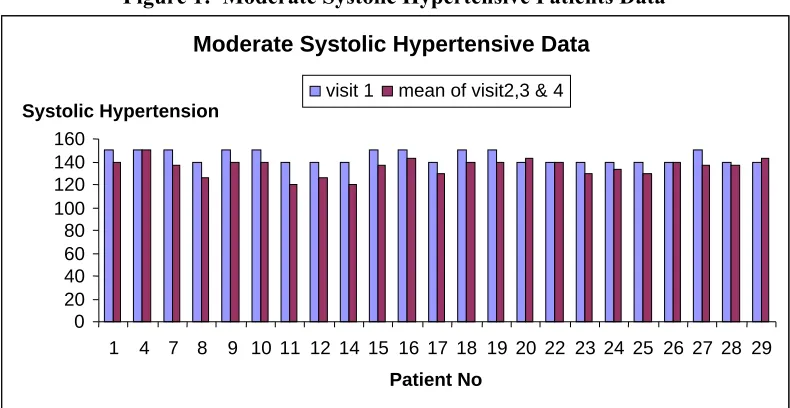
Table – 1: Moderate Systolic Hypertensive Patients Data
Figure 1: Moderate Systolic Hypertensive Patients Data Moderate Systolic Hypertensive Patients Data
(mm of Hg)
S.NO
Patient
no visit1 visit2 visit3 visit4 Mean of visit 2,3&4
1 1 150 140 140 140 140
2 4 150 140 140 130 136.6
3 7 150 140 130 140 136.6
4 8 140 130 130 120 126.6
5 9 150 140 140 140 140
6 10 150 140 140 140 140
7 11 140 120 120 120 120
8 12 140 120 130 130 126.6
9 14 140 120 120 120 120
10 15 150 140 140 130 136.6
11 16 150 160 150 120 143.3
12 17 140 130 130 130 130
13 18 150 140 160 140 146.6
14 19 150 140 130 150 140
15 20 140 150 150 130 143.3
16 22 140 130 140 150 140
17 23 140 130 130 130 130
18 24 140 140 130 130 133.3
19 25 140 140 120 130 130
20 26 140 140 140 140 140
21 27 150 140 130 140 136.6
22 28 140 140 140 130 136.6
23 29 150 150 150 130 143.3
Moderate Systolic Hypertensive Data
0 20 40 60 80 100 120 140 160
1 4 7 8 9 10 11 12 14 15 16 17 18 19 20 22 23 24 25 26 27 28 29
Patient No Systolic Hypertension
[image:50.612.126.521.496.700.2]Table – 2: Moderate Diastolic Hypertensive Patients Data
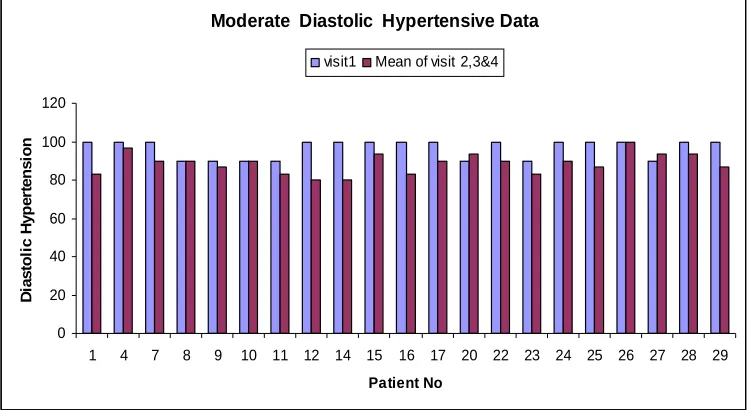
Figure – 2: Moderate Diastolic Hypertensive Patients Data
Moderate Diastolic Hypertensive Data
20 40 60 80 100 120 D ia s to li c H y p e rt e n s io n
visit1 Mean of visit 2,3&4
Moderate Diastolic Hypertensive Patients Data (mm of Hg)
SE.NO Patient no Visit1 visit2 visit3 visit4 Mean of visit 2,3&4
1 1 100 90 80 80 83.3
2 4 100 100 90 100 96.6
3 7 100 100 80 90 90
4 8 90 80 80 80 80
5 9 90 90 90 80 86.6
6 10 90 90 90 90 90
7 11 90 80 80 90 83.3
8 12 100 80 80 80 80
9 14 100 80 80 80 80
10 15 100 100 90 90 93.3
11 16 100 90 90 70 83.3
12 17 100 80 90 80 86.6
13 18 100 100 100 100 100
14 19 100 90 90 90 90
15 20 90 90 90 100 93.3
16 22 100 90 90 90 90
17 23 90 90 80 80 83.3
18 24 100 90 90 90 90
19 25 100 90 80 90 86.6
20 26 100 100 100 100 100
21 27 90 80 90 80 86.6
22 28 100 100 90 90 93.3
Table – 3: Moderate Hypertensive Patients LDL-C Levels
Moderate Hypertensive Patients LDL-C Levels
S.NO Patient no
visit
1 visit2 visit3 visit4 Mean of visit 2,3&4
1 1 136 98 82 100 93.3
2 4 161 140 130 104 124.6
3 7 133 84 87 96 89
4 8 84 84 101 94 83
5 9 160 101 124 76 100.3
6 10 138 127 53 136 105.3
7 11 139 121 160 121 107.3
8 12 133 105 117 116 112.6
9 14 162 73 66 80 73
10 15 173 57 120 99 92
11 16 186 147 108 125 126.6
12 17 144 120 114 106 113.3
13 18 156 112 104 112 109.3
14 19 141 112 104 112 109.3
15 20 193 84 79 105 89.3
16 22 189 107 122 120 116.3
17 23 186 106 129 132 122.3
18 24 143 65 128 109 100.6
19 25 130 72 162 85 106.3
20 26 148 121 46 78 81.6
21 27 152 67 134 98 99.6
22 28 130 88 140 110 112.6
23 29 147 101 113 88 100.6
Figure – 3: Moderate Hypertensive Patients LDL-C Levels
Moderate Hypertensive Patients LDL-C
0 50 100 150 200 250
1 4 7 8 9 10 11 12 14 15 16 17 18 19 20 22 23 24
L
D
L
-C
[image:52.612.141.507.510.698.2]Table – 4: Moderate Hypertensive Patients Triglyceride Levels
Moderate Hypertensive Patients Triglyceride Levels
S.NO Patient no
visit
1 visit2 visit3 visit4 Mean of visit 2,3&4
1 1 256 187 220 172 193
2 4 243 173 173 158 168
3 7 208 180 185 167 177.3
4 8 247 220 225 169 204.6
5 9 230 198 180 172 183.3
6 10 225 205 153 143 167
7 11 182 164 156 123 147.6
8 12 142 124 128 118 123.3
9 14 184 162 62 68 97.3
10 15 153 145 138 130 137.6
11 16 317 224 240 243 235.6
12 17 206 185 236 101 174
13 18 167 96 158 133 129
14 19 111 90 94 89 91
15 20 126 105 121 88 104.6
16 22 189 134 140 155 143
17 23 299 109 311 144 188
18 24 152 109 115 116 113.3
19 25 89 80 97 54 77
20 26 140 80 137 133 116.6
21 27 354 132 228 142 167.3
22 28 393 231 217 241 229.6
23 29 199 197 156 121 158
Figure – 4: Moderate Hypertensive Patients Triglyceride Levels
Moderate Hypertensive Triglyseride levels
100 150 200 250 300 350 400 450 T G
[image:53.612.141.510.499.707.2]Table – 5: Moderate Hypertensive Patients Total Cholesterol levels
Figure – 5: Moderate Hypertensive Patients Total Cholesterol levels
Moderate Hypertensive Cholesterol Levels
0 50 100 150 200 250 300
1 4 7 8 9 10 11 12 14 15 16 17 18 19 20 22 23 24 25 26 27 28 29
C h o le s te ro l L e v e ls
visit1 visit2&3&4
Moderate Hypertensive Patients Total Cholesterol levels
S.NO Patient no
visit
1 visit2 visit3 visit4 Mean of visit 2,3&4
1 1 213 154 154 172 160
2 4 216 192 187 141 173.3
3 7 195 141 132 148 140.3
4 8 135 135 145 122 134
5 9 230 152 211 172 178.3
6 10 193 171 122 210 167.6
7 11 216 196 235 198 209.6
8 12 190 161 146 167 158
9 14 226 137 112 148 132.3
10 15 227 238 176 181 198.3
11 16 253 209 183 205 199
12 17 177 180 177 160 172.3
13 18 231 183 141 169 164.3
14 19 218 179 182 209 190
15 20 253 138 133 163 144.6
16 22 262 165 195 188 182.6
17 23 255 169 216 196 193.6
18 24 200 118 184 163 155
19 25 186 118 256 142 172
20 26 222 182 146 148 158.6
21 27 258 167 185 148 166.6
22 28 225 207 177 149 177.6
[image:54.612.141.512.514.707.2]Table – 6: Moderate Hypertensive Patients HDL levels
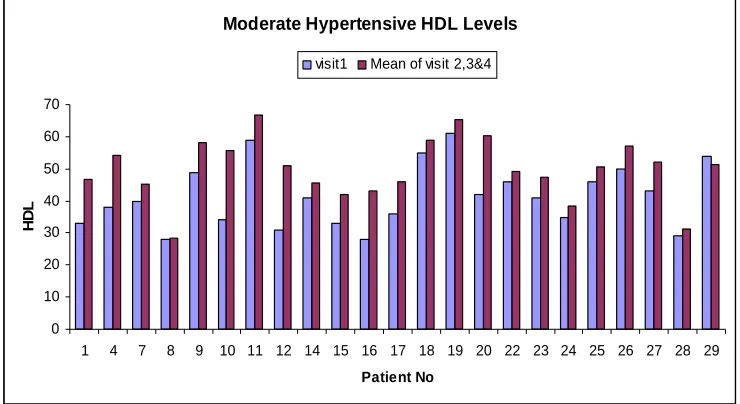
Figure – 6: Moderate Hypertensive Patients HDL levels
Moderate Hypertensive HDL Levels
20 30 40 50 60 70
H
D
L
visit1 Mean of visit 2,3&4
Moderate Hypertensive HDL Levels
S.NO Patient No Visit 1 visit2 visit3 visit4 Mean of visit 2,3&4
1 1 33 36 48 56 46.6
2 4 38 48 52 63 54.3
3 7 40 38 42 56 45.3
4 8 28 28 26 31 28.3
5 9 49 42 65 67 58
6 10 34 43 57 67 55.6
7 11 59 60 67 73 66.6
8 12 31 45 42 56 51
9 14 41 40 42 55 45.6
10 15 33 27 43 56 42
11 16 28 40 45 44 43
12 17 36 40 40 58 46
13 18 55 59 56 62 59
14 19 61 54 74 68 65.3
15 20 42 55 62 64 60.3
16 22 46 38 48 62 49.3
17 23 41 43 42 57 47.3
18 24 35 36 37 42 38.3
19 25 46 43 61 48 50.6
20 26 50 53 56 62 57
21 27 43 46 53 57 52
22 28 29 32 31 31 31.3
[image:55.612.141.511.507.709.2]Table – 7: Severe Systolic Hypertensive Patients Data
Figure – 7: Severe Systolic Hypertensive Patients Data
Severe Systolic Hypertensive Data
0 20 40 60 80 100 120 140 160 180
2 5 6 13
Patient No S y s to li c H y p e rt e n s io n
visit1 Mean of visit 2,3&4
[image:56.612.127.501.70.392.2]Table – 8: Severe Diastolic Hypertensive Patients Data
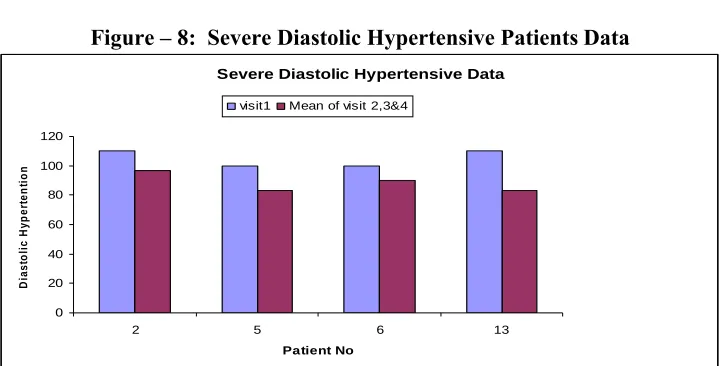
Figure – 8: Severe Diastolic Hypertensive Patients Data
Severe Diastolic Hypertensive Data
0 20 40 60 80 100 120 D ia s to li c H y p e rt e n ti o n
visit1 Mean of visit 2,3&4
Severe Systolic Hypertensive Patients Data
SE.NO Patient no Visit1 visit2 visit3 visit4 Mean of visit 2,3&4
1 2 160 150 130 130 136.6
2 5 160 140 120 130 130
3 6 160 150 130 130 136.6
4 13 160 130 160 130 140
Severe Diastolic Hypertensive Patients Data
SE.NO Patient no Visit1 visit2 visit3 visit4 Mean of visit 2,3&4
1 2 110 100 90 85 91.6
2 5 100 80 80 90 83.3
3 6 100 90 90 90 90
[image:56.612.143.504.526.709.2]