City, University of London Institutional Repository
Citation
:
Pothos, E. M., Edwards, D. J. and Perlman, A. (2011). Supervised versus unsupervised categorization: Two sides of the same coin?. Quarterly Journal of Experimental Psychology, 64(9), pp. 1692-1713. doi: 10.1080/17470218.2011.554990This is the accepted version of the paper.
This version of the publication may differ from the final published
version.
Permanent repository link: http://openaccess.city.ac.uk/4705/
Link to published version
:
http://dx.doi.org/10.1080/17470218.2011.554990Copyright and reuse:
City Research Online aims to make research
outputs of City, University of London available to a wider audience.
Copyright and Moral Rights remain with the author(s) and/or copyright
holders. URLs from City Research Online may be freely distributed and
linked to.
City Research Online: http://openaccess.city.ac.uk/ [email protected]
Supervised vs. unsupervised categorization:
Two sides of the same coin?
Emmanuel M. Pothos
1, Darren J.Edwards
1, & Amotz Perlman
2in press QJEP
Running head: supervised vs. unsupervised categorization; word count: 10,026
Correspondence/ affiliations: 1: Department of psychology, Swansea University, Swansea SA2 8PP, UK; email: [email protected], [email protected]. 2: Department of Psychology, Ben-Gurion University of the Negev, PO Box 653, Beer Sheva 84105, Israel; email: [email protected].
Abstract:
Supervised and unsupervised categorization have been studied in separate research
traditions. A handful of studies have attempted to explore a possible convergence between
the two. The present research builds on these studies, by comparing the unsupervised
categorization results of Pothos et al. (submitted; 2008) with the results from two
procedures of supervised categorization. In two experiments, we tested 375 participants
with nine different stimulus sets, and examined the relation between ease of learning of a
classification, memory for a classification, and spontaneous preference for a classification.
After taking into account the role of the number of category labels (clusters) in supervised
learning, we found the three variables to be closely associated with each other. Our results
provide encouragement for researchers seeking unified theoretical explanations for
supervised and unsupervised categorization, but raise a range of challenging theoretical
questions.
How similar are supervised processes to unsupervised ones? This debate has been central to
many themes in psychology, such as associative learning (e.g., Rescorla & Wagner, 1972;
Zwickel & Wills, 2002, 2005), connectionism (e.g., Kohonen, 1982; Rumelhart & McClelland,
1986), and language learning (e.g., Chater & Manning, 2006; Plunkett et al., 1997). In
categorization, it concerns the distinction between supervised and unsupervised
categorization. The former is about the learning of pre-specified categories. In a laboratory
setting, an experimenter may have decided that certain stimuli are in one category, while
other stimuli are in a different one. The objective of a participant is to learn which stimuli go
to which category, usually through a process of corrective feedback (that is, a participant
sees a stimulus, guesses its category membership, and receives feedback as to whether
his/her guess was correct or not). In real life, arguably many linguistic categories are taught
through a process of supervised categorization. For example, a child can learn that certain
objects are oranges and other objects are lemons, by guessing the category membership of
a relevant novel exemplar and subsequently receiving corrective feedback from an adult. A
key aspect of supervised categorization is that there are no (apparent) limits on the
complexity of the classifications which can be taught (e.g., Ashby, Queller, & Berretty, 1999;
Maddox et al., 2004; McKinley & Nosofsky, 1995).
Unsupervised categorization concerns the spontaneous impression we often have
that a group of stimuli belong to the same category. Such an intuition is most obvious in
perceptual grouping, whereby sometimes we have an immediate impression that there are
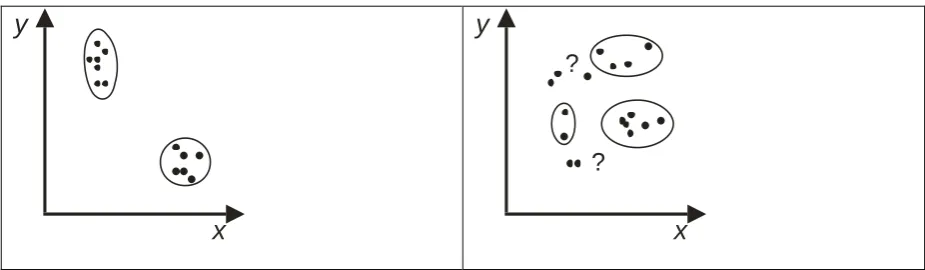
clusters (e.g., see Figure 1; cf. Compton & Logan, 1999). With respect to real concepts, as
with the perceptual grouping example of Figure 1, certain real life concepts are more
category of ‘chairs’. However, many naive observers will disagree as to what should be
considered (a member of the concept) ‘literature’. In experimental studies of unsupervised
categorization, participants are typically presented (sequentially or concurrently) with a set
of stimuli and are asked to spontaneously classify them into either a fixed or unlimited
number of groups.
---FIGURE 1---
An issue of central theoretical importance in categorization research is whether a
distinction between supervised and unsupervised categorization processes is meaningful. In
other words, should we seek to understand and model supervised and unsupervised
categorization processes in similar ways, taking into account, of course, the differences
between the corresponding tasks (cf. Wills & Pothos, submitted)?
Categorization researchers have mostly pursued the development of either
supervised or unsupervised models of categorization (category acquisition in the former,
but not the latter, is typically guided by corrective feedback to classification decisions).
Hence, the implicit assumption is that supervised and unsupervised categorization processes
ought to be understood in separate ways. For example, consider influential supervised
categorization models, such as exemplar theory and prototype theory (Hampton, 2007;
Minda & Smith, 2000; Nosofsky, 1988; see also, Kurtz, 2007; Vanpaemel & Storms, 2008),
which assume that categorization of novel exemplars is driven by their similarity to either
the members or the prototypes of the available categories. Similarity is typically computed
as a function of distance in a putative psychological space. A key characteristic of such
models is that they allow for the possibility that the process of category learning may
transform the original psychological space, through the attentional weighting of different
of category learning. For example, the attentional salience of a dimension would increase if
it is highly diagnostic for a required classification (such transformations of the psychological
space are plausibly driven by error correction mechanisms, not readily available in
unsupervised categorization; cf. Goldstone, 1994).
Models of unsupervised categorization also often employ a principle of similarity. For
example, Pothos and Chater’s (2002) simplicity model is based on the idea of Rosch and
Mervis (1975) that more obvious classifications should be ones for which within category
similarity is maximum and between category similarity is minimum. Specifically, the model
assumes that the similarities of all pairs of items that are in the same category should be
greater than the similarities of all pairs of items that are between categories. The model
predicts that if there are many and correct such ‘constraints’ then the resulting classification
should be more intuitive. An alternative approach is to assume that category formation is
driven by a prerogative to maximize the posterior probability of the particular feature
combination of their members, given a particular category membership. For example, in the
rational model classification of a novel instance depends on ( ) ( ), where P(k) is the prior probability of a category and P(F|k) the likelihood of observing the particular
combination of object features given the category (Anderson, 1991; Sanborn, Griffiths, &
Navarro, 2006; cf. Corter & Gluck, 1992). But, Pothos (2007) compared the rational model
and the simplicity model and found that the predictions of these models converged across a
wide range of stimulus sets.
The above leads us to two intuitions regarding the relevant psychological principles
in supervised and unsupervised categorization. First, both supervised and (some)
unsupervised categorization models are based on some flavor of similarity. Second,
objects can be radically transformed, depending on the particular classification that is
taught, but there has been no corresponding evidence in unsupervised classification.
Regarding the latter, it only appears that in some cases the spontaneous classification of
stimuli takes place on the basis of a single stimulus dimension (Ashby, Queller, & Berretty,
1999; Medin, Wattenmaker, & Hampson, 1987; Milton & Wills, 2004; Pothos & Close, 2008).
SUSTAIN (Love, Medin, & Gureckis, 2004; see also Gureckis & Love, 2003) was the
first attempt to provide a single computational framework for both supervised and
unsupervised categorization. In SUSTAIN there are separate, but interlinked, components
responsible for each type of categorization. Regarding unsupervised categorization,
categories emerge for groups of items which are similar to each other. Supervised
categorization is supported by a learning mechanism similar to that embodied in current
versions of the exemplar theory (e.g., Nosofsky, 1988). The supervised and unsupervised
components of SUSTAIN can interact with each other so that, for example, the learning of a
classification can be affected by prior perceptions of how intuitive the classification is.
Therefore, in SUSTAIN both supervised and unsupervised categorization are supported by a
principle of similarity, but (presumably) the exemplar-based learning mechanism in the
supervised component allows for greater representational flexibility in supervised
categorization. SUSTAIN embodies a particular hypothesis for the relation between
supervised and unsupervised categorization: they are related (because they are both based
on similarity), but correspond to separate processes. A complementary possibility is that the
same basic model serves both supervised and unsupervised categorization. For example,
Pothos and Bailey (2009) presented such a proposal for the Generalized Context Model
In summary, more recent work in categorization modeling has addressed more
directly the problem of the relation between supervised and unsupervised categorization.
Such work appears to favor a convergence between supervised and unsupervised
categorization. However, it is exactly here that is the heart of the problem with this
research: despite the excitement associated with the possibility that supervised and
unsupervised categorization might be two sides of the same (psychological process) coin,
there is still a paucity of relevant experimental results. In an early study, Homa and Cultice
(1984) examined whether a set of categories, whose members were all distortions of the
corresponding prototypes, could be guessed without corrective feedback. Unsurprisingly, it
was found that this was not the case, unless the category members were only minimally
distorted from the prototype, but no detailed comparison was provided between
performance in the unsupervised and supervised categorization tasks. In fact, there are only
two studies directly comparing supervised and unsupervised categorization (Love, 2002;
Colreavy and Lewandowsky, 2008). Both these studies are significant in many ways, though
their overall conclusions diverge, thus illustrating the need for more empirical research.
Love (2002) employed the classic stimulus sets and classifications from Shepard,
Hovland, and Jenkins (1961) and compared performance in a standard supervised
categorization task with speed of discovering the underlying, intended classifications
without corrective feedback (the latter task is, of course, an unsupervised categorization
one; in fact, two kinds of unsupervised tasks were employed). In both cases, the training
stimuli were presented repeatedly over several blocks. The test phase was the same for
both the supervised and unsupervised categorization tasks and it involved presenting each
training stimulus either with its correct category label (which was a stimulus feature over
label; participants had to decide which version of the stimulus they had encountered in the
training phase. Love (2002) identified differences between the supervised and unsupervised
tasks, especially in relation to a non-linearly separable classification (a XOR problem): In the
unsupervised categorization setting, the linearly separable classifications were acquired
more quickly compared to the non-linearly separable one, while under supervised
categorization conditions there seems to be no difference (Medin and Schwanenflugel,
1981; note that this conclusion has been challenged more recently, e.g., Blair & Homa,
2001; Ruts, Storms, & Hampton, 20041).
Colreavy and Lewandowsky (2007) employed an unsupervised categorization
procedure analogous to that of Love (2002), in that the training stimuli were presented
repeatedly and participants were asked to classify them, without receiving any feedback.
The main difference between the two studies was in the stimulus sets and corresponding
classifications which were employed. While Love (2002) studied a single classification for
each of the stimulus sets2 of Shepard et al. (1961), Colreavy and Lewandowsky (2007)
studied a single stimulus set (actually, two stimulus sets, which were meant to be
equivalent; results were collapsed across the two stimulus sets), and examined primarily
two classifications participants could develop in an unsupervised way from these stimuli.
These two classifications corresponded to dividing the available stimuli along one or the
other stimulus dimension (the stimuli were two-dimensional). Note that all the
classifications Colreavy and Lewandowsky (2007) studied were linearly separable. The
learning rate (i.e., the rate of convergence to the classification eventually adopted) was
generally slightly faster in the unsupervised case, than in the supervised case. However, the
learning rate curves for the participants in the supervised conditions were approximately
investigators concluded that (p.762) “unsupervised categorization …shares many properties
of supervised category learning.”
Overall, it is clear that previous empirical research leads to somewhat conflicting
intuitions regarding the putative equivalence between supervised and unsupervised
categorization. With the present research, we wish to collect additional empirical data and
so help address this important issue. Moreover, both Love (2002) and Colreavy and
Lewandowsky (2007) primarily intended to study the emergence of knowledge about
particular intended classifications, under unsupervised conditions. This objective was
achieved by limiting the range of stimulus sets/ classifications and also requiring participants
(in all cases) to divide the stimuli into only two categories. While such a procedure was well
suited for addressing the particular research objectives of Love (2002) and Colreavy and
Lewandowsky (2007), it does raise the question of whether there would be any equivalence
between supervised categorization performance and unsupervised categorization
performance, under entirely unconstrained grouping conditions for the latter. Indeed, there
has been a long tradition of unsupervised categorization work whereby participants are
presented (concurrently or sequentially) with a set of stimuli and are asked to divide them
into any categories they think are natural or intuitive (such tasks are sometimes called free
sorting tasks; Handel & Presser, 1970; Handel & Imai, 1972; Imai & Garner, 1965). It is
important to take into account entirely unconstrained unsupervised tasks in the study of the
putative equivalence between supervised and unsupervised categorization, as such tasks
have been prominent in discussions of key notions in unsupervised categorization (such as
category intuitiveness; Pothos & Chater, 2002).
Our research has been organized in two manuscripts. In Pothos et al. (submitted; for
unsupervised categorization task we employed (and attempt to describe the results with
various models of unsupervised categorization). The task was a standard free sorting one,
that is, a completely unconstrained spontaneous classification task: Participants were
concurrently presented with the stimuli in a particular set and were asked to divide them
into whichever clusters they thought were natural and intuitive. There were no constraints
on the number of clusters participants could employ (or any other constraint) and
participants were free to change their classification decisions as many times as they wanted,
before settling onto their final classification. A problem with this unsupervised
categorization task is that it leads to a large amount of variability in participant responses.
Its major advantage is that it closely corresponds to our intuition of spontaneous grouping
processes (Pothos and Chater, 2002; see also Compton & Logan, 1999). To our knowledge,
this is currently the most extensive study of unsupervised categorization and, therefore, it
provides a rich dataset against which to examine possible relations with supervised
categorization. A particular advantage of this dataset is that it includes stimulus sets for
which the empirically preferred classification does not have two clusters—for some stimulus
sets the preferred classification has as many as five clusters.
The present paper describes the results from two carefully matched supervised
categorization tasks. For each of the nine stimulus sets employed in Pothos et al.
(submitted; 2008), we noted the classification which was produced most frequently by
participants—call this classification the ‘preferred classification’. Then, in the matched
supervised categorization tasks, participants were required to learn these preferred
classifications. The supervised learning procedure involved presenting each stimulus in a set
to participants one by one, asking them to make a decision regarding how it should be
stimuli with their correct category labels at various intervals throughout the task. The
stimuli in the unsupervised categorization task were the same as the ones in the supervised
task. The procedure for the unsupervised categorization task involved printing each stimulus
individually on a card and presenting all the stimuli in a set concurrently to participants. This
procedure has been adopted in other unsupervised categorization research (e.g., Handel &
Presser, 1970; Handel & Imai, 1972; Imai & Garner, 1965; more recently: Pothos & Chater,
2002, 2005; Pothos & Close, 2008) and has the advantage that it allows participants to
flexibly handle the stimuli and indicate their classifications. Supervised learning requires
computer-based presentation of the stimuli, so as to implement the corrective feedback.
The appearance, and in particular the size, of the stimuli when shown on cards (in the
unsupervised categorization conditions) and on the computer screen (in the supervised
categorization conditions reported here) were as carefully equated as possible.
The remaining issue we have to address is how to compare participant performance
in the unsupervised and supervised categorization tasks. One way to approach this problem
is this: psychologically, in an unsupervised categorization task a researcher can ask whether
a particular classification is more intuitive than another one. For example, consider the left
panel in Figure 1: in this case, there is an immediate impression that the dots in the diagram
can be organized into two clusters. We would expect most naïve observers to agree that this
is the most appropriate classification for the dots. By contrast, there is more ambiguity
about how the dots in the right panel should be classified. In such a case, different observers
will probably classify the stimuli in different (but obviously related) ways. As Pothos et al.
(submitted; 2008) have argued, if there is more agreement between participants on how a
stimulus set should be classified, then we can consider the corresponding classification as
the preferred classification is produced, with higher frequencies implying that the corresponding classification is more intuitive. Note that Pothos et al. (submitted; 2008)
checked that the distribution of classification frequencies was sharply unimodal in the case
of all the structured stimulus sets and that various metrics regarding the dispersion of
classification frequencies (e.g., entropy) correlated very highly with the frequency of the
preferred classification. In other words, the frequency of the preferred classification is a
suitable dependent variable to extract from unsupervised categorization results, a
conclusion supported by Pothos and Chater (2002, 2005) as well.
The situation in supervised categorization is more straightforward. Researchers
consider a taught classification as psychologically more natural if it can be learned quickly
(for early studies see Shepard et al., 1961. or Nosofsky, 1984). Despite the manifest intuition
of this assumption, a subtlety arises. As noted, the psychological processes involved in
learning a categorization are typically assumed to involve some process of transforming the
initial stimulus representation into one which is more compatible with the taught
classification. Such an assumption is common across a wide range of models, from models
specified in terms of psychological spaces (e.g., Minda & Smith, 2000; Nosofsky, 1988) to
connectionist models (e.g., Kruschke, 1992; Kurtz, 2007). This raises the question of whether
the assumed changes in stimulus representation are short lived or not (cf. Harnad, 1987).
Psychologically, in a supervised setting, we would like to consider as more intuitive a
classification which is easier to learn and one which is more resistant to forgetting (but see e.g., Bjork & Bjork, in press, for a different perspective in an educational setting). We could
not find any studies of the latter issue and, so, ease of learning and resistance to forgetting
between unsupervised categorization and supervised categorization, in the present work we
considered both ease of learning and memory for a classification.
We can now formulate a particular test of the putative equivalence between
supervised and unsupervised categorization: Is it the case that classifications which appear
more intuitive in an unsupervised setting are more easy to learn (or better remembered) in
a supervised setting? In other words, we are asking whether the psychological process
which allows us to appreciate one classification as more obvious than another (cf. Figure 1)
is coupled (in the sense that its outcome is consistent) with the psychological process which
underwrites our ability to learn how a set of stimuli ought to be mapped to specific category
labels. This is a novel research question in categorization, which cannot be answered by the
previous related work of Love (2002) and Colreavy and Lewandowsky (2008), as argued
above. It has the potential to inform progress with computational models of categorization,
where there is currently uncertainly regarding whether supervised and unsupervised
categorization should be modeled in a unitary or separable way (Kurtz, 2007; Love et al.,
2004; Pothos & Bailey, 2009).
It is possible that the dependent variable in unsupervised categorization task
(frequency of the preferred classification) will directly predict the dependent variables in the
supervised tasks (speed of learning and memory of these preferred classification). It is also
possible that these variables will be related, but only after taking into account other
possible variables, which might characterize differences between supervised and
unsupervised categorization processes. For example, perhaps structural aspects of the
stimulus sets, such as the average within and between category similarity of clusters, may
differentially influence performance in supervised and unsupervised categorization tasks. If
category boundaries, then possibly the discovery of such boundaries is affected primarily by
between category similarity, but less so by within category similarity (e.g., Ashby & Maddox,
2005). By contrast, there is strong indication that unsupervised categorization is affected by
both within and between category similarity (Pothos & Chater, 2002; Rosch & Mervis, 1975).
Another possibility, already alluded to, is that the supervised categorization process makes
extensive use of attentional selection of stimulus dimensions, while attentional selection is
more limited in unsupervised categorization (e.g., Medin et al., 1987, vs. Nosofsky, 1988). A
third possibility concerns the number of clusters (=the number of category labels), since in
unsupervised categorization there is no (obvious) reason why classifications with more
clusters would be more or less intuitive, while in supervised categorization it may be more
difficult to keep track of classifications with more clusters. Some of the above possibilities
are easier to translate into an analytical procedure than others and the details are reserved
for the results sections of the two experiments in this paper.
Experiment 1
Participants
Participants were 180 undergraduate students at a UK university, who had not taken part in
any related experiments. They participated in the study for course credit or a small
payment. Experimental design was between participants, so that each participant was
tested with only one stimulus set (exactly 20 participants were tested with each stimulus
set). Note that the unsupervised categorization results were collected from participants who
did not take part in either Experiment 1 or 2 of this study.
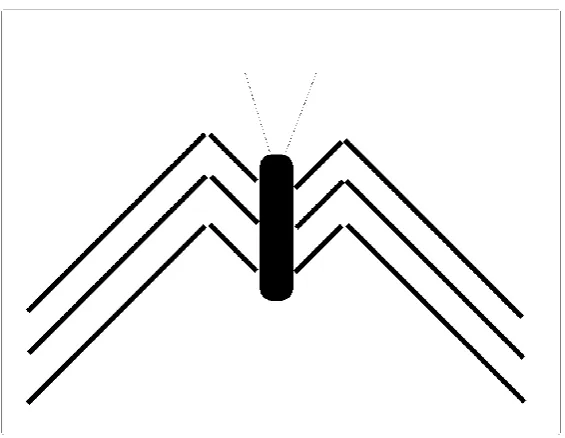
Stimuli were created so as to broadly resemble spiders; the two relevant dimensions of
variation were the length of the ‘legs’ (after the joints) and the length of the central body.
We adopted lengths as the relevant dimensions of variations, since this makes it relatively
straightforward to assume a Weber fraction (in both cases 8%; Morgan, 2005). For both
dimensions, the actual lengths were between 40mm and 80mm. An example of the stimuli
is shown in Figure 2. The stimuli were intentionally created to resemble some real-life
creature, as a manipulation to increase the coherence of the two dimensions. It was
important that the two stimulus dimensions could be perceived together without analytic
effort (cf. Milton & Wills, 2004; Pothos & Close, 2008). If analytic effort were required to
perceive the two stimulus dimensions together, then it would be less meaningful to talk
about the processing of individual stimuli. The stimuli employed in this study were nearly
identical (apart from possible minor overall scaling) to those in the unsupervised conditions
reported in Pothos et al. (submitted; 2008). As noted, in the unsupervised conditions the
stimuli were individually printed and presented to participants as cards. In the presently
reported supervised categorization tasks, the stimuli appeared on a computer screen. We
took care to ensure that the appearance (and in particular the overall size) of the stimuli in
the unsupervised and corresponding supervised tasks was as similar as possible.
---FIGURE 2---
The key design aspect of this research concerns the range of stimulus sets employed.
In this study and in Pothos et al. (submitted; 2008), we employed the same nine different
stimulus sets, each having 16 stimuli, which were meant to capture a range of intuitions
regarding unsupervised categorization. First, we created several stimulus sets which were
variations of a basic two-cluster structure. For example, there was a stimulus set in which
closer to each other, another one in which the clusters were of unequal size, and one in
which there were two (fairly) well-separated clusters but there were also some ambiguous
items in between the two clusters. This emphasis on two-cluster classifications follows the
tradition of related work (Colreavy & Lewandowsky, 2007; Love, 2002). Second, we included
some stimulus sets which were intended to be consistent with a classification having more
than two clusters. For example, we created a stimulus set in which the classification we
anticipated would be preferred had three clusters and another which had five clusters.
Finally, in some stimulus sets we intended there to be no salient classification at all. Such
stimulus sets were included so as to provide a contrast with the more structured stimulus
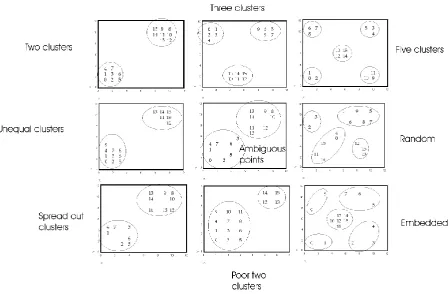
sets. The nine stimulus sets can be referred to as ‘two clusters’, ‘unequal clusters’, ‘spread
out clusters’, ‘three clusters’, ‘ambiguous points’, ‘poor two clusters’, ‘five clusters’,
‘random’, and ‘embedded’. All stimulus sets are shown in Figure 3.
Procedure
We adopted a supervised categorization procedure. The experiment was organized in units,
such that each unit consisted of one presentation of all the stimuli with their correct
category labels (each stimulus was presented one by one with its correct category label;
e.g., “This is a Chomp”), and two presentations of the stimuli without the labels—in the
latter case, the participant had to guess the correct label and corrective feedback was
provided after each response (as is standard in experiments of supervised categorization).
Regarding the presentation of the stimuli with their correct category label prior to the
‘guessing’ trials with corrective feedback, we thought that if participants had a chance to
occasionally review the intended classifications, this might facilitate the learning process.
1000ms, when participants were required to respond, a stimulus would be shown until a
response was made. The learning criterion was to go through all the stimuli in a learning
unit without making any errors (the experimenter was able to determine when this
happened, because a sound indicated an incorrect response). When a participant managed
to do this, the experiment stopped. Otherwise, the participant would be presented again
with the stimuli in a unit. A different randomized order of stimulus presentation was
employed each time.
---FIGURE 3---
The classifications taught to participants for each stimulus set are shown in Figure 3.
Note that the number of categories varies from two to five. In the cases of the stimulus sets
‘two clusters’, ‘unequal clusters’, ‘spread out clusters’, ‘three clusters’, ‘poor two clusters’,
and ‘five clusters’ the taught classifications were the ones preferred by participants in the
unsupervised categorization tasks of Pothos et al. (submitted; 2008). Regarding the stimulus
sets ‘random’, ‘embedded’, and ‘ambiguous points’, the frequency of the preferred
classifications was very low: for each of the three stimulus sets, 3, 2, and 3 respectively. The
number of distinct classifications for these stimulus sets were 158, 149, and 160 respectively
(the same number of participants was assigned to each stimulus set, the design of the
experiment was within participants). Given such very high response variability, it is highly
arguable as to whether we should have confidence that there was something special about
the classifications which were preferred for these stimulus sets. Rather, it is possible that
one classification was simply produced a little bit more often (with a frequency of 3 or 2,
instead of a frequency of 1) by chance. Therefore, for the stimulus sets ‘random’,
‘embedded’, and ‘ambiguous points’ the taught classifications in the supervised
unsupervised tasks, but rather the classifications predicted as optimal by the simplicity
model of unsupervised categorization (Pothos & Chater, 2002). The simplicity model has
been shown to accurately predict the preferred classification for a set of stimuli in several
studies (Hines, Pothos, & Chater, 2007; Pothos & Chater, 2002, 2005; Pothos & Close, 2008)
and hence it seemed a reasonable model for deriving an appropriate classification for use
with the supervised categorization tasks for the stimulus sets ‘random’, ‘embedded’, and
‘ambiguous points’. Note that the classifications predicted as optimal by the simplicity
model for the stimulus sets ‘random’ and ‘embedded’ were very similar to the preferred
ones. Also, we confirmed that the simplicity model correctly predicted the preferred
classifications in the cases of the ‘two clusters’, ‘unequal clusters’, ‘spread out clusters’,
‘three clusters’, ‘poor two clusters’, and ‘five clusters’.
Results
We recorded two dependent variables, the number of learning units required to achieve
criterion and the total number of errors before criterion had been achieved (note that each
learning unit consisted of a presentation of all the stimuli with their labels and two
presentations of the stimuli without the labels—in the second case participants had to guess
the correct classification of each stimulus and received corrective feedback). There was a
highly significant correlation between the two variables (r=.64, p<.0005). Accordingly, we will restrict the analyses to only one of the variables, the number of learning units required
to reach criterion.
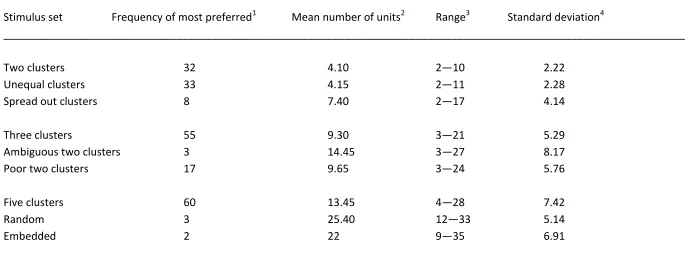
Table 1 shows how the number of units differed for the nine stimulus sets we
employed. Also, it summarizes the key dependent variable from the unsupervised
preferred classification; the unsupervised categorization experiment involved asking 169
naïve participants to spontaneously classify each stimulus set in a within-subjects design).
Note, first, that there are differences between the ease of learning of different datasets:
F(8,171)=35.22, p<.0005. This result confirms the expectation from Table 1, that it was much easier to learn the required classification for certain stimulus sets, compared to others.
---TABLE 1, 2---
The critical research question concerns a possible relation between the unsupervised
and supervised categorization results. From an unsupervised categorization perspective, the
higher the frequency of the preferred classification, the more psychologically intuitive this
classification should be. From a supervised categorization perspective, the lower the
number of units required to reach the learning criterion, the easier (and hence more
intuitive) the taught classification should be (cf. Pothos & Bailey, 2009). The objective in the
analyses below is to examine whether these two measures of category intuitiveness, from
an unsupervised and supervised categorization task, are related or not.
A simple test of a putative association between the measures of category
intuitiveness from the unsupervised categorization results of Pothos et al. (submitted; 2008)
and the supervised categorization results from the present experiment is a correlation, for
each stimulus set, between the frequency of the preferred classification and the number of
learning units required to reach criterion. This correlation was low and not significant,
although in the right direction (r=-.47, p=.21). To appreciate the disparity between the supervised and unsupervised categorization results consider, for example, the ‘two clusters’
and ‘five clusters’ stimulus sets. In the unsupervised setting, the frequency of the preferred
classifications for the two stimulus sets was 31 and 55 respectively. Accordingly, we
intuitive and obvious to participants than the one in the ‘two clusters’ stimulus set. By
contrast, the supervised categorization results of this experiment reveal an opposite
pattern, so that participants required 4.10 learning units to learn the required classification
in the ‘two clusters’ stimulus set, but 13.45 learning units were required to teach the
required classification in the case of the ‘five clusters’ stimulus set.
The above result highlights a possible sharp difference between supervised and
unsupervised categorization. However, as noted in the introduction, the analysis does not
take into account a range of factors which may inform the difference between supervised
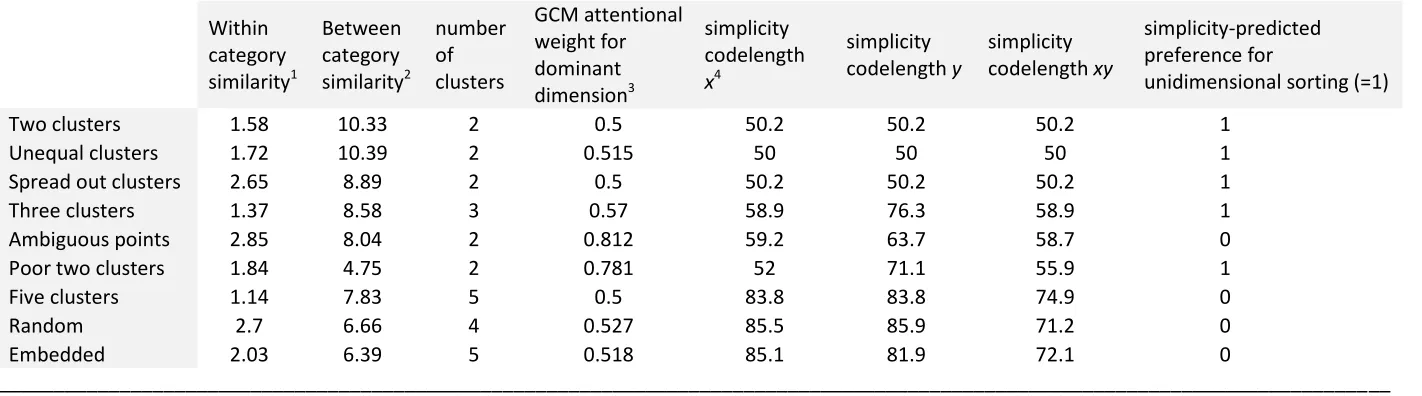
and unsupervised categorization. We therefore computed a number of characteristics for
each stimulus set, as a way to converge the results from the unsupervised and supervised
categorization tasks. All these characteristics were computed with respect to the taught
classifications (as described in the Procedure section; Figure 3). First, we computed an index
for the average within category similarity of all clusters for the taught classification for each
stimulus set, as the average Euclidean distance of all distances between unique pairs of
points in each cluster. Second, in a similar manner we computed an index for the average
between category similarity, by taking into account the distance between all unique pairs of
points, such that each point was in a different cluster. Third, we noted the number of
clusters in each of the taught classifications. This is a major way in which the present study
diverges from those of Love (2002) and Colreavy and Lewandowsky (2008), as in these
studies participants were restricted into producing (or learning) two cluster classifications.
Specifically, an increased number of category labels is likely to affect executive function and
working memory resources, both of which might disrupt a process of supervised learning
Finally, we wanted a measure of how participants allocated their attention to the
two stimulus dimensions in the supervised categorization task. This is a more involved issue.
Typically, in supervised categorization experiments, allocation of attention is inferred by
examining the classification of novel stimuli with computational models, such as the GCM
(e.g., Nosofsky, 1988). Such models employ attentional parameters, which can inform as to
which dimensions were weighted more heavily in the classification of novel stimuli. But in
our case, there were no novel stimuli, just learning of the same set of training stimuli.
Colreavy and Lewandowsky (2008) could examine attentional allocation directly because the
two most common participant classification strategies involved dividing up the available
stimuli into two categories either along one dimension of stimulus variation or the
other--thus, participants’ classifications directly indicated which stimulus dimension they were
attending to. This was a strength of the Colreavy and Lewandowsky (2008) study, but it
came at the expense of restricting the procedure to only two-cluster classifications and also
employing effectively the same stimulus structure (actually, two stimulus structures were
employed, but they were equivalent). We employed a much more diverse range of stimulus
sets than Colreavy and Lewandowsky (2008), but this came at the expense of being unable
to directly infer attentional allocation from empirical results.
Regarding attentional allocation, we adopted a modeling approach. Pothos and
Bailey (2009) adapted the GCM for examining a classification as a whole. In brief, the model
evaluates the combination of parameter values which best predicts the classification of each
stimulus in a set, against all the others. Thus, and as Pothos and Bailey suggested, this leads
to an overall measure of how intuitive a particular classification is, according to the GCM.
Relevant to the present study, applying the GCM in this way basically leads to an estimate
all the stimuli in a set, relative to their intended classification. We therefore applied Pothos
and Bailey’s modification of the GCM to each stimulus set in this study. The only input to the
model was the coordinates of the stimuli in each set. Parameter optimization was carried
out 300 times for each stimulus set, to ensure that the best fit was identified (suitable
random starting values for the parameters were employed in each run). Finally, we
employed the same parameters as in Pothos and Bailey (2009; these are the standard GCM
parameters) and parameter range was as in standard GCM applications, with the exception
of the sensitivity parameter, whose upper limit was restricted to 0.2 (see Pothos & Bailey,
2009, for an extensive discussion of why it is important to restrict the sensitivity parameter
when applying the GCM in this way).
An alternative approach to the issue of dimensional allocation is to adopt the
method of Colreavy and Lewandowsky (2008; see also Pothos & Close, 2008). These
investigators employed the simplicity model of Pothos and Chater (2002) by considering
which combination of attentional weights (in 10% increments) led to the least codelength
for a given classification and a given stimulus set. According to the simplicity model, least
codelength means that the corresponding classification should be most intuitive to naïve
observers. Therefore, this procedure provides us with a measure of which attentional
allocation is spontaneously most intuitive to participants. However, note also that empirical
research in attentional allocation in unsupervised categorization has not found evidence for
the fine attentional changes Colreavy and Lewandowsky (2008) assumed were possible (Medin et al., 1987, is the main study). Therefore, we followed the procedure of Pothos and
Close (2008), who suggested that when two-dimensional stimuli are spontaneously
categorized, it is either the case that both dimensions are taken into account, or one
possibilities by examining the codelength for a particular classification either on the basis of
both stimulus dimensions (xy configuration) or on the basis of either dimension individually (x or y configuration). We adopted the same procedure in the present investigation; the input to the simplicity model is the stimulus coordinates of each stimulus set and the output
is a codelength value which reflects how intuitive each classification is. We subsequently
compared the codelength for the xy configuration with the codelength for the x and y ones. In cases where the xy codelength was lower than both the x one and y one, this scheme predicts a preference for equal attentional allocation to both dimensions and vice versa. In
cases where the xy codelength was equal to the least codelength between the x one and the
y one, we assumed there might be a preference for attentional allocation to a single dimension (cf. Medin et al., 1987).
Overall, there are five separate variables against which we can assess the putative
link between frequency of preferred classification and speed of learning, as shown in Table
2. A condition for any variable to be a mediator in the relationship between a dependent
variable (here, assumed to be the frequency of the preferred classification in each stimulus
set) and an independent variable (the number of learning units to criterion in the supervised
tasks) is that there is a significant association between the putative mediator and the
independent variable (Baron & Kenny, 1986). We thus computed the correlations between
the five variables in Table 2 and the number of learning units to criterion. Significant
correlations were identified only in the case of the number of labels (r=.72, p=.03; positive correlation means that the more the clusters the more difficult the learning) and the
simplicity-predicted preference for unidimensional sorting vs. classification based on both
regressed the number of learning units on the variable and recorded the unstandardized
residuals—these residuals provide us with an estimate of the variance in the number of
learning units which cannot be accounted for by differences in the variable. Correlating,
next, each of these two sets of unstandardized residuals with the frequency of the preferred
classification for each stimulus set, significance was attained only for the residuals from the
regression with the number of labels (r=-.81, p=.008). Thus, the number of labels was the
only variable which had a mediating role in the association between the speed of learning
classifications in supervised tasks and the spontaneous preference for the same
classifications in an unsupervised task.
Discussion
The literature in categorization has, to a large extent, been organized around the distinction
between supervised and unsupervised categorization. For example, most categorization
models are specifically proposed as either models of supervised categorization (e.g., Minda
& Smith, 2000; Nosofsky, 1988) or models of unsupervised categorization (e.g., Anderson,
1991; Pothos & Chater, 2002). There is no doubt that the distinction between supervised
and unsupervised categorization is a highly intuitive one. However, the present empirical
results have failed to support it.
In brief, Experiment 1 was a standard supervised categorization learning paradigm.
We asked different participants to learn a particular classification for nine different stimulus
sets. A natural dependent variable in this context is the difficulty with which different
classifications are learned (cf. Nosofsky, 1984; Shepard et al., 1961). Certain classifications
produced more frequently by participants? We utilized the unsupervised categorization
results of Pothos et al. (submitted; 2008) for the same stimulus sets.
The analyses clearly failed to reveal a direct equivalence between supervised and
unsupervised categorization results. The question then becomes to examine which
particular difference between supervised and unsupervised categorization can account for
the corresponding differences in performance. We considered a range of hypotheses,
relating to whether supervised and unsupervised categorization might depend differentially
on within (or between) category similarity, the number of clusters, the attentional allocation
to the two stimulus dimensions as predicted by the GCM (Nosofsky, 1988), and the
predicted preference for uni- vs. two-dimensional classification, as predicted by the
simplicity model (Pothos & Chater, 2002). We examined the association between frequency
of the preferred classification (unsupervised categorization) and speed of learning
(supervised categorization), by partialling out variance due to each of these variables in turn
(cf. Baron & Kenny, 1986). A significant result was obtained only for the factor enumerating
the number of clusters in each of the taught classifications. Specifically, if one eliminates
variance due to the number of clusters in the supervised categorization results,
classifications which were easier to learn were indeed the ones more likely to be produced
spontaneously. Our results therefore show that the aspects of category structure which
make a classification easy to learn are the same as the ones which make a classification
‘stand out’ in a spontaneous categorization setting, as long as one takes into account the
differential role of the number of clusters in supervised and unsupervised categorization.
Broadly speaking, this observation is consistent with Colreavy and Lewandowsky’s (2008)
In Experiment 1 we considered one possible hypothesis of how we can decide
whether a categorization taught to participants is intuitive or not: if a categorization is
easier to learn, then it should be more intuitive. There is an alternative perspective: we can
ask whether a particular association between category labels and stimuli is more resistant to
forgetting (e.g., Brown, Neath, & Chater, 2008). If a classification for a set of stimuli is better
remembered several days after it has been taught, then we should conclude that this
classification is more intuitive. Accordingly, we can examine whether category intuitiveness
in terms of remembering a taught classification correlates with category intuitiveness in
terms of preference in a spontaneous categorization task. Experiment 2 addresses this issue.
Experiment 2
Participants
Participants were 195 undergraduate students at a UK university, who had not taken part in
Experiment 1 or any other related experiments. They participated in the study for course
credit or a small payment. Experimental design was between participants. Participants were
divided between the nine stimulus sets as shown in Table 2.
Materials and Procedure
The materials were identical to those employed in Experiment 1. Experiment 2 consisted of
two parts. First, there was a part in which participants had to learn the given classification.
This part proceeded in a way analogous to that of Experiment 1, although some
modifications were introduced. The learning part was organized in units consisting of a block
of 16 trials such that each stimulus appeared with its correct label; in each of these trials,
corresponding label (this was done so as to reinforce the stimulus—label associations).
These 16 trials were followed by five blocks of 16 trials each, such that each stimulus
appeared without its correct label, participants had to guess the correct label, and
corrective feedback was provided for each response. The learning criterion was analogous
to the one employed in Experiment 1: participants had to respond to all 16 stimuli
consecutively without making any errors. The training part would stop as soon as
participants achieved the learning criterion, otherwise the learning unit (i.e., the 16
presentations of the stimuli with their correct labels followed by the five blocks of ‘guessing’
trials with corrective feedback) would keep repeating itself.
With the above procedure it is clearly the case that participants would experience a
different number of trials, depending on how easy it would be to learn different
classifications. As in this case we were interested in the recall of stimulus, category label
associations, we included a manipulation which would somewhat equate exposure to the
classifications for different stimulus sets, once correct knowledge for these classifications
had been attained (arguably, if while learning a participant thought a stimulus was an A, but it turned out to be a B, then this would not count as an instance of correctly being exposed to the stimulus and its appropriate category label, so that it seemed desirable to somewhat
equate for exposure after learning has taken place). Accordingly, after the learning criterion
had been achieved, participants saw all the stimuli three more times, in a way that each
stimulus with its correct label appeared on the screen, and participants had to press the key
with the corresponding label before proceeding to the next stimulus.
Participants were invited to come again to the laboratory seven days later (a
deviance of one day was tolerated). To encourage participants to do so, they would not
attend both experimental sessions. The second experimental session was identical to the
learning unit described above (five blocks such that each block consisted of a single
presentation of each of the 16 stimuli), but without the presentation of the correct
stimulus—category label associations at the beginning. In other words, this was a recall test
for the correct label for each stimulus, except for the fact that participants received
corrective feedback for their responses. This last manipulation was essential so as not to
excessively penalize participants who broadly remembered the classification, but could not
remember the particular correspondence between clusters and category labels.
Results
We first consider the dependent variables which are analogous to those in Experiment 1,
the number of blocks required to achieve the learning criterion and the errors made before
criterion could be achieved (note that we define a learning block in Experiment 2 to
correspond to one presentation of the 16 stimuli, so that it differs from the learning unit as
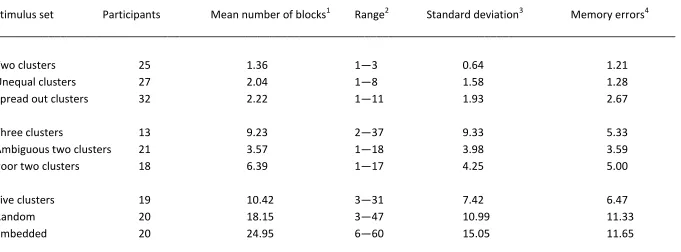
defined in Experiment 1). Table 3 shows these results. As before, there was a highly
significant correlation between number of blocks and errors (r=.92, p<.0005). It is also interesting to check whether the supervised learning results in Experiment 2 were
equivalent to those in Experiment 1, which turned out to be the case (r=.87, p=.002). This result is reassuring, since there were only superficial differences between the training
procedure in Experiment 1 and that of Experiment 2.
---TABLE 3---
In Experiment 2 there was a novel dependent variable, the number of memory
errors in recalling the category label—stimulus associations a week after training (Table 3).
number of memory errors shows that classifications which were easier to learn were also
the ones which were better remembered a week after learning (r=.97, p<.0005). Regarding the relation between memory retention of a classification and preference in spontaneous
classification, we proceeded in the same way as in Experiment 1. First, we correlated the
frequency of the preferred classification with the number of memory errors, to find (as
before) a non-significant result: r=-.30, p=.43. Second, we considered the five variables in Table 2, as hypotheses regarding the locus of difference between the number of memory
errors and the frequency of the preferred classification. Correlating the number of memory
errors with these variables, significant correlations were observed only for the variables
between category similarity (r=-.68, p=.04; a negative correlation means a lower between category similarity is associated with fewer memory errors), number of labels (r=.82,
p=.007), and the simplicity-predicted preference for unidimensional sorting vs. classification based on both dimensions (r=-.70, p=.04). For each of these three variables, we next
regressed the number of memory errors on the variable and recorded the unstandardized
residuals, which were subsequently correlated with the frequency of the preferred
classification for each stimulus set. A significant result was observed only in the case of the
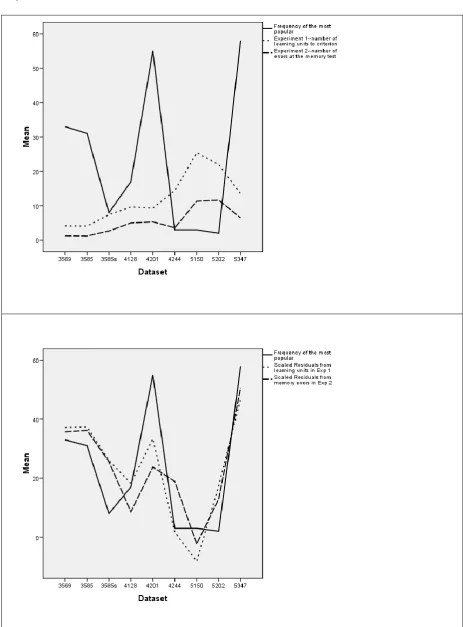
residuals from the regression with the number of labels (r=-.74, p=.024), a result which echoes that of Experiment 1. The two panels of Figure 4 provide a graphical illustration of
the relation between the results of Experiment 1 and Experiment 2 and the mediating role
of category labels.
---FIGURE 4---
The memory for a particular classification is a dependent variable which has not featured
prominently in categorization research. However, it is an important empirical variable, since
it informs our insight of what kinds of classifications might be more resistant to forgetting.
Presumably, as categorization researchers, we would like to conclude that classifications
which are remembered better are ones which are cognitively ‘special’, in some sense. A
classification which is easy to learn is not necessarily the same as a classification which is
resistant to forgetting. For example, clusters which are closer to each other may be more
prone to forgetting from interference, even if they are straightforward to learn in the first
place (cf. Brown et al., 2007).
Equally, learning a categorization sometimes appears to involve particular
transformations of the psychological space for the corresponding stimuli. In fact, most
models of supervised categorization postulate some mechanism which alters the initial
representation of the stimuli into one which is most consistent with the taught
categorization (e.g., Kruschke, 1992; Kurtz, 2007; Medin & Schaffer, 1978; Minda & Smith,
2000; Nosofsky, 1988; Rehder & Murphy, 2003). Such an assumption seems to be supported
by work on categorical perception (e.g., Goldstone, 1994; Harnad, 1987; Schyns, Goldstone,
& Thibaut, 1997), although note there is some controversy as to the exact nature of
categorical perception effects (e.g., Goldstone, Lippa, & Shiffrin, 2001; Roberson & Davidoff,
2000). The key issue is that there has been no research as to how long-lived such
transformations are. For example, a particular classification may be easy to learn after a
fairly radical transformation of psychological space (e.g., involving the projection of all
stimuli along a single dimension). However, if this transformation is short-lived, then one
quickly. Thus, the ease of learning a classification is in principle independent of the memory
for a particular classification.
Despite the above considerations, the present results showed that the memory for a
particular taught classification correlated highly with the ease of learning the classification
in the first place. The key research question is whether the memory for a particular taught
classification could be associated with its salience in an unsupervised categorization task.
Our corresponding results closely mirrored the results of Experiment 1. While there was no
direct association between memory errors (from Experiment 2) and the frequencies of the
preferred classifications, a highly significant correlation was revealed after partialling out
variance due to the number of clusters in each of the taught classifications.
General discussion
We have examined two measures of supervised categorization, with nine different stimulus
sets, and related the results to spontaneous preference for the taught classifications in an
unsupervised categorization task. Each of the different categorization tasks can be seen as
providing a different measure of category intuitiveness. The standard supervised
categorization task in Experiment 1 can discriminate between classifications which are easy
to learn and ones which are more difficult to learn, and it seems uncontroversial to suggest
that the former would be psychologically more intuitive compared to the latter (e.g., Kurtz,
2007; Shepard et al., 1961). The supervised categorization task augmented with a recall task
(Experiment 2) allowed us to identify the classifications which are more resistant to memory
decay and forgetting. Classifications which are better remembered must also be more
obvious and intuitive. Finally, the unsupervised categorization procedure employed by
categorization. More intuitive categorizations would be the ones that are spontaneously
produced more frequently.
In comparing the dependent variables from the supervised categorization tasks to
the one from the unsupervised task, the first conclusion was that there is not a direct association. We therefore next considered a range of factors which could mediate the
association between the supervised task dependent variables and unsupervised task one.
Each of these factors can be seen as a hypothesis for what is the difference between
supervised and unsupervised categorization (with respect to the particular stimulus sets and
classifications we employed). Thus, we examined structural characteristics of the stimuli,
such as average within cluster similarity and average between cluster similarity, the number
of clusters for the classifications in different stimulus sets, and attentional allocation; the
latter was computed either on the basis of Pothos and Bailey’s (2009) modification to the
GCM or Pothos and Chater’s (2002) simplicity model. It turned out that excluding variance
due to the number of clusters in the supervised categorization performance led to a very
close association between the supervised and unsupervised task results. We interpreted this
result as showing that, for our particular stimulus sets and classifications, the main
difference between the process for unsupervised and supervised categorization relates to
the additional difficulty of keeping track of category labels in supervised categorization.
Note, first, that this conclusion goes beyond previous related work, since both Love
(2002) and Colreavy and Lewandowsky (2007) employed designs where participants were
asked to divide the available stimuli into two categories—thus, it was not possible to
examine the potential role of category labels/clusters in the relation between supervised
To further understand the relation between our conclusion and those of Love (2002)
and Colreavy and Lewandowsky (2007) it is worth considering in detail the key differences in
design. Both these studies employed an unsupervised categorization procedure which was
effectively one of category discovery without feedback: Participants were presented with
the same stimuli over several blocks, so that eventually their classifications converged to a
fairly stable pattern. In Love’s (2002) case, this pattern was assessed against an underlying
target classification (which was either discovered or not) and in Colreavy and
Lewandowsky’s (2007) case, participant response patterns were examined in relation to two
main classification strategies (each strategy was characterized in terms of the stimulus
dimension along which a category boundary could be defined). However, in both studies,
the unsupervised categorization procedure imposed restrictions to the categorizations
participants could produce. In Love’s case, for each stimulus set there was only a single
intended classification which was either discovered or not. In Colreavy and Lewandowsky’s
case, participants’ performance was examined in terms of primarily two possible
classifications. But, in both cases, these procedures fall short in relation to the typical
variability in classification performance under entirely unsupervised conditions (e.g., Pothos
& Chater, 2002). For example, Pothos et al. (2008, submitted) recorded over 1000 distinct
classification when 169 participants each spontaneously classified the stimuli in Figure 3.
So, we think the main strength of the present study is that the dependent variable
from the unsupervised categorization tasks is more immediately related to unsupervised
categorization performance and category intuitiveness. Of course, the main strength of
Love’s (2002) and Colreavy and Lewandowsky’s (2007) studies is that it was possible to
examine in more detail the development of classification strategies and, also, to have
examine non-linearly separable classifications with his unsupervised procedure, something
which we do not believe is possible under entirely unconstrained classification procedures.
Our research and the research of Love (2002) and Colreavy and Lewandowsky (2007) have
complementary strengths.
Moreover, the above discussion immediately allows us to understand the differences
in the overall conclusions from our research and that of Love (2002). Love concluded that it
is not possible to equate supervised and unsupervised categorization performance, contrary
to our own conclusion (though note that in later work he sought a more integrated
approach to understanding supervised and unsupervised categorization; Love et al., 2004).
However, some of the differences he identified between unsupervised and supervised
categorization related to non-linearly separable category structures, while it was not
possible to examine such category structures with our unsupervised categorization
procedure. Also, our overall conclusion strongly resonates with that of Colreavy and
Lewandowsky (2007; cf. Zwickel &Wills, 2005), which is as expected since in both cases the
classifications employed were linearly separable.
Our results indicate that the psychological process which allows us to consider
certain classifications as more obvious than others must be intimately related, or be partly
equivalent, to the psychological process which enables the learning of a required
classification. If such a conclusion proves to be general, it would have important implications
for the development of models of categorization. Currently, nearly all categorization models
are specifically proposed either as models of supervised categorization (e.g., Minda & Smith,
2000; Nosofsky, 1988) or models of unsupervised categorization (e.g., Anderson, 1991;
Pothos & Chater, 2002). Some researchers have sought to modify models of supervised
Kurtz, 2007, Pothos & Bailey, 2002; Zwickel & Wills, 2005). Also, there have been attempts
to integrate a component for supervised categorization and one for unsupervised
categorization within the same formalism (e.g., Gureckis & Love, 2003; Love et al., 2004).
The results in this paper inform our understanding of these approaches.
At the same time, it seems clear that supervised categorization processes must go
beyond unsupervised categorization processes, at least under some circumstances.
Supervised learning can allow a naïve observer to learn classifications which would never be
produced spontaneously (e.g., McKinley & Nosofsky, 1995; Maddox et al., 2004). The
learning of such complex classifications appears to involve radical transformations of
psychological space, so that the similarity structure of the stimuli evolves to become more
consistent with the taught classifications. Such transformations can include fine attentional
modulation (Nosofsky, 1984, 1988), changes in the grain of the similarity space (Nosofsky, 1984, 1988), or even the creation of novel features (Schyns et al., 1997; Goldstone, 2000).
By contrast, in unsupervised categorization, there has been evidence only for a possible
‘crude’ attentional selection process, whereby a stimulus dimension may be spontaneously
ignored if it does not appear to add to the overall intuitiveness of a classification (Ashby,
Queller, & Berretty, 1999; Pothos & Chater, 2005; Pothos & Close, 2008). This issue relates
to the well-known issue of unidimensional biases in early studies of spontaneous grouping
(Milton & Wills, 2004; Regehr & Brooks, 1995; Medin, Wattenmaker, & Hampson, 1987; cf.
Murphy, 2004).
So, it seems reasonable to assume that supervised categorization can involve more
complex processes, relating to the transformations of representations, compared to
unsupervised categorization. One possibility is that there is a categorization system
However, in the case of complex categorization problems, supervised categorization can
draw on augmented mechanisms for representational flexibility, not available to
unsupervised categorization. In other words, simply put, supervised categorization is all
unsupervised categorization is and a little more. This would be an ambitious and exciting
proposal for understanding the complete range of human categorization abilities, but its full
exploration would require considerable additional work.
More specific further empirical questions concern the precise nature of the
interaction between biases from supervised categorization and unsupervised categorization.
Our results show that, in the case of learning naturalistic (linearly separable, fairly intuitive)
classifications, it is generally the case that more intuitive classifications are easier to learn (if
variance due to the number of category labels is excluded). In other words, the
unsupervised categorization biases have a major influence on supervised categorization. But
is it the case that unsupervised categorization biases influence learning regardless of the
complexity of a learned classification? Or is there a point at which, if the taught
classification is too complex, the unsupervised component is simply suppressed? It is worth
pointing out here that even though there have been several demonstrations of naïve
observers learning complex classifications (e.g., McKinley & Nosofsky, 1995; Minda & Smith,
2000; Nosofsky, 1988) some researchers have questioned whether performance in such
tasks reflects categorization behavior as such, as opposed, for example, to memorization of
which category labels go with which stimuli (Blair & Homa, 2003).
In sum, categorization researchers have made impressive progress in understanding
supervised categorization (Hampton, 2007; Kurtz, 2007; Minda & Smith, 2000; Nosofsky,
1988; Vanpaemel & Storms, 2008) and, more recently, unsupervised categorization
very limited both theoretical (Love et al., 2004; Pothos & Bailey, 2009) and empirical
(Colreavy & Lewandowsky, 2008; Love, 2002) work on the relation between supervised and
unsupervised categorization. This is an important obstacle before a more complete
understanding of human categorization processes can be achieved. Our results extend the
research of Colreavy and Lewandowsky (2008) and Love (2002) on the putative equivalence
between supervised and unsupervised categorization and illustrate the range of the